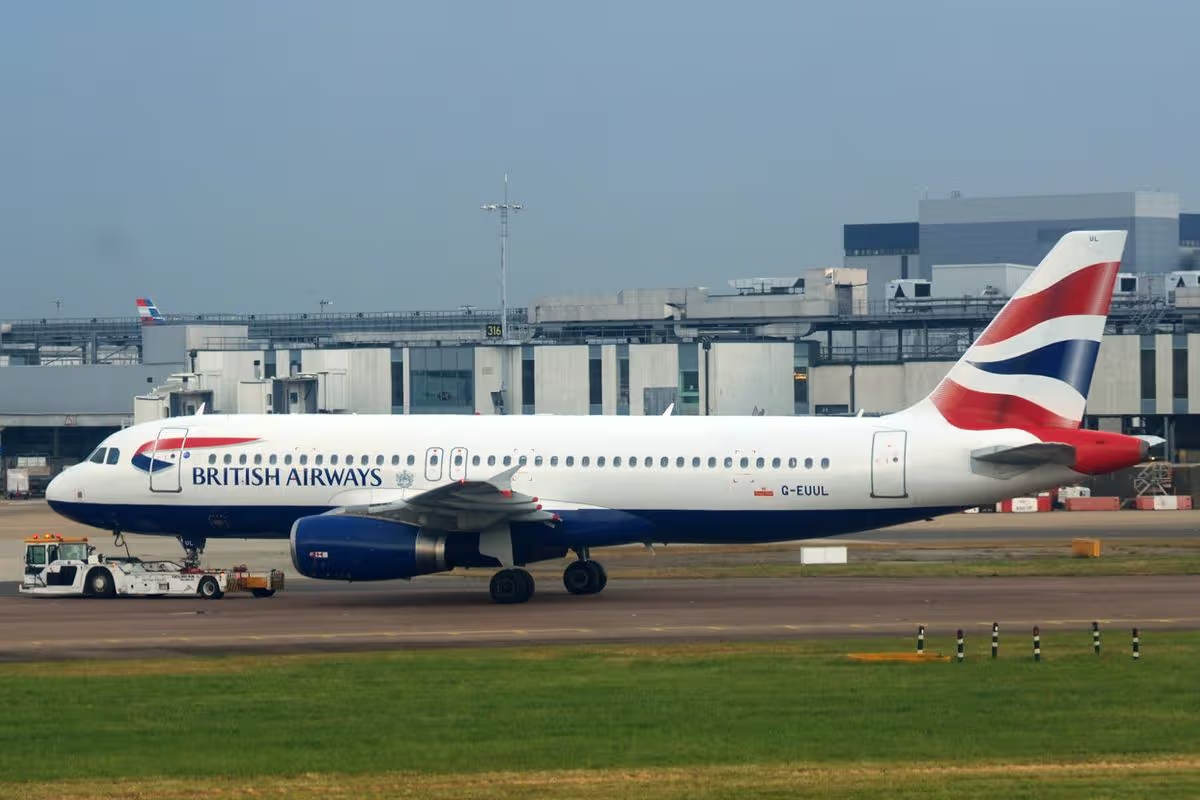
As airlines have been granted a green light to consolidate or cancel flights with just two weeks’ notice, experts have warned of inevitable chaos this peak holiday season

Holidaymakers have been warned to take extra caution ahead of the upcoming summer season.(Image: Yui Mok/PA Wire)
Summer is well and truly in the air, but Brits looking ahead to their well-deserved week in the sun have been warned to take extra caution.
As the price of jet fuel has risen by 120 per cent since the start of the conflict in the Middle East, there are concerns of shortages in the coming months. Airlines have already hiked ticket prices, but further disruption is expected unless the Strait of Hormuz reopens soon.
Before the conflict, Europe as a whole had about 37 days’ supply of available. Now, this is likely to have dropped to 30 days, with the International Energy Agency (IEA) warning that 23 days is the critical point at which some airports would run out of fuel.
Now after airlines were granted a green light to consolidate or cancel flights with just two weeks’ notice, experts have warned that the traditional protections for those with additional needs are under threat. Crucially, the European Commission has signalled that disruptions caused by the ongoing Middle East fuel crisis will be filed under “exceptional circumstances,” meaning holidaymakers may be unable to claim any financial compensation if their flights are changed.
READ MORE: RAC issues ‘ominous’ UK petrol and diesel price warning for May 2026
Travel expert Declan Somers, CEO of Mobal, warns that the biggest risk this summer isn’t just chaos at airports, but how passengers might be split. As airlines merge flights to conserve fuel, families who booked together may find themselves rebooked onto replacement aircraft where they are scattered across the cabin.
Notably, there is no UK law that requires children to be seated with their parents on a plane. Airlines can legally separate even those under five from their parents, although this would be against Civil Aviation Authority (CAA) guidelines. The CAA says: ‘Young children and infants who are accompanied by adults should ideally be seated in the same seat row as the adult. Where this is not possible, children should be separated by no more than one seat row from accompanying adults. This is because the speed of an emergency evacuation may be affected by adults trying to reach their children.” “
If airlines start consolidating flights, a family of four ‘may be rebooked onto the same replacement flight but not necessarily seated together,” Somers cautioned.
While UK guidance suggests airlines should aim to seat children near parents, there is no absolute guarantee. To mitigate this, Somers urges parents not to treat seat selection as optional: “Book directly with the airline, pay for seat selection, and call immediately to have assistance notes attached to the PNR (Passenger Name Record).”
The situation is even more precarious for those with disabilities or complex medical requirements. Travel expert Alexandra Dubakova warns that emergency rebookings often fail to account for specialised needs, such as extra legroom for mobility or specific seating for medical equipment. “There might be cases of passengers being de-boarded or rebooked again because the replacement aircraft lacks the specific configurations they originally paid for,” Dubakova explained.
She warns of a significant “erosion of consumer rights,” noting that under “exceptional circumstances,” airlines are under less financial pressure to provide their usual level of care. For those requiring special assistance – such as storage for crutches or priority boarding – Scope guidance mandates booking at least 48 hours in advance. However, with last-minute aircraft swaps expected, these pre-arranged protections are no longer a certainty.
The disruption is expected to hit hardest at smaller regional airports, which lack the on-site fuel storage of major hubs like Heathrow. Dubakova describes these smaller airports as the “canary” in the coal mine. For families and disabled travelers, the advice is to “build in a buffer.”
Experts suggest choosing the first flight of the day, flying from larger hubs where possible, and ensuring all medication is planned at least four weeks in advance. UK airlines have previously insisted that they are not currently facing supply issues, while the Government will also work with the sector to act quickly if needed.
Europe’s leading budget airlines remain confident they will be able to keep flights running as usual throughout the peak holiday season ahead. Jet2, easyJet and TUI have all committed not to impose any additional charges on passengers due to fuel price increases.
Transport Secretary Heidi Alexander said: “There are no immediate supply issues, but we’re preparing now to give families long-term certainty and avoid unnecessary disruption at the departure gate this summer. This legislation will give airlines the tools to adjust flights in good time if they need to, which helps protect passengers and businesses. We will do everything we can to insulate our country from the impact of the situation in the Middle East.”
It’s understood that British Airlines would not allow to children sit alone away from their parent, with the team pre-seating families on the same Passenger Name Record (PNR) to ensure all those under 12 years old are seated with at least one adult on the same record. As per the BA website: “If you don’t choose your seats in advance, we always do our best to seat your family together based on flight seat availability. This may mean that you’ll be seated in adjacent rows or across the aisle. All children under 12 will be seated with an accompanying adult.” Tui and Virgin Atlantic also offer similar reassurances on their websites.
Meanwhile, as per the Ryanair’s Family Seating Policy, detailed on the company website: “For family bookings, children (aged 2 to 11 years) receive free reserved seating so they can sit beside a parent. When an adult purchases a reserved seat they can select up to 4 children’s seats beside them free of charge. If an adult selects a reserved seat outside of specific rows (depending on aircraft) they must pay the price difference. Similarly, if a seat is selected for a child outside of these rows, they will be charged the full reserved seat price of these seats.”
The easyJet website warns families who leave check in until the last minute may not be guaranteed sears next to each other, however, staff will “still make sure each child under 12 is seated close to an adult on your booking” An easyJet spokesperson told the Mirror: “easyJet is not seeing any disruption to fuel supply. We continue to operate our flights and package holidays as normal and are not making changes or cancellations. We remain in close contact with suppliers who continue to provide uninterrupted supply and are diversifying exporting from additional countries globally to bolster supplies going forward.”
Kenton Jarvis, CEO of easyJet, said: “I want our customers to book with confidence this summer. We are operating as normal and are not making changes or cancellations and we are looking forward to taking millions of people on their well-deserved holidays this summer.”
Do you have a story to share? Email me at julia.banim@reachplc.com
READ MORE: ‘Unbeatable’ headphones with 70 hours playback on 1 charge slashed in sale