Israeli Prime Minister Benjamin Netanyahu called Al Jazeera a “toxic media outlet” and described the media as an “eighth front” in Israel’s war. But Israel has killed Palestinian journalists, shut down Al Jazeera’s operations and restricted media access to Gaza. Al Jazeera’s Noor Wazwaz explains.
Shehbaz Sharif speaks as Islamabad, Riyadh and Ankara army chiefs meet to discuss Mecca pact, closer military ties.
Pakistan’s prime minister has condemned Houthi attacks on Saudi Arabia, warning that any “threat to the sanctity” of the Muslim holy cities of Mecca and Medina is a “red line that must never be crossed”.
Addressing the United Nations General Assembly in New York on Friday, Shehbaz Sharif denounced recent Houthi attacks as “deplorable”.
Recommended Stories
list of 3 itemsend of list
He added that an attack by the Iran-aligned Yemeni group, which Riyadh says targeted Mecca, “outraged Muslims across the globe”. The Houthis have dismissed the accusations as a “heinous lie”.
Last month, Pakistan, Saudi Arabia and Turkiye signed a trilateral defence pact, formally known as the Mecca Joint Defence Agreement. The pact states that an attack on any member will be treated as an attack on all. However, Islamabad and Ankara have refrained from getting involved in Riyadh’s ongoing fight with the Houthis.
The military chiefs of all three countries met in Riyadh on Friday and discussed enhancing intelligence sharing and military coordination, the Pakistani military said. The chiefs reviewed the security situation and threats facing Saudi Arabia, affirmed a commitment to collective defence and pledged to turn Mecca Agreement commitments into effective cooperation, the army added.
It is not clear what, if any, support Ankara and Islamabad may provide to Riyadh. In a written interview published by the US media outlet Newsweek on Friday, Turkish President Recep Tayyip Erdogan said support could include “intelligence, logistics or ammunition, with more extensive military assistance possible depending on the scale of the threat”.
Iran and Palestine
In Sharif’s UN address, he also referenced the US-Israeli war that was launched against Iran in late February, as well as Islamabad’s role as a co-mediator.
Pakistan’s efforts culminated in the Islamabad Memorandum of Understanding, signed by Washington and Tehran, which was intended to help end the conflict.
The accord has since unravelled while regional countries push for a conclusive end to the war, which has caused a global energy crisis and exacerbated tensions across the Middle East.
“Yet amid the roar of missiles, drones and guns, the voice for diplomacy must echo even louder and stronger,” Sharif said.
He added that the Strait of Hormuz, which Iran has effectively blockaded, and the Bab al-Mandeb waterway, which is now largely under Houthi control, are “arteries of the global economy” that should remain free and safe.
The Pakistani prime minister also denounced what he described as Israel’s “genocidal agenda” in Palestine, while condemning “Israeli aggression against Lebanon and Syria”. These were sentiments echoed earlier in the day by Lebanese Prime Minister Nawaf Salam in his UN General Assembly address.
India, Kashmir, Afghanistan
Closer to home, Sharif’s speech touched on tensions with Pakistan’s neighbours.
Criticising India, he accused New Delhi of weaponising the Indus waters, which both countries have jointly managed for more than six decades. The two neighbours heavily rely on the Himalayan river network.
Sharif warned that “any attempt to stop, impede or divert Pakistan’s share of the waters will be treated as an act of war”.
He also called for what he described as a “just and fair solution” to the Kashmir dispute, which both Pakistan and India claim in its entirety. Sharif alleged that there have been attempts to “alter the legal status” of Kashmir through demographic engineering.
Another pressing issue for Islamabad is the threat posed by the Tehrik-e-Taliban (TTP), or Pakistani Taliban. Sharif said groups operate from “sanctuaries inside Afghanistan, with the aim of destabilising Pakistan”, insisting that attacks launched from Afghanistan “must come to a grinding halt”.
This comes as the latest cross-border fighting left several Afghan Taliban fighters dead on Friday.
KATHERINE Ryan has issued a public apology to Victoria Beckham after the BBC upheld complaints over a rude slur that was taken off of iPlayer.
The comedian, 43, made the offensive joke about Posh Spice while hosting an episode of Have I Got News For You last year.
Katherine Ryan has apologised to Victoria BeckhamCredit: GettyViewers complained about an offensive remark made about Victoria by Katherine on an episode of Have I Got News For You last yearCredit: Getty
Speaking in an episode that aired on November 7, Katherine made reference to a 2013 private email sent by David Beckham, where he allegedly used the word ‘c****’.
She said on the show: “I don’t know that we are allowed to broadcast the c-word, but you did reference Victoria Beckham earlier and we’ll allow that.”
Sign up for the Showbiz newsletter
Thank you!
The BBC‘s Executive Complaints Unit (ECU) have issued it’s ruling on the matter and have revealed there was no justification for Victoria being labelled with the offensive word.
Now Katherine has taken to Instagram in a new reel to apologise for the comment.
She began: “Hi I’m comedian Katherine Ryan and today the BBC announced their decision to uphold a complaint made by two very influential viewers about a joke that I tried to make on an episode of Have I Got News For You eleven months ago.
“At that time, though there is no defence, I was suffering from a condition called matrescence.
“I was in that building with a 10-day old baby. Should I have left the house?
“This is gonna be a tough one for the feminists because I was a woman going to work but I did call another woman a c***.
Katherine shared a video after the BBC’s ruling was revealedCredit: Instagram/kathbumShe posted a screengrab of an apology she sent to VictoriaCredit: Instagram/kathbum
“Sometimes I forget that celebrities are not my friends. If I had called Jimmy Carr a c***, he wouldn’t have minded.
“Joanne McNally, c***, she wouldn’t have minded but this was described by the BBC as a slur.
“As though c**** are part of a protected group,” Katherine said in her trademark sarcastic way.
“The trouble is now that section’s been taken off iPlayer so the incident only exists in printed media, online media and then you lost the context because on the day, if you watched it, it was clearly a joke and the whole audience went ‘huhhhh’ and I said ‘whoaaaa’.”
She then plugged her new book before adding: “I love Victoria Beckham so much that I actually included her in one of my celebrity firstborn daughter chapters.
“I’d like to read you that now whilst remaining very sorry.”
Katherine went on to read the specific chapter about Victoria as she praised her for her work over the years.
She continued: “Yes, I sort of jokingly called her a c*** in the BBC and she messaged me afterwards.
“I apologised unreservedly because though she is a c***, Victoria Beckham couldn’t be further from a c***.”
Katherine shared a screengrab of the apology she sent to Victoria via an Instagram DM.
The BBC’s Executive Complaints Unit said today: “There was no such justification for a comment which presented Victoria Beckham as equivalent to a particularly offensive word.”
They stated that the word was justified in relation to David’s alleged use of it, but not in reference to his wife.
It added: “The relevant BBC editorial guidelines do not require programmes to avoid giving offence but do require that any offence should be editorially justified.”
According to the ruling, two viewers had complained about the remark, which was “gratuitously offensive”.
Now an edited version of the episode has replaced the original on the BBC’s streaming service.
Dozens of countries’ delegations walked out of or were absent for Israeli Prime Minister Benjamin Netanyahu’s UN General Assembly speech in protest over Israel’s war in Gaza. Here’s which countries’ seats were visibly empty — and which delegations remained.
Iraq has suspended Iranian flights at all four airports where they operated, following US sanctions targeting Iran’s aviation sector. Iran has warned that regional aviation could face wider disruption if its carriers are denied airport access.
Emmerdale’s latest episode revealed that Jimmy King had secret voice messages hidden on his laptop, sent to his ex Sadie King before his death and found by his wife Nicola
Emmerdale’s latest episode revealed that Jimmy King had secret voice messages hidden on his laptop(Image: ITV)
Jimmy King’s secret voice messages to Sadie King left his widow Nicola King distraught on Emmerdale on Friday.
But the truth behind the messages could be bad news for Sadie, who’s hiding some secrets of her own. Sadie returned after Jimmy’s death in a car crash recently, and she claimed to Nicola she was in a three-year relationship with Jimmy behind Nicola’s back.
Of course viewers soon found out that Sadie had faked images of her and Jimmy together, and she was trying to get her hands on his money. That said, voice messages found on Jimmy’s laptop appeared to confirm he had been in contact with Sadie right before his death.
As Nicola found out from her son Carl that the messages were on the laptop, she decided to listen. She heard her late husband’s voice, talking to Sadie.
As Jimmy spoke, he asked Sadie whether she was comfy and in a hotel, leaving Nicola fearing they were meeting up just like Sadie had claimed. He then told her he had “the money”.
While this confirmed that Jimmy was giving Sadie money, it’s what he said next that sparked confusion over the reasons. The message also suggested Nicola’s fears that Jimmy was cheating might be nothing to worry about.
Nicola had stopped listening hen he mentioned the money, and she got upset and ran off. But a the earphones dropped, the audio kept playing.
It’s then that Jimmy vowed this would be the one and only time he gave her any money. He said he loved his wife to pieces and she would rightly “kill him” if she found out what he was doing with Sadie.
Jimmy appeared to rule out any other meetings, and his words almost suggested he was doing her a favour. So, clearly he wasn’t planning to run off with Sadie or leave the family behind, like Sadie had implied at some stage.
The true reasons for him seeing Sadie and giving her money has not been explained. But surely this voice note could dispute Sadie’s claims about what Jimmy was up to, and prove Sadie is hiding something.
So will Nicola or someone else hear the rest of the voice message, and confront Sadie? We know there may have been more than one message, as Carl had found messages. plural.
So, is there even more to find out from these that will expose the truth?
India’s youth-led Cockroach Janta Party has joined opposition calls for election chief Gyanesh Kumar to resign, giving him 48 hours before it launches nationwide protests. The pressure follows reports of internal objections over changes to voter lists.
Baghdad, Najaf, Erbil, and Sulaimaniyah airports suspend flights as US ramps up pressure on Iran’s aviation sector.
Published On 25 Sep 202625 Sep 2026
Four Iraqi airports have suspended all flights to and from Iran days after the United States announced new aviation sanctions on any global companies doing business with Iranian airlines.
It is the latest ramping up of sanctions since the US launched Operation Economic Outcast in August in an effort to isolate Iran from the global economy.
Recommended Stories
list of 3 itemsend of list
Iraqi state media said flights will no longer be operating from Baghdad, Najaf, Erbil and Sulaimaniyah airports.
Iraq was one of the top destinations for Iranian airlines, especially after Iraqi airlines stopped flying to Iran at the start of the US-Israel war on Iran in February.
Passengers travelling between Iran and Iraq will now be forced to make a land journey of at least 12 hours, depending on the destination.
Najaf airport
Iraq’s state news agency reported the suspension at Najaf international airport earlier on Friday.
Airport director Hussein Muhanna told the AFP news agency that “all flights were halted between Iran and Najaf airport following a directive from the prime minister’s office to the governor” of Najaf.
Iraq and neighbouring Iran are both Shia-majority countries, and flights to and from Najaf carry Iraqi Shia Muslim pilgrims to Iran’s holy cities or Iranians visiting sacred sites in Iraq.
In a post on X, the Iranian Consulate in Najaf responded to the suspension of flights to and from Iran, saying “Najaf international airport, the shrine of the first Imam of the Shia, and the capital of their last Imam, is closed to the largest Shia country in the world?!”
An Iraqi employee of an Iranian airline at Najaf airport told AFP Iranian carriers usually operate at least 20 daily flights, but after the suspension, only four flights to other destinations remained scheduled on Friday.
Shia pilgrims march to Karbala to observe Arbaeen that marks the end of a 40-day mourning period following the Day of Ashura, in Najaf, Iraq, on July 28, 2026 [Anmar Khalil/AP]
Several other regional countries, including the United Arab Emirates and Qatar, have either cancelled or restricted flights to Iran to enforce US aviation sanctions.
That is despite the secretary of Iran’s Supreme National Security Council warning neighbouring nations against imposing a US flight ban.
Iranian airlines are now relying on a few reduced routes, including Turkiye, Russia, China and Armenia, to remain operational.
“We cannot say that Iran is totally cut off from air traffic, but shrunk considerably,” said Al Jazeera’s Sinem Koseoglu, reporting from Tehran.
Reporting from Baghdad, Al Jazeera’s Jack Hewson said Iraq’s central government has made no statement about the flight suspensions, likely because it “doesn’t want to antagonise” pro-Iranian factions in Iraq’s parliament.
Explaining the country’s decision to comply with the US move, Hewson said: “Companies providing ground services, like refuelling, baggage, it appears, are not willing to risk secondary sanctions and being frozen out of the international US dollar system.”
“Iraq’s in a very difficult position,” Hewson added. “It’s tied to the US, but it’s also tied to Iran. And at times like these, it’s squeezed between the two.”
When it comes to scary movies, the motion picture academy has historically been a bit squeamish. Horror has been a cornerstone of the industry since the beginning, but Oscar voters have rarely embraced it. Only one horror film has ever won best picture: 1991’s “The Silence of the Lambs.” Even “Sinners,” which made history this year with a record 16 nominations, couldn’t close the deal.
Now, though, horror has gotten inside the house.
Opening Saturday and running through July 25, 2027, the Academy Museum of Motion Pictures’ new exhibition, “The Horror Show,” explores more than a century of horror, from silent-era landmarks “The Cabinet of Dr. Caligari” (1920) and “Nosferatu” (1922) through “Psycho” (1960) and “The Exorcist” (1973) to “Midsommar” (2019) and “Weapons” (2025). Drawn from the academy’s collection and 62 private lenders around the world, it brings together costumes, props, prosthetics, creatures and production art.
An original facehugger from Ridley Scott’s “Alien” (1979), part of the exhibition’s collection of creatures and production materials from the sci-fi series.
(Kayla Bartkowski / Los Angeles Times)
Introducing the exhibition at Thursday’s press preview, Robert Englund, who played the razor-fingered Freddy Krueger in the “Nightmare on Elm Street” films, recalled how the genre was once regarded in Hollywood. “Back when I started, we would sort of get the lousy table in the commissary by the kitchen door,” he said. Now, with the academy mounting an exhibition devoted to horror and the genre continuing to thrive at the box office, Englund added, “I think we’re getting some respect.”
Rather than a simple chronological tour through the genre’s history, the exhibition is organized into six themed “chambers” devoted to Gothic horror, psychological horror, science, slashers, religion and ghosts, with settings ranging from a shadowy crypt to a killer’s house and a haunted living room.
Storyboards from 1973’s “The Exorcist,” a clapperboard from 1976’s “The Omen” and the original Necronomicon from 1987’s “Evil Dead II” are among the artifacts in the exhibition’s religion-themed chamber.
(Kayla Bartkowski / Los Angeles Times)
Senior exhibitions curator Jessica Niebel says the idea was to walk a line between a traditional museum exhibition and a haunted-house experience.
“Horror films are about evoking an emotional response and we’re hoping the exhibition will do the same,” she says. “These are all original objects and they tell a story. We wanted to place them in an environment that brings them to life and activates them.” (The museum advises parental guidance; a smaller, family-friendly “Zombies!” exhibition is next door.)
So what’s lurking inside? Here are 10 sights worth braving. Read on, if you dare.
See Bela Lugosi’s original Dracula cape
Bela Lugosi’s original cape from 1931’s “Dracula,” on public display for the first time after undergoing an extensive restoration.
(Kayla Bartkowski / Los Angeles Times)
Nearly a century after Bela Lugosi first swept it around his shoulders, Dracula’s cape doesn’t need much introduction. Worn by Lugosi in Universal’s 1931 “Dracula,” the simple black cape became as inseparable from the character as his hypnotic stare and Hungarian accent, establishing the visual language of the screen vampire for generations to come. Lugosi, who had first played the Count onstage in 1927, kept the cape after filming and continued wearing it for stage and public appearances until his death in 1956. Now part of the Academy Museum’s collection, the nearly century-old garment underwent an extensive restoration before “The Horror Show.” Remarkably, this is the first time it has ever been put on public display.
Come face-to-face with Hannibal Lecter
Anthony Hopkins’ Hannibal Lecter costume and restraints from 1991’s “The Silence of the Lambs” are on display, including the serial killer’s unmistakable mask.
(Kayla Bartkowski / Los Angeles Times)
Anthony Hopkins’ Hannibal Lecter, the brilliant psychiatrist and cannibalistic serial killer at the center of Jonathan Demme’s “The Silence of the Lambs,” is unsettling enough standing perfectly still. When he has to be moved, the precautions are extreme. Hopkins wore this orange prison uniform, straitjacket and muzzle when Lecter is transported under heavy security, strapped upright to a hand truck. Costume designer Colleen Atwood devised the ensemble, while Ed Cubberly created the famous fiberglass muzzle, deliberately leaving it uncoated to evoke the look of dried, taut skin. Seeing the outfit up close is a reminder of just how little Hopkins needed to work with: Even with virtually his entire body immobilized and much of his face obscured, Lecter somehow became more frightening.
Trace the evolution of the Xenomorph
A towering Xenomorph created by Legacy Effects for 2024’s “Alien: Romulus” offers an up-close look at one of horror’s most enduring monsters.
(Kayla Bartkowski / Los Angeles Times)
Nearly half a century after Ridley Scott’s “Alien” introduced H.R. Giger’s nightmarish vision to moviegoers, the creature still looks like nothing else in science fiction. The exhibition brings together original Giger artwork depicting the alien egg and an original facehugger from the 1979 film, the spidery parasite whose method of reproduction helped make “Alien” a landmark of body horror. There’s also an original drawing by James Cameron, who took over the franchise with 1986’s “Aliens.” But the hardest thing to miss is a towering Xenomorph created by Legacy Effects for 2024’s “Alien: Romulus.” Up close, its elongated head, skeletal body and glistening double set of jaws reveal just how much unsettling detail goes into a creature often glimpsed onscreen in darkness.
See Dracula’s armor go from page to screen
Eiko Ishioka’s blood-red armor for Gary Oldman’s Count Dracula in Francis Ford Coppola’s 1992 “Bram Stoker’s Dracula.”
(Kayla Bartkowski / Los Angeles Times)
Before Gary Oldman’s Dracula became a pale, bewigged count, he was Vlad the Impaler, encased in one of the most striking costumes in Francis Ford Coppola’s 1992 “Bram Stoker’s Dracula.” Eiko Ishioka designed the blood-red battle armor with a ribbed surface evoking both exposed human musculature and an armadillo’s shell, while the pointed helmet foreshadows the wolf Dracula later becomes. Displayed alongside several of Ishioka’s original design drawings, the armor offers a fascinating look at how her ideas evolved from pencil on paper into something almost anatomical. Ishioka, a celebrated Japanese graphic designer making her first foray into Hollywood costume design, won an Oscar for her work on the film.
Log on to the original ‘Blair Witch’ website
Visitors can explore the groundbreaking viral promotional website for 1999’s “The Blair Witch Project,” which blurred the line between the film’s fictional story and reality.
(Kayla Bartkowski / Los Angeles Times)
Long before viral marketing had a name, 1999’s “The Blair Witch Project” was using the still-young internet to convince moviegoers that three student filmmakers might actually be missing in the woods. Directors Daniel Myrick and Eduardo Sánchez created the film’s promotional website in 1998, filling it with fake police reports, evidence photographs and an elaborate mythology while carefully avoiding any suggestion that their story was fictional. They posted on message boards and continually updated the site before the film’s release, helping turn a tiny found-footage horror movie into a grassroots phenomenon. Here, you can sit down at a chunky late-’90s computer and explore the original site yourself. Nearby is one of the movie’s crudely constructed stick figures — a reminder that sometimes a few twigs and some twine are all it takes to lodge an image permanently in the culture.
Meet the slashers
Costumes and props from some of horror’s most notorious killers fill the exhibition’s slasher chamber, including Candyman, Ghostface, Michael Myers, Freddy Krueger and Art the Clown.
(Kayla Bartkowski / Los Angeles Times)
Slasher movies have always depended on a memorable killer, and the genre has produced some of horror’s most instantly recognizable figures. Freddy Krueger, Michael Myers, Ghostface and Art the Clown are gathered here in full costume, looking less like museum pieces than a welcoming committee you’d rather not encounter. Nearby cases turn slasher movies’ grisly tools of the trade into artifacts, with masks and weapons from “Saw,” “Us,” “M3GAN,” “The Black Phone” and other films. It’s a reminder of how little a slasher movie really needs to get under your skin.
Open the Babadook’s book
The handmade “Mister Babadook” pop-up book created by illustrator Alex Juhasz for Jennifer Kent’s 2014 “The Babadook.”
(Kayla Bartkowski / Los Angeles Times)
Sometimes the scariest special effect is a pop-up book. In Jennifer Kent’s 2014 “The Babadook,” the sinister children’s book “Mister Babadook” heralds the arrival of the top-hatted creature that terrorizes a widowed mother and her young son, while giving physical form to the grief consuming them. Kent turned to illustrator Alex Juhasz to create the handmade book, drawing inspiration from the eerie silhouetted animation of German filmmaker Lotte Reiniger from the 1920s. Opened to one of its more elaborate spreads, the original prop is both beautifully crafted and deeply unsettling, its seemingly innocent children’s-book mechanics revealing a grinning black figure and the ominous command: “LET ME IN.”
Take a selfie with Norma Bates
A re-creation of the mummified Mrs. Bates from Alfred Hitchcock’s immortal “Psycho” gives visitors a chance to pose with Norman Bates’ dearly departed mother.
(Kayla Bartkowski / Los Angeles Times)
The Academy Museum wanted the original mummified Mrs. Bates head from Alfred Hitchcock’s “Psycho,” but there was one problem: She was too fragile to travel. The Cinémathèque Française, which owns the 1960 prop, declined the museum’s loan request. “I was really disappointed about that, but it’s totally understandable,” Niebel says. “We probably wouldn’t have lent her if she were in our collection.” So the museum commissioned Oscar-winning makeup artist and sculptor Mike Hill, fresh off his work on Guillermo del Toro’s “Frankenstein,” to research and create a full-body Mrs. Bates instead. Unlike the many delicate original artifacts elsewhere in the exhibition, this one was made to let visitors get close and take home their own slightly unsettling family portrait. Just don’t get too close. As a nearby sign warns, “Mother isn’t quite herself today — do not touch, she needs her space.”
Get grossed out by Monstro Elisasue
The spectacularly gross Monstro Elisasue bust, created by makeup and special-effects artist Pierre-Olivier Persin for Coralie Fargeat’s 2024 “The Substance.”
(Kayla Bartkowski / Los Angeles Times)
By the time Coralie Fargeat’s 2024 “The Substance” reaches its gloriously grotesque climax, Demi Moore’s Elisabeth Sparkle and Margaret Qualley’s Sue have effectively fused into the spectacularly deformed creature known as Monstro Elisasue. The exhibition puts designer Pierre-Olivier Persin’s bust of the creature alongside the syringes, vials and other medical paraphernalia from the mysterious Substance kit that sets the movie’s nightmare in motion. Fargeat has described body horror as a “weapon of expression” for confronting the pressures placed on women’s bodies, particularly as they age. As Fargeat puts it in the exhibition’s wall text, she wanted audiences to see that women’s “pearly smiles are made of so many horrendous things that we have to keep within ourselves.”
Make your escape through the Blood Room
The Blood Room, streaked and splattered with cinematic gore, provides the only way out of “The Horror Show.”
(Kayla Bartkowski / Los Angeles Times)
Fittingly, there is no clean getaway from “The Horror Show.” Every visitor must exit through the Blood Room, a gruesomely immersive space whose walls are streaked, smeared, splattered and practically dripping with the red stuff. To get the gore just right, Niebel turned to Oscar-winning special makeup effects artist Howard Berger, a veteran of such splatterific films as “Evil Dead II” and “Kill Bill.” Berger worked with the museum and its fabricators to create the room’s layers of fake blood, varying the colors and consistencies to suggest everything from dark, dried stains to fresh blood still running down the walls. Just when you think you’ve made it through, the exhibition has one last gruesome touch: To escape, you have to push your way through a set of bloody butcher curtains.
Voting rights groups have warned system may falsely identify voters as non-citizens, leading to disenfranchisement.
Published On 25 Sep 202625 Sep 2026
The United States Supreme Court has allowed the administration of US President Donald Trump to use a controversial voter verification system just weeks away from the midterm election in November.
The court’s emergency order on Friday allows the Department of Homeland Security to use the Systematic Alien Verification for Entitlements, or SAVE, programme in its efforts to verify the eligibility of voters on state voter rolls.
Recommended Stories
list of 3 itemsend of list
Voting rights groups have argued the use of the system, which was revamped under the Trump administration in 2025, risks falsely identifying individuals as non-voters, potentially leading to individuals being wrongfully purged from voter rolls.
Those challenging the administration’s use of the database have charged that information on citizenship can be out of date. They pointed to a Travis County, Texas election official who found that up to 25 percent of the “non-citizens” identified by the system in the jurisdiction were in fact US citizens.
US states oversee election administration under the country’s constitution and are not required to use the SAVE system, but several Republican-led state governments have voluntarily opted to use the database.
Still, it was not immediately clear if Friday’s decision would have any meaningful impact on the midterm elections on November 3, in which voters will determine which parties control the US House of Representatives and the Senate.
Existing law blocks most states from systematically purging voters from their rolls within 90 days of an election. The emergency order is not also the final say on the matter, only granting the administration the ability to use the system until the court makes a final ruling.
The three liberal justices on the panel, which has a 6-3 conservative supermajority, issued a dissenting opinion, saying the majority disregarded “the harms that the modified SAVE system has caused, and will likely continue to cause, to lawful voters”.
The Citizens for Ethics watchdog group charged that the decision “puts millions of Americans at risk of being unlawfully targeted by the admin’s unreliable voter purge system weeks before the midterms”.
Trump has focused heavily on election administration in the run-up to the midterm vote, which could serve as a major check on his authority in the final two years of his term.
He has for years claimed, without evidence, that US elections are marred by widespread fraud and has repeatedly falsely claimed the 2020 presidential election, which he lost to Democrat Joe Biden, was “stolen”.
Evidence has suggested that fraud of any kind, including instances of non-citizens voting in the US, has been glancingly rare in the country.
In September, the Supreme Court rejected a bid from Trump to restrict mail ballot procedures before the midterm election.
The crew of the USS Abraham Lincoln touched American soil for the first time in nine months, when the strike group pulled into Apra Harbor, Guam, for a brief logistics stop and on-base liberty. The supercarrier, alongside guided-missile destroyer USS Frank E. Petersen Jr., arrived on September 19 and left the next day. Lincoln is 307 days into her deployment, 19 short of the record set earlier this year by the USS Gerald R. Ford, and is now just weeks away from San Diego. Meanwhile, two flattops are on station in the Middle East supporting blockade operations, and the USS Ronald Reagan has rejoined the fleet after an extended maintenance availability.
Here’s TWZ’s weekly carrier tracker monitoring America’s flattop fleet, including deployed Carrier Strike Groups (CSG) and Amphibious Ready Groups (ARG), using publicly available open-source information. Check out our last report here.
Abraham Lincoln Departs Guam, Continuing Her Journey Home
The USS Abraham Lincoln is currently conducting routine operations at an undisclosed location in the U.S. 7th Fleet area of responsibility (AOR), presumably steaming east en route to her homeport at Naval Air Station North Island in San Diego. After leaving Thailand on September 6 following a five-day liberty port call, Lincolntopped off the Petersen Jr. in the Gulf of Thailand and linked up with two Royal Australian Navy frigates for joint training in the South China Sea. Publicly available flight tracking data shows the carrier transited the Balabac Strait eastbound around September 13, and the Surigao Strait northbound two days later to enter the Philippine Sea. After going dark for a few days, she resurfaced in Guam and moored at Kilo Wharf over the weekend.
Lincoln transits the Philippine Sea. U.S. Navy photo Lincoln transits the Philippine Sea. U.S. Navy photo
“Due to the brief nature of the logistics stop, the crew were afforded on-base liberty to access base services and attend a Navy Entertainment-sponsored concert,” CSG-3 spokesman Lt. Cmdr. Tyler Barker wrote in an email to Stars and Stripes. The carrier took on stores, mail, and equipment, according to Barker, and 13 Fleet and Family counselors are now aboard to run return-and-reunion classes but “the crew and ship remain focused and ready.”
USS Abraham Lincoln (CVN 72) arrives in Guam on Sept. 19, 2026. U.S. Navy photo
A homecoming date has not been announced publicly. Unless Lincoln makes another stop (in Hawaii, for example) or conducts additional training on the way, she should arrive in early October just shy of Ford’s record. The Chief of Naval Operations, Adm. Daryl Caudle, said in June that Lincoln would likely shift her homeport to Naval Base Kitsap-Bremerton in Washington state, which aligns with TWZ’sreporting that she is expected to begin a Drydocking Planned Incremental Availability (DPIA) after returning stateside. The timeline for the DPIA is unclear.
George Washington and George H.W. Bush Project Power In The Middle East
The American public got a rare look at ongoing combat operations aboard the USS George Washington when two reporters embarked earlier this month. Fox News’ Trey Yingst and CBS News’ Tom Hanson reported live from the flight deck, as F-35C Lightning IIs and F/A-18E/F Super Hornets launched behind them, in hits that aired September 11 to 14. The only other publicized media embark since the war began on February 28 went to CNN’s Pamela Brown, who reported on the conditions aboard the USS Abraham Lincoln while the flattop was still in theater.
An F-35C launches from Washington. U.S. Navy photo A pair of Super Hornets on Washington. U.S. Navy photo
“Last weekend, the aircraft carrier came under Iranian missile attack; the first of three attacks on US warships in the last week alone,” Yingst said, indicating it was the USS George Washington, and not the USS George H.W. Bush, that was targeted by the Islamic Revolutionary Guard Corps (IRGC) in early September. The Navy declined to comment when TWZ asked which carrier was targeted after Iranian state media claimed the strike had been successful. “We’re pretty much employing all our capabilities right now,” Washington’s commanding officer (CO), Capt. Nicholas DeLeo, told Yingst.
Night flight ops aboard USS George Washington. U.S. Navy photos
“The GW is surrounded by four to five guided-missile destroyers at any moment,” Yingst also reported. He flew out to USS Shoup, positioned off the starboard side at the time, to make the point and speak with the warship’s CO. Shoup is the only destroyer officially confirmed to be part of CSG-5. “My ship is in charge of coordinating defense amongst the various other units, allocating defensive assets to it, be it potentially a missile to shoot something down or just aircraft to go identify and monitor the picture,” Capt. William Buford said. Based on that description, Shoup’s CO appears to be coordinating Integrated Air and Missile Defense (IAMD) for the strike group, a question we’ve been asking the Navy to confirm. TWZ understands additional destroyers operating in the U.S. Central Command (CENTCOM) AOR are also escorting Washington, but a U.S. official declined to say which ones.
Hanson asked DeLeo about the recent IRGC ballistic missile threat targeting Navy ships in the region. “We have a variety of ways to protect, both offensively and defensively, a Navy ship, and we employ all these methods,” he told the network. “It’s something that we train to.” Hanson also pressed the commander of CSG-5, Rear Adm. Jeff Heames, on whether he was concerned about the munitions stockpile, a dynamic TWZ detailed in a special feature yesterday. “Of course we’re concerned about the expenditure to some degree, but I have no concerns locally at my level here,” Heames replied.
Gun shoot aboard USS George Washington (CVN 73), Sept. 15, 2026. U.S. Navy video
In addition to Washington, Bush is still working the blockade from the Arabian Sea, nearly six months into her deployment. As of CENTCOM’s latest social media update on September 21, U.S. forces in the region had redirected 110 commercial vessels to ensure “total compliance” with the blockade. More than 50 ships “supporting humanitarian efforts” have been allowed through, according to the command. CENTCOM recently stopped publishing the number of ships boarded, seized, or disabled kinetically.
An MH-60S Sea Hawk lifts cargo from the flight deck of USS George H.W. Bush, Sept. 18, 2026. U.S. Navy photo
Ronald Reagan Rejoins the Fleet
The USS Ronald Reagan is officially back. The Navy, in a recent statement, confirmed the flattop “returned to the fleet capable and mission-ready.” The carrier had been out of action since March 2025 for a DPIA at Puget Sound Naval Shipyard in Washington state and completed four days of sea trials in early September. While the Navy does not comment on upcoming deployments due to operational security, current speculation points to a spring 2027 deployment, but that is not confirmed.
Counter measure wash down on USS Ronald Reagan in the Pacific Ocean on Sept. 6, 2026. U.S. Navy photo
Reagan is the only carrier currently homeported at Naval Base Kitsap-Bremerton in Washington. Previously, she was America’s only forward-deployed carrier based in Yokosuka, Japan, until swapping hulls with the USS George Washington in 2024. USS Nimitz was stationed at Naval Base Kitsap-Bremerton before circumnavigating South America to Naval Station Norfolk this summer, where she is being used primarily for training before deactivation in 2027. The yet-to-be-commissioned PCU John F. Kennedy, the second and newest Ford class supercarrier, is slated to homeport in Washington state no earlier than 2029.
U.S. Navy Big Deck Fleet At A Glance
Overall, three U.S. carriers are deployed (with one heading home), one is preparing to deploy in the near term, three are working up in various states of readiness, three are in current or upcoming maintenance, and one is being used primarily for training before deactivation next year. One amphibious ready group is deployed, one is forward-stationed and in port, four are working up or in port, and three are in maintenance.
Note: Positions are general approximations.Non-deployed LHA/LHD amphibious warships are not shown.
Contact the author: ian.ellis-jones@recurrent.ioor @ianellisjones
Big Brother continues to be plunged into chaos with explosive rows almost daily
Big Brother viewers have been distracted by a background detail as the chaos continues (Image: ITV)
ITV’s Big Brother has certainly been delivering plenty of drama and chaos since it launched earlier this month, from explosive rows to clear divides and feuds.
Just last night (September 24) yet another row broke out as Rochelle and Johanne went head to head following concerns over uncooked chicken.
Wanting to cook her chicken further, Rochelle hit back at Johanne to say this would be against the rules for this week’s shopping task.
Rochelle also hit back at Johanne before she was called into the Diary Room and warned against making “threats to violence”.
But with all the chaos to keep viewers entertained, fans cannot help but be distracted with one background detail, which they say continues to make them feel sick.
That detail is the state of the house, with housemates leaving clutter in each room. Taking to Facebook, one person wrote: “How can BB not sit there and punish them all for the living conditions of the house.
“Ok they cleaned ABIT last night but my god it’s a squat, and putting it on TV is embarrassing. How can adults not know how to clean up and make there home clean. Which it is now there home it’s madness.”
One person replied: “There should be house rules and that be part of one”, as another branded it as “disgusting”. A third added: “I don’t understand how they can relax and be comfortable and eat and sleep in such squalor.” A fourth echoed: “Totally agree, I keep getting distracted by the absolute state of the bedroom, I mean it’s disgusting.”
They then continued: “When Big Brother said last night the punishment for talking about nominations would be to clean the house I thought thank God for that . It should be part of the rules to keep it half decent at least !!”
A fifth fumed: “Should be made to tidy bedroom and make beds. Hang clothes in wardrobes”, as another penned: “Didn’t they normally have to clean every now and then back in the day.”
The living conditions were also picked up on The Group Chat spin off show when hosts GK Barry and Kate Lawler took a secret trip to the house.
It’s not just viewers though that are appearing to struggle with the messy conditions, with housemate Rochelle often seen in tears over the lack of cleaning.
Earlier this week she was seen crying to Big Brother needing a vacuum cleaner, with last night’s instalment saw her raising concerns over the mess in the kitchen.
The concerns come as Pauline and Chelsey face the live eviction tonight (September 25) with only one housemate being forced to say their goodbyes.
Big Brother continues tonight at 9pm on ITV2 and ITVX
Lebanese Prime Minister Nawaf Salam wants US-brokered ceasefire to be consolidated and for Israel to retreat.
Lebanese Prime Minister Nawaf Salam has called for an end to the Israeli occupation of southern Lebanon and the full enforcement of the ceasefire, as Israeli shelling and demolitions continue.
“We want the war to end and we want the ceasefire [with Israel] consolidated,” Salam said in a speech at the United Nations General Assembly in New York on Friday.
The prime minister demanded a complete withdrawal of Israeli forces from Lebanese territory up to its internationally recognised border and the release of all Lebanese detainees.
As delegates gathered to listen to Salam, on the ground in Lebanon, Israeli forces carried out a large explosion near Taybeh and Deir Siryan, while an Israeli air strike targeted a valley between Froun and Ghandourieh, triggering a large fire.
Al Jazeera’s Zeina Khodr, reporting from Froun, said the reality on the ground is that the conflict is far from over.
“From the ground here in Froun, we can still see Israeli warplanes and drones flying at low altitudes in the skies above and Israeli artillery shelling is still causing uncontrollable fires. Lebanese civil defence and firefighters are not being allowed by the Israelis to reach these areas and put out the flames,” she said.
“More than 60 towns in southern Lebanon are still occupied by the Israeli army, where the Israelis are carrying out a systematic campaign of demolitions,” Khodr added.
Israeli forces are “blowing up people’s homes, despite the framework agreement in which there is supposed to be a ceasefire that they have signed with the Lebanese government,” she said.
Israeli attacks in southern Lebanon have killed at least 4,386 people and wounded 12,407 others since March 2 , when the current Hezbollah-Israel war started. Since then, Israeli forces have occupied up to 600sq km of Lebanese territory up to the Litani River.
A US-brokered framework agreement between Lebanon and Israel in June provides for a gradual Israeli withdrawal from Lebanese territory and the deployment of the Lebanese army in areas vacated by Israeli forces.
Israeli armoured vehicles in the southern Lebanese village of Zawtar al-Charkiyah on Thursday [Ammar Ammar/AFP]
Speaking at the UNGA, Salam said his government had entered into negotiations with Israel, mediated by the United States and President Donald Trump, “to end the war and restore Lebanon’s sovereignty”, adding that the success of any agreement is measured not by intentions but by fulfilment of commitments.
“What is required is to complete the translation of this agreement into practical steps within a clear timetable and with a verification mechanism that ensures the implementation of all its provisions,” he said.
He focused on state sovereignty, saying it “cannot be untouchable in one place and negotiable in another, nor can the rules of international law apply to some but not to others”.
Salam also pledged to oversee the disarmament of Hezbollah in exchange for Israel’s eventual full withdrawal, also saying “weapons must be exclusively in the hands of the state and that decisions on war and peace rest solely with its constitutional institutions”.
Stability in the Middle East can only come with respect for Palestinian rights, he said.
“There can be no lasting stability in Lebanon without lasting stability in our region, and there can be no stability in the region as long as this organisation [the UN] remains unable to enable the Palestinian people to exercise their inalienable right to self-determination, like all other peoples of the world,” Salam said. “No less and no more.”
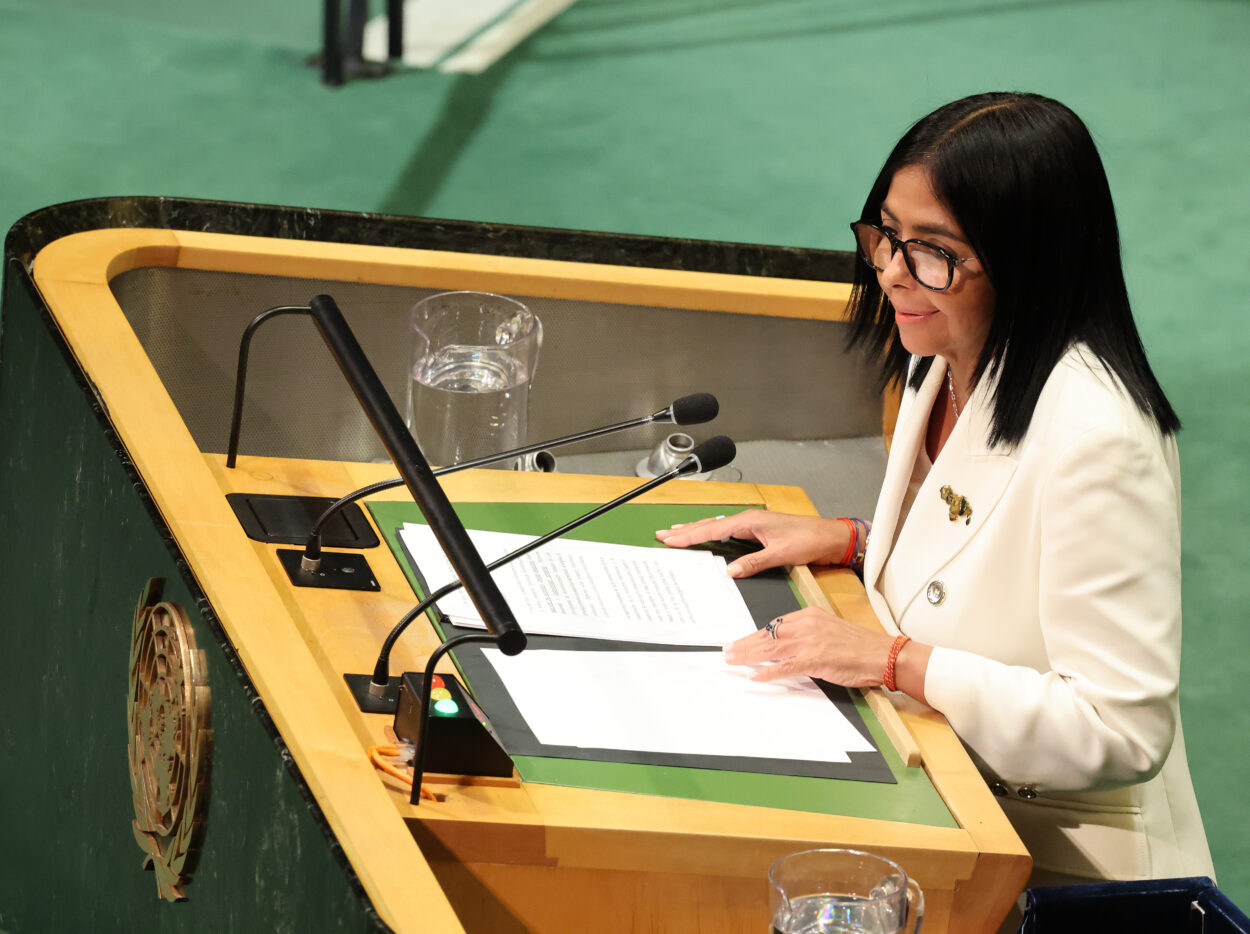
Acting President Delcy Rodríguez delivering her speech at the 81st United Nations General Assembly in New York. (Presidential Press)
Caracas, September 25, 2026 (venezuelanalysis.com) – Venezuelan Acting President Delcy Rodríguez outlined a foreign policy built on “peace” and “dialogue” in her address at the 81st session of the United Nations General Assembly in New York on Wednesday.
Speaking before world leaders, Rodríguez insisted on peace over conflict, thanked the Trump administration for diplomatic backing, and committed to international cooperation on environmental, energy, and AI regulation. She went on to urge young Venezuelan migrants to return home and laid out a proposal for structural “democratic transformation” of the Caribbean nation.
Opening her address, Rodríguez underscored Caracas’ rejection of warfare, linking global stability to diplomatic resolution.
“Venezuela, which today knows what it is to lift its children out from under the rubble, extends its deepest solidarity to all peoples who suffer from war, and reaffirms that peace […] is not a naive aspiration, but the only truly human path,” she declared.
Rodríguez explicitly addressed the diplomatic rapprochement with Washington after the January 3 US military strikes and kidnapping of President Nicolás Maduro and First Lady Cilia Flores. She expressed thanked Trump for aiding Venezuela’s reintegration into international forums following years of heavy economic sanctions and diplomatic isolation.
“I want to thank President Donald Trump and his government for their willingness to resume the path of diplomatic and cooperative relations with Venezuela,” Rodríguez stated, referencing the recent oil deal as “one of the largest ever signed” and pledging that it will contribute to regional energy stability.
Rodríguez refrained from condemning the US attack, calling it a “difficult moment” that resulted from the “exhaustion of domestic policies and heightened confrontation with the US.” She likewise made no mention of Maduro and Flores, presently detained 10-15 miles away from the UN headquarters and facing trial for charges including drug trafficking conspiracy.
The Venezuelan acting president had conveyed similar gratitude in a face-to-face meeting with Trump on Tuesday that she labeled as “historic.”
Turning to domestic affairs in her UN address, Rodríguez spoke of the severe wave of migration triggered by past political and economic crises, and vowed to the Venezuelan youth residing abroad that there will be improved conditions for their return.
“To the young people, who have grown up seeing a fractured country and who often decided to leave seeking what they could not find here: I tell you that it is worth believing again,” the acting leader affirmed. “This is the moment to build the country that many want to return to, and not just the one that many wanted to flee.”
This message was framed as part of what Rodríguez termed a “democratic transformation for a rebirth,” which she described as an institutional, orderly, and verifiable process.
“In Venezuela, there will be elections. We have already initiated a political dialogue with sectors of the opposition that leads to a process on equal terms for all,” she noted.
Though Rodríguez did not explicitly name unilateral sanctions from Washington and its allies, she stated that the country needs to be “free from economic restrictions” and pledged to “guide Venezuela toward an era of full democracy, recognized by its people and the world.”
The acting president’s UN speech came amid a flurry of diplomatic activity in New York, including meetings with International Monetary Fund (IMF) Managing Director Kristalina Georgieva, World Bank President Ajay Banga, and Inter-American Development Bank (IDB) President Ilan Goldfajn.
On the sidelines of the UN assembly, Rodríguez also held bilateral meetings with Chilean far-right president José Antonio Kast to discuss regional trade and stability, as well as with a delegation from Trinidad and Tobago, led by Prime Minister Kamla Persad-Bissessar, initiating a “new stage in bilateral relations” centered on joint offshore natural gas exploration and maritime security.
Venezuela had suspended cooperation with neighboring Port of Spain after Persad-Bissessar backed the US’ military build-up on the country’s shores in late 2025.
Rodríguez’s New York trip coincided with a second round of US-backed talks between government negotiators led by National Assembly President Jorge Rodríguez and a sector of the opposition led by former deputy Dinorah Figuera.
The latest negotiations reportedly focused on electoral guarantees, freedom of expression, institutional reform, including renewing the Supreme Court, and efforts to secure the unfreezing of Venezuelan assets abroad, including gold reserves worth approximately US $4 billion. The gold held by the Bank of England is set to be transferred to the US, to be released for post-earthquake recovery efforts under White House oversight.
“You only need to find one person in this entire world who doesn’t find you completely insufferable.”
That’s the wisdom Taylor Swift dispenses near the end of “Cleveland!,” one of four new songs on a newly expanded edition of “The Life of a Showgirl,” and if that exclamation point doesn’t tell you she’s found that person then I don’t know what would.
Released Thursday night, almost exactly a year after the original album came out, “The Life of a Showgirl: The Encore” tacks four bonus songs onto the blockbuster 2025 LP that set a new record for the biggest opening week of all time even as it drew the harshest reviews of her career. It also follows Swift’s high-profile wedding in July — her husband, the NFL star Travis Kelce, grew up in Cleveland Heights — and comes just as Grammy voters are about to decide on nominations for February’s awards ceremony, where “The Life of a Showgirl” is eligible for Swift’s eighth album of the year nod. (In case you haven’t been keeping track, that would tie her with Frank Sinatra for the most in Recording Academy history.)
In a statement ahead of “The Encore’s” release, Swift said she’d taken a trip to Sweden to celebrate “Showgirl’s” success with Max Martin and Shellback, her two principal collaborators on the album. “Really we just wanted to reflect and take in how grateful we were for the moment we were in,” she wrote, “but there was a studio there and we did what we do when we feel anything at all: We wrote more songs.”
Here are the four “Encore” tracks, ranked from worst to best.
4. ‘Cleveland!’ The exclamation point really is hilarious. (No shots at Cleveland.) I kind of dig the airy jangle-pop production, which reminds me a bit of “Ruin the Friendship,” by far the best song on the original “Showgirl.” But writing about her and Kelce’s romance as a bulwark against all the hate she receives as a rich and powerful pop star feels pretty uninspired, at least as rendered here. “The taste of me is acquired, but it’s his favorite dish”? Alas, no.
3. ‘Patient Zero’ “Encore’s” lead single — with a splashy music video set to premiere during Sunday night’s MTV Video Music Awards — has Swift fielding a phone call from a woman who’s dating one of the singer’s exes and could use a little advice. (“I’ve gotta be honest — I’ve been expecting your call,” Swift tells her.) That’s a rich premise, and I like the way the unexpected fiddle lick scrapes against the glossy synths. Again, though, the lyrics lack the emotional sophistication with which she once would have told a story like this one. And the song’s central image — a guy with a “devil on his shoulder under his halo” — is downright awkward.
2. ‘Pink Clouding’ OK, now we’re getting somewhere. This shimmering electro-pop number takes its title, as I just learned, from a term used among people experiencing addiction to describe the temporary euphoria one might feel in the early stages of recovery. (Recall that Swift wrote “Lavender Haze” a few years ago after hearing the phrase on “Mad Men.”) Here she’s looking back with regret at a relationship that she can see now was clearly a rebound: “You met me at a cursed time / I told you I was fine / And you were so good / That’s why you haunt me like you should.”
1. ‘Babylon’ Look, I’m not crazy about “liberated libertine.” And “Love is ice upon the ladder that you need to climb”? It’s giving Airbnb wall art. But man, oh man, does Swift finally tap into something deep in “Encore’s” closer: a trembling acoustic-guitar ditty about someone who’s realized only too late what they let slip away. Listen for yourself to hear how she sings it — this is a beautifully tender vocal performance — but the verse about the all-but-abandoned young mom sneaking into the bathroom to call her mom is an absolute killer. Taylor Swift: good songwriter!
Leclerc was somewhat taken aback by Mercedes’ superiority, saying that the position was what he expected but the gap most definitely was not.
At the bottom of the top 10, there was finally some good news for Williams, for whom Carlos Sainz achieved the team’s first top 10 qualifying performance of the year.
Williams have introduced a new chassis this weekend which has brought them down to the weight limit for the first time this season, after being as much as 25kg over at the start of the year.
Along with some additional developments, it appears to have produced a big step forwards, although the caveat is that Baku is a track that suits the characteristics of the Williams car and does not expose its weaknesses.
Team-mate Alex Albon did not manage to secure a tow in the second part of qualifying, and was “anyway struggling with straight-line speed all session”, and was 13th, just under 0.4secs behind the Spaniard.
Antonelli’s error came on his second lap of the first session.
He turned into the first corner too early, and the left front wheel clouted the inside wall, breaking the suspension.
He initially tried to get the car back to the pits but was told by engineer Peter Bonnington to park up.
“Let me try,” Antonelli pleaded, before Bonnington told him that either the track rod or upright was broken and there was no way Mercedes could fix that in the time they had to turn the car around before the next session.
Antonelli had been on the back foot all Friday trying to catch up time lost to a hydraulic problem that had stopped his car on track halfway through first practice, and was not repaired until halfway into the second.
It was Antonelli’s first major mistake of the season since he crashed heavily in final practice at the first race of the season in Australia.
Chelsey and Pauline are both at risk of being sent packing and according to the bookies, the odds “do not look good” for one of the housemates.
Bookmaker Coral makes Chelsey 1-20 to be evicted from the Big Brother house this evening. Those odds indicate there is a 95% chance she will lose the public vote. Pauline is 8-1 to depart.
Coral’s John Hill: “The odds do not look good for Chelsey. We think there is a 95% chance she will be evicted this evening, making her one of the shortest-priced contestants in history in our Big Brother eviction betting.”
Pauline had the most votes with six housemates nominating her; Chelsey, Charlotte, Omar, Frankie, Rochelle and Philip and Sam, Harry, Pauline, Johanne and Rob nominated Chelsey, leaving her with five votes.
Millie became the first housemate to be evicted from this year’s series last Friday (September 18) after facing a public vote alongside fellow housemates Pauline and Rochelle.
Speaking after her eviction, Millie admitted she was surprised by the result, telling presenters AJ and Will: “I am actually quite shocked, I’m not going to lie but do you know what, I had the best time and I love absolutely everyone in there.”
She added: “I could hear the reaction from out here, and Rochelle doesn’t want to be in there. It’s a mix of everything, but I’ve made friends for life in there. So I’m happy.”
Since her exit, Millie has appeared on spin-off show Big Brother: The Group Chat, where she revealed her very honest opinion housemates Omar and Rhianna’s romance.
When hosts GK Barry and Kate Lawler asked Millie if she was a fan of the pair, she instantly replied: “No, I’m not.” She was then asked if she thought their romance was for convenience as there was no one else in the house.
She said: “100%. Number one, [Rhianna] she’s a very boring person herself. And I think the only way she knows she’ll get kept in is if she hooks up with someone. I genuinely think that’s what it is.”
Kate then asked if Rhianna was playing a game with Omar and Millie replied: “She is playing it 100% because she is not interested in Omar at all. When I was watching and I watched them kissing under the covers, I was like, ‘Sorry, what? Make it make sense’.”
Omar and Rhianna are not the only housemates sparking up a romance in the house. Nominated housemate Chelsey has also been getting to know Lynx leaving fans moaning “This is not Love Island“.
Big Brother continues tonight on ITV2 and ITVX at 9pm
Towering teenager Zhang Zhanshuo became the first swimmer in history to win seven golds at a single Asian Games, while on the track, Thai sprinter Puripol Boonson powered to victory in the 100m.
China’s Zhang, 19, scorched to the men’s 400m freestyle title in the pool in Tokyo on Friday in a Games-record three minutes and 41.28 seconds.
He sat on the lane divider after the race and slowly counted off on his fingers all seven medals he had won.
Zhang also won individual golds in the 200m, 800m and 1,500m freestyle events, as well as three relays.
He said, after wrapping up a scintillating campaign, that it had been the “perfect week”.
“I think the most important thing is to stay grounded and focused, because the Asian Games are not my ultimate goal,” said Zhang, who stands 198cm (six feet, six inches).
With the Los Angeles Olympics less than two years away, China won 30 of the 42 golds in the pool this week.
Their 13-year-old phenomenon Yu Zidi was the undoubted superstar, taking home three individual golds and all in Games-record times.
Not to be outdone, Japan’s 17-year-old Shin Ohashi shattered the men’s 200m breaststroke world record on Thursday.
Swimming, equestrian and diving are taking place in Tokyo, but the city of Nagoya and the wider Aichi prefecture are the main Games host.
The men’s and women’s 100m sprints, the blue riband events in track and field, took place in front of rows of empty seats in Nagoya.
China’s Chen Yujie streaked to a comfortable victory in the women’s final in a Games-record 11.06 seconds.
The men’s was won by 20-year-old Puripol, who burst out of the pack in the final quarter of the race to win in 9.90 seconds, breaking his Games record from earlier in the evening.
It was Thailand’s first men’s 100m gold medal since Suchart Jairsuraparp on home soil at the 1978 Bangkok Games.
‘Today was a miracle for me’
On the last evening of gymnastics, Carlos Yulo won the men’s vault for his second gold of the Games.
The double Olympic champion won floor gold on Thursday to complete his collection of major titles.
“I can’t believe it,” the Filipino said.
“In this whole Asian Games, I felt really stressed, but at the same time, I enjoyed what I did today. I really did my part.
“Today was really a miracle for me.”
There’s little time to celebrate, however, with the world championships next month.
South Korea edged China 85-80 in the semifinals of the women’s basketball, and will face hosts Japan for gold.
China had their giant centre Zhang Ziyu, 19, but it was not enough.
Zhang Ziyu stands 223cm (seven feet, four inches) and scored 22 points.
“She was tough to guard,” said South Korea’s Kang Lee-seul.
“We couldn’t defend her, but we focused on fast breaks and shooting more three-pointers.”
North Korea’s women were again in record-setting form on the weightlifting dais.
Oh Kwang Ok set three world records on her way to women’s 57kg bodyweight class gold.
Oh lifted 104kg in the snatch and 134kg in the clean and jerk for a 238kg total – all world records to add to the two golds North Korea’s women won in the 49kg and 53kg classes this week.
North Korea has won four gold medals and two silvers in the six weightlifting events contested so far.
It’s stunning to comprehend how much has changed since Russia began its invasion of Ukraine. The conflict quickly turned into one dominated by artillery, with both sides scrambling to source shells wherever possible. Drones have since replaced tubed artillery as the ‘king of battle’ along the front, but cannons still have an important place on the battlefield. The commander of a new combined drone-artillery brigade offered some fresh insights into how his guns are now being deployed to achieve effects that drones still can’t provide.
As we have frequently documented, the ubiquity of drones has changed the nature of combat, especially when it comes to artillery. Not only can drones hold artillery positions at risk, many are cheaper than shells and easier to produce at scale. Most types are also precision guided munitions capable of hitting moving targets with pinpoint accuracy and can also provide battlefield surveillance. However, they are not a panacea, especially amid the cat-and-mouse game of electronic warfare countermeasures and improving kinetic and passive defenses.
In a recent interview with the Ukrainian Oboronka news outlet, Lt. Col. Vitalii Korniienko, commander of the 7th Artillery Brigade, talked about the changing nature of artillery warfare. Korniienko, whose unit is part of the Ukrainian National Guard, explained what is being done to keep his array of domestically produced Bogdana 155mm systems, donated weapons like M777 howitzers, remaining Soviet-era 2S7 Pion 203mm self-propelled howitzers and other guns, relevant. Here are some takeaways from that discussion.
How The Game Changed
“Guns used to be massed at positions to create an ‘artillery wall’ and a barrage of fire,” the lieutenant colonel said. “That practice is gone now. So, how effective is artillery today? We can create an artillery barrage, but what is the point of mindlessly churning up the earth? I’d rather send 20 FPV drones to destroy the target. The cost of that mission is $20,000.”
A soldier from the 13th Khartiia Brigade of Ukraine’s National Guard hones his FPV drone piloting skills during a training flight in the Kharkiv region, Ukraine. (Photo by Viacheslav Madiievskyi/Ukrinform/Future Publishing via Getty Images) Future Publishing
“Alternatively, I could fire 200 shells, but the cost would be astronomical,” he pointed out. “Plus, if we fired 100 shells from a gun in a single day, it likely wouldn’t survive until evening. The sky is full of drones; every shot gives away the position, leading to detection and an attempt to dismantle it using every available means. Nowadays, a typical mission involves a series of up to 10 shots. First, 3–5 shells for ranging, followed by fire on the target. That’s a minimum of five shells, with each costing at least $2,000.”
What Does The Drone-Artillery Brigade Do Differently?
“It is a concept of ours that was approved: combining artillery and drones within a single brigade,” Korniienko said. “Drones take out enemy artillery and logistics, while our guns provide cover for the infantry, destroy targets, and pin the enemy down in their dugouts. This way, we mitigate the limitations of both systems and boost overall effectiveness.”
Ukrainian troops firing a domestically produced 2S22 “Bogdana” self-propelled howitzer against Russian forces near the front line in the Zaporizhia direction. (Photo by Maksym Kishka/Frontliner/Getty Images) Frontliner#VIDEO
“Our primary operations are focused within the corps’ area of responsibility—targeting positions 10 kilometers deep or farther behind enemy lines. Of course, we will also engage closer targets if requested by the brigade holding the defense. In addition, we are shifting logistics tasks from pickup trucks to ground-based robotic systems. They are already transporting ammunition to drone and artillery positions, as well as food and fuel for generators.”
What Artillery Can Do That Drones Can’t
“Let’s be honest: 95% of strikes right now are carried out by drones,” Korniienko explained. “Yet, we cannot simply abandon artillery. The focus of our operations has shifted from merely striking the enemy to destroying, suppressing, and halting the actions of assault groups and armored columns—and the need for that remains as critical as ever. There are tasks that only artillery can handle.”
“For instance, we currently have several enemy targets in the Kupyansk sector that drones cannot reach due to electronic warfare (EW) interference, while slow fiber-optic drones are simply shot down,” the officer noted. “What do we do? We call in artillery. Nothing affects its shells. Fog, strong winds, snow, or headwinds—it makes no difference to artillery; it will operate regardless.”
Preparing Artillery For The Modern Battlefield
“At the beginning, both we and the Russians might have had two or three guns at a single position,” Korniienko proffered. “The enemy was doing this as late as 2023. Then it tapered off, because if you deployed six guns, an hour later they’d be gone. No one drives out into an open field anymore. Today, a gun wouldn’t even make it to the position without being spotted.”
Ukrainian National Guard troops prepare a ‘Bogdana-BG’ artillery installation from a dugout position. (Photo by Sofiia Bobok/Anadolu via Getty Images) Anadolu
As a result, the artillery crew’s deployment “is prepared in advance,” the officer stated. “First, anti-aircraft drone teams ‘clear’ the sky above the site of enemy reconnaissance assets. The position itself is a fully underground-dugout caponier with well-camouflaged access routes. We put a lot of effort into ensuring the artillery doesn’t get destroyed. Losing a gun is a huge blow to us.”
Short Range Versus Long Range Shells
“There is currently an ongoing debate about phasing out ‘short’ shells and switching entirely to long-range variants,” the officer stated. “This is intended to protect artillery from drone strikes.”
“What exactly is a ‘short’ shell, and should we stop using it?” he asked rhetorically. “The M107 155mm round is what is known as a ‘short’ shell. It is inexpensive and mass-produced; all our allies—and even our own country—manufacture it. We have sufficient stocks of them for combat operations. While accurate, its range is limited to 14–18 km, depending on the propellant used.”
Army
Long-range options “include the M795 and its foreign equivalents,” Korniienko explained. “These are longer, heavier, and significantly more expensive. With high-quality propellant, they can reach 30 km, or even further if equipped with a base-bleed unit. However, both these shells and the necessary propellants are in short supply.”
Army
“I do not believe abandoning the M107 is the right move,” the officer suggested. “Long-range shells cause faster barrel wear and compromise position concealment; firing a long-range charge produces a massive burst of flame from the muzzle—visible for kilometers at dusk or dawn.” “Besides,” he added, “18 km is a respectable range. If the gun is positioned 15 km back, it still has a 3-km margin to spare. That is sufficient for engaging frontline infantry. In my view, the ideal mix for most brigades would be 60% long-range shells and 40% standard M107 rounds.”
Big Versus Small Guns
“I operated 105mm guns in the Serebryanka area, on the Kharkiv axis,” Korniienko noted. “Based on intercepted communications, the enemy thought it was a mortar and searched for it within a five-to-six-kilometer range. But the howitzer was positioned eight or nine kilometers away and fired out to 10–12 kilometers.”
“There is almost no muzzle flash, just a bit of dust,” he added. “The shell arrives, and the enemy doesn’t even hear the sound of the shot. It’s compact and lightweight—you can transport it on a pickup truck. So yes, it would be useful.”
An L119 lightweight towed howitzer. (Via X)
“I’d also like to see the development of 203mm artillery; why move away from that caliber?” the officer wondered aloud. “Our ‘Pion’ systems fire a massive 100-kilogram shell capable of punching through at least two floors of a building or a bunker. And it’s reasonably accurate, too. You wouldn’t want to be on the receiving end when guns like that are firing at you. Overall, I believe we need competition. Right now, the ‘Bogdana’ is evolving under wartime conditions, which is good. But in a few years, momentum could stall. They might just keep producing the same system without significant upgrades because there’s no incentive to innovate. Yet, the nature of war doesn’t stand still.”
Wary Of Asian Shells
“We have a wide range of shells from different countries, and the ones coming from the West are fine,” Korniienko said. “However, their counterparts produced in certain Asian countries… the quality is frankly poor.”
“What is wrong with them?” queried Korniienko, who did not name the country in question. “On paper, the shell weight is listed as 46 kilograms, but when we weigh them, we find 46.9 or 45.4 kg. And that half-kilogram difference—give or take—has a huge impact on where the shell lands.”
As a result, “we no longer trust the standard firing tables provided with the shells; instead, we compile our own for each manufacturer. We weigh every batch and sort them by weight so that the difference between the ‘piles’ is minimal, ensuring a reasonably tight grouping. I can’t afford to make a mistake that causes a shell to land 2 kilometers off-target—right where our infantry guys are positioned. I should add that our artillerymen are actually wary of shells from one specific country. There have been instances where they tore off the muzzle brake or even caused the barrel to burst. A barrel burst is a disaster.”
Homegrown Is The Best
Korniienko said his unit was one of the first to test the Bogdana system, adding that he prefers it to other guns.
“We tested them and provided feedback to the manufacturer, which was then used to refine the design,” he explained. “It is a solid gun now, and it is my preferred choice. It might not be the absolute best, but I am very satisfied with the support and service.”
“If there’s a breakdown, the gun is back in position within a day or two,” he pointed out. “For instance, a gun broke down today, and we needed a repair team from the manufacturer. I know I’ll have it fixed by the day after tomorrow. They arrive in the morning, and by midday, the gun is ready. Then it takes another day or two to get it back to the position. That is very fast.”
That’s a very different experience than what he sees with donated weapons like the U.S.-made M777.
Ukrainian soldiers prepare to fire an M777 howitzer at Russian forces. (Photo by Diego Herrera Carcedo/Anadolu Agency via Getty Images) Anadolu
“As for the Western partners helping us—we are deeply grateful,” the officer avowed. “However, by the time you actually receive a part—say, a sensor—the gun might have been sitting idle for six months. And you can’t try to fix it yourself, because that would void the warranty.”
While artillery may no longer be the reigning weapon of war, as far as Ukraine is concerned, it has not been relegated to the dustbin of history yet either.
CLAUDIA Schiffer showed off her age-defying looks as she stripped down to tiny bikinis on her luxury break away.
The OG supermodel, 56, looked timeless as she teased fans with a slew of sexy holiday snaps which saw her show off her enviable physique.
Claudia Schiffer showed off her timeless good looks as she stripped down to a bikiniCredit: @claudiaschiffer./InstagramThe star showed off her incredible body on her luxury vacationCredit: @claudiaschiffer./Instagram
Claudia captioned the photos from her sun-soaked Grecian vacation with: “An endless summer.”
In one photo the model was seen showing off the body that made her famous in a sexy bikini, with a beautiful sunset background behind her.
Sign up for the Showbiz newsletter
Thank you!
In another stunning snap, Claudia was seen posing in another two-piece, this time in front of an idyllic ocean.
Other bikini shots saw her showcasing her toned figure as she got out of the sea after a dip.
During her heyday in the 90s, and along with the likes of Naomi Campbell and Kate Moss, Claudia helped to launch the world of supermodels.
The blonde bombshell was first scouted aged just 17 while partying in a Dusseldorf nightclub with a pal.
Previously speaking about this moment that changed her life, she told Elle magazine: “I thought they were making a mistake and would find out I was the wrong girl and send me home once I arrived in Paris.”
Claudia appeared to have spent the summer in her bikiniCredit: UnknownThe supermodel teased fans with her ‘endless summer’Credit: @claudiaschiffer./InstagramThe supermodel showed off her gym honed body as she got out of the ocean after a dipCredit: @claudiaschiffer./InstagramThe star also looked stunning in this dotted dressCredit: @claudiaschiffer./Instagram
Soon, Claudia was one of the most in-demand models on the ’90s catwalks, modelling for Chanel, Versace and Yves Saint Laurent and fronting an ad campaign for Guess Jeans.
During her career, the sexy star has appeared on more than 1,000 magazine covers.
After quitting the catwalk to focus on starting a family, she soon welcomed Caspar, now 23, Clementine, 21, and Cosima, 16, with her English filmmaker husband, Matthew Vaughn, 55.
The family live in Coldham Hall, a 14-bedroom haunted Tudor mansion in Suffolk.
Youth group threatens return to mass protests, sets deadline for Gyanesh Kumar to quit due to reports of meddling with voter lists.
By Al Jazeera Staff and Reuters
Published On 25 Sep 202625 Sep 2026
India’s ‘cockroach’ party youth movement has threatened to launch nationwide protests unless the country’s chief election officer does not resign by Saturday.
Founder of the Cockroach Janta Party (CJP), Abhijeet Dipke, announced on Friday that protests would begin in Mumbai on October 2 – if Gyanesh Kumar does not step down.
Recommended Stories
list of 4 itemsend of list
The CJP, a satirical outfit born on Instagram in May after India’s chief justice compared unemployed young Indians to “cockroaches” and “parasites”, has shaken the staunchly conservative government of Prime Minister Narendra Modi.
On Thursday, the group demanded that Kumar quit within 48 hours, following a newspaper report linking him to altered voter lists. Opposition parties say the lists have been manipulated to benefit Modi’s Bharatiya Janata Party (BJP).
“If Gyanesh Kumar does not resign by tomorrow, CJP will begin its nationwide protest from Mumbai on 2 October, and take it to cities across India,” Dipke posted on X.
“This Gandhi Jayanti let’s pledge to save democracy,” he added, referring to the October 2 holiday marking independence leader Mahatma Gandhi’s birthday.
CJP founder Abhijeet Dipke celebrates with supporters in New Delhi after the resignation of India’s Education Minister Dharmendra Pradhan, July 25, 2026 [Ritesh Shukla/Getty]
Report provokes political storm
On Wednesday, the Indian Express newspaper reported that two election commissioners had raised questions or voiced concern with Kumar at least 14 times in 10 months, mostly over the process of updating voter lists that began last year.
The main opposition Congress party announced protest marches on state election offices across India on Friday, demanding Kumar’s arrest, his removal and an independent review of decisions and voter-list changes made under him.
Opposition parties have long accused the commission of deleting the names of millions of voters without warning and adding new voters without verification to favour the BJP.
BJP leaders and supporters at a ‘Drug-Free Punjab’ march in Amritsar [File: Narinder Nanu/AFP]
Election panel rejects claims
The Election Commission of India said that “differing views and observations are a normal part of deliberation in any institution” and that all its actions were lawful.
The BJP has defended the commission, accusing the opposition of a smear campaign because it keeps losing elections.
“Neither the Election Commission of India nor any constitutional body in India is under dictatorial rule,” BJP spokesperson Sambit Patra said on Wednesday.
CJP-led protests in July forced the resignation of Modi’s education minister over exam-paper leaks, one of the prime minister’s biggest political setbacks since coming to power in 2014.

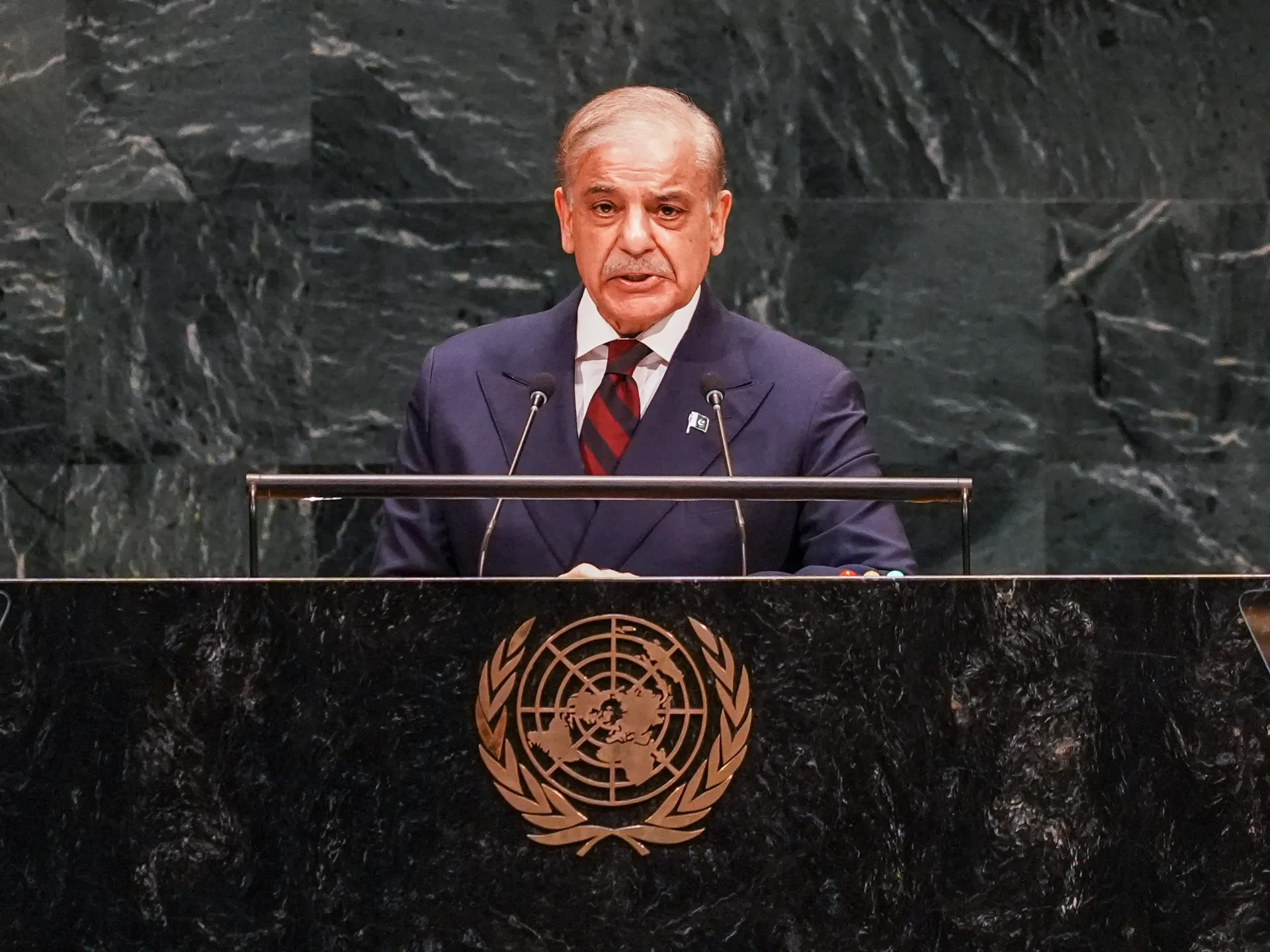



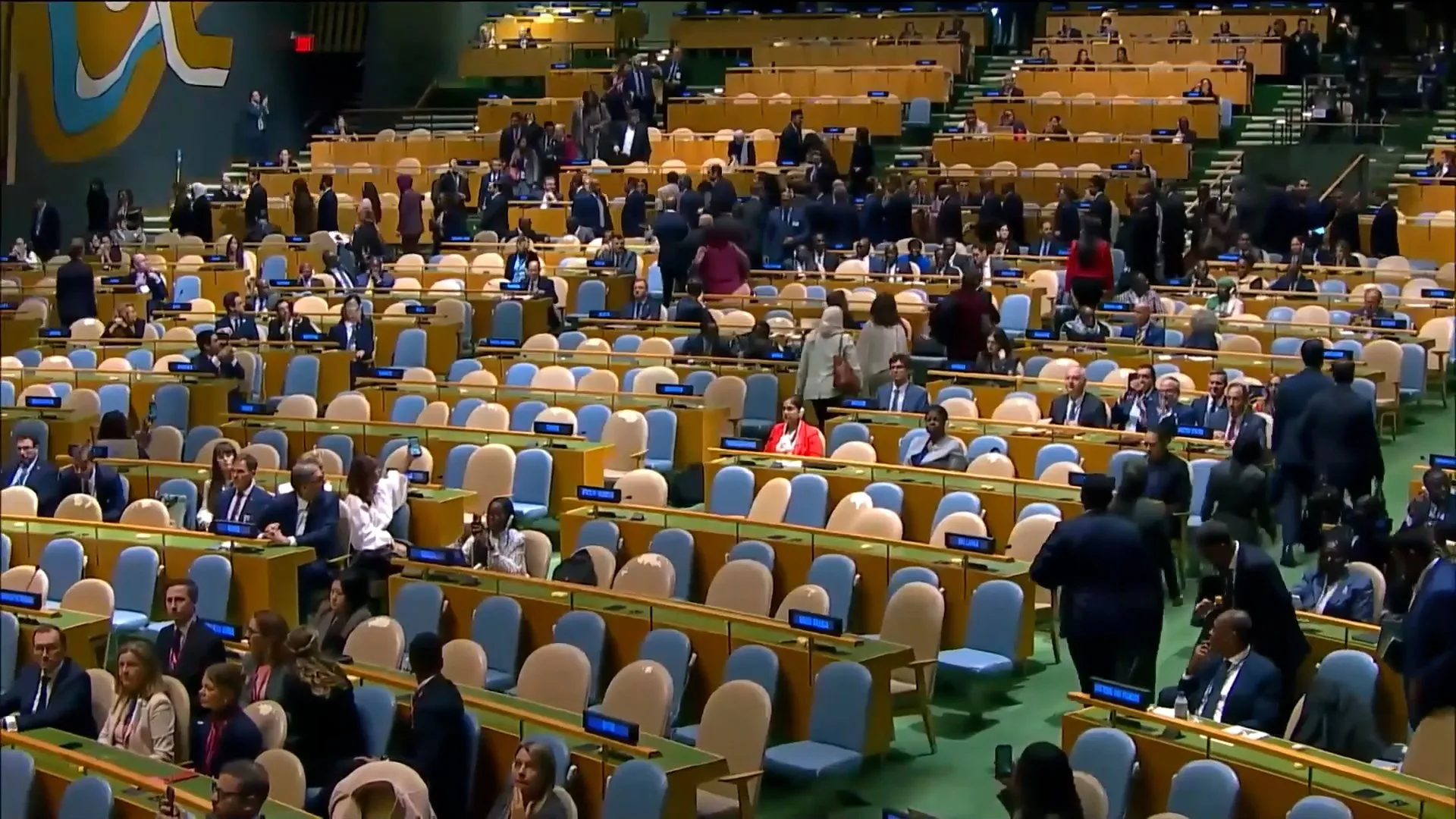





![Shiite pilgrims march to Karbala, to observe Arbaeen that marks the end of a 40-day mourning period following the Day of Ashura, in Najaf, Iraq [Anmar Khalil/AP]](https://i0.wp.com/www.aljazeera.com/wp-content/uploads/2026/07/AP26209348572737-1785382211.jpg?w=640&ssl=1)