



Anthropic warns that AI needs a ‘brake pedal’

June 5 (UPI) — Artificial intelligence company Anthropic issued a warning about systems that can improve themselves and said that humans need a way to intervene when necessary.
AI systems will soon be able to better themselves — known as “full-recursive self-improvement” — and that has a lot of benefits, like for health care and science. But just like science fiction movies warn, it could cause serious risks to people, said Anthropic co-founder Jack Clark and leader of the Anthropic Institute Marina Favaro in a recent blog post.
“Full recursive self-improvement also might increase the risks of humans losing control over AI systems,” the blog said. “If systems are capable of fully building their own successors, the ways we secure them, monitor them, and shape their behavior all grow much more important.”
Clark called for the industry to give itself a “brake pedal” on CNN Thursday.
“When I look down at the car we’re driving, all I have is a gas pedal. I don’t have a brake pedal, and surely at some point in the future we might want that option,” he said. The inability to validate, verify and trust AI’s behavior is risky, he added.
Clark told CNN that countries have made similar changes in the past.
“We’ve done this before. In the height of the Cold War, under highly tense situations between rivalrous countries, they found ways to stabilize aspects of the nuclear arms race,” he said “All of this has been done before in other domains, and it may need to be something we do in the domain of AI.”
But critics say this talk of curbing AI is nothing new, even from Anthropic, which battled the Pentagon when it wanted full access to use its AI product.
In July 2025, Anthropic signed a $200 million contract with the U.S. Department of Defense. But CEO Dario Amodei said that Anthropic’s AI model Claude could not be used for mass surveillance in the United States or for autonomous weapons without human approval.
On Feb. 27, the Pentagon gave Anthropic a 5 p.m. deadline to comply with its demands that the government be able to use the service as it sees fit. Before the deadline, President Donald Trump announced that no government workers would be allowed to use Anthropic.
Then, Secretary of Defense Pete Hegseth labeled the company a supply-chain risk, which blocked it from any government contracts, but a judge struck it down in March.
“Anthropic might give the impression of being warm and fuzzy, but their definition of AI safety is narrow,” Steven Murdoch, a professor at University College London, told The Guardian. “Supporting U.S. authorities in the development of offensive capabilities has never been something they have spoken against.”
Murdoch said Anthropic’s blog left out evidence that AI is close to self-improvement.
“It is true that there’s some evidence that AI capabilities have increased and continue to increase with no limits becoming immediately clear,” he said. But, “I don’t think anything has fundamentally changed today that has caused Anthropic to publish this article.”
Murdoch pointed out that Athropic’s call for a pause on AI was similar to other proposals it has made in the past.
“It’s a reminder of what they are concerned about and have been concerned about for many years. I’m sure the attention is welcome, but again this isn’t a new thing,” Murdoch said. “Anthropic have been trying to get the attention of policymakers since they were founded.”

Shrinking Lake Threatens Livelihoods in Adamawa Amid Poor Management
“Life was good back then. We had everything in abundance.”
When Jummai Usman says this, she is anchoring herself to a version of Geriyo, a community in Yola, Adamawa State, in northeastern Nigeria, that younger generations in the area may never know.
Born and raised on the shores of Lake Geriyo, she considers this place her ancestral home. Her parents were fish traders, and she married a fisherman. Her husband would catch the fish and bring them to her to roast and sell to traders, and for decades, this trade sustained them and their children.
Jummai, then married, was 16 years old when the Federal Government of Nigeria established the Lake Geriyo Irrigation Project in 1976. The 24-hectare initiative was managed by the Upper Benue River Basin Development Authority (Upper Benue RBDA) in Yola, under the Federal Ministry of Water Resources.
It began with 52 registered local farmers, offering them irrigation water and modern agricultural extension services, with water pumped directly from the River Benue. Residents were excited about the project at the time, Jummai recalled, and considered it a means of advancement. Farmlands were carved out and assigned to registered farmers, and an office was established to oversee these activities.
“We paid a fine back then, but I don’t remember how much. My husband paid for it. We called it the water and land levy,” Jummai, who is now 66 years old, said.
Over time, more people flocked to the area, and the lakeside settlement gradually expanded. The site has since grown to cover 429 hectares and now accommodates more than 2,000 farmers.
Among them are people like Ali Usman*, who built his life around Geriyo Lake. He moved to the area at the age of 15 and has lived there for about 25 years, farming and fishing along the lake. “I rent three hectares of land annually. I used it to harvest 100 to 120 bags of rice combined,” he said.
Now a father of seven, Ali fears he may no longer be able to provide for his family, as farming and fishing around Geriyo are becoming harder for thousands who depend on the lake for survival.
Long credited with improving livelihoods in the area, the Lake Geriyo Irrigation Project is now at the centre of a slow-moving crisis: a shrinking lake, years of institutional neglect despite millions of naira in rehabilitation funds, and a community that has lost its home. HumAngle spoke to several of the residents, who described losing their livelihoods to years of neglect that have left the lake overwhelmed.
‘Geriyo Lake is dying’
The ecological collapse of Geriyo Lake did not happen overnight. Residents have watched it shrink steadily over the years, especially over the past five years, as its waters have receded, its fish have become scarce, and its capacity to sustain farming and fishing has diminished season by season.
Jummai, who has seen the lake in its glory, says it is dying. She believes the shrinking is responsible for the decline in fishing in the area. “Even when we were living by the riverbank decades ago, the place barely got flooded,” she said, adding that the lake had depth back then.
The heavy rainfall on May 18 in Yola brought much-needed relief to farmers in the area, marking the start of the farming season. However, it also stirred fear and concern among the residents of the Geriyo community. Residents say that if the rain continues at this intensity, their homes and farms may be submerged, and farming will come to a standstill.
Since farmland is usually flooded during the rainy season, some residents told HumAngle they had stopped farming in the area. Others, however, still take the risk, even though the results are often catastrophic.
While this fear lingers in the hearts of farmers who are yet to harvest the crops they planted during the dry season, some fishermen seized the opportunity to cast their nets, as they haven’t done so in a while due to the shrinking lake.
“Fish are scarce. We don’t get it like before, so we take advantage of every water channel across the lake to cast our net,” a fisherman in the area told HumAngle, adding that the shrinking lake has affected his trade in the area, making what was once a regular activity only an occasional one.

Bala Abubakar*, another fisherman in the area, said that overfishing, the shrinking of Lake Geriyo, and poor regulatory practices all contribute to the challenges faced by fishermen. Even though regulations stipulate that only registered fishermen are allowed to fish in the lake, and guards have been stationed to secure the lake at night, Bala said some fishermen still bypass these rules by paying a token fee to the guards.
To control fishing in the area, HumAngle learned, the Geriyo Lake is often declared closed by the Upper Benue RBDA and then reopened for a limited period – typically during the dry season when the lake dries up.
“At the time the lake will be opened, there will be a leader for each group, and the leader will present the list of his group members, and they might say the group will pay a hundred or ₦200,000 as a passage fee. It depends. And when the lake opens, the group members will go and catch fish for specific months,” Bala explained.
An environmental assessment by researchers at the Federal College of Education, Yola, in 2024 found that fish populations in Lake Geriyo are declining due to largely unregulated fishing practices. The researchers stated that severe pollution of the lake, caused by urban waste and agricultural runoff, has also displaced the fish. The effects are visible in the market.

Rukaiyatu Sani, a resident of Geriyo and a fish seller, says her business has suffered over the past few months. She noted that when the fishermen make a catch, they sell the fish at a higher price because they have other water levies to pay. “For instance, we used to buy a basket of fish for ₦20,000, but now we buy at either ₦40,000 or ₦45,000,” she said.
Bashir Abubakar, a professor of environmental resource management at Modibbo Adama University, Yola, corroborated the researchers’ findings. He attributed the shrinking to “a lot of things”, including siltation. “There are encroachment and unsustainable land uses, overfarming, overfishing, tree cutting, and sediment erosion from urban expansion activities around the lake. So all these are inimical to the survival of the lake itself,” he said.
Bashir explained further that the recurring floods in the Geriyo area stem from its close hydrological relationship with the Benue River — itself under severe stress.
“When the River Benue becomes full as a result of heavy rainfall, Lake Geriyo also becomes full. When there is a reduction in the size or volume of water in the River Benue, naturally, Lake Geriyo too becomes relatively dry,” he said, adding that siltation, climate change, population explosion and pollution are the basic issues affecting Geriyo.
“More than 70 per cent of what used to be the river Benue is now land with evidence of permanent vegetation, which shows water has not been reaching those places. So this one affects Lake Geriyo, too,” the professor said.
We used a combination of planetary mapping tools in Google Earth Engine to track the lake’s footprint over more than two decades. We pulled historical data from NASA and the USGS’s Landsat 9 satellite to map Lake Geriyo as it was in 2000, and contrasted it with high-resolution imagery captured by the European Space Agency’s Sentinel-2 satellite in 2026.
From high above, satellite images of Lake Geriyo reveal a vital ecosystem being choked to death from the bottom up. As the lake loses depth, it accumulates soil over the decades through soil erosion, causing loose soils to progressively fill the lake’s deep basin with mud.
The satellite imagery shows that the visible water area actually climbed from 1.28 sq km to 1.91 sq km. Meanwhile, the terrain satellite explains why: the average slope of the entire lake basin is a mere 1.35 degrees, a gradient so low that the choked water has nowhere to go but out, creating a shallow basin detrimental to both aquatic and life near the banks.

While fishermen in the area are grappling with a changing environmental landscape, farmers are also bearing the brunt of Geriyo’s degradation, which leads to annual flooding and loss of soil fertility.
For instance, Ali, who used to harvest over 100 bags of rice from his combined three hectares, now barely makes half that amount. “If I get 50 bags, that means I am lucky,” he said.
The Lake Geriyo Irrigation Project, established primarily to provide irrigation and agricultural extension services to local farmers in the region, appears to be falling short of its mandate to supply water. While some locals attribute this to the lake’s shrinking, others believe the rise in fuel prices is to blame.
Farmers say they pay a standard levy, but not all of them have access to the same level of service. The higher the service fee paid, the higher the quality of service one can expect from the Upper Benue RBDA office at Geriyo, according to local sources.
“I pay ₦4000 per bed, which only covers the rent fee for land. Those who pay higher enjoy access to irrigation services from the office. Their farms are supplied with enough water, and their harvests are always bountiful compared to ours,” he said.
The complaints about unequal access to irrigation come despite significant public spending on the project in recent years.
Records on GovSpend, a civil society-run platform that tracks and analyses federal government spending, show that ₦32,827,212 was paid to Dect Engineering Limited for “refurbishing, services, lubricating, and installations of M&W pumps at Lake Geriyo Project” on Nov. 18, 2024. Another ₦56,365,196 was paid to South Belgride Oil on Sept. 5, 2024, for the supply of “45,000 litres of diesel” to the site. Both payments were made under the supervision of Upper Benue RBDA.
Despite these investments, farmers say the benefits are not evenly distributed. In Geriyo, the irrigation plant operates mainly between December and May annually, the area’s peak irrigation season, with water pumped two to three times a week. While this suggests that the system is functional, access to the pumped water remains unequal. Consistent with earlier complaints, farmers who pay higher levies receive water directly from the irrigation network, while lower-paying farmers often have to fetch water from the lake themselves.

The disparities extend beyond water access. HumAngle learned that land allocation is also linked to rental costs, with more expensive plots generally regarded as more fertile. Ali said he pays between ₦70,000 and ₦100,000 per year in land rent, while others pay more. Since all fingers are not equal, low-income farmers suffer most from environmental degradation.
The sudden notice to vacate
The ecological crisis, devastating as it is, has been compounded by a series of state decisions that have left the community with nowhere to turn.
In 2023, locals living along Geriyo Lake received a notice from the local office ordering them to leave the area. While some residents left within weeks of the notice being issued, others remained. For Jummai, Geriyo is the only place she has ever known, so she had nowhere else to go.
“We were told that the place belonged to the Adamawa Emirate Council, so the government came to take over,” Ali said. “When they noticed that we were not willing to leave our homes, they gave us a total sum of ₦5 million, which was shared among every household that was yet to vacate the area back then. Each household got ₦57,000, and since people were hungry, we took the money, packed the items we could carry and left our homes.” Jummai’s family also received the money.
A few days after the locals left, houses at the Geriyo Lake were destroyed. The site was declared a government property, and a wall was erected. During a visit to the area in May, HumAngle observed that the fence area is yet to be developed.
Ali told HumAngle that since the sum each household received was insufficient to pay rent for large households or to secure new homes, the affected group went to an open field behind the lake, erected makeshift homes, and settled there so they could continue farming and fishing.
For Jummai, being dislodged from Geriyo Lake meant being stripped not just of her ancestral home but also of her access to a good life. “Before the government came with vehicles and levelled our houses, I lived with my husband and children in a decent home,” she said. Jummai now lives in a makeshift tent with her family. They still fish, but occasionally.

Bashir believes that humans are stewards of the environment, and that displacing them undermines the very interventions meant to save it.
“Whatever policy that the government or any agency is making in those areas towards curtailing or reversing what has already happened there, the human perspective should be taken much more seriously within the context of sustainability,” he said, adding that dislodging the dwellers strips every intervention of the human element needed to maintain the environment and sustain livelihoods.
₦500 million, and not so much to show
Another damning dimension of Geriyo’s crisis is not ecological, but administrative.
According to EYEMARK, a government-run digital platform that tracks federal infrastructure projects, more than ₦500 million was allocated for the rehabilitation of Lake Geriyo, which was made by the Federal Ministry of Water Resources to the Upper Benue RBDA from 2019 to 2024, with the project listed as the Yola Reclamation (Lake Geriyo) Project. EYEMARK indicates that the project is ongoing and only 1 per cent complete.
When HumAngle visited the site in May, there were no visible construction activities.
HumAngle filed a Freedom of Information (FOI) request with the Upper Benue RBDA in Yola, seeking information and documents related to dredging, ecological restoration, irrigation, and other related development projects in line with the Lake Geriyo project. We also sought information on the funds appropriated by the Federal Ministry of Water Resources for the Lake Geriyo project from 2019 to 2024.
The Authority had not responded to the FOI request at the time of publication.
Residents around Geriyo, however, said the river has never been dredged.
“One time, we got frustrated over the services and reported to the local office, but nothing was done. We even went to the local radio station to voice our grievances, but nothing has changed,” Ali said.
According to Bashir, effective management of the Geriyo area would require collaboration between the governments of Nigeria and Cameroon, since the Ladgo Dam flows into the Benue River, meaning that what happens upstream has direct consequences for Geriyo’s downstream.
“There is no strong commitment on the part of our government in terms of having a bilateral agreement with Cameroon as to the management of the river itself. So that is why we are always at the receiving end,” he said.
Anxiety heightens
The rainy season has just begun, and Geriyo residents are already on edge, particularly farmers who are yet to complete their harvest from the dry-season farming.
Bashir, the environmental expert, warns of long-term risks if Geriyo Lake is not dredged and rehabilitation measures are not implemented. “The river is becoming shallower and shallower. So whenever we have a lot of water, the river will not contain the water. So you find that the entire floodplain is submerged, with losses of agricultural land, houses, and so on. So these are, of course, things that are increasing year in year out,” he said.

Bashir added that since the government has not taken technocentric measures such as dredging the river, residents can settle for local measures to protect the land and the river.
“People should be encouraged to plant trees. If there will be massive afforestation within those areas, I’m very much sure it will go a long way in addressing the issue and reversing it to some level,” he said, adding that planting trees at the riverbanks and areas within the floodplain will help attenuate and reduce the effect of the rainfall.
Two years on, households like Jummai’s continue to live in makeshift shelters behind Geriyo Lake. When the area floods, they gather their belongings and relocate to higher ground. Since the farmlands also flood, the men resort to fishing alone, but even that becomes highly competitive at times. “During the rainy season, when the sites get flooded, the area is left unregulated, and everyone can fish there,” Bala said.
Despite the degradation of the once-thriving Geriyo community, fishermen and local farmers still arrive in their hundreds every day at the lake, hoping to make a catch or bring in a bountiful harvest.
But a far greater problem looms. A private individual and a construction company have bought the land where Jummai and her community members have erected makeshift tents. One day, they might be asked to leave.
*Names with asterisks were used to protect some of the sources.
Satellite analysis and illustration by Mansir Muhammed.

‘Renoir’ review: Quirky 11-year-old girl processes her dad’s imminent death
Japanese filmmaker Chie Hayakawa isn’t afraid to look death in the eye. The writer-director’s 2022 feature debut, “Plan 75,” imagined an unsettling future in which the elderly are offered a subsidy by the government to be euthanized. For her follow-up, she travels into her own past, drawing from memories of her father’s battle with cancer.
But while “Renoir” features no sci-fi elements, the nearness of oblivion remains just as prominent. Shorn of sentimentality, this gentle drama follows a quietly observant fifth-grader who feels the grim shadow of mortality all around her. How the character will absorb that realization is anyone’s guess — including Hayakawa’s.
Newcomer Yui Suzuki stars as Fuki, who lives in a nondescript Tokyo suburb in 1987. Her soft-spoken dad, Keiji (Lily Franky), is suffering with terminal cancer in its final stages, the emaciated man spending as much time in the hospital as he does at home. Fuki’s mother, Utako (Hikari Ishida), doesn’t seem very despondent, though: One senses an emotional exhaustion that comes from preparing so long for the inevitable that she’s now mostly numb, her anticipatory grief having given way to frayed nerves.
Fuki’s pre-mourning process is equally complicated. Outwardly, she shows no signs of being devastated by her dad’s imminent passing, happily playing with him, almost in denial of his fate. But “Renoir” subtly suggests the impressionable girl is more aware than she lets on, surrounding her with random reminders of death. Local news breathlessly reports on random domestic murders. Even when Fuki gets away from the city, the camera lingers on her watching a campfire’s dying embers. The film derives its title from the girl’s interest in “Little Irène,” a painting by influential French impressionist Pierre-Auguste Renoir. She asks if Renoir is still alive. No, he’s dead too.
Hayakawa pulls from her childhood in multiple ways for her sophomore feature, which premiered in competition at Cannes last year. “Renoir” takes place in 1987 specifically because that’s the year she turned 11, and, like her protagonist, she was infatuated with “Little Irène.” But there’s a refreshing absence of nostalgia in Hayakawa’s conception of Fuki and her quizzical processing of her father’s fatal illness.
For school, Fuki writes an essay about her wish to be an orphan. She becomes obsessed with hypnotism and mind-reading, an unorthodox strategy to create a sense of control. And, occasionally, she wanders into daydreams that Hayakawa presents so matter-of-factly that viewers may sometimes be unsure if what they’re seeing is actually happening. In “Renoir,” Fuki’s flights of fancy are as naturalistic as her everyday life — a sharp reminder that, for children, imagination and reality are often indistinguishable.
If death has been integral to Hayakawa’s two features, it’s society’s callous reaction to aging that is her primary focus. “Plan 75” eschewed dystopian-thriller conventions to ponder how Japan might one day treat its senior citizens, viewing them as little more than a drain on resources. “Renoir” makes a similar point within a memory piece. Keiji is the one dying, but it’s telling that Hayakawa centers the story on Fuki and Utako, who each, in their own way, seem more concerned about their own personal dramas.
As Keiji’s situation grows more dire, Utako enters the orbit of Toru (Ayumu Nakajima), a workplace advisor with whom she’s instantly smitten, pondering pursuing him romantically. Ironically, Toru preaches the importance of good communication skills in the office, a lesson the film’s guarded family would be wise to heed. While Utako hides her feelings for Toru, Fuki begins a secret odyssey in which she impulsively joins a phone dating service, engaging in conversations with a creepy college student (Ryota Bando) who pushes her to meet in person. This potentially traumatic subplot is the closest “Renoir” gets to traditional suspense, but even here Hayakawa adopts a muted approach, sidestepping shock value for bittersweet commentary about young people’s confusion around love. Both Utako and Fuki chase after human connections fraught with danger, each trying to insulate themselves from the tragedy waiting at home.
“Renoir” may be a delicate wisp of a film, but it’s flecked with thoughtful questioning about whether childhood’s sorrows leave permanent scars on us as adults. Suzuki exudes the fragility and buoyancy of adolescence, playing Fuki as someone constantly imbibing the world, rarely revealing what she’s doing with that stimulus. The simplest moments resonate the strongest, such as when the moody 11-year-old holds a balloon over the balcony of her family’s high-rise apartment, casually releasing her grip so that it tumbles to the ground far below. Does it speak to a desire to jump herself? “Renoir” won’t say, but the character is so poised you feel confident she’ll survive her father’s death. Who knows: Maybe years from now, she’ll even make a touching, emotionally astute movie about it.
‘Renoir’
In Japanese, with subtitles
Not rated
Running time: 1 hour, 56 minutes
Playing: Opens Friday, June 5 at Landmark’s Nuart Theatre

Judge orders pretrial detention for ex-CIA official accused of stashing $40 million in gold bars at home
ALEXANDRIA, Va. — A former senior CIA official accused of stashing more than $40 million worth of gold bars from the federal government at his Virginia home was ordered to remain jailed until his trial after a hearing Friday where a defense attorney accused prosecutors of smearing the official with “sensational,” irrelevant allegations.
The defendant, David J. Rush, has both the means and motive to flee while the case against him is pending, U.S. Magistrate Judge William Fitzpatrick ruled, citing Rush’s professional experience.
“He’s in a different position than most people to flee and avoid detection by law enforcement,” Fitzpatrick said.
Rush is charged with fraudulently claiming tens of thousands of dollars in compensation for military leave after he was honorably discharged from the U.S. Navy in 2015. He was arrested last month after investigators searched his home and seized more than 300 gold bars, roughly $2 million in U.S. currency and about 35 luxury watches, according to an FBI agent’s affidavit.
Rush’s attorney, Jessica Carmichael, noted that Rush isn’t charged with any crimes related to the discovery of the gold bars, which she referred to as “basically a non-issue” and “nothing more than a sensational tidbit.” She said Rush properly obtained the gold bars and kept them locked in a safe in his basement.
“Mr. Rush never claimed they were his,” she said.
Between last November and March, Rush requested and received a “significant quantity” of foreign currency and tens of millions of dollars in gold bars for “work-related expenses,” according to the FBI affidavit. Justice Department prosecutor Gavin Tisdale said Rush wasn’t supposed to have the gold bars at his home.
“That’s the issue — his skirting of rules and regulations,” he said.
Tisdale briefly summarized the case against Rush in open court after a portion of the hearing was sealed from the public. The evidence against Rush “grows stronger by the day,” Tisdale told the magistrate judge.
“Mr. Rush simply cannot be trusted to abide by this court’s conditions,” he said.
Rush enlisted in the Navy in 1997 and was honorably discharged from the U.S. Navy Reserves as a lieutenant in 2015, according to the affidavit.
Authorities claim Rush lied about his education and military background on job applications, falsely claiming to be a former Navy pilot who graduated with a bachelor’s degree from Clemson University in South Carolina and a master’s degree from Rensselaer Polytechnic Institute in New York.
Investigators determined that he didn’t serve as a Navy pilot and didn’t attend either school.
Kunzelman writes for the Associated Press.

Women’s World Cup qualifying: Wales ‘not good enough’ in Montenegro draw – Wilkinson
The draw meant Wales wasted a chance to seize control of Group B1.
Czech Republic, their rivals for top spot, also dropped points in surprising fashion as they were held to a 1-1 home draw by Albania in a game which kicked off half an hour before Wales’ fixture in Podgorica.
Had Wales won, they would have needed only a draw in Tuesday’s final group game against the Czechs in Cardiff to secure first place, and therefore a more favourable play-off draw in the play-offs later this year.
Instead, Wilkinson’s side must beat the Czechs – who they drew with in the opening game of the campaign – to come out on top.
“We are exactly where we started [the day],” she added.
“We have to grab these opportunities. I’m sure the Czech Republic coach is as frustrated as I am.
“I am confident it will be a close game on Tuesday. We have to show up.”
The story of the night might have been different had goal-line technology been in place at Montenegro’s Gradski Stadion.
Wales appeared convinced Hughes’ second-half effort had gone over the line before Montenegro defender Sladjana Bulatovic hooked the ball clear.
“I am frustrated there is no VAR, but this is the game – we can’t affect that,” Wilkinson said.
“I’ll fight for it behind the scenes, but on the night we needed to put the ball away.”

Anthropic urges AI labs to pause, warns humans risk losing control | Technology News
Anthropic is proposing that the world’s top artificial intelligence companies come up with a coordinated way to pause development of advanced AI systems, warning that the technology is improving so quickly that there’s a risk humans would lose control.
The company behind the Claude chatbot said in a blog post on Thursday that, as cutting-edge AI gets increasingly faster at carrying out tasks, “it would be good for the world to have the option to slow or temporarily pause” its development.
Anthropic said its internal research institute plans to explore the issue in collaboration with others and “take actions” to help build the systems for a credible slowdown or pause, without being more specific.
Anthropic rival OpenAI argued for a different approach in a report published on Wednesday, saying that “democratic governments — not private companies acting alone — must ultimately determine the rules, safeguards, and accountability mechanisms”.
“Our view is that decisions about the pace of AI innovation should not be left to any one lab, company, or special interest group,” it said.
AI models are getting faster, with rapid increases in how quickly they can carry out software tasks like coding on their own, Anthropic said in its post. Based on current trends and given enough computing power, an AI system could be able to design and develop its own successor, in what is known as “recursive self-improvement”.
Self-building AI would be a major technological milestone that would bring benefits in science, healthcare and other areas, Anthropic said, but it “also might increase the risks of humans losing control over AI systems”.
Some tech industry figures have long warned of such a scenario.
Anthropic’s post comes after a different warning this week from a team of researchers at the University of Toronto who showed how AI tools could be used to create a new kind of AI “worm” that adapts its hacking strategy as it spreads from device to device and takes over a vast computing network.
“I think it’s really important that people understand that it’s not just the biggest, most powerful language models that pose the security concerns,” lead researcher Nicolas Papernot said in an interview.
The authors of the Anthropic post, company cofounder Jack Clark and Marina Favaro, head of its research institute, said the pause would be used to enable “societal structures and alignment research” to keep up with AI advances. Alignment is industry shorthand for making sure the technology matches human values and intentions.
The proposed coordination would let advanced AI labs verify that global rivals have actually stopped or slowed their work, “and that a bad actor could not use the auspices of a coordinated slowdown to jump ahead in secret”.
The company said a coordinated global mechanism is needed because, without it, a slowdown in AI development could let the “least cautious” players catch up and add to pressure on companies and governments as they make tough choices about AI safety.
Fears that advanced AI systems may get out of human control and cause societal harm have risen as the technology becomes increasingly capable. Anthropic’s own Mythos model sent shockwaves through industries, including banking and software, earlier this year with its ability to find vulnerabilities in existing code.
But regulation has been slow, especially in the US, where most leading AI labs are based. A Trump administration executive order earlier this week put the onus on the labs themselves, asking them to voluntarily submit their most capable models for government cybersecurity testing before public release.
Safety focus
AI researchers have also urged a pause before, but have had little success. Elon Musk, who owns AI lab xAI, was among the backers of a 2023 push by the non-profit Future of Life Institute to halt AI development for six months to allow time for safety guardrails.
Anthropic has long positioned itself as a safety-focused AI lab. Earlier this year, it refused to let the US military use its models for domestic surveillance and fully autonomous weapons, prompting backlash from the government, which put it on a national security blacklist, set to take effect later in 2026.
Anthropic’s post comes as the company and ChatGPT-maker OpenAI race to sell shares on the stock market, in an IPO that could value Anthropic at nearly a trillion dollars.
Papernot notified Canadian cybersecurity authorities prior to releasing his report, which shows how researchers developed the worm in a laboratory by using an “open-source” AI tool that is easy for software developers to cheaply access and modify.
“In the past, cyber attackers would focus on targets that are very high value,” he said. “Banking systems, hospitals, electricity grids, water treatment systems, schools.”
Papernot agreed that there should be more collaboration between companies, government agencies and academic researchers to develop countermeasures as AI-powered hacking tools supercharge the search for computer vulnerabilities.
“That old laptop you have in your basement that you don’t check on regularly doesn’t seem like a very high-value target, but it can be used as a launch pad to attack these higher-value targets,” he said. “Anything connected to the internet is now at risk because of how low the cost has become to mount these cyberattacks.”

12 Villages Sacked as ADF Terrorists Intensify Attacks in Eastern DRC

The Allied Democratic Forces, a militant armed group operating in the volatile borderlands of the eastern Democratic Republic of the Congo (DRC), have sacked 12 villages in the Bambodi sector of Tshopo province, displacing hundreds of people.
Tryphen Mabikinyambey, a member of the provincial parliament representing Bafwasende, said the ADF militants are presently only two hours away on foot from these villages in Tshopo. For months, the ADF terrorists have been based in villages dominated by the Badumbisa people in Mambasa, close to the now-abandoned villages in Tshopo. Tryphen added that many civilians in Bambodi have sought refuge in Nia-Nia, Bafwasende Centre, and Kisangani.
“The ADF rebels feel at home there. They are at ease. We have already reported their presence, yet there has still been no appropriate response from the authorities. The population is being emptied from the tribal group. There is no response from the national, provincial or local authorities,” the parliamentarian said.
He noted that all schools have been closed and that no hospitals are operational in the deserted area. “Even individuals in mining camps have left. Life is becoming increasingly challenging for everyone who is living under constant threats,” he remarked.
The representative is urging the Congolese government to launch a comprehensive operation to protect the local populations. He stated that the ADF rebels are relocating from the Bapere tribal group in North Kivu, where they are being chased by a coalition of Congolese and Ugandan armed forces as part of the joint Operation Shujaa. Unfortunately, as the ADF is chased from one area, it seeks refuge in quieter zones, such as those in Mambasa and Bafwasende, which now pose significant risks to residents.
“When they are tracked down, they search for calm areas. And these places are in the Mambasa territory and Bafwasende,” he said, noting that the ADF terrorists have been sending tracts. “They send those they have ‘rescued’ with letters of threats against Bafwasende territory and Tshopo province.”
The terrorists have also recently killed scores in North Kivu, triggering a fresh trove of armed violence in the eastern DRC. On June 4, for instance, local civil society sources said four bodies were found in the Kingeste area and a fifth one near Ngite.
“As it stands, 21 people are dead. We’ve found four bodies around Kingeste and one near Ngite. We want to see the military pursue the assailants to their hideout, as we will face extermination if no action is taken,” said Louis Kisaki, the president of the Batangi-Mbau civil society organisation in DRC.
The recent violent waves have instilled fear and panic in Mbau and its surroundings, as the population is anxious about a potential return of the attackers to cause chaos again. Since the ADF’s assault on Mbau, many families have avoided spending nights at home, with numerous households relocating to areas deemed safer, including Oicha, the chief town of Beni territory. Economic activities have also come to a standstill across Mbau and neighbouring areas.
In just three days, the ADF terrorists have killed 40 individuals in attacks on the town and territory of Beni. The attackers have also kidnapped several civilians, who remain in captivity with hopes of their release dwindling each day.
The Allied Democratic Forces (ADF), operating in the eastern Democratic Republic of the Congo (DRC), have forcibly displaced hundreds by destroying 12 villages in Tshopo province.
The militants are currently located near these villages, and the local population, including displaced persons, remains without government aid, with schools and hospitals shut down. Tryphen Mabikinyambey, a provincial parliament member, has urged the Congolese government for intervention.
The ADF is being pursued by a coalition of Congolese and Ugandan forces but has sought refuge in less volatile regions. Recent violence attributed to the ADF, including the deaths of 21 individuals and mass kidnappings, has caused widespread fear and halted economic activities in Beni territory, where 40 people have been killed in three days.
The militants continue to threaten local populations, intensifying the region’s instability.

Tony Awards 2026: How to watch, start time and who’s performing
It’s Broadway’s time to shine Sunday when the 79th Tony Awards take New York City.
Broadcast live from Radio City Music Hall, the night promises plenty of onstage drama and hopefully some real-life intrigue. The number of new Broadway productions this year — 30 — shrunk from last year’s 42, but there are still some standout shows and performances to watch out for, from flashy revivals like “Cats: The Jellicle Ball” to Laurie Metcalf’s stunning turns in both “Death of a Salesman” and “Little Bear Ridge Road.”
Grammy Award winner Pink is hosting for the first time, and though the pop star lacks direct Broadway roots, her songs have been featured in the jukebox musicals “Moulin Rouge!” and “& Juliet.”
Here’s everything else you should know about this year’s ceremony, including how to tune in.
How can I watch?
The three-hour awards ceremony will air live on CBS on Sunday at 5 p.m. Paramount+ premium-level subscribers can also stream it on the app, while those with other membership tiers can watch the show on-demand after it airs.
The annual pre-show, “The Tony Awards: Act One,” will stream live on free service Pluto TV at 3:35 p.m. that same day. It is hosted by Tony Award nominee Laura Benanti and actor Tituss Burgess and includes the first round of Tony Award presentations.
Who is performing?
This year’s opening number, a show-stopping Tonys tradition, will feature more than 170 Broadway performers. It’s choreographed by Sarah O’Gleby and written by Benj Pasek, Justin Paul and Mark Sonnenblick.
As always, casts from the productions nominated for best musical — “The Lost Boys,” “Schmigadoon!,” “Titaníque” and “Two Strangers (Carry a Cake Across New York)” — and for best revival of a musical — “Cats: The Jellicle Ball,” “Ragtime” and Richard O’Brien’s “The Rocky Horror Show” — will perform during the ceremony.
Rachel Zegler will pay tribute to “A Chorus Line” and Tony Award winner Leslie Odom Jr. will perform “Without You” from “Rent” to honor the show’s 30th anniversary as well as those in the theater community who have died this year.
The “Chicago” revival will also celebrate its 30th anniversary on Broadway with a performance from stars including Queen Latifah, who was nominated for an Academy Award for her portrayal of Matron Mama Morton in the show’s 2002 film adaptation, and Tony Awards host Pink. The entire original cast of “The Book of Mormon,” including Tony Award nominees Josh Gad, Andrew Rannells and Rory O’Malley and Tony winner Nikki M. James, will also perform in celebration of the show’s 15th anniversary on Broadway.
Who is presenting?
Notable stars of stage, screen and music presenting awards include Grammy Award winner Megan Thee Stallion, who made her Broadway debut this year in “Moulin Rouge!”; Nicole Scherzinger, who won a Tony last year for her performance in the revival of “Sunset Boulevard”; and Academy Award winner Adrien Brody.
You can find the star-studded presenter lineup here.
What is nominated?
“Schmigadoon!” and “The Lost Boys,” both nominated for best musical, lead the pack with 12 nominations each going into Sunday’s awards ceremony. The “Ragtime” revival trails with 11 nominations, and lauded revivals “Death of a Salesman,” “Cats: The Jellicle Ball” and “The Rocky Horror Show” are each nominated for nine awards.
Find a full list of nominees here.

Trump says he wants his new acting director of national intelligence to cut the office
ABOARD AIR FORCE ONE — President Trump said Friday that he wants Bill Pulte, his new acting director of national intelligence, to cut the office, which has already been significantly scaled back during his second term.
Trump noted that the size of the office has been “way too high for way too long” and that “if he cut, I wouldn’t mind.”
“Bill Pulte is very good, he’s very talented,” Trump told reporters on Air Force One as he traveled to Wisconsin. The Republican president said in an earlier interview with the Wall Street Journal that he has asked Pulte to start the process of firing employees.
In the interview with the Journal, the president says he has already conveyed his view to Pulte, the incoming acting director of national intelligence, who has served as head of the Federal Housing Finance Agency but apparently has no national security expertise.
“I’d like to see it smaller. I think there are a lot of people in there that shouldn’t be there,” Trump said, which the Journal said was in reference to intelligence community officials who had served in the Democratic administrations of Presidents Biden and Obama.
Trump told the Journal that he wants Pulte to “start the process” of firing personnel and that the eventual permanent director of national intelligence should continue it. The president has indicated that he would not formally nominate Pulte for the position.
“Frankly, it might be good for him to shake it up before people come,” Trump said. “Because, if he [Pulte] reduced the size, in conjunction with me … and in conjunction with possibly the person coming in … he can do a lot of the hard work and we wouldn’t have to saddle somebody that goes in.”
Pulte was tapped by the president earlier this week in a surprising move that has been met with bipartisan resistance in the Senate, which confirms presidential nominations. The temporary appointment has now snarled the renewal of a critical national security surveillance program on Capitol Hill, with Democrats key to the vote pointing out that they did not trust Pulte — whose office oversees 18 intelligence agencies — to help administer the surveillance program.
Under Pulte’s successor, Tulsi Gabbard, the director of national intelligence’s office had already taken steps to scale back its size. In August, the Trump administration said that the office’s budget would be cut by more than $700 million per year, while slashing the size of its workforce.
At the time, Gabbard said the office had become “bloated and inefficient” while she announced the roughly 40% workforce reduction.
Gabbard resigned last month after revealing her husband’s cancer diagnosis.
Price and Kim write for the Associated Press. Kim reported from Washington.

World Cup fans squeezed by botched ticket sales, steep water prices
It wasn’t too good to be true, but it was too good to remain true.
World Cup fans still reeling from FIFA’s pricey water policy change have a new gripe: Soccer’s governing body is demanding payment from about 60 people who secured tickets for free because of a glitch on the FIFA website during checkout.
FIFA confirmed the mistake with a swift response, issuing a statement that said pay up or stay home:
“The tickets requested by these fans remain reserved, and the affected fans have been invited to complete payment of the correct amount. FIFA regrets the error and any inconvenience caused.”
What, did anyone think a governing body denying fans free water in the summer heat would allow 60 souls into stadiums without paying admission? Even when FIFA admitted its mistake?
One week before matches begin in 16 North American venues, including SoFi Stadium that will be referred to during the tournament as Los Angeles Stadium, FIFA reversed its policy that allowed refillable plastic bottles when temperatures were high enough to justify it.
Now, no plastic water bottles are allowed except the ones sold in the stadium. Last summer during the Club World Cup, bottled water at FIFA venues fetched $4 to $6.
Coca-Cola products will be sold at all World Cup venues, including Dasani water. In a statement to the Athletic on Thursday night, FIFA skirted questions about whether it was influenced by commercial priorities.
“The decision to prohibit capped water bottles is based on a number of factors related to safety and security, including mitigating risks to players and spectators, ensuring a safe and efficient ingress experience for all attendees, and the presence of additional heat mitigation and alternative hydration strategies at FIFA World Cup 2026 stadiums,” the statement read.
Toronto Mayor Olivia Chow questioned FIFA’s motive.
“Why do you need to buy a water bottle when you can just carry your water in? It is cheaper that way and it is good for the environment,” Chow told CTV News. “It is outrageous. They are just trying to make more money. They are already making billions of dollars. Stop it.”
Chow’s ire likely grew upon learning that the group-stage matches the 60 people who now must pay for tickets FIFA mistakenly provided them are all in Toronto.
Complaints have mushroomed for months about World Cup ticket price fluctuations caused by sophisticated algorithms that can dramatically increase costs based on demand. Prices adjust in real time, increasing when interest surges.
The attorneys general of New Jersey and New York a week ago launched an investigation into World Cup ticket sales following reports that fans were misled about the locations of seats they purchased.
The attorneys general sent subpoenas to FIFA, requesting details about ticketing practices for eight World Cup matches hosted in New Jersey, including the World Cup final.
FIFA has about $6.14 billion in total assets and $3 billion in cash reserves.
The organization has defended its steep ticket prices, saying they reflect standard practices for major global sporting and entertainment events.
Longtime soccer journalist Simon Kuper explained to The Times’ Kevin Baxter that FIFA can maximize profits because it has no competition.
“If you think of McDonald’s or Nike, they’re trying to please consumers because they know the consumers can go someplace else,” Kuper said. “There’s only one World Cup, so FIFA is a monopoly purveyor. It’s more like one man running the cash box.”
Parking will be another opportunity to generate revenue. A spot nearly two miles from SoFi Stadium will cost $300 for the U.S. opener against Paraguay next week.
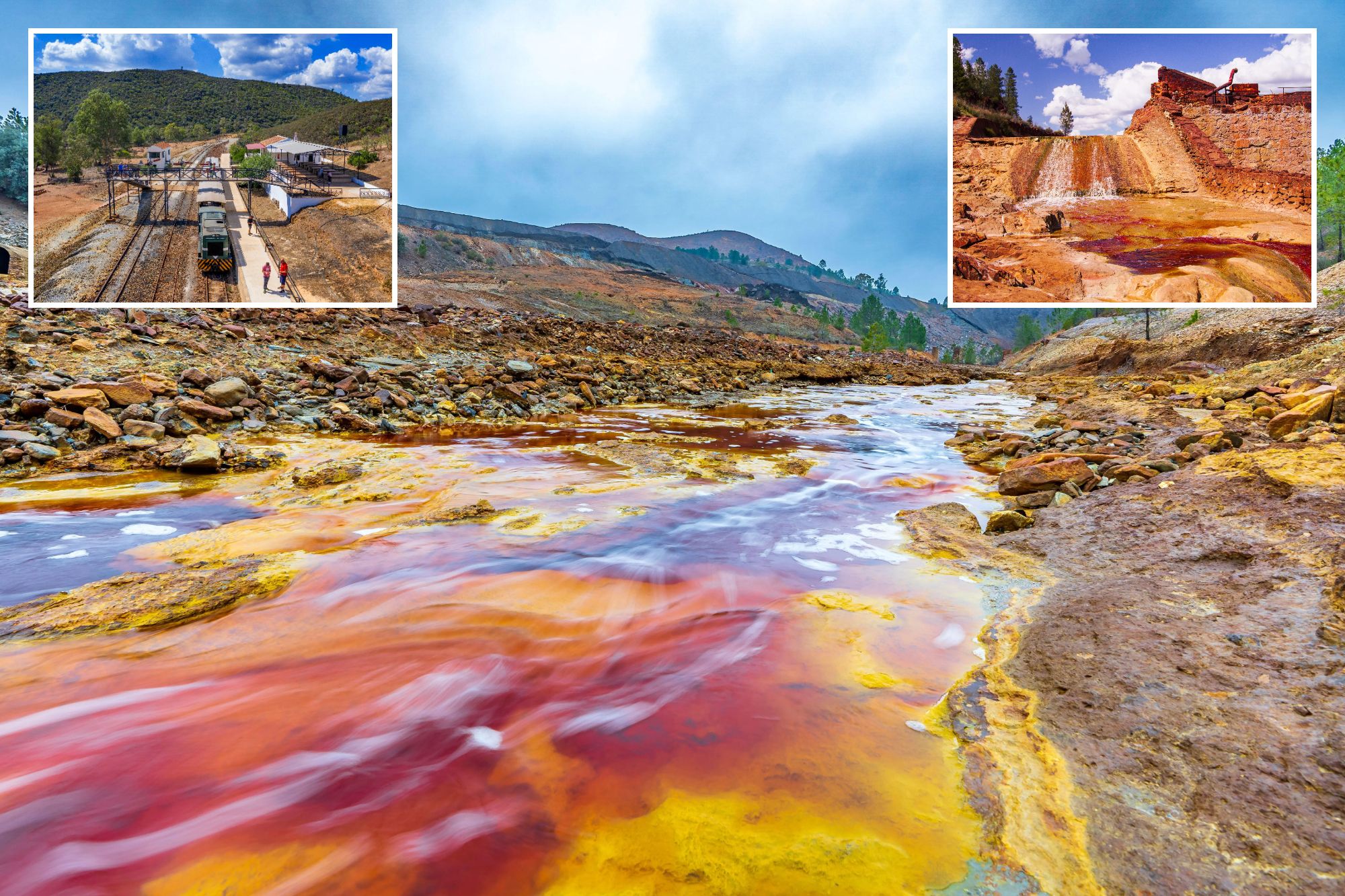
The Spanish attraction that ‘feels like being on Mars’ and you can explore it by vintage train

WITH its flowing red rivers and rocky landscape, this attraction has been described as looking ”more like Mars than Earth’.
The open-air mining park is in the Huelva region of southern Spain and visitors can take a tour onboard a vintage train.

The Rio Tinto Mining Park has over 5,000 years of history and is renowned for having a unique red landscape.
Formerly used for mining, the site is now considered an open-air museum and first opened to the public in 1992.
Through the site runs the Rio Tinto river which is toxic – it’s highly acidic which is why the water has red and orange hues.
Thanks to this, the attraction has earned itself a comparison to the planet Mars.


It’s appeared in movies like The Heart of Earth, which tells the story of miners working at Rio Tinto in 1888.
The area has also been used by the likes of NASA for space testing as it has an ‘extreme environment’ just like that found on Mars.
One visitor wrote on Tripadvisor that is look “more like Mars than Earth” with another calling it “truly breathtaking.”
Dotted around the site are viewpoints, underground walks to view excavated spaces and there’s a chance to explore its museum too.
Another way to tour the mines is onboard a refurbished mine train.
The Rio Tinto railway itself was built in the late 1800s and once had 186 miles of track.
Now, the tourist railway ride covers just over seven miles of that on its restored railway line inside vintage diesel trains.
From the windows, visitors can look out over the bright red river and rocks.
The train journey is up to two hours long and there’s a chance of a pit stop in the middle before it loops back around.
The park is open daily with day tours that can be up to six hours long.
On Saturdays, there’s a chance to do the ‘Mars on Earth‘ circuit which starts at the Mining Railway Station and heads through the Red Planet-like scenery.
If you want to visit Rio Tinto Mining Park the closest airport is in Seville which is around an hour a half away by car.

Judge: Trump must restart immigration, asylum processing

June 5 (UPI) — A federal judge on Friday canceled a batch of President Donald Trump‘s immigration policies, forcing the administration to begin processing immigration and asylum applications.
The decision from a judge in Rhode Island said Trump’s immigration policies enacted last fall had left immigrants in the United States in “indeterminate legal limbo” because of “anti-immigrant sentiments that it is forbidden from letting influence its decision-making.”
The 135-page decision from Judge John J. McConnell Jr. said the decision to stop processing immigration applications from people from 39 countries “placed the lives of countless individuals on hold — solely by virtue of their countries of birth.”
The policies in question include a global pause on asylum applications filed with the U.S. Citizenship and Immigration Services, a pause on decisions on immigration applications of people from the 39 countries in a travel ban, which prevented them from getting permanent residency status, citizenship and more.
The administration announced the changes after an Afghan man allegedly shot two National Guard members in Washington, D.C., in November. Rahmanullah Lakanwal pleaded not guilty.
“USCIS’s hold on adjudications cannot be attributed to anything that these individuals did wrong; rather, it arises solely by the happenstance of their birth,” McConnell wrote.
“The court is reminded of a line often repeated in discussions around immigration policy: If people wish to immigrate to the United States, they ought to ‘follow the law’ and ‘do things the right way,'” he wrote. “This case serves as a perfect example of immigrants doing just that.”
Democracy Forward, a legal nonprofit that helped represent the immigration groups and unions behind the lawsuit, told The New York Times that it celebrates the ruling.
“This ruling reaffirms a basic principle: The federal government cannot shut down lawful immigration pathways or discriminate against people based on where they come from,” organization President Skye Perryman said. “These unlawful policies caused enormous harm to families, workers, asylum seekers and communities across the country.”
Shawn VanDiver, president of #AfghanEvac, also celebrated the ruling.
“For months, we have heard from Afghan allies whose citizenship ceremonies were canceled, work permits expired while waiting for decisions, green card applications stopped moving and families were left in uncertainty despite doing everything the right way,” The Hill reported VanDiver said in a statement.
“Today’s ruling is a significant victory for the rule of law and for thousands of Afghan allies and other immigrants who followed every requirement asked of them, only to see their cases frozen indefinitely.”

NASA Issues ISS Evacuation Alert Over Worsening Air Leak
NASA ordered astronauts on the International Space Station to enter their spacecraft and prepare for possible evacuation due to a worsening air leak in the Russian section of the station. This notice was given to the four astronauts of the Crew-12 mission at 9:04 a.m. ET. They include two U. S. astronauts, a French astronaut, and a Russian cosmonaut, who were instructed to wear their spacesuits.
NASA and Russia’s space agency, Roscosmos, have been discussing the air leaks in the Zvezda service module, which is an important part of the station. While the leaks had been minor recently, the situation escalated on Monday, with the air loss increasing from one pound per day to two pounds, according to a senior NASA official.
With information from Reuters
‘Time and Water’ review: Iceland’s deep connection to glaciers, in crisis
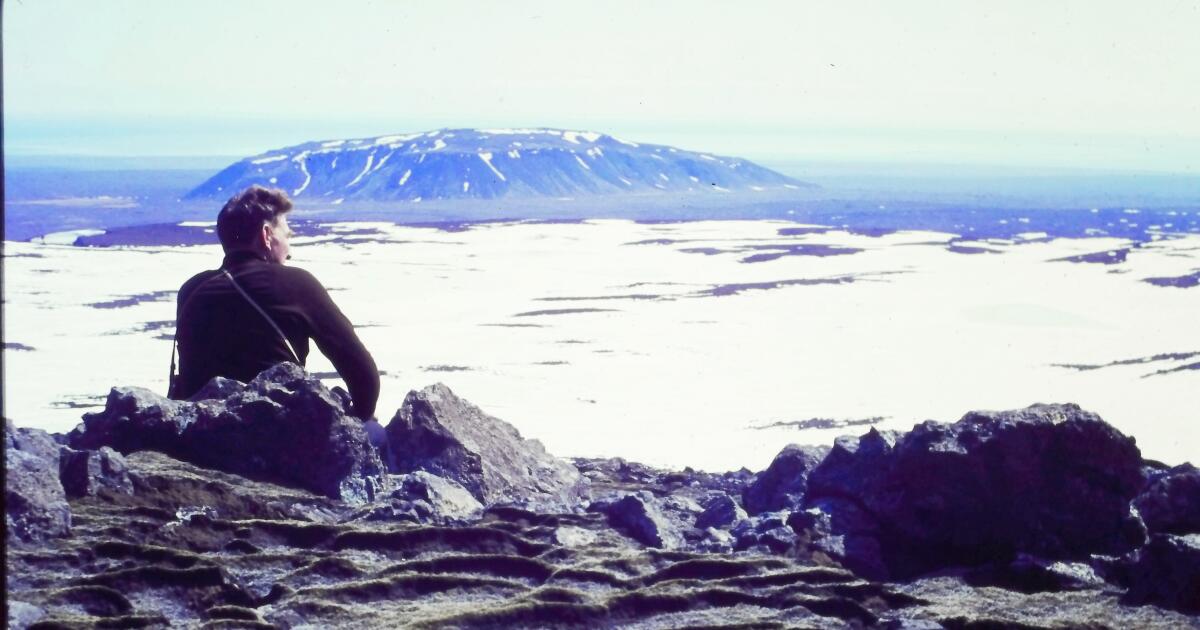
Glaciers aren’t stationary. Immense and imposing, formed through the downward trajectory of water from mountains as it collects and freezes, they have always moved. Now, however, they’re leaving. The demise of glaciers is a fact inherent in all the bad news about the effects of climate change on what once seemed permanent. But for Icelanders, whose connection to glaciers is ancient and mythic, our human epoch has become an extended hospice for the landscape of their lives.
Somehow, though, Sara Dosa’s documentary on this matter, “Time and Water,” avoids playing like a funeral in waiting. Built around Icelandic writer Andri Snær Magnason’s voiced lamentations on a vanishing frozen world, along with archival footage of his family, it’s no simple howl of grief, even when it takes us to a publicly held memorial in 2019 for Iceland’s Ok glacier, the first such “death” diagnosis in the country’s history. Rather, Dosa’s film is a meditation on change — both the kind that we accept with a heavy heart and something more general. “Time and Water” is a curiously vibrant elegy, teeming with appreciation for the intimate majesty that is all life, generational and geologic.
Dosa has finessed this emotional-meets-elemental space before in her Academy Award-nominated 2022 documentary “Fire of Love,” about married volcanologists Katia and Maurice Krafft. That was a wonderfully eccentric romance forged in molten lava. Here, she’s in a collaboration of sorts with her subjects, both human and elemental. Magnason’s opening narration over spectacular footage of glaciers — up close and from far away — gently informs us that we’re watching a time capsule, one where the bonds of family and environment are intertwined.
We learn how Iceland’s glaciers, essentially rivers of varying pace, begat their unique ecosystems, but also how they provided the breathtaking terrain upon which Magnason’s grandparents Hulda and Árni fell in love. (Grandma Hulda was the first woman to fly in Iceland, itself a very cool fact.) The onset of dementia in Árni spurs his grandson to consider what’s lost when the markers of memory depart. “Time and Water” touches on the epic verse called rimurs, passed down via chanted song by Icelandic women, their descriptive, sorrowful tales like dispatches from previous ages.
“Tone poem” is an overused term in cinema, but the humbling “Time and Water,” graced with a playful, atmospheric Dan Deacon score, earns that distinction. Naturally, it helps that you can never tire of all the air-crisped glacier imagery, captured digitally and in 16mm. Folded into the cozy slide-show vibe of Magnason’s home videos and the carefully chosen archival footage, the movie plays like a scrapbook portrait in which home just happens to boast the grandest of backyards.
How much longer will Icelanders enjoy it? The glaciers are predicted to be gone within 200 years. That’s an eternity or a drip, depending on whose survival we’re talking about. Still, “Time and Water” collapses the notion that we are somehow separate from these ancient, essential formations: an encouraging hello to the future from inside a sobering goodbye.
‘Time and Water’
In English and Icelandic, with subtitles
Rated: PG, for some thematic elements, smoking and brief language
Running time: 1 hour, 33 minutes
Playing: Opens Friday, June 5 at Laemmle Royal and Laemmle Glendale

Chipotle Mexican Grill on track to reverse losses after JPMorgan upgrades to Overweight
Chipotle Mexican Grill on track to reverse losses after JPMorgan upgrades to Overweight
Source link

Trump’s troop reversals in Europe could cost millions, officials say
WASHINGTON — The U.S. military is waiting for clarity from the Pentagon following President Trump’s back-and-forth on troop levels in Europe, upending the lives of military personnel and potentially costing taxpayers millions of dollars, two U.S. defense officials told the Associated Press.
NATO allies were bewildered in May when Trump said he would send 5,000 U.S. troops to Poland just weeks after ordering the same number pulled from Europe, following a spat with Germany’s Chancellor Friedrich Merz over the Iran war. The Trump administration says troop reductions in Europe have long been planned and coordinated with allies.
The Republican president announced on social media two weeks ago that he was sending troops to Poland — the same day the Pentagon had officially ordered the cancellation of a rotation of soldiers heading there, one of the defense officials said.
The unit’s equipment was already on the way. Sending it cost the military $32 million, said U.S. Transportation Command, the military agency largely responsible for moving troops and gear across the globe.
The abrupt changes are forcing the military to “retroactively engineer” a policy in line with the president’s latest pronouncement, the official said. Both officials were briefed on the decisions and, along with others, spoke on the condition of anonymity to discuss sensitive military matters.
The uncertainty is not only rattling European allies worried about the message being sent to Russia, but it also risks hurting morale among American troops — some of whom had their rotations canceled shortly before departure — and comes as the Army budget is already strained.
Changes to troop deployments to Poland add up
The rotational deployment to Poland of 4,000 troops from the Army’s 2nd Armored Brigade Combat Team, 1st Cavalry Division, based in Fort Hood, Texas, was canceled in a memo sent to the military at the beginning of May. European allies found out mid-month.
Some of those troops were told shortly before traveling not to get on a flight to Poland, while those who had been sent ahead — initially around 1,000 troops — are still waiting for confirmation they are being sent back, a U.S. military official said.
The military also is still waiting for details from the Pentagon on how to satisfy Trump’s order to send 5,000 troops to Poland, that official said. The working assumption is that they will come from units already in Europe, rather than an additional deployment from the U.S., the official said.
U.S. Transportation Command had chartered a ship to take the team’s equipment from Texas to Poland and transport a departing unit’s gear back to America. The incoming team’s portion of the cost was $32 million, including chartering the ship and loading and unloading the gear.
Because the ship was chartered to take one unit to Europe and bring another back, it is hard to say if that amount would have been saved had the decision to halt the deployment been made before the new team had already begun moving overseas.
However, the military official said the unscheduled move of personnel and equipment back from Europe is most likely not a cost the Pentagon budgeted for and would be an additional expense.
Total costs of canceling the rotation are hard to quantify because of many factors, said Joe Costa, a former senior Pentagon official who now focuses on challenges faced by the U.S. military as director of the Atlantic Council’s Forward Defense program.
They most likely stem from returning equipment and troops sent ahead of the deployment and would probably be on the low end of the rotation’s overall cost, Costa said. The greater impact is on the readiness of troops who were trained for one mission and may be deployed on another, he said.
U.S. military contracts with private companies to transport troops and equipment contain cancellation clauses that often add extra fees if a deployment is called off, said John Deni, a senior nonresident fellow at the Atlantic Council who has studied such costs.
“The question is what additional costs were incurred by deciding to send them back prematurely, changing the arrangements, changing the plan?” said Deni, a former U.S. military advisor and planner who focused on forces in Europe.
It is not clear if the Pentagon can recoup those costs or those associated with moving the unit to Europe. The Defense Department did not answer questions about the costs of changing the deployment plans, and the White House referred a request for comment to the department.
Pentagon officials have repeatedly said they planned to lower troop levels to have Europe shoulder more of its own defense and that the decision was part of a “comprehensive, multilayered process.”
Last month’s memo also led to the cancellation of a deployment to Germany of a battalion trained in firing long-range rockets and missiles.
Pulling troops stationed in Germany would be more expensive
When Trump first threatened to remove 5,000 troops from Europe, Pentagon officials initially suggested pulling back the 2nd Cavalry Regiment, which is based permanently in Germany, the defense official said.
Instead, officials decided to cancel the rotation of the other unit to Poland. Then Trump threw that plan into confusion as well.
Pulling the troops stationed in Germany could cost in the low billions because there is no dedicated space and infrastructure in the U.S. to accommodate them and their families, Costa said.
“The other option is basically breaking up the unit,” Costa said. “They move the equipment in different places. They move the people to different places. That carries significant readiness costs because now you’re artificially jamming pieces of units into places where they don’t necessarily belong.”
Pulling or pausing deployments also can hurt morale among soldiers and families because they plan for them months and years in advance, Deni said. The uncertainty can be disruptive.
“That’s often the last thing you want to do to military families,” Deni said.
It is still unclear what will happen to U.S. troops stationed in Europe, the two officials said. Options include moving military units assigned to Germany to Poland, but that could take several years and cost more, the military official said.
Troop changes happen during an Army budget shortfall
The moves come as the Army is facing a budget shortfall, which the service’s top uniformed officer, Gen. Christopher LaNeve, recently acknowledged to Congress.
Estimates put the deficit somewhere between $2 billion and $6 billion, according to an Army official who also spoke on condition of anonymity to discuss sensitive defense matters. One impact has been cutting training courses for soldiers nationwide, which ABC News earlier reported.
In a statement, the Army said it has issued guidance to its commands to “make tough and sound resource decisions that optimize and prioritize resources toward their most critical requirements, to include major training and readiness events.”
The Army official also noted that the service has been tasked with missions like the National Guard deployment in Washington, a bolstered presence along the U.S.-Mexico border and its part in the Iran war — all of which have strained its budget.
The Department of Homeland Security expects to reimburse the Army for its role in the border mission.
Army Secretary Dan Driscoll told lawmakers at a May 15 hearing that he was “optimistic” there would progress on those payments “within a week or two.” But to date, the Army has not been reimbursed.
“We want those backfilled payments,” Driscoll said then.
The U.S. military in Europe also is scaling back support for non-combat related training and ruthlessly prioritizing critical functions, the military official said.
Burrows, Finley and Toropin write for the Associated Press. Burrows reported from London.

England vs New Zealand: Emilio Gay and bowlers give home side golden opportunity
England have a golden opportunity for victory in the first Test against New Zealand despite a chaotic collapse of four wickets for one run in 11 balls on the second day at Lord’s.
After 16 wickets fell on day one, another 17 came on Friday on a devilishly difficult surface for batting – an alarming amount of uneven bounce has been added to the sideways movement.
At the end of it all, New Zealand are 36-3 in pursuit of a victory target of 254. Captain Tom Latham was out to the third ball of the chase and, crucially, Kane Williamson was palpably lbw to Josh Tongue, before Gus Atkinson cleaned up nightwatchman Will O’Rourke.
Though the weather forecast for Saturday and Monday is poor, there will be a result in this match, with England strong favourites to secure a morale-boosting win following their heavy Ashes loss.
Ollie Robinson marked his comeback with best Test figures of 5-39, taking the final wicket as New Zealand were bowled out for 113 in their first innings – an England advantage of 27.
England, helped by Emilio Gay’s half-century on debut and more New Zealand dropped catches, steadily built what looked to be an imposing lead. Gay was put down and could have been out lbw in his 57.
When Gay eventually fell, it began the carnage. Harry Brook, Joe Root and Ben Stokes all followed inside two overs. While an England implosion was familiar, perhaps only Stokes was culpable for his dismissal.
England’s lead was 154, with four wickets in hand. They were in danger of handing the initiative to New Zealand, only for important runs from the lower-order. Jamie Smith made 39, Atkinson 14 and Robinson swiped 29.
The hosts were eventually bowled out for 226, New Zealand’s Nathan Smith outstanding for his six wickets.

Rising costs in Argentina, much of Latin America send retirees to work

BUENOS AIRES, June 5 (UPI) — Argentine retirees have become one of the groups hardest hit by President Javier Milei’s fiscal austerity measures, which have pushed a growing number of older adults back into the workforce to supplement incomes that no longer cover the cost of living.
Over the past two years, the number of employed Argentines age 65 and older increased 12.7%, sociologist Candelaria Rueda, a researcher at the Argentina Grande Institute, told UPI.
The trend has had a particularly strong impact on women. Labor force participation among people older than 65 increased 14.5% for women, nearly four percentage points higher than the 10.8% increase recorded among men, according to a report by the think tank based on official data from the National Institute of Statistics and Census, known as INDEC.
One of those women is Patricia Guscione, 63. She worked as a teacher for decades and retired in 2021 at age 60, the legal retirement age for women in Argentina.
But rising living costs gradually eroded the value of her pension, leaving her unable to cover household expenses. When a call for retired teachers was issued in 2024, she applied. Today, she is back teaching in public schools.
“I lived on my pension for three years, but the reality is that it lost so much value that there came a point when I could no longer make it to the end of the month. I still have two teenage children who depend on me,” she told UPI.
Rueda said inflation remains a defining factor in Argentina’s economy and “causes incomes to lose value at an unusually rapid pace.”
“In addition, there has been a clear political decision to deregulate prices, which has led private health insurance premiums to rise 400% over the past two years,” she said.
At the center of the issue is Argentina’s minimum pension, the basic benefit received by more than half of the country’s retirees. It currently totals 450,300 Argentine pesos per month, or about $320. That includes a government assistance bonus that has remained frozen since early 2024.
Because the supplement has not been adjusted, the purchasing power of the minimum pension has fallen by nearly 10% compared with late 2023.
At the same time, food prices have continued to rise sharply, further reducing retirees’ spending power. Economic pressures have also intensified following cuts to free prescription drug coverage provided through the Comprehensive Medical Care Program, known as PAMI, Argentina’s main public healthcare system for retirees and pensioners.
Mario Perelli, 70, spent most of his career as an accountant, but now drives for ride-shareing platforms to supplement his income.
“I had never seen an economic situation like the one we are living through now. It keeps getting harder. I thought I had completed my working years and that retirement would allow me to enjoy life, travel and rest. Instead, I ended up driving for an app because I need to help support my household,” he said.
Juan Gómez, 76, faces a similar reality. After years working at an accounting firm, he now work for Uber and drives a taxi.
“I lived through different economic periods, and there were difficult moments under other governments, but this is terrible. I see it in retail stores, butcher shops, auto parts stores and oil-change businesses. There are hardly any customers. I hope things can be resolved and that we can move forward,” he said.
Gala Díaz Langou, executive director of the International Panel on Social Progress, linked the crisis to public spending cuts implemented by the current administration.
“In 2024, which was the year of the deepest adjustment, 19% of fiscal spending cuts were applied to the pension system,” she told UPI.
She also pointed to the continued freeze on the bonus supplement for lower pensions and the end of a program that allowed workers who had not completed the legally required 30 years of contributions to qualify for retirement benefits.
The trend of older adults extending their working lives is not limited to Argentina. It has become a regional phenomenon as Latin America faces a rapid demographic transition, lower levels of economic development and weaker social protection systems.
According to the Economic Commission for Latin America and the Caribbean, employment among older adults is increasing across much of the region because pensions are insufficient to cover basic living expenses.
“As a result, employment among retirees functions as a refuge from the shortcomings of the system rather than a choice. When someone who contributed for decades ends up cleaning houses at age 82 or selling goods on the street, what that reflects is a protection system that failed to sustain the old age it helped create,” the commission said.
Carlos Román, executive director of SeniorLab UC, an aging innovation laboratory at the Pontifical Catholic University of Chile, told UPI that 1 in 4 older adults in Latin America was part of the labor force in 2024.
He said the trend is particularly visible in Chile among older age groups, where a significant share of people who have already reached retirement age continue working.
For Román, the phenomenon raises two key questions: Under what conditions do older adults work and what drives them to remain economically active?
Regarding working conditions, he warned that labor informality rises sharply with age.
“Labor informality does not decline over time. It accelerates, rising from 27.7% among people ages 60 to 64 to nearly 48% in the next age group and exceeding 60% among those older than 70,” he said.
He added that the impact is uneven across social groups.
“Among the poorest women ages 65 to 69, nearly 9 out of 10 work without a contract or pension coverage. About half of older adults working informally are self-employed workers without access to social protection,” he said.
While some older adults continue working because they are living longer and want to remain active, Román said “the evidence shows that, in most cases, the primary reason is economic necessity.”
He contended that the trend reflects a deeper structural problem that goes beyond national circumstances.
“Aging arrived in Latin America before the region built the economic model and social protection system capable of supporting it,” he said. “Economists often summarize this reality with a phrase that has become common in regional discussions: We will grow old before we grow rich.”
He said the region’s long-term challenge is to ensure that longer life expectancy does not translate into more years of economic insecurity and precarious living conditions.

How She Escaped Captivity – HumAngle

In the previous episode of Vestiges of Violence, we told the story of Bintu Suleiman, whose daughters and grandchildren were abducted during the attack on Ngoshe, northeastern Nigeria, on March 3, 2026. She was still waiting for news, still hoping for their return.
Now, we have some updates.
In this episode, her 16-year-old daughter, Aisha Muhammad Shuaibu, has escaped captivity after spending a period of two months and two weeks with the terrorists. She returned home carrying her four-year-old nephew on her back.
She shared with HumAngle what happened to her in captivity and how she escaped.
Reported by Sabiqah Bello
Voice acting by Rukayya Saeed and Khadijat Isah Baka
Multimedia editor is Anthony Asemota
Executive producer is Ahmad Salkida
In a recent update on the Vestiges of Violence series, Aisha Muhammad Shuaibu, aged 16, managed to escape after being held captive for over two months during a terrorist attack in Ngoshe, northeastern Nigeria. Aisha returned with her young nephew, offering insights into her experiences and escape strategy. The episode is reported by Sabiqah Bello, with voice acting by Rukayya Saeed and Khadijat Isah Baka, multimedia editing by Anthony Asemota, and executive production by Ahmad Salkida.

Celebrity Gogglebox stars who have slammed show from being ‘sacked’ to ‘torture’ filming
Countless famous faces have appeared on Celebrity Gogglebox over the years – but for some, it appears working on the Channel 4 show left a rather bad taste in their mouths

Celebrity Gogglebox stars who have slammed show from being ‘sacked’ to ‘torture’ filming(Image: Channel 4)
A brand new episode airs tonight.
Celebrity Gogglebox has seen several famous faces come and go over the years – and for some of them, it seems they are not exactly fans of the programme…
The Channel 4 spin-off first aired in 2019 and has since established itself as one of the broadcaster’s most beloved programmes.
The forthcoming eighth series will welcome back several firm favourites, such as Vernon Kay and Paddy McGuinness, Nick Grimshaw and niece Liv, and Denise Van Outen and Johnny Vaughan.
But for some former stars, it seems the show left a rather bad taste in their mouths, as since their exits they have not been afraid to air their thoughts on the programme.
Maureen Lipman
Coronation Street’s Maureen Lipman, who appeared on the show with friend Gyles Brandreth, spoke about her experience on the show in 2021. On Loose Women, Maureen was asked: “Are you not going to be on it any more?”
Laughing, she said: “I’ve seen all the male tackle I need to see for this lifetime to be honest. We had such a good time, but none of the clever things we said went into it. So no.”
Maureen had previously spoken to Radio Times about how being on the show was different to what she had imagined. She told the mag: “I’d seen Gogglebox and I thought, ‘Oh, [ours] is the grown-up version, is it?
“I’m going to go on, and make a lot of comment now about the oeuvre and ‘I did like his first trilogy, but then I felt in some ways that perhaps over the years…’ But it’s your reaction to 12 dangling willies they want.
“They’re searching for ways to make me go ‘Urgh!’ So I thought, ‘Well, actually, no, life is too short to watch a series of hopeless men dangle their bits and pieces in my direction. So I’m going’.”
Frank Skinner
Frank Skinner also didn’t hold back either when airing his thoughts on working on Celebrity Gogglebox. During an episode of his podcast Frank Off The Radio: The Frank Skinner Podcast in 2024, he even went as far as to liken his experience to that of tortured monkeys.
Speaking about his Isle of Man disaster and the TV show, he said: “You know when I said I didn’t enjoy doing the gig on the Isle of Man, well it was a glorious pleasure compared to filming Gogglebox.”
He continued: “There’s a place in Wareham in Dorset called Monkey World, and it’s beautiful because they’re often monkeys that have been rescued from unkindness on the continent, and a lot of Spanish, in particular, there’s a thing of having your photo taken with a monkey.” He added: “The way to make them behave – and you can see this when you get close – is they’ve got cigarette burns on their skin that they use to make them do what they want them to do. And doing Gogglebox was a very similar experience.”
When asked if he was exaggerating, he was adamant his claims were true as the show was heavily “produced.” He explained: “So you sit in a room – you only watch like ten minutes of a programme.”
Exposing the behind the scenes process further, he went on to say: “We’re sitting watching the telly and we start talking, and a voice says ‘Say something about his jacket’. Then it would stop, and they’d say ‘Can you not go into digressions, it’s funny if you keep it close to what’s actually happening’. And pretty soon I’m thinking ‘just please make this stop’. And when I left – I’d made it pretty clear in a politer way – I said ‘Sorry, I thought this was going to be like enjoyable’.”
Frank felt the constraints stifled the fun, saying: “It’s such a shame because I think we could have had a laugh and stuff. ” Despite his gripes, Frank did acknowledge the expertise behind the scenes: “But to be fair to them, they know how to make it – they’ve been making it for years.” However, it wasn’t all bad – Frank gave a shoutout to the kind team who treated him well: “The producer was a really nice guy, they were nice people, they got me fish and chips.”
Sheila Hancock
Dame Sheila Hancock first appeared on the star-studded Channel 4 spin-off series alongside pal Gyles and quickly became a fan favourite. However, she claimed in 2023 she was “sacked” for complaining about how much nudity she had to watch when Naked Attraction was the TV show of choice
The acting legend admitted she and Channel 4 bosses clashed over the racy clips which she had to comment on for the series.
She told The Mirror: “I used to love doing it with Gyles, but they sacked me from that. Well, they did not ask me back. I think it was because there were a lot of shows with penises in and because it went down [well] with the audience, they kept showing them to us.
“Eventually I phoned up the lady on the edit and said, ‘I am enjoying the show, but do you think we can have anything other than penises?’ and she was quite angry.”
Reach contacted Channel 4 for comment at the time.
Celebrity Gogglebox airs every Friday at 9pm on Channel 4.

Bill Whitaker, Lesley Stahl and Jon Wertheim will remain at ’60 Minutes’
After a tumultuous week, CBS News took a major step in stopping the bleeding at “60 Minutes.”
In a memo sent Friday morning, the three remaining “60 Minutes” correspondents Bill Whitaker, Lesley Stahl and Jon Wertheim said they will continue with the program. The trio strongly considered leaving in solidarity with their ousted colleagues Scott Pelley, Sharyn Alfonsi , Cecilia Vega and executive producer Tanya Simon and her second-in-command Draggan Mihailovich.
Pelley — angry over the dismissal of his other co-workers — was fired Tuesday, a day after confronting the program’s new executive producer Nick Bilton at his first staff meeting. Pelley questioned the credentials of Bilton, a former New York Times journalist with no experience in television news. He also accused CBS News Bari Weiss — who oversaw the changes — of “murdering” the program.
The memo said the decision to stay should not be seen “as an endorsement of the existing power structure.”
“Here’s why we’re staying: We don’t want ’60 Minutes’ to die,” they wrote.
The dismissal of Pelley, considered the most respected journalist inside CBS News, sent shockwaves through the organization and led to speculation of an exodus by the remaining three correspondents.
In their memo, Whitaker, Stahl and Wertheim said they felt the same bewilderment and frustration that Pelley did over the firing of their colleagues.
“We want to express how sorry we are that these principled, fair and honest journalists were treated so shabbily, with such indecency,” they wrote. “Tanya deserves to be celebrated, not truly cast off. Draggan too. It was heartbreaking.”
With the program in full-blown crisis, Bilton spent the rest of the week attempting to calm the waters and retain the disgruntled correspondents. He issued a memo Thursday praising Whitaker, Stahl and Wertheim — calling them “the core of the show’s success” — and promising to uphold the editorial independence of the program.
“We will always pursue stories without fear or favor,” Bilton said.

French Open 2026 results: Matteo Arnaldi withdraws before semi-final against Flavio Cobolli with virus
Flavio Cobolli is through to the French Open final after fellow Italian Matteo Arnaldi withdrew minutes before their semi-final with a virus.
The good friends were supposed to meet in the last four at 18:00 BST on Friday for a place in a first Grand Slam final.
However, Arnaldi’s withdrawal was announced just 20 minutes before the players were due to step on Court Philippe Chatrier.
It puts world number 14 Cobolli straight through to Sunday’s Roland Garros showpiece, where he will face second seed and title favourite Alexander Zverev.
Arnaldi had spent 19 hours and 42 minutes on court en route to the semi-finals in Paris – the longest anyone has played on their way to the last four of a major since 1991.