top news

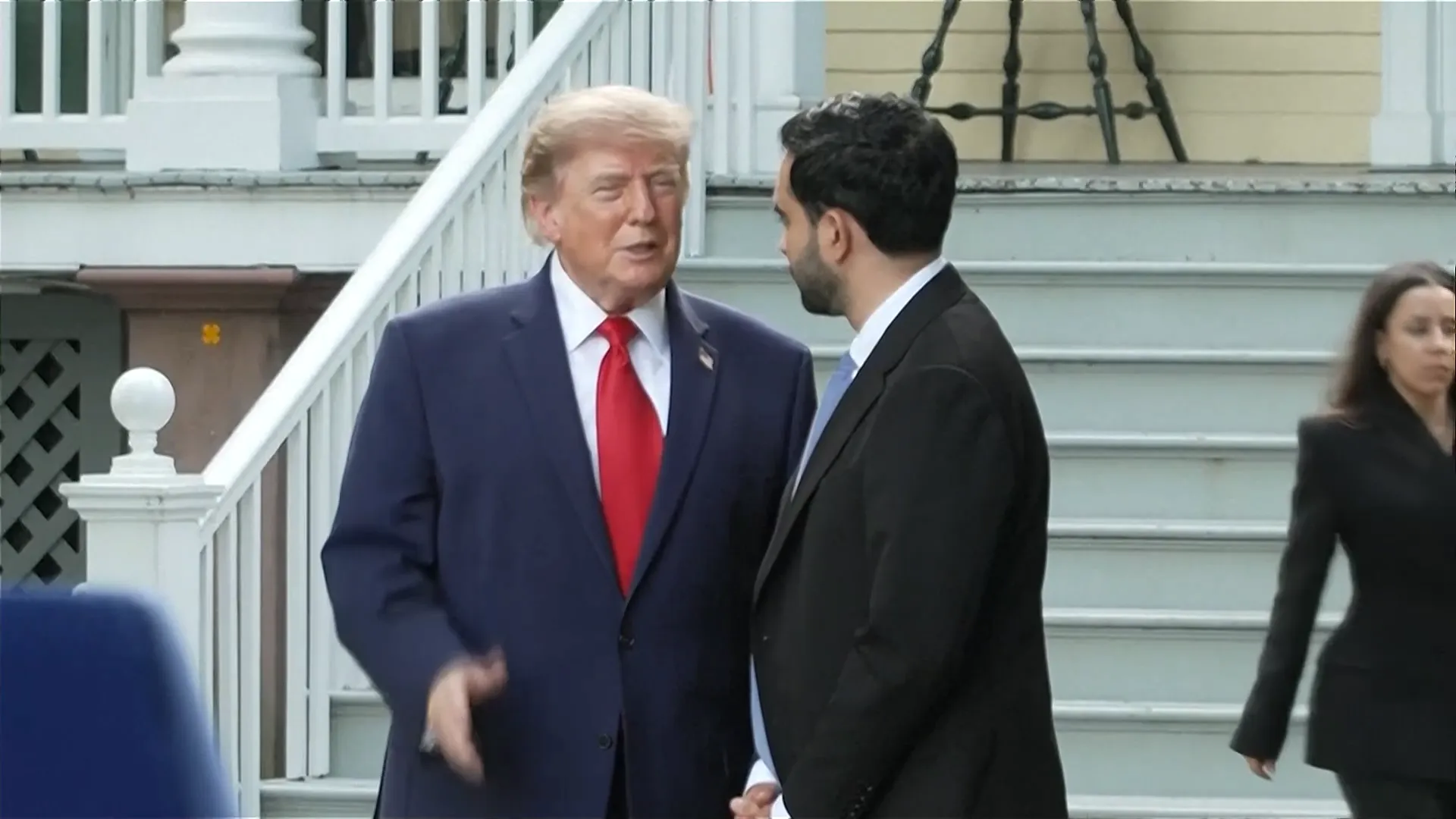
Trump honors mothers at Rose Garden Mother’s Day lunch

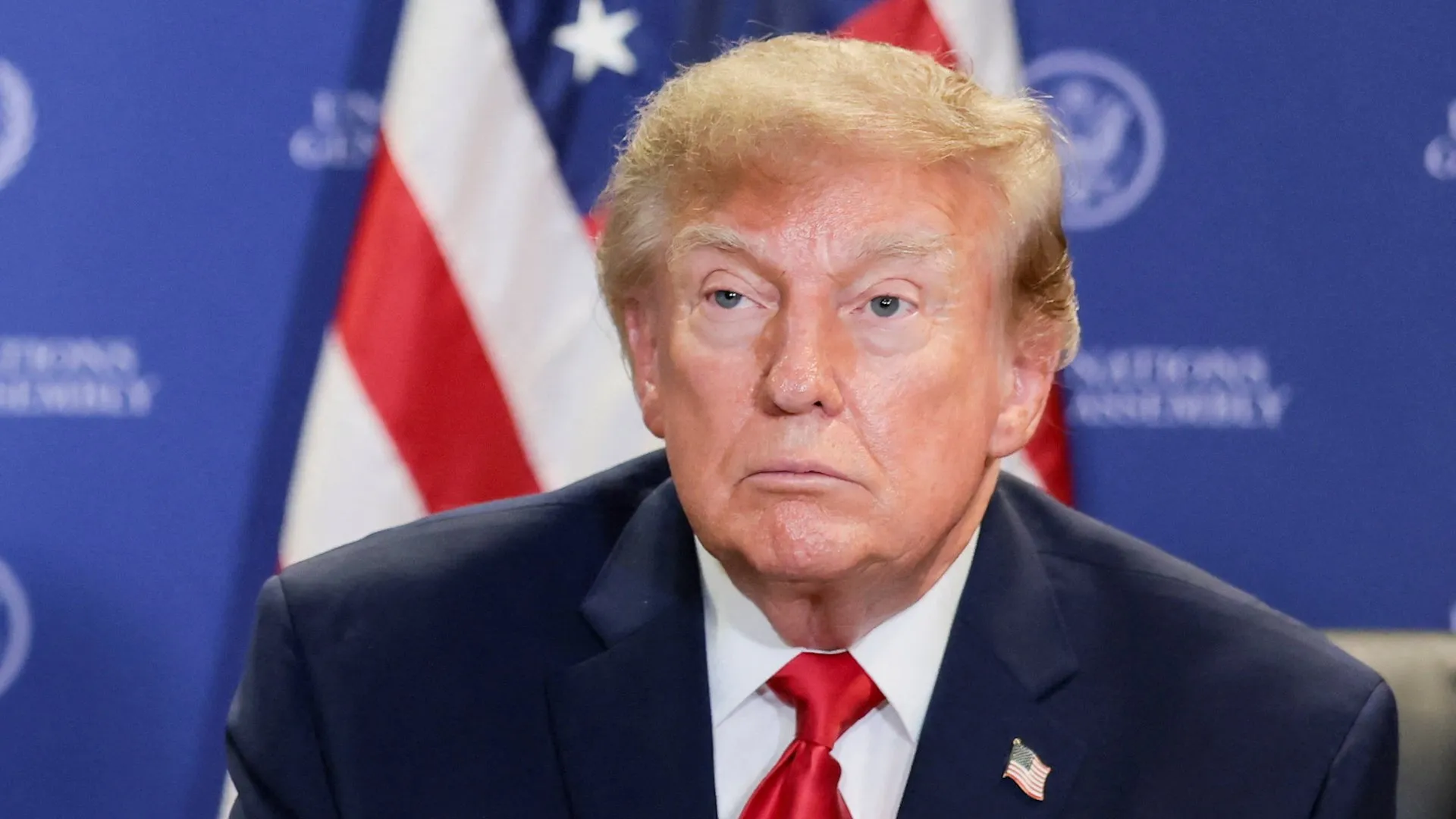
1 of 5 | President Donald Trump delivers remarks at an event for Gold Star Mothers and Angel Mothers to honor Mother’s Day, which is this Sunday, in the Rose Garden of the White House on Friday. Photo by Aaron Schwartz/UPI | License Photo

May 8 (UPI) — President Donald Trump on Friday delivered a Mother’s Day address as he hosted Gold Star Mothers and Angel Mothers in the White House Rose Garden.

Starting with his own mother, Trump thanked mothers across the country in a 20-minute speech that included specific thanks for mothers in the audience and those who work for his administration.

“I want to thank every single mother here this afternoon and all across our nation for your work,” Trump said.

“Every single day, America’s moms are raising — really — raising the future of our country … You have the most important job there is in America or any place else, and you’re doing an incredible job,” he said.

During the speech, Trump honored the mothers of children who died in crimes linked to illegal immigrants, whom he has dubbed Angel Mothers, noting that he hoped to prevent their ranks from growing due to “open borders” and what his administration has in pursuit of that goal.

The president honored Gold Star Mothers — the mothers of members of the military who have been killed in action — some of whom in attendance lost children during the war in Afghanistan.

Questioning whether “time heals all wounds,” Trump said that “our hearts are out to you on Mother’s Day.”

He also spoke about legislative and executive actions his administration has meant to benefit mothers and families.

“We’re honored to be joined by many strong and truly heroic moms who have stood up for their children,” he said, wishing them a Mother’s Day “filled with love and gratitude and joy.”

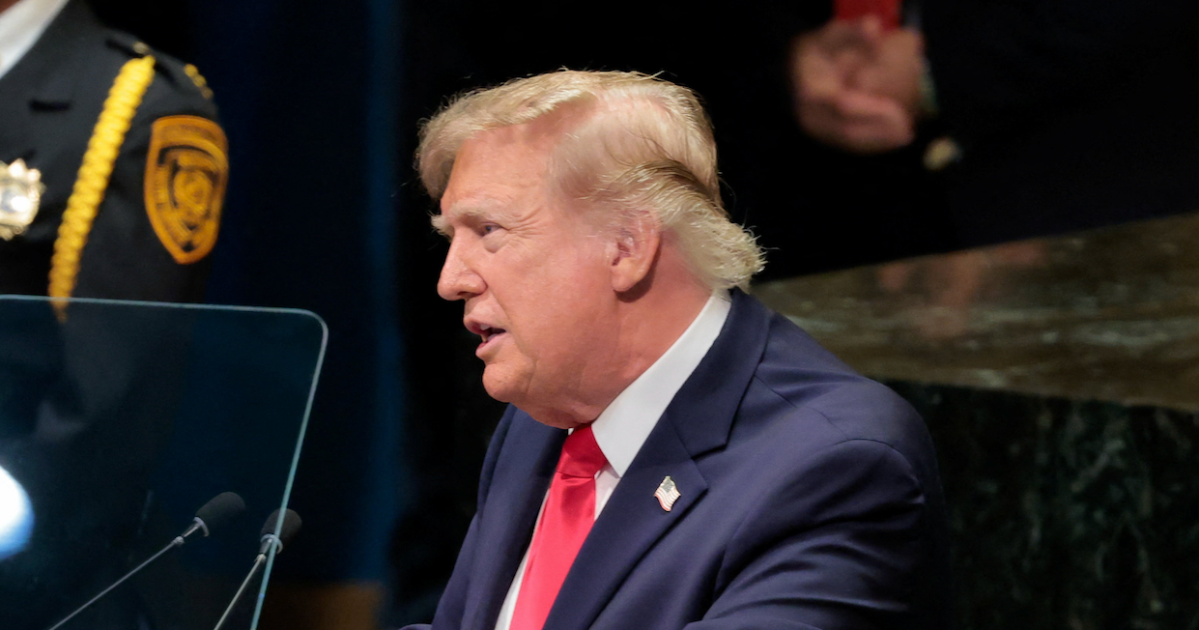
President Donald Trump delivers remarks at an event he is hosting for a group that includes Gold Star Mothers and Angel Mothers in honor of Mother’s Day in the Rose Garden of the White House on Friday. Photo by Aaron Schwartz/UPI | License Photo

Source link

3 Australian women linked to ISIS charged after returning from Syria

A group of supporters surround an ISIS-linked family as they arrive at Melbourne International Airport in Melbourne, Australia, Thursday. The group of 13 women and children came home to Australia after years spent in a Syrian refugee camp following the fall of the Islamic State. Three of the women have been charged with crimes. Photo by Joel Carrett/EPA

May 8 (UPI) — Australia has charged three women linked to ISIS with crimes against humanity after they returned home from Syria.

They had allegedly moved to Syria to be part of the Islamic State caliphate in Syria, but once it fell, they were in refugee camps guarded by Kurdish guards. They were part of a group of 13 people who were returned to Australia. It’s not yet clear if other people returning to Australia will face charges.

Australia’s Prime Minister Anthony Albanese said in February that he would not allow the refugees to repatriate to Australia.

Kawsar Ahmad, 53, and her daughter Zeinab Ahmad, 31, appeared in a Melbourne court Friday. Kawsar Ahmad was charged with four counts of crimes against humanity. Police allege she went to Syria in 2014 and kept a female slave in her home. Zeinab Ahmad faces two similar charges.

Another adult child of Kawsar Ahmad, Zahra Ahmad, arrived in Melbourne Thursday, but was not arrested.

Janai Safar, 32, appeared in a Sydney court and was charged with entering and remaining in a declared conflict zone and joining ISIS. She returned to Sydney Thursday with her son.

Safar’s lawyer, Michael Ainsworth argued for her release on bail, saying her alleged offenses happened when she was 21, and she has been in a refugee camp for nine years.

“This young lady … lived in truly horrific conditions in these refugee camps for many years,” Ainsworth said. “She has significant community ties here in Australia, she’s one of seven children. There’s a place for her to live.”

The Australian Federal Police said Kawsar Ahmad moved to Syria with her husband and children in 2014 and was complicit in buying a female slave for $10,000, “and knowingly kept the woman in the home.”

Zeinab Ahmad allegedly also traveled to Syria and kept a female slave in the home. A slavery conviction can bring up to 25 years in prison.

Federal police assistant commissioner for counter-terrorism Stephen Nutt said Thursday night that planning for the return of people from the Middle East began in 2015.

“Australian joint counter-terrorism teams methodically investigated all Australians who travelled to declared conflict areas and will ensure those who are alleged to have committed a criminal offense are put before the courts,” Nutt said.

Source link

Could Labour and Conservative party dominance in UK politics be ending? | Elections News

The UK prime minister is under pressure to quit after huge losses in the local elections.

Britain’s Prime Minister Keir Starmer and his Labour Party suffered significant losses in local elections, despite his huge majority in parliament.

He’s rejecting calls to resign – but faces new challenges from both the left and right.

So, why is the local vote so important?

Presenter: Mohammed Jamjoom

Guests:

Peter Geoghegan – Editor of the investigative news site, Democracy for Sale

Lesley Riddoch – Podcaster, journalist and author of: ‘Blossom: What Scotland Needs to Flourish’

Tim Bale – Professor of politics, Queen Mary University of London

Source link

Trump announces three-day ceasefire in Russia-Ukraine war | Russia-Ukraine war News

BREAKING,

Truce will also include swap of 1,000 prisoners of war from each country, US president says.

⁠United States ⁠President Donald Trump ⁠says ‌there will be a three-day ceasefire in ⁠the war between ⁠Russia and ⁠Ukraine.

Posting on Truth Social on Friday, the US leader said the truce would last from ⁠Saturday to Monday.

“I am pleased to announce that there will be a THREE DAY CEASEFIRE (May 9th, 10th, and 11th) in the War between Russia and Ukraine,” Trump posted.

“The Celebration in Russia is for Victory Day but, likewise, in Ukraine, because they were also a big part and factor of World War II. This Ceasefire will include a suspension of all kinetic activity, and also a prison swap of 1,000 prisoners from each Country,” he added.

Russia had previously announced a two-day unilateral ceasefire to mark its May 9 World War II Victory Day on Saturday.

Ukraine previously stated that it too had offered a truce but that this had been ignored by Moscow.

“This request was made directly by me,” Trump said on Friday, thanking his Russian and Ukrainian counterparts Vladimir Putin and Volodymyr Zelenskyy for agreeing to it.

“Talks are continuing” on ending the war, Trump said, adding that “we are getting closer and closer every day”.

“Hopefully, it is the beginning of the end of a very long, deadly, and hard fought War.”


More to come…

Source link

Real Madrid fine Valverde and Tchouameni for dressing-room fight | Football News

Real do not impose sporting sanctions saying 500,000 euro fines concludes the ‘internal procedures’ against the pair.

Real Madrid have fined Aurelien Tchouameni and Federico Valverde 500,000 euros ($588,000) each after a training ground clash that left the latter needing hospital treatment.

The club did not impose any sporting sanctions on the two players, saying in a statement that the fine “thereby concludes the internal procedures” launched against them.

Recommended Stories

list of 4 itemsend of list

Valverde will miss Sunday’s Clasico against Barcelona as a result of the head injury he suffered during the altercation. The club said he would be out for up to two weeks.

Tchouameni took part in training on Friday and could feature at Camp Nou this weekend.

Madrid said on Friday that both players “expressed their complete remorse for what happened and apologised to each other” while taking part in a club investigation.

“They extended their apologies to the club, their teammates, the coaching staff, and the fans, and both have made themselves available to Real Madrid to accept whatever sanction the club deems appropriate,” read a club statement.

Uruguay international Valverde was accompanied to the hospital facility near the club’s Valdebebas training complex by Madrid coach Alvaro Arbeloa, according to Spanish reports, which said the player needed stitches to treat a facial wound.

Valverde sought to downplay the severity of the altercation with the France midfielder.

“The strain of the competition and frustration caused the situation to escalate,” Valverde wrote on social media, expressing regret at the media coverage of the incident.

“I accidentally hit a table during the argument, causing a small cut on my forehead that required a routine visit to the hospital,” he said.

“At no point did my teammate hit me, and I didn’t hit him either.”

According to reports, the two players quarrelled on Wednesday during training, and their argument continued on Thursday during and after the session.

Spanish media reported Valverde refused to shake Tchouameni’s hand and later fouled him in Thursday’s training session, with the pair scrapping afterwards in the dressing room when the injury occurred.

Tensions are running high at Real Madrid with the club on the verge of a second consecutive season without a major trophy.

Los Blancos trail Barca by 11 points at the top of La Liga, with Hansi Flick’s side able to clinch back-to-back league titles on Sunday if they do not lose.

Source link

Economists warn of fiscal risks in Chile reform plan

A new International Monetary Funds report says higher copper production and prices support Chile’s growth expectations, but warned of risks that include the crisis in the Middle East, rising oil prices and loss of domestic competitiveness tied to the sharp public spending cuts. File Photo by Mario Ruiz/EPA

SANTIAGO, Chile, May 8 (UPI) — An economic reform plan Chilean President José Antonio Kast announced to revive the country’s economy is drawing criticism over its potential short- and medium-term fiscal impact, as the International Monetary Fund lowered its growth projections for Chile.

The IMF’s World Economic Outlook report had estimated in mid-April that Chile’s gross domestic product would grow 2.4% in 2026 and 2.6% in 2027. However, the organization said this week it revised those projections to 2.2% this year and 2.5% in 2027 if external conditions and the country’s fiscal situation improve.

“Economic activity, driven by investment and exports in 2025, faces a period of heightened uncertainty,” the IMF said.

The report said higher copper production and prices support growth expectations, but warned of risks that include the crisis in the Middle East, rising oil prices and loss of domestic competitiveness tied to the sharp public spending cuts promoted by Kast.

The Chilean president’s plan includes proposals to reduce corporate taxes and cut bureaucracy in an effort to stimulate private investment. Congress is discussing tha proposal.

“Amid persistently high inequality, social discontent also remains a risk,” the IMF report said.

The IMF is not the only institution warning about the risks associated with the government’s National Reconstruction Plan.

Chile’s Autonomous Fiscal Council, an independent public agency tasked with monitoring the sustainability of fiscal policy, warned about the proposal’s possible impact on the country’s fiscal balance and public debt.

“The project commits fiscal spending with a high degree of certainty in the short term and reduces permanent revenue, while the positive effects depend on more uncertain future income associated with growth, which could lead to a deterioration in the fiscal balance if growth does not materialize at the estimated magnitude and speed,” the council said.

Jaime Bastías, director of the auditing school at Finis Terrae University, told UPI the IMF’s downgrade was “absolutely” expected because Chile’s central bank had already made a similar adjustment, while debate over financing the government’s proposal continues to intensify.

“The government’s plan can be an engine that helps us face the storm we are going through, but that is heavily conditioned on the state maintaining orderly public finances. The IMF says that if the proposed tax cuts are not offset through other channels, the country’s debt will grow too much, and that will create another problem,” Bastías warned.

Carlos Smith, a researcher at the Center for Business and Society Research at Universidad del Desarrollo, told UPI the IMF report shows that both external and domestic factors are likely to weaken household income and affect consumer spending.

“Consumption is one of the main drivers of Chile’s GDP. The IMF expects it to contract and that is already beginning to show, along with a very weak labor market. Chile is in a much weaker condition,” he said.

Smith said that although the IMF lowered its growth forecasts, the organization still appears optimistic about the long-term positive impact of the government’s proposed reforms.

“The impact will materialize more slowly than the finance minister expects. Therefore, the IMF is suggesting more efficient alternatives such as lower costs or more limited subsidies to create new jobs,” Smith said.

He added that while Ciles should adjust some aspects of the reform, he believes the plan is still moving in the right direction.

“I agree with the IMF that the proposal needs refinement and should focus on removing obstacles to investment projects without lowering the standards of our legislation or environmental protections. If that is achieved, I believe there is a possibility of reaching 3% growth by the end of the decade,” he said.

Bastías agreed, saying Chile could grow at 3% by 2030 if copper prices remain high, production increases and more private investment arrives.

“It is an optimistic scenario where we need to focus on stimulating those three factors. If that favorable future does not materialize, we will all pay the costs,” he said.

Source link

Britain’s Keir Starmer brushes off defeat at polls, says he won’t quit

Following a beating in local elections, Prime Minister Keir Starmer (L) said Friday that he took responsbility for the losses suffered by Labour candidates across the country but vowed he would not quit. Photo by Neil Hall/EPA

May 8 (UPI) — Prime Minister Keir Starmer vowed Friday that he would not stand aside following a disastrous Labour performance in “mid-term” local elections in England, Wales and Scotland.

With early results from 46 of the 136 races in England showing Labour losing hundreds of seats in councils to Reform and the Greens, Starmer said while the situation was “really tough,” he had been handed a mandate to change Britain by the electorate in the general election in 2024 and that he intended to fulfil his promise.

He said he believed the message voters had sent in Thursday’s elections was about the “pace of change, how they want their lives improved.”

“Labour was elected to meet those challenges and I’m not going to walk away from those challenges and plunge the country into chaos. I led our party to that victory, that is a five-year mandate to change the country. It was a five-year term I was elected to do, I intend to see that through.”

Acknowledging his government hadn’t done enough to convince people that things could improve, their lives could be better and that there was hope, he said Labour would “in the coming days” set out steps it would take to win over the electorate.

Repeatedly pressed on whether he would lead Labour into the next election, Starmer would only say that he intended to serve the full five years of his term.

Large numbers of Labour MPs believe that the party will lose if Starmer leads it into the next election but do not want him to quit right now, favoring an orderly, consensual process of finding a successor, as opposed to an all-out leadership battle.

Sky News’ chief political correspondent said a member of Starmer’s “top team,” had messaged her saying that he was “the reason Labour risks handing the country to Reform.”

With counting still underway, or yet to begin, in the vast majority of contests for council and mayoral contests, as well parliamentary races in Scotland and Wales, the opposition Conservative Party were also close to 200 seats adrift.

The Green Party and the Liberal Democrats had each added dozens of seats.

Speaking in the London borough of Havering, which Labour lost overnight to Reform UK, leader Nigel Farage hailed what he said was a “truly historic shift in British politics.”

“The pattern that’s emerging across the country is that Labour are being wiped out by Reform in many of their most traditional areas. And what you’re going to see later on today is the Conservative Party being wiped out in their heartlands like Essex,” he said, noting that the county was the heartland of the leadership of the Conservative opposition.

“We’ve been so used to thinking about politics in terms of left and right, and yet what Reform are able to do is to win in areas that have always been Conservative. But equally, we’re proving in a big way we can win in areas that Labour have dominated, frankly, since the end of World War One.

“At the moment, we’re winning one in three of all the seats that are up. But I genuinely think the best is yet to come. I’m very excited about the north-east results, the Yorkshire results, some more to come in the West Midlands. So it’s a big day,” added Farage.

Forecasts put Reform’s eventual gains when the results are complete at as many as 1,000 seats of the 5,000 up for grabs.

In Scotland, where voters are electing all 129 seats in the Scottish Parliament, the ruling Scottish National Party is hanging by a knife edge amid a 17% swing to Reform.

However, the insurgent party’s rise could inadvertently help deliver First Minister John Swinney‘s 65-seat target, thanks to Reform UK candidates taking votes away from challenger parties, particularly those that oppose Scottish independence.

Swinney has said he would treat an SNP majority as a mandate to mount a second bid to secede from the United Kingdom, following a failed independence referendum in 2014.

Swinney told an election debate between the leaders of the five Scottish political parties plus Reform UK last month that holding a second independence referendum by 2028 was “perfectly conceivable.”

In Wales, where voters are electing a Senedd legislature that has been expanded to 96 seats, the ruling Labour administration was on track to lose power for the first time since devolution in 1999 and ending more than a century of Labour dominance in the country.

Plaid Cymru, the Welsh nationalists, and Reform UK, who were neck and neck in the polls, were expected to be the biggest beneficiaries, projected to emerge with 38 and 35 seats, respectively.

Deputy First Minister Huw Irranca-Davies told the BBC that he didn’t think Labour would be in a position to form the next government, saying the party’s campaign had failed to “cut through” to Welsh voters.

Wreathes are seen amongst the statues at the Korean War Veterans Memorial during Memorial Day weekend in Washington on May 27, 2023. Memorial Day, which honors U.S. military personnel who died while in service, is held on the last Monday of May. Photo by Bonnie Cash/UPI | License Photo

Source link

Trump threatens ‘much higher’ EU tariffs if deal not signed by July 4

May 8 (UPI) — President Donald Trump threatened to raise tariffs to “much higher levels” on the European Union if it doesn’t agree to a trade deal by July 4.

“I had a great call with The President of the European Commission, Ursula von der Leyen. We discussed many topics, including that we are completely united that Iran can never have a Nuclear Weapon. We agreed that a regime that kills its own people cannot control a bomb that can kill millions. I’ve been waiting patiently for the EU to fulfill their side of the Historic Trade Deal we agreed in Turnberry, Scotland, the largest Trade Deal, ever! A promise was made that the EU would deliver their side of the Deal and, as per Agreement, cut their Tariffs to ZERO! I agreed to give her until our Country’s 250th Birthday or, unfortunately, their Tariffs would immediately jump to much higher levels,” the president said Thursday afternoon on Truth Social.

The threat came after The EU has struggled to agree on the terms of the Turnberry Accord, which was for the United States to lower tariffs on EU products and for the EU to remove tariffs on U.S. industrial goods and invest billions in U.S. industries, including energy.

Von Der Leyen said on X that the bloc is still committed to the deal.

“I had a very good call with @POTUS. We discussed the situation in the Middle East and our close coordination with regional partners. We are united that Iran must never possess a nuclear weapon. Recent events have clearly shown that the risks to regional stability and global security are too great.

“We also discussed the EU-U.S. trade deal. We remain fully committed, on both sides, to its implementation. Good progress is being made towards tariff reduction by early July.”

Last week, Trump threatened to raise tariffs on European autos to 25%. It’s unclear if his renewed threat is specifically for vehicles or if it encompasses all EU exports.

Complicating matters is that Trump’s current method of levying tariffs was blocked Thursday by the U.S. Court of International Trade.

In February, the U.S. Supreme Court struck down the administration’s tariffs issued under the International Emergency Economic Powers Act of 1977. Trump then added a 10% across-the-board tariff and then later upped it to 15%.

U.S. Trade Representative Jamieson Greer said in an interview with Politico Thursday that the EU is moving slowly.

“With the tariffs, they’ve at least started a process. They’re working it through,” Greer said. “It’s a pain. I understand it’s slow. We’re not patient. But there are other things where they haven’t even started a process.”

“We’re 95% compliant for nine months … and they’ve been 0% compliant during that time. What am I supposed to do?” he said.

Speaker of the House Mike Johnson, R-La.,, speaks during an observance celebrating the 75th National Day of Prayer in Statuary Hall at the U.S. Capitol on Thursday. Photo by Bonnie Cash/UPI | License Photo

Source link

The disaster unfolding on Russia’s Black Sea coast is of its own making | Environment

Southern Russia is facing one of the largest environmental disasters in its modern history. In April, repeated Ukrainian strikes on Russian oil infrastructure in Tuapse triggered massive refinery fires and oil spills along the Black Sea coast, including near Sochi. Residents described “black rain” falling from the sky as smoke and petroleum residue spread across the region. Weeks later, wildlife is still dying, beaches remain polluted and volunteers trying to respond say their efforts have often been obstructed. The authorities, meanwhile, have focused less on confronting the scale of the catastrophe than on silencing those speaking out about it. Despite the ongoing environmental damage, officials are already discussing reopening the beaches and launching the tourist season.

The catastrophe raises difficult questions about environmental destruction during wartime. Ukraine, which has experienced countless environmental catastrophes related to Russia’s all-out war, has been among the leading actors advocating for the recognition of ecocide as an international crime, even though the concept has yet to be formally codified in international law. Following the April strikes, however, some environmental activists in Russia and beyond are now also accusing Ukraine of hypocrisy and causing long-term environmental harm through strikes on oil infrastructure. There is a real debate over whether such actions can be justified, even when targeting an aggressor, if their environmental consequences may last for decades.

But focusing exclusively on Ukrainian strikes risks obscuring the deeper structural causes of the disaster. Russia’s oil infrastructure is deeply embedded in its war economy, and environmental damage of this magnitude does not occur in a vacuum. It is shaped by years of deregulation, lack of oversight and the systematic dismantling of environmental protections. These trends have only intensified during the full-scale invasion, as environmental safeguards have increasingly been cancelled in order to sustain the war economy. This includes recent legislative changes affecting the protection of Lake Baikal — a unique ecosystem that contains around 23 percent of the world’s unfrozen freshwater — raising concerns among experts about long-term environmental risks.

For years, environmental organisations in Russia have been labelled “foreign agents” or declared “undesirable”, independent environmental movements have been dismantled and activists forced into exile. The current catastrophe is unfolding in a country where ecological disasters are often silenced rather than addressed.

What is striking in the current situation is not only the scale of the damage but the response of the authorities. Rather than responding with transparency and accountability, Russian officials have largely attempted to silence discussion around the disaster. This recalls earlier patterns, including the initial response to the Chornobyl disaster, where secrecy and delayed disclosure significantly worsened the human and environmental consequences.

In this sense, responsibility does not lie only in the immediate cause of the disaster, but also in the absence of preparedness, regulation and accountability.

This disaster has also triggered an unusual wave of discussion within Russia itself, much of it unfolding online, despite increasing censorship. Volunteers on the ground have reported being obstructed and, in some cases, harassed while trying to rescue wildlife. Journalists attempting to document the situation have faced detention. Even as the catastrophe unfolds, the space to speak about it remains tightly controlled.

Yet the public reaction is telling. Much of it is happening on Instagram, which is banned in Russia, and on other social media platforms, with people still using VPNs to speak out and read real news. Rather than turning primarily into accusations against Ukraine, much of this discussion has been directed at the Russian authorities. The disaster is being used, implicitly and sometimes explicitly, to question the lack of coordination, the absence of transparency and the broader political system that allows such crises to happen.

This is significant. In a country where even calling the war a war is effectively prohibited, environmental catastrophe has become one of the few channels through which criticism can still surface.

The situation also exposes a deeper problem that goes beyond Russia. It highlights a fundamental gap in international law: the lack of effective mechanisms to address large-scale environmental destruction in the context of war.

Recent events illustrate the consequences of this gap. The destruction of the Kakhovka Dam caused massive ecological damage, yet failed to generate sustained legal or political accountability at the international level. Since then, environmental destruction has continued to accompany the war, without clear mechanisms to address it.

More broadly, the issue is being sidelined. The war in Ukraine has become so heavily politicised globally that discussions of its environmental consequences are often reduced, avoided or absorbed into larger geopolitical narratives. From the perspective of an environmental activist from Russia, this creates a deep sense of helplessness. These issues are becoming harder to raise, not because they are less important, but because they are competing with an overwhelming number of global crises.

This frustration is also visible within parts of the Russian antiwar movement, where there is a growing perception that international actors are more focused on the economic consequences of the conflict than on addressing its deeper causes and risks that go beyond military threats.

Meanwhile, environmental destruction across Russia, a country that spans one-10th of the Earth’s land surface, continues with little international attention. This includes not only wartime damage, but also longstanding patterns tied to extractivism, colonial governance in national republics, and the systematic marginalisation of Indigenous communities. These are not separate issues. They are part of the same underlying problem, one that remains largely unaddressed.

Environmental exploitation in Russia’s regions has long been tied to older imperial patterns of control and dispossession. These same southern regions are also the regions where the Russian Empire committed genocide against the Indigenous Circassian people, exterminating and expelling more than 95 percent of the local population in the late 19th century. And now, what the Russian authorities seem to care about is not the environmental devastation itself, but reopening the beaches so the region can continue generating income.

While Europe is preparing to spend hundreds of billions of euros responding to what it sees as a growing Russian military threat, far less attention is being paid to the political and economic structures sustaining environmental destruction inside Russia itself. From the perspective of an environmental activist and someone finishing a master’s degree in international affairs, there is a striking gap in how the root causes of this crisis are being addressed.

Too little attention is paid to the deeper structures that sustain it: Russia’s colonial governance and extractivist economic model in the regions of Russia. These issues remain underexplored not only in political decision-making but also in academia and media coverage. This gap is particularly visible in the missed opportunities to engage with emerging Russian decolonial movements and Indigenous activists from national republics, who have long been raising precisely these concerns. Their perspectives remain marginal, even though they are essential for understanding both environmental destruction and political instability in the region.

Many international organisations and NGOs have also scaled down or abandoned work related to Russia’s internal environmental and human rights issues, as well as broader regional dynamics in Eastern Europe and Central Asia. As a result, entire areas of expertise are disappearing at the very moment they are most needed. Voices that could contribute to a deeper understanding, and potentially to long-term solutions, are increasingly sidelined or ignored.

And when catastrophe comes, people are left asking how it became possible for oil to fall from the sky.

The views expressed in this article are the author’s own and do not necessarily reflect Al Jazeera’s editorial stance.

Source link

Trump says he would not pay $1,000 to watch US at World Cup | Football News

FIFA have come in for criticism for the inflated prices of tickets at World Cup 2026 in US, Canada and Mexico.

President Donald Trump is the latest person to ‌take a shot at the sky-high World Cup ticket prices, saying he would not pay $1,000 to watch the United States ⁠play against Paraguay on ⁠June 12 in Los Angeles.

Trump said he was unaware of the prices football fans are being asked to pay to watch a group-play match at the World Cup.

Recommended Stories

list of 4 itemsend of list

“I did not know that number,” ⁠Trump told The New York Post. “I would certainly like to be there, but I wouldn’t pay it either, to be honest with you.”

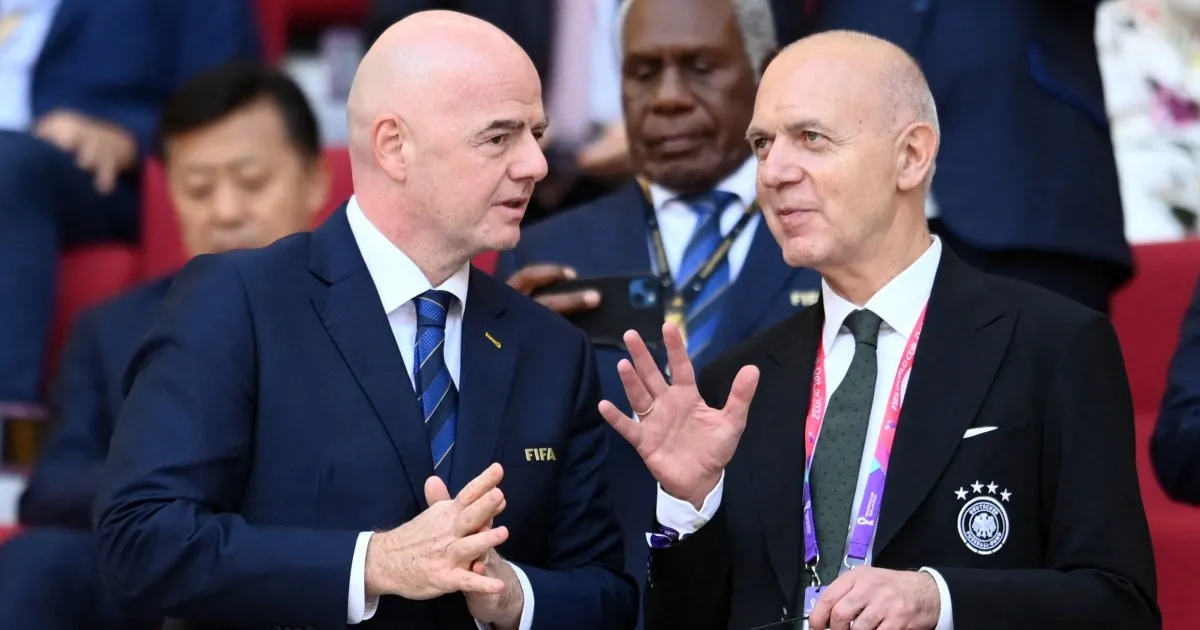
Earlier this week, FIFA President Gianni Infantino defended the cost of seats for the World Cup, saying ⁠they were in line with prices for major US sporting events.

“We have 25% of the group stage tickets which can be bought for less than $300,” Infantino said. “You cannot go to watch in the US a college game, not even speaking about a top professional game of a certain level, for less than $300. And this is the World Cup.”

The average cost of a ‌ticket for the World Cup final on July 19 in East Rutherford, New Jersey, is $13,000, according to reports. It was $1,600 for the 2022 final in Qatar.

Trump is worried the pricing will shut out working-class Americans from being able to attend a game.

“If people from Queens and Brooklyn and all of the people that love Donald Trump can’t go, I would be disappointed, but, you know, at the same time, it’s an amazing success,” he said of the World Cup that he helped land for the US during his first term as president. “I would like to be able to ⁠have the people that voted for me to be able to go.”

FIFA also released some ⁠tickets on Thursday, which gives fans a chance at first-come first-serve tickets.

According to TicketData.com, the current average price for Group Stage games is $567, down from $684 14 days ago and $720 from 30 days ago.

Field Level Media took a quick look Wednesday on the Ticketmaster website for the June 19 group-stage ⁠match between the US and Australia in Seattle, and that search did not display any bargains.

The lowest price for two tickets early Wednesday evening was a resale pair ⁠for $2,725.10, which broke down to $2,290 for the tickets and $435.10 in service fees. However, ⁠a new search 30 minutes later showed the total price climbing to $2,770.90 for seats high in the upper deck along the sideline at Lumen Field. For fans more familiar with football than futbol, they could be considered on the 25-yard line.

On Thursday afternoon, a newly listed pair of resale tickets ‌was the lowest offering – two for $2,553.10. Those tickets were in the upper deck around the football end line and NFL end zone.

On its own marketplace, FIFA takes a 15% purchase fee from the buyer of a resold ticket and a ‌15% ‌free from the seller.

TicketData.com said the cheapest available ticket has dropped in price for 87 of the 91 matches in the US and Canada over the past 14 days.

The World Cup will be played at 16 sites in the United States (11), Mexico (three) and Canada (two).

Source link

Ruling party fails to push through constitutional amendment bill amid opposition boycott

National Assembly Speaker Woo Won-shik announces his decision not to put a constitutional amendment bill to a vote during a plenary session in Seoul on Friday. Photo by Yonhap

The ruling Democratic Party’s (DP) push to put a constitutional change to a national vote in the upcoming local elections fell through Friday as the main opposition People Power Party (PPP) continued to boycott a parliamentary vote on the proposal.

Shortly after Friday’s plenary session opened, National Assembly Speaker Woo Won-shik announced that he will not put the amendment bill to a vote as the PPP warned it would launch a filibuster to block the proposal.

“I convened the plenary session again today in an effort to prevent the first constitutional amendment vote in 39 years from falling through,” Woo said. “But I believe further proceedings would be meaningless, seeing the (PPP) responding with a filibuster.”

The PPP boycotted a vote on the bill Thursday, leaving the unicameral parliament short of a quorum.

Cheong Wa Dae expressed regret over the National Assembly’s failure to pass the bill due to opposition from PPP lawmakers.

“The public will find it difficult to understand why they opposed even minimal constitutional changes aimed at safeguarding national security and democracy,” presidential spokesperson Kang Yu-jung said in a written briefing, noting that there had been broad public consensus on the need to “reflect the lessons” of former President Yoon Suk Yeol’s Dec. 3, 2024, martial law attempt in the Constitution.

“We urge the National Assembly to continue the discussions on the constitutional amendment with a greater sense of responsibility during the second half and to keep the promise it made to the people,” she added.

President Lee Jae Myung earlier highlighted the need to amend the constitution in “phases” if necessary, saying the Constitution, which has remained unchanged for nearly 40 years since 1987, may now be outdated.

The proposed bill aimed to tighten the rules for declaring martial law, requiring the president to obtain parliamentary approval without delay and stipulating that if the National Assembly rejects the declaration or fails to approve it within 48 hours, the martial law will be immediately nullified.

It also sought to include the 1980 pro-democracy uprising in Gwangju and the 1979 Busan-Masan pro-democracy protests in the preamble. It currently states that the country inherits the spirit of the April 19 revolution in 1960, which overthrew South Korea’s first president, Rhee Syng-man, over election fraud.

The bill was jointly proposed by 187 lawmakers from the DP and five minor parties.

A constitutional amendment requires two thirds of votes from sitting lawmakers to be put to a national referendum for final approval by a majority of ballots cast.

South Korea is set to hold its quadrennial local elections on June 3.

Copyright (c) Yonhap News Agency prohibits its content from being redistributed or reprinted without consent, and forbids the content from being learned and used by artificial intelligence systems.

Source link

4th S. Korean oil tanker successfully transits through Red Sea

This photo shows a South Korean oil carrier that arrived at a port in the southwestern city of Yeosu on Thursday. Photo by Yonhap

A South Korean vessel has successfully passed through the Red Sea and is currently en route home, marking the fourth oil shipment of its kind, the oceans ministry said Friday.

The arrival comes as Seoul has been scrambling to bring in oil through alternative routes amid the ongoing blockade of the Strait of Hormuz.

After loading oil shipments at Saudi Arabia’s Yanbu Port, the ship passed through the Red Sea at around 11:00 a.m., the Ministry of Oceans and Fisheries said. Details of the vessel’s movement were withheld due to safety reasons.

The ship is the fourth Korean oil carrier to transit the waterway that connects the Indian Ocean to the Mediterranean via and Suez Canal since the country began using the waterway to avoid the Strait of Hormuz.

That water lane has effectively been blocked by Iran for over a month.

The first Korean ship to take the alternate route since the war began arrived at a port in the southwestern city of Yeosu on Thursday, carrying some 2 million barrels of oil, according to sources familiar with the matter. The ship had left the Red Sea last month.

Two more Korean oil carriers successfully passed through the Red Sea earlier this week.

The ministry said it will continue efforts to stabilize oil shipments to the country and take steps to ensure the safety of Korean vessels and crew members navigating through the region.

Copyright (c) Yonhap News Agency prohibits its content from being redistributed or reprinted without consent, and forbids the content from being learned and used by artificial intelligence systems.

Source link

Amid Ukraine’s daring assaults, Russia scales back Victory Day celebrations | Russia-Ukraine war News

May 9 is a venerated date on the Russian calendar. The anniversary of the Soviet Union’s victory over Nazi Germany in World War II is usually commemorated with a grand military parade outside the Kremlin, on Moscow’s Red Square.

“For modern Russia, it’s the main holiday of the year,” said Oleg Ignatov, senior Russia analyst at Crisis Group. “There are two main holidays in Russia, the ninth of May and the New Year. And if you asked Russians, what is the main holiday, I think they would answer you that it’s the ninth of May.”

Recommended Stories

list of 4 itemsend of list

This year, however, for the first time in nearly 20 years, there will be no tanks, missiles or junior cadets in the parade. The decision to hold back on showcasing military equipment comes as a result of heightened security fears over the war in Ukraine.

However, personnel from higher-level military academies will still take part in the procession on foot, while the aerial portion of the programme will remain unchanged – an aerobatic show, followed by a team of Sukhoi Su-25 fighter jets painting the sky in the tricolours of the Russian flag.

In official statements, the Kremlin has referred to “the current operational situation,” and threats of “Ukrainian terrorist activity.”

Ukrainian drones are now striking deeper and deeper into Russian territory on an almost daily basis, hitting targets such as oil facilities and airfields. A recent spate of drone attacks on the oil refinery in Tuapse, on Russia’s Black Sea coast, has caused an ecological catastrophe and prompted the evacuation of the town.

“Drones are indeed the primary means to attack Russia’s territory,” explained Olha Polishchuk, research manager for Europe, Central Asia and the Caucasus at Armed Conflict Location & Event Data (ACLED). “They are relatively cheap, modifiable and can travel long distances … Both Ukraine and Russia have switched to using primarily drones for their attacks.

He said that since 2025, drone strikes “completely overshadowed other attacks”.

“Their use has been effective overall; most drones are intercepted but if you send enough of them, some will reach the target.”

Fears of ‘political and psychological consequences’

Security and anti-drone defences have been tightened in the capital since the Ukrainian armed forces began sending drones there in 2023, with one striking the Kremlin itself.

Mobile internet has been periodically shut off in Moscow, Saint Petersburg and other areas of the country in the days running up to the event, with providers citing “security reasons”.

“Moscow has very strong air defence, which includes short-range surface-to-air missile systems, other missile systems, small arms and electronic warfare systems,” explained Polishchuk. “It is a multilayered system located both around and inside the city. In the past, authorities have shut down cellular networks in Moscow to complicate drone navigation.

“Ukraine very rarely attacks Moscow because the air defence would require a very large swarm of drones for any attack to land, but also because there are plenty of other strategically relevant targets that do not carry such a high risk of civilian casualties.”

Nevertheless, the Victory Day ceremonies present a clear risk. Such a concentration of troops and vehicles is vulnerable not only on the day of the parade itself but before and after, too: after all, that hardware must be stored somewhere.

“Of course, they care about drones which can fly from Ukraine, but most of these drones are being intercepted,” Crisis Group’s Ignatov told Al Jazeera. “They are more afraid of groups of people using small drones which are delivered to Russia, and used against targets inside Russia, like in Operation Spiderweb [in 2025] … Even if one or a couple of small drones hit a military parade, it may not cause a casualty, but it will have a demonstrative and psychological effect. I think what they care about is the political and psychological consequences of this.”

A Russian security officer remains atop an all-terrain infantry mobility vehicle amid increased security measures taken ahead of Victory Day, marking the anniversary of victory over Nazi Germany in World War Two, near the Kremlin in central Moscow, Russia, May 7, 2026. REUTERS/Stringer
A Russian security officer sits atop an all-terrain infantry mobility vehicle amid increased security measures ahead of Victory Day, marking the anniversary of victory over Nazi Germany in World War II, near the Kremlin in central Moscow, Russia, on May 7, 2026 [Reuters]

The Victory Day parade is a tradition from the communist era, an occasion on which the citizenry could catch a glimpse of Soviet statesmen waving from atop Lenin’s tomb, as well as a chance for the then-superpower to show off its military might. But when the USSR collapsed in December 1991, the parades were shelved for nearly two decades until they were revived by President Vladimir Putin in 2008.

Since the start of the full-scale war in 2022, the Victory Day parade has been scaled back again. Only a solitary Soviet-era T-34 tank symbolically rolled across Red Square in 2024, although other types of vehicles, such as armoured personnel carriers and mobile missile launchers, were present.

Last year’s proceedings, however, packed a little more pomp. Not only did the parade feature modern tanks, the TOS-2 Tosochka heavy flamethrower systems and Iskander ballistic missiles, but also Russian troops marching alongside Chinese soldiers.

Chinese leader Xi Jinping watched the show sitting beside Putin, one of 27 heads of state in attendance, including Brazilian President Lula da Silva and Ibrahim Traore of Burkina Faso. The turnout seemed to indicate that, despite international condemnation of the invasion of Ukraine, Moscow was not isolated.

‘Victory over Nazi barbarism’ or a ‘cynical distortion of history’

“A celebration of the Soviet and Allied defeat of Hitler’s Nazi-Fascist alliance, Victory Day is the most sacred date on Russia’s political calendar,” said British historian Geoffrey Roberts.

“As ever, Victory Day will be celebrated as a Soviet as well as a Russian victory – the result of the common struggle of all the peoples of the multinational USSR, not least millions of Ukrainians. Victory Day is for the Russian government a day of multiethnic unity. It is also a reminder of the international antifascist unity – of the Soviet-Western coalition during World War II that together saved the world from Nazi barbarism.”

The Eastern Front of the second world war, known as the Great Patriotic War in Russia, occupies a central place in Russian national memory. About 27 million Soviet citizens, including Russians, lost their lives in the conflict, more than any other country, and it was the Red Army’s soldiers that hoisted their flag over the Reichstag in Berlin in 1945. The German surrender was officially finalised on May 9.

This memory is evoked by Putin’s government today, claiming it is fighting “Nazis” on the battlefields of Ukraine.

Spectators, including Russian President Vladimir Putin, Chinese President Xi Jinping, Tajik President Emomali Rahmon, Turkmen President Serdar Berdimuhamedov and Uzbek President Shavkat Mirziyoyev, attend a military parade on Victory Day, marking the 80th anniversary of the victory over Nazi Germany in World War Two, in Red Square in central Moscow, Russia, May 9, 2025. Sputnik/Vyacheslav Prokofyev/Pool via REUTERS ATTENTION EDITORS - THIS IMAGE WAS PROVIDED BY A THIRD PARTY.
Spectators, including Russian President Vladimir Putin, Chinese President Xi Jinping, Tajik President Emomali Rahmon, Turkmen President Serdar Berdimuhamedov and Uzbek President Shavkat Mirziyoyev, attend a military parade on Victory Day, marking the 80th anniversary of the victory over Nazi Germany in World War II, in Red Square in central Moscow, Russia, on May 9, 2025 [Sputnik/Vyacheslav Prokofyev/Pool via Reuters]

“It appears that in modern Russia, 9 May has been twisted to actually support aggressive behaviour and militarisation,” Polishchuk said.

“It is a big source of pride which supports the notion that Russia is strong, undefeated, and will not tolerate disrespect from anyone. The more common ‘never again’ in reference to WWII became ‘we can do it again’ in Russia as a popular Victory Day slogan. This posturing becomes even more important during an ongoing war, as it supports another sort of reality – one where Russia has not made a mistake by invading Ukraine and is not currently failing to achieve its military objectives.”

According to the open-source intelligence project Oryx, more than 14,000 Russian tanks, APCs and other combat vehicles have been destroyed, captured, abandoned or otherwise lost since the start of the full-scale invasion in 2022.

Modern Ukraine considers Victory Day, as celebrated in Russia today, a cynical distortion of history and seeks to discourage foreign dignitaries from attending, Polishchuk added.

“Ukraine is generally more level-headed than Russia in sticking to targets that have a military objective, but this is indeed one of the instances where the [potential] attack appears largely symbolic,” she said. “Ukraine may decide to save resources this time and not attack Moscow – it could be a sane choice since air defence will be on high alert and security concerns may already discourage participation, yet Russian authorities have no choice but to try to reduce the risk regardless.”

Source link

Thunder pull away from Lakers in NBA playoffs, while Pistons down Cavs | Basketball News

The Oklahoma City Thunder pulled away late to beat the Los Angeles Lakers 125-107 in an NBA playoff thriller, taking a commanding 2-0 lead in their best-of-seven Western Conference semifinal series.

Shai Gilgeous-Alexander, the reigning NBA Most Valuable Player and finalist for the award this season, scored 22 points and the Thunder capitalised on 21 Lakers turnovers on Thursday to hand LeBron James a defeat in his 300th career playoff game.

Recommended Stories

list of 4 itemsend of list

Elsewhere, Eastern Conference top seeds Detroit are also up 2-0 after a 107-97 home win over the Cleveland Cavaliers.

In Oklahoma City, Gilgeous-Alexander was again below his best, but he was amply supported.

Chet Holmgren scored 22 points and pulled down nine rebounds, Ajay Mitchell added 20 points, and Jared McCain delivered 18 points off the bench to help the Thunder withstand a 31-point performance from Austin Reaves.

James, who became the first player to contest 300 postseason games, scored 23 points and handed out six assists, and the Lakers led by five points early in the third quarter.

But with league-leading scorer Luka Doncic still sidelined by injury, the Lakers could not hang on, even with Gilgeous-Alexander on the bench for considerable stretches because of foul trouble.

Oklahoma City produced a 22-5 scoring run to seize control and will aim to keep the pressure on when the series shifts to Los Angeles for games three and four on Saturday and Monday.

“We’ve got to be the aggressor,” Gilgeous-Alexander said. “I feel like they were playing with more force, they were attacking harder, making quicker decisions, playing with a better sense of urgency, especially in the first half.

“As long as we take care of that, we should have our foot in the right direction.”

A bruising contest saw both teams irked by the officiating. Gilgeous-Alexander was whistled for a flagrant foul, and both he and James were sprawled out under the basket after a foul by Reaves late in the game.

Lakers coach JJ Redick took issue with the officiating, saying the Thunder “have a few guys who commit a foul on every possession”.

But, he added, “We didn’t lose because of the refs.”

Cunning thrives in ‘high-stakes’ situation

In Detroit, Cade Cunningham scored 12 of his 25 points in the fourth quarter and handed out 10 assists to lead the Pistons.

They set the defensive tone early but had to rally late after the Cavaliers battled back to take a two-point lead early in the fourth quarter.

“I just want to win games,” Cunningham said of his dominant fourth-quarter performance. “It’s been a lot of games down the stretch where it’s tight … The ball is in my hands and I’ve got to make plays with it.

“The pressure and the moment, it’s high stakes … all of that stuff fuels me.”

DETROIT, MI - MAY 7: Cade Cunningham #2 of the Detroit Pistons passes the ball during the game against the Cleveland Cavaliers during Round Two Game Two of the 2026 NBA Playoffs on May 7, 2026 at Little Caesars Arena in Detroit, Michigan. NOTE TO USER: User expressly acknowledges and agrees that, by downloading and/or using this photograph, User is consenting to the terms and conditions of the Getty Images License Agreement. Mandatory Copyright Notice: Copyright 2026 NBAE Brian Sevald/NBAE via Getty Images/AFP (Photo by Brian Sevald / NBAE / Getty Images / Getty Images via AFP)
Cunningham in action at Little Caesars Arena in Detroit, Michigan [Brian Sevald/NBAE/Getty Images via AFP]

Cleveland’s Donovan Mitchell scored a game-high 31 points. Jarrett Allen chipped in 22, but James Harden had just 10 on three-of-13 shooting, and his four turnovers included a costly giveaway in the final minute.

The Cavaliers have a mountain to climb as they head home for game three on Saturday and game four on Monday.

The Pistons, who locked up the top seed in the East with the third-best record in the league, had to fight back from a 3-1 deficit to beat the Orlando Magic in the first round.

In this series, they were determined to hold on to home-court advantage, and game two featured another lockdown defensive display from Detroit, leading to a 54-43 halftime lead.

The Cavaliers responded in the third quarter and took the lead on Evan Mobley’s dunk minutes into the fourth – their first lead since the opening minutes.

But they could not hang on. A Duncan Robinson three-pointer put Detroit back in front, and they would not trail again.

Cunningham said the Pistons will have to “turn up our energy even more” in Cleveland.

“They’re a tough team to beat at home,” he said.

Source link

Tennessee approves map dismantling majority-Black district | Elections

NewsFeed

Tennessee has approved a new congressional map that breaks apart a majority-Black district centred on Memphis, triggering protests inside the state Capitol and accusations of racial gerrymandering. The move could help Republicans strengthen their narrow majority in the US House ahead of November’s midterm elections.

Source link

Oil prices jump as US, Iran trade fire in Strait of Hormuz | Oil and Gas News

Brent crude rises amid clashes in critical waterway.

Oil prices have jumped after clashes between United States and Iran in the Strait of Hormuz pushed their tenuous ceasefire to the brink.

Futures for Brent crude rose as much as 7.5 percent during a volatile trading session on Thursday, before easing as Asia’s markets opened on Friday morning.

Recommended Stories

list of 4 itemsend of list

The international benchmark stood at $101.12 per barrel as of 03:00 GMT, down from the day’s high of $103.70.

The latest rise came after the US and Iran exchanged fire in the critical strait, a conduit for about one-fifth of global oil and natural gas supplies, despite the truce announced between the sides on April 7.

US Central Command (CENTCOM) said it launched strikes on Iran after three US Navy guided-missile destroyers came under attack from Iranian missiles, drones and small boats in the strait.

Iran’s Khatam al-Anbiya Central Headquarters earlier accused the US of violating the ceasefire by attacking an Iranian oil tanker and another vessel in the vicinity of the waterway.

The Iranian military headquarters also accused the US of targeting civilian areas, including Qeshm Island.

US President Donald Trump on Thursday appeared to downplay the clashes, saying the ceasefire remained in effect, while Iran’s state-run Press TV said the situation had gone “back to normal”.

Shipping in the strait has been at a near standstill since late February amid the threat of Iranian attacks on the massive oil tankers that usually transport much of the world’s energy supplies.

Brent prices are up about 40 percent compared with before the war amid an estimated shortfall in daily production of 14.5 million barrels.

Asian stock markets opened lower on Friday amid the heightened tensions, with Japan’s benchmark Nikkei 225, South Korea’s KOSPI and Hong Kong’s Hang Seng Index each falling more than 1 percent.

On Wall Street, the benchmark S&P 500 fell about 0.4 percent overnight after hitting an all-time high the previous day.

Source link

U.S. strikes Iranian military sites after attacks on warships

U.S. Navy Arleigh Burke-class guided-missile destroyer USS Rafael Peralta, left, is one of three warships reported to have been attacked by Iranian missile and drone Strikes on Thursday. File Photo by Mass Communication Specialist 1st Class Ryre Arciaga/U.S. Navy/UPI

May 7 (UPI) — U.S. Central Command said Thursday that American forces struck Iranian military sites responsible for “unprovoked” missile, drone and boat attacks on U.S. warships in the Strait of Hormuz.

“U.S. forces intercepted unprovoked Iranian attacks and responded with self-defense strikes as U.S. Navy guided-missile destroyers transited the Strait of Hormuz to the Gulf of Oman,” CENTCOM said in a statement.

CENTCOM said Iran had targeted the USS Truxtun, the USS Rafael Peralta and the USS Mason.

“No assets were struck,” it said.

The U.S. strikes targeted the Bandar Abbas and Qeshm ports near the strait, CBS News and CNN reported, each citing unnamed U.S. officials.

The attacked Iranian facilities included “missile and drone launch sites; command and control locations; and intelligence, surveillance and reconnaissance nodes,” according to CENTCOM.

After the U.S. vessels had transited the strait, President Donald Trump promptly took to social media to post a warning to Iran.

“Missiles were shot at our Destroyers, and were easily knocked down,” he wrote. “Likewise, drones came, and were incinerated while in the air. They dropped ever so beautifully down to the Ocean, very much like a butterfly dropping to its grave! A normal Country would have allowed these Destroyers to pass, but Iran is not a Normal country. They are led by LUNATICS.”

Iran’s elite Islamic Revolutionary Guard Corps Navy said in a statement carried by Iranian state-owned outlet Press TV that it attacked the U.S. warships in response to an alleged U.S. cease-fire violation as well as a U.S. attack on an Iranian tanker near the Iranian city of Jask.

Iranian forces caused “significant damage” to the U.S. warships, it said.

A spokesperson for the Khatam al-Anbiya Central Headquarters also said the Iranian strikes were in response to the “aggressive, terrorist and outlaw” U.S. military, Press TV reported.

The attacks come after Trump earlier this week called off Project Freedom, a U.S. military operation to escort ships through the Strait of Hormuz, as Washington and Tehran try to reach an agreement to end the war.

Despite the attacks, Trump told reporters that the fragile cease-fire that halted the war that began in late February was still intact.

“They trifled with us today. We blew them away,” Trump told reporters Thursday evening.

“If there’s no cease-fire, you’re not going to have to know. You’re just going to have to look at one big glow coming out of Iran.”

Source link

Trump’s FEMA review council recommends widespread changes

May 7 (UPI) — A group appointed by President Donald Trump made its final recommendations Thursday on changes to the Federal Emergency Management Agency, suggesting moves that would put more responsibility back on states and other authorities.

The changes also include reviews of agency staffing and privatizing flood insurance, The Hill reported.

“We need to refocus FEMA to get it back on what its mission originally was,” Homeland Security Secretary Markwayne Mullin said. FEMA is part of Homeland Security.

Panel members said FEMA has become too involved in politics, specifically mentioning state assistance during the coronavirus epidemic, The New York Times reported. Recommendations included changes in how FEMA helps state and local governments with financial recovery.

“Disaster response is complicated and increasingly expensive,” the final report said. “With taxpayers bearing the burden of funding emergency management in the United States, it is the responsibility of every American to embrace their individual responsibility to lessen this burden by being prepared for disasters. … As our nation returns ownership of emergency management back to local communities and their states, tribes and territories, we encourage every American to review their insurance policies and personal disaster plans as well as engaging with their local community leaders to be better prepared when disaster strikes.”

Trump has said that FEMA’s work is too expensive and that state governors should be able to manage more on their own, the Times reported. He has also suggested in the past that the agency should “go away” entirely.

The changes recommended by the report would require congressional approval. They include tweaks meant to make the reimbursement process, once approved, quicker and more direct, and changes meaning the FEMA plays less of a role in helping disaster survivors find housing.

“These recommendations are all about accelerating federal dollars, streamlining the process, making it less bureaucratic, so that Americans can get the help they need on the worst day of their lives,” said former Virginia Gov. Glenn Youngkin, a member of the council. “And this is not a moment for bureaucracy, it is a moment for action, it is a moment for clarity.”

The Environmental Defense Fund said in a statement that Americans are facing increasingly severe weather and the council’s recommendations “don’t meet this reality.”

“The proposed changes would leave communities without the necessary funding, information and access to insurance to stay prepared and safe when disasters strike,” said Will McDow, the fund’s associate vice president for coasts and watersheds.

The group said the proposed changes would “shift enormous burdens onto states and communities and reduce government efficiency.”

Source link

Barcelona vs Real Madrid: El Clasico – La Liga, history, Valverde, Mbappe | Football News

Barcelona are set to storm La Liga this year and could seal title in Sunday’s Clasico, but what is the history of the Real Madrid rivalry?

Barcelona and Real Madrid will contest the 264th El Clasico when the Spanish giants come together in a La Liga clash on Sunday.

Rarely will there have been a more highly charged atmosphere with a heavily demoralised Real arriving in the Catalan capital, facing the prospect of watching their fiercest rivals crowned champions on the day.

Recommended Stories

list of 4 itemsend of list

Although knocked out of the UEFA Champions League at the quarterfinals, as Los Blancos were too, Barca are well on course to defend their La Liga crown – and at a canter.

Al Jazeera Sport takes a look at the talking points heading into the game and what the history is of a 124-year-old rivalry.

Will Kylian Mbappe play for Real Madrid against Barcelona?

The headline news surrounding Sunday’s game is the availability of Kylian Mbappe, with the French striker a doubt for the Clasico because of a hamstring injury.

The 27-year-old striker tops the scoring charts in the Spanish league this season with 24 goals. Mallorca’s Vedat Muriqi is a surprise second on the list with 21 strikes, while Barca’s Lamine Yamal, who is out for the remainder of the season, has netted 16 times and is third on the list.

Despite Mbappe’s goalscoring achievements, a “Mbappe out” petition has garnered more than 33 million signatures calling for the club to sell the striker, who joined from Paris Saint-Germain two seasons ago.

What happened to Real Madrid’s Federico Valverde?

Federico Valverde will definitely miss out on El Clasico after a training ground bust-up on Thursday resulted in the midfielder being taken to hospital.

The 27-year-old Uruguayan is understood to have sustained a head injury following an incident with teammate Aurelien Tchouameni.

Real have said they are investigating internally, and have already decided to open disciplinary proceedings against both players.

It is not yet clear if Frenchman Tchouameni will be available for Sunday’s match as a result.

How can Barcelona win La Liga in Sunday’s El Clasico?

Alvaro Arbeloa’s Real trail Hansi Flick’s reigning champions by 11 points with four matches remaining, and are sinking towards a second straight season without a major trophy.

Anything but a win for Real on Sunday will see Barca lift the trophy in their own stadium against the only side to have won La Liga more.

What is meant by El Clasico?

The term El Clasico first appeared in a Spanish newspaper during the 1960s in reference to matches between the two biggest club teams in Spain.

The simple translation is “The Classic”.

By that time, the match had already been long considered one of sport’s fiercest derbies.

How did El Clasico become Spain’s greatest rivalry?

Originally, the phrase “Viejo Clasico” (Old Classic) was a term that referred to the Madrid derby between Real and Athletic Bilbao.

The match between the pair has historically been the most-played fixture in Spanish football before the rise of Barcelona to one of the two most prominent teams in the country.

The term El Clasico, although a 1960s invention in Spain, became a more widely popular and globally associated name when the rivalry between Real Madrid and Barcelona peaked in the 1990s.

Johan Cruyff’s Barcelona were a side to be feared on the global stage, but Quinta del Buitre’s Real were putting up a stern test. In the late 90s, Real’s superstar lineup was dubbed the Galacticos following the heavy financial investment in overseas stars such as Zinedine Zidane, Ronaldo and David Beckham.

By the turn of the century, the rivalry was recognised as one of the biggest match-ups in world sport and heralded in the era of Pep Guardiola vs Jose Mourinho in the dugouts – and the small matter of Lionel Messi vs Cristiano Ronaldo on the field.

When was the first El Clasico between Barcelona and Real Madrid?

The first match between the clubs took place on May 13, 1902, in the Copa de la Coronacion (a predecessor to the Copa del Rey).

Barcelona won the match 3-1 in the Spanish capital against Madrid FC (the club later became Real Madrid).

Who has won more El Clasico matches, Real Madrid or Barcelona?

Of the 261 matches between the clubs over the last 124 years, Real have won 106, while Barcelona have won 105.

How many times have Real Madrid and Barcelona won La Liga?

Real have lifted the La Liga trophy 36 times while Barca are targeting their 28th title.

Who has scored the most El Clasico goals?

  1. Lionel Messi (Argentina) – 26 goals for Barcelona
  2. Alfredo Di Stefano (Portugal) – 18 goals for Real Madrid
  3. Cristiano Ronaldo (Portugal) – 18 goals for Real Madrid
  4. Karim Benzema (France) – 16 goals for Real Madrid
  5. Raul (Spain) – 15 goals for Real Madrid

What are the last five results between Barcelona and Real Madrid?

  • January 11, 2026 – Spanish Super Cup final: Barcelona 3-2 Real Madrid
  • October 26, 2025 – La Liga: Real Madrid 2-1 Barcelona
  • May 11, 2025 – La Liga: Barcelona 4-3 Real Madrid
  • April 26, 2025 – Copa del Rey final: Barcelona 3-2 Real Madrid (after extra time)
  • January 12, 2025 – Spanish Super Cup final: Real Madrid 2-5 Barcelona

How can I follow Sunday’s El Clasico between Barcelona and Real Madrid?

We will bring you our comprehensive text commentary stream of Sunday’s match, starting with our usual extensive build-up – including all the news, analyses and opinion surrounding the game.

Source link

Japan to launch prime minister-led National Intelligence Bureau

Prime Minister of Japan Sanae Takaichi speaks during a joint press statement with Australian Prime Minister Anthony Albanese (not pictured) at Parliament in Canberra, Australia, 04 May 2026. Prime Minister of Japan Sanae Takaichi is on a three-day visit to Australia. Photo by LUKAS COCH / EPA

May 7 (Asia Today) — Japan plans to launch a new National Intelligence Bureau as early as July to centralize intelligence gathering and analysis under the prime minister’s office, a move expected to affect trilateral security cooperation among South Korea, the United States and Japan.

The new organization will upgrade the existing Cabinet Intelligence and Research Office into a roughly 700-member agency, with plans to gradually expand staffing by recruiting specialized intelligence personnel and private-sector experts.

According to the Yomiuri Shimbun, the Japanese government has finalized plans to establish the National Intelligence Bureau this summer with an initial workforce similar in size to the current intelligence office.

Legislation creating the National Intelligence Council, which will serve as the legal basis for the new bureau, was submitted to parliament on March 13 and passed the lower house in April. Deliberations in the upper house are scheduled to begin Thursday.

The new bureau will operate under the prime minister’s office and support the National Intelligence Council, chaired by Prime Minister Sanae Takaichi.

The restructuring marks a major shift from the current system, in which the Cabinet Intelligence and Research Office is largely staffed by officials dispatched from agencies such as the National Police Agency and the Foreign Ministry.

Beginning next year, Japan plans to recruit its own career-track intelligence officers through the national civil service examination system.

The government also intends to expand midcareer hiring from the private sector to secure experts with foreign language skills, cybersecurity expertise and advanced internet technologies.

Officials are additionally considering hiring engineers capable of using artificial intelligence to process large volumes of intelligence data more efficiently.

The new agency is expected to oversee intelligence exchanges with foreign services, analysis of overseas developments and responses to disinformation and misinformation on social media platforms.

Japan’s opposition parties have raised concerns about the expansion of surveillance powers and the political neutrality of the organization.

Critics argue the legislation does not clearly define the operational scope of intelligence activities and could lead to infringements on privacy rights and freedom of thought.

Some lawmakers have also warned the new system could pave the way for future legislation on anti-spying measures or the establishment of a full-fledged foreign intelligence service.

For South Korea, the reorganization means Japan’s intelligence-sharing channel within trilateral security cooperation with Washington could become more centralized and influential.

Key security issues already shared among the three countries include North Korea’s nuclear and missile programs, Chinese military activities in the East and South China seas, Russian military movements in the Far East, cyberattacks and disinformation campaigns.

Analysts said Japan’s strengthened intelligence structure could accelerate the speed of Japanese threat assessments and crisis responses during regional emergencies.

At the same time, South Korea is expected to closely monitor how Japan integrates the new agency into trilateral intelligence-sharing frameworks and whether the reform strengthens Japan’s independent security decision-making role.

The launch of the National Intelligence Bureau could improve coordination on North Korean missile threats while also marking a broader expansion of Japan’s security and intelligence capabilities.

— Reported by Asia Today; translated by UPI

© Asia Today. Unauthorized reproduction or redistribution prohibited.

Original Korean report: https://www.asiatoday.co.kr/kn/view.php?key=20260507010001415

Source link

Palestinian boy mourns father killed in Israeli strike on security post | Gaza

NewsFeed

A Palestinian boy mourns his father, one of three people killed in an Israeli strike on a security post in Gaza. The attack is part of ongoing Israeli violence, despite a fragile ceasefire, which has killed at least 846 Palestinians, according to Gaza’s Health Ministry.

Source link