Kevin Gower

Built to stand out not to fit in

Six things your ex and her new partner are saying about you

YOU believe the relationship ended with dignity and mutual respect. What she’s telling her new partner is a great deal funnier than that. Here’s what they’re laughing about:

Every monumentally stupid thing you ever said

It’s easy to repeat bollocks you’ve not thought through. Your guard was down. You didn’t really believe there was a hook-handed killer hiding in the back of your car, though she’s recounting it as you very much did and crapped yourself. Everyone’s gullible occasionally. It’s not fair you look an idiot and he gets sex.

Every bad gift you ever gave

Poor planning, lack of funds, an attempt at humorous irony or just misplaced spontaneity means yeah, you gave your share of shit presents. That doesn’t mean she has to take him on a little tour of them while ignoring all the good, thoughtful gifts. While if he gets her a naked woman apron and sex dice it’ll be adorable because he’s new.

Each one of your sexual failings

Obviously you’ll be unflatteringly compared to him. But while at the time she claimed she didn’t mind that sex didn’t drag on, it wasn’t as brief as she’s making out. That bastard she’s with now is going to turn it into a recurring joke, calling you ‘hair-trigger Tommy’ and ‘Johnny come-early’ which isn’t accurate because it was actually very fulfilling.

All the times you got too pissed

You were having fun! Vomiting over yourself after getting thrown out of an Uber, deep-frying a frozen pizza, those widely separated urination incidents; each was a good night. He doesn’t need to look saddened you’d put her through such horrors then begin giggling ‘What a pathetic twat, though’. Bet she’s not mentioned when she fell asleep on the toilet.

Every ex you ever had, as evidence

How did such a wonderful woman end up with such a prick as yourself? Well, she memorised your exes and is listing them in order of comedy value to emphasise that she was the exception. Don’t imagine there’s any solidarity between women: anyone you shagged who was fat, thick, ‘common’ or mental is up there.

He’s just realised he knows you

You live in the same city, you’re similar in age, and the new boyfriend has just realised, uproariously, that he’s actually met you. And you were, he is happy to confirm, one of the most pitiful pricks he’s every had the misfortune to encounter. ‘That’s so funny!’ your ex says, while frantically worrying about all the stories you could tell about her.

Friday 12 December Day of the Virgin of Guadalupe in Mexico

The Story behind this celebration demonstrates how the Catholic faith gained importance in the hearts of the Mexican people. It is a story of miracles and faith that marks an important change in the history of Mexico.

The Spaniards, after they conquered Mexico, had in mind the goal of converting the indigenous indians into catholicism. But the spaniards encountered many difficulties because the Mexican people had existing strong beliefs in their many gods. It wasn’t until the story of the Virgin of Guadalupe and Juan Diego that this started to change.

Juan Diego was a young indigenous Indian walking toward the Hill of Tepeyac on December 12th 1531 when he was stopped by the appearance of the Virgin Mary. The Virgin Mary appearing to Juan Diego was a young woman with black hair and dark skin which looked more like an indigenous person. She ordered Juan Diego to go to the Bishop and ask him to build a church at the Hill of Tepeyac. Juan Diego then ran to the Bishop to tell him what the Virgin Mary had told him. The Bishop didn’t believe what this young man was telling him and decided to ignore the petition.

The Virgin Mary appeared again in front of Juan Diego and told him to collect flowers from the top of the hill, but because it was December Juan Diego knew that there was not going to be any flowers at the rocky hill. Upon reaching the top of the hill, Juan Diego was surprised to see that it was covered with colorful and beautiful flowers. Juan Diego, as he was asked to, collected the flowers using his overcoat and ran again to see the Bishop.

Juan Diego gave the coat full of flowers to the bishop, and here the bishop discovered the image of Virgin Mary’s picture was miraculously traced on the coat. Seeing both the unseasonal flowers and the image of the Virgin, the Bishop realized Juan Diego had told him the truth, and The Basilica of the Virgin of Guadalupe was built on the hill of Tepeyac in Mexico City. 

The basilica at Tepeyac is the most visited Catholic pilgrimage site in the world, and the world’s third most-visited sacred site

Thursday 11 December Proclamation of the Republic in Burkina Faso

The region of modern-day Burkina Faso did not attract colonial attention until the late nineteenth century. By 1898, the kingdoms that now make up the majority of the region corresponding to modern-day Burkina Faso had become a French protectorate.

These territories were added to the Upper Senegal and Burkina Faso colony of French West Africa in 1904. Over the years, regions within the area were split apart into different colonies, before Upper Volta was created on September 4th 1947 becoming an overseas territory of the French Union.

On December 11th 1958, The Republic of Upper Volta became a self-governing autonomous republic within the French Community.

It was nearly two years before Upper Volta gained its full independence from France in August 1960. Upper Volta changed its name to Burkina Faso in August 1984.

Woman racing against time to choose Christmas gift before husband buys her shit

A WOMAN is in a desperate race against time to think of a big-ticket item her husband can buy her for Christmas before he goes rogue.

Jess, aged 42, not her real name or age, was told yesterday ‘if there’s anything you want for Christmas I need to know this week, otherwise I’ll get you whatever’ and is frantically searching for the right item to stem a tide of crap.

She said: “It’s not that the gifts he gets me are entirely bad. It’s just they’re very ‘generic woman’.

“‘Here’s a scented candle, here’s some chocolates, here’s a bottle of artisanal gin. Does that take me up to the spending cap yet? Alright here’s a scarf.’ I’ve got five days or less to find something before he buys Expensive Secret Santa.

“It’s f**king stressful. I feel like I come across stuff I’d like which costs £200 every day, but put me against the clock and suddenly every website’s bare. No way am I getting any work done today. This is a quest.

“Wasn’t there a coat? Why didn’t I bookmark that coat I liked? Do I need shoes? He said this week but his patience can run out at any time and I’ll end up with a spa voucher and an air fryer.”

Husband Anthony, 28, not his real name or age, said: “Yeah, she didn’t give me any ideas so I’ve got her a spa voucher and an air fryer.”

Wednesday 10 December International Human Rights Day

The Universal Declaration of Human Rights, adopted by the UN General Assembly on December 10th 1948, was the result of the experience of the second world war. It is considered a milestone document in the history of human rights.

After the end of the war, and the creation of the United Nations, the international community vowed never again to allow atrocities like those of that conflict happen again.

The Universal Declaration of Human Rights is the most translated document in the world, available in more than 500 languages.

Tuesday 9 December Battle of Ayacucho in Peru

Considered in Peru and neighbouring countries as the end of the battle for independence from the crown of Spain, the Battle of Ayacucho is remembered as the decisive military encounter during the Peruvian War of Independence, which secured Peruvian nationhood and ensured the same for the other emerging South American states.

This battle took place on the morning of the 9th December 1824 on a high plateau near Ayacucho, Peru. The name Ayacucho comes from the indigenous Quechua word meaning ‘corner of the dead’.

The Spanish royalist army numbering over 9000 soldiers was commanded by native Frenchman Jose de Canterac and had 10 times as many artillery pieces as their foe. The revolutionary forces, which were made up of Peruvians as well as Venezuelans, Colombians, Argentinians, and Chileans numbered about 6000 and were under the leadership of de Sucre. 

It was noted that just before the battle, many officers and troops crossed over to embrace their friends and brothers in the opposing battle lines. Sucre opened the attack with an unexpected cavalry charge led by Colombian José María Córdoba, and in a short time the royalist army had been routed, resulting in almost 2,000 fatalities. The battle which lasted approximately four hours ended with the defeat of the royalists while the losses of the patriot army amounted to 310 fatalities and 709 wounded.

During the fighting, the Spanish viceroy José de la Serna e Hinojosa and his generals were taken prisoner which resulted in immediate calls for talks and terms of surrender. The terms of surrender stipulated that all Spanish forces be withdrawn from both Peru and Charcas (Bolivia); the last of them departed from Callao, the port of Lima, in January 1826.

Monday 8 December Battle Day in Falkland Islands

The Battle of the Falkland Islands was a First World War naval action between the British Royal Navy and Imperial German Navy on 8 December 1914 in the South Atlantic.

After the German at Coronel the previous month, Admiral von Spee planned to destroy the British coaling station at Port Stanley on East Falkland in the South Atlantic. Spee found a much superior British force in port as he approached. Within hours he was dead.

The Battle of the Falkland Islands has been called the most decisive naval battle of the war, because it gave a great morale boost to the Allied war effort at a dire time

1990s really were as good as you remember, scientists confirm

THE 1990s were every bit as perfect as your nostalgia-clouded memories make them out to be, a research project has discovered.

A team tasked with investigating whether Oasis, doing pills in superclubs, voting New Labour and Two Dogs alcoholic lemonade were actually as good as they are claimed to be has found that yes, they were at least that great and probably more so.

Professor Swift, not his real name,  of the Institute for Studies said: “Our working hypothesis was the years 1990 through to 1999 only seemed a non-stop thrill ride because you were in the prime of your life still aflame with possibilities. Bollocks. They were just brilliant.

“The Berlin Wall was down, you could smoke indoors, lad mags were getting all the hottest girls on telly to pose naked and university was free. It was the definition of a golden age.

“Even the news was fine. The recession was benign and kindly. War in Yugoslavia barely touched us because it was a bit confusing and America busied itself with the OJ trial. Footballers still got pissed and Mars bars were the size of your fist.”

He added: “Remember that ‘Hello Boys’ advert? Good times.”

51-year-old Ronny, not his real name, said: “Best decade ever, no competition. Nobody’s going to look back at the 2020s fondly. Who’s getting wistful over shit memes about worse mental health?”

Sunday 7 December Feast of St. Ambrose in Milan

Saint Ambrose was an archbishop of Milan during the 4th century.

He became an important ecclesiastical figure of his time and was one of the four original doctors of the Church.

Saint Ambrose was sometimes known as the ‘Honey-Tongued Doctor’. He got this nickname from the story that when he was a baby, it was said that a swarm of bees started crawling around his mouth. However, instead of stinging him, they left honey on his lips.

This tale also explains why in addition to Milan, he is the patron saint of beekeepers and candlemakers.

A confused millennial tries to… rip the piss out of Gen Alpha without looking old

By Josh Gardner, who is killing intergenerational healing

TIME to admit it: millennials are more cooked than pub chips. Boomers think we’re snowflakes, Gen X think we’re entitled pricks, and Gen Z think we’re cringe uncs.

For what? Because we believe a £15-a-day takeaway coffee habit is totes reasonabs? Because we ran a viciously Maoist social media regime? Or because we took self-obsession to new levels and can’t let go of Harry Potter? I honestly can’t tell.

Either way, we’re losing the war between the generations. Unless we lock in soon we’ll be L plus ratio’d into oblivion forever. So we have to launch a pre-emptive strike on Gen Alpha.

It’s strategic genius, and not in the actually-the-opposite-of-that Donald Trump sense. Their oldest members are 14, so their banter’s going to be weaksauce. And the youngest are mere months old. Even our most blue-haired can beat that.

And as they’re yet to be defined, we can project whatever bullshit stereotypes onto them we want. Maybe their saying 6, 7 is killing the housing industry? Millennials took more shit for less.

I decided to get in there early by bullying the first Gen Alpha I could find. It was a 13-year-old on TikTok, so I rinsed him by pointing out that he’ll never be able to buy cigarettes.

But rather than ragequitting, he said ‘Sir, you appear to be in your thirties and concerned with media-generated tribal conflicts. Don’t you think that’s a little tragic?’

‘Not to mention the fact that the Tobacco and Vapes Bill will likely lead to the creation of a black market instead of permanently eradicating them, as with cannabis.’ Yeah. He was crashing out alright.

Then I heard sniggering behind me and turned to find a cross-generational grouping laughing – unbelievably – at me. Saying my attack was just ‘typical millennial copium’.

‘You’re just like me and you hate me!’ cackled a Boomer. ‘That was more cringe than when you got a moustache tattooed onto your index finger!’ laughed a Zoomer.

They weren’t wrong. In my haste to assert dominance I’d fumbled big time. Oh well, I’ll get another chance when Generation Beta comes of age. Those f**ks are going down.

Saturday 6 December Independence Day in Finland

Finland had been part of the Russian Empire since 1809. Following the Russian revolution and the defeats in the First World War, movements within Finland pushed for independence from Russia and on December 6th 1917, the parliament declared Finland as an independent state.

The Finnish parliament’s vote to adopt the Declaration of Independence on December 6, 1917, was not unanimous. It passed narrowly due to political divisions between non-socialists and social-democrats over who should hold power, reflecting the tense political climate of the time.

The tradition of placing two candles in windows at 6 PM is well-known, but its origins are debated. One theory suggests it began in the 19th century as a covert signal to young Finnish men traveling to Sweden or Germany for military training as jägers, indicating safe houses where they could hide from Russian authorities. Another story ties it to poet Johan Ludvig Runeberg’s birthday, used as a subtle protest against Russian rule.

Pretty sure I can blame all my shite parenting on lockdown, concludes dad

A FATHER believes the Covid inquiry’s verdict that lockdown irreparably damaged a generation of children pretty much gets him off the hook.

Chris, aged 46, not his real name or age, decided that as his children, aged seven and nine in 2020, were among those for whom ‘ordinary childhood was brought to a halt’ and were left with ‘lasting scars’ none of their subsequent behavioural issues can be blamed on him.

He said: “Bad father and bad role model, my arse. It’s lockdown. That’s why Jed wags school to go shoplifting, because the government basically told him to.

“He was at an impressionable age, and the prime minister’s on telly telling him staying off school will save lives? That’s going to sink in. Subconsciously, he’s still playing the hero.

“And it says here that nobody was prepared for the sudden and enormous task of educating children in their homes. I certainly wasn’t, what with having no GCSEs, which is why I delegated that job to YouTube. Turns out it’s not all tuition videos on there.

“That two years off school – I didn’t bother sending them in between lockdowns, I could see which way the wind was blowing – did so much damage. I couldn’t fix it. I knew better than to even try.

“Next time the school calls me in, probably Tuesday, I’ll tell them they never learned basic arithmetic or that bullying’s wrong or how to read or punctuality or when not to swear or the UK drinking age because of lockdown. Thank God. For a moment there I blamed myself.”

Friday 5 December Farmer’s Day in Ghana

Since it was introduced by the Ministry of Food and Agriculture in 1988, the first Friday in December has been set aside to honour farmers and fishermen for their efforts in feeding the nation and recognise the vital contributions of a strong agricultural sector to the prosperity of the Ghanaian economy.

1982 until 1984 brought an agricultural crisis to Ghana. During these years, the country experienced a severe drought unprecedented in its history. The drought resulted in deadly bushfires in 1984, which stripped the land, resulting in little vegetation cover. 

There was a serious food shortage because the bushfires severely damaged cocoa farms and food crops. However, Ghanaians were given some reprieve in 1984 when the National Mobilisation Squads, or Mobisquads, were formed to help rescue the situation. The Mobisquads transplanted cocoa trees after clearing the farms.

To encourage the importance of farming, and as a reminder of the risks involved, National Farmer’s Day was created.

Thursday 4 December Tupou I Day in Tonga

King George (Siaosi) Taufa’ahau Tupou I was Tonga’s first Christian King and he is seen as a key figure in the foundation of Modern Tonga.

Tupou was born around 1797. December 4th is said to be his birthday, but that is not definitive and may have been assumed from the public holiday which as mentioned, celebrates his ascension to the Tongan throne in 1845.

Tupou adopted the name Siaosi, the Tongan version of George, after King George III of the United Kingdom, when he was baptized in 1831.

He was declared King in 1845 following a consolidation of the various tribes that ruled over the area of Tonga. Tupou’s legacy is his help in spreading Christianity across the Pacific and his leadership in avoiding foreign domination from European nations. Despite a close relationship with Britain, Tonga never relinquished its sovereignty unlike many other countries in the region.

Tupou passed away at the age of 96 in 1893 after catching a cold.

Nothing more embarrassing than fancying someone

THERE is no experience available to humanity more shameful than finding another person attractive, research has found.

Although depicted in literature and music as a feeling that lifts the soul, actual sufferers of crushes report symptoms including anxiety, blushing, overheating and hyperawareness of their own face.

Tom, not his real name, who desperately fancies his colleague Grace Wood-Morris, said: “Oh God, it’s mortifying. Every evening is a catalogue of painful regrets. And this is meant to be good?

“When I’m scrolling her Instagram, listening to Dusty Springfield and imagining our life together it seems alright. None of that survives even fleeting contact with Grace. All I do is overthink and say idiot things and wish to sink painlessly into the earth forever.

“I’m 32 with a mortgage and moles. Do you know how humiliating it is to plan outfits? To change my email signature from ‘best wishes’ to ‘kind regards’ lest it betray my fluttering lovelorn heart? There should be a cut off of 18 for this sort of thing, like with acne.

“Today she offered me a cup of tea and I reacted like it was a marriage proposal. To be fair she was giving out blatant sexual signals such as wearing a nice jumper.”

Professor Amice, not his real name, of the Institute of Notes said: “A crush creates anxiety by raising levels of stress hormone cortisol. It’s the body’s fight-or-flight response. And the answer is ‘flight’.”

Wednesday 3 December Feast of St. Francis Xavier Spain

Francis was born in Xavier, in the Kingdom of Navarre on April 7th 1506. He was born into a rich farming family, whose fortunes were severely damaged during the war with Aragon.

Francis went to study in Paris, where he met Ignatius of Loyola, who would convince Francis to follow a religious life and become a priest. Francis was reluctant at first, leading Ignatius to ask the now-famous question: “What will it profit a man to gain the whole world, and lose his own soul?”

Along with Ignatius, Francis became one of the founders of the Society of Jesus, commonly known as the Jesuits. They made private vows of poverty, chastity, and obedience to the Pope. They also vowed to go to the Holy Land to convert “infidels.”

Francis left Rome for the Indies in March 1540. His future as arguably the greatest Christian missionary since St. Paul began almost by accident. He wasn’t originally chosen to be a missionary, but one of the two originally selected by Ignatius fell ill, so Ignatius asked Francis to go as a replacement.

Over the next 12 years, Francis led a series of overseas missions, mainly in the Portuguese Empire of the time – Mozambique, Malacca and notably Goa. He was the first Christian missionary to travel Japan and on to Borneo and the Moluccan Islands. For his evangelist work, he became known as the “Apostle of the Indies”.

Francis was waiting to travel to take his missionary work to mainland China when he died from a fever on Shangchuan Island on December 2nd 1552.

Francis was made a saint by Gregory XV on March 12th 1622.

Saint Francis Xavier’s relics are kept in a silver casket, inside the Bom Jesus Basilica in Goa.

Tuesday 2 December National Day in United Arab Emirates

It is generally a two day holiday, with December 3rd also a holiday but the second date for the holiday may fall before or after December 2nd depending on what day of the week December 2nd falls on.

As is often the case in the United Arab Emirates, public sectors may get a longer public holiday break for this holiday than workers in the private sector.

The holiday commemorates the United Arab Emirate’s formal nationalisation from the British Protectorate Treaties as a result of the expiration of a British treaty on December 2nd 1971. This lead to the eventual, federal unification of seven sheikhdoms in the former Trucial States in 1971 to form the modern-day country. The first president of the federation was Sheikh Zayed bin Sultan Al Nahyan.

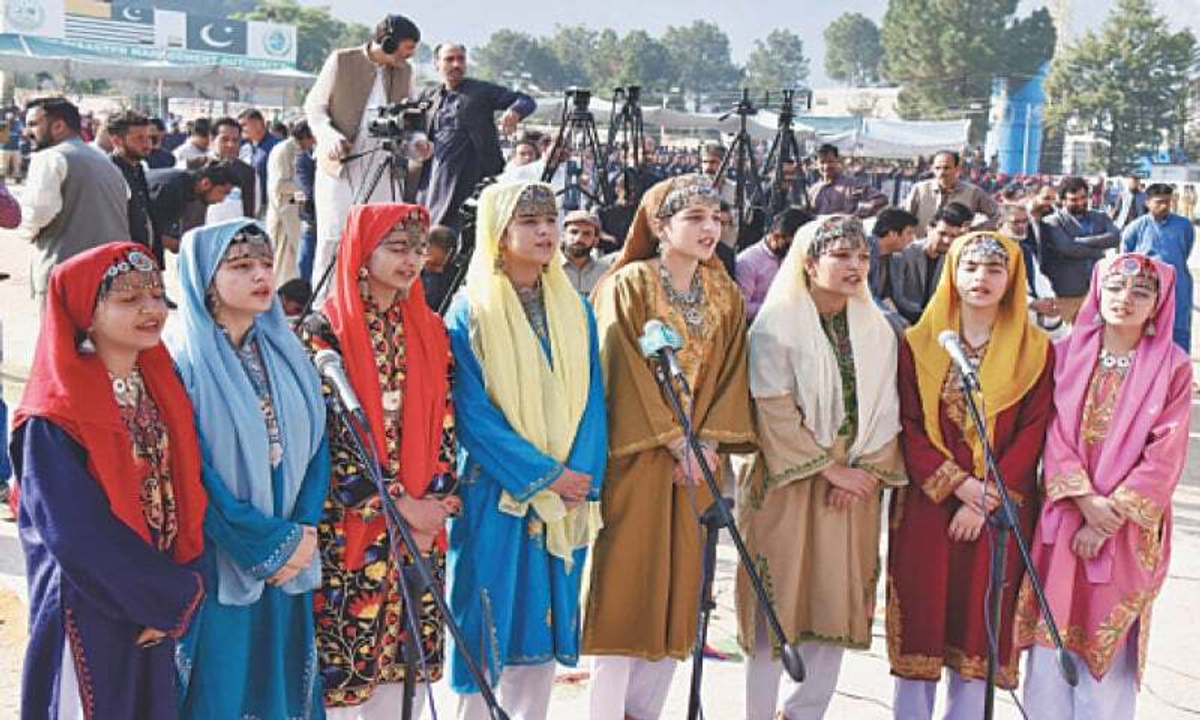
Schools in the U.A.E. celebrate National Day by holding national events and celebrations where local children will dress up in the cultural “thoub and “kandoora” and perform the “youlah” and folkloric dances and organize cultural contests.

Monday 1 December Army Abolition Day in Costa Rica

The Costa Rican Civil War in the spring of 1948 was the bloodiest event of the 20th century in this Central American country. It is fitting that after the war, President José Figueres Ferrer drafted a new constitution, guaranteeing universal suffrage and the dismantling of the military.

On December 1st 1948, the armed forces of Costa Rica were formally abolished.

President Carlos Alvarado signed the law that establishes the new holiday on May 19th 2020 in a ceremony, held at the National Museum.

The signing act was accompanied by the song to the Abolition of the Army by the Costa Rican composer Carlos Guzmán, which is sung at each commemoration of this historic milestone.

The museum was once the Bellavista Fortress, where military recruits trained and weapons were stored. After the army was abolished, President Figueres offered the fortress to the University of Costa Rica, and by 1950 it had become the permanent venue for the National Museum.

Commenting on the new holiday, Alvarado said: “The resources that the government of the republic would have historically had to invest in a defence system based on weapons were wisely diverted to direct expenses for the well-being of Costa Ricans.”

Changing room lighting makes you feel bad about your face, body, and life choices

CHANGING rooms are carefully designed to make you feel repulsed by yourself, the items you are considering buying, the whole concept of clothing and the world, it has emerged.

Along with maddening layouts and disdainful staff, the harsh overhead lighting is chosen to confuse, demoralise and shatter all self-esteem, making shopping less a leisure activity and more an existential assault on the soul.

Changing room designer Eleanor, not her real name, said: “We pick ultra-harsh light fixtures usually associated with evening sporting events and position them six inches above you.

“The resulting aggressive glare makes your semi-naked body look as dusty and cratered as the surface of the moon while casting shadows on your lined face that make you look at least a decade older.

“The longer you stand starkly illuminated against a dun wall like a prisoner of war, the lower your will to live. You’ll move from asking why this dress makes you resemble sweating cheese through abandoning all social events to never leaving the house again.

“We want our customers to feel like disgusting little blobs in petri dishes being observed through microscope by judgemental gods who will write them up for the Mail’s sidebar of shame.”

Customer Hannah, not her real name, said: “I really appreciate how changing rooms put me off ever buying or wearing clothes again. However I’m unsure about it as a business model.”

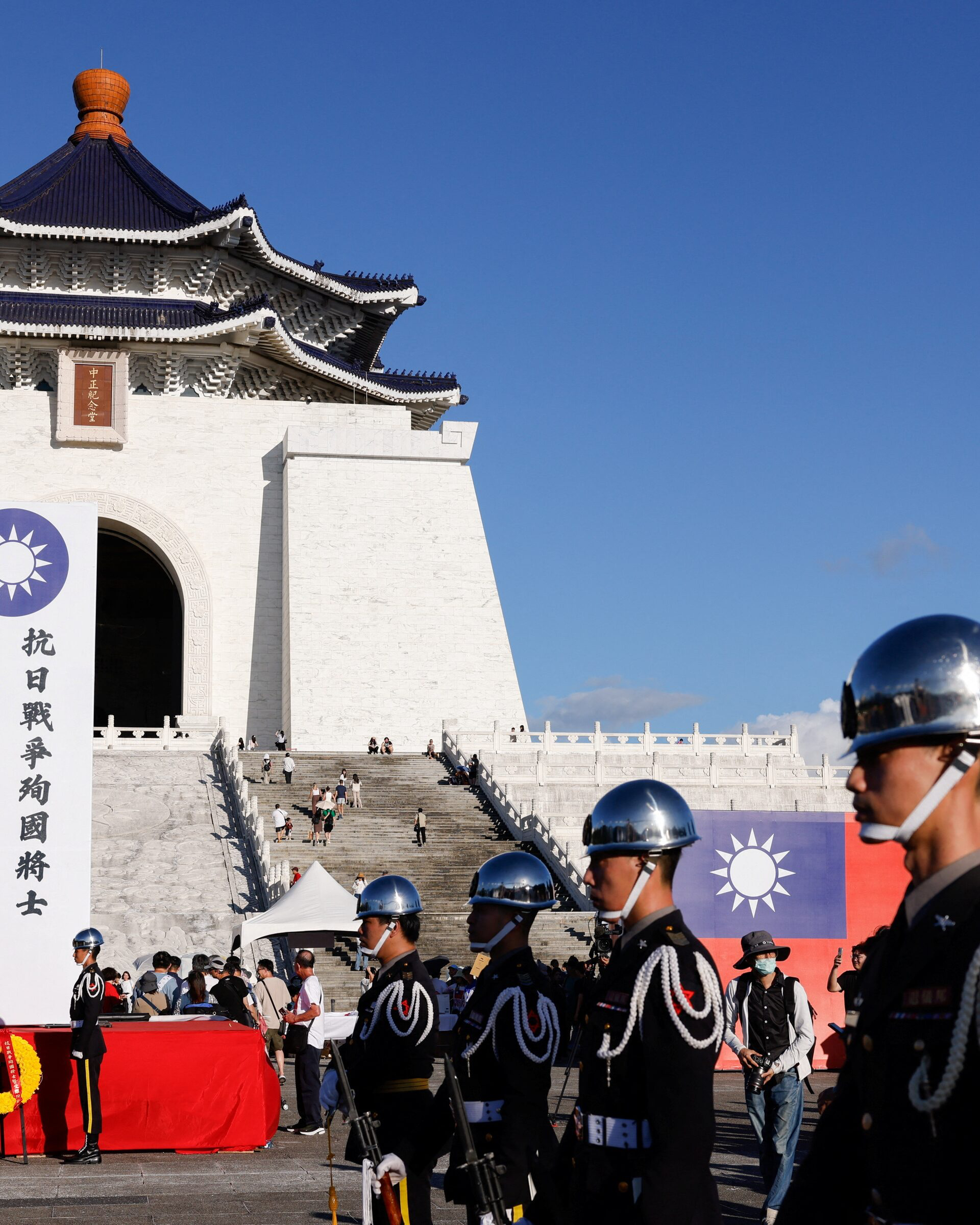
Sunday 30 November Independence Day in Yemen

British involvement in the region began in the middle of the nineteenth century with Aden seen as a key strategic location, becoming the Aden Protectorate in 1874.

After the second world war, the cry for Arab nationalism rang out across the region, with anti-British resistance growing in Aden, becoming both more organised and violent.

On December 10th 1963, a state of emergency was declared in Aden. Guerrilla attacks by the National Liberation Front (NLF) over a sustained period during the next four years forced the British into an early withdrawal from the region on November 30th 1963, with the NLF declaring the independent state of the People’s Republic of South Yemen, comprising Aden and the former Protectorate of South Arabia.

The Republic of Yemen is the second-largest country in the Arabian Peninsula.

During the latter part of the 17th century, Yemen was the only coffee producer in the world. The coffee plant is a native of the Yemeni desert. Local Sufi mystics were the first to brew into a drink to keep them awake while praying.