politics

Gov. Gavin Newsom announces new diaper program for newborns

Newborns won’t be leaving the hospital empty-handed in California.

Gov. Gavin Newsom announced on Friday that the state is partnering with Baby2Baby to provide 400 free diapers to every newborn. Baby2Baby is a national nonprofit based in California that provides clothing and other basic necessities to children.

The governor said it would help families with the rising cost of living.

“Since the pandemic, we have seen the cost of diapers go up by 45%,” said Newsom, speaking at a press conference in San Francisco. “One out of four families skip meals to pay for diapers.”

The new program, dubbed the Golden State Start, will launch this summer. Participating hospitals will distribute the diapers to families at the time of discharge. Forty million diapers will be distributed during the program’s first year, with a goal of later expanding the program to provide 160 million.

Newsom said the state will prioritize hospitals that serve large numbers of parents enrolled in Medi-Cal, California’s version of the federal Medicaid program providing healthcare coverage to low-income Americans. The state plans to later expand to additional hospitals and birthing centers.

The governor described the program as the first of its kind in the nation.

“We are not imitating; we are a model to others,” he said.

Kim Johnson, secretary of the California Health and Human Services Agency, said the initiative would help families enjoy their first few weeks at home with a new baby.

“The first days at home with a newborn should be focused on the love, connection, and joy of an expanded family, not stress about affording diapers,” Johnson said in a statement. “This program helps ensure families can begin that journey with greater stability and peace of mind.”

The National Diaper Bank Network, a national nonprofit that tracks diaper insecurity, found about 60% of low-income families nationwide struggle with the cost of diapers and rely on less-frequent changes to get by. The organization said dirty diapers leave babies at risk of developing rashes or urinary tract infections.

Source link

3 Australian women linked to ISIS charged after returning from Syria

A group of supporters surround an ISIS-linked family as they arrive at Melbourne International Airport in Melbourne, Australia, Thursday. The group of 13 women and children came home to Australia after years spent in a Syrian refugee camp following the fall of the Islamic State. Three of the women have been charged with crimes. Photo by Joel Carrett/EPA

May 8 (UPI) — Australia has charged three women linked to ISIS with crimes against humanity after they returned home from Syria.

They had allegedly moved to Syria to be part of the Islamic State caliphate in Syria, but once it fell, they were in refugee camps guarded by Kurdish guards. They were part of a group of 13 people who were returned to Australia. It’s not yet clear if other people returning to Australia will face charges.

Australia’s Prime Minister Anthony Albanese said in February that he would not allow the refugees to repatriate to Australia.

Kawsar Ahmad, 53, and her daughter Zeinab Ahmad, 31, appeared in a Melbourne court Friday. Kawsar Ahmad was charged with four counts of crimes against humanity. Police allege she went to Syria in 2014 and kept a female slave in her home. Zeinab Ahmad faces two similar charges.

Another adult child of Kawsar Ahmad, Zahra Ahmad, arrived in Melbourne Thursday, but was not arrested.

Janai Safar, 32, appeared in a Sydney court and was charged with entering and remaining in a declared conflict zone and joining ISIS. She returned to Sydney Thursday with her son.

Safar’s lawyer, Michael Ainsworth argued for her release on bail, saying her alleged offenses happened when she was 21, and she has been in a refugee camp for nine years.

“This young lady … lived in truly horrific conditions in these refugee camps for many years,” Ainsworth said. “She has significant community ties here in Australia, she’s one of seven children. There’s a place for her to live.”

The Australian Federal Police said Kawsar Ahmad moved to Syria with her husband and children in 2014 and was complicit in buying a female slave for $10,000, “and knowingly kept the woman in the home.”

Zeinab Ahmad allegedly also traveled to Syria and kept a female slave in the home. A slavery conviction can bring up to 25 years in prison.

Federal police assistant commissioner for counter-terrorism Stephen Nutt said Thursday night that planning for the return of people from the Middle East began in 2015.

“Australian joint counter-terrorism teams methodically investigated all Australians who travelled to declared conflict areas and will ensure those who are alleged to have committed a criminal offense are put before the courts,” Nutt said.

Source link

In California governor race, single-payer healthcare is a litmus test. There’s still no way to pay for it

When Gavin Newsom ran for California governor in 2018, his support for a state-run single-payer healthcare system was considered a risky move and earned him hefty labor endorsements.

Today, leading Democrats in the wide-open race to succeed Newsom have embraced single-payer healthcare as a political necessity, an answer to voters fed up with rising premiums and other spiraling healthcare costs.

But with no clear front-runner, they are sparring among themselves in debates and political ads over who is most committed to a government-run model. No candidate has outlined how California would fund comprehensive health coverage for its 40 million residents, leaving voters unable to discern which candidate has a concrete plan for the nation’s most populous state.

Healthcare and political experts said the concept of single-payer has shifted from progressive pipe dream a decade ago to today’s mainstream talking points in a state where Democrats outnumber Republicans nearly 2 to 1. Democrats have pledged the model as the best way to lower costs in an attempt to woo voters worried about affordability as ballots arrive for the June 2 primary. The top two Republicans, meanwhile, have dismissed government-run healthcare as a “disaster” and “socialism.”

“In many ways, single-payer healthcare has become a progressive litmus test,” said Larry Levitt, a former White House policy advisor and a healthcare expert at KFF, a health information nonprofit that includes KFF Health News.

Few voters fully understand the term single-payer, let alone expect the next governor to achieve it, Levitt said. Rather, he added, the term has become more of a signal to voters about a candidate’s approach to healthcare reform.

Xavier Becerra, the former U.S. Health and Human Services secretary, who for decades backed single-payer healthcare in Congress, has come under criticism from opponents for a nuanced but clear shift away from single-payer. It came after Becerra secured an endorsement from the California Medical Assn., a powerful group representing doctors and a longtime opponent of single-payer healthcare bills in California.

At a May 5 debate put on by CNN, Becerra declared his support for “Medicare for All,” a proposal for a federally run system that’s been stalled for years, but he declined to say whether he’d pursue a California-led effort. He said his immediate focus would be on mitigating the drastic federal cuts expected to hit low-income and disabled enrollees in Medi-Cal, the state’s Medicaid program, which covers more than a third of residents.

Becerra is counting on voters not to distinguish between the often-confused terms single-payer, Medicare for All, and universal coverage, noting during the debate that “Californians don’t care what you call it, so long as they have affordable healthcare.”

“A lot of people aren’t clear what single-payer is, and they need a metaphor to understand it,” said Celinda Lake, a Democratic strategist and one of the lead pollsters for former President Biden’s 2020 campaign.

Billionaire activist Tom Steyer, who’s touted his self-funding as a signal he can’t be bought, has emerged as the race’s most vocal advocate of single-payer after opposing it during a short-lived 2020 presidential bid. As governor, Steyer has said, he would pass legislation backed by the California Nurses Assn. that has failed to come to fruition under Newsom’s tenure. Pressed on how he would cover the estimated $731.4-billion cost, Steyer told KFF Health News that “God is going to be in the details.”

At a forum last year, former U.S. Rep. Katie Porter said she didn’t believe achieving such a system was realistic in the near term, but the Orange County Democrat later told party delegates that she would “deliver single-payer.” Former Los Angeles Mayor Antonio Villaraigosa and San Jose Mayor Matt Mahan, Democrats who are trailing their competitors in the polls, don’t support single-payer. The top two vote-getters — regardless of party — advance to the November general election.

Some of the most seasoned politicians have failed to deliver single-payer. Newsom, who campaigned on the promise of being a “healthcare governor,” dialed back his ambitions upon taking office, choosing instead to pursue “universal access” to health coverage under a series of Medi-Cal expansions and efforts to contain healthcare spending.

A bus with the message "All Aboard For A California You Can Afford" and "Tom Steyer for Governor" on its side is parked.

The campaign bus for billionaire activist Tom Steyer, who has made single-payer healthcare a central pillar of his run for governor, in downtown Oakland.

(Christine Mai-Duc/KFF Health News)

Vermont, which remains the only state to pass a single-payer healthcare law, reversed course when leaders there couldn’t identify a funding source.

To enact single-payer, California would need permission from the federal government to redirect billions of dollars from Medicaid, Medicare and other funding that currently flows to the system — approval not likely to come from the Trump administration.

More than half of adults nationally say healthcare costs will have a major impact on whom they vote for in November, according an April KFF poll.

Danielle Cendejas, a Los Angeles-based Democratic consultant who works with state legislative candidates, said single-payer healthcare increasingly appears on candidate questionnaires from small-business advocates as well as hyperlocal Democratic clubs, in state legislative races and national union endorsements. What most California voters want to hear, Cendejas said, is how candidates plan to give them more immediate relief from higher premiums, expensive drug costs and long waits to access care.

The high price tag doesn’t faze Jennifer Easton, a 63-year-old Democrat from Oakland, who said other countries with similar models have proved they can lower costs. She said she supports a single-payer health system because it’s clear to her that Americans have reached the limits of working within the existing system. But she isn’t expecting any of the current candidates to succeed in implementing one, and she hasn’t decided whom to support.

“No one can in four years,” she said. Seeing a candidate enthusiastically support the concept gives her a good idea of their philosophy. “It is, if we’re lucky, a 20-year, 25-year plan.”

Rob Stutzman, a Republican political consultant who advised former Gov. Arnold Schwarzenegger, said while Americans may be supportive of single-payer in polls, focus groups suggest that approval drops quickly when voters realize it could mean losing their current doctor or insurance plan.

At the CNN debate, Steve Hilton, the Republican candidate President Trump has endorsed, said Californians would end up with subpar patient care and “taxes sky high to pay for it,” like in his native United Kingdom. Instead, Hilton suggested the state stop providing “free healthcare for illegal immigrants who shouldn’t even be in the country in the first place.”

Mai-Duc writes for KFF Health News, a national newsroom that produces in-depth journalism about health issues and is one of the core operating programs at KFF—an independent source of health policy research, polling, and journalism.

Source link

Could Labour and Conservative party dominance in UK politics be ending? | Elections News

The UK prime minister is under pressure to quit after huge losses in the local elections.

Britain’s Prime Minister Keir Starmer and his Labour Party suffered significant losses in local elections, despite his huge majority in parliament.

He’s rejecting calls to resign – but faces new challenges from both the left and right.

So, why is the local vote so important?

Presenter: Mohammed Jamjoom

Guests:

Peter Geoghegan – Editor of the investigative news site, Democracy for Sale

Lesley Riddoch – Podcaster, journalist and author of: ‘Blossom: What Scotland Needs to Flourish’

Tim Bale – Professor of politics, Queen Mary University of London

Source link

Rubio presses Europe on Iran action as he seeks to mend ties with Italy and Vatican

U.S. Secretary of State Marco Rubio urged European allies Friday to move beyond rhetoric and take concrete action against Iran, even as he sought to repair strained ties with Italy and the Vatican during a two-day visit following tensions over the U.S.-Israeli war in Iran.

Speaking after meetings with Premier Giorgia Meloni and Foreign Minister Antonio Tajani, Rubio warned that Tehran was attempting to assert control over the strategic Strait of Hormuz, calling the move “unacceptable” and a threat to global security.

“Everybody says Iran is a threat. Everybody says that Iran can’t have a nuclear weapon … but you’ve got to do something about it,” Rubio told reporters in Rome. “If the answer is no … then you better have something more than just strongly worded statements to back it up.”

Clear ‘red line’

Rubio said Iran was trying to normalize control over an international waterway, a precedent he warned could encourage similar actions elsewhere. He also cautioned Tehran against targeting U.S. maritime assets, saying the United States had thwarted attacks on three Navy ships in the strait.

“The red line is clear. They threaten Americans, they are going to be blown up,” he said.

Rubio said Washington was pursuing a diplomatic track, including a proposed U.N. Security Council resolution aimed at preserving freedom of navigation. He added the U.S. was awaiting Iran’s response on Friday to ongoing diplomatic efforts.

Rubio’s visit comes after weeks of sharp disagreements between Washington and Rome over the Iran war, tariffs and President Trump’s criticism of both Meloni and Pope Leo XIV.

Differences remain over Iran war

Meloni described her meeting with Rubio as “constructive, frank and productive,” focused on both bilateral relations and major international issues. She said the talks covered strategic topics, including the Middle East, freedom of navigation in the Strait of Hormuz, Ukraine, China and areas of Italian interest such as Libya and Lebanon.

“We both understand how important the trans-Atlantic relationship is, but we also understand that each country must defend its own national interests,” Meloni stressed after the meeting.

Tajani struck a more conciliatory tone after meeting his U.S. counterpart, reaffirming the importance of the trans-Atlantic alliance.

“I am convinced Europe needs America — Italy needs America — and the United States also needs Europe and Italy,” Tajani said, adding he hoped “tensions have been calmed.”

He said discussions covered the Iran conflict and its spillover into Lebanon, as well as Venezuela and Cuba. The U.S. State Department said Rubio also raised the need to protect economic interests and end the war in Ukraine.

Despite the effort to ease tensions, differences remain over the Iran conflict. Italy has opposed the U.S.-Israeli bombing campaign, with Meloni calling it “illegal,” and has resisted involvement in offensive operations.

Tajani said Italy would be prepared to contribute naval forces to demine the Strait of Hormuz once a permanent ceasefire is reached, and would maintain its role in the U.N. peacekeeping mission in Lebanon. He also stressed the importance of continued U.S. troop presence in Europe amid concerns about possible reductions.

No final decision on NATO troops adjustments

Rubio said “no final decision” had been made on NATO troop adjustments, noting that any changes would depend on U.S. national interests and global priorities.

The U.S. has announced a decision to pull 5,000 military personnel from Germany and Trump has threatened to withdraw more troops from Italy and Spain over their stance on the war.

Italy, a key logistics hub for U.S. and allied operations in the Mediterranean and beyond, has already signaled limits to its cooperation. In March, it declined to allow U.S. bombers bound for the Middle East to use a base in Sicily without parliamentary approval, reflecting constitutional constraints and strong domestic opposition to the war.

Meloni, weakened by a recent referendum defeat and facing public unease over the conflict, has insisted that any use of Italian bases for offensive operations would require parliamentary backing.

The war has also raised economic concerns in Italy, with Meloni warning that disruptions in the Strait of Hormuz risk driving up energy costs and inflation, while U.S. tariff threats weigh on the country’s export-driven economy.

An attempt to de-escalate at the Vatican

Rubio also sought to ease tensions with the Vatican following Trump’s criticism of the pope’s calls for peace. After a lengthy meeting on Thursday with the pontiff and Vatican Secretary of State Cardinal Pietro Parolin, Rubio said Washington remained committed to a “productive and fruitful” relationship with the Catholic Church.

“The president’s perspective is clear. He thinks that Iran is a threat, and it needs to be addressed. And that position remains unchanged,” Rubio said.

Rubio confirmed that Cuba was also discussed at the Vatican, with Washington hoping the church’s Caritas charity organization would continue distributing humanitarian aid.

Rubio said the U.S. has provided about $6 million in humanitarian aid to Cuba, to be distributed through Caritas, should the Cubans allow it. He added Washington has also offered up to $100 million in additional aid, but the Cuban government has not accepted it so far. Rubio blamed Cuba’s government for blocking assistance and worsening conditions, describing it as “incompetent.”

U.S. officials said the Vatican talks underscored strong bilateral ties and a shared commitment to promoting peace, even as differences over the Iran war persist.

Zampano and Winfield write for the Associated Press.

Source link

Disney’s ABC challenges FCC, escalating fight over free speech

Walt Disney Co.’s ABC is forcefully resisting Federal Communications Commission efforts to soften the network’s programming, accusing the federal agency of an overreach that violates 1st Amendment freedoms.

Last week, the FCC took the unusual step of calling in the licenses of eight Disney-owned television stations for early review. The move — widely interpreted as an effort to chill the network’s speech — came a day after President Trump demanded that ABC fire late-night talk show host Jimmy Kimmel over a joke about First Lady Melania Trump.

The FCC separately has taken aim at ABC’s daytime discussion show, “The View,” which delves deeply into politics.

The FCC has questioned whether the show, which prominently features Trump critics Whoopi Goldberg and Joy Behar, could continue toclaim an exemption to rules that require broadcasters to provide equal time for opponents of political candidates.

In its filing this week with the FCC, Disney’s Houston television station raised the stakes in the dispute over “The View,” calling the commission’s actions “unprecedented” and “beyond the Commission’s authority.” The ABC station’s petition for a declaratory ruling said “The View,” has long qualified as a “bona fide” news interview program with freedom to conduct interviews of legally qualified political candidates.

“The Commission’s actions threaten to upend decades of settled law and practice and chill critical protected speech, both with respect to The View and more broadly,” the Houston station KTRK-TV said in the filing.

The network’s firm stance sets up a clash with the Trump administration, including the president’s hand-picked FCC Chairman Brendan Carr, who has made no secret of his disdain for Kimmel and other ABC programming. Earlier this year, Carr announced that decades-old exemptions from the so-called “equal time rule” for news programs, including “The View,” were no longer valid.

ABC’s strenuous arguments mark a departure for the Disney-owned outlet.

In December 2024, a month after Trump was elected to a second term, the network quickly settled a lawsuit over statements made by news anchor George Stephanopoulos that Trump found offensive. ABC agreed to pay Trump $15 million to end his legal fight — sparking an outcry among free speech advocates, who accused the network of caving on a case it could have won.

“Some may dislike certain—or even most—of the viewpoints expressed on The View or similar shows,” the station said in its filing. “Such dislike, however, cannot justify using regulatory processes to restrict those views. The government does not get to decide ‘what shall be orthodox in politics, nationalism, religion, or other matters of opinion.’”

The station noted that, while the FCC has questioned the exemption for “The View,” which dates back to 2002, the FCC hasn’t showed interest in regulating programs on other networks, “including the many voices — conservative and liberal — on broadcast radio.”

“The danger is that the government will simply decide which perspectives to regulate and which to leave undisturbed,” ABC said.

On April 28, Carr called for a review of Disney’s broadcast licenses two years before any of them were set to expire, citing the agency’s year-old inquiry into Disney’s diversity, equity and inclusion policies and whether they violated federal anti-discrimination rules.

Source link

Press freedom groups allege Larry Ellison vowed to oust CNN anchors

Two press freedom groups that own shares in Paramount Skydance are demanding to see the company’s books and internal documents, citing allegations that the company’s leaders may have promised favors to the White House to win approval for Paramount’s deal to acquire Warner Bros. Discovery.

The letter, sent Thursday to Paramount chief legal officer Makan Delrahim, says that media reports alleging that Paramount owner David Ellison and others promised favors to the Trump administration “create credible concern that Paramount leadership has offered, solicited, or effectuated a corrupt exchange,” which the groups argue would “constitute a breach of fiduciary duties” and open the company up to a “range of potential civil and criminal penalties.”

The letter cites Delaware law that allows stockholders to inspect the company’s books and records “for any proper purpose.”

Paramount declined to comment on the letter.

Among the issues raised in the letter are promises reportedly made by David Ellison and his father, Oracle billionaire Larry Ellison, that they would make “sweeping” changes at the news network CNN, which is owned by Warner Bros. Discovery.

The Ellison family acquired Paramount, which includes CBS and the storied Melrose Avenue film studio, last summer.

The letter cites changes implemented in CBS since their acquisition, including their decision to end late night television house Stephen Colbert’s show days after he characterized a settlement Paramount reached with Trump as a “big fat bribe.”

Under Ellison’s ownership, the letter says, numerous high-profile reporters have left the network and its ratings have dropped to “historic lows.”

Larry Ellison, who is backing the financing of Paramount’s proposed takeover of Warner, reportedly told White House officials that Paramount would “implement the CBS playbook” at CNN if the merger is approved, and remove anchors and commentators at the cable news network that Trump doesn’t like, according to the letter.

The effort comes just two weeks after Warner Bros. Discovery shareholders overwhelmingly approved the proposed merger. Investors have supported the Larry Ellison family takeover, which would become the biggest Hollywood merger in nearly a decade. The deal would pay Warner stockholders $31 per share — four times the stock price a year ago.

The letter was written on behalf of the Freedom of the Press Foundation, which develops secure communication tools for journalists and tracks violations of press freedom, and Reporters Without Borders, which tracks press freedom globally.

The organizations are being represented by former federal prosecutor Brendan Ballou, who established the Public Integrity Project this year to challenged alleged government corruption, as well as Delaware attorney Ronald Poliquin.

The missive, which could be a precursor to a lawsuit, opens another avenue of attack against the controversial $111-billion deal, which would transform the smaller Paramount into an industry titan.

With Warner Bros. Discovery, the Ellisons would also control HBO, TBS and the vast film and TV library of Warner Bros., which includes the Harry Potter, DC Comics, and Scooby-Doo, in addition to CNN.

Paramount, led 43-year-old David Ellison, wants to finalize its Warner Bros. takeover by the end of September. President Trump favors the deal; he has long agitated for changes at CNN.

But the proposed merger would saddle the combined company with $79 billion in debt, stoking fears that Paramount would be forced to make steep cost cuts to juggle such a large debt load.

Politicians, unions and progressive groups separately have pressed California Atty. Gen. Rob Bonta to scrutinize the proposed merger, hoping that he brings an antitrust lawsuit in an attempt to upend the deal.

More than 4,000 film industry workers, including Ben Stiller, Bryan Cranston, Ted Danson, J.J. Abrams, Jane Fonda and Kristen Stewart, have signed an open letter imploring Bonta and other regulators to block the merger. The group lamented the proposed tie-up, saying it “would reduce the number of major U.S. film studios to just four.”

Opponents fear the consolidation would lead to massive layoffs and diminish the quality of programming that Warner Bros., CNN and HBO are known for.

Hollywood has sustained thousands of layoffs over the last seven years since Walt Disney Co. swallowed Fox’s entertainment assets in another huge merger. In addition, the film production economy hasn’t recovered from shutdowns during the 2023 labor strikes. An estimated 42,000 entertainment industry jobs were lost from 2022 and 2024.

On Thursday, 34 California Democrats in Congress also sent a letter to Bonta, encouraging him to look closely at the merger.

The deal is expected to become one of the largest leveraged buyouts ever.

Ballou, who is working with the press freedom groups, previously served as a Justice Department special counsel with expertise in private equity transactions.

He resigned from the Justice Department in January 2025 when Trump returned to office. In his book, “Plunder: Private Equity’s Plan to Pillage America,” Ballou examined large leveraged buyouts and found that many of which resulted in bankruptcies.

Source link

Economists warn of fiscal risks in Chile reform plan

A new International Monetary Funds report says higher copper production and prices support Chile’s growth expectations, but warned of risks that include the crisis in the Middle East, rising oil prices and loss of domestic competitiveness tied to the sharp public spending cuts. File Photo by Mario Ruiz/EPA

SANTIAGO, Chile, May 8 (UPI) — An economic reform plan Chilean President José Antonio Kast announced to revive the country’s economy is drawing criticism over its potential short- and medium-term fiscal impact, as the International Monetary Fund lowered its growth projections for Chile.

The IMF’s World Economic Outlook report had estimated in mid-April that Chile’s gross domestic product would grow 2.4% in 2026 and 2.6% in 2027. However, the organization said this week it revised those projections to 2.2% this year and 2.5% in 2027 if external conditions and the country’s fiscal situation improve.

“Economic activity, driven by investment and exports in 2025, faces a period of heightened uncertainty,” the IMF said.

The report said higher copper production and prices support growth expectations, but warned of risks that include the crisis in the Middle East, rising oil prices and loss of domestic competitiveness tied to the sharp public spending cuts promoted by Kast.

The Chilean president’s plan includes proposals to reduce corporate taxes and cut bureaucracy in an effort to stimulate private investment. Congress is discussing tha proposal.

“Amid persistently high inequality, social discontent also remains a risk,” the IMF report said.

The IMF is not the only institution warning about the risks associated with the government’s National Reconstruction Plan.

Chile’s Autonomous Fiscal Council, an independent public agency tasked with monitoring the sustainability of fiscal policy, warned about the proposal’s possible impact on the country’s fiscal balance and public debt.

“The project commits fiscal spending with a high degree of certainty in the short term and reduces permanent revenue, while the positive effects depend on more uncertain future income associated with growth, which could lead to a deterioration in the fiscal balance if growth does not materialize at the estimated magnitude and speed,” the council said.

Jaime Bastías, director of the auditing school at Finis Terrae University, told UPI the IMF’s downgrade was “absolutely” expected because Chile’s central bank had already made a similar adjustment, while debate over financing the government’s proposal continues to intensify.

“The government’s plan can be an engine that helps us face the storm we are going through, but that is heavily conditioned on the state maintaining orderly public finances. The IMF says that if the proposed tax cuts are not offset through other channels, the country’s debt will grow too much, and that will create another problem,” Bastías warned.

Carlos Smith, a researcher at the Center for Business and Society Research at Universidad del Desarrollo, told UPI the IMF report shows that both external and domestic factors are likely to weaken household income and affect consumer spending.

“Consumption is one of the main drivers of Chile’s GDP. The IMF expects it to contract and that is already beginning to show, along with a very weak labor market. Chile is in a much weaker condition,” he said.

Smith said that although the IMF lowered its growth forecasts, the organization still appears optimistic about the long-term positive impact of the government’s proposed reforms.

“The impact will materialize more slowly than the finance minister expects. Therefore, the IMF is suggesting more efficient alternatives such as lower costs or more limited subsidies to create new jobs,” Smith said.

He added that while Ciles should adjust some aspects of the reform, he believes the plan is still moving in the right direction.

“I agree with the IMF that the proposal needs refinement and should focus on removing obstacles to investment projects without lowering the standards of our legislation or environmental protections. If that is achieved, I believe there is a possibility of reaching 3% growth by the end of the decade,” he said.

Bastías agreed, saying Chile could grow at 3% by 2030 if copper prices remain high, production increases and more private investment arrives.

“It is an optimistic scenario where we need to focus on stimulating those three factors. If that favorable future does not materialize, we will all pay the costs,” he said.

Source link

Virginia Supreme Court strikes down Democrats’ redistricting plan, dimming party’s midterm hopes

The Virginia Supreme Court on Friday struck down a voter-approved Democratic congressional redistricting plan, delivering another major setback to the party in a nationwide battle against Republicans for an edge in this year’s midterm elections.

The court ruled that the state’s Democratic-led legislature violated procedural requirements when it placed the constitutional amendment on the ballot to authorize the mid-decade redistricting. Voters narrowly approved the amendment April 21, but the court’s ruling renders the results of that vote meaningless.

“This violation irreparably undermines the integrity of the resulting referendum vote and renders it null and void,” the court said in its opinion.

Democrats had hoped to win as many as four additional U.S. House seats under Virginia’s redrawn U.S. House map as part of an attempt to offset Republican redistricting done elsewhere at the urging of President Donald Trump. That ruling, combined with a recent U.S. Supreme Court decision severely weakening the Voting Rights Act, has supercharged the Republicans’ congressional gerrymandering advantage heading into this year’s midterm elections.

Legislative voting districts typically are redrawn once a decade after each census to account for population changes. But Trump started an unusual flurry of mid-decade redistricting last year when he encouraged Republican officials in Texas to redraw districts in a bid to win several additional U.S. House seats and hold on to their party’s narrow majority in the midterm elections.

California responded with new voter-approved districts drawn to Democrats’ advantage, and Utah’s top court imposed a new congressional map that also helps Democrats. Meanwhile, Republicans stand to gain from new House districts passed in Florida, Missouri, North Carolina, Ohio and Tennessee. They could add even more after the U.S. Supreme Court’s ruling in the Voting Rights Act case, which has prompted some other Republican states to consider redrawing their maps in time for this year’s elections.

Virginia currently is represented in the U.S. House by six Democrats and five Republicans who were elected from districts imposed by a court after a bipartisan redistricting commission failed to agree on a map after the 2020 census. The new districts could have given Democrats an improved chance to win all but one of the state’s 11 congressional seats.

Under the Demcoratic-drawn map, five districts would have been anchored in the Democratic stronghold of northern Virginia, including one stretching out like a lobster to consume Republican-leaning rural areas. Revisions to four other districts across Richmond, southern Virginia and Hampton Roads would have diluted the voting power of conservative blocs in those areas. And a reshaped district in parts of western Virginia would have lumped together three Democratic-leaning college towns to offset other Republican voters.

The state Supreme Court’s seven justices are appointed by the state legislature, which has toggled back and forth between Democratic, Republican and split control over recent years. Legal experts say the body doesn’t have a set ideological profile

The case before the court focused not on the shape of the new districts but rather on the process the General Assembly used to authorize them.

Because the state’s redistricting commission was established by a voter-approved constitutional amendment, lawmakers had to propose an amendment to redraw the districts. That required approval of a resolution in two separate legislative sessions, with a state election sandwiched in between, to place the amendment on the ballot.

The legislature’s initial approval of the amendment occurred last October — while early voting was underway but before it concluded on the day of the general election. The legislature’s second vote on the amendment occurred after a new legislative session began in January. Lawmakers also approved a separate bill in February laying out the new districts, subject to voter approval of the constitutional amendment.

Judicial arguments focused on whether the legislature’s initial approval of the amendment came too late, because early voting already had begun for the 2025 general election.

Attorney Matthew Seligman, who defended the legislature, argued that the “election” should be defined narrowly to mean the Tuesday of the general election. In that case, the legislature’s first vote on the redistricting amendment occurred before the election and was constitutional, he told judges.

An attorney for the plaintiffs, Thomas McCarthy, argued that an “election” should be interpreted to cover the entire period during which people can cast ballots, which lasts several weeks in Virginia. If that’s the case, he told justices, then the legislature’s initial endorsement of the redistricting amendment came too late to comply with the state constitution.

In January, a judge in rural Tazewell County, in southwestern Virginia, ruled that lawmakers failed to follow their own rules for adding the redistricting amendment to a special session last fall. Circuit Judge Jack Hurley Jr. also ruled that lawmakers failed to initially approve the amendment before the public began voting in last year’s general election and that the state had failed to publish the amendment three months before the election, as required by law. As a result, he said, the amendment is invalid and void.

The Virginia Supreme Court placed Hurley’s order on hold and allowed the redistricting vote to proceed before hearing arguments on the case.

Lieb writes for the Associated Press.

Source link

Britain’s Keir Starmer brushes off defeat at polls, says he won’t quit

Following a beating in local elections, Prime Minister Keir Starmer (L) said Friday that he took responsbility for the losses suffered by Labour candidates across the country but vowed he would not quit. Photo by Neil Hall/EPA

May 8 (UPI) — Prime Minister Keir Starmer vowed Friday that he would not stand aside following a disastrous Labour performance in “mid-term” local elections in England, Wales and Scotland.

With early results from 46 of the 136 races in England showing Labour losing hundreds of seats in councils to Reform and the Greens, Starmer said while the situation was “really tough,” he had been handed a mandate to change Britain by the electorate in the general election in 2024 and that he intended to fulfil his promise.

He said he believed the message voters had sent in Thursday’s elections was about the “pace of change, how they want their lives improved.”

“Labour was elected to meet those challenges and I’m not going to walk away from those challenges and plunge the country into chaos. I led our party to that victory, that is a five-year mandate to change the country. It was a five-year term I was elected to do, I intend to see that through.”

Acknowledging his government hadn’t done enough to convince people that things could improve, their lives could be better and that there was hope, he said Labour would “in the coming days” set out steps it would take to win over the electorate.

Repeatedly pressed on whether he would lead Labour into the next election, Starmer would only say that he intended to serve the full five years of his term.

Large numbers of Labour MPs believe that the party will lose if Starmer leads it into the next election but do not want him to quit right now, favoring an orderly, consensual process of finding a successor, as opposed to an all-out leadership battle.

Sky News’ chief political correspondent said a member of Starmer’s “top team,” had messaged her saying that he was “the reason Labour risks handing the country to Reform.”

With counting still underway, or yet to begin, in the vast majority of contests for council and mayoral contests, as well parliamentary races in Scotland and Wales, the opposition Conservative Party were also close to 200 seats adrift.

The Green Party and the Liberal Democrats had each added dozens of seats.

Speaking in the London borough of Havering, which Labour lost overnight to Reform UK, leader Nigel Farage hailed what he said was a “truly historic shift in British politics.”

“The pattern that’s emerging across the country is that Labour are being wiped out by Reform in many of their most traditional areas. And what you’re going to see later on today is the Conservative Party being wiped out in their heartlands like Essex,” he said, noting that the county was the heartland of the leadership of the Conservative opposition.

“We’ve been so used to thinking about politics in terms of left and right, and yet what Reform are able to do is to win in areas that have always been Conservative. But equally, we’re proving in a big way we can win in areas that Labour have dominated, frankly, since the end of World War One.

“At the moment, we’re winning one in three of all the seats that are up. But I genuinely think the best is yet to come. I’m very excited about the north-east results, the Yorkshire results, some more to come in the West Midlands. So it’s a big day,” added Farage.

Forecasts put Reform’s eventual gains when the results are complete at as many as 1,000 seats of the 5,000 up for grabs.

In Scotland, where voters are electing all 129 seats in the Scottish Parliament, the ruling Scottish National Party is hanging by a knife edge amid a 17% swing to Reform.

However, the insurgent party’s rise could inadvertently help deliver First Minister John Swinney‘s 65-seat target, thanks to Reform UK candidates taking votes away from challenger parties, particularly those that oppose Scottish independence.

Swinney has said he would treat an SNP majority as a mandate to mount a second bid to secede from the United Kingdom, following a failed independence referendum in 2014.

Swinney told an election debate between the leaders of the five Scottish political parties plus Reform UK last month that holding a second independence referendum by 2028 was “perfectly conceivable.”

In Wales, where voters are electing a Senedd legislature that has been expanded to 96 seats, the ruling Labour administration was on track to lose power for the first time since devolution in 1999 and ending more than a century of Labour dominance in the country.

Plaid Cymru, the Welsh nationalists, and Reform UK, who were neck and neck in the polls, were expected to be the biggest beneficiaries, projected to emerge with 38 and 35 seats, respectively.

Deputy First Minister Huw Irranca-Davies told the BBC that he didn’t think Labour would be in a position to form the next government, saying the party’s campaign had failed to “cut through” to Welsh voters.

Wreathes are seen amongst the statues at the Korean War Veterans Memorial during Memorial Day weekend in Washington on May 27, 2023. Memorial Day, which honors U.S. military personnel who died while in service, is held on the last Monday of May. Photo by Bonnie Cash/UPI | License Photo

Source link

Trump threatens ‘much higher’ EU tariffs if deal not signed by July 4

May 8 (UPI) — President Donald Trump threatened to raise tariffs to “much higher levels” on the European Union if it doesn’t agree to a trade deal by July 4.

“I had a great call with The President of the European Commission, Ursula von der Leyen. We discussed many topics, including that we are completely united that Iran can never have a Nuclear Weapon. We agreed that a regime that kills its own people cannot control a bomb that can kill millions. I’ve been waiting patiently for the EU to fulfill their side of the Historic Trade Deal we agreed in Turnberry, Scotland, the largest Trade Deal, ever! A promise was made that the EU would deliver their side of the Deal and, as per Agreement, cut their Tariffs to ZERO! I agreed to give her until our Country’s 250th Birthday or, unfortunately, their Tariffs would immediately jump to much higher levels,” the president said Thursday afternoon on Truth Social.

The threat came after The EU has struggled to agree on the terms of the Turnberry Accord, which was for the United States to lower tariffs on EU products and for the EU to remove tariffs on U.S. industrial goods and invest billions in U.S. industries, including energy.

Von Der Leyen said on X that the bloc is still committed to the deal.

“I had a very good call with @POTUS. We discussed the situation in the Middle East and our close coordination with regional partners. We are united that Iran must never possess a nuclear weapon. Recent events have clearly shown that the risks to regional stability and global security are too great.

“We also discussed the EU-U.S. trade deal. We remain fully committed, on both sides, to its implementation. Good progress is being made towards tariff reduction by early July.”

Last week, Trump threatened to raise tariffs on European autos to 25%. It’s unclear if his renewed threat is specifically for vehicles or if it encompasses all EU exports.

Complicating matters is that Trump’s current method of levying tariffs was blocked Thursday by the U.S. Court of International Trade.

In February, the U.S. Supreme Court struck down the administration’s tariffs issued under the International Emergency Economic Powers Act of 1977. Trump then added a 10% across-the-board tariff and then later upped it to 15%.

U.S. Trade Representative Jamieson Greer said in an interview with Politico Thursday that the EU is moving slowly.

“With the tariffs, they’ve at least started a process. They’re working it through,” Greer said. “It’s a pain. I understand it’s slow. We’re not patient. But there are other things where they haven’t even started a process.”

“We’re 95% compliant for nine months … and they’ve been 0% compliant during that time. What am I supposed to do?” he said.

Speaker of the House Mike Johnson, R-La.,, speaks during an observance celebrating the 75th National Day of Prayer in Statuary Hall at the U.S. Capitol on Thursday. Photo by Bonnie Cash/UPI | License Photo

Source link

Pope Leo Urges Global Leaders to Ease Tensions After Meeting Rubio, Calls for End to Violence and Arms Trade

Pope Leo has called on global leaders to reduce international tensions and turn away from violence, delivering an emotional appeal during a visit to Pompei, Italy, on Friday. His remarks came just one day after he met U.S. Secretary of State Marco Rubio at the Vatican, where both sides discussed efforts to improve strained relations between Washington and the Holy See.

The meeting took place against a politically sensitive backdrop, with U.S. President Donald Trump having recently criticized the Pope over his comments on the Iran conflict. Pope Leo, the first U.S.-born pontiff and former Cardinal Robert Prevost, has increasingly spoken out on global conflicts in recent weeks after initially maintaining a relatively low public profile following his election in May 2025.

Speaking to worshippers in Pompei, the Pope urged prayers that world leaders would be inspired to “calm rancour and fratricidal hatreds” and to take responsibility for reducing global violence. He also warned against becoming desensitized to images of war, and criticized what he described as an international system that often prioritizes the arms trade over human life.

Why It Matters

The Pope’s intervention highlights the growing moral and diplomatic role of the Vatican at a time of heightened global instability, particularly amid ongoing tensions involving Iran, the United States, and wider geopolitical rivalries. His criticism of the global arms economy directly challenges dominant security-driven foreign policy approaches, especially in Western capitals.

As the spiritual leader of more than 1.4 billion Catholics worldwide, Pope Leo’s statements carry significant symbolic and diplomatic weight. His increasingly vocal stance on war and governance also places him in a rare position of open tension with major political actors, including the U.S. administration.

What’s Next

The Vatican is expected to continue engaging diplomatically with U.S. officials despite emerging tensions, particularly following the Rubio meeting. Pope Leo is likely to maintain his public messaging on peace, conflict prevention, and criticism of the global arms trade, reinforcing the Holy See’s traditional role as a moral voice in international affairs. At the same time, reactions from Washington and other governments may further shape the evolving tone of Vatican–state relations in the coming months.

With information from Reuters.

Source link

Contributor: ‘Trump 2028’ could be a vote for Ivanka, Eric or Don Jr.

With President Trump continuing to tank in the polls, the parlor game we know as “2028 Republican primary speculation” is back in full swing among the chattering classes.

Vice President JD Vance — who would normally be considered the heir apparent, and who just happened to make a campaign stop in Iowa recently — now finds his “America First” brand positioning complicated by Trump’s Iran misadventure. So much for an easy glide path to the nomination.

Secretary of State Marco Rubio would seem to benefit from Vance’s stumbles, but in a political moment that fetishizes “authenticity,” Rubio risks coming across like a man who irons his blue jeans. Add to that his reputation as a foreign policy hawk in a party that increasingly wants out of “forever wars,” and he’d be the ideal presidential candidate for … 2004.

All of which has opened the door to more imaginative speculation. “If Pat Buchanan and Roger Ailes had a baby,” former “Meet The Press” host Chuck Todd recently quipped, “it would be Tucker Carlson.”

Ailes, of course, was the media-savvy evil genius who took Fox News to No. 1. And while “Pitchfork Pat’s” populist presidential campaigns weren’t ultimately victorious, he is credited with paving the way for Trump’s eventual 2016 victory.

As this comparison suggests, Carlson could make a formidable Republican presidential candidate. The hitch? Carlson and Trump have recently been trading blows, which is not where any potential Republican candidate wants to be.

For all of his polling woes, Trump still enjoys an 85% approval rating among Republicans, according to the recent Washington Post-ABC News-Ipsos poll. And his recent defeat of Indiana Republican legislators who dared defy him over gerrymandering only underscores the point: Trump’s grip on the Republican Party remains firm.

Even if you dismiss talk of a third Trump term as overwrought constitutional fan fiction, it’s hard to imagine a Republican nominee emerging without Trump’s blessing — let alone in defiance of it.

Which brings us to the latest theory making the rounds: Trump isn’t going to pass this torch to anyone lacking the proper surname.

In this telling, Vance is the loyal, if naive, assistant manager waiting for the boss to retire and hand him the keys to the office — only to discover it’s a family business and the ne’er-do-well son has just pulled into the parking lot in a Ferrari.

Enter Donald Trump Jr., whose chief qualification is name recognition so strong it could probably win a Republican primary on its own.

Add to that daddy’s endorsement, and as the Bulwark’s Jonathan V. Last has noted about Vance and Rubio, “Challenging Don Jr. would turn them into enemies of the people.”

But that doesn’t mean this is a slam dunk for Junior.

As British-American journalist Sarah Baxter recently wrote, “like Logan Roy, the patriarch in the television drama Succession, Trump loves playing his children off against each other. He thinks it instills a healthy killer instinct in his privileged offspring.”

This is to say that Junior isn’t the only potential heir lurking in the wings.

Last year, for example, Eric Trump told a journalist: “I think I could do it. And by the way, I think other members of our family could do it too.”

Which brings us to the wildest speculation of all: Ivanka Trump.

Now, to be sure, Ivanka has kept a polite distance from politics (and her father) in recent years, and she doesn’t exactly electrify the MAGA faithful. But she was always her father’s favorite, and her aforementioned liabilities could be overcome with a sufficiently enthusiastic paternal endorsement.

And once she became the standard bearer, Ivanka could market herself as both continuity and “change” — a neat trick, if she can pull it off.

In that sense Republicans could keep the Trump brand while offering a kinder, gentler, fresher face — all while making GOP history with a female presidential nominee.

This, of course, raises the question: Why would Ivanka — or any of the Trumps — want to be part of a political dynasty?

Among the many reasons, the Trump family is raking in cash. Lots of it. And as long as the next president could conceivably be a family member — a possibility that remains operable even if a Trump family member were to lose the general election in 2028 — the spigot will remain on.

That’s one of the reasons that, although Vance would normally be Trump’s obvious successor, the smart money might actually be to bet on someone with the last name “Trump.”

Now, if this dynastic denouement sounds far-fetched, of course it is. But so was electing a thrice-married casino magnate to the presidency in 2016. And so reelecting him in 2024.

We’re living in an era when the seemingly improbable isn’t just possible — it might even be likely.

Matt K. Lewis is the author of “Filthy Rich Politicians” and “Too Dumb to Fail.”

Source link

Russia, Ukraine trade fire, blame despite Victory Day ceasefire | Russia-Ukraine war News

Warring sides accuse each other of violations as attacks continue across front lines.

Russia and Ukraine have accused each other of breaching a short ceasefire announced by Moscow to coincide with Victory Day commemorations marking the Soviet Union’s defeat of Nazi Germany.

The Kremlin said its forces downed 264 Ukrainian drones early on Friday, with officials in Moscow reporting attempted attacks on the capital and in the Perm region in the Ural Mountains.

Recommended Stories

list of 3 itemsend of list

The truce, declared from May 8 to May 10, was intended to cover annual celebrations that include a military parade in Moscow.

Russia had warned that any disruption would trigger a large-scale missile response against Kyiv, urging foreign diplomats to leave the Ukrainian capital before potential escalation.

In a separate announcement, the Russian transport ministry said on Friday that 13 airports in Russia’s south halted operations due to drone attacks.

“Operations at the regional centre in Rostov-on-Don, which manages air traffic in southern Russia, have been temporarily suspended after Ukrainian drone struck the administrative building of the ‘Southern Russia Air Navigation’ branch,” the ministry said.

There were no casualties, it added.

Victory Day commemorations mark the Soviet Union’s loss of 27 million people in World War II, as it drove Nazi forces back to Berlin, where Adolf Hitler died, and the Red Army’s Soviet Victory Banner was raised over the Reichstag in May 1945.

‘We will defend our people’s lives’

Ukrainian President Volodymyr Zelenskyy said Russian forces continued to attack positions overnight, dismissing the ceasefire as ineffective.

He said Russia had carried out more than 140 attacks on front-line positions by early morning, alongside 10 assaults and more than 850 drone attacks.

“As we did over the past 24 hours, Ukraine will respond in kind today as well. We will defend our positions and people’s lives,” Zelenskyy said.

Ukraine also reported striking a Russian oil facility in Yaroslavl, deep inside Russian territory, in what Kyiv described as retaliation for attacks on its cities.

“Ukraine’s long-range sanctions continued in response to Russian strikes on our cities and villages,” Zelenskyy said.

Kyiv had proposed an open-ended ceasefire beginning on May 6, which it said Russia ignored. Moscow did not adopt that proposal, and neither side accepted the other’s terms.

In remarks before the truce, Zelenskyy criticised Russia’s approach to the commemorations, saying Moscow sought a pause “to hold their parade, to go out onto the square safely for an hour once a year, and then continue killing, killing our people and waging war”.

“The Russians are already talking about strikes after May 9. Strange and certainly inappropriate of the Russian leadership,” he added.

“Just as 81 years ago, so now America can help peace with a just and strong stance against the aggressor,” Zelenskyy said. “And it is important that the American people now view Russia precisely in this way – as an aggressor.”

Source link

Enter the Spin Doctors : THE CAMPAIGN OF THE CENTURY: Upton Sinclair’s Race for Governor of California and the Birth of Media Politics, By Greg Mitchell (Random House: $27.50; 582 pp.)

Sigal’s most recent book is “The Secret Defector” (HarperCollins). He teaches journalism at USC

“We don’t go in for that kind of crap that you have back in New York–of being obliged to print both sides. We’re going to beat this son of a bitch Sinclair any way we can. . . . We’re going to kill him.”

The speaker: Kyle Palmer, Los Angeles Times political editor, to Turner Catledge of the New York Times.

The time: 1934, when socialist writer Upton Sinclair, who had just swept the Democratic primary for governor of California, threatened to beat handily the GOP candidate, Frank Merriam, in the November election.

Kyle Palmer, the pope of Southern California right-wing politics, was neither kidding nor exaggerating. Nor was he exceptional in his venom toward Upton Sinclair and his mass movement, End Poverty in California (EPIC). According to Greg Mitchell in his fascinating and valuable study, EPIC “was nothing less than a roundabout route to socialism.” On this point, “Political pundits, financial columnists, and White House aides, for once, agreed: Sinclair’s victory represented the high tide of radicalism in the United States.” This tide had to be pushed back, or California would suffocate under the weight of Sinclair’s “maggot-like horde” of supporters, as the Los Angeles Times called EPICers.

In 1934, a year racked by general strikes and epidemic unemployment, the maverick pamphleteer-novelist Sinclair–author of muckraking tracts like “The Jungle” and the most widely translated American writer abroad–was a menace not only to the so-called Vested Interests. Down deep, he embodied a revulsion felt by many Californians toward the capitalist system. EPIC’s program of production-for-use-not-profit, land colonies, barter exchanges and cooperation versus competition was a potentially deadly blow to the American Dream. It was subversive because it spoke to the misery of desperate, Depression-ruined Americans yearning for relief from the day-to-day savagery of a skewed, inefficient system that seemed to be failing everybody but the very rich. At its height, EPIC enrolled 100,000 members from San Diego to Sacramento, and its newspaper sold 2 million copies.

In “The Campaign of the Century,” Greg Mitchell has chosen to focus not on EPIC itself but “on the cataclysmic response to Sinclair’s emergence as the Democratic nominee.” Thus we learn relatively little about EPIC or about Sinclair, but a lot about the nuts and bolts of the “most astonishing . . . smear campaign ever directed against a major candidate.” Our present-day “media politics” with its emphasis on image over substance, was born in the ferocious, fraudulent anti-Sinclair campaign, says Mitchell.

A subtext of Mitchell’s book is how strongly adherents felt about Sinclair and EPIC. They “came from every strata, although nearly all were white. It was not . . . a poor people’s movement. Most of the activists were middle-class and middle-aged . . . Many were down-on-their-luck businessmen.” Any given EPIC club might include “Utopians, technocrats, Townsendites, progressive Republicans, New Deal Democrats, ex-Socialists and secret Communists, all united by a belief in a perfectible society.” No EPIC, aside from clerical staff, earned a cent from the movement. “Members paid a dollar, penny, or a collar button” to join; “Some EPICs hocked the gold fillings in their teeth to raise money.” Although broad-based and decentralized, “EPIC was far from democratic” and indifferent to unions. And Sinclair’s portrait occupied a holy place in many homes.

In any other state, EPIC might never have flown. But California’s populist tradition, open-mindedness (or wackiness), absence of party bosses or deep ethnic loyalties meant that a challenge to established authority was as relatively easy to mount as it was difficult to organize a counter-revolution. At first, the state’s wealthy were so rattled that their political representatives were caught completely off balance by Sinclair’s spectacular rise. Only loonies had expected him to win the primary, and nobody had been crazy enough to predict he would outpoll all six of his opponents together.

But like a great octopus, California’s Republicans and conservative Democrats, equally terrified of EPIC, slowly thrashed up from the murk of politics-as-usual to deal with the “enemy within.” “The prospect of a socialist governing the nation’s most volatile state,” says Mitchell, “sparked nothing less than a revolution in American politics.”

Spurred by “fear and desperation,” ad men like Albert Lasker and especially Clem Whittaker, hired conservative guns, broke the old rules and “virtually invented the modern media campaign.” Whittaker and his associate Leone Baxter introduced the radical idea that free-lance outsiders like themselves, not party chiefs, would “handle every aspect of a political campaign.” Whittaker’s “cozy relationship” with California’s 700 newspaper publishers meant that local editors were happy to run his press releases “as news stories–even as editorials.” The anti-Sinclair “lie factory” twisted and distorted; but worst of all, his enemies quoted from Upton Sinclair’s own works, in which he had attacked everything from wedded bliss (“marriage plus prostitution”) to religion (“a mighty fortress of graft”) and the Boy Scouts. After his defeat, Sinclair confessed wearily and with justice, “I talk too much. I write too much, too.”

By most accounts, Sinclair was a decent, generous, puritanical man of genuine sweetness. What his blurted half-jokes and honest indiscretions failed to supply, Hollywood and Madison Avenue concocted by way of movie propaganda and, probably even more effectively, radio shots–like an anti-Sinclair “One Man’s Family”-type series. Film studio bosses, alarmed by Sinclair’s not-very-serious threat to socialize movie production, colluded with what a Scripps-Howard reporter called a “reign of unreason bordering on hysteria.” Big-time screenwriters like Carey Wilson and directors like Felix Feist (later of “Peyton Place” fame) were enlisted or dragooned to produce Goebbelsesque films, often using faked footage, that drilled home the message: EPIC equals Armageddon. Studio workers were forced to contribute to Frank Merriam’s campaign. Very few Hollywood stars had the guts to refuse. (Holdouts included James Cagney and Jean Harlow.)

Law ‘n’ order also came to the rescue of the anti-Sinclair forces. Election officials, GOP activists and local district attorneys intimidated EPIC supporters away from the polls by challenging the credentials of at least 150,000 voters and threatening to arrest them. All across the state preachers thundered, “Go and Sinclair no more!” and Aimee Semple McPherson, hungry for respectability after her recent kidnaping hoax, turned against Sinclair, despite the pro-EPIC sympathies of her flock.

Finally, the Democrats themselves carved up EPIC. At first friendly to Sinclair, President Roosevelt, needing conservative support for his faltering New Deal, cut a deal with the Republicans. In return for Frank Merriam converting to a pallid form of New Dealism, the party dumped the divisive Sinclair. Frightened Democrats and “third party” anti-EPICers formed around a candidate named Haight, who may have drawn off enough votes to beat the insurgent–but not by all that much. Final results: Merriam 1,100,000; Sinclair 900,000; Haight 300,000. In defeat, Sinclair received twice as many votes as any previous Democratic candidate for governor.

EPIC soon disappeared in a backlash of internal Red-baiting. (The communists and socialists opposed EPIC, but the Communist Party also tried to take it over.) Sinclair stopped muckraking to write the “Lanny Budd” series of best-sellers. Waves of fright and self-interest quickly covered over EPIC’s writing in the sand. Today, who remembers it?

Later, Sinclair insisted that the EPIC campaign had “changed the whole reactionary tone of the state.” EPIC was “the acorn from which evolved the tree of whatever liberalism we have in California,” claimed state Supreme Court justice Stanley Mosk, a Sinclair supporter in ’34. And as a direct result of EPIC and the studio bosses’ much-resented bullying, “politics in Hollywood moved steadily to the left over the next few years.”

Of course, the Right learned, too. “A number of men who would become legends in California politics, on both sides of the ideological fence, virtually cut their teeth on the ’34 campaign,” writes Mitchell. These included Earl Warren (Merriam’s campaign manager), Asa Call, Edmund G. (Pat) Brown (sending what encoded messages to his son today?), Murray Chotiner, Augustus Hawkins, Cuthbert Olson–a whole generation of pols whose experience taught them just how powerful the rich, who own the media, can be when aroused.

Lessons for liberals are harder to come by in this sizzling, rambunctiously useful book. If we take note of this nation’s recent rash of insurgencies–from Carol Moseley Braun to Ross Perot–maybe one lesson is that nothing good ever completely dies, it just goes to sleep for a while.

BOOK MARK: For an excerpt from “The Campaign of the Century,” see the Opinion section, Page 6.

Source link

Abortion Foes Call Bush’s Dred Scott Reference Perfectly Clear

President Bush left many viewers mystified last week when, answering a question in his debate with Democratic challenger John F. Kerry, he invoked the 1857 Dred Scott decision that upheld slavery.

The answer seemed to be reaching far back in history to answer the question about what kind of Supreme Court justice Bush would appoint. But to Christian conservatives who have long viewed the Scott decision as a parallel to the 1973 Roe vs. Wade ruling legalizing abortion, the president’s historical reference was perfectly logical — and his message was clear.

Bush, some felt, was giving a subtle nod to the belief of abortion foes, including Supreme Court Justice Antonin Scalia, that just as the high court denied rights to blacks in the Scott case it also shirked the rights of the unborn in Roe, which many conservatives call the Dred Scott case of the modern era.

“It was a poignant moment, a very special gourmet, filet mignon dinner,” said the Rev. Louis P. Sheldon, chairman of the Traditional Values Coalition, a prominent conservative advocacy group based in Washington. “Everyone knows the Dred Scott decision and you don’t have to stretch your mind at all. When he said that, it made it very clear that the ’73 decision was faulty because what it said was that unborn persons in a legal sense have no civil rights.”

Sheldon, who said he confers frequently with Bush and his senior campaign advisors on outreach to religious conservatives, though not in this instance, credited the use of Dred Scott with raising the abortion issue to “a very high level” and “back to the front burner.”

“It didn’t just slip out by accident,” Sheldon said.

Douglas Kmiec, a Pepperdine University constitutional law professor who served as a lawyer in the Reagan and first Bush administrations, said the reference instantly struck him for its appeal to abortion opponents, advocates for judicial restraint and even civil rights advocates who regard the Scott case as the court’s all-time worst moment.

“I thought it had so many constituencies that could applaud that comment; it was one of the most intelligent things that I heard in the debate,” he said.

Bush’s remark Friday came after a questioner in the St. Louis debate — which occurred just miles from the courthouse where Scott filed his lawsuit seeking his freedom — asked whom he might appoint to the court should there be a vacancy.

Kerry and other Democrats, looking to mobilize their base, have warned that Bush would fill vacancies with judges who would overturn Roe. Bush has often said that he believes in appointing justices who would not legislate from the bench.

He repeated that refrain Friday night but did not mention abortion in his answer. Instead, he pointed to Dred Scott as an example of a court action he found objectionable, along with another favorite citation of religious conservatives: the 9th Circuit Court of Appeal’s ruling that the reference to God in the Pledge of Allegiance was unconstitutional.

“Another example would be the Dred Scott case, which is where judges years ago said that the Constitution allowed slavery because of personal property rights,” Bush said. “That’s a personal opinion. That’s not what the Constitution says. The Constitution of the United States says we’re all — you know, it doesn’t say that. It doesn’t speak to the equality of America.”

That answer left many wondering what he meant.

Bush campaign spokesman Scott Stanzel said Tuesday that the president did not intend to draw a parallel between the slavery and abortion cases, but that he was merely giving voters an example of a case in which he felt the court erred.

But Bush has a history of using language with special meaning to religious conservatives, a critical portion of his base that senior strategists have said will assure his reelection only if they turn out in larger numbers than in 2000.

Bush himself is an evangelical Christian, and his speeches are frequently sprinkled with phrases that sound merely poetic to many, but to others sound a more spiritual theme.

His reference in many campaign speeches to his belief in a “culture of life” often draws the loudest applause from his largely conservative audiences.

In his State of the Union this year, he spoke of the nation’s “grace to go on” despite its grief over terrorist attacks, and in a subtle reference to religious texts that refer to divine service as a time “set apart,” he said: “Having come this far, we sense that we live in a time set apart.”

Activists and legal scholars on both sides of the abortion debate said Tuesday they believed the president was sending a signal to that base.

Bush, who opposes abortion, has walked a careful line on the issue in a campaign in which women make up a large portion of undecided voters. Abortion has been overshadowed this year in the culture wars by gay marriage, but activists say it remains a motivating force for many.

Polls show a majority favor abortion rights. Critics say the Dred Scott reference was an attempt by Bush to make his point without alienating moderates who might decide the election.

“The minute he said it, I said to myself, ‘Here he goes,’ ” said Eleanor Smeal, president of the Feminist Majority. “He’s not going to say to anybody that he would pick a Supreme Court justice that’s opposed to Roe vs. Wade because he’s afraid that would cost him. So he’s trying to keep his base riled up in a way that won’t offend moderate women.”

Harvard University law professor Laurence Tribe, a Bush critic who has written extensively about the abortion debate, said Bush was signaling that he believed there was a direct parallel between women who would abort a fetus and slave masters of the 19th century.

Tribe pointed to Scalia’s dissent to a 1992 ruling that upheld Roe, in which the justice drew the parallel. Scalia wrote that both cases focused on issues of “life and death, freedom and subjugation.”

“He’s talking in code, but it’s not obscure code,” Tribe said of Bush. “This has been a fixture in the talking points of the religious right for years.”

Source link

Newsom vows to move forward with Delta water tunnel in California

Gov. Gavin Newsom said his administration is “moving forward aggressively” to continue laying the groundwork for a giant tunnel beneath the Sacramento-San Joaquin River Delta to replumb the state’s water system.

“We got to move faster. Move faster,” Newsom said to regulators during a speech Thursday at a conference held by the Assn. of California Water Agencies. “We all have to be held to a higher level of accountability.”

California’s 40th governor provided a chronological look back at his water policies since taking office in 2019 and asserted the need to continue his effort to modernize state infrastructure to provide for cities and farms into the future.

Newsom cast the tunnel as a “climate adaptation project,” noting that climate change is projected to shrink the amount of water the state can deliver with its current infrastructure.

With his term expiring at the end of the year, Newsom acknowledged that he will soon “pass the baton” on water policy to the next governor. Democrat or Republican, that person could decide the fate of his signature water project.

“The Delta Conveyance, if we had it last year alone, would have provided enough water, in terms of what we could have captured with an updated system, enough water for 9.8 million Californians’ needs for over a year,” Newsom said. “We’ve got to get that done.”

Water has been a focus of the Newsom administration since his first day in office, when the governor took his cabinet to Monterey Park Tract, a rural Central Valley community that lacked access to safe drinking water.

Described by Newsom as “the forever problem” in California, water policy is also among the most politically contentious issues in the state.

The tunnel would create a second route to transport water from new intakes on the Sacramento River to the south side of the Delta, where pumps send water into the aqueducts of the State Water Project.

The project is particularly acrimonious, drawing out geographical battles between north and south and thorny fights between officials who want to build the tunnel and environmentalists and Delta residents seeking to protect the local ecosystem and their way of life.

Newsom and other supporters have said the tunnel would protect the state’s water system as climate change intensifies severe droughts and deluges. Opponents call the project a costly boondoggle, arguing it’s not necessary and would destroy the Delta.

It’s been mired with regulatory hurdles and other challenges for years.

The State Water Resources Control Board is considering a petition by the Newsom administration to amend permits so water could be tapped where the tunnel intakes would be built.

There have also been other complications. A state appeals court in December rejected the state’s plan for financing the project, and the California Supreme Court in April declined to take up the case. The state Department of Water Resources said it still plans to issue bonds to finance the project.

Other court challenges by Delta-area counties and environmental groups are also pending.

Whether the project is ultimately built may hinge on whether large water agencies, including the Metropolitan Water District of Southern California, decide to participate and pay for its building.

State officials have said that the tunnel, called the Delta Conveyance Project, ultimately would be paid for by participating water agencies.

The state estimated in 2024 that the tunnel would cost $20.1 billion, while opponents say it could cost three to five times more than that.

In the last seven years, California has invested $11 billion in water infrastructure, Newsom said.

The Democratic governor reflected on other parts of his water policies, saying he has prioritized securing funds to provide clean drinking water to more communities where Californians live with contaminated tap water.

He said while there has been progress in bringing safe drinking water to more communities, there is still “a lot more work to be done.”

Newsom touted his administration’s investment in replenishing groundwater in the Central Valley and its efforts supporting plans to build the Sites Reservoir near Sacramento.

Newsom said the Sites Reservoir is critical for the state’s future, and he indicated some frustration about the pace at which it’s advancing.

“We’ve got to do the groundbreaking at Sites,” he said. “If you can’t agree to an off-stream investment in this world of weather whiplash, we’re as dumb as we want to be.”

He said his administration has also made progress on environmental projects including restoring wetlands around the shrinking Salton Sea, removing dams on the Klamath River, and developing a strategy to help salmon, which have suffered major declines in recent years.

Touching on issues that generate heated debate, Newsom talked about a controversial plan for new water rules in the Delta that relies on so-called voluntary agreements in which water agencies would contribute funding for wetland habitat restoration projects and other measures.

Newsom described the approach, called the Healthy Rivers and Landscapes program, as a solution to break away from the traditional conflict-ridden regulatory approach and improve the Delta’s ecological health.

“Got to maintain the vigilance on these voluntary agreements. At peril, we go back to our old ways,” he said.

Environmental advocates argue that the proposed approach, which is widely supported by water agencies, would take too much water out of the Delta and threaten native fish that are already in severe decline.

Newsom said climate change is increasingly driving “weather whiplash” in California and that the state must prepare. He noted that his tenure included the extreme drought from 2020-22, followed by extremely wet conditions in 2023, which revived Tulare Lake on thousands of acres of farmland.

He said the state needs to manage water differently because the effects of climate change have been apparent over the last several years: “The hots were getting a lot hotter, the dries were getting a lot drier, and the wets were getting a lot wetter.”

Source link

Man who sprayed vinegar at Rep. Ilhan Omar during town hall pleads guilty to assault

A man who sprayed vinegar at Democratic U.S. Rep. Ilhan Omar at a town hall meeting in Minneapolis pleaded guilty to assault Thursday in federal court after reaching a deal with prosecutors.

Anthony Kazmierczak, 55, is awaiting sentencing.

Kazmierczak, dressed in bright orange jail clothing, gave only a fragmentary explanation Thursday of the Jan. 27 assault, which came as the city was already on edge after the fatal shootings of two people by federal agents during a White House crackdown that brought thousands of immigration officers to Minnesota.

After being asked what he remembered of the assault, he told U.S. District Judge Joan N. Ericksen: “It’s fuzzy.”

Kazmierczak, who was in the audience during Omar’s January town hall, leaped up when the representative called for the ouster of then-Homeland Security Secretary Kristi Noem. He sprayed liquid from a syringe as court documents say he shouted that Noem would not resign and that Omar was “splitting Minnesota apart.”

Security officers tackled Kazmierczak, who told them the liquid was vinegar.

“I didn’t want anybody to think she was in danger,” he said Thursday.

Omar, who was not injured, continued with the town hall after the arrest.

Authorities later determined he’d sprayed her with a mixture of water and apple cider vinegar. He was charged with assaulting a U.S. officer.

Court documents say Kazmierczak, a critic of Omar who has made online posts supportive of President Trump, told a close associate several years ago that “somebody should kill” her.

Omar, a refugee from Somalia, has long been a target of Trump’s anti-immigrant rhetoric. After she was elected seven years ago, Trump said she should “go back” to her home country. He has described her as “garbage” and said she should be investigated.

Trump has also accused Omar of staging the attack, telling ABC News, “She probably had herself sprayed, knowing her.”

On Thursday, Kazmierczak told Ericksen that he was being treated for Parkinson’s disease, and that he’d been diagnosed with ADHD, or attention-deficit/hyperactivity disorder, and a form of post-traumatic stress.

After his arrest, his then-attorney said that he did not have access to the medications he needed for Parkinson’s and other serious conditions.

Minnesota court records show that Kazmierczak, who was convicted of felony auto theft in 1989, has been arrested multiple times for driving under the influence and has had numerous traffic citations. There are also indications he has had significant financial problems, including two bankruptcy filings.

In social media posts, Kazmierczak had criticized former President Biden and referred to Democrats as “angry and liars.” Trump wants the U.S. to be “stronger and more prosperous,” he wrote.

Threats against members of Congress have increased in recent years, peaking in 2021 following the Jan. 6 attack on the U.S. Capitol by a mob of Trump supporters before dipping slightly, only to climb again, according to the most recent figures from the U.S. Capitol Police.

Sullivan writes for the Associated Press.

Source link

Trump’s latest 10% tariffs found unlawful by U.S. trade court

President Trump’s 10% global tariffs were declared unlawful by a federal trade court in a fresh blow to the administration’s economic agenda, several months after the U.S. Supreme Court vacated earlier levies he’d imposed.

A divided three-judge panel at the U.S. Court of International Trade in Manhattan on Thursday granted a request by a group of small businesses and two dozen mostly Democrat-led states to vacate the tariffs. Trump imposed the 10% duties in February under Section 122 of the Trade Act of 1974, which had never previously been invoked.

The court for now only immediately blocked the administration from enforcing the tariffs against the two companies that sued and Washington state, making clear that it was not issuing a so-called universal injunction. The panel found that the other states that sued lacked standing because they aren’t direct importers, instead arguing that they were harmed by having to pay higher prices for goods when businesses passed on tariff costs.

It wasn’t immediately clear what the ruling would mean for now for other importers that had been paying the contested levies.

The majority of the panel rejected the administration’s stance that “balance-of-payments deficits” — a key criterion for imposing the Section 122 tariffs — was “a malleable phrase.” They concluded that Trump’s proclamation imposing the levies failed to identify that such deficits existed within the meaning of the 1974 law, instead using “trade and current account deficits to stand in the place.”

The decision is the latest setback for the president’s effort to levy tariffs without input from Congress. Earlier duties — overturned by the Supreme Court on Feb. 20 — were issued under a different law, the International Emergency Economic Powers Act, or IEEPA. In that case, the justices ruled Trump had exceeded his authority, kicking off a legal scramble by importers for almost $170 billion in refunds.

The U.S. Justice Department could challenge the trade court’s latest ruling by taking the case to the U.S. Court of Appeals for the Federal Circuit, which ruled against the Trump administration during the last tariff fight.

Section 122 allows presidents to impose duties in situations where the U.S. faces what the law defines as “fundamental international payments problems.” Even before Trump issued the tariffs, economists and policy experts debated whether the president would be able to build a solid legal framework using the statute.

In a proclamation declaring the use of Section 122, Trump said that tariffs were justified because the U.S. runs a “large and serious” trade deficit. He also pointed to the negative net flows of income from investments Americans have overseas and other things that showed the U.S. balance-of-payments relationship with the rest of the world was deteriorating.

Under the law, presidents have the ability to impose tariffs on goods imported into the U.S. on a short-term basis to address concerns about how money is flowing in and out of the country. Those concerns include “large and serious United States balance-of-payments deficits” and an “imminent and significant depreciation of the dollar.”

Unlike other legal options Trump might pursue to impose tariffs, Section 122 can be invoked without waiting for a federal agency to conduct an investigation to determine whether the levies are justifiable. But they can still be challenged in court.

The small businesses and states that sued argued that Section 122 became outdated when the U.S. ditched the gold standard decades ago. They say Trump improperly conflated “balance-of-payments deficits” with U.S. trade deficits in order to justify using the law.

They also allege that Trump’s order announcing the Section 122 tariffs was “riddled with omissions and mischaracterizations” around the meaning of a balance-of-payments deficit. The trade deficit cited by Trump is just one part of calculating the country’s balance of payments position, the states say.

Under Section 122, the president can order import duties of as much as 15%. The executive action can last 150 days, at which point Congress would have to extend it. Trump has said he would aim to increase the rate to 15% from 10%.

The states argue that Trump’s new tariffs violate other requirements in Section 122, including that such duties not be discriminatory in their application. The states argue that Trump’s new tariffs improperly exempt some goods from Canada, Mexico, Costa Rica, the Dominican Republic, El Salvador, Guatemala, Honduras and Nicaragua.

According to the complaint, the Trump administration conceded during the previous litigation over his IEEPA tariffs that trade deficits “are conceptually distinct from balance-of-payments deficits.”

The clash over Section 122 emerged just as the legal fight over refunds from Trump’s IEEPA tariffs began to heat up. A different judge in the Court of International Trade, U.S. Judge Richard Eaton, is overseeing the massive refund effort and ordered Customs and Border Protection to give him regular updates on a largely automated process the government will use to issue most refunds.

Larson and Tillman write for Bloomberg.

Source link

Louisiana urges Supreme Court to block abortion pills sent by mail

Louisiana’s state attorneys on Thursday urged the Supreme Court to stand aside for now and to uphold an appeals court ruling that would stop the mailing of abortion pills nationwide.

They blamed former President Biden for undermining the state’s strict bans on abortion and the Trump administration for slow-walking a study on the federal regulations that permit sending the pills through the mail.

The justices are likely to act soon on emergency appeals filed by two makers of mifepristone. They argued the pills have been shown to be safe and effective for ending an early pregnancy.

But last week, the conservative 5th Circuit Court of Appeals in New Orleans ruled for Louisiana and revived an earlier regulation that would require women to obtain the pills in person from a doctor.

The three-judge panel also took the unusual step for putting its order into effect immediately. On Monday, Justice Samuel A. Alito, who oversees the 5th Circuit, issued an administrative stay that will keep the case on hold through Monday.

The justices have to decide whether Louisiana had standing to sue over the federal drug regulations, and if so, whether judges have the authority to overrule the Food and Drug Administration.

Two years ago, the Supreme Court by a 9-0 vote dismissed a similar challenge to the abortion pills that came from the 5th Circuit. And Chief Justice John G. Roberts has said in the past that judges should usually defer to the federal agency that is responsible fo regulating drugs.

In response to anti-abortion advocates, Trump’s Health and Human Services Secretary Robert F. Kennedy Jr. agreed to have the FDA review the safety record of mifepristone.

It was approved in 2000 as safe and effective for ending early pregnancies. And in the past decade, the agency had relaxed earlier restrictions, including a requirement that pregnant women visit a doctor’s office to obtain the pills.

But the FDA said last month its review is far from complete.

In October, Louisiana Atty. Gen. Liz Murrill decided to bypass the FDA review and went to federal court seeking a ruling that would prevent the pills being sent by mail.

A federal judge refused to decide on the issue while the FDA was undertaking its review. But the 5th Circuit chose to act now. The Louisiana state attorney put the focus on the Biden administration.

When the Supreme Court was considering the Dobbs case, which overruled Roe vs. Wade and the right to abortion, “the Biden Administration was preparing a plan that predictably would undermine that decision,” she wrote in Thursday’s response.

“Although Louisiana law generally prohibits abortion and the dispensing of mifepristone to pregnant women, out-of-state prescribers—freed from the in-person dispensing requirement — are causing approximately 1,000 illegal abortions in Louisiana each month by mailing FDA-approved mifepristone into the state,” she said.

The Trump administration has yet to tell the court of its views on this case.

Source link

California’s single-use plastic law is angering all sides

Within days of California’s long-anticipated single-use plastic law going into effect, environmentalists, anti-waste activists and the packaging industry reacted with anger and frustration.

Anti-plastic activists say Gov. Gavin Newsom’s administration and CalRecycle inserted exemptions favoring the plastic industry into the law’s regulations that weaken it and undermine legislative intent.

“These new rules create huge loopholes for plastic packaging that violate the law,” said Avinash Kar, senior director of the toxics program at the Natural Resources Defense Council.

On the other side, the packaging industry has sued over similar laws in other states. “Our members have real concerns about cost, compliance, and constitutionality,” said Matt Clarke, spokesman for the National Assn. of Wholesaler-Distributors, which sued Oregon earlier this year over a similar waste law.

CalRecycle, the state’s waste agency, did not respond in time for publication. The final regulations putting the law into effect were released May 1 and posted for review Tuesday.

The environmental organizations say the law’s new final regulations open the door to what is known as “chemical recycling,” which produces large amounts of hazardous waste. The law also contains problematic exemptions for certain categories of plastic foodware, they say.

The language of the law forbids any kind of recycling that would produce significant amounts of hazardous waste. The new regulations allow for these recycling methods if the facilities are properly permitted.

The new regulations also exempt certain products if they are already covered by federal law. For instance, a packaging company, retailer or distributor can claim that they have such a preemption, Kar said, and CalRecycle might not immediately review that claim. “And as long as they don’t review it, they’ll get the exemption for as long as CalRecycle doesn’t review it,” creating a potential “forever loophole.”

“Californians were promised a system where producers take real responsibility for the waste they create,” said Nick Lapis, advocacy director for Californians Against Waste. “When regulations introduce broad exemptions and redefine key terms, that promise starts to erode. The details matter here, and right now they don’t line up with the intent of the law.”

Senate Bill 54, the Plastic Pollution Prevention and Packaging Producer Responsibility Act, was signed by Newsom in 2022. It was considered landmark legislation because it addressed the scourge of single-use plastics, requiring plastic and packaging companies to use less of them and ensuring that by 2032, all food packaging is either recyclable or compostable.

Accumulating plastic waste is overwhelming waterways and oceans, sickening marine life and threatening human health.

The law’s intent was not only to reduce it, but also to put the onus and cost of dealing with it on packaging producers and manufacturers, not consumers and local governments. It was supposed to incentivize companies to consider the fate of their products and spur innovation in material redesign.

According to one state analysis, 2.9 million tons of single-use plastic and 171.4 billion single-use plastic components were sold, offered for sale, or distributed during 2023 in California.

Similar laws have been passed in Maine, Oregon, Colorado, Minnesota, Maryland and Washington. Oregon’s law, however, is on hold while a lawsuit by the National Assn. of Wholesaler-Distributors works its way through the courts.

“We see a lot of the same problems in California that we flagged in Oregon,” said Clarke, the trade group spokesman. “Given California’s scale, the cost implications are going to be even larger. Our legal counsel has noted that California’s proposed fees are already higher than what other states have put forward.”

Jan Dell of Last Beach Cleanup, an anti-plastic waste group based in Laguna Beach, doesn’t believe the law will work — irrespective of the final regulations — and said the “exorbitant” cost of its implementation will either spur producers to sue, or they’ll end up passing the higher costs onto consumers.

She referred to a report from the Circular Action Alliance, the state-sanctioned group established to represent and oversee the implementation of the law on behalf of the plastic and packaging industry. It finds the law will increase the cost of disposal between six and 14 times for common products, such as Windex bottles, made of polyethylene terephthalate.

“If the producers don’t successfully sue to stop the fees, this will certainly add to product inflation for CA consumers,” she said in an email. “Californians already have to pay exorbitantly high curbside collection fees for trash, recycling, and organics … so, starting in 2027, our groceries will cost a LOT more but we won’t see a reduction in our waste bills.”

Christopher “Smitty” Smith, a partner at law firm Saul Ewing in Los Angeles, who councils companies and interest groups on SB 54 and other Extended Producer Liability laws, said that although he could see areas of the law that “could be sharper and avoid the legal challenges … you can’t stop people from suing.” Environmentalists and anti-waste activists say they are preparing a lawsuit.

Smith said the law already has sparked changes in how companies think and respond to concerns about waste.

One of his national fast-food chain clients has realized that if its brand name is on plastic packaging, it’s that company’s responsibility, he said, so “they’ve spent the past year mapping out their franchise agreements, their supply chain agreements, their producer agreements, to figure out” what it needs to do to comply.

He said in the past, companies have paid little attention to these details and just let their franchisees figure this kind of thing out. Now, they’re spending a lot of time and money “to wrap their arms around what their supply chain looks like and like, what post consumer use of their plastic products looks like and what their regulatory obligations are.”

It’s bringing a new dialogue within companies. And that, Smith said, is what could make this law so powerful.

Times staff writer Meg Tanaka contributed to this report.
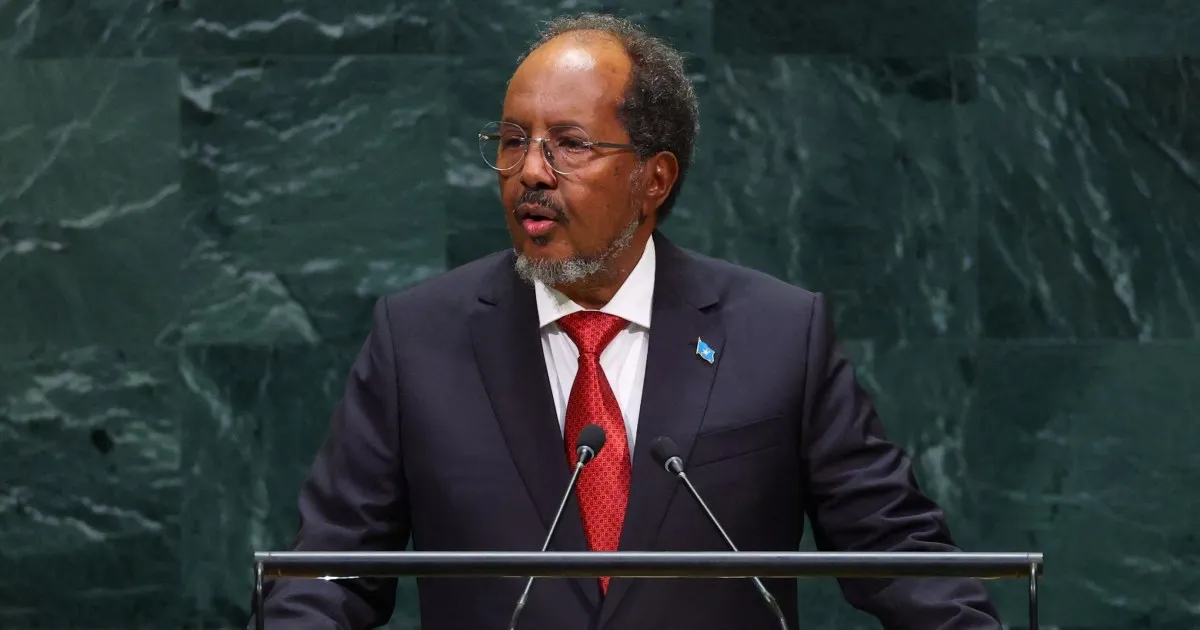
Source link

More abortion restrictions loom, even in California

In the ancient days of 2022, when the Supreme Court sledgehammered abortion rights with the Dobbs decision, the (Republican) party line was that the issue had returned to where it belonged: the states.

Fast forward to 2026 and it would now seem that the antiabortion crowd, faced with the aggressive pro-choice response of states such as California and lethargy on the part of the Trump administration to do more toward implementing a national ban, is no longer satisfied with that outcome.

They are now out to stomp on California, and a handful of other reproductive health sanctuaries, to ensure that what happens inside our borders fits their ideology.

“It’s strategic, it’s targeted,” Mini Timmaraju, president and chief executive of Reproductive Freedom for All, told me. “Even if you’re in a ‘blue state,’ you’re not safe.”

The U.S. Supreme Court will decide next week whether to take up the abortion issue again, in a case that could end medication-only procedures as we know them.

That would force women into a less-safe regimen with a lower success rate that would almost certainly lead to more complications — and therefore more controversy. Even in California, which would not be spared by what the court could do, and whose policies are central to the case.

Let’s break it down.

demonstrators participate in a May Day rally while holding pro-reproductive rights signs

Union members, immigrant rights supporters and anti-Israel demonstrators participate in a May Day rally and march in Washington, D.C., on Friday.

(Robyn Stevens Brody / Sipa USA via Associated Press)

Rogue California

After the Dobbs decision, 11 states passed near-total bans on abortions.

Six other states put early time limits on the procedures, and others passed bans in the second trimester, leaving women in much of the South and the Great Plains with no access to in-person care for hundreds or even thousands of miles.

In many of those places, those bans include making it illegal to receive abortion-inducing medications in the mail from states such as California. But that’s a hard law to enforce unless you go around opening lady-mail.

In recent years, the number of U.S. abortions arranged through telehealth and mailed medication has skyrocketed to more than a quarter of all procedures, though the often illegal nature of this route probably means the number is higher but underreported.

To protect the doctors and providers who are prescribing and sending these medications, California and other states have passed numerous laws to make it easier and safer — from allowing the prescriber to remain anonymous to shield laws that ensure those providers can’t be penalized or extradited to other states for prosecution, though some states are trying.

Earlier this year, Louisiana (a state with a full ban) tried to extradite a California doctor with no luck. Gov. Gavin Newsom gleefully denied that request, promising to “never be complicit with Trump’s war on women.”

US House Speaker Mike Johnson, a Republican from Louisiana, speaks during the annual March For Life on the National Mall

U.S. House Speaker Mike Johnson, a Republican from Louisiana, speaks during the annual March For Life at the National Mall in Washington, D.C., on Jan. 23.

(Graeme Sloan / Bloomberg via Getty Images)

Rogue Louisiana

In the Supreme Court case, Louisiana is thinking bigger — and expressing antiabortionists’ frustration with the Trump administration. The state is suing Trump’s Food and Drug Administration because it allows mifepristone, one of two medications used in abortions, to be prescribed via telehealth.

“Patients and these states with bans and extreme restrictions have relied on providers in blue states, abortion access states, to really help provide care,” Timmaraju said. “And this is a way to stop that.”

Antiabortion groups had hoped (and pushed) Trump to simply have the FDA remove its approvals of mifepristone, but Trump ain’t that dumb. Despite all his promises on the campaign trail, the administration would prefer to kick the can instead of the hornet’s nest on this one, especially before the midterms — since most Americans support abortion rights. So the FDA has said it’s “studying” mifepristone, which could take awhile.

Louisiana is claiming it had to spend $90,000 in taxpayer money to help two women who sought medical treatment after medication abortions (though it has not said they received the medication in the mail).

That’s a real harm, it argues, and gives them standing to sue the FDA to stop mifepristone from being prescribed by telehealth at all, claiming the FDA hasn’t done its due diligence to ensure that’s safe and it makes them really sad that they can’t stop women from ordering it.

The FDA has remained “completely silent on this point because the Trump administration doesn’t want to get involved,” said Mary Ziegler, a UC Davis law professor and expert on reproductive law.

“It’s totally one of the signs that the antiabortion movement is in an open rebellion, and is using the federal courts to express that because the political branches have been pretty non-responsive,” she said.

The marble statue Contemplation of Justice is seen outside the U.S. Supreme Court building

The Contemplation of Justice statue is seen outside the U.S. Supreme Court building on Monday in Washington.

(Andrew Harnik / Getty Images)

The Supreme Court lifted a stay Monday imposed by the 5th Circuit that stopped mifepristone from being tele-prescribed. So it’s available until at least May 11.

After that, who knows. It’s up to a court that has proven it’s no friend to reproductive rights.

It’s an issue with real consequence for Trump. If the court takes the case, the midterms must contend with abortion. If they don’t, the pressure on Trump to do so sometime intensifies. But its also an issue with real consequence for Californians.

Consequences in California

In California, there are 22 counties without an abortion clinic, Ziegler points out. In the far north of the state, women without access to telehealth abortions would be little better off than those in Louisiana if mifepristone by mail is stopped.

Instead, women would probably be forced to use the second medication, misoprostol, alone. This single-drug regimen has a lower effectiveness rate than the combined drugs, meaning more women will have to seek out secondary care — often in places where even in-person care is hard to come by. That could lead to more real harm, and therefore more high-profile cases of botched abortions to fuel a further ban on misoprostol.

Steve Hilton takes an interview after the California gubernatorial debate at Skirball Cultural Center on Wednesday.

Steve Hilton takes an interview after the California gubernatorial debate at Skirball Cultural Center on Wednesday.

(Jason Armond / Los Angeles Times)

And then there’s the fact that Newsom won’t be governor for much longer, and it will be up to the next chief executive to protect in-state providers from extradition. The top Republican contender, Steve Hilton, has previously said he would allow Louisiana to grab our California doctor if he were in charge.

Those kinds of threats have a chilling effect, both Ziegler and Timmaraju said. If enough providers are scared of the consequences of providing telehealth — or any — abortions, a ban becomes self-imposed.

Even in California.

What else you should be reading

The must-read: Immigration crackdown souring Orange County’s view of Trump, poll finds
The deep dive:How the Fight Over Israel Is Playing Out Inside MAGA
The L.A. Times Special: Who won the California governor debate on CNN? Here’s what our columnists say

Stay Golden,
Anita Chabria

Was this newsletter forwarded to you? Sign up here to get it in your inbox.

Source link