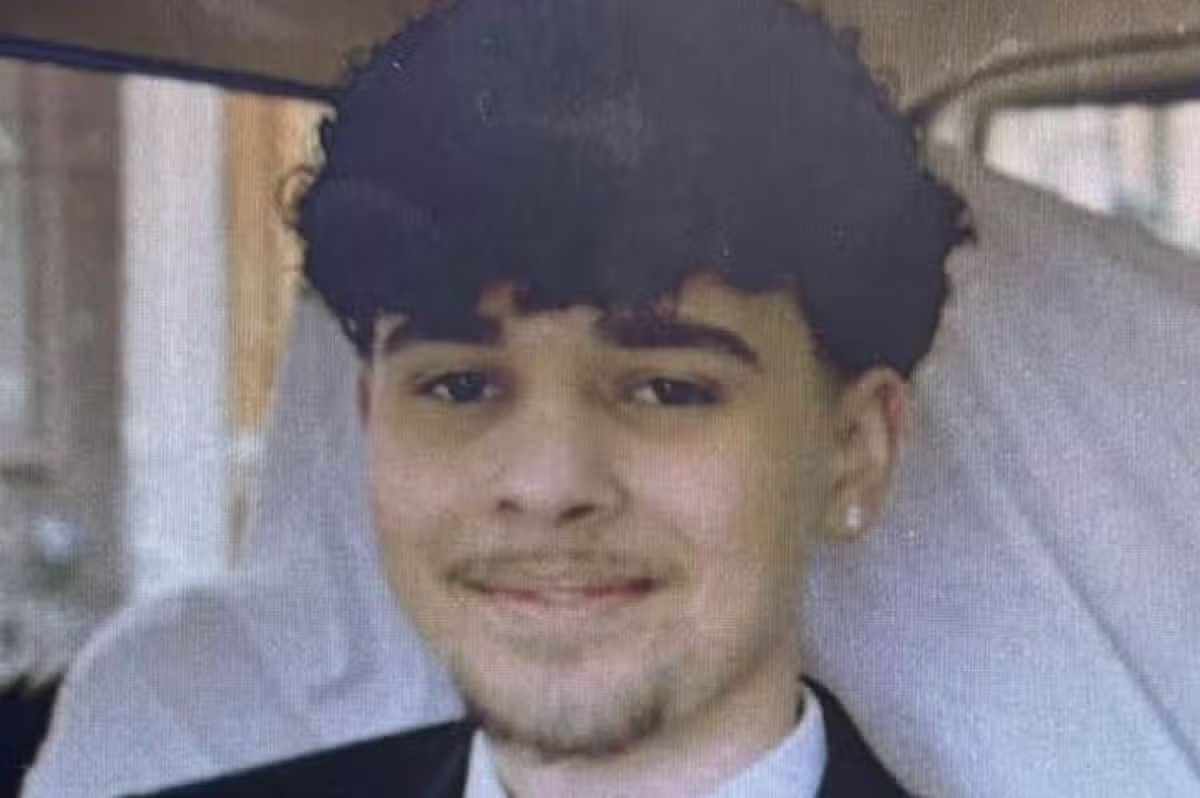
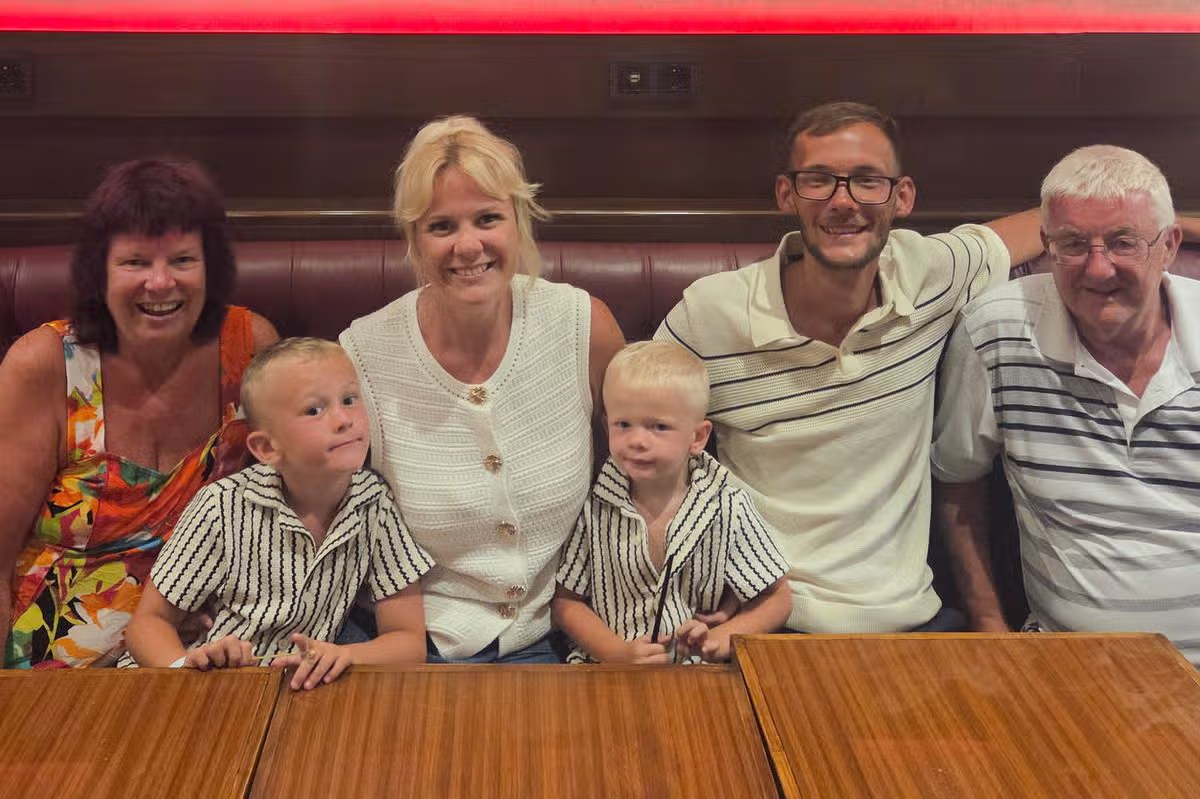
A man from the UK has vanished 5,000 miles away from home after missing his flight back. Bailey Singh did not board his scheduled flight back home.
The 20-year-old’s phone is now reportedly off, and he has not been in contact with family for days. He was reported missing on October 5 and was last seen at Suvarnabhumi Airport, Bangkok, Thailand.
Bailey’s family is now pleading for anyone to come forward with information on his whereabouts. His sister Chardonnay said he may have travelled to the Pattaya area – a hotspot for Brits abroad and expats.
He is described as around 5ft 11 with dark brown eyes, curly brown hair and a goatee beard. Bailey is known to have two distinctive tattoos, including a jigsaw on his left inner arm and one behind his left ear which says ‘eleven’.
It is believed that at the time he vanished, he was wearing a blue tracksuit, a blue top and grey trainers. The family says they have contacted the UK Embassy in Thailand.
They state that they were unable to confirm whether he had been arrested or reported injured. Pleas have been shared across social media and amongst local Thai travel groups.
Mother Lisa Ely said: “He’s in Thailand and not heard from him in two days and his phone is off and his location, which is not like him.”
Chardonnay Ely said: “He has been missing for over a week in Bangkok and have suspicions he’s now in Pattaya. If anyone has any information on him please contact me.
“Me and my family are very worried and concerned for him and just want to make sure he is safe.”
It’s early morning in Erfurt, the capital of Germany’s Thuringia region, and Domplatz is abuzz with local growers setting out crates of vegetables and flowers beneath the soaring medieval cathedral towers. This 14th- and 15th-century engineering wonder holds the Gloriosa,the world’s largest medieval free-swinging bell, cast in 1497 and weighing 12 tonnes. Though the city and surrounding landscape are notably flat, its skyline is pierced by soaring church towers and steeples, the atmospheric old town hardly changed over the centuries.
Thuringia – often called the “green heart of Germany” – lies in the centre of the country, between Hesse, Saxony and Bavaria. It’s famous for its dense forests, intellectual heritage and hearty cuisine, and I’m here for four days to explore using public transport.
Leaving Frankfurt behind, my three-hour coach journey rolls through rising forested highlands before descending into the wide, agricultural basin that cradles Erfurt. After checking out Domplatz’s morning market, it’s just a short walk to one of the town’s other famous sights, the 120-metre-long Krämerbrücke – a 14th-century bridge lined with colourful half-timbered houses.
The Krämerbrucke in Erfurt. Photograph: Sergey Dzyuba/Alamy
Erfurt was once at the crossroads of two major trade routes, and the wealth that built its impressive churches and merchants’ houses came partly from waid, or woad, a plant cultivated in the surrounding fields and processed for its blue dye. I stroll past the craft shops (some still sell the dye) to Petersberg Citadel, one of the largest and best-preserved fortresses in Europe, with a maze of underground tunnels. This is also the city where the Protestant Reformation took root – Martin Luther studied here and was a monk in the Augustinian monastery (you can join a guided tour or even stay overnight).
Dinner is in a suitably historic setting; Wirtshaus Christoffel, in the Haus zur weißen Lilie (House of the White Lily), dates back to the 12th century (the house-brewed beer and beef roulade with Thuringian dumplings are delicious).
Next morning, I head to Egapark (a seven-minute bus ride or a 30-minute walk from town). Spread across 36 hectares (89 acres), it was created for the 1961 international horticultural exhibition. The old Cyriaksburg fortress houses the German Horticultural Museum, which traces the history of gardening, while displays range from landscapes of cacti and succulents to tropical planting.
The Bauhaus Museum in Weimar. Photograph: Imago/Alamy
The city of Weimar, a 30-minute bus journey away, is next on my list. The birthplace of the artistic Bauhaus movement, and where Germany’s first democratic constitution was adopted, it’s full of interesting historic sites and design gems. I visit the Bauhaus museum, with its ceramics, textiles, metalwork and painting, and wander around town, passing the former art school buildings that now house the Bauhaus-Universität.
The next morning, I swap culture for chilling and take another bus to Bad Langensalza, a spa town of 10 parks and themed gardens, 40 miles (64km) away. My guide, Markus Fromm, explains that people come here to “cure, to relax, to refresh”.
Sulphur springs were discovered here in 1811, and today, the Friederiken Therme is the town’s main thermal spa, offering natural sulphur, brine and drinking mineral waters, alongside indoor and outdoor pools, saunas and treatments. Traces of the older spa history remain around the town: at Friederikenschlösschen, an 18th-century summer residence, a fountain still runs with sulphur water that has been used for healing since 1812.
The thermal baths at Friederiken Therme in Bad Langensalza. Photograph: Imago/Alamy
But it’s the town’s gardens that really win me over. I wander Friederikenschlösschen’s restored baroque garden and visit the Klagetor, a gate tower dating from about 1365, where the old town gives way to the Japanese garden, Kofuku no Niwa (Garden of Happiness), with its koi ponds, clipped azaleas and sculpted pines.
For nature on an even grander scale, I take a bus to Hainich national park, 10 minutes away (you can easily rent a bike/e-bike and follow cycling paths to get there too). Spanning 7,500 hectares, Hainich offers more than 75 miles of signposted walking trails through its beech forests, part of a Unesco world heritage site. The wider Hainich is Germany’s largest unbroken deciduous woodland area. “Parts of this landscape have been left entirely untouched for decades, abandoned to their own devices without a shred of human meddling,” says park director Rüdiger Biehl.
Before hitting the trail, I stop at the park’s restaurant, Forsthaus Thiemsburg, for a regional lunch – roast pork in black beer and Thuringian dumplings, washed down with a cold Köstritzer pilsner. Then, into the trees. Deep in the beeches, the sun sporadically breaks through the branches and the leaves crunch loudly under my boots. Up in the canopy, it’s mostly just the birds making noise – chaffinches and wood warblers chatter, interrupted by the occasional sharp rattle of a middle spotted woodpecker drilling into a trunk.
Hainich national park. Photograph: Robert Harding/Alamy
The Baumkronenpfad, a wooden walkway through the treetops, rises to a 44-metre observation tower. Here, the canopy of an oak that is estimated to be 350 years old is almost at eye level. It’s a spectacular view, but the forest’s real engine is down below. Deadwood is left to decay where it falls, providing habitat for rare wood-boring insects and endangered Bechstein’s bats. Back in Erfurt that evening, I catch the final symphony concert of the season at Theaterplatz. It’s a reminder of the winning combination of culture and nature that I’ve enjoyed over my four days in Thuringia. I had come looking for a less familiar corner of Germany and found a region that offers plenty of variety – and all accessible with a few short bus rides.
The trip was provided by the German National Tourist Board. Dorint Hotel am Dom in Erfurt has doubles from £85. For journey planning, VMT has information on buses, trains and trams across central Thuringia, as well as a free app with live departure updates
DISNEY Cruise Line has just unveiled its newest ship – and it’s the company’s glitziest yet.
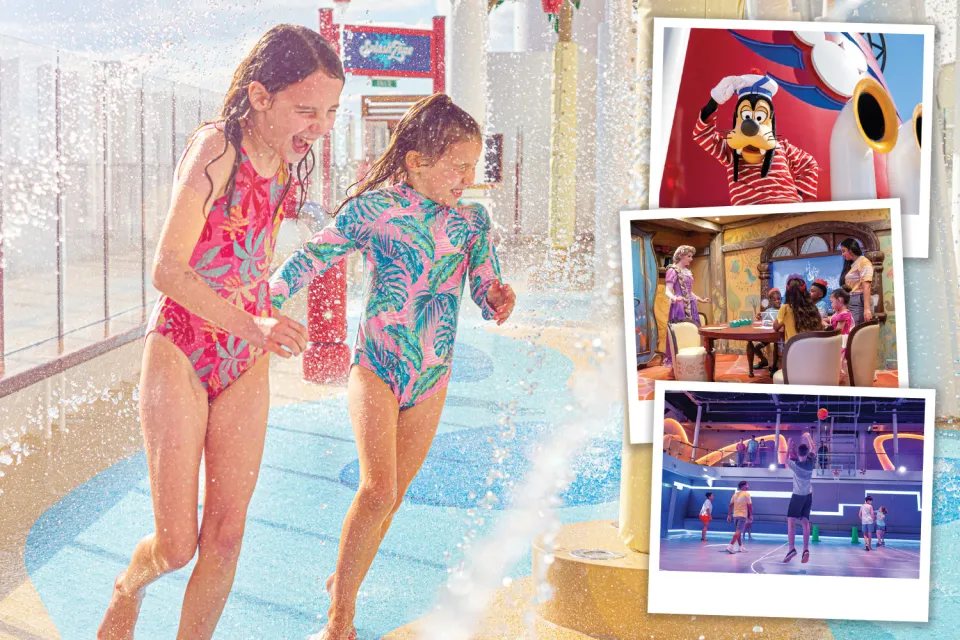
With themed dressing-up parties, glam stage shows and immersive dining experiences featuring much-loved characters, kids will love everything about Disney Believe.
The splash zone on P&O Cruises’ ArviaEnjoy basketball on board Disney BelieveCredit: Disney Believe
But it’s not just the House of Mouse putting little ones at the forefront.
Many cruise lines are introducing activities, meals and entertainment options to keep youngsters happy – which means more downtime for Mum and Dad.
Sign up for the Travel newsletter
Thank you!
Here, Sophie Swietochowski shares her pick of the most child-friendly cruise ships for 2027.
DISNEY CRUISE LINE
Have some meet and greet fun with Frozen’s ElsaCredit: Disney BelieveGoofy on board Disney BelieveCredit: Disney Believe
LITTLE ones can just Let It Go on board Disney Believe, which is home to a sparkling Frozen-themed dining venue.
Oaken’s Table: A Frozen Family Feast is more than just a restaurant.
Here, youngsters are surrounded by characters Oaken, Anna and Kristoff as they tuck into dinner with live singalongs and performances throughout.
The kids’ clubs here take things to new heights, and children will love checking out the first ever Encanto musical, too.
But parents are not forgotten about.
While teens are soaring on the ship’s water coaster AquaMouse, unleashing their inner Spider-Man at the Hero Zone or paddling in the Toy Story-themed splash zone, adults can knock back cocktails at Sea Notes — the Little Mermaid-inspired piano bar.
GO: The ship makes its debut in December next year. More info, including cruise packages, will be released on Monday next week. See disneycruise.com or call 0800 171 2317.
ROYAL CARIBBEAN CRUISES
Splashaway Bay on Freedom of the SeasCredit: Supplied
ROYAL CARIBBEAN is renowned for its family-friendly offering, and has enough high-energy activities to keep rugrats happy for at least two weeks on the trot.
Freedom of the Seas, in particular, ranks highly for its adrenaline-pumping fun.
While tiny tots play with cannons and drench buckets in Splashaway Bay, teens can race each other on the Perfect Storm waterslides or unlock new surf skills on the FlowRider surf simulator.
On top of some excellent kids’ clubs, there’s laser tag, rock climbing, mini golf, an arcade and even an ice rink.
Pizzas, tacos and burgers will ensure they never go hungry, although the ice cream counter is sure to be the biggest hit — and it’s free for all cruisers.
GO: A five-night Northern Europe sailing is from £579.50pp for a family of four, departing from Southampton on August 17 next year. The cruise calls at Hamburg and Zeebrugge (for Bruges). Check out seascanner.co.uk.
This ship has a properly immersive escape room that takes you well below sea on a fictional submarine.
Families will rely on interactive consoles, motion simulators and high-tech controls to succeed in their mission and retreat from the submarine safely.
Kids can reward themselves with a sundae from the gelateria afterwards but most of the time they’ll be itching to get to the youth club.
There is also the Altitude Zone with a high-ropes course, mini-golf and splash zone.
Families can also benefit from a Children’s Tea at the buffet.
It’s at 5pm daily so parents can get little ones fed before dropping them at the night nursery.
GO: A 14-night Spain and France sailing is from £1,049pp, based on a family of four sharing and departing Southampton on July 18 next year. Ships calls at Vigo, Malaga, Alicante, Toulon, Barcelona and Cadiz. See pocruises.com.
NORWEGIAN CRUISE LINE
Let’s play on the Norwegian AuraCredit: NCL
AURA is the newest ship to grace Norwegian Cruise Lines’s fleet and definitely one for action-seekers.
Its thrill zone, Ocean Heights, is spread across three decks and features so many spine-tingling activities you won’t know where to start.
Along with rock climbing, a high-ropes course and funfair, there are three waterslides and a main pool deck with sea-view hot tubs.
Best of all, grown-ups with their eyes on the speciality dining can bag free meals for kids under the age of 12.
GO: A seven-night Eastern Caribbean sailing is from £907pp departing Miami on August 7 next year. Calls at Puerto Plata, St. Thomas, Tortola and Great Stirrup Cay, NCL’s private island. See iglucruise.com or call 020 3733 5557.
MSC CRUISES
Have fun on the slide on MSC World EuropaCredit: MSC Rights
THE highlight for children on MSC’s World Europa is the dry slide that drops 11 decks, making it the longest slide at sea and sending riders spinning down 240ft in a matter of seconds.
With Lego on board as official sponsor, children will have their fill of building-block games at the kids’ clubs, while teens can get stuck into video games.
The waterslides integrate virtual reality and project animations while riders whizz to the bottom.
The high-tech fun does not end there, either.
The ship also has a Formula 1 simulator, 5D interactive cinema and virtual reality arcades.
GO: A seven-night Western Mediterranean sailing is from £574pp based on a family of four sharing and departing from Civitavecchia in Italy on May 1, 2027. It calls at Palma de Mallorca, Barcelona, Marseille, Genoa and La Spezia. See msccruises.co.uk.
STILL stuck on where to go on holiday this autumn? One TUI travel expert has the insider track on places that are still hot, and great value.
Kim Boucher, who has worked in TUI’s Mansfield store for more than 25 years, has revealed her top five destinations that are still warm in autumn – and has beer as cheap as £1.50.
Kim Boucher has worked for TUI for 25 years – and has lots of recommendationsCredit: TUITurkey has highs for 24C and stays at the Laila Blue Suites from £70pppnCredit: Unknown
Marmaris, Turkey
For cheap breaks, average temperatures of 24C, a pint for less than £2, a glass of wine from £2.70 AND meals out from £10, Turkey is a great option for an autumn break.
There are still TUI breaks on offer too.
Sign up for the Travel newsletter
Thank you!
Kim recommends Marmaris in particular for break during October and November thanks to its sunshine and temperatures which sit at around 24C.
She said: “You can spend your days unwinding on the beach or taking a boat trip along the stunning coastline, then enjoy the town’s vibrant atmosphere once the sun goes down.
“One of the things I love most about Marmaris is the buzz in the evenings. The waterfront and marina come alive with bars, restaurants and cafés, creating a fantastic atmosphere.”
Kim suggests Lalila Blue Suites for a “stylish and relaxing getaway”.
The hotel is a short walk away from the beach, it also has a swimming pool and is a five-minute drive from the centre of Marmaris which has lots of bars and restaurants.
TUI offers seven-night holidays to the 4T Lalila Blue Suites on an all-inclusive basis from £496per person or – £70.85pppn.
Tunisia
It takes just three hours to get from the UK to TunisiaCredit: Unknown
This North African country is pretty much a fail-safe when it comes to autumn holidays with average highs of 25C.
For Brits, it’s not as far as you’d think either – it takes just three hours to get from the UK to Tunisia.
Kim recommends it not just for the temperatures, but says it has “exceptional value” compared to some Mediterranean destinations .
She added: “Hammamet in particular offers beautiful beaches, a charming old town and a welcoming atmosphere that’s perfect for a relaxing getaway.”
In Hammamet, visitors can explore traditional Medinas, check out the local markets and try some traditional Tunisian food.
For a hotel recommendation, Kim suggests Hilton Skanes Monastir Beach Resort which is perfect for a “relaxing escape in Tunisia.”
It has five swimming pools, four restaurants and three bars – plus there’s a white sandy bay right on the doorstep.
Majorca still has high temperatures even in autumn – and beers for £3Credit: TUI
When it comes to the Mediterranean, Kim says Majorca is one of the first destinations she suggests when customers ask about an autumn getaway.
She explained: “It offers something for everyone. Even later in the season, you can still enjoy plenty of sunshine, while the slightly cooler temperatures make it ideal for exploring the island’s picturesque villages, coastline and vibrant resort towns.”
“You can spend your days relaxing on golden sandy beaches, discovering hidden coves and enjoying waterfront restaurants, before wandering through the island’s beautiful old towns in the evening.”
Pints of beer on the island are around £3, glasses of wine can be picked up for £4.50 and meals out for £20pp.
Kim recommends the Grupotel Gran Vista & Spa which has two lagoon pools, a children’s splash park and it’s a short walk away from the beach.
TUI offers a seven-night holiday to 4T Grupotel Gran Vista & Spa on a bed and breakfast basis from £326per person – or £46.58pppn.
Algarve, Portugal
The Algarve in Portugal is perfect for autumn – with breaks from £3Credit: Unknown
The Algarve is another trusted holiday option for autumn thanks to its warm temperatures and short flight time.
When it comes to the region, Kim suggests heading to Albufeira.
She calls it a “fantastic option for anyone looking to extend their summer.”
Albufeira in particular is ideal “for beach days, waterfront dining and exploring the picturesque Algarve coastline.”
She added: “What makes Albufeira so popular is its versatility. Whether you’re looking for a laid-back couples’ retreat, lively nightlife or scenic coastal walks, there’s something for everyone.
“Combined with great-value accommodation and plenty of sunshine, it’s easy to see why it remains a favourite year after year.”
The average temperature of the Algarve in autumn is 20C with the average price of a local beer being as low as £1.50.
TUI offers a seven-night break at the 4T Vila Gale Cerro Alagoa on a bed and breakfast basis from £363 per person – or £51.85pppn.
Orlando, Florida
Orlando is much more pleasant in autumn than the summertimeCredit: Unknown
Whether you’re after the theme parks, shopping malls or just want some great restaurants and entertainment, Florida is a great autumn getaway spot, especially Orlando.
It’s still hot at 24C during autumn, but it’s much cooler than during the summer months, and more pleasant for wandering around.
Kim said: “While Orlando is best known for its incredible theme parks, there’s so much more to discover beyond the attractions.
“From lively entertainment districts and world-class dining to nearby natural springs and golf courses, it offers something for all types of travellers.
“It’s a destination where you can fill every day with adventure while still finding plenty of opportunities to relax and unwind.”
For a hotel recommendation, Kim suggests Holiday Inn Resort Lake Buena Vista which she called a “peaceful retreat” away from the theme parks – but still close enough to get to.
It has a palm-tree lined swimming pool, video games arcade and movies in the lobby as well as an Applebee’s restaurant, a breakfast buffet and a tiki bar.
Tenerife is still hot in autumn and the average meal costs £15ppCredit: TUI
While temperatures in the UK drop during October, the Canary Islands is one spot where they sit at around 24C.
Kim added: “Tenerife is one of the destinations I regularly recommend for an autumn getaway.
“I love the variety it offers. You can have a completely relaxing beach holiday, explore the island’s dramatic scenery or head into the livelier resort areas for restaurants, bars and entertainment.
“It’s a fantastic all-round choice for couples looking for sunshine, great value and a change of scenery this autumn.”
On the island, popular activities include sunbathing on the beaches, snorkelling, hiking in Teide National Park.
Or for those who love watercoasters, heading over to Siam Park – a Thai-themed waterpark.
The average local pint here starts from £2.50 with the average meal out being as little as £15pp.
For a hotel recommendation, Kim suggests TUI SUNEO Tamaimo Tropical which she called a “great-value escape”.
The hotel is a top pick thanks to its child-friendly entertainment with plenty of activities as well as having two swimming pools and waterside bars.
TUI offer a seven-night holidays at the 3T TUI SUNEO Tamaimo Tropical on an all-inclusive basis from £423 per person – or £60.43pppn.
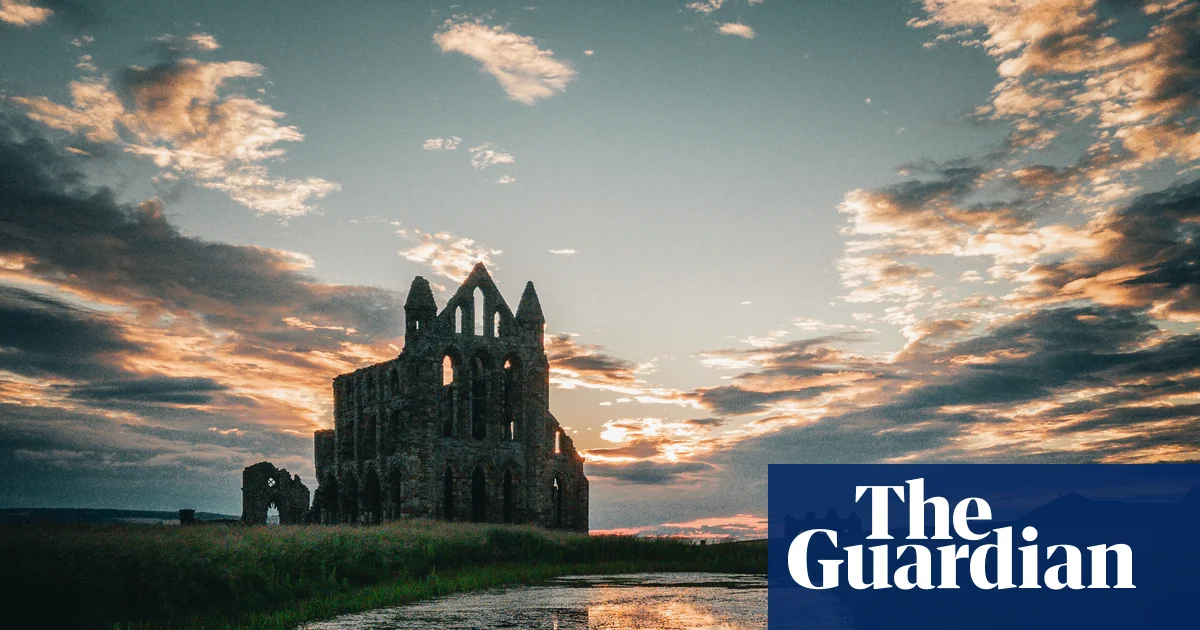
For our Halloween edition of readers’ tips, we’d love to hear about spooky spots, haunted houses and ghost tours you’ve experienced around the UK. Perhaps you enjoyed a guided (or self-guided) city ghost walk, visited a haunted castle or wandered around eerie ruins at twilight. Tell us what made it so spook-tacular for the chance to win a holiday voucher.
The best tip of the week, chosen by Tom Hall of Lonely Planetwins a £200 voucher to stay at a Coolstays property – the company has more than 3,000 worldwide. The best tips will appear in the Guardian Travel section and website.
Keep your tip to about 100 words
If you have a relevant photo, do send it in – but it’s your words we will be judgingfor the competition.
We’re sorry, but for legal reasons you must be a UK resident to enter this competition.
The competition closes on Monday 19 October at 10am BST
Your responses, which can be anonymous, are secure as the form is encrypted and only the Guardian has access to your contributions. We will only use the data you provide us for the purpose of the feature and we will delete any personal data when we no longer require it for this purpose. For alternative ways to get in touch securely please see our tips guide.
If you’re having trouble using the form, click here. Read terms of service here, and privacy policy here.
This town has gorgeous coastal walks as well as plenty to explore
15:06, 12 Oct 2026Updated 15:07, 12 Oct 2026
This gorgeous coastal town is perfect for a weekend away(Image: Getty)
Summer has drawn to a close and autumn has arrived. While summer is a wonderful season for getting away, there’s no reason the enjoyment has to end when temperatures drop.
Indeed, autumn ranks among the most spectacular times of year across the UK.
The foliage transforms into golden hues, tourist numbers dwindle and settling into a welcoming pub following a lengthy ramble epitomises the perfect autumn pursuit.
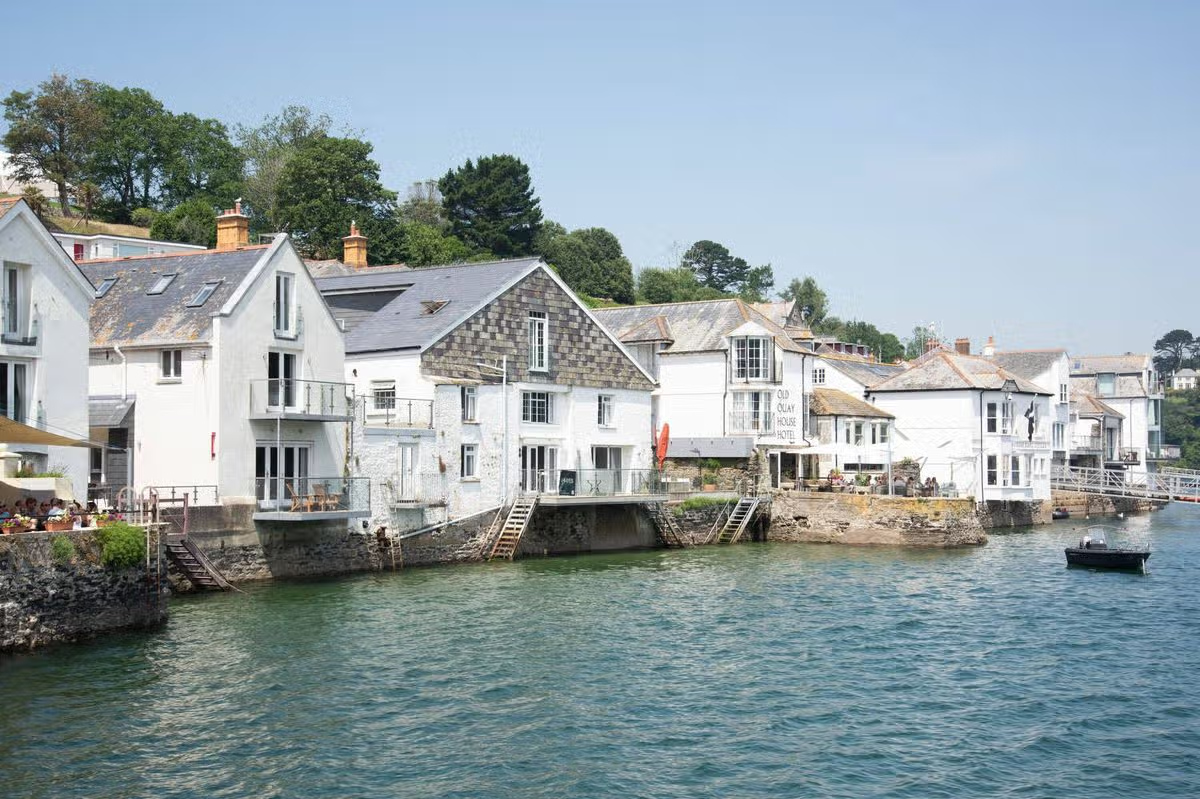
If you’re seeking a UK destination that truly comes alive during autumn, there’s a delightful seaside town in Cornwall that might tick all the boxes.
According to research conducted by credit card firm Zable, Fowey in Cornwall emerges as the best value location for an autumn staycation. It’s not merely affordable though – it’s also a charming harbour town brimming with things to discover.
The town sits proudly on the banks of the river Fowey and traces its roots back to medieval times.
Its naturally deep water harbour established it as a significant historical port and commercial hub throughout the centuries, while the streets showcase magnificent Victorian and Edwardian architecture.
The region surrounding Fowey also holds Area of Outstanding Natural Beauty status.
If you fancy exploring the town’s surrounding landscape, then the creeks and coves walk is absolutely essential. This four-mile circular route incorporates two ferry crossings and highlights the magnificent woodlands and coastal pathways that cradle the town.
The walk requires two to three hours including ferry journeys and looks absolutely stunning at this time of year. However, if you’d prefer to remain in the town itself then you certainly won’t be short of things to do.
Fowey boasts a thriving high street brimming with independent shops and boutiques that are ideal for an afternoon of browsing.
Fore Street serves as the town’s main high street and its twisting alleyways offer a wonderful way to while away an afternoon.
Make sure to pop into Jo Downes Handmade Glass for locally blown glass artworks, or Heather Jane and Co., which features art from 180 local makers.
Round off your day at a quintessential Cornish pub, the Ship Inn on Trafalgar Square. This historic establishment was built in 1570 and features a huge open fire ideal for a relaxing autumn pint.
WHETHER you fancy a bit of R&R or want to head off an exciting adventure, if you’re looking for your next girls’ trip then you needn’t look further than this.
There are tonnes of cheap trips out there, offering everything from relaxing staycations to big party weekenders – and costing from as little as £29 per person per night.
Whether you want a party weekend with the girls or a relaxing trip to unwind, there are plenty of affordable optionsCredit: AlamyThere’s a load of girly weekend trips you can go on from cruises to staycationsCredit: Alamy
So round up a group of friends, set up a holiday Whasapp group and here are 20 of the best girly weekends away to book now…
Away Resorts weekenders
Away Resorts hosts a number of different themed weekenders across the year, with performances, food and of course, lots of music.
New for 2027, Tattershall Lakes Away Resorts will have a Y2K weekender with pop, R&B and dance.
Book onto a three or four-night escape and you will get to experience the live acts, DJs and performances based around the 90s and 00s.
Love a bit of nostalgia? Well, book onto a Parkdean Resort Celebrity Weekend where you’ll get themed entertainment, food and drink, tribute acts and loads of activities.
Different weekends include a ’90s vs ’00s weekender, a Parkdean-exclusive Hitman Weekender and an 80s throwback weekend.
The weekenders also have different events as well, including silent discos, bingo GaGa, and fancy dress.
You might spot a celebrity too, as there will be appearances from the likes of Kerry Katona, Liberty X and East 17.
Butlins isn’t just for kids – the three Butlins resorts also host adult-only weekenders.
There are multiple Butlins Big Weekenders to choose from including Decade Weekenders with music from the ’60s, ’70s, ’80s, ’90s and ’00s.
There’s then also Dance Weekenders including trance, house, D&B, jungle, garage and techno.
And last but not least, Devoted Weekenders with themes including Giants of Country, Giants of Roc, k and Giants of Pop.
Prices vary depending on when you book for, which resort and which weekender you choose, but usually start from £59 per person.
Tribute Party Breaks
Is there a performer you really love but never got the chance to see? Then make sure to book on to a Tribute Party Break with UKBreakaways.
Weekend getaways include top tribute stars celebrating the likes of Robbie Williams, Elvis Presley, Phil Collins, Lionel Richie, Cher, Dolly Parton, and Elton John.
And what makes them even better is that they take place in destinations across the UK including Scarborough, Blackpool, Torquay, and Southport.
Each break includes hotel accommodation with breakfast and dinner options and costs from just £59.95 per person.
PottersWeekend Breaks
Potters hosts a number of adult-only weekend breaks across the UK.
Each two or three-night Weekend Break is fully inclusive, and guests get to choose between two five-star resorts in the Essex countryside and on the Norfolk coast.
You’ll get crafts, activities and leisure facilities all included in the price you pay, as well as West End-quality entertainment every night.
Best Western has put together loads of unique ‘GEM packages’, which include not just your hotel stay but also food, drinks, activities and attractions.
These value-packed package deals bundle everything from private hot tubs with free-flowing Prosecco to psychic readings into one price.
There’s all sorts of different packages available including a wellness break at The Kings Arms, WorldHotels Distinctive with breakfast and an hour Saltwater Sauna session on Avon Beach, or a yoga class at Maya & Moon for as little as £140.80 for two people.
Alternatively, you could book an ’80s Party Night! at the Best Western The Hatfield Hotel from £109.35 for two people.
Party Airbnb
Hotel room not big enough for your group? Then book an ENTIRE Airbnb property with its own bowling alley and cinema room.
For example, there is a huge Grade II listed detached house in St Leonards-On-Sea with a bowling alley, arcade games, a lounge area, and a cocktail bar.
There’s also a shuffleboard table, basketball hoops, and a cocktail bar for guests to use.
There is a minimum stay of two nights with prices starting from around £1,640 for 11 guests – which is equal to around £74.55 per person per night.
If that still sounds like a lot though, Airbnb still has plenty of other options…
If there is a huge group of you (23 people), then opt for The Pictureworks Barn in Long Sutton, Somerset, which costs from £2,001 for three nights – which is just £29pp per night.
The barn has plenty to do as well including a hot tub, steam room & sauna, a pool table, table football, table tennis and croquet, pétanque & lawn games.
Spa breaks
Heading to the spa is the ultimate way to relax so why not book yourself onto a spa break?
For example, you could head away for one-ight at East Sussex National Golf Resort and Spa with a 20-minute spa treatment and three-course meal per person for £155.
Want to spend even less? You could stay at Mercure Norton Grange Hotel and Spa for a night with a meal and access to the spa (after 3pm) included for just £61.50 per person.
Music breaks
If you love music or even a specific decade of music, there are dedicated breaks out there celebrating everything from soulful song to rock classics.
Cosy cabins are another great option for a calming staycationCredit: Graeme RichardsonThere are companies that also run coach trips from all over the UKCredit: Alamy
Cosy cabins
Autumn is well and truly settling in in the UK and, of course, being cosy is now more important than ever.
So why not make the most of crisp orange leaves by checking into a cosy cabin?
You could stay in a converted railway carriage at Llanthony Castaway Glamping in the Brecon Beacons.
It is the ultimate break away from the modern world, with no Wi-Fi.
Instead, you will just get views of rolling hills through a side of the carriage that is completely made out of glass.
If you are looking for something a bit different, then book into a pub – and have the entire place to yourself.
Ideal for bigger groups of people, you could book into the Plas Dolguog in Powys, Wales.
The 16th- century pub sleeps up to 21 people across 10 bedrooms and has views of Snowdonia.
You and your guests can pull your own pints and have coffee in the conservatory in the mornings.
It costs from £2,570 per week, which works out at just £17.49pp a night based on a seven-night stay.
Mystery coach trip weekend
Coach tours aren’t just for the older generations; they take the stress out of travel as you hop onboard and away you go.
And with Just Go! Holidays you can book onto mystery weekend coach trips that could see you heading to a seaside resort or even a Christmas market.
What makes it even better is that there are 400 pick up points across the country.
For £99 per person, you will get an overnight stay at a hotel with dinner and breakfast (both buffet style), and two visits to mystery spots.
Or you could go glamping, and enjoy the great outdoors while catching up with old friendsCredit: Drummohr CampsiteThere are theatre packages too where you can see a West End production and stay overnight in a nearby hotelCredit: Getty
Theatre breaks
If you love seeing a West End show then book onto a theatre break.
With Great Little Breaks, you could stay at the President Hotel near Russell Square in London and head to watch The Devil Wears Prada The Musical in the West End.
Glamping can be a great and fun way to spend time with friends and fortunately, the UK isn’t short of glamping sites.
For example, Bradshaw Farm between the villages of Stapleton and Dadlington, has a number of bell tents costing from as little as £22 per night for two people.
If you prefer something a little more solid though, you could book into Exe Valley Safari Tents for a weekend.
Each tent looks out across a meadow which is ideal for stargazing and sleeps up to six people for £114 per night (or £19 per person, per night).
Loveholidays
Did you know that Loveholidays actually arranges the ideal weekend getaways?
For example, a girls’ trip to the Canary Islands in Spaincosts from as little as £169 per person, including a stay at the two-star Catalina Park.
Set in the heart of Las Palmas, the hotel is just steps from the beach and also has a number of restaurants, shops, and bars on its doorstep.
With Loveholidays, you could head abroad to a Spanish resort for a few daysCredit: AlamyCity breaks are another option costing as little as £75ppCredit: Alamy
City break
A city break doesn’t have to be expensive – in fact, often it will cost you the same as a day out in the UK.
For example, you could head to Fez in Morocco and stay at Riad Meski for two nights, with return flights from London Luton Airport for just £75 per person.
The Riad even has a rooftop terrace with views across the city and a lounge area.
Or perhaps you want to explore more of Italy? Well then, book onto a trip to Verona in November, flying from London Stansted Airport and staying at the Maxim for two nights for just £80 per person.
Cruise
You might think cruises are expensive, but there are actually quite a few out there that can be done on a budget.
You could venture on an Ambassador Cruise on May 28, 2027, for two nights from Portsmouth to Newcastle for just £116 per person.
Or head to Europe on a two-night ‘Christmas Markets of Belgium’ cruise from London Tilbury, stopping at Zeebrugge (Bruges) from £185 per person.
For the ultimate spa trip, through Wowcher you could head to Therme BucharestCredit: AlamyFlights and accommodation would be included from £109 per personCredit: Alamy
Therme Bucharest spa weekend
With Wowcher, there’s a package trip to Therme Bucharest in Romania with return flights for as little as £109 per person.
You’d stay at either the Rin Central Hotel or Berthelot, both in the heart of the city.
For the price, return flights, two nights’ accommodation, daily breakfast, skip-the-line entry, and three hours’ access to the Galaxy + The Palm area at Therme Bucuresti would all be included.
And flights are available from six UK airports including London Stansted Airport, London Luton Airport, Manchester, Birmingham, Bristol, and Edinburgh.
A spokesperson for Jet2 explained: “As a customer-focused business, we continually review our programme in response to what our customers want, and we will make adjustments where required.
The Sun’s Natasha Clark recently visited, saying: “I tentatively packed jeans fearing the poor weather forecast and high-teen temperatures were all we were destined for.
“But thankfully they remained at the bottom of the case as the mercury soared to 25C.
“Even in January, temperatures average a balmy 20C and there’s less than 4mm of rain a month, guaranteeing glorious blue skies.”
The beautiful spot is perfect for pensioners seeking a relaxed lifestyle
14:27, 12 Oct 2026Updated 14:35, 12 Oct 2026
Best town to retire in Spain as expats praise ‘affordable living’
New analysis from World Atlas has named the best Spanish towns to relocate to. They are all stunning, overlooked locations, ideal for retirees seeking a peaceful and authentic way of life away from well-known resorts such as Benidorm or the Costa del Sol.
The research highlighted seven picturesque towns with fewer than 50,000 inhabitants across Spain that feature “walkable, historic centres with accessible recreation, including coastal paths, mountain trails, canoeing rivers, and reservoirs a short drive from the front door”. On Reddit, expats praised the “affordable living” and the “amazing regional food” of some of these picture-perfect locations.
Trujillo, in Extremadura, was named the best small town to retire in, with the lowest housing prices of around €717 (£605) per month. Locals praised the town’s authenticity on social media, with one saying that “life is more or less affordable, with no uncontrolled tourism problems, and food is amazing”.
Trujillo was followed by Arcos de la Frontera, in Cádiz, which has an estimated population of 31,046. Experts at World Atlas noted: “For retirees who want a classic Spanish white town with water sports on the doorstep rather than just mountain views, Arcos is a rare combination.”
Baiona, in Galicia, was also named one of the best places to relocate to. The charming town in northern Spain has a population of 12,380. World Atlas stated: “Baiona offers a version of coastal Galicia that pairs history with a genuine beach-town feel, at a price most Mediterranean resort towns can’t match.”
Other places included the picturesque town of Sitges, just half an hour down the coast from Barcelona, and Cangas de Onís, best known as the historic gateway to the Picos de Europa National Park.
SAUDI Arabia has been targeted by missile attacks over the weekend – some of which hit the King Khalid International Airport in Riyadh.
It has led to a change in FCDO advice – so what happens if you have a holiday booked, or a flight stopover?
King Khalid International Airport was targeted in a missile attack over the weekendCredit: APAs a result, the FCDO for Brits advises against all travel to Saudi ArabiaCredit: REUTERS
What is happening in Saudi Arabia?
Over the weekend, Houthi forces in Yemen launched an attack on in Saudi Arabia’s capital city, Riyadh.
The FCDO advises against all travel to parts of Saudi Arabia.
It read: “Following a serious incident at King Khalid International Airport on 10 October 2026 at approximately 1500 (local time), we advise British nationals to stay away from King Khalid International Airport until the airport is secure and to monitor the advice of the Saudi authorities.”
It adds that it advises against:
all but essential travel to all airports within Saudi Arabia except for Medina International Airport
all travel to within 10km of the border with Yemen
all but essential travel to Aseer province, Riyadh province, Najran province, Jizan province and the cities of Taif, Jeddah and Dammam
It continued to say: “There is a heightened threat against airports, military bases, ports and energy infrastructure across Saudi Arabia, including Abha, Jizan, Najran, Riyadh, Taif, Jeddah and Yanbu, as well as Saudi shipping vessels in the Red Sea.”
“Further attacks against airports are very likely. Follow Saudi Civil Defence alerts.”
Riyadh is frequently used as a stopover destination for BritsCredit: Getty
Are flights still going to Saudi Arabia?
King Khalid International Airport closed on Saturday following the missile strikes and remains closed with flight disruption across the region.
While the Saudi Arabia air space remains open, there is a high risk of short-notice airport closures, diversions and airspace disruption.
Reuters has reported that certain airlines have suspended flights to Riyadh.
Lufthansa Group has suspended flights to Riyadh until October 16.
Air France-KLM has halted services to the Saudi capital until the end of the month.
Emirates which flies Brits to Riyadh via Dubai has been affected by cancellations.
What if I’m currently in Saudi Arabia?
The FCDO advice reads that any British national in the Middle East should prepare for flight cancellations and possible airspace closures.
The advice also states:
follow advice from the local authorities and sign up to FCDO Travel Advice email alerts
refrain from capturing or sharing images of conflict-related incidents
monitor local and international media for the latest information, including updates relating to airports and airspace which could close at short notice
stay away from areas around oil infrastructure and military facilities. Exercise caution at transport hubs
keep your travel plans under review and ensure your travel documents are up to date
before you travel, check that your route does not include travelling through areas or airports where FCDO advises against all but essential travel and, if it does, consider whether your travel is essential
if travelling by air, check that your reservation is confirmed and the status of your flight before travelling to the airport. Remain alert at airports and follow instructions from local authorities
if you are advised to take shelter, stay indoors or find the nearest safe building or designated shelter. An interior stairwell or a room with as few external walls or windows as possible may provide additional protection. The greatest risk is from falling debris caused by intercepts, and you are safest inside a secure structure
Saudi Civil Defence may issue early warning alerts to people in affected areas
Head here to read the latest guidance on ‘how to prepare for a crisis’ and what to include in emergency supplies.
What if I have a holiday booked and can I cancel my trip?
Before you cancel a flight or holiday booking, speak to your travel provider first – especially if it’s a stopover flight as it may be rerouted.
In places where the FCDO advises against all but essential travel, you may be able to cancel a package holiday and get a full refund.
They said the hotel was dirty and food on the all-inclusive trip was undercooked. They also claimed to see faeces in the swimming pool on more than one occaision
12:02, 12 Oct 2026Updated 12:06, 12 Oct 2026
Samantha Smithson with husband Dion Hart, their two children and Samantha’s parents(Image: SWNS)
A family say their £4,000 holiday was ruined by a “filthy” hotel which left their five-year-old on antibiotics. Samantha Smithson, 34, and husband Dion Hart, 31, took their two children – aged two and five- and Samantha’s parents away to Tunisia in August.
But when they arrived at their hotel on August 10, they were apparently put in a room that had just a double, which Samantha shared with the children, and a single bed, which Dion took. The couple also claim they found exposed cabling, wobbly balcony railings, a smashed light, and a shower tray that did not drain inside the room.
They said the hotel was dirty and food on the all-inclusive trip was undercooked, so they shelled out around £500 extra buying food from outside the hotel. They claimed to notice faeces in the swimming pool twice and alerted staff. Booking provider On The Beach has offered the family a partial refund of £496.
Samantha, an operations manager, from Canterbury, Kent, said: “It was the most horrendous experience. Our room wasn’t safe and I spent the whole week feeling anxious about the kids. I was in tears all the time, it was awful. We just couldn’t wait to get home.
“I do not believe that £496 fairly reflects what our family experienced or the significant difference between the holiday we paid for and the holiday we actually received.”
The family said rubbish was left out, and their towels were dirty. Samantha said the hotel had no air-con in the 40-degree heat. Playground equipment was broken, and the advertised spa and gym were not open, Samantha said.
Their five-year-old has been given antibiotics for 40-degree temperatures and gunky eyes since coming home, and doctors said it was likely caused by dirty water, Samantha said. Samantha and builder Dion booked the holiday, in the Abou Sofiane Sousse hotel and aqua park, through online-travel-agent On The Beach.
Samantha made a complaint on August 17 and on August 25, and was offered a partial refund 28 days later. Samantha, who shared the story on Talk to the Press, said: “It’s just unacceptable to book in more people than they have capacity for, and to take bookings for rooms they don’t have.
“I’m really disappointed that On The Beach didn’t help us at all. We trusted them with our money and have been completely let down. We spent the whole time trying to contact them, but you can’t speak to anyone.
“It was filthy everywhere; it was horrible. Our kids were hungry the whole time because the hotel food we had paid for was so bad, and dangerous.”
A spokesperson for On the Beach said: “We’re sorry that Ms Smithson was disappointed with her hotel stay and we have been in contact directly in an effort to resolve her complaint.
“A partial refund of the hotel cost has been offered and has not yet been accepted.”
Abou Sofiane Sousse Hotel and Aqua Park were contacted for comment.
Foreign Office issues updated Thailand travel guidance for Brits on Monday
11:12, 12 Oct 2026Updated 14:38, 12 Oct 2026
Thailand is hugely popular among UK holidaymakers(Image: ANDREY DENISYUK via Getty Images)
The UK’s Foreign, Commonwealth and Development Office (FCDO) has revised its travel guidance for those planning a trip to Thailand.
The South East Asian destination is growing increasingly popular with British holidaymakers, with over a million making the journey every year. On top of this, tens of thousands of UK nationals live, work, or retire in Thailand – in locations such as Bangkok, Chiang Mai, Hua Hin, and Phuket. To enter Thailand as a tourist, your passport must have an ‘expiry date’ at least 6 months after the date you arrive and have at least one blank page.
The FCDO warns: “You will be denied entry if you do not have a valid travel document or try to use a passport that has been reported lost or stolen.” As of September 15, 2026, if you enter Thailand on a British passport, under the visa exemption scheme, you can stay for up to 30 days for tourism only.
This does not extend to business travel, including attending conferences, meetings or other business activities. Those travelling for business purposes should secure the appropriate visa prior to departure.
New Foreign Office Thailand alert issued
New FCDO Thailand advice, issued on Monday, reads: “Visa-exempt entry for tourism through land-border immigration checkpoints is normally limited to two entries per calendar year. This restriction does not generally apply to arrivals by air.
“If you frequently enter Thailand as a tourist, immigration officials may ask for evidence of your onward travel, accommodation, or sufficient funds, and may refuse entry if they believe you are not a genuine visitor.”
All overseas nationals travelling to Thailand, whether by air, land or sea, are required to complete a digital arrival card online prior to their arrival. Travellers are able to register for an arrival card up to three days before they land.
Should you overstay your visa, you face a penalty of 500 Thai baht (around £11) per day, rising to a maximum of 20,000 baht (around £449). You also risk being detained, deported at your own cost, and banned from returning to Thailand for as long as 10 years.
A football coach has died suddenly while on holiday with friends at just 37 – leaving behind his fiancée and two young sons. Warren Coard, from Co Antrim, Northern Ireland, died while on a trip in Tenerife with a group of friends.
The dad-of-two was a former goalkeeper and coach for several clubs and is remembered as a much-loved character who could light up any room. A fundraiser has been launched to help his fiancée Olivia Greer cover medical costs and funeral expenses.
It reads: “It is with the heaviest of hearts that we share the devastating news of the sudden loss of Warren Coard, who sadly passed away in Tenerife while away on a trip with his friends. At just 37 years old, Warren was taken from us far too soon, leaving behind a heartbroken family, friends and everyone who had the privilege of knowing him.
“Warren was the life and soul of every gathering. He had a personality that could light up a room, bring people together and make everyone around him smile. He was the kind of person who made memories wherever he went, and his presence, laughter and infectious spirit will never be forgotten.”
The appeal paid tribute to Warren’s fiancée, his sons Charlie and Levi, his mum Carol and his wider family. It added: “No family should ever have to experience such heartbreak, especially so suddenly and at such a young age. At this incredibly difficult time, Warren’s loved ones are facing the unexpected financial burden of funeral costs.
“This has placed additional pressure on his family during an already devastating time, when they should be able to focus on grieving, supporting one another and remembering Warren for the amazing person he was.”
Football clubs Warren played for also paid tribute to the former goalkeeper and coach. A spokesperson for Barn United Football Club in Carrickfergus said: “Everyone at the club is devastated to hear of the untimely passing of our former goalkeeper coach, Warren Coard aka Coardy.
“Our thoughts are with the entire family circle at this difficult time. Rest easy Coardy.”
Islandmagee Football Club said: “The club are saddened to hear of the passing of our former goalkeeper, goalkeeping coach and long term supporter Warren Coard. Everyone at the clubs thoughts are with ‘Coardys’ family and friends at this awful time.”
The fundraiser appealed for donations to help ease the financial pressure on Warren’s loved ones as they prepare to say their final goodbyes. It said: “Warren was loved by so many, and the number of lives he touched is a testament to the person he was.
“At only 37, he had so much more life to live, so many more memories to make and so much more love to give.
“Fly high, Warren. You were taken far too soon, but you will never be forgotten. Forever loved, forever missed, and always in our hearts.”
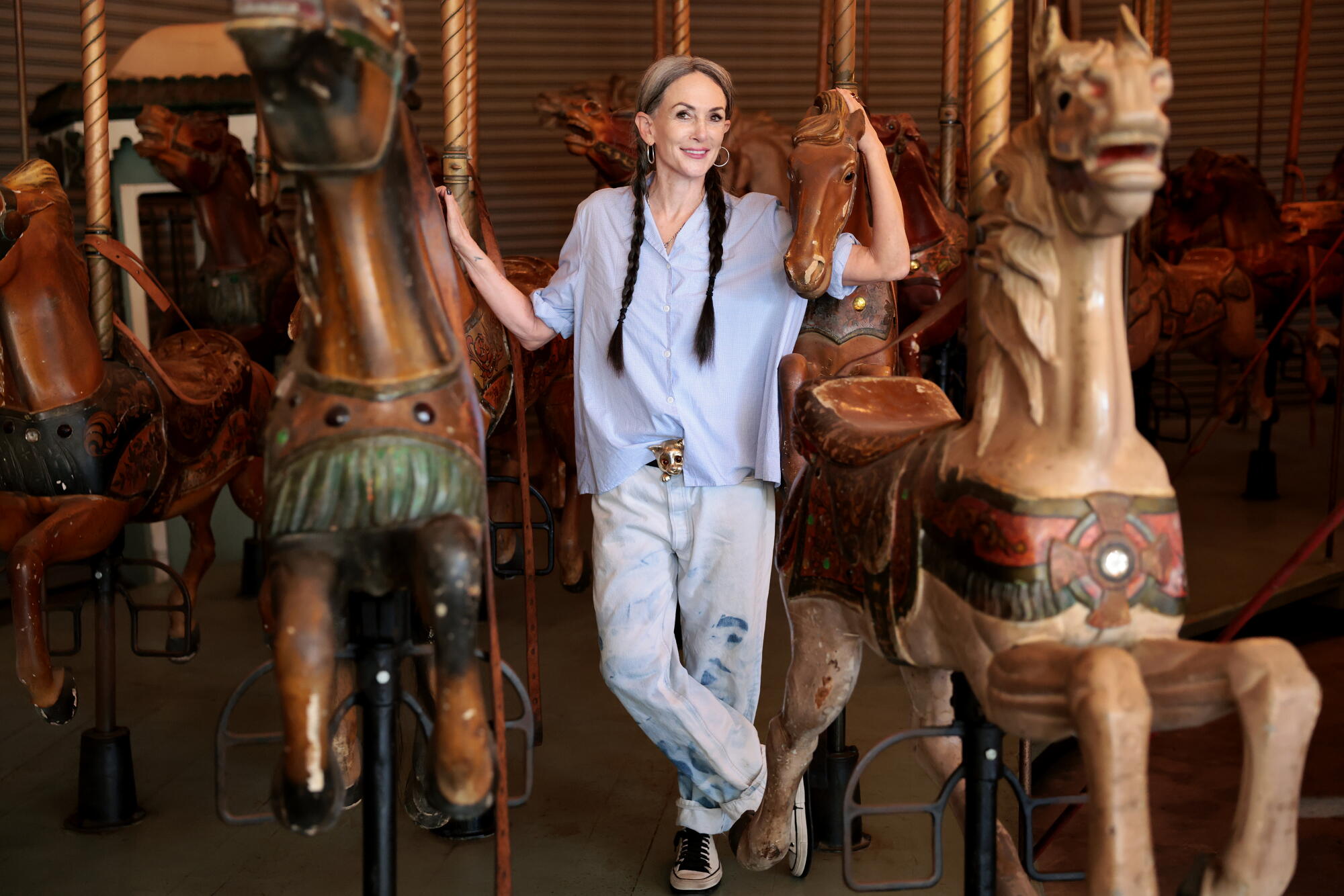
Nestled a short stroll from the Griffith Park Ranger Station, near some tennis courts and not far from the remains of the park’s original zoo lies a gem that is on most days behind lock and key. The Griffith Park merry-go-round, which turned 100 this year, stands motionless, many of its 66 wooden horses weathered and caught mid-ascent.
But the effort to ensure that they once again rise, fall and spin around a spherical base has begun. The Griffith Park merry-go-round is being resurrected by a group of passionate supporters and volunteers, some of whom are veterans of the theme park industry. Collectively, they argue that this isn’t simply a relic from another era, but a place of multigenerational connection, a reminder of the beauty of handmade art and a statement piece of Los Angeles.
Tracy James, who works in the Department of Recreation and Parks and focuses on Griffith Park, is helping to lead the plans to refurbish the Griffith Park merry-go-round.
Visitors ride the Griffith Park merry-go-round, a favorite haunt of Walt Disney and his daughters, on Aug. 24, 1951.
Shuttered since the COVID-19 pandemic, save for a brief but limited run in 2022, the Griffith Park carousel is now under city control, purchased last year for $1 million. That’s a veritable bargain for such a museum piece, argues Tracy James, who is leading the efforts to restore the project, one that’s expected to take at least two years and cost millions.
“This is the jewel in the middle of the city,” says James, who works in the Department of Recreation and Parks and focuses on Griffith Park. “The ornamentation and the craftsmanship represent a bygone era.”
There was a real fear, James says, that the merry-go-round would fall into the hands of a private collector, as the carousel, if not officially, has long symbolically belonged to L.A. A piece of whimsy, artistry and play in the middle of a natural wonderland, it is where Walt Disney is said to have dreamed up the vision for what would become the Disneyland Resort and a site that has withstood Civil Rights actions and ’60s-era love-ins. To some, it’s a beacon of hope in the midst of an imperfect urban fabric that has long prioritized the fantastical.
“I got teary-eyed when I walked up,” says Wendy Osmundson, who approached the carousel during a recent open house while on a stroll around the park. Osmundson reflected on a day, decades ago, when the merry-go-round saved the family’s Christmas.
1
2
3
1.Details from the Griffith Park merry-go-round, which is in need of refurbishment.(Christina House / Los Angeles Times)2.The horses of the Griffith Park merry-go-round are known for their flowing manes.3.Each horse at the carousel is outfitted with jewels.
“I was 21, and my mom’s kitchen burned down,” Osmundson says. “We couldn’t have Christmas at my mom’s house. Everyone came to my one-bedroom apartment in Los Feliz, and me and my three sisters came here and rode the carousel. We were adults, but it was really great. I’d love to see it restored.”
Joining the project to do just that are some of the brightest minds in the theme park and amusement industry, and they’re doing so without pay and on their own time. Kurt Sawitskas has already spent weeks analyzing the carousel’s innards, marveling at its antique nature, but also being amazed that it’s still mostly intact.
“Honestly, I don’t think carousels were ever intended to last 100 years,” Sawitskas says. “And now here we are with a carousel that’s 100 years old. We want to honor it and make it run again.”
Sawitskas’ day job is at Walt Disney Imagineering, the creative arm of the company responsible for theme park design. Beginning to think ahead toward retirement, Sawitskas says he was looking for a project in which he could volunteer his time and expertise. He found it.
The painted panels at the Griffith Park merry-go-round will also need to be restored.
Built in 1926, near the end of what many consider the heyday of the American carousel, the Griffith Park merry-go-round began its life in San Diego and was relocated to Los Angeles in the depths of the Great Depression in 1937. It is the showcase product of the Spillman Engineering Co., whose carousel horses were known for the flowing, wind-blown manes and heavily detailed secondary carvings on the portion of their bodies that face viewers, known as the “romance” side.
A few, for instance, have lion heads extending from their chest. Others have cherubs reaching toward the horse’s face. All are adorned with jewels and tails made of real horse hair, many of which have been eaten by squirrels or other critters. Griffith Park’s carousel is especially unique in that it also has horses from master carvers Charles Looff and Charles Carmel, considered the finest carousel craftsmen of the era.
The few carousel companies that survived the Depression largely did so by switching to a cheaper, mass-produced product, such as transitioning from wood to aluminum. An art was lost.
“It’s brought to me a real appreciation of the deeper aesthetic,” Sawitskas says. He mentions this as he’s giving a tour of the horses, emphasizing how the thickness of the paint created a sense of depth in the figures — a saddle, for instance, of a crisscrossing chessboard-like pattern, or elsewhere an aged leathery toughness. “I recognize what is attractive about an amusement like this, and that’s the ability to return again and again and still see something different.”
Horses and a mural at the Griffith Park merry-go-round.
Sawitskas has recruited a pair of co-workers, Troy Leverton and Pim Renting, who work in various aspects of ride engineering, to help in the task. For Leverton, restoring the carousel is important in bringing a piece of history back to the city, one centered on affordable outdoor entertainment.
“I brought my nieces here 10-plus years ago, and rode it and it was really cool,” Leverton says. “Unfortunately, since my daughter has been born this has been shut down. So it was like, you know what, I live in the city, and it’d be really cool to be a part of something that is doing something for the city. I want to bring my daughter back here when it is running.”
It’s also not lost on them that there’s an association between the company they work for and the carousel, although it’s important to stress they are not volunteering their time as representatives of the Walt Disney Co.
The organ inside the Griffith Park merry-go-round.
“There’s obviously a connection with Walt Disney and what we do,” Leverton says. “There’s a lot of history here. The industry was born out of Disneyland, and Disneyland was born out of this place.”
The story goes that Disney would bring his daughters to the merry-go-round, sit on a bench and dream of a place where adults and children could be entertained together. Both Disney and the company have long told this tale, and a bench, as well as one of the original horses from the carousel, can be found on Disneyland’s Main Street, U.S.A. (There were initially 68 horses, but one, says James, is at Disneyland, and another is with a former owner.) With Disneyland’s King Arthur Carousel, which itself dates to the 1920s, Disney requested a number of modifications that closely match the Griffith Park attraction, such as wanting all its animals be “jumpers” that look like they’re galloping.
James, along with Sawitskas and his pals, want the carousel to be restored to its original glory, a magnificent, gleaming merry-go-round that inspired Disney to dream. On a recent Saturday, Sawitskas hopped on a ladder to analyze the condition of the mechanisms that raise and lower the horses and started poring over carousel history books to match the horses with their original paint colors. In the 1920s, lead paint was used, which must be stripped away.
Wendy Osmundson takes a moment to appreciate the memories of riding the Griffith Park merry-go-round.
“There’s no way to just keep painting over this and hiding the problem,” Sawitskas says. “We really need to get down to the bottom. A lot of the horses have small fractures in the wood joints that need to be repaired as well. You can’t do that on top of paint. You need to be at the wood. We have some very nice ways to get down to the wood without destroying the wood itself, just lifting the paint off. We want to restore all the worn wood and reintroduce the carving lines.”
And that says nothing of the mechanical adjustments and efforts to make the carousel ADA accessible. The Griffith Park carousel has one speed — 14 mph — and the hope is to update it with some modern controls to create a smoother ride. All of this is why James is estimating the tally to restore the carousel will top $3 million or $4 million. An assessment is expected in the coming weeks, and fundraising will occur via the nonprofit Friends of Griffith Park. James will be hosting open houses on as many Saturdays as she can, posting updates on the Griffith merry-go-round project Instagram page.
As the world turned, so did the carousel. In 1961, for instance, a riot erupted at the merry-go-round when police officers alleged a 17-year-old Black rider failed to pay for his admission. Onlookers leapt to the teen’s defense, and it took 75 officers to quell the disturbance. Later that decade hippie love-ins were held regularly at the base of the carousel, occasionally drawing the likes of the Hells Angels or law enforcement. The merry-go-round also became a gathering spot for a candlelight vigil when the Grateful Dead’s Jerry Garcia died in 1995.
And today, even in its shuttered and bruised state, it stands defiantly — a testament to handmade art at a time the world is spinning toward all-digital everything.
“One of the biggest challenges here is making it look new again,” Sawitskas says. “But I think if we do that, it’s going to be a treasure.”
One that, by the time it’s operational, will twirl gallantly into its next century.
The provided source discusses the historical significance surrounding Columbus Day and the observance of Día de la Raza across Central and South America. It highlights how these dates commemorate the initial meetings between European travelers and Native populations, which ultimately sparked the colonization of the Americas. Additionally, the text clarifies that while the famous 1492 expedition marked a major turning point, Columbus did not actually touch the mainland until his later journey in 1498. Finally, the article points out that Norse explorersarrived in North America centuries prior, proving that Columbus was not the very first European to reach the continent.
NEW ‘contactless’ e-gates have just been introduced at a major UK airport.
Brits returning to the UK won’t have to scan their passport in a new government scheme to speed up arrivals – and it’s now in place at Gatwick Airport.
The new technology means Brits arriving back into the UK won’t needs to scan their passportCredit: AFP
East Midlands Airport was the first to introduce the new system on October 6, followed by Gatwick – and eventually it will be rolled out at 13 UK airports.
The contactless system is set to be up to 25 per cent faster than current e-gates.
Sign up for the Travel newsletter
Thank you!
When one writer for The Times tested out the new e-gates, she said it took just 12 seconds to get through.
How it works is that passengers will have their photo taken at an e-gate which will be checked by the system, verified against immigration, travel and passport information.
Essentially it takes away the need to both have a picture taken and scan the passport.
Once the checks are complete, the e-gates will open automatically.
If there is a need for further checks, then passengers will need to place their passport on the reader – or they could be asked to see a Border Force officer.
Passengers are still being told to keep their passport with them at all times.
At the moment, the contactless system will be for British citizens only, but eventually could be used by other nationalities.
The other airports which will have the new e-gate system are Birmingham, Bristol, Cardiff, Edinburgh, Gatwick, Glasgow, London Heathrow, London City, London Luton, Manchester, Newcastle and London Stansted.
Gatwick Airport has introduced new ‘contactless’ e-gatesCredit: Alamy
Phil Douglas, director general of Border Force, said: “This is a win for travellers coming to our brilliant country.
“By using state-of-the-art technology, we are making journeys smoother and faster, all while fully maintaining the UK’s robust border security.
“Our digital transformation also builds on our work this summer to extend eGates to children aged eight and above, making life a little easier for families.”
A MAJOR UK airport that sees millions of passengers through its doors each year could come to a complete halt this week.
A strike at Leeds Bradford Airport may mean that no flights will be able to land or depart across two days.
Leeds Bradford Airport is set to come to a complete standstill this weekCredit: GettyAlmost 130 members of staff are staging a walkout over payCredit: Alamy
If it does go ahead as planned, then it will mean no flights will be able to land, depart and passengers won’t be able to pass security.
Nearly 130 workers are staging a walkout at Leeds Bradford Airport in a dispute over pay.
Sign up for the Travel newsletter
Thank you!
Those striking includes a mix of air traffic control workers, security, customer service and cleaners.
The industrial action is set to start on October 16 and last until 6am on Sunday 18.
There have been ongoing talks over pay since December 2025 but Unite members involved said it “didn’t go far enough”.
Unite regional officer Neil Whitaker said they had “no choice but to strike,” and what would be needed to call of the action is a “fair pay rise”.
In a statement from the airport, it said: “Leeds Bradford Airport acknowledges the proposed industrial action due to take place between 16-18 October involving a group of operational colleagues.
“We respect the right of employees to participate in lawful industrial action. However, we are disappointed by this and do not believe strike action is the right way to resolve the issues still under discussion.
“The airport has made what we believe is a fair and responsible offer that is significantly above inflation and reflects both current economic conditions and the need to ensure the long-term sustainability of the business.
“Our priority now is to minimise disruption for customers, many of whom have worked hard and saved for important holidays, family visits and business travel. At this stage we anticipate running near-normal operations during the period.”
Leeds Bradford Airport is set to handle around 4.5million passengers every yearCredit: Getty
“Leeds Bradford Airport plays a vital role in connecting Yorkshire to the world. Industrial action has the potential to cause inconvenience for thousands of customers and local businesses who rely on those connections.
“We remain committed to constructive dialogue with Unite and would welcome continued discussions aimed at reaching a resolution.
“It is important to recognise that any profits generated by Leeds Bradford Airport are reinvested back into the airport and has been for a number of years. Those funds support improvements to facilities, infrastructure, operations and customer experience including the ongoing LBA:REGEN project which saw the opening of a new central search zone and staff welfare facilities this week.”
The terminal was renovated with a modern arrivals process with 83 per cent more seating and two premium lounges.
Flight compensation rules
A look at your rights if a flight is delayed or cancelled, when your entitled to compensation and if your travel insurance can cover the costs.
What are my rights if my flight is cancelled or delayed?
Under UK law, airlines have to provide compensation if your flight arrives at its destination more than three hours late.
If you’re flying to or from the UK, your airline must let you choose a refund or an alternative flight.
You will be able to get your money back for the part of your ticket that you haven’t used yet.
So if you booked a return flight and the outbound leg is cancelled, you can get the full cost of the return ticket refunded.
But if travelling is essential, then your airline has to find you an alternative flight. This could even be with another airline.
When am I not entitled to compensation?
The airline doesn’t have to give you a refund if the flight was cancelled due to reasons beyond their control, such as extreme weather.
Disruptions caused by things like extreme weather, airport or air traffic control employee strikes or other ‘extraordinary circumstances’ are not eligible for compensation.
Some airlines may stretch the definition of “extraordinary circumstances” but you can challenge them through the aviation regulator the Civil Aviation Authority (CAA).
Will my insurance cover me if my flight is cancelled?
If you can’t claim compensation directly through the airline, your travel insurance may refund you.
Policies vary so you should check the small print, but a delay of eight to 12 hours will normally mean you qualify for some money from your insurer.
Remember to get written confirmation of your delay from the airport as your insurer will need proof.
If your flight is cancelled entirely, you’re unlikely to be covered by your insurance.
A woman has been badly injured after falling from a third-floor hotel balcony while celebrating her 30th birthday on a dream holiday in Greece. Denby McLaren suffered a broken vertebra, multiple broken bones in her foot and other injuries in the fall.
She his now in hospital in Greece, with her family desperate to bring her home to Larkhall, South Lanarkshire. Denby had been enjoying a birthday getaway with her mum.
A fundraiser set up to help get her home said: “No family should ever have to experience something like this, and never in a million years did we imagine we would find ourselves in this position. Denby was on holiday in Greece with her mum, celebrating what should have been a very special milestone – her 30th birthday.
“What should have been a happy time filled with memories has turned into every family’s worst nightmare.”
The fall left Denby with serious injuries and facing a long road to recovery far from home and her loved ones.
The fundraiser adds: “Denby has now spent four days in hospital in Greece, far away from home, her family and the people who love her most. It is impossible to put into words the fear, heartbreak and uncertainty that Denby and our family are experiencing right now.
“In a matter of moments, everything changed, and we are now facing a situation none of us could ever have prepared for. Our biggest wish is simple: we just want to bring Denby home.”
Denby requires specialist repatriation by air ambulance, travelling on a stretcher with medical assistance throughout the journey. But the cost has added further strain to the situation.
The fundraiser said: “We want nothing more than for Denby to be back on home soil, surrounded by her family, where she can receive the ongoing medical care and treatment she needs and begin the long road to recovery with her loved ones by her side.
“Right now, being able to get her home safely is our greatest priority. No one ever expects something like this to happen to someone they love, and the emotional and financial strain has been overwhelming.”
The breathtaking island is about a four-hour flight from the UK and boasts heaps of history, culture, TV links and a new hotel that is going to be a hit with rock fans
(Image: Getty Images)
There are few better places where you can move effortlessly between sunshine, sea and centuries of history than the stunning island of Malta. Friends and family had recommended it to me as the perfect holiday for a mix of sightseeing and relaxation, and it certainly delivered.
As a small island, Malta packs a punch, offering tourists everything they want right on their doorstep. There are few bigger mood killers than a day tour entailing hours and hours cooped up in the car, but Malta’s size means you can hop from place to place in no time at all.
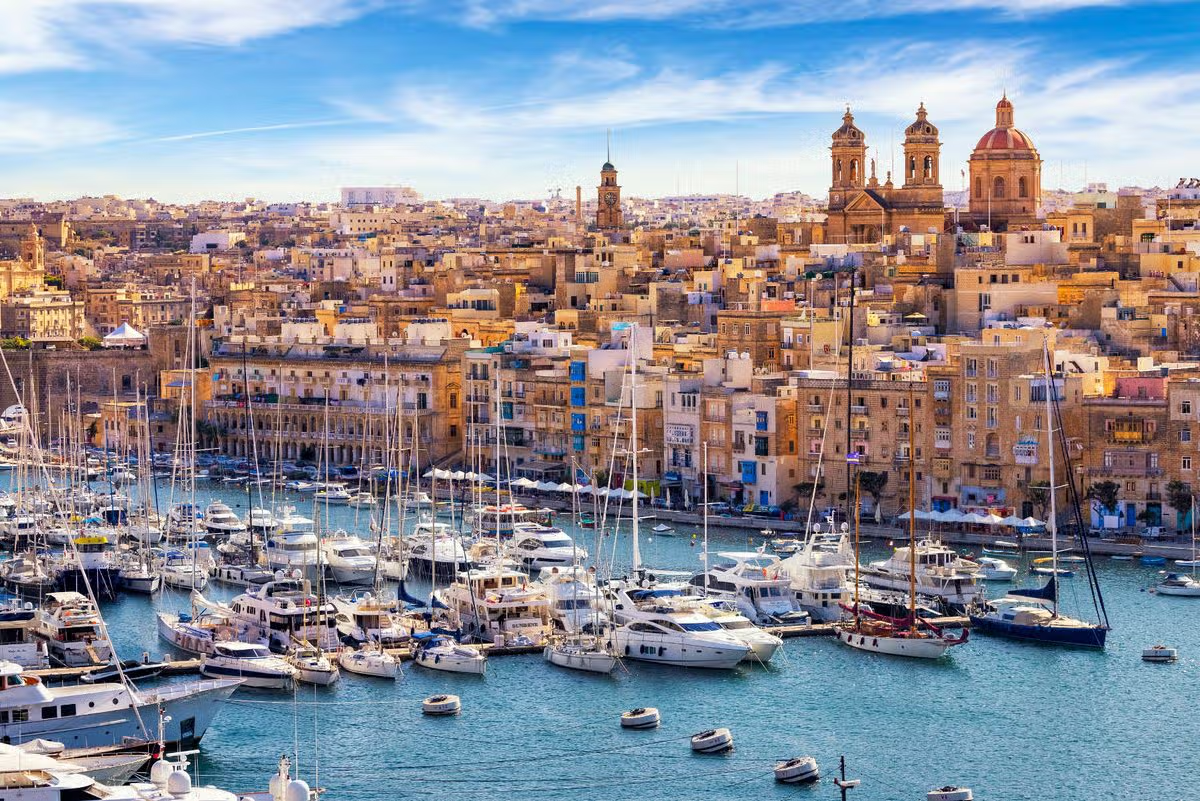
You can easily get a boat to Gozo or the Blue Lagoon in half a day, drink in the incredible sights of Malta’s shoreline, and be back in time to hit the pool before dinner. Meanwhile, Valletta, the EU’s smallest capital, is easily accessible by car or bus, and you need only a few hours to soak up the famous yellow architecture, pretty alleyways and sea views.
The city blows you away with its vivid colours as you arrive. Valletta may be modest in size, but it is extraordinary to look at, boasting a rich history closely connected to the UK. It played a major role in World War Two and became a favourite destination of Queen Elizabeth II and Prince Philip. Even today, a British influence is visible on the streets, with our famous red postboxes and iconic Victorian architecture everywhere you go.
Despite being only 0.3 square miles, Valletta offers plenty for a day trip; it boasts 320 historic sites, from the famous St John’s Co-Cathedral to Fort St Elmo. Not only that, it has been the backdrop for several hit Hollywood films, including Assassin’s Creed and Napoleon, making the city a treat for film buffs. At every turn, you are greeted by grand churches and colourful balconies, and all with a jaw-dropping coastline backdrop. A mere few hours was the perfect amount of time to explore before settling down with an Aperol Spritz.
Just a few miles along one of Malta’s most vibrant stretches of coastline lies St Julian’s, a perfect spot for those who like to swim and sunbathe during the day and head out at night. If Valletta is Malta’s historic beating heart, St Julian’s is its party spirit. As it gets dark, restaurants spill onto terraces and the waterfront fills up for sunset drinks.
Nestled nearby in the beautiful St George’s Bay is the Hard Rock Hotel Malta, which opened its doors this summer and could quickly become Malta’s go-to destination. Boasting stunning panoramic sea views, a state-of-the-art gym, a luxury spa area, and eleven (that’s right) swimming pools, it has truly thought of everything. Forgotten your sunscreen? That’s okay, because the hotel even has its own huge shopping centre and supermarket, with everything you could possibly need just a few steps from your room.
The swim-up bar at Hard Rock Hotel was also a particular highlight; I loved basking in the water with a chilled glass of wine while people-watching down onto the beach below. It made the lazy afternoons flow perfectly into the evenings, with sunbathing by the water giving way to sunset drinks on the terrace as guests soaked up the views at all points of the day.
Inside, music memorabilia gave a personal touch, while the hotel’s luxury amenities almost tempt you to forgo exploring. The hotel also boasts a wide range of stylish restaurants and bars serving impeccable food and cocktails from around the world. The experience could be a little overwhelming, but as someone who typically prefers a smaller, boutique stay, I loved the convenience that the Hard Rock Hotel offers when you have only a few days to enjoy. The spacious rooms were also gorgeous with sea-themed decor and a large balcony, and the best part is you’re guaranteed a sea view, with both sides of the hotel offering a stunning glimpse at the Maltese coastline.
If you do want to venture a little further afield for dinner, Cristiano Ronaldo’s restaurant TATEL is a must. Expect beautiful views of the bay’s sparkling waters and a menu that served up some seriously delicious fare (don’t miss out on the iconic Basque Cheesecake).
That’s why Hard Rock Hotel’s location is ideal. The comfort, convenience and style summed up my stay in Malta – everything you need is right in front of you. Exploring doesn’t have to be an ordeal when a morning in ancient streets can be quickly followed by a slow afternoon by a gorgeous pool. You have the beach, the sights, delicious food and drinks all at your fingertips. After a day of sightseeing, returning to the hotel and settling down for a terrace drink felt like part of the holiday rather than a break from it.
Travellers looking for a cost-effective and peaceful Mediterranean escape that offers more than beaches would do a lot worse than enjoy Malta’s ideal combination of history, culture, food and contemporary island life right on your hotel doorstep.
Book it
Rooms at the Hard Rock Hotel Malta start from £210 a night, based on two adults sharing a Superior Room. Book at hotel.hardrock.com/malta.
Cromore Retreat in Northern Ireland’s Portstewart has just opened a series of the kind of bubble domes that have been setting Instagram and TikTok alight this year
If you’ve been on Instagram or TikTok this past year and your algorithm has a travel slant, there’s a very good chance you’ve seen the bubble tents.
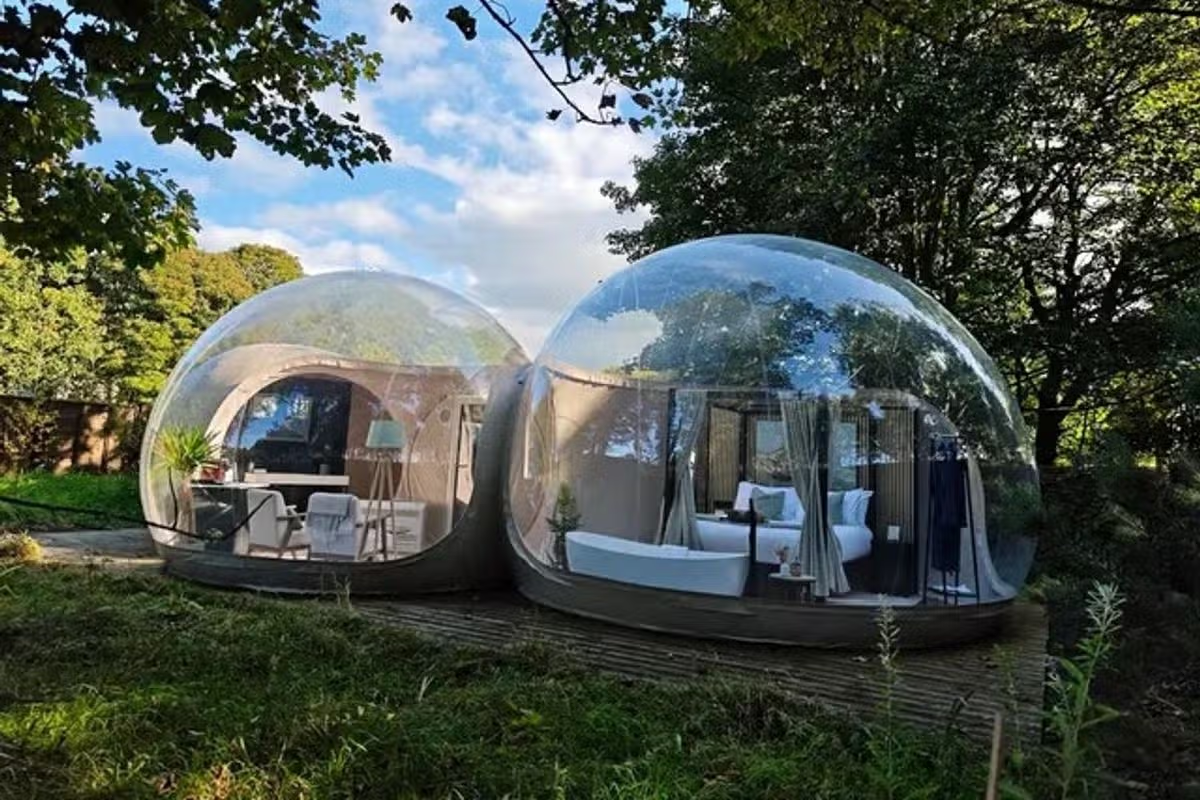
There are countless wanderlusty clips of people twirling around in large inflatable dome tents that look as if they’ve been blown out by a giant with an oversized pot of bubbles. They are striking, beautiful structures, standing three or four metres high, often on top of rolling hills or in the middle of woodland.
But to my eyes, there is also something a little insubstantial, let alone gimmicky, about the translucent tents that had left me wondering if they were more Temu yurt than Glastonbury tipi. So when I visited Portstewart in Northern Ireland at the beginning of this week, and was given the opportunity to stay in a bubble of my own, I was intrigued and a little skeptical.
The bubbles in question are set up on the grounds of the Cromore House, built by the town’s founder John Cromie back in 1776. From the outside at least, the considerable property appears to be empty today, having recently ceased operating as a care home. If anything, the lack of movement at the grand house was a benefit. For the duration of my trip, I didn’t see a soul, which left me feeling cut off from the world in exactly the right way.
Do you have a travel story to share? Email webtravel@reachplc.com
The outside
With the lockbox keys, I let myself into a private, wood-fenced area with trees lining the perimeter and a dome in the centre. “Won’t they see you naked?” my wife had asked when I explained that the accommodation walls were completely see-through. Happily, ‘they’ may as well not have existed, so private and snugly tucked away are the bubbles.
The location is perfect. A 40-minute walk out through the woods takes you to the highly rated Portstewart Arms, where perfect pints of Guinness go for £5, or you can stay on-site and enjoy a steam in the communal sauna.
The inside
Inside the bubbles is where the action really is. On a brisk October day, I was relieved to find the dome warmed to a very snug 22 °C thanks to a ground-source heat pump. My particular accommodation, the McDonnell Suite (named after a former estate owner), consisted of three domes squashed together.
One is occupied by the shower and toilet, which are wisely hidden from the rest of the dome by a partition wall and from the outside world by some tastefully opaque section of dome. It comes complete with an information-rich smart tablet and a high-tech touchscreen mirror.
The central bubble stands in for the living room. A low coffee table sits between two armchairs, a comfortable spot for reading. There’s also a tea and coffee area with a Nespresso machine and a fridge stocked with a breakfast hamper from Chestnutt’s Farm in Portrush. As in Covid, there is a joy in the isolation that comes with bubbles. Instead of trooping over to a breakfast buffet, Cromore Retreat guests are given everything they need for a solitary and delicious start to the day: soda bread, strawberry jam, granola, absurdly creamy butter, and a little bottle of particularly thick milk.
Hungry after an afternoon’s surfing, I ripped this open a good 14 hours early and tucked in, in the third and final wing, the bedroom. Here you will find a wide four-posted bed with curtains around the side but no roof, allowing you to wall yourself in and watch the stars twinkling through the tree canopy above.
At the end of the bed is a large standalone tub in which I ate my way through the breakfast box while enjoying a long, needlessly indulgent soak.
The final feature, and arguably the stand-out, is the private hot tub that sits outside the dome. To my shame, I did not bubble in it, forgoing the ultimate indulgence of a solo jacuzzi on a Monday evening in favour of a second bath and then a quite flawless night’s sleep.
The verdict
I was entirely wrong. There is nothing gimmicky or insubstantial about these see-through domes. They are pure, indulgent, slightly silly fun, right until you check out and step into the bubble-bursting Northern Irish drizzle.
Book it
Stays cost from £235 a night, with breakfast hampers costing an additional £20. Go to cromoreretreat.com/book
Rust red and burnt sienna speckle the green mountain rising from Lake Iseo. Golden autumn sunlight shimmers on the water. Monte Isola, Italy’s largest lake island, is a peak of sheer cliffs and dense forest, dotted with old fishing hamlets and hillside villages, each as pretty as the terraced villas of Lake Como and Garda, but with far fewer visitors. I arrive at the small port town of Peschiera Maraglio – where striped wooden boats jut from the water like the gondolas of Venice – on a ferry from Sulzano, a five-minute hop across the water.
“Only three people on the island are allowed to own a car: the priest, the doctor and the mayor,” says Chiara, my tour guide from Brescia. Residents can zip up and down the steep island roads on mopeds, and a small fleet of van-sized buses trundle around throughout the day, but nearly all cars are forbidden and visitors have to explore on foot or bike.
Even bikes are banned from boats at the weekend. Not that it matters: the harbour front is lined with bike rentals (from €4 an hour for a standard bike). I’m normally a nervous cyclist, but car-free roads raise my confidence. Plus, most other visitors have the telltale front-wheel wobble of novice riders. This isn’t the place for Lycra and personal bests; the smooth-as-silk, quiet roads are for slow pedalling, and neck swivelling to take in another gorgeous view of Lake Iseo.
An aerial view of Lake Iseo with Monte Isola
The circular lakeside route winds past olive groves tumbling to the shore. I thought I’d need base layers and gloves this far into autumn, but I’m in shorts and a T-shirt and already working up a sweat in 24C sunshine. I pedal through the lakeside hamlet of Sensole in the island’s south-west and stop in Menzino, just along the shore. There’s a cafe-bar catering to cyclists, so I fuel up with an espresso con lake view.
The view from the western side of the island is somewhat marred by a huge concrete factory on the mainland, so I keep my head down on the pedal to Siviano, the island’s capital. The shambling streets are sleepy; the stacked skyline of orange, lemon and magnolia villas is punctuated by the looming facade of Santi Faustino e Giovita church and a medieval stone tower. Monte Isola has been inhabited since the Roman era. Venetian rule in the 15th and 16th centuries left the main towns resembling those on Garda and Como: hillside terraces of wooden-shuttered pastel villas. In the late 18th century, Monte Isola found its main industry: net making. At Retificio La Rete Srl, a small shop and net factoryat Siviano’s port, fishing nets have been handwoven for centuries, along with nets for basketball hoops, football goals, shopping bags and hammocks.
At the northern tip of the island, I get the best views of Lake Iseo’s craggiest mountains. The south of the lake is chalk-white bell towers against gently undulating hills, draped in franciacorta vineyards. The north is where jagged peaks scrape the sky, plummeting to the emerald-green lake water. Just off the shore, a speck of an island (Isola di Loreto) is topped with a grand, castle-like building, which Chiara says is privately owned. A flotilla of kayakers from Marone make their way towards the private dock, slipping across the glass-still water.
In Carzano, I pause to admire thepink-and-white facade of San Giovanni Battista church, before cycling along the more functional stretch of road along the eastern shore. The traffic-free spell is broken by an old Fiat Punto, apologetically crawling along the road. Maybe the driver is the doctor or priest.
I complete my circle back in Peschiera Maraglio, where a late lunch of lake fish awaits at La Foresta restaurant. To begin, pickled tench so vinegary it makes my mouth water and a chub carpaccio that tastes like fresh lake water; followed by the island staple of dried, salted sardinas on grilled polenta. “Sardina is not a sardine; it’s actually a type of shad fish,” Chiara explains. “In the middle ages, when Monte Isola had to pay tax to Venice, they didn’t understand how money worked, so they paid in salted sardinas instead.”
Fish drying in Peschiera Maraglio, Lago d’Iseo. Photograph: Matthias Scholz/Alamy
As the last ferries leave for the evening, it feels as if I have Peschiera Maraglio to myself. Accommodation is private holiday apartments or restaurants with rooms. At Decio, a modern bistro dominates the ground floor, with a handful of sleek bedrooms above. The glass front shows off an uninterrupted lake view and the room is bathed in orange light at sunset. I spend the evening perched on a stool outside L’Isola dei Sapori, a no-frills alfresco spot where sparkling franciacorta wine is perfectly chilled, and snacks of local salami, olives and fish dishes combine for a light dinner.
The next day, I forgo my bike and lace up my hiking boots. The steep trail to the top of the island begins with the enclosed cobbled streets of Peschiera Maraglio and wends into thick chestnut forest. I pocket a particularly beefy conker, unable to resist the childhood urge for a blinder. My legs start to burn against the gradient – the trail is 450 metres of climbing. Rocks and twisting roots burst through the forest path and there’s a sheer drop to one side, but the glimpses of Lake Iseo between the trees are worth every wheeze.
Santuario della Madonna della Ceriola chapel on the island of Monte Isola in Lake Iseo. Photograph: Image Professionals/Alamy
After an hour, the trees thin out and I emerge at Santuario della Madonna della Ceriola. The striking white sanctuary was built in the 13th century, on the remains of a pagan temple and early Christian chapels. A vast golden altar and detailed frescoes adorn the interior, but it’s the panoramic view outside that really makes the hike worthwhile. The ferry to Sulzano is a toy boat, leaving a white tail of wake.
From up high, I see that autumn colours are already creeping into the forest. I wipe the sweat from my eyes. This view is only going to get prettier as the season evolves, and the prize conkers are yet to fall.
The trip was arranged by Visit Brescia. Bike rental starts at €4 an hour. The ferry from Sulzano to Monte Isola is €2.60 each way. Trains run from Brescia to Sulzano from €4.10. Rooms at Deciostart at €90 B&B
ONE coastal road in Wales which is nicknamed Millionaire’s Row has been compared to the Hamptons in New York.
The houses on the rocky headland have epic sea views – but it’s also right next to one of the cheapest seaside towns where you can book a room for less than £20.
Marine Drive on Great Orme is nicknamed ‘Millionaire’s Row’ and the ‘Hamptons of Wales’Credit: AlamyThe road is minutes away from Llandudno which is one of the country’s cheapest coastal spotsCredit: Alamy
Marine Drive on Great Orme, which is a headland on the north coast of Wales, and it’s considered one of the country’s most expensive streets.
Currently, a home called Plas Craig is on sale for £2.5million – perched high up on the cliff the five-bedroom house has incredible views of the coastline.
Sign up for the Travel newsletter
Thank you!
The Hamptons is a celebrity hotspot where stars like Beyonce and Jay-Z, and Sarah Jessica Parker and Matthew Broderick own homes.
While Great Orme isn’t home to any celebrities (that we know of) it was recently visited by Sigourney Weaver and Miles Teller to film a new movie called The Gorge.