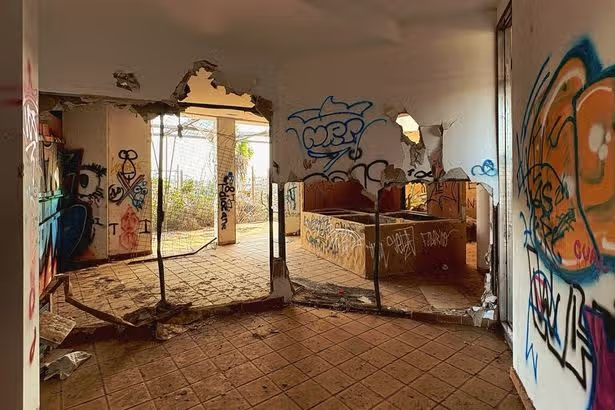
The Hotel Clark has been throwing its stately shadow across Hill Street since 1914, first as a fancy lodging in the formative years of downtown Los Angeles, then as a last-resort residential hotel for the aged and desperate, then as a vast, lifeless structure between Grand Central Market and Pershing Square (now Biddy Mason Park). The 11-story hotel hadn’t seen a paying guest for more than 30 years.
That is, until now.
Last month, downtown historian Nathan Marsak was at Angels Flight when, as he recalls, “A guy comes up and says, ‘You like the Clark? I just had drinks there.’ And he slaps his receipt down. And I lost my damn mind.”
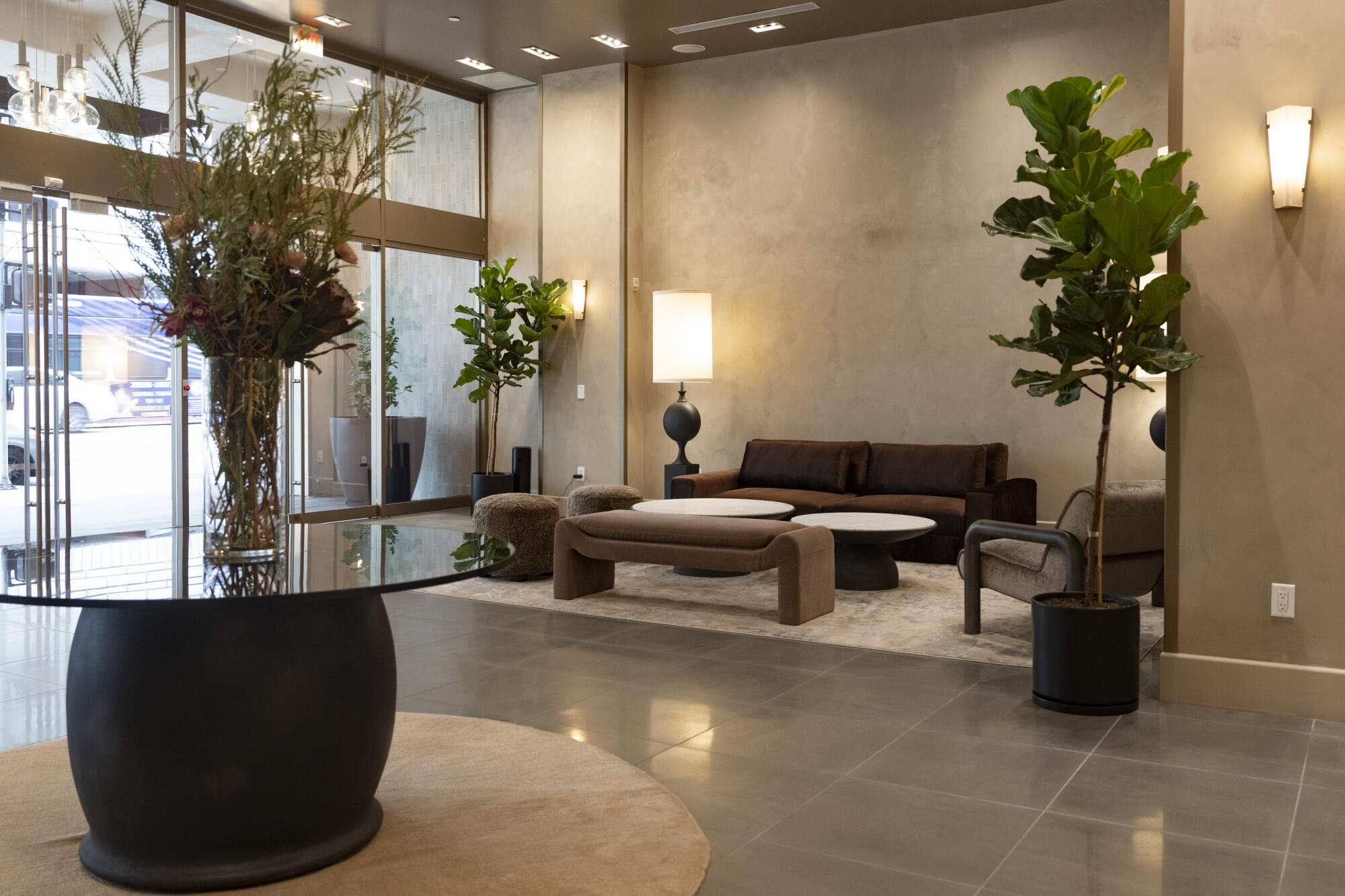
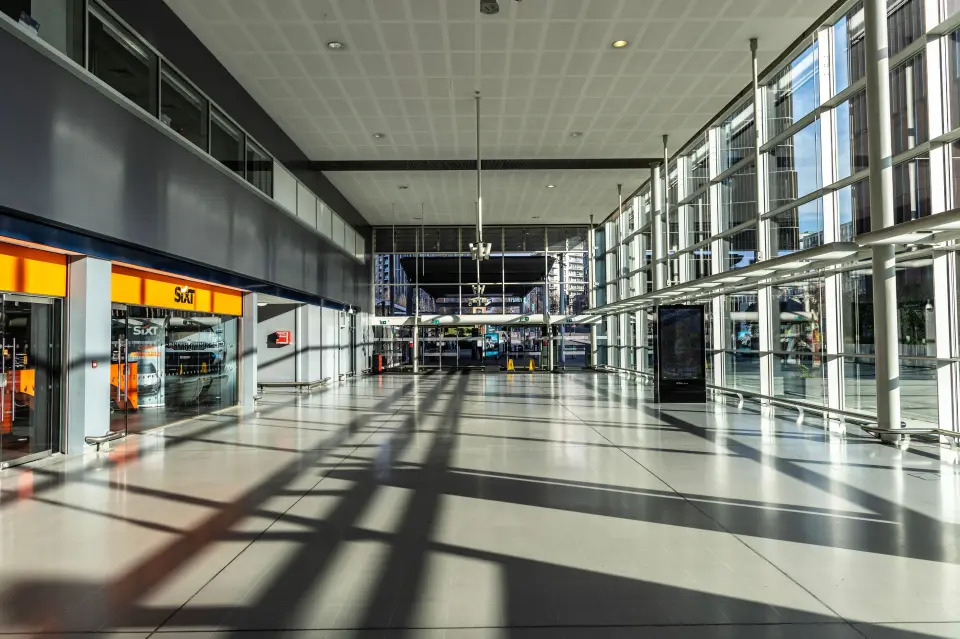
The lobby inside Hotel Clark.
(Kayla Bartkowski / Los Angeles Times)
Marsak, who admits to “a fetish for old, lost Los Angeles,” once called the Beaux-Arts hotel a “great gray monument to grinding attrition.” Since the 1990s, Marsak has kept watch on the Clark, often labeled a “zombie building” because of its long idleness. Marsak included it in his 2002 book “Los Angeles Neon,” and has looked down upon it from his part-time gig taking tickets atop the Angels Flight Railway on Bunker Hill.
In the downtown community, there had been rumors of a reopening over the years, but that seemed less likely as time went on. Kim Cooper, a close observer of downtown politics and co-owner of Esotouric tours, said that after a while, it seemed that the hotel’s owner, the Chetrit Group, “just locked the door.”
To see that structure “so dilapidated and dirty and covered in bird droppings and decades of grime, it broke my heart,” Marsak said. Still, “as long as they didn’t tear it down, there was always hope.”
A ‘zombie building’ awakes
When he and relatives bought the hotel 27 years ago, owner Michel Attias of the Chetrit Group said people assumed they would flip the building.
“I guess they know by now that’s not the case,” he said. “Many of those people have left town by now.”
Michel Attias at the Hotel Clark.
(Kayla Bartkowski / Los Angeles Times)
Attias stood in the hotel lobby, whose design leans toward gray, black, white, earth tones and chrome. Guest rooms include zebra-print wallpaper and faux alligator-skin panels.
“We wanted chic modern but also comfortable and warm,” said Attias, noting that new artworks and rugs are still arriving. A “luxury sports bar” is due to open by Super Bowl Sunday. As of Oct. 21, general manager Adrienne Craig said, about 120 of its guest rooms were ready to rent, with others soon to follow. Rates start at about $200 nightly.
There have been at least three near-openings during his firm’s ownership, Attias acknowledged. But now, he said, it’s the right moment.
“We have a lot coming,” he said. “We have the Olympics. Downtown is starting to move again. I’m very, very confident that downtown is going to get back on its feet.”
Members of the Chetrit family, based in New York, hold extensive real estate through multiple companies, some of which have suffered legal and financial troubles in the last two years. In Los Angeles, the Chetrit Group also owns the long-idle Trinity Auditorium, also known as the Embassy Auditorium and Embassy Hotel. Also a 1914 Beaux-Arts building, it includes about 180 guest rooms along with an 1,800-seat performance space. Attias said he hopes to open the Trinity Auditorium before the Olympics.
“We’re not done,” Attias said.
Added Craig: “Hotel Clark is amazing. Trinity is out of this world.”
Vintage postcards and photographs are from the collection of historian Nathan Marsak.
(Courtesy of Nathan Marsak)
The Clark’s rise, fall and long slumber
Look closely at the Clark, including the rooftop neon and the old fire escapes with the initials “CH” in ironwork (for Clark Hotel), and you may catch hints of its tangled history, from early opulence to urban decay, international intrigue and municipal dysfunction.
Eli P. Clark made big money as a railway pioneer in Los Angeles and beyond. But by 1914 he had moved on to other investments. He built the Clark Hotel with 555 rooms, each with a private bath (a notable luxury at the time) and a bold sign outside proclaiming its “absolutely fireproof” construction.
The building’s rooftop neon signage was apparently added a few decades later, along with the rounded letters that spell the hotel’s name and run vertically down one corner of the building. Dozens of vintage photos of the Clark’s ballrooms, restaurants, ashtrays, room keys, menus, postcards, matchbooks, coat hangers and candleholders are visible at BunkerHillLos Angeles.com, having been gathered by Marsak.
A mosaic by the pool inside Hotel Clark.
(Kayla Bartkowski / Los Angeles Times)
But somewhere in the middle decades of the 20th century, as investors began to look away from downtown, the Clark hit the skids. In a 1975 classified ad in the L.A. Times, the Clark offered rooms at $75-$95 monthly, including “special waterbed suites.”
By the 1980s, the Clark had become a residence of last resort, housing many seniors and others on limited incomes. The nearby Rosslyn (built in 1914, now a mix of low-income and market-rate apartments) and Hotel Cecil (built 1924, now low-income and supportive housing) followed similar paths.
The pool inside Hotel Clark.
(Kayla Bartkowski / Los Angeles Times)
By 1989, the Clark had been acquired by May Wah International Enterprises, which was rooted in China and associated with the Chinese government, Attias said. May Wah vowed to revamp the building with a “friendship store” to market Chinese imports and hotel above that might rival the Biltmore. But first May Wah wanted the old tenants out. Twenty of them filed suit against May Wah, saying they were subjected to spells without heat or water, and won a $1.7-million settlement. But by 1992, May Wah had succeeded in evicting the last two tenants.
By 1999, when May Wah sold it to the Chetrit family, the building was empty, its historic interiors rearranged in anticipation of the Chinese hotel that never opened. (During this period, Attias said, the building’s guest-room count changed from 555 to 348.) As Attias tells the story, the hotel was close to opening in 2008 when that year’s financial crisis hit. It came close again in 2013-14, when the Chetrit family invested in another renovation but ran into opposition from the hospitality workers union Unite Here Local 11 and L.A. City Councilman José Huizar.
“José Huizar,” said Attias dryly. “We know where he is now.” (Huizar, who served on the city council until 2020, pleaded guilty to corruption charges in 2023 and was sentenced to 13 years in federal prison.)
Though the hotel’s owners eventually got the city permissions they needed, Attias said, a partnership with other hoteliers dissolved and the Clark went to the back burner again, as did the Embassy Auditorium. Another near-opening followed in 2019.
Attias said the family decided in 2025 to finally open the Clark, later retaining OTH Hotels Resorts to manage it.
And now, said Attias, “we’re here.”
‘Nowhere to go but up’
In mid-September, the Clark had begun a quiet, soft reopening. Now configured with 348 guest rooms, it includes a Mediterranean restaurant called Votana; a cocktail lounge; a 17-by-29-foot courtyard pool, poolside bar and (in homage to Chetrit family history) a pair of Moroccan tile fountains.
In addition, a ballroom with space for 600 is due to be completed soon. Craig estimated that the business, a nonunion shop, employs about 100 people now and will likely reach 200 workers in coming months.
A guest room inside Hotel Clark.
(Kayla Bartkowski / Los Angeles Times)
This rebirth may not comfort those seeking more affordable housing downtown, but for anyone eager to see more legal commerce on Hill Street or more hotel rooms in the run-up to the 2028 Games, it’s progress. This boost in room supply may also encourage travelers who have seen downtown hotel rates jump by more than 10% in the last year. Analytics company CoStar reports that downtown hotels averaged $200-$210 per night from June through September.
“There’s nowhere to go but up,” Craig said. “The possibilities here are endless.”
A few weeks ago, Craig’s team gave Marsak a tour of building (and bought a batch of Angels Flight tickets to distribute among guests. The historian declared himself mostly delighted.
“Having the Clark open, facing Hill Street — which can get rough — is so brave of them,” said Marsak. “I can’t applaud it enough.”
As for the inside and that zebra-print wallpaper, it’s “not what I would have done,” he said. “I believe that Beaux-Arts buildings should be Beaux-Arts inside and out. But you can’t have everything.”
FANCY travelling through Europe in the comfort of your own private cabin rather than a cramped plane? This new sleeper train might be the answer.
Nox Mobility is launching next year as an alternative to short-haul flights – and they’re pretty cheap too.
Nox Mobility is launching a sleeper train service next yearCredit: Nox MobilityThe suites are private for each passengerCredit: Nox Mobility
The sleeper train will launch in March next year with its first journey between Hamburg and Munich with stops in Bremen and Augsburg.
The inaugural run will leave Hamburg at 9.22pm and arrive at 8.14am – there will go in each direction three times per week.
Sign up for the Travel newsletter
Thank you!
Tickets are affordable too with one-way fares starting from €65 (£55).
Rather than regular train carriages, inside will be Nox Suites – a private area for each passenger with a seat that opens into a lounge to work or unwind.
Inside is also a two-metre-long bed, storage, charging ports and a window to gaze out of.
There’s also no restaurant carriage on Nox Mobility, however you can pre-order meals to be served in your cabin and breakfast is available as an optional add-on.
On Nox, children under the age of four are allowed to travel for free with an adult passenger.
It also teased future rooms which are actually private cabins.
The Single Loft has a seat and desk for the day with a bed for during the night.
The Double Loft is the most spacious room with a 170cm wide bed, two seats and a panoramic window to take in the views.
The first route is between Hamburg and Munichnoxmobility.com/enCredit: Nox Mobility
The Double Vista has ‘two seats by day and two beds by night’ in a private room with a full window.
In fact by 2035 it aims to connect 100 European cities.
Thibault Constant, co-founder of Nox said: “Sleeping while a train gets you across Europe is a great concept. But today people have to share their cabins with strangers, beds are tight, and it’s often more expensive than air travel.
“We want to change that and make night trains an essential part of European travel.”
It later hopes to expand its network to the likes of Sweden and ItalyCredit: Nox Mobility
THERE are waterparks all over the world, but this one has just been crowned one of the best – and it’s just hours from the UK.
Aquashow Water Park in Portugal has been crowned Europe’s Leading Water Park 2026 at the World Travel Awards.
Aquashow Water Park in Portugal is Europe’s Leading Water Park 2026Credit: Jet2HolidaysIt has a seasonal outdoor complex and indoor swimming poolsCredit: Aquashow Park
The waterpark has a huge seasonal outdoor pool complex which will reopen in May 2027.
It has a splash park called Aqualandia with slides and tipping buckets for little ones – but there’s plenty of high thrills rides too.
Sign up for the Travel newsletter
Thank you!
The Flash Coaster is one of the biggest rides in the park and it’s quick too at 62mph.
There are also racing slides, flumes, a wave pool and for those brave enough, try out Free Fall.
It’s the biggest free fall jump in Europe and the only one in the Algarve; there are two slides, each 32 metres high and 129 metres long.
Outside are food stalls serving up burgers, hot dogs, salads, sandwiches, ice cream, pastries and drinks.
Outdoor waterpark tickets for those between 11-64 range from €34 – €38 (£29-£32), junior and senior tickets start from €25 (£21).
When it’s the off-season and it’s a little cooler in the Algarve, make the most of the indoor pools.
There are different kinds to choose from including its wave pool, children’s pool, relax pool and spa.
Then there’s the adventure pool with a climbing wall and a circuit of suspended rings over the water.
There are large flumes and smaller sides for childrenCredit: Aquashow Park
Adventure Island is where kids can splash about with smaller slides, and water features.
There are also larger and faster flumes and racing slides too.
It’s not all water activities, the Sky Challenge is a high-ropes course, and there’s an indoor playground with soft play, trampolines and climbing walls.
Tickets for a three- hour sessions at the indoor waterpark start from €25 (£21) for children between 6-12. For adults aged 13-64 tickets are €35 (£29).
The waterpark even has rollercoasters like The FlashCredit: Aquashow ParkAside from waterplay there’s soft play and high-ropes coursesCredit: Aquashow Park
For anyone wanting to visit, the waterpark has its own on-site hotel – all its rooms have air conditioning, flat-screen TVs, and free Wi-Fi.
You’ll also find a restaurant, bar and outdoor terrace.
A family of up to six can stay for two nights at the hotel from €884.75 (£740) including breakfast.
The hotel is 2.5 miles from the Quarteira resort centre, where you’ll find shops and restaurants – the nearest beach is about 2.7 miles away.
For more on the World Travel Awards, this theme park with no rides or rollercoasters was named the best in Europe.
And these are the world’s best hotels from beachfront island resorts to mega theme park stays, and there are two in the UK.
Birmingham and West Midlands Wightwick Manor Gardens Clent Hills Coventry Charterhouse
Cambridgeshire Peckover House and Garden – closed on Sunday 25th, reopens Monday 26th
Cornwall Lanhyrdrock Trelissick – also closed on Saturday 24th Cotehele Godolphin – also closed on Saturday 24th Trerice – also closed on Saturday 24th Trengwainton – also closed on Saturday 24th, Sunday 25th and Monday 26th Glendurgan Garden – closed until Saturday 24th Pentire – cafe and toilets are closed today
Devon Killerton – The Parkland, Garden, Chapel and Chapel Grounds are closed today. The house, cafés and shop are open. Arlington Court and the National Trust Carriage Museum – also closed on Saturday 24th Castle Drogo Knightshayes Coleton Fishacre Saltram Buckland Abbey – also closed on Saturday 24th Greenway Lydford Gorge A la Ronde Finch Foundry
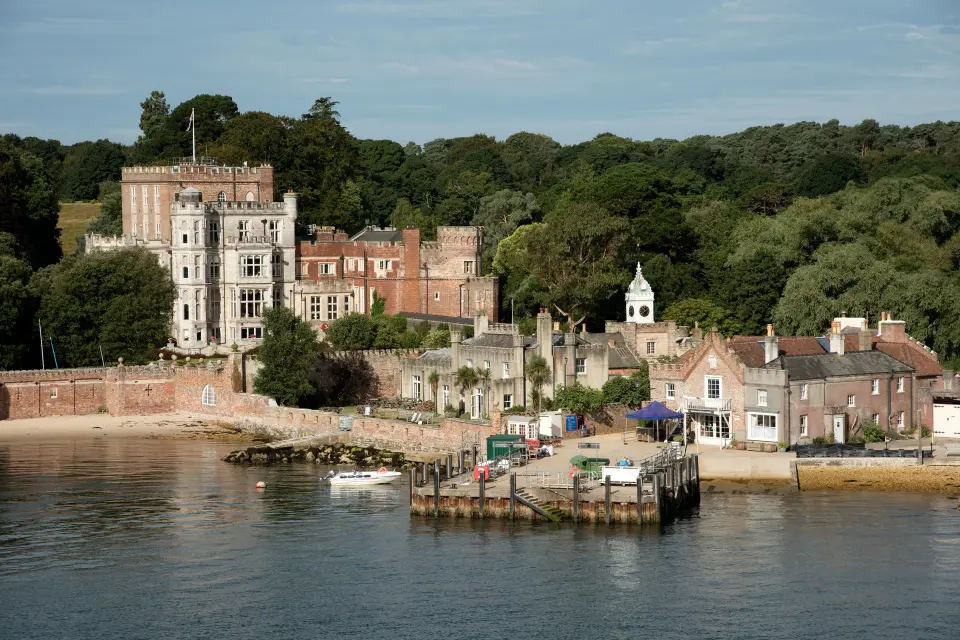
Dorset Kingston Lacy – The Woodland Walk is closed but the house, garden, shop and cafe are open. The Pikachu Art Adventure Trail will be affected by the woodland closure. Corfe Castle Brownsea Island – also closed on Saturday 24th
Essex, Bedfordshire and Hertfordshire Hatfield Forest Paycocke’s House and Garden – also closed on Sunday 25th
Gloucestershire and the Cotswalds Hidcote Woodchester Park – the Trust10 is also cancelled on Sunday 25th Snowshill Manor and Garden
Hampshire Mottisfont The Vyne Hinton Ampner Sandham Memorial Chapel
Lake District Hill Top and Hawkshead – closed on Sunday 25th Aira Force and Gowbarrow Park – closed on Sunday 25th Historic Steam Yacht Gondola- Sailing is cancelled on Saturday 24th
Leicestershire and Northamptonshire Lyveden
Liverpool and Lancashire Speke Hall – also closed on Saturday 24th and Sunday 25th
London Ham House and Garden Osterley Park and House Morden Hall Park – also closed on Saturday 24th, Sunday 25th and Monday 26th Runnymede and Ankerwycke
North East Wallington – closed until 11am on Monday 26th
Oxfordshire Stowe Gardens – the gardens are closed but New Inn, including the café and shop, are open. Hughenden Basildon Park Cliveden
The Peak District and Derbyshire Kedleston Hall – closed from 3pm today. The hall is open 11am to 4pm daily with last entry at 3.15pm
Shropshire and Staffordshire – Attingham Park – The Mile Walk, Walled Garden, Field of Play and Deer Park are closed but the Mansion and Stables (cafe, shop, bookshop) are open Ironbridge Gorge – The Miners walk, Canal Side and the Adventure Playground are closed and will reopen on Monday 26th. All other areas remain open as normal Shugborough Estate Wightwick Manor and Gardens Dudmaston Estate Comer Woods – The Cafe In Comer and visitor facilities are closed
Somerset Montacute House Dunster Castle and Watermill Barrington Court Lytes Cary Manor Fyne Court – also closed on Saturday 24th Prior Park Landscape Garden Brean Down
Suffolk Sutton Hoo – closing at 4pm on Friday 23, Saturday 24 and Sunday 25 October. Tales by Torchlight is cancelled on 23 and 24. Ticket holders have been contacted via email and will be automatically refunded. Flatford
Surrey Polesden Lacey Hatchlands Park Winkworth Arboretum Box Hill Claremont Landscape Garden Runnymede and Ankerwycke
Sussex Nymans Sheffield Park and Garden Petworth Bodiam Castle Standen House and Garden Bateman’s Birling Gap and the Seven Sisters – Café, Shop & toilets will be closed on Friday 23rd October Alfriston Clergy House – closed from 3.30pm today Monk’s House
Warwickshire Charlecote Park – some areas closed but The House, Wood Yard Cafe and Service Courtyard all remain open Packwood House – The Mystical and Magical Woodland Trail is closed and other partial closures are in place across the site Baddesley Clinton – some areas of the site are partially closed Upton House and Gardens Coventry Charterhouse – The garden is closed all day but the house and café remain open
Wiltshire Stourhead Mompesson House The Courts Garden
Worcestshire and Herefordshire
Berrington Hall Brockhampton Croft Castle and Parkland The Weir Garden Croome Hanbury Hall Tyntesfield
Yorkshrie Fountains Abbey and Studley Royal Water Garden – Fountains by Floodlight is cancelled on Saturday evening and the whole estate will be closed on Sunday 25th Goddards – closed on Saturday 24th and Sunday 25th Treasurer’s House, York – the gardens at Treasurer’s House will be closed on Saturday 24th and Sunday 25th. The house will remain open as usual, by guided tour only
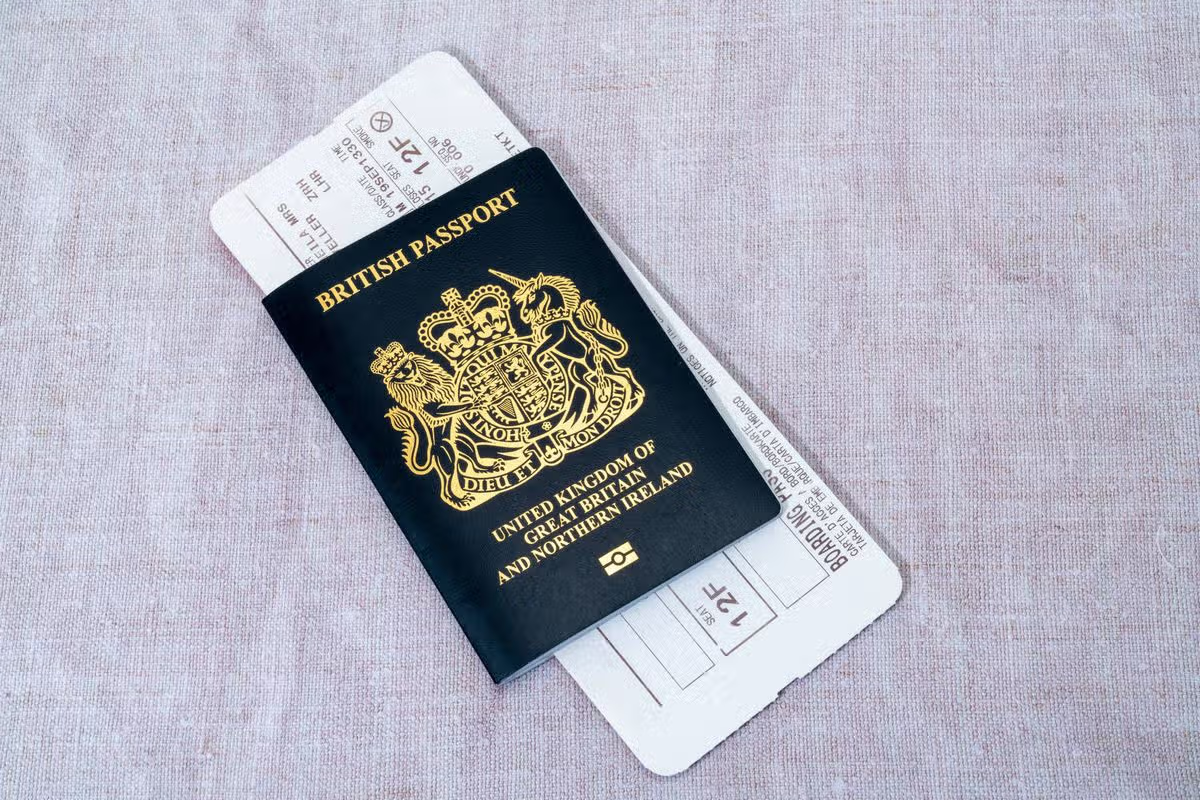
HM Passport Office is reminding people of the rule
14:08, 23 Oct 2026Updated 14:24, 23 Oct 2026
HMPO issued a social media alert on Friday(Image: clubfoto via Getty Images)
HM Passport Office has moved to explain a two-year rule some people may not know about.
Whether you’re applying for a new passport for a child or an adult, it’s likely you’ll need someone to confirm your identity. This is also the case if you’re replacing a lost, stolen, or damaged passport, renewing a child’s passport, or if your appearance has changed significantly. In a new alert on X, formerly Twitter, HMPO moved to explain the rules for ‘referees’.
Part of the post clarifies that “a referee must have known the person applying for at least 2 years and confirm their identity”. Additional guidance on GOV.UK outlines who is eligible to verify a person’s identity.
To qualify, a referee must be 18 years of age or older, reside in the UK, and currently hold a British or Irish passport. They must also have been acquainted with the applicant for a minimum of two years (this refers to the adult submitting the application if the passport is for a child under 16), and must know the applicant as a friend, neighbour or colleague, rather than someone they know purely in a professional capacity.
Content cannot be displayed without consent
Referees must also be employed in, or retired from, a “recognised profession”. These include:
accountant
airline pilot
articled clerk of a limited company
assurance agent of recognised company
bank or building society official
barrister
chairman or director of a limited company
chiropodist
commissioner for oaths
councillor, for example local or county
civil servant (permanent)
dentist
director, manager or personnel officer of a VAT-registered company
engineer with professional qualifications
financial services intermediary, for example a stockbroker or insurance broker
fire service official
funeral director
insurance agent (full time) of a recognised company
journalist
Justice of the Peace
legal secretary (fellow or associate member of the Institute of Legal Secretaries and PAs)
licensee of a public house
local government officer
manager or personnel officer of a limited company
member, associate or fellow of a professional body
Member of Parliament
Merchant Navy officer
minister of a recognised religion (including Christian Science)
nurse (RGN or RMN)
officer of the armed services
optician
paralegal (certified paralegal, qualified paralegal or associate member of the Institute of Paralegals)
person with honours, for example an OBE or MBE
pharmacist
photographer (professional)
police officer
Post Office official
president or secretary of a recognised organisation
Salvation Army officer
social worker
solicitor
surveyor
teacher or lecturer
trade union officer
travel agent (qualified)
valuer or auctioneer (fellow or associate members of the incorporated society)
Warrant Officers and Chief Petty Officers
You cannot confirm someone’s identity if:
you’re related by birth or marriage
you’re in a relationship with them or live together
you work for HM Passport Office
you work for UK Visas and Immigration (UKVI) on British citizenship or right of abode applications
you’re a doctor – unless you know the person who has asked you well (for example, you’re a good friend)
The Sleep Charity and Premier Inn share expert tips to help children sleep easily in unfamiliar environments this half term, keeping their bedtime routines smooth while away from home.
13:03, 23 Oct 2026Updated 13:04, 23 Oct 2026
Heading to a hotel this half term? Try these tricks to get little ones to sleep (Image: Getty Images/iStockphoto)
It can be tricky to get your little ones off to sleep when they’re away from home. Staying over in a new environment is exciting, but it’s also a change from their nightly routine, and that can make it difficult for them to drift off. So, we decided to ask the experts!
Here, The Sleep Charity – in partnership with Premier Inn – have given some top bedtime tips to help kids nod off in no time, wherever they are. As a charity that works extensively with families, they know the importance of a great night’s sleep.
Favourite teddy: Kids will always want something familiar in a new environment, so be sure to pack their favourite toy or blanket to help them feel comfortable and at home.
Bedtime routine: Although you won’t be able to do everything like you would at home, try to include an element of your usual routine, such as reading a bedtime story.
Colouring in: Fine motor skill activities help kids relax, so take advantage of the colouring packs in hotel restaurants like to get a head-start on bedtime!
No TV: Screens interfere with the production of melatonin, a hormone that makes us sleepy. Switching off the TV an hour before bedtime can really help little ones nod off.
Bath time: A warm bath 30 minutes before bedtime can be very effective in helping kids wind down and getting them off to sleep.
Repetition: Staying away from home is exciting for kids, so you’ll need to be clear and firm with them when it’s time for bed. Try a calming phrase like ‘It’s night-time, go to sleep’ and repeat it.
Dim the lights: Switch off a few lights and make use of the Premier Inn blackout curtains to help with that all-important melatonin production.
Mealtimes: Plan your dinner time! Try not to eat so early that the kids are hungry by bedtime or so late that they’re uncomfortably full.
Avoid stimulants: Caffeine and sugar play havoc with sleep so in the evenings, try to steer little ones away from sugary desserts and opt for fruit and water instead.
*From breakfast to dinner, kids eat free at Premier Inn this autumn with a paying adult. Choose from over 600 hotel locations across the UK. Little ones can enjoy delicious and nutritious dishes like our 10-Veg Tomato Pasta and Oven Baked Poppin’ Chicken – and sweet treats like a Fresh Fruit Salad, Pancakes and more.
Valid at selected Premier Inn restaurants until 1st November, for participating restaurants see HERE
IT might seem too early to think about the New Year, but if you want to ring in 2027 with style, you’ll need to act fast.
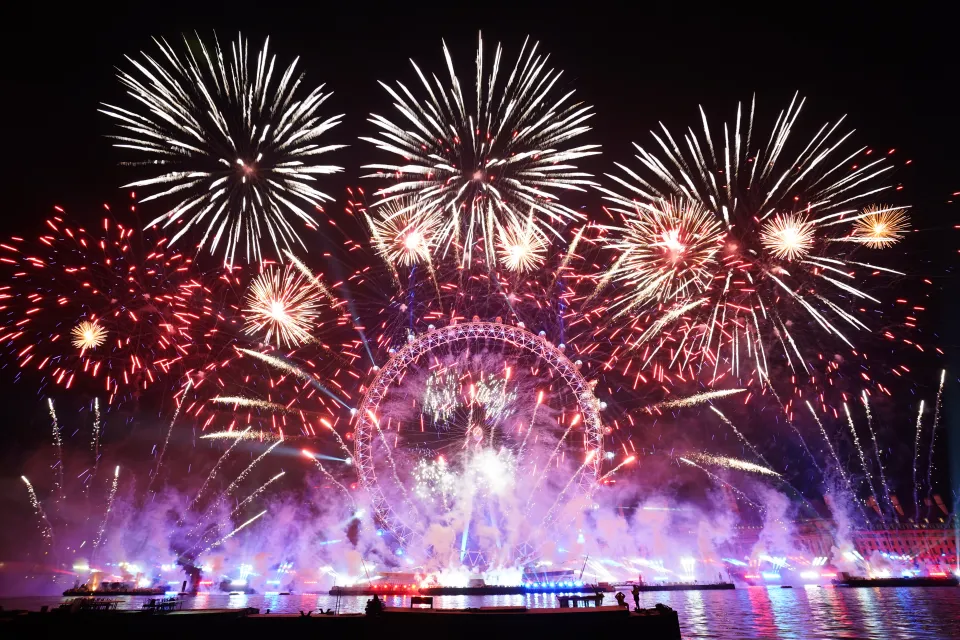
Tickets for the spectacular London firework display go on sale today – and they’re bound to sell out quickly.
See in the New Year at one of the most spectacular firework displays in the worldCredit: PATickets go on sale today priced between £20 and £55Credit: EPA
Tickets for the show will be released in two batches with the first on sale midday today.
Tickets are priced between £20 to £55 (excluding the booking fee) and one person can buy up to four tickets.
Sign up for the Travel newsletter
Thank you!
The price of tickets depends on the viewing area which is split into different categories.
The category A viewing area includes places like Waterloo Bridge and Westminster Bridge – these tickets are priced at £55.
Meanwhile, Category B is priced at £40, with spots like behind the London Eye and the stretch of Victoria Embankment from Golden Jubilee Footbridge to Temple Avenue.
It also includes accessible areas which is on Albert Embankment.
Anyone who has a London postcode is in luck as locals get a £20 discount.
Last year around 100,000 ticketholders attended the event and around 10million people watched on TV.
If you miss out on the first batch of tickets, a second lot will be released later on.
However a date for this hasn’t been announced yet.
For more information and to buy tickets, head here.
What’s it like to go to London’s NYE fireworks?
Travel Reporter Cyann Fielding reveals that the evening has in store…
“Get your group chat organised now – you can buy up to four tickets each, so if you want more you’ll need a few people online.
“And whatever you do, do not refresh the page – you will lose your place in the queue.
“The NYE fireworks for 2023 were my first and I can’t deny I was impressed.
“There were also no queues and no crowds once in the zone, allowing us to secure a great spot to watch the breathtaking 12-minute display.
“If going, definitely opt for one of the Category A zones – these have the best views of the fireworks, whereas the Category B zones are often interrupted by skyscrapers.
“Make sure you do head there for 8pm as it isn’t the only New Year’s event on, which means the tube is often packed.
“And bear in mind, the station closest to your gate may be closed to manage the flows of people better.
“As for what to wear, you will get warm but do make sure you have layers as the breeze from the river is chilling.
“Don’t worry about taking a chair – you’ll dance as you wait.
“To save some money though, do take some tinnys – small cocktail cans are great as they don’t weigh much or take up too much room in a bag.
“If you get hungry, there are plenty of food stalls around.”
Theme parks attractions are never really finished, especially those intended to be built to last. And so it is with Disneyland’s Indiana Jones Adventure, which officially reopens Friday after a six-week refurbishment. The ride is looking as fresh as it has in years. There were minor changes — more large spiders and other creepy critters were added to one foreboding tunnel — but also some substantial ones designed to increase the attraction’s capacity and reliability.
You’re reading Mr. Todd’s Wild Ride newsletter
Todd Martens’ newsletter delivers news and commentary on the past, present and future of theme parks, right from the theme park capital of the world — Southern California.
By continuing, you agree to our Terms of Service, which include arbitration and a class action waiver. You agree that we and our third-party vendors may collect and use your information, including through cookies, pixels and similar technologies, for the purposes set forth in our Privacy Policy such as personalizing your experience and ads.
While some ride refurbishment closures result in very noticeable changes to the guest — for instance, the recent addition of a face-shifting buccaneer on Pirates of the Caribbean, or the temple-shattering projections that were added to Indiana Jones Adventure back in 2023 — other updates are less visible yet enhance the experience, such as helping to eliminate downtime.
That is the case for Indiana Jones Adventure. Behind-the-scenes engineering modifications over the last year have boosted not only the attraction’s reliability, but allowed its capacity to increase by about 125 people per hour. Ultimately, that allows for about 1,000 more guests per day, says Nicholas DiBernardo, an area manager for Attractions Engineering Services and eight-year veteran of the resort.
A yearly rehab of the ride is required, says DiBernardo, in part because it is one of the resort’s most complex, with many moving show elements. To ensure that it continues to meet the theatrical and safety standards required, it may appear to Disneyland regulars that Indiana Jones Adventure receives tune-ups with more regularity than other rides at the resort.
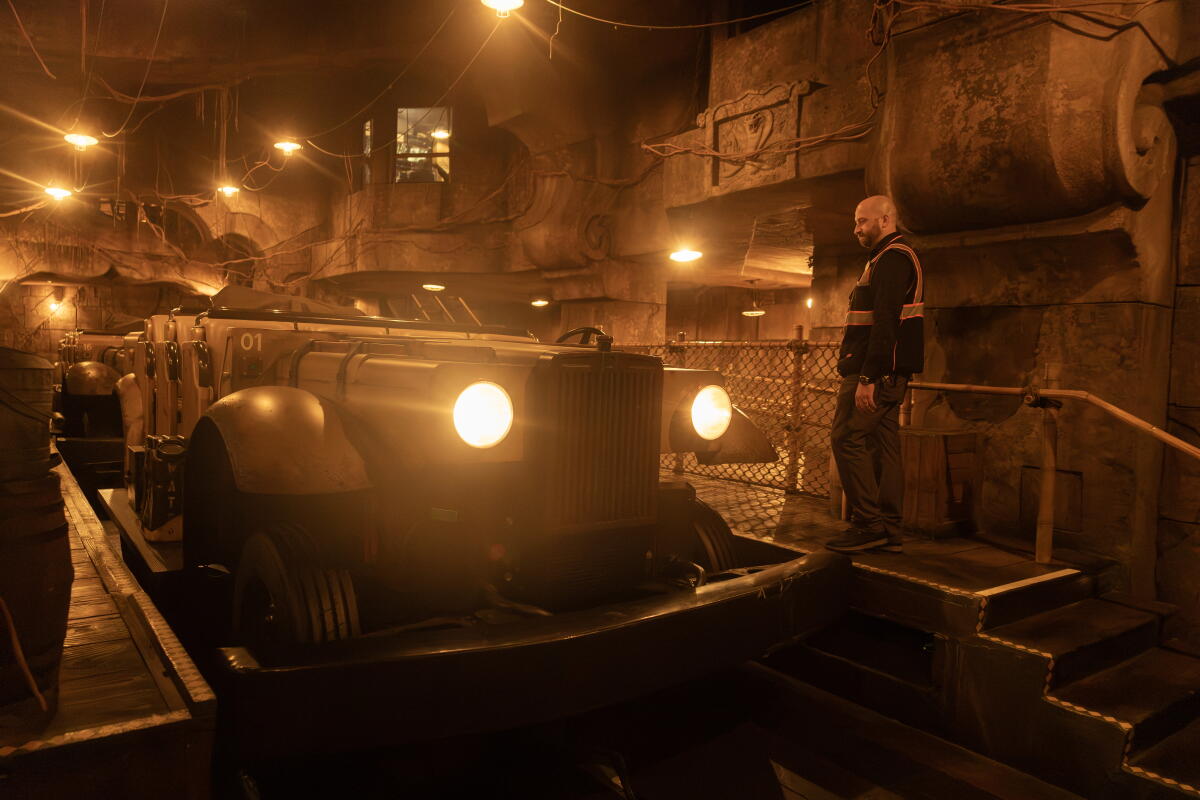
Nicholas DiBernardo surveys the guest load-in area of Indiana Jones Adventure. DiBernardo, an area manager for Attractions Engineering Services, helped oversee the recent refurb.
(Myung J. Chun / Los Angeles Times)
When asked whether that’s the reality, DiBernardo answers: “Yes and no.”
“Every attraction is different,” he says. “Indiana Jones typically has a refurbishment every year just because of the size of the attraction and the amount of work that goes into keeping this attraction up. It all depends on the needs for improving show quality or maintenance reliability.”
An audio-animatronic figure of Indiana Jones, which was disassembled and rebuilt during the recent refurbishment of the attraction.
(Myung J. Chun / Los Angeles Times)
Two key changes were made to the attraction in 2026. The most recent — and the reason for the ride’s downtime this fall — was something of a wishlist item, and that was changing the machinations that drive its first major show scene, the doors that lead guests face-to-face with Mara, the deity within the Temple of the Forbidden Eye that drives the ride’s action. Prior to the refurbishment, the doors were controlled by hydraulic actuators. Now they’re fully electric. In simple terms, DiBernardo says the doors are now easier to maintain, there’s no longer a risk of a hydraulic spill, and they should properly open and close with significantly more dependability.
That may not sound like a sexy ride enhancement, but it’s one that DiBernardo says will ensure Indiana Jones Adventure runs more efficiently. “In the past, when the old actuators would fail, the doors would have to remain open, ruining the guest’s show experience,” he explains. Not just that, but it slowed down the ride, as fewer cars could be dispatched so riders weren’t seeing the vehicle in front of them.
Nicholas DiBernardo gives a tour of Disneyland’s Indiana Jones Adventure, which just completed a six-week tune-up.
(Myung J. Chun / Los Angeles Times)
Elsewhere, DiBernardo says capacity was able to be increased by improving the loading and unloading process, again a change that will be invisible to guests. Essentially, the vehicles park more accurately.
DiBernardo, who works Disneyland’s third shift from 2 a.m. to 11 a.m., says this adjustment, a mix of hardware and software changes, was made over the course of the past year. The problem, oversimplified: Vehicles did not always park in their precise loading and unloading position. Because a theme park attraction needs to operate with extreme exactness to ensure guest safety, DiBernardo says that before this fix, operators would have to send vehicles through the temple sans guests to reset them.
“That was a major win for us,” says the lifelong San Pedro resident. The parking issue was completed in May, and it’s changed the ride’s capacity.
Skulls on Indiana Jones Adventure. The area received a cleaning and a lighting refresh.
(Myung J. Chun / Los Angeles Times)
Of course, a huge cause of downtime for a Disneyland attraction is often largely out of the park’s control. It’s us, the guests, who are the problem.
“Our No. 1 downtime driver is guest items,” DiBernardo says. “Guests will be on the attraction, and they’ll have a large water bottle or a backpack. All the vehicles have a pouch for them to store everything, but if they don’t do that, there’s many twists and turns throughout the ride, and those articles can fly out. We’ll have to stop the ride. Not only are we working on ways we can improve maintenance reliability, we’re also working with our operations to help notify guests to store their items.”
Nicholas DiBernardo, who helped lead the recent refurbishment of Indiana Jones Adventure, walks toward Mara, the deity within the Temple of the Forbidden Eye.
(Myung J. Chun / Los Angeles Times)
To that end, each Indiana Jones Adventure vehicle has been outfitted with new, bigger pouches that should make it easier for riders to dump in their items. All of that should ensure more guests throughout the day can enjoy the attraction, and right now they’ll want to, as all the figures have been dusted, blacklight paint has been reapplied, and the Indiana Jones audio-animatronics have been disassembled and rebuilt.
Walking through the attraction on Thursday, DiBernardo pointed out how all the figures are currently moving with full mobility. The first time we see Indy he’s attempting to force shut a door, one that moves with the figure in front of vibrant animations. Later, he’s hanging over a guest in one of the ride’s grandest illusions, one designed to trick guests into believing the vehicle is reversing (it doesn’t move backward, but rather the walls shift) as a crater of a ball closes in on us.
Walking the track, I noticed many a detail I hadn’t seen on my hundreds of rides on the attraction over the decades. As Indy hovers above us, for instance, his legs and hips subtly shift. Elsewhere in the ride, when a vehicle dips down a hill, it’s actually going down steps. The latter are painted on the track, but DiBernardo notes that over time the cars eventually strip away the paint. I had never seen the stairs. Of course, it’s easy to be distracted by the skull in front of us hovering over a pit of lava, where many of the lights have now been refreshed.
Flames amid a decaying skull on Disneyland’s Indiana Jones Adventure.
(Myung J. Chun / Los Angeles Times)
Indiana Jones Adventure has changed over the years. Some opening day effects are long gone, such as the illusion created by actual shifting doors at the start of the attraction, or visions of tumbling rubble near its beginning. But Indiana Jones Adventure remains one of the park’s most detailed attractions, one in which I’m still discovering artistic minutiae more than 30 years after it opened in 1995. And as the recent refurbishment proves, it’s an attraction that remains an ever-evolving work of art.
“The sky is the limit on what we can also add to this attraction,” DiBernardo teases. But for now, it looks good as new.
Mr. Todd’s Wild Ride comes out every Tuesday, but we occasionally publish special editions (like this one!) when we have breaking theme park news. Make sure you’ve signed up to be the first to know.
A NUMBER of flights to and from a UK airport have been cancelled today as Storm Austen hits the UK.
The country is set to be battered with 80mph winds with the south of England and the Channel Islands set to be affected the most.
Storm Austen brings 80mph winds as well as flight cancellations and delaysCredit: ReutersSouthampton Airport has cancelled a number of flights this morningCredit: AFP
Southampton Airport has cancelled the majority of its flights this morning to destinations like the Channel Islands, Glasgow, Edinburgh and Belfast.
Some of the flights that have been taken off the schedule including the 11.20am flight from Southampton to Alderney and the easyJet flight to Glasgow this afternoon.
Sign up for the Travel newsletter
Thank you!
Guernsey-based airline Aurigny has cancelled all its services this morning due to the weather.
Departures have been cancelled until at least midday and arrivals until 2pm.
The Aurigny spokesperson said: “We recognise how frustrating and disappointing these cancellations will be over the holiday period.
“However, these decisions are never taken lightly, and safety must always come first.”
On its website, travel information explained that ‘all cancelled flights will be eligible for a full refund’ and affected customers will be contacted by the airline.
Some flights from Southampton remain on the schedule for this afternoon including the 12.35pm to Belfast with Aer Lingus and the 2.35pm Loganair flight to Newcastle.
On the Channel Island of Jersey, the airport has cancelled all flights this morning but should restart this afternoon.
Meanwhile, holidaymakers flying from Heathrow, Gatwick, or London City Airport have been advised to check the status of their flight today.
The area where Gatwick is located has a yellow wind warning today with predicted wind speeds of up to 60mph.
Aurigny which serves Guernsey has cancelled all flights this morningCredit: Alamy
This lesser known traditional Christmas market has been crowned the world’s best Christmas market for 2026 with up to 180 stalls
The market is one the cheapest(Image: Getty Images/iStockphoto)
With Christmas fast approaching, a trip to a traditional Christmas market abroad tops many people’s festive wish lists, and there’s one that truly stands out from the rest.
Plenty of people choose a weekend break to soak up the seasonal atmosphere, and this particular destination has just ranked highly in new research carried out by Christmas Tree World, which assessed various markets based on key criteria.
They examined Google searches, December hotel costs, admission charges, number of stalls and access to public transport to ultimately crown the world’s finest Christmas markets for 2026.
Their findings revealed that Nottingham’s Winter Wonderland is ideal for budget-conscious travellers, Dresden’s Striezelmarkt is perfect for families, and Winter Wonders in Brussels serves up the most affordable mulled wine.
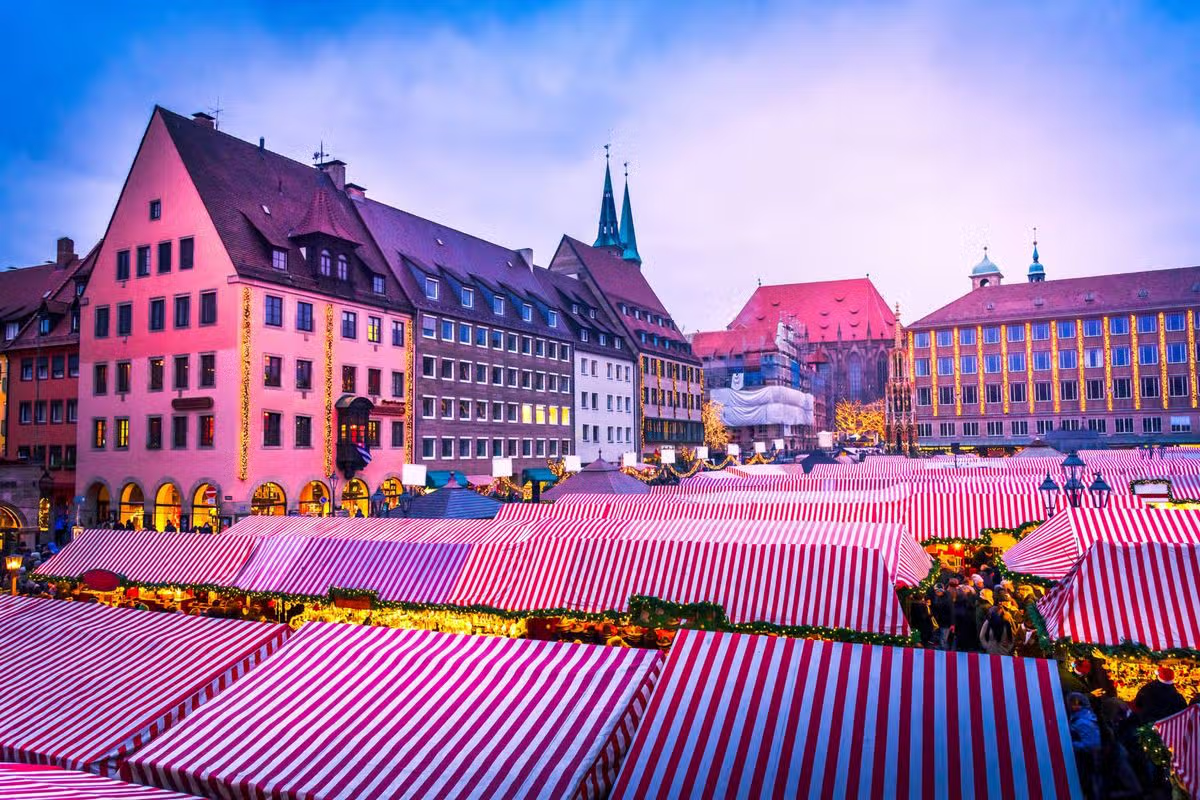
Yet, there could only be one overall champion, and that honour went to the hidden treasure that is Christkindlesmarkt in Nuremberg, Germany.
If any location could stake a convincing claim to wearing the crown as the ultimate Christmas market destination, it would be Nuremberg.
It’s nestled within a picturesque and historic city and provides the ideal traditional escape with reasonable prices, accommodation and excellent value for money.
It achieved an impressive 8.2/10 in the study, as a market that has been running for 398 years and still attracts huge crowds today.
Make sure our latest travel updates always show up at the top of your Google Search by setting us as a Preferred Source Click here to activate or add us as Preferred Source in your Google search settings.
Thanks to its fascinating history and delightful setting, it represents the quintessential traditional German Christmas market many people fantasise about, and with its enormous range of stalls, it certainly delivers. It’s thought to feature around 180 stalls, offering glühwein, bratwurst and the market’s own distinctive Zwetschgenmännle, which are small and adorable decorative figures traditionally crafted using dried prunes.
After paying a visit, one traveller left a review, writing: “The Nuremberg Christmas Market is absolutely magical. The atmosphere is festive and authentic, with beautiful lights, traditional wooden stalls, and a wonderful holiday spirit.
“There is a great variety of local food, mulled wine, and handmade crafts. It can be busy, but it’s well organised and definitely worth the visit. A must-see Christmas market in Germany.”
Another shared their experience, saying: “Visited here after seeing multiple reviews, stating that Newberg market is one of the best in Germany and it truly lived up to the expectation.
“The number of stalls, different handicrafts, and gift items – and obviously the gluhwein was one of the experiences. There are multiple parking spots around the market and easily reachable by train and bus.”
In comparison to other markets throughout Europe and beyond, a December hotel stay costs an average of £144 per night, making it considerably more affordable than other destinations. Most significantly, admission to the market is entirely free, and mulled wine comes at a relatively modest price.
The market runs from Friday 27 November until Thursday 24 December this year, situated in the heart of Hauptmarkt, Nuremberg.
A MAJOR airport is about to spend billions on a huge upgraded terminal.
Not only that, but British Airways is launching the new route in January with year-round flights every day.
Melbourne Airport is upgrading is preparing to upgrade its International TerminalCredit: Melbourne AirportThere will be more space in arrivals and departure due to a rise in demandCredit: Instagram/melbourneairportau
Melbourne Airport has announced its one step closer to its $4.5 billion (£2.35million) International Terminal expansion.
New designs show off expanded check-in, arrivals and departure areas.
Sign up for the Travel newsletter
Thank you!
It will have a larger check-in hall with high-tech, common-user systems and expanded baggage claim with additional carousels.
Five additional aircraft stands will accommodate more flights.
Throughout the International Terminal will be windows to maximise natural light for a calming atmosphere.
There will also be more retail, dining and lounge options as well we improved waiting areas for passengers.
Works will coincide along the construction of Melbourne Airport’s third runway.
Stats revealed that in January, more than 1.26million passengers travelled through the international terminal which was their busiest month on record.
Just last month the airport opened its new Pick up and Drop off zones for Terminals 1,2 and 3 and a new pedestrian bridge linking passengers to the terminals.
For anyone who lands and immediately wants a slice of Australia, the famous “kangaroo spotting trail” is right next door to the airport at Woodlands Historic Park.
Melbourne Airport had a record breaking 1.26 million international passengers in JanuaryCredit: Instagram/melbourneairportau
British Airways is launching its Melbourne route on January 9, 2027 – flights will operate year-round from London Heathrow, via Kuala Lumpur, on a daily basis.
Flights will take off from Heathrow at 9.10pm and land in Kuala Lumpur at 6.05pm the following day.
The plane will then take off again at 7.45pm and land in Melbourne the following morning at 6.40am.
Return flights will start on January 11, taking off each day at 4.35pm and landing in Kuala Lumpur at 9.35pm.
It will have also have five additional aircraft gatesCredit: Melbourne AirportIt comes after the airport upgraded its Terminals 1,2 and 3 with drop off zones and a walkwayCredit: Melbourne Airport
The flight will then take off from Kuala Lumpur at 11.15pm and land back at Heathrow the following day at 5.20am.
Saira Hayati and her daughter wanted a ‘better lifestyle’
Saira Hayati and her daughter on a boat trip in Malaysia(Image: Saira Hayati/SWNS)
A British mum moved abroad to afford a better lifestyle and said she saves £2,141 a month as well as enjoying weekly £20 massages, polo lessons, a cleaner and a pool.
Saira Hayati, 50, from Gravesend, Kent, relocated in 2024 after years of navigating financial uncertainty and learning to prepare for economic downturns. The mum-of-five said her monthly household budget in the UK was around £3,612 to £3,929 and stretched to the rare massage, a gym membership and access to a lake in the summer.
She now estimates she spends £1,788 to £1,874 a month in Melaka, Malaysia, and gets more luxuries – including a weekly massage and a cleaner. Her plan was originally to retire, but she has found work doing social media and doesn’t stress about inconsistent earnings as she doesn’t “need” it.
Saira, a content creator and entrepreneur, said: “The problem is in England no matter how much you earn it’s not enough. I’m swimming, juicing, enjoying the sunshine. I feel healthier, happier, and more relaxed. My kids have said they noticed a difference.”
About more than money
The move has been more than just money saving for Saira, who is now embracing a new chapter with her youngest child while working to rebuild connections with her older children after spending most of her time focused on her career. Her other children are still living and working in England.
After a 22-year marriage ended, she found love again in Malaysia and remarried four months ago. The former director of a national mortgage brokerage says the lower cost of living has given her more freedom to enjoy everyday luxuries without the same financial pressure she experienced in England.
She said: “Over here for me to have a two-hour massage is £20. So I go for massages every week.”
Her Malaysian monthly budget includes £150 for a cleaner, £300 for her daughter’s online tuition and £87 for weekly massages. She pays £20 a month in local charges, compared with £280 in UK council tax, while her electricity costs around £100 a month – three times less than her gas and electricity in England.
Her water bill is just £5 a month, compared with £150 in the UK, while her mobile phone costs £10, rather than £50. Saira spends around £639 a month on eating out and takeaways in Malaysia, covering breakfast and dinner for three every day rather than food shops.
In England takeaways and eating out was a treat, at £100 to £200 per month. Buying her 3,700sqft five-bedroom, six-bathroom, home outright in Malaysia cost her £165,000 and Saira benefited from a better exchange rate in December 2023. In Kent, her monthly mortgage was £1,400 a month for a four-bedroom detached house.
How Saira’s outlook was shaped
Saira’s financial outlook was shaped by experiencing four major recessions and the impact of the 2008 crash on her property management business. At the time, she was working as a director of a property management agency and had a professional portfolio of 350 properties, alongside around ten properties in her personal portfolio. She spoke about the fear of falling into negative equity and having to “tighten the purse strings” on her family’s finances during the credit crunch, including pulling her children out of private school.
She said: “The cost of living is making people squeezed from every angle. The burden is heavier now than it was and people just aren’t in a position to do what they strive to.”
She said the pressure facing households in England had become increasingly difficult, regardless of how much people earned. Saira began selling properties from her personal portfolio before leaving the UK, eventually putting more than £100,000 into a Singapore vault with gold to give her family a financial safety net.
The fund means she no longer feels compelled to keep earning more money simply to feel secure. She said the £100,000 was enough to protect her family for years in an emergency living in Malaysia.
She said: “I’m comfortable in the sense that I don’t need any more emergency fund and I don’t need to earn any more than I need.”
For Saira, moving abroad was not just about cutting bills, but about finding somewhere she could enjoy a better quality of life and spend more time with her family without constantly worrying about money.
She said: “I’ve positioned myself somewhere that I know I can have a decent lifestyle that isn’t going to cost me a lot of money. That’s the kind of guidance I’m giving people having done it myself.”
Saira’s costs
Mortgage/rent
UK: £1,400
Malaysia: £0 – home owned outright
Council tax/local collection charge
UK: £280
Malaysia: £20
Service charge: grounds, pool and gym
UK: Not included
Malaysia: £30
Gas and electricity
UK: £300
Malaysia: £100 – electricity only
Water
UK: £150
Malaysia: £5
Internet
UK: £50
Malaysia: £50
Mobile phone
UK: £50
Malaysia: £10
Groceries
UK: £650 to £867
Malaysia: £80 – fruit, juicing supplies, and toiletries
Eating out/takeaways
UK: £100 to £200
Malaysia: £639 – breakfast and dinner for three daily
Fuel
UK: £217
Malaysia: £87 to £173
Car costs: insurance, tax, service, repairs
UK: £200
Malaysia: £110
Home insurance
UK: £75 – buildings and contents
Malaysia: £20 – buildings
Cleaner
UK: Not included
Malaysia: £150
Child tuition
UK: £0
Malaysia: £300
Gym
UK: £40
Malaysia: Included in service charge
Clothes, toiletries, haircuts and dental
UK: £100
Malaysia: Toiletries above; other costs not totalled
Bad Gastein is a relatively unknown gem. The Austrian state it sits in, Salzburg, offers free local transport (the guest mobility ticket) if you are staying in the state, so you can travel to the resort via train for nothing. The slopes are directly next to the station, too.
Rob Owen
Family fun in the French Alps
Puy-Saint-Vincent. Photograph: Santiago Urquijo/Getty Images
Puy-Saint-Vincent in France is a wonderful, small, child-friendly resort. Our grandchildren learned to ski each morning with great instructors on the gentle slopes under amazing azure skies. Three generations then made memories of a lifetime, skiing the wide quiet slopes together each afternoon. We enjoyed dog sleds and cosy hot chocolate in the slopeside cafes. A wonderful trip.
Barbara
Profile
Readers’ tips: send a tip for a chance to win a £200 voucher for a Coolstays break
Show
Guardian Travel readers’ tips
Every week we ask our readers for recommendations from their travels. A selection of tips will be featured online and may appear in print. To enter the latest competition visit the readers’ tips homepage
–
A historic railway and superb skiing in Norway
A ski lift in Gausta. Photograph: Alf Jacob Nilsen/Alamy
Gausta, Norway, is such fun. Stay at Gaustablikk,the hotel built by Kirk Douglas’s stuntman, a wonderfully quirky piece of local history. Explore Vemork, the historic heavy-water plant where British and Norwegian resistance fighters carried out their daring sabotage during the second world war. For families, the on-piste skiing is friendly and accessible; while the cross-country trails are simply stunning. Then there’s the real adventure: an old US military train climbs Gaustatoppen, opening up spectacular off-piste skiing with views and terrain that rival much of mainland Europe. It’s a brilliant mix of history, skiing, scenery and adventure, and somehow remains a wonderfully under-the-radar destination.
Fiona
Markets and gluhwein in the Austrian Tirol
St Johann in Tirol, Austria. Photograph: Animaflora/Getty Images
As a family of four, we loved St Johann in Tirol. It’s a comfortable Austrian village with Christmas markets, picturesque churches and gorgeous frozen valley walks – with little marmosets and weasels to look out for along the river. Wherever you stay, you can walk to a gondola. It’s really near to Salzburg airport, too. In Austria, kids get all-day lessons, which is a big bonus. Parents can just kick back or wander around and have a gluhwein or two. Prices were very reasonable in the Christmas holidays.
Nick
A locals’ favourite on the Italian border
Monte Lussari village. Photograph: Jacques Decro/Getty Images
Tarvisio-Monte Lussari on the Italian-Slovenian border covers 24km (15 miles) of skiable terrain interconnected across two main sectors: the historic and stunning Monte Lussari pilgrimage peak and the Priesnig area. Used by local people and those in the know, it offers sufficient ski runs and good value ski passes and restaurants, and is much cheaper than neighbouring resorts in Austria.
Neil
Magic in the air at La Rosière, France
Family-friendly La Rosière. Photograph: Real Image/Alamy
Stay in the attractive resort of La Rosière in France, in the foothills of the Mont Blanc region. Enjoy the short forest walk to the village, with wind chimes and magic in the air, for an après-ski drink and a cheese fondue in a local tavern with the kids.
About 50km (30 miles) from Ålesund, Strandafjellet has excellent pistes, but also some of the best off-piste skiing in Norway. Strap on a pair of randonnée skis and you can use the lifts to access spectacular backcountry skiing in the Sunnmøre Alps. The views down to the fjord make this truly special. Pistes are illuminated for evening skiing.
Graham
A charming village in Les Trois Vallées
Saint-Martin-de-Bellevile in the French Alps. Photograph: Delpixart/Getty Images
Saint-Martin-de-Belleville, in the French Alps (Les Trois Vallées), is low at about 1,500 metres, so go mid-season. The single run ends smack in the centre of the village, which has retained its historical features along with small, friendly bars and places to eat. Plus, it gives access to the whole of the Trois Vallées ski area – absolutely amazing from one small but beautiful village. There are plenty of choices for accommodation, both expensive and cheap.
Russell Walker
Queue-free skiing for all in Italy’s Dolomites
Christmas time in Brunico. Photograph: Nicola Simeoni/Alamy
Brunico is tucked away in the Dolomites, just a 90-minute transfer from Innsbruck. I had a great week at the beginning of March. Unlike bigger resorts, queues were nonexistent here. There are runs for beginners through to experts. Great snow and plenty of opportunities to use it.
Ian B
Winning tip: Bavarian charm and quiet slopes
A restaurant in Oberstdorf, Germany. Photograph: Harry Laub/Getty Images
Oberstdorf in Germany continues to be my go-to for a quiet and restorative ski week away. There are 130km (80 miles) of pistes for all levels, stacks of Bavarian restaurants, a wide variety of mountain huts, plenty of hotels for all budgets and family sizes, and the novelty of skiing into and out of Austria daily. Neuschwanstein Castle is a short hop away for a day off. Unbeatable value.
This quaint town in Somerset has been named one of the best places to live in the UK time and time again – so I headed back to find out what all the fuss is about
This quaint town in Somerset has been named one of the best places to live in the UK time and time again – so I headed back to find out what all the fuss is about(Image: Nigel Jarvis via Getty Images)
I recently found myself back in Somerset for the first time in several years, taking a nostalgic journey with my friend who had flown halfway across the globe to mark their mum’s 60th birthday. A road trip from the capital to sweeping fields of countryside felt like the perfect way to spend a crisp autumn weekend.
My friend is originally from Frome, Somerset, but now lives on the shores of New South Wales. I hadn’t visited this charming West Country town for nearly eight years, yet had noticed its name cropping up in headlines as one of Britain’s finest places to live.
I’d never given it much thought, as Frome has always simply been my mate’s hometown, but if it’s collecting awards repeatedly, there must be something I’ve overlooked over the past decade.
What’s more, Frome’s Rye Bakery also earned a mention in Britain’s Best Bakeries by Milly Kenny Ryder. The Times even branded the town “Wokeville”, home of the “conscious hipster”. Yet to me, it’s always been a tight-knit community hub that’s cricket-obsessed, where everybody knows one another, and where pints are shockingly affordable compared to London prices.
Nestled on the edge of the Mendip Hills, Muddy Stilettos described Frome as a “community-minded town packed with arty, artisan shops, eateries and other businesses, with an indie cinema and a music venue where the likes of Paul McCartney ‘just pop in’. And it hosts the best designer-maker-producer street market in the West.”
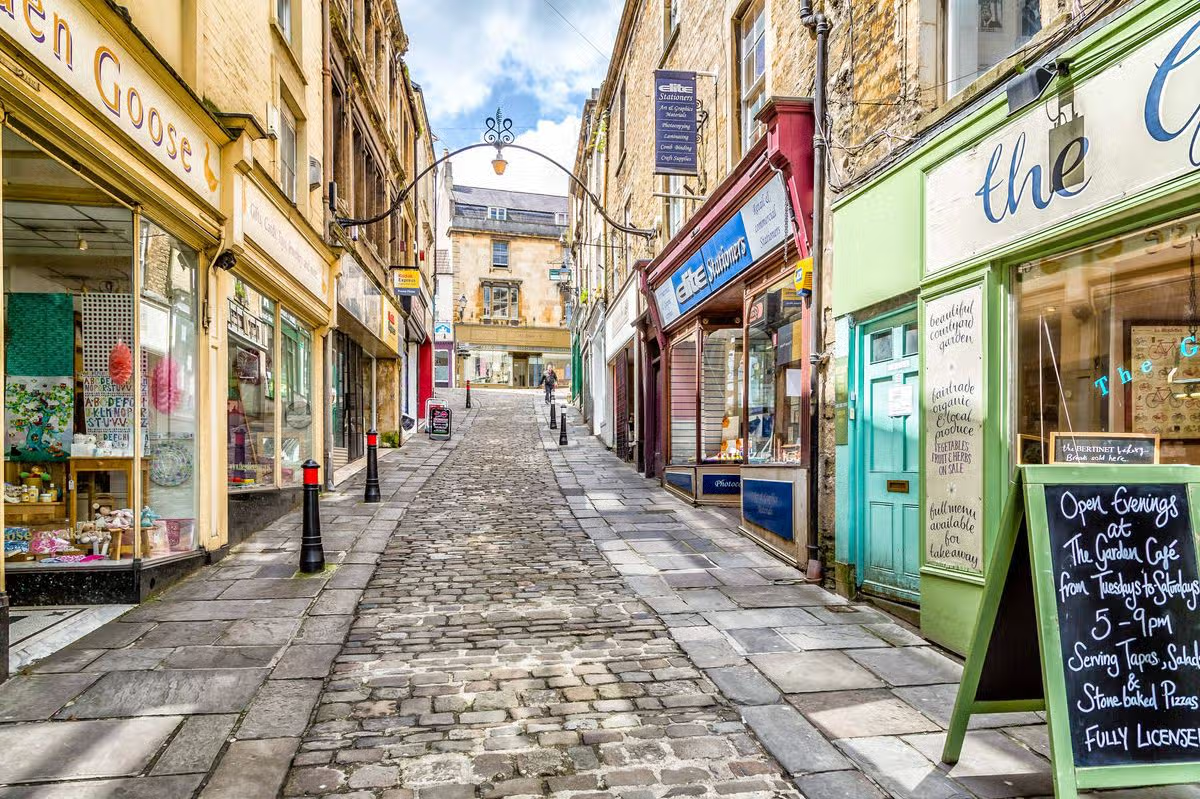
Either I’d never properly clocked it before or the town has experienced a remarkable transformation during my eight-year absence. The town centre, filled with cobbled side streets that climb upwards, is lined with tiny boutiques and quirky independent shops, stocking everything from vintage clothing and antiques to its very own apothecary emporium.
Make sure our latest travel stories always appear at the top of your Google Search by setting us as a Preferred Source. Click here to activate or add us as a Preferred Source in your Google search settings.
Streets like Cheap Street and Catherine Hill are packed with independent retailers, upmarket coffee shops, and sufficient micropubs and wine bars to keep you busy for ages. What Muddy Stilettos celebrated as “interesting indies”, my mate’s mum labelled “artisanal… and we aren’t the artisanal type”.
Another draw for both locals and visitors from further away is Frome’s abundance of markets, which by pure coincidence were running the weekend I wasn’t there. At the Frome Independent Market you’ll discover designer makers alongside artisan food and drink producers.
You’d struggle to spot many chain shops or restaurants here, which is brilliant if you’re keen to avoid the overwhelming presence of typical high street brands. I spotted just one Costa Coffee, and that was it.
My first real stop was Rye Bakery at its Station Approach site. The other branch can be found inside a church on Whittox Lane.
Even the old railway house at the station has been transformed into a compact independent food market and events venue. Alongside Rye Bakery, you’ll discover its sister wine bar, cheesemonger The Cheese Lord, Indian and Trinidadian street food, a charcutier, another wine bar, plus a community sauna and cold plunge.
Oh, and there’s a milk vending machine thrown in for good measure. You genuinely wouldn’t need to venture beyond the station.
Naturally, it would be churlish not to sample Rye’s offerings. I devoured a cinnamon bun alongside my iced coffee (on a freezing cold Sunday morning), plus a special sandwich crammed full of salami, Glastonbury cheddar, and salsa verde mayo.
It’s precisely the sort of fare I crave from a bakery, though I can appreciate that to some it might appear a touch… gentrified. The sandwich was bursting at the seams, with the heat of the salami tempered by the zesty mayo and punchy cheddar. All these trendy new bakeries have turned the humble sarnie into something rather fashionable.
Rye’s cinnamon bun proved just as delightful as the sandwich, boasting soft, fluffy dough and beautifully spiced cinnamon sugar. Not overly sickly sweet, but sweet enough to satisfy my appetite.
We even discovered an Australian serving behind the counter, and if that’s not an indication of quality coffee, I don’t know what is.
It was also pleasant to revisit some of the neighbourhood drinking establishments. You’ll encounter a mixture of traditional country pubs or independent craft beer venues. Personally, I’d head just beyond the town limits for an authentic taste of Somerset living.
I nearly shed a tear when I discovered a pint of cider for under £6. It makes me appreciate just how costly London has become, and truly, that the prices needn’t be as eye-wateringly steep as they are.
Frome has both evolved and remained unchanged. It’s still the same charming Somerset town where everybody knows everybody; where the tranquillity of the town centre feels so unfamiliar to someone from London.
The residents may not have altered, but it appears the atmosphere has, attracting a fresh generation of people to its cobbled streets. There’s a feeling of togetherness that you only encounter in small towns like Frome.
It offers an escape from hectic urban existence, where you can retreat into the countryside within moments rather than hours. It may not be exactly the same Frome I recall, but I’ll always maintain a warm attachment to the town.
I was trying to discern whether I’d made a wrong turn when I heard a loud whoosh next to me. Somehow, I’d missed the red-tailed hawk perched on a small tree, watching me from an arm’s length away.
That was one of many delightful surprises I encountered as I developed a 6.7-mile urban hike that I will share in this edition of The Wild, our weekly outdoors newsletter.
You are reading The Wild newsletter
Sign up to get expert tips on the best of Southern California’s beaches, trails, parks, deserts, forests and mountains in your inbox every Thursday.
By continuing, you agree to our Terms of Service, which include arbitration and a class action waiver. You agree that we and our third-party vendors may collect and use your information, including through cookies, pixels and similar technologies, for the purposes set forth in our Privacy Policy such as personalizing your experience and ads.
Back in May, I published a 13.5-mile urban hike (see map) that connects trails along the Arroyo Seco and in Elephant Hill Open Space, Ascot Hills, Lincoln Park, Flat Top Park and Ernest E. Debs Park. I wanted to celebrate our local hillsides but also showcase natural areas that remain under threat of development.
I have wanted to expand the route ever since I published it. I got motivated, though, when I saw that the Mountains Recreation and Conservation Authority, or MRCA, will receive a $200,000 grant in Proposition 4money to develop a trail connecting open spaces in Northeast L.A.
MRCA will consider how to connect Elephant Hill Open Space with other land that it owns and manages, including Elyria Canyon and Rainbow Canyon, along with parks and open spaces owned by other public agencies.
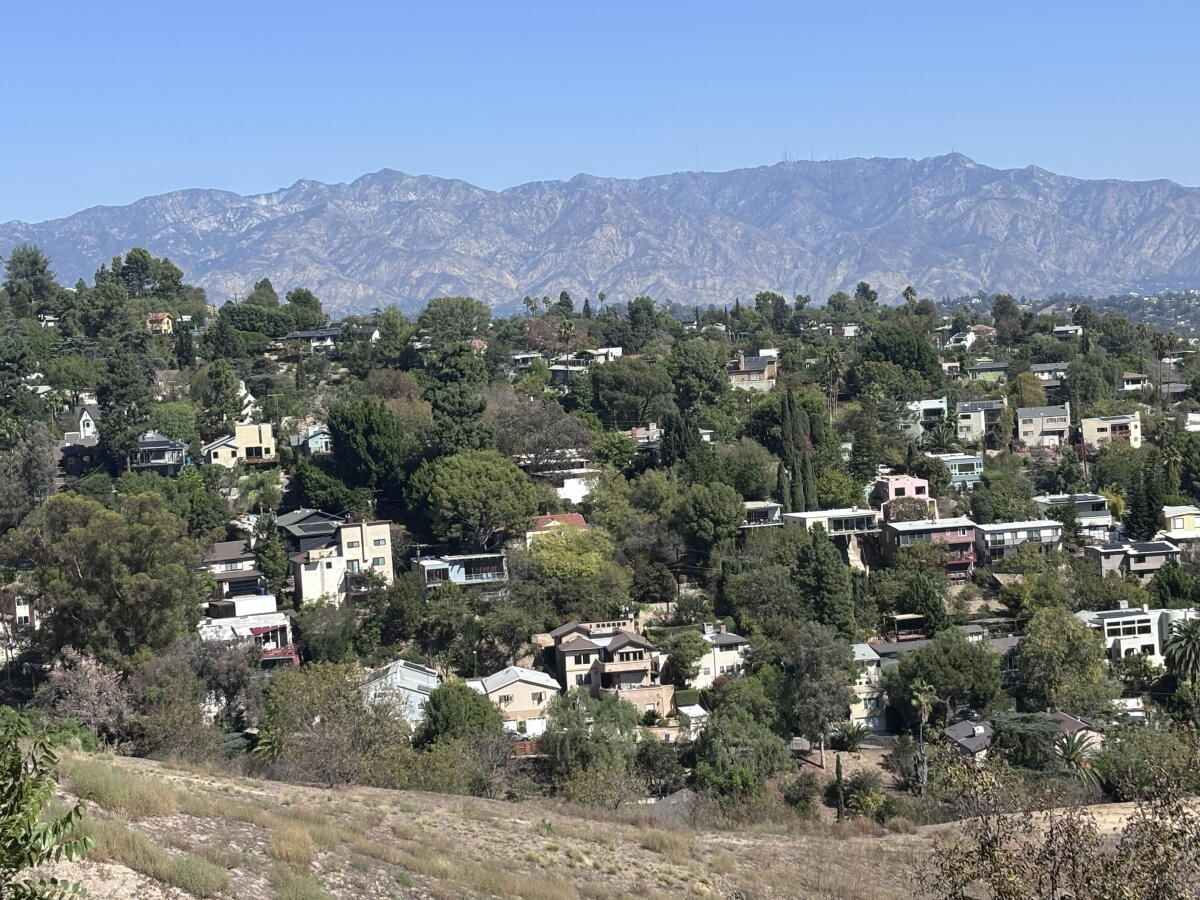
The view from Kite Hill, a high point in Mount Washington, from near North Avenue 37.
(Jaclyn Cosgrove / Los Angeles Times)
“We’ve been thinking about connectivity in Northeast L.A. for a while, the idea being that we connect the protected hilltops and canyons creating access to the Arroyo Seco, which ties up to the Angeles National Forest and down to the L.A. River,” said Sarah Kevorkian, deputy chief of wildfire resilience at MRCA, noting that there’s great energy and momentum built by community members who want to see their neighborhood open spaces protected.
I am eager to see what MRCA and its partners develop. Based on what I’ve experienced, urban hiking trails can lead to better connection among neighbors and a deeper appreciation for nature nearest to us. In the interim, I developed the trail below that envisions what a regional connector trail could look like.
The total extension to the River to the Hilltops route is about 9.4 miles when you include the three “connector” trails that I indicate via a dotted blue line on the map. In total, the full route is now about 23 miles. Below, I explain the heart of the extension through Cypress Park and Mount Washington, which is about 6.7 miles without the connectors, including the two that would take you to the larger original trail. I made this route in a “Choose Your Own Adventure” style, hoping to inspire folks to (legally!) explore their city, hence the flexibility (and complications in explaining mileage).
Some quick logistics before I dive into the route:
I developed the route using CalTopo, an online mapping software with a desktop site and mobile app. You can download the CalTopo app onto your phone and follow the route there; you can also download the trail from CalTopo to use on your Garmin or other device. I also uploaded it to my AllTrails profile.
In May, I dubbed the original trail “River to the Hilltops” in CalTopo and on AllTrails. Afterward, a reader suggested “Jewel Necklace” as a name. What do you think?
I haven’t marked everywhere you can find a restroom or water, but will try to add those as time allows. Please plan accordingly, as some stretches run through neighborhoods or open spaces where there isn’t much nearby.
There is no single place to start this route, although this newsletter will focus on the latest extension. You can start and stop this route in several spots though.
Trail access and conditions can change. Please follow all posted signage (and contact me if you encounter major issues).
This route travels through several neighborhoods. Please refrain from using Bluetooth speakers and anything else that would be disruptive to residents.
There are several places along the route where you will walk in the street of a neighborhood because it lacks sidewalks; please use caution!
At several junctures along the suggested route, you will have an option to take a different path that will essentially get you to the same place. Do what’s best for you, and most important: Have fun, be safe and don’t trespass!
A red-tailed hawk flies over Bob Scholfield Park in Mount Washington.
(Jaclyn Cosgrove / Los Angeles Times)
Now let’s talk more about the route (full map here).
To begin this extension into the neighborhoods of Mount Washington and, briefly, Cypress Park, I started at the Lincoln/Cypress Metro station off the A Line (previously, and forever in our hearts, the Gold Line). The station has a series of stairs and ramps that you can take down to West Avenue 26, which borders the station on its eastern-ish side.
You’ll quickly turn right (or northeast) onto Lacy Street, passing Lacy Street Neighborhood Park. I chose this option because, as you’ll see after about a quarter of a mile on Lacy, it leads to a pedestrian bridge.
A pedestrian path that leads to a bridge taking walkers and hikers over the 110 Freeway.
(Jaclyn Cosgrove / Los Angeles Times)
It is not a well-marked or particularly welcoming pedestrian bridge, but it exists nonetheless. You’ll see a narrow walkway lined with a green metal fence topped with spikes and, later, razor wire. Did I mention it’s not terribly welcoming?
Head over the 110 Freeway via this bridge, and turn right onto Arroyo Seco Avenue and then soon left on Amabel Street. But appreciate this little jaunt, as it’s the last bit of flat walking for a bit.
A pedestrian bridge over the 110 Freeway near Cypress Park.
(Jaclyn Cosgrove / Los Angeles Times)
Cross over North Figueroa Street, and trudge up the hill before you, which has an average grade of about 15%. You’ll pass a neighborhood sign for Mount Washington as you bear left on Isabel Street before making a quick right (north) turn onto Glenalbyn Drive. Continue northeast onto Beech Street and feel as amazed as I was when it becomes a dirt path.
As I trotted through here, I enjoyed watching a kettle of turkey vultures soaring high above the homes perched on the hillside, looking for a fine carrion brunch.
Rather than continuing on the dirt path that heads southeast, I headed up Montalvo Street. Be careful here, as there is no sidewalk. I headed north onto Andalusia Street, or Avenue on some maps, and then further northwest onto West Avenue 37.
A gate was installed on West Avenue 37 in the late 1980s to block rowdy visitors from driving to and partying on Kite Hill in Mount Washington. The route remains open to pedestrians.
You’ll soon arrive at Kite Hill, which The Times described in 1988 as “a scenic Mt. Washington location popular with kite-flyers by day and partying teenagers by night.”
The rambunctious youths were so noisy, L.A. City Council spent $1,200 — about $3,500 in today’s money — to install gates to prevent vehicle traffic. The route remains open to pedestrians.
“It’s like the Hollywood Bowl up there, but it goes on all night,” resident Bob Cummings, a real estate agent who had lived on Mount Washington for 18 years, told The Times in 1988. “It’s like a cancer that started. We’re asking for the city’s surgeons to cut it out.”
When I visited Monday, I saw no evidence of kites or parties, but I did appreciate the glorious views of our local hillsides and San Gabriel Mountains.
One perk of walking the Mount Washington leg of the route is the Halloween decor you’ll spy along the way.
(Jaclyn Cosgrove / Los Angeles Times)
At the juncture of West Avenue 37 and San Rafael Avenue, you have two options in terms of the route I’ve charted out: You can continue northwest on West Avenue 37, where you’ll quickly be frolicking in Elyria Canyon, or you can take San Rafael Avenue and a short winding path down to Rainbow Canyon, which is also lovely.
Although I designed this leg of the River to the Hilltops route to start at the Lincoln/Cypress Metro stop and end at the Southwest Museum Metro station, you can also turn it into a loop, as you’ll see on the map.
For the purposes of this newsletter, I’m going to explain the route via the first option, continuing northwest on West Avenue 37 and then right (or northwest) onto Killarney Avenue for about 400 feet until you turn right onto some wooden, dirt-covered steps. You’ve reached Elyria Canyon Park!
Wooden stairs lead down into Elyria Canyon Park, where hikers will find several species of native shrubs and trees.
(Jaclyn Cosgrove / Los Angeles Times)
Be mindful as you take the steps, as the loose dirt can be slippery. You will have lovely views of L.A. and its landscapes as you meander past native shrubs and trees, including black sage, toyon and wild cucumber. This 35-acre park “boasts one of the finest examples of California black walnut woodland in Southern California,” according to the Mountains Recreation and Conservation Authority, which manages the land.
That’s one reason that a 1996 Times story dubbed this park “a living example of the Los Angeles of 200 years ago.”
There are multiple routes, and I won’t discourage you from exploring beyond what I’ve mapped out, which from the map, you can see is a quick loop, passing through the park (including Akuutet Learning Nursery and the surrounding neighborhood. If you find yourself needing a snack break, you’re in luck. (I will admit that I wanted the same while in Elyria Canyon and took a short walk over to Little Barn Coffee House, one of my favorite spots in L.A.)
The path through Elyria Canyon travels through the 35-acre park that features a California black walnut woodland.
(Jaclyn Cosgrove / Los Angeles Times)
After the loop, you’ll head out of the canyon onto Elyria Drive and then make a left back onto San Rafael Avenue, which you’ll take for about a third of a mile. Continue north past San Rafael Avenue and Danforth Drive onto Sea View Avenue. In about a third of a mile, Sea View will transform into a dirt path as you enter Bob Scholfield Park (per the name etched into a rock under a tree).
Two red-tailed hawks flew overhead as I entered this charming stretch of the walk. I chatted with another hiker and petted his Great Pyrenees dog, as I grew up with the breed and have a soft spot for these giant fluffy goobers.
After following this dirt path as it curves around, you will return to a paved Sea View Drive. Head southeast, and you’ll quickly find yourself at Moon Canyon Park.
Moon Canyon Park in L.A.
(Jaclyn Cosgrove / Los Angeles Times)
Developers had wanted to construct 18 homes and a parking lot in this 4.5-acre canyon, but the L.A. City Council instead set aside $550,000 to preserve it, according to a 2003 Times story.
“I couldn’t be happier because the canyon will be left open,” resident Sharon Roesler, a member of a group opposing developing the canyon, said at the time. “We don’t have enough of these places to go to in Los Angeles.” (If you want to learn more about restoration efforts here, you can visit the Friends of Moon Canyon website, which is working to restore the canyon.)
You will walk southeast down a pleasant dirt path through the canyon, noticing those restoration efforts, before you hit pavement for just a moment and then immediately bear right onto West Pheasant Drive, another dirt path.
A Chevy van parked ahead on the trail.
(Jaclyn Cosgrove / Los Angeles Times)
I was enjoying my hike when I followed the bend of West Pheasant Drive and noticed a van parked ahead. Now, I’ve seen enough horror movies that I quickly started to write the opening scene to my demise.
EXT. DIRT HIKING TRAIL
“JAC, a well-meaning but unfortunately oblivious hiker, spots a vintage camper van on the trail. They have no idea what lurks ahead.”
Thankfully, there was nothing other than a funky DIY project lurking in the distance. I approached the van to find a cardboard sign attached (which, again, sounds creepier than it was).
“The process is as WiLD as the circumstances!” it read. “This van is unable to leave the road (you may have noticed 🙂 ) so we are resituating it to optimize space (something special, incoming!).”
A narrow dirt path called West Pheasant Drive on some maps.
(Jaclyn Cosgrove / Los Angeles Times)
After you pass the van art project, you’ll soon reach a nest of streets, as each has a bird name. You will turn right from West Pheasant onto Quail Drive and then quickly left onto Dove Drive. Follow Dove Drive southeast and quickly take a hard right (northwest) onto Glenalbyn Drive, followed by a hard left (southeast) onto Mavis Drive and then soon a right on Frontenac Avenue, then left on West Avenue 46 to head into the park area around the Carlin G. Smith Recreation Center.
You’ll pass through a gate and meander down the path, with an optional side quest to have a friend push you on the tire swing. After shenanigans, walk through the basketball court to where the path continues in the court’s southeast corner.
This route, when I traversed it, was loose and narrow. If it feels too sketchy, take the road or use a trekking pole if you’ve brought one. No reason to turn an ankle after you’ve had an otherwise splendid day!
At the end of this rustic route, take West Avenue 45 down to the Rainbow Canyon Test Plot, a publicly owned area where volunteers are readily restoring the canyon with native plants and shrubs. There is a pleasant little trail from the test plot that goes through the canyon. You will take it up to West Avenue 44.
A previous walker left a message on a utility pole to remind us of one reason we hike.
(Jaclyn Cosgrove / Los Angeles Times)
From here, you can either use the connector trail I’ve mapped out or head down West Avenue 44 to Marmion Way and the Southwest Museum Metro stop.
That is the end of the Mount Washington trail extension, but doesn’t have to be the end of your day. If you’re feeling adventurous, I have mapped out a connector route through Sycamore Grove Park that will take you to the Arroyo Seco and Debs Park — and beyond that!
The total route now includes about 23 miles of urban hiking. Where should I extend the route next? I’d love your feedback on how to connect our public lands.
3 things to do
The Devil’s Punchbowl Natural Area sits near the San Gabriel Mountains.
(Jaclyn Cosgrove / Los Angeles Times)
1. Be with the bats near Pearblossom L.A. County Parks and Recreation will host Bat Weekend on Saturday and Sunday, from 4 to 7 p.m. both days, at the Devil’s Punchbowl Natural Area near Pearblossom. Guests can participate in crafts and a night walk and visit educational booths. Learn more at the park’s Instagram page.
2. Seek out scares in Culver City Walk ‘n Rollers will host a Halloween-themed bike ride from 5:30 to 8 p.m. Sunday in Culver City. Cyclists will travel five miles on city streets and bike paths, exploring the best Halloween decor in the area. Riders will meet at Village Well Books + Coffee. Register at eventbrite.com.
3. Blend science and the spooky in Orange SoCal Science Hikes will host a Halloween-themed evening hike from 6 to 9 p.m. Saturday through Irvine Regional Park in Orange. Participants will first try to spot diurnal animals as they hike 2.5 miles, and then after, meet at a faux campfire for ghost stories. Costumes welcome, as long as you can hike in them. Register at eventbrite.com.
The must-read
Finley Kilgo pauses during a birdwatching bike ride through the Arcata Marsh and Wildlife Sanctuary at the northern end of the Humboldt Bay Trail. The trail could eventually become part of the Great Redwood Trail.
(Andrew Cullen / For The Times)
Advocates of the Great Redwood Trail, a proposed 307-mile route that follows defunct railroad lines, say the route could become as epic a bucket-list trip as other great multi-day scenic trails. But at what cost? Times staff writer Lila Seidman spoke to Perry Lincoln, a member of the Wailaki Tribe, who said he and other Indigenous people in the area have been left out of the planning process for a hiking trail that cuts through their ancestral land. “We’re barely getting access to these areas ourselves, but we’re going to allow outside communities to have full access to these places?” Lincoln’s daughter Tisanche Warren said. “That doesn’t seem fair.” About 40% of the trail is complete, with major efforts planned to clean up railroad pollution and restore fish habitat. The Kinest’e Community Coalition, composed of Lincoln and other tribal members and their allies, continues its fight to not only have a say in the project but also to reroute the trail to protect sacred sites, including graves.
Happy adventuring,
P.S.
Are you interested in getting into mountain biking? Or do you want to find a community of mountain bikers? The California Mountain Biking Coalition will host Rally for the Trails, a gathering of the Southern California cycling and trails community from 5:30 to 7:30 p.m. Friday at the Cub House in San Marino. You’ll learn from guest speakers, watch short films and learn about local ride events. Plus, you can meet volunteers from several local outdoors groups. Sounds like a great way to meet new pals!
For more insider tips on Southern California’s beaches, trails and parks, check out past editions of The Wild. And to view this newsletter in your browser, click here.
AS a live music lover, I have visited London’s The O2 – the UK’s most popular live entertainment venue – numerous times in my adult life.
But with my primary school aged child? Despite living half an hour from the venue, I’ve never even considered it as a day out.
There is so much to do at The O2 even for families
Until that is, I took my son to iFly Indoor Skydiving over the summer holidays and we had a whale of a time.
Swapping my O2 beer goggles for mum goggles, I suddenly became acutely aware of all the other activities the massive dome offered, outside of huge concerts and bar-hopping.
Sign up for the Travel newsletter
Thank you!
So we boomeranged back there during a rainy weekend to try out yet another one of their kid-friendly attractions – Activate.
Activate bills itself as a ‘live-action gaming adventure,’ with nine different interactive game rooms featuring a bunch of activities for all ages and skill levels.
In the laser room, we dodged moving laser beams to reach a target, in the hoops room we had to sink a certain number of basketballs in the hoop, in the grid room we pranced across a lit-up dancefloor, and in the strike room we aimed balls to blast asteroids out of the sky.
The best thing was every activity took max two minutes, so you were never waiting longer to get into your next game.
During our session, which costs from £22.95pp for 60 minutes, there were families with kids my son’s age, groups of ten year olds, mums with teenagers and twenty-somethings who’d come for an afternoon out, because you can set the level at each room before you enter.
It was the same when we visited iFly. In our group of seven, there were two tweens, a 16-year-old and a twenty-something couple on a date alongside my seven-year-old son and I.
And we all had an equally brilliant time.
While anyone aged 3 to 93 is welcome at iFly, you do need a degree of bravery because you have to get inside a huge, glass wind tunnel that sends air upwards at speeds of 120mph to 165mph, and attempt to do your best flying squirrel impression.
My son was captivated by the activities
The wind is STRONG. So strong that you simply have to flop forwards as you enter the tunnel.
But I don’t think I’ve ever seen such a big grin on my son’s face as the moment he first flew off the ground, which only got wider when he opted for the special “High Flight” add-on, where the instructor took him on a spinning flight, 40 feet up towards the top of the tunnel.
Each session lasts around a minute, and everyone in our group got four sessions as part of their package (although that might change depending on group size), with the opportunity to add a High Flight to each of their goes in the wind tunnel, which cost £15 a pop.
It’s well worth doing the add-on at least once if you can afford the extra cost, as unless you’re planning on jumping out of a plane anytime soon, this is the closest you’ll ever come to flying high above the ground.
There are plenty more family attractions at the O2 too, especially the famous roof climb – with a special ‘Halloween Up at The O2 climb’ scheduled for on October 31.
But there’s also Oxygen Activeplay trampoline park and Clip N’ Climb, plus later this year they’ve got Guinness World Records London opening – the first permanent entertainment venue from Guinness World Records.
If all that fun makes you hungry, there are stacks of restaurants offering kid-friendly food – from pizza and burgers for the less adventurous eaters, to Mexican, Brazilian street food and Chinese hotpot.
We opted for Maki and Ramen, a chain inspired by the ramen shops of Japan.
As well as an extensive sushi menu, they serve up very good bowls of steaming ramen – we opted for their signature pork tonkatsu with a side of beef (my son) and the tofu hell ramen with a side of kimchi (me).
If you visit during the week, you can also take advantage of their £18 lunch deal that gets you a main, side and drink.
We popped next door to Haute Dolci for pudding, sharing two of their signature gelato sundaes garnished with warm chocolate cake, fondue chocolate and crushed Ferrero Rocher.
Stuffed to the brim with noodles and ice cream, my son was unusually compliant about a trip to the O2’s outlet shops.
You won’t go hungry here either
The venue has a number of high street brands like Nike, Adidas, Kurt Geiger and Whittards offering up to 70 per cent off RRP, and I managed to pick up a couple of dresses for a significant discount and a pair of Nike trainers for my son for £20.
Great fun, great grub and great shopping in a totally rainproof destination? We’ll definitely be back.
Only problem now is my son’s keen to go to a gig now too…
MOVE over St Pancras – there’s a new kid on the block for rail services to Europe.
Lord Sadiq Khan has revealed plans to launch trains to Europe from Stratford International Station within the next four years.
Stratford International Station could get new rail services to EuropeCredit: Alamy
Despite its name, the station has never had international services, but according to The Standard, the station is set to undergo a £20million project to launch trains to France by 2030.
One in three trains to and from France could stop at the station under the new plans – being a stop on services, rather than a new origin or destination station.
Sign up for the Travel newsletter
Thank you!
It’s predicted that the stop would add five to eight minutes to the overall journey time.
Sadiq Khan told The Standard: “We’ve been working closely with the Government to make Stratford International truly ‘international’ for the first time – opening up new opportunities for jobs, investment and tourism, while connecting one of the UK’s fastest-growing economic centres directly to Europe.
“It’s time to unlock the full potential of this station and help write the next chapter in Stratford’s remarkable success story as we continue building a better, greener, more prosperous London for everyone.”
If trains to Europe did launch at Stratford International Station, around five million people in and around London would have better access to international rail services.
Services would initially be to France with plans to expand to other destinations in the futureCredit: Getty
Services could run to Paris, Brussels, Rotterdam and Amsterdam.
And eventually, there could be trains to Germany and Switzerland as well.
The current plans are also backed by a number of businesses as well as the train drivers’ union Aslef.
Stratford International finished construction in 2006 with four platforms.
However, the two platforms for international services as well as the area for international passengers have remained abandoned for the past two decades.
In order for the area to open, more work would need to be done including making the flow of passengers through security more efficient.
The station would be able to handle around 250 to 300 passengers at a time.
Meanwhile, Virgin is set to launch services from London St Pancras also by 2030, competing with Eurostar.
LUCY Mecklenburgh was left “fuming” after being forced to travel home barefoot when she lost her shoe between the train and platform.
The TOWIE alum, 35, took to her Instagram Stories to moan about the mishap following a night with fiance Ryan Thomas.
Lucy Mecklenburgh was left fuming after losing her shoe between the train and the platformCredit: Instagram/lucymeck1The TOWIE alum was left with just one black loafer following the mishapCredit: Instagram/lucymeck1
The mum of two was seen covering her mouth with her hand in shock as she stood in the vestibule wearing only one item of black loafer footwear.
Lucy looked glam in an oversized leather jacket and jeans, but her right foot was exposed as Ryan could be heard shouting: “Oh my god,” in the background.
Sign up for the Showbiz newsletter
Thank you!
In his social media caption he wrote: “Lucy lost her shoe getting on the train”.
She then added in her re-post: “Fuming I love these shoes”.
The mum of two saw the funny side of the situationCredit: Instagram/lucymeck1It came following the Lucy and fiance Ryan Thomas’ cosy date day in LondonCredit: Instagram/lucymeck1The pair share two children togetherCredit: GettyThe couple recently listed their Cheshire home for saleCredit: Getty
Former Coronation Street star Ryan then shared a video showing Lucy laughing as she saw the funny side of her situation.
She sat perched on a train seat and giggled away as he filmed her reaction.
The blunder came after the couple spent a cosy date day in the capital.
They had a plush dinner at the Covent Garden Hotel complete with fizz and two courses.
Brownsea Island is soon closing to the public until next yearCredit: Alamy
Brownsea Island in Poole Harbour will be closed on Friday, October 23 due to Storm Austen.
It is still unclear if the National Trust owned isle will open on Saturday.
Sign up for the Travel newsletter
Thank you!
A spokesperson for National Trust Brownsea Island also told Bournemouth Echo: “We apologise for any disappointment or inconvenience this may cause.
“The safety of our visitors, volunteers and staff is our top priority and this decision has been made to ensure everyone remains safe during the adverse weather conditions.”
Typically, it costs £12 to visit but National Trust members can enter for free.
It comes as the Met Office has issued weather warnings for wind and rain across parts of the UK, with two named storms due to bring disruption.
Storm Austen is expected to affect south-west England on Friday – with an amber warning for wind issued in parts of the region.
Over the weekend, Storm Boelo will affect Northern Ireland, Scotland and parts of northern England with what the Met Office described as “impactful winds”.
Fuerteventura may be famed for its white-sand beaches, clear waters and dramatic volcanic scenery, but beyond the packed resorts an abandoned leisure complex paints a far darker picture.
TUI Cabin Manager Rosie Poulios has spent over 30 years travelling across all continents – but there’s one destination that tops her list.
It has beautiful beaches, wildlife, colourful fishing villages and the best news for Brits, absolutely no jet lag. The destination in question? Senegal.
Rosie has been cabin crew for 30 years – and Senegal is a destination she hasn’t forgotten aboutCredit: TUIThe country is great for winter sun and has no jet lag for BritsCredit: Shutterstock
Talking about the West African country, Rosie says it combines “sunshine, culture, character and experiences” that you can’t easily find elsewhere.
Senegal is six hours away from the UK and TUI is reintroducing its direct route from London Gatwick on November 2.
Sign up for the Travel newsletter
Thank you!
There’s no time difference between Senegal and the UK either, so holidaymakers can get their winter sunshine without any jet lag.
There’s plenty to do too like exploring Gorée Island, a UNESCO-listed island that’s car-free with pastel-colored buildings.
On the island is the House of Slaves ‘Maison des Esclaves’ a pink-coloured building and memorial museum from 1776 commemorating millions of enslaved Africans.
For those looking to see wildlife, there’s a chance to see all sorts of animals at the Bandia Reserve.
On a safari-style drive, visitors can spot giraffes, zebra and rhino.
Another popular experience is visiting the Saloum Delta which is waterways and mangroves which is lush with birdlife.
If you go on holiday with TUI, you can book these tours with TUI Musement – full day tours of Goree Island from £69 per adult and £48 per child.
Half-day safaris at Bandia Reserve from £59 per adult and £41 per child.
TUI Muesement offers day tours to Goree IslandCredit: Shutterstock
When it comes to staying in Senegal, Rosie suggests checking into the Riu Baobab.
The all-inclusive resort has four swimming pools, a waterpark and is a few short steps away from Pointe Sarene beach.
Guests can try out water activities, lazing about by the pool and enjoying meals at its restaurants.
Rosie said:”It gives families all the convenience of an all-inclusive beach holiday while also offering the chance to discover a fascinating destination beyond the resort.
“And it’s brilliant for adults too with kayaking and paddleboarding on offer on the beach, or thatched parasols to laze the day away beneath.”
TUI offers a one week all-inclusive stay at the Riui Boabab in Pointe Serene from £1046 per person.
Zebra, giraffe and rhino can be seen at Bandia ReserveCredit: TUIThe Riu Baobab is an all-invlusive TUI hotel with four pools and direct beach accessCredit: TUI
This is based on a family of four departing London Gatwick on November 30.
For anyone who has Africa on their bucket list, Rosie described Senegal as “one of the easiest introductions to Africa you can find.”
Rosie also describes the Senegalese as “some of the friendliest I’ve met”.
She added: “They’re welcoming, proud of their culture and genuinely happy to share their country with visitors.”
“You get the wildlife, the culture, the history and the scenery people dream about, but in a way that feels accessible and completely unintimidating.”
The best time to visit Senegal is during the dry season from November to May – and temperatures sit around 30C all-year.
There’s something special about this place, known for its laid-back vibe and thriving bohemian culture, and what I think is arguably one of Britain’s best high streets.
This beautiful town is perfect for autumn(Image: CHUNYIP WONG via Getty Images)
Living in London, life can sometimes feel rather frenetic. While I adore city living, I do try to escape at least a few times a year to properly unwind.
Among my favourite retreats is Totnes, a market town renowned for its relaxed atmosphere and delightful high street,celebrated for its artistic community and flourishing bohemian spirit. It also boasts, in my view, one of Britain’s best high streets.
Beginning at the lower end of the street, you can cross the bridge spanning the River Dart and truly absorb the town’s character from there.
During the summer months, the town is adorned with vibrant bunting, while small boats drift across the water.
In autumn, it’s equally gorgeous, as the trees turn red and gold and the high street lights up with cosy shop fronts to escape from the biting wind.
There is abundant riverside greenery, and the town buzzes with energy. After crossing the bridge, pop into The Curator for a coffee – the first of numerous independent establishments scattered along the high street
The coffee is excellent, and they offer a delightful range of pastries if you fancy settling down for a snack – though don’t overindulge, there’s plenty more to discover.
The high street climbs gradually upwards and is flanked by hundreds of independent retailers, charity shops and tearooms.
Further along the high street, you’ll find the Cornish Bakery, which fills the street with the delicious savoury scent of pasties. They cater for all tastes; even my vegan brother discovered something he truly enjoyed.
As the high street curves round to the left, you’ll come across Butterworth’s Vintage Co, a compact yet impressive secondhand shop stocking everything from knitwear to workwear and even vintage magazines.
Once you’ve had a good root through the merchandise, you might fancy a swift drink or perhaps another bite to eat – and you’re in luck.
Just a short walk from Butterworth’s sits The Bull Inn, a fantastic establishment boasting an extensive organic food menu alongside nine guest rooms, should you need somewhere to stay for the night.
The highlight of The Bull Inn for me is its delightful garden, where you can kick back in the sunshine and watch the world go by. Situated directly across the car park, and much like the rest of the town, it’s frequently adorned with gorgeous bunting.
On a glorious day, it’s truly hard to beat – and if you’re anything like me, you’ll be more than ready to take the weight off your feet after all that browsing along the high street.