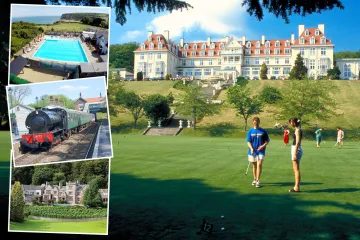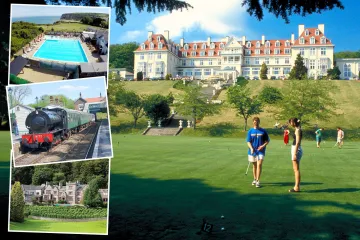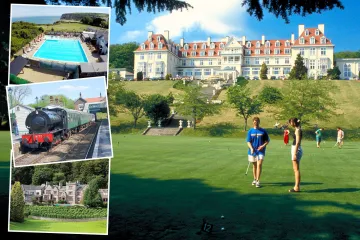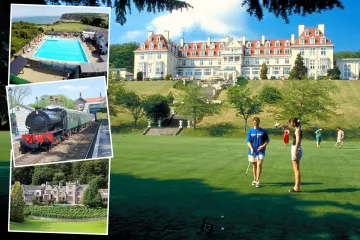
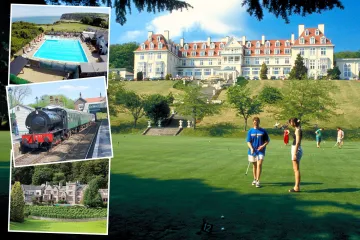
FOR a spa getaway with serious Bridgerton vibes, look no further than Hintlesham Hall.
The Grade I listed hotel is set in beautiful Suffolk countryside, famous for its award-winning Carriers Restaurant – here’s everything you need to know about staying.
Sign up for the Travel newsletter
Thank you!
A 16th-century pale peach cake-topper of a hotel, with a crunchy gravel drive, chandeliers and beautiful groundsCredit: Supplied by Hintlesham Hall
Where is Hintlesham Hall?
If you can bring yourself to leave the Grade I listed manor house hotel, it is a great base from which to potter around the Suffolk countryside.
A 15-minute drive from Ipswich, the hotel is best reached by car.
Pretty towns and villages like medieval Lavenham and stylish Aldeburgh (where you can get brilliant fish and chips) are all close enough for a day out.
Staff are on hand to recommend walks along the varied landscape of the Suffolk coast. Think woodlands, meadows and shingle beaches.
In one word? Gorgeous. A 16th-century pale peach cake-topper of a hotel, with a crunchy gravel drive, chandeliers and beautiful grounds.
We’d love to go back the next time we have a special occasion and fancy a splurge.
The hotel’s peaceful atmosphere made it the perfect break for harried parents.
What is there to do?
If you want to treat yourself, book a massage or manicure at the hotel’s spa.
Most read in Best of British
And take a peek at Hintlesham’s grounds, you might just find a jacuzzi.
This is Constable country, so if you want to explore the local area, we did a lovely circular walk from Manningtree to Flatford Mill – a Grade I listed farm which features in several of his most famous paintings.
Adnams Brewery is a short drive away. It may be famous for its beer, but visitors can try their hand at gin distilling too.
And if you’re a golf widow, you may want to keep it quiet that Hintlesham Golf Club borders the hotel grounds.
The rooms are beautifully furnished in a classic country hotel style.Credit: Supplied by Hintlesham Hall
What is there to eat and drink?
The hotel is famous for its restaurant, Carriers, which uses produce from local fishermen and farms, and Hintlesham’s own kitchen garden.
We loved the truffle mash, beef tournedos and extensive wine list.
Head Chef Lee Cooper is a certified Master Chef of Great Britain and works with the gardeners to adapt his menus to the season.
What are the rooms like at Hintlesham Hall?
Stunning.
Our bedroom – the Braganza Suite – was vast and beautifully furnished in a classic country hotel style with straight-backed armchairs, gold-framed oil paintings and plush carpets.
The comfy bed had sweeping views over the grounds and – in case relaxing there got boring – we even had a living room with plump sofas, a giant TV and a secret reading nook.
The hotel is famous for its restaurant, Carriers.Credit: Supplied by Hintlesham HallHead Chef Lee Cooper is a certified Master Chef of Great Britain.Credit: Supplied by Hintlesham Hall
How much is it?
A double room at Hintlesham Hall starts from £205 per night including breakfast, based on two sharing. See hintleshamhall.co.uk.
Is the hotel family friendly?
Children are welcome at Hintlesham Hall, but we would recommend it as a no-kids, parents’ getaway.
The spa is only for children over 16 unless arranged otherwise.
Hintlesham does welcome canine companions to a selection of its rooms.
The hotel’s peaceful atmosphere made it the perfect break for harried parents.Credit: Supplied by Hintlesham Hall
Is there access for guests with disabilities?
There are a number of rooms on the ground floor, and the Superior Room is equipped with an accessible bathroom.
WHILE Edinburgh is known worldwide, Scotland’s biggest city has often flown under the radar.
But Glasgow is ‘having a moment’, as the kids would say.
Sign up for the Travel newsletter
Thank you!
I’m not surprised that my city is one of the world’s top trending destinationsCredit: Lynn KernanThe city has come 7th in Tripadvisor’s Travellers’ Choice AwardsCredit: Posnov
Glasgow has beaten the likes of Vienna and Abu Dhabi to take the seventh spot – and is one of only two UK mentions in the ranking (the other being Belfast at number 24).
And that’s no mean feat for our ‘no mean city’.
But while it might surprise the rest of the world, it doesn’t really surprise me – I’ve always known my hood is a hidden gem.
The city of Glasgow is massive with much of the outskirts dedicated to residential pockets that have their own identities and thriving communities.
But the real action for visitors takes place in the city centre and the areas surrounding it.
It’s an over-used phrase, but there really is something for everyone.
The centre itself is ideal for those who want to shop ‘til they drop, grab a tasty brunch or frequent one of the many boozers.
Most read in Best of British
But there’s also culture, in the form of the Gallery of Modern Art or the many incredible graffiti murals dotted around.
There’s stunning architecture – all you need to do is look up on any street and you’ll see the sandstone marvels that make up much of the buildings.
There’s plenty of opportunity to shop down the likes of George StreetCredit: Getty
And there’s history everywhere from a traditional tea house designed by world-renowned artist and architect Charles Rennie Mackintosh to the ornate, Victorian St Mungo’s Cathedral.
Hop on the tube – or the Clockwork Orange as it’s affectionately known – and you can head over to the west end.
A word of warning, our subway is not like London’s.
It’s one wee loop with 15 stops and you can do a full circuit in about 25 minutes. Like Scotland itself, it’s petit but perfect.
Get off at Hillhead or Kelvinbridge and take in university land. Here visitors will find the imposing Kelvingrove museum and gallery.
Dating back to 1901, it’s a favourite with locals and tourists alike with 22 collections to get lost exploring, whether you’re a kid or an adult.
The botanic gardens is a stunning park slap-bang in the heart of the west end with the Kibble Palace glasshouse meaning you can enjoy the green space whether it’s dry or pouring down – and let’s be honest, it’s more likely to be the latter.
Because it’s the heart of student life, there’s also quirky shops and food from every corner of the globe on offer.
I’ve always known that Glasgow’s one of the country’s best hidden gemsCredit: Lynn KernanThe south side of Glasgow is home to a sprawling parks and lots of brunch spotsCredit: Getty
And while the west end is the established posh part of Glasgow, the south side is hot on its heels.
Here you’ll find another stunning green space, Queen’s Park, where an amphitheatre hosts bands and cinema screenings in the summer.
There’s brunch spots as far as the eye can see for daytime catch-ups while there’s cool cocktail bars for night owls.
Finally, there’s the east end, the next big thing in Glasgow.
It’s still up-and-coming but definitely worth exploring, with new restaurants and bars popping up all the time.
No matter which part of the city you visit, one thing is always the same – the warm welcome.
Pull out a map to work out where you’re going and I guarantee within a couple of minutes, someone will ask if you need help.
You can pick up whatever style food you like in the west end of GlasgowCredit: Claudiac8
Sit on the bus or the subway and someone will start chatting to you.
Pop into a cafe for a roll on square slice sausage with a non-Glasgow accent, and staff will ask where you’re from and what you’re up to.
Weegies love to gab (translation: people from Glasgow love to talk) – and it’s what everyone remembers when they visit.
And while I’m not encouraging visitors to leave the city, it’s a brilliant base to explore the rest of the country.
You’re 50-minutes from Edinburgh so you can take in its fancy castle and cobbled streets.
Or take the train for an hour to Balloch and you’re right on the banks of Loch Lomond.
It’s a very Scottish trait to be self-deprecating and do ourselves down.
But when it comes to Glasgow, I’m happy to buck the trend and extol its virtues ‘til the coos come hame.
Here are the top places to go if you’re booking a trip to Glasgow…
HERE’S Lynn Kernan, Scottish Sun Features Editor’s top spots for a trip to Glasgow:
WHERE TO STAY:
If money’s no object, the Blythswood Hotel in the city centre is my top pick.
It’s a stunning, grand hotel with a phenomenal seafood restaurant, plush rooms and the best spa in the country, in my opinion.
For something more quirky, try the Alamo Guest House in the west end.
Dating from the 1880s, the family-run B&B is warm and welcoming.
WHERE TO EAT
For a fancy and trendy meal, go to Margo in the city centre.
This small plates eatery is fast becoming a fave with foodies – Will Ferrell even ate there recently.
If you’re looking for cheap and cheerful, you cannot beat Shawarma King.
Winner of the best kebab house in Scotland four years running, there’s always a queue – and there’s no better sign of top scran than that.
WHERE TO DRINK
Whisky drinkers should pop into the Pot Still. It stocks more than 1,000 bottles.
You don’t have to be an expert either, just tell the knowledgeable bar staff how much you want to spend and the flavours you like, and they’ll sort you out.
If you’re more of a cocktail fan, try the Devil of Brooklyn.
There’s plenty of signature concoctions to try but they’re also versed in the classics.
AROUND the world are thousands of incredible destinations from skyscraper cities to Mediterranean beach towns, Caribbean Islands and all those in-between.
But for those living in the UK, you don’t have to go far to see one of the very best – as Tripadvisor Travellers’ Choice Awards has revealed that London is the world’s best city.
Sign up for the Travel newsletter
Thank you!
London is the world’s best city according to Tripadvisor Travellers’ Choice AwardsCredit: AlamyFor free activities, head to the likes of the Natural History MuseumCredit: Alamy
The UK’s capital has bagged the number two spot for the ‘Best of the Best Destinations‘ beaten by just one other place, the Indonesian island of Bali.
And while London hasn’t always been popular having received negative comments, mostly by people who don’t live there (Donald Trump we’re looking at you), there’s a reason why thousands visit the city every day.
As a team who work, and for some of us, live in the city, we’ve got recommendations for those of all ages – from fun activities (some that are free) to quirky bars and where to stay.
To entertain children…
Head of Sun Travel (Digital) Caroline McGuire has some must-visit spots for any families visiting the city.
She said: “Having raised a child in London, I firmly believe that it is the best city in the world for kids.
“The number of attractions that are designed to interest under 18’s – even art galleries, theatres and museums – is truly astounding.
“So much so, that I’ve broken this down into free and cheap, medium-priced and blowout activities.
“If you’re looking to do the city on a shoestring, then I highly recommend the following.
Most read in Best of British
“Museums-wise, you cannot go wrong with the Science Museum (parents with kids five and under, check out ‘The Garden’ in the basement).
“And The Natural History Museum (especially the dinosaur section and the mammals gallery with the life-size blue whale), and the British Museum (The mummies gallery is a guaranteed thriller).
One fun family-friendly activity is taking a speedboat down the River ThamesCredit: Unknown
“Whilst you’re at the British Museum, be sure to check out the Outernet which is a few minutes walk away, next to Tottenham Court Road station.
“Featuring huge, 360-degree screens, it plays a range of artist-created videos through the day and night and people can just walk in for free.
Caroline continued: “I’m also a huge fan of the Southbank Centre, which has plenty of affordable shows for kids, but it also holds free activities on most weekends, including kids raves, doodling workshops, Lego sessions and much more.
“I can’t talk about free activities without mentioning London’s world-class parks.
Here are Caroline’s suggestions for those looking for family entertainment on a medium budget.
“When it comes to eating out with kids, I would highly recommend Chinatown if your child enjoys trying new things.
“The whole feel of the area with the lanterns and exotic menus makes it feel like a proper experience.
Make to sure catch West End shows like the Lion KingCredit: PA
“If you fancy letting them burn off some steam while you relax, you can’t go wrong with Brewdog Waterloo, the Brewdog pub next to the station that features an indoor slide, duckpin bowling lanes, an ice cream van and ping pong tables.
“If you want to keep the prices down, then I recommend Icco Pizzeria in Fitzrovia.
“The no-frills pizza shop serves full-sized pizzas from £6.50 and do kids meal deals with a 6” Margherita or Pepperoni, a juice and some fresh fruit for £4.95.
“If you’re considering some theatre while you’re in town, check out Unicorn Theatre in London Bridge and the Southbank Centre, Little Angle Theatre in Islington and Half Moon Theatre in Whitechapel, as they all put on fantastic productions with prices as low as £10 a ticket.
“And if you’re planning on visiting in the summer, make sure to check out the Kids week deals that go on sale in June, which offer you 2 for 1 tickets on many of the biggest shows in the West End.”
On a blowout budget here are some more child-friendly things to do.
“Speaking of the West End, if you can afford it then a ticket to the Lion King is the perfect intro to theatre for children ages 6 and up.
“It’s one of those rare shows that adults and kids enjoy as much as each other.
“When it comes to memorable attractions, plenty stand out but the Thames Rocket ride – a speedboat sightseeing tour of the Thames is up there with the best.
“You can get tickets from £69.95 for adults and £59.95 for kids – it’s the closest you’ll get to a rollercoaster thrill in central London.”
Travel Reporter Cyann enjoyed exploring Camden Market in her teen yearsCredit: Cyann Fielding
For the teens…
They’re classically hard to impress, but we challenge any teen (or tween for that matter) not to have a good time in London.
Travel Reporter Cyann Fielding was a frequent flyer into London during her teenage years, and here’s what she suggested to do.
She said: “When it comes to free experiences in London, there are a lot – which is great for teenagers with limited money.
“One great spot is Cyberdog – a fun, alien-like venue.
“There is usually a DJ playing and there are lots of neon lights everywhere.
“The spot is well known for selling funky rave and festival clothing too.
She also recommends that if you are heading to Cyberdog, to also stop by Camden Food Market.
“You can pick up a bargain, or as I did, just go around the market taking the free samples, and you will quickly become full,” she said.
“Also head to the orange juice stand; they freshly squeeze the orange juice in front of you, and it is fun to see all the empty oranges scattered across the street.
“Sometimes going to the cinema might sound boring, but for teenagers tickets are often cheaper.
“Plus, in London, there is no shortage of impressive cinemas, including the likes of ones around Leicester Square.”
Head to iconic film destinations around London like Notting HillCredit: Alamy
In your 20s…
When you get into your twenties, London offers plenty of freedom, and there’s so much to do.
Travel Reporter Alice Penwill said: “Being in your twenties can be a precarious time, especially when it comes to money – but the beauty of the city is that you can do lots for very little.
“I love walking around the posh neighbourhoods too, like Notting Hill where you can look at all the weird and wonderful things they’re flogging on Portobello Road.
“You’ll see the Notting Hill bookshop – and its many dupes. Not to mention you can get great pictures for Instagram.
“When it comes to London, I love taking advantage of being in the theatre capital the country.
“And contrary to what you might think, tickets don’t have to cost hundreds if you’re savvy with going to see a matinee on a Tuesday afternoon or signing up to alerts on discount sites.”
Places like Social Pottery are a great places for a daytime catch up
Alice continued: “As you might have guessed by now, I’m not much of a club goer, and more of a social day drinker than a late night boozer.
“So when it comes to having catch ups with friends, I’d rather do something fun in a quieter place than head to a rowdy pub or club.
“And activities like Social Pottery in Kentish Town are perfect for that.
“You get to spend two and a half hours painting whatever you like, and it’s BYOB, so you can have a good old natter at the same time – plus you pay £7 plus the price of whatever you paint.
“Not only do you get sweeping skyline views of London – but they do tasty cocktails too.”
Travel Reporter Cyann Fielding gave us some of her favourite activities in the city, one of which is to experience a version of a well-known TV show.
She said: “Let’s be honest, we all want to take part in The Traitors, but with thousands of people applying for each series it is unlikely we will get our chance.
Cyann gives her verdict on the best things to do in London for anyone in their 20sCredit: Cyann Fielding
“That’s where The Traitors Live Experience comes in… Just like the show, but reduced into a couple of hours, you can experience all the same thrills that you get from the show.
“Whether a Faithful or a Traitor, you take part in challenges and get a real round table experience. It costs from £29.50 per person.
“Ice hockey might not be the most popular sport in the UK, but trust me, once you head to a game at Alexandra Palace, you will be hooked.
“The sport is fascinating to watch, and the fans are all super friendly.
“You can expect big hockey jerseys, loud music, and large pints… oh, and some mildly inappropriate stretching on the ice.”
Another favourite hang-out spot for Cyann are games bars.
“Instead of heading to your local pub or bar, head to the likes of Electric Shuffle, Flightclub, Fairgame, Boom Battle Bar, Swingers, Bounce, The Thieves, and NQ64.
“Depending on what you fancy doing, there is an activity for everyone – Bounce has ping pong, Electric Shuffle has shuffleboard, and so on.
“For a multi-activity venue, definitely head to Boom Battle Bar.”
When it comes to where to stay Deputy Travel Editor Kara said check out Artist Residence, SohoCredit: Unknown
In your 30s…
For those in their 30s, Deputy Travel Editor, Kara Godfrey and Assistant Travel Editor, Sophie Swietochowski have some top tips.
Kara said: “If you’re coming to London from the north, you don’t have to go too far to find some of the best things to eat and drink in the city.
“Stay in London St Pancras and you’ll find Spiritland, a hidden listening bar that feels like going back in time with vinyl’s and great cocktails.
“Or stay in the station and make the most of Searcy’s – a champagne bar with unique sliding door ‘pods’.
“Need something to soak the alcohol up? You’re spoilt for choice, with everything from Sri Lankan at Hoppers and Indian at Dishoom, to Japanese, Korean and Mexican, to name a few.
“But if you want a great place to stay that is central but just slightly away from the crowds, I’d recommend Artist Residence in Soho.
“With just a few in the UK, the hotels are a cosy bohemian stay, with artwork lining every spare space.
“The rooms are beautiful, and the onsite restaurant shouldn’t be missed either.
“If staying for longer or want more space, try new aparthotel July near London Victoria, which come with their own fully equipped kitchenettes. It helps they are beautiful on the inside too.”
Sophie says London is the perfect place for foodies
Sophie added: “London’s diverse population has created a culturally rich restaurant scene.
“You’ve got high quality dining in every district – and that doesn’t have to come with an eye-watering price tag that 30-somethings’ purse strings can’t warrant.
She also shared how many restaurants offer cracking midweek deals to encourage diners to visit outside of popular hours as well.
“That includes Luca in Clerkenwell, which earned its first Michelin-star in 2023 for its delicate and moreish Italian plates of dainty pasta, citrusy ceviche and rich desserts drizzled in zingy sauces,” she added.
“A set lunch menu, featuring Stracciatella, fried Jerusalem artichoke and Cornish john dory, among other goodies, will cost you £38 for three courses, Monday to Friday.
“The booze can easily add up, but not many people know that this swish joint has a BYOB policy where you can bring up to two bottles of your own wine for a corkage fee.
“Or perhaps you want to learn how to whip up your own Italian grub from scratch, instead? Pasta Evangelists, which has schools and restaurants dotted all over the city, runs regular themed courses from tiramisu masterclasses to wine tasting and pasta making (both £68pp).
“Over one indulgent evening, you’ll be taught by some of the best in the business, who will share the tricks of the trade passed down from their traditional Italian nonnas.”
Caroline suggests heading to South London for fun in your fortiesCredit: The Sun – Caroline McGuire
In your 40s…
Head of Sun Travel (Digital) Caroline McGuire revealed her favourite places south of the river.
She said: “Now I’m in my forties, London has taken on yet another form for me.
“These days, with a kid at home, I tend to socialise mainly in South London so that I don’t waste precious babysitting time commuting.
“Fortunately, London’s outer zones are just as exciting as Zone 1, and well worth exploring if you’re staying for a weekend.
“I love Peckham, with its multi-level Bussey building that houses restaurants, rooftop bars and cafes.
“My favourite restaurants including the Goan restaurant Ganapati, the rooftop Forza Wine and the ramen bar Tonkotsu.
“Special mention also to Peckhamplex – the local cinema that STILL sells tickets to films for £5.
“Elsewhere in Peckham, the Peckham Bowls club in the park, complete with its own cocktail bar, has done a stirling job of making lawn bowls cool – something I never thought I’d say.
“Nearby Dulwich is a draw for different reasons, thanks to its brilliant art gallery – Dulwich Picture Gallery and the extremely quaint village centre, that makes you feel like you’re in the countryside (not Zone 2).
Head to the Bussey Building rooftop bar for a great view in the summertime
Caroline added: “Meanwhile, trendy East Dulwich has an excellent Saturday market and is home to one of the city’s best bakeries – Eric’s.
“Another favourite is Brixton, which has so many incredible restaurants and bars that I could fill a whole article.
“Pretty much anywhere in Brixton Village – the covered market that’s home to scores of independent restaurants – is great to eat and the much-loved Brixton Academy reopened last year.
“Nearby is the excellent Brockwell Park, which is home to London’s best lido (in my opinion), as well as a splash park for kids, a huge playground, a BMX track and a community greenhouse project.”
Head of Sun Travel Lisa Minot said head to the Southbank for a stroll and the GlobeCredit: Alamy
In your 50s…
Head of Sun Travel Lisa Minot revealed some of her favourite things to do for those in their 50s.
She said: “London may be the most exciting capital city on earth – and one I’m proud to call home but as the years go on, I’ve felt the need to experience its delights at a slightly slower pace.
“For me, there’s nothing like a stroll along the Thames, a leisurely wander around one of our amazing free museums and, of course, plenty of stops to enjoy a long lunch or cosy pub drink.
“The trick is to not try and squeeze too much in – pick one neighbourhood and take your time.
“Head to the Southbank and wander from the Tate Modern to the Globe – go for matinee tickets to the Shakespeare plays and the hardy can bag a Yard ticket for just £5 if they are happy to stand for the performance.”
These Are The Top Destinations Around The World for 2026…
This is the full list of the Travellers’ Choice Awards: Best of the Best Destinations for 2026…
Bali, Indonesia
London, UK
Dubai, UAE
Hanoi, Vietnam
Paris, France
Rome, Italy
Marrakech, Morocco
Bangkok, Thailand
Crete, Greece
New York, US
Siem Reap, Cambodia
Istanbul, Turkey
Cusco, Peru
Barcelona, Spain
Lisbon, Portugal
Tokyo, Japan
Kathmandu, Nepal
Edinburgh, UK
Hurghada, Egypt
Cabo San Lucas, Mexico
Maldives
New Delhi, India
Budapest, Hungary
Seoul, South Korea
Abu Dhabi, UAE
Lisa continued: “Afterwards, head to Borough Market and take your pick from the myriad restaurants and bars.
“Or how about enjoying some of London’s stellar green spaces? Head to Hampstead in North London for walks on the Heath and the chance to enjoy a refreshing post-stroll drink at cosy pubs including The Spaniards Inn, The Flask and the Hollybush.
“Shopaholics should head to Marylebone High Street for independent fashion, homeware and food, much calmer than Oxford Street.
“Don’t miss out on Daunt Books, the Edwardian travel bookshop that is perfect for a browse.
“There’s a farmers market every Sunday from 10am to 2pm on St Vincent Street.
“The tip to avoid the crowds is the travel on the tubes off-peak and switch an evening performance for a matinee theatre show or live music, something like the early-evening jazz sets at Ronnie Scott’s.”
These Are The Trending Destinations Around The World for 2026…
This is the full list of the Travellers’ Choice Awards: Trending Destinations for 2026…
A NEW railway line linking two major cities in the UK is set to be announced tomorrow.
Train travel across the north of England could be smoother and faster in the future if the plans go ahead.
Sign up for the Travel newsletter
Thank you!
The new rail link is part of plans for the Northern Powerhouse Rail projectCredit: Alamy Stock Photo
Ministers are expected to confirm proposals linking Manchester and Birmingham as part of the Northern Powerhouse Rail project, which is aimed at slashing travelling times and boosting local economies.
A plan to link the two cities as part of high-speed rail network HS2 was scrapped by the then prime minister Rishi Sunak in 2023 after costs ballooned.
Mr Sunak’s predecessor, Boris Johnson, had already scrapped plans for HS2 to extend to Leeds.
The original cost of the network was expected to be just more than £30bn but a leaked report later stated this could rise to more than £100bn.
FANS OF The White Lotus were delivered a shock yesterday when the destination for the next series was revealed.
The new series of The White Lotus has announced that it will be filming at a hotel in the ‘pearl of the Mediterranean’, moving away from its previous destination in Thailand.
Sign up for the Travel newsletter
Thank you!
Château de La Messardière in Saint Tropez, France, has been announced as the next filming destination for The White LotusThe hotel has 86 rooms and suites and has a spa with an indoor pool and saunaCredit: AlamySaint Tropez is known for being a luxury destination often popular with celebsCredit: Getty
Saint Tropez is often known for being a celeb hotspot and soon the Château de La Messardière hotel will welcome famous faces as it becomes the newest filming location for series four of The White Lotus.
Château de La Messardière sits in 32 acres and is a palace-turned-hotel and (for the first time) it is not a Four Seasons hotel…
The hotel is part of the five-star Airelles Collection and according to the hotel’s website, is “surrounded by umbrella pines, cypress trees and jasmine”.
The hotel was a wedding gift to officer Henry Brisson de la Massardiere and his wife and dates back to the 19th century.
The castle was restored in 1989 and now features a blend of Anglo-Moorish, Oriental, Mediterranean, Florentine and Provencal styles.
At the hotel, guests can expect to find a large semi-circle swimmingpool with views of Pampelonne Bay, 86 rooms and suites, Riviera-style furniture and marble floors.
There are nine restaurants and bars as well as a 1000sqm spa with an indoor pool, nine treatment rooms, a hammam and a sauna.
There’s even a kid’s club too.
According to Time Out, casting for the series is already underway and the series is set to start filming in spring.
However, staying at the luxury spot doesn’t come cheap, with a one night stay in April costing £995.96.
Saint Tropez sits between Marseille and Nice in France, both of which take two hours to get to from the popular town.
Known for luxury, Saint Tropezfeatures stunning beaches and a historic fishing port.
The region gained international fame after Brigitte Bardot’s film ‘And God Created Woman’ and soon became a symbol of glamour and luxury.
The old port is the ideal spot for a stroll and to spot extravagant yachts and explore the 15th-century defensive tower which overlooks the water.
Lined along the edges of the port are numerous bars and restaurants including Sénéquier, which serves a range of dishes as well as traditional French breakfasts, with coffee and pastries.
It has a historic port where visitors can spot lots of yachtsCredit: Getty
Make sure to grab a Tarte Tropézienne, which is a dessert famous in Saint Tropez.
It consists of a brioche filled with custard and buttercream.
Visitors can also head to the Citadel of Saint Tropez – Museum of maritime history which is over 400 years old.
Inside, visitors can explore the heritage of generations of fishermen.
For a beach day, head to Pampelonne Beach, which features over three miles of fine white sand and beach clubs, such as Club 55 and Nikki Beach.
This spot is particularly popular with celebrities.
The beach is classified as a remarkable natural area and boasts clear calm waters for swimming, including designated areas for paid sunbeds.
Pampelonne Beach stretches over three miles and features soft, white sandCredit: Getty
One recent visitor said: “One of the most beautiful beaches in the world not by chance famous and frequented not only for its beauty but also for the worldly environments that can be found there.”
From the beach you can experience a number of different watersports activities too, including jet ski hire and see-through canoes and kayak hire.
If you are a keen hiker, then you can also head to Sentier du Littoral, where you can venture along the coastline to take in the breathtaking views of the bay and discover quieter beaches and coves.
Of course, fitting in with its luxury image, Saint Tropez has designer shops that are dotted along winding streets with pastel-coloured buildings.
For more inspiration on French holidays, here’s an epic holiday resort you can get to by ferry with kids club and laid back vibes.
Plus, the underrated French city that has a ‘bit of everything’ with picturesque beaches and new cheap hotels.
The hotel isn’t cheap though, with a one night stay in April costing just short of £1,000
While the change to passports came several years ago, there’s one check that many Brits still aren’t making, which could mean they’re denied boarding when they’re planning to jet off on their summer holiday
15:29, 13 Jan 2026Updated 16:19, 13 Jan 2026
Check your passports now before the summer rush(Image: Peter Titmuss/Education Images/Universal Images Group via Getty Images)
With the sixth anniversary of Brexit at the end of the month, most Brits have got used to the changes when they travel, and many will be using their blue passports to take a holiday somewhere sunny this summer.
However, there’s one passport rule that continues to catch out Brits time and time again, and every summer there are reports of holidaymakers having their trips delayed or cancelled due to not being allowed to board the plane – and it’s not just about the expiry date.
Checking your passport now means you can avoid a last-minute rush to the passport office days before your holiday, and still have plenty of time to rectify the issue before travelling to the airport.
Pre-Brexit, if you sent your passport off for renewal and it still had some remaining validity, up to nine months could be transferred to your new passport. This meant some Brits would have adult passports valid for ten years and nine months. At the time, the passport could be used for the entire duration of its validity when travelling in the EU.
But since Brexit, a new rule means that Brits must have passports issued less than 10 years before the date they entered the country. So, if you’re on an old passport, it may still be valid for the time of travel, but could push you past the 10 year rule.
It’s also worth remembering that passports need to be valid for at least three months after the day you plan to fly back from EU countries, while some non-EU destinations will ask for six months left. Make sure you check your passports validity based on the date you plan to return to the UK, not your departure date.
The reason why it’s best to check your passport now is that it’s much quicker to sort out a passport renewal this time of year rather than in the peak summer months.
According to X account @passportwaiting, which tracks the average time a passport application takes to process, the current time to process a renewal for an adult passport is just under nine days. This is based on data provided by people who’ve recently renewed or applied for their first passport.
In the past, there have been delays at the Passport Office, which have led to Brits waiting weeks for their travel documents to come through. In 2022, a surge of applicants looking to renew their passports for post-COVID travel faced delays of up to 10 weeks, leading to cancelled holidays and travel chaos.
For an adult passport, renewing online costs £94.50, or £107 if you want to apply using a paper form. However, if you need a passport at the last minute, the price goes up to £178 for a fast track one week renewal, or a whopping £222 to use the one day premium service. Again, this shows it’s sensible to sort out any passport issues as early as possible so you aren’t out of pocket.
Have a story you want to share? Email us at webtravel@reachplc.com
Also included is a 45-minute slot in Emily’s Adventure Play which has ball pits, slides and a soft climbing frame.
For the adults, you can pick up hot and soft drinks at the coffee cart outside Emily’s Adventure Play and from Mrs Kyndley’s Café in the zoo.
You can buy a £10 ticket for entry to these parts of the theme park on weekends from January 24 to February 1, 2026.
Operating hours during this event are between 10am – 3pm only.
If you fancy time around the whole park where you can try out the 50 rides and attractions, then you’ll need to buy day pass instead.
Day passes for visitors aged between four and 65 cost £27.50 per person, it’s £15 for little ones between two and three years old and free for 0-23 months.
Visitors can also hop onboard the Thomas train rideCredit: Alamy
There’s an upcoming offer for tickets in February half-term (February 14-15) as well, with tickets costing £24.90.
Head onto The Wave coaster, the swinging Bounty Pirate Ship or the Lady’s Carousel.
Last year, Drayton Manor was crowned ‘Best Value Theme Park’ by ThemeParks-UK.com and winners were announced after a series of votes made by 330,000 members of British public along with scores from expert judges.
It also came in second place for ‘Best (Large) Theme Park for Families’ and for ‘Best Theme Park for Toddlers’.
Drayton Manor came in first place for ‘Best New Accessibility Initiative’ and third for ‘Best Use of IP’ in an Attraction.
And its 75th Anniversary Fireworks won ‘Best New Event’.
My Five Tips For Doing Drayton Manor On a Budget
Catherine Lofthouse has been going to Drayton Manor for years – here are her tips on making it even more affordable…
If you’ve got a Tesco Clubcard, you can double up your Clubcard vouchers and use them to pay for entrance on the gate.
You can’t book in advance online or use the vouchers towards car parking or season passes though, so it’s worth comparing to some of the other offers out there to see which is best for your family.
Using a discount scheme like Blue Light Card for public sector workers or Kids Pass can offer savings all year round and also access to special member days, when the park is not open to the public and parking is included in the entry price.
The Blue Light Card member day at Drayton Manor in March 2025 offered tickets for £26 per person, with toddlers aged 2 and 3 costing £15 and babies under 2 free.
It’s worth keeping an eye out overBlack Fridayto see what offers pop up – last November, you could buy four tickets for £75 and they were valid until the end of May this year, which covered Easter and half-termholidays.
Keep an eye out for flash sales for season passes. On its anniversary year, the best value I’ve seen reduced was the gold pass, which normally costs £99 and dropped to £75.
We usually bring a picnicas we all know that theme park prices can quickly add up, especially if you’ve got hungry hordes to feed and water.
But on my recent visit at the end of September 2025, I spotted a deal for unlimited hot drinks for £8.90, which could be the way forward for tired parents who need a caffeine hit trailing after excited children.
This globally recognised network of tunnels links the capital beneath its iconic skyline.
However, one of its lines holds the record for the longest tunnel in the UK. The Northern Line, stretching an impressive 17 miles, has ferried millions of passengers since its inauguration in 1937.
It’s the busiest Tube line in London, transporting approximately 900,000 passengers daily and carrying more people annually than any other underground line, according to the London Assembly, reports the Express.
Its tracks run from Morden in the city’s south to East Finchley in the north, with stops at key locations like Bank, Charing Cross and Leicester Square.
But in just a few years, a new contender is set to snatch the title from the Northern Line. The Woodsmith Mine Line, currently under construction, will be significantly longer when it’s slated to open in 2030.
Spanning 23 miles, it will be used to transport polyhalite, a naturally occurring mineral used as fertiliser, beneath the North York Moors National Park. The line will extend from an underground deposit near Whitby to a processing facility in Wilton, close to Teesside.
In December, the tunnel reached a length of 30km, equivalent to just over 18 miles. The tunnel boring machine (TBM), affectionately named Stella Rose, surpassed the record for the longest continuous drive by a single TBM.
The Woodsmith Mine Line is a project undertaken by contractor Strabag on behalf of Anglo American. Recently, Woodsmith Project director Andrew Johnson expressed his pride at this achievement, stating: “We are incredibly proud of this milestone.
“The Woodsmith Project is one of the most innovative mining developments in the world today and construction is progressing well.
“We currently employ 1,100 people in the area of which 75% are local – something we are incredibly proud of.
“We are also proud to have a small international workforce with the specialist expertise we need for this unique world-class engineering project that will provide employment for hundreds of local people for many many years to come.”
The seaside town was once ‘incredibly grim’ but now attracts visitors from across the world
Folkestone has had a serious makeover in recent years(Image: Folkestone Harbour)
Folkestone in Kent has traditionally been overshadowed by its bustling neighbour, Dover. Like many renowned seaside resorts across the UK, Folkestone thrived from the Edwardian era through to the 1950s and early 60s, as Brits flocked there before jetting off abroad became the norm.
However, more recently, the town has experienced a downturn, with its ferry port closing in the early 2000s and the Channel Tunnel becoming the main route for travel between the UK and France. But one resident has made it his business to turn the town’s fortunes around.
Business tycoon Sir Roger De Haan, 75, who grew up in Folkestone and lived there until his teenage years, later sold his parents’ holiday business, Saga, and began pouring £100million into rejuvenating his hometown. “When I grew up in Folkestone as a teenager, there was nothing to do,” Sir Roger told the Express at the end of 2025.
“It was incredibly grim. Now, there’s an awful lot for kids to do, for families to do. Like many seaside towns in Britain, Folkestone went into decline, and I watched that happen. There used to be hundreds of hotels, and now there are a tiny number.
“I love the place. I grew up here. I worked in Folkestone. Saga’s headquarters were always in Folkestone. I had my kids in Folkestone. I’ve always lived in Folkestone, or the surrounding area. I do have an emotional attachment to it.”
The philanthropist paints a picture of how, when he began investing money into the area, much of it was a neglected “slum”, as a new town centre had pushed aside the old parts, which “declined more rapidly than everywhere else”.
Sir Roger’s father Sidney “predicted that tourists, once they discovered overseas holidays, would turn their back on Folkestone,” the entrepreneur recalls. “I think he would be really happy that, Folkestone, in a way, has been reinvented, and people have rediscovered it, and are returning in large numbers.”
Today, the resort’s Creative Quarter stands as a testament to its transformation into a fashionable tourist hotspot, home to 80 independent traders. It has drawn visitors from as far as east Asia, as well as numerous Londoners who have relocated permanently to the coast for a slower, more tranquil lifestyle.
Sir Roger recounts: “When I started this project, almost all of them [the shops] were empty. Some were boarded up, and most of them they didn’t even bother to board up.” He purchased around 90 “slum buildings”, and granted a 125-year lease for the properties to his arts charity for “a peppercorn rent”.
“Because of this formula,” he explains, “it should still be successful in 100 years’ time, because it hasn’t got a commercial landlord. It’s got a charity landlord who doesn’t have to pay anything for the rent.”
Additionally, Folkestone has benefited from significant investment in its educational provision and sporting amenities. The transformation is far from over, as the next contentious phase to redevelop the harbour – featuring tower blocks containing 1,000 homes and 10,000 square metres of commercial space – received approval in June.
Artist’s renderings of the sleek apartments planned around the harbour resemble something more commonly found in Dubai, Monte Carlo or perhaps trendy Brighton, further along the south coast.
And this has left some residents feeling uncomfortable. When Mike O’Donoughue, 67, who runs Plectrums and Paints in the Creative Quarter, first set foot in Folkestone two decades ago, the neighbourhood was “derelict”, though he now worries about the potential drawbacks of the town’s transformation.
“Brighton is scary, and I don’t think we really want to be heading that way here,” he says. “I think they could be a bit more lenient on the parking [in Folkestone] especially at weekends.”
Sir Roger reassures those concerned that he has no intention of transforming Folkestone into Brighton. He adds: “Folkestone has its own personality that’s unique. We’ve got the white cliffs. You can see France, you can see France quite often. It’s surrounded with lovely countryside. It’s a great place to live. It’s a great place to work. And, no, we’re not trying to turn it into some other place.”
Mr O’Donoughue also notes that some locals “feel like they’re being ousted, slightly”. He recalls how, 15 years ago, properties and flats were cheap. “And now it seems they’re in line with most other places along the coast,” the local added.
Data from Rightmove shows Folkestone house prices averaged £320,757 over the past year, significantly above the UK average property price of £265,000 recorded in June.
“One of the challenges with regeneration is that rents go up and house prices go up,” Sir Roger says. “But they needed to go up a bit because the housing stock in Folkestone was getting very, very rundown. And one of the reasons people weren’t investing in their rundown house… is when you’ve done up your house, you need to know it’s worth what you paid for it and how much you spent in doing it up.”
Steve Smith, 69, a church organist from the nearby village of Smeeth, observes: “There’s money, and there’s the millionaire’s flats along the front. But then you can see just looking around the place that there’s still huge poverty as well.”
His wife, Gianna Marchesi, 69, who works as a school caretaker, laments the disappearance of the resort’s traditional attractions. “It was actually quite fun, occasionally, to come down and enjoy it with the children, or without the children,” she reflects. “And the market on a Sunday was quite fun.”
Brian Frost, 64, a Folkestone native, shared his perspective. “It’s not what it was like when I was a kid,” he told the Express beside his beloved red 1990s Peugeot. He notes the town is now dominated by cafés, nail bars, hairdressers and betting shops.
Do you have a travel story to share? Email webtravel@reachplc.com
An 80-year-old man has been arrested for questioning after security guards at Tenerife South Airport discovered he was trying to board a plane with his dead wife
An elderly man was stopped after security noticed something wasn’t quite right with his wife(Image: Alexander Spatari via Getty Images)
An 80-year-old man has been arrested after attempting to board a flight with his dead wife, in scenes that left airport staff reeling.
The elderly gentleman was halted by security at Tenerife South Airport when they grew suspicious of his wife’s condition. Shockingly, the man claimed to the police that his wife had died at the airport, just hours before their scheduled departure.
Staff noticed that the woman, seated in a wheelchair, was unresponsive and her body temperature was alarmingly low. The incident unfolded at the metal detector checkpoint within the airport’s security area. It wasn’t until a security guard observed the woman’s lack of reaction when he shook her hand that suspicions were raised, leading to the man’s arrest for further questioning.
Spanish newspaper Diario de Avisos reported the incident, although no specifics regarding the date, the airline involved, or the couple’s nationalities have been disclosed. However, Tenerife Airport has confirmed that the incident took place several months ago.
“The man was pushing the wheelchair in which his wife was,” the publication reports. “At first glance, they looked like an elderly couple about to embark. However, after passing through the portico, the guard realised that something was not right”, reports the Daily Star.
An employee at Tenerife South airport said: “The guard approached the woman and the man gave her the wheelchair. When he took her hand, she noticed that she had an abnormally low temperature and was not breathing.
“The worker immediately notified the supervisor. In a few minutes the emergency protocol was activated and numerous security agents, members of the Civil Guard and forensic personnel went to the scene.”
According to the husband’s initial statements, he alleges his wife died a few hours earlier inside the airport. However, some staff reportedly claim that the man attempted to place blame for the death on the airport facilities. This allegation is now reportedly under investigation by the authorities and airport officials.
It has been confirmed that the man was arrested and is currently cooperating with authorities. An inquiry has been initiated into the death and it remains unclear whether any action will be taken against the man.
Derwent was once a small village in the heart of the Peak District in Derbyshire, but between 1935 and 1943 it was flooded to create a reservoir
(Image: Getty Images)
An abandoned village, purposefully submerged over 80 years ago and now ‘lost underwater’, mysteriously resurfaces from time to time, revealing its captivating past.
Derwent was once a bustling village located in the heart of Derbyshire’s Peak District. It boasted quaint limestone cottages lining scenic streets, offering breathtaking views across the undulating countryside that its inhabitants called home.
Despite its modest size, the village had all the necessary amenities, meaning its residents rarely needed to venture far. With its school, church, post office and grand manor house, complete with immaculately kept gardens and a substantial fishpond, the village was well-provisioned.
Sheep grazed on nearby hills and a small bridge spanned a river. Home to around 50 residents, this tranquil village took an unexpected turn between 1935 and 1943 when plans were approved to flood both Derwent and the neighbouring settlement of Ashopton.
Predictably, these plans were met with resistance from locals who faced the daunting prospect of being uprooted from their homes. Despite the objections, residents relocated to the nearby Yorkshire Bridge estate, and by 1943, just two years before World War II ended, Derwent was transformed into a vast dam, reports Yorkshire Live.
This was done to supply water to the growing cities in the English Midlands.
This tragically meant that, as time passed, the village gradually vanished beneath the water as the valley filled with rainfall, mountain runoff, and rivers. Derwent ceased to exist, and became known as Ladybower Reservoir, with blue waters engulfing what was once a thriving community.
Fortunately, the reservoir serves an important purpose, with the capacity to hold an impressive 27,869 mega litres of water, providing supply to the neighbouring cities of Derby, Sheffield, and Nottingham. It has emerged as a beloved destination for ramblers and wildlife lovers who admire the vast lake, nestled within the undulating hills of the Peak District.
Yet in 2018, following an ‘exceptionally dry and hot summer’, which dramatically lowered the reservoir’s water levels, the former Derwent resurfaced. As the reservoir dried up, the remnants of the Derwent church emerged, alongside doorways of cottages and walls.
Those who have wandered amongst the ruins have discovered a stone fireplace, paths near the church that once guided children to school, cottage walls, and debris from a small bridge. Former Derwent residents are believed to have visited the reservoir and reported hearing the church bell ringing, despite the bell being removed before the village was flooded.
In 2019, the BBC interviewed Mabel Bamford, a 92 year old former Derwent resident, who revealed: “I may be the last person who remembers Ashopton and Derwent.”
Recounting her memories of the village to the BBC, she said: “I was going to school there, even as the construction of Ladybower was underway. We had to walk one and a half miles to Derwent. Sometimes the shooters and beaters in grouse season gave us a lift. But the rides we liked best were offered by the pipeline workers. They’d lift us inside the big black pipes they were constructing at the site of the reservoir.”
In 2022, the village made another appearance due to similar weather conditions that led to a drop in the reservoir’s water levels. The sight attracted hordes of visitors keen to see the remnants of a railway line and a church that briefly resurfaced.
The village made yet another comeback in 2025, thanks to low water levels revealing the ruins of the village church. It was reported that in September of the previous year, visitors could glimpse parts of the remains from Derwent Hall, before they were subsequently submerged following heavy rainfall in the area. However, it is believed that the village may continue to re-emerge in the future, offering glimpses into its past.
A new service offered by Wizz Air is aimed at the business market, but is suitable for anyone who likes a little more space when they fly and hates being sat next to a stranger on the plane
11:15, 13 Jan 2026Updated 11:15, 13 Jan 2026
Wizz Air passengers can upgrade their experience(Image: Getty Images)
Wizz Air has launched a new upgrade that’ll allow passengers to have a business-class experience on a budget, it has claimed.
WIZZ Class is now available to book on selected European routes, and offers passengers the chance to have an empty middle seat next to them during their flight.
Available to passengers sitting in the front row of the plane, when selecting WIZZ Class one of the middle seats – either 1B or 1E – will be kept empty. This means you can stretch out a bit during your flight and don’t need to worry about being seated next to a stranger.
WIZZ Class can be added to Smart and Plus bundles when booking online, and in addition to the benefits that come with these bundles, passengers will get a 10kg carry-on case, priority boarding, a non-alcoholic drink and a snack included.
The upgrade is available to book on selected flights both to and from Budapest, Bucharest Otopeni, Warsaw, London Luton, London Gatwick, and Rome Fiumicino with the Hungarian budget airline.
What’s not clear currently is how much the service will cost. The Mirror has contacted Wizz Air for clarity on this point.
Silvia Mosquera, commercial officer at Wizz Air, said: “Business travel is growing across our network, and we’ve listened to what our passengers want. They’re asking for a bit more space and speed, but they don’t want to pay legacy airline prices for business class. WIZZ Class answers that demand—offering passengers the room they crave and the service they deserve, without compromising our simple, convenient model.”
In recent months, Wizz Air also announced the return of its All You Can Fly scheme, which, for a one-time yearly fee, allows frequent flyers to travel on its network for a small booking fee per flight.
All You Can Fly costs €499.99 per year, about £432, with each flight segment costing €9.99 (approximately £8.65) for the booking fee. However, passengers can only view the available flights on this plan three days in advance, making it more suitable for travellers who are spontaneous and have a flexible schedule.
The airline also offers Wizz Multipass, which costs from £59.99 per month. There is a limited number of these subscriptions available, and they’re currently sold out. Subscribers to this service can travel once a month on selected flights, and unlike the All You Can Fly options, passengers can choose to include luggage in their plan.
Wizz Air has also recently announced six new routes from its base at London Luton Airport, taking over slots previously held by TUI following the German airline’s cessation of operations at the airport.
New direct flights were added to Yerevan, Alicante, Lyon, Corfu, Faro, and Turin from the Bedfordshire airport. This brought the airline’s total routes from Luton to 39, with flights across Europe, as well as direct and connecting routes to the Middle East.
Its new route to Yerevan also represented the UK’s first direct route to Armenia, opening up the country to British tourists who in the past would have needed to take a connecting flight to explore it.
Have a story you want to share? Email us at webtravel@reachplc.com
Here’s some inspiration: we’ve rounded up our most popular holiday parks booked via Sun £9.50 Holidays in 2025.
Sign up for the Travel newsletter
Thank you!
Seal Bay in Chichester came out at number 1 in 2025’s most popular resortsCredit: Tripadvisor
There’s truly something for everyone in these parks, from families with water babies and adrenaline junkies, to resorts with beachy cocktail lounges and poolside saunas.
Seal Bay Resort
Seal Bay was the top pick for Sun £9.50 holidaymakers last year – and it’s clear to see why.
The Cove resort is in Selsey, Chichester – where there’s plenty of attractions to visit such as the Harbour Park amusements and the Tangmere Military Aviation Museum.
However there’s no need to leave the resort itself, with so many activities to choose from.
With digital darts, climbing walls, axe throwing, archery and surfing on the cards, you won’t be stuck finding something to do here.
Hendra
Hendra is a five-star, family-run holiday park in Newquay, Cornwall.
This resort has loads of unique events and activities you won’t find at many other places.
Choose from bush craft survival skills, sea scooters, making your own cuddly bear and plenty more activities that make lasting family memories.
Most read in Best of British
Accommodation comes as classic caravans, houses and retreat lodges – all with a contemporary style and a super homely, cosy feel.
There’s plenty more unique things to do on your doorstep, too, from visiting the local Lobster Hatchery to the popular Camel Creek Adventure Park.
HOW TO BOOK WITH HOLS FROM £9.50
There are FIVE ways to book our Holidays From £9.50:
Book with Sun Club: Join Sun Club at thesun.co.uk/club for £1.99 a month. Go to the Sun Club Offers hub and find the Hols from £9.50 page. You do not need to collect any codewords or Sun Savers codes. Booking opens on Tuesday, January 13.
Book with Codewords: Simply collect FIVE codewords printed in The Sun daily from Saturday, January 10 to Thursday, January 29. Then enter them at thesun.co.uk/holidays to unlock booking from Wednesday, January 14. Previous hols bookers can book a day early on Tuesday, January 13 by using the bonus codeword sent via email.
Book with Sun Savers: Download the Sun Savers app or register at sunsavers.co.uk. Then go to the ‘Offers’ section of Sun Savers and click ‘Start Collecting’ on the ‘Hols From £9.50’ page. Collect FIVE Sun Savers codes from those printed at the bottom of the Sun Savers page in the newspaper from Saturday, January 10 to Thursday, January 29. Then enter or scan the codes on Sun Savers to unlock booking from Wednesday, January 14. Or if you are already a Sun Savers member, use the bonus Sun Savers code we will send you to book from Tuesday, January 13.
Book by post: Collect FIVE of the codewords printed in The Sun each day from Saturday, January 10 to Thursday, January 29. Cut the codeword out and send it back with the booking form – found in paper on Saturday, January 10 or online at thesun.co.uk/holidays.
Book with The Sun Digital Newspaper: Sign up to The Sun Digital Newspaper at thesun.co.uk/newspaper. Then download the Sun Savers app or sign up at sunsavers.co.uk, log in to Sun Savers with your Sun account details (the same email and password you use for your Digital Newspaper) and enjoy automatic access to Hols, without the need to collect Sun Savers codes daily. Booking opens on Tuesday, January 13.
Hendra has loads of unique activities on offer that you can’t find at many other UK parksCredit: Hendra Holiday Park
Unity Beach
In pretty Brean Sands, Somerset, Unity Beach is a top choice for UK holiday parks.
It’s great for families who like to make a splash, with its indoor pool, outdoor heated pool, waterslides and toddler splash park.
There’s also an 18-hole golf course and all-weather sports pitch for the sporty ones in the family, plus there’s discounts to be had at Brean Theme Park for the adrenaline junkies.
The food here is particularly good. It can be hard to choose what to have for dinner when picking between pizza, fish and chips, Chinese and Indian cuisine.
Entire days could be spent by the pool at Trecco BayCredit: Parkdean Resorts
Parkdean Resorts Trecco Bay
Trecco Bay Holiday Park remains a popular choice, and it’s even one of the largest holiday parks in Europe.
Known for its buzzing atmosphere, it’s hard to run out of things to do at Trecco Bay.
Take little ones along to the outdoor wet play zone, bowling, amusements and more.
The site’s cocktail bar Aloha, on the other hand, is a popular spot for the grown-ups.
If you do want to leave the giant park and explore the local area, there’s a range of award-winning beaches to explore nearby – Trecco Bay Beach itself has just been awarded a Blue Flag for the 14th year in a row.
St Ives Bay Beach Resort sits right by the popular Cornish beachCredit: Tripadvisor
St Ives Bay Beach Resort
St Ives Bay Beach Resort in Cornwall has some seriously breathtaking views, and accommodation just steps from the beach.
Choose to stay in a Stargazer caravan for the ultimate nighttime view, or a brand new luxury pod for a mini slice of coastal paradise.
Spend your days lazing by the indoor pool or putting your spare change to good use in the site’s arcade.
It goes without saying that the beach here has to explored – and there’s even a surf school if you want to get out onto the water in style.
Camber Sands in Sussex has miles of soft sand and rolling dunes to exploreCredit: Parkdean Camber Sands
Parkdean Resorts Camber Sands
Camber Sands in Sussex is a popular beach destination for a reason – and it’s no surprise that Camber Sands Holiday Park is a popular place to stay, too.
Take your pick from four heated pools and waterslides, racing the family in fun karts, or reaching new heights at the Clip & Climb.
Accommodation sees brand new, pet-friendly caravans and lodges just a stone’s throw away from the beach.
Outside, there’s seven miles of golden sands to stroll, and the pretty medieval town of Rye is only a 10-minute drive away.
Parkdean Resorts Southview Holiday Park was a top choice for Sun holidaymakers in 2025Credit: Tripadvisor
Parkdean Resorts Southview
Southview Holiday Park near Skegness has plenty to see and do within the resort itself, as well as out and about.
Kids can try their hand at pirate mini golf, an outdoor adventure playground, a gaming arena and more.
And for the parents, burn some energy in a gym session or unwind in the indoor pool complete with a sauna and steam room.
Nearby you’ve got the beaches of Skegness and the rollercoasters of Fantasy Island to visit, as well as fun indoor activities like Laser Quest if a rainy day strikes.
Cayton Bay Holiday Park in North Yorkshire has loads of adventure activities on offerCredit: Parkdean Resort / Cayton Bay Holiday ParkTry your hand at mini golf or run about in bumper zorbsCredit: Parkdean Resort / Cayton Bay Holiday Park
Parkdean Resorts Cayton Bay
Cayton Bay Holiday Park in North Yorkshire is an activity-packed holiday park in a coastal setting.
If you and the family are into all things adventure activities, you won’t get bored here.
Spend your days climbing high ropes, running around in bumper zorbs and even trying out hoverboards.
Accommodation comes in the form of caravans and luxury lodges – and if you’re feeling ultra-fancy, you can opt for a cosy lodge with a hot tub.
Nearby you’ve got Scarborough harbour and Filey Beach to explore.
Kessingland Beach is right on your doorstep at this Parkdean ResortCredit: TripadvisorSpend the day on the stunning beach or stroll through the nearby Somerleyton GardensCredit: Tripadvisor
Parkdean Resorts Kessingland Beach
Kessingland Beach Holiday Park sits on a pretty Suffolk coast with plenty of beach and forest to explore.
Whether you’re heading out for a family bike ride or taking a bucket and spade to the golden sands on your doorstep, this holiday park is in a pretty unbeatable location.
And if you want to spend the day out and about, the nearby Somerleyton Hall and Gardens has loads to explore, including a hedge maze.
Southwold pier is also nearby, lined with amusements and ice cream shops.
Hartman was previously (legally) growing cannabis on the ranch. However, when the market became oversaturated, it was no longer profitable to be a small-scale cannabis grower in the Santa Ynez Valley, he said.
Hartman loves growing crops, and his mother mentioned protea, an ancient type of flowering plant found in South Africa and Australia. Protea are drought-tolerant and do well in California’s Mediterranean climate, he said. In the summer, the staff only has to provide a gallon of water to the plants.
Hartman said his family took a “massive gamble” and picked out 16 of the best cultivars that they thought would grow well, planting them in 2020. They’ve found the South African varieties, like the Safari Sunset and Goldstrike, do the best.
“These protea plants go back in the fossil record like 300 million years,” Hartman said. “They’re some of the oldest flowers on the planet.”
Hartman said he plans to open a nursery, hopefully later this year, so people can buy potted protea and plant them around their homes, given how drought-tolerant they are.
The tour through the ranch’s 8 acres of proteas includes a U-pick option where guests can take cut flowers home.
Devon is awash with natural and historic attractions – great news for wildlife lovers and culture vultures heading here on a £9.50 Holiday.
Whether you’re fascinated by stories of the navy’s past, exhilarated by the sheer beauty of the coast or prefer to visit age-old market towns, there’s something to excite every type of traveller.
Devon is awash with natural and historic attractions – great news for wildlife lovers and culture vultures heading here on a £9.50 HolidayCredit: Alamy
Of course, Devon is blessed with natural wonders such as its two national parks, Dartmoor and Exmoor, complete with its dark sky status.
You’ve also got five Areas of Outstanding Natural Beauty (AONB) to explore: Blackdown Hills, East Devon, North Devon Coast, South Devon and the Tamar Valley.
These are packed with natural and historical attractions, like the Tamar’s rich mining heritage landscape and the North Devon Biosphere, England’s largest sand dune system located around Braunton Burrows.
Among the top-rated historic attractions in Devon are Saltram, a Georgian house and gardens in Plympton, the 600-year-old Dartmouth Castle and Coleton Fishacre, a 1920s house with a grand garden in Kingswear.
We’ve spoken to local experts, plus Sun readers who have already enjoyed a £9.50 Holiday in this beautiful part of the world, to discover their recommendations for Devon’s best natural and historic attractions. Here’s what they said…
Walk, coasteering and belly boarding at Baggy Point
Surrounded by Croyde’s crashing waves and spectacular cliffs, Baggy Point is an impressive headland in North Devon.
The 300-ft-high site has an interesting history.
During the Second World War, it was used by the American forces to train for the Normandy Landings (lookout for the telltale remnants of this past, including dummy pillboxes on the plateau).
You can explore Baggy Point on foot, which Paul Braithwaite, General Manager at Ruda Holiday Park, recommends.
He says: “It takes about half an hour to get to the top, but you get incredible coastal scenery and some spectacular photo opportunities up there.”
Thrill-seekers can see the cliffs from a different angle with a coasteering session – or you can borrow one of the six wooden belly boards for free from the Baggy Point kiosk (during summer months) and leap into the sea of your own accord.
HOW TO BOOK WITH HOLS FROM £9.50
There are FIVE ways to book our Holidays From £9.50:
Book with Sun Club: Join Sun Club at thesun.co.uk/club for £1.99 a month. Go to the Sun Club Offers hub and find the Hols from £9.50 page. You do not need to collect any codewords or Sun Savers codes. Booking opens on Tuesday, January 13.
Book with Codewords: Simply collect FIVE codewords printed in The Sun daily from Saturday, January 10 to Thursday, January 29. Then enter them at thesun.co.uk/holidays to unlock booking from Wednesday, January 14. Previous hols bookers can book a day early on Tuesday, January 13 by using the bonus codeword sent via email.
Book with Sun Savers: Download the Sun Savers app or register at sunsavers.co.uk. Then go to the ‘Offers’ section of Sun Savers and click ‘Start Collecting’ on the ‘Hols From £9.50’ page. Collect FIVE Sun Savers codes from those printed at the bottom of the Sun Savers page in the newspaper from Saturday, January 10 to Thursday, January 29. Then enter or scan the codes on Sun Savers to unlock booking from Wednesday, January 14. Or if you are already a Sun Savers member, use the bonus Sun Savers code we will send you to book from Tuesday, January 13.
Book by post: Collect FIVE of the codewords printed in The Sun each day from Saturday, January 10 to Thursday, January 29. Cut the codeword out and send it back with the booking form – found in paper on Saturday, January 10 or online at thesun.co.uk/holidays.
Book with The Sun Digital Newspaper: Sign up to The Sun Digital Newspaper at thesun.co.uk/newspaper. Then download the Sun Savers app or sign up at sunsavers.co.uk, log in to Sun Savers with your Sun account details (the same email and password you use for your Digital Newspaper) and enjoy automatic access to Hols, without the need to collect Sun Savers codes daily. Booking opens on Tuesday, January 13.
Whether you’re fascinated by stories of the navy’s past, exhilarated by the sheer beauty of the coast or prefer to visit age-old market towns, there’s something to excite every type of travellerCredit: Alamy
Meet Verity
Overlooking the Bristol Channel on Baggy Point in North Devon, a pregnant woman wields a sword overhead and holds the scales of justice while standing on a pile of law books.
This arresting sight is actually a 60ft bronze and steel sculpture called Verity.
It was created by world-famous artist Damien Hirst, who described it as a “modern allegory of truth and justice”.
Hirst, who lives in Ilfracombe, has loaned the statue to the town for 20 years, starting from when it was unveiled in 2012.
Tessa Lomas, owner of Sea Sauna in nearby Saunton recommends strolling to Stacc afterwards for cocktails and cake. Tessa, 31, said: “The pastry chef there is amazing and it’s all really good quality.”
Wildlife spotting in the national parks
Devon has two national parks, Exmoor and Dartmoor.
Both free to visit, they are incredible places to explore whether on foot, by bike or even on horseback (guided rides available).
While landlocked Dartmoor is famous for its granite “tors” and ponies, in north-east Devon, Exmoor meets the coast, and is also the UK’s first dark skies conservation area.
During the day, keep your eyes peeled for rare species, including butterflies and birds such as red grouse. The Valley of Rocks and Lynton circular walk offers plenty of wildlife spotting and coastal views.
Drakes Island has old cannons, mysterious tunnels and even seals on the rocksCredit: Getty
See shipwrecks in South Devon
The rocky coast of Devon has been the cause of thousands of shipwrecks (some estimates suggest up to 5,000).
And you can get a glimpse of some of them if you know where to look.
Gem Krupa, Holiday Home Sales Manager at Challaborough Bay, suggests Hope Cove in South Devon where the wreckage of Empire Harry is visible at low tide.
She said: “You can hire a paddleboard from Bigbury-on-Sea (try Discovery Surf) or just take your snorkel. You can sometimes see seals hanging out there, too.”
After, swing by Hope & Anchor for a pint near the beach.
Park life
Sun reader Richard Tilley visited Cockington Country Park during his recent £9.50 Holiday at Parkdean Resorts Torquay.
The park is a mix of manicured gardens and rural countryside and woodland, with a historic manor house, thatched cottages and 11th-century church.
Richard, 62, from Devizes in Wiltshire, said: “It has a big old-fashioned cricket green and a little lake and stream. We had a cup of tea and visited all the little craft units.
“My partner watched the glass blowers and bought a bauble as a souvenir.”
Tip: Although the park is free to visit, you have to pay for parking (£1.80 per hour or £7 for four hours and over).
Market madness
For a shopping trip with a historic twist, Sun reader Dawn Brannigan recommends heading to Barnstaple Pannier Market in North Devon.
The current Guildhall building dates back to 1826, but Barnstaple’s trading history goes back even further, to Saxon times.
Dawn, 54, from Wakefield, was staying nearby at Golden Coast Holiday Park in Woolacombe when she visited Pannier Market.
She said: “It’s an indoor market with a historic feel. There’s also the Pottington car boot sale where I picked up loads of bargains.”
Royal William Yard and Drake’s Island
Plymouth has a fascinating naval history – after all, this is where the English fleet left in 1588 to confront the Spanish Armada.
The regenerated Royal William Yard area is steeped in history, having kept the naval fleet afloat in the 19th century.
Today, the restored Grade I and II Listed buildings are home to pulsing restaurants, galleries, shops and events such as live music and food markets.
Gem Krupa recommends the ferry to Drakes Island for history buffs, saying: “You can get a ferry through Plymouth Sound and do a tour of the island. You will see old cannons, mysterious tunnels and maybe even seals on the rocks.”
Barnstaple Pannier Market in North Devon dates back to 1826Credit: Getty
Wild swimming
Around a 35-minute drive inland from the South Devon coastline is a fantastic wild swimming spot on the River Dart.
Daniel Start, author of the new Wild Guide South West, said: “It’s one of the most beautiful wild swimming rivers in the UK.
In a deep gorge far upstream of Newbridge, you can lie out on the flat hot rocks above the serene beauty of Horseshoe Falls, a natural horseshoe-shaped water”fall.
“Below a deep pool, perfect for a refreshing swim, with opportunities for jumps from the surrounding rocks. From here a picturesque footpath leads up to the perfect village of Holne with a pretty pub.”
France’s oldest city offers stunning Mediterranean coastline and genuine French culture away from tourist crowds
This article contains affiliate links, we will receive a commission on any sales we generate from it. Learn more
There’s plenty of charming streets to wander(Image: Getty)
When people picture France, Paris is probably the first destination that comes to mind. This metropolis is undeniably France’s most renowned city, housing the Louvre, the Eiffel Tower and countless other legendary landmarks.
Yet, it’s also fallen prey to overtourism, with countless visitors descending upon it annually. Consequently, Paris has shed some of its genuine character in certain areas, as chain stores and tourist-oriented businesses have sprouted throughout the city.
If you’re seeking a more genuine experience for your upcoming French getaway, there’s a destination that’s recently been crowned Europe’s most authentic – and it’s less than two hours from the UK.
Research conducted by InsureandGo has identified Marseille as Europe’s most authentic destination.
The firm reached this conclusion by examining 1.3 million Google Maps reviews to determine which locations are most frequently described as genuinely local rather than tourist-centric or overpriced, reports the Express.
Topping the rankings with a score of 51.5 out of 100 is Marseille.
Specialists said: “Marseille’s working-port neighbourhoods feel lived-in rather than curated for tourists, offering visitors a genuine insight into what life is like for locals in one of France’s most multicultural centres.”
This historic city also boasts some of France’s finest weather, featuring a warm Mediterranean climate and stunning azure waters along its remarkable 26-mile coastline. The Port of Marseille is a must-see.
Serving as a crucial hub for cargo, cruise and ferry services, it’s also brimming with pubs and eateries where you can grab a bite or sip a drink while observing the world pass by.
As France’s oldest city, Marseille boasts an array of enchanting, labyrinthine streets to explore beyond its bustling port.
For those seeking a day trip away from the urban landscape, Calanques National Park is a stone’s throw away.
Come January, Marseille starts to thaw, with temperatures averaging around 12 °C, while in the peak of summer, June can see mercury levels soar up to 27 °C.
From Notre Dame to Westminster Abbey, there are plenty of stunning cathedrals across Europe – but experts have now named a UK one as the most beautiful.
This cathedral came out on top(Image: Getty)
The UK and Europe are home to plenty of awe-inspiring cathedrals, from the iconic Notre Dame to the historic Westminster Abbey. But recently, an unexpected cathedral has been crowned as the most beautiful in all of Europe.
Travel experts at Saga Holidays conducted an analysis of Google reviews for cathedrals across Europe, taking into account how often visitors mentioned the cathedral’s beauty, the average search number, and the overall sentiment of the reviews.
Each cathedral was then scored out of 100. Surprisingly, the top spot went to Durham Cathedral.
Nestled in the North East of England, just south of Newcastle, Durham is a picturesque city known for its stunning architecture.
The city’s crown jewels are undoubtedly the castle and cathedral, both of which are recognised UNESCO Heritage sites that may seem familiar to some visitors.
Indeed, fans of the Harry Potter franchise might recognise the quadrangle, cloisters, and chapter house, all of which served as filming locations for the beloved films.
It’s not hard to see why, as a visit to this enchanting place feels like stepping into a magical world, reports the Express.
Beyond its magnificent castle, Durham is a charming city perfect for a leisurely stroll. Its compact size makes it easy to explore on foot.
For those feeling adventurous, there are numerous walking paths along the River Wear that meander through the city, offering a different perspective on this beautiful destination.
However, if you’re planning a visit during the brisk winter months, a riverside stroll might be a bit too nippy.
In such instances, a trip to Durham’s Oriental Museum is a splendid alternative.
This remarkable museum showcases artefacts from Ancient Egypt right up to contemporary China, providing an engaging way to while away an afternoon.
I’ve always wanted to try skiing, but it’s not a cheap holiday and I have always had a lingering suspicion that some resorts are like Las Vegas in the mountains, with artificial snow, damaging infrastructure, annihilated vegetation and air-freighted fine dining – in short, profoundly unsustainable.
However, if there’s a way to have a green family ski holiday, then sign me – and my husband, Joe, two kids and my mum – up. Here’s how to do it.
Choose how you get there
Travel usually makes up the largest part of your ski trip’s environmental impact. “The greenest ski resort is the one you get to without flying,” says Dom Winter from Protect Our Winters UK, a charity whose mission is to rally the outdoor community to take meaningful climate action. You can get to the French Alps by train, so that’s where we’re heading.
Eurostar’s Snow train … much more sustainable than flying.
We hop on the Eurostar Snow train in London at 9am on Saturday, and change at Lille to the high-speed TGV that reaches many of the leading French ski areas – Val d’Isère, Tignes, Les Arcs, Courchevel, Méribel, Les Menuires, Val Thorens, La Plagne and La Rosière – by evening. If you don’t fancy a whole day on the train, there’s also the option to go to Paris for the day, then jump on the ski sleeper train after dinner and let it zoom you south to the mountains by morning.
There are many benefits to the train – more space to move around, play, snooze, and no limits on weight for regular-size bags (provided you can carry them), liquids or picnic goods, provided they are consumed during the journey. And, of course, there’s the visceral sense of going somewhere. The fields, lakes and towns of France whiz by and our kids marvel at the distance on the map. As sunset approaches, we see snow-capped mountains – at first hazy, then crystal clear.
We step into chilly evening air at Bourg Saint-Maurice, the terminating station. It’s staggering to know that the carbon footprint (CO2e, or carbon dioxide equivalent) of our journey from home is only 4.7kg (10lb 6oz) per person (UK train from Hertfordshire to London St Pancras, Eurostar to Lille, French TGV to Bourg St Maurice). If we’d taken a taxi to Gatwick airport, the plane to Geneva and a coach transfer to the ski resort, we’d be weighing in at 110kg of CO2e each. The bottom line: sustainable skiing is flight-free.
Rent your kit
Renting skis, boots, poles and helmets at the resort is a no-brainer. But what about clothing? We do plenty of outdoor adventures but don’t own specific snowsports clothing. I don’t want to spend hundreds on kit that we’ll only wear for one week a year, nor buy cheap, poor quality gear.
Enter Ecoski – an award-winning skiwear rental company. You can hire everything from gloves and goggles to snowsuits and even ski socks. It stocks dozens of high-performance brands, from sizes XXS to 4XL, and all of it is cleaned and sanitised, fully waterproofed and sent direct to your home a few days before you travel. When you get back, you stuff it all back in the box – no need to clean anything, not even the socks – and return it so that it can be cleaned and used again by someone else the following week. If you love your kit and want to keep it, that’s an option as well – so it works as a “try before you buy” service.
I select jackets, salopettes, goggles and gloves bundles, and add in several pairs of socks, winter boots and base layers. The next morning, the team are in touch to get our exact measurements and even colour preferences. They can also send items early so you can check the fit and try alternatives if necessary.
Skiwear for hire from Ecoski
Go high and choose sustainable
Climate change is transforming the Alps. The snow line has edged higher and, at last count, 186 French ski resorts have closed. Some resorts are ramping up artificial snow-making – which demands copious energy and water. Some even use helicopters to drop snow. Other places have made the strategic decision to step back from unsustainable management practices. These are the resorts to pick – and aim for higher altitudes, where they’ll probably need to make less snow each season.
In France, the Flocon Vert (green snowflake) scheme certifies ski destinations that meet exacting sustainability criteria across resource management (water, energy, soil, biodiversity and waste), governance, sustainable employment, and social and community aspects, including accessible tourism and support for local needs. The focus is on concrete actions and long-term collaboration. So far, 18 destinations have achieved 1 Flocon Vert, 13 destinations have achieved 2 Flocons Verts. With help from the travel company Inghams Ski – which has a target to halve its emissions by 2030 – I pick the 2 Flocons Verts and B Corp-certified Les Arcs, which is at the forefront of sustainable skiing.
Marie Clémence Vallier is in charge of quality, safety and environment at ADS, the company that operates Les Arcs and Peisey-Vallandry mountain resorts.
“We’re committed to managing the mountain respectfully. We’ve set ourselves a limit on how much water we use to make snow each season. When the water’s used up, we’ll stop. And we’ve pulled back from grooming some routes. Our visitors care about this place – they understand why we’re doing it,” she says.
ADS produces 10% of its energy using meltwater hydroelectricity, has improved the affordable accommodation for seasonal staff and is investing in summer tourism, too, including hiking and mountain biking using ski lift infrastructure. “Our visitors have fun, and go home knowing that their choices make a difference and that every small action helps. We’re doing it together,’ Vallier says.
Our base … Arc 1950. Photograph: Andy Parant
Les Arcs boasts a quick transfer from Bourg train station (by free funicular and shuttle bus, or by minibus), and the resort villages, at 1,600 metres, 1,800 metres, 1,950 metres and 2,000 metres, are all car-free and offer access to 265 miles (425km) of ski runs – from wide green beginner slopes to off-piste black runs, all open when we visit in December.
We opt to stay at Arc 1950, where the majority of accommodation is self-catered ski-in/ski-out apartments, clustered around snowy, skiable lanes and a quaint village square, complete with clock tower, artisanal bakery and twinkling fairy lights. It’s all purpose-built, but rather than feeling inauthentic, it simply feels well designed to make things easy, cosy and connected.
Learn and enjoy
There’s an old adage: you look after what you care about, and you care about what you know. It’s true of nature and our environment, and I’m excited my kids can experience fun and wonder in these beautiful mountains. Our first morning is an excited rush to Precision Ski, where we collect boots, skis, poles and helmets. Then it’s a snowball’s throw to the meeting point for our ski lessons with Evolution2.
My beginner group instructor, Louise, has us quickly scooting about on one ski, then two, then sliding down a tiny slope. I fall over. Twice. “Very good!” calls Louise as I clamber to my feet. “You’ll learn quickly if you don’t mind falling. Keep your weight forward!” I lean into the fronts of my boots, where my shins are already tender. And for a few seconds I’m balanced on my skis. I remember to breathe and look forward rather than down and slide to the bottom of the little slope without tumbling or flailing my arms. Louise grins and high-fives me. We’re off.
Col de la Chal, near Les Arcs
We finish two hours later and I’m exhausted – I remind myself that learning new physical skills is rocket fuel for a healthy brain. I rendezvous with the family: my mum has had a fun morning sketching the mountains, my kids are grinning and Joe looks alive and joyful. After a 25-year break from skiing, he has remembered how much he loves it, and his intermediate level group is going to spend the week finessing skills and exploring routes across the mountain.
We’re all ready for a good feed. Lots of the restaurants and cafes in the village offer fresh-made regional specialties – from soups and stews to fondue made from the region’s cheeses.
The next afternoon, Mum, my four-year-old and I meet mountain guide Michel to go snowshoeing. We trace a slow and gentle line through the forest, bum-sliding down the powdery slopes and looking for animal tracks – we spot deer and fox footprints, and hear about the wolves, marmot and bearded vultures that also live here. Mont Blanc is resplendent on the other side of the valley and, when we all stop, the deep hush of the snowy forest envelops us. It’s magical.
At the end of the week, ski instructor Louise takes our exuberant group for hot chocolates and awards us achievement badges that are normally reserved for the kids’ lessons. I’m delighted to be awarded a “Yeti 1” level, celebrating my very basic beginner’s competence. It’s been a joyful week in these beautiful mountains – ethical, sustainable and adventurous. Green skiing – for as long as the snow lasts – is the future.
The trip was provided by Inghams Ski. A seven-day ski train package, including travel, transfers and accommodation in Arc 1950 costs £999pp; lift passes, ski rental and ski lessons can also be arranged at discounted rates. Mary-Ann’s Ecoski rRental costs covered by Ecoski and Inghams; £130-200pp for a week’s clothes and boots rental
In a remote town in the heartland of the American Midwest, a 90-year-old resident named Elsie Eiler serves as the location’s mayor, clerk, treasurer, bartender, and librarian
A once-thriving town in the US heartland is now considered the smallest in the entire country
(Image: Google)
A town that once buzzed with life now holds the title of the world’s smallest by population – with just one person calling it home. Nestled in America’s heartland, in the ‘Cornhusker State’, sits Monowi, which boasts the remarkable status of being the least populated incorporated village in the US.
Tucked away in northern Nebraska, merely five miles from the South Dakota border, Monowi’s sole inhabitant is 90-year-old Elsie Eiler, who juggles roles as mayor, clerk, treasurer, bartender, and librarian.
Back in its heyday, Monowi was what the BBC called a “bustling stop on the Elkhorn Railroad” and was home to 150 residents, complete with eateries and even a prison.
Following World War II, though, farming conditions worsened and rural economies took a battering, with American communities disappearing – a fate Monowi seemingly couldn’t avoid.
Over time, local amenities closed down, including grocery stores, the post office, and the school. By 1980, the population had dwindled to just 18 people and, 20 years on, only two remained – Elsie and her husband Rudy, who ran the local tavern.
Tragically, Rudy passed away in 2004, leaving Elsie as the town’s sole resident. The settlement now features in the Guinness World Records as the word’s least populated town.
In a clip shared on Instagram, user Seph Lawless dropped in on Elsie and captured a brief chat for his channel. In the caption, he penned: “In a town with a population of one, I stood face to face with Elsie Eiler – the last resident of Monowi, Nebraska.
“She lives alone in a town that once thrived – now a ghost echoing her memories. Meeting Elsie reminded me that sometimes, the strongest souls dwell in the quietest places.
“This is the story of the last heartbeat of America’s smallest town. One woman. One town. A thousand stories.”
A magnet for curious visitors, the sole establishments still operating are the Monowi Tavern and the poignantly named Rudy Eiler Memorial Library.
Back in 2020, when Elsie was 84, the BBC disclosed that she would put up a notice in the tavern calling for mayoral elections, then simply cast her ballot for herself.
At the time, it was noted that despite the town’s emptiness, folk would still come to her tavern, including her loyal patrons who travelled from 20 to 30 miles away. She told the broadcaster: “It’s like one big family.
“There are fourth and fifth-generation customers coming in. It’s pretty neat when the people you remember as babies are now bringing their babies in to show me.”
When Seph enquired whether she was actually the town mayor, a bemused Elsie highlighted that there was “no one else” and she had to “account for budget”, though she admitted it “doesn’t amount to much”.
In more poignant remarks, she explained that she’d likely remain in the town until they “carry me out”, and once the population dwindles to zero, Monowi would become just “another little place” on the road.
A visit to the Fox and Pheasant pub in Fulham left us with a £106 bill for one starter, two mains and five pints – but despite the premium prices, the food was delicious
(Image: Fulham Chronicle)
“They named a ski ride after me in Verbier and turned a phone box into a museum for me in Herefordshire. Your turn.”
That was James Blunt’s witty response to one of the countless mocking tweets and messages the 51-year-old receives weekly, this particular one questioning, ‘What have you ever achieved?’
Since burrowing into the consciousness of every British person with 2005’s hit ‘You’re Beautiful’, the self-described ‘one hit wonder’ has built a thriving reputation for mocking himself. And also, I learned earlier this month in the hospitality trade.
Her reversal has been praised by landlords, though the scope of the tax break remains unclear. As does the outlook for an industry battered from multiple directions, including falling alcohol consumption rates.
Whilst I can’t claim to know the inner workings of the Fox and Pheasant’s balance sheet, I’m reasonably certain this boozer is thriving. On a particularly grim January weekend, right in the heart of dry January, the Fulham establishment was absolutely rammed.
I’d managed to secure the weekend’s final available table on Thursday, with the binding agreement to order at least two mains and cough up £20 if I failed to turn up.
The table itself was squeezed into the corner beside the waiting station, offering far superior views of my fellow punters and the condiment station than it did elbow room. By my rough calculations, the Fox and Pheasant seats around 40 diners.
If everyone spent what we did, then it’s clearly a shrewd investment from Mr Blunt.
My mate and I stumped up £106 for one starter, two mains, and five pints. Perhaps this ought to be anticipated when eating out in one of Britain’s priciest postcodes.
As a visitor to these exclusive parts, the sting of the bill proved difficult to shake off.
“I think £40 less than that feels about fair,” my friend concluded, having clocked up years working in upmarket restaurants throughout central London.
That’s not to suggest the Fox and Pheasant isn’t a cracking pub. That’s beyond question.
The layout proves particularly clever. Stepping in from the gated, private street that Mr Blunt has inhabited for more than 15 years, visitors are greeted by a tastefully presented facade complete with expertly refurbished signage, hanging flower baskets, and emerald wall tiles.
The front portion of the premises houses the double-sided bar and drinking space. It’s a vibrant, intimate spot to take refuge on a bitter winter’s night, especially if you manage to snag a seat beside the crackling fire.
Most of the dining takes place in a spacious room towards the rear – a shrewd decision that maintains the traditional pub atmosphere at the front. The dining space is bright and attractive, topped with a conservatory-style roof and climbing foliage adorning the walls.
Mindful of costs, we opted to share a starter of celeriac tartare accompanied by tomato relish, hazelnut cream, and horseradish. “Is it just me or does this taste like they’ve dunked celeriac bits in a tin of baked beans?” queried my companion, a seasoned baked bean connoisseur.
The main course delivered considerably more impact. I chose a Roquefort and walnut salad with chips, whilst my friend selected a chicken, chorizo, and mushroom pie served with creamed leeks, alongside an impeccable Mr Whippy-style swirl of mashed potatoes.
Ordering a pie from a pub is, as we all know, a risky business. Too often, I’ve found myself delving into the crust only to discover it’s merely a lid.
While I sympathise with the hard-pressed publican, a bit more pastry isn’t going to break the bank. Mr Blunt’s team didn’t skimp on the pastry, but the pie’s lack of depth was truly startling.
At its deepest, it measured a mere 6cm.
That said, the flavours were delightful, the service swift and the atmosphere in the restaurant was pleasant. There’s something rather appealing about dining amongst towering finance men and impeccably attired women.
However, while achieving such stature might require protein-rich meals, the limited vegetarian options beyond salads were somewhat disappointing.
The absence of the pub’s owner was also a letdown. Online rumours suggest that Mr Blunt frequents the pub and, according to public opinion, he has done well managing the Fox and Pheasant since rescuing it from conversion into flats in 2018.
The only nod to the 23 million album-selling singer was found in the cocktail menu. Had my Reach PLC expense allowance not already been depleted, I would have discovered if the ‘You’re Beautiful’ cocktail is as successful as its namesake.
The Fox and Pheasant is nice but, all things considered, my verdict is simple: too expensive.
Got a travel tale to tell? Email webtravel@reachplc.com
Train travel spurs stories and memories in a way that air travel just doesn’t. Maybe this is a simple result of traveling more slowly and closer to the ground. Or maybe it’s something else.
After publishing a story about my time on the 43-hour Southwest Chief from Los Angeles to Chicago, many wrote in to tell me their own favorite moments on trains. I’ve loved reading these tales. For a possible future story, I wanted to expand the invitation to keep on sharing your memories. In the form below, tell us where your favorite train trip took you, and what made it special.
To get you started, here are two of my favorite train moments:
One: Thirty years ago on VIA Rail’s cross-country Canadian train from Vancouver to Toronto, a snafu down the line forced us off of the train’s usual route through the Rockies. The detour took us on a historic route near Banff and Lake Louise that all the experts aboard (and there were many) said was even more scenic than the usual way. Jagged peaks! Green valleys! Ecstatic rail fans!
Two: Last year on the Southwest Chief, I woke up at dawn as we were rumbling through the Arizona desert. The sunrise turned the scene golden.
YOUR own pool, never having to hunt down a free sun lounger and all the space to relax as a family or with friends – villa holidays are rightly popular.
The market has been boosted by the relaunch of popular brand James Villas and Lisa Minot finds great value deals with her pick of holiday homes in the sun.
Sign up for the Travel newsletter
Thank you!
Villa holidays offer space, pools and hassle-free sunbathingCredit: Getty
POLIS, CYPRUS
Polis is a short drive away, with plenty of cafes and tavernasCredit: Supplied
VILLA Lilly Rose has a generous pool.
It sleeps six in three bedrooms, there’s a compact kitchen and an open-plan living and dining area.
Polis is a short drive away, with plenty of cafes and tavernas.
A week villa-only is from £1,265 in total, arriving August 26 or from £745pp inc flights (six sharing. See solmarvillas.com.
This traditional Croatian villa in Biograd boasts a pool, hot tub and bikes for exploring the coastCredit: supplied
A TRADITIONAL stone house on Croatia’s northern Dalmatian coast promises plenty of places to relax, with a lovely pool, hot tub and lots of loungers on the terrace of this holiday home.
Sleeping six, with two bedrooms and two bathrooms, the villa is on the outskirts of Biograd and comes with four bicycles for exploring the area, including the pretty marina and sandy beaches.
Seven nights from £1,080 in total this spring and summer.
Villa Miracosta in Spain offers stunning mountain and sea views, a gated pool, and comfy family-friendly living spacesCredit: Supplied
WITH traditional Andalucian-style decor, Villa Miracosta’s hillside position allows it stunning views of the mountains and the sea.
Just a 25-minute drive from Nerja’s sandy beaches, it has a gated pool, two comfy bedrooms, living room, dining room and kitchen – ideal for families wanting a summer break.
Seven nights’ villa-only is from £1,541 in total, arriving August 22 or from £621pp including flights, based on four sharing.
Trulli Selva in Puglia offers a quirky stay with a pool, gardens and stunning valley viewsCredit: cvvillas.com
This is a quirky villa with a difference, part of a collection of beautifully restored traditional Puglian trulli houses, known for their thick stone walls and conical roofs.
The Trulli Selva sleeps six, with three bedrooms and bathrooms and a fully equipped kitchen.
There’s a pool, landscaped gardens and a dining area with fabulous views over the Canale di Pirro valley.
Seven nights villa-only is from £1,250 or from £563pp including flights, based on six sharing.
This 19th-century French house in Languedoc offers rustic charm, gardens and easy access to forests and lakesCredit: supplied
ESCAPE into nature with this 19th-century house in Montredon-Labessonnie, with its spacious, landscaped gardens.
Sleeping up to ten with three bedrooms and three bathrooms, there’s a rustic feel, with beamed ceilings and lovely covered terraces for al fresco dining.
The forests of the Haut Languedoc, medieval towns and stunning lakes are within easy reach.
Seven nights is from £870 in total, or £87pp, based on ten sharing.
Dimora Pietra Nica in Sicily offers ocean views, a hot tub and a cosy retreat for two or a small familyCredit: Supplied
IN the south-east of the island, this retreat for two could also serve as a base for a family with young children, with a double sofa bed in the living room.
Dimora Pietra Nica is steps from the shoreline at Cava d’Aliga and the terraces have great ocean views and a hot tub.