THE biggest tropical waterpark in the UK will close at the end of October – and won’t reopen until 2027.
Waterworld in Staffordshire is a year-round attraction for families, thanks to its 30C temperatures.
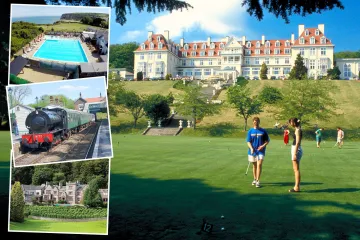
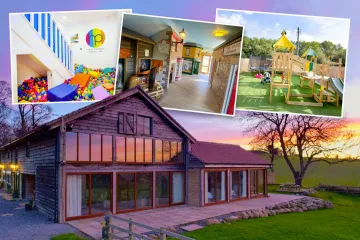
The UK’s biggest tropical indoor waterpark will close on November 2Credit: Facebook/Waterworld Aqua ParkIt will undergo upgrades and is expected to open in early 2027Credit: Facebook/Waterworld Aqua Park
But after the end of October half-term, Waterworld will temporarily close for upgrades to its waterpark.
It is expected to reopen early next year, although no date has been confirmed.
Sign up for the Travel newsletter
Thank you!
Visitors can enjoy the last day of thrills on Waterworld’s 30 rides and attractions on November 1 along with a live DJ.
Wayne Goodall, managing director of Waterworld Leisure Resort, said: “Our closing party is the perfect chance for visitors to make a last splash with us before we close for a short time to make exciting changes across the Aqua Park.
“At its heart, Waterworld offers families a place to spend time together, escape from everyday life and enjoy that holiday feeling, whatever the weather.
“The upgrades we have planned are set to build on that sense of fun and enhance the way we tell our story, creating a more immersive experience for our guests. We can’t wait to reveal more about the upcoming investment soon.”
He added that the Adventure Mini Golf and Adventure Mini Village will remain open.
The tropical waterpark sits at 30C even in the winter along with slides like the Space Bowl which is shaped like a UFO.
Nucleus is a popular water rollercoaster, there’s also Stormchaser and Cyclone.
The waterpark is also home to Thunderbolt, which is the UK’s first trap door drop slide.
On November 1 will be the ‘Last Splash’ partyCredit: Waterworld
As well as the main wave pool, there are river rapids and the Jungle House is suitable for youngsters with water cannons and the monsoon monster splash.
The bubble pools are a more relaxing spot away from the high-speed watercoasters thrills.
During the summertime, there’s an outdoor pool open to visitors too.
Of course, the waterpark is still available to book now with tickets available for £17.50 – for children under three-years-old tickets start from £7.
Away from the waterpark, there are two mini golf courses inside the resort, each with 18-holes as well as a mini Adventure Village with everything from doctors to libraries.
Both of these attractions will remain open throughout the rest of the year.
At Waterworld Resort is also two mini golf coursesCredit: Refer to sourceThe play village opened three years ago in 2023Credit: Refer to source
There’s also a restaurant, cafe and gift shop on-site which are also expected to remain open.
In recent years, the attraction has undergone a number of renovations.
One of the newest additions to the waterpark as well is the M Club Spa and Fitness.
In 2023, it opened its new £250,000 immersive play village, then in 2024, £13million was spent on behind-the-scenes upgrades to the waterpark.
Our journalists strive for accuracy but on occasion we make mistakes. For further details of our complaints policy and to make a complaint please click this link: thesun.co.uk/editorial-complaints/
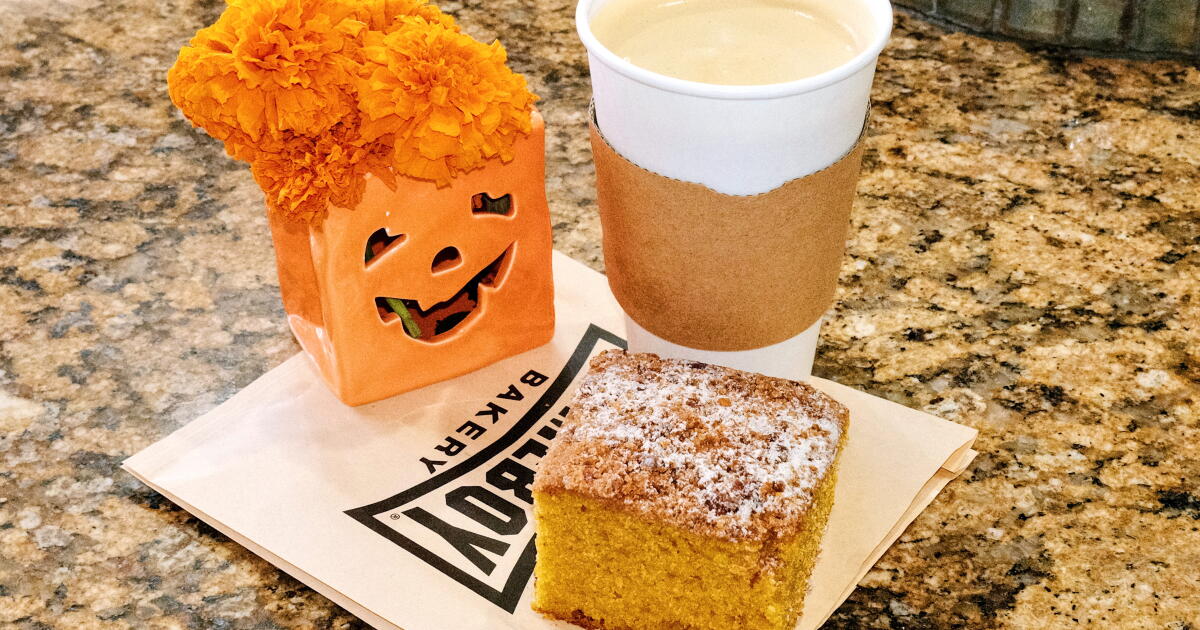
Thank You Coffee’s Kabocha Squash Latte, or KSL, has garnered a cult fandom over the years. The gourmet, Asian-inspired take on the pumpkin-spice originator is made with fresh squash and house-made syrup, and it will return to the Chinatown and Anaheim locations in early November. Until then, and finding a home in the newly opened Chinatown space, are two new seasonal lattes. The cozy apple latte (pictured) is fragrant, comforting and available through November, made with a house syrup involving cold-pressed apple juice, green tea, sour plum powder, ginger, cardamom and more. It’s topped with a dash of even more sour plum powder, which gives the effect of tart green apples on the nose and tongue. The sweet corn latte, inspired by cornbread, is a sweet-savory mix of brown butter, malted milk powder, annatto seed and beyond, and can be found through October.
Everyone is going to die. Acknowledging this — and reminding oneself daily of one’s mortality — is a core tenet of Buddhist teachings. Few places make that reminder more vivid than Hollywood Forever Cemetery, the iconic Los Angeles graveyard where more than 90,000 people are buried.
Inside the Masonic Lodge on the cemetery grounds, beneath chandeliers, dozens of people search for stillness with a meditation class. In an ornate Italian Renaissance-style room, participants sit scattered across couches and cushions, cross-legged with their eyes closed. The room is silent.
Headstones at Hollywood Forever Cemetery.
Nico Cary is one of the meditation group leaders at Hollywood Forever Cemetery.
For meditation teacher Nico Cary, the cemetery is an ideal backdrop for mindfulness and a lesson in impermanence. “It is quite grounding and an extension of some of the practice we do,” Cary says.
Beth Kaiserman, who regularly attends the meditation group, sees the cemetery as a chance to demystify death. “It’s accepting it as part of life. We’re coming out of our lives to come to this meditation. We’re walking by these gravestones that have been here for so long,” she says. Death, in her mind, doesn’t have to be taboo. “It is a big part of the practice to hopefully come to some level of acceptance that it’s just part of the cycle.”
Practicing meditation at Hollywood Forever is a privilege, explains Cary. The cemetery is not simply a place where people come to mourn; it is a place where relatives return to remember, honor and love those who have died.
Hollywood Forever is, quite literally, livelier than most cemeteries. The grounds are home to a colony of roughly 60 abandoned cats that has attracted a group of loyal caretakers, as well as dozens of peafowl roaming freely. The cemetery is also the final resting place of Hollywood legends, including Cecil B. DeMille, Judy Garland and the rock group the Ramones, where fans leave offerings. Since 2002, Cinespia has hosted outdoor screenings of iconic films at the cemetery during the summer, drawing hundreds of people to the grounds. The cemetery also hosts summer concerts.
“It feels pretty special to be somewhere, on land that’s so cared for, and that so many people come to share love, really — to remember their loved ones, to honor their ancestors,” Cary says.
For more than eight years, Insight LA has brought meditation to Hollywood Forever every Monday night, with a revolving list of teachers leading sessions in the Masonic Lodge. The class is donation-based, as is traditional in the Buddhist practice. Often, the teachers will lead a guided walking meditation through the cemetery grounds.
Insight LA, a Buddhist teaching nonprofit that was founded in 2002 by Trudy Goodman, is based in Santa Monica but also has a retreat house in Benedict Canyon for daylong events.
Members of a weekly meditation group at Hollywood Forever Cemetery participate in a guided session inside the Masonic lodge.
“We have yearlong programs. We have residential retreats. We have weekly drop-in meditation classes, and then we have the Hollywood Forever group too,” says Melissa McKay, the executive director at Insight LA.
According to McKay, the benefits of meditation are striking. “Put simply: It decreases stress, bringing calm and clarity, becoming more aware of oneself,” she says. “It decreases the negativity of the mind, self-hatred, the fears, the spiraling judgment — all of that. It increases the positive sides of our mind: our compassion, care, friendliness, clarity.”
A 2026 UC San Diego study confirms that just seven days of meditation can create molecular changes in the brain linked to stress relief, enhanced neuroplasticity and natural pain relief. The study also shows that meditation can positively affect the immune system and metabolism.
James Rokel practices mindfulness while walking alongside tombstones.
Despite the backdrop, meditation is not just about facing death, McKay says — it’s about learning how to live consciously. One participant, Jared Swanson, thinks of the meditation group as a school for emotional awareness.
“There was a moment where I realized I was in a lot of cycles — relational cycles — and wanted change,” says Swanson. He has been integrating the mindful practices into his life. “I think it’s a desire to be more responsible for my life, to be more present and responsible for my actions and choices,” he says.
Meditation nights attendees range from curious first-time visitors to seasoned veterans who have been practicing Buddhism for over two decades. Cary says the practice can benefit people regardless of their experience level.
“The intentional space to be with ourselves is so nourishing,” says Cary. “Then we practice. You add in a practice on top of that and magical things start to happen.”
Cary leads the group in 30 minutes of silence before a lesson. Participants settle into their cushions. He invites them to rock gently back and forth, a movement he calls “grandmother wisdom,” the kind of care one might offer a crying child. He poses a question for reflection: “What are you trusting right now?”
Insight LA has brought meditation to Hollywood Forever Cemetery every Monday night for nearly 10 years; a walking meditation is often involved.
Nicki Katz, who has been attending the meditations for two years, enjoys the practice of sitting in the quiet. Last year, she attended a 10-day silent retreat, only to accidentally break her silence by excitedly greeting a bunny during a picnic. “I come back to the body and the present awareness of allowing my mind to find some sense of gratitude,” says Katz. She explains that silence also helps her become more intentional with her words.
Tonight’s lesson is on truthfulness and embodying loving kindness. Lessons vary from week to week. “Oftentimes, it’s what the teacher is feeling or what’s come up for them in their practice,” says Cary.
For Monday meditation, the teaching group has assigned the 10 paramis (spiritual virtues) of Buddhism, which explore topics like generosity, wisdom and patience. “We’ve been going into that all year, so each month is one of the paramis,” says Cary.
“The intentional space to be with ourselves is so nourishing,” says meditation leader Nico Cary.
To begin the lesson, he reads a letter he wrote to the president at 5 years old, cautioning him of the perils of nuclear war. The letter is met with snaps and giggles, as a 5-year-old Cary warns of imminent death. “Apparently I was a peculiar child with a morbid sensibility, preoccupied with nuclear war,” he says, smiling. “It makes a lot of sense as to why I became a Buddhist.”
Cary begins to speak about the current moment and how he believes truth has become distorted and refracted in the age of social media. “Trauma is a distortion of reality,” he says. He then invites group members to consider love and kindness in their daily practice.
As the session winds down, participants spring to their feet to discuss the evening. The Masonic Lodge bursts into chatter — the silence abandoned. Tonight, the cemetery is alive.
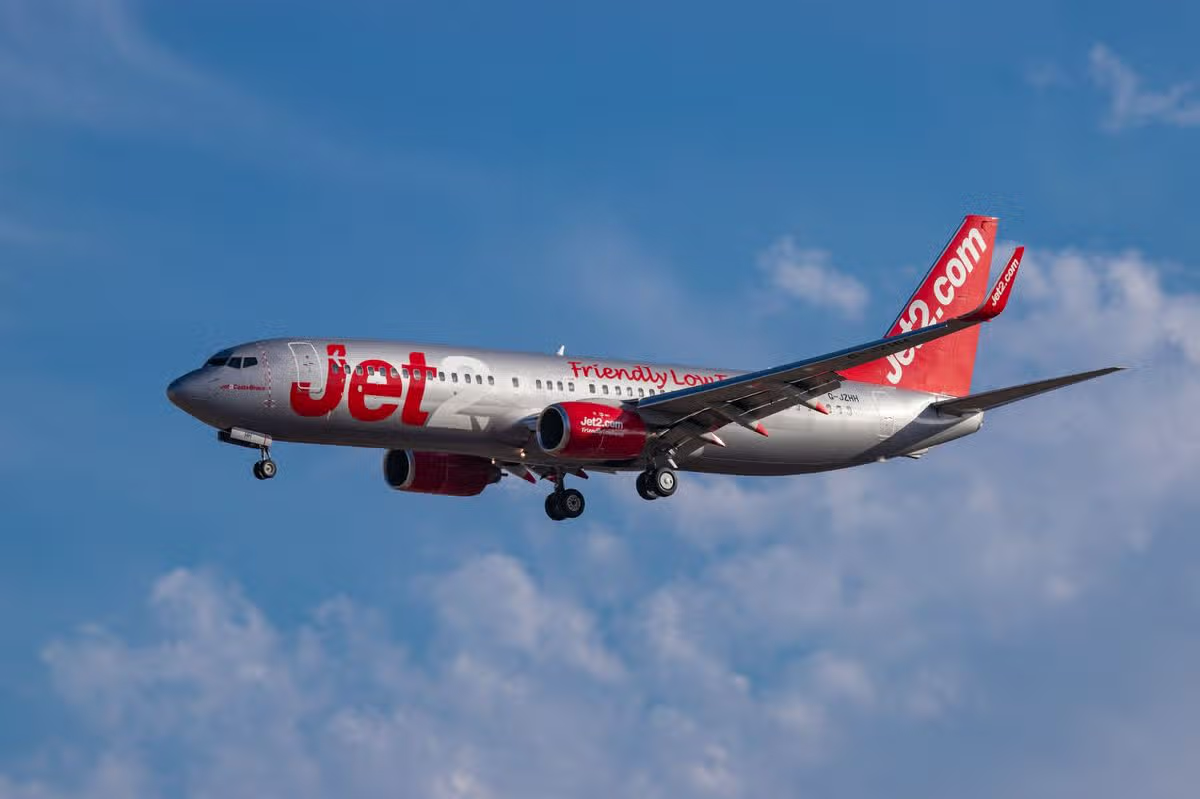
We’ve all been there – booking a flight and hoping for a decent seat. But which spot on the plane should you avoid at all costs? I asked the experts, and they all agreed on one area to steer clear of.
Boarding a plane can feel like a lucky dip(Image: Oscar Wong via Getty Images)
Finding yourself in the wrong plane seat is a surefire way to start off a holiday with a whimper.
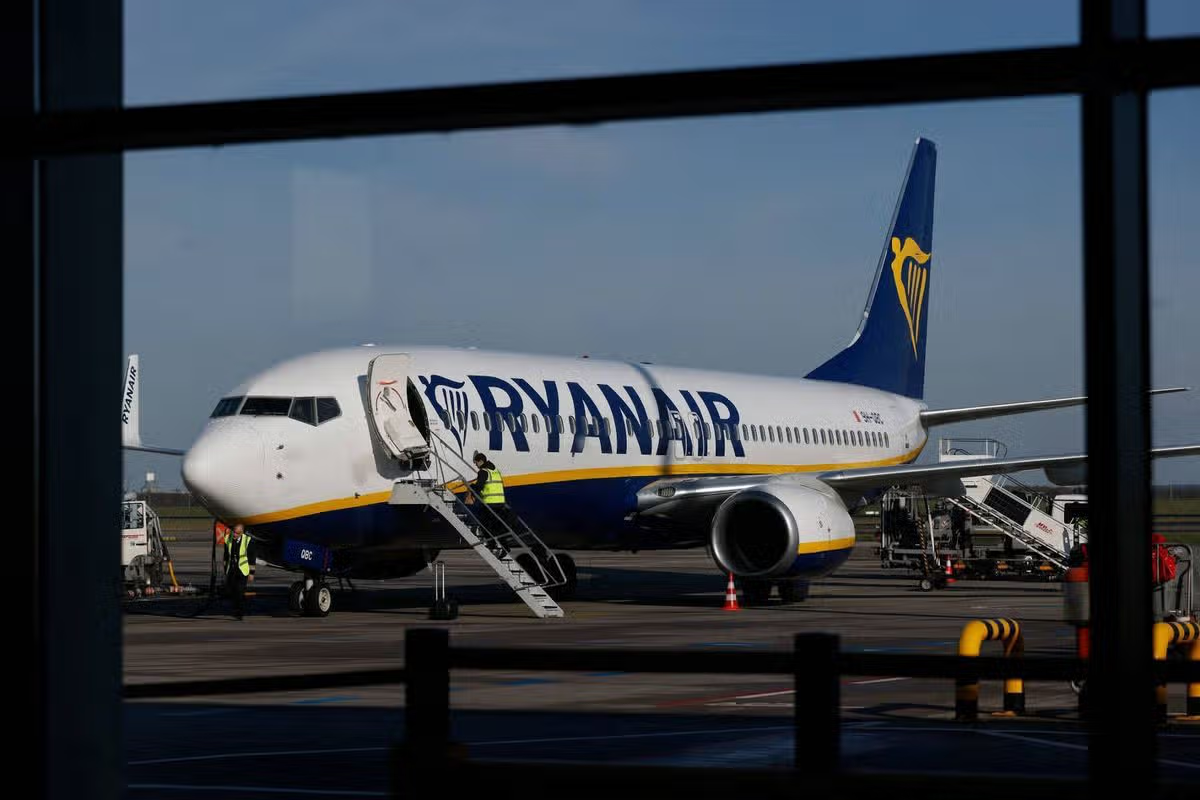
I recently found myself wedged next to an increasingly wound-up man on a Ryanair flight. He kept huffing, puffing and angrily texting his girlfriend until, five minutes after take-off, he erupted. “Get your elbow off me, my guy,” he shouted at the man sitting on the other side of him, who understandably looked surprised and confused.
Although shouting at strangers probably isn’t the solution, being in an uncomfortable budget airline seat, wedged between strangers on a hot summer day, is no fun. Which is why choosing the right plane seat can make a big difference to the start of your holiday. From cabin noise to limited storage, an uncomfortable spot can leave you wishing you had booked elsewhere.
Do you have a travel story to share? Email webtravel@reachplc.com
To help holidaymakers make that choice, we asked travel experts which seats they would avoid. Most pointed to the same area: the very back of the plane, and not because you’re more likely to sit next to angry passengers there. Nicholas Smith, Holidays Digital Director at Thomas Cook, said the rear of the aircraft can be particularly uncomfortable for passengers who are unsettled by turbulence.
He explained: “Seats at the very back are typically less desirable. They are close to the galley and restrooms, service can be slower, food choices may be limited, and it is also the area where movement during turbulence feels strongest.”
Nicholas recommended thinking about what matters most before choosing a seat. Although seat selection often costs extra, it may be worthwhile if comfort is a priority.
He said: “Thinking about your priorities in advance also makes a difference – nervous flyers will be more comfortable over the wings, those with a tight connection should choose an aisle near the front, while couples booking a row of three might secure the window and aisle, leaving the middle free for a chance at extra space.”
Izzy Nicholls, a travel expert and founder of road trip blog The Gap Decaders, also advised avoiding the rear of the cabin. She said: “Seats at the back are best avoided. They’re typically noisier because of engine proximity and galley activity, and you’ll be among the last to board and leave the plane.”
For a quieter journey with fewer interruptions, Izzy recommended sitting towards the front. She explained: “Travellers who want a calmer journey should book seats at the front of the plane. This area is away from restrooms and heavy foot traffic, so you’ll experience fewer interruptions.
“Choosing an aisle seat here also gives you the freedom to stretch your legs and get up easily without disturbing others. Select these placements to make long flights more comfortable and reduce the effects of motion.”
Storage is another consideration, particularly for passengers who board late. Jacob Wedderburn-Day, CEO and co-founder of luggage storage company Stasher, warned that overhead space near the back may be harder to find. He said: “Avoid sitting near galleys and toilets, where staff members often store their things in overhead bins, leaving less space for passenger baggage. The last few rows are a concern because if you board late, the bins above you may be filled, which means you may have to store your luggage several rows away. Also, stay away from seats that are located behind bulkheads, as these spaces often have limited storage.”
Andrea Platania from Transfeero highlighted further drawbacks of the last row, including restricted recline and noise. Andrea said: “The very last row is typically the least desirable: limited recline, proximity to bathrooms, and more cabin noise. Middle seats anywhere are usually least popular unless you’re traveling in a group.”
Passengers looking for extra legroom could consider an exit-row or bulkhead seat, although these options come with restrictions. Andrea added: “Exit-row and bulkhead seats offer more space, but they come with trade-offs: fixed armrests, limited recline, or restrictions for passengers traveling with children.”
For those concerned about turbulence or prone to motion sickness, Andrea recommended choosing a seat over the wings rather than at the back. The expert advised: “Sit over the wings. This area is closest to the aircraft’s centre of gravity, so you’ll feel less turbulence compared to the back, where bumps are magnified.”
Both Puglia and the Amalfi Coast are ideal if your idea of a holiday involves spending your days wandering around pretty coastal towns, stopping for seafood and taking a dip in the Mediterranean
“I recently travelled around southern Puglia, which sits east of Amalfi across Italy, and I found myself constantly comparing the two”(Image: Supplied)
There is a reason the Amalfi Coast is one of Italy’s most famous holiday destinations. The combination of dramatic cliffs, turquoise water, colourful villages and incredible Italian food makes it almost impossible not to fall in love with it. But there is also a downside to being somewhere that beautiful and well-known: everyone else wants to visit, too.
I recently travelled around southern Puglia, which sits east of Amalfi across Italy, and I found myself constantly comparing the two. Both regions have a lot in common: they’re hot, beautiful and have an unmistakable Mediterranean atmosphere.
But one thing in particular sets them apart. Instead of huge crowds filling every viewpoint, I found myself in Puglia walking through quiet streets where locals were still going about their everyday lives. The region isn’t exactly a secret, with places such as Alberobello firmly on the tourist trail, but it’s still much easier to escape the crowds there.
So how else do the regions match up?
Do you have a travel story to share? Email webtravel@reachplc.com
Landscape and towns
The biggest similarity between Puglia and the Amalfi Coast is, unsurprisingly, the sea. Both destinations are ideal if your idea of a holiday involves spending your days wandering around pretty coastal towns, stopping for seafood and taking a dip in the Mediterranean.
The Amalfi Coast is famous for its steep cliffs, with towns seemingly built into the mountainsides above the sea. Puglia, meanwhile, is generally much flatter. I didn’t mind losing the cliffside views as Puglia’s flatness made exploring much easier. You don’t have to spend your day navigating steep roads and packed coastal viewpoints.
Otranto is a perfect case in point. Located on the Adriatic coast, the easternmost city in Italy has scenery you might expect on the Amalfi Coast, but with a much quieter atmosphere. This fortified old town is packed with tiny streets, historic buildings and restaurants, while the seafront opens out onto bright blue water.
I never felt overwhelmed by tourists there. I could simply wander around without having to constantly dodge people or wait for a gap to take a photograph. Greek and Byzantine influences have shaped the town, as did a brutal massacre in 1480 when Ottoman forces killed hundreds of residents who refused to renounce their Christian faith. The event is still remembered at Otranto Cathedral, where the remains of the 800 martyrs are kept.
Travel a little further south and you’ll reach Alberobello, the most touristy town in Southern Puglia. Alberobello is probably the most famous destination in Puglia, thanks to its extraordinary trulli: small whitewashed stone houses with distinctive conical roofs.
There are more than 1,400 trulli in the town, and the area has UNESCO World Heritage status. It is incredibly pretty, but also extremely touristy. The main streets are packed with souvenir shops, restaurants and visitors taking photographs, so if you’re expecting to discover a completely hidden Italian village, you might be disappointed.
But I found an easy way around this. Cross the town’s valley into Rione Aia Piccola and the atmosphere changes almost immediately. This is a residential area where people still live in traditional dry-stone huts, called trulli, and the streets are noticeably quieter.
The contrast summed up my experience of Puglia: even in the places that are undeniably touristy, there’s another side to discover if you’re willing to walk a little further.
Which is cheaper?
One of the biggest advantages Puglia has over the Amalfi Coast is the price. The star-studded West Coast has a reputation for being expensive, particularly in famous towns such as Positano, Amalfi and Ravello, where accommodation and restaurants can quickly add up.
Puglia isn’t necessarily a budget destination, particularly in peak summer, but I found it much easier to eat well without spending a fortune. Otranto was particularly affordable, with filling paninis and seafood dishes for around €12 or less. On the Amalfi Coast, finding a bargain is nearly impossible. You find yourself paying a premium simply for a location and view.
The food
This is an area where Puglia and the Amalfi Coast have plenty in common. Both regions make excellent use of fresh seafood, vegetables, olive oil and wine, but they have their own specialities.
In Puglia, olive oil is everywhere, used liberally along with tomatoes, almonds, fresh root vegetables and local cheeses. One of the region’s most famous foods is orecchiette, the small ear-shaped pasta traditionally served with broccoli rabe, while burrata is another staple.
I also kept coming across focaccia barese, a soft bread topped with tomatoes and olives, as well as panzerotti, fried pockets of dough usually filled with tomato and mozzarella. Along the coast, seafood naturally features heavily, with octopus, mussels and other freshly caught fish appearing on menus.
The Amalfi Coast has its own distinctive flavours. Lemons are perhaps the biggest one. The region is famous for its large Amalfi lemons, which are used in everything from desserts and drinks to savoury dishes, while delizia al limone and limoncello are two of the most recognisable treats.
Seafood is also central to the Amalfi Coast, with dishes such as seafood scialatielli, a type of fresh pasta, and totani e patate, squid cooked with potatoes.
Which Italian destination is better?
It’s not that Puglia has made me fall out of love with the Amalfi Coast. The destination is spectacular, and there is a reason millions of people want to see those famous cliffs and colourful villages for themselves.
But after travelling around Puglia, I found myself wondering whether it might actually be the better choice for a traveller who wants a quieter, more authentic experience. If you want dramatic cliffside scenery, glamorous restaurants and famous Instagram views, Amalfi is hard to beat. But if you’re after beautiful beaches, historic coastal towns, incredible Italian food and somewhere less crowded, I’d seriously consider Puglia.
The price includes return flights from London Gatwick or Heathrow to Brindisi, accommodation at a four-star all-inclusive resort, all coach travel, and guided tours and excursions. You can find out more and book on greatrail.com.
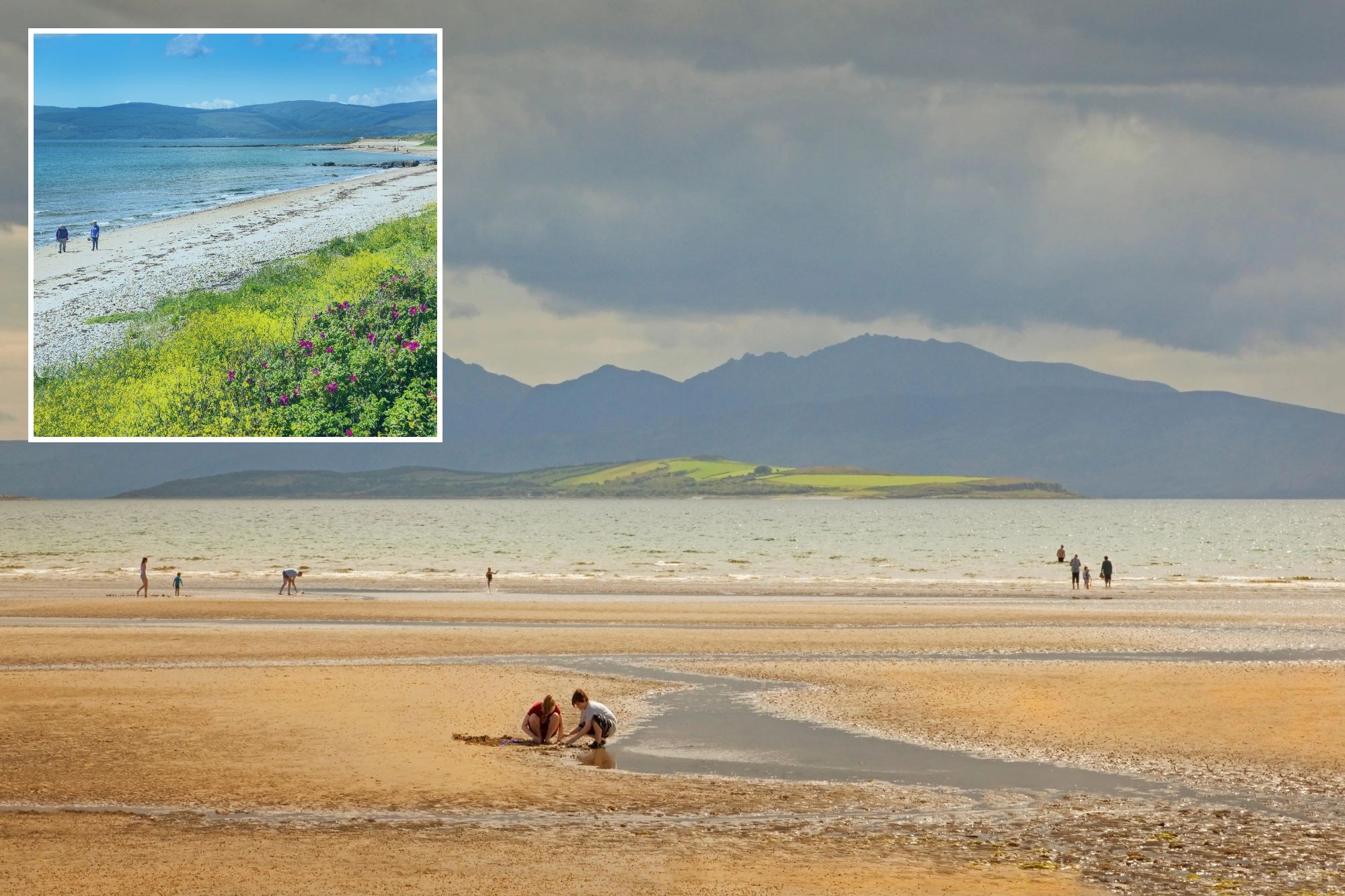
Portavadie, on the banks of Loch Fyne on the west coast of Scotland, was originally earmarked as an oil rig, but plans fell through. Today it is a marina with holiday homes, a restaurant and bar, a gift shop, and a leisure centre with what is believed to be the biggest heated outdoor infinity pool in Scotland. There are also outdoor spa pools and a sauna, an indoor pool and a gym; treatments such as massages and facials are available. The facilities are powered by a woodchip biomass generator, and have views across the loch and over to the Isle of Arran. £14 for a 90-minute swim, sauna and hot tub
Photograph: Adam White/Beccles Lido
Swimmers have long taken dips in the Waveney, and in 1894 an enclosed “bathing place” was dug out of the river at Beccles, a market town on the southern edge of the Broads national park. In 1959, this was replaced by an unheated riverside pool, which 50 years later became a three-pool lido. This year, the pools will be heated to 28C in winter for the first time, initially until 3 January, then, if popular, through to the end of March. The 30-metre main pool has a springboard and slide; there are also toddler and splash pools, a wood-fired sauna and a cafe. The timetable is yet to be finalised but there will be lane swimming, family fun swims and aquacise classes. From £7.40 adults
Photograph: Danny Lawson/PA
In July, the Peak District village of Hathersage celebrated the 90th anniversary of its 30-metre outdoor pool. It was given to the village by a local philanthropist, George Lawrence, who was killed in the Sheffield blitz. The original coke boiler, which heated the water to a maximum of 20C, has been replaced with a modern renewable heating system (temperature at time of writing: 27C). It is open daily year-round – hours are reduced from November to March – with hot poolside showers, and a sauna from October. There are regular night swims with live music, and a cafe serving hot drinks and homemade food. £8 adults
Photograph: Andre Pattenden
The riverside pool on King’s Meadow, Reading was fed by the Thames when it opened in 1902, originally for ladies only. It was converted to mains water in the 1950s, closed in the 70s, and finally reopened after a three-year restoration in 2017. Today, the 25-metre pool is heated to 20-24C year-round; there is a hot tub (38-40C), sauna and steam room, and a cold-water drench bucket and “ship funnel” shower. Swimmers can also book a massage. The high-end poolside restaurant opens at 9am for breakfast (homemade granola, bacon butties, Turkish-style eggs) and serves lunch and dinner daily (such as crab tagliatelle or Ibérico pork). From £25 for a two-hour swim, sauna, steam and hot tub
The pool at Chesham Moor sports centre is believed to have begun as a deep puddle used for bathing in the 1890s. Today it is a 25-metre spring-fed lido, upgraded in 2023, with a Nasa-designed ionisation unit, which keeps chlorine levels low. It has solar panels and is heated to 27C year-round, although in very cold weather it may be a little cooler. It is open daily for a mix of lane and general swimming, plus aqua fitness sessions and swim masterclasses. There are also outdoor circuit classes and tennis courts, a nearby riverside walk, and a cafe serving hot drinks, sausage rolls, sandwiches and cake. From £7 adults
This “stepping stone to the sea” opened in 2023: a 50-metre, six-lane, beachfront swimming pool. It is heated to a minimum of 19C year-round. Coaching is available for all levels, from beginners learning to swim to open-water swimmers and triathletes. For a post-training refuel, Fika serves brunch and coffee, Wood x Coal cooks lunch and dinner over fire, and Bison Beer has 14 draught beers plus wine and cocktails. Just four miles along the seafront is Saltdean Lido, a 40-metre, crescent-shaped modernist masterpiece (built in 1938). This winter, it opens only for the month of December, when it is heated to 19C; there is also a sauna (run separately). £11.90 adults
Built in 1922, this 36-metre pool next to Bushy Park in south-west London is now run by a charity. It is open 365 days a year and heated to a tropical 28C. There is also a 12.5-metre learner pool, gym, fitness classes and Sundeck Cafe (porridge, soup, jacket potatoes), and regular events such as moonlight and festive swims. Londoners are spoiled for choice when it comes to heated outdoor pools – other options include London Fields Lido (50 metres, 24C), Oasis Sports Centre in central London (27.5 metres, 26C and a sauna), Charlton Lido (50 metres, 22C), Pools on the Park in Richmond (33 metres, 25C) and Park Road Lido in Crouch End (50 metres, 22-24C).
Photograph: Ceri Breeze/Alamy
The National Lido of Wales, in Pontypridd, opened in 1927 – swimmers over the years include a young Tom Jones. It reopened in 2015 after a £6.3m restoration, and today has three heated pools: a main pool, an activity pool and a splash pool. The pools are heated to 28C in the summer, but in winter the heat is turned down to a bracing 14-15C. These cool-water swims are avaiable at weekends from 24 October to 28 November, for ages 16 and over. There are hot outdoor and indoor showers, and heated indoor changing rooms. Some swimmers may prefer to wait for the Boxing Day and New Year’s Day swims, when the heat is cranked back up to a steamy 28C. £4 adults
This Victorian outdoor swimming pool opened in 1850, closed in 1990 and was almost redeveloped into flats. Instead, it was bought and restored by Arne Ringner, the businessman who later bought Thames Lido (see above), and reopened in 2008. The 24-metre pool is heated to 20-24C year-round. There is a sauna, steam room and hot tub, and a poolside restaurant and bar that runs regular supper clubs. Upcoming events include synchronised swimming shows, Christmas lunches and dinners (three courses £35/£50) and a New Year’s Eve party (£135 for a two-hour swim and five-course dinner). From£25 for a two-hour session – swim, sauna, steam and hot tub
Faversham Pools comprises three heated outdoor pools – a 33-metre lido with three diving boards (1, 3 and 5 metres), a fun rapids pool and a toddler pool with slides – plus a 25-metre indoor pool and whirlpool bath. While the smaller pools are open only from April to September, the lido is open year-round, albeit with reduced hours from September to April (4-7pm on Tuesdays and Thursdays and 8-11am on Sundays). These winter outdoor sessions are lane swimming only, for over-16s. Tides Cafe serves warming homemade food, such as soup (perhaps Thai butternut squash or Egyptian lentil), toasties, macaroni cheese and curries. £8.50 adults
IF you’re planning your 2027 holiday already, then you can get ahead of the curve with these 10 destinations.
A new report released by Expedia has revealed the trending hotspots for next year, which have seen a boom in searches.
Along with the soon-to-be-popular destinations, it also looked at other trends, such as set-jetting (destinations popular after being featured in films or TV shows) as well as ‘trip snacking’ which are shorter, sometimes only 24-hour, trips.
Called the Unpack ’27, Expedia Group CEO Ariane Gorin explained: “In 2027, travellers are being more intentional in choosing their next adventure, seeking experiences that are more personal and purposeful to them.
Sign up for the Travel newsletter
Thank you!
“We’re making it easier to discover, plan, and book the right trip, so travellers can spend less time managing the details and more time enjoying the moments that matter.”
Here are the 10 destinations set to be big next year.
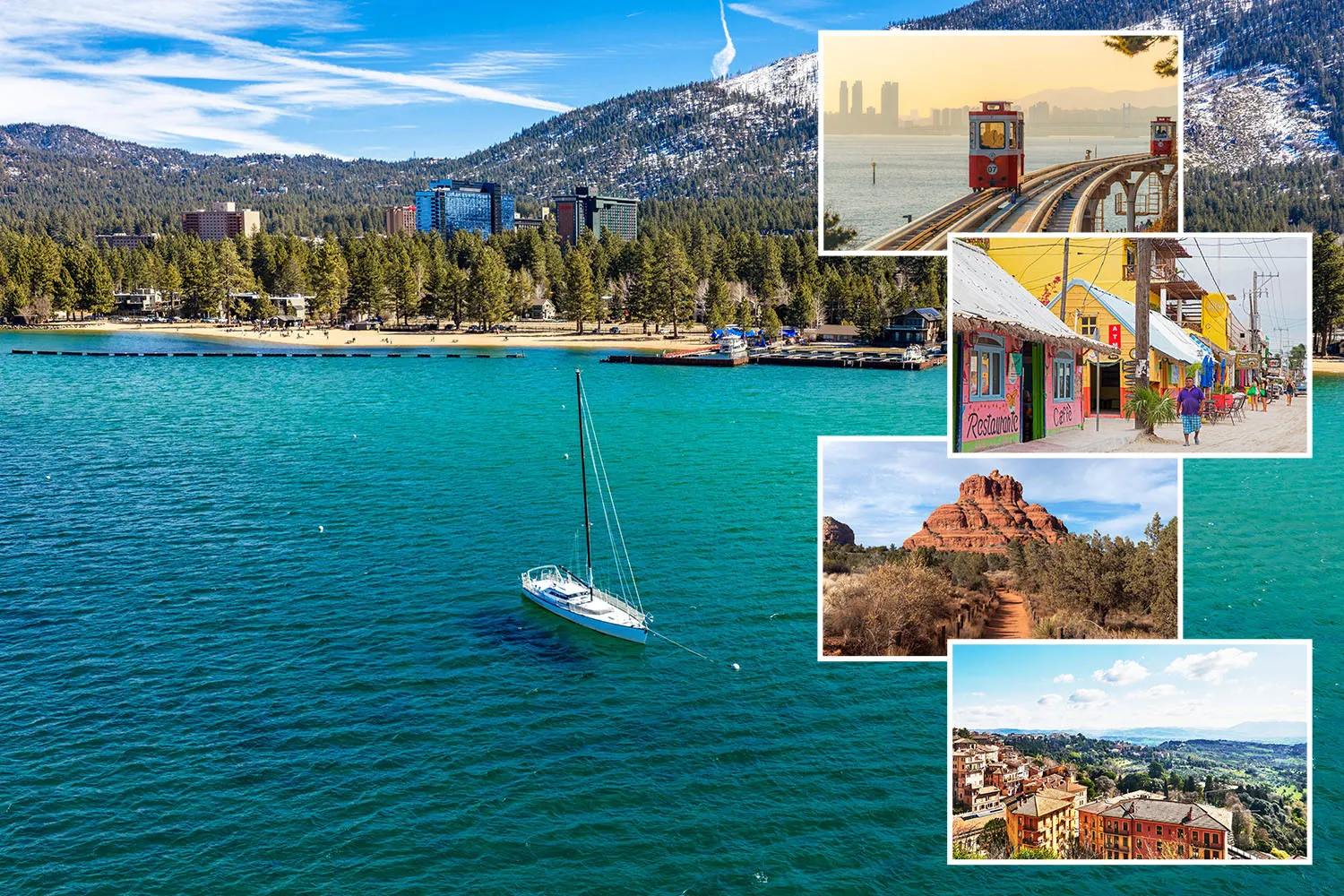
South Lake Tahoe has seen the biggest rise in searchesCredit: Alamy
The destination that has seen the biggest jump in searches is South Lake Tahoe, up 195%.
This is one for the outdoor enthusiasts, thanks to its beautiful mountain ranges and huge lake.
It is a year-round resort, meaning it is great for hiking in the summerskiing in the winter.
Brits will need to fly to the main Reno-Tahoe International Airport in Nevada, which requires a layover at another US airport.
Hyogo, Japan
Hyogo is a great alternative destination in JapanCredit: Alamy
Japan is on everyone’s lips right now, but ditch Tokyo and Kyoto for Hyogo.
The prefecture in the Kansai region has seen searches increase by 95%.
It’s main attraction is Himeji Castle, as well as its hot springs too and world-famous Kobe beef.
To get there, Brits can fly to Tokyo or Osaka, then hop on a domestic flight or high speed train.
Punta del Este, Uruguay
Punta del Este is loved by celebsCredit: Alamy
Nicknamed the St Tropez or Monaco of South America, searches to Uruguay‘s Punta del Este are up 65%.
This is where the rich and the famous often visit, with luxury beach resorts lining the beach visited by celebs such as Shakira and Naomi Campbell.
While it is mainly known for its resort like, with yacht clubs, casinos and nightclubs, make sure to visit the unusual La Mano, a huge human hand sculpture from the 1980s.
Flights here from the UK will require a stopover, most likely in Madrid or Brazil.
Sedona, US
The landscape of Sedona is popular with hikersCredit: Alamy
The desert city of Sedona in Arizona is also booming in popularity.
With searches up 55%, the destination is most known for its huge red rock formations, which have hundreds of walking and hiking trails.
It’s unique landscape means it was also used to film a number of movies (mainly Westerns between 1940 and 1960), leading to it’s nickname of Arizona’s Little Hollywood.
Brits wanting to visit should fly to Phoenix Airport, then rent a car to drive there.
Busan, South Korea
Busan is Korea’s second city and has an amazing beachCredit: Alamy
KPop Demon Hunters, KBeauty and new Virgin Atlantic flights from the UK – it’s safe to say Korea is having a moment.
But outside of Seoul, the city of Busan has seen searches up by 50 per cent.
The second-largest city in the country, it is known for its huge sandy beach (best seen from the Busan X the Sky observation deck on floor 100) and the huge Lotte World Adventure theme park.
To get there, fly to Seoul from the UK then take the high speed train to Busan.
Holbox, Mexico
Holbox is a tiny island with no cars, and it getting popular with touristsCredit: Alamy
The tiny, car-free island of Holbox has been a popular destination with backpackers wanting to get off the beaten track.
But the Mexican island has since seen a jump in searches, up 45%.
Beautiful soft sand beaches, clean blue waters and colorful streets of graffiti and cheap tacos – what more could you want?
Fly to Cancun Airport, then take a bus and a ferry to get to the island.
Perugia, Italy
The historic hilltop city of Perugia in the Umbria region of Italy is a must for chocolate fansCredit: Alamy
The only mainland European destination to make the list, Perugia has seen searches increase by 35%.
Found on the hilltop, the Umbria capital is one for the foodies, being famous for its chocolate (and annual chocolate festival).
There is also Jazz festivals, historic fortresses and beautiful architecture to explore as well.
It is super easy to get to as well – Ryanair have direct flights from London Stansted from £20.
The Tweed, Australia
The Tweed is still barely known by BritsCredit: Alamy
Most people won’t have heard of The Tweed in Australia,
But searches for the New South Wales region have gone up by 35%, according to Expedia.
It is known for its river trails and national parks, sharing a border with Queensland.
This makes it easier to get to, with Brits needing to fly to Sydney of Melbourne followed by an internal flight.
Niagara-on-the-Lake, Canada
Niagara-on-the-Lake in Canada has an unusual British historyCredit: Alamy
The Ontario town, Niagara-on-the-Lake, has seen searches 35% up.
It is often said to be one of the region’s prettiest towns, and is where Niagara River meets Lake Ontario.
Expect Victorian architecture – it was built by Brits as a military defence – and unique ice wines.
Brits need to fly to Toronto Pearson Airport, followed by a drive to get there.
Chichester, UK
The small city of Chichester weirdly has seen a boom in searchesCredit: Alamy
Bizarrely, the English city of Chichester made the list as well.
With searches up 30, the city is known for its 1,000 year old cathedral as well as its even older 2,000 year old Roman history.
It is also the only city in West Sussex, although remains one of the UK’s smallest with just 29,000 locals.
Ryanair services daily direct flights on the route for just £15 but from April next year, layovers will now be required for those wanting to fly to fly from the UK to this city
Ryanair plans to cut all flights to a European airport next year(Image: Getty Images/Stock Image)
Ryanair plans to cut all flights to a European airport next year. From April 2027, Europe’s biggest budget airline will no longer fly to Bremen in Germany.
This will axe around 500,000 seats. At present, Ryanair services daily flights on the route from London Stansted to Bremen for just £15. The airline’s website appears to have tickets for the final flights to Bremen scheduled for March 27, 2027.
Ryanair previously announced it would be cancelling 24 routes to and from Germany, cutting 800,000 seats in total. Nine airports will be affected by the decision, affecting major cities and popular with tourist spots:
Berlin
Hamburg
Memmingen
Baden-Württemberg
Cologne
Frankfurt-Hahn
Dortmund
Dresden
Leipzig
Earlier this year Ryanair said it will be reducing its flight schedule to and from Berlin by 50 per cent.
CEO Eddie Wilson subsequently said that Germany’s aviation market is “broken”. He also said it “needs an urgent fix.”
“As a result of these high government taxes/fees (the highest in Europe), and Lufthansa’s high-fare monopoly, German citizens/visitors now pay the highest air fares in Europe,” Mr Wilson said.
After 33 months of construction and $1.3 billion in spending, the Hollywood Burbank Airport’s new terminal opened on Tuesday morning, with a medley of arrivals and departures in the minutes after 7 a.m.
Instead of the snug, historic facility whose Spanish Colonial Revival style dated to 1930, travelers found themselves in a sleek terminal at Winona Avenue and Hollywood Way, distinguished by high ceilings, contemporary art, twinkling terrazzo floors, abundant charging stations and landscaping full of cactus and succulents, along with a few “wet paint” signs. Passengers gawked at mirrored grid artwork by Glenn Kaino overhead.
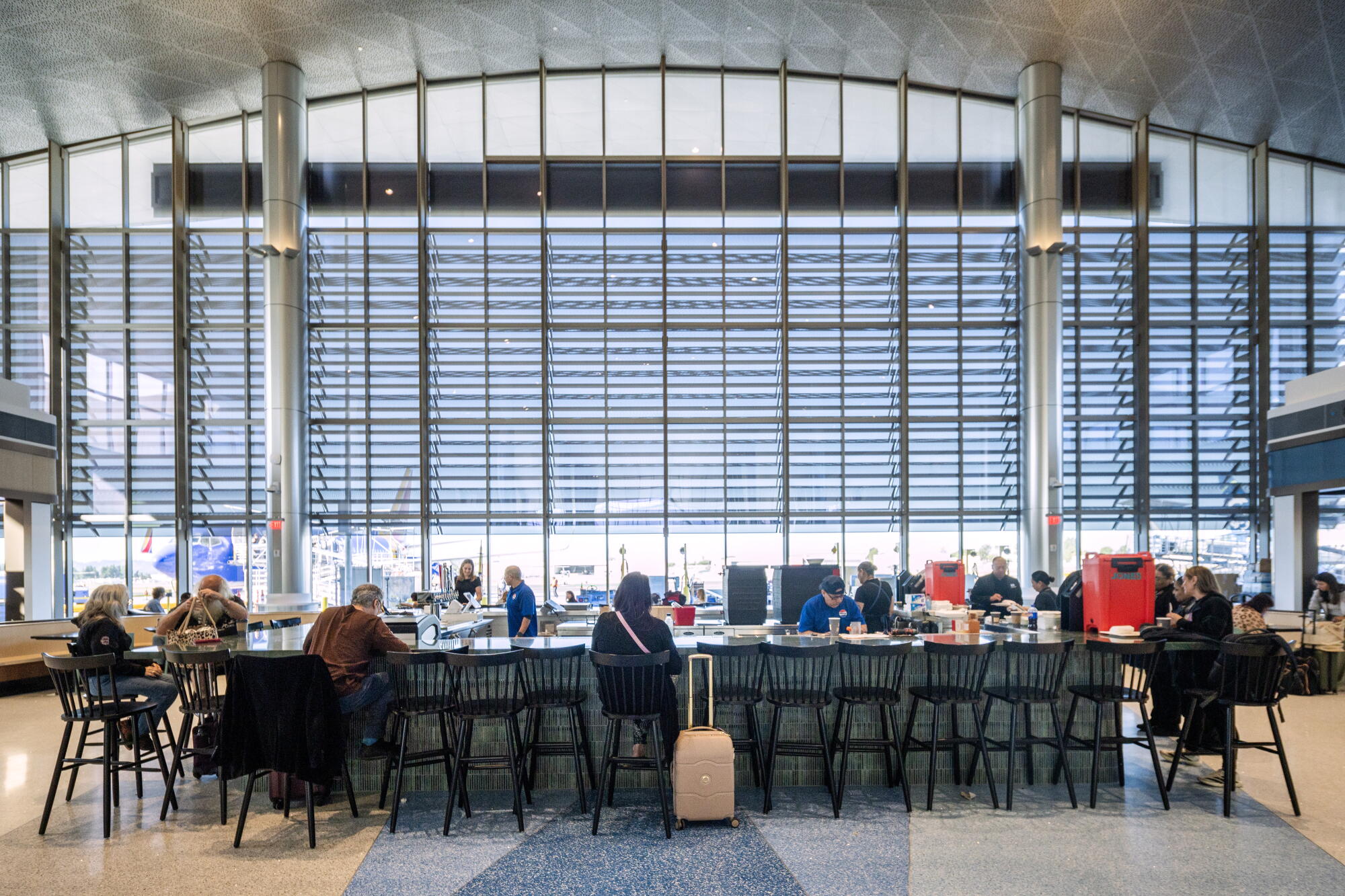
Passengers at Pete’s Pub inside the new Hollywood Burbank Airport terminal. None of the 13 food concessions are fully open.
(Myung J. Chun/Los Angeles Times)
“It was weird,” said Tanya Radke, 25, of Van Nuys, who was headed to Kansas City and caught off-guard by the terminal switch. “It was not what I thought was going to happen today for me.”
But looking around, the passenger called the new space a big upgrade. “It reminds me a lot of the Kansas City airport,” Radke said. “It was well overdue.”
The day’s schedule called for about 90 departures and arrivals by eight airlines, roughly the same schedule as in the previous buildings. The new terminal also has the same two runways and same number of gates — 14 — as the airport’s previous two-terminal alignment. And passengers still often board planes from the front and back, using outdoor steps from the tarmac, rather than enclosed tunnels. That practice is something travelers have long praised for its informality and efficiency.
But the new building does bring many changes. It measures about 50% larger than the two old terminals combined — about 355,000 square feet — with higher ceilings and a pair of illuminated steel sculptures by Cliff Garten flanking the main entrance.
The first departure was Alaska Flight 3401 to Santa Rosa at 7:03 a.m. with 33 passengers aboard. The first arrival: Southwest Flight 189 from Las Vegas, which landed at 7:16 a.m. with 30 passengers aboard.
The new terminal opened after 33 months of construction and $1.3 billion in spending.
(Myung J. Chun/Los Angeles Times)
“The taxi off was a little different. Instead of turning right, you turn left,” said Southwest Airlines pilot Mike Petros, who arrived at 7:31 a.m. with a planeload of passengers from Sacramento. At the start of the flight, Petros said, “We told them that we would be flying to a new terminal, so if they had anybody picking them up, let them know.”
Still, many were surprised. Airport management deployed several staffers to redirect confused travelers from the old terminals (now idle) to the new one. Anthony Bailey, 29, said he learned of the switch from an Uber driver on his way to the airport.
“So far, I’m liking it,” Bailey said of the new terminal, standing near gate 13 before catching a flight to Las Vegas. “Nice and clean. The TSA line was pretty smooth.”
While most of the six retail stores were open on Tuesday, none of the terminal’s 13 food concessions were fully operating. Two eateries were offering grab-and-go options, and airport spokesperson Mike Christensen said more options would arrive later in the day and week.
Katelyn Bailey and travel companion Pigeon check in for a flight to the Bay Area.
(Myung J. Chun / Los Angeles Times)
When the new terminal concessions open, dining options will include Guy Fieri’s Flavor Town, Spring Chicken, Diane’s Farm Table and Italian Market, Jones Coffee, Perry’s Joint, Poquito Mas, West Coast Smash Burgers, Massis Kabob, Starbucks, Border Grill, Jet Tila’s Asian Table, Santa Canela bakery and a bar, Pete’s Pub, with picture-window views of the runways and Verdugo Mountains.
Many travelers, including William Langlois and Annie Cerillo of Tampa, noted the shortage of eating options on Tuesday. “It’s horrible, there’s no restaurants and not enough security stations,” said Langlois, who had gone to the old terminal first and was redirected. Before this change, “this was the easiest airport,” said Cerillo.
In the new terminal, airport officials say, the walk from the entrance to the farthest gate is 1,285 feet, down from 1,600 feet now, with wider corridors and sidewalks and access to power plugs for devices from every seat. (Its many charging stations are now mostly USB-C ports, not USB.) The new terminal includes eight TSA lines, versus five in the old set-up. Baggage claim carousels have moved from outdoors to indoors.
The airport’s new parking structure includes about 2,000 spots and 310 charging ports for electric vehicles. (The airport’s total number of parking spaces is 6,637, the same as before.)
Alaska Airlines Flight 3401 to Santa Rosa was the first flight to depart from the new terminal at Hollywood Burbank Airport on Tuesday.
(Myung J. Chun/Los Angeles Times)
As it did before, the airport supplies shuttle bus service between the new terminal and Burbank Airport-South Train Station (which connects with Amtrak’s Pacific Surfliner) and the Burbank Airport-North Station at San Fernando Road and Hollywood Way.
Among many preparations for the day, Burbank airport officials staged a “passenger simulation trial” on Sept. 19, inviting 1,500 volunteers to behave like passengers in the new building, giving dozens of airport workers staffers, including TSA staffers and airline gate agents, a chance to prepare for Tuesday.
The airport, second busiest in L.A. County, was built in 1930 and is run by the Burbank-Glendale-Pasadena Airport Authority. For decades it has been favored by many local travelers as a simpler, faster, quainter alternative to Los Angeles International Airport. The Burbank airport’s site in the San Fernando Valley, however, has often put its leaders at odds with residents of surrounding suburban neighborhoods. Unlike LAX, which has no flight curfew, the Burbank airport has limited operating hours — 7 a.m. to 10 p.m.
Passengers disembark Southwest Flight 189 from Las Vegas just before 7:30 a.m. This was the first arrival into the new terminal at Hollywood Burbank Airport.
(Myung J. Chun / Los Angeles Times)
Before this week’s move, the aged Burbank facility didn’t meet current state seismic standards or Federal Aviation Administration design standards, which prompted repeated safety warnings. Airport officials said the new design also increases the distance between the terminal and the nearest runway, formerly as little as 257 feet, to about 880 feet — a change that brings the airport into compliance with FAA standards.
Voters approved the Burbank airport terminal replacement project in 2016. Construction began in 2024. The airport reported about 6.2 million arriving and departing passengers in 2025, flying to and from about 30 nonstop destinations.
“It’s a beautiful building, but buildings aren’t anything without people who fill them with dedication and service,” said Tyron Hampton, president of the Burbank-Glendale Airport Authority and City Councilmember in Pasadena. He predicted that the new facility would attract not only new passengers but new businesses to the commercial corridor along Burbank’s Winona Avenue.
As Burbank unveils its new terminal, the opening of LAX’s most high-profile project — the SkyLink automated people mover (a 2.25-mile electric train route linking terminals to rail service and rental cars) has been delayed by technical and legal issues until Jan. 6 at the earliest.
“I don’t like to compare,” said Hampton when asked about LAX. “We have 14 gates. LAX has 161.”
Steve Tatham always wanted to work in theme parks. And growing up in Anaheim, some sort of career associated with Disneyland seemed readily attainable.
“Disneyland was the local business,” Tatham says. “It’s where everyone ended up when they were students and working part-time, and I was no exception.”
You’re reading Mr. Todd’s Wild Ride newsletter
Todd Martens’ newsletter delivers news and commentary on the past, present and future of theme parks, right from the theme park capital of the world — Southern California.
By continuing, you agree to our Terms of Service, which include arbitration and a class action waiver. You agree that we and our third-party vendors may collect and use your information, including through cookies, pixels and similar technologies, for the purposes set forth in our Privacy Policy such as personalizing your experience and ads.
While in college, he got a job as a Jungle Cruise skipper, and since then, he has never looked back. Over the course of his career, Tatham has spent nearly 30 years with the Walt Disney Co., many of them in theme park design with Imagineering. More recently, Tatham worked at Universal Creative for more than a decade and was the executive creative director of Epic Universe, the company’s impressive new Florida park.
Today, Tatham is turning his focus toward the next generation of theme park designers, having recently been tapped by USC to lead the Bachelor of Fine Arts in Themed Entertainment program, which is offered out of the cinema school. The four-year program is designed to prep students for a myriad of fields — modern theme park design firms work not only on new attractions but readily contribute to museums, zoos, immersive marketing events and more.
And yet theme park designer can feel like an elusive dream job, one based on connections, mentoring or even just luck. Part of that myth was shaped by the initial Disney Imagineers, many of whom were simply making up the job as they went along. As a longtime admirer of Tatham’s work, I recently chatted with the newly crowned academic leader on how one should prep for a career in the field, hoping to demystify it just a little bit.
Steve Tatham, photographed in Florida’s Epic Universe, is leading USC’s undergraduate program in theme park design.
(Steve Tatham)
You don’t need to major in themed entertainment to work in theme parks
There aren’t too many universities that offer a theme park design degree. (Along with USC, Purdue offers a themed entertainment design major and the Savannah College of Art and Design has one of the best-known and longest-running programs in the country.)
But Tatham notes that when he began his career in the industry, it generally wasn’t a field accounted for by universities. And many theme park designers I meet as a reporter, whether relatively new to the industry or veterans, created their own paths into the biz.
Tatham’s own background still provides a solid template for those students looking to enter themed entertainment design, as not everyone will have the means or the ability to attend a program such as USC’s. “I wrote my own major,” he says of his time as an undergrad at UC Berkeley, where he targeted theme parks as his career goal. He majored in film design but took courses that combined theater, architecture, environmental psychology and film studies. After graduating, Tatham went to UCLA for a masters in architecture.
Architecture was a career path pushed to Tatham by longtime scenic designer Henry May, who was his advisor at Berkeley. It was an early recognition that theme park design is an offshoot of urban design, requiring principles necessary in both stagecraft and real-world planning.
Think beyond theme parks
People are hungry for themed experiences. Global theme park attendance topped 246 million in 2024, a 2.5% increase, according to the Themed Entertainment Assn., which also charted a nearly 15% growth in attendance at the world’s top 20 museums, which are often a fertile industry for theme park designers. And that says nothing of the domestic trend of smaller, more locally-focused entertainment centers (think Netflix House or Meow Wolf).
It’s why Tatham tells his USC students to think beyond a Disney or Universal creation.
“If you look in the world out there, there’s marketing firms doing pop-up retail and pop-up dining, and they are doing immersive design in museum spaces,” Tatham says. “In addition to theme parks, there are opportunities within marketing and within architecture. Students who get this interdisciplinary training, which involves coding, architecture, design, exhibition work, landscape architecture and lighting, it’s a growing field.”
Steve Tatham once served as a tour guide on Universal Studios Hollywood’s behind-the-scenes tram tour.
(Genaro Molina / Los Angeles Times)
The best lessons come from observing guests
Long before Tatham was designing Epic Universe, he was working as a tour guide at Universal Studios Hollywood. As a film buff, he enjoyed the early-career job, but says one lesson from those days continues to stick with him.
“I would go on and on, because I love movie history, and I would be like, ‘Right here is where Jimmy Stewart worked, and Edith Head designed costumes,’” Tatham says. “They would politely listen, but then when ducks walked across, they would get excited and take pictures. People love things that are alive and immediate and happening now. People respond to what is immediate.”
The best theme park design is in conversation with guests. I think of Epic’s “How to Train Your Dragon”-inspired land and the bounty of movement found in the space via animatronic dragons (if you promise dragons, guests better see dragons!), or Disneyland’s New Orleans Square, where the curved, winding paths encourage constant discovery.
AI won’t replace great original ideas
Tatham is careful when speaking on the subject of artificial intelligence. He doesn’t want to dismiss its potential to be used as a development tool. And yet Tatham is direct when it comes to AI and creativity.
“I think there are a lot of challenges with AI. I think there are a lot of things that are scary,” he says. “But I think, ultimately, if it’s used as a tool, it can be useful to artists.”
But there are limits.
“AI is never going to come up with a great idea,” he says. “It’s just going to recombine and reconfigure and spit back to you ideas that others have had. So I think this is an opportunity for original thought to stand out even more than it has in the past.”
Jennifer Bascom of Disneyland, gives a telegram to Disneyland guest Keith Kocienski of Fullerton while playing a live-action role-playing game in Frontierland called Legends of Frontierland back in 2014.
(Christina House / For The Times)
But the integration of smartphones remains a challenge
While Disney recently shuttered its Play Disney Parks mobile app, the park is experimenting with connectivity between the video game “Fortnite” and its attraction Millennium Falcon: Smugglers Run. Tatham cautions that any time a theme park invites someone to use a smartphone during their day at the park, designers are then pulling them away from the curated experience.
“The problem is when you’re in Universal or Disneyland, you’re now competing with all the opportunities that people have to explore their own entertainment,” Tatham says. “Are they going to be on Instagram or playing Solitaire online? So now you’re competing with that.”
And yet Tatham thinks there are lessons to be learned from the interactive world, as long as designers focus on real-world play. Tatham, after all, worked on what was once of my favorite Disneyland projects, the great but short-lived Legends of Frontierland. Some of those who contributed to it brought it to Knott’s Berry Farm, where it has been fine-tuned into the terrific Ghost Town Alive! The latter is a rarity in the theme park space.
Yes, it’s possible to make a decent salary
So how much can one expect to make? This isn’t an easy question to answer, as there’s only so many slots at Walt Disney Imagineering and Universal Creative, and the theme park design industry encompasses so much more.
There are independent themed entertainment firms to marketing outposts to studios to museums to architecture companies to theaters and more. And salaries can vary greatly between the public or private sector, as well as entry level versus senior positions. Even recruiting sites have a broad range, from around $50,000 to above $200,000.
The good news, says Tatham, is there is a high ceiling. Additionally, that there is a breadth of industries to work in should help any potential graduates. “There are many different job descriptions with different salaries in the themed entertainment field,” Tatham says.
And yet he knows it’s a concern of parents.
“I want students and parents to know that it is possible to make a solid steady income in the arts and that they shouldn’t focus on a backup plan but rather on putting together a killer portfolio because there is work for those who have honed their skills,” he says. “I would tell them that they should be prepared to live in Orlando, Fla., or Glendale, Calif., and be open to international assignments. Top directors can make in excess of $250,000 a year, but they should be prepared for starting salaries similar to architecture, graphic design or similar creative fields.”
A Disneyland cast member playing the role of Alice in Wonderland interacts with guests.
(Christina House / Los Angeles Times)
Remember why theme parks still matter
Anytime I have an opportunity to chat with someone with Tatham’s experience I want to hear their take on one question in particular, and that’s why they love theme parks and why they believe the spaces resonate with so many people. As someone charged with creating passion among the next generation of theme park designers, I was especially interested in Tatham’s response.
“If you go to a theme park, there is something for every demographic,” he says. “There are things for kids. There are things for grandparents. There are things for everyone in between. People can enjoy those times together, which was the original intent of Walt Disney. He was looking for a place while in Griffith Park where he could go do things with his daughters. He created it because it did not exist.”
For Tatham, it’s about the memories.
“If you ask people about their experience in theme parks, they will remember in great detail which parks they went to and who they were with,” he continues. “Ask them about going to the movies, they might say, ‘Sure, I went with my family, but can’t tell you what movies and who I was with.’ But they will remember those moments with theme parks. It’s a great bonding experience. That’s the reason they exist and the reason I love to create them.”
This week in SoCal theme parks
Plans are underway to refurbish the Griffith Park merry-go-round.
(Christina House / Los Angeles Times)
The Griffith Park carousel will spin again. Assessments are underway to see what it will cost to once again get the Griffith Park merry-go-round spinning. Theme park fans best know it as the site that is said to have inspired Walt Disney to dream up what would become the Disneyland Resort, and it has been shuttered since 2022. Curiously, there’s also a Disney connection with the carousel today, as some of those who work at Walt Disney Imagineering are volunteering their time and efforts to restore this treasure in Griffith Park. Read my story here.
Six Flags Magic Mountain shuts down second coaster. Six Flags is closing several rides across the U.S. and Canada — including the Goliath roller coaster at Six Flags Magic Mountain in Valencia — after a man fell to his death from a roller coaster at one of its parks in Georgia. Park officials said Tuesday that the closures were out of an abundance of caution and were temporary. Times writers Hailey Branson-Potts and Fedor Zarkhin have more on this story.
Merry Minions. Universal Studios Hollywood has unveiled its slate of holiday of programming, and returning this year are its popular “Grinchmas” offerings, including the 65-foot winding, drooping, Dr. Seuss-inspired Christmas tree. There will be meet-and-greets, including a reading of “How the Grinch Stole Christmas,” as well as holiday carolers and ornament decorating. New this year will be holiday festivities in the park’s kid-focused Minion Land, complete with Minions in holiday attire. Super Nintendo World, Wizarding World of Harry Potter and other areas will also be dressed for the season, beginning Nov. 21 and lasting through Jan. 3.
A heads-up for ‘Cars’ fans. It’s the 20th anniversary of the “Cars” franchise, and those with a special affinity for the series will want to find their way to Disneyland’s Pixar Place Hotel and park themselves on the hotel’s second floor art gallery. That’s where the hotel is hosting an exhibit honoring the film with drawings, paintings, sculptures and behind-the-scenes footage that document how Radiator Springs Racers was brought to life. And before you go, read my story on how Route 66 inspired the film and Cars Land.
Step into the world of ‘Dune.’ Tickets are now on sale for an immersive “Dune” exhibition in downtown L.A. that promises spectacle, as well as a bit of mystery. Step around, and potentially inside, awe-inspiring vehicles from the film, or come face-to-face with the Bene Gesserit, a group of priestesses who possess, among other things, the ability to bend the will of others. “Dune: The Experience” opens Nov. 20 and and is currently set to run through Dec. 20, although an extension is likely. Standard tickets start at $42 but there are various ticket packages available.
Ride Report
The dinosaurs on the Disneyland Railroad.
(Todd Martens / Los Angeles Times)
It’s always a good idea to hop on a Disneyland attraction that has been recently refurbished. It’s generally a chance to see the ride in tip-top shape. And so I was eager to get on the Disneyland Railroad on a recent trip to the park, as the dinos in the Primeval World world section of the attraction had recently been hidden behind illustrated tarps. Good news, as the dinosaurs are looking as sharp as they ever have. No real changes were made to the figures, but they’re all moving as they should, be it munching on grass, rattling out of an egg or getting ready for battle.
The theatrical lighting overall feels a little brighter, and the few digital effects — a volcano erupting in the background, for instance — are all in working order and bring an added sense of dimension to the diorama scenes. Be sure to add it to your day. The Disneyland Railroad is also a fine reminder to slow down during your Disneyland visit.
Tell us your stories. Ask us your questions.
Have a theme park tale to share? Whether it was a good day or less-than-perfect day, I would love to hear about it. Have a question? A tip? A fun photo from the parks to share? Email me at todd.martens@latimes.com. I may feature your note in an upcoming newsletter.
Ride on,
Todd Martens
P.S.
What is “Eggs in Space”?
(Todd Martens / Los Angeles Times)
A cinematic mystery is brewing, one that seemingly has connections to the local immersive entertainment community. What, for instance, is “Eggs in Space”? A recent sci-fi event at indie nonprofit movie theater and store Vidiots ended with the beginnings of a puzzle.
The screening appeared to be interrupted by a film that was taking control of the projectors. The film? “Eggs in Space.” As an abstract image of an egg appeared on screen, performers began walking toward the front of the theater in a transfixed, cult-like fashion.
There is, of course, no record of a film titled “Eggs in Space,” although there is a website dedicated to its disappearance. So dig in. A new alternate reality game just dropped. I have a hunch you’ll want to know where it leads.
—
This newsletter is free thanks to the support of L.A. Times subscribers. If you’re not yet a subscriber, explore subscription packages to unlock unlimited digital access and support award-winning local reporting.
Was this newsletter forwarded to you? Sign up here to get it in your inbox.
OUR new Spotlight On column gives you the lowdown on what to see, do and enjoy in your favourite holiday hotspots.
This week we are discovering the delights of Scotland‘s Isle of Arran with recommendations from Graham Omand, manager at the Lagg Distillery.
MUST SEE/DO
Graham says: “I have to mention a visit to Lagg Distillery, a place I’ve been calling home for the past six years. Not only is it a modern architectural masterpiece, it is the home of Lagg Single Malt.
“Along with multiple tours and tastings options, there’s also a shop full of bespoke items and gifts, and a cafe with views that stretch from Ailsa Craig to Northern Ireland.
Sign up for the Travel newsletter
Thank you!
“There’s no better place to fall in love with peated whisky and learn about the local rich distilling history.”
HIDDEN GEM
“It is impossible to visit the island without admiring its picturesque coastal villages,” says Graham.
“Enjoy a drink in Corrie while looking at seals or sunbathing on the beach.
“Or grab a bite to eat in Lamlash while staring at the majestic Holy Isle at sunset. Or go for a wander around Lochranza Castle spotting otters playing on the rocks and deer roaming the hills. Magical.”
BEST VIEW
Graham says: “Arran is a walker’s paradise. You could choose the classic Goatfell, the highest mountain we have on the island, or other famous walks like the one to King’s Cave, to Machrie Moor standing stones, the many Glens and more.
“Expect breathtaking panoramic views, wildlife encounters and unforgettable memories.”
The Arran hills are beautiful from afarCredit: AlamyThe beaches are worth a visit even in winterCredit: Alamy
RATED RESTAURANT
“There are so many restaurants, pop-up cafes, food vans and more that offer modern and classic dishes with local produce such as venison or seafood,” says Graham.
“The Mara Fish Bar & Deli in Corrie does amazing seafood platters with fantastic views to enjoy.
“There is also the Blackwater Bakehouse & The Bread Shed for fresh bread and croissants.
“The Corrie Hotel is also great for lunch and dinner. And don’t miss the chance for a scoop at Arran Ice Cream.”
BEST BAR
Of course, Graham recommends the Lagg Distillery for a tipple or two with tours and tastings from 10.30am to 4.30pm, Tuesdays to Sundays.
Also worth a visit is the Douglas Hotel, which Graham says has some of the best views of Goatfell mountain.
HOTEL PICK
Tucked away on the west coast of the island, the Kinloch Hotel has 22 rooms as well as self-catering apartments, many with stunning sea views.
The family owned property promises a peaceful retreat.
The restaurant offers hearty local cuisine including a seafood platter with local fish, Highland venison sausages as well as island treats such as Arran Dairies ice cream and Wooleys oat cakes.
After a day exploring, go for a relaxing dip in the indoor pool or enjoy a sauna. Rooms cost £135, based on two sharing. See kinloch-arran.com.
IT SEEMS rules on passports are everchanging with one new system currently being rolled out across the country.
Here is everything you need to know about travelling in the next few months.
New ‘contactless’ e-gates is set to be 25 per cent quicker than the already existing onesCredit: AFPBrits should be aware of the expiry date on their passportsCredit: Getty
New ‘contactless’ e-gates
New ‘contactless’ e-gates are being rolled out across 13 UK airports with the system set to be up to 25 per cent faster than current e-gates.
Once in place, passengers will have their photo taken at an e-gate which will be checked by the system, verified against immigration, travel and passport information.
Sign up for the Travel newsletter
Thank you!
Essentially it takes away the need to both have a picture taken and scan the passport.
Once the checks are complete, the e-gates will open automatically.
If there is a need for further checks, then passengers will need to place their passport on the reader – or they could be asked to see a Border Force officer.
Passengers are still being told to keep their passport with them at all times.
As of October 6, East Midlands Airport was the first to introduce the new system.
It will then be followed by Birmingham Airport and later, London Gatwick.
At the moment, the contactless system will be for British citizens returning to the UK, but eventually could be used by other nationalities.
The other airports which will have the new e-gate system are Bristol, Cardiff, Edinburgh, Glasgow, Heathrow, London City, Luton, Manchester, Newcastle and Stansted.
One of the first major UK airports to get the new e-gates will be GatwickCredit: Alamy
Expiry date rules
Before heading on holiday, it’s essential to check the expiry date on your passport.
To be valid for travel, British passports must have been issued within the last 10 years.
While the rules have been in place for years, figures have shown up to 100,000 holidaymakers a year face being turned away at airports if their passport is more than a decade old.
So, before you travel, check the start date, not the expiry. For example, if a passport has July 2016 start date but a December 2026 expiry, it has technically expired.
If it has run out then you will need to renew your passport which could take up to three weeks.
Dual national rule
In February 2026, the rules for dual national citizens mean they are no longer able to use their foreign passport to enter the UK.
No British passport can be older than 10 yearsCredit: AlamyDual national citizens must use their British passport to enter the UKCredit: Alamy
When entering the country now, they must use their British passport.
For those without, an alternative is a ‘certificate of entitlement’ which costs £589 and is attached to the passport.
Passengers trying to enter without either could face being banned from their flight and prevented from returning to the UK.
A Home Office spokesperson previously explained: “From February 25, 2026, all dual British citizens will need to present either a valid British passport or certificate of entitlement to avoid delays at the border.”
It is thought as many as 1.2million people across England and Wales currently hold more than one passport which is just over two per cent of the population.
FROM trendy coastal towns to reformed suburbs, the coolest neighbourhoods in the UK have been revealed – and only one in the UK’s capital.
Time Out has found the country’s most exciting spots, taking into account factors like thriving food scenes, nightlife, theatre, art and shopping.
Govanhill in Glasgow came in first place for coolest UK neighbourhoodCredit: AlamyThe only London spot to make the list was Newington GreenCredit: Alamy
It was praised for its trendy new bars, bookshops and brunch spots.
Sign up for the Travel newsletter
Thank you!
Reporter for the Scottish Sun Oliver Norton revealed more about it – he told us: “I’m not surprised that Govanhill has just been voted the fifth coolest neighbourhood in the world.
“There’s always something going on, and the multicultural vibe has totally transformed what some once considered a deprived dump.
“When visiting, I like to swing by Cibo, an Italian kitchen and deli, or one of the trendy cafes before browsing through local book and record shops.
“Later in the day, the area comes alive thanks to some of Glasgow’s best pubs – far away from the stress of the city centre.
“Personal favourites include McNeill’s Bar or Ryan’s Bar where some of the city’s finest DJs and selectors have provided the soundtrack to many a night.”
Only one London neighbourhood made it onto the list and that was Newington Green.
The North London neighbourhood came third on the UK list, and 33rd position in the world’s best.
The publication described Newington Green as “brimming with brilliance.”
St Leonards on Sea was the only coastal destination to make it onto the listCredit: Alamy
Along with plenty of lovely coffee shops and restaurants, the area does have some more gritty spots too.
Time Out said “From newly forged, hipstery gastropub Golden Tooth and small-herd butcher-cum-nightclub Stella’s to legendary Turkish seafood joint Sariyer Balik and the old Mildmay Club, Newington Green successfully combines both new and old London.”
Coming in ninth spot was the only seaside town on the list, Central St Leonards in East Sussex.
It was praised by Time Out for its ‘tip-top coffee shops’, galleries and ‘indie businesses’ like the indoor market called Heist along with its hole-in-the-wall bars and cafes.
The second best neighbourhood on the list was revealed to be the Cathedral Quarter in Belfast – which also came 24th in the ‘best in the world’ list.
The Cathedral Quarter in Belfast is one of Jenna’s favourite neighbourhoodsCredit: Jenna Stevens The neighbourhood is known for having cobbled lanes and old warehouses house galleriesCredit: Alamy
It was described as having “cobbled lanes and old warehouses housing galleries, gig spaces, restaurants, yoga studios and enduring cultural institutions.”
Travel Reporter Jenna Stevens said: “Whether you’re wanting a pint in a pretty setting, the city’s coolest souvenir shopping or a backdrop for your Instagram pictures, the Cathedral Quarter is the place to be in Belfast.”
“The area is anchored by St Anne’s Cathedral, where cobbled streets branch out to reveal buzzy bars, pubs and independent shops.
“Once an old warehouse district, this trendy quarter is now the city’s creative heart. Victorian warehouses that used to store linen and rope now house art galleries and indie coffee shops.”
When it comes to food, Jenna suggests checking out The Dirty Onion and Yardbird, The Muddlers Club, and the Common Market.
The North of England is where most of the cool neighbourhoods are according to Time Out.
These included the likes of Underbanks and Central Stockport, Crookes in Sheffield and the Georgian Quarter in Liverpool.
Full list of the 11 coolest neighbourhoods in the UK 2026…
The UK is getting colder, but elsewhere in Europe the October sun is still shining and a warm weather holiday is not out of the question.
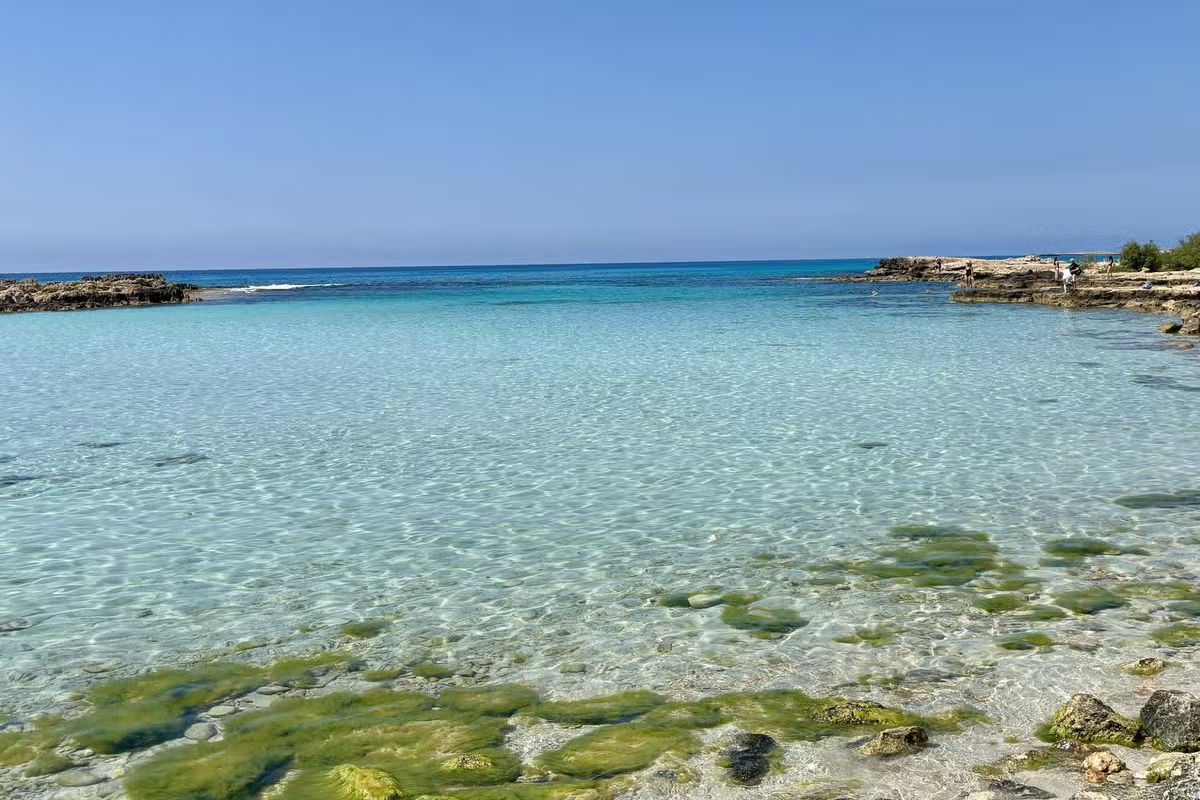
This beach is known for it’s gorgeous clear waters(Image: Getty)
The UK may be getting chillier, but across Europe the sun is still blazing and a beach getaway remains firmly on the cards. If you’re not quite ready to bid farewell to sun and sand, there’s one destination just four and a half hours from the UK where temperatures are still hitting a pleasant 23C.
Better still, it won’t cost you a fortune. That destination is Cyprus, the Mediterranean island paradise. According to research by airport transfer firm hoppa, this gem ranks as the ultimate choice for an autumn escape in the sunshine.
The warmest location is Nissi Beach, nestled on the south-eastern coastline in the resort town of Ayia Napa.
While it’s renowned as a lively party hotspot, there’s far more to discover beyond the buzzing nightlife.
The beach is celebrated for its dazzling turquoise waters and its small offshore island, which visitors can reach by simply wading through the shallow sea.
That island is Nissi itself, the namesake of the beach, and those who venture to its summit are rewarded with spectacular sweeping views across the entire bay.
The beach proudly holds Blue Flag status, with ample sun loungers and parasols available to rent, alongside opportunities to hire jet skis or pedalos for those seeking a dose of adventure.
One holidaymaker took to TripAdvisor to share their thoughts, writing: “Probably one of the most popular beaches in Cyprus-and for good reason.
“Crystal-clear water, beautiful soft sand, and that creamy, turquoise texture that makes you feel like you’re in paradise. Add the amazing atmosphere and beautiful people, and you have the perfect beach experience.”
A second visitor added: “Nissi Beach easily has the most amazing water I have ever swum in!
“Despite being extremely busy, its natural beauty makes it an absolute must-visit.”
While the beach can get extremely crowded during peak summer, visiting during the shoulder season means far fewer tourists to contend with, allowing you to soak up the stunning surroundings in relative peace.
What’s more, according to hoppa, the average nightly rate for a three-star hotel in Ayia Napa comes in at just £79, making it a brilliantly affordable choice for a late burst of October sunshine.
A NEW travel requirement for Brits has been pushed back again despite being scheduled for late 2026.
The new system called ETIAS will eventually be required for UK citizens and other non-EU nationals to enter countries within the Schengen Area.
The new ETIAS system has been pushed back with no start dateCredit: GettyThe requirement is different from EES which is already in placeCredit: REUTERS
However ETIAS, which stands for European Travel Information and Authorisation System, has been delayed again.
An ABTA official has now confirmed there is “no official launch date for ETIAS” – although some people are being caught out by scam websites.
Sign up for the Travel newsletter
Thank you!
According to Travel Gossip, there are as many as 150 websites claiming to sell ETIAS.
ABTA previously warned: “People who try to apply for an ETIAS now may be at risk of fraud. There’s a risk of losing money and possibly personal data too.”
ETIAS is essentially a visa waiver that is linked to your passport and says you can visit a country.
This is different from the EES system which is currently in place that tracks you when you eventually visit that country.
Any national who is visa-exempt, including Brits, will have to get ETIAS authorisation.
ETIAS will be valid for up to three years, or until your passport expires – whichever is soonest.
To get ETIAS authorisation, you will need to visit the official ETIAS website and follow the instructions on its portal.
It will be required to pay for ETIAS too, much like with an ESTA for America.
ETIAS is expected to cost €20 (£17) per person, but travellers under 18 and over 70 do not need to pay the fee (though they still have to apply for one).
Brits have been warned to ignore any website ‘selling’ ETIASCredit: Alamy
A NEW Spanish tourist tax being introduced this year is set to cause a hike in holiday costs.
The rule, which will be rolled out from the start of December, could see some holidaymakers slapped with an extra fee.
A new tax rule is being introduced in Spain and it’s set to impact touristsCredit: GettyCertain holiday rentals will now be subject to a 10 per cent VAT chargeCredit: SWNS
Tourists visiting Spain and the Canary Islands after December 1st, 2026, may have to pay an extra new charge if they opt for self-catering accommodation.
Those staying in apartments or villas booked via the likes of Airbnb could end up shelling out for an additional 10 per cent in VAT.
Sign up for the Travel newsletter
Thank you!
The tax, brought in by the Spanish Government, applies to qualifying furnished holiday rentals in popular travel destinations such as Ibiza, Mallorca, Barcelona and the Canary Islands.
Tourist accommodation in Spain has previously been exempt from VAT payments.
Any holiday home rented for 30 nights or fewer will be subject to the tax – unless the property is the landlord’s habitual home.
The government says that the VAT measure is being brought in to help combat the housing pressures faced by Spanish residents.
The Spanish property market is currently under strain due to the high amounts of apartments and houses being bought for short-term tourist use.
The new tax may not necessarily mean that tourists are forced to pay, though as it depends if the landlord of the holiday home decides to pay the additional VAT themselves.
Tourists are being urged to double check the price of bookings made for rental holiday homes before they pay.
Those booking accommodation that could be subject to the new tax should look carefully at the price breakdown of bookings
It is wise to check whether any additional VAT is included in the cost or whether paying it on top of the original booking will be a requirement.
The Foreign Office is urging UK travellers to ‘stay away’
11:20, 13 Oct 2026Updated 11:20, 13 Oct 2026
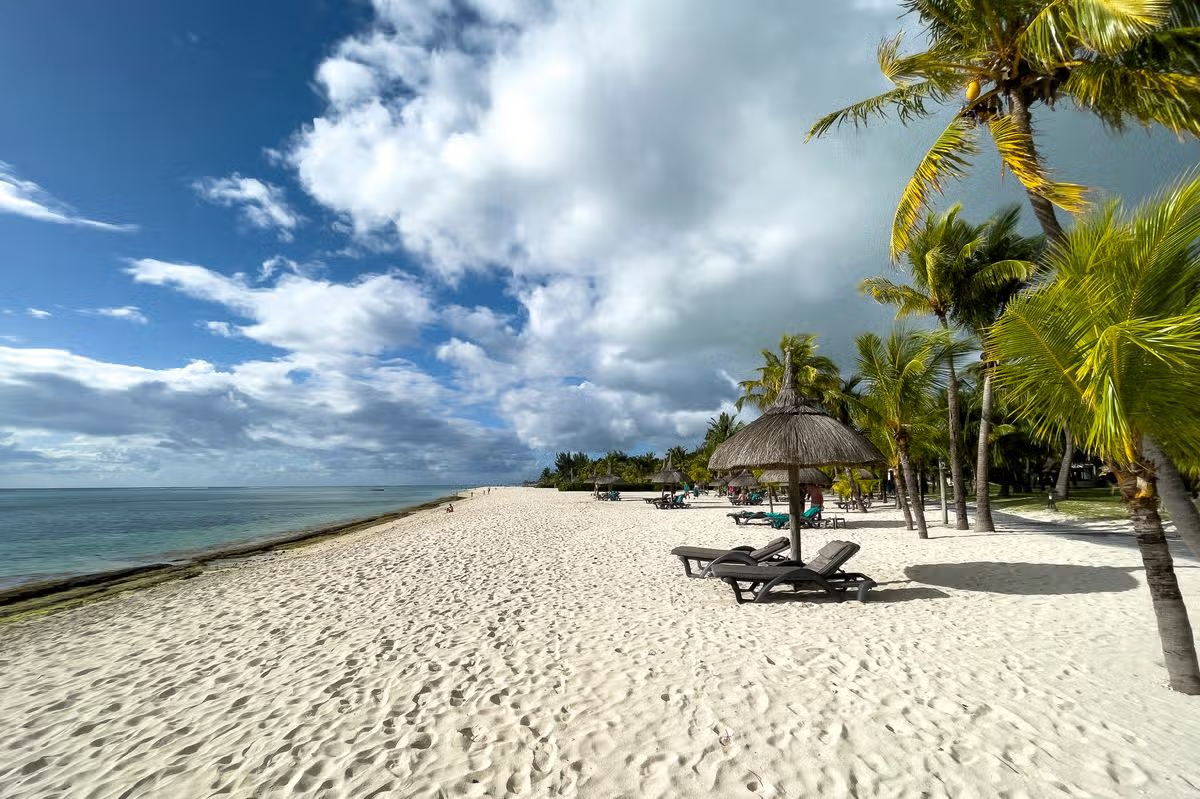
Some schools were reportedly closed in some parts of the country(Image: Getty)
The UK’s Foreign, Commonwealth and Development Office (FCDO) has revised its travel guidance in an update today, October 13. In its latest update for those planning a trip to Mauritius, the Foreign Office is warning tourists about “localised demonstrations and community unrest” following a shooting.
The FCDO warns: “Localised demonstrations and community unrest have occurred in parts of Mauritius following a police shooting incident on October 9 2026. Further protests may occur at short notice and could result in road closures, transport disruptions and interruptions to public services.
“Stay away from demonstrations and large public gatherings, monitor local media, follow the instructions of local authorities and exercise caution if travelling in affected areas.” About 150,000 UK tourists travel to the island every year.
If you find yourself in a situation where you need help, you should report any incidents to the Mauritius tourist police by calling 999.
Emergency services in Mauritius
Ambulance: 999 or 114
Fire: 999 or 115
Police: 999 or 112
Tourist police
Contact your travel provider and insurer
The Foreign Office stresses on its website: “Contact your travel provider and your insurer if you are involved in a serious incident or emergency abroad. They will tell you if they can help and what you need to do.”
Mauritius temporarily shut schools after shooting say reports
Mauritius closed schools in some parts of the country on Tuesday, October 13, reports say. It came after a night of unrest that began when a police officer allegedly shot a young woman.
An investigation is under way. It is being reported by local media that a police sergeant has been provisionally charged over the shooting of Élodie Thomas, 27.
She has since had successful surgery to remove the bullet. The incident led to protests. Police were dispatched as people burned tyres and blocked roads in parts of the country on Monday night.
Mauritius entry requirements
The island country in the Indian Ocean, located off the eastern coast of Africa, is becoming increasingly popular, with around 1.3 million tourists visiting every year.
In order to enter the country, your passport must:
be valid for the duration of your stay
have one blank page
The Foreign Office urges people to check with their travel provider to ensure their passport and any other travel documents meet the entry requirements, and to renew their passport if needed. Tourists could be refused entry if they do not have a valid travel document, or if they try to travel on a passport that has been reported lost or stolen.
Just six months after the first Jet2 service from Manchester to La Palma in the Canary Islands took off, the airline has scrapped the route due to a lack of demand
Jet2 is binning the route(Image: NurPhoto via Getty Images)
Jet2 has cancelled all flights to a popular Spanish island.
Just six months after the first Jet2 service from Manchester to La Palma in the Canary Islands took off, the airline has scrapped the route. Jet2 has been running two weekly services on Monday and Friday for the four-and-a-half-hour journey since April 3.
The airline had planned to launch budget Friday flights to the island from London Stansted on 6 November, but that has now been abandoned. The decision to end the route is due to a lack of customer demand. The last flight between Manchester and La Palma is expected to leave on 30 October.
At the time, Stephen Turner, chief commercial officer at Manchester Airport, said: “We’re proud to connect people in the North with the places they want to fly to, and the Canary Islands is among the most popular holiday destinations for sunseekers travelling from Manchester. That’s why it’s great to see Jet2 adding a fifth destination in this part of the world to its route network here at Manchester.”
Do you have a travel story to share? Email webtravel@reachplc.com
An airline spokesperson confirmed that affected customers would be contacted directly and offered the choice to rebook or receive a full refund. They explained that the decision followed a programme review and assessment of customer demand. As the route concludes on 30 October, most passengers with bookings during the October half-term should remain unaffected.
A spokesperson for Jet2 said: “As a customer-focused business, we continually review our programme in response to what our customers want, and we will make adjustments where required. This gives us the ability to add flights and holidays in response to demand, and very occasionally we may withdraw them too. Following this latest review, we have taken the difficult decision to withdraw flights and holidays to La Palma.
“Where customers are affected, we will contact them or their independent travel agent to let them know their options, which include rebooking another holiday or receiving a full refund. We would of course like to apologise to affected customers, however with a fantastic programme of services to a huge range of destinations, we are offering superb choice when it comes to rebooking their holidays with us.”
TUI is now the only airline running direct flights from the UK to La Palma.
La Palma is the greenest and quietest of the Canary Islands, nicknamed “La Isla Bonita”. It’s popular with walkers and stargazers rather than beach holidaymakers. Volcanic landscapes, banana plantations and lush laurel forests surround the Caldera de Taburiente, a huge crater with excellent hiking trails. The Roque de los Muchachos observatory sits among some of the clearest skies in Europe, and the island is a certified Starlight Reserve. Beaches are mostly black sand. The capital, Santa Cruz de La Palma, has colourful colonial balconies. The 2021 Cumbre Vieja eruption reshaped parts of the south and is still part of the island’s story, but visiting is safe.
Ryanair has announced it is axing all flights to and from Bremen in GermanyCredit: AlamyThe city currently has a direct route from London Stansted which will end in April 2027Credit: Alamy
Currently, Ryanair offers daily flights from London Stansted to Bremen for as little as £15.
But in a new announcement, these will come to an end in April 2027.
Sign up for the Travel newsletter
Thank you!
On the Ryanair website, it appears tickets for the final flights to Bremen are scheduled for March 27, 2027.
The German city is known for its maritime history and gothic look that some often say looks ‘fairytale-like’.
With Ryanair withdrawing the route, there will be no direct links to Bremen from the UK.
Those wanting to visit the German city will have to take stopover flights which can take over double the time.
The shortest is with KLM, which has a stopover in Amsterdam and takes three hours and 20minutes.
Last year, Ryanair announced it would be dropping 24 routes to and from Germany, cutting nearly 800,000 seats in total.
It was revealed that nine airports would be affected, along with the plans of those wanting a winter break, and including major cities that are popular with tourists.
These are:
Berlin
Hamburg
Memmingen
Baden-Württemberg
Cologne
Frankfurt-Hahn
Dortmund
Dresden
Leipzig
Bremen has been compared to a ‘fairytale’ by visitorsCredit: Alamy
In April of this year, the airline confirmed it would be reducing its flight schedule to and from Berlin by 50 per cent.
Ryanair’s CEO Eddie Wilson said back in August: “Germany’s air travel market is broken and needs an urgent fix.
“As a result of these high government taxes/fees (the highest in Europe), and Lufthansa’s high-fare monopoly, German citizens/visitors now pay the highest air fares in Europe.”
AUTUMN is the perfect time for a city break holiday abroad.
Fewer crowds, cooler temperatures, and quieter restaurants – there’s something to be said for a long weekend post-summer.
And with hundreds of countries under our belts, as the Travel Team at The Sun, we know which are the best spots to visit after summer but before winter is in full swing.
Here are our favourite cities to visit this autumn, along with our top tips, cheap pints and very affordable flights thrown in.
Warsaw, Poland
Try the cosy Hala Koszyki food hall for some fantastic foodCredit: Alamy
Known as the Grinch by friends due to my ambivalence to Christmas, Warsaw is the perfect place to visit in autumn before the festive season takes over.
Not only is it also frequently named one of the cheapest city break destinations, but it was named top city to visit by European Best Destinations 2026.
The architecture of the city is stunning, with historic 17th century buildings compared to the more modern Brutalist blocks.
Start with a wander around the beautiful Old Town which was reconstructed after WWII, when 85 per cent of it was destroyed.
Then head over to the Neon Museum, with hundreds of huge neon signs from the Cold War (one to get your camera out for, definitely).
The food scene is fantastic too – I highly rate Momu which specialises in Polish dishes using a smoke-roasting oven, or huge food hall Hala Koszyki which was the first of its kind in the city.
You can find really cheap hotels – ibis budgets start from as little as £35 (so £17.50 each), while Ryanair flights are £30 return. So a mega cheap holiday!
Or you can find two-night city breaks for just over £100pp with loveholidays. Kara Godfrey, Deputy Travel Editor
Lisbon, Portugal
Lisbon is still warm but just as beautiful outside of summer with lots to doCredit: AlamyHow about trying to design your own street art on a graffiti workshop?
The Portuguese capital comes into its own in autumn, with oodles of sunshine and warm temperatures perfect for exploring its maze of hilly streets, grand squares and spectacular architecture.
I’ve just returned from a perfect weekend break that went beyond the tourist trail with the help of the new Andaz Lisbon hotel (rooms from £242 a night).
Just steps from the grand, riverfront square Praca do Comercio, the hotel in a former grand bank has a spectacular rooftop restaurant and bar.
Their exclusive experiences pair you with locals to delve deeper – like renowned street artist Migeul Brum who not only gave us a whistle-stop tour of some incredible murals and installations but allowed us to get hands on and create our own with a graffiti workshop.
Their Seven Hills by Night revealed some of the city’s vibrant neighbourhoods for fun after dark.
We sipped classic cocktails in hidden speakeasy Foxtrot and enjoyed a live performance of traditional Fado music at Bohemia Lx Se.
And for a glimpse of the glorious seafaring history, a tuk tuk tour took us to the arty district of Belem where we explored the Belem Tower and Monument to the Discoveries.
And of course, no visit to the district would be complete without sampling the irresistible custard tarts at the original bakery, Pastels de Belem.
Flights to Lisbon from £14.99 from the UK. Lisa Minot, Head of Travel
Tallin, Estonia
You can get pints of hot chocolate – the perfect drink for an autumnal stayCredit: Alamy
The capital of Estonia might not be your first thought for a city break but it should be.
With a three-hour flight time, the city is far enough away to feel a bit more of an autumn chill but not so far that the flight feels like a strain.
Tallinn is an easy city to walk around; all the main sights are close to each other, especially in the UNESCO World Heritage-listed Old Town.
Here you’ll find Gothic spires, cobbled alleyways and the Kiek in de Kök Fortifications Museum which even explores the city’s coffee culture.
And everything is super cheap – I managed to visit the KGB Prison Cells and then grab lunch afterward for around £15.
A pint will set you back a few euros, as will a PINT of hot chocolate – yes really.
The benefit of go in autumn is that the freezing weather of winter hasn’t quite kicked in yet and you can enjoy exploring the city crowd-free.
With LastMinute.com, you could head away for three nights to Citybox Tallinn City Center Hotel, which has a modern interior and light airy rooms for £194pp for three nights including flights. Cyann Fielding, Travel Reporter
Seville, Spain
Seville comes into its own in shoulder seasonsCredit: Alamy
Seville is the Spanish city that comes alive in shoulder season – seeing as summer has unbearable highs that approach 40C.
But that drops off in autumn, meaning you can get some post-summer warmth within just a few hours.
And there are some fantastic, must-see attractions, from the Seville Cathedral (the largest gothic cathedral in the world) and the Moorish Royal Alcazar of Seville.
Skip the expensive flamenco shows and watch the many free performances in the parks.
The ultimate cheap breakfast is at Bar Alfafa, a tiny restaurant squeezed between two roads where you will find coffee and toast for just €2.10 (£1.78), as long as you can find a table between the locals.
The beauty of Spain is that wine is cheap (expect to pay around €2-€3 (£1.69-£2.54) per glass), but head to the local chain 100 Montaditos where you can get beers for under €1.50 (£1.27).
TUI has three-night breaks for as little as £180 each, with your hotel and flights thrown in.
Cheap booze, quick flights and 28C highs in autumn – what more could you want? Kara Godfrey, Deputy Travel Editor
Vilnius, Lithuania
Go back in time as the leaves change colour in VilniusCredit: Getty
If you aren’t still longing after lounging about on beaches or sun-searching, but are ready to embrace autumn in all its glory, I’d say a trip to Vilnius is on the cards.
The capital of Lithuania, especially its medieval Old Town is beautiful with cobblestone streets, towering church towers and shops with autumnal window displays.
With its old-school look, I felt almost as if I’d stepped back in time.
It’s quiet too as Lithuania gets far fewer visitors in general than the likes of Spain or Portugal.
When I popped out early on a Sunday morning for a wander around the Old Town, it was practically deserted.
To make it even better, food and drink is cheap too. One cafe called Vynomanai sold coffee for €2 (£1.70) and beer for €3 (£2.55).
The best snack I tried and a must-try is called kepta duona. Essentially it’s fried bread in garlic – which is like the UK’s version of pork scratchings.
Flights start from £19 with Ryanair, or Loveholidays has seven-night breaks from £249pp. Alice Penwill, Travel Reporter
Amsterdam, The Netherlands
The famous canals come alive in autumnCredit: Alamy
Amsterdam is big on nature. Canals weave between its Baroque buildings and the cobblestone streets are lined by bushy trees that look even more spectacular in the autumn months, painting the streets in shades of red and orange.
While summer time is all about beer, the coming months focus on hot and cosy tipples like Warme Chocolademelk (Dutch Hot Chocolate) and Gluwhein (similar to mulled wine), both from around €4.
Grab yourself a glass from one of the traditional brown bars which tend to feature large windows from which visitors can watch the world go by, drink in hand.
Make sure to gobble back some Dutch classics. Comfort food is a staple in these parts and autumn is the perfect time of year to sample them.
Keep your eyes peeled for Stamppot, a hearty dish, made of mashed potato, sausages and sauerkraut – Moeders in the Jordaan whips up a truly authentic version.
Make sure to pick up some stroopwafels, too, a classic sweet treat which comprises of sticky caramel sandwiched between two thin, circular waffles.
You can still bag EasyJet flights from around £25 from London airports in November this year. Sophie Swietochowski, Assistant Travel Editor
Tirana, Albania
Tirana is often overlooked in favour of the Albanian Riviera but its a beautiful weekend destinationCredit: Alamy
It takes around three hours to reach the capital of Albania and once you’re there, there is plenty to do over a weekend at a leisurely pace.
In the centre of the city, visit Skanderbeg Square, the city’s central plaza featuring a towering clock tower.
Another top spot is the free Pyramid of Tirana – it’s a bit of a work-out to reach the top but the view of the city is well worth it.
And if there is one thing you shouldn’t miss, make sure to visit Bunk’Art 1 & 2 which are massive underground Cold War bunkers converted into museums, including one all about surveillance.
Street food will cost you a few quid and coffee or a pint is under £2 each.
What’s even better is that return flights cost as little as £28 per person. Cyann Fielding, Travel Reporter
Paris, France
Get some Christmas shopping done in the world’s fashion capitalCredit: AlamyIt’s one of the best places to come for food and shopping, says Sophie
I can think of no better place than Paris to transition you from summer, seamlessly into the cosy season. For me, it’s the shopping that draws me back year after year.
It is the fashion capital of the world, after all.
So make sure to travel with an empty suitcase so you can pick out your winter wardrobe while you’re here from the many vintage boutiques littered around the Le Marais district in the 3rd and 4th Arrondissements.
Here you’ll find classic kilo shops that sell bargain items priced by weight – you could pick up a whole outfit for €15.
Plus the city is just a hop, skip and a jumper over the Channel, reachable by plane, train or car – take your pick.
The culinary scene is another huge draw in autumn, too. Now is time to trade out the rosé wine for something more wintry and, in my opinion, no where in the world produces better red wine than France.
Le Barav, in the same region as the vintage shops, houses a wine shop on one side and restaurant on the other.
You can go and pick your wine for a supermarket price and then pay a €7 corkage fee to drink it in the restaurant area while tucking into a cracking charcuterie and cheese platter.
Wowcher city breaks with flights included start from £99. Sophie Swietochowski, Assistant Travel Editor
For decades, the bold, mid-century building at Lincoln and Olympics boulevards in Santa Monica has been the end of the line — the last address on the 2,400-mile westward journey of Route 66. Once home to the Penguin Coffee Shop, today it holds Mel’s Drive-In. But now its future is in doubt.
The owners of the property have filed early paperwork to level the structure and replace it with an eight-story apartment building. Preservationists are pushing for a historic designation that might protect it.
The groups appear headed toward a showdown Dec. 14, when the Santa Monica Landmarks Commission will hold a hearing on the site’s nomination for protected status by the Santa Monica Conservancy and the Los Angeles Conservancy. The allied conservancies contend that the building is “the most significant representation of its style and period in architecture and design in Santa Monica.”
Designed by famed mid-century architects Armet & Davis, the building held the Penguin Coffee Shop from 1959 through 1991.
(Architects Armet Davis / Santa Monica Public Library Image Archives)
“This isn’t about saving a modern restaurant. It’s about preserving some really important Googie architecture,” said Nina Fresco, vice president of Santa Monica Conservancy. She added that “there’s no reason why housing and historic preservation can’t be partners.”
Irvine-based firm ValueRock Realty bought the half-acre Mel’s property for $6.2 million in 2020, and in 2025 began offering the property for sale, asking $26 million through brokers Newmark Pacific.
Soon after learning that the building was for sale, the Santa Monica and L.A. conservancies nominated Mel’s for a landmark designation, which can protect buildings from demolition, Fresco said. As part of the effort, Santa Monica Conservancy leaders raised $6,800, the cost of a Santa Monica landmark nomination, and enlisted the L.A. Conservancy as an ally.
Then on Sept. 18, ValueRock filed a preliminary application with the city (also known as an SB330 application) to replace the 1959 building with an eight-story apartment building, including 138 apartments, 123 parking spaces and first-floor retail space.
The sign of Mel’s Drive-In features a penguin, homage to the coffee shop of yesteryear.
(David Fouts / For The Times)
When it bought the property in 2020, ValueRock announced that it “is considered to be a historical landmark within the community.” But in its September filing for the apartment project, ValueRock management checked a box indicating that no historic or cultural resources are known to exist on the property.
“We didn’t know they would be quite this aggressive, but it’s not a huge surprise,” Fresco said.
Under city law, Fresco said, if a property is more than 40 years old, the owner must wait at least 75 days after seeking a demolition permit before any demolition can happen. “So we’re OK at least until that hearing” in December, Fresco said.
If the Landmark Commission agrees to confer landmark status on the building, Fresco said, it may be shielded from demolition — but the owner can appeal the decision to the City Council.
Management at ValueRock Realty did not immediately respond to requests for comment.
The restaurant remains open, receiving a steady stream of locals and Route 66 travelers. “We’re going to be here until 2029,” said Marilina Borchio, manager of Mel’s, citing a lease that runs through June of that year. As she spoke, the breakfast crowd was trickling in on Sunday morning. Borchio said she’s spending a lot of time reassuring customers who “think we are going to be demolished tomorrow night.”
The Googie-style building, designed by famed mid-century architects Armet & Davis, held the Penguin Coffee Shop from 1959 through 1991, catching the eyes of passing drivers with its dramatically slanted roof, oversize windows and a long counter inside for diners in a hurry. Architectural historians describe Googie style as a bold strain of Mid-Century Modernism, notable for big neon signs and swooping roofs, especially popular among restaurants, bowling alleys and car washes, now increasingly rare. Rae’s Diner, a 1958 building on Pico Boulevard, is another Santa Monica example.
The coffee shop never earned a Michelin star (nor has Mel’s) but its workaday American fare won a following. “The Penguin gets my vote for the best diner around,” wrote Times restaurant critic Charles Perry in 1989.
But two years later, the Penguin was gone. By 1992, the building had been converted into a dentist’s office. Eventually it fell idle, until the San Francisco-based Mel’s chain arrived in 2016 and began a renovation aimed at bringing back the restaurant’s ’50s atmosphere.
Mel’s Drive-In now occupies the old Penguin Coffee Shop building at the official end of Route 66 in Santa Monica.
(Christopher Reynolds / Los Angeles Times)
The renewed restaurant opened in 2018, with a penguin atop its sign, in homage to years gone by.
“A lot of the neon elements are gone, but the main elements are still there,” said the Santa Monica Conservancy’s Fresco, who is also a Santa Monica planning commissioner and former landmarks commissioner.
The renovation and restoration effort included removing layers of paint and tile that had been added over decades, revealing interior stone cladding that had been covered and replicating the counter and stools, vinyl cushioned booths, tables of plastic and metal, terrazzo floor, and light fixtures. The work was “to the letter of the Secretary of the Interior’s standards” for the treatment of historic properties, Fresco said.
The building is not mentioned in “An Architectural Guidebook to Los Angeles,” by David Gebhard and Robert Winter, which is a prime source for many preservationists. But Mel’s won a $10,000 grant from the National Trust for Historic Preservation in 2025 to pay for Route 66 centennial signage project.
Route 66 memorabilia at Mel’s Drive-in.
(David Fouts / For The Times)
“This site, like Route 66 itself, represents something greater than itself,” said Rhys Martin, manager of the National Trust’s Preserve Route 66 initiative, in an email. “It’s a connection to a journey through time and space that will be forever lost if this remarkable Googie structure is demolished.”
Fresco said she’d love to see the building continue to operate as Mel’s, but in the big picture, “we can’t stop them from building housing.” Still, Fresco said, she is hoping that the owner can come up with a project that retains the existing building while adding housing around it, as several other developers in Santa Monica have done. At 829 Broadway, developers agreed to preserve a World War II era Quonset hut while building a five-story apartment building around it. (The Quonset hut was occupied by Pono Burger from 2013 to 2025.) And the old Rapp Saloon — an 1875 brick building at 1436 2nd Street — was reborn in the late 1980s as a meeting space within a four-story hostel, now known as Hostelling International’s HI Los Angeles Santa Monica Hostel. The Santa Monica Conservancy begins its walking tours there.
If the allied conservancies win landmark status for the Penguin/Mel’s building, Fresco said, the owners “will be able to do exactly what they want to do now. They will just have to do it differently.”
Route 66, which was born and officially named U.S. Highway 66 on Nov. 11, 1926, was extended to Santa Monica in 1935. Though many travelers think of the Santa Monica Pier as the end of the route, its official terminus from 1935 on was at the intersection of Lincoln and Olympic boulevards, where Mel’s now stands.
Though Route 66 was decommissioned in the 1980s, its popularity as an Americana-rich driving route has grown in recent years, especially during this year’s centennial celebration of the road.
By the time the coffee shop building was going up at the end of the route in 1959, Fresco said, interstate freeways were already beginning to usurp Route 66’s role and the Santa Monica route of Interstate 10 had been plotted. By putting their eye-catching building on a spot along Route 66 and next to the path of the freeway, Fresco said, the people behind the Penguin were catering to motorists on roads rooted in two different eras.
“The Catholic Church shaped Rome. Commerce shaped Manhattan. It is popular culture that has shaped L.A.,” architecture critic Alan Hess told a Times reporter in 1993. “We should see these buildings in that context and take them seriously.”