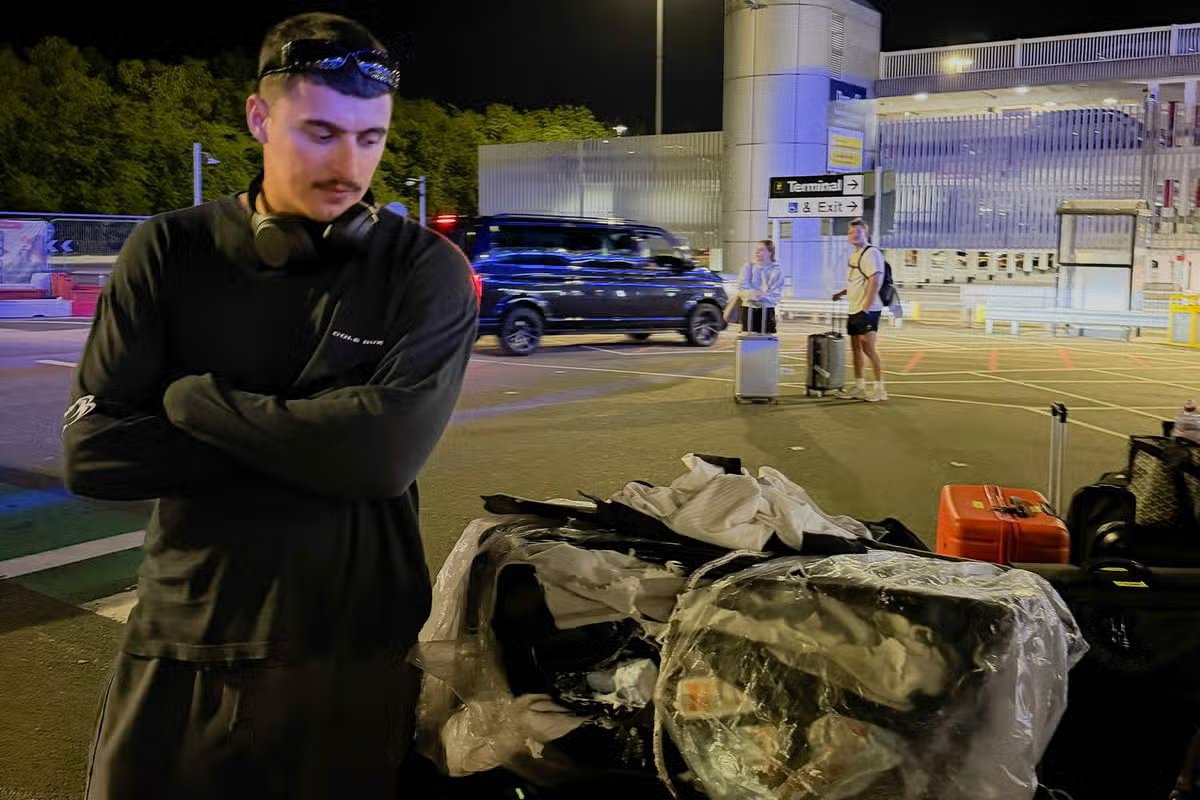
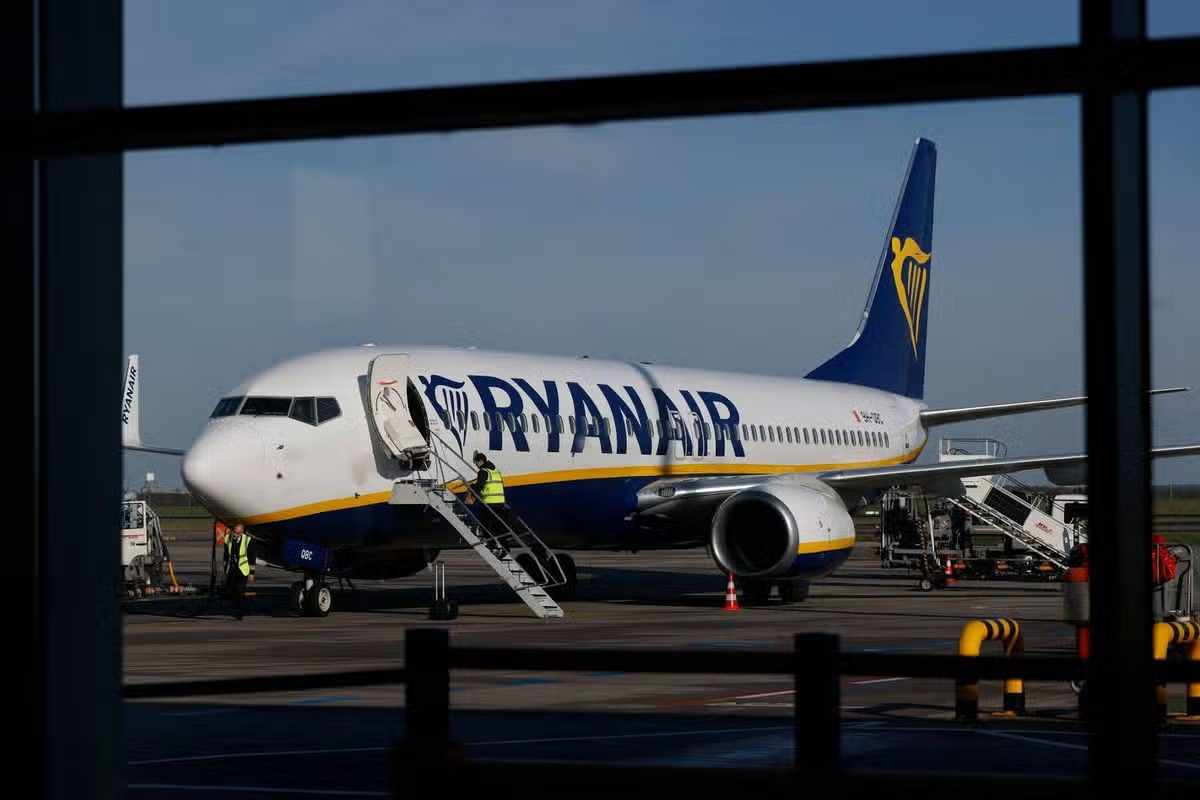
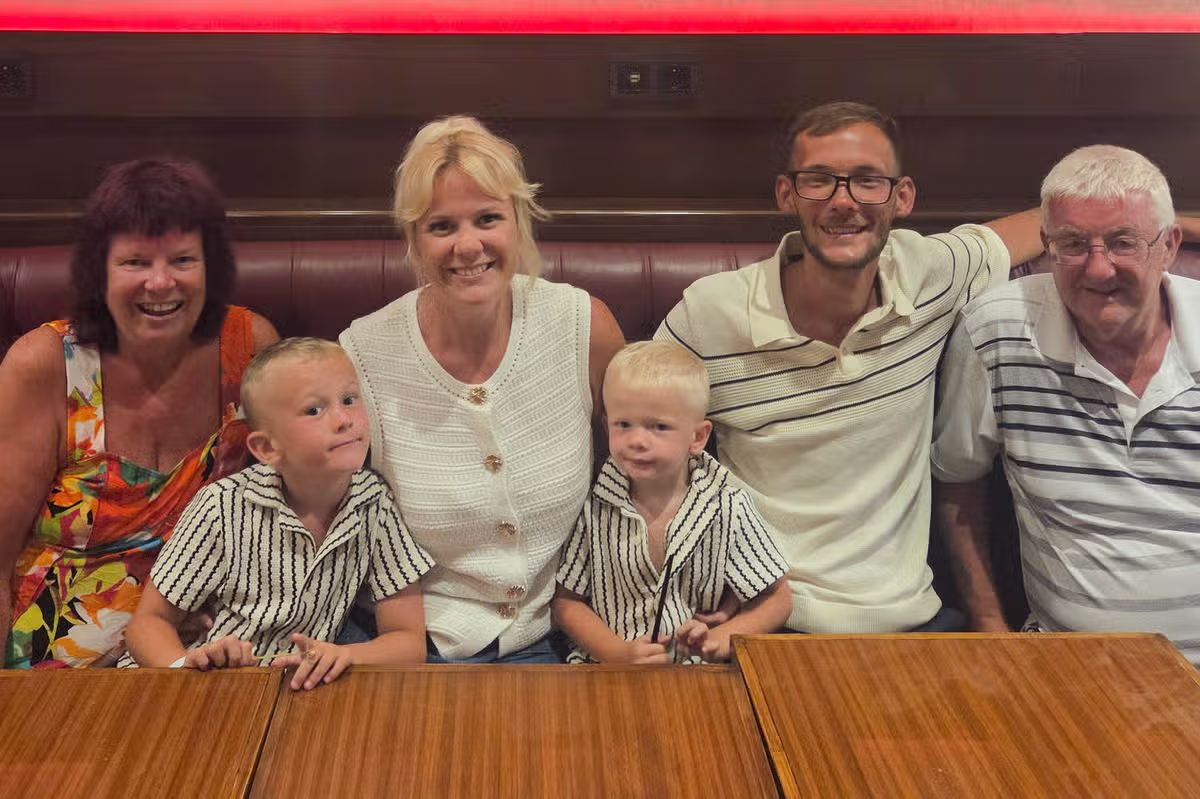
A Brit holidaymaker was left amazed after finding out that the plane he was aboard had driven over his suitcase – ‘completely destroying’ the bag and everything inside it. Louis Maybury, 27, was flying home from Madrid to Manchester Airport after a fortnight’s holiday with his partner when cabin crew woke him up with an unexpected request.
With approximately 30 minutes until touchdown, he was asked to remain on board once the other passengers had disembarked. He was then escorted to the cockpit, where the pilot delivered the unwelcome news: his luggage had been run over by the aircraft back in Madrid.
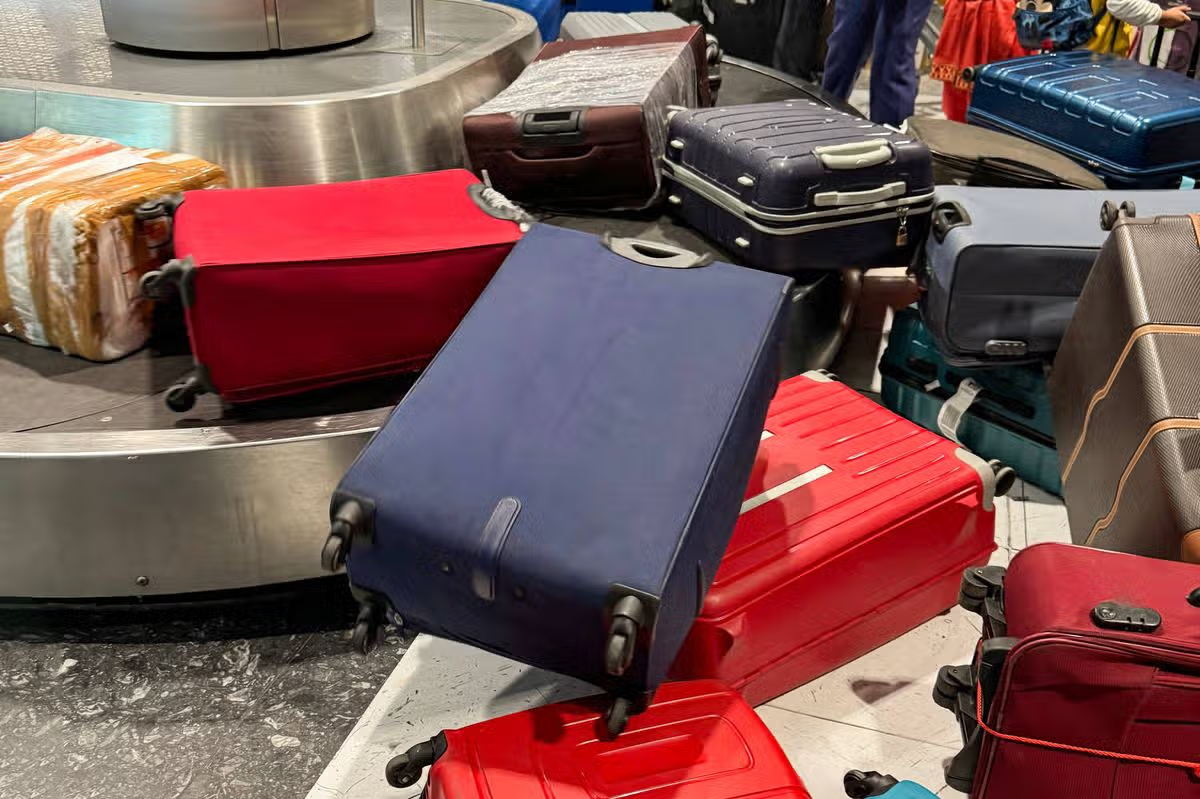
Louis could do nothing but watch in disbelief as his mangled suitcase appeared on the baggage carousel, containing what he claims was around £5,000 worth of belongings. His partner filmed the moment the battered bag was handed back to him in tatters on 11 July.
Louis, from Manchester, said: “I was extremely upset by the situation. I had packed two full weeks’ worth of belongings, including everything I needed for my trip.
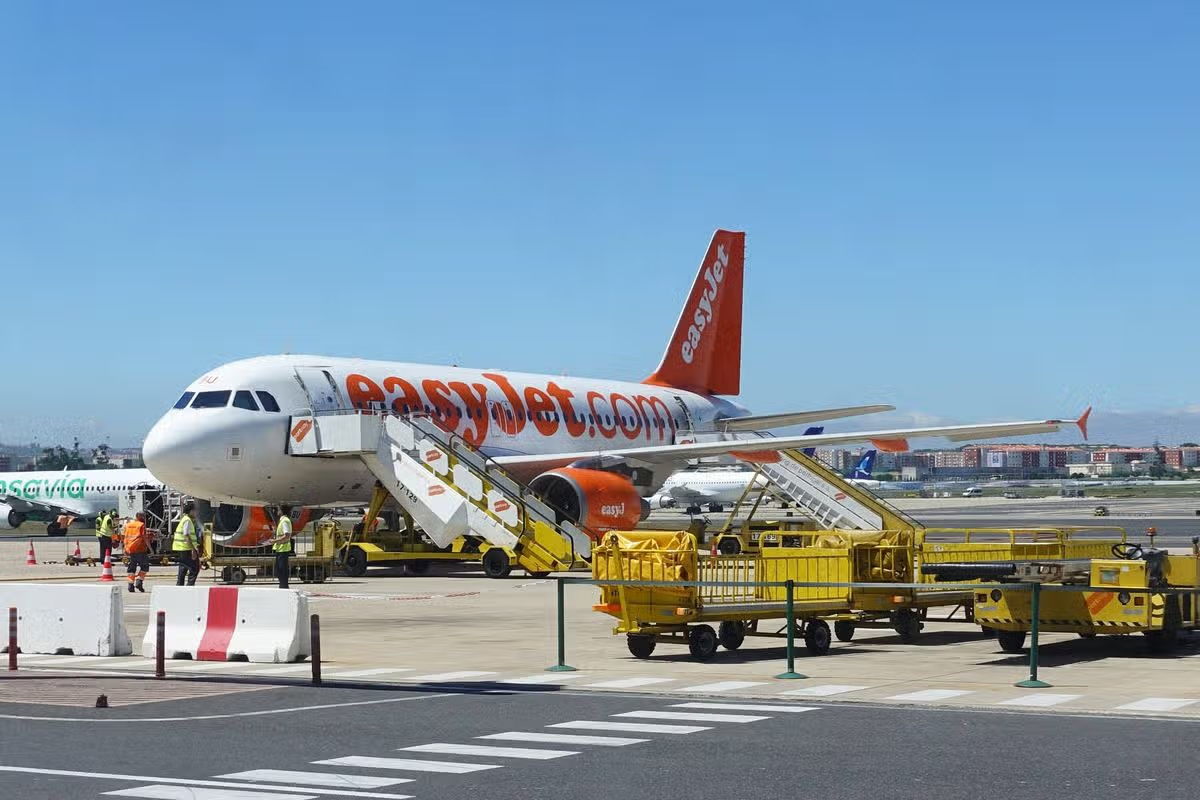
“Unfortunately, all of my belongings were destroyed.” EasyJet staff informed Louis that his suitcase had been run over on the tarmac at Adolfo Suárez Madrid-Barajas Airport, resulting in a two-and-a-half-hour delay.
Since then, he has been engaged in a dispute with the airline over compensation for his possessions, which he valued at £5,000. Among the damaged items were a Burberry bag worth just over £1,000, an Invisalign retainer costing £500, and three Acne Studios shirts valued at roughly £300 each.
He said: “I was eventually left with no choice but to accept the minimum compensation offered and try to recover the remaining losses through my own insurance. Everything was destroyed, included a designer bag, four pairs of shoes, expensive chargers and an Oral B Toothbrush.”
An easyJet spokesperson said: “We’re very sorry that Mr Maybury’s luggage fell from a baggage cart and was damaged by an aircraft as it was coming onto stand. Safety is our highest priority and our engineers subsequently carried out an inspection of the aircraft and cleared it for departure.
“We know how important it is for customers to feel confident that their belongings are well cared for when travelling with us, so we investigated this with our ground handling providers in Madrid at the time and contacted Mr Maybury to apologise for his experience and provided him with the compensation he is due.”
Edward Stokes says he is ‘disgusted’ with the way he was treated
A Ryanair passenger says he is ‘absolutely disgusted’ with the airline after travelling for a family funeral. Edward Stokes had flown to London Stansted with his son to pay his respects at the funeral of his cousin’s wife.
What should have been an emotional family occasion allegedly descended into a travel nightmare when the 49 year old said he ran into difficulties with his booking on the journey home last week. Edward claims he and his son were each hit with a £46 (€55) charge after missing the online check-in window by just three minutes for their outbound flight.
“I’m absolutely disgusted by how we were treated,” said Edward. “I’ve been a loyal Ryanair customer for years.
“In fact, Ryanair is practically the only airline my family and I ever use. But after what happened to me this week, I am absolutely shocked and disgusted.
“We were three minutes late checking in online on Tuesday morning and were charged €55 each, €110 in total. Fair enough, we were late.
“We accepted responsibility, paid the money and moved on. But what happened on the way home was a completely different story.”
Edward alleges he was then refused boarding on his homeward flight to Dublin due to a mix-up over the name on his reservation. His booking listed both Edward and Teddy – a nickname he commonly uses – and he claims he had been permitted to travel to England without any problems.
Unable to board his scheduled flight, he said he was forced to book an alternative service departing at 10pm for £300 (€357.57), after an earlier option would have set him back around £450. Yet he says his journey home was anything but straightforward.
Mr Stokes claims the replacement flight was delayed by approximately an hour and 45 minutes, meaning he missed the last bus home. With no funds for a taxi and nobody on hand to collect him, he says he was left stranded at Dublin Airport for five hours until the next bus, finally making it home the following morning.
Edward, a blinds and carpets business owner from Newbridge, County Kildare, Ireland, said: “I’ve been known as Teddy all my life. On the way over, my booking included Edward Teddy Stokes, and Ryanair allowed me to travel without any problem.
“On my return journey, there was confusion over my booking name, and I was refused boarding. I explained the situation to the Ryanair staff member.
“I explained that I had just attended one of the saddest funerals of my life and was simply trying to get home to my family. Her response?
“‘That’s not my problem. What do you want me to do about it? I couldn’t believe the attitude.
“There was absolutely no compassion, understanding or willingness to help. We have no problem accepting responsibility when I’m wrong.
“We were three minutes late checking in, and we paid the money. But where is the same accountability when an airline causes passengers serious inconvenience? What hurt me most wasn’t even the money.
“It was the way I was spoken to, the complete lack of compassion and the feeling that we were treated like we didn’t matter.. “Nobody should be spoken to or treated like that.
“All I wanted was to attend a family funeral, support my cousin and get home safely. I was absolutely exhausted.
“Between the sadness of the funeral and everything that happened with my flights, it’s been a very difficult and emotional week for me. Ryanair, is this really how you treat loyal customers?”
A Ryanair spokesperson said: “The first and surname on a passenger’s booking must match the first and surname on their travel documents. The passport that Mr Stokes presented at the boarding gate in Stansted did not match the first name on his booking for this Stansted to Dublin flight (14 October). Ryanair offers passengers a 24-hour grace period to correct minor spelling errors on bookings free of charge or full name changes up to two hours before scheduled departure (subject to a fee).
“Unfortunately, Mr. Stokes did not avail of either option and presented at the boarding gate in Stansted with a passport that did not match the name on his booking.”
For more information on names on travel documents, visit the Ryanair website’s section on the subject.
They bought a one-way ticket to Sri Lanka and have been travelling ever since
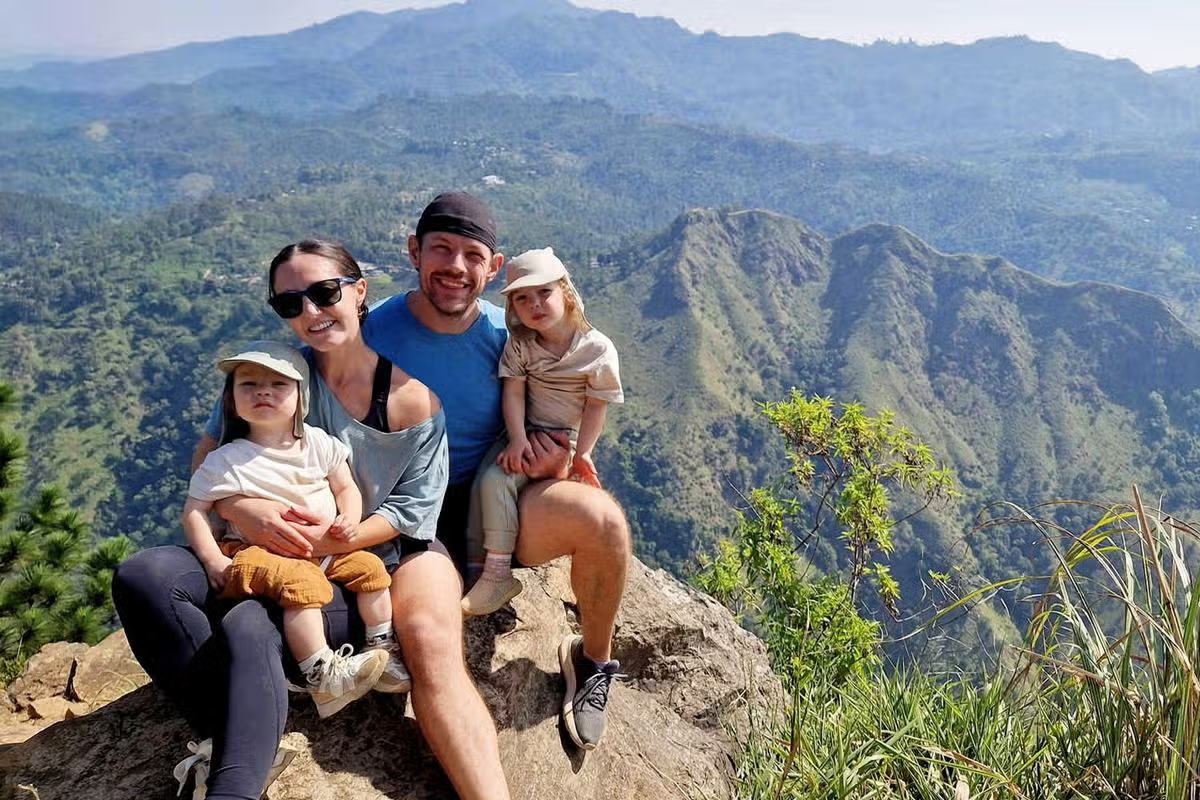
They decided to embark upon their adventure after wanting more time with their two children before they started full-time nursery(Image: Ruth Rowe/SWNS)
A couple say they have saved around £36,000 by ditching the UK to travel the world with their children while living out of two suitcases on a budget of just £30 a day.
Ruth and Steven Rowe “sold everything” they owned and bought a one-way ticket to Sri Lanka back in 2023 and have been travelling ever since. They decided to embark upon their globe-trotting adventure after wanting more time with their two children before they started nursery and school.
Ruth was also not a fan of the cold and wet British weather, so the pair are now world-schooling their kids, Aurora, four, and Atlas, three, in exotic locations instead. The family have already been to 17 different countries, ticking off bucket-list destinations such as Costa Rica, Guatemala, Ecuador, and Indonesia.
Saving thousands of pounds a year
They stay four weeks at a time in Airbnbs and have visited the likes of Thailand, Malaysia, Cyprus, USA, Colombia and Peru – all while saving around £12,000 a year. They have spent the last five months living and travelling around India and next year they plan to tour 10 more countries across Europe in a campervan.
Ruth, 34, and Steven, 35, had been renting a barn conversion in the village of Eardisley, Herefordshire, and had both children during the Covid-19 pandemic. But they had always thought about travelling full-time, so they sold “pretty much everything” on Facebook Marketplace or via car boot sales and set off with a couple of suitcases of clothes and a few toys.
They currently have no plans to return full-time and want to continue world schooling – while spending around £2,000 a month, compared to £3,000 back in the UK.
Ruth said: “We had travelled before and for us it got to the stage where we were going to put the kids into nursery and it just didn’t feel like the right time. We wanted more time with them as we know those early years are precious, so we thought, why not just do it? So we did.
“We sold pretty much everything we owned, which was an exhilarating experience – we mainly sold it through Facebook Marketplace and car boot sales. So our car, our furniture, everything but a couple of memory boxes with some of the children’s things inside and a few clothes.
“We set off at the start with two big suitcases – a medium and a small one – and a stroller. And since then we’ve downsized to just two suitcases – it is really surprising how little you really need.
“Possessions don’t make you happy, life experiences do. We bought a one-way ticket to Sri Lanka not knowing if or when we were coming back and we haven’t stopped since.
“We’ve been travelling full-time ever since, slow-exploring the world as a family, while my husband runs his coaching business remotely and we embrace world schooling on the road. It’s been beautiful, chaotic, challenging and incredibly freeing.”
Children educated along the way
The couple say their children are now educated through “life experiences” – whether that be picking up Spanish in Latin America or learning about volcanoes while hiking in Peru. They say giving the kids no screen time whatsoever on their travels has helped them to become more patient and creative.
Ruth added: “They are also learning counting through things like paying a tuk-tuk driver in different currencies and the first time Aurora ever wrote her name was in sand on a beach with a stick. We give them no screen time at all, which I think has taught them patience on their travels and to be more creative when they are bored sitting on a bus.
“They thought the TV back home was a radio, as we’d only use it for Spotify, and we think that’s allowed their imagination to flourish. I have just seen their confidence grow so much and of course there’s no way of really telling how they would have been at home, but they are just so open and talk to anyone – young and old.
“I will sit down and teach them some reading and phonics and writing, but we’re not rigid with it and it’s still very much about learning through playing. It wasn’t a case of we hated the UK – we just love the world. But I was never a fan of the cold and rain, so that is something I don’t miss. The only thing I miss is friends and family and also British chocolate.”
How they support themselves on travels
The couple also support themselves financially via Steven’s online coaching business, which he can still run wherever they are in the world.
Steven said: “These positive environments have brought such positive developments so far in our children. Atlas was swimming independently at two.
“This way, they get one-to-one without being part of the larger school system, which we have no issue with, we just see the benefits from doing it this way. We make sure the children are at the centre of what we do, we always research kids’ clubs and activities wherever we stay.
“They are loving learning about all the wildlife too – we had iguanas and sloths outside our doors in Costa Rica. Aurora had surf lessons in Bali and will be sandboarding in the Peruvian desert, it’s magical for them. We use Airbnbs mainly, but I’ve been working out of little cupboards in some places – it has been challenging at times, but we’re in a fortunate position.”
Natasha Whitley has saved a huge amount compared to the costs people expect to pay
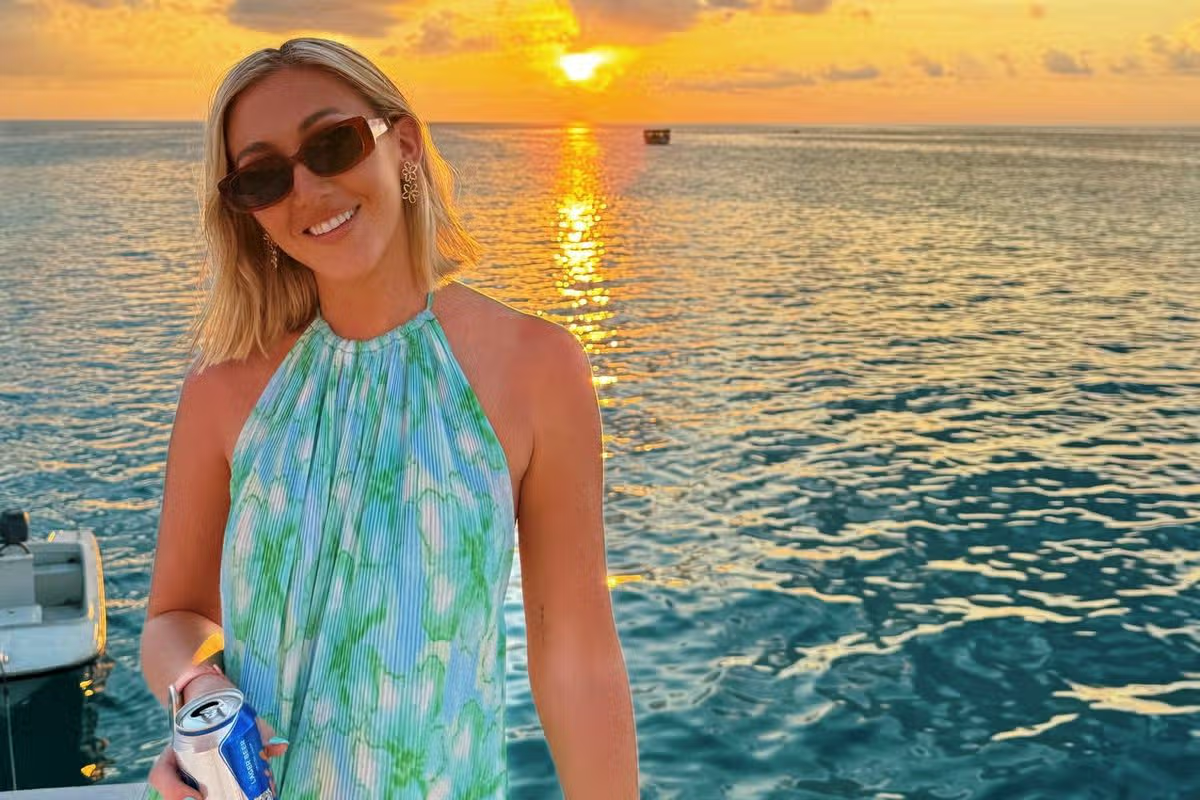
Natasha Whitley on her budget holiday to the Maldives(Image: Natasha Whitley/SWNS)
A budget traveller who has been to the Maldives four times has revealed how she spent less than £350 on one trip.
Natasha Whitley, 30, first travelled to the country in April 2024 with friend Kara, 26, for five days and tried out two islands – Thulusdhoo and Dhiffushi. Staying in cheap accommodation costing just £60 per night and a local ferry costing them just £1 to get from the airport, Natasha “loved it”.
Since then Natasha started her own business for solo travellers, Say Yes Adventures, and returned to the Maldives a further three times as part of group trips. Her most recent visit in February 2026 saw her travel solo on a new island – Fulidhoo – for three nights.
She flew from Gatwick Airport with her flights costing £800 – but it cost just £2.50 for the three-and-a-half-hour ferry trip from Malé to Fulidhoo. She stayed at a hotel costing £260 for three nights, she explored the local island and tried out local food like Maldivian fish curry while there. After paying £29 for a speedboat back from Malé, she continued on to stay at an all-inclusive resort called Niva Kuramathi Maldives – which she says was “not affordable at all but interesting to see the contrast”.
Love of travel
Natasha, a content creator from Bournemouth, Dorset, said: “I’ve always loved travel and I was lucky my parents were interested in travel. They met while travelling in the 80s, so it’s always been a part of my life and story.
“I’m a pharmacist and I worked for four years and took a career break, which was meant to be eight months – it was a big round-the-world trip to Australia, New Zealand, Hawaii and Central America all on a budget.
“I quit my pharmacy job for a content creation summer job. I met my friend Kara the following year and put the feels out there to see if she wanted to come to the Maldives with me.
“There’s not much online about the Maldives on a budget – people know it as somewhere super expensive and a honeymoon destination. In terms of budget I think we said we’d spend around £100 per day on accommodation and activities.
“We spent less than that and spent £420 over the five or six days. You see all the resorts across from you on the local islands, which is crazy because people are paying thousands and you’re spending a fraction of the price in the same waters. Staying on local islands has saved me a lot of money.”
2026 trip
In February 2026, Natasha headed out on her fourth trip to Fulidhoo.
She said: “In the Maldives my favourite food is the Maldivian fish curry, which is usually five dollars. From that island you can do snorkelling trips and watch wild stringrays and nurse sharks from the jetty at night.
“You can snorkel off the beach as well. If you’re nervous about solo travelling just start small, don’t think big because a big six-month trip can be quite overwhelming. The best way to start is to join a group trip because you travel solo, but as soon as you arrive you’re in a group of people, so you get a bit of both”.
In total, Natasha has spent more than 100 nights in the Maldives over the last two years, which would have cost her more than £45,000. You can follow Natasha’s adventures on @travelsbytash and find out more about her group travel company Say Yes Adventures at sayyesadventures.com.
Costs for Natasha’s trip to Fulidhoo
Accommodation: £261 for 3 nights, including breakfast
Transport: £2.50 for local ferry, £30 for speedboat
Food: £7 to £10 per meal
Total cost: £344.50
Example costs for a trip to a resort
Accommodation: £2,482 for 3 nights in an overwater bungalow with private pool and full-board
Transport: £127 return speedboat from Malé
Food: £47, including shrimp pad-Thai at à-la-carte restaurant
Ryanair services daily direct flights on the route for just £15 but from April next year, layovers will now be required for those wanting to fly to fly from the UK to this city
Ryanair plans to cut all flights to a European airport next year(Image: Getty Images/Stock Image)
Ryanair plans to cut all flights to a European airport next year. From April 2027, Europe’s biggest budget airline will no longer fly to Bremen in Germany.
This will axe around 500,000 seats. At present, Ryanair services daily flights on the route from London Stansted to Bremen for just £15. The airline’s website appears to have tickets for the final flights to Bremen scheduled for March 27, 2027.
Ryanair previously announced it would be cancelling 24 routes to and from Germany, cutting 800,000 seats in total. Nine airports will be affected by the decision, affecting major cities and popular with tourist spots:
Berlin
Hamburg
Memmingen
Baden-Württemberg
Cologne
Frankfurt-Hahn
Dortmund
Dresden
Leipzig
Earlier this year Ryanair said it will be reducing its flight schedule to and from Berlin by 50 per cent.
CEO Eddie Wilson subsequently said that Germany’s aviation market is “broken”. He also said it “needs an urgent fix.”
“As a result of these high government taxes/fees (the highest in Europe), and Lufthansa’s high-fare monopoly, German citizens/visitors now pay the highest air fares in Europe,” Mr Wilson said.
The Foreign Office is urging UK travellers to ‘stay away’
11:20, 13 Oct 2026Updated 11:20, 13 Oct 2026
Some schools were reportedly closed in some parts of the country(Image: Getty)
The UK’s Foreign, Commonwealth and Development Office (FCDO) has revised its travel guidance in an update today, October 13. In its latest update for those planning a trip to Mauritius, the Foreign Office is warning tourists about “localised demonstrations and community unrest” following a shooting.
The FCDO warns: “Localised demonstrations and community unrest have occurred in parts of Mauritius following a police shooting incident on October 9 2026. Further protests may occur at short notice and could result in road closures, transport disruptions and interruptions to public services.
“Stay away from demonstrations and large public gatherings, monitor local media, follow the instructions of local authorities and exercise caution if travelling in affected areas.” About 150,000 UK tourists travel to the island every year.
If you find yourself in a situation where you need help, you should report any incidents to the Mauritius tourist police by calling 999.
Emergency services in Mauritius
Ambulance: 999 or 114
Fire: 999 or 115
Police: 999 or 112
Tourist police
Contact your travel provider and insurer
The Foreign Office stresses on its website: “Contact your travel provider and your insurer if you are involved in a serious incident or emergency abroad. They will tell you if they can help and what you need to do.”
Mauritius temporarily shut schools after shooting say reports
Mauritius closed schools in some parts of the country on Tuesday, October 13, reports say. It came after a night of unrest that began when a police officer allegedly shot a young woman.
An investigation is under way. It is being reported by local media that a police sergeant has been provisionally charged over the shooting of Élodie Thomas, 27.
She has since had successful surgery to remove the bullet. The incident led to protests. Police were dispatched as people burned tyres and blocked roads in parts of the country on Monday night.
Mauritius entry requirements
The island country in the Indian Ocean, located off the eastern coast of Africa, is becoming increasingly popular, with around 1.3 million tourists visiting every year.
In order to enter the country, your passport must:
be valid for the duration of your stay
have one blank page
The Foreign Office urges people to check with their travel provider to ensure their passport and any other travel documents meet the entry requirements, and to renew their passport if needed. Tourists could be refused entry if they do not have a valid travel document, or if they try to travel on a passport that has been reported lost or stolen.
They said the hotel was dirty and food on the all-inclusive trip was undercooked. They also claimed to see faeces in the swimming pool on more than one occaision
12:02, 12 Oct 2026Updated 12:06, 12 Oct 2026
Samantha Smithson with husband Dion Hart, their two children and Samantha’s parents(Image: SWNS)
A family say their £4,000 holiday was ruined by a “filthy” hotel which left their five-year-old on antibiotics. Samantha Smithson, 34, and husband Dion Hart, 31, took their two children – aged two and five- and Samantha’s parents away to Tunisia in August.
But when they arrived at their hotel on August 10, they were apparently put in a room that had just a double, which Samantha shared with the children, and a single bed, which Dion took. The couple also claim they found exposed cabling, wobbly balcony railings, a smashed light, and a shower tray that did not drain inside the room.
They said the hotel was dirty and food on the all-inclusive trip was undercooked, so they shelled out around £500 extra buying food from outside the hotel. They claimed to notice faeces in the swimming pool twice and alerted staff. Booking provider On The Beach has offered the family a partial refund of £496.
Samantha, an operations manager, from Canterbury, Kent, said: “It was the most horrendous experience. Our room wasn’t safe and I spent the whole week feeling anxious about the kids. I was in tears all the time, it was awful. We just couldn’t wait to get home.
“I do not believe that £496 fairly reflects what our family experienced or the significant difference between the holiday we paid for and the holiday we actually received.”
The family said rubbish was left out, and their towels were dirty. Samantha said the hotel had no air-con in the 40-degree heat. Playground equipment was broken, and the advertised spa and gym were not open, Samantha said.
Their five-year-old has been given antibiotics for 40-degree temperatures and gunky eyes since coming home, and doctors said it was likely caused by dirty water, Samantha said. Samantha and builder Dion booked the holiday, in the Abou Sofiane Sousse hotel and aqua park, through online-travel-agent On The Beach.
Samantha made a complaint on August 17 and on August 25, and was offered a partial refund 28 days later. Samantha, who shared the story on Talk to the Press, said: “It’s just unacceptable to book in more people than they have capacity for, and to take bookings for rooms they don’t have.
“I’m really disappointed that On The Beach didn’t help us at all. We trusted them with our money and have been completely let down. We spent the whole time trying to contact them, but you can’t speak to anyone.
“It was filthy everywhere; it was horrible. Our kids were hungry the whole time because the hotel food we had paid for was so bad, and dangerous.”
A spokesperson for On the Beach said: “We’re sorry that Ms Smithson was disappointed with her hotel stay and we have been in contact directly in an effort to resolve her complaint.
“A partial refund of the hotel cost has been offered and has not yet been accepted.”
Abou Sofiane Sousse Hotel and Aqua Park were contacted for comment.
Foreign Office issues updated Thailand travel guidance for Brits on Monday
11:12, 12 Oct 2026Updated 14:38, 12 Oct 2026
Thailand is hugely popular among UK holidaymakers(Image: ANDREY DENISYUK via Getty Images)
The UK’s Foreign, Commonwealth and Development Office (FCDO) has revised its travel guidance for those planning a trip to Thailand.
The South East Asian destination is growing increasingly popular with British holidaymakers, with over a million making the journey every year. On top of this, tens of thousands of UK nationals live, work, or retire in Thailand – in locations such as Bangkok, Chiang Mai, Hua Hin, and Phuket. To enter Thailand as a tourist, your passport must have an ‘expiry date’ at least 6 months after the date you arrive and have at least one blank page.
The FCDO warns: “You will be denied entry if you do not have a valid travel document or try to use a passport that has been reported lost or stolen.” As of September 15, 2026, if you enter Thailand on a British passport, under the visa exemption scheme, you can stay for up to 30 days for tourism only.
This does not extend to business travel, including attending conferences, meetings or other business activities. Those travelling for business purposes should secure the appropriate visa prior to departure.
New Foreign Office Thailand alert issued
New FCDO Thailand advice, issued on Monday, reads: “Visa-exempt entry for tourism through land-border immigration checkpoints is normally limited to two entries per calendar year. This restriction does not generally apply to arrivals by air.
“If you frequently enter Thailand as a tourist, immigration officials may ask for evidence of your onward travel, accommodation, or sufficient funds, and may refuse entry if they believe you are not a genuine visitor.”
All overseas nationals travelling to Thailand, whether by air, land or sea, are required to complete a digital arrival card online prior to their arrival. Travellers are able to register for an arrival card up to three days before they land.
Should you overstay your visa, you face a penalty of 500 Thai baht (around £11) per day, rising to a maximum of 20,000 baht (around £449). You also risk being detained, deported at your own cost, and banned from returning to Thailand for as long as 10 years.
More than a third of British holidaymakers have experienced ‘travel tummy’ in the past 12 months
08:33, 11 Oct 2026Updated 09:27, 11 Oct 2026
If you’ve ever felt bloated or sick on a plane, you’re not alone(Image: Nansan Houn via Getty Images)
More than a third of British holidaymakers (36%) have suffered from ‘travel tummy’ over the past year, new research has revealed. The term describes stomach upset or illness experienced while on holiday.
Safa noted the findings indicated that digestive problems were a widespread concern amongst travellers, often having a detrimental effect on overseas trips. The Saga Travel Insurance study, which surveyed 500 UK holidaymakers, discovered that half (49%) had endured diarrhoea while away, with nearly one in 10 (8%) battling gut troubles on every single trip.
Those with pre-existing conditions, such as IBS, may face a heightened risk of digestive complications when abroad, as travel can worsen symptoms. Local chemists are the first stop for most holidaymakers grappling with travel tummy overseas (35%), while almost a third (30%) resort to Google and one in 12 (8%) consult AI to assess their symptoms before seeking professional advice.
Saga Travel Insurance consulted Dr Nick Burr, a gastroenterologist at healthcare provider LivingCare, to explore why travel tummy happens and what holidaymakers can do to prevent problems on future getaways.
Bacteria often the cause of travel tummy
Travellers’ diarrhoea is a frequent problem among holidaymakers, especially when heading to destinations where food hygiene standards differ.
Dr Burr said: “Traveller’s diarrhoea is usually caused by bacteria, most commonly E. coli, picked up from contaminated food or water, particularly in parts of Asia, Africa, the Middle East and Central or South America. Symptoms can include loose stools, cramping, bloating and nausea, often within the first week of travel.”
Tap water standards differ significantly from one country to another. Numerous countries have updated plumbing infrastructure, which typically means tap water is safe for consumption.
In other nations, it may be wiser to opt for bottled water, as unsafe drinking water can harbour dangerous bacteria, parasites and chemicals.
According to the NHS, boiling water is the most dependable method to purify it and eliminate any bacteria or viruses. Chemical disinfectants, such as iodine or chlorine, can also be employed, but may prove less effective than thoroughly boiling water and allowing it to cool in a sterile container.
Water filters ranging from 0.2 to 1 micron can also be utilised to remove dirt or parasites from water before applying chemical disinfection.
Two-fifths of Brits reckon their symptoms were triggered by local food
Local cuisine emerged as one of the most frequently mentioned causes of travel tummy amongst holidaymakers in Saga Travel Insurance’s survey, with 44% of respondents blaming their holiday stomach troubles on this. Dr Burr explained: “Common sources [of infection] include untreated water, ice cubes, buffets, shellfish, undercooked meat and food left sitting in the heat. Exploring local food is one of the joys of travel and most people can do so safely as long as they apply common sense. For example, freshly cooked, piping hot food in a busy restaurant is usually OK.”
Dehydration poses one of the greatest threats to your wellbeing while travelling
Diarrhoea was the most frequently reported symptom of holiday tummy among UK travellers, with more than a quarter (28%) of individuals suffering from it while abroad over the past 12 months, according to Saga Travel Insurance’s survey. Loose and watery stools can lead to dehydration as your body is losing more fluids and electrolytes than you’re capable of replenishing.
Dr Burr said: “Dehydration [can be serious], especially in hot climates. Alcohol and caffeine can both worsen dehydration and have a laxative effect, so it’s best to limit these while symptoms are severe. Intense exercise while dehydrated or unwell may also slow recovery, so it’s usually best to rest, drink fluids, and stick to simple foods until symptoms improve.”
Rehydration solutions are an effective method to prevent dehydration and support recovery. If you’re unable to obtain rehydration sachets, Dr Burr points out that you can prepare your own from scratch.
He said: “If oral rehydration sachets are unavailable, a homemade solution can be made using six level teaspoons of sugar and half a teaspoon of salt in one litre of clean water.”
Routine disruption
While bacteria and infection remain the most frequent culprits behind traveller’s diarrhoea and stomach complaints, there may be more environmental factors at play when holidaymakers feel under the weather.
Dr Burr explained: “[In other cases], symptoms are not due to infection, but are related to changes in routine. Prolonged disruption to normal routines, including sleep patterns, hydration, alcohol intake, stress and diet, can make the digestive system more sensitive, particularly in people prone to irritable bowel syndrome (IBS) or functional gut symptoms.”
The survey by Saga Travel Insurance revealed that a third of holidaymakers (34%) said travel-related stress played a part in their travel tummy, while over a quarter (27%) pointed to long journeys as a contributing factor.
Dr Burr said: “For those who experience an upset tummy when flying, this is often linked to cabin pressure changes, dehydration, reduced movement, disrupted sleep, stress and unfamiliar foods. Staying hydrated, moving around during flights and eating lighter meals can help reduce discomfort.”
Michelle Cooper, director of Saga Travel Insurance, added: “If you’re on a longer flight, try to walk up and down the aisle every two hours to help with your circulation and digestion.”
Travellers with pre-existing conditions could be at greater risk
‘Travel tummy’ can present heightened dangers for those with underlying health conditions.
Dr Burr said: “People with diabetes, kidney disease, inflammatory bowel disease, or weakened immune systems may become unwell more quickly.”
For individuals with pre-existing conditions, advance preparation is particularly crucial – not only regarding health matters, but also in making certain adequate travel insurance protection is arranged.
Michelle explained: “Many insurers offer cover for pre-existing medical conditions, however, it’s essential to declare them when taking out your policy. If you have an underlying health condition, becoming unwell abroad can be more serious and may require quicker access to medical care or more specialised treatment. Making sure you have the right cover in place means you can get the support you need without facing unexpected costs while you’re away.”
Most travel tummy is mild, but severe cases need treatment
While a dodgy stomach abroad might amount to little more than mild discomfort, it can occasionally prove more serious and necessitate a trip to a local doctor – or a call to your insurer’s 24-hour travel GP, if it provides one.
Michelle said: “Getting sick abroad is never ideal and you may be tempted to wait until you’ve returned to the UK to get checked by your doctor. However, it’s important that you seek out medical attention as soon as possible if you think you might be ill.
“Treatment costs abroad can add up quickly, particularly in countries where healthcare is private. Call your insurance provider’s 24-hour emergency number to check if they cover everything you need, including medical translation services. Travel insurance can help provide both financial protection and peace of mind if the unexpected happens.
“Having the right cover in place means you can get the care you need without worrying about the cost, so you can focus on recovering and enjoying the rest of your trip with confidence. Taking simple precautions before and during your trip could be the difference between a disrupted holiday and a smooth, stress-free getaway.”
Should you fall ill while overseas, the Foreign, Commonwealth and Development Office holds a comprehensive list of English-speaking doctors, medical facilities and practitioners across the globe. In an emergency situation, don’t hesitate to contact the local emergency services in the country you’re visiting.
Flight BA295 had reached a cruising altitude of 37,000ft on its way from London to Chicago before the mid-air emergency
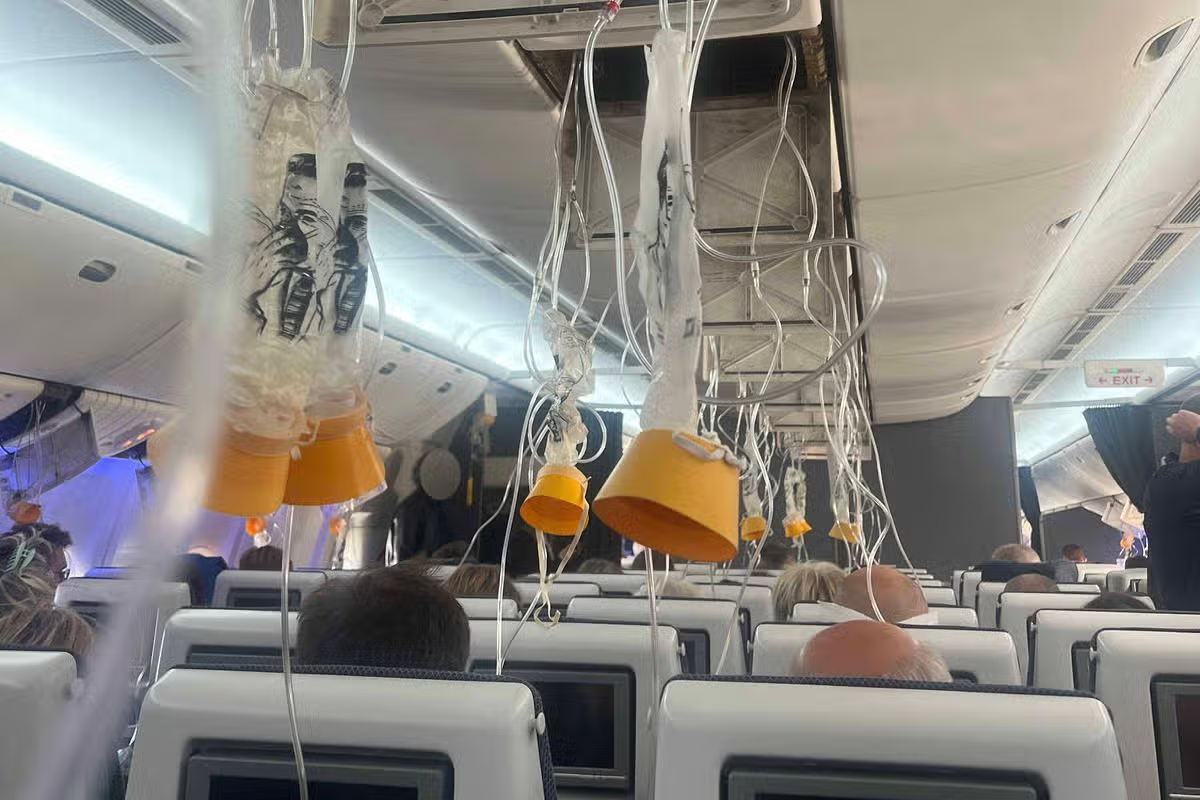
The oxygen masks deployed on the British Airways flight from London Heathrow to Chicago on October 5, 2026(Image: SWNS)
A passenger aboard a London to Chicago British Airways flight says the cabin was “silent” as they dropped 27,000ft in minutes. A “technical issue” caused the aircraft to drop and declare an emergency, and return to London on October 5.
Scott Tanner, 39, was a passenger on the plane when it began descending “noticeably” and they were told to put on oxygen masks. Flight BA295 had reached a cruising altitude of 37,000ft after taking off from Heathrow before the mid-air emergency.
Flight tracking data showed the aircraft dropped sharply down to 9,000ft. Scott said their was “silence” for 10 minutes before they were told they could remove their masks, and retuned to London after five hours in the air.
Scott, from Torbay, Devon, told Talk to the Press: “About an hour into the flight I was listening to an audiobook when, completely without warning, the oxygen masks suddenly dropped throughout the cabin.
“An automated announcement instructed everyone to put on their masks immediately. For around 10 minutes afterwards there was no further information from the flight deck.
“There was simply silence apart from the automated announcement repeating on a loop, which was probably the most disconcerting part. Despite this, everyone remained remarkably calm. I did not hear a single scream.
“We could feel the aircraft descending quite noticeably, although it felt controlled rather than like a plunge. The captain then told us that we were below 10,000 feet and could remove our masks.
“He later explained that we would be returning to Heathrow, but because the aircraft was carrying fuel for the transatlantic journey we would need to circle for several hours to burn it off. We eventually landed safely after about five hours in the air.”
Scott says British Airways provided passengers with hotel accommodation, but further arrangements were “frustrating”. He said: “I was initially rebooked via Charlotte despite direct flights being available, and I had to negotiate to have this changed.
“When I asked whether BA might offer some gesture in recognition of what had happened, I was repeatedly sent between different desks and eventually told that any compensation would have to be dealt with online.”
The plane left London Heathrow’s Terminal 5 at 11:50am, with an expected flight time of eight hours and 40 minutes before landing at Chicago O’Hare International Airport. The flight crew issued a squawk 7700 code – the international aviation signal for a general emergency – shortly after beginning the steep descent.
Passenger Tom Nicholls told the Mirror there was a “sudden bit of turbulence” during the emergency. Mr Nicholls explained: “The plane adjusted but it didn’t feel like it was descending rapidly. I’d say the pilots did a very good job.
“The oxygen masks popped out soon after and there was a bit of uncertainty onboard. The couple in front couldn’t get to theirs but by the time they’d found a spare seat with a mask, the captain announced we were below 10,000ft so they were not needed.”
A spokesperson from British Airways said: “The safety of our customers and crew is always our top priority, and the aircraft landed safely after our highly-trained pilots returned to Heathrow following a technical issue.
“Customers disembarked the aircraft normally and our teams are working to get their travel plans back on track as quickly as possible.”
People can expect to see the change roll out at dozens of major UK airports
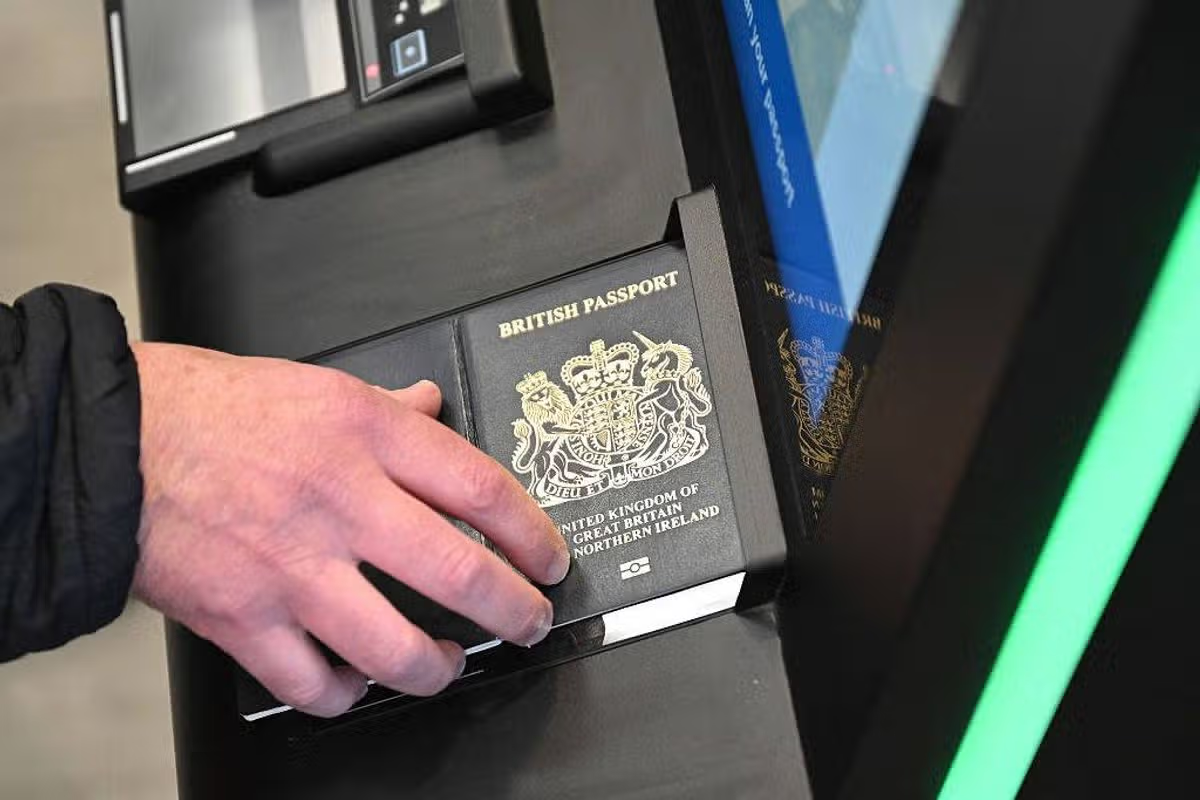
A major change to part of the airport security process is being made at some UK airports ‘by early 2027’(Image: Getty)
One part of airport security is about to get quicker for travellers at certain UK airports. The Government is set to roll out a “state-of-the-art” scheme regarding passports. People heading off on autumn and winter breaks might see this new system in place as airports gradually upgrade.
BBC Morning Live recently discussed a Home Office announcement claiming that a new “contactless system” for checking passports on arrival in the UK could be up and running by early next year at many major British airports. Consumer affairs expert Harry Kind claims that, although passengers won’t be able to leave their passports at home, this process change should make part of the return process “smoother and faster”.
The discussion stems from a BBC headline claiming the “passport-free” system was coming into effect. In an official update from the UK Government, it claims that passengers arriving in the UK will soon pass through airport checkpoints securely without showing their passports. The system uses facial recognition technology to allow arriving passengers to clear immigration without physically scanning their passports.
This is not a “passport-less” journey. Border Force explicitly states that passengers must keep their physical passports with them at all times. If the facial recognition scan hits a snag or requires additional vetting, you will be prompted to scan your physical passport or be directed to a Border Force officer.
Content cannot be displayed without consent
The technology, described as a “cutting-edge contactless system”, will begin rolling out this month and gradually replace every airport eGate “by early 2027”. Here’s how it works:
Passengers approach an eGate and have their photo taken
The system checks this live image against verified immigration, travel and passport information
The eGate opens automatically once these checks are complete
A statement reads: “The system uses state-of-the-art facial comparison technology to verify a passenger’s identity before the UK’s robust border security checks are carried out in full. Legitimate travellers can then simply walk through, without needing to place their passport on the eGate reader.
“If further checks are needed, passengers will need to place their passport on the reader or may be directed to a Border Force officer, as happens today. Border Force officers will continue to monitor all eGates offering assistance, and passengers should keep their passports with them at all times.”
The phased rollout starts at East Midlands Airport, initially for British citizens. The aim, by early 2027, is to expand this to more airports and other nationalities already eligible for eGates over the coming months.
The national rollout began on October 6, 2026. The government plans to have all UK airport eGates switched over to this contactless tech by early 2027. East Midlands Airport is the first UK airport to officially switch on the live contactless technology.
Standard eGates are currently functioning across 13 major UK airports (including Heathrow, Gatwick, Manchester, Edinburgh, and Stansted), all of which will transition gradually during this phased rollout. Phil Douglas, Director General of Border Force, claims that this is “a win for travellers coming to our brilliant country”.
He said: “By using state-of-the-art technology, we are making journeys smoother and faster, all while fully maintaining the UK’s robust border security. Our digital transformation also builds on our work this summer to extend eGates to children aged eight and above, making life a little easier for families.”
Steve Griffiths, managing director of East Midlands Airport, said: “As an airport committed to providing an effortless travel experience, we welcome any technological innovation that can help to safely make our customers’ journeys smoother, swifter and simpler. This complements changes that we carried out to our immigration hall recently to help improve the flow of arriving passengers through the area.”
A short flight from the UK, the Channel Islands offer wild coastal walks, peaceful beaches and a new style of upscale autumn stays
This article contains affiliate links, we will receive a commission on any sales we generate from it. Learn more
Long beach walks, windswept skies and cosy pub fires – autumn doesn’t get much more magical (Image: Getty Images)
If you’re craving an autumn escape but don’t fancy spending hours travelling, the Channel Islands could offer the perfect change of scenery. Just a short flight from the UK, Jersey, Guernsey and Alderney can feel a world away from everyday life, particularly once summer crowds have disappeared and autumn arrives.
There’s something particularly appealing about spending the day outdoors with the autumn air on your face before retreating somewhere warm and cosy as the sun begins to set. The islands offer plenty of reasons to embrace the season, from dramatic coastal walks and windswept beaches to cold-water swims and changing woodland.
That’s the idea behind Hand Picked Hotels’ new Amber Hours – Autumn by Hand Picked campaign. Designed to celebrate the Channel Islands, the short breaks are a perfect way to breathe in the landscapes as they take on a wilder, more atmospheric character.
READ MORE:
Think bracing walks along the coast followed by Champagne Afternoon Tea, a dip in the sea before warming up in a sauna, or settling beside a window with a glass of wine one of the five Hand Picked Hotels in the Channel Islands that are offering their own take on an autumn break.
Jersey, the largest of the Channel Islands, is a brilliant island escape, with golden beaches, rugged coastal paths and pretty villages offering plenty to discover beyond its sunny summer months. From windswept seaside walks to cosy cafés and historic spots, it’s an easy place to embrace the changing seasons and enjoy a relaxing autumn break.
There are a selection of hotels across Jersey and Guernsey offering autumn breaks with room and food upgrades.
If you fancy a little island adventure of your own, L’Horizon Beach Hotel & Spa makes a rather lovely base for an Amber Hours escape in Jersey. Sitting right beside the golden sands of St Brelade’s Bay, it’s just a 10-minute drive or around 20 minutes by bus from Jersey Airport – so you can be on the beach before you’ve had time to properly switch off your out-of-office.
Dating back to 1850, the hotel has plenty of character, while its terrace comes with uninterrupted views across the bay. After a bracing coastal walk or perhaps a chilly dip in the sea, you can retreat to the spa for some well-earned relaxation and a choice of treatments.
This five-star hotel puts you within easy reach of Jersey’s attractions, while its rooms make the most of the seaside setting, with some offering ocean views. There’s also an indoor heated pool, sauna and steam room – ideal for warming up after a day spent exploring the island.
Guernsey is the kind of island escape where dramatic cliff paths, hidden coves and sandy beaches make it easy to forget you’re only a short flight from the UK. With wild coastal walks, pretty scenery and plenty of cosy spots to retreat to afterwards, it’s a particularly tempting choice for an autumn getaway.
An Amber Hours autumn break with Hand Picked Hotels is available at the Fermain Valley Hotel. Located a 15-minute drive or 20-minute bus away from Guernsey Airport, this hotel is perched on a clifftop above Guernsey’s southeast coast for spectacular views and offers a variety of dining options between its steakhouse, Mexican restaurant and tea rooms.
Also in Guernsey is St Pierre Park Hotel, which is 10 minutes by car or 50 minutes by public transport from Guernsey Airport. Home to an award-winning spa and nine-hole golf course, the grounds of this hotel are home to a picturesque lake and gardens, with master suites offering guests their own private garden and hot tub.
Another accommodation option in Guernsey is Hotel Jerbourg, which is the number one choice on Booking.com based on guest reviews. Set on the clifftop at Jerbourg Point with views stretching as far as France on a clear day, this hotel is home to two restaurants as well as a coffee shop with a sun terrace and an outdoor swimming pool open from May to September.
Over on the island of Alderney, Braye Beach Hotel sits right beside a stretch of pristine white sand, with turquoise waters just steps from the door. It’s the sort of place where you can slow right down, taking in beautiful bay views from the sun terrace, spotting local wildlife or simply settling into a peaceful island escape.
Renowned for offering one of the most luxurious stays on the Alderney island thanks to its 4-star status, the hotel boasts beautiful sea views, while the Terrace and Beach Bar is a relaxed space to unwind. For something a little different, The Vaults is a popular spot for sampling some of the finest wines and steaks, or mingle with the locals in our popular Divers Inn pub.
“An absolute Gem”
Meanwhile, the selection of Hand Picked Hotels across Jersey and Guernsey have all earned a rating of 4.3 out of five stars or higher on Tripadvisor, having earned thousands of reviews from visitors. The top favourite is L’Horizon Beach Hotel & Spa, with one guest writing of a recent stay: “The location is fantastic. A sea view room gives a panoramic view of the wonderful St Brelade’s Bay. Direct access to the beach from the hotel.”
They added: “Comfortable accommodation. Well equipped room. Food excellent. Breakfast selection very good and quality high. Dinner in the terrace restaurant was very enjoyable, again with a matchless view.”
Another visitor fed back: “Stunning location, excellent service and customer care. Lovely open air terrace, wonderful glass-fronted dining terrace, good menu choices with different options for dining, outstanding selection of breakfast choices. Nice pool and spa with good treatment options. Good parking. Convenient for airport and access to all other parts of the island. All in all a wonderful experience and will definitely return.”
Although, they went on to note: “The music on the terrace only happened a couple of times but is it really necessary to bring in loud music to ‘entertain’ people in such a stunning location in a place that oozes tranquillity?”
Another delighted guest added: “An absolute Gem found right beside a lovely wide beach which will give you great childhood Vibes and an enchanting memory. Honestly we can’t wait to go back -to walk on the perfect soft white sand , enjoy the beautiful sea view & savour the calm & peaceful oasis that this wonderful hotel serves up. An absolutely fantastic find.”
Meanwhile, someone else wrote of their stay: “Rooms were of a high quality and always attended to by housekeeping every day and night to turn down your bed. Food in hotel was fantastic. From breakfast to evening meals. Can say it is some of the best food we have had on holiday. Location and staff really made this an unforgettable holiday for us.”
The best big city in the US has been crowned for the tenth consecutive year – and it’s not where you might think
This city is the best big city to visit in the US(Image: Getty)
The finest major city in the US has been crowned for the tenth year in a row – and it might surprise you. When considering American cities, New York typically comes to mind first.
However, according to a Condé Nast Traveler’s survey of over 800,000 respondents, Chicago takes the top spot. It’s the first and only city to claim the accolade for 10 consecutive years, initially securing the honour in 2017.
Since then, the city has experienced a decade of evolution that has seen it triumph time and time again.
Kristen Reynolds, President and CEO of Choose Chicago said: “This historic recognition belongs to the entire city of Chicago.
“From the hospitality professionals who welcome guests each day to the chefs, artists, musicians, entrepreneurs, and cultural leaders who create remarkable, only-in-Chicago experiences, it takes an entire city to sustain this standard for a decade.
“We do not stay at the top by standing still. Chicago is always evolving, always creating, and always giving visitors new reasons to come back”.
According to Condé Nast Traveler it’s “no wonder” the city has triumphed once more.
The article reads: “A world-class destination known for its impressive architecture, first-rate museums, brilliant chefs, and massive brewing scene, it’ll take several repeat visits to get through your list of must-dos.”
Mayor Brandon Johnson added: “This historic recognition reflects the creativity of our residents, the strength of our neighborhoods, and the excellence of the local institutions and businesses that welcome visitors from around the world.
For 10 consecutive years, travellers have recognised what Chicagoans already know: there is no place quite like our city.
“This remarkable milestone is a testament to everything Chicago has to offer and one our entire city can celebrate with pride.”
While Chicago claimed the top spot, New York failed to even crack the top three.
The Big Apple landed in fourth place, trailing behind Boston in third and San Francisco in second.
Another rule change has come in(Image: Oscar Wong via Getty Images)
Brits are being urged to check their passports before travelling, with a new rule now in effect.
Experts said the changes highlighted the risk of simple travel document mistakes. They have explained the rule change and given advice on wider passport checks to make before travelling.
From September 28, passengers travelling on Irish Ferries’ Dublin-Holyhead and Rosslare-Pembroke routes, in both directions, are required to present a valid passport or Irish passport card before boarding. But new research from Saga Travel Insurance suggests many Brits could still be caught out by basic passport and travel document rules.
It said 16% admitted they didn’t know when their passport expires, with a 8% currently holding an expired passport. Further, 10% had less than a year remaining on their passport and one in 14 (7%) had previously been denied entry to a country because they didn’t have enough time left on their passport.
Saga said there was also widespread confusion around post-Brexit travel rules, with half (50%) of holidaymakers saying they were not confident they understood the visa and travel requirements for visiting Europe.
Michelle Cooper, director of Travel Insurance at Saga, said: “Nobody should have their holidays ruined because of a simple passport error. A few quick checks can help people avoid unnecessary stress, unexpected costs and disruption at the airport.”
The travel insurance provider surveyed 500 people in the UK and found that Brits could be at risk of avoidable disruption when travelling overseas due to simple oversights.
The passport rules catching Brits out after Brexit
Half (50%) of holidaymakers are still not confident they understand the visa and travel requirements for visiting Europe after Brexit, the survey found.
Michelle said: “If you’re travelling to Europe for an extended period, you may now be required to apply for a new visa type. Travellers can spend up to 90 days in the Schengen area within any rolling 180‐day period, but it’s not as simple as it sounds.
“The 180 days are counted backwards from each day you’re in the EU or a Schengen country, so every trip adds up. That means even frequent short breaks can push you over the limit without realising.
“If you go beyond 90 days, you could face fines or even a ban from re-entering. Anyone planning to stay longer will need to apply for the new Schengen Visa.”
What is the Schengen area?
The Schengen area is a group of 29 European countries where travellers can move between countries without routine passport checks. It includes popular holiday destinations such as France, Spain, Italy, Greece and Portugal.
Confusion around the ‘10-year passport rule’ is the most widely discussed passport concern online, according to the analysis from Saga Travel Insurance, with Reddit discussions on the issue amassing 35,417 upvotes.
Michelle explained: “EU and Schengen countries require passports to be less than 10 years old on the day of entry. While all new passports last exactly ten years, passports issued before 2018 remain valid for 10 years and nine months. If you have an older passport, make sure you check both the issue date and expiry date before travelling to avoid problems at the border.”
Brits warned over new ETIAS travel checks for Europe
From late 2026, British travellers visiting most European countries will need to apply for a new European Travel Information and Authorisation System (ETIAS) before travelling. The new system is similar to the UK’s Electronic Travel Authorisation (ETA) scheme and will apply to visa-exempt travellers visiting 30 European countries for short stays of up to 90 days within a 180-day period.
Michelle said: “Travellers may not realise that visiting Europe will soon involve an additional pre-travel authorisation step. From late 2026, British holidaymakers will need to apply for ETIAS approval before travelling to many popular European destinations.
“The authorisation will be linked directly to your passport, meaning travellers could be denied boarding if their ETIAS details don’t match their travel document or if the authorisation has expired. Most ETIAS applications are expected to be processed within minutes, but it could take longer if additional checks are required. Holidaymakers should apply well in advance of departure to avoid last-minute disruptions.
“Similar systems already exist elsewhere. For example, UK travellers visiting the United States must apply for an Electronic System for Travel Authorisation (ESTA) before departure. These systems are becoming more common globally, so it’s important to check requirements for each destination well ahead of travel.
“As with passport validity rules, people are responsible for making sure they have the correct travel authorisation before they leave the country. If someone is unable to travel because they failed to obtain valid ETIAS or ESTA approval, travel insurance is unlikely to cover costs associated with denied boarding or cancelled trips.”
Many of us own one of these common colours for a suitcase but it is worth following simple advice that will stop any problems from arising
09:56, 06 Oct 2026Updated 09:56, 06 Oct 2026
This article contains affiliate links, we will receive a commission on any sales we generate from it. Learn more
Many of us think they can spot their suitcase when it is on a baggage carousel(Image: mtreasure via Getty Images)
Ryanair continues to grow, with the airline carrying a record 208.4 million passengers in its latest full financial year – a four per cent increase on the previous year. However, the budget airline has also been cutting back at some European airports, with Ryanair withdrawing or reducing flights in certain locations.
The airline has pointed to factors including aviation taxes and airport charges. Despite this, the UK remains a key part of Ryanair’s expansion plans.
Its winter 2026 schedule includes 435 routes, with three new services from London Stansted and a new route between London Luton and Venice. A further 18 new routes have also been added from other UK airports.
As Brits gear up to the October half term holidays and winter, Ryanair has issued a warning to passengers who typically fly with black, navy or grey suitcases, urging them to ‘change’ their luggage to avoid any confusion when they land.
The budget carrier advised travellers to make their checked-in bags more distinctive on the carousel given the prevalence of these colours.
What Ryanair says
As reports the Express, Ryanair said: “Make it easier to spot your checked-in luggage on the carousel, especially if your luggage is black, navy or grey (like 99.9 percent of the population). Add a colourful luggage tag or ribbon to the handle so that there’s no confusion on arrival.”
Ryanair also recommends passengers create copies of their passport, driving licence, and/or ID card and email them to themselves.
It’s also suggested to photograph these documents and store them on your phone for offline access at your destination,
The well-known budget carrier transports an impressive 52 million passengers to and from the UK annually with its fleet of 107 UK-based aircraft.
In June, Ryanair experienced a spike in passenger numbers with 19.3 million people opting to fly with them across one of their 106,000 flights. This marked the first occasion the airline transported more than 19 million travellers and an 11 per cent rise compared to June 2023.
The airline also pulled out all the stops for England fans during the Three Lions’ Euro 2024 run, laying on over 1,500 extra seats to and from Berlin for the cup final.
On a separate note, if you’re on the hunt for stylish cabin bags and suitcases, Antler is well worth a look. Their Iconic Stripe Case, retailing at £175, is available in seven gorgeous colours, including mist blue.
Hundreds of flights have been cancelled in a union dispute that could affect thousands of passengers
Robert Rowlands Deputy editor, money and lifestyle, content hub and Maria Ortega
17:24, 02 Oct 2026
EasyJet says it is “extremely disappointed” that the action is taking place – file image of one of the airline’s planes at Lisbon airport(Image: Sergey Sokolnikov via Getty Images)
A ‘massive’ EasyJet cabin crew strike has resulted in the cancellation of hundreds of flights in a popular British tourist destination – and could jeopardise Christmas plans for holidaymakers.
The initial 5-day industrial action is expected to ground approximately 500 scheduled flights across Lisbon, Porto and Faro airports. And the festive period is also set to be disrupted.
The strike began this Friday, October 2, in Portugal and is the first of two walkouts planned for this year. The affected flights involve all domestic airports, but mainly Lisbon and Porto.
The EasyJet cabin crew strike goes on until Tuesday, with 443 flights from the Lisbon, Porto, and Faro bases already scrapped as of this morning, according to the National Union of Civil Aviation Flight Personnel (SNPVAC). “80% of flights involving the Lisbon, Porto, and Faro bases” between October 2 and 6 have already been cancelled, union official Ana Dias told local news agency Lusa. They noted that “the impact has already been massive.”
EasyJet, meanwhile, said 55% of flights were set to operate over the five-day strike period. The National Union of Civil Aviation Flight Personnel (SNPVAC) reported strong participation on Friday, the first of five scheduled strike days for EasyJet cabin crew, adding that only minimum services are being maintained.
EasyJet has confirmed that two return flights from Manchester Airport to Portugal have been axed in the coming days due to industrial action, the MEN reports. The walkout was announced by the National Union of Civil Aviation Flight Personnel and is set to impact flights from Lisbon, Porto and Faro airports, all served by EasyJet from Manchester Airport.
Sic Noticias reports that the union has said other currently scheduled flights could still be disrupted by the strike, although some may be operated by aircraft and crews from other European bases. An official EasyJet source told Lusa on Thursday that the airline anticipates operating approximately 55% of its schedule during the strike period. The source explained that, in addition to “minimum services” (representing about 22% of its Portugal-based operations), the airline is maintaining flights to and from the country operated by crews from other European bases.
The company says these operations are being conducted “in full compliance with applicable laws and regulations,”. The SNPVAC union deems the use of workers from other bases to replace striking staff “illegal” and is considering taking the matter to court.
EasyJet said it was “extremely disappointed” that the strike was taking place, despite its “ongoing efforts to maintain a constructive dialogue and reach an agreement.” It expressed regret over the disruption caused to passengers.
An EasyJet spokesperson said: “We are extremely disappointed that the union representing our Portugal-based cabin crew has announced an industrial action from 2 to 6 October, despite our willingness to continue a constructive dialogue and reach an agreement to meet our employees’ requests and protect the sustainability of EasyJet business in Portugal.
“We are sorry for the impact the unnecessary action will have on our customers, and are doing all we can to minimise disruption, including cancelling two return flights from Manchester in advance to allow our customers to rearrange their travel plans. Customers have been informed directly and offered options including a free transfer or a refund.
“We advise customers travelling to or from Portugal between 2 and 6 October to check the status of their flight via our Flight Tracker.”
Ryanair has consistently railed against Nats(Image: Mrkit99 via Getty Images)
Budget carrier Ryanair has issued an update, confirming that it cancelled 1,000 flights.
It partly attributed the recent “collapse” of Britain’s air traffic control system for the scrapping more than 1,000 flights in September. The Irish airline said the cancellations stemmed from two separate air traffic control (ATC) failures within a fortnight of one another last month, alongside ATC strikes in Belgium and widespread disruption across Europe caused by volcanic ash clouds from eruptions at Mount Etna.
The head of Britain’s National Air Traffic Services (Nats), Martin Rolfe, has faced mounting calls to quit following a string of air traffic failures that led to thousands of flight cancellations across the industry last month, leaving hundreds of thousands of passengers stranded.
The most recent incident was triggered by a “connectivity issue” at its Prestwick centre in Scotland, which was unrelated to an ATC software fault on September 8 that sparked widespread travel chaos.
Ryanair has been among those demanding Mr Rolfe’s resignation, while Transport Secretary Heidi Alexander has arranged a meeting with Nats chairman Sir Warren East, the former chief executive of Rolls-Royce, in the coming weeks to address the ongoing issues.
Latest Ryanair figures
Ryanair’s most recent traffic statistics revealed the airline operated over 111,700 flights last month, carrying 20.1 million passengers, a rise of 4% year on year. Wizz Air also released passenger data showing a 24% increase year on year in passengers flown last month, reaching 7.78 million, with capacity up 25.3%.
Yet Wizz announced recently it would slash its flight schedule by 5% over the second half of 2026 owing to broader Iran war pressures on the travel sector and spiralling fuel costs.
Following the latest disruption, easyJet said it “calls into question the resilience of Nats’ systems” and Jet2 said customers and airlines need “action, accountability and proper resilience”.
Calls to resign
On September 21, chief operations officer for Ryanair Neal McMahon said: “Martin Rolfe has presided over repeated system failures, repeated passenger disruption and repeated failures to deliver an effective back-up system.
“Enough is enough. Martin Rolfe should resign today.”
Tim Alderslade, chief executive of industry body Airlines UK, said ATC was “critical national infrastructure” which “must be resilient enough to keep people moving”.
He added: “Yet another Nats failure is causing delays and disruption for passengers and airlines alike, and comes just days after its report into the most recent major outage. Passengers and airlines deserve better and the independent CAA (Civil Aviation Authority) report, together with the forthcoming Civil Aviation Bill, must address the underlying weaknesses in the system so that these failures stop happening.”
Brits are continuing to face delays due to the EES system, and queues of five hours were reported just last week at a popular city break destination for those visiting from outside the EU
The long queues seen over the summer seem to be continuing for Brits(Image: JOSEP LAGO/AFP via Getty Images)
European Entry/Exit System (EES) continues for Brits with a major European airport confirming that non-EU visitors faced five hour queues last week.
The Brussels Times reports that non-European travellers, including Brits and Americans, were forced to go through staffed control posts leading the the huge queues. In a statement to the Belgian news outlet, the airport confirmed that additional police officers are being trained for the border control posts and they were seeking “structural solutions”.
When contacted for comment, a spokesperson from Brussels Airport said: “Since the introduction of the European Entry/Exit System (EES), border checks for travellers covered by this system have taken longer, as is the case at many other airports. In addition, passengers from certain non-EU countries can no longer use the e-gates. As a result, more passengers need to go through staffed border control points, which has increased waiting times.”
They added: “All parties involved continue to work together on long-term solutions.” The airport spokesperson confirmed the airport had added two extra border control booths for the Federal Police at departures, in addition to two booths that were added at arrivals before the introduction of EES.
They went on to say: “The Federal Police also increased staffing levels on a permanent basis during the summer, and further reinforcements have been planned. More police officers are also being trained to ensure sufficient staffing at border control points, and additional infrastructure needs are being assessed.
“In addition, 60 EES pre-registration kiosks have been installed. These allow non-EU travellers to submit some of their information in advance. The connection between the e-gates and the pre-registration kiosks is still being tested so that, in the future, passengers from certain non-EU countries may be able to use the e-gates again.”
EES launched nearly a year ago, on October 12 2025, before officially becoming operational on April 10 2026. However, over the summer months holidaymakers have reported a myriad of issues with the system.
But no sooner was it launched than countries started to pause, or even shelve the scheme, due to the huge queues snaking through airports. Nine countries have put full EES implementation on hold, despite the fact that the EU said there would be no extension to the deadline. Holiday hotspots such as Greece briefly made an exemption for British holidaymakers over the summer, which has now been reversed, putting them back in the queue.
Over on Reddit, a poster took to the R/Belgium sub with a post titled: “Brussels airport queues should be a national scandal”, asking: “Why are they so bad? EES isn’t new anymore. They hardly have anyone checking passports. Are people in Belgium aware that queuing for 1hr + isn’t normal?”
One poster replied: “If you’ve got a kid under 12 you have to go through a manual check and can’t use the kiosks, and while usually shorter than the all passports line, it can sometimes be long as well. We waited 20-30 minutes last Friday mid morning. The all passport line was all the way along the back of the security screening area. I don’t remember the last time I’ve seen more than 3 agents working and an all passport line shorter that didn’t back up into the arrivals corridor. “
Reviews of the airport on Google tell the same story. One visitor said: “The passport control situation at Brussels Airport is completely unacceptable. Every time I arrive and have to use the “All Nationals” queue, I face the same problem: an enormous line and an extremely long wait, sometimes lasting hours.”
They added: “This is an international airport and one of the main gateways to the capital of Europe. Yet the passport control capacity seems completely inadequate for the number of arriving passengers. Hundreds of people are forced to stand in line after long flights because there are simply not enough control points operating to process passengers within a reasonable time.”
Have a story you want to share? Email us at webtravel@reachplc.com
British holidaymakers heading to one of Europe’s most popular destinations have been issued a warning
It concerns a volcanic eruption(Image: Getty Images)
Anyone travelling to Italy or the Vatican City this week have been told to check the latest official advice, after an update highlighted a developing issue that could affect some journeys. The Foreign, Commonwealth and Development Office (FCDO) updated its Italy travel advice on Monday, September 28.
The update relates to Mount Etna, the active volcano on Sicily’s eastern coast which is one of the world’s most active volcanoes. According to UNESCO, Etna’s eruptive history stretches back around 500,000 years, with at least 2,700 years of its activity documented by humans.
It is also one of Sicily’s best-known natural landmarks and was added to the UNESCO World Heritage List in 2013 because of its geological importance. UNESCO describes Etna as the highest mountain on a Mediterranean island and says its continuing activity has made it an important site for scientific research.
The latest FCDO advice says Italian authorities have increased the alert level because of volcanic activity at Mount Etna. Travellers are advised to follow instructions from local authorities if an eruption occurs.
It could have consequences for people travelling by air, with the FCDO stating that arrivals and departures at Catania Airport may be cancelled, delayed or rerouted to Palermo or Comiso if volcanic activity affects the airport. Holidaymakers heading to or from Catania have been advised to check with their airline or travel provider and the airport itself.
The FCDO does not advise against travel to Italy as a whole, but its general guidance states that “no travel can be guaranteed safe” and tells travellers to read the full advice before travelling. It also recommends appropriate travel insurance covering an itinerary, planned activities and emergency expenses.
There are also wider safety points for visitors to Italy, with the FCDO warning that demonstrations can occur with little or no warning in cities and advising people to avoid protests, political gatherings and marches. The government also says petty crime, including bag-snatching and pickpocketing, is more common in city centres and at major tourist attractions.
Wildfires remain another risk during Italy’s extended summer months, with the FCDO describing them as dangerous and unpredictable and advising visitors to check local alerts and weather forecasts. The same guidance says people should follow local authorities’ instructions and take care when travelling through woodland areas.
Anyone travelling should therefore check the FCDO advice shortly before departure because circumstances can change. The government’s travel guidance also recommends having appropriate insurance and following instructions from local authorities while abroad.
Holidaymakers have been left questioning everything after spotting an unexpected airport sign, with some admitting it would have sent their anxiety through the roof
The sign was spotted in an airport (stock image)(Image: Getty)
There are plenty of things you have to remember to check before setting off on holiday, and for lots of people, this can be an anxiety-inducing experience. Before leaving home you’ve likely double-checked the hob is off twice, made sure the windows are closed four times over, and checked every door is locked. So, after checking in your bags and making it into duty free, the last thing you want to see is a reminder about whether or not you left your oven on.
But that’s exactly what some travellers came face-to-face with at one airport, thanks to Notre Dame Federal Credit Union (FCU), which has created what has been described as the “most anxiety-inducing” sign in existence.
The sign was shared on Reddit, where it quickly struck a nerve with travellers who are all too familiar with the fear of leaving an appliance switched on. One user said: “As someone with OCD this would absolutely ruin my day.” Another added: “That’s diabolical.”
A third admitted they have their own method for avoiding the dreaded post-departure panic.
They wrote: “And this is why I take a picture of my stove…every…damn…time….like a weirdo. I routinely go back and clear those photos out.” They added: “Thanks mum for giving me this fear (though for her it was the garage door).”
‘The house didn’t catch fire’
For another traveller, the sign brought back a particularly memorable experience involving an iron.
One user explained that they had once ironed a shirt before an international flight because they wanted to look their best when they arrived. As a single man who rarely irons clothes, he decided to do it on his coffee table.
But two weeks later, when he returned home, he discovered the iron was still switched on.
He said it had been left on its highest heat setting, sitting sideways on the carpet next to the coffee table.
The carpet was left with a deep permanent burn, but thankfully the house hadn’t caught fire.
He said the experience had made him “much more paranoid”, meaning he now double-checks everything before leaving home.
‘Smart marketing’
Not everyone was left traumatised by the sign, however.
Some users praised Notre Dame FCU for coming up with a memorable piece of marketing, pointing out that the message had certainly succeeded in sticking in travellers’ minds.
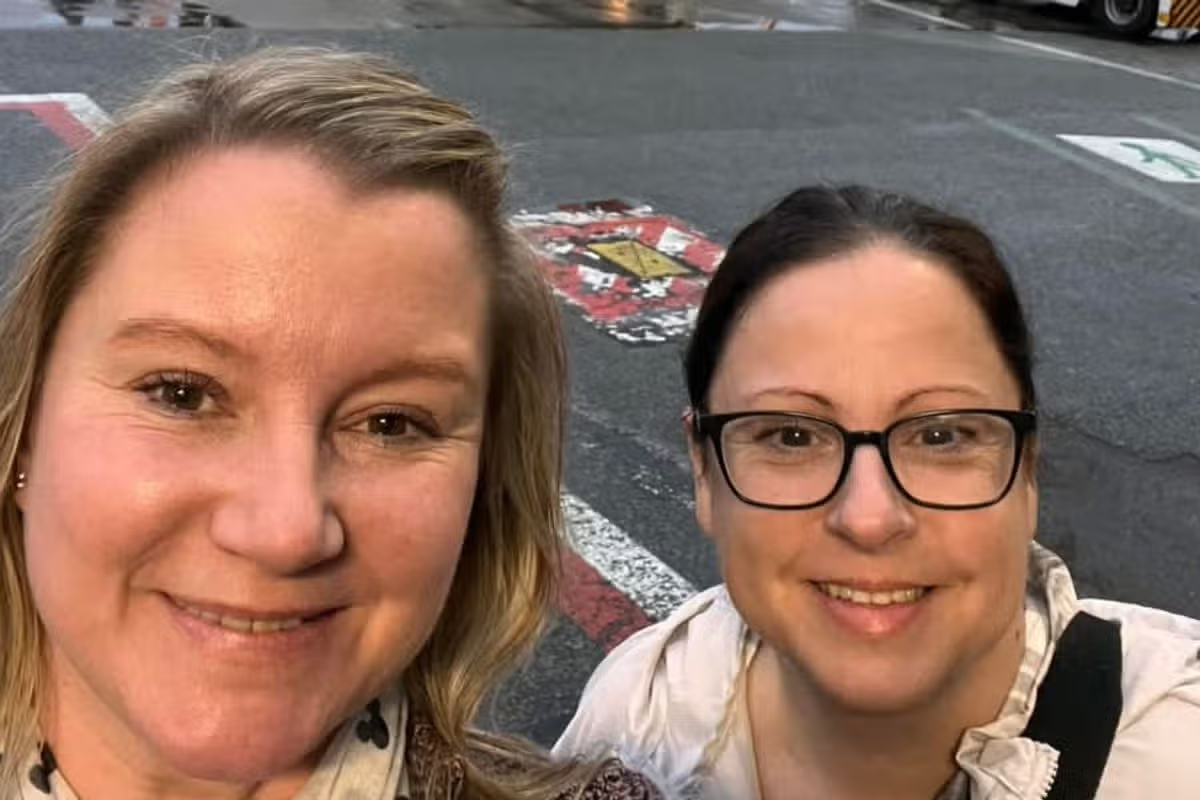
A pair of best friends nipped to France for lunch and came home the same night, spending less than £75 on the whole trip. Mel Evans travelled to Beauvais with her friend and work colleague, Joanne Howard.
Mel managed to snap up return flights from Birmingham for just £48. The retail workers took an 8.45am Ryanair flight and landed at Beauvais Airport at 10.55am local time before taking an 85p bus into the town centre.
“We had seven hours to explore before we needed to get the bus back to the airport,” said Mel, from Chesterfield, Derbyshire. “The itinerary was to visit the cathedral and wander around the pretty streets and shops, look around the local markets and have some lunch and a drink.
“I love architecture and got lost looking at the cathedral, chateau and old houses. I was in my element. When we got there, we headed straight to the market and had a walk around. They had fish, meat, clothing, bags, purses and all sorts.
“We then headed to the cathedral. There was a lovely street nearby where I took pictures. We walked around the cathedral, then went inside and watched the astronomical clock.
“There was a craft fair, so we bought a few souvenirs for £5. We then headed to the Oise museum, which looked like a château from the outside. It had beautiful grounds.
“We then headed for lunch in the main square. After lunch, we walked around the town some more, stopping in shops and churches. We had a £2.50 ice cream, and found a street with old buildings. Then we looked around a second market and headed back to the main square for a £2.15 coffee until it was time to head for the bus.”
Their two main meals and two drinks cost £38 before they caught the bus back to the airport and boarded their 10:50 pm flight home. They landed back in the UK at 11 pm and, after travelling home, Mel was finally in bed by 12:30 am.
Mel and Joanne have been friends for 12 years and have already been on four day trips abroad together to Milan, Bergamo, Alicante and Oslo. Mel says everything went according to plan – and she would happily do it all over again.
Mel said: “I’m the planner, and Jo turns up; she’s very happy to go with the flow and my itinerary. It works well. There were no hiccups at all.”
Mel and Joanne’s trip began on 19 Sept with a £9.50 parking fee at Birmingham International train station, where they left their car for 24 hours before taking the free shuttle to departures. Their flight took around one hour and 10 minutes. After paying 85p each for the bus into Beauvais, they began exploring the town.
Mel then enjoyed a burger while Joanne had an omelette in the main square alongside two Coke Zeros. With no delays or other problems, the pair had plenty of time to enjoy their whistle-stop visit before catching the 85p bus back to Beauvais Airport.
The whole trip cost less than £75 each. Mel said: “At the end of the day, before flopping into bed, I felt very grateful I’d been able to travel. The next day is when I feel tired. I like that you can explore other countries in a day without having to book annual leave. You can explore the world one day at a time.”
Mel and Joanne have more day trips planned for the rest of the year, with France, Italy and Spain all on their travel radar.
Mel added: “We love day trips. It gives us something to look forward to, and we have a few more booked for this year. Friends and family think it’s great how we nip to France, Italy or Spain just for a day.
“My family call me Judith Chalmers because I’m always away. Day trips aren’t for everyone, as they are long days, but for how nice it feels to sit in a local cafe or park in another country makes it all worthwhile.
“I definitely recommend it to anyone. My biggest tip is to use a site such as Skyscanner to search for flights. Midweek tends to be cheaper than the weekend, and it’s best to book around 12 weeks in advance.”