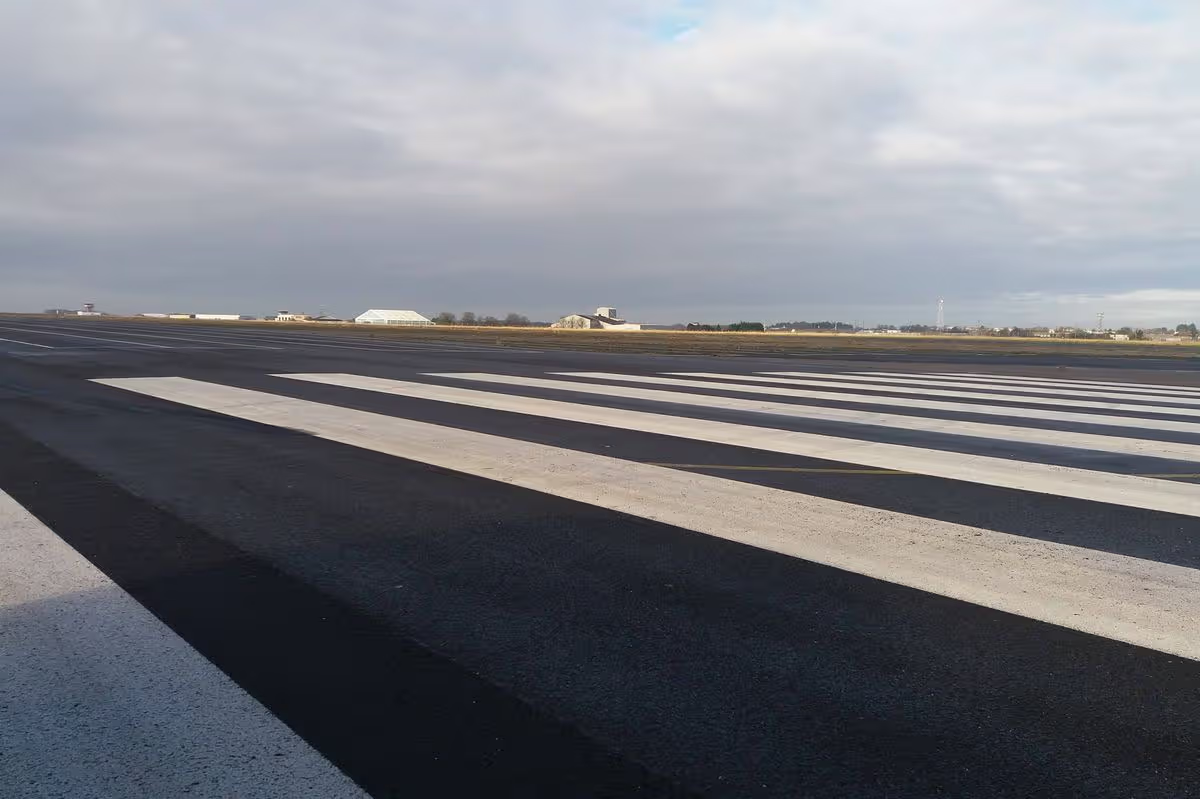
This airport has been closed since 2014, but new £750m plans could see it reopen as a major cargo hub by 2029
Abandoned airport takes next step to finally reopen(Image: Vince Murray via Getty Images)
The disused Manston Airport in Kent could be back in operation by 2029 if fresh proposals get the green light. The airport, which shut its doors in 2014, is earmarked to reopen as a cargo hub before the decade is out.
RiverOak Strategic Partners (RSP) bought the airport for £16.5 million back in 2019, with an initial target to reopen by 2025, though this was delayed owing to escalating costs.
As RSP presses ahead with business development talks with airlines and freight operators, the planning process has now reached its third phase.
From Monday, March 16, to Monday, June 22, the public are being consulted on the proposed airspace modifications.
The suggested changes are being put before residents, local communities, and broader stakeholders.
Tony Freudmann, Director at RiverOak Strategic Partners, stated: “This consultation is an important step in our ambitions to reopen Manston Airport.
“[It’s] representing a once-in-a-generation opportunity to deliver new runway capacity to support the UK air cargo market and to transform the economic landscape in east Kent.
“We know Manston holds a special place in the area’s history, we would encourage people to find out more about our proposal and provide any feedback they might have to help shape our plans.”
When the initial proposals for Manston were drafted, the projected cost stood at £400 million; however, this has since soared to £750 million.
It’s believed that once the redevelopment is finished, Manston will be capable of handling more than a million tonnes of freight annually.
Travel experts have listed what you should wear to the airport
Many people plan a specific airport outfit(Image: Thomas M Barwick INC/Getty)
UK holidaymakers are being warned that planning and wearing a special ‘airport outfit’ is probably not the best move if they want to make sure they avoid any additional charges.
With many airlines charging extra for checked bags, being caught out at the airport can add significant costs to your trip abroad. Thankfully, experts at Good Business Travel are sharing the insider packing habits frequent flyers use to avoid unnecessary fees, travel lighter, and beat the dreaded airport bag weigh-in.
Natasha Inglis, Client Operations and Success Director at Good Business Travel, said: “Airlines are under pressure to offset rising costs, and baggage fees are one of the easiest ways for them to increase revenue. The good news is that smarter packing genuinely can save people a significant amount of money.”
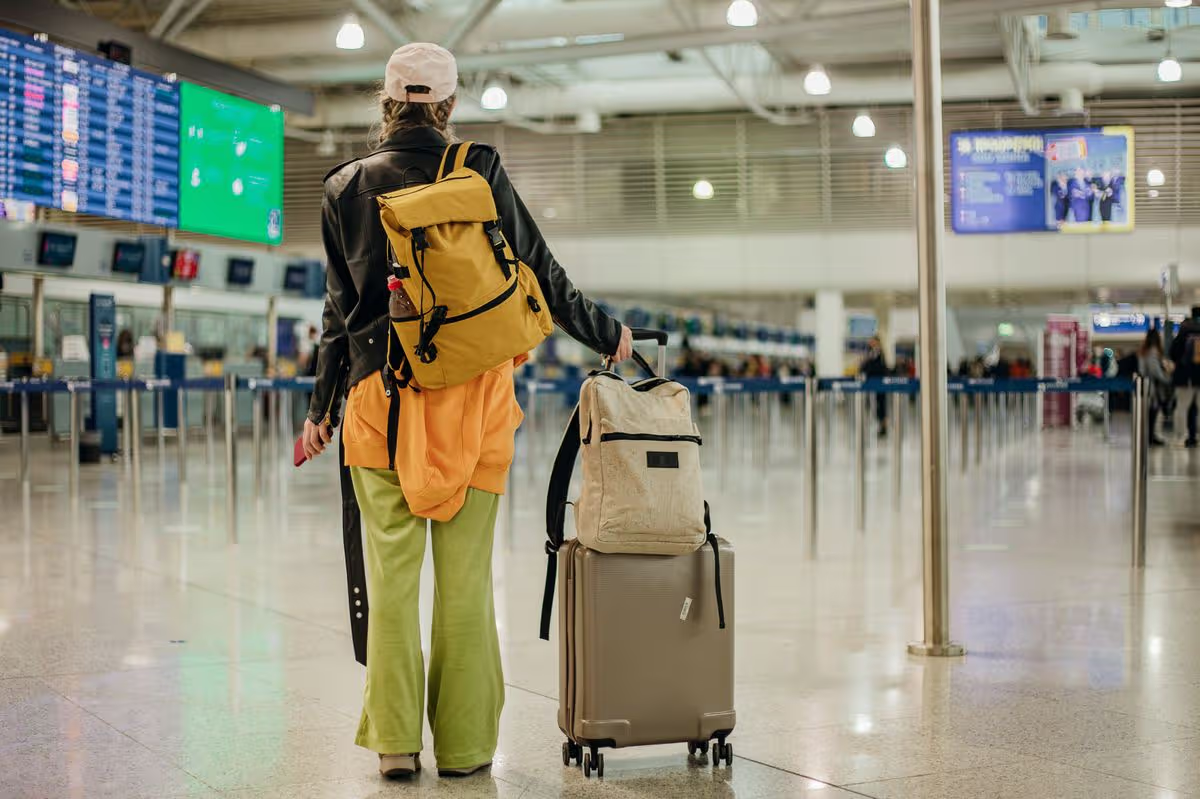
One tip Natasha suggests is ditching the airport outfit – an ensemble people plan in advance to look good during the journey itself. The trend, which is now becoming more common, actually works against passengers packing efficiently, Natasha added.
She said: “Your airport outfit is one of the most underused packing tools you have. Instead of choosing lighter, aesthetic layers for photos or comfort, you should use travel days strategically, wearing the bulkiest items, heaviest trainers, and thickest layers to free up valuable suitcase space.”
As well as this, Natasha suggests a ‘bed test’. This is where you lay everything out on your bed, or the floor, before packing. You then immediately remove at least a third to expose any unnecessary extras or duplicate items that rarely get used of worn.
Natasha explained: “It’s a visual shock tactic. Once you see everything together, you realise how much of it you don’t actually need. The key rule is if it’s a ‘maybe’, then it doesn’t make it into the case.”
She also suggests using packing cubes to compress clothes, and a 3-2-1 carry-on rule. The formula includes packing three tops, two bottoms and one outer layer, all chosen so that everything works interchangeably.
As travellers continue looking for ways to reduce holiday costs, Natasha says smarter packing is becoming one of the simplest ways to avoid unnecessary spending. She added: “Packing light isn’t about sacrificing comfort. It’s about travelling smarter, avoiding stress, and refusing to pay extra for things you never actually use.”
The budget airline is offering a range of discounted flights from UK airports
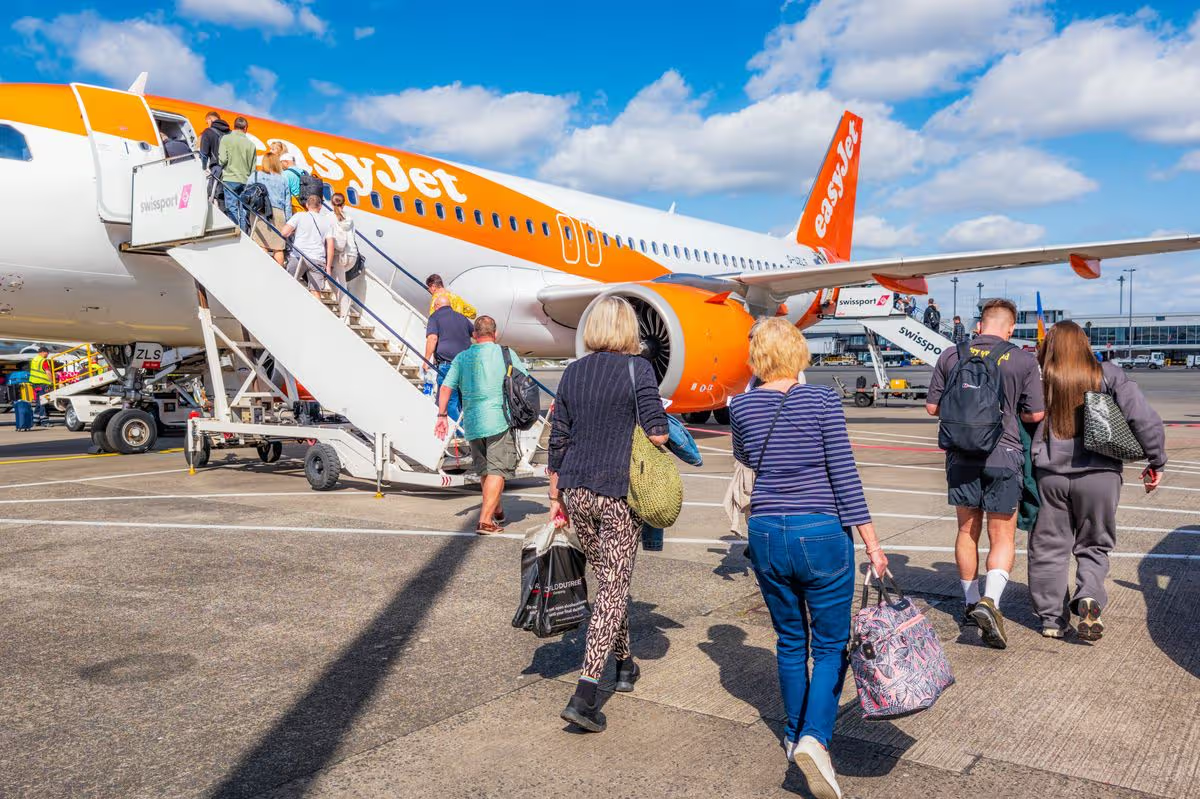
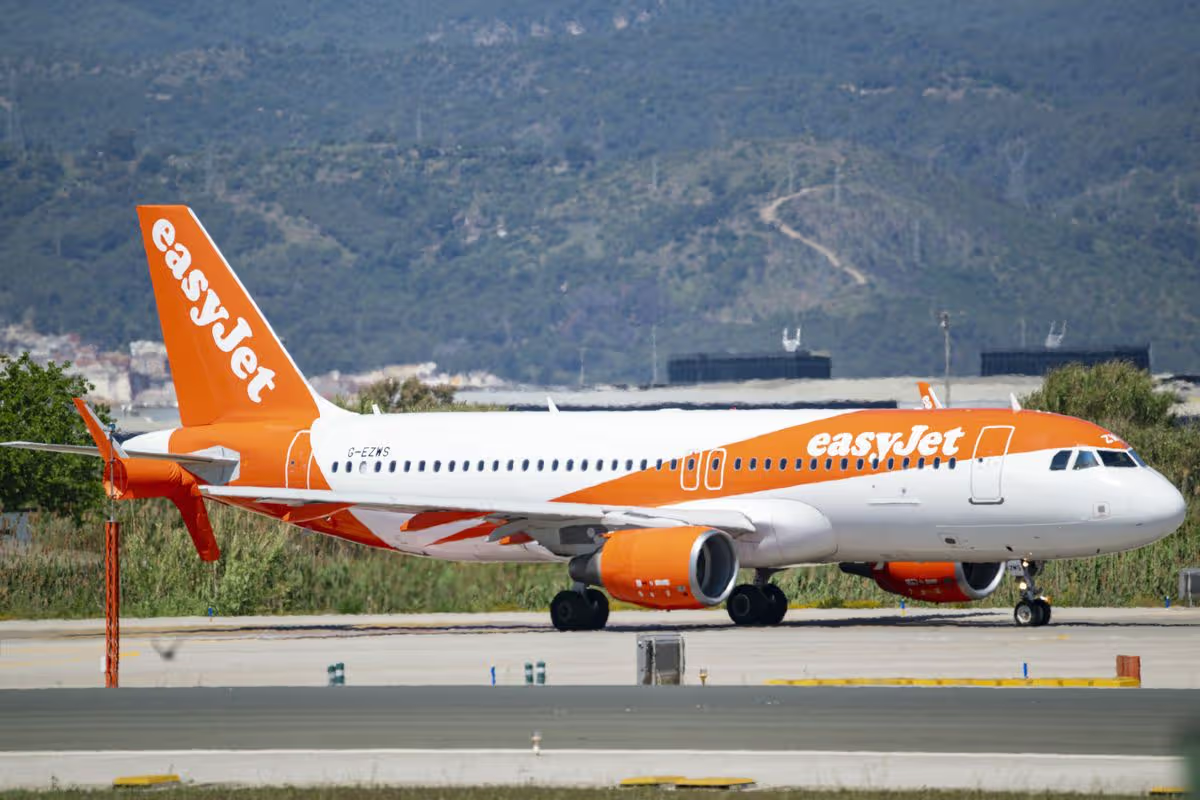
easyJet is currently offering a number of flights at a reduced rate(Image: Getty)
Brits planning a holiday abroad have the next few days to book discounted flights. Budget airline easyJet is currently offering up to 15 per cent off certain trips.
The reduction applies to selected flights between June 1 and September 30. However, the deal only runs until June 3. On the easyJet website, it said: “For the next five days easyJet is offering customers up to 15 per cent off selected flights to and from the UK, giving Brits the opportunity to secure great value fares for their summer holidays. The promo applies to flights between 1 June 2026 and 30 September 2026, covering the peak summer season and school holidays.
“With flights available to a wide range of popular beach and city destinations across easyJet’s unrivalled European network ensuring there are options for all the family.” Going into more detail, it said: “Customers can book discounted fares between 8am on Friday 29 May until 8am on Wednesday 3 June 2026 via easyJet.com or the easyJet mobile app.”
The offer includes flights from airports across the UK, with thousands of seats available at reduced prices with fares starting from £19.99. Examples of some of the routes on offer include:
London Gatwick to Paris and Reus from £31.99
London Luton to Lyon from £22.99
London Southend to Geneva and Pisa from £19.99
Bristol to Malaga and Palma from £25.99
Manchester to Amsterdam, Barcelona, Berlin, Bordeaux, Paris, Copenhagen, Geneva, Hamburg, La Rochelle, Nice, Oslo, Prague, Rennes, and Zurich from £31.99
Liverpool to Amsterdam from £25.99, Barcelona, Split, Malaga, Palma, Naples and Nice from £25.99, Faro from £26.49
On top of this, easyJet holidays is also offering thousands of packages to popular city and beach destinations in Europe and North Africa this summer. “Customers can save £50 per person on beach holidays departing before 31 July 2027 when using code BEACH50, and £20 per person on city breaks departing before 31 August 2026 when using code CITIES20,” easyJet said.
Kevin Doyle, easyJet’s UK country manager, commented: “We know customers are always looking for great value when booking their summer holiday and with thousands of discounted seats available across our network, now is a great time to book a trip and enjoy Europe’s most popular destinations for less.
“To ensure people feel confident to book, we’ve launched our Book with Confidence Promise which guarantees that the cost of flights and package holidays will stay fixed after booking and we will not add fuel surcharges, protecting customers from increased fuel cost.
“We are operating as normal, not making cancellations and are looking forward to taking millions of people on their well-deserved holidays this summer.” For more information, visit teh easyJet website here.
Airports at Brit holiday hotspots including Spain, France and Portugal have reported severe delays and long queues – some as long as three-and-a-half hours at peak times
11:27, 30 May 2026Updated 11:27, 30 May 2026
Recent airport delays appear linked to the new EES border control system(Image: ROBERT GHEMENT/EPA/Shutterstock)
British tourists are being advised to allow more time at airports across Europe before travelling home because of major delays caused by biometric checks.
Wizz Air boss Yvonne Moynihan warned holidaymakers returning home from an EU destination that they should arrive at the airport three hours before their flights are due to depart amid concerns about the new security procedures.
The EU entry-exit system (EES) has now replaced passport stamps with a digital registration, involving biometric checks carried out on entry and exit for all non-EU citizens.
The EES has been gradually introduced across Europe since October last year but came into full force last month. Since then, tourists have reported huge delays at border control,.
Just last week, French police temporarily lifted the EES checks at the Dover port to free thousands of tourists trapped in long delays in the scorching heat.
Ms Moynihan told the BBC: “Because there is another passport check … that’s where we see that people have, again, experienced longer waiting times than anticipated.”
She said that while usual advice is to arrive at the airport two hours before a flight, “in these circumstances, we are advising three hours”.
The new measures have been “fragmented across Europe”, she continued, with some EU countries recording “seamless travel” while in extremes, there have been long queues and delays at “usual hotspots such as Spain, Portugal, France”.
“When you land in the destination airport, there might be queues, so you should bring a portable charger or water,” Moynihan said her airline is advising in general to any British customers travelling from an EU destination.
For those with connecting flights, she advised planning for several hours.
Her comments come as the European airports association ACI Europe warned queues have been reaching an eye-watering three-and-a-half hours in peak traffic times, based on its survey conducted across 45 airports in 20 EU states on May 26.
“Airports which previously did not report excessive waiting times are now doing so despite the extensive use of partial suspension of EES,” it said in a statement to Travel Weekly.
However, the European Commission told the BBC that the EES was not the only factor that can cause delays at the border, stating information may only take around a minute to register.
Thousands of people are finding their holiday flights disrupted as a result of the conflict in the Middle East but the CAA say there is one time you should never choose a refund
There are rules for airlines when flights are cancelled(Image: Getty)
Scores of holidaymakers are facing an anxious wait ahead of their summer getaway as worries persist over the ongoing conflict in the Middle East. Thousands have already had their flights cancelled or disrupted, leaving them with the stressful task of replanning their trips or abandoning them entirely.
However, the Civil Aviation Authority, which oversees and regulates civil aviation in the UK, has issued summer guidance for passengers, outlining their rights should a flight be cancelled either before they depart or while they are already away. It has also reassured travellers that they are “well protected” when things go wrong.
It said: “You may have seen reports about possible disruption to flights this summer. As the summer travel season approaches, airlines, government and industry partners are working closely to support smooth journeys.”
It continued: “While there is a risk of some disruption as a result of the situation in the Middle East, travellers in the UK are well protected by some of the strongest passenger rights in the world, offering reassurance if disruption does occur.” Publishing the statement on its website, it went on to outline several key rules all passengers should be aware of if their flight is disrupted – including one scenario where you should not request a refund, reports the Liverpool Echo.
Cancellation of a flight departing from or travelling to the UK
If your cancelled flight was booked directly with the airline or via a third party your airline is required by law to offer you the following 3 options to choose from:
a refund
an alternative flight (referred to as “re-routing”) at the earliest opportunity
an alternative flight (referred to as “re-routing”) at a later date at your convenience, subject to availability.
It said: “You will be required by the airline to select one of these options. Once you have committed to one of these options with your airline you are unlikely to be able to change your mind. Ensure that you consider all options carefully before selecting the best choice for you.
A Refund
The CAA advised: “Do not choose a refund of your flight if you still wish to travel. If you choose a refund, you will not be entitled to re-routing or care.
“If you no longer wish to travel you can ask for a refund. If you chose this option, you will need to confirm this with your airline. The airline should provide you with a refund within 7 days. If you booked through a third party, your refund may take longer.
“Your right to a refund applies to all the parts of the ticket you have not used. For example, if you booked a return flight and did not depart, you are entitled to the full cost of the return ticket. If you are part way through your journey and your connecting flight is cancelled you are also entitled to a flight back to your original UK departure airport if you decide not to, or cannot, continue your journey.”
An alternative flight (re-routing) at the earliest opportunity
This requires the airline to find you a different flight to your destination as close as possible to the time of your original flight, explained the CAA. It said: “If there are lots of flights being cancelled, it may be challenging for your airline to find you alternative flight seats as other flights may already be full.
“Although we expect your airline to do all it can to offer you an alternative flight (which may mean flying on an alternative airline) and keep you updated while you wait, limited available seats may mean that your airline may not be able to get you to your destination as quickly as you or it would wish.
“If you are already at the airport when your flight is cancelled and you choose this option, your airline should also provide you with care in the form of meals, refreshments and hotel accommodation proportionate to the wait for your alternative flight. You are also entitled a means of communication e.g. two phone calls or emails.”
If your cancelled flight was a component of a package holiday
If your cancelled flight was a part of a package holiday, you benefit from the same rights as if you had booked directly with the airline. Refer to “If you booked a flight directly with the airline or via a third party” for details of these rights.
In addition, you may also benefit from additional rights under the Package Travel and Linked Travel Arrangements Regulations. Your package provider must offer a suitable alternative holiday if it can, or a refund for the full price of your package holiday.
Cancellation of a flight to the UK
These are similar to the rules for flights from the UK with some small expections, The CAA said if you booked a flight directly with the airline or via a third party and your return flight has been cancelled, you may be covered by UK passenger rights legislation, however this is dependent on which airline is operating your flight.
If it is a UK or EU air carrier you will be covered however if you are travelling with a non-UK or non-EU air carrier you will not be covered. It adds: “If UK passenger rights legislation does not apply, we encourage airlines to do all they can to minimise the overall impact to their passengers. You may also have some protection if you booked your flight with a credit card or via your travel insurance.”
However if your flight is covered by UK passenger rights legislation your airline is required by law to offer you the following 3 options to choose from:
a refund
an alternative flight (referred to as “re-routing”) at the earliest opportunity
an alternative flight (referred to as “re-routing”) at a later date at your convenience, subject to availability.
It added: “You will be required by the airline to select one of these options. Once you have committed to one of these options with your airline you are unlikely to be able to change your mind. Please ensure that you consider all options carefully before selecting the best choice for you. For most passengers, your choice will be a flight home.
A Refund
It said: “Do not choose a refund of your flight if you still wish to travel. If you choose a refund, you will not be entitled to re-routing or care. If you no longer wish to travel you can ask for a refund.
“If you chose this option, you will need to confirm this with your airline. The airline should provide you with a refund within 7 days. If you booked through a third party, your refund may take longer.
“Your right to a refund applies to all the parts of the ticket you have not used. For example, if you booked a return flight and did not depart, you are entitled to the full cost of the return ticket. If you are part way through your journey and your connecting flight is cancelled you are also entitled to a flight back to your original UK departure airport if you decide not to, or cannot, continue your journey.”
An alternative flight (re-routing) at the earliest opportunity
This option requires the airline to find you an alternative flight to the UK as close as possible to the time of your original flight. The CAA advised: “If there are lots of flights being cancelled, it may be challenging for your airline to find you alternative flight seats as other flights may already be full. Although we expect your airline to do all it can to offer you an alternative flight (which may mean flying on an alternative airline) and keep you updated while you wait, limited available seats may mean that your airline may not be able to get you to your destination as quickly as you or it would wish.
“If you are already at the airport when your flight is cancelled and you choose this option, your airline should also provide you with care in the form of meals, refreshments and hotel accommodation proportionate to the wait for your alternative flight. You are also entitled a means of communication e.g. two phone calls or emails.”
If your cancelled flight was a component of a package holiday
If your cancelled flight was a component of a package holiday, you benefit from the same rights as if you had booked directly with the airline, said the CAA. Refer to “If you booked a flight directly with the airline or via a third party” for details of these rights.
It added: “In addition, you may also benefit from additional rights under the Package Travel and Linked Travel Arrangements Regulations. Normally your tour operator will contact you in advance to re-arrange your flights back to you UK. However, if you are at the airport, you should contact your package travel organiser to talk through your options.”
The airline may now have to walk back its recently revised policy after significant backlash from some customers – it has been a point of contention for passengers online
Rachel Vickers-Price UK and World News Reporter
07:49, 29 May 2026Updated 07:50, 29 May 2026
(Image: Getty Images)
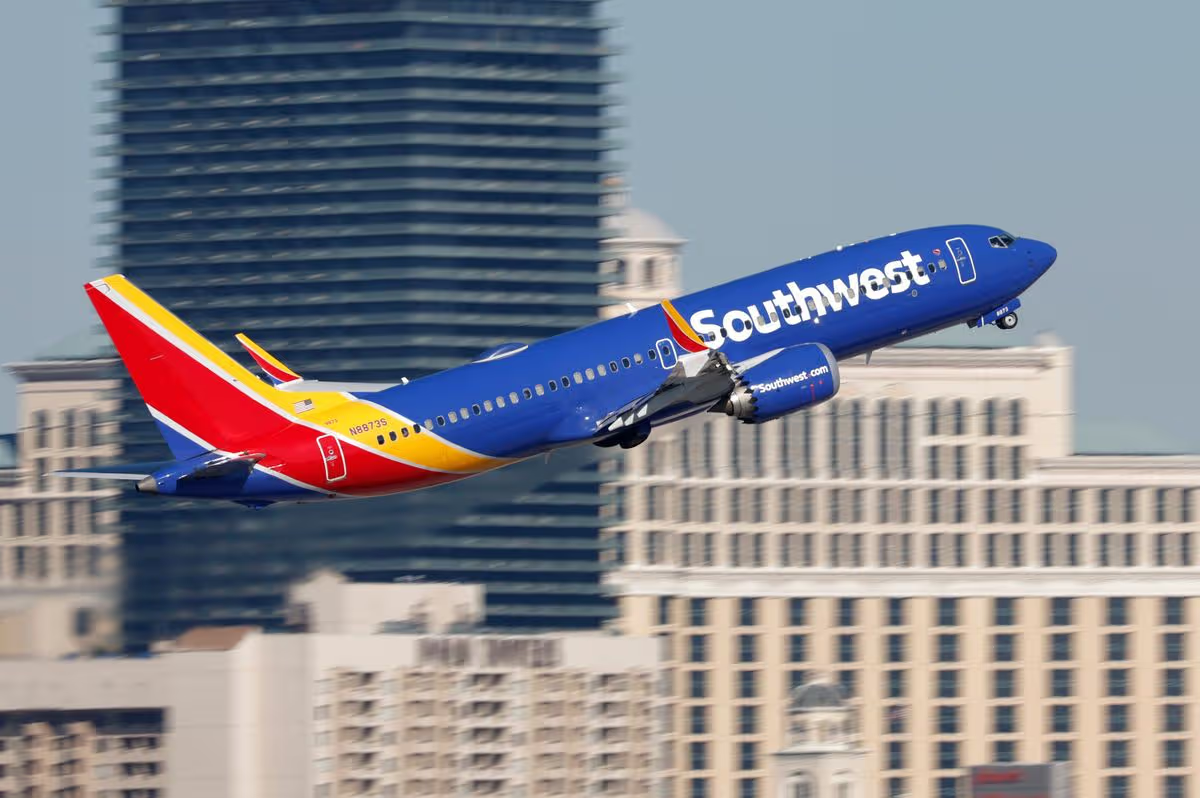
An airline that faced significant backlash for its controversial “customers of size” policy may now be forced to walk back on recent changes regarding plus-sized passengers.American commercial carrier Southwest Airlines changed its Customer of Size policy in January, when the airline moved to assigned seating. The updated guidelines require travellers who were unable to fit between lowered armrests to buy a second seat ahead of their journey. Passengers arriving without a prior reservation for an extra seat faced being rebooked if the flight reached capacity, or they were compelled to pay high same-day prices for the additional space.
But on Tuesday (May 26), one TikTok user reported to have been told “the best news ever” by a Southwest gate agent.
Content cannot be displayed without consent
In the short social media clip, the traveller claimed Southwest is “rescinding at least part of their new customer of size policy” that went into effect at the start of year. January. “They will be changing back to the original policy, at least in some form, where you can come into the airport and get an additional seat booked for you at no cost,” the woman in the video claimed. “You will no longer have to pre-purchase the seat.”But, as per a statement shared with Newsweek, the airline recently said: “On flights where seats are available, our agents at the airport are empowered to provide an additional seat at no extra cost to customers who require one.”
The statement added: “If another seat is not available., we will work to accommodate the customer on a later flight. We continue to encourage customers who need an additional seat to book it in advance to help alleviate any last-minute inconvenience at the airport.” The statement to Newsweek left several questions unanswered, specifically regarding the timeline for these implementations and whether passengers who choose to pre-purchase an additional seat would remain eligible for refunds.
It comes as hundreds of thousands of Brits leave the UK for a break
12:44, 27 May 2026Updated 14:34, 27 May 2026
Jet2 has assured travellers that is has enough jet fuel
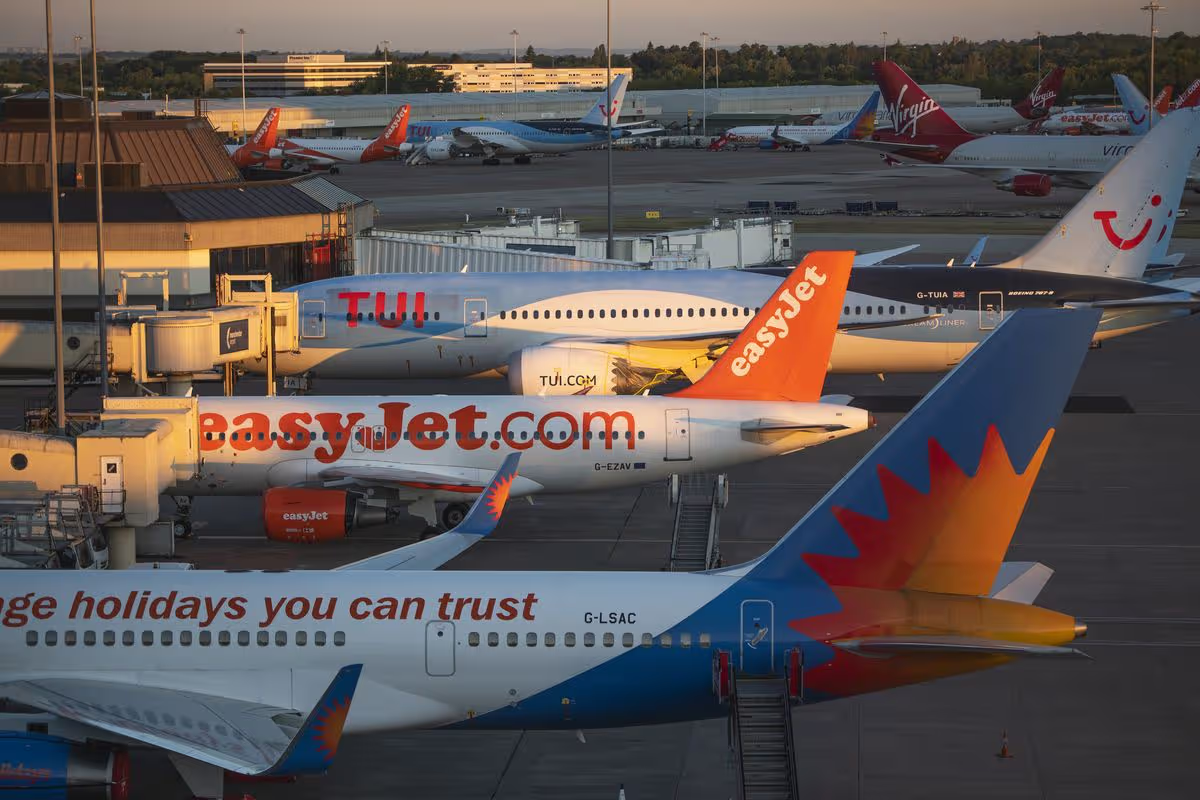
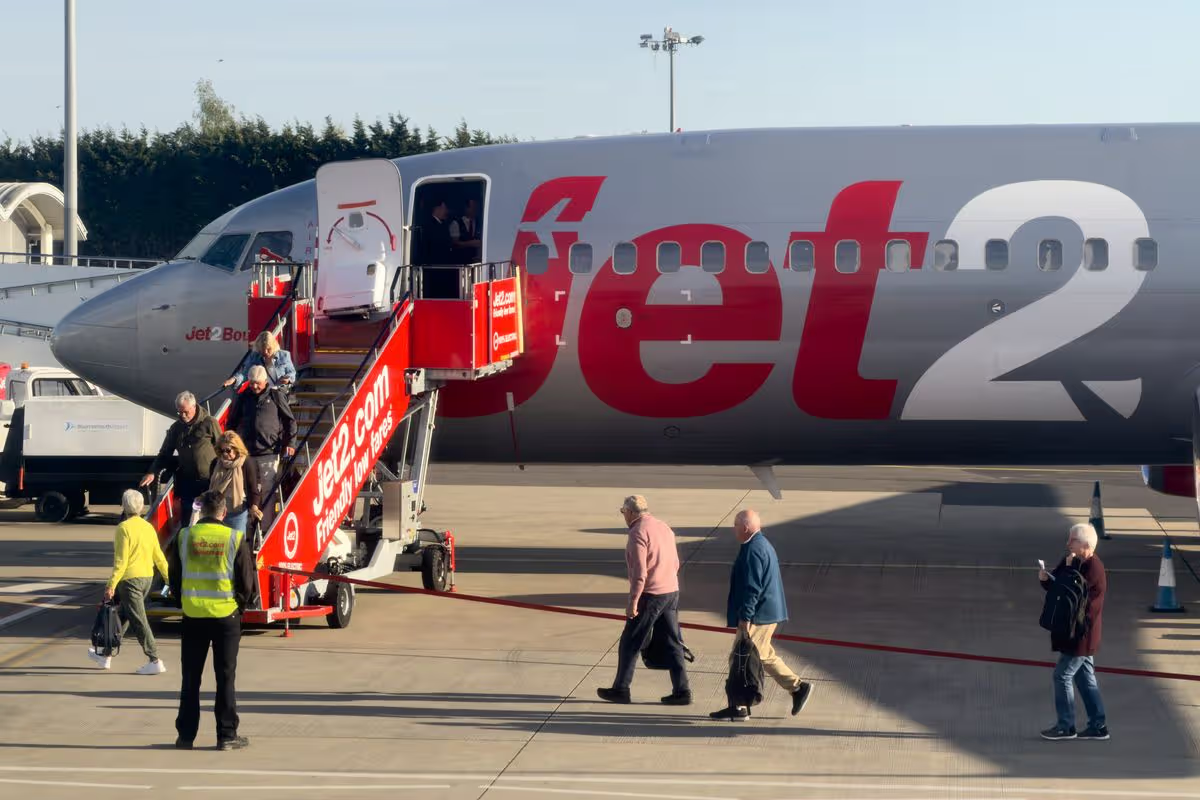
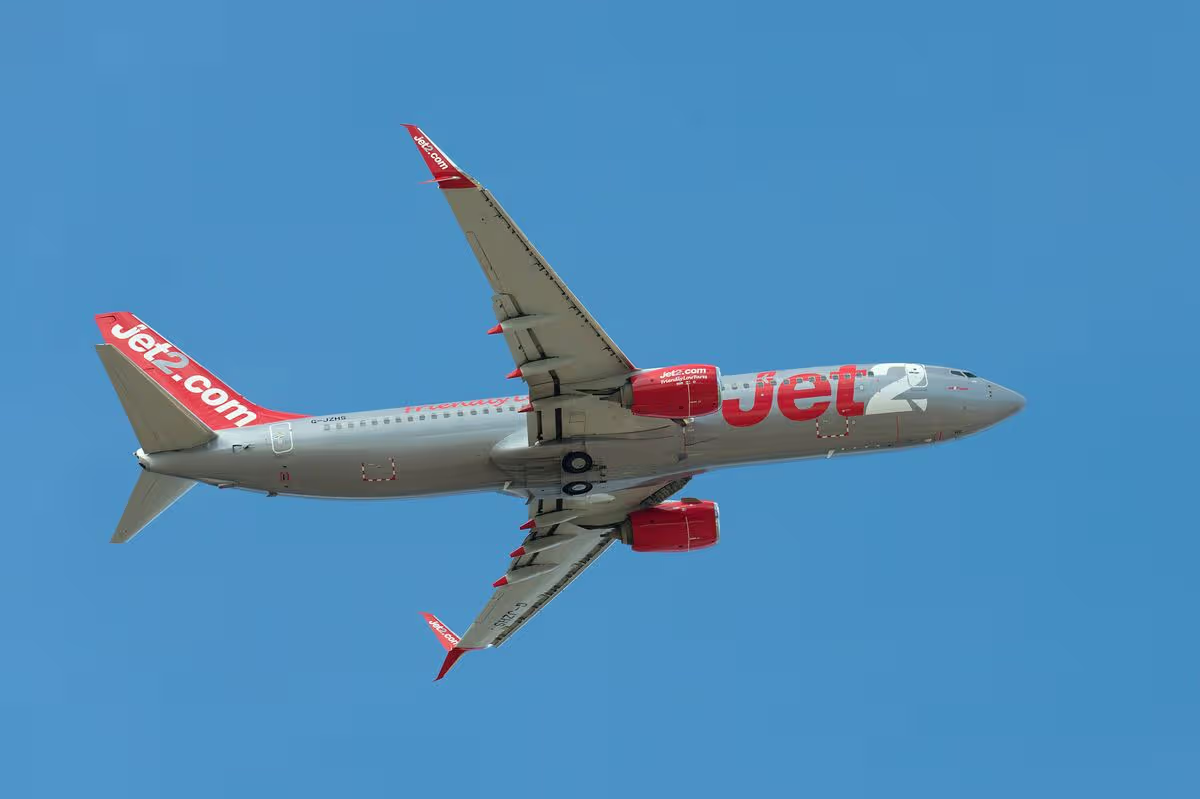
Jet2 has released an update regarding its half-term travel operations. This follows ongoing concerns about the potential impact of the US-Iran war and jet fuel supplies, though airlines including Jet2 and Ryanair have maintained there will be no immediate disruption.
In its statement released today (Wednesday, May 27), Jet2 revealed it had experienced its busiest weekend on record. It announced that it had seen an unprecedented number of passengers departing from airports across the UK for the May half-term break.
The most popular destinations during half-term included the Balearics, Canaries, Turkey, Mainland Spain, Portugal, Greece, Cyprus, Malta, Croatia and Bulgaria, as travellers capitalised on the key holiday period.
Jet2 is preparing for a hectic summer season and has an extensive programme available, with a fleet of 139 aircraft transporting passengers on their getaways from 14 UK airports to locations across Europe, the Mediterranean, Canary Islands and North Africa.
Steve Heapy, CEO of Jet2, said: “This weekend saw us operate a record-breaking weekend, as customers took advantage of the bank holiday weekend and May half-term and took off to the sunshine. Given the number of customers who travelled with us over the weekend, it is very clear how much people want to get away and enjoy their well-deserved holidays. With our famous Red Team looking after customers, holidaymakers can look forward to creating memories and be assured of a wonderful holiday.
“Everything is geared up and ready for a busy summer and our message to holidaymakers is that summer is very much on. We have always been very clear about our plans to operate as normal this summer, and the busy weekend shows just how eager customers are to get away.”
This follows the firm reassuring passengers that ‘summer is on‘ despite mounting concerns over jet fuel availability. The optimistic stance comes after the airline and tour operator received encouraging updates from fuel suppliers, who have confirmed increased production and extra imports of jet fuel.
It follows a report published just last week which saw Jet2 top a UK resilience ranking as the best protected UK airline against elevated fuel costs.
This could result in ‘airlines failing all over Europe’, he warned. Ryanair, Europe’s largest airline by passenger numbers, announced on Monday that future profits would also likely take a hit.
Holidaymakers heading to Italy have been warned to brace for major disruption as a nationwide transport strike threatens chaos across the country. The 24-hour walkout is expected to hit rail services, airports, metro systems, buses and regional transport networks from 9pm on Thursday, May 28, until 9pm on Friday, May 29.
Several unions have confirmed industrial action involving major rail operators including Trenitalia, Trenord and Italo, sparking fears of cancellations and delays on some of Italy’s busiest routes. Long-distance rail services connecting major cities including Rome, Milan, Venice, Florence, Bologna and Naples are expected to be among the worst affected outside protected operating periods.
Italy’s Ministry of Transport has published lists of “guaranteed” services that must continue operating during protected commuter windows between 6am and 9am, and again between 6pm and 9pm. Italy’s Civil Aviation Authority, ENAC, confirmed flights are legally protected during guaranteed operating periods between 7am and 10am and 6pm and 9pm.
The aviation authority has urged passengers to contact airlines directly for the latest updates regarding individual flights. Travel experts have also warned the strike could trigger wider disruption across European airline networks due to aircraft scheduling changes and increased rebooking demand.
Major travel hubs including Rome Fiumicino Airport, Milan Malpensa Airport, Venice Marco Polo Airport and Naples International Airport are expected to face delays, congestion and possible schedule changes during the strike.
Airport transfers, metro systems, buses and regional rail services may also run at reduced capacity or face temporary suspensions depending on local participation levels. Tourists visiting major attractions including the Colosseum, Vatican City, Venice’s canals and Florence’s historic centre could also experience delays due to disruption on local transport networks.
Travel experts are advising passengers to closely monitor airline notifications and rail updates as schedules may change rapidly throughout the strike period. easyJet said it currently plans to operate flights as normal but warned customers to allow extra time when travelling through airports.
A spokesperson for easyJet said: “We would like to reassure customers that we are doing all we can to minimise any disruption caused by national industrial action in Italy tomorrow. We are currently planning on operating our schedule as planned but would advise customers travelling to allow additional time to make their way to and through the airport.
“Should any flights be impacted, we will contact customers directly with their options to help rearrange their plans. We would like to apologise for any inconvenience caused.”
Italy remains one of Britain’s most popular tourist destinations, with millions of UK travellers visiting every year during the spring and summer seasons.
British holidaymakers are increasingly seeking out budget-friendly European breaks
Seville ranked third at £2.06 per pint(Image: SolStock via Getty Images)
British holidaymakers grappling with spiralling travel costs are increasingly turning their backs on pricey resorts in favour of wallet-friendly destinations where a pint can still be enjoyed for under £2.50.
The most affordable European spots for travellers keen to keep their spending in check have been revealed, with southern Italy, Portugal and Spain leading the way. Puglia in Italy and Vilamoura in Portugal came out on top for inexpensive beer, with visitors able to snap up a draught pint for just £1.74, according to research by Zable.
Seville ranked third at £2.06 per pint, while destinations such as Gran Canaria, Faro, Madeira and Tenerife all clocked in at an average of £2.18. The findings emerge as countless families hunt for methods to slash holiday expenses amid ongoing strain on household finances.
Researchers examined flight costs, accommodation prices, tourist levies, supermarket shopping, dining out expenses and attraction fees across 49 destinations to identify where travellers receive the strongest overall value.
Cheapest European hotspots for a pint
Destination – Pint price – Av 5-night accommodation
Puglia, Italy – £1.74 – £516
Vilamoura, Portugal – £1.74 £1,592
Seville, Spain – £2.06 – £667
Plovdiv, Bulgaria – £2.07 – £386
Lanzarote, Spain – £2.18 – £830
Gran Canaria, – Spain £2.18 – £536
Faro, Portugal – £2.18 – £965
Madeira, Portugal – £2.18 – £1,031
Tenerife, Spain – £2.18 – £777
Tirana, Albania – £2.26 – £315
Puglia was highlighted as among Europe’s most budget-conscious destinations owing to its blend of bargain beer prices, complimentary attractions and comparatively affordable lodging. The region boasts nearly 15 hours of daylight throughout the height of summer, alongside its renowned beaches, olive groves and ancient towns.
Vilamoura equalled Puglia on beverage costs, though accommodation expenses were notably steeper due to demand for the Algarve resort’s marina, golf courses and vibrant nightlife scene. Meanwhile, Albania’s capital Tirana came out as the most affordable overall destination for a five-night getaway once flights, accommodation and daily expenses were factored in.
A typical five-night stay there totals £492.31, the study revealed. The report also identified Kotor in Montenegro as the top-value underrated destination overall, benefiting from reasonably priced flights, minimal tourist taxes and a wealth of attractions.
Cheapest destinations overall for a five-night trip
Destination – Country – Total cost
Tirana – Albania – £492.31
Plovdiv – Bulgaria – £558.10
Zagreb – Croatia – £651.06
Puglia – Italy – £690.37
Gran Canaria – Spain – £761.06
Seville – Spain – £802.47
Fuerteventura – Spain – £844.13
Bari – Italy – £914.81
Tallinn – Estonia – £953.11
Kotor – Montenegro – £974.03
Travellers opting for self-catering accommodation could slash their grocery bills by choosing destinations such as Sopot in Poland, where a standard supermarket shop costs just £30.74.
Cheapest destinations for grocery shopping
Destination – Country – Grocery basket
Sopot – Poland – £30.74
Vilamoura – Portugal – £31.19
Kotor – Montenegro – £31.63
Benidorm – Spain – £31.93
Dubrovnik – Croatia – £32.44
The research also spotlighted the growing trend of so-called “destination dupes”, where holidaymakers ditch pricey long-haul destinations for more affordable European alternatives boasting similar climates. Amongst the recommended alternatives were Capri instead of the Maldives, Mallorca instead of Hawaii and Sardinia instead of Costa Rica.
Arielle Rogers-Jenkins, senior product manager at the credit card company, Zable, said: “Planning a holiday often means balancing the experiences you want with the budget you have available. “Our research shows that travel costs can vary significantly between destinations, so choosing locations that align with your budget can make a real difference to the overall cost of a trip.”
A plane recently had to be diverted after a passenger forget their electronics in their hold luggage
Ash Bhardwaj recalled almost being caught out by this important rule himself(Image: BBC)
Air travel comes with a long list of things people can and can’t take with them depending on how it’s packed. However, one travel expert is urging people to pay more attention to an often overlooked electronic that can’t be packed into your big suitcases going in the hold of the plane.
Travel journalist Ash Bhardwaj warned people to take any electronics with lithium batteries into the cabin in their hand luggage and not to stow it away in the hold. He explained that this is due to a serious fire risk and while fires in the cabin can be handled, fires in the luggage hold could prove to be a far greater issue.
Ash joined Helen Skelton and Gethin Jones on the rooftop of BBC’s Morning Live studio to soak in some sunshine as the hot temperatures continuing rolling out across the country.
He highlighted one recent easyJet flight bound for the UK actually had to be diverted to Rome because a passenger realised they had left one of their lithium batteries in the hold.
Ash revealed he’d had to make this lithium battery check himself at the airport once: “We were in Vietnam, flying back home, and I saw these signs about not being allowed lithium batteries in your hold luggage. I was checking everything; ‘Is this one a lithium battery, like the fan for the baby carrier’.”
To be sure, Ash opted to put everything he suspected of maybe having a lithium battery into his hand luggage.
He continued: “Basically, it’s a fear of the batteries catching fire. If you’ve got it on you, in the cabin, in your hand luggage, that’s fine because if anything does happen the crew can deal with it.
“The key thing don’t put power banks in your checked luggage they need to come with you.”
Each airline may have different rules around what batteries and electronics must be kept in the cabin with you so it’s best to check with your airline before flying.
In general, spare batteries and power banks should only go into carry-on baggage. You may need to carefully pack these to prevent the circuit from shorting out, for example by putting it back in the retail packaging or placing each battery into a separate protective pouch according to the Civil Aviation Authority.
This protection must also prevent the item from being accidentally turned on or damaged during the flight. Some power banks may also require approval from the airline operator to be taken onboard.
The rule reminder comes after a flight was forced to divert and deal with the issue
The flight was forced to make an emergency landing(Image: Adam Klis via Getty Images)
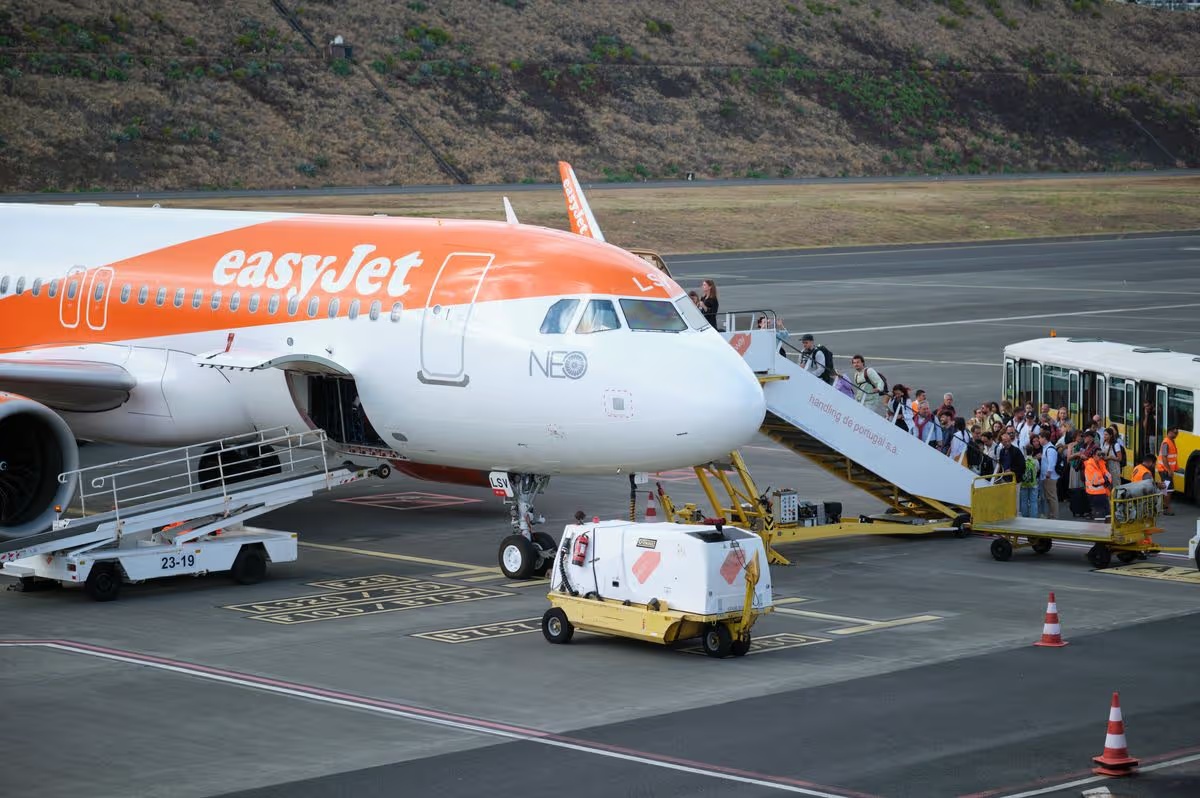
An EasyJet plane had to make an emergency landing in Rome over the weekend because there was a potential fire risk linked to a passenger’s luggage. The captain told all 180 passengers that a restricted item in the cargo hold posed a serious danger and had to be dealt with on the ground.
Reports suggest that a passenger had left their phone charging in their checked baggage using a power bank. It is claimed that a woman told a flight attendant the location of her power bank, prompting the aircraft to be diverted due to a possible fire risk.
The emergency landing happened at 11.30pm on Saturday, May 23. Passengers were reportedly provided with hotel rooms, though some chose to sleep in the airport terminals, as the next EasyJet flight back to the UK wasn’t available until 2pm the following day (May 24).
On EasyJet’s website, the airline sets out its regulations regarding lithium batteries, including what is classed as “prohibited”. It said: “Power banks are accepted on EasyJet aircraft with a Wh rating not exceeding 160Wh for lithium batteries. Power banks are prohibited from use on EasyJet aircraft and must not be used to charge other devices.
“Power banks must be carried in carry-on baggage only. It is recommended that power banks be carried where they can be monitored (i.e. on your person)”
The airline also restricts people to bringing no more than two power banks per person. All power banks “must be individually protected”, according to EasyJet, such as placing them back in original retail packaging or a plastic bag.
These power bank regulations apply to virtually all major airlines, including Ryanair, Jet2, TUI and British Airways. Travellers should check with their individual airline for any specific rules and requirements concerning travelling with a power bank, reports the Express.
Why are power banks considered such a risk?
Power banks are forbidden from use or storage in specific areas on aircraft because they contain lithium-ion batteries. These batteries are extremely combustible and can suffer “thermal runaway,” a chain reaction that may cause them to overheat or ignite.
While they aren’t completely ‘banned’, power banks must be stored in hand luggage and cannot be used while airborne. This is because, should a battery overheat, cabin crew can quickly reach, identify, and put out the flames.
Charging gadgets through them generates additional heat, increasing the fire risk. Some carriers have rules stating that power banks cannot be placed in overhead lockers and must remain visible (such as in the seatback pocket or beneath the seat ahead of you) so that passengers and crew can immediately notice if smoke or flames appear.
Your entitlements if an aircraft is forced to make an emergency landing
If your aircraft makes an emergency landing or diversion, your entitlement to compensation, a refund, or an alternative booking depends entirely on the cause of the emergency. You are legally entitled to specific help during the delay, whatever the reason for the diversion.
Regardless of whether the emergency came from an airline problem or an unforeseeable circumstance, the carrier is legally required to care for you while you wait. This includes vouchers or reimbursement for reasonable meals and beverages, hotel accommodation and transport (if delayed overnight).
If your flight experiences substantial delays or is eventually cancelled, you have the right to select between alternative travel under similar conditions at the earliest opportunity or a refund. Check specific refund entitlements with your selected airline.
The Civil Aviation Authority today said ‘more awareness’ was needed as travellers ‘not aware’
The Civil Aviation Authority said portable chargers carry ‘serious risks’ of overheating or catching fire in luggage(Image: Getty)
Airlines have banned very common electrical items from flights – as news emerged of a surge in problems on flights caused by the items. Some carriers have begun to completely ban power banks that people use to charge their phones and tablets due to safety concerns. Generally, power banks are only permitted in carry-on, not checked luggage, amid fears they could explode and catch fire mid-flight.
The Civil Aviation Authority (CAA) today said ‘more awareness’ was needed as portable chargers carry ‘serious risks’ of overheating or catching fire. Jonathan Nicholson from the CAA told BBC News that restrictions such as not putting the devices in checked luggage were not “somebody being pedantic” or “for the sake of it”, with passengers urged “to do the right thing”.
Concerns are rising that people are ignoring the bans and simply taking the devices on board. Power banks have become popular because they offer essential, portable, and fast-charging power for smartphones and other devices while on the move, easing battery anxiety. They are affordable, compact, and versatile, enabling users to remain connected without needing a wall outlet, making them perfect for travel.
It comes after a UK-bound easyJet flight was diverted to Rome last week because a passenger had packed a charging power bank in hold luggage. The airline said the captain had decided to divert “in line with safety regulations” after a passenger informed crew during the flight that the portable charger was in the hold of the aircraft. Many airlines have toughened rules on power banks, often requiring that they be stored in hand luggage because of the risk of lithium-ion batteries catching fire.
The flight touched down safely at Rome Fiumicino and was rescheduled to the next day. A survey by the CAA of 1,000 UK passengers in November 2025 suggested more than a third know what lithium batteries are and are aware rules exist, but are unsure what the rules involve. Over-55s typically knew the rules better.
Mr Nicholson said the “basic set of international rules” all passengers must follow on power banks are:
Take them with you on board the aircraft, not in checked luggage
A maximum of two power banks per passenger
When on board the aircraft, don’t use them and “absolutely do not charge the power bank itself because that’s when they become really hot and most susceptible to having an issue”
Mr Nicholson said incidents involving power banks were “certainly on the rise” as portable chargers grow in popularity, alongside vapes which are not allowed in checked luggage either.
Vietnam Airlines, Vietjet Air and now Emirates have banned the batteries. Emirates states, like many airlines, the devices cannot be used during flight. In certain circumstances, they will be permitted on planes provided they are switched off and stored under your seat – not in the overhead cabin – with these rules coming into effect in October.
According to UK Civil Aviation Authority (CAA) safety experts, lithium batteries pose a danger on planes primarily because of their potential to enter “thermal runaway,” a phenomenon where a battery undergoes a rapid, uncontrollable rise in temperature, leading to fire, explosion, and the release of toxic fumes. Ryanair, easyJet and TUI all have regulations in place concerning power banks, batteries and electrical devices.
Ryanair
You may carry up to 15 personal electronic devices (this includes but not limited to: smartphones, tablets, laptops, cameras, handheld game consoles, headphones, power banks). Spare lithium batteries (including power banks) must be individually protected to prevent short circuits by placement in the original retail packaging or by otherwise insulating terminals by taping over exposed terminals or placing each battery in a separate plastic bag or protective pouch and carried in carry-on luggage only.
You may also carry up to 20 spare lithium batteries, provided they do not exceed 100Wh each.
Spare lithium batteries including power banks brought into the cabin should not be used to charge or power other portable electronic devices during taxi, take-off, or landing, not exceed 100Wh. They should not be placed in the cabin baggage loaded in the overhead storage locker. Be placed in cabin baggage under the seat in front, or on your person. Devices or batteries over 100Wh are not permitted in the cabin or the hold with the exception of Electric Wheelchair batteries.
Spare batteries, including power banks are not permitted in checked baggage.
EasyJet strictly requires all lithium-ion batteries, spare batteries, and power banks to be carried in cabin hand luggage only, prohibited in hold luggage due to fire risks. Power banks under 100Wh (roughly 27,000mAh) are allowed without approval; items between 100-160Wh require airline approval. Batteries contained in portable electronic devices should be carried as carry-on baggage.
Should these items be packed in checked baggage, steps must be taken to prevent accidental activation and to safeguard the devices against damage; all devices must be completely switched off (not in sleep or hibernation mode). EasyJet imposes a limit of 15 portable electronic devices per passenger. Portable electronic devices containing non-spillable batteries must not exceed 12V or 100Wh, and passengers may carry no more than 2 spare batteries.
Where Smart Baggage is being brought into the cabin, the customer must be able to easily disconnect and remove the lithium battery / power bank, but it can remain in the bag. Smart baggage must not be accepted for travel if the lithium battery / power bank cannot be readily disconnected and removed by the customer. If smart luggage is to be checked in and placed in the hold, the lithium battery/power bank must be disconnected from the smart luggage at Bag Drop and taken into the cabin. Any exposed terminals should be protected from short circuit. The lithium battery/power bank needs to be disconnected, so if you are unable to remove it from your luggage, we won’t be able to accept the bag on board.
TUI’s regulations forbid passengers from carrying loose lithium batteries, power banks, or spare batteries in checked-in luggage. These items must be kept in hand luggage only. Power banks must generally not exceed 100Wh, and terminals must be shielded from short circuits. Devices should not be recharged while on board. Dry AA(A) batteries (type Alkaline, NiMh, NiC) for small personal items such as a pocket torch or a radio are permitted, provided they are inside the device or enclosed in sturdy packaging.
Where devices are stored in hold baggage, precautions must be taken to safeguard the device from damage and to prevent accidental activation; the device must also be completely switched off (not in sleep or hibernation mode). Loose batteries and power banks should be individually protected against short circuits by storing them in their original packaging, with terminals taped or placed in a plastic bag in hand luggage.
Airline permission is always required for medical devices. For further details, see section Baggage – Medical baggage. TUI fly requires all power banks to be carried in hand luggage, never in checked baggage. They must be packed to prevent short circuits (original packaging or taped terminals). Generally, capacity is limited to 100 Watt-hours (Wh) per battery, with power banks not permitted to be used for charging devices or recharged onboard.
Hand Luggage Only: Due to fire risk, all lithium-powered battery packs must be in the cabin. Capacity Limits: Power banks up to 100 Wh (roughly 27,000 mAh at 3.7V) are generally permitted.
Safety Requirements: Terminals must be protected against short circuits, such as by taping them or keeping them in individual plastic bags.
In-flight Usage: Power banks cannot be used to charge phones or laptops during flight, nor should they be recharged using aircraft power outlets.
Storage: Keep them in your seat pocket or under your seat, not in overhead bins
Shoppers looking for travel accessories could be in luck at the high street retailer
The retailer is selling travel accessories ahead of summer (stock photo)(Image: Getty)
Home Bargains customers can upgrade their travel days for £2 with a ‘refreshing’ accessory. There’s nothing better than a sunny forecast for family day trips or a weekend getaway. But getting to your destination is sometimes easier said than done when you have to battle the heat while carrying luggage.
Thankfully, Home Bargains is selling a portable accessory to help travellers ‘stay cool on the go’. The discount chain has launched a £1.99 Travel Water Mist Spray Fan, and it could be ideal for summer.
The retailer explains: “Stay cool on the go with the Travel Water Mist Spray Fan from the Simple family – just fill with cold water, add ice for extra chill, and enjoy a refreshing mist whenever you need it.” The description continues: “Simply fill the bottle with cold water, turn on the fan and pull the trigger whenever you require a light covering of cool mist.
“Add ice to the tank for an even cooler mist! Empty water after every use and dry, always use fresh distilled water (to prevent mineral build-up and mould).”
For shoppers who don’t want the water mist, Home Bargains also sells a 99p Travel Mini Hand Held Fan. The description states: “Mini Hand Held Fan fits comfortably in your hand, making it easy to carry wherever you go. It’s small enough to slip into your bag or pocket, yet powerful enough to provide a refreshing breeze, keeping you cool for warmer days.”
Ahead of summer, Home Bargains is stocking a range of travel products. Other items include travel cubes, organisers, and luggage solutions. One option that could impress fans of the spray fan is the 99p Lakescape Foldable Water Bottle 500ml.
The foldable water bottle is designed for adventure, according to the retailer. Home Bargains says: “Stay hydrated wherever your adventures take you with the Lakescape Foldable Water Bottle! This 500ml reusable gem rolls, folds, and stands tall when full, plus it comes with a handy carabiner clip for easy travel.”
Customers who prefer stainless steel bottles might like the £4.99 Kitchen Stainless Steel Bottle. Home Bargains says the bottle is “durable and easy to use” with a “spill-proof lock.”
For dogs, there’s also a £2.99 My Pets Pet Water Bottle. The description reads: “Making travelling with your pet easier with this amazing reusable water bottle fills when pressed and can be locked to avoid leaks. Comes with handy lanyard style strap for easy carrying. Three colours, pink, blue and grey.”
For customers looking for more items, Home Bargains offers a wide range of products on its website. Shoppers could also visit their local store.
Jet2 summer holidays travel update for anyone with flights booked – The Mirror
Need to know
Jet2 has issued a significant update for all passengers with flights booked this summer
The airline shared the news earlier this week(Image: Getty )
Need to know: Jet2 confirms summer flights will run as normal after securing fuel supply deals
Jet2 has confirmed all summer flights will operate as normal after securing improved fuel supply deals. The news will be welcomed by many passengers after reports of a possible ‘jet fuel shortage’ across Europe.
The budget airline announced today that fuel suppliers have increased production and additional imports are arriving from regions unaffected by Middle East conflicts. This follows negotiations that saw Jet2 ranked as the UK’s best-protected airline against rising fuel costs.
The carrier has pledged no additional charges will be added to existing bookings despite rising costs. Jet2 was among the first UK airlines to guarantee this protection for customers.
CEO Steve Heapy said: “We are in regular dialogue with our fuel suppliers, and the current picture is one of increased production and imports, meaning we continue to look ahead with confidence.”
The airline has also reaffirmed its commitment to swift refunds and flexibility for any cancellations. During Covid, Jet2 earned praise for its efficient customer refund process compared to industry rivals.
The positive fuel news comes after Jet2 was recognised as Europe’s second most fuel-efficient carrier in a major aviation emissions study.
Kate Cassidy said that she was told her passport photo didn’t match her current appearance
Always check your passport is valid before travel
People across the UK may need to update their passports before their holiday. The reminder comes after one woman was stopped and questioned at the airport.
According to GOV.UK officials: “You must get a new photo when you get a new passport, even if your appearance has not changed.” However, it also states that you will “need to get a new passport to travel abroad or prove your identity if you change your name” and “your gender.”
GOV.UK adds you will also need to get a new passport if “your appearance” has changed and “you cannot be recognised from your passport photo any more (for example, you’ve had plastic surgery).”
The reminder for UK passengers to update their travel document, if needed, comes as 27-year-old Kate Cassidy, who had been dating One Direction’s Liam Payne for two years at the time of his death in 2024, shared her experience getting flagged by TSA staff after she was told her passport photo didn’t match her current appearance.
Content cannot be displayed without consent
While she said she understood the rules, she pointed out that “there are way better ways to handle things and word things.” In her TikTok video, viewed almost 1 million times, she said: “I just got genuinely ridiculed at the Fort Lauderdale airport. I’m at the security line, and I gave the guy my passport, and they obviously do a photo view.
“If it matches your passport, you get the green light, and if it doesn’t match your passport, you get the red light. I got the red light because my photo, I guess, didn’t match my appearance.”
After showing her passport photo to the camera, she explained that airport security said she looked unrecognisable in comparison to the other picture. She said: “He calls over a woman, and she literally looks at my passport, she looks at me, she’s doing a double take, up and down, and this woman keeps going on and on and on about how, ‘this isn’t you, you’re giving me somebody else’s passport”.
Kate explained that the staff questioned, “new nose? New lips? Something to your eyes? New hair?”. Kate then pulled out her ID to confirm her identity, but she said that her ID was not hers either. Looking at Kate’s passport, ID and then her, Kate said: “She goes ‘one, two, three. Those are three different people’.”
The American social media influencer admitted: “I’m literally so embarrassed. She then goes and calls three different men over. One guy was like, ‘do you not have a work ID?’ and I was like, ‘I can pull up my Instagram, I don’t know what to do.’
“Keep in mind that everybody in line behind me is listening to this. I understand they’re doing their job. At the same time, I think there are way better ways to handle things and word things.”
In another video, after the airport incident, she listed exactly what procedures altered her appearance. She mentioned that she has cheek filler, chin filler, Botox, a boob job, nose job and lip filler.
She also noted she’s a natural blonde but dyes her hair brown. She further said she has “a whole head of extensions, fake nails, and I am also naturally super pale, so I do spray tans once a week.”
It’s not just travellers that need to think about this. Motoring experts on GOV.UK confirm: “You must change the photo on your driving licence if you cannot be recognised from your photo, for example, if you’ve had plastic surgery.” This includes learner drivers who will need to take their provisional licence to the test centre.
A pilot’s wife has urged passengers to stop booking a certain seat to travel on planes. Laurie said it’s vital people avoid it if they want a smooth and comfortable journey
09:13, 22 May 2026Updated 09:16, 22 May 2026
The pilot’s wife urged people to stop booking the seat (stock image)(Image: Getty Images)
This is why Laurie, known as travelby_laurie on TikTok, is happy to offer advice whenever she can, and she recently turned her attention to the worst seats to book to travel on planes. According to her, there are particular rows you need to avoid to ensure your journey is executed as comfortably and smoothly as possible.
In the clip, Laurie said: “Do not sit in these seats the next time you’re flying in an airplane. Number one, the obvious seat to avoid is the very last row of any airplane, because they do not recline.
“There are two other reasons to avoid that back row seat. Number one, because you’ll be last off the airplane.
“Number two, if you have a connecting flight, where you are catching another airplane in that airport, to get to your final destination, avoid being in the back of the plane.
“The airlines do not tell you that 50 minutes is not enough time to connect to another flight but they are still going to allow you to book them.”
Content cannot be displayed without consent
She also noted she doesn’t ever want to sit in the row that’s in front of the exit row. This is because the exit row may not recline, and the seat in front of the exit row also often does not recline.
This is an aviation safety measure put in place to ensure the seatbacks don’t block the aisle and impede a rapid evacuation in an emergency. However, even though the rule can be imposed for a reason, Laurie noted journeys can already be “uncomfortable”, so it’s best to do your research before booking a seat to see which areas are more comfortable.
If you have a lengthy flight ahead, these spots are probably best avoided. It’s worth noting that some airlines in America include row 13 in their fleets; however, several other airlines around the world often omit the number entirely to accommodate passenger superstitions about bad luck.
What you need to know
While some people avoid the row directly in front of an emergency exit row, as these seats typically have their recline mechanism disabled, there’s something else most people need to consider. Booking a seat at the back of the plane could be more problematic for passengers.
Usually, people tend to avoid them because seats often do not recline, are located directly next to noisy lavatories and galleys and will leave you feeling the most turbulence. As well as this, sitting there will take you longer to deplane, which means you may have limited meal options as service starts from the front.
Even though the very back row can sometimes be cheaper or less crowded on off-peak flights, the general consensus points to several major drawbacks. If you have a connecting flight, it could also cause issues too, as you may be last to get off the plane.
This is why Laurie generally advises against it. It’s a nugget of travel wisdom you may not have known before.
Maria Ortega, Robert Rowlands and Kate Lally Content Editor
07:53, 22 May 2026
Millions of Brits head to Portugal each year(Image: Marco Bottigelli via Getty Images)
Around 500 flights could be thrown into disarray due to a general strike set to take place in Portugal.
Portuguese news sources are reporting that the industrial action is expected to trigger major disruption across the transport network. The CGTP (General Confederation of Portuguese Workers) has called the strike, with Sic Noticias suggesting that growing numbers of workers’ representatives are backing the campaign.
The National Union of Civil Aviation Flight Personnel (SNPVAC) has predicted that “around 500 flights” could be affected by the walkout on June 3, with the potential for travel chaos to also extend to the days surrounding that date. According to an internal document seen by Notícias ao Minuto and shared with union members, the SNPVAC has also warned that the general strike may impact “the days before and after”.
ECO has stated that the cabin crew strike will chiefly hit operations for TAP, Portugália and SATA. Idealista, along with several other Portuguese media outlets, indicates there may also be knock-on disruption to flights run by other airlines with Portuguese bases.
The outlet highlights this could potentially encompass easyJet and Ryanair, as the industrial action involves cabin crew operating from Portuguese bases.
This comes after comparable action last December which caused widespread chaos across the nation. Rail services ground to a halt across Portugal on December 11 last year. Hundreds of flights were cancelled simultaneously in protest against the very same proposed labour reforms that remain at the heart of this ongoing dispute.
Members of the National Union of Airline Workers voted in favour of the latest industrial action on Tuesday, in opposition to the planned labour reforms.
The CGTP filed a formal pre-strike notice for June 3 in protest against amendments to employment legislation, following fruitless talks with the Government.
The proposed changes to labour law were rubber-stamped by the Government in the Council of Ministers last week and are now due to go before Parliament for debate.
Minister of Labour, Solidarity and Social Security, Rosário Palma Ramalho, confirmed the development at a press conference, a week after Government negotiations on employment law changes ended without agreement in the Social Dialogue.
What could be affected by the strike in Portugal?
Portuguese media reports indicate that urban passenger transport across the country, as well as airports, are likely to face significant disruption. The CGTP has called on all workers to join the industrial action.
The Federation of Transport and Communications Unions has thrown its weight behind the strike. Transport operators expected to be caught up in the action include Lisbon Metro, Carris, Transtejo/Soflusa, Fertagus, Porto Metro, STCP and CP – Comboios de Portugal. The National Union of Civil Aviation Flight Personnel has also confirmed its involvement in the strike, alongside the Union of Aviation and Airport Workers, with the decisions expected to cause widespread disruption across several airlines.
The retail workers’ trade union and the two organisations representing doctors and teachers had previously confirmed they would be taking part in the industrial action, with the Nurses’ Union also verifying its participation.
Meanwhile, Portuguese media is reporting that extra police will be deployed to the country’s airports to manage lengthy queues caused by the new EES border policy. The system affects non-EU nationals travelling for short stays whenever they cross the external borders of most European countries, including Portugal, Spain, Italy and France.
According to Sic Noticias, significant queues have been building in recent days at Portugal’s Schengen Area entry and exit checkpoints. The system is intended to replace manual passport stamping for non-EU nationals, including British citizens, entering the Schengen Area for short-term visits. It captures biometric data – fingerprints and photographs – at border control points, and applies to 90-day, visa-free, or short-stay visa travel.
There have been reports of queues stretching to three and four hours for some British travellers abroad, with a number of passengers even missing their flights altogether due to the lengthy delays. Portugal’s Public Security Police (PSP) is set to strengthen the country’s airports with an additional 360 officers in July, in a bid to cut waiting times for passengers arriving from outside the Schengen Area, according to an official PSP source.
PSP spokesman Sérgio Soares confirmed that the 360 officers are among 560 new recruits who will finish their training on May 28 before immediately embarking on a four-week border guard course. The 360 newly qualified officers are due to begin their airport duties in early July, forming a central part of the PSP’s summer contingency plan.
Police sources have revealed to Lusa that of the 360 new personnel, 150 will be posted to Lisbon airport, 90 to Porto, 70 to Faro, 30 to the Azores, and 20 to Madeira.
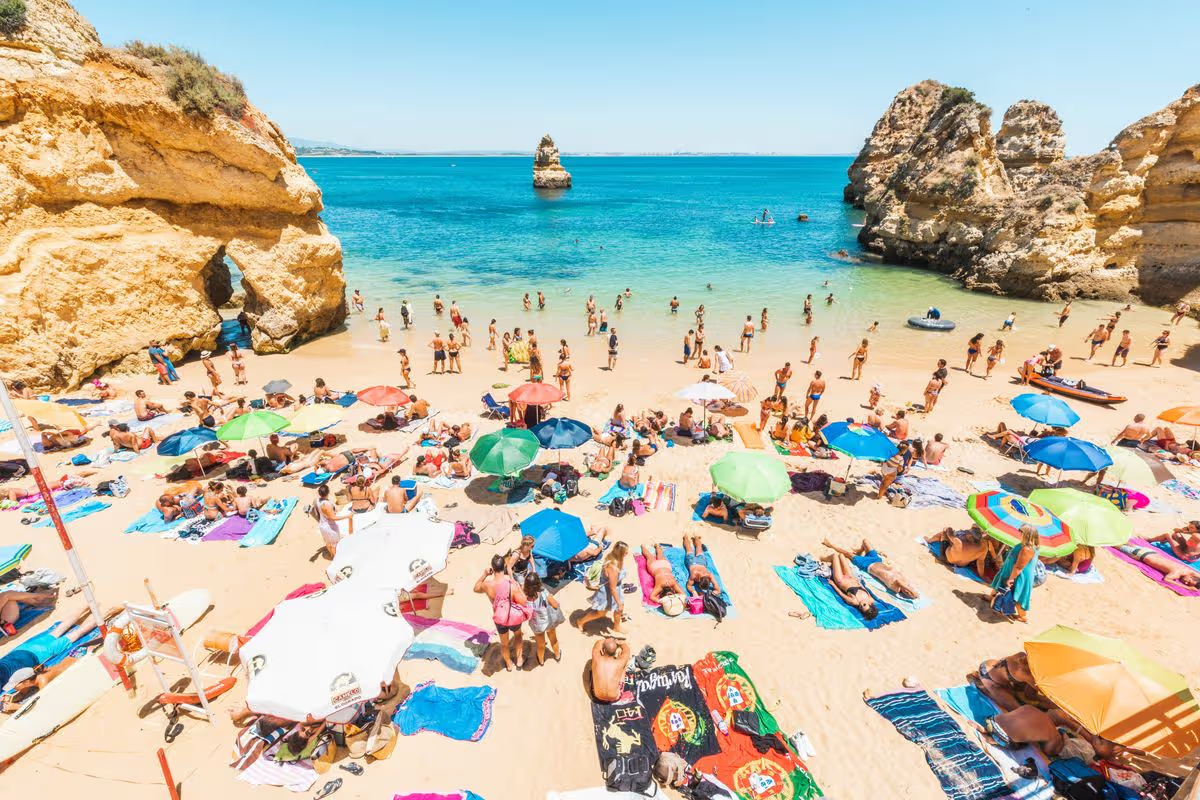
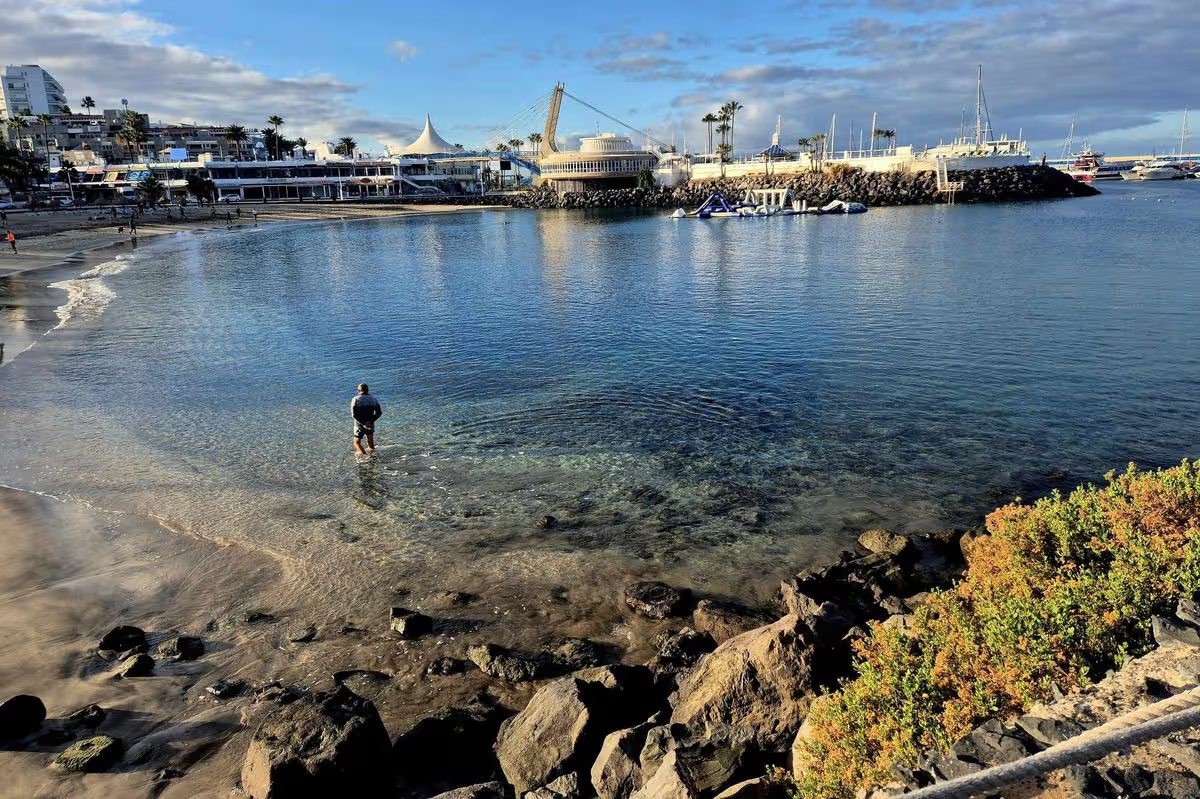
A beach popular with UK holidaymakers has closed again after mass bacteria levels were found in the water. The sunny spot popular with tourists has been fenced off from the public after being declared a no-swim zone.
Swimming has been banned by the local authorities after water samples were taken. La Pinta beach in Costa Adeje, Tenerife, has been shut since May 14. Adeje Town Hall has placed barriers on the seafront whilst the samples are reviewed.
Daily monitoring of the water detected signs of microbiological levels linked to enterococci bacteria. Exposure to contaminated water can lead to stomach illnesses as well as skin, eye and respiratory infections.
The beach is now covered with red flags, barriers and tape to deter holidaymakers from taking a swim. The picturesque spot usually features an inflatable assault course which is popular in the summer.
The beach will remain closed until the sample tests are cleared. Tourists were left fuming by the news.
One person said: “Again? This isn’t great.” Another added: “How sad.” One other person said: “Many tourists, many problems.”
One person said: “I was thinking yesterday, is the water clean? I had such a feeling.” Another person said: “It is at least good that it is tested to find these things out, but sad that something nasty was found.”
What is enterococci?
Enterococci are a large genus of lactic acid bacteria that can survive and grow whether oxygen is present or not. These bacteria are natural inhabitants of the gastrointestinal tracts of humans and other animals. In a healthy gut, they live harmoniously alongside other microbes and actually help maintain a balanced digestive system. They are also incredibly resilient organisms, capable of enduring extreme environments, high salt concentrations, and a wide range of temperatures.
While they are generally harmless in your gut, enterococci can turn into opportunistic pathogens if they escape the intestines and enter other parts of the body. This usually happens in hospital settings or in individuals with weakened immune systems. When they do cause trouble, they are notorious for triggering urinary tract infections (UTIs), blood stream infections (bacteremia), heart valve infections (endocarditis), and wound infections.
From a medical standpoint, two specific species cause the vast majority of human infections: Enterococcus faecalis and Enterococcus faecium. What makes enterococci particularly challenging for doctors is their natural resistance to many common antibiotics. Over the years, some strains have even developed resistance to vancomycin—one of the strongest antibiotics available—leading to a class of superbugs known as VRE (Vancomycin-Resistant Enterococci). Because they are tough to kill and spread easily on medical equipment and hands, hospitals enforce strict hygiene protocols to keep them in check.
Airport security stainless steel bottle ‘rule’ all UK travellers must know – The Mirror
Need to know
Some UK airports are relaxing the rules, with this one being the exception for all passengers
This could lead to delays at the security checkpoint(Image: Getty)
Airport security rules: How water bottles and playing cards could cause delays
Holidaymakers jetting off this summer need to be aware of some basic airport security rules that could catch them out at the scanners. Despite many UK airports scrapping the 100ml liquid rule thanks to cutting-edge scanners, there’s one crucial exception that could trip up travellers
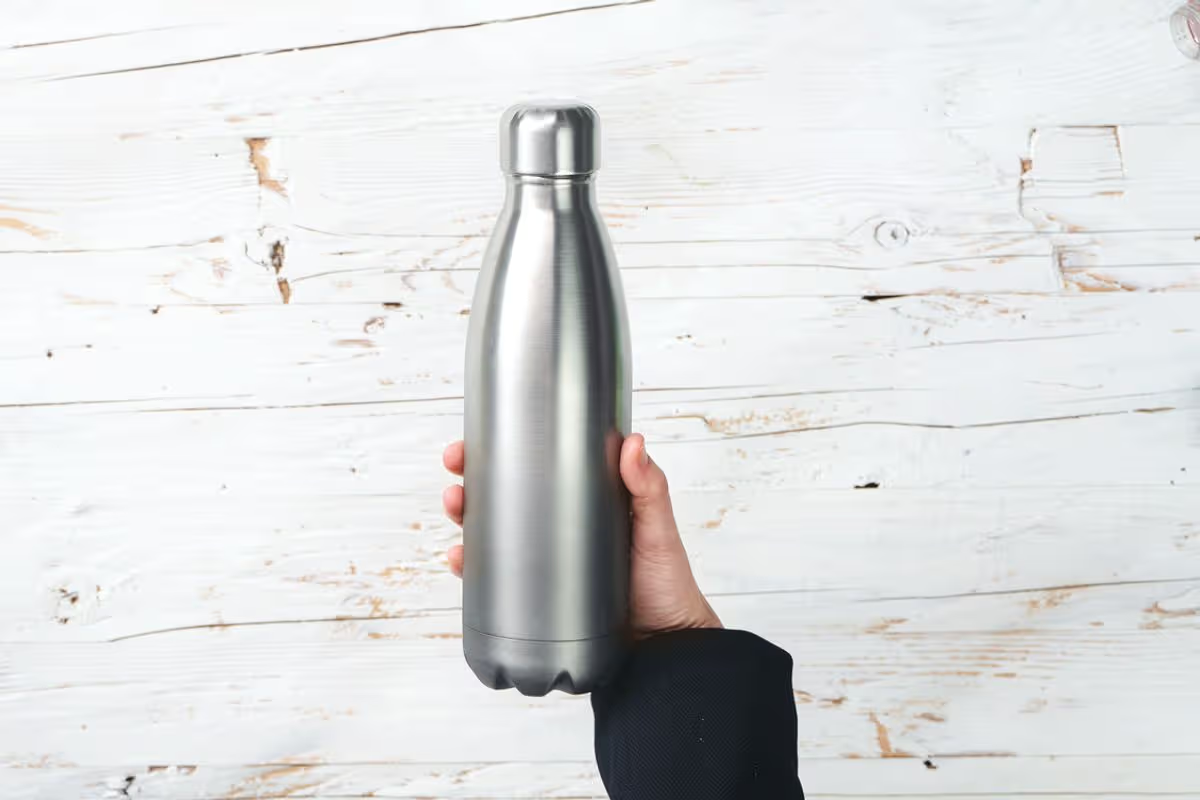
Metal water bottles are allowed through, but must still be emptied before security. The new scanners can’t penetrate the double-layer insulation on stainless steel bottles and thermos flasks, meaning they need to go through empty for safety reasons.
The good news is that most airports offer free water refill stations after security. This way, travellers can top up their empty bottles after going through the scanners.
Major airports, including Heathrow, Gatwick, and Birmingham, have all introduced the relaxed liquid rules as of May 2026. Edinburgh Airport warned passengers: “If you are carrying metallic or double-walled containers (including vacuum flasks, thermos flasks and metallic water bottles), please ensure the container is empty prior to the security checkpoint.”
It’s not just water bottles causing delays at security – playing cards are also flagging up problems at security checkpoints. The innocent-looking deck can trigger additional screening because its stacked shape and density can give the impression that something’s hidden inside.
TSA expert Ian Cava advised airline passengers to remove cards from hand luggage and place them in the tray separately. “This helps speed up the process and reduces the likelihood of delays,” he said.
A woman concerned about a name discrepancy between her easyJet holiday booking and passport was urged by the airline to get in touch directly to resolve the issue
Airlines have different rules(Image: Getty)
Budget airline easyJet has urged a customer to get in touch after she queried whether she needed to make an amendment to her booking. The prospective passenger had secured a holiday with the carrier but had concerns about a potential issue with her trip.
Taking to the easyJet holidays Facebook page, Jessica asked: “Booked holiday with my “first” and “last name” My “given name” on my passport includes my middle name.
“Do I need to amend my booking? I fly in 2 weeks and haven’t yet checked in if that makes a difference.”
She received a response from easyJet stating: “According to the International Air Transport Association (IATA), there’s no middle name rule as such, but their guidance is the recorded name on a reservation and ticket should match the name in your official travel document.” A follow-up reply from Anga then added: “Hi Jessica, thank you for reaching out.
“Please note that the name on your booking needs to match what is on your passport. To assist you with adding your middle name, kindly DM us with your booking reference, booker’s name and email address used on the booking.”
The UK government website advises travellers to ensure two key things are consistent when booking a trip, reports the Liverpool Echo. It states: “The name on your passport must match the one you use when you book your travel.”
Content cannot be displayed without consent
However, it does not clarify whether a middle name featured in your passport must also be included when making a booking. Different airlines have their own policies, so it’s always advisable to check with them directly if you have any worries about anything on your travel documents.
Ryanair, for instance, addresses the question on its website, stating: “For security reasons, the first name and surname on your booking must match the names on your travel document(s). We do not require middle name or second/double-barrelled surnames for flights.”
Jet2 similarly states that middle names aren’t required, except in one particular scenario. On its website, it explains: “We don’t we don’t need your middle name(s) on your booking unless two people on the booking have identical first and last names. Please make sure all names are spelt exactly as they are on your passport.”
Tui has also confirmed it’s not essential. Responding to a query about the website not accepting a full name, it clarified: “Our website only allows for a maximum 15 characters in the name box.
“Just enter what you can and contact us so we can make a note of your full name on the system. Just so you know, we only need your title, first name and surname. You don’t have to include middle names.”
There are big savings on flights to Spain, Portugal, and more
14:12, 19 May 2026Updated 14:32, 19 May 2026
Flights are on offer to many popular destinations(Image: xavierarnau via Getty Images)
A major airline has said it is reducing some of its flight prices by more than a fifth as it celebrates a huge 22 year in the skies.
Wizz Air said today, Tuesday: “We’re turning 22. Celebrate with us: up to 22% off ALL flights”. The Budapest-based airline flies to tens of destinations across Europe, from an array of UK airports including London Luton, London Gatwick, Liverpool John Lennon, and more. There is a catch on the savings, though, as flights must be booked before 11.59pm tomorrow, May 20.
Terms and conditions further stipulate that the discount applies only to the fare, excluding any administration fees. Flights within the deal depart between today, May 19, and October 30, 2027. Wizz Air added: “Promotion does not apply to group bookings.”
Content cannot be displayed without consent
At the time of publication, we found return flights to Palma de Mallorca in June, from London Luton, from £31.80 per person. You can also get return flights to Bratislava from £30.24, or to and from Alicante from £31.80.
Looking ahead to the summer holidays, there are return flights to Palma de Mallorca from £40.81 in August, to Barcelona El Prat from £43.38 per person, and flights to and from Valencia from £45.04 per person.
If you’d prefer to travel from London Gatwick, there are return flights next month to Malaga from £31.80, to Valencia from £35.70, and to Faro from £47.72 per person. And in August, Gatwick passengers can fly to and from Faro from £56.94, Valencia from £58.64, and Malaga from £66.46.
Little you may know, passengers travelling with Ryanair should obey by a certain rule when on planes. As soon as you board, it’s wise to remove a key item of clothing
09:32, 19 May 2026Updated 09:33, 19 May 2026
Ryanair passengers should remove the item of clothing (stock image)(Image: Jakub Porzycki/Getty Images)
Thetravel tip was recently shared online by a woman known as Sarah Geissler who alluded to the rule in a light-hearted way. Even so, she drew attention to something a lot of people may not be aware of when they’re jetting off onholidays, and this is that a certain item of clothing should be removed on flights.
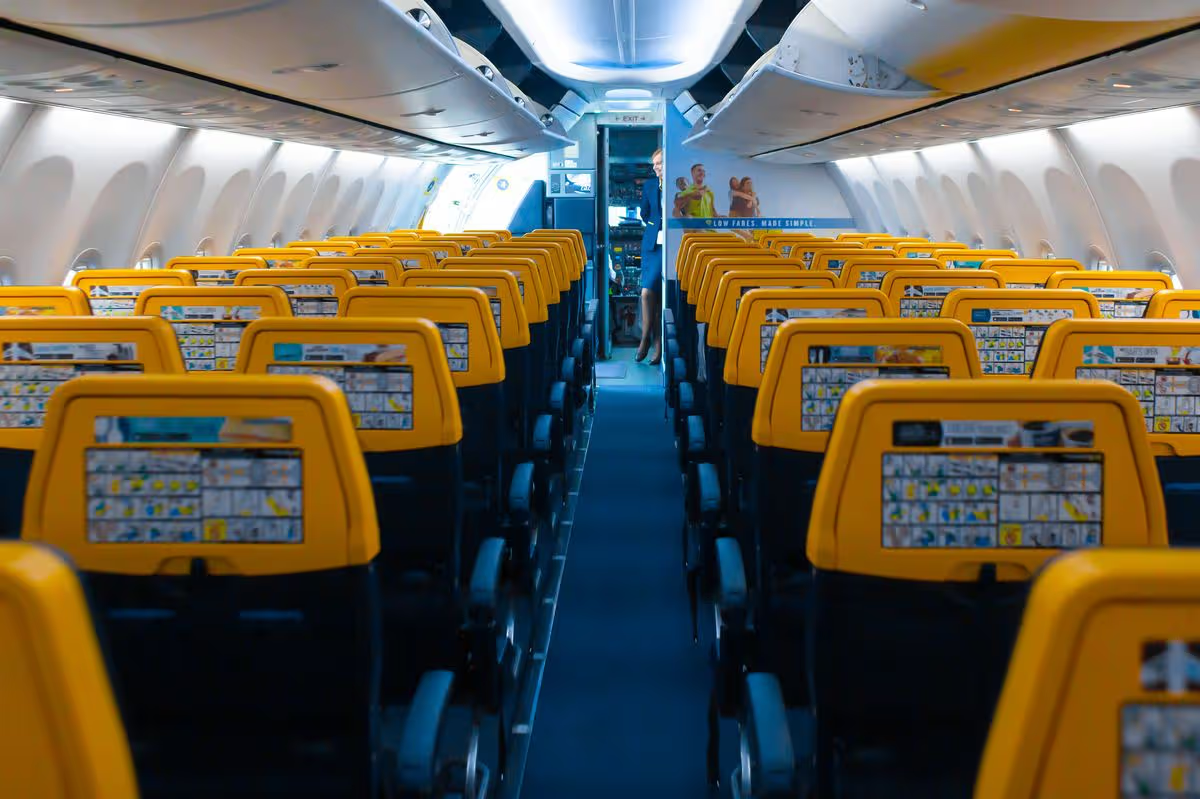
She shared a clip of a sign on a plane seat, which seemed to show that heels are not permitted to be worn. Over the top of the clip, she wrote: “No heels allowed on your Ryanair flight.”
Sarah also teased that this was “bad news for baddies”, but it actually put a spotlight on something important. When it comes toair travel, there are some important things you need to be clued up on, but it’s not as simple as it seems.
Content cannot be displayed without consent
Indeed, while there are rules you need to follow about wearing heels when flying with Ryanair, this doesn’t mean you can’t wear them when at the airport. There are actually vital guidelines you should follow, especially in case of an emergency.
What you need to know
Even though people aren’t banned from wearing heels when travelling with the airline, it is highly recommended that they avoid doing so. Heels significantly increase your risk of tripping in the cabin and can puncture the inflatable emergency evacuation slides.
For safety reasons, cabin crew will instruct you to remove your heels prior to going down an escape slide in an emergency. This is why it’s best to remove them before boarding a plane, and perhaps slip into something more comfortable.
Even better, you could avoid wearing them in the first place. During an emergency, you must remove all high heels before going down the slide.
To ensure a swift escape, flight attendants suggest slipping them off before sliding, should an emergency ever occur. If one took place, passengers are also advised to leave their hand luggage behind.
In the footage shared online, the video also showed you shouldn’t wear glasses or smoke in such an emergency either. It’s a topic that’s got people talking on Reddit in the past.
One person said: “Heels can damage an escape slide, and I’d guess that glasses, ear rings and false teeth could be ripped out during impact. Hence, get them off before the event.”
Another noted: “My theory. Remove glasses, dentures. They may come loose and become lost (so, put them in a pocket).
“Remove high heels (especially important if you leave the plane via slide). Remove ear buds or headsets (so you can hear emergency instructions).”
A third also suggested: “The point is not to wear pointy things when coming down the inflatable slide in order not to make holes in it.”