Air travel

New museum is a ‘must-see’ as historic UK airport reopens after 67 years

The airport was once Britain’s main international gateway and birthplace of the ‘Mayday’ distress call

Croydon Airport has thrown open its doors to the public once more after being shut for 67 years. Once the nation’s main international airport, it closed down for good in 1959 and has remained vacant ever since.

Earlier this year, the airport received visitors for the first time as a heritage attraction. Now converted into a museum, the site enables people to discover the original terminal building on the first Sunday of each month.

Having initially opened in 1920, Croydon Airport played a pivotal role in the advancement of aviation in the aftermath of World War 1.

The location is celebrated as the birthplace of the ‘Mayday’ emergency call. In 1923, F.S. Mockford, Croydon’s Senior Radio Officer, devised the distress signal “Mayday, Mayday, Mayday”, taken from the French expression “m’aidez” (“help me”), reports Surrey Live.

Historic Croydon Airport said: “‘Mayday, Mayday, Mayday’ was subsequently approved by the Air Ministry as the required radio procedure to be used in an emergency. In 1924, the UK promulgated its approval and use through the publication of The Air Pilot: Great Britain.

“Adopted by the International Radiotelegraph Convention of Washington in 1927, ‘Mayday’ became the international standard distress phrase. The ‘Mayday’ distress call still saves lives today.”

The airport shut its doors due to its inability to accommodate larger aircraft, with its final flight departing the iconic terminal in September 1959.

The Croydon Airport Visitor Centre has an impressive 4.6 Google rating at the time of writing.

On Tripadvisor, recent visitors to the museum were full of praise, with one writing: “Fascinating trip through the history of passenger aviation!”

Another visitor said: “I have lived in the area all my life and even used to go to Purley Way Lido across the way from the airport as a child, and didn’t know the significance of Croydon Airport.

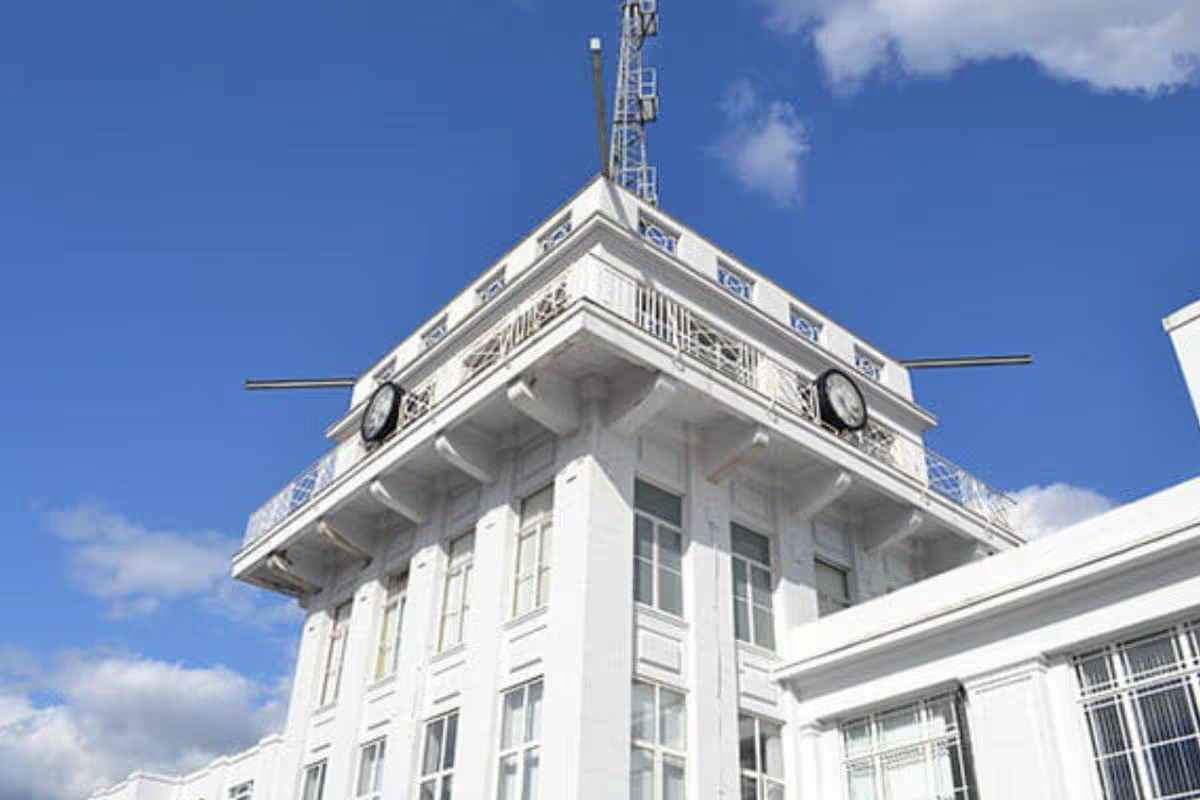
“I was amazed how well preserved the building was, and didn’t even know it had a control tower. If you are into aviation or history, it is a must-see.”

A third wrote: “Very nice and detailed tour, highly recommended. But you will have to keep checking for the tour date as it’s not year round function.”

One person commented: “This local gem has great volunteers and interesting history (such As being the world’s first control tower and carrying almost half of the UK’s air passengers in 1935). The tour, photos, and signage do give an interesting view as to what it was like in the 1920s and 1930.”

Finally, another said: “Great place to visit. Tour guide Micheal in the museum gave a great talk and overview. Would recommend for all ages. Visually great with so much so see. Definitely a must see for anyone who loves aviation.”
Source link

Martin Lewis’ MSE says people can cut costs by booking a hotel but not using it

The money-saving experts shared a tip for people booking expensive holiday destinations

A savvy travel tip could help holidaymakers save money on trips to expensive destinations. MoneySavingExpert (MSE), founded by journalist and broadcaster Martin Lewis, often shares money-saving tips for the public. According to a previous blog post from the MSE team, some travellers could save money by booking a hotel they don’t need.

The experts explained that package holidays can sometimes offer better deals than scheduled flights for certain destinations. So travellers could save money by booking their flight as part of a package deal, then booking their preferred accommodation, assuming they’re not keen on the hotel included with the package.

MSE said: “Scheduled flights to some destinations, such as Orlando and Sri Lanka, can be silly money, yet packages there can sometimes come in much cheaper. If you only need the flight, check if there’s a cheaper package holiday, then grab it but DON’T stay in the hotel.”

The guidance added that Martin has previously had success with the trick, helping a friend book a holiday to Sri Lanka. MSE said the passenger paid £300 for the holiday to cover their flights, when the cheapest scheduled deal was over £1,000.”

In another blog post dedicated to cheap package holidays, MSE reiterates the advice. The experts explained: “If you’re going away specifically for seven, 10 or 14 days to a traditional holiday destination, package holidays are often best. They can sometimes be much cheaper than booking a scheduled flight… even if you DON’T want to use the hotel.

“For example, we found flights for a seven-day trip to Florida for £689 per person – a package holiday for the same dates was just £662 per person. It won’t always work, but it’s worth a try.”

When checking flight prices, passengers may wish to compare prices on sites such as Skyscanner. Booking on different days could help customers find the best deals.

Skyscanner says: “Flight pricing changes constantly based on demand, season and route. There’s no fixed ‘cheapest day’ to book but with the right tools, you can stay informed.

“Historically, Skyscanner pricing trends have shown that some airlines release deals late on Mondays, which may lead to lower fares early in the week. Prices tend to rise again as the week progresses and demand increases.”

Some holidaymakers wait until the last minute for deals. Skyscanner explains: “On quieter routes or off-peak travel days, prices may drop as the departure date approaches. But on popular routes or peak dates, fares often increase as the flight fills up.”

Source link

Major airline confirms new direct route from Manchester airport starting next month

Passengers no longer need to make connecting flights as the new service is set to start from July 23, the first of its kind on a route to and from Manchester Airport

A major airline has announced it will be running a new direct service to a major capital city from Manchester Airport.

Riyadh Air will launch the service between the Saudi Arabian capital and Manchester from July 23.

Flights direct to Riyadh will operate three times a week, making one of the first direct links between the Saudi Kingdom and England’s north in decades. Many passengers have been forced to rely on connecting flights through European hubs or other Gulf airports – until now.

As per Riyadh Air, the airline will run the route on Tuesdays, Thursdays and Saturdays, with flight RX417 leaving Riyadh King Khalid International Airport at 1.45am local time before arriving into Manchester at 6.40am. The return service, RX418, will depart Manchester at 8.40am and land back in Riyadh at 5.20pm local time – right on time for the dinner service.

Riyadh Air told travel news website Travel and Tour World that the route has been designed to appeal to both business and leisure passengers, offering faster and more convenient travel between the Middle East and England’s north. The new direct service will mean business travellers will be able to attend meetings in Riyadh without overnight layovers, and holidaymakers can travel to Saudi Arabia without the need to make a connecting flight. Additionally, the flights will make use of Riyadh Air’s Boeing 787-9 Dreamliner aircraft, which feature wider seating, advanced lighting systems, and nifty travel technology designed to reduce jet lag on long-haul journeys. Riyadh Air said the new Manchester flight path forms part of Saudi Arabia’s wider Vision 2030 strategy, which aims to grow tourism, strengthen global connections, and expand the country’s aviation sector. Riyadh Air, which was founded in 2023, plans to grow its fleet of more than 100 aircraft over the next decade, while also aiming to connect travellers to more than 100 international destinations.

The Manchester route is among the first international services planned as part of the national airline’s wider summer 2026 expansion programme, with new connections also flying out of London.

The additional fares come as travel between the UK and Saudi Arabia continues to increase, with weekly seat capacity surging by up to 150% in recent years to meet rising business and tourism demands. Riyadh Air is now the only aviation firm to expand flight offerings and launch new direct routes between major British and Saudi airports, with British Airways recently boosting its London Heathrow to Riyadh service to up to 14 weekly flights and its Jeddah (JED) route to five flights per week. Wizz Air and Virgin Atlantic have also launched direct routes connecting Gatwick and Heathrow airports to cities like Medina, Riyadh, and Jeddah.

Source link

Simon Calder urges anyone with package holiday booked to do task ‘immediately’

Important message for anyone with a package holiday booked

Travel expert Simon Calder has shared important advice for anyone with a package holiday booked, as people are being urged to act ‘as soon as possible’. His message comes ahead of the peak travel season, and as new research by Citizens Advice has revealed that four million people have faced issues with their package holiday over the last year.

On today’s (June 8) episode of ITV’s Good Morning Britain, TV host Kate Garraway spoke to correspondent Nick Dixon about the findings. He said: “The complaints that we’ve been hearing about were involving all-inclusive holidays, with many saying they just didn’t ultimately match up to the glossy brochures we see online, or indeed at the travel agents.

“Citizens Advice say that they found 33% of holiday-related complaints ultimately were about things like poor quality hotels, bad food, facilities being unavailable as well – 19% down to customer service.” He added: “Things like long waits on the phone, complaints ignored and administration errors, and 25% of complaints ultimately led to stress, anxiety or upset.

“And if your dream holiday does turn into a wee bit of a nightmare, there are steps you can take… Many of us with these kinds of complaints about our holidays end up trying to fight for compensation, which is why it is so important to keep a record of everything just in case to have any chance of getting money back.”

British travel journalist and broadcaster Simon Calder then spoke to viewers, sharing a crucial message for those with a package holiday, especially if they encounter problems during their trip. He urged holidaymakers to act ‘immediately’.

Content cannot be displayed without consent

He said: “If you get to your destination and things aren’t right, maybe there’s a problem with your room, maybe the facilities are simply not as described, then you have to give the travel company immediate notice and allow them the opportunity to sort things out.”

How can I claim compensation for a holiday?

Reporting a problem right away is a legal concept called “mitigating your losses”. If you don’t allow the travel provider to address the room or facilities issue while you’re there, you could really hurt your chances of receiving a full refund or compensation.

Citizens Advice says: “If you’re still on holiday, tell the company or travel agent about the problem as soon as possible. You might be able to get it sorted quicker – like if there’s a problem with the room. If you don’t say anything until you get home, you might get less compensation or none at all.”

The person you need to contact depends on how you arranged your holiday. If you went for a package holiday, reach out to the customer service team of the tour operator you chose.

However, if you organised it yourself or set up a linked travel arrangement, you should contact the accommodation or service provider directly, such as the hotel or the company offering excursions. Make sure you include:

  • your booking reference
  • clear details of what went wrong
  • copies any evidence you have – like photos
  • copies of receipts
  • how much compensation you want

Citizens Advice adds: “It’s a good idea to send the letter by registered post and keep a copy, so you have proof that the holiday company received it. You can also email them – some of them have online forms. Keep a copy of what you send. If the company makes you an offer that you think is too low, you can ask for more. They might come back to you with a higher offer.”

Source link

Your legal rights as 4million report problems with package holidays

Of the complaints made to the Citizens Advice Consumer Service, 42% involved all-inclusive packages abroad

More than four million people had problems with a package holiday in the past year, a survey for Citizens Advice suggests. The survey found 76% of adults had been on a package holiday before, and 34% of them had experienced a problem. Some 8% had suffered an issue within the last 12 months specifically, equating to an estimated four million travellers, it said.

The charity said it received about 14 complaints a day about package holidays, including issues such as unexpected changes to the hotel, denied refunds, and poor customer service. Of the 3,500 package holiday complaints made to the Citizens Advice Consumer Service in the past year, 42% involved all-inclusive packages abroad.

A third of complaints (33%) related to the quality of the holiday falling short of the agreed deal, such as hotels being misdescribed, bad food or unavailable facilities. Customer service failures made up 19% of complaints, including long waits on the phone, ignored complaints and administration errors made by firms.

As a result, one in four of those who experienced an issue with a package holiday (25%) said they suffered stress, anxiety or upset, while 17% had to pay extra for daily expenses. Citizens Advice encouraged holidaymakers to check what protections were included within their booking.

One complainant, Zorana, a semi-retired NHS doctor from north-east England, reported spending £6,300 on an all-inclusive, seven-night trip to Lanzarote with her daughter through a UK holiday operator. Torrential rain on the second day resulted in “nightmare” flooding, leaving hotel guests without electricity, water, food or internet.

However the woman said she received no on-site support from their operator, causing them considerable stress. Zorana, 66, said: “We spent the morning on the beach and planned the sauna for later. But when we were eating lunch the rain started and didn’t stop.

“By the time we got to the spa, the hotel told us we couldn’t go in because it was flooded. Half an hour later the electricity had gone. Without electricity, everything stopped. There was no more internet and no more water because the pumps were not working.

“We all gathered in the hotel lobby, to hear what was going on. It was the weekend and reps from all the other travel companies were there, talking with people, reassuring them, giving them information. Some were already distributed to other places. We asked, ‘Where is our rep?’ And we were told he doesn’t work on weekends.

“We were very angry. Hotel staff told us our travel company was always a problem and never helped people. We came home after five days and I started to chase the travel company for a refund. But the customer service adviser said they can’t deal with it because compensation was offered. But their offer was not adequate.

“I mentioned the lack of support, the delay, the value of the holiday, that I had to find and pay for another hotel, and because of this it was reasonable that they should give me all my money back. I feel a victim twice over because I had the stress of our holiday being ruined, and then months of trying to get compensation.”
Citizens Advice consumer spokeswoman Jane Parsons said: “Too often, people are left stressed and disappointed when their dream holidays are spoiled because they’re not getting what they paid for. To make matters worse, they’re having to spend a lot of time and effort trying to resolve issues, sometimes with no luck.

“A record of any issues that occur and evidence should be kept – like clear details of what went wrong and when, photos and receipts. If something goes wrong with your holiday you might be able to get compensation from the company you booked with. You should tell them about any issues as soon as possible – if you don’t say anything until you get home you might get less compensation, or none at all.”

Chartered Trading Standards Institute chief executive John Herriman said: “This research highlights the real impact poor practice in the travel sector can have on consumers, specifically the problems for consumers booking holidays online, particularly through social media.

Left out of pocket

“Too many people are left out of pocket or dealing with stress when holidays don’t meet what was promised. What should be a time to relax and unwind can turn into the opposite. While it’s vital consumers understand their rights, check the protections included and keep clear records if something goes wrong, businesses must meet their legal obligations and ensure they deliver the standard of service people have paid for – and resolve issues raised quickly.

“Strong consumer protection depends on both informed consumers and responsible traders.”

Consumers are entitled to compensation for a holiday if it was lower in value than the one booked, spending extra money was required because of a problem, a large part of the booked services were not provided, something goes wrong that causes distress or disappointment or if the holiday was completely ruined.

Yonder surveyed 2,018 adults between April 17-19 about their experiences with package holidays, including problems. Respondents were asked to exclude issues outside the operator’s control, like geopolitical events or natural disasters.

Source link

Wizz Air’s updated June rule ‘won’t work’ at most UK airports

It seems sensible in theory, but thousands of budget travellers won’t benefit

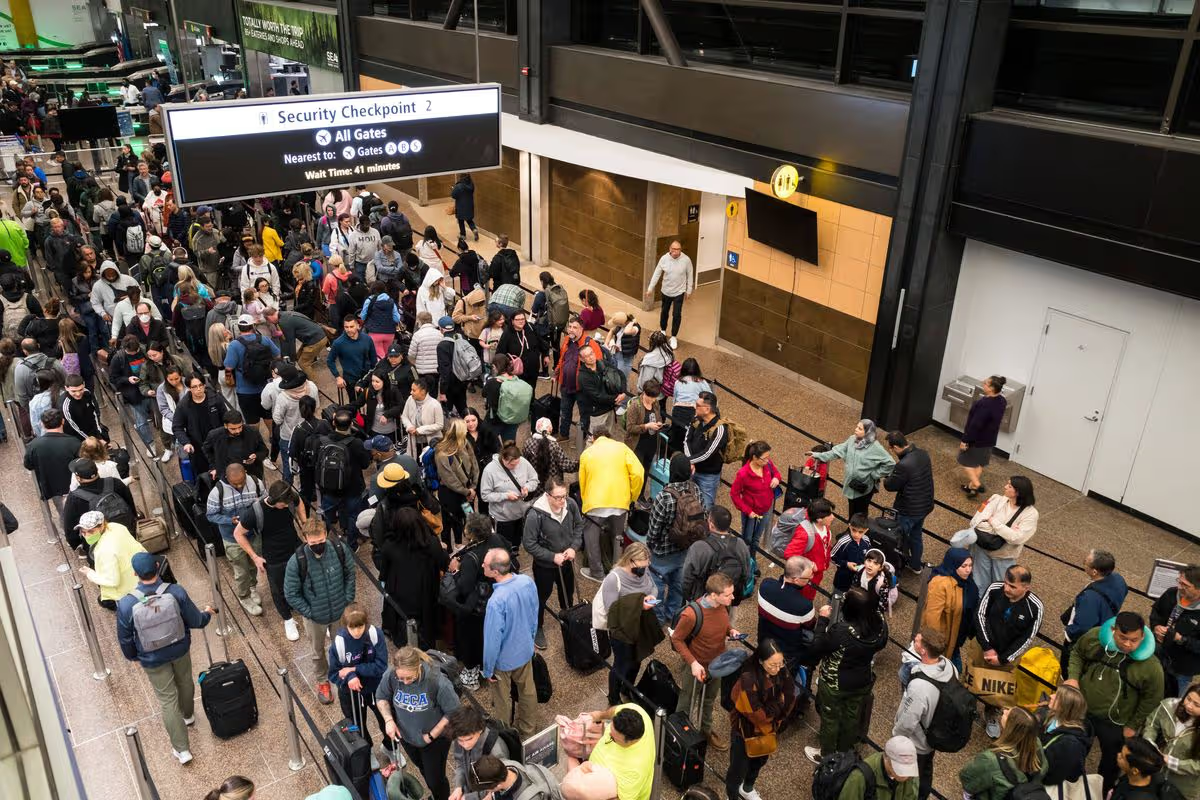
Earlier this month, budget airline Wizz Air told all travellers to get to the airport three hours ahead of their flight due to new border control checks that have been brought in. Managing director Yvonne Moynihan warns that holidaymakers have missed their return or connecting flights due to lengthy airport queues since the rollout of the Entry Exit System (EES).

Problems were flagged when the travel system was launched in April, but as more people pass through airports this summer for the first time since regulations changed, travellers may face hold-ups. Taking to TikTok, travel specialist Kate Donnelly (@Thedonnellyedit) argues that the latest guidance from the airline is “useless” for most people jetting off this summer.

She said: “We know when you’re travelling short haul that the general advice is to get to the airport two hours before your flight. Wizz Air is advising people to arrive three hours before their departure to beat queues and reduce the risk of missing their flight due to the EES system.

“So, while this advice appears sensible, the reality is that most check-in desks only open two hours before departure, in some cases two and a half hours,” Kate argues that only certain travellers would actually gain from turning up at the airport three hours before take-off.

Details available directly on Wizz Air’s website (as of June 7) state: “Airport check-in and baggage drop-off start two hours and close 40 minutes before departure. It’s worth noting that at some airports, the check-in desk may open or close earlier.”

Content cannot be displayed without consent

Nearly all airports listed with an earlier-than-standard check-in time are international. London Luton Airport was the only UK airport with differing rules, with check-in desks that open “180 minutes (three hours) before the scheduled time of departure” for all travellers, reports the Express.

Kate also suggested that passengers travelling with hand luggage only could be among those who stand to gain the most from arriving early. Without any luggage to weigh and drop off, the whole process becomes considerably faster, and passengers “would be allowed to get straight through security and into duty-free”.

The airport itself remains one of the most significant factors that could cause delays, even for those who arrive earliest. Kate claims: “A lot of airports have more than one border control, meaning that you are still going to have to wait until the announcement is made for your gate so that you know which border control you need to go to.”

What is the general advice on when to arrive at the airport?

To avoid any issues, it is best to double-check with your specific airline about the earliest time check-in opens. Arriving as early as possible can give extra time for delays, but being ready too soon could result in pointless delays just by waiting around.

Kate said: “If you are travelling to the Schengen area this summer, two hours before your departure is enough time, based on the fact that the airport processes have not changed. Unless [airlines] decide to start opening up check-in desks earlier and announcing gates sooner, you might as well stick with the two-hour rule.”

The Schengen area is an extensive, border-free travel zone encompassing 29 European countries. It features numerous popular summer holiday destinations such as Spain, Turkey and Greece – which means many British holidaymakers will encounter EES checks.

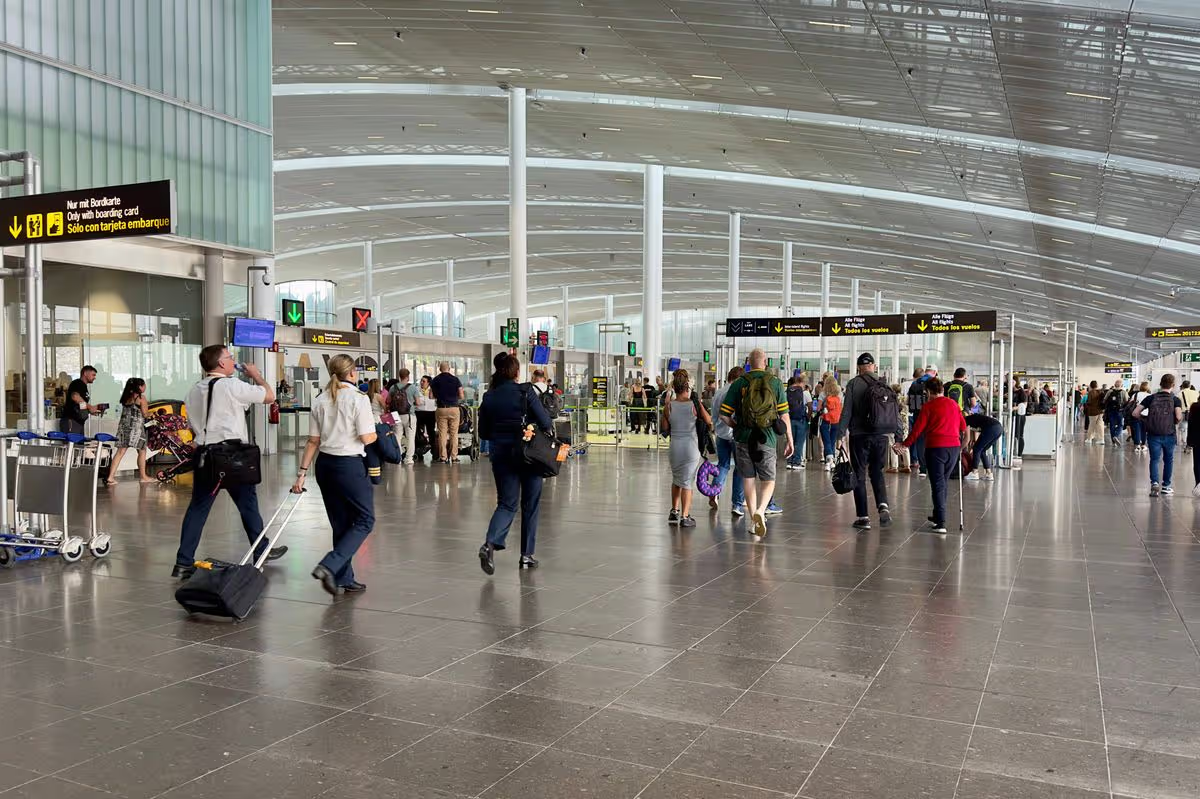
Hold-ups are likely to come from first-time EES users who are required to scan their passport, have a photo taken, and submit a 4-fingerprint scan (children under 12 are exempt from fingerprints). This establishes a digital record valid for three years, and during new trips within that timeframe, travellers just need to scan their passport and provide one biometric identifier (photo or fingerprint).

Source link

Tourists urged to stop making 1 packing mistake that could ‘ruin holidays’

Tourists have been urged to stop making a common packing mistake as it could lead to “ruining holidays”. The advice comes as vacation season begins to kick off

The prospect of jetting off somewhere keeps most of us motivated, so the last thing anyone wants is for something to spoil their well-earned break. Yet, as many may not realise, a straightforward packing blunder could land you in trouble, and may even affect whether you’re able to fully enjoy your time away.

If you’re hoping for a smooth and stress-free trip, there’s some vital travel information you really ought to be aware of. It’s essential to steer clear of a simple packing error, as it could prove costly and seriously disrupt your holiday — something nobody wants to experience.

It’s not the first expert guidance of this nature to emerge recently, either. Previously, holidaymakers were cautioned about another common luggage blunder to avoid.

According to pharmacist Seema Khatri at Roseway Labs, the vast majority of medication-related holiday mishaps stem from a handful of easily preventable errors, with most occurring before the trip has even begun.

Seema said: “People spend weeks planning itineraries and what to take, but medication is often an afterthought. And that causes problems.”

Travelling with medication can be a minefield, as regulations differ from country to country. As a general rule, ensuring your medication is clearly labelled is always a sensible precaution.

For certain medicines, particularly injectables or controlled substances, a doctor’s letter may also be required. She added: “Always keep your medication in your carry-on luggage.

“It reduces the risk of loss, delays or temperature damage.” What you might not realise is that medication can cause problems at airports if it’s not packed and documented properly.

In fact, it can result in hold-ups, questioning, confiscation or you could even be refused permission to fly in certain situations. Issues typically occur with controlled substances, liquid medications that exceed particular limits or absent prescriptions.

To make sure you pack yours appropriately, check the regulations at your airport and in the country you’re visiting. Seema said: “Most holiday medication problems are preventable.

“With a bit of planning, you can focus on enjoying your trip instead of dealing with avoidable health issues.” That said, there are several general guidelines people ought to follow to be on the safe side.

What you need to know

Always keep medication in your hand luggage in its original, properly labelled packaging. Store a spare supply in your checked baggage in case your bags go missing.

Additionally, make sure you carry a copy of your repeat prescription and, in certain cases, a signed letter from your doctor outlining the medication, dosage and duration of travel. It’s always advisable to verify what you require before you pack your bags.

A doctor’s note is recommended for large quantities of over-the-counter medicines to prevent complications at border control. You also need to make certain that liquid medication exceeding 100ml is readily accessible, as it will probably be screened separately.

If your medication is classified as a controlled drug, such as powerful painkillers or particular sedatives, specific rules apply. Therefore, check what applies to you before you travel.

Rules can differ from country to country, so always ensure you verify this before travelling, and declare that you’re carrying medication at the airport. After all, nobody wants to face delays at security, or be refused the right to travel, because of a straightforward packing error.

Source link

‘Entitled passenger stole my plane seat then did the unthinkable’

A woman has shared her shock after an ‘entitled’ stranger stole her pre-booked plane seat – sparking an argument onboard as she tried to claim back what she’d paid for

When arriving at the airport, travellers cannot wait to board their flight and jet off on their well-earned holiday. But one woman’s much-needed getaway started with friction when a stranger stole her plane seat and refused to give it up.

Taking to Reddit, she explained how she pre-booked a window seat on the plane, 27A, but when she arrived at her row, there were two women already sat down. She said: “I politely told them I had 27A, and one of them goes, ‘No, this is 27C the window seat. 27A is the aisle.’ “I was a bit confused, so I double checked after sitting down briefly in the aisle seat, and asked a flight attendant. She confirmed that 27A was in fact the window seat.

“So I go back and explain that to the woman, nicely, and her response was, ‘For f***’s sake, what are you so desperate to sit by the window for?'”

Wanting to avoid an argument, she told her that she’d pre-booked that specific seat on purpose and kindly asked her to sit in the one assigned to her.

She added: “She snaps back, ‘We all paid for it’, and still refuses to move.

“At this point the flight attendant is right there witnessing everything and says, ‘It’s her seat if she wants to sit there, she will.’

“Only then did the woman finally move, but the attitude the whole time was unbelievable. No apology, no basic respect, just pure entitlement.

“Honestly, I don’t get how people can act like that over something so straightforward. If it’s not your seat, just move. It’s not that deep.”

Commenting on her post, one user said: “It’s rude and it is not allowed. You sit in the correct seat period. They just wanted to take your seat. That’s where the flight attendants come in and say move it.”

Another added: “I remember when they said people had to sit in their assigned seat so they could be identified in an accident.”

A third chimed in: “People need to learn that doubling down on mistakes is wrong and stupid.”

One more person said: “I hope you didn’t need to leave your seat during the flight. I bet she’d b**** about that!

Source link

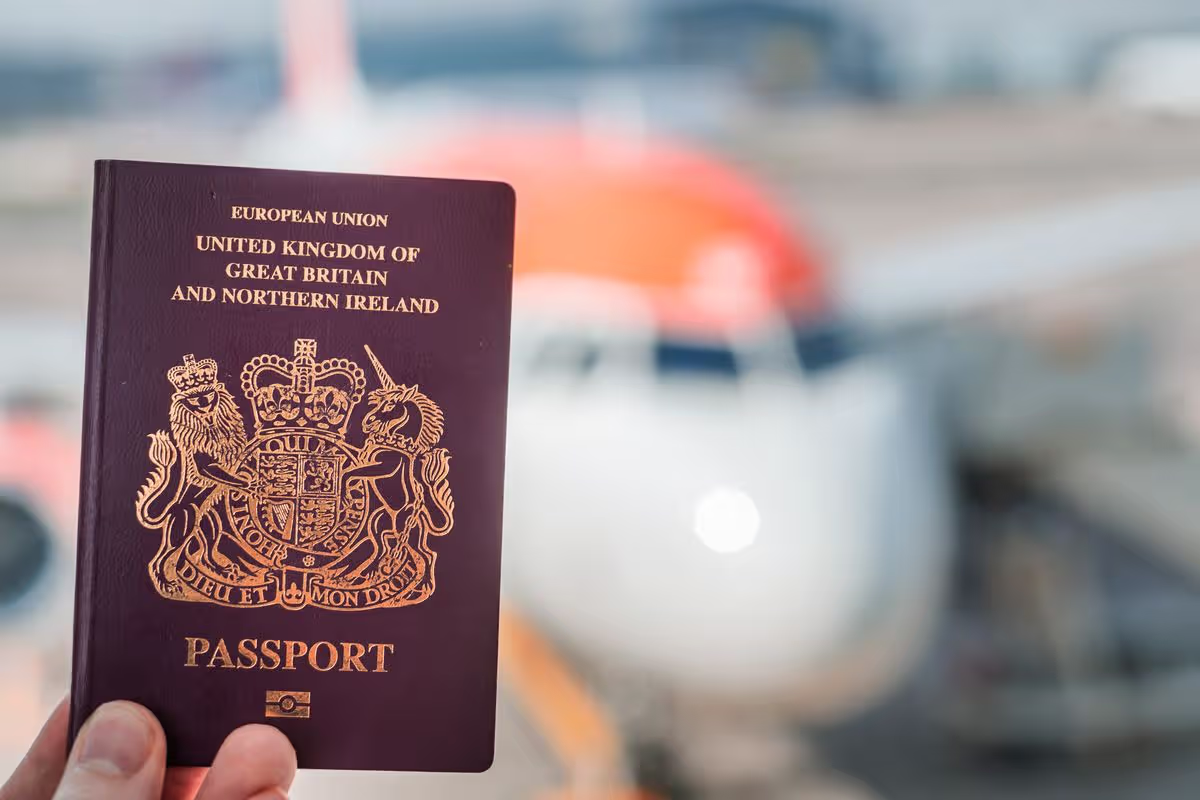
‘Blank page’ passport rule could see travellers denied boarding at the airport

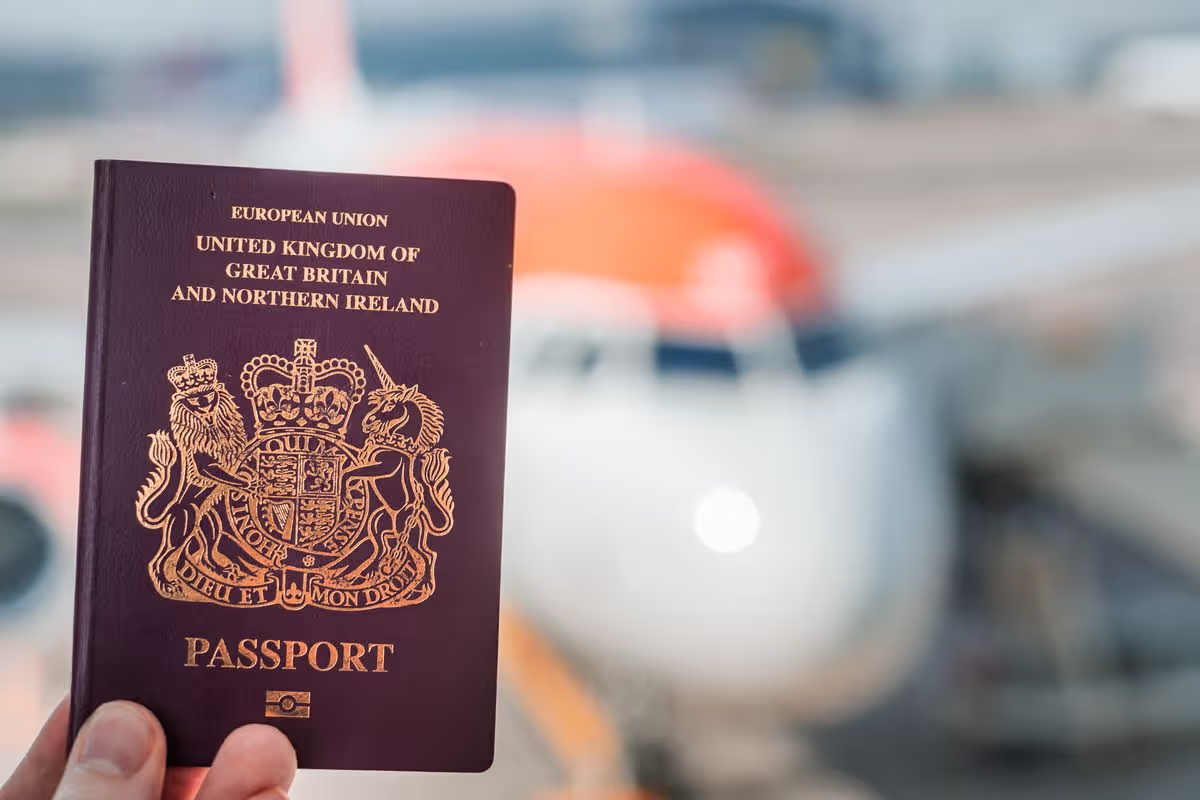
Expiry dates aren’t the only passport detail holidaymakers need to check before flying – another overlooked rule could derail your travel plans

Preparing for a trip abroad can be stressful enough. From making sure you’ve packed everything you need to checking airport liquid restrictions and ensuring your passport is still valid, there is plenty for holidaymakers to think about before they travel.

However, some holidaymakers could face an unwelcome surprise at check-in even if their document have months to years left before it expires.

This relates to the number of blank pages remaining in a passport. While many people focus on expiry dates, some countries require visitors to have one, two or even more completely blank pages available for entry stamps or visa stickers.

Travel experts warn that passengers who fail to meet these requirements could be denied boarding by airlines or refused entry on arrival.

Airlines are often responsible for ensuring passengers meet a destination’s entry requirements and can face penalties for transporting travellers who do not qualify for entry.

According to travel guidance published by Schengen, some destinations require at least two blank passport pages for visas and border stamps. The guidance warns that airlines may refuse boarding if passengers do not have sufficient space remaining in their passport.

The requirement can catch out frequent travellers whose passports are filled with entry and exit stamps from previous trips. Experts say many people mistakenly assume a passport is suitable for travel provided it remains in date.

For travel to the Schengen Area, for instance, passport rules already require Brits to ensure their passport was issued within the previous 10 years and remains valid for at least three months after their planned departure date. Some guidance also notes that travellers may need at least two blank pages available for visas and stamps where applicable.

A recent travel warning highlighted that a lack of blank pages can become a particular issue for frequent flyers and those taking multi-country trips. Countries may require empty pages for visa stickers, while immigration officials also need room for entry and exit stamps.

Travel experts recommend checking passport validity, issue dates and the number of remaining blank pages well in advance of departure. Unlike an expired passport, extra pages cannot simply be added to a modern British passport, meaning travellers who are running out of space may need to renew the document before travelling.

According to guidance cited by travel experts, some countries require between two and four blank pages depending on the destination and visa requirements. Travellers planning complex itineraries involving multiple countries are therefore advised to check entry rules carefully before travelling.

Source link

Major airline cancels flights from UK to three popular holiday hotspots – list

Turkish airline SunExpress says it has cancelled four routes from UK airports to popular holiday destinations in Turkey due to ‘ongoing geopolitical developments’

A major airline says it has been forced to cancel flights from the UK to three popular holiday destinations.

Turkish airline SunExpress cited “ongoing geopolitical developments” and the rising cost of jet fuel as it announced the temporary suspension of four routes from the UK to Turkey for the summer 2026 season.

The routes that have been cancelled are Manchester to Bodrum, Leeds Bradford to Antalya, and Glasgow to both Dalaman and Antalya. Flights on these routes have now been taken off sale.

However, Brits wanting to travel to Turkey this summer have a number of other options. SunExpress is still running routes to Antalya from Birmingham, Bristol, Edinburgh, Gatwick, Heathrow, Stansted, Luton, Manchester and Newcastle, as well as to Dalaman from Birmingham, Edinburgh, Gatwick, Manchester, and Newcastle.

Sadly, the changes do mean SunExpress will not be operating a UK to Bodrum service this summer.

A spokesperson for the airline told Travel Gossip: “Due to the ongoing geopolitical developments, the aviation industry is currently operating in a highly volatile environment, characterised by significant cost increases, particularly for jet fuel. SunExpress is therefore taking steps to improve fuel efficiency and optimise flight operations.

“As part of this, we have temporarily suspended our services from Glasgow and Leeds Bradford, and our route from Manchester to Bodrum, along with a number of short-term frequency reductions on other services.

“We regret any inconvenience caused, and will continue to provide UK travellers with a wide range of flights and routes to Türkiye from airports across the UK.”

They added that the airline is not in a position to confirm when the suspended services may be reinstated. SunExpress will provide further updates as soon as more information is available, they said.

This comes after British Airways said flights will not resume to Dubai and three other destinations in the Middle East until at least October, two months later than previously planned.

The airline previously said it would cut flights to some key Middle East destinations after the start of the Iran war with flights to Dubai, Doha and Tel Aviv originally set to resume at the start of July.

British Airways has now said that the ongoing conflict in the Middle East has prompted further changes to the flight schedule.

Fights to Dubai, Tel Aviv, Bahrain and Amman are now not set to resume until after the end of the summer season. The current date for flights to re-start is October 25.

Source link

Brits holidaying in Canary Islands given ‘truth’ about getting to airport early

British holidaymakers travelling to the Canary Islands have been warned to arrive at the airport three hours early due to severe border control delays caused by the EU’s Entry/Exit System (EES), with some travellers reporting waits of up to two and a half hours at passport control

British tourists heading to the Canary Islands are now being advised to reach the airport three hours in advance, mainly due to serious border control hold-ups caused by the EU’s Entry/Exit System (EES).

The rollout of the new biometric border infrastructure has sparked enormous queues – occasionally stretching to three hours – at popular holiday airports such as Gran Canaria Airport and Tenerife South. Airlines and travel specialists have issued these firm warnings to stop British and non-EU passengers from missing their return flights.

Under the EU’s digital border scheme, non-EU travellers (including British passport holders) must complete facial recognition scans and fingerprinting at border control.

Technical glitches and the considerable time needed to process each passenger have severely clogged passport control lanes.

The Canary Islands accommodate vast numbers of UK passengers. When several flights depart for non-Schengen destinations simultaneously, the local infrastructure becomes rapidly overwhelmed.

Spanish airport operator Aena officially requires a three-hour arrival window as standard procedure for all non-Schengen flights (which covers all flights returning to the UK).

Airlines such as Wizz Air have firmly reinforced the three-hour recommendation. Nevertheless, passengers should be mindful of a practical obstacle: many baggage drop and check-in desks at Canary Island airports do not open until precisely two hours before departure. Airlines continue to recommend arriving early to ensure you’re at the head of the queue the moment check-in desks open, enabling you to clear security and head straight to the congested passport control gates.

A travel expert based in the Canary Islands has now shared his thoughts on the 3-hour airport warning in a recent video.

Mr TravelON (real name David Gainford) is a well-known travel and media content creator on TikTok, recognised for his candid, lively vlogs and live streams centred on holidays in the Canary Islands (including Lanzarote, Tenerife, and Gran Canaria).

The influencer, who commands 192,000 followers, took to his account this week to offer his perspective on the guidance.

Gainford stressed in his clip that passengers travelling with luggage may be unable to check in three hours before departure as the desk may not yet be open. However, he suggested that many airlines are looking to address this by opening earlier.

He also pointed out that those who have booked a package holiday with TUI or Jet2 can count on these companies to ensure they reach the airport on time.

“It’s their responsibility to get you from your hotel and accommodation to the airport on time,” he said.

“So sit back, chill out, relax, and let your rep tell you what time you’re getting picked up.

“Yes, it might be an hour earlier.”

He noted that independent travellers not using a tour operator should ‘probably get to the airport three hours early’. The travel expert also warned that massive queues at airports could be likely, as travellers arriving at the airports have given conflicting accounts.

“Some are reporting two or two-and-a-half hour’s wait, it really does depend on how may flights land at that time,” he said.

The video has garnered over 180 likes as Canary Island holidaymakers hunt for information.

Numerous viewers flocked to the comments to share their own experiences, with one individual stating: “I got to Lanzarote airport 3 hours early last month and had to wait a hour for the gate to open.”
Meanwhile, another remarked: “Arrived in Lanzarote last month no issues on arrival but leaving to fly back to the UK was awful, we arrived early just in case, went to gate 6 done what we needed to once our gate number came up we headed over, that was where the issues began, you had to go through the machines again and there was only three machines.”
Yet a third responded: “We landed in Lanzarote last night and we were lucky, 10 minutes from getting off the plane to arriving at the bus stop. EES was ok, no queue and the luggage was waiting for us as we came through.”

One commenter summarised the situation by saying: “Better to be safe than sorry, it’s a nightmare at certain times.”

When contacted, a representative of the Ministry of the Interior commented: “The Entry Exit (EES) border control system has been fully operational in Spain since April 10th and is being implemented as initially planned, with positive results to date, and no significant incidents have occurred.”

The Cuerpo General Policía Canaria (CGPC) has also been contacted for comment.

The guidance emerges after renowned travel publisher Fodor’s has placed the Canary Islands — singling out Tenerife and Lanzarote in particular — on its 2026 “No List” back in November last year.

The publication cautioned responsible travellers to reconsider visiting, citing a severe housing crisis, gridlocked traffic, and water shortages brought on by overcrowding.

Source link

Holiday warning for Britons heading to Spain, Portugal or Greece

British tourists should expect long airport queues due to new biometric border checks

European airports have recently launched the EU Entry/Exit System (EES), which replaces the traditional manual passport stamping process with biometric registration (facial image and fingerprint scanning) to record the entry of non-EU citizens, including British holidaymakers. The new EES system is now fully up and running across all Schengen Area countries, including much-loved destinations such as Spain, Portugal and Greece.

While the new system is designed to streamline travel into and out of the Schengen Area and simplify border procedures, some travellers have reported finding themselves stuck in three-hour queues.

In certain countries, passengers have missed their return flights after failing to clear the digital system in time. The new border checks are anticipated to cause significant disruption for British travellers heading in and out of the EU during the busy summer peak periods.

While some countries such as Greece attempted to briefly suspend biometric checks for UK tourists, the Greek Foreign Ministry confirmed they are fully rolling out the EES system this summer.

The Foreign, Commonwealth & Development Office (FCDO) issued the latest travel guidance on the new border checks, stating: “The European Union’s (EU) new Entry/Exit System (EES) is now being implemented across the Schengen area.

“This means that when you travel into the Schengen area for short stays, you may need to register your biometric details, such as fingerprints and a photo. There is no cost for EES registration.

“On your first visit into a Schengen country, you may be asked to register your details at a special booth before proceeding to the immigration desk. Follow directions from your travel operator or the staff at your port of entry.

You may also need to provide either your fingerprint or photo when you leave the Schengen area.

Children aged 11 or younger will not have their fingerprints scanned but can be required to have their photo taken.”

“You do not need to take any action before you arrive at the border on entry to the Schengen area, but EES may take each passenger extra time to complete so be prepared to wait longer than usual at the border and to allow more time for immigration controls when you depart the Schengen area.

“EES is replacing the previous system of manually stamping passports when visitors arrive in the Schengen area for short stays. You may be asked to input biometric details every time you enter or exit.”

The EES has faced backlash from the travel sector, with the British Travel Association ABTA urging destinations and border officials to put in place stronger contingency plans for busy travel periods, reports the Express.

Mark Tanzer, chief executive of ABTA, said: “The ambition of a project like EES means it was never going to go completely smoothly, and we were prepared for that. However, what is frustrating is that border authorities have it within their power to ease queues and deal with issues as they arise – but that doesn’t seem to be happening across the board.

“As we head towards peak travel periods, we’re urging border authorities to plan for busy periods and use the contingency measure available. It’s critical the Commission keeps a close eye on this.”

Source link

Major airline hits passengers with new in flight charge from July

A major airline is cutting complimentary meals offered to passengers on flights with the introduction of a chef curated menu that has to be pre ordered ahead of takeoff

A major airline has announced a new in flight charge that will impact passengers from July, with meals no longer being complimentary.

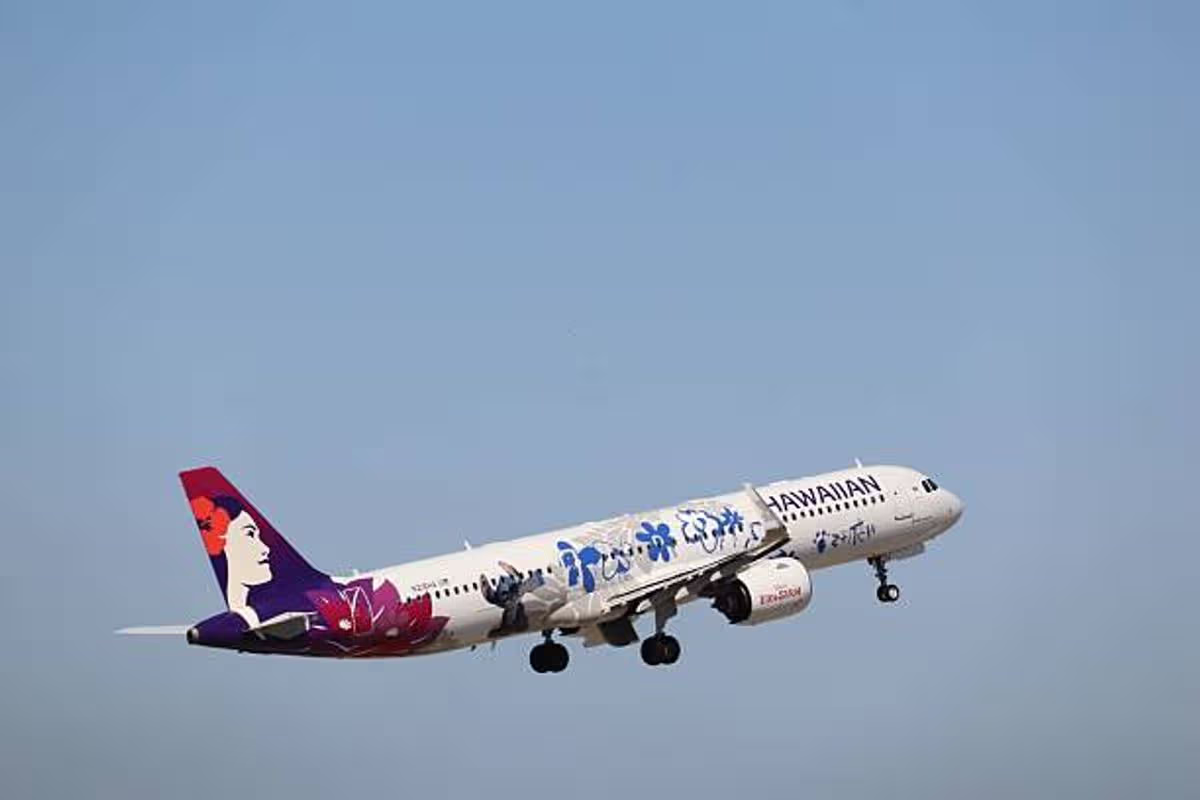
Hawaiian Airlines services included the free perk of meals when flying between Hawaii and the US mainland.

However, in a recent announcement the airline stated that passengers will not longer automatically receive complimentary meals.

Travellers will now have to purchase pre-ordered dishes from a new menu, between two weeks before departure and 20 hours ahead of takeoff.

Prices are expected to range from about $10 (£7.45) to $17 (approx £12.66) per meal.

However, according to the airline, flights between Honolulu and New York’s John F. Kennedy International Airport, will continue to include a complimentary meal for Main Cabin passengers.

The menu has been curated by Maui-based chef Sheldon Simeon, who developed a menu featuring elevated local favourites including crispy mochiko chicken with garlic noodles, barbecue teriyaki chicken bento, and corned beef hash with eggs.

Passengers will also be able to try signature dishes inspired by Simeon’s restaurants including his popular K mayo, teriyaki sauce, and banana bread syrup.

“At the heart of this transformation is what has always defined Hawaiian Airlines: authentic Hawaiian hospitality,” Alisa Onishi, the Managing Director of Hawai‘i Marketing at Hawaiian Airlines, said in a statement.

“We’re still going to keep the authentic parts of our hospitality, free beverages, free local snacks, (and) the sweet treat at the end of the flight. We’re really proud to offer this new option in our main cabin for our guests to explore and enjoy a little more from our island home.”

The airline added: “By moving to a pre-order model, we’re expanding beyond a single standard meal to offer a broader menu that reflects how our guests want to dine today.”

Business Class and First Class menus are also being revamped, with complimentary snacks remaining available on flights.

Source link

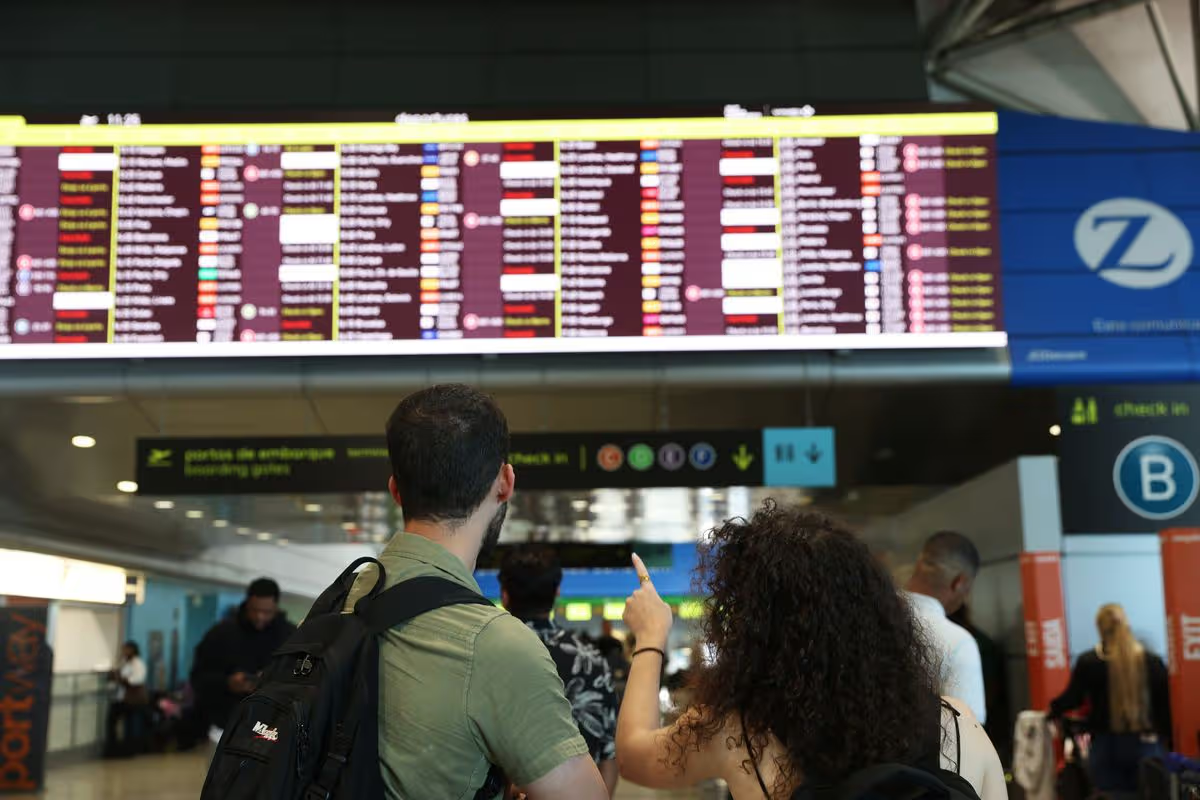
Huge disruption in Portugal on Wednesday, June 3 as 658 flights cancelled

Hundreds of flights have been cancelled, official data from June 3 indicates

A UK tourist hotspot has been rocked by disruption today. Officials in Portugal say 44.7% of flights scheduled to Portuguese airports on the day of a general strike today, Wednesday, June 3, were cancelled.

Portuguese media reports say that out of 1,472 flights scheduled across the country, at least 658 were cancelled, officials say. Of the 658 flights scheduled for Lisbon Airport, 408 have been cancelled, equivalent to 62%.

EasyJet had said in advance that its passengers would be affected. It said on the eve of the strike: “Due to a national strike in Portugal on 3 June, like all airlines operating to and from the country we can expect some disruption to our flying programme. We will be doing all we can to minimise the impact of the strike action and will contact customers directly with their options if their flights are affected.

“While this is outside of our control we are sorry for any inconvenience this strike action may cause.” Ryanair said it would not be affected.

Sapo reports that the second-highest percentage of cancelled flights is in Ponta Delgada, where 41% of the 118 scheduled flights will not take place, according to ANA information. In Porto and Faro, nearly a third of flights will be cancelled.

In Madeira, 23% of the 102 scheduled flights were cancelled. Almost all flights were reportedly cancelled in advance. This enabled notifying passengers and rescheduling flights, local media reports said.

The National Union of Civil Aviation Flight Personnel (SNPAC) said that of the 508 scheduled flights, “329 flights have already been cancelled, that is, 65% of the operations planned for June 3”.

The strikes, which also affected public transport and other services in the country, were the second in six month called over proposed government labour reforms.

Source link

World’s longest flight lasting 22 hours non-stop reaches huge milestone

A flight on the A350-1000ULR, developed for ultra-long-haul routes, is set to enable non-stop services between Sydney and major cities, including London and New York

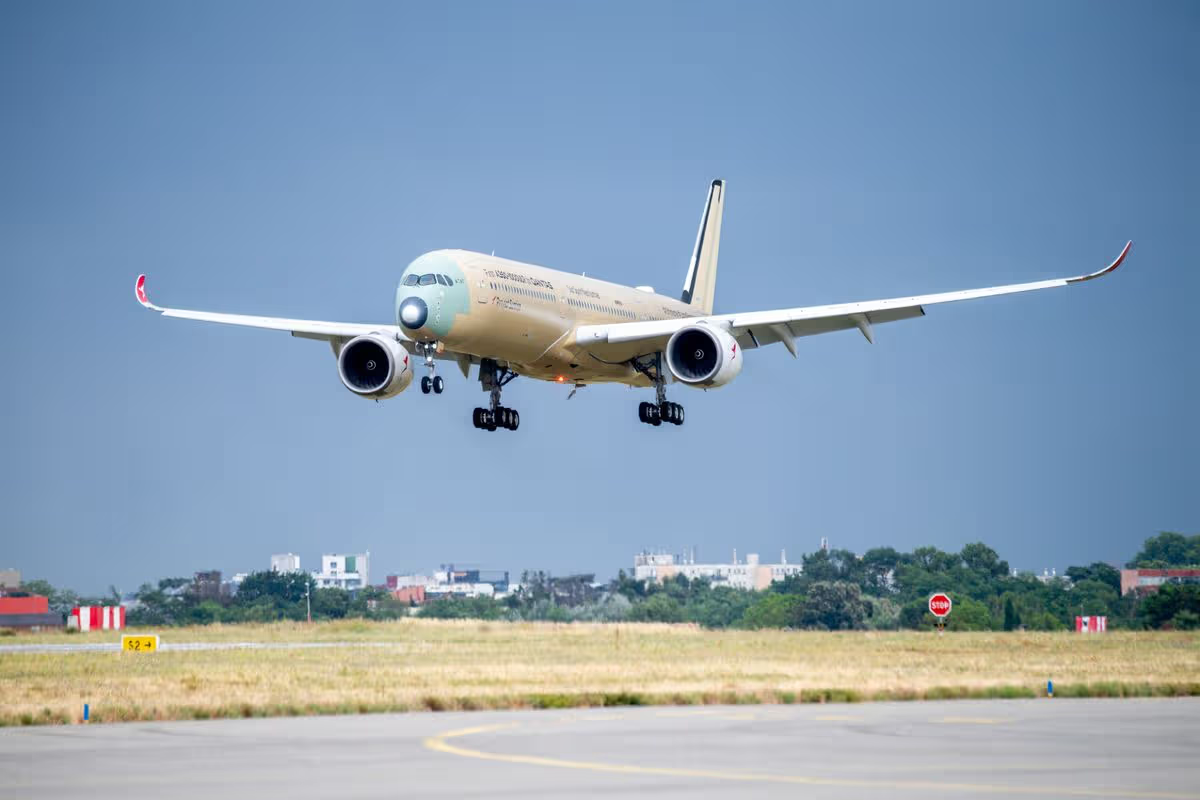
A plane offering a non-stop flight tipped to be the world’s longest and spanning up to a whopping 22 hours has reached a massive milestone. Yesterday (Tuesday, June 2), Airbus completed the first test flight of its A350-1000ULR, developed for ultra-long-haul routes and aimed at setting a new record for the longest non-stop commercial flight.

It will enable non-stop services between Sydney, Australia, and major cities London and New York. On its maiden flight, the MSN 707 model aircraft flew for three hours and 43 minutes.

Flown by an Airbus test crew and fitted with specialised instrumentation, the aircraft departed from and returned to Toulouse, France, reaching an altitude of more than 41,000 feet (12,500 metres).

It marks a turning point for the world of long-haul travel, with the plane making these non-stop routes possible for the first time and potentially cutting journey times by up to four hours.

At present, the longest commercial flight in use is Singapore Airlines’ more than 18-hour Singapore to New York, a distance of some 15,350 km; on the other hand, however, Sydney to London would be 18,500km.

The “ULR” in A350-1000ULR — a variant of the A350-1000 — stands for “ultra-long range”. A key difference is an extra tank capable of holding 20,000 litres of fuel, which Airbus says extends the range by more than 1,800km.

It stated: “During the first flight, the crew carried out general performance checks on the aircraft and tested the new fuel system architecture. This marks the start of a two-month flight test campaign to certify the modifications.”

Further tests will cover things like ventilation and temperature control in the cabin, and a refrigeration system. Aussie airline Qantas has ordered the first 12 units, the first of which is scheduled to arrive in April 2027.

Qantas’ plans form part of its so-called “Sunrise Project”, a name that refers to the fact that those flying on the lengthiest flights can see the sun rise twice as a result of the time difference.

Some of the features of the Qantas flight will be reduced passenger numbers (about 300 down to 238), a wellness area, and Wi-Fi access.

It comes after a flight attendant weighed in on passengers who ask to swap seats on planes. The individual, who goes by Ms Attendant Tea on TikTok, didn’t mince her words in her assessment.

She said: “What is the problem with that? Now, if you wanted to change a seat, you could have done so when you booked the flight. I don’t know, there are some sites of where you get the tickets from, it is an extra fee for you to select your seats, but you could have done that when you booked the flight.

“You may have had to pay a little extra, but you could have done that. Or, once you were assigned a seat, you could have taken care of that at the gate.

“Now, let me say something. When you get to me on the plane, every weight has been accounted for. All the calculations have been done, and everything else so, yes, where you are sitting is calculated in our weight and balance, which is an issue.

“So, when you get on a plane and ask me ‘can I sit here because I see [an] empty seat?’, and I say ‘no’. What is the problem?”

Source link

Tickets on 26 flights in popular holiday destination to be cut – full list

The move will see passengers pay ’65 per cent’ less tax on a number of routes in a bid to make them more ‘affordable’

The prices of tickets for a number of flights in a holiday destination for British travellers will be lowered in a bid to make them more affordable. The move will see flights on 26 specific routes cut in price as tax is reduced on many flights in France, which gets around four million visits from UK travellers every year.

The move was introduced on June 1. Philippe Tabarot, minister at the French Ministry of Transport, confirmed the update this week, and it will affect some international flights as well as trips to some of France’s biggest cities.

Travellers in the UK heading for holidays to France from Heathrow and Gatwick could benefit. Air France, for instance, travels to Paris Charles de Gaulle, while Manchester airport and Birmingham airport also daily flights to both Paris and Lyon, and Newcastle, Edinburgh and Southampton airports also have regular Paris flights.

The move is due to a change in the so-called solidarity tax on airplane tickets (TSBA). French media website 20 Minutes reports that the TSBA had been raised in March 2025 for all flights departing from France.

Local media say the amount rose from €2.63 to €7.40 per passenger. Now passengers flying on certain routes will see the figure returne to the original rate of €2.63.

The Ministry of Transport says this represents a 65% reduction in the tax. That amounts to a saving of €4.77 per ticket.

The flights in France to be affected by the TSBA change

This discount applies to the following routes:

  1. Calvi-Marseille
  2. Ajaccio-Paris (Orly)
  3. La Rochelle–Lyon
  4. Ajaccio-Nice
  5. Brive–Paris
  6. Rodez–Paris
  7. Strasbourg–Madrid
  8. Strasbourg–Munich
  9. Bastia-Nice
  10. Figari-Paris (Orly)
  11. Tarbes–Paris
  12. Calvi-Paris (Orly)
  13. Calvi-Nice
  14. Brest–Ouessant
  15. Bastia-Paris (Orly)
  16. Limoges–Lyon
  17. Figari-Nice
  18. Poitiers–Lyon
  19. Aurillac–Paris
  20. Bastia-Marseille
  21. Strasbourg-Copenhagen
  22. Limoges–Paris
  23. Figari-Marseille
  24. Ajaccio-Marseille
  25. Castres–Paris
  26. Le Puy–Paris

The minister said: “By making these routes more affordable, this measure reflects the government’s commitment to supporting connectivity in the least well-served regions and to reducing the cost of air travel to and from these destinations.”

The move is designed to support routes officials believe are sometimes poorly served by other means of transport. While the flights are almost all domestic, Brits travelling around the country could benefit.

There are also international connections to Strasbourg that are included, as well as most of the links between the French island of Corsica and the mainland. These routes have a special status as ‘public service’ routes because they are in areas where other transport options are limited, or where flying represents the only fast connection, The Local reports.

The eco tax was originally added to plane tickets under Jacques Chirac’s government in 2005, French media reports say. It was doubled in 2024 in a move that Ryanair blamed for its withdrawal from some regional French airports.

The tax is added as an extra fee to each plane ticket bought. It is charged at a sliding rate based on the length of the flight and whether the ticket is standard class, business or first.

Source link

EasyJet and Ryanair flights latest as UK holiday spot faces big strike on Wednesday, June 3

Official orders have spelt out what flights must be provided

EasyJet and Ryanair travellers have been issued with an official update as a UK holiday spot prepares for a major strike. Portugal will see a general strike on Wednesday, June 3.

It has previously been reported that around 500 flights from different airlines could be affected. EasyJet has said there could be some disruption for passengers on the day.

TAP Air Portugal says it is planning to operate at least 79 flights. The airline is also reportedly rebooking travel options for affected passengers.

Air Europa has reportedly cancelled all flights between Madrid and Lisbon and Porto. Tram services in Porto are also set to be affected.

Ryanair has said it will operate as normal. It will be the second time the nation has been hit by a general strike in recent months in protest at labour reforms the Portuguese government is planning. The disruption is likely to affect many areas of the country.

Portuguese media reports say that for those providing essential social services, minimum service levels have been established. Information has been reported in local media, based on official documents, about what minimum services are therefore expected for some airlines.

EasyJet ‘minimum services in Portugal on June 3’

Local media reports say that some flights involving major national carrier TAP will go ahead. Sapo reports that a deal has been reached between easyJet and the trade unions, providing for the following minimum services:

  • two flights from Lisbon to Funchal;
  • one flight from Porto to Funchal;
  • one flight from Lisbon to Basel; one Lisbon-Nice flight;
  • one Porto-Paris flight;
  • one Porto-Geneva flight;
  • one Porto-Luxembourg flight;
  • one Lisbon-Luxembourg flight;
  • and one Lisbon-London flight.

That information emerged in reports published by the Directorate-General for Employment and Labour Relations (DGERT). It stated that the National Union of Civil Aviation Flight Crew also warns that, “if striking staff are replaced by crew from other bases, the conditions for future agreements will no longer exist”.

Full list of ‘Ryanair minimum services on June 3’

Sapo also reports that in the case of Ryanair, minimum services have been set by order of the Minister for Infrastructure and Housing. These reportedly state that, on the day of the strike, staff must report for duty to ensure the following connections:

  • two Lisbon–Funchal–Lisbon connecting flights;
  • one Lisbon–London–Lisbon connecting flight;
  • one Lisbon–Luxembourg–Lisbon connecting flight;
  • one Porto–London–Porto connecting flight;
  • one Porto–Luxembourg–Porto connecting flight;
  • one Porto–Paris–Porto connecting flight;
  • and one Faro–London–Faro connecting flight.

“The staff required to ensure minimum services shall be designated by the trade unions that have called the strike no later than 24 hours before the start of each of the declared strike days or, if they fail to do so, the companies must make such a designation,” the order states.

EasyJet told the Sun: “Due to a national strike in Portugal on 3 June, like all airlines operating to and from the country we can expect some disruption to our flying programme. We will be doing all we can to minimise the impact of the strike action and will contact customers directly with their options if their flights are affected.

“While this is outside of our control we are sorry for any inconvenience this strike action may cause.”

Source link

Pilot reveals hand luggage item to pack if you’re a nervous flyer

An airline pilot has shared advice for anyone who deals with anxiety on flights

Anxious travellers could enjoy calmer travel days by following three pilot-approved tips. An airline pilot has revealed several steps nervous passengers can take to calm their nerves before boarding.

The advice was shared by Simon Belmont, who describes himself as an airline pilot, Airbus A350 Captain and a fear-of-flying coach. With over 130,000 followers on TikTok, Simon regularly shares tips and tricks for passengers on social media as @Flyman_simon. In a recent video, the pilot shared his top recommendations for holidaymakers feeling anxious about upcoming trips.

He wrote: “Holiday travel can feel extra intense when you are already a nervous flyer. Crowded airports, delays, noise and rushing around can make anxiety feel even bigger.” Fortunately, the pilot identified three steps passengers can take to help alleviate their stress.

In the post, Simon urged passengers to give themselves plenty of time on travel days, be polite to staff, and ensure they’ve packed properly. As he explained, making sure you “keep fed, watered, and entertained” is key to a good flight. “A calmer flight often starts before you even board. Small changes really do help,” the expert pointed out.

In his video, Simon told viewers: “I’ll give you three top tips to try and make it de-stressed. If you’re a fearful flyer, de-stressing that journey really does lower your levels, and it stops you peaking, maybe overthinking, and doing all that doom thinking that gets you worried about flying.”

Content cannot be displayed without consent

Simon said: “Number one, give yourself plenty of time. That is one of the biggest things. If you’re up against the clock, wondering whether that gate’s going to close and you’re going to make the flight, it’s stress from the second you leave your home or the hotel, sat in traffic. So give yourself that extra bit of time.”

He continued: “When you get to the airport, be really courteous, really nice and friendly. Remember all of those staff, all the security staff, and everyone else, they’re not trying to hold you up. They’re trying to do their job. They’re not going to cut corners on safety, and they are going to try to get you through as soon as possible.”

The pilot also advised people to pack entertainment. He explained: “Keep entertained and keep fed and watered. So keep things to keep you busy when you are sat around waiting.”

“Make sure that you have got some snacks, you’ve got some things to eat to keep that blood sugar level up, and that will again de-stress you, put you in a much happier mood, and give you a much better chance,” Simon explained.

He continued: “Keep hydrated because at the other end you want to be able to enjoy the holiday, the business trip, seeing family and friends. Dehydrated, you’re going to feel groggy and crappy.

“So yeah, give yourself plenty of time. Be courteous, remember the people are working hard, and keep yourself fed, watered, and entertained. So download those videos, take little games, card games, whatever you can.”

Source link

Stacey Solomon’s summer ‘staples’ when flying on holiday with kids

She shared how to make the most of your luggage allowance when travelling as a family

TV star Stacey Solomon shared a handful of essentials parents should pack before a flight in a previous partnership with Jet2. She said: “When I’m packing hand luggage, it’s one of those things that I really need to think about because I know, when you’re on a flight with kids, you just want to be prepared for any eventuality.”

Stacey’s hand luggage “staples” when travelling with kids include a variety of things that can keep little ones occupied and make the flight go a lot smoother for the parents and other passengers.

Packing your own snacks is an excellent way to keep kids occupied, save money on airport prices, and avoid limited options once in the air. Make sure that it follows airport security rules (such as no liquids over 100ml).

Bringing any games to play can help keep little ones occupied without the need for devices. Stacey suggested card games, as they avoid the need for fiddly plastic pieces or dice flying about the cabin.

She said: “Another thing I love bringing in [the kids] hand luggage is sticker books. My kids will sit and do sticker books for ages. They love colouring, but if you don’t want to pick up pencils from under everyone’s seat the entire flight, go with stickers – it’s a better option!”

Content cannot be displayed without consent

Another thing to remember for a fun memory is a cuddly toy. Stacey said that Jet2 has a “really cute” offer for a free ‘Teddy Passport’ that can be filled out in the airport.

The scheme was launched in October 2023, and it’s still offered in 2026. Simply ask one of the check-in agents at the desk when you arrive to drop off your bags, and they will provide you with a complimentary passport.

A Jet2 spokesperson said: “After receiving a teddy bear passport, holidaymakers can then give their teddy’s passport to Cabin Crew when boarding. As well as being a fun start to the holiday, parents have reported that it has helped their children feel a sense of independence and given them some understanding about the process of travelling overseas from a young age.”

Stacey’s top tips for packing

Make a list: Stacey says to keep a list of everything you want and need to take away with you. Following a list means you will not forget things, overpack or potentially leave something behind at home. She said: “I know exactly what I’ve got if I refer to my list.”

Use packing cubes: Stacey said that she “genuinely swears by these” and they can be bought from places like Amazon, Argos, Dunelm, Primark and more. In her Jet2 video, the mum of five had her items sorted into categories such as cosmetics and sun safety.

Plan crease-free outfits: By not worrying if clothes will end up wrinkled, Stacey said items can be packed much tighter in a suitcase and can therefore mean extra room. She joked: “Stop going on holiday in linen – you’ll be ironing the whole time!”

Source link

Man avoids Ryanair’s £75 extra fee by using a neck pillow

Leon says if he had been caught, he had a plan B

Man swerves £75 extra charge on Ryanair flight with £15 purchase

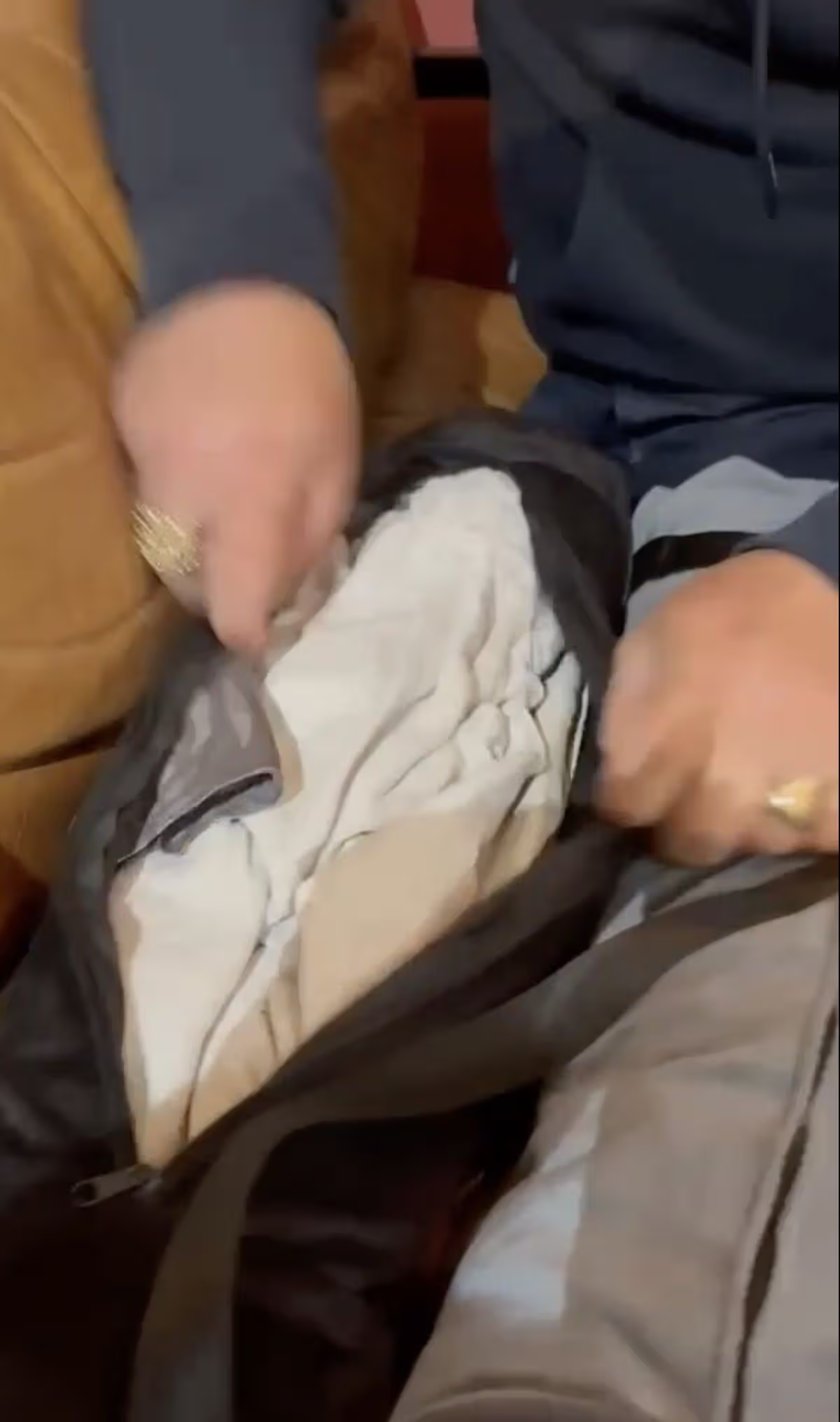
A holidaymaker has explained how he saved himself £75 to £100 on a Ryanair flight thanks to a £15 neck pillow. Leon Docwra packed underwear, T-shirts, swimming shorts and even a beach towel into a £15 travel pillow before boarding a Ryanair flight.

The 50-year-old also wore two tracksuits, three pairs of pants and three pairs of socks. Leon, who flies once a month, says the trick helped him avoid paying additional luggage charges after previously being stung.

“We fly frequently and have been charged for having too much stuff in our bags and wanted to find a way to get extra on without paying fees,” said Leon, from Great Yarmouth.

“Neck pillows are allowed and they didn’t check it. If they had, I would have gone to the bathroom and worn everything to avoid paying a £75 fine. I was already wearing two layers of clothes, three pairs of pants and three pairs of socks and it did get hot but it was worth it.”

The scrap metal dealer said he had paid only for hand luggage on the flight from Norwich to Portugal, which cost around £400. Among the items hidden inside were four pairs of boxer shorts, four pairs of socks, four T-shirts, two pairs of swimming shorts and a beach towel.

Leon admitted it wasn’t the first time he had used the money-saving tactic. He said: “I’ll do it every time. Flights are expensive enough without having to pay for extra luggage and fines.

“I fly a lot so I’d spend a fortune on baggage. It’s money we can spend on our holiday.”

Leon shared a video of the stuffed pillow online, where viewers praised the inventive travel hack. He added: “People think it’s great. They said they’re going to start doing it themselves.

“Anything at the moment where you can save money is great to share with others.”

One person said: “I wore two trackies when I travelled last week to avoid the extra cost. Was sweating like a b*tch though.”

Someone else said: “Mate, I’d rather pay the 80 quid than have to iron that lot the other end.” A third person added: “Just like Joey from Friends.”

Another person said: “Can u block the airline lo?l They will start asking to check these items.” Someone else added: “That’s actually good idea. I got charged over £100 on my last trip.”

Source link

TUI, Jet2 and EasyJet Bluetooth rules after plane heading to Spain evacuated

An aeroplane had to be sent back to the airport it took off from after an incident mid-air

Air travellers are being forced to think carefully about Bluetooth rules on flights after a plane was sent back to an airport and evacuated. The incident has reportedly led to the arrest of a passenger.

Headlines today suggest that refusing to follow the rules may result in the flight returning to the airport for safety reasons. On Saturday afternoon, a flight took off for Palma de Mallorca in Spain from Newark Liberty International Airport in New Jersey. Yet some time later, while over the Atlantic, it was forced to return to the airport it set off from due to a security emergency, reports say.

For UK travellers, the incident will emphasise the importance of following airline rules. It will also require many to check them to make sure they adhere to the guidance.

easyJet rules on Bluetooth use

easyJet’s website states that you can use portable electronic devices on board for activities such as playing games, reading e-books, watching movies and listening to your favourite music. The airline says passengers can use most devices during all parts (take-off, the flight and landing) of the journey.

The site adds: “All devices must be in ‘flight safe’ mode for taxi, take-off, inflight and landing and held securely in your hand or in your pocket. During the taxi-in to the arrival gate the cabin crew will let you know when you can make telephone calls or send text messages.”

The airline also notes that some devices can be used for boarding and in-flight provided they are in “flight safe” mode. However, this is not the case during taxi, take-off and landing – as they must then be safely stowed away in the overhead locker. These are:

  • All Bluetooth accessories (wireless keyboard, headphones etc)
  • Notebooks
  • Large music players
  • Ultra books
  • Laptops
  • DVD players
  • Large electronic games

easyJet says that devices that do not have a “flight safe” mode will need to be turned off for the duration of the flight. There may be times when the pilot or cabin crew may ask for all electronic devices to be switched off so please follow their instructions, the airline says.

In the incident in America on Saturday, according to some passengers who spoke to the website AirLive, the crew had ordered passengers to immediately disconnect all Bluetooth devices. However, after repeated requests, at least two devices remained on.

The pilots decided to return to USA, Spanish news website El Diario reports. Reports say the threat originated from a device referred to by “a certain four-letter word.”

Passengers reportedly told aviation media that the message read ‘BOMB’. After landing back at Newark, the plane was evacuated while security staff inspected the aircraft.

The authorities later said it was the name of a device and arrested the suspect. According to media reports, he was a teenager.

Ryanair, Jet2 and TUI rules on Bluetooth use

Airline rules for UK travellers on popular carriers are clear on what passengers need to do. Ryanair’s website has a a section entitled “Will I be able to use my phone/device/electronics on board?”

It says: “Yes. You may use your laptop, tablet, smartphone and other electronic devices on board Ryanair flights. Your device will need to be switched to flight mode for the entire flight duration.

“Laptops and larger electronics can be used once the fasten seatbelt sign has been turned off. For safety reasons, these items must be kept in the overhead locker or stored in your bag under your seat when the aircraft is taxiing (moving towards the runway for take-off or towards the terminal after landing), take-off and landing stages of your flight.”

Jet2’s website also offers guidance for passengers. It says: “You can use all handheld electronic devices and Bluetooth gadgets, such as headphones, throughout the flight, as long as they’re switched to flight mode while onboard.

“Larger gadgets, such as laptops, must be switched off and put away for take-off and landing. If there are any changes to this, the captain or our cabin crew will let you know.”

TUI’s website has a similar section about using personal electronic devices on a flight. Its guidance states that passengers can use things like MP3 players, e-books, smartphones, and other handheld personal electronic devices at any time during a flight, unless they are told otherwise by the crew – “as long as they’re switched to ‘Flight Safe Mode’ or ‘Airplane Mode’.”

The site adds: “That said, please make sure you listen carefully to the safety briefing by the cabin crew. You’ll not be able to use any type of clip-on product to hold your phone or tablet on TUI flights, as you’re not allowed to attach anything to your tray tables or seats.”

The airline says that if you are carrying larger devices like laptops and larger tablets, you will be able to use them during the flight. However, it emphasises that they will need to be switched off for take-off and landing and stowed away.

The airline says: “You’ll need to take these items out of your hand luggage before you get to the security search point. This is because they’ll need extra screening. If any of your electronic devices can’t be switched to ‘Flight Safe’ or ‘Airplane Mode’, they’ll need to be switched off completely throughout the flight. Please also be aware that you won’t be able to charge your laptop on the flight.”

Source link

Plane passengers urged to put item inside luggage before flights

A passenger revealed that the tip ‘really helped’ when they encountered a common travel problem

Passengers have been advised to pack an extra item in their hold luggage before travelling. The ‘helpful’ travel tip was shared by an airline passenger who swears by the method. The recommendation was shared on Reddit’s r/airport forum. Sharing a question for social media users, a travel fan asked: “What are the best airport tips?”

The post read: “My trick is to always carry an empty bottle. After passing through security at every airport, I look for a drinking fountain. Most airports have a couple of them. I discovered a nice website called Water at Airport. If I can’t find one, I just do a quick search on the website.

“This is just a recommendation. Let me know if you have any other trips to the airport. I’m planning some new trips and will definitely need them!” In response, passengers shared several recommendations, including a tip that could be useful for anyone flying with hold luggage.

A traveller wrote: “I might be old school, but I not only tag my bag on the outside but I also put my name and address identification on the inside.” They explained: “This really became helpful when my bag was delayed and then the exterior luggage tag somehow got ripped off.

“I was able to describe the bag, its contents, as well as the additional tag information in the bag – it really helped! This can be as simple as writing your name, address and phone number on a piece of paper and then putting it inside a Ziploc bag and then putting it somewhere inside your checked luggage.”

Most airlines recommend that passengers include a label inside and outside their luggage. While the inner label is not often needed, it could be helpful if the exterior label falls off.

For instance, easyJet advises customers to add a luggage label to their bags and leave contact information inside the luggage. Recommending the idea to passengers, easyJet’s website says: “Make sure your bags stand out from the crowd on the carousel!

“We advise attaching something noticeable and unique to your luggage like a colourful ribbon, eye-catching sticker or personalised tag. This will make it easier for you to spot your luggage on the carousel at arrivals and avoid any confusion with similar bags.

“We also recommend adding a label to your luggage with your name and contact details such as address, email and phone number and put a copy of these details inside your bag too! This would really help us reunite you with your bag in the unlikely event of the exterior tags falling off.”

British Airways offers similar advice. The airline’s website says: “Label your bags inside and out with your name, destination address, email address and mobile number.”

Source link