The bundle includes three suitcases in different sizes, designed to cover everything from short weekend breaks to longer holidays abroad
16:25, 12 May 2026Updated 16:27, 12 May 2026
Home Bargains has a growing selection of deals on homeware, furnishings and travel(Image: Home Bargains)
Holidaymakers hoping to upgrade their luggage without spending a fortune might want to pop into Home Bargains before jetting off on their next summer getaway. The discount retailer has quietly slashed the price of a travel essential by nearly £90, and it’s being hailed as “perfect for every trip”.
Home Bargains has cut the price of the Overlow Suitcase Set of 3, which normally sells for £149.99, down to a bargain £59.99. The set comprises three suitcases in varying sizes, catering for everything from quick weekend escapes to extended holidays overseas.
According to the product listing, each case is crafted from lightweight ABS material with a hard-shell construction designed to offer durability while minimising weight. The product description, available on the Home Bargains website, reads: “Travel smart with the Overlow Suitcase Set of 3 in sleek black – lightweight, durable ABS material with smooth 4-wheel glide for effortless airport navigation. Perfect for every trip, whether you pack light or heavy.
“Modern Suitcase. Lightweight. Whether you pack light or travel heavy, we’ve got you covered! The smooth 4-wheel glide makes navigating airports effortless, while the strong yet lightweight material ensures durability without adding extra weight.”
The largest case measures 70 x 48 x 29cm, while the medium and cabin sizes come in at 60 x 41 x 26cm and 50 x 35 x 20cm respectively. All three cases are designed to stack inside one another for convenient storage when not being used.
Home Bargains describes the set as “perfect for any trip”, emphasising its lightweight construction and smooth-rolling wheels as standout features designed to reduce travel hassle. Thanks to the current discount, shoppers can now save an impressive 60 per cent, with comparable sets elsewhere carrying significantly steeper price tags.
Budget-friendly suitcase sets such as this have grown increasingly sought-after amongst travellers seeking to reduce costs before holidays, especially as travel demand continues climbing during peak booking seasons. Retailers have noted strong appetite for affordable luggage bundles as families and solo travellers hunt for value-focused alternatives.
The set is also stocked in other colours including grey and navy through the same retailer, with prices staying uniform across the collection while stocks remain available. Shoppers keen on the offer can locate further information, including home delivery arrangements, via the Home Bargains website.
Anyone with holidays planned needs to know the rules before they fly
Boarding passes might need to be in a certain form, or passengers are not getting past check-in desks(Image: Getty | Franziska & Tom Werner)
Getting your boarding pass sorted is one of the first things to clear before jetting off on holiday, but some Brits risk being caught out at the check-in desk by overlooking a rule certain airlines have introduced. It is essential to know whether your documents need to be in a specific format to pass through the airport smoothly.
Previously, most UK carriers left it up to passengers to choose between printing boarding passes at home or having them on smartphones at the airport. However, it’s important to understand what your airline now allows, as failing to do so could put your entire trip in trouble.
Paper boarding passes are steadily being phased out in favour of digital options. Most airlines now issue tickets via email, apps, or other methods rather than paper.
In many instances, travellers can still print their passes at home or at the airport. It’s advisable to verify your airline’s specific policies (both outbound and return) beforehand, according to the Express.
Ryanair
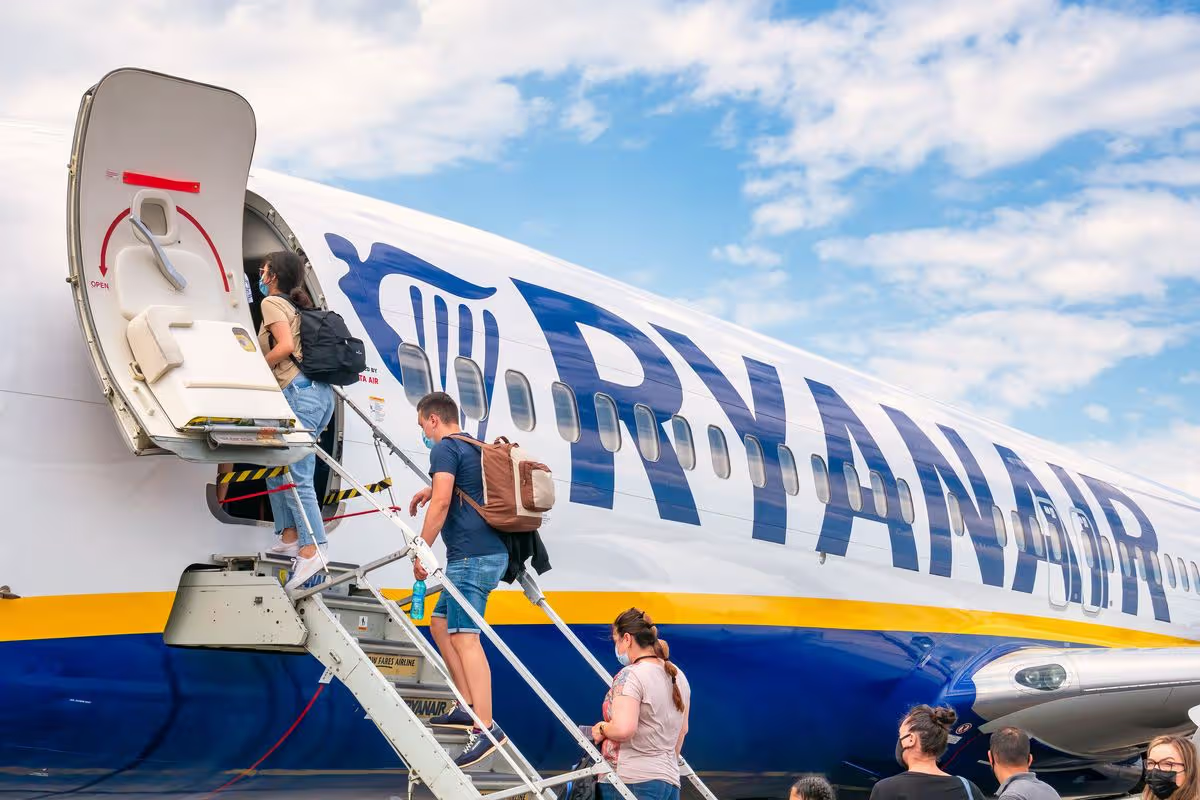
Budget airline Ryanair has switched entirely to digital as of November 2025. Passengers travelling with the carrier will receive their boarding pass electronically via the Ryanair app once check-in is complete.
On its website, the airline states that its digital boarding passes “get rid of 300 tonnes of paper annually” and contribute to “lower airport costs and fares for all Ryanair passengers”.
Discussing check-in, Ryanair say that all “passengers will still receive email reminders to check-in online 48 and 24 hrs pre-departure. If any passenger arrives at the airport but hasn’t checked in online (having ignored these reminders), they will still be required to pay the airport check-in fee.”
Ryanair added that “special assistance is available at all airports” for travellers requiring support with digital passes and check-in. Full details can be found here.
EasyJet and WizzAir
For most flights, airlines such as easyJet accept digital tickets. EasyJet does not accept PDF scans displayed on phones, and all digital tickets must be presented via the free EasyJet app. Certain non-UK airports continue to require printed passes.
As of 2026, 21 airports in the easyJet network do not currently accept mobile boarding passes. If you are returning to the UK from any of these locations, you will need to print your boarding pass on paper:
Egypt: Hurghada (HRG), Luxor (LXR), Marsa Alam (RMF), Cairo Sphinx (SPX), Sharm El Sheikh (SSH)
Other Regions: Aqaba, Jordan (AQJ), Belgrade, Serbia (BEG), Pristina, Kosovo (PRN), Tirana, Albania (TIA), Ivalo, Finland (IVL) and Sitia, Greece (JSH)
A handful of airports that handle Wizz Air flights also do not support mobile passes, though there are just five such destinations, as of 2026:
Agadir (AGA)
Marrakesh (RAK)
Cairo Sphinx (SPX)
Zaragoza (ZAZ)
Tirana (TIA)
What about other major UK airlines?
For those flying with other carriers, it is best to check your airline’s website to determine whether a specific policy applies. Rules are larely the same but may vary from location to location.
British Airways: Allows printing at home or at airport kiosks. Digital passes are available via the BA app.
Jet2: Supports both physical and digital tickets. You can print from “Manage My Booking” or use the Jet2 app.
TUI: Both printed and digital passes are accepted.
Virgin Airways: Although the airline “highly recommends” digital, printed copies are accepted, and kiosk printing remains available at major hubs like London Heathrow and Manchester.
easyJet passengers are being warned they could face serious consequences if they don’t completely switch off certain electronic devices
EasyJet customers must make sure of one thing while on board(Image: BrasilNut1 via Getty Images)
Holidaymakers travelling with easyJet this summer are being warned that they could unknowingly fall foul of strict cabin rules unless they fully switch off a commonly used electronic device before stepping on board. The trouble is that many passengers only discover the rule once they’ve already reached the airport or are on the verge of boarding, where last-minute slip-ups could spell serious problems.
According to EasyJet, the warning relates to e-cigarettes and vaping devices, which must be carried in hand luggage only and are strictly forbidden from being stowed in hold baggage under any circumstances. The airline’s official policy states: “All electronic cigarettes and vaping devices must be carried in the cabin, re-charging is strictly prohibited and the device must be completely switched off.”
It also advises passengers to keep their devices on their person where they can be kept an eye on throughout the flight, reducing the risk of accidental activation. These rules are in place due to concerns over lithium-ion batteries, which are used to power vaping devices and are well known for posing a fire risk if they become damaged or overheat.
The UK Civil Aviation Authority categorises lithium batteries as a significant safety risk in aviation due to their potential for ‘thermal runaway’, producing intense heat and flames that are notoriously difficult to extinguish in confined spaces. The International Air Transport Association has highlighted a worldwide rise in lithium battery-related incidents, which has gone hand in hand with the increasing prevalence of portable electronic devices, prompting airlines across the globe to tighten their rules considerably.
EasyJet also warns that passengers must take precautions to prevent their vaping devices from being switched on accidentally during flights, including ensuring they are fully powered down before boarding. The airline stipulates that travellers may carry no more than two spare batteries in their hand luggage, and that these must be properly protected to prevent them from coming into contact with metal objects.
Under UK aviation rules, vaping devices must be kept in hand luggage at all times. Official government guidance states that e-cigarettes are strictly prohibited from hold baggage.
Industry experts point out that confusion often arises because rules can vary between airlines and destinations, which can leave passengers unknowingly packing the wrong items before they even reach airport security. Aviation safety specialists also warn that using or charging vaping devices while on board flights is strictly prohibited by all major airlines, with penalties ranging from confiscation to fines or even travel bans in severe cases.
As summer travel demand picks up, holidaymakers are being urged to check airline regulations before they set off to avoid delays, confiscations, or being refused entry at the boarding gate.
Aviation sector sources told the that consumers are exercising caution(Image: skynesher via Getty Images)
Holidaymakers planning trips to Mediterranean hotspots are being met with an enticing development as airlines grapple with concerns over possible jet fuel shortages this summer.
Ticket prices on major routes to destinations across Spain, Italy and France have tumbled by double digits – and in some instances drastically – as carriers attempt to entice hesitant travellers into making bookings. Costs have declined by 10% or more on 15 sought-after routes, including flights from Heathrow Airport to Nice, Manchester to Palma, and Gatwick Airport to Barcelona.
In the most striking case, fares between Milan and Madrid have nosedived by as much as 44%, according to analysis by the Financial Times.
The unexpected price cuts arrive as airlines wrestle with a decline in bookings, with numerous travellers postponing holiday arrangements amid warnings that jet fuel supplies could face disruption following tensions related to the closure of the Strait of Hormuz.
Industry insiders say consumers are holding fire, creating a high-stakes “confidence game” as airlines cut prices aggressively to fill seats before the peak summer holiday period.
One airline boss compared the present climate to the uncertainty experienced during the Covid pandemic, cautioning there remains “a lack of visibility” over how the situation will develop.
Analysis of fares between early April and early May reveals prices dropping on more than half of the busiest routes to southern Europe, particularly to seaside destinations around the Mediterranean. Significantly for families, the steepest reductions are being witnessed on traditional summer routes, with eight of the top 50 routes recording decreases of 20% or more. In contrast, only a small number of routes have experienced similarly sharp rises.
Travel industry insiders told the FT that holidaymakers were “freezing in the headlights”, resulting in them making reservations later than normal or opting for UK getaways instead.
Research indicates one in five Britons has already switched an overseas holiday for a domestic break this year, with another fifth contemplating doing likewise.
Airlines are now being compelled to boost demand through reduced fares even as fuel expenses climb and timetables are scaled back. Approximately two million seats have already been removed globally from May timetables, reflecting both elevated costs and weaker demand.
Low-cost carriers including easyJet and Wizz Air have acknowledged that passengers are making bookings later, while also seeking to reassure travellers.
EasyJet has committed not to impose fuel surcharges on existing package reservations, while British Airways has guaranteed prices will not increase after holidays are settled.
Despite the unpredictability, industry insiders emphasise the overwhelming majority of flights are still anticipated to run. Even in a worst-case scenario, only approximately 5% to 15% of flights could be axed and passengers would probably be transferred onto alternative services.
Flight FR9251 was forced to land in Toulouse with almost 200 people on board
The London Stansted to Ibiza flight was forced to land in France (stock image)
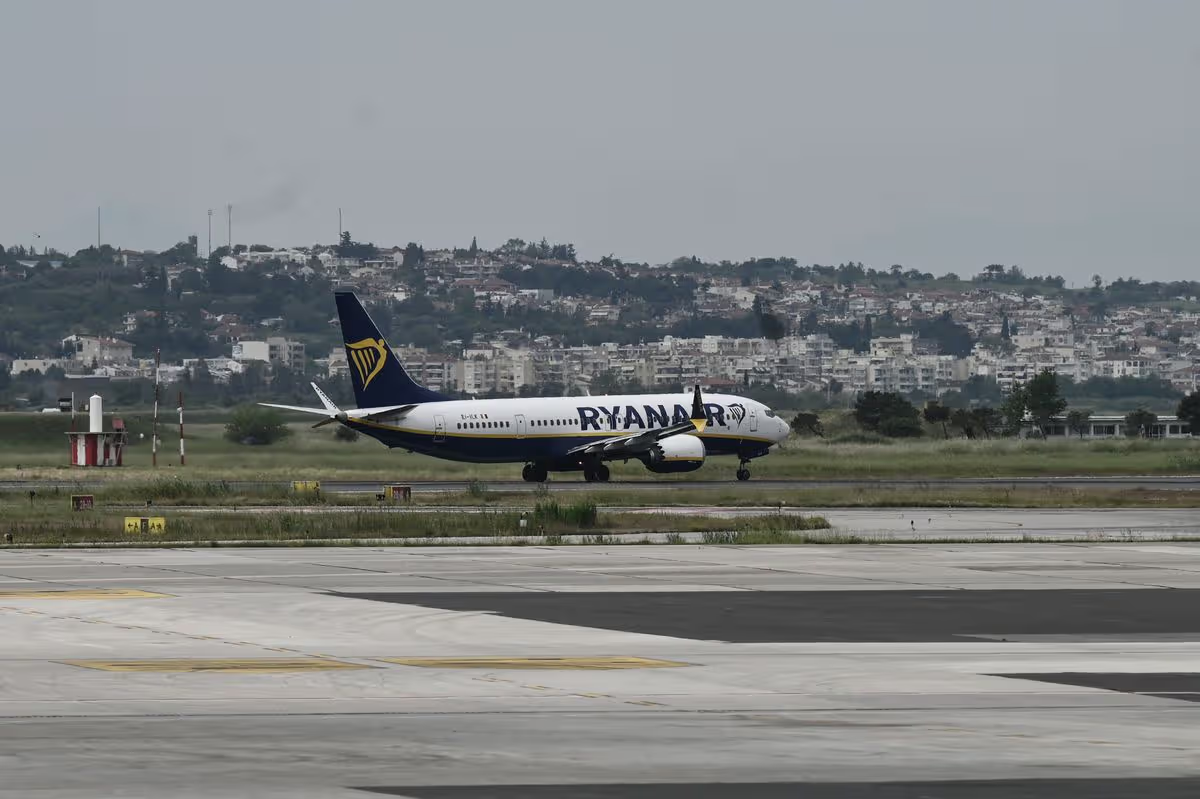
Ryanair has issued a ‘no fly’ warning following an incident in which a plane carrying nearly 200 passengers was forced to make an emergency diversion. The disruption took place aboard a flight from London Stansted to Ibiza.
Flight FR9251 was diverted to Toulouse after two passengers turned ‘abusive towards fellow passengers’. The incident unfolded on 17 May 2025, with the case only recently being settled in court.
In an online statement headed ‘Bad behaviour won’t fly’, the budget carrier said: “On May 17 2025, two passengers became abusive towards fellow passengers on a flight from London Stansted to Ibiza and failed to comply with crew instructions, forcing over 84 passengers and six crew to divert to Toulouse.
“These two disruptive passengers were found guilty, and both received suspended sentences of up to 10 months, and received a combined penalty of over 10,000 Euros.
“On May 7, 2026, Ryanair welcomed the decision by the Toulouse Criminal Court to convict these two unruly passengers. Ryanair has a strict zero-tolerance policy towards passenger misconduct and will continue to take action to combat unruly passenger behavior on aircraft for the benefit of the vast majority of passengers who do not disrupt flights.”
Under the Air Navigation Order 2016, a person ‘must not enter any aircraft when drunk, or be drunk in any aircraft’. It goes on to state: “A person must not, when acting as a member of the crew of any aircraft or being carried in any aircraft for the purpose of acting as a member of the crew, be under the influence of drink or a drug to such an extent as to impair their capacity so to act.”, reports Glasgow Live.
Addressing the incident on board, Ryanair’s Jade Kirwan said: “We welcome this decision by the Toulouse Criminal Court to convict these two disruptive passengers and sentence them with up to 10 months jail time and to pay a penalty of over €10,000.
“It is unacceptable that passengers – many of whom are heading away with family or friends to enjoy a relaxing summer holiday – suffer unnecessary disruption and reduced holiday time as a result of unruly passenger behaviour.
“Yet this was regrettably the case for passengers on this flight from Stansted to Ibiza in May last year, which was forced to divert to Toulouse as a result of two passenger’s disruptive behaviour.
“This conviction demonstrates just one of the many consequences that passengers who disrupt flights will face as part of Ryanair’s zero tolerance policy, and we hope this action will deter further disruptive behaviour on flights so that passengers and crew can travel in a comfortable and respectful environment.”
Plane etiquette can be a contentious topic but one flight attendant has shared five of the “basic” passenger habits she always “absolutely loves” to see people doing on board
08:04, 10 May 2026Updated 08:06, 10 May 2026
A flight attendant has shared her five “favourite” habits plane passengers can do while flying (stock image)(Image: Getty Images)
A flight attendant has shared her top five “basic” habits she “absolutely loves” to see passengers doing while flying. Plane etiquette can be a hot topic, with many passengers holding strong opinions on what’s appropriate and polite behaviour – be it whether it’s acceptable to recline your seat or not, whether you’re obligated to swap seats if asked to by a stranger with a small child, and much more.
Playing loud audio, kicking the seat of the passenger in front of you, or ignoring the instructions of the flight crew are all seen by reasonable people as unacceptable ways to act while on board. Still, some passengers are guilty of engaging in unpleasant and unwanted behaviour.
Keen to shed some light on the positives displayed by people when travelling on a plane, one flight attendant took to TikTok with a simple video showing her working behind the scenes and sorting food and drinks out while on a flight.
In overlay text written over the top of the footage, she penned: “My top five favourite things passengers do on a plane”.
In the caption, she elaborated on this and said: “Top 5 things passengers do that I absolutely love:
“1. When you take your headphones out as I walk up to your row
“Instant respect. You see me. I see you. We’re already besties.
2. When you actually pay attention during announcements
“I promise I’m not just talking to hear my own voice.
3. When you give a smile and a genuine ‘thank you’
“You have no idea how far that goes at 30,000 feet
4. When you keep your shoes on
“Especially in the lavatory. We all know that floor is not holy water.
5. When you treat the plane like it’s not your personal living room
“It’s someone’s workplace. And someone else’s ride home.”
She added: “It’s really that simple. Kindness + awareness + basic hygiene = elite passenger status.”
In the comments section, people were keen to share their thoughts. One person said: “Soooo actually basics and human behaviour”.
Content cannot be displayed without consent
To which, another replied: “So sad so many people are selfish, rude and ignorant”.
A third said: “Blows my mind people don’t genuinely thank the crew when getting off a flight or after they bring you something”.
And a fourth commented: “When I’m getting off the plane and looking at people’s mess they leave, it makes me mad so I can only imagine how you feel”.
While the majority of TikTok users agreed with the flight attendant’s views, some did take issue with one point – the contentious issue of taking shoes off on a plane.
One TikTok user said: “I’m down for everything except shoes on at my seat. I’m so sorry I have to take them off”.
Another agreed: “Anymore than a four hour flight and the shoes are coming off and slippers going on”.
And someone else added: “I think shoes off is okay as long as you’re not barefoot and put them back on when you leave your seat. And if you travel a lot, nobody is listening to that nonsense – sorry. Everything else 1000%”.
Others stressed the importance of showing your appreciation to flight attendants.
This top destination combines a great European city break with stunning nature trails through parks, woodlands and historic districts
This city has hundreds of walking trails(Image: Getty)
Summer holidays are fast approaching, yet countless travellers return home feeling utterly drained, having crammed far too much into their getaway. If you’re weary of needing a break to recover from your break, perhaps it’s time to embrace the slow travel movement.
One of the finest ways to adopt slow travel is by selecting destinations that promote rest and reconnection with the natural world, making walking holidays a superb option.
Dave Mills, Chief Commercial Officer at Iglu Cruise said: “Walking holidays offer flexibility and adventure, teaching travellers to enjoy the present moment and savour their travel experiences. You can still see the sights, but a more leisurely pace can offer a more rewarding trip.”
To assist travellers in striking the ideal balance, travel specialists from Iglu have put together a list of the finest European city breaks that also feature genuinely stunning walking trails.
They examined data from the outdoor app AllTrails to pinpoint cities boasting the greatest number of walking routes within a 15-minute radius of the city centre.
One of the finest spots to immerse yourself in nature while still making the most of your city break is Vienna in Austria.
Celebrated for its natural splendour, the city offers 250 walking trails and 12 official hiking routes, all readily accessible via public transport.
These 12 paths are conveniently numbered, making them simple to locate. For those seeking stunning vistas and a relaxing glass of wine, City Hiking Trail 1 is ideal. Beginning in Kahlenberg, this seven-mile route offers sweeping views of the Danube River.
The path meanders through expansive vineyards — some of which feature pop-up stalls where visitors can sample a glass.
Another favourite is City Hiking Trail 9, which threads through verdant woodlands and meadows before leading walkers along the boulevard in Leopoldstadt, where numerous cafés offer the perfect spot for a delightful snack or meal.
City Hiking Trail 5 is also highly regarded, situated in Floridsdorf. This route is beloved by locals and lies away from the hustle and bustle of the city centre. Stretching six miles, it showcases open fields and abundant wildlife, including deer.
One visitor wrote on Tripadvisor: “We just returned from a week in Vienna. Absolutely magical city. It looks like a city of fairy tales. I think it’s more beautiful than Paris, and Prague. Gorgeous. It’s clean and well-kept, and there is an incredible amount of beautiful architecture and art. Trip of a lifetime.”
Frequent flyer Mark Wolters has shared his airline travel secrets – and one of them involves setting your alarm for a very unsociable time
15:20, 09 May 2026Updated 15:31, 09 May 2026
It’s exasperating when you lose a chunk of your holiday to flight delays(Image: Jackyenjoyphotography via Getty Images)
Perhaps the most frustrating aspect of air travel is discovering that your flight has been delayed and realising that you’re doomed to spend the next couple of hours in an uncomfortable plastic chair. But American travel expert Mark Wolters has some valuable tips that can save holidaymakers from the heartache of hanging around in the departure lounge.
In a new video on his Wolters World YouTube channel, Mark has a range of savvy solutions for finding the best restaurants and the cleanest loos at any airport.
He also advises, in the US at least , picking flights that depart from purely-international terminals as opposed to terminals that service both domestic and intercontinental flights.
He explains that quest for security checks will always be far longer at dual-use terminals: “For example,” Mark say, “when I go to Chicago, I know if I’m flying out of Terminal Five, the international terminal, it’s going to be a lot faster than if I’m flying out of Terminal Two, which has a lot of domestic flights.”
“It’s a good idea to look up because it could save you a time, especially if you’re running behind getting to the airport,” he advises.
Mark adds: “The airport secret I use the most when I travel is take the early morning flights if you want the least amount of headaches.”
He adds that while it might mean setting your alarm for a painfully-early time, there’s a good reason for picking those crack-of-dawn flights: “If you take that early morning flight, usually your plane landed the night before, so you don’t have the delays,” Mark explains.
“Also, when you go to check in, there’s not 3,000 extra people there. It’s just the first people flights that are there. So, it’s usually faster to get through security, faster to check in, faster to get to your gate, that takes a lot of the stress away.”
Additionally, Mark says, as the day wears on, any small delays tend to snowball and you’re much more likely to see a late evening flight delayed: “So, you’re going to travel for holidays or anything like that, don’t take the afternoon flight.
“Get up in the morning… suck it up, take that early morning flight so you have less chance for problems.”
Another one of Mark’s airport secrets is to try to use the loos nearest to the baggage reclaim, because they’re likely to be the cleanest and most pleasant to use.
He explains: “Think about it. When people get off the plane, they want to go to the bathroom right away. So, those bathrooms in the terminals by the busy gates, those get used a lot more than the other ones.
“All of them get cleaned, but the ones that aren’t used as much, they tend to they tend to stay cleaner longer. At baggage claim, no one’s thinking ‘I want to go to the bathroom’. They’re thinking, I want my luggage and I want to go home.’ So that would be a cleaner one to use.”
These fees are legally required, and few people are exempt from paying up
13:37, 09 May 2026Updated 13:38, 09 May 2026
People going to popular tourist spots in Europe will have to budget for these ‘taxes’(Image: gece33 via Getty Images)
Holidaymakers planning a trip abroad in 2026 should ensure they set aside funds for an additional levy that visitors are anticipated to pay when travelling to parts of Europe. Certain popular cities could hit travellers with an extra €16 per night during their stay.
Dozens of destinations across the globe already impose a ‘tourist tax’ to help maintain the areas that both residents and visitors enjoy. These charges are typically applied on a nightly per-person basis, or as a percentage of the overall accommodation costs.
Such taxes are generally settled at check-in or checkout directly with the accommodation provider. The majority of tourists are legally required to pay these charges (children and those with disabilities are ordinarily exempt) or risk having their hotel reservations cancelled.
Consumer group Which? has recently published a summary of sought-after holiday destinations that people commonly flock to throughout the summer months. Some opt for short city breaks, while others may spend longer periods at holiday resorts, but most will need to factor in an arrival tax when budgeting.
Spain and Portugal have charges ranging from €2 to €25, while certain locations in France could levy up to €16 per night at some accommodation providers. Italy remains a firm favourite for those seeking a quick city break, yet hotels in some areas could charge as much as €10 per night, reports the Mirror.
Popular EU cities and what they charge in tourist taxes: From July 2026, tourists visiting Edinburgh, Scotland, will be required to pay a levy of “5% of the cost of the accommodation of [the] first five nights’ stay”. Wales is set to follow in 2027 with a charge of £1.30 “per night” in areas where local councils opt to bring it in.
While it’s not officially classed as a ‘tourist tax’, UK visitors will need to fork out a £17 visa fee from late 2026 to enter 30 European countries. This would come on top of any local tourist levies.
The European Travel Information and Authorisation System (ETIAS) is a compulsory digital travel authorisation launching in late 2026 for visa-exempt nationals (including UK, US, Canada, Australia) visiting 30 European countries. The ETIAS is a one-off, separate payment needed to enter the Schengen Area of Europe. Once purchased, it remains valid for three years. The countries that will require this ‘e-visa’ include:
A Jet2 survey has shown a shift in how people are booking their holidays amid concerns over jet fuel supplies
13:30, 09 May 2026Updated 13:30, 09 May 2026
Jet2 said passengers concerned about cancellations are booking their trips differently(Image: Getty)
Jet2 has revealed that passengers are making a major change to how they book holidays amid concern over major jet fuel problems this year due to teh Middle East Crisis. As the Middle East crisis deepens, mounting concerns suggest Britain could face a jet fuel shortage that may disrupt holiday flights.
Goldman Sachs has cautioned that Britain is the country “most exposed” to jet fuel shortages triggered by the Iran conflict, stoking fears of further flight cancellations and ruined summer getaways. Analysts at one of the world’s largest investment banks warned that the UK is heavily dependent on imports routed through the closed Strait of Hormuz, with “critically low levels” of supplies and inadequate refining capabilities.
And personal finance expert Martin Lewis has spoken out about the issue – highlighting people who book their flights and hotels separately might not get compensation if flights are cancelled. Jet2 said package holidays are now the top choice for travellers, with 51% opting for this booking method – a 5% rise since February. During the same timeframe, those preferring to book through separate providers has fallen by six percentage points to 20%, while ‘accommodation only’ bookings have plummeted to just 2%.
Jet2 said the results showed main attractions of package holidays have remained consistent, with value (36%) and convenience (36%) leading the way. However, the appeal of ‘added security with one provider, ATOL/ABTA protection’ has climbed by four percentage points since February to reach 26%, according to the survey.
This protection ensures customers are safeguarded against any alterations to their bookings, including the possibility of refunds should travel plans be scrapped, while guaranteeing holidays meet the highest standards for customer service, booking amendments, and health and safety.
Jet2 has pledged not to impose surcharges on any confirmed flights or holidays to offset rising costs, such as jet fuel, giving customers peace of mind that the price they book is the final price they’ll pay.
Steve Heapy, CEO of Jet2, commented: “Consumers want assurance during times of uncertainty and package holidays provide that assurance. On top of all the protection that our package holidays guarantee, Jet2 is well known as being a consumer champion that goes above and beyond to look after customers. Ahead of a busy summer season, this means new and existing customers know that their well-deserved holidays are in the very best hands with us, and we are very excited about welcoming everyone onboard and taking them on their breaks.”
As millions of Jet2 customers gear up for a bustling summer season, the firm has confirmed it intends to run its scheduled services as planned.
Martin Lewis gave a warning for anyone who has already booked their holiday for this summer. In an update the personal finance guru gave an alert to people who have already paid for breaks from the main holiday firms and airlines like TUI, Jet2, Ryanair, Wizz, easyJet and British Airways.
During his Money Show Live on ITV, the financial expert responded to an audience member who asked: ‘If my flight’s cancelled due to no jet fuel will you definitely receive all your money back even for your hotel booking as well.’
Mr Lewis made clear that travellers would lose their hotel booking costs if they had arranged accommodation independently from flights booked with airlines such as Jet2, TUI, Wizz, Ryanair or easyJet – as they would not be protected under consumer regulations.
He stated: “No. And I think this is what people need to be very aware of. If you booked a package holiday where you booked everything in one, then under the package holiday regulations and rules and protections generally if your flight went you would get everything back.”
He went on to say: “And so actually at the moment package holidays give you a certain level of extra security that you wouldn’t get if you did a DIY booking where you bought your hotel and flight separately.” The reason behind this, he explained, is that the hotel booking itself remains valid: “Because the point is if you lose your flight and you’ve DIY booked, there’s nothing wrong with your hotel.
“The issue is you can’t get there. Your hotel is still there. It’s not faulty. It’s not cancelling. So, you don’t have those consumer rights.” If the hotel hasn’t done anything wrong, then guests might look at how they’ve made their booking – but that route offers no solution either.
He said: “So, you would then say, ‘What about using a credit card or debit card protection?’ It won’t work because there’s nothing faulty. And that’s just giving you the same replica rights that you would have with the retailer.”
Meanwhile, holiday giant TUI has issued a direct message to those with May bookings. TUI Managing Director Neil Swanson in a message on Facebook, pledged that May half-term flights would proceed as scheduled: “We know you may be feeling a little uneasy after recent headlines, and we want to reassure anyone travelling over May half term that they can look forward to their holiday with confidence with TUI. We have good visibility on fuel supplies and are operating our holiday programme as planned, with no flights being cancelled due to fuel shortages.
“Our careful planning across fuel, flying and hotel capacity means we’re able to continue offering great value and stable prices – with no fuel surcharges added by TUI. The price you see is the price you pay, and all TUI package holidays are ABTA & ATOL protected, giving peace of mind from booking right through to returning home.”
On TUI’s Facebook page, holidaymakers reported seeing significant price hikes. Marie said: “We booked our August holiday nearly 18 months ago and paid 5.2K. Just checked it to book now and it’s 6.7K. Glad we booked so far in advance. Already booked August 2027 holiday for same price as we paid this year.”
Lynn replied: “Marie Tomes we’re the exact same. Been going to the same hotel for 7yrs. They renegotiated the contract last year. For us to book for next year its going to be nearly 1k each more for our 2weeks. We’re going to make the most of this year as our last visit.”
One concerned traveller, Rno, raised worries about upcoming summer trips: “What about those who have already booked a hotel and flight for the entire month of August? I have a booking for my family and I’m worried Note that the plane is a TUI and the flight is to Egypt.”
TUI responded: “Hi there. We’re monitoring the situation closely. Right now, we don’t expect any disruption to flights or holidays, but we’ll keep this under review and contact customers directly if anything changes that affects their booking. “
Meanwhile, Jet2 revealed it too is witnessing a notable shift in booking behaviour amongst travellers. Experts such as Martin Lewis have urged travellers to book holidays as a package deal, warning that purchasing flights and accommodation separately could leave them without full compensation should anything go awry.
It can be frustrating waiting for your suitcase to appear but one strategy could help you get your bags off the baggage carousel first
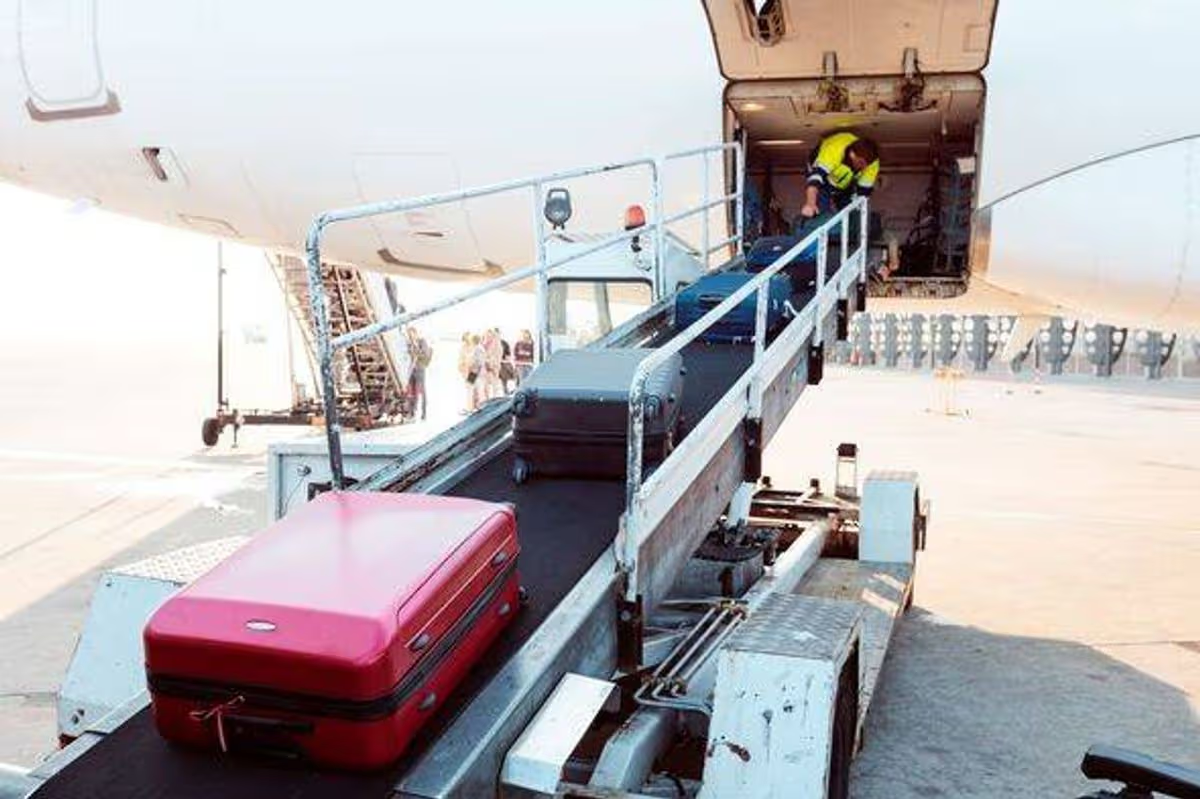
Airport crew may load luggage onto a plane based on weight to ensure it is evenly distributed(Image: Getty)
Airport security checks and baggage restrictions can turn holidays into a source of stress, and the anxiety only intensifies as you wait to see whether your suitcase has actually made it off the plane.
The dread of lost luggage hangs over many travellers right up until the moment they spot their bag on the carousel — and even then, there’s the worry that someone else might accidentally grab it. But there’s a straightforward trick that could see your suitcase come off the plane first, allowing you to get your holiday underway without unnecessary delays.
Guidance from Escape.com suggests checking in for your flight as late as you possibly can. The logic? Late check-ins mean your luggage gets loaded last, and in theory, should emerge first upon landing, according to Thomas Lo Sciuto, a ramp worker and gate agent at a regional US airport.
The airport worker explained: “Your best option is to be one of the last passengers to check your bags. This is because bags will always be loaded front to back on the bag carts.”
That said, bags aren’t solely loaded according to check-in times. Anyone who can’t stomach the idea of leaving check-in until the eleventh hour will be relieved to hear that weight is also a factor in certain circumstances, reports the Express.
SmarterTravel told HuffPost that US aviation giant Delta, which flies out of Terminal 3 at London Heathrow Airport (LHR), sorts luggage into large and small loads to ensure proper weight distribution across the aircraft. As passengers check in their luggage, it gets sorted into “cans” – large containers that hold multiple bags and can be transported as one unit.
SmarterTravel said: “In other words, how far back your bag ends up depends on the weight of the can and the needs of the plane, not when you check it.”
Aircraft with a single aisle typically “loose-load” bags one by one rather than bundling them into cans, as is the case with wider-bodied planes. When this happens, checked bags generally go into a holding area.
Luggage gets transported to the aircraft and loaded shortly before departure, meaning its chances of being loaded first hinge on when it was checked in.
If a bag was checked in early, it could end up at the rear of the storage space, meaning it would be last onto the plane and potentially first off.
Other tactics to ensure your bags come off the carousel first upon landing include marking them as “fragile”.
News.com.au suggests this clever trick often results in your luggage being loaded onto the aircraft last and therefore unloaded first, which can significantly reduce your wait at the carousel.
That said, when opting for “fragile” stickers, travellers ought to strip off any old tags from their bags to prevent mix-ups. To make luggage stand out, opting for vibrant colours, customised tags, or securely fastened ribbons could help your bags catch your eye more easily.
The most reliable way to get out of the airport as swiftly as possible is to travel with hand luggage alone. Make certain this meets your specific airline’s requirements to avoid being forced to check your cabin bag at the gate.
A personal item, sometimes referred to as a small bag, needs to fit beneath the seat directly in front of you and typically measures no larger than 40x30x20cm.
Cabin bags are stowed in the overhead locker and can generally weigh up to 10kg, with dimensions not exceeding 56x45x25cm.
Among UK carriers, British Airways typically provides the most generous complimentary hand luggage allowance on its basic tickets.
Travellers can bring one 23kg cabin bag (56x45x25cm) and one smaller personal item (up to 40x30x15cm) without charge.
Jet2 and Virgin Atlantic similarly permit a complimentary cabin bag (10kg, 56x45x25cm) alongside a personal item.
Without these you may be refused entry to Spain, the Foreign Office has warned
06:01, 09 May 2026Updated 13:33, 09 May 2026
You could be refused entry to Spain (Image: Mats Anda via Getty Images)
Millions of Brits flock to Spain each year, with the European country remaining a firm favourite among UK holidaymakers.
Spain’s appeal is undeniable – from its warmer weather, breathtaking coastlines and mouth-watering cuisine to its charming cities and verdant landscapes. With another hectic summer of international travel expected for 2026, we’ve looked at the entry requirements for Spain for anyone holding a UK passport. And travellers may not know they could be asked to present certain extra documents upon arrival – or face being refused entry.
According to the Foreign, Commonwealth and Development Office (FCDO), alongside a valid passport, UK visitors may also be required to produce a return or onward ticket and/or proof of valid travel insurance. You may additionally need to demonstrate that you have sufficient funds for your stay, with the required amount varying depending on your accommodation arrangements.
Border officials may also request proof of accommodation, which could take the form of a hotel reservation or proof of address if you’re staying at a property you own. Alternatively, this might be an invitation or proof of address if staying with friends, family or a third party, such as a ‘carta de invitation’ completed by your hosts, the FCDO adds.
As well as this, new rules introduced post-Brexit mean that Brits travelling to the Schengen Area – which includes Spain – on a UK passport may need to check their travel documents now. This is because your passport must display a ‘date of issue’ that falls within 10 years of your arrival date, and if you renewed your passport prior to October 1, 2018, it could carry a date of issue exceeding 10 years, rendering it invalid for entering the Schengen zone.
Additionally, your passport must show an ‘expiry date’ of at least 3 months beyond the day you intend to depart the Schengen Area (the expiry date need not fall within 10 years of the issue date).
The money-saving guru has urged those who have paid for trips with major holiday firms and airlines to avoid the DIY approach
15:04, 08 May 2026Updated 15:15, 08 May 2026
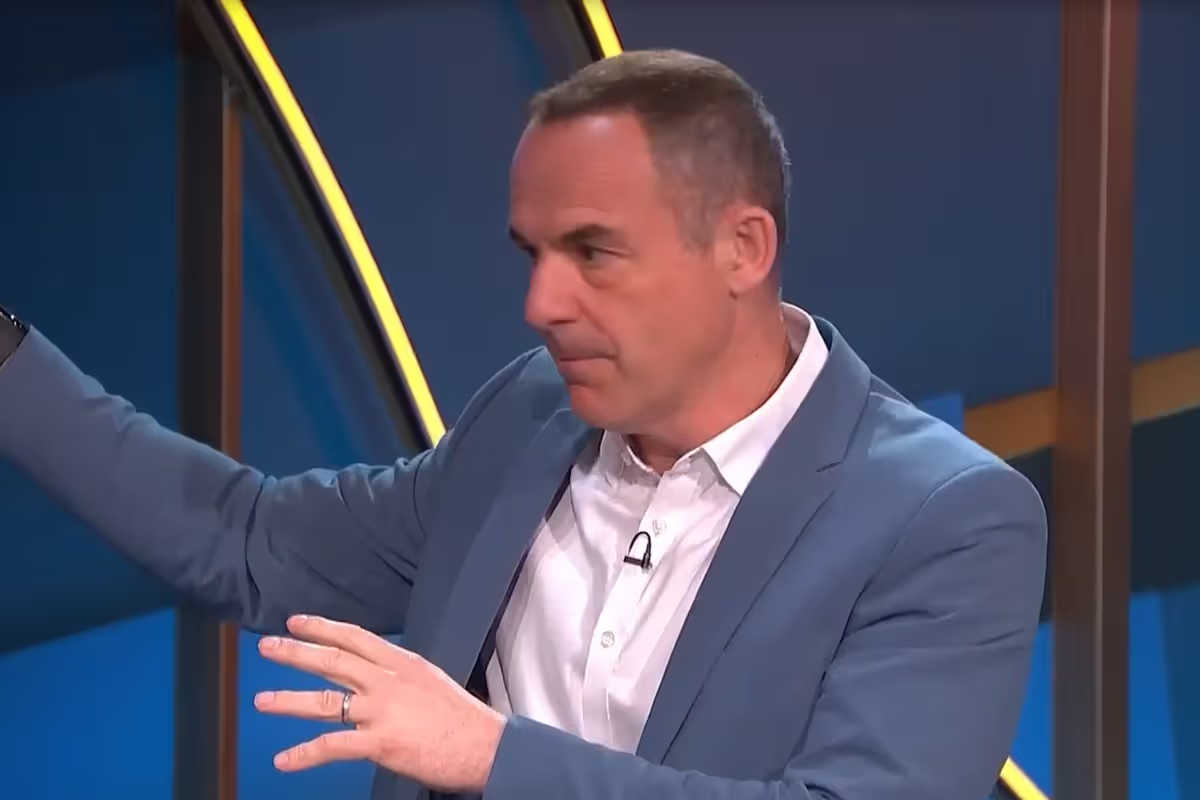
Martin Lewis gave advice for anyone booking holidays amid the Iran conflict(Image: ITV)
Martin Lewis has delivered a stark warning to anyone who has already booked a holiday for this summer – and explained why people could be making a big mistake getting flights and hotels separately. In a recent update, the money-saving guru has urged those who have paid for trips with major holiday firms and airlines, including TUI, Jet2, Ryanair, Wizz, easyJet and British Airways, to pay close attention.
It was suggested this week that the UK could be worst hit by jet fuel shortages because it has ‘critically low levels’ of supplies and poor refining tools, by Goldman Sachs. The giant investment bank Goldman Sachs said in a research note to clients: “The UK is the largest net importer of jet fuel in Europe, and it holds no strategic reserves, leaving commercial inventories as the primary buffer.”
During his Money Show Live on ITV, the financial expert responded to an audience member who asked: ‘If my flight’s cancelled due to no jet fuel will you definitely receive at the moment package holidays give you a certain as well.’ Mr Lewis explained that holidaymakers would lose their hotel booking costs if they had arranged accommodation independently from flights reserved with airlines such as Jet2, TUI, Wizz, Ryanair or easyJet – as they would not be protected under consumer regulations.
He said: “No. And I think this is what people need to be very aware of. If you booked a package holiday where you booked everything in one, then under the package holiday regulations and rules and protections generally if your flight went you would get everything back.”
He added: “And so actually at the moment package holidays give you a certain level of extra security that you wouldn’t get if you did a DIY booking where you bought your hotel and flight separately.” The reason for this, he explained, stems from the fact that the hotel reservation itself remains entirely valid: “Because the point is if you lose your flight and you’ve DIY booked, there’s nothing wrong with your hotel.
“The issue is you can’t get there. Your hotel is still there. It’s not faulty. It’s not cancelling. So, you don’t have those consumer rights.” If the accommodation provider hasn’t violated any terms, then guests might examine how they’ve paid for their booking – but that route offers no solution either. He said: “So, you would then say, ‘What about using a credit card or debit card protection?’ It won’t work because there’s nothing faulty. And that’s just giving you the same replica rights that you would have with the retailer.”
For those still seeking a solution, travel insurance may seem like the next logical port of call. Mr Lewis revealed: “So, you’ then say, ‘What about travel insurance?’ This is the bad bit. We were checking 40 travel insurance policies. Of those, only a few would have covered you for the knock-on eventuality of your flight being cancelled due to jet fuel and then your hotel costs.
“Only about three or four and most of those were package bank accounts where it’s linked to your bank account. Only one standalone provider. So we need to be blunt at the moment. There is a big risk in those circumstances. If you’re booking, you want something with free or limited cancellation quite short before. So you could just cancel it. You should always talk to the provider.
“Government are saying there isn’t one at the moment and they’re working on consolidating flights and doing things so there won’t be one, but people’s hotel costs if they book separately and other knock-on costs are potentially at risk.”
Speaking on his ITV programme, he also cautioned that neglecting to take one vital step after booking could leave holidaymakers with absolutely nothing if their plans fall through. With the ongoing turmoil in the Middle East sparking serious worries over jet fuel supplies, Mr Lewis warned that those who book a holiday and put off arranging insurance could risk losing everything should something go wrong in the interim.
Mr Lewis emphasised that travel insurance ought to be bought the instant a holiday is booked: “The reason you do that is because half of the cover you’re paying for is in case something happens that stops you going before the trip. And if you don’t have the travel insurance place, you’ve got no cover. So, you may as well have it in place. But at this time of year when many people have already booked, I have a slight adaptation, which is this. If you’ve booked and you don’t have it yet, just get it now.
“Get it done as soon as possible.” A Money Show Live viewer named David said: “I booked flights to Australia for a family group of seven to travel in March next year. I took out insurance immediately. One of our group is now pregnant and can’t travel on the dates planned. It costs £5,000 to reschedule, which I’m happy to report the insurance covered.”
Mr Lewis also commented on the complexities facing larger groups: “Very quick aside on that, think of who you’re booking for. So, if it’s a family group and one can’t go, they’ll often cover you. But if there’s a large group of friends going, you often all get independent travel insurance. Well, then if one can’t go or and you can’t all go on the trip, it’s only the person who’s who’s got that cover. So, you’d need a group insurance policy so that if one can’t go, you all can’t go.”
Jet2 today said now people choosing a package holiday as their preferred method of booking is up 5% to 51% since February. In the same period, the number of people preferring to book through different providers has dropped by six percentage points to 20%. Those choosing ‘accommodation only’ has dropped to 2%.
The primary reasons for choosing a package holiday have remained steady, with value (36%) and ease (36%) the main drivers, however the benefit of ‘added security with one provider, ATOL/ABTA protection’ has increased by four percentage points since February to 26% the poll said.
This protection means that customers are covered should any changes happen to their bookings, including the option of receiving refunds if their travel plans are cancelled, and that those holidays are held to the highest standards when it comes to customer service, changes to bookings, and health & safety.
Jet2 has confirmed it will not introduce surcharges on any booked flights or holidays to cover cost increases, for example jet fuel, assuring customers that the price they book with Jet2 is the price they will pay.
Steve Heapy, CEO of Jet2 said: “Consumers want assurance during times of uncertainty and package holidays provide that assurance. On top of all the protection that our package holidays guarantee, Jet2 is well known as being a consumer champion that goes above and beyond to look after customers. Ahead of a busy summer season, this means new and existing customers know that their well-deserved holidays are in the very best hands with us, and we are very excited about welcoming everyone onboard and taking them on their breaks.”
Jet2 customers are being reminded of a rule the airline has that does not allow passengers to bring on board an item that is commonly available in airports. The popular airline reiterated its blanket ban for customers this week – and there are no exceptions.
Holidaymakers are advised not to bring the item with them beyond the gate leading to the aircraft. Most airlines have their own rules, which vary depending on which one you fly with, though many share the same for health and safety reasons.
Jet2 has a strict rule in place about bringing hot drinks on board, including teas, coffees and hot chocolates. The rule also applies to any hot food – even if it was purchased from a shop, cafe or restaurant in the airport terminal.
Jet2 reiterated the rule online to a passenger who asked whether they could bring a drink with them. The airline said: “You are able to bring any snacks or soft drinks on board bought in the terminal (after security).” However, it added: “Hot drinks are not permitted to be brought on board.”
People who are due to board flights will need to finish their hot food or drinks before being allowed on board. This rule applies to other airlines as well, like Ryanair, but some are more relaxed, like easyJet.
Content cannot be displayed without consent
What is the reason for this Jet2 rule?
On its website, Jet2 states: “You can’t bring hot food or hot drinks onboard our planes for safety reasons.” The Jet2 ban applies only to drinks customers bring on board.
Usually, passengers can purchase a variety of hot foods, as well as teas, coffees, and hot chocolates, on board Jet2 flights. Customers must remember the payment rule that applies to all flights.
Elsewhere, certain airlines, like easyJet, will allow hot drinks bought in the airport on board. This is provided the cup has a secure lid.
In other Jet2 news, the airline announced two new routes to a ‘stunning’ island with ‘sandy beaches‘, ‘aquamarine waters’, ‘cobbled streets’ and ‘rolling hills’. The new routes follow Jet2’s claims of continued customer demand and independent travel agents booking holidays for the short hop to the island.
Jet2 has confirmed significant expansion to its Jersey programme for summer 2027, by putting two new routes and additional capacity on sale, as well as extending the season. The airline has introduced flights and holidays from Birmingham and Bristol for Summer 2027.
In addition to the new routes, extra capacity to Jersey has been added from Manchester, and the summer season to the destination has been extended. It means Jet2 will operate to Jersey right through to the end of October.
The airline has previously called for Portugal to suspend the EU Entry-Exit System (EES)
The new system continues to cause disruption on the continent
Ryanair has provided an update regarding its stance on the contentious EU entry-exit system (EES). The budget carrier has been an outspoken opponent of the new digital system, which is progressively replacing traditional passport stamps for British travellers heading to the Schengen zone.
The airline particularly highlighted the EES implementation in Portugal, which has come under fire in recent weeks. The system has been repeatedly suspended during peak periods to allow passengers to catch their flights following reports of significant delays.
“Portuguese Government needs to suspend new Entry/Exit System (EES) until after the peak summer season,” a Ryanair statement posted on Instagram declared.
“Otherwise, passengers are forced to endure excessive border control queue times at Portuguese airports.”
Uncertainty arose following suggestions that Portugal and Italy were poised to mirror Greece’s approach, which announced it had effectively halted the EES process for British nationals until summer’s end. However, neither Portugal nor Italy verified these claims.
Content cannot be displayed without consent
EES explained
EES received a soft launch last October, but was scheduled to become fully operational on April 10, 2026. It requires most visitors – including Britons – from beyond the EU to register biometric information each time they enter or exit the Schengen free travel area. The countries in the Schengen area are: Austria, Belgium, Bulgaria, Croatia, Czechia, Denmark, Estonia, Finland, France, Germany, Greece, Hungary, Iceland, Italy, Latvia, Liechtenstein, Lithuania, Luxembourg, Malta, Netherlands, Norway, Poland, Portugal, Romania, Slovakia, Slovenia, Spain, Sweden, and Switzerland.
The Republic of Ireland and Cyprus fall outside the Schengen zone, meaning EES does not apply when travelling to either of these destinations. No action is required prior to reaching the border, and EES registration is completely free of charge.
Reports have emerged from Italy of passengers missing their flights, prompting the UK Government to warn: “EES may take each passenger extra time to complete so be prepared to wait longer than usual at the border.”
Ryanair has previously hit out at the EES system. Branding it ‘half-baked’ earlier this month, the airline stated: “Despite knowing for over three years that EES would become fully operational from 10 April 2026, France, Portugal, Poland, Italy, Spain, and Germany have failed to ensure that adequate staffing, system readiness, or kiosks are in place.
“As a result, passengers are suffering long passport control queues and, in some cases, missing their flights.
“Ryanair calls on these EU Governments to suspend the rollout of the EU’s passport control Entry/Exit System (EES) until September to ensure that passengers are not needlessly forced to suffer long passport control queue delays at European airports during the peak summer season.”
Each airline has set rules about when to arrive at the airport to avoid delays – check which apply to you before you make your way to the airport this May half-term
Different airlines have different check-in guidelines
If your family is headed abroad in May, it might be wise to pay attention to the latest airport arrival advice from airlines including Ryanair, easyJet, Jet2 and TUI.
Airports are expected to be packed during the school holiday period, and with fluctuating jet fuel prices concerns, many travellers want to be extra prepared for potential delays, longer queues and last-minute schedule changes.
The rules have remained mostly the same in recent months, but some airlines have specific requirements for different types of passengers or groups.
Ryanair
Ryanair advises passengers to arrive at the airport at least two hours before departure to allow enough time for check-in, bag drop and security, and also says passengers must be at the boarding gate at least 30 minutes before departure time.
Even if you’ve booked through an online travel agent, you’ll still need to verify your booking at the airport, and you’re also told to arrive at least two hours early.
Passengers flying easyJet are warned on their website that airports can become especially busy during school holidays, and to allow extra time for traffic, train disruptions and queues.
The airline warns that bag drop at most UK airports closes 40 minutes before departure, although some airports and destinations may close earlier at 60 minutes. Twilight bag drop services are available the evening before flights that are scheduled for the morning.
Jet2
For Jet2, you should arrive at the airport at least two hours before the scheduled departure, or earlier, since the airline’s check-in desks generally open around two-and-a-half hours before flights.
Jet2 closes check-in desks 40 minutes before departure. Traveller are urged to check its latest travel information page at least 12 hours before flying for updates on delays or disruptions.
Like some others, the airline also offers its Twilight Check-in service at selected UK airports, allowing customers on morning flights to drop off bags the night before.
TUI
TUI’s standard check-in opens at least 2.5 hours before short- and mid-haul flights, but for long-haul flights you can check in 3.5 hours before departure.
The company warns that arriving earlier than this will not allow passengers to pass through security sooner, and that those travelling with hand luggage only and who have already checked in online can go straight to security after arriving at the airport.
For groups travelling together on the same booking, TUI advises that only one person needs to go to the bag drop with all passports, visas, boarding passes, and luggage.
For all airlines, general advice is to keep travel documents easily accessible, check flight updates online before leaving for the airport and prepare for longer queues during peak travel periods such as the May half-term.
The International Air Transport Association (Iata) has urged its European members to consider switching to US-made jet fuel amid rising concerns over possible shortages caused by the Iran oil crisis
13:25, 08 May 2026Updated 15:49, 08 May 2026
Fears remain that there cut be a shortage of jet fuel
European airlines should contemplate switching to US-manufactured jet fuel amid mounting worries over shortages triggered by the Iran oil crisis, a trade body has warned. The International Air Transport Association (IATA), which represents carriers, said its European members could “ease some pressure” by altering the type of fuel they use.
Commercial aviation mainly depends on two fuel grades: Jet A-1, which is utilised across most of the world, and Jet A, which is chiefly used in North America. They are comparable, with the principal distinction being that Jet A-1 has a lower maximum freezing point, offering greater versatility on long-haul and polar routes.
Jet A is predominantly manufactured outside the Gulf, from where fuel supplies are restricted by Iran’s limitations on tankers passing through the Strait of Hormuz. IATA’s director of flight and technical operations, Stuart Fox, stated in a blog that using Jet A “could give airlines facing a possible shortfall in fuel supply more options”.
He proposed this could “help the industry make better use of the fuel we have” and “keep schedules intact”. He continued: “Fuel supply could come under pressure if the war in the Middle East continues.
“Using Jet A, which is produced at scale outside the Gulf, could be a practical way to help ease some pressure on existing supply chains.
“This would have to be done through a controlled transition from one approved fuel grade to another. In normal times, that flexibility might not be noticeable. But in today’s circumstances it’s critical to keeping the whole system moving.”
Mr Fox noted that airlines looking to switch from Jet A-1 to Jet A would need to implement crucial safety precautions, including accounting for the higher freezing point and ensuring crew members are fully briefed on which fuel is on board.
On Friday, British Airways’ parent company International Airlines Group cautioned that its profits would take a hit, anticipating spending approximately two billion euro (£1.72 billion) more than budgeted on fuel this year. Chief executive Luis Gallego stated that he does not believe the group will experience “any interruption for the summer” with regard to fuel supply.
People from the UK heading abroad for the Spring Bank Holiday are being given the latest advice on holidays amid growing fears over jet fuel shortages and flight disruption. Travel experts say flights are continuing to operate “as planned” despite airlines across Europe drawing up contingency measures following soaring fuel prices linked to conflict in the Middle East.
Concerns have grown after reports that some airlines are preparing for possible refuelling stops on long-haul routes if shortages worsen. German airline Lufthansa has reportedly already begun contingency planning after one of its flights was forced to divert for fuel during a recent journey to South Africa.
The airline has also cut thousands of flights from its wider summer schedule as fuel costs continue to rise. However, travel industry figures insist UK holidaymakers should not panic.
Mark Tanzer, Chief Executive of ABTA – The Travel Association, said: “We really don’t want people worrying about their holidays; planes are taking off daily and people are continuing to get away on their holidays. The Government and airlines are clear that there isn’t a problem with fuel supply.
“If you have a holiday booked in for the coming months – including the May half term – we expect it to go ahead as planned.”
He added: “Whilst there have been reports about cancellations globally, these amount to less than one per cent of overall flights.”
According to aviation analytics firm Cirium, around 13,000 flights worldwide have reportedly been cut during May. Munich and Istanbul are believed to be among the worst-affected destinations.
The Department for Transport has also said there is currently “no need” for travellers to change their plans. Officials say UK airlines buy fuel in advance and airports continue to maintain reserves to help prevent disruption.
Passengers are still being advised to check flight updates with airlines before travelling and ensure they have suitable travel insurance in place. Some 120 flights from the UK this month have been cancelled, new figures show, as jet fuel prices surge and fears of shortages grow.
Cirium said airlines have axed 120 of the 22,613 departures initially scheduled from UK airports in May, equivalent to 0.53%. The number of outbound flights planned for June is 36 lower than a week ago. This represents a 0.2% reduction and means capacity for the month has fallen by 7,972 seats.
The final week of May is a peak period for holidays as it is half-time at many schools. For all flights globally, some 13,005 planned for May were cancelled between April 10 and April 21, equivalent to 1.5%. That reduced capacity by almost two million seats.
Julia Lo Bue-Said, chief executive of Advantage Travel Partnership, a network of independent travel agents, said airlines are “assessing poor performance flights and consolidating or cancelling as required”.
She added that UK departures to popular summer hotspots “remain unaffected” and insisted “customers can continue to book with confidence”. Paul Charles, founder of travel consultancy The PC Agency, said: “Airlines are now being forced to cut flights and make difficult decisions ahead of the peak season.
“It is better for them to cancel flights well in advance so that passengers are less inconvenienced than a last-minute change of plan. As the Iran conflict continues, there will need to be many more cancellations as the jet fuel supply is squeezed.”
Lufthansa’s airline group announced in April it would cancel 20,000 flights over the following six months to save fuel. Iran continues to have a stranglehold on tankers passing through the Strait of Hormuz, leading to a surge in oil prices and concerns of jet fuel shortages.
But on Sunday, Transport Secretary Heidi Alexander said summer holiday plans will not face major disruption because of the latter. She revealed that more fuel has been imported from America, while refineries have upped their production.
The Government has also introduced a temporary rule change allowing airlines to group passengers from different flights together on to fewer planes to save fuel.