An investigation into the incident has been launched
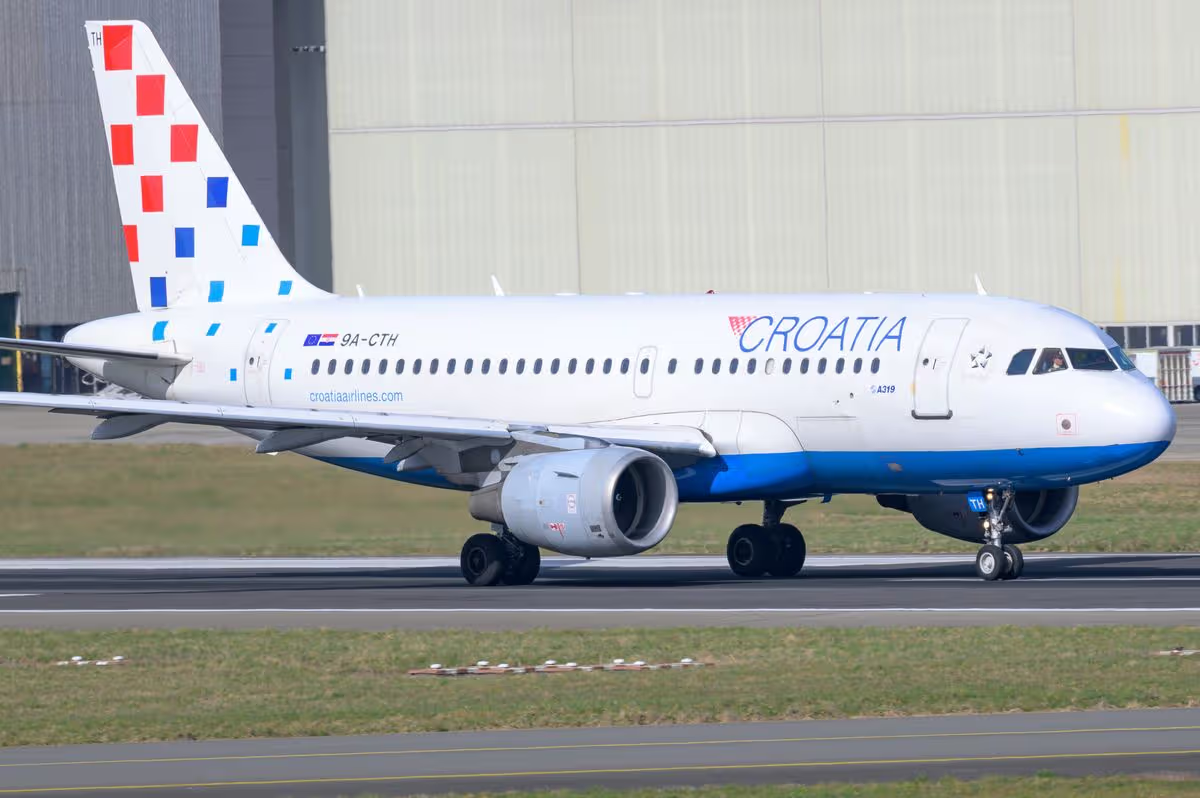
A Croatia Airlines 9A-CTH Airbus A319-112 (stock image)
A plane reportedly containing more than 130 people veered off the runway during take-off before skidding across grass and crashing through airport signs. Shocking footage shows the Croatia Airlines Airbus A220-300 swerving to the left before eventually grinding to a halt.
The drama unfolded at Split Airport in Croatia on Saturday, May 16 at 1.35pm local time. An investigation has been launched, with no injuries reported among the 130 passengers and five crew members.
Passengers and crew were evacuated from the plane, which reportedly sustained damage to the front landing gear and left-hand engine.
Darko Petrin, chief investigator at Croatia’s Air, Maritime and Railway Accident Investigation Agency, said the investigation is still in its early stages.
Content cannot be displayed without consent
“It is known that the aircraft, for reasons still undetermined, drifted to the left during takeoff, left the asphalt part of the runway and ended up on the grassy surface next to the runway,” Mr Petrin said.
It is understood that the black boxes on the plane have been taken for analysis. It is thought the investigation into events could take months. The plane – which was flying to Frankfurt – was thought to be travelling at around 130knots (150mph) when pilots aborted the take-off for reasons which are still not yet clear.
The jet itself was delivered less than a year ago to Croatia Airlines. Split Airport was closed for a number of hours after the incident.
Health experts are urging Brits to ensure they are “up-to-date” with their vaccines
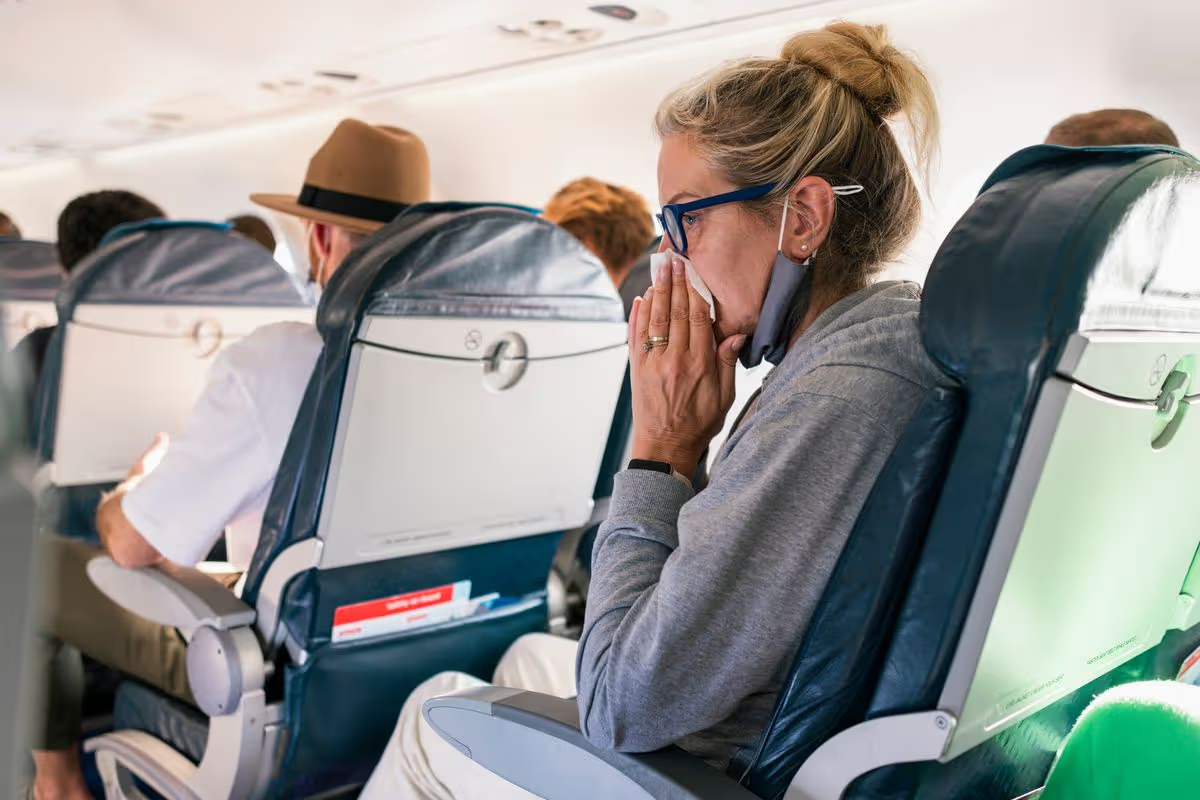
Travel experts warned that cases of a contagious illness are rising worldwide(Image: Getty)
Brits planning a summer getaway have been urged to ensure they are “up-to-date” with their vaccinations. The warning follows an “increase” in measles cases globally, including across parts of Europe and Asia.
Measles is a highly infectious viral infection that triggers cold-like symptoms, red eyes, and a characteristic blotchy rash. In severe instances, it can result in serious complications such as meningitis and seizures, and can be fatal.
In guidance published on the Travel Health Pro website, experts highlighted that the disease has risen in numerous countries. They said: “The summer holidays provide opportunity to explore different countries, head off for a city break, have a beach holiday or take the children to visit friends and family overseas.
“Good preparation and planning ahead helps ensure a safe and enjoyable trip. Travellers should be up to date with routine vaccination courses and boosters as recommended in the UK.
“These vaccinations include, for example measles-mumps-rubella (MMR). Measles is a risk in many countries, and there has been an increase in measles cases and outbreaks reported worldwide, including in parts of Africa, Asia, Europe, and the Americas, including Canada and the United States.” Data from the European Centre for Disease Prevention and Control revealed that a total of 3,607 measles cases were reported by 30 EU/EEA member states in the year following 1 April 2025.
Breaking down the figures further, it stated: “Of 3,029 individuals (84.0 per cent of all cases) with a known age and vaccination status, 2 369 (78.2 per cent) were unvaccinated, 320 (10.6 per cent) were vaccinated with one dose of a measles-containing vaccine, 301 (9.9 per cent) were vaccinated with two or more doses, and 32 (1.1 per cent) were vaccinated with an unknown number of doses.
“During the 12-month period, five deaths (case fatality rate (CFR): 0.139 per cent) attributable to measles were reported to ECDC by France (three), Netherlands (one) and Romania (one).”
Meanwhile, a report by the World Health Organisation (WHO) and United Nations Children’s Fund (UNICEF) discovered that measles cases in Europe reached their highest level in 2024 since 1997. A total of 127,350 measles cases were recorded in the European Region in 2024, double the figure reported for 2023 and the highest number since 1997.
Children under five made up more than 40 per cent of reported cases in the Region – covering 53 countries across Europe and Central Asia. Over half of the reported cases necessitated hospitalisation. A total of 38 deaths have been documented, according to preliminary data received as of 6 March 2025. The resurgence has been linked to falling vaccination rates. Dr Hans P Kluge, WHO regional director for Europe, warned: “Measles is back, and it’s a wake-up call. Without high vaccination rates, there is no health security. As we shape our new regional health strategy for Europe and Central Asia, we cannot afford to lose ground.
“Every country must step up efforts to reach under-vaccinated communities. The measles virus never rests-and neither can we.”
Measles cases are also on the rise across the UK. Figures from the UK Health Security Agency (UKHSA) revealed that in 2024, there were 2,911 laboratory-confirmed measles cases in England – the highest annual total recorded since 2012. In 2025, there were a total of 959 laboratory-confirmed measles cases. Data for 2023 to 2025 and historical data are available.
Between 1 January 2026 and 11 May 2026, there have been 542 laboratory-confirmed measles cases reported in England, an increase of 65 cases since the last report on 27 April 2026.
Symptoms
The virus transmits very quickly. Initial symptoms typically resemble those of a common cold, with a distinctive rash emerging several days afterwards.
The first symptoms of measles can include:
A high temperature
A runny or blocked nose
Sneezing
A cough
Red, sore, watery eyes
The rash initially appears on the face and behind the ears, subsequently spreading across the entire body. Occasionally, the spots associated with the measles rash become raised and merge, creating blotchy patches. These are typically not itchy.
The NHS cautions that measles can trigger severe complications should it migrate to other bodily areas, particularly the lungs or brain. Potential consequences include pneumonia, meningitis, loss of vision, and convulsions. In the most serious instances, the disease can be life-threatening.
How to prevent the spread
Measles is spread when an infected person breathes, coughs or sneezes. You’re infectious from when you first have symptoms (around four days before the rash appears) until four days after you get the rash.
The NHS advises that to curb the transmission of the infection, individuals must remain absent from educational institutions or workplaces for a minimum of four days following the emergence of the rash. According to its website, the guidance states: “Stay off nursery, school or work for at least four days from when the rash first appears. Also try to avoid close contact with babies and anyone who is pregnant or has a weakened immune system.”
However, the initial step if you or your child develops measles is to arrange an urgent consultation with your GP. The NHS advises: “Measles can spread to others easily. Call your GP surgery before you go in.
“They may suggest talking over the phone or arrange for you to come to a part of the surgery where you’re separated from others. You can also call 111 or get help from 111 online.”
After seeing a GP, there are things you can do to help ease the symptoms and reduce the risk of spreading the infection. It can help to:
Rest and drink plenty of fluids, such as water, to avoid dehydration
Give your child paracetamol for children or ibuprofen for children if they’re distressed or uncomfortable – check the packaging or leaflet to make sure the medicine is suitable for your child, or speak to a pharmacist or GP if you’re not sure
Adults can take paracetamol or ibuprofen for a high temperature
Use cotton wool soaked in water that has been boiled and allowed to cool to gently remove any crusts from your or your child’s eyes
The NHS also recommends you:
Open windows and doors to help reduce the risk of measles spreading – only open the top window or use safety catches if you have young children
Wash your hands often with soap and warm water
Use tissues when you cough or sneeze and throw them in the bin immediately after using them
Do not share cutlery, cups, towels, clothes, or bedding
Vaccination
Having the MMRV or MMR vaccine is the “best way” to prevent measles. The NHS says: “Both vaccines also protect you from mumps and rubella, and the MMRV vaccine also protects you from chickenpox.
“The MMRV vaccine is offered to all young children in the UK. The MMR vaccine is recommended for adults and older children if they were not vaccinated when they were younger.”
Ask at your GP surgery if you’re not sure you or your child has had either of these vaccines. Your GP can vaccinate you for free on the NHS.
The airport is expected to welcome passenger flights again in 2028
13:24, 18 May 2026Updated 13:25, 18 May 2026
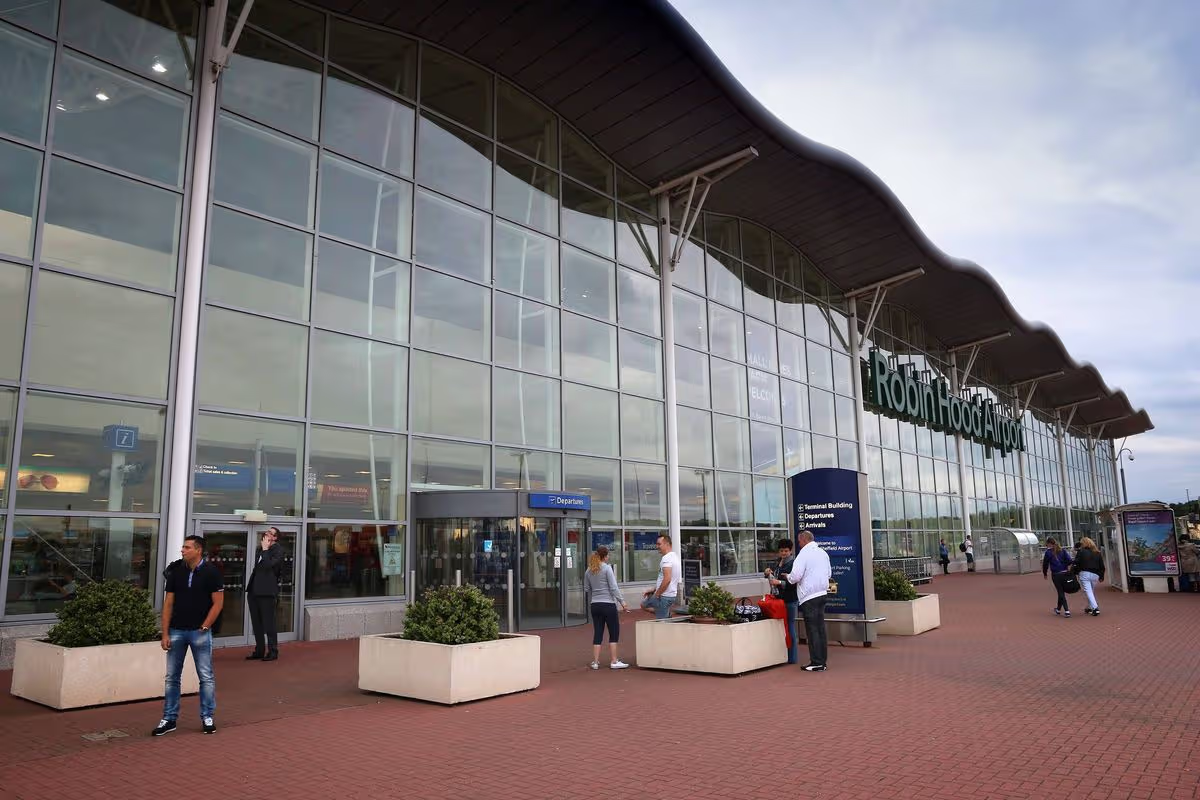
The airport was once a key regional flight hub known as Robin Hood Airport(Image: tupungato via Getty Images)
A UK airport that shut down three-and-a-half years ago is set to reopen following the resolution of a funding dispute this week. Doncaster Sheffield Airport (DSA) near Finningley in Doncaster was once a key regional flight hub known as Robin Hood Airport, operating from 2005 with flights to holiday destinations including Alicante, Majorca, Paris, and various other locations.
However, the airport was compelled to close in 2022 after its owners, Peel Group, declared it financially “unviable”. The closure left South Yorkshire without an international airport.
Yet, in September 2025, the South Yorkshire Mayoral Combined Authority (SYMCA) officially approved a £160million funding package based on previous commitments to reopen the airport as DSA in a significant boost for the region. Its resurrection followed campaigning by residents and local politicians, and received backing from the British Government.
Nevertheless, the scheme had been thrown into doubt in recent weeks during a deadlock over a £57million loan from Doncaster City Council to support the reopening plans, after Reform UK councillors expressed concerns about whether taxpayers would receive a return on investment.
The airport scheme was championed by the local authority’s Labour mayor, Ros Jones, who is believed to have been re-elected by a narrow margin largely owing to her commitment to delivering the potentially transformational scheme, despite a surge in support for Reform.
The structure of local Government in Doncaster means she retains executive authority as Mayor despite Reform securing a majority on the council at the last election, and now controlling the budget.
Nigel Farage’s party originally backed the airport scheme, but in April indicated they would contemplate voting to withdraw approval, as they requested additional details about how the funds would be allocated and benefit local people, reports the Express.
At the end of last month, Mr Farage attacked the terms of the lease agreement being negotiated with the current site owners, The Peel Group, arguing the council needed to secure the freehold to prevent it becoming a “massive drain” on taxpayers.
Ms Jones told the BBC News at the time: “Last week Reform said DSA should be privately funded and today they’re saying it should be acquired by the council or government, even if that means through a compulsory purchase order (CPO).
“It is important to remember we offered to buy the freehold back in 2022 and Peel refused, the offer of a lease effectively killed off any chance of a successful CPO.”
She added that a CPO application could take between five to seven years with minimal chance of succeeding. The standoff sparked concerns that the scheme would have to be scrapped, despite significant progress in attempts to prepare it for commercial air traffic once more.
However, at an extraordinary meeting of the council last week, Reform dropped its opposition to the loan on the condition that they are able to review copies of the new lease before it is approved, according to ITV News.
Ms Jones said she was “delighted to see Reform’s done the U-turn”, dismissing the threat from the hard-right party as a “political stunt”.
Freight services at the flight hub could get under way as early as next year, with passenger flights expected to launch in 2028, according to reports.
FlyDoncaster, a council-owned company established to reopen and run the airport, has teamed up with German operator Munich Airport International (MAI) on the venture.
In an update last month regarding preparatory work at the site, Christian Foster, Director of council-owned operator FlyDoncaster, said: “Over recent months we’ve been building the right team to take on this task. That has included individuals with experience at major airports such as Manchester, Gatwick and East Midlands, taking up roles like Head of Security, Head of Airfield Operations and Head of Health & Fire Safety.
“We’re also going through a critical Airspace Change Process, a regulatory hurdle that means we’ll have our own area of airspace around the airport to manage. This is critical to our plans.
“We’re due to hear the result of stages one and two imminently, and we’ll be asking the public for their views in the summer, with a view to being re-certified in spring 2027.”
He says preparations for reopening and welcoming passengers back have been well underway, which has involved acquiring “vital equipment such as a new radar and fire appliances, completely refurbishing the fire station and control tower, and making plans for renovating the terminal building”.
The terminal building is set for a “full makeover, giving passengers somewhere that feels really special at the start of their holidays”, alongside improvements to the site’s infrastructure “to make this one of the most accessible airports in the UK for those with a disability”.
On top of this, talks are ongoing with airlines and partner organisations.
Mr Foster says the airport is already equipped to handle hundreds of thousands of tonnes of freight, and is also in dialogue with firms at the forefront of aviation innovation – including sky taxis, vertiports, and alternative fuel technologies – about how these could be incorporated into the site.
British travellers heading to Portugal have been warned that they could face major delays
12:27, 18 May 2026Updated 13:01, 18 May 2026
Low-cost carrier Ryanair issued the travel warning
Ryanair is cautioning Brits heading to Portugal that they could face waits of up to 2.5 hours at the airport. The budget airline has been an outspoken opponent of the new Entry/Exit System (EES).
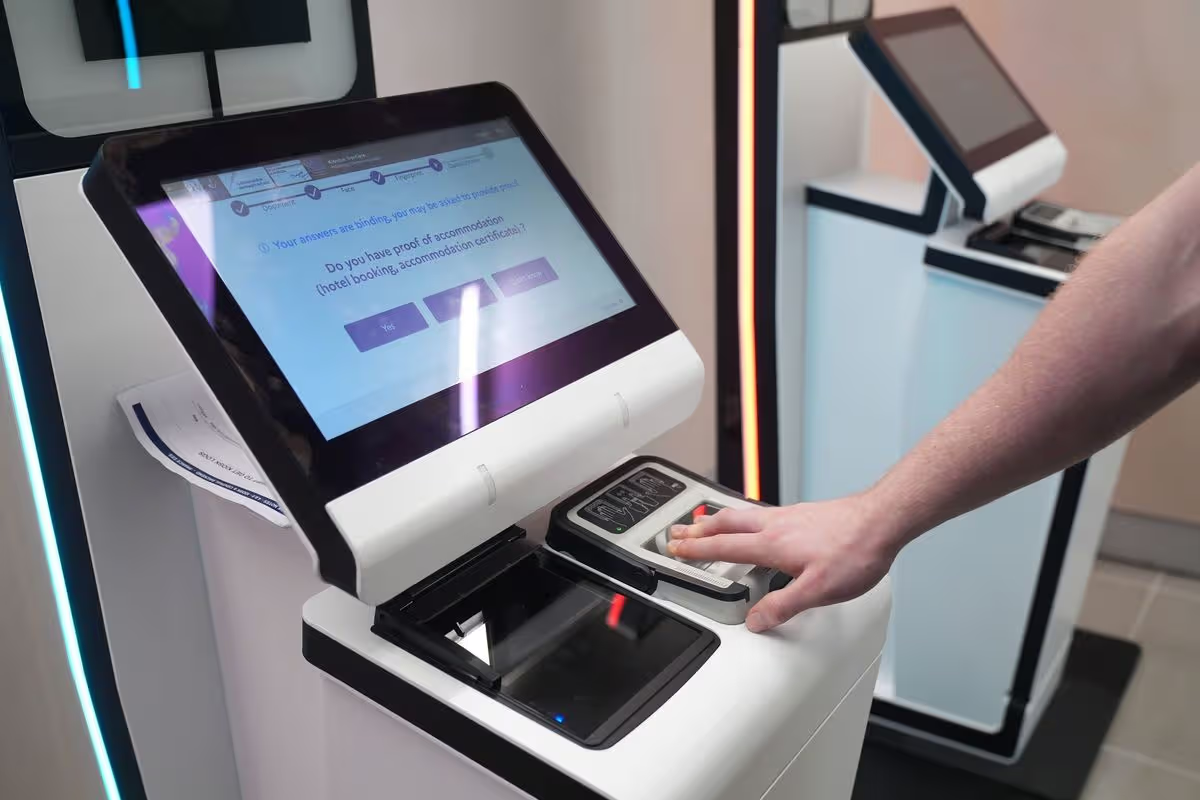
EES is a digital biometric scheme that is taking over from traditional passport stamps. It requires travellers to have their fingerprints recorded and photographs captured when entering the Schengen Area, which comprises 29 European countries, predominantly within the European Union. For British travellers, this typically takes place at foreign airports.
Ryanair has been a fierce critic of the scheme after reports emerged of lengthy delays lasting several hours at destinations including Milan, Porto, and Lisbon. Greece has announced that it will postpone the full rollout of EES for British tourists until after the busy summer period has passed.
Content cannot be displayed without consent
In a social media post titled Lisbon Airport Trivia Quiz, the airline offered a string of responses to tongue-in-cheek questions. These included asking what was slower between a tortoise, a snail, or Lisbon border control queues. Ryanair also issued a warning that travellers could be held up for as long as 2.5 hours.
It stated: “If you haven’t noticed the trend, Lisbon border control wait times are up to 2,5 hours. It’s time for the Portuguese Government to suspend the new Entry/Exit System (EES) until after the peak summer season and ensure adequate staffing at Lisbon border control and all Portuguese airports.”
EES was initially launched in October last year, with its implementation stepped up on April 10. Under current EU regulations, the checks can be temporarily suspended to prevent queues during busy periods, reports Glasgow Live.
Industry body Airports Council International recently revealed that EES was leading to hold-ups of up to three hours, with airports across Spain, Portugal, France and Italy among those hit hardest. More than 100 easyJet passengers missed a flight from Milan Linate to Manchester last month due to hold-ups at passport control caused by the intensified rollout of EES.
When you go abroad, there are all sorts of travel rules people need to follow but a certain guideline is considered crucial. It’s vital to know if you want to avoid delays at airport security
11:16, 18 May 2026Updated 11:16, 18 May 2026
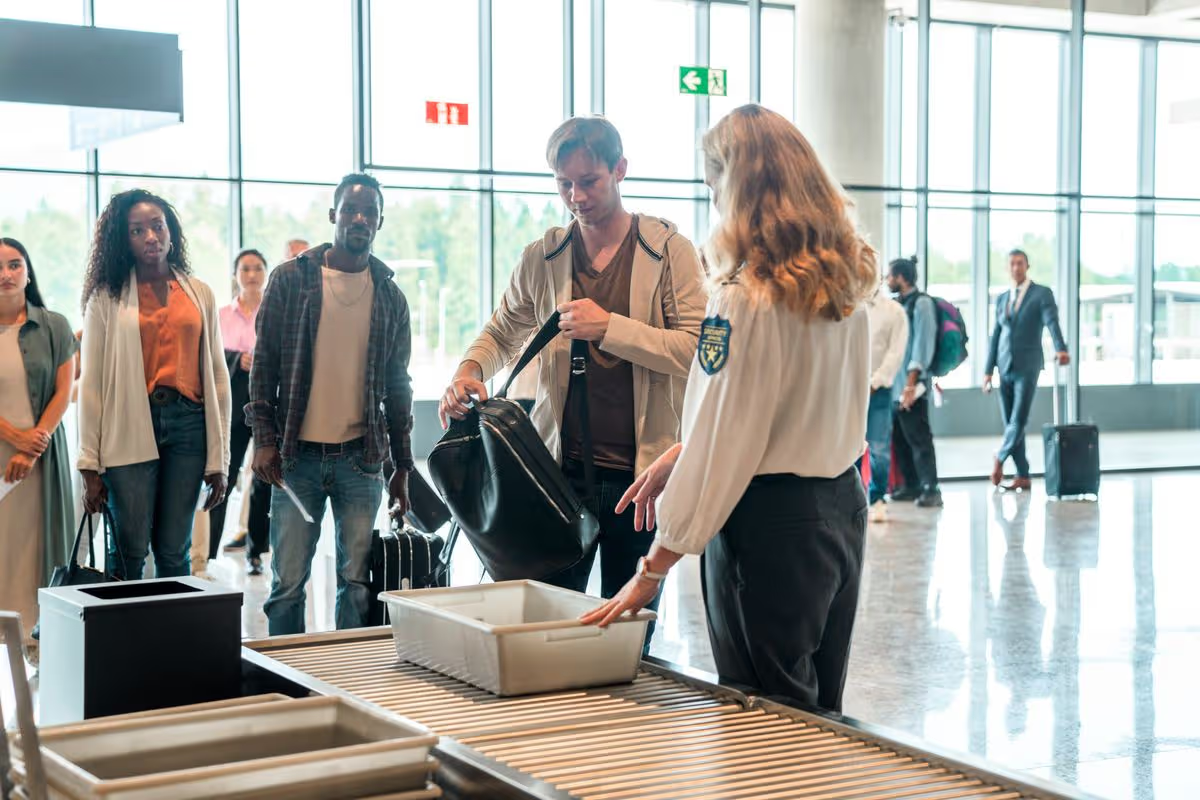
UK tourists have been advised to follow the rule (stock image)(Image: Anadolu, Anadolu via Getty Images)
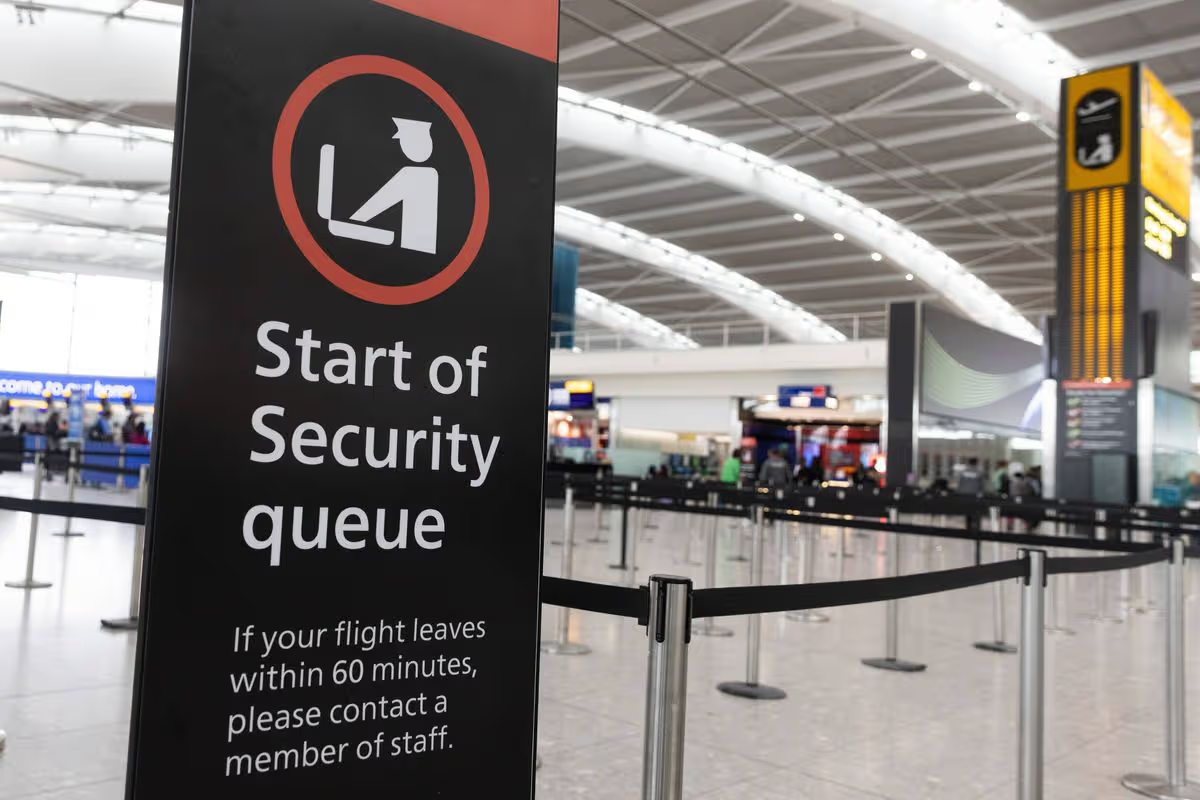
All travellers have been urged to take note of a crucial airport rule, as ignoring it could lead to significant hold-ups at security. It’s well worth bearing in mind as the travel season is already well under way, with scores of Brits eager to head off on their holidays for some hard-earned sunshine and relaxation.
The rule was recently highlighted on TikTok by a travel agent named Jake, who regularly shares straight-talking tips online, and it’s something you may never have previously considered. It’s well worth familiarising yourself with this particular rule, as it could have a real impact on how long you end up waiting in the security queue.
Jake said: “This is the number one reason for delays at airport security in the UK right now, and almost everyone has one in their bag. But, there’s one thing that’s catching everybody out.
“It’s these. Reusable, stainless steel water bottles because, while the 100ml rule has been scrapped, and for some airports you can take up to two litres of liquids with you, these still need to be emptied.
“That’s purely because the machines can’t check the liquid that’s in these bottles. So, if you do have one in your bag and it’s got liquid in, then you’re going to have your bag pulled aside.
“You’re going to have that embarrassing moment on the belt where you see your bag go down a different aisle. So, as you’re heading to security, make sure you empty these.
“The good news is though, if you do forget and you have your water bottle in there with liquid in, they’re not going to make you throw your expensive water bottle away. They’re just going to pour out the liquid that’s in there.
“So this is just going to cause further delays for you getting through duty-free and being able to relax before you get on your flight.”
Content cannot be displayed without consent
It might seem like a straightforward tip, but it’s certainly one worth bearing in mind. Sticking to the rule could help you sidestep a major headache that’s easily avoidable.
What you need to know
What you might not realise is that you must fully empty your reusable water bottle before passing through airport security. While the 100ml liquid limit may not apply to the container itself, any liquid left inside is banned and could lead to your bottle being seized.
Even if your local airport permits larger liquid containers or doesn’t require you to remove electronics from your bag, metal or insulated bottles (such as Hydro Flasks or Yetis) typically need to be drained. The sophisticated scanners are unable to “see” through double-wall insulation, so it pays to stay one step ahead.
As Jake highlighted, certain airports now permit passengers to carry containers holding up to two litres of liquid in their hand luggage. However, this is entirely dependent on the specific airport you’re departing from, as it requires state-of-the-art 3D scanning technology.
For this reason, it’s always wise to check the regulations for your particular airport ahead of your journey. At major hubs including London Heathrow, London Gatwick, Birmingham and Edinburgh, you’re allowed to take containers holding up to two litres each.
That said, this rule only applies at select airports. If you’re in any doubt, always confirm with your airport before you travel.
Nearly three out of five UK holidaymakers travelling to Europe this year expect delays thanks to a new rule.
There is widespread concern over the EU’s entry-exit system (EES), a new survey suggests. Almost half of respondents to the poll commissioned by travel company Booking.com said they fear missing flights because of the border checks.
EES involves people from third-party countries such as the UK having their fingerprints registered and photograph taken to enter the Schengen Area, which consists of 29 European countries, mainly in the EU. For most UK travellers, the process is done at foreign airports.
Representative body Airports Council International recently reported that EES was causing delays of up to three hours, with airports in Spain, Portugal, France and Italy among the worst affected. More than 100 easyJet passengers missed a flight from Milan Linate to Manchester last month because of delays at passport desks caused by the ramp up of EES.
The survey indicated that 56% of UK travellers plan to arrive at airports earlier than usual in an attempt to avoid disruption, with 12% intending to arrive at least four hours before departure. More than half of respondents who have travelled to the EU since the introduction of EES said they experienced delays during their journey, while 43% said they were not delayed.
Booking.com advised families travelling to Europe during the May half-term break to ensure their passports are eligible for their dates, and keep items such as a portable phone charger and any medication in hand luggage. Ryan Pearson, regional manager for the UK and Ireland at Booking.com, said: “May half-term is a key moment in the travel calendar, and we know many people are feeling anxious about how the new entry-exit system could impact their trip.
“We want to help travellers feel informed and prepared before they leave, whether that’s checking travel documents in advance or packing the right essentials in hand luggage in case of longer queues. Changes to the way we travel can understandably feel daunting, but we’re already seeing that many journeys are running smoothly. The key is preparation.”
Advantage Travel Partnership, a network of independent travel agents, reported earlier this month that demand for holidays in Greece has surged since the country revealed on April 17 it will not impose EES requirements on UK travellers this summer. The south-eastern European country’s market share of UK holiday bookings rose from 7.7% in mid-April to 9.98% by the end of the month, Advantage Travel Partnership said.
EES was first introduced in October last year, with its roll out ramped up on April 10. EU rules currently allow the checks to be temporarily halted to avoid queues at peak periods.
The Booking.com survey of 2,000 UK adults was conducted by research company Opinium between May 8-12.
Situated in the south west of Germany, on the border of the iconic Black Forest mountain range, the city has jointly been designated a UNESCO World Heritage Site
13:19, 17 May 2026Updated 13:19, 17 May 2026
Baden-Baden has been described as “one of Europe’s most elegant hidden gems” (stock image)(Image: Getty Images/iStockphoto)
If you’re thinking about a trip to Europe, but want something a bit off the beaten track, one “hidden gem” with historic spas, Roman ruins, and incredible museums could be just the ticket. Situated in the south west of Germany, on the border of the iconic Black Forest mountain range, the city has, along with Bath in Somerset and nine other locations, jointly been designated a UNESCO World Heritage Site as one of ‘The Great Spa Towns of Europe’.
Travel influencer Katherine McQueen, who has 685,000 followers on Instagram, where she is known as vineyardsandvoyages, posted a look into everything the city has to offer. She said: “This is one of Europe’s most elegant hidden gems… and most people skip it.”
Describing the city as “polished, romantic, and completely different from the bigger stops most travellers add to their itineraries”, she hailed its “pastel streets, grand architecture, thermal baths, elegant cafés, beautiful gardens, and old-world glamour around every corner”. But it was the history which she hailed as its most important element.
“People have been coming here for the thermal waters since Roman times, and wellness is still one of the biggest reasons to visit today,” she said. “You can soak in mineral-rich baths, wander through historic spa buildings, and experience a side of Germany that feels slow, refined, and deeply relaxing.”
Katherine also praised the city’s glittering casino, food – including, of course, the iconic Black Forest gateau – and location, calling it “one of the most unexpectedly charming places I’ve visited in Germany”.
The city in question is Baden-Baden, located around 15 miles east of the French border, and 42 miles west of Stuttgart.
In the post Katherine explained more about what the city has to offer. “Some of the bathhouses here feel more like palaces than spas, with mineral pools, grand domes, and centuries of wellness history,” she said. “But it’s not just a spa town. It’s also filled with elegant architecture, gardens, colonnades, and beautiful places to wander.”
She added: “The whole city has this refined, romantic atmosphere. Long covered walkways, grand buildings, art, gardens, and peaceful corners everywhere.”
Concluding, she said: “It has that rare mix of history, wellness, food, architecture, and nature, all in one very walkable little city. Everywhere you look, there are details that make it feel grand without feeling overwhelming. This town rewards slow wandering. Hidden side streets, stairways, dreamy corners, and beautiful views around every turn.”
The city’s official tourism website says: “Baden-Baden was founded 2,000 years ago to do people good. Thermal water at temperatures of up to 68 degrees gushes out of the earth from 12 thermal springs in Baden-Baden. Even today, our spa town at the foot of the Black Forest is the perfect place to enjoy spa tradition – whether in the Caracalla Spa or in the historic Friedrichsbad Spa.”
Content cannot be displayed without consent
How can I get to Baden-Baden?
By air: Direct flights to Baden-Baden are available from London Stansted Airport. Indirect flights are also available from most other UK airports.
By train: You can take the Eurostar to Paris or Brussels, with various connecting routes available.
By car: You can drive by taking the Eurostar and then heading south east through France, or east into Belgium before crossing, into Germany. Once arriving in France, the route is between 400 and 450 miles, taking between six and seven hours.
Summer holidays this year are set to look a bit unusual for Brits, with travellers looking to find ‘certainty’ and ‘safety’ before they book a trip amid ongoing global turmoil
Holidaymakers don’t want to get caught out (stock photo)(Image: Getty)
Holidaymakers are facing some big changes this summer, with more and more Brits hesitant to book their getaways amid ongoing uncertainty.
New temporary rules have been brought in that allow airlines to merge or cancel flights in the face of potential fuel shortages over the next few months. The guidance means that an airlines which run multiple flights to the same destination in one day could merge these flights to save on fuel.
This would act as a kind of contingency in the face of the ongoing ripple effects from the Iran-US war, and the closure of the Strait of Hormuz – a narrow waterway through which one fifth of the world’s oil passes. These new proposals would ensure that airlines won’t be penalised for merging routes, to try and keep the number of cancellations to a minimum – and they will retain any landing or takeoff slots.
But this is not the only recent signal that changes are en route in the travel industry. A major lawsuit issued successfully by a holidaymaker over a lack of sun loungers at his resort might on the surface not appear to be a landmark moment, but experts tell the Mirror that it indicates a crucial change in attitude from travellers, who are determined to ensure “certainty” when booking a trip, and demand value for money amid the backdrop of international tensions, reactive financial markets, and the cost of living continuing to bite.
The Mirror takes a look at all the ways in which Brit’s approach to holidays looks to be changing this summer, from new-found hesitancy to visit the US, all the way to a surge in staycations, amid fears of fuel uncertainty.
No more ‘dawn dash’ for sun loungers
A landmark lawsuit brought by a German holidaymaker against his tour operator after he and his family were unable to secure sun loungers during their trip to the Greek island of Kos marks a major change on the horizon. The man travelled to the Greek island with his wife and two kids, paying €7,186 (£6,211) for a package holiday – but other guests at the resort relentlessly ‘reserved’ sun loungers using towels, meaning he and his family were unable to find a space.
David Eggert, 48, from Dusseldorf, said “it was a big hotel, very fancy, with about 400 loungers. And all 400 loungers had towels on them. The people were not actually using the loungers, and the guests went into town or went back to bed and slept.”
He said he believes it is a “very, very important ruling” that the judges in Hanover found in his favour, saying that though the tour operator did not run the hotel itself, they had a duty to make sure there is a “reasonable” number of sun loungers in proportion to guests. “When the holiday season starts in June and July and people face the same problem, they will say: ‘Look, somebody sued a tour operator over this. I’ll do the same’,” he claimed, “If thousands of holidaymakers start suing travel companies, the costs will run into the millions”.
Hotels throughout Europe are reportedly cracking down on the practice of visitors claiming sunbeds with towels or other personal belongings. One holiday camp operator in France is said to have introduced an alarm system where a horn is used on two occasions throughout the day. Anyone who isn’t using their claimed lounger at that time loses it – with their items popped to lost property.
“The recent sun lounger lawsuit may sound minor, but it actually reflects a major change in traveler expectations,” travel expert Declan Somers, CEO of Mobal, tells us. “People now expect the operational reality of a holiday to match the experience being marketed online. After years of cancellations, delays, and travel instability, tolerance for avoidable friction has dropped sharply.”
He adds that the “travel companies that will win big in 2026 are those that focus on reducing uncertainty, managing expectations honestly, and making the travel experience feel controlled, from booking to return.”
Fellow travel expert, Alexandra Dubakova, CMO of Free Tour, echoes these sentiments. “The recent legal victory for the traveler who sued sun loungers is a turning point. It is something that some tourists considered funny and a slightly annoying part of the holiday experience. People had somehow accepted it as a cultural quirk of resort life, and the court ruling changed that. It categorized a lack of facilities as a contractual defect.
“The ruling sets a precedent for tour operators as they can no longer sell a vibe or sunny dream. They need to sell specific and functional inventory. If you advertise a 500-room resort with only 50 loungers, you are now legally liable for a ‘diminished experience’. As a result, we expect hotels to implement strict booking systems to avoid legal issues.”
Merged flights chaos
Dubakova explains that the new rules proposed to limit flight cancellations through mergers might be a necessary evil for airlines to save fuel, but it comes with some downsides for tourists.
“The decision by the government to allow airlines to merge flights and cancel them is, as they say, a double-edged sword. From the airline’s point of view, it is a necessary measure to save costs. Flying near-empty planes just to keep airport slots is a financial disaster and a waste, given the current fuel shortage.
“Unfortunately, for travellers, this means inconsistency. Air travel is about to become more like bus travel. You might book a 10:00 AM flight and get merged into a 2:00 PM one. On the brighter side, it will prevent the last-minute chaos since airlines consolidate two weeks out.”
Before the conflict, Europe as a whole had about 37 days’ supply of available. Now, this is likely to have dropped to 30 days, with the International Energy Agency (IEA) warning that 23 days is the critical point at which some airports would run out of fuel.
As airlines merge flights to conserve fuel, families who booked together may find themselves rebooked onto replacement aircraft where they are scattered across the cabin. Notably, there is no UK law that requires children to be seated with their parents on a plane. Airlines can legally separate even those under five from their parents, although this would be against Civil Aviation Authority (CAA) guidelines.
The CAA says: ‘Young children and infants who are accompanied by adults should ideally be seated in the same seat row as the adult. Where this is not possible, children should be separated by no more than one seat row from accompanying adults. This is because the speed of an emergency evacuation may be affected by adults trying to reach their children.” “
If airlines start consolidating flights, a family of four ‘may be rebooked onto the same replacement flight but not necessarily seated together,” Somers warned.
Brits swerving the US to avoid ‘friction’
Long a popular destination for British holidaymakers, data from the World Travel and Tourism Council suggests that tourists from the UK are avoid booking a holiday to the US amid political tensions – with the country the only one predicted to “see a decline in international visitor spending last year.”
Somers explains: “I’m seeing a noticeable shift in how people view long-haul travel to destinations like the U.S. The hesitation is less about one specific political issue and more about accumulated friction. Think of tougher border perceptions, social tension, unpredictable airport experiences, and the feeling that international travel currently requires more emotional energy than before. Travellers today want journeys that feel smooth and manageable, not just exciting.”
“Yes, tourists are avoiding the US,” Dubakova adds, “which was among the top three vacation spots for Brits. The political atmosphere is negatively impacting the experience of tourists, making them feel unsafe. We are getting twice as many inquiries about Japan and Scandinavia because their political situation is more stable. Unfortunately, it seems the US is losing its automatic status as a preferred summer holiday destination for Brits.”
Rise in ‘staycations’
Brits are choosing to book holidays within the UK because they fundamentally want to feel secure in their investment, Somers explains. “What I’m seeing this summer is not people abandoning travel; it’s travellers becoming far more focused on certainty and operational reliability. Rising fuel concerns and the possibility of airlines merging or cutting flights are pushing many Brits toward UK holidays, not because they suddenly prefer domestic travel, but because it feels logistically safer. Travellers are no longer choosing purely on destination appeal; they are increasingly evaluating how vulnerable a trip is to disruption, rerouting, or cancellation.”
Dubakova agrees, explaining that it’s a way of maintaining certainty and ‘control’. “With the current fear of fuel shortages, Brits have opted for staycations and holidays in the UK based on predictability. People are conducting a risk assessment before planning their holiday. If they book a vacation in the UK, there will be fewer factors that they cannot control. They won’t be worried about being stranded by a sudden surge in airfare- fuel surcharges, or a fuel-related flight cancellation.”
Holidaymakers may also be fined(Image: amoklv via Getty Images)
With warmer weather finally on the horizon, many Brits are turning their attention to the summer months and making holiday plans.
Spain continues to be the top choice for British tourists, with millions flocking to the European country each year, keen to bask in the sun, relax on its shores and enjoy the cuisine. When travelling overseas, it’s essential to get clued up on any local laws or rules you’ll be expected to follow while you’re there. And if Spain is in your sights this year, there’s one rule you may not know about.
The Foreign, Commonwealth and Development Office (FCDO) regularly provides travel advice for Brits visiting more than 220 countries and territories around the world. In its comprehensive guidance for Spain, the FCDO specifically highlights balconies.
While balconies are ideal for providing a vista and giving guests somewhere to relax outdoors, holidaymakers are required to behave responsibly. FCDO guidance for Spain warns: “Hotels and other establishments will evict you if you behave dangerously on balconies. You could also get a fine.”
Those travelling to Spain are also cautioned that they must present ID if asked by a police officer. The FCDO adds: “This includes the Guardia Civil and national, regional and local police forces.
“The police have the right to hold you at a police station until they have confirmed your identity. Ignoring direct requests of a police officer can be considered as ‘disobedience’, which is a criminal offence.”
Popular budget airline is to cancel routes in 2026 after a row with officials
Ryanair is shutting down a European base, with 12 routes set to be axed.(Image: Getty)
Ryanair has given bad news for passengers going to 12 destinations. The airline regularly keeps customers with bookings in the loop regarding travel updates and on its website has explained that the routes are being chopped.
It said that 12 routes are being cut – with the result that 700,000 seats are effectively being lost to air gtravel. The issue has arisen around its Thessaloniki base – meaning it’s closing for the three aircraft based there. It said: “This devastating loss in off-peak winter connectivity is the direct result of the hopelessly uncompetitive costs charged at the German-run Fraport Greece monopoly and Athens Airport.
“The Greek Govt. made the wise decision to reduce the Airport Development Fee (ADF) by 75% (from €12 to €3 per passenger) from November’24, which should have directly stimulated year-round connectivity and tourism across Greece. However, most Greek airports, particularly those run by Fraport Greece, refused to pass the tax cut onto passengers and instead have pocketed the tax cut for themselves. Since then, Fraport Greece have continued to increase charges, which are now +66% above their pre-Covid levels. Likewise, Athens Airport will hike charges this Winter.
“Consequently, Greek airports are no longer competitive in the off-peak shoulder and Winter months, when the tourism industry’s reliance on low-fare connectivity is most acute. Ryanair has therefore been left with no choice but to reallocate capacity to more competitive countries like Albania, regional Italy, and Sweden where airports have passed on the savings from Govt. tax reductions. “
Ryanair said it presented an ambitious growth plan to the Greek government in what it said would grow traffic to 12m passengers per annum, base 10 additional aircraft and launch 50 new routes over the next 5 years. It said it would carry out the plan if airport charges were frozen and the 75% Airport Development Fee reduction is passed on to passengers at all airports.
Ryanair Chief Commercial Officer, Jason McGuinness said: “Ryanair regrets to announce the closure of our Thessaloniki base and reductions in Athens for Winter ‘26, resulting in the loss of 700,000 seats and 12 routes across Greece, as well as the suspension of operations at Chania and Heraklion during the off-peak months. These preventable traffic reductions are a direct result of the airports’ failure to pass through the ADF reduction, particularly in Thessaloniki where the Fraport Greece monopoly have hiked airport charges +66% since 2019.
“The removal of 3 based aircraft, 500,000 seats (-60% vs. Winter ‘25) and 10 routes from Thessaloniki for Winter ‘26 will be devastating for the city and region, as Ryanair provided 90% of international capacity to Thessaloniki last Winter. Unfortunately, there will now be less low-cost air fares for Thessaloniki’s citizens and visitors, and year-round tourism will be harmed as a result. These aircraft will be reallocated to Albania, regional Italy and Sweden, where airports have passed on their Govt’s aviation tax savings – resulting in more connectivity, tourism and jobs this Winter in those regions.
“There is an opportunity for Greece to secure significant year-round traffic growth however, this investment can only be realised once the German-run Fraport Greece monopoly fully passes through the Greek Govt.’s sensible tax cut from November’24 – allowing airlines such as Ryanair, to deliver the connectivity required to reduce Greece’s chronic seasonality.”
The cancelled routes:
Thessaloniki to Berlin
Thessaloniki to Chania
Thessaloniki to Frankfurt-H
Thessaloniki to Gothenburg
Thessaloniki to Heraklion
Thessaloniki to Niederrhein
Thessaloniki to Poznan
Thessaloniki to Stockholm
Thessaloniki to Venice-T
Thessaloniki to Zagreb
Athens to Milan-M
Chania to Paphos
Ryanair has also pulled its aircraft from Chania and Heraklion.
Fraport, which runs 14 airports in Greece said Ryanair’s decision is “exclusively related” to the airline’s commercial strategy and profitability considerations. “Any claims linking this decision to airport charges or the airport development fee imposed by the Greek state are entirely unfounded,” it adds. Fraport Greece has invested over €100 million (£86 million) to upgrade Thessaloniki, the statement added.
Meanwhile, Ryanair has announced the closure of its Berlin operating base and a 50% reduction in its winter schedule to the German capital, citing escalating aviation taxes in the country. The Irish budget airline confirmed that relocating seven aircraft to alternative hubs would see its Berlin passenger numbers drop from 4.5 million to 2.2 million annually.
Although it seems non-optional, passengers always have a choice to go with an alternative
Airport security staff should be able to accommodate an alternative set of checks(Image: Bloomberg, Bloomberg via Getty Images)
Passing through security is an essential part of travelling through an airport. However, passengers always have the right to decline certain types of searches.
Usually, after checking in for a flight, travellers go through the airport and must pass through security before entering the main terminal and boarding any aircraft. The procedure can be time-consuming, particularly during busy summer holidays, but it typically involves sending hand luggage through a scanner and passing through a security checkpoint yourself.
However, under UK Department for Transport (DfT) regulations, you always have the right to decline a body scan. You don’t actually need to provide a valid legal or medical reason for refusing this and can simply state that you prefer not to go through the scanner for personal reasons.
Some travellers decline to be scanned if they have medical equipment, such as a pacemaker or an implantable cardioverter defibrillator (ICD). You can also request a manual search of hearing aids, reports the Express.
Regarding medical supplies in hand luggage, the GOV.UK website states: “You should bring a letter from your doctor stating why they should not be scanned. However, it is up to the airport to decide if they need to be scanned or not.”
Pregnant mothers who may feel uneasy about being scanned are assured by the UK government that scanners (which use non-ionising millimetre-wave technology, not X-rays) are safe. However, this doesn’t mean you can bypass security checks entirely, as passengers will still be required to go through an alternative screening procedure.
If you decline for non-medical reasons, the rules require passengers to undergo an enhanced manual search in private. This means being escorted to a separate room away from the main security queue for a procedure that some describe as more thorough than a routine pat-down.
At least two security officers will be present, and it may require loosening or taking off certain items of clothing to confirm that nothing is hidden. The procedure can also add 20 to 45 minutes to your time at security, depending on how many staff are available, so factor in potential flight delays and make sure there’s enough time to get to the gate before your plane leaves.
What do airport scans show? How long are they kept for?
The GOV.UK website states that adults and children can be asked to have a body scan. It said: “You’ll have the scan in the security area, with a member of airport staff present. It will take just a few seconds.
“Your image will show if you have a colostomy, implant or prosthesis. Security staff have been trained to handle sensitive issues around surgery and treat passengers respectfully.
“After the scan, only you and a security officer will see a mannequin-style diagram on a small screen. No bodily features or skin will be seen. Your scan will be permanently deleted after it’s been assessed by a security officer.”
You can ask for a security officer of the same sex to analyse the screen for your scan. They will not be able to identify you from the scanned image and you will not meet the security officer.
A statement on GOV.UK reads: “If you’re wearing headgear for religious or cultural reasons, you can ask for it to be checked using a hand-held scanner so you do not have to remove it.”
If you’ve made a purchase in duty-free, you may want to check ahead of time to see if you’re actually able to use it on board, as there’s one item strictly prohibited
People travelling to and from holidays need to know this rule(Image: Miragest via Getty Images)
Brits travelling abroad need to stay alert to the items they can and cannot take onboard, but do they know about the rules regarding items they buy at the airport?
Travelling with bottles in any shape or form usually comes with its restrictions, as many airports ask for you to pack liquids in measurements only up to 100ml. However, there are some far stricter rules when it comes to the liquid you’re buying in duty-free – particularly alcohol.
At most airports, you can buy bottles of wine, spirits, beers, and more; sometimes up to a liter of each is sold at discounted prices. And yet, despite being able to make the purchase at the airport, you are strictly prohibited from drinking it or even opening it on the plane.
Duty-free alcohol is generally allowed on board, passing as a form of carry-on luggage, when purchased after getting your security checks. Although it is almost always placed inside a sealed Security Tamper-Evident Bag, paired with the receipt.
Within aviation law, this bag must remain sealed throughout the whole duration of the flight, a rule that is consistent across all airlines. Passengers must not consume their own duty-free alcohol on the plane, as all alcohol must be purchased from the cabin crew.
If there’s anything else you’ve purchased from duty-free, you will need to ensure it is placed in a separate bag or in your carry-on luggage to avoid it being trapped inside the sealed bag for the duration of the flight.
The rule is consistent, yet each airline may handle people consuming this alcohol differently, with potential fines for those who break the rules.
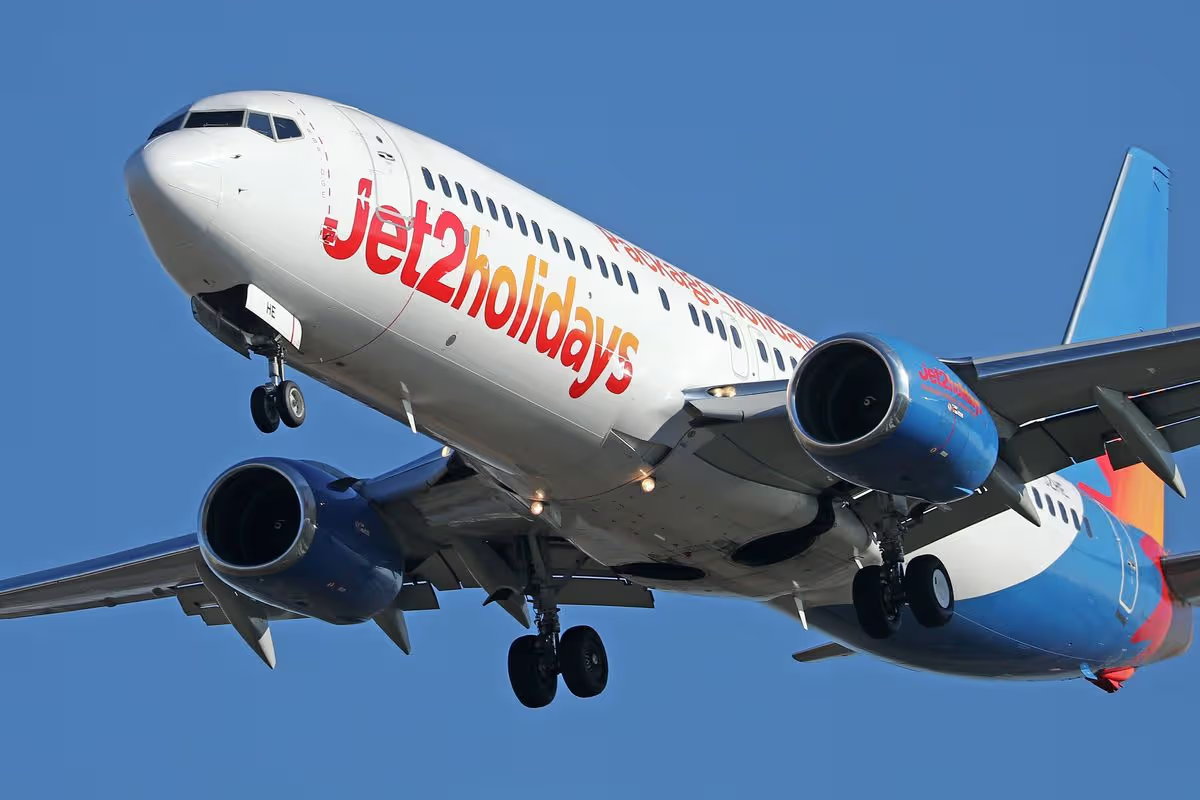
Jet2 states: “You may not bring on board alcohol for the purposes of consumption whilst on the aircraft. For safety reasons, we restrict the consumption of alcohol on board. Only alcoholic drinks purchased on board may be consumed during the flight. It is an offence to be drunk on any aircraft. Jet2.com reserves the right to serve alcoholic drinks to customers at our absolute discretion.”
After some recent confusion with passengers boarding Ryanair flights, a spokesperson made it clear where they stand when it comes to drinking on board. They said: “We are not ‘banning’ or ‘confiscating’ duty-free alcohol at boarding gates. As per Ryanair’s T&Cs, passengers can carry duty-free alcohol onboard but must not consume it during the flight.”
Across the majority of airlines, when it comes to alcohol consumption, they have a zero-tolerance policy on ‘disruptive behaviour’ and have the right to reject drunken and disorderly passengers from boarding the flight.
Meaning, even if you’re yet to take a swig of your duty-free bottle, you should be wary of how much alcohol you’re drinking within airport bars and restaurants.
As for the duty-free bag itself, this is often allowed as an extra courtesy to take on the flight, provided that it fits under your seat. However, this is typically limited to one bag per person and does not encourage passengers to hop on board with multiple additional bags after a huge shopping spree.
Latest paper boarding pass rules for all major UK airlines in 2026 – The Mirror
Need to know
Major airlines and some airports have different stances on bringing paper tickets to the airport
15:25, 15 May 2026Updated 15:26, 15 May 2026
Some airlines will have specific policies in place(Image: Sean Gallup, Getty Images)
Boarding pass rules: What Brits need to know before flying in 2026.
British holidaymakers risk having their trips ruined if they don’t check their airline’s boarding pass policies before heading to the airport. Some major airlines are ditching paper boarding passes altogether in favour of digital options.
Budget carrier Ryanair has gone fully digital since November 2025. Passengers must now use the Ryanair app to receive their boarding passes electronically.
The airline claims its digital boarding passes “get rid of 300 tonnes of paper annually”. It says it contributes to “lower airport costs and fares for all Ryanair passengers”.
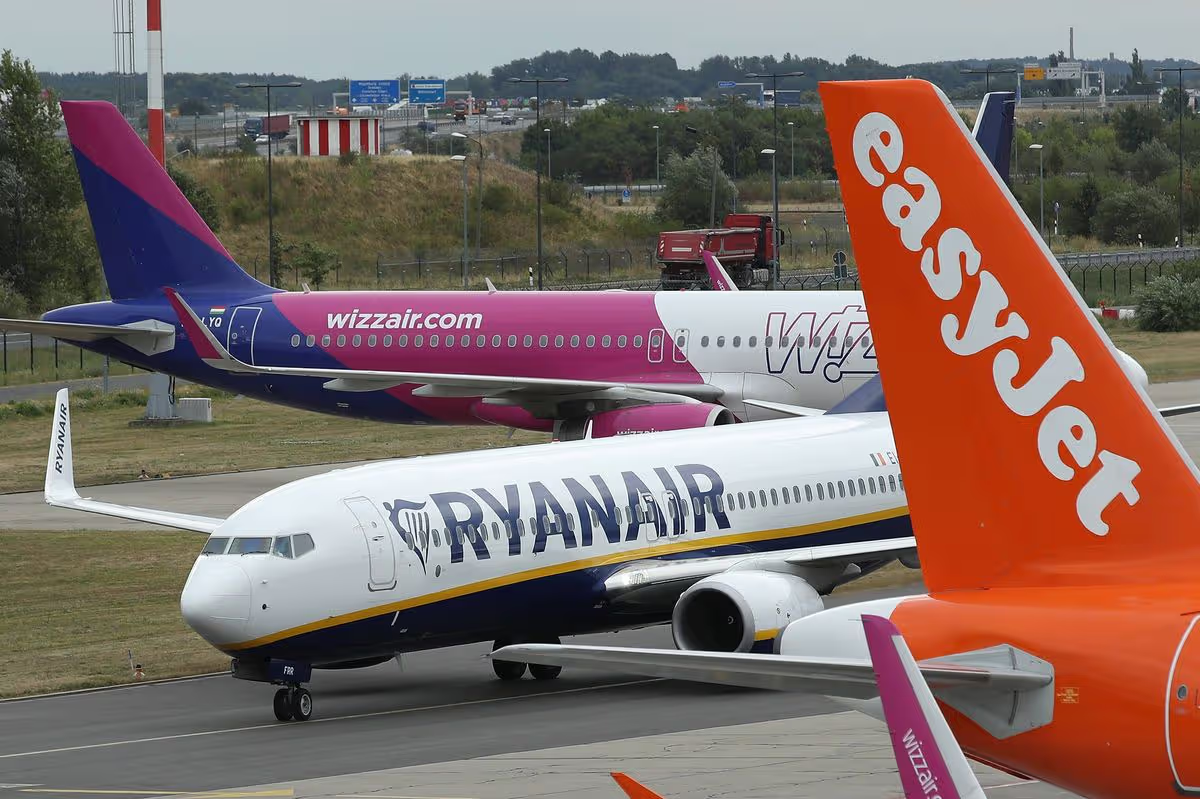
EasyJet accepts digital tickets via its free app, but doesn’t allow phone scans of PDFs. However, 21 airports in the easyJet network still require printed passes for UK-bound travellers.
Wizz Air also has five destinations that don’t support mobile boarding passes, meaning passengers need paper copies. Travellers are urged to check their airline’s specific policies for both outbound and return flights to avoid being caught out at check-in.
It was hit shortly after taking off from Gatwick Airport. The moment was captured on camera
14:40, 15 May 2026Updated 15:38, 15 May 2026
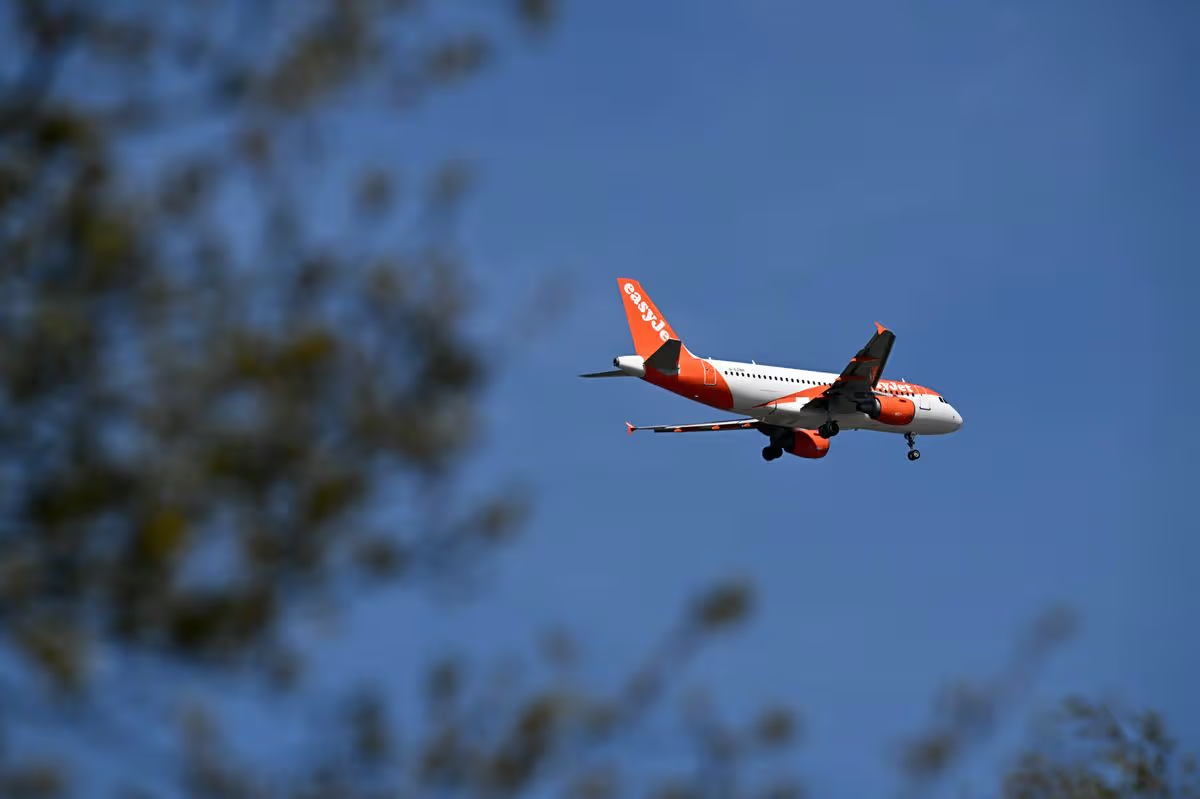
The plane was struck shortly after take-off (stock image)
An easyJet aircraft was forced to make an emergency landing after being struck by lightning shortly following takeoff. Flight U28305 was hit not long after departing from runway 08R at Gatwick Airport on Thursday, 14 May at 2.22pm.
Turbulent weather conditions, including strong winds and heavy rain, were reported in the area at the time. The lightning strike was captured on camera and widely shared across social media platforms.
The aircraft continued to climb briefly before the pilots, having reached 16,000 feet, requested permission to land and turned back to Gatwick for a full inspection. The plane, an Airbus A319 registered as G-EZDH, had been scheduled to travel to Milan, Italy, but touched back down at Gatwick just 27 minutes after taking off.
easyJet confirmed that no passengers or crew were injured, and that the aircraft returned ‘as a routine precaution’. A spokesperson stated: “EasyJet can confirm that flight U28305 from London Gatwick to Milan diverted back to London due to a lightning strike on the aircraft. The aircraft landed safely and was met by emergency services as a routine precaution.”
Content cannot be displayed without consent
According to the National Weather Service, aircraft are struck by lightning on average once or twice annually. It notes: “They are designed and built to have conducting paths through the plane to take the lightning strike and conduct the currents.
“Actually, aircraft often initiate the strike because their presence enhances the ambient electric fields typical for thunderstorms and facilitates electrical breakdown through air.”
Aircraft must undergo a compulsory inspection following a lightning strike to assess any potential damage. Numerous planes aren’t required to be built with lightning protection as standard. There hasn’t been a lightning-related commercial transport aeroplane crash in decades.
Passengers were told to bring their own food and drinks on board after a fire caused a supply disruption
13:36, 15 May 2026Updated 14:43, 15 May 2026
Passengers have been told what they can expect over the coming days(Image: Getty )
Jet2 has released a fresh update for passengers after many were informed that certain services would be unavailable on their flights. Earlier this week, it emerged that Jet2 had suspended food and drink services and in-flight retail for passengers on selected routes.
At the time, the airline stated it was dealing with an ‘operational issue’ that was ‘outside its control’. The disruption was reportedly triggered by a major supply chain disruption following a fire at Jet2‘s Retail Operations Centre in Middlewich.
The warehouse is reportedly responsible for stocking all catering carts. Consequently, the airline was forced to suspend all food, drink, and Jet2shop retail services on the affected flights.
This meant some passengers were unable to purchase snacks, soft drinks, alcohol, hot beverages, or duty-free items from the cabin trolley. Pre-booked meals were scrapped, and those who had paid in advance for a hot meal or snack deal did not receive their order.
In a fresh update, sent to the Liverpool Echo today (May 15), a Jet2 spokesperson said: “Due to an operational issue outside of our control, there was limited food and drink available to buy on board on Sunday, May 10. We are pleased to say that, since then, customers have been continuing to enjoy our award-winning flights and can choose from a wide selection of food and drink onboard.”
Content cannot be displayed without consent
They added: “Our full in-flight retail and food and drink offering will be completely back to normal in the coming days.” Jet2 has also confirmed it is automatically processing refunds for all pre-booked catering back to the original payment method.
While the problem persisted, travellers were advised to bring their own food, drinks and snacks on board, after clearing airport security. However, passengers are prohibited from bringing hot coffee, tea, or hot food from the airport terminal onto the plane. A statement on the Jet2 website states: “You can’t bring hot food or hot drinks onboard our planes for safety reasons.”
At the time, many people turned to social media to find out more about the ‘operational issue’ and to alert fellow passengers. On X, one passenger with the username @BigDogStaff wrote: “@Jet2tweets just had an email and a text message to say there will be no food or drinks available for our five hour flight.”
Jet2 responded: “Hi there, we sincerely apologise for any inconvenience caused by our food and drink services and in-flight retail by unavailable on your flight. Sadly, this is due to an operational issue outside our control. (1/2).”
The airline went on to say: “You are welcome to bring snacks and soft drinks purchased in the terminal onboard with you, but for safety reasons, hot drinks cannot be brought on board. If you have any further questions, feel free to let us know. ^Ellie (2/2).” On the Facebook group, Jet2.Com and Jet2holidays Customer Service and Support, a user asked: “What is happening with no food or drink on Jet2 planes? Just had an email about no food or drink on the planes tomorrow, any idea what happening?”
In the comments, one person wrote: “Been on lots of posts – supply issues due to a fire in a warehouse apparently- just get something in the airport to take on board with you.” Another added: “Just arrived in Greece via Jet2, we pre-ordered hot food but got an email saying it was limited. There was no food, drinks, snacks, and no duty-free trolley, all we got was water.”
A third commented: “Someone I know is flying tomorrow, and they were told this evening that there would be no food, including pre-booked. Maybe it depends on the airport or route.”
In a separate Facebook post, another user warned: “Just a heads up. A friend who is travelling from Leeds tonight has received this. So it may be the same on the return journey.” They shared a screenshot of what appears to be a text message from Jet2.
The message reads: “Due to an operational issue outside of our control, there will be no food, drink or Jet2shop available to buy on board your flight. Unfortunately, this also means that any pre-booked food or drink items will not be available, and we will automatically arrange any refunds for these.
“You are welcome to bring snacks and soft drinks purchased in the terminal (after security) on the flight with you, but for safety reasons, hot drinks cannot be brought on board. We are very sorry for any disappointment this may cause.”
A separate Facebook post by UK travel agency Camel Travel states: “Heads up for those flying with Jet2 at the moment. A fire at Jet2’s Retail Operations Centre in Middlewich on Wednesday has impacted the availability of food and drinks on some flights.”
What seems to be a screenshot of an email sent by Jet2 is also featured. It states: “We will process the refund right away to the payment card used when you booked – but like all refunds these days, it could take three to five working days for the funds to reach you. We’re sorry if you don’t receive any pre-booked items. Our friendly Cabin Crew are looking forward to welcoming you on board and will ensure you have a lovely flight.”
Airlines have been forced to cancel and amend flight schedules due to the ongoing Middle East conflict and soaring jet fuel prices, with Qatar Airways also hit with suspended routes
16:38, 14 May 2026Updated 16:39, 14 May 2026
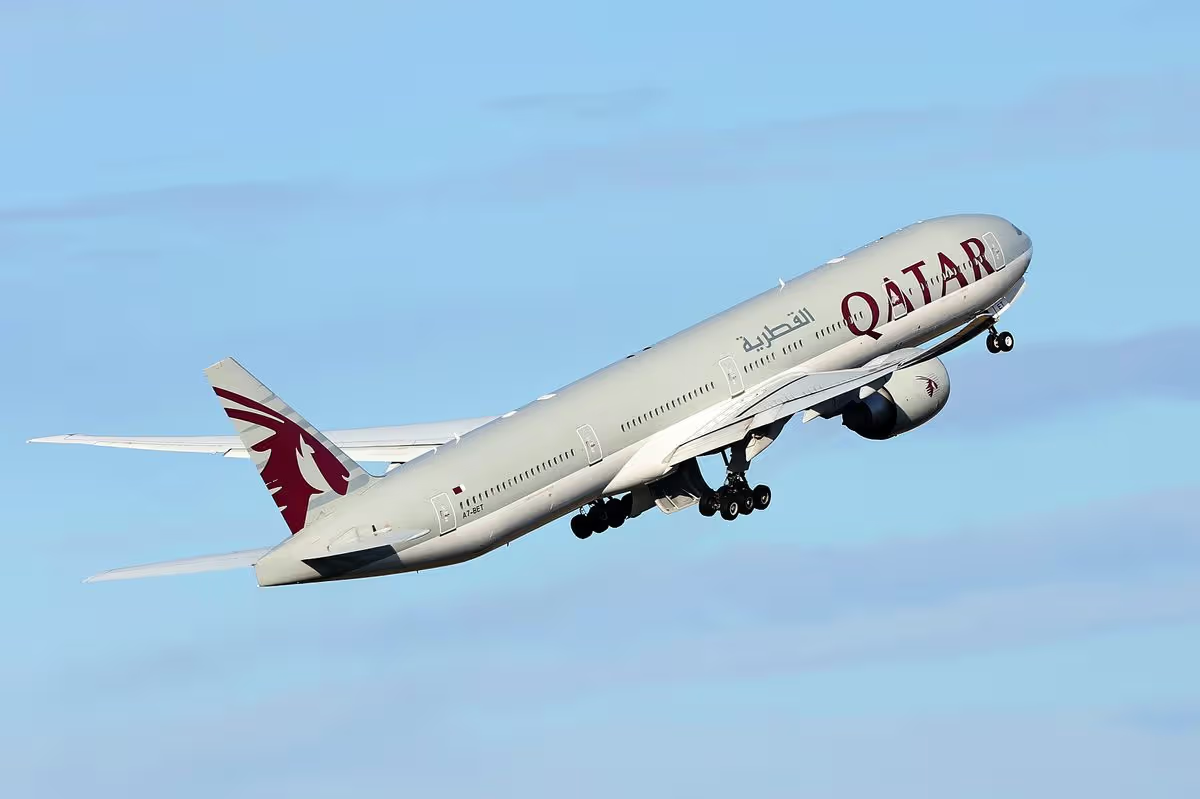
Qatar Airways has suspended routes to 22 cities(Image: Getty Images)
Qatar Airways has become the latest airline to cancel flights this May.
Since the Middle East conflict erupted in late February, airlines have been forced to axe routes and amend flight schedules due to restricted airspace across the Gulf region. The situation was heightened by Iran’s blockade of the Strait of Hormuz, through which roughly 20 percent of the world’s oil and gas passes, triggering a worldwide shortage and skyrocketing jet fuel prices.
With growing concerns over the long-term supply of jet fuel, a whopping 18 airlines have announced cancellations, and 13,000 flights worldwide have been taken from May schedules, according to figures from aviation analytics firm Cirium. Now, Qatar Airways is the latest airline to have routes axed, with flights to 22 cities suspended during May and beyond.
Qatar Airways has suspended flights from its Doha Hamad International Airport (DOH) to four European countries, Malta, Sarajevo, Sofia, and Venice, according to Simple Flying. As airlines prioritise their routes amid the jet fuel crisis, it is thought Qatar Airways will resume routes to Malta, Sofia and Venice in September.
Additionally, the Doha-based airline is not currently offering flights from its hub to Canberra, Cebu, Djibouti, Kano, Kigali, Mogadishu, Nagpur, or Zanzibar. Around half of these routes are expected to return in September, after one of the busiest travel periods, the summer holidays.
As a result of the Middle East conflict, drone and missile strikes caused major airspace closures, which severely impacted the Doha-based airline. Further routes suspended by Qatar Airways include flights to Aleppo, Gassim, Istanbul Sabiha Gökçen, Mashhad, Neom Bay, Shiraz, Tabuk, Taif, Tehran, and Yanbu. In addition to three cities in Iran, where the airspace remains closed.
Some of the suspended routes, excluding Aleppo and Iran, are expected to resume in September. In total, 22 routes have been suspended.
However, it’s not all bad news in the world of aviation this week. Qatar Airways announced that it is resuming some of its routes and that its Airbus A380s will return next month. The plane has been grounded. In a statement released on 13 May, the airline said: “Qatar Airways continues to restore its network across the Middle East, with the resumption of double-daily passenger flights to Abu Dhabi (AUH), the capital of the United Arab Emirates.”
This comes after the airline announced plans to expand its network further in time for the summer holidays. “Qatar Airways is expanding its international flight network, with services to over 150 destinations from 16 June 2026, connecting more passengers to more of the world this summer,” the statement read.
Airlines with cancelledflights in May
Air Asia X
Air Canada
Air China
Air Transat
Air New Zealand
Asiana Airlines
Cathay Pacific
Delta
KLM
Lufthansa
Norse Atlantic
Qantas
Qatar Airways
SAS
Thai Airways
Turkish Airlines
United Airlines
Vietjet
Vietnam Airlines
Do you have a travel story to share? Email webtravel@reachplc.com
Many Brits are concerned that the new EU Entry/Exit system (EES) could put a dampener on their holidays, but an obscure clause could mean that the system is paused at the busiest times
Brits will need to use the EES systems when holidaying abroad this summer (Image: Lucy North/PA Wire)
Summer 2026 is shaping up to be uncertain for holidaymakers. A combination of the jet fuel issues and new requirements for Brits entering the European Union (EU), means many travellers are braced for delays, cancellations, or long airport queues.
But a little-known clause in the EES rules could become a lifeline for Brits heading to Europe this summer, and it could be invoked if the queues at European airports become too long.
Some countries are already taking their own measures to tackle the chaos caused by EES. Greece has switched from using EES back to manual passport stamping to ensure a smoother entry system. While reports that Italy and Portugal may follow suit have been shut down by Brussels.
However, there are exemptions built into the EES system that could be invoked in “exceptional circumstances” and these could potentially come into play if the new procedures overwhelm EU airports.
A parliamentary briefing notes that the European Commission “referred to the possibility” that EU countries could “suspend EES operations potentially for a further 150 days after the 10 April implementation date.”
This suspension can be for periods of up to six hours in “exceptional circumstances where there are excessive waiting times”, the document went on to say.
This means that up until July 9, some borders would have the power to suspend EES for up to six hours a day.
“Member States should use that possibility only when such suspension is strictly necessary and for the shortest period possible. In the case of partial suspension, the registration of biometric data in the EES should be suspended. In the case of full suspension, no data should be recorded in the EES,” the legislation adds.
Since the implementation of the new system, there have been mixed reports on its efficiency. Some have claimed that it’s made the process of getting through the airport tougher for Brits. Holidaymakers have reported long lines, blaming slow software and machines going down, while others have claimed it’s made little difference in times getting through the airport.
While this visa waiver system was set to cost €7, just over £6, the fee has now been set at €20, about £17.37, almost three times the original cost. All travellers aged between 18-70 will need to apply before they travel once the new system is launched.
Have a story you want to share? Email us at webtravel@reachplc.com
The holidaymaker revealed how he enjoyed a week-long holiday at a budget price
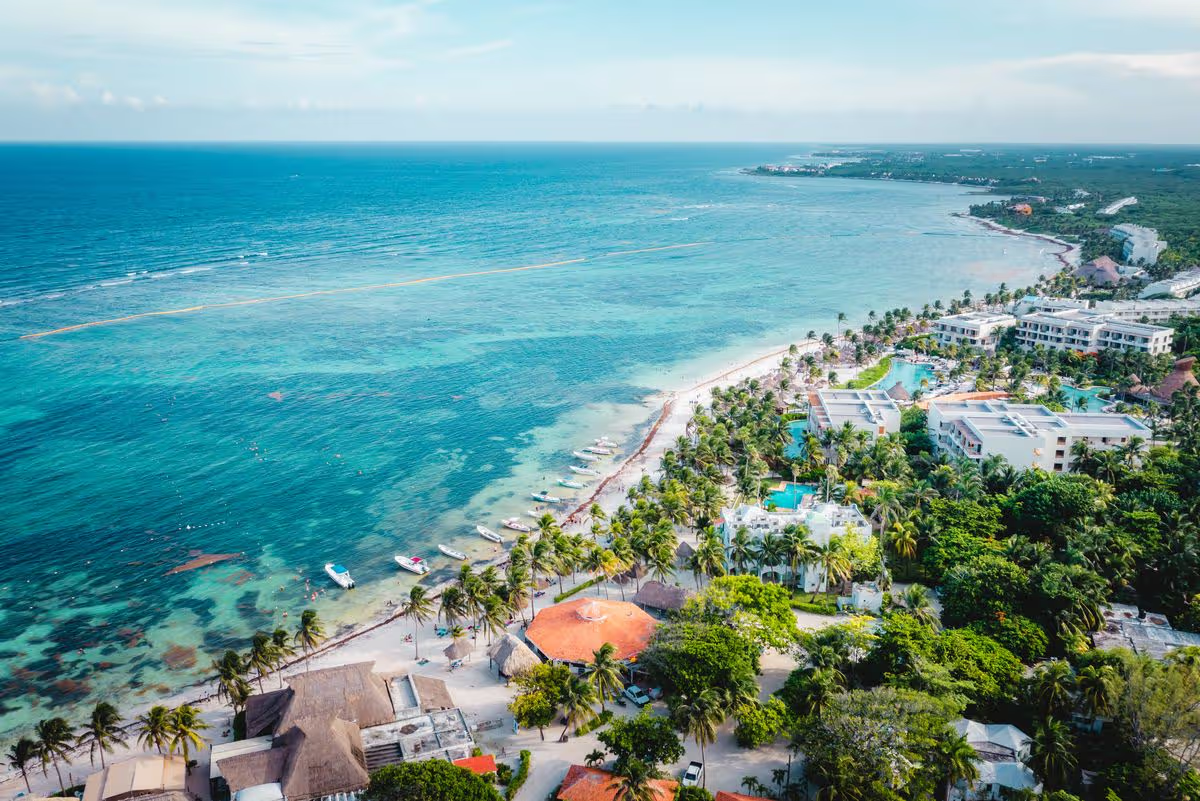
The traveller enjoyed a holiday in Mexico (Image: Getty)
A social media user has wowed travel fans after sharing how much he spent on a week’s holiday in Mexico. The holidaymaker explained his bargain travel hack in a TikTok post shared under the username @Byseyi.
In the viral video, Byseyi revealed he spent £360 per person on a last-minute holiday to Mexico. He said: “So this is one travel tip that I don’t really hear that many people talk about. And this is actually how me and my wife travelled to Mexico for a week for around £360 per person, and that’s flights and accommodation.”
The TikTok creator claims: “So if you’re able to travel last-minute, go and look at TUI’s last-minute flight deals on the flight section of their website. Because what happens is they’re trying to get rid of some of these last-minute flights and not have empty seats going. So we ended up booking a flight for two people to go to Cancun, Mexico, for £538 for both of us.
“Managed to find some good accommodation in Tulum that was cheap for £185. And even right now, if you go on the website, you’ll see a flight to the Dominican Republic for £384 if you’re able to travel in the month of May.
“So it’s really just for those people, maybe you had a holiday that got cancelled and you’re trying to plan a new thing, or you have the flexibility to just travel last minute. So it doesn’t apply to everyone, but for those that it can work for, you can get something good for cheap.”
Content cannot be displayed without consent
The video gained over 115k views and 14k likes on TikTok. Replying to the video, a viewer said: “Thanks for reminding me being fully remote is a win.” A second comment read: “A digital nomads dream lol …let me go check out TUI.” A third social media user wrote: “Yep! TUI got me to Aruba for £196 return, directttt! best!”
Someone else shared: “I always like these deals but they don’t work for people who like to explore more than one city in a country. But I think it’s great when you are simply looking for anywhere to go to.”
Another response said: “How close to the departure date did you book?” The travel lover replied: “Booked on the 23rd of Feb, flew out 3rd of March.”
Passengers looking for last-minute flights can browse deals on TUI’s website, where there’s a section dedicated to cheap flights. Customers can filter their search by departure date, with options ranging from within seven days to three months. Alternatively, customers planning further ahead can refine their search by month.
Chris Logan, Commercial Director at TUI UK and Ireland, said: “If you’ve got a bit of flexibility, our last-minute flight deals can be a brilliant way to grab a great-value getaway. Flying from over 20 airports across the UK, making it easy to pick a date, pack a bag and set off from a nearby airport. There’s a great choice of destinations on offer too – from European favourites like Spain and Greece, to long-haul escapes across the Caribbean, including Mexico, the Dominican Republic and Jamaica, as well as Florida.
“These direct flights include 10kg of hand luggage as standard, with the option to add more, upgrade for extra space or enjoy a more premium travel experience. It’s always worth checking back – you might find something that gets you away sooner than you think.”
Airlines will not be able to continue “absorbing the cost” of disruption caused by the closure of the Strait of Hormuz in the long term, according to the director general of the International Air Transport Association. Willie Walsh told the BBC there was no need to panic over potential jet fuel shortages, but warned rising fuel prices would inevitably feed through into higher ticket prices.
He said: “There’s just no way airlines can absorb the additional costs they’re experiencing. There may be some instances where airlines will discount to stimulate some traffic flow… but over time it’s inevitable that the high price of oil will be reflected in higher ticket prices.”
While Mr Walsh did not think there would be widespread cancellations, he added: “I think the concern will be that if sufficient alternative supply isn’t sourced, there may be some shortages when we get into the peak summer period.”
Last week, British Airways’ parent company IAG warned its profits will be hit as it expects to spend about two billion euro (£1.72 billion) more than planned on fuel this year. Chief executive Luis Gallego said IAG does not believe there will be “any interruption for the summer” in terms of jet fuel supplies.
Earlier this month, Transport Secretary Heidi Alexander said summer holiday plans will not face major disruption because of shortages. She revealed that more fuel has been imported from America, and UK refineries have upped their production.
The Government has also introduced a temporary rule change allowing airlines to group passengers from different flights together onto fewer planes to save fuel. It comes amid data that showed airlines have increased the number of flight cancellations for May.
Aviation analytics company Cirium said that as of Tuesday, airlines have axed 296 departures from UK airports this month, equivalent to 0.75% of the total. That is up from 120 cancellations six days ago.
Figures for the peak summer months show week-on-week schedule reductions are currently limited. The number of outbound flights planned for June is 48 lower than a week ago, after 0.2% of flights were cancelled.
For July the week-on-week reduction is 31, while the figure for August is just four. Airlines avoid being liable for compensation if they axe a flight with at least two weeks’ notice, meaning they can delay decisions on summer cancellations and still avoid payouts.
The price of jet fuel has more than doubled since the start of the war in the Middle East, as Iran continues to have a stranglehold on tankers passing through the Strait of Hormuz. A Government spokesperson said: “UK airlines are clear that they are not currently seeing a shortage of jet fuel.
“Aviation fuel is typically bought in advance and airports and suppliers keep stocks of bunkered fuel to support their resilience. We continue to work with fuel suppliers, airports, airlines and international counterparts to keep flights operating.
“We are also consulting on measures to help airlines plan realistic flight schedules which will avoid last-minute disruption and protect holidays.”
In some cases, people could be hit with hefty fines
14:05, 13 May 2026Updated 14:37, 13 May 2026
Here’s what you need to know(Image: Dobrila Vignjevic via Getty Images)
A UK airport has issued a warning as travellers may be unaware they could be risking a £5,000 fine after taking sandwiches on board a flight. Many passengers purchase food at airports, or pack their own, and carry it onto planes without any trouble.
However, London Luton Airport has highlighted what the law actually states. And if you’re heading abroad anytime soon, it’s well worth taking note.
A post on X from the airport’s official account reads: “It is illegal to bring meats such as lamb, pork or beef or dairy products from the EU into GB in your luggage. This means items such as cheese, cured or raw meats, sandwiches and milk, including duty free purchases.”
The guidance applies to all airports across England, Scotland and Wales. Should you be caught carrying any prohibited items – including sandwiches containing meat or dairy – and fail to declare these to Border Force officers at customs, you could face prosecution, or a £5,000 fine (in England only).
Content cannot be displayed without consent
Rules around bringing in meat, dairy, fish and other animal products differ depending on the country of origin. If you are travelling back from the EU, Switzerland, Norway, Iceland, Liechtenstein, the Faroe Islands and Greenland, you are banned from bringing in any of the following:
cheese, milk and dairy products like butter and yoghurt
pork
beef
lamb
mutton
goat
venison
other products made from these meats, for example sausages
You can bring in the following for personal use:
fish
poultry, for example chicken, duck, goose and any other products made from these meats
other animal products, for example eggs and honey
You may also bring in up to 2kg per person of powdered infant milk, infant food, or special food required for medical purposes. This is only allowed if it does not require refrigeration before use, and is in branded, unopened packaging (unless currently in use).
If you are travelling from a country outside the EU, Switzerland, Norway, Iceland, Liechtenstein, the Faroe Islands and Greenland, you are prohibited from bringing any meat or meat products, or milk or milk-based products, with the exception of powdered infant milk, infant food or special food needed for medical reasons.
You are, however, permitted to bring in up to 2kg per person of:
honey
powdered infant milk, infant food, or special food (including pet food) needed for medical reasons – you can only bring it in if it does not need to be refrigerated before use, and is in branded, unopened packaging (unless in current use)
live mussels or oysters
snails – these must be preserved or shelled, cooked and prepared
frogs’ legs – these must be the back (hind) part of the frog with the skin and internal organs removed
insect protein
You may bring in up to 20kg per person in total of fish, including:
fresh fish – must be gutted
fish products
processed fish – must be dried, cooked, cured or smoked
Travellers have been told ‘not to panic’ if they have flights planned for the summer
Flight rule change to stop last minute cancellations
Many travellers are worried that their summer flights may be at risk as the jet fuel supply disruptions have left some airlines cancelling and rescheduling flights. Now, hantavirus has also trigger some anxiety as passengers fear they may be facing the same disruptions they experienced during the Covid pandemic.
While health experts have been assured the public that hantavirus is “not like Covid”, according to BBC’s Dr Xand, a travel expert explained exactly what rights you have if your flight is cancelled for these reasons.
Hannah Mayfield explained: “If your flight is cancelled because of a global health emergency or another major disruption outside the airline’s control, passengers are still entitled under UK261 to either a full refund or alternative flight.
“That obligation remains firmly with the airline, even in extraordinary circumstances. What may not apply, however, is additional compensation.
“We saw significant confusion around this during the coronavirus pandemic.”
The travel money expert with specialist travel insurance comparison website PayingTooMuch, urged people to learn the “crucial” distinction between these two as some travellers mistakenly believe that if they aren’t entitled to compensation then they aren’t entitled to anything.
Ultimately, the expert assured everyone with upcoming flights: “The key message for travellers this summer is not to panic, but to understand where responsibility sits before problems arise. Knowing your rights in advance makes it much easier to act quickly and avoid unnecessary stress or expense if your faced with disruptions.”
She continued: “Airlines are responsible for passenger rights linked to the flight itself, including refunds, rebooking, and assistance during disruption.
“Travel insurance, by contrast, is there to protect against wider personal financial risks such as cancellation due to illness, emergency medical treatment abroad and repatriation as well as things like baggage lost items and in some cases irrecoverable costs that cannot be recovered from airlines or travel providers depending on the cover.”
Checking your travel insurance and how you paid for the flight before you leave can also add some extra protection. The expert urged: “It’s equally important to read the travel insurance policy carefully before travelling.
“Many people only discover exclusions relating to pandemics, wider disruption, or government travel advisories when they come to make a claim.”
Hannah explained that if you used a credit card to pay for your flight, Section 75 of the Consumer Credit Act can “provide valuable additional protection in some instances”. While those who paid with debit cards may have “less robust” protections.
easyJet boss has hit out at a new rule expected to come into force
easyJet boss issued a warning(Image: soniabonet via Getty Images)
Passengers flying within Europe could soon see a significant shift in baggage rules, and travellers are being put on notice.
At present, those travelling on basic fares with easyJet, as well as with Ryanair, are restricted to one small personal item, with any extra luggage attracting additional fees. Following changes to EU regulations, Ryanair was required to enlarge the maximum dimensions of its personal bags last year. The revised rules permit passengers to carry hand luggage measuring up to 40 x 30 x 20cm, a 20% boost from the former 40 x 20 x 25cm restriction.
easyJet’s personal bag specifications already complied with these requirements, meaning no adjustment was necessary. And now further EU regulatory shifts could enable travellers to bring both a cabin bag measuring up to 100cm and a personal bag without incurring additional charges.
In February, the European Parliament voted overwhelmingly to grant all passengers the entitlement to carry a small case in addition to the complimentary under-seat bags currently allowed. The Parliament’s proposal would give passengers the right to bring on board, at no extra charge, one personal item (such as a handbag, rucksack or laptop) and one small piece of hand luggage with maximum combined dimensions of 100cm (length, width and height) and weighing up to seven kilos.
The proposed reforms, which must receive approval from the European Council before becoming law, would apply to all travellers flying to or from an EU airport on an EU-based airline. This directly affects the overwhelming majority of short-haul flights departing from the UK.
While this may seem like a positive development for passengers, easyJet has slammed the proposals to enforce free additional baggage as a “lunatic idea”. Chief executive Kenton Jarvis insisted that granting all passengers the right to extra free carry-on luggage would be “crazy” and “terrible for the consumer”.
The easyJet boss described it as “politicians completely not understanding their subject and getting involved with things they shouldn’t”, adding: “There just isn’t the space in the cabin, so that’s another lunatic idea. We would go back to the days of having to offload cabin bags and put them in the hold – it was one of the number one causes of delayed boarding in the old days.”
Baggage fees accounted for a significant portion of easyJet’s more than £2.5bn in annual income from extras, or ancillary revenue, “and that would have to be passed on” through increased fares for all passengers, he warned.