Air travel

Simple flight tip could get your suitcase off the baggage carousel first

It can be frustrating waiting for your suitcase to appear but one strategy could help you get your bags off the baggage carousel first

Airport security checks and baggage restrictions can turn holidays into a source of stress, and the anxiety only intensifies as you wait to see whether your suitcase has actually made it off the plane.

The dread of lost luggage hangs over many travellers right up until the moment they spot their bag on the carousel — and even then, there’s the worry that someone else might accidentally grab it. But there’s a straightforward trick that could see your suitcase come off the plane first, allowing you to get your holiday underway without unnecessary delays.

Guidance from Escape.com suggests checking in for your flight as late as you possibly can. The logic? Late check-ins mean your luggage gets loaded last, and in theory, should emerge first upon landing, according to Thomas Lo Sciuto, a ramp worker and gate agent at a regional US airport.

The airport worker explained: “Your best option is to be one of the last passengers to check your bags. This is because bags will always be loaded front to back on the bag carts.”

That said, bags aren’t solely loaded according to check-in times. Anyone who can’t stomach the idea of leaving check-in until the eleventh hour will be relieved to hear that weight is also a factor in certain circumstances, reports the Express.

SmarterTravel told HuffPost that US aviation giant Delta, which flies out of Terminal 3 at London Heathrow Airport (LHR), sorts luggage into large and small loads to ensure proper weight distribution across the aircraft. As passengers check in their luggage, it gets sorted into “cans” – large containers that hold multiple bags and can be transported as one unit.

SmarterTravel said: “In other words, how far back your bag ends up depends on the weight of the can and the needs of the plane, not when you check it.”

Aircraft with a single aisle typically “loose-load” bags one by one rather than bundling them into cans, as is the case with wider-bodied planes. When this happens, checked bags generally go into a holding area.

Luggage gets transported to the aircraft and loaded shortly before departure, meaning its chances of being loaded first hinge on when it was checked in.

If a bag was checked in early, it could end up at the rear of the storage space, meaning it would be last onto the plane and potentially first off.

Other tactics to ensure your bags come off the carousel first upon landing include marking them as “fragile”.

News.com.au suggests this clever trick often results in your luggage being loaded onto the aircraft last and therefore unloaded first, which can significantly reduce your wait at the carousel.

That said, when opting for “fragile” stickers, travellers ought to strip off any old tags from their bags to prevent mix-ups. To make luggage stand out, opting for vibrant colours, customised tags, or securely fastened ribbons could help your bags catch your eye more easily.

The most reliable way to get out of the airport as swiftly as possible is to travel with hand luggage alone. Make certain this meets your specific airline’s requirements to avoid being forced to check your cabin bag at the gate.

A personal item, sometimes referred to as a small bag, needs to fit beneath the seat directly in front of you and typically measures no larger than 40x30x20cm.

Cabin bags are stowed in the overhead locker and can generally weigh up to 10kg, with dimensions not exceeding 56x45x25cm.

Among UK carriers, British Airways typically provides the most generous complimentary hand luggage allowance on its basic tickets.

Travellers can bring one 23kg cabin bag (56x45x25cm) and one smaller personal item (up to 40x30x15cm) without charge.

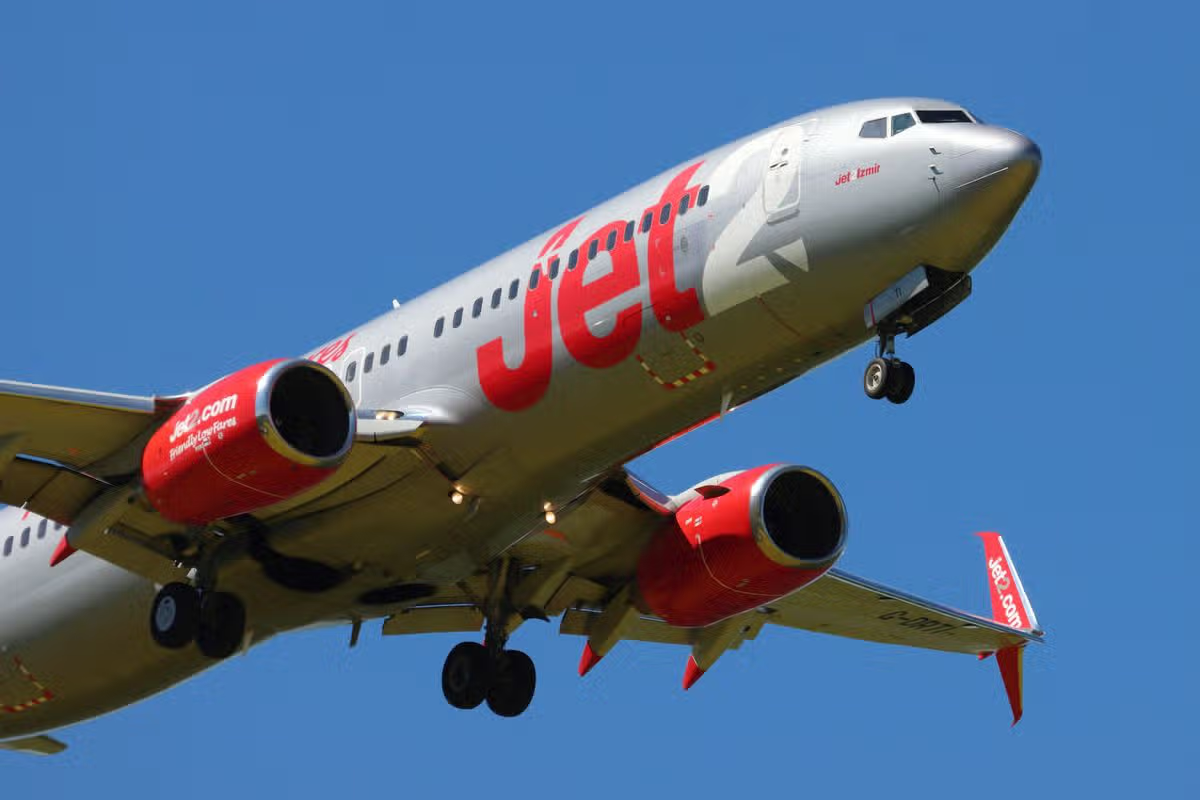
Jet2 and Virgin Atlantic similarly permit a complimentary cabin bag (10kg, 56x45x25cm) alongside a personal item.

Source link

Latest Spain rules as UK holidaymakers may need extra documents

Without these you may be refused entry to Spain, the Foreign Office has warned

Millions of Brits flock to Spain each year, with the European country remaining a firm favourite among UK holidaymakers.

Spain’s appeal is undeniable – from its warmer weather, breathtaking coastlines and mouth-watering cuisine to its charming cities and verdant landscapes. With another hectic summer of international travel expected for 2026, we’ve looked at the entry requirements for Spain for anyone holding a UK passport. And travellers may not know they could be asked to present certain extra documents upon arrival – or face being refused entry.

According to the Foreign, Commonwealth and Development Office (FCDO), alongside a valid passport, UK visitors may also be required to produce a return or onward ticket and/or proof of valid travel insurance. You may additionally need to demonstrate that you have sufficient funds for your stay, with the required amount varying depending on your accommodation arrangements.

Border officials may also request proof of accommodation, which could take the form of a hotel reservation or proof of address if you’re staying at a property you own. Alternatively, this might be an invitation or proof of address if staying with friends, family or a third party, such as a ‘carta de invitation’ completed by your hosts, the FCDO adds.

As well as this, new rules introduced post-Brexit mean that Brits travelling to the Schengen Area – which includes Spain – on a UK passport may need to check their travel documents now. This is because your passport must display a ‘date of issue’ that falls within 10 years of your arrival date, and if you renewed your passport prior to October 1, 2018, it could carry a date of issue exceeding 10 years, rendering it invalid for entering the Schengen zone.

Additionally, your passport must show an ‘expiry date’ of at least 3 months beyond the day you intend to depart the Schengen Area (the expiry date need not fall within 10 years of the issue date).

Source link

Martin Lewis Ryanair, easyJet, Jet2, TUI booking warning over cancellation mistake

The money-saving guru has urged those who have paid for trips with major holiday firms and airlines to avoid the DIY approach

Martin Lewis has delivered a stark warning to anyone who has already booked a holiday for this summer – and explained why people could be making a big mistake getting flights and hotels separately. In a recent update, the money-saving guru has urged those who have paid for trips with major holiday firms and airlines, including TUI, Jet2, Ryanair, Wizz, easyJet and British Airways, to pay close attention.

It was suggested this week that the UK could be worst hit by jet fuel shortages because it has ‘critically low levels’ of supplies and poor refining tools, by Goldman Sachs. The giant investment bank Goldman Sachs said in a research note to clients: “The UK is the largest net importer of jet fuel in Europe, and it holds no strategic reserves, leaving commercial inventories as the primary buffer.”

During his Money Show Live on ITV, the financial expert responded to an audience member who asked: ‘If my flight’s cancelled due to no jet fuel will you definitely receive at the moment package holidays give you a certain as well.’ Mr Lewis explained that holidaymakers would lose their hotel booking costs if they had arranged accommodation independently from flights reserved with airlines such as Jet2, TUI, Wizz, Ryanair or easyJet – as they would not be protected under consumer regulations.

He said: “No. And I think this is what people need to be very aware of. If you booked a package holiday where you booked everything in one, then under the package holiday regulations and rules and protections generally if your flight went you would get everything back.”

He added: “And so actually at the moment package holidays give you a certain level of extra security that you wouldn’t get if you did a DIY booking where you bought your hotel and flight separately.” The reason for this, he explained, stems from the fact that the hotel reservation itself remains entirely valid: “Because the point is if you lose your flight and you’ve DIY booked, there’s nothing wrong with your hotel.

“The issue is you can’t get there. Your hotel is still there. It’s not faulty. It’s not cancelling. So, you don’t have those consumer rights.” If the accommodation provider hasn’t violated any terms, then guests might examine how they’ve paid for their booking – but that route offers no solution either. He said: “So, you would then say, ‘What about using a credit card or debit card protection?’ It won’t work because there’s nothing faulty. And that’s just giving you the same replica rights that you would have with the retailer.”

For those still seeking a solution, travel insurance may seem like the next logical port of call. Mr Lewis revealed: “So, you’ then say, ‘What about travel insurance?’ This is the bad bit. We were checking 40 travel insurance policies. Of those, only a few would have covered you for the knock-on eventuality of your flight being cancelled due to jet fuel and then your hotel costs.

“Only about three or four and most of those were package bank accounts where it’s linked to your bank account. Only one standalone provider. So we need to be blunt at the moment. There is a big risk in those circumstances. If you’re booking, you want something with free or limited cancellation quite short before. So you could just cancel it. You should always talk to the provider.

“Government are saying there isn’t one at the moment and they’re working on consolidating flights and doing things so there won’t be one, but people’s hotel costs if they book separately and other knock-on costs are potentially at risk.”

Speaking on his ITV programme, he also cautioned that neglecting to take one vital step after booking could leave holidaymakers with absolutely nothing if their plans fall through. With the ongoing turmoil in the Middle East sparking serious worries over jet fuel supplies, Mr Lewis warned that those who book a holiday and put off arranging insurance could risk losing everything should something go wrong in the interim.

Mr Lewis emphasised that travel insurance ought to be bought the instant a holiday is booked: “The reason you do that is because half of the cover you’re paying for is in case something happens that stops you going before the trip. And if you don’t have the travel insurance place, you’ve got no cover. So, you may as well have it in place. But at this time of year when many people have already booked, I have a slight adaptation, which is this. If you’ve booked and you don’t have it yet, just get it now.

“Get it done as soon as possible.” A Money Show Live viewer named David said: “I booked flights to Australia for a family group of seven to travel in March next year. I took out insurance immediately. One of our group is now pregnant and can’t travel on the dates planned. It costs £5,000 to reschedule, which I’m happy to report the insurance covered.”

Mr Lewis also commented on the complexities facing larger groups: “Very quick aside on that, think of who you’re booking for. So, if it’s a family group and one can’t go, they’ll often cover you. But if there’s a large group of friends going, you often all get independent travel insurance. Well, then if one can’t go or and you can’t all go on the trip, it’s only the person who’s who’s got that cover. So, you’d need a group insurance policy so that if one can’t go, you all can’t go.”

Jet2 today said now people choosing a package holiday as their preferred method of booking is up 5% to 51% since February. In the same period, the number of people preferring to book through different providers has dropped by six percentage points to 20%. Those choosing ‘accommodation only’ has dropped to 2%.

The primary reasons for choosing a package holiday have remained steady, with value (36%) and ease (36%) the main drivers, however the benefit of ‘added security with one provider, ATOL/ABTA protection’ has increased by four percentage points since February to 26% the poll said.

This protection means that customers are covered should any changes happen to their bookings, including the option of receiving refunds if their travel plans are cancelled, and that those holidays are held to the highest standards when it comes to customer service, changes to bookings, and health & safety.

Jet2 has confirmed it will not introduce surcharges on any booked flights or holidays to cover cost increases, for example jet fuel, assuring customers that the price they book with Jet2 is the price they will pay.

Steve Heapy, CEO of Jet2 said: “Consumers want assurance during times of uncertainty and package holidays provide that assurance. On top of all the protection that our package holidays guarantee, Jet2 is well known as being a consumer champion that goes above and beyond to look after customers. Ahead of a busy summer season, this means new and existing customers know that their well-deserved holidays are in the very best hands with us, and we are very excited about welcoming everyone onboard and taking them on their breaks.”

Source link

Jet2 says item sold in airports is ‘banned’ from being brought on all flights

This rule applies on another airline as well – and could catch some people out

Jet2 customers are being reminded of a rule the airline has that does not allow passengers to bring on board an item that is commonly available in airports. The popular airline reiterated its blanket ban for customers this week – and there are no exceptions.

Holidaymakers are advised not to bring the item with them beyond the gate leading to the aircraft. Most airlines have their own rules, which vary depending on which one you fly with, though many share the same for health and safety reasons.

Jet2 has a strict rule in place about bringing hot drinks on board, including teas, coffees and hot chocolates. The rule also applies to any hot food – even if it was purchased from a shop, cafe or restaurant in the airport terminal.

Jet2 reiterated the rule online to a passenger who asked whether they could bring a drink with them. The airline said: “You are able to bring any snacks or soft drinks on board bought in the terminal (after security).” However, it added: “Hot drinks are not permitted to be brought on board.”

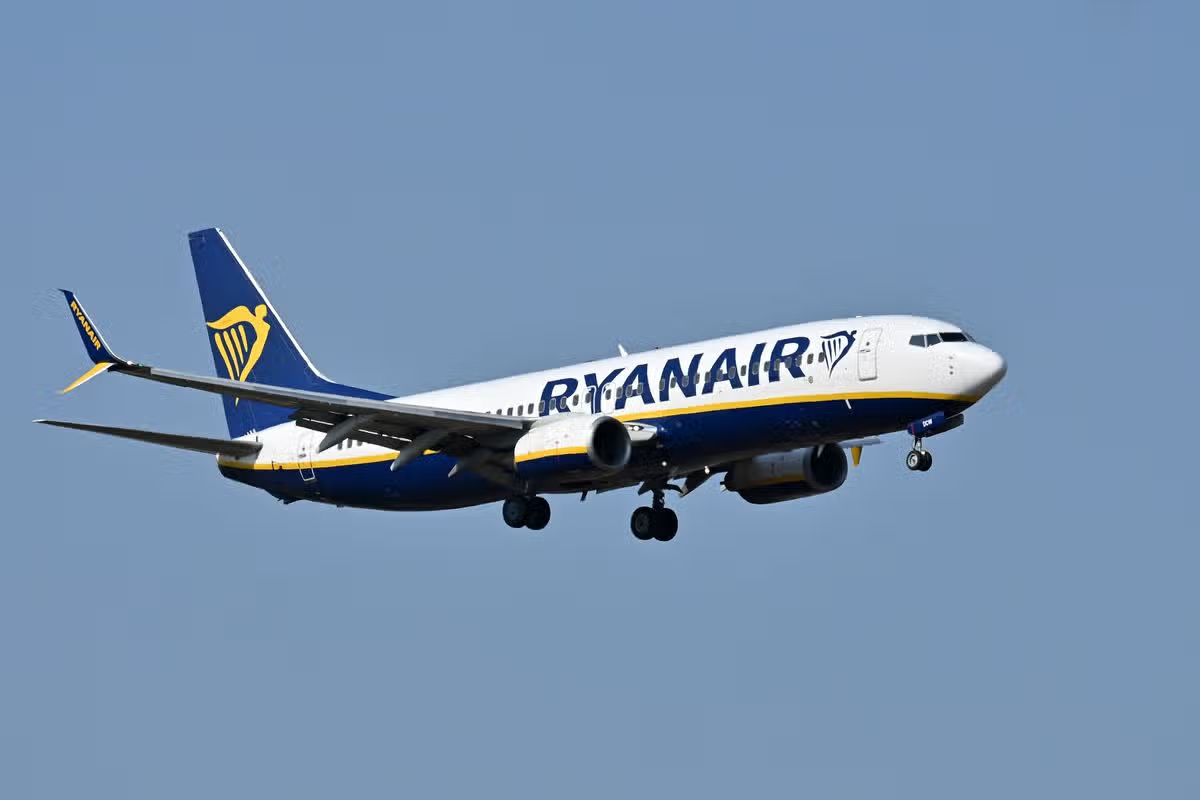
People who are due to board flights will need to finish their hot food or drinks before being allowed on board. This rule applies to other airlines as well, like Ryanair, but some are more relaxed, like easyJet.

Content cannot be displayed without consent

What is the reason for this Jet2 rule?

On its website, Jet2 states: “You can’t bring hot food or hot drinks onboard our planes for safety reasons.” The Jet2 ban applies only to drinks customers bring on board.

Usually, passengers can purchase a variety of hot foods, as well as teas, coffees, and hot chocolates, on board Jet2 flights. Customers must remember the payment rule that applies to all flights.

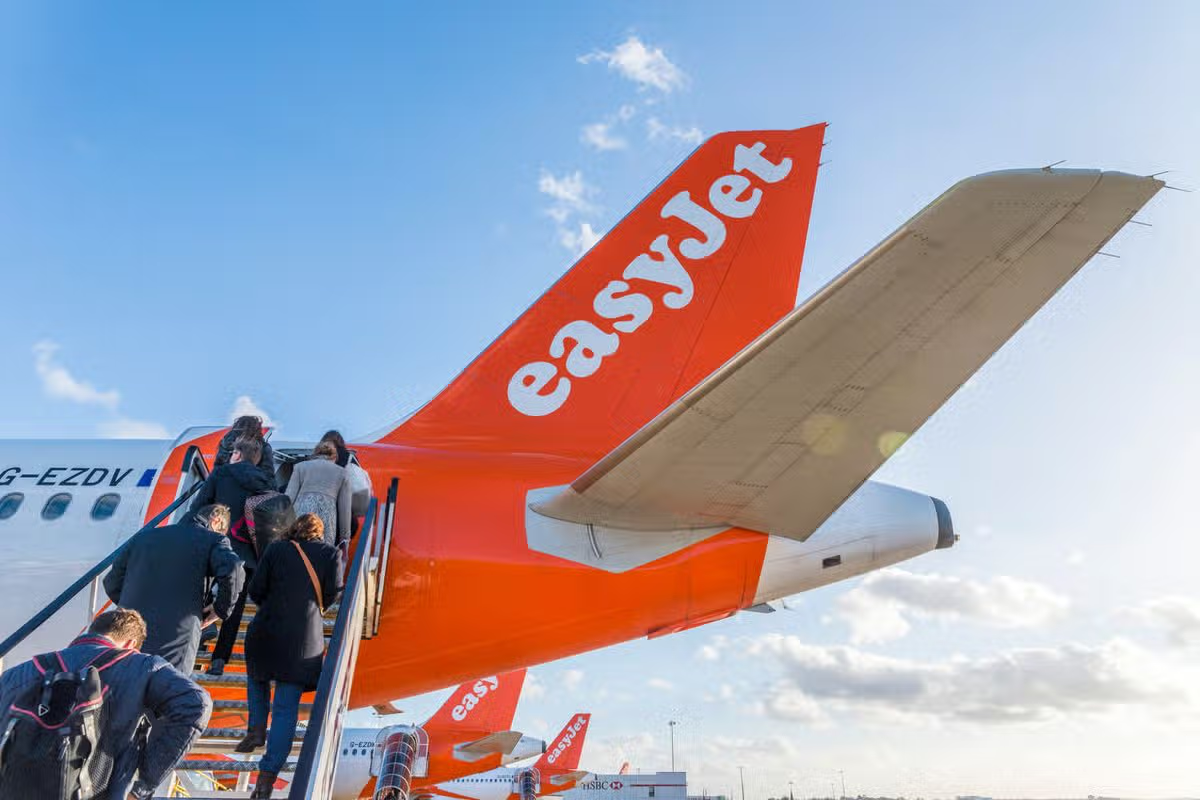
Elsewhere, certain airlines, like easyJet, will allow hot drinks bought in the airport on board. This is provided the cup has a secure lid.

In other Jet2 news, the airline announced two new routes to a ‘stunning’ island with ‘sandy beaches‘, ‘aquamarine waters’, ‘cobbled streets’ and ‘rolling hills’. The new routes follow Jet2’s claims of continued customer demand and independent travel agents booking holidays for the short hop to the island.

Jet2 has confirmed significant expansion to its Jersey programme for summer 2027, by putting two new routes and additional capacity on sale, as well as extending the season. The airline has introduced flights and holidays from Birmingham and Bristol for Summer 2027.

In addition to the new routes, extra capacity to Jersey has been added from Manchester, and the summer season to the destination has been extended. It means Jet2 will operate to Jersey right through to the end of October.

Source link

Ryanair passengers with flights booked to Portugal issued EES update

The airline has previously called for Portugal to suspend the EU Entry-Exit System (EES)

Ryanair has provided an update regarding its stance on the contentious EU entry-exit system (EES). The budget carrier has been an outspoken opponent of the new digital system, which is progressively replacing traditional passport stamps for British travellers heading to the Schengen zone.

The airline particularly highlighted the EES implementation in Portugal, which has come under fire in recent weeks. The system has been repeatedly suspended during peak periods to allow passengers to catch their flights following reports of significant delays.

“Portuguese Government needs to suspend new Entry/Exit System (EES) until after the peak summer season,” a Ryanair statement posted on Instagram declared.

“Otherwise, passengers are forced to endure excessive border control queue times at Portuguese airports.”

Uncertainty arose following suggestions that Portugal and Italy were poised to mirror Greece’s approach, which announced it had effectively halted the EES process for British nationals until summer’s end. However, neither Portugal nor Italy verified these claims.

Content cannot be displayed without consent

EES explained

EES received a soft launch last October, but was scheduled to become fully operational on April 10, 2026. It requires most visitors – including Britons – from beyond the EU to register biometric information each time they enter or exit the Schengen free travel area. The countries in the Schengen area are: Austria, Belgium, Bulgaria, Croatia, Czechia, Denmark, Estonia, Finland, France, Germany, Greece, Hungary, Iceland, Italy, Latvia, Liechtenstein, Lithuania, Luxembourg, Malta, Netherlands, Norway, Poland, Portugal, Romania, Slovakia, Slovenia, Spain, Sweden, and Switzerland.

The Republic of Ireland and Cyprus fall outside the Schengen zone, meaning EES does not apply when travelling to either of these destinations. No action is required prior to reaching the border, and EES registration is completely free of charge.

READ MORE: Airlines could switch to US jet fuel to ‘ease some pressure’ amid shortage fearsREAD MORE: Travel expert Simon Calder predicts EU’s controversial EES system to be ‘put on hold’ for the whole summer

Reports have emerged from Italy of passengers missing their flights, prompting the UK Government to warn: “EES may take each passenger extra time to complete so be prepared to wait longer than usual at the border.”

Ryanair has previously hit out at the EES system. Branding it ‘half-baked’ earlier this month, the airline stated: “Despite knowing for over three years that EES would become fully operational from 10 April 2026, France, Portugal, Poland, Italy, Spain, and Germany have failed to ensure that adequate staffing, system readiness, or kiosks are in place.

“As a result, passengers are suffering long passport control queues and, in some cases, missing their flights.

“Ryanair calls on these EU Governments to suspend the rollout of the EU’s passport control Entry/Exit System (EES) until September to ensure that passengers are not needlessly forced to suffer long passport control queue delays at European airports during the peak summer season.”

Source link

TUI, Jet2, Ryanair and easyJet rules on how early to get to airport for May half-term

Each airline has set rules about when to arrive at the airport to avoid delays – check which apply to you before you make your way to the airport this May half-term

If your family is headed abroad in May, it might be wise to pay attention to the latest airport arrival advice from airlines including Ryanair, easyJet, Jet2 and TUI.

Airports are expected to be packed during the school holiday period, and with fluctuating jet fuel prices concerns, many travellers want to be extra prepared for potential delays, longer queues and last-minute schedule changes.

The rules have remained mostly the same in recent months, but some airlines have specific requirements for different types of passengers or groups.

Ryanair

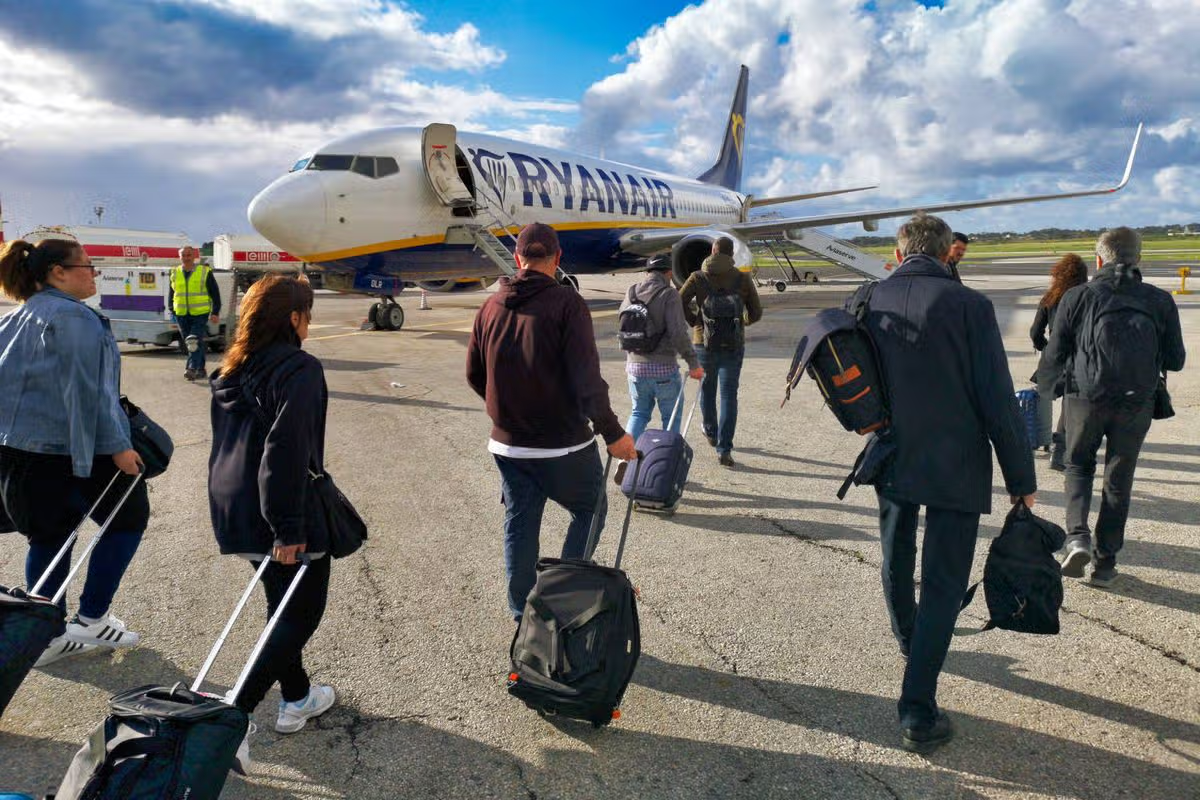
Ryanair advises passengers to arrive at the airport at least two hours before departure to allow enough time for check-in, bag drop and security, and also says passengers must be at the boarding gate at least 30 minutes before departure time.

Even if you’ve booked through an online travel agent, you’ll still need to verify your booking at the airport, and you’re also told to arrive at least two hours early.

EasyJet

READ MORE: EasyJet update over EES delays as passengers told ‘we may not wait’READ MORE: Jet2 pilot urges travellers to bring 2 items on board that ‘make big difference’

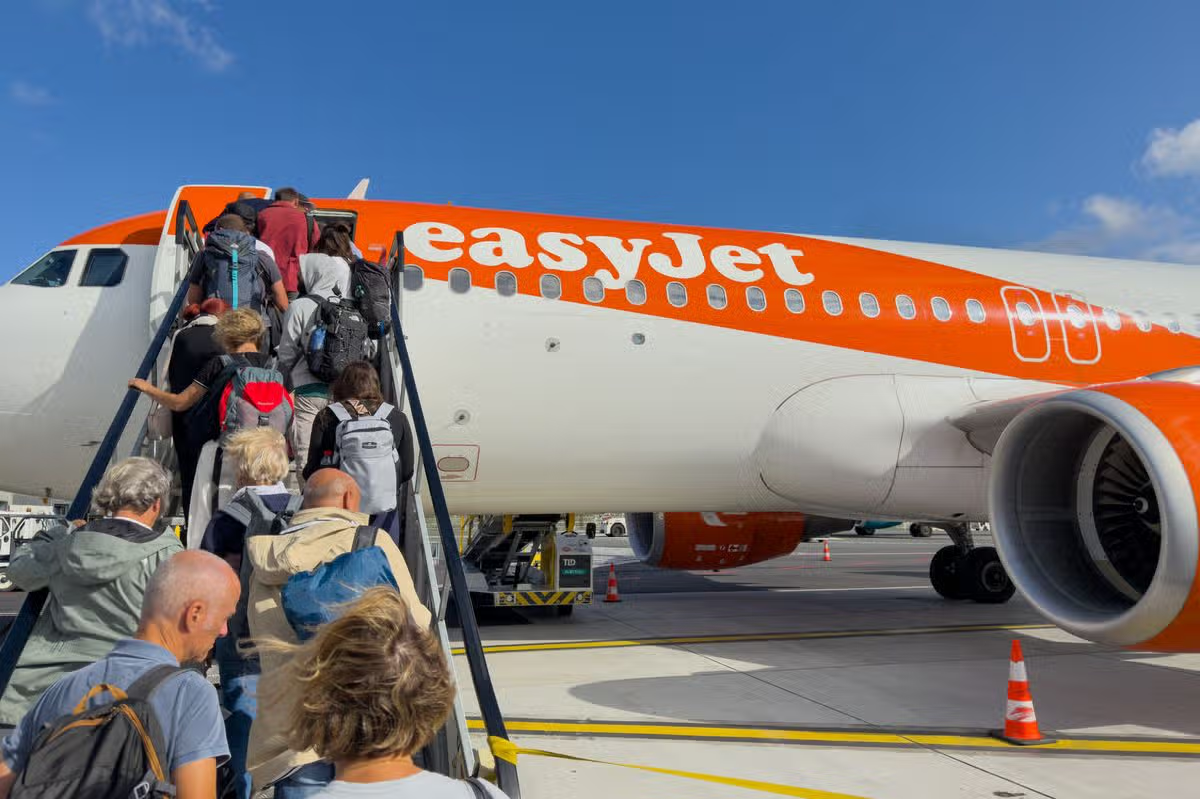
Passengers flying easyJet are warned on their website that airports can become especially busy during school holidays, and to allow extra time for traffic, train disruptions and queues.

The airline warns that bag drop at most UK airports closes 40 minutes before departure, although some airports and destinations may close earlier at 60 minutes. Twilight bag drop services are available the evening before flights that are scheduled for the morning.

Jet2

For Jet2, you should arrive at the airport at least two hours before the scheduled departure, or earlier, since the airline’s check-in desks generally open around two-and-a-half hours before flights.

Jet2 closes check-in desks 40 minutes before departure. Traveller are urged to check its latest travel information page at least 12 hours before flying for updates on delays or disruptions.

Like some others, the airline also offers its Twilight Check-in service at selected UK airports, allowing customers on morning flights to drop off bags the night before.

TUI

TUI’s standard check-in opens at least 2.5 hours before short- and mid-haul flights, but for long-haul flights you can check in 3.5 hours before departure.

The company warns that arriving earlier than this will not allow passengers to pass through security sooner, and that those travelling with hand luggage only and who have already checked in online can go straight to security after arriving at the airport.

For groups travelling together on the same booking, TUI advises that only one person needs to go to the bag drop with all passports, visas, boarding passes, and luggage.

For all airlines, general advice is to keep travel documents easily accessible, check flight updates online before leaving for the airport and prepare for longer queues during peak travel periods such as the May half-term.

Source link

Airlines could switch to US jet fuel to ‘ease some pressure’ amid shortage fears

The International Air Transport Association (Iata) has urged its European members to consider switching to US-made jet fuel amid rising concerns over possible shortages caused by the Iran oil crisis

European airlines should contemplate switching to US-manufactured jet fuel amid mounting worries over shortages triggered by the Iran oil crisis, a trade body has warned. The International Air Transport Association (IATA), which represents carriers, said its European members could “ease some pressure” by altering the type of fuel they use.

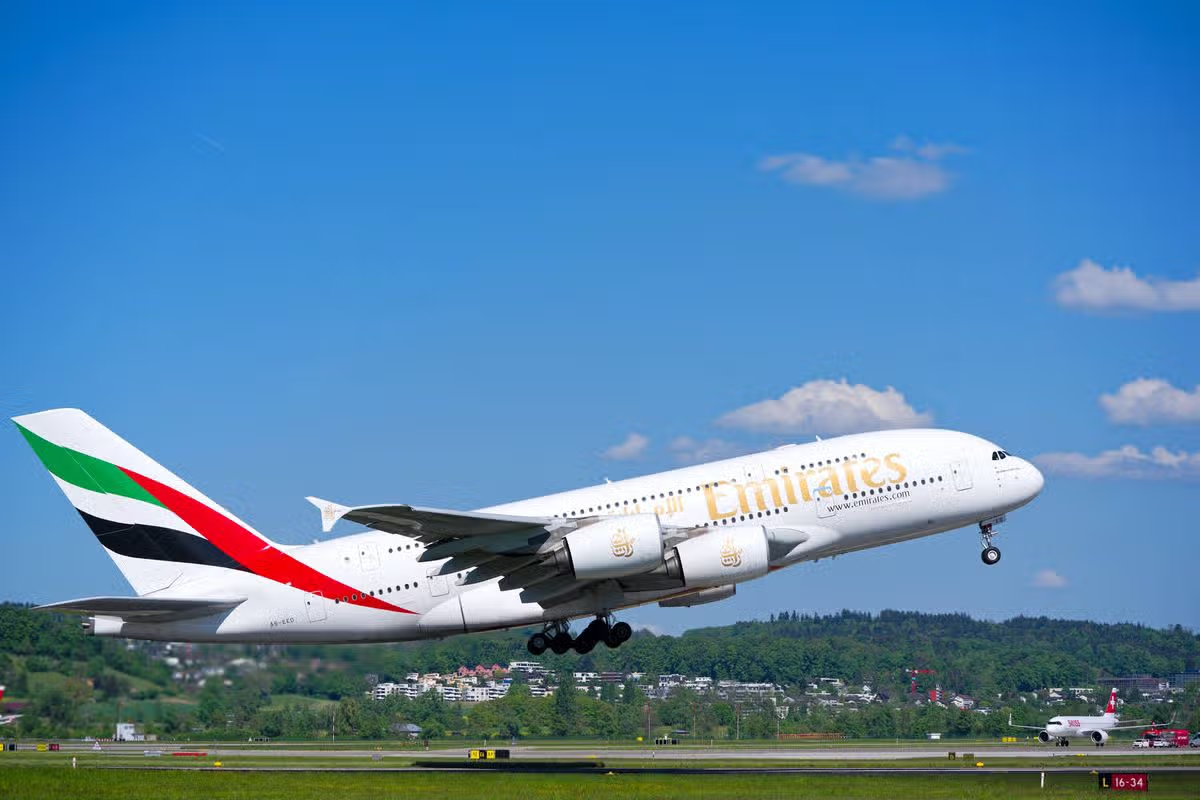
Commercial aviation mainly depends on two fuel grades: Jet A-1, which is utilised across most of the world, and Jet A, which is chiefly used in North America. They are comparable, with the principal distinction being that Jet A-1 has a lower maximum freezing point, offering greater versatility on long-haul and polar routes.

Jet A is predominantly manufactured outside the Gulf, from where fuel supplies are restricted by Iran’s limitations on tankers passing through the Strait of Hormuz. IATA’s director of flight and technical operations, Stuart Fox, stated in a blog that using Jet A “could give airlines facing a possible shortfall in fuel supply more options”.
He proposed this could “help the industry make better use of the fuel we have” and “keep schedules intact”. He continued: “Fuel supply could come under pressure if the war in the Middle East continues.

“Using Jet A, which is produced at scale outside the Gulf, could be a practical way to help ease some pressure on existing supply chains.

“This would have to be done through a controlled transition from one approved fuel grade to another. In normal times, that flexibility might not be noticeable. But in today’s circumstances it’s critical to keeping the whole system moving.”

Mr Fox noted that airlines looking to switch from Jet A-1 to Jet A would need to implement crucial safety precautions, including accounting for the higher freezing point and ensuring crew members are fully briefed on which fuel is on board.

On Friday, British Airways’ parent company International Airlines Group cautioned that its profits would take a hit, anticipating spending approximately two billion euro (£1.72 billion) more than budgeted on fuel this year. Chief executive Luis Gallego stated that he does not believe the group will experience “any interruption for the summer” with regard to fuel supply.

Source link

ABTA gives May half term update after flights cancelled in fuel crisis

The Department for Transport has also given its latest advice

People from the UK heading abroad for the Spring Bank Holiday are being given the latest advice on holidays amid growing fears over jet fuel shortages and flight disruption. Travel experts say flights are continuing to operate “as planned” despite airlines across Europe drawing up contingency measures following soaring fuel prices linked to conflict in the Middle East.

Concerns have grown after reports that some airlines are preparing for possible refuelling stops on long-haul routes if shortages worsen. German airline Lufthansa has reportedly already begun contingency planning after one of its flights was forced to divert for fuel during a recent journey to South Africa.

The airline has also cut thousands of flights from its wider summer schedule as fuel costs continue to rise. However, travel industry figures insist UK holidaymakers should not panic.

Mark Tanzer, Chief Executive of ABTA – The Travel Association, said: “We really don’t want people worrying about their holidays; planes are taking off daily and people are continuing to get away on their holidays. The Government and airlines are clear that there isn’t a problem with fuel supply.

“If you have a holiday booked in for the coming months – including the May half term – we expect it to go ahead as planned.”

He added: “Whilst there have been reports about cancellations globally, these amount to less than one per cent of overall flights.”

According to aviation analytics firm Cirium, around 13,000 flights worldwide have reportedly been cut during May. Munich and Istanbul are believed to be among the worst-affected destinations.

The Department for Transport has also said there is currently “no need” for travellers to change their plans. Officials say UK airlines buy fuel in advance and airports continue to maintain reserves to help prevent disruption.

Passengers are still being advised to check flight updates with airlines before travelling and ensure they have suitable travel insurance in place. Some 120 flights from the UK this month have been cancelled, new figures show, as jet fuel prices surge and fears of shortages grow.

Cirium said airlines have axed 120 of the 22,613 departures initially scheduled from UK airports in May, equivalent to 0.53%. The number of outbound flights planned for June is 36 lower than a week ago. This represents a 0.2% reduction and means capacity for the month has fallen by 7,972 seats.

The final week of May is a peak period for holidays as it is half-time at many schools. For all flights globally, some 13,005 planned for May were cancelled between April 10 and April 21, equivalent to 1.5%. That reduced capacity by almost two million seats.

Julia Lo Bue-Said, chief executive of Advantage Travel Partnership, a network of independent travel agents, said airlines are “assessing poor performance flights and consolidating or cancelling as required”.

She added that UK departures to popular summer hotspots “remain unaffected” and insisted “customers can continue to book with confidence”. Paul Charles, founder of travel consultancy The PC Agency, said: “Airlines are now being forced to cut flights and make difficult decisions ahead of the peak season.

“It is better for them to cancel flights well in advance so that passengers are less inconvenienced than a last-minute change of plan. As the Iran conflict continues, there will need to be many more cancellations as the jet fuel supply is squeezed.”

Lufthansa’s airline group announced in April it would cancel 20,000 flights over the following six months to save fuel. Iran continues to have a stranglehold on tankers passing through the Strait of Hormuz, leading to a surge in oil prices and concerns of jet fuel shortages.

But on Sunday, Transport Secretary Heidi Alexander said summer holiday plans will not face major disruption because of the latter. She revealed that more fuel has been imported from America, while refineries have upped their production.

The Government has also introduced a temporary rule change allowing airlines to group passengers from different flights together on to fewer planes to save fuel.

Source link

Ryanair’s ticket rule people born in 2010, 2014 and 2024 have to comply with

Families need to be aware of how this could impact their flights home

Certain young people going on holiday with Ryanair this year could find themselves in trouble if they are booked to fly with the wrong ticket type. It can happen to anyone born in 2010, 2014, or 2024. Ryanair divides its passengers into four categories when assigning seats on planes: adults, teens, children, and infants.

The airline is clear online about who qualifies for specific ticket types when they are travelling abroad with the budget carrier. Outlining the policy online, Ryanair says: “For the purpose of defining our passenger types, adults are over 16 years of age, teens are between 12 and 15 years of age, children are between two and 11 years of age, and infants are those under two years of age.”

This applies from the “date of flight departure”. If families are heading abroad and celebrate a birthday, they need to be aware of how this could impact their flights home. Anyone born in 2010, 2014, or 2024 must comply with the rules.

If a child turns two, 12 or 16 between leaving the UK and returning home, they cannot be booked onto Ryanair flights without potentially facing extra charges. It is important for parents to be aware of this before booking their next holiday – or act now if the plans are already in place.

Ryanair adds: “If an infant turns two years of age or a child turns 16 years of age during your trip, you should purchase two one-way flights rather than a return ticket. You may then connect the bookings by contacting us.”

In terms of pricing, teens (aged 12-15) are treated the same as adults for pricing. They may, however, lose any free seat selection that is offered to under-12s.

The airline has a section on its website for customers who have already made a booking and need to change their passenger type. Changing passenger types may incur fees, and it is generally better to update this to avoid issues at boarding.

Generally, swapping a child or teen ticket to an adult is free when done online, but child passengers will lose their free seat selection privileges and have to pay for a new seat when ageing out of the free under-12s seating offer. The cost of doing this varies, depending on the flight service and the newly selected seat.

In other Ryanair news, the budget airline is selling flights to Spain that are “cheaper than buying dinner”, which is great news if you’re looking for a budget holiday. The travel news was recently drawn to the attention of Spain Explore on Instagram, as they were keen to alert people to the deals.

The page claimed the airline has announced routes to Barcelona that are “cheaper than dinner”. After making a quick check, you’ll see that some flights from the UK are pretty reasonable.

Source link

‘Smart’ two-second travel hack ‘locks your bag’ in crowded places

A travel content creator has shared a simple two-second trick to help keep your belongings safe

A globetrotter has left social media users amazed after revealing her “genius” tip to help keep her possessions safe. In a viral TikTok post, @Charlottenorth demonstrated a two-second trick for fashioning a “makeshift lock” for your handbag.

The “smart” concept impressed viewers, with some branding it “the best hack.” The method is “so simple”, as you’ll only need one item to try it. As seen in the viral clip, Charlotte recommended using a claw clip to “lock” bags. Commenters also suggested using carabiners for the same effect.

In her post, Charlotte wrote: “How to lock your bag when travelling – I might just be dumb but I figured this out halfway through my trip and it felt revolutionary.” She then demonstrated the method, which saw her feed a hair clip through the zip and then clip it to her bag’s strap to create a “makeshift lock.”

Viewers loved the idea, with the footage gaining over 100k likes. One impressed viewer said: “I love this omg how smart!!” A second posted: “So simple yet genius!” Another fan of the idea wrote: “That’s so smart omg!! Thanks for sharing!”

A fourth commenter echoed: “This is so smart!!” Charlotte replied: “Honestly felt so much better walking round crowded areas like this!!!”

Content cannot be displayed without consent

Sharing a similar idea, someone else said: “I’ve been doing this with a carabiner and it’s perfect when I travel!!” A different reply read: “Been doing this for a year and it’s the best hack!!” Another social media user shared: “I always do this! Looks cute and my stuff is safe.”

Keen to try the idea, a fan said: “Ohhhhhh! I think I’ll do this for my upcoming Italy trip this summer!” Yet another fan wrote: “Ohhh, I might do this for our summer euro trip.”

Issuing advice on pickpocketing, the Metropolitan Police’s website states: “Remember, having a zipped bag doesn’t mean you’re totally safe. Thieves have been known to walk behind victims while slowly unzipping bags. Yes, they can be that bold. So, never underestimate a pickpocket.”

The webpage also includes dos and don’ts to help keep your belongings safe. The tips include carrying bags in front of you or diagonally across your chest and concealing your wallet in a buttoned or zipped pocket.

When travelling, the advice is to separate your wallet and phone and keep the contact numbers of family in case your phone is stolen. The guidance recommends opting for a purse that’s difficult to open.

People are also advised not to leave bags hanging on the back of a chair, attached to a pushchair, or out of sight on the floor when they visit cafes and restaurants. Pickpockets can target people in these areas.

Source link

Jet2 May 6 update as it launches new service to ‘paradise’ from 3 UK airports

Jet2 has launched new direct flights with the CEO saying the destination will be a ‘popular’ one for customers seeking culture and sunshine

Jet2 has launched a new service as it vows to offer passengers a slice of ‘sunshine paradise’. The UK airline’s first service to Palermo has taken off from Manchester Airport – with more to follow shortly from other UK airports.

The launch signals the start of Jet2’s operations to the Sicilian capital for the very first time this summer 2026, opening up the stunning island of Sicily to British holidaymakers. Jet2 will run twice-weekly services (Tuesdays and Fridays) from Manchester Airport to Palermo through to 3rd November 2026 in a piece of good news for passengers after weeks of headlines about the war in Iran and its possible impact on UK airlines.

Jet2 has also confirmed that travellers in the Midlands and Northeast will be able to get in on the action, with flights and holidays set to launch from Birmingham Airport on Wednesday 6th May and from Newcastle International Airport on Tuesday 26th May. From Birmingham, Jet2 will operate weekly Wednesday flights until 28th October 2026, while weekly Tuesday services will also be available from Newcastle Airport through to 3rd November 2026. The airline says all routes to Palermo are exclusive to Jet2.

Palermo marks Jet2’s latest expansion into Italy, bringing the total number of Italian airports served by the carrier to nine, including two in Sicily. Altogether, Jet2 has 12 weekly flights on sale to Sicily for summer 2026.

In a statement, the firm said: “The introduction of this new destination gives customers great access to the resorts of Campofelice Di Roccella, Cefalu and Pollinia on the island of Sicily, a sunshine paradise on the north-western coastline that offers stunning scenery, city sights and dramatic landscapes. From the beautiful beaches to the outstanding architecture, there is also the capital’s rich ancient history where there are myths and legends weaved into every captivating corner.”

Jet2 says it was the first UK airline and tour operator to confirm it will not introduce surcharges on any booked flights or holidays to cover cost increases, such as jet fuel, assuring customers that the price they book with Jet2 is the price they will pay. Jet fuel shortages caused by the Iran conflict have made the commodity more expensive for airlines.

Steve Heapy, CEO of Jet2.com and Jet2holidays said: “We are delighted to see Jet2’s first flight to Palermo take-off from Manchester Airport. To celebrate this new addition to our summer 2026 programme to Italy, we had our trademark red branding at the gate of the inaugural flight and also surprised one lucky customer with a pair of free return flights.

“We have no doubt that Palermo will be a popular destination for customers and independent travel agents looking to book getaways that combine culture and sunshine, and we look forward to taking them on our award-winning flights and holidays.”

Cut back booze at airports says Ryanair boss

The news comes as Ryanair boss Michael O’Leary today said airports should be banned from serving alcohol to passengers before early morning flights. “There should be no alcohol served at airports outside (those) licensing hours,” he told the Times.

He added: “We are reasonably responsible, but the ones who are not responsible, the ones who are profiteering off it, are the airports who have these bars open at five or six o’clock in the morning and during delays are quite happy to send these people as much alcohol as they want because they know they’re going to export the problem to the airlines.”

Source link

New ‘contingency’ plan to ‘conserve jet fuel’ could mean changes to 2026 flights

The UK Government has relaxed a rule for airlines which could see some summer flights dropped to save jet fuel

Travellers could find their UK flights rescheduled as the Government relaxes a particular rule that airlines rarely risk breaking. Holiday-makers should be aware that their plans may be changed to avoid journeys that would result in “wasted fuel”.

Transport Department officials say airlines may consider scrapping certain services following the introduction of a temporary rule change that allows carriers to merge flights and combine passengers. The idea is meant to cut the total number of aircraft departing, aiming to preserve jet fuel and provide holidaymakers with reassurance that trips won’t be cancelled altogether.

Rather than axing flights at short notice, the idea is to “reduce wasted fuel from flying near-empty planes”. To maximise the use of airport departures, airlines would reassess their schedules and could transfer passengers from under-booked services that haven’t sold a decent proportion of seats onto similar flights.
The Government claims these “contingency preparations” are meant to “give families greater confidence when travelling this summer”. While airlines have always been able to cancel and rebook flights, doing so typically came with a future risk to their business, reports the Express.
Addressing the update, Transport Secretary Heidi Alexander said: “Since the closure of the Strait of Hormuz, the government has been monitoring jet fuel supplies daily and working with airlines, airports and fuel suppliers to stay ahead of any problems. There are no immediate supply issues, but we’re preparing now to give families long-term certainty and avoid unnecessary disruption at the departure gate this summer.

“This legislation will give airlines the tools to adjust flights in good time if they need to, which helps protect passengers and businesses. We will do everything we can to insulate our country from the impact of the situation in the Middle East.”

The measures being considered by the government go further by enabling airlines to plan ahead and act on the most reliable information available on fuel supply or the wider ramifications of the Middle East conflict, rather than waiting for shortages to materialise. The government remains engaged in planning for various contingencies to boost flexibility around jet fuel supply, and domestic jet fuel production has risen. The UK sources jet fuel from multiple countries that don’t rely on the Strait, including the United States.

Explaining how flight consolidation works, TikTok user and travel specialist Kate Donnelly (@Thedonnellyedit) said: “If an airline has four flights operating to the same destination across a day, they might look at them and see two are half empty, so they might combine them and cancel one of those flights altogether. This would mean they are obviously saving on the amount of jet fuel they are using and overall cost.”

Content cannot be displayed without consent

If a flight experiences a significant delay, passengers are entitled to care and assistance, including food, drink and overnight accommodation where necessary. Generally, delays that warrant this include at least two hours for short-haul, three hours for medium-haul and four hours for long-haul.

Rob Bishton, chief executive of the UK Civil Aviation Authority, said: “Passengers in the UK are well protected by some of the strongest rights in the world, offering reassurance if disruption does occur. Airlines have a duty to look after their passengers when they face disruption, and should offer a choice between a refund or alternative travel arrangements, including with another airline, if a flight is cancelled.

“Relaxing the rules around slots at airports will allow airlines more flexibility and so we expect them to give passengers as much notice as possible of cancellations during this period.”

If the airline cancels your flight, you’re legally entitled to a choice between being rerouted or receiving a refund. Find out more about your rights following a flight cancellation here.

Source link

Families must ‘pay for plane seats’ or face being split as fuel crisis threatens holidays

As airlines have been granted a green light to consolidate or cancel flights with just two weeks’ notice, experts have warned of inevitable chaos this peak holiday season

Summer is well and truly in the air, but Brits looking ahead to their well-deserved week in the sun have been warned to take extra caution.

As the price of jet fuel has risen by 120 per cent since the start of the conflict in the Middle East, there are concerns of shortages in the coming months. Airlines have already hiked ticket prices, but further disruption is expected unless the Strait of Hormuz reopens soon.

Before the conflict, Europe as a whole had about 37 days’ supply of available. Now, this is likely to have dropped to 30 days, with the International Energy Agency (IEA) warning that 23 days is the critical point at which some airports would run out of fuel.

Now after airlines were granted a green light to consolidate or cancel flights with just two weeks’ notice, experts have warned that the traditional protections for those with additional needs are under threat. Crucially, the European Commission has signalled that disruptions caused by the ongoing Middle East fuel crisis will be filed under “exceptional circumstances,” meaning holidaymakers may be unable to claim any financial compensation if their flights are changed.

READ MORE: RAC issues ‘ominous’ UK petrol and diesel price warning for May 2026

Travel expert Declan Somers, CEO of Mobal, warns that the biggest risk this summer isn’t just chaos at airports, but how passengers might be split. As airlines merge flights to conserve fuel, families who booked together may find themselves rebooked onto replacement aircraft where they are scattered across the cabin.

Notably, there is no UK law that requires children to be seated with their parents on a plane. Airlines can legally separate even those under five from their parents, although this would be against Civil Aviation Authority (CAA) guidelines. The CAA says: ‘Young children and infants who are accompanied by adults should ideally be seated in the same seat row as the adult. Where this is not possible, children should be separated by no more than one seat row from accompanying adults. This is because the speed of an emergency evacuation may be affected by adults trying to reach their children.” “

If airlines start consolidating flights, a family of four ‘may be rebooked onto the same replacement flight but not necessarily seated together,” Somers cautioned.

While UK guidance suggests airlines should aim to seat children near parents, there is no absolute guarantee. To mitigate this, Somers urges parents not to treat seat selection as optional: “Book directly with the airline, pay for seat selection, and call immediately to have assistance notes attached to the PNR (Passenger Name Record).”

The situation is even more precarious for those with disabilities or complex medical requirements. Travel expert Alexandra Dubakova warns that emergency rebookings often fail to account for specialised needs, such as extra legroom for mobility or specific seating for medical equipment. “There might be cases of passengers being de-boarded or rebooked again because the replacement aircraft lacks the specific configurations they originally paid for,” Dubakova explained.

She warns of a significant “erosion of consumer rights,” noting that under “exceptional circumstances,” airlines are under less financial pressure to provide their usual level of care. For those requiring special assistance – such as storage for crutches or priority boarding – Scope guidance mandates booking at least 48 hours in advance. However, with last-minute aircraft swaps expected, these pre-arranged protections are no longer a certainty.

The disruption is expected to hit hardest at smaller regional airports, which lack the on-site fuel storage of major hubs like Heathrow. Dubakova describes these smaller airports as the “canary” in the coal mine. For families and disabled travelers, the advice is to “build in a buffer.”

Experts suggest choosing the first flight of the day, flying from larger hubs where possible, and ensuring all medication is planned at least four weeks in advance. UK airlines have previously insisted that they are not currently facing supply issues, while the Government will also work with the sector to act quickly if needed.

Europe’s leading budget airlines remain confident they will be able to keep flights running as usual throughout the peak holiday season ahead. Jet2, easyJet and TUI have all committed not to impose any additional charges on passengers due to fuel price increases.

Transport Secretary Heidi Alexander said: “There are no immediate supply issues, but we’re preparing now to give families long-term certainty and avoid unnecessary disruption at the departure gate this summer. This legislation will give airlines the tools to adjust flights in good time if they need to, which helps protect passengers and businesses. We will do everything we can to insulate our country from the impact of the situation in the Middle East.”

It’s understood that British Airlines would not allow to children sit alone away from their parent, with the team pre-seating families on the same Passenger Name Record (PNR) to ensure all those under 12 years old are seated with at least one adult on the same record. As per the BA website: “If you don’t choose your seats in advance, we always do our best to seat your family together based on flight seat availability. This may mean that you’ll be seated in adjacent rows or across the aisle. All children under 12 will be seated with an accompanying adult.” Tui and Virgin Atlantic also offer similar reassurances on their websites.

Meanwhile, as per the Ryanair’s Family Seating Policy, detailed on the company website: “For family bookings, children (aged 2 to 11 years) receive free reserved seating so they can sit beside a parent. When an adult purchases a reserved seat they can select up to 4 children’s seats beside them free of charge. If an adult selects a reserved seat outside of specific rows (depending on aircraft) they must pay the price difference. Similarly, if a seat is selected for a child outside of these rows, they will be charged the full reserved seat price of these seats.”

The easyJet website warns families who leave check in until the last minute may not be guaranteed sears next to each other, however, staff will “still make sure each child under 12 is seated close to an adult on your booking” An easyJet spokesperson told the Mirror: “easyJet is not seeing any disruption to fuel supply. We continue to operate our flights and package holidays as normal and are not making changes or cancellations. We remain in close contact with suppliers who continue to provide uninterrupted supply and are diversifying exporting from additional countries globally to bolster supplies going forward.”

Kenton Jarvis, CEO of easyJet, said: “I want our customers to book with confidence this summer. We are operating as normal and are not making changes or cancellations and we are looking forward to taking millions of people on their well-deserved holidays this summer.”

Do you have a story to share? Email me at julia.banim@reachplc.com

READ MORE: ‘Unbeatable’ headphones with 70 hours playback on 1 charge slashed in sale

Source link

Travel expert Simon Calder predicts EU’s controversial EES system to be ‘put on hold’ for the whole summer

Simon Calder described the EU’s Entry Exit System (EES) as ‘passport roulette’

A leading travel journalist has suggested the European Union’s new Entry/Exit System (EES) could be put on hold for the entire summer following reports of chaos and significant delays at airports. Speaking on BBC Breakfast, Simon Calder – who has branded the system ‘passport roulette’ – acknowledged that while some locations had performed ‘really well’, others were ‘struggling’.

EES is an automated system gradually replacing the traditional passport stamp. It requires people from third-party nations such as the UK to have their fingerprints registered and photograph captured before entering the Schengen Area, which encompasses 29 European countries, predominantly within the EU.

For the majority of UK travellers, the procedure takes place at foreign airports. The system saw a soft launch in October 2025 and was meant to be fully operational across all borders by April 10, 2026.

Yet there have been numerous accounts of passengers missing flights and enduring lengthy queues at airports as systems buckle under the sheer volume of people attempting to register. Several countries have suspended EES at various points, with Greece postponing the system for UK travellers over the summer to enhance the travel experience.

Portugal has halted EES for extended stretches to ease travel to and from the country, with speculation mounting that Italy may do likewise. Mr Calder indicated it was not beyond the realms of possibility. “It was always going to be really exciting to see what happens when you roll out a digital borders scheme and you ask 29 national governments to implement it,” Mr Calder said. “They have all gone their own way.

“Some of them have done it really well. Others, well, they are still struggling and we might find that, actually, the whole scheme gets put on a sort of hold for the rest of the summer.

“That’s certainly what a lot of airlines and train operators would like, not to mention the Port of Dover, where they haven’t even started taking biometrics from motorists yet.”

READ MORE: Ryanair issues plea to ‘suspend’ EES rollout amid ‘missing flights’ warningREAD MORE: Ryanair issues warning to customers – and it’s not down to fuel crisis

What’s the problem?

Headlines were made in April 2026 when passengers travelling with both Ryanair and easyJet missed their flights from separate Milan airports owing to EES complications. Footage from one incident revealed a crowd gathering at Milan Bergamo, with exasperated passengers informing staff they had been held at the gate for over an hour, demanding to know what action to take.

It’s understood that approximately 30 passengers were left behind. Ryanair said in a statement: “Due to passport control delays at Milan Bergamo Airport on 16 April, a number of passengers missed this flight from Milan to Manchester.” One passenger claimed they were kept waiting until the aircraft had departed, only to then be informed they would need to arrange their own return flights. A number of travellers on a Ryanair service from Tenerife South to East Midlands on 10 April also missed their homeward journey, once again blaming hold-ups at passport control.

Ryanair recently issued a blistering statement on social media, demanding the EES rollout be postponed until September. The low-cost carrier tore into France, Portugal, Poland, Italy, Spain, and Germany for their failure to ‘ensure that adequate staffing, system readiness, or kiosks are in place’.

Content cannot be displayed without consent

Branding the system as ‘half-baked’, the Ryanair statement said: “Despite knowing for over three years that EES would become fully operational from 10 April 2026, France, Portugal, Poland, Italy, Spain, and Germany have failed to ensure that adequate staffing, system readiness, or kiosks are in place.

“As a result, passengers are suffering long passport control queues and, in some cases, missing their flights.

“Ryanair calls on these EU Governments to suspend the rollout of the EU’s passport control Entry/Exit System (EES) until September to ensure that passengers are not needlessly forced to suffer long passport control queue delays at European airports during the peak summer season.”

Source link

‘I’ve visited more than 80 countries – there’s one surprising seat plane passengers should avoid’

Blogger Mark Wolters has spent two decades travelling around the world, but he says there are some seats he won’t sit on when he’s flying

An expert who has travelled to more than 80 countries says there is one seat you should never pick on a plane. Mark Wolters has spent the past two decades travelling around the world and documenting his trips.

He however says there are some seats that he refuses to pick on a plane, because they get his journey off on the wrong foot. Among those are any middle seat, which he says results in a “battle” for personal space.

He says travellers often end up cramped up when they are in the middle, saying they have “lost out”. However there is one row in particular that Mark says is the worst on a plane.

In a video on his Wolter’s World YouTube channel, Mark revealed the first row of the plane is “one of the worst”. He said: “One thing is, you have a bulkhead (wall) there.

“That first row, you don’t have the underseat storage in front of your space, so you have to make sure you get your stuff up above, but also you have no room to stretch your legs out because there’s not that underseat there, so sometimes you don’t have a tonne of space.

“But the really tough thing is, going back to the luggage, or lack of luggage space. If you’re flying in Spain, when they get on the plane, they put their bags in right away.

“They don’t wait to row 20. If you’re in row one or two, maybe you’re going to have to go to row five or six to put it up above and nobody’s going to let you go get it when it’s time to get out, which can be very frustrating.”

Mark went on to explain that the front of the plane often has the lavatory or the galley. And while he avoids sitting on the front row, Mark isn’t overly fond of the back either.

This is because you can often find yourself queuing to disembark the aircraft. He said: “If you have tight connections, guess what? You are the last one off the plane. And for my friends who do not like turbulence, if you’re in the very back of the plane, this is where the turbulence is.”

Mark says that the back, much like the front, can often be where the facilities are. In general he says he likes to avoid any seat next to the toilet, because you can “hear or smell” what is going on.

He also generally says he avoids sitting near to the galley, because it is “where the flight attendants work”. He explains this means the lights are constantly on and the area regularly “smells of food”.

He described the galley as “not really a quiet relaxing place,” which makes it more difficult to enjoy his flight. Elsewhere, Mark explains the exit rows are the “best” seats to sit in.

He said: “Those exit rows are the best for legroom because the extra row needs to be wider for exits, so it’s kind of like business class legroom for economy prices.”

Source link

Red UK passport holders told to check theirs now

This is especially important if you’re planning to go abroad

UK holidaymakers still carrying an old red passport have been issued a summer travel warning.

If you’re planning a getaway this year, it’s essential to examine your passport before jetting off due to strict entry requirements in place across various countries. Many nations enforce rules demanding that your passport remains valid for an extra six months prior to your departure for international travel. Known as the ‘six-month validity rule’, many travellers using pre-Brexit red passports may find their documents lack the necessary time left on them.

Countless other destinations, including all those within the Schengen zone, operate a three-month passport validity requirement. UK travellers can therefore only enter these nations if their passport has at least three months’ validity remaining.

If you’re still in possession of a red passport, checking its expiry date is absolutely vital. Following Brexit, your passport must be less than 10 years old on the day you arrive in the EU, and its expiry date needs to be at least three months beyond your planned departure date from the EU.

Most individuals, quite reasonably, assume that an adult passport is valid for 10 years, but if yours was issued before October 1, 2018, additional months may have been tacked onto its expiry date if the previous passport was renewed before it had completely expired.

To find out whether your passport will remain valid for your trip, head to GOV.UK, look up your destination country and select ‘entry requirements’. Bear in mind that you are only permitted to stay for a maximum of 90 days within any six-month period, reports Wales Online.

Among the countries that enforce a six-month passport validity rule are the USA, Australia, Thailand, China, the United Arab Emirates, and Indonesia. If your passport doesn’t have sufficient time remaining, you will be unable to travel as planned.

Source link

People returning from holiday urged to check all suitcase pockets

According to pest control, people should routinely check their luggage for warning signs

Many people will be heading home today after a bank holiday weekend getaway. While travellers often take great care when packing, it’s quite common to spend far less time unpacking – simply tipping the contents of your suitcase straight into the wash.

Throwing your clothes in the washing machine as soon as you arrive home is a sensible idea. However, there is another crucial step everyone is urged to take when emptying their luggage. Holidaymakers are advised to check their suitcases carefully for signs of any unwelcome guests, such as bed bugs.

The advice comes from James Rhoades, the founder of ThermoPest, a pest control firm specialising in bed bug treatment and registered with the British Pest Control Association. James says frequent travellers should check their suitcase as part of their routine whenever they return from a holiday.

The tip could help to prevent issues year-round, but it could be especially helpful for travellers to get into the habit now, ahead of the summer holidays. He explained: “During hot weather, bed bugs become more active and need to feed more frequently.

“They get all their hydration from blood, so a warm, humid summer gives them the perfect opportunity to bite. With people wearing lighter sleepwear or using thinner sheets, there’s less of a barrier between the bugs and their food source – us.

“There’s also typically a rise in cases after holiday periods, as bed bugs can easily be brought back hidden in suitcases or laundry. Once inside, they spread quickly, so early detection and prevention are key.”

Fortunately, there are steps people can take to minimise the risk when they arrive at their holiday and when they return home. “Hotels, guest houses, and short-term rentals can become hotspots for bed bugs during peak travel periods. Before unpacking, check the seams of the mattress, headboard, and upholstered furniture for telltale signs such as tiny rust-coloured spots or shed skins.

“Keep luggage elevated on racks rather than placing it directly on the floor to reduce the chance of bed bugs crawling into your belongings. You could also store clothes in sealed bags inside your suitcase for added protection and to make it harder for bugs to hitch a ride home,” says James.

When it is time to return home, it’s recommended that you unpack your clothes straight into the machine and carefully inspect your suitcase. James claims: “Returning home is one of the most common times for bed bugs to be introduced into your living space. As soon as you arrive back, unpack directly into the washing machine and wash everything on a hot cycle.

“Visually inspect your suitcase inside and out, paying close attention to pockets, seams, and linings for any signs of bed bugs such as dark spots, shed skins, or live insects. If you travel frequently, making this a routine step can help you spot potential issues early before they spread.”

Source link

Wizz Air issues Sunday May 3 flights update as it ‘confirms’ plans to all passengers

It comes as the UK Government today, Sunday, May 3, introduced a rule change allowing airlines to group passengers from different flights together

Wizz Air has issued an update to passengers this Sunday afternoon confirming its flight plans. The airline’s latest statement follows new official measures unveiled today, Sunday, May 3, by the Government.

The Government has brought in a temporary rule change permitting airlines to consolidate passengers from different flights onto fewer aircraft as part of efforts to conserve fuel. This follows warnings of a potential jet fuel shortage ahead of the busy holiday season if the Strait of Hormuz remains closed.

Asked this morning whether holidaymakers travelling abroad are likely to encounter difficulties this summer, Ms Alexander told Sky News’ Sunday Morning With Trevor Phillips: “I’ve spent every week of the last two months in close contact with airlines and airports.

“On Thursday of this week, airlines told me very clearly that they have good visibility over the next six to eight weeks of jet fuel supply. There is no current disruption to jet fuel supplies.

“We are, for example, importing more jet fuel from America. We have asked the refineries in the UK to maximise their production. We’ve got four refineries here, refineries in West Africa are also producing more.”

She continued: “The last thing I want is for people to turn up at a departure gate and have last minute cancellations. I am confident, sat here today on the basis of the information that I have available to me, that the majority of people who are travelling this summer will have a similar experience to that which they had last year.”

Her comments come as airlines worldwide take action in response to soaring jet fuel prices. These have been triggered by Iran’s effective closure of the Strait of Hormuz, blocking off one of the world’s crucial routes for jet fuel distribution to other countries.

Lufthansa recently revealed plans to axe 20,000 flights as it scales back capacity to cope with jet fuel shortages. UK carriers have also issued statements in a bid to put customers’ minds at ease.

Among them, Jet2 confirmed it will not impose surcharges on any existing flight or holiday bookings to offset rising costs, such as those for jet fuel. Now Wizz Air has released a fresh statement following the government’s latest proposals.

Speaking today, an airline spokesman said: “Wizz Air acknowledges today’s announcement by the UK government and would like to reassure customers that its operations remain fully stable and unaffected.

“The airline confirms that it plans continue to operate its full summer schedule, flying passengers safely and reliably to their destinations across its extensive network. Wizz Air is working closely with its partners to ensure seamless operations throughout the peak travel season.

“Customers can book with confidence on Wizz Air’s wide selection of routes from more than half a dozen airports across the UK, connecting travellers to popular destinations across Europe and beyond.”

New government rules amid jet fuel shortage fears

The Government’s airline rule change could result in passengers being switched from their originally booked service to a comparable one in order to cut down on wasted fuel from aircraft that haven’t sold out and may otherwise have been cancelled.

Consumer group Which? has hit out at the move, arguing that rules should not be “bent in favour of airlines”. Shadow transport secretary Richard Holden warned that families could find themselves “herded on to a different plane, at a time of the airline’s choosing”.

“The honest message is that Britain is exposed to fuel supply risks that a properly energy-secure country would not face,” he added. Green Party leader Zack Polanski has called for private jets to be grounded in a bid to conserve fuel.

“While ordinary people pay the price, the super rich are simply getting in their private jets at will – wasting huge amounts of jet fuel on unnecessary trips,” he said.

Source link

Flight attendant shares real reason they greet passengers and it’s not to be polite

A flight attendant has shared the reason cabin crew greet every passenger boarding the plane, and it has nothing to do with just being polite. There’s a lot more to the simple act

Whenever we board a plane, we inevitably interact with flight attendants who, beyond keeping us safe throughout the journey, are also on hand to offer some genuinely useful guidance. After all, they possess an unrivalled knowledge of air travel safety.

Now, one flight attendant has lifted the lid on a secret that most holidaymakers are likely completely unaware of. She revealed that the greeting you receive as you board the plane actually serves a very specific purpose, and it has nothing to do with being courteous. In fact, cabin crew are carrying out an important assessment of passengers from the very moment they step on board.

This follows further revelations from another flight attendant who recently shared some incredibly handy tips, claiming there is something people should never wear when travelling.

As it turns out, flight attendants are sizing passengers up right from the off, and it’s all been laid bare in a candid TikTok video. Flight attendant Mrs Miva has blown the whistle on one of the industry’s best-kept secrets.

In her viral clip, she revealed the true reason behind the cabin crew’s welcoming routine as passengers make their way on board. It seems that saying “hello” is about far more than simple courtesy.

Over footage of herself, she wrote: “Did you know that your flight attendant greets you not only out of politeness, but also to check whether you are too drunk or sick to fly?”

Content cannot be displayed without consent

The video has since racked up millions of views, leaving countless viewers genuinely stunned. The notion of being discreetly assessed upon boarding came as a complete surprise to many.

One viewer said: “Wait, is there a reason why they always ask me where I sit when I go onboard? ” Another noted: “To see if you’re 1. Safe to fly (not intoxicated) and to see if you could help in an emergency.”

A third also wrote: “And looking for suspicious behaviour.” Meanwhile, a fourth added: “We are also picking out good candidates in the event of an emergency.”

Some even shared their own experiences to back up the theory. One recounted: “I was denied an international flight from England to America because they thought I’d die en route from being so sick.”

Another wrote: “True, and it’s the toughest part of the day. Without being paid!”

What you need to know

While cabin crew clearly aim to be friendly and welcome passengers as they embark on their journey, there’s far more happening when they greet you at the aircraft door than meets the eye. In reality, they’re carrying out a comprehensive head-to-toe safety evaluation of passengers before takeoff.

This process involves checking for intoxicated or disruptive passengers, ensuring travellers are capable of following emergency procedures, identifying potential security risks, and also spotting physically capable individuals who might be able to assist during an emergency. Crew members receive thorough training to enable them to detect any possible threats effectively.

They also watch passengers to gauge whether they can comprehend and follow safety instructions, which becomes vital should an emergency arise. While the assessment can be completed in mere seconds, it plays a really important role in helping to maintain aircraft safety.

Beyond this, it also contributes to fostering a relaxed environment. After all, it helps to establish a welcoming atmosphere for the journey ahead.

Flight attendants carry out genuinely crucial duties, and this simply demonstrates the lengths they go to in order to keep travellers as safe as humanly possible throughout. Now you understand what they’re actually up to.

Source link

EasyJet issues new Saturday ‘flights and package holidays’ update for UK travellers

EasyJet has issued a new statement this Saturday, May 2 as UK travellers consider their holiday plans amid concern over jet fuel shortages

EasyJet has issued a new update for UK travellers currently looking to book their summer flights. Holidaymakers up and down the country are busy making plans for the warmer months ahead.

However, they are doing so amid uncertainty hanging over parts of the airline industry. This follows jet fuel shortages brought about by the effective closure of the Strait of Hormuz by Iran.

Lufthansa has already confirmed that 20,000 of its flights are to be axed as a result. Industry experts warn that further airlines are likely to slash their capacity in the coming weeks – with Ted Wake, managing director of Kirker Holidays, last week predicting that “I think other airlines within the UK market will be doing something similar.”

Across the Atlantic, we reported earlier today that budget carrier Spirit Airlines has announced it is grounding all of its flights, as the jet fuel crisis, combined with mounting financial pressures, pushed the airline to the edge of collapse. easyJet has now set out new commitments to customers alongside a fresh statement.

It is all part of a bid to put the minds of UK passengers at rest as they weigh up their summer travel options. Ryanair and Wizz Air have also moved within the past 24 hours to offer their own reassurances to British holidaymakers.

In a statement released today, easyJet said: “easyJet is not seeing any disruption to fuel supply. We continue to operate our flights and package holidays as normal, are not making changes and intend to operate our full summer schedule. We remain in close contact with suppliers who continue to provide uninterrupted supply and are diversifying exporting from additional countries globally to bolster supplies going forward.”

easyJet made the latest statement as it introduced new measures designed to give UK travellers greater peace of mind when booking flights. The airline has unveiled a ‘Book with Confidence Promise’ in a move to reassure passengers ahead of the summer season.

The carrier says it is guaranteeing that customers won’t be hit with post-booking price rises or fuel surcharges. easyJet says it plans to operate its complete network schedule, which includes more than 50 million seats and 30 new UK routes.

According to the airline, the ‘Ultimate Flexibility’ policy enables holidaymakers to amend or cancel their bookings up to 28 days prior to departure. Kenton Jarvis, CEO at easyJet said: “We understand that global events may affect travellers’ confidence at the moment, but we believe that everyone has a right to book their flights and holidays with confidence.

“That’s why we’re launching our ‘Book with Confidence Promise’. Our customers won’t be charged any more after they book, including no fuel surcharges, and package holidays customers can continue to benefit from Ultimate Flexibility when they book with easyJet Holidays.”

Jet2, easyJet and TUI have all pledged not to impose additional charges on travellers for fuel price increases. In new remarks published today, Michael O’Leary, the boss of Ryanair, Europe’s largest airline, told The Times that 80 per cent of its fuel supply until March 2027 had been secured in advance. He confirmed the company would not be reducing any flights, despite the crisis costing the firm approximately £37 million each month in extra fuel costs on its unhedged supply.

Eddie Wilson, chief executive of Ryanair, warned that rival airlines could soon begin “gouging” their schedules should prices remain elevated. He said: “What’s going to happen with airlines that are not financially robust, they either have to decide whether they are going to continue flying at a loss or start gouging their schedules. That’s not something we are contemplating.”

Meanwhile, Wizz Air has also moved to reassure customers. Speaking to renowned UK travel broadcaster and journalist Simon Calder on his Independent travel podcast, the airline expressed confidence that it will deliver a full schedule of flights this summer.

“We have just launched our biggest-ever network from the UK and in particular from Luton,” said Yvonne Moynihan, managing director of Wizz Air UK. “Despite the challenging geopolitical crisis, business goes on as usual. In airlines, we are well used to crises, so we are resilient and we’re well adapted.

“For low-cost airlines like Wizz in the UK, we don’t see any shortage of fuel.” She said that if jet fuel shortages affected the UK, the airline would get fuel from elsewhere.

“We can take more fuel than is required in those destinations,” she said. “We can even fly to other countries and and pit-stop, if you will, if we need additional fuel.

“But we’re not seeing an Armageddon situation. We have fuel supply. We have other mechanisms for uplifting fuel.”

A Jet2 spokesman said: “We remain in continual dialogue with our fuel suppliers, as is standard practice. Based on the conversations we have been having, we see no reason not to look forward to operating our scheduled programme of flights and holidays as normal.”

Airlines UK said: “UK airlines continue to operate normally and are not experiencing issues with jet fuel supply.”

Source link

UK tourists to face flight ‘cancellations’ alert as 6 hotspots ‘could be at risk’

Transport Secretary Heidi Alexander is set to ‘level with’ the public as jet fuel shortages continue to affect airlines

British holidaymakers are set to be warned by ministers to prepare for potential flight cancellations. The anticipated warning follows concerns from airline bosses about possible jet fuel supply shortages affecting the UK from as early as next month.

Transport Secretary Heidi Alexander is reportedly preparing to “level with” the public this weekend about the likelihood of disruption and cancellations this summer. She is also expected to outline contingency measures designed to minimise the fallout – as six tourist hotspots have reportedly been identified as being at risk of cancellations.

Government officials are drawing up plans to advise against long-haul travel to specific destinations should tensions in Iran escalate dramatically. Countries including Vietnam, Pakistan, Bangladesh, the Philippines, Myanmar and Ethiopia could be affected, sources told the Times.

Ministers are also set to highlight the “positives” of staycations as anxiety mounts over overseas bookings. A number of major European carriers have recently sounded the alarm about looming jet fuel shortages in the coming weeks, citing disruption to their primary supply route through the Strait of Hormuz.

According to UKOilWatch, Britain currently holds just 34 days’ worth of jet fuel reserves. Roughly three-quarters of Europe’s jet fuel originates from the Middle East and passes through the Strait of Hormuz off Iran. Heathrow Airport confirmed on Wednesday that it anticipates passenger figures for the remainder of the year will be impacted by Middle Eastern tensions.

Lufthansa Group plans to axe 20,000 flights over the next six months in a bid to conserve fuel. Meanwhile, other carriers including Virgin Atlantic have introduced a fuel surcharge, and British Airways has cautioned passengers about potential “pricing adjustments” to their tickets.

Sir Keir Starmer, the Prime Minister, also suggested this week that Brits might need to reconsider “where they go on holiday”. Government ministers insist the UK isn’t currently facing jet fuel shortages, as alternative supply sources remain available.

Michael O’Leary, chief executive of Ryanair, Europe’s largest airline, revealed to The Times that competitors are “desperately” hunting for flights to axe, with cancellations expected to begin within weeks. According to the newspaper, leading fuel suppliers are informing airlines that the UK has the “most limited visibility” across Europe regarding jet fuel availability, largely due to its heavy dependence on Middle Eastern imports.

These suppliers reportedly anticipate May will be manageable. Yet they warn that “mid to late June as the potential start of disruptions” if the Strait of Hormuz near Iran remains closed.

Ryanair and Jet2 reassure passengers

O’Leary explained: “There is a modest improvement in the supply situation through to the end of May, early June, but then nobody would give us any undertakings what happens in mid-June or thereafter.”

He confirmed Ryanair wouldn’t be slashing flights. However, he predicted that other prominent European carriers more “exposed” to soaring costs would likely begin scrapping routes, saying: “They are all desperately trying to take out marginal flights or any growth because they don’t have the fuel for it.

“We were worried there would be disruption to around 10 per cent of our flights but some of those worries have eased because other European airlines have taken out lots of capacity.” It comes as Jet2 has revealed that holidaymakers are increasingly making last-minute bookings following the outbreak of the Iran war, with growing concerns about the conflict’s impact and potential disruptions to jet fuel supplies.

The company reported that summer passenger bookings are currently up 6.2%, driven by growth in both its airline and package holiday operations. However, highlighting rising unease amongst travellers, it noted that the “booking profile has become increasingly close to departure” as a result of the Middle East conflict.

Jet2 confirmed it has strong protection against fuel cost increases triggered by the Iran war for the crucial summer period. It said it is “maintaining frequent dialogue with our fuel suppliers and airport partners on fuel supply”.

British refineries have meanwhile been instructed to maximise jet fuel production as part of government contingency measures amid concerns that the Iran war could lead to aircraft being grounded. Energy minister Michael Shanks said the government is closely monitoring UK jet fuel stocks and liaising with airlines, airports, fuel suppliers and international partners.

“UK airlines typically buy fuel months in advance, and aviation fuel suppliers hold bunkered stocks. The UK imports jet fuel supplies from a range of countries not reliant on the strait, including the United States,” Shanks stated in a ministerial announcement. “Airlines UK have stated that ‘UK airlines continue to operate normally and are not experiencing issues with jet fuel supply.’ The government continues to work with partners to monitor and mitigate potential disruptions,” Shanks added.

Source link

Travel expert warns passengers to check ‘PIR number’ if their suitcase goes missing

Chris Harrington, managing director at travel transfer company hoppa, has outlined what to do to give yourself the best chance at recovering your valuables, or, at least, getting some compensation for the loss

One of the most common travel nightmare scenarios tourists face is having their luggage go missing after a flight.

Mishandling checked-in bags costs airlines around £4.2 billion a year, according to aviation technology company SITA. If you’re one of the unlucky ones who ends up not finding your suitcase on the conveyor belt, here are the seven steps to take immediately, according to an expert.

Chris Harrington, managing director at travel transfer company hoppa, has outlined what to do to give yourself the best chance at recovering your valuables, or, at least, getting some compensation for the loss.

The most important thing, he says, is to act fast. He says: “Ultimately, the faster and more informed your response is, the better your chances of recovering your bag or at least getting clear updates on where it is.”

Chris advises heading straight to the airline’s service desk near baggage reclaim if you notice a missing bag – stressing that delays can reduce the chances of locating your bag quickly.

READ MORE: Ryanair passengers warned over type of bag you can never check inREAD MORE: UK tourists face travel disruption on May 12 as new strike action confirmed

From then on, it’s important to have your baggage tag and flight details ready, as they will help staff begin tracking your suitcase straight away.

You should also be as specific as you can when describing the missing item. “Details matter. Think about the colour, size, brand, and any distinguishing features like stickers or tags. Even better, show photos if you have them,” Chris continued.

And once your case is all documented and reported, never forget to ask for a Property Irregularity Report, or PIR number, as it is “essential for tracking your luggage and for any future claims.”

In the meantime, most airlines try not to leave customers empty-handed. “Some carriers will provide an allowance for essentials like clothes and toiletries,” Chris notes. “If they don’t, keep every receipt, as you may be able to claim those costs back later.”

Another essential step is to contact insurance companies early on, since many policies include cover for delayed luggage after 12 to 24 hours, but the expert recommends being prepared and checking exactly what evidence they require. If, after several days, nothing is found, it’s crucial not to give up.

“You should be following up regularly,” Harrington advises, adding that “after 21 days, luggage is officially considered lost under international guidelines.”

Thats the stage in which travellers are encouraged to put forward a formal claim – according to the Montreal Convention, which sets out airline liability in such cases.

Chris highlights that passengers may then be entitled to compensation of up to around £1,300 if they provide the right documentation.

To claim that sum, “you’ll need proof of your luggage and what was inside it. The more evidence you have, the stronger your claim.”

Source link