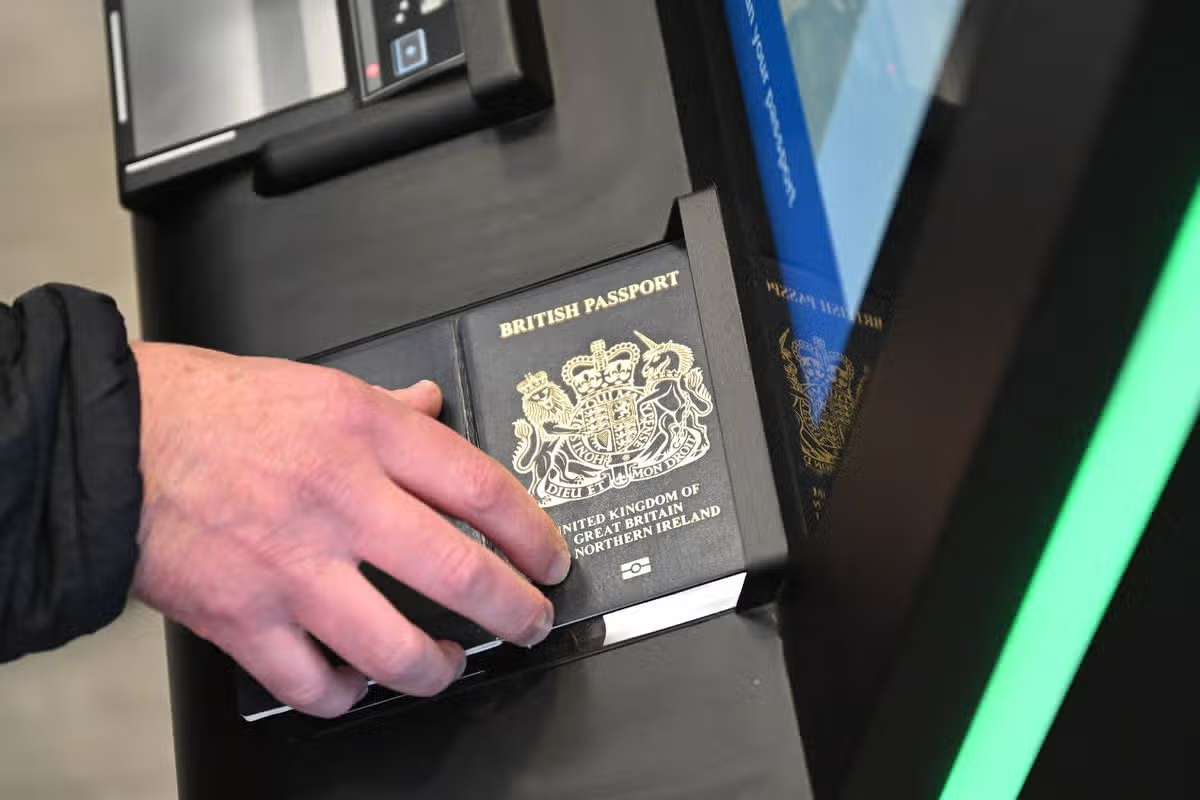
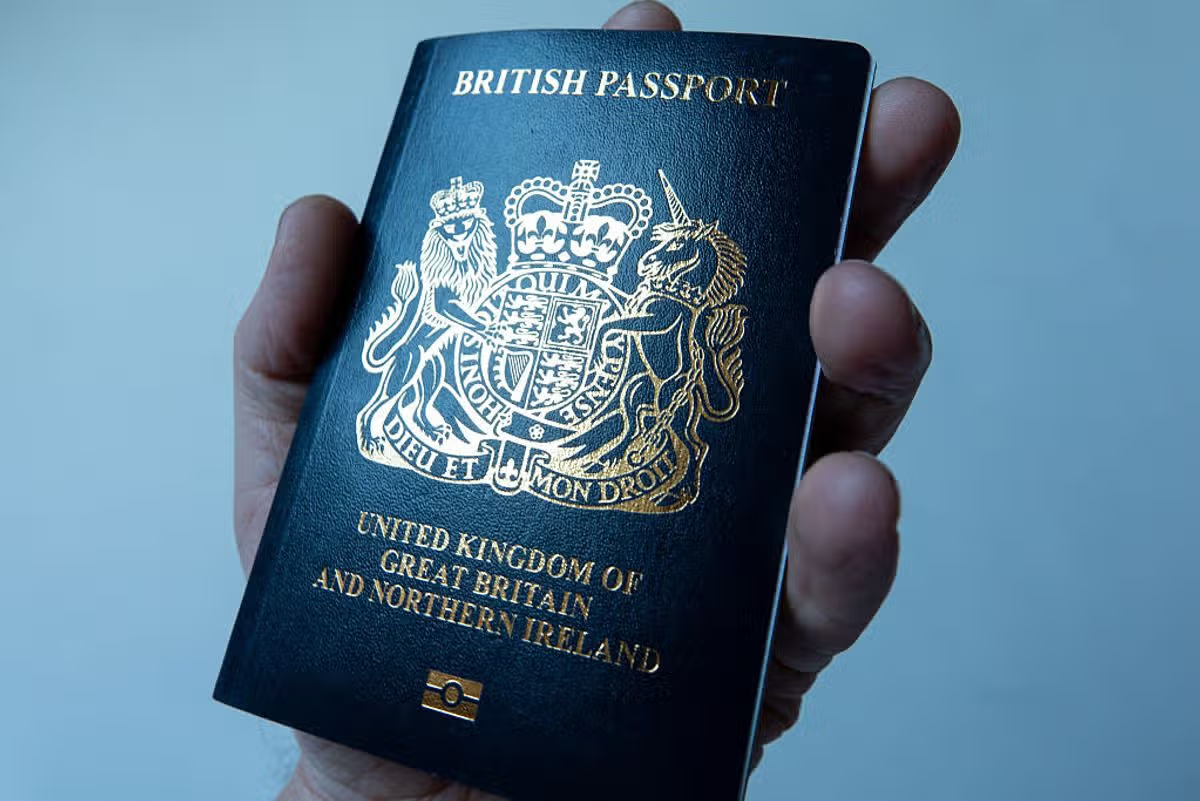
There’s nothing worse than realising your passport is about to expire when you have a trip booked – but the good news is that you don’t have to instantly cancel your holiday
Getting a last-minute passport can be stressful(Image: Justin TALLIS / AFP via Getty Images)
If you’ve got a holiday booked and have just discovered your passport needs renewing, then you may be wondering what your options are for getting a last-minute passport.
The HM Passport Office advises that a renewal takes about three weeks from the date it receives your documents, with online applications tending to be much faster than paper forms. While it’s an unofficial site, PassportWait is also a good place to check current processing times, as this is based on crowdsourced data. Currently, it shows an average processing time of 25 days.
Here’s a breakdown of the fastest options and how you can apply for them. It’s worth remembering that the rules for adult and child passports are different, and not every option is available for under 16s.
1 day Premium
The one day Premium service is the quickest option for a renewal, but it means you need to book an appointment at your nearest passport office. This service can only be used for renewing an adult passport issued after 31 December 2001.
You simply take your old passport and any other requested documents to the meeting, and your new passport will be ready to collect four hours after your appointment.
But this is an expensive option. It costs £239.50 or £253.50 for a 54-page frequent traveller passport, whereas a standard renewal is priced at £102.
1 week Fast Track
The Passport Office also offer a 1 week Fast Track option which can be used to renew, replace or change an adult or child passport. It can also be used to apply for a first child passport if you need one last-minute.
Again, you’ll be given a list of documents to bring along, and for adult passports these get checked and returned at the appointment. If you’re applying for a child passport, the documents are left with the Passport Office and will be returned to you later.
Your new passport is then delivered to your home one week later by Royal Mail tracked delivery. This service is also more expensive than standard passport renewals due to the short turnaround time. For adults, the fee is £192 for a standard passport or £206 for a 54-page frequent traveller passport.
For a child’s passport, the fee is £156.50 or £170.50 for a 54-page frequent traveller passport. The usual cost for an under 16’s passport is £66.50.
Passport office locations
There are seven passport offices across the UK where you can make an appointment for the 1 day Premium or 1 week Fast Track service. At busy times, it can be difficult to get an appointment, so if you can be flexible about which location you visit this can help you get a slot faster.
London HM Passport Office – E16 1DR
Peterborough HM Passport Office – PE2 8YY
Newport HM Passport Office – NP20 2DW
Liverpool HM Passport Office – L3 9BP
Durham HM Passport Office – DH1 1SL
Glasgow HM Passport Office – G4 0BT
Belfast HM Passport Office – BT1 3GN
Have a story you want to share? Email us at webtravel@reachplc.com
Airports have warned that kids could be forced to leave the items behind
09:19, 21 Jul 2026Updated 09:19, 21 Jul 2026
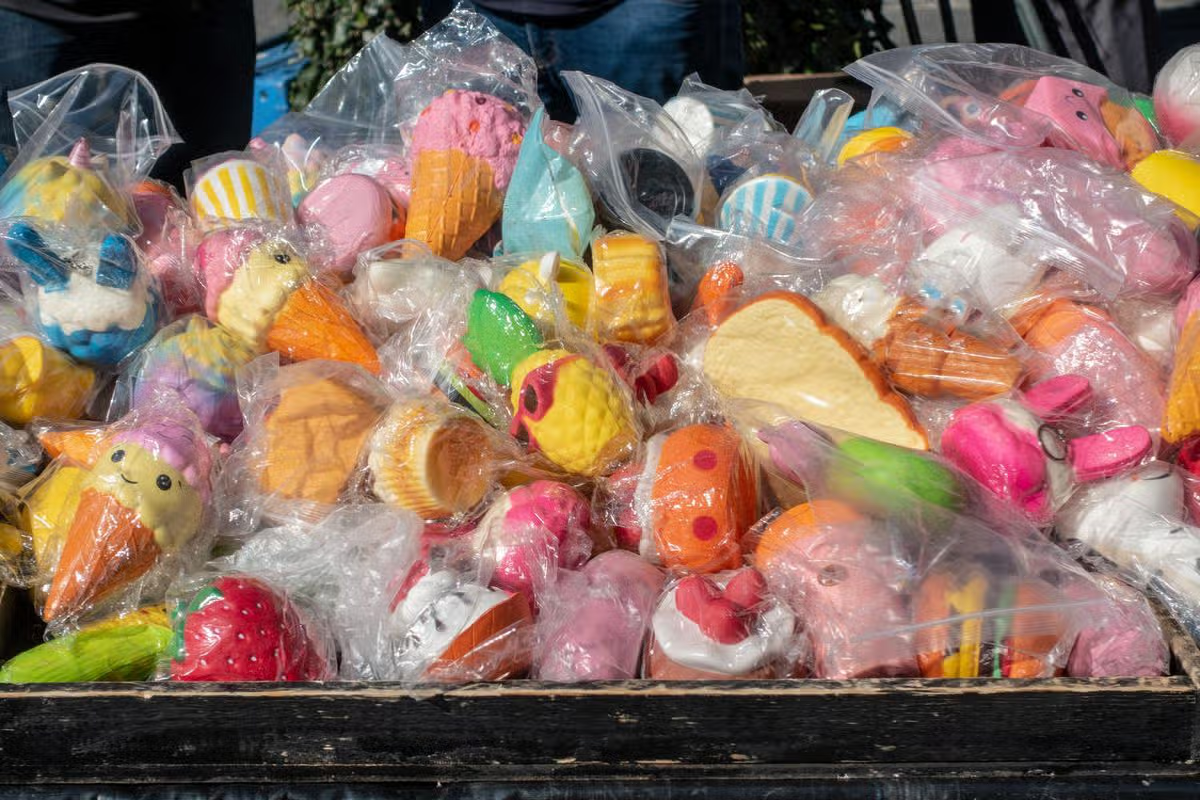
Squishy toys could easily raise a red flag at airport security this summer (stock image)(Image: Getty)
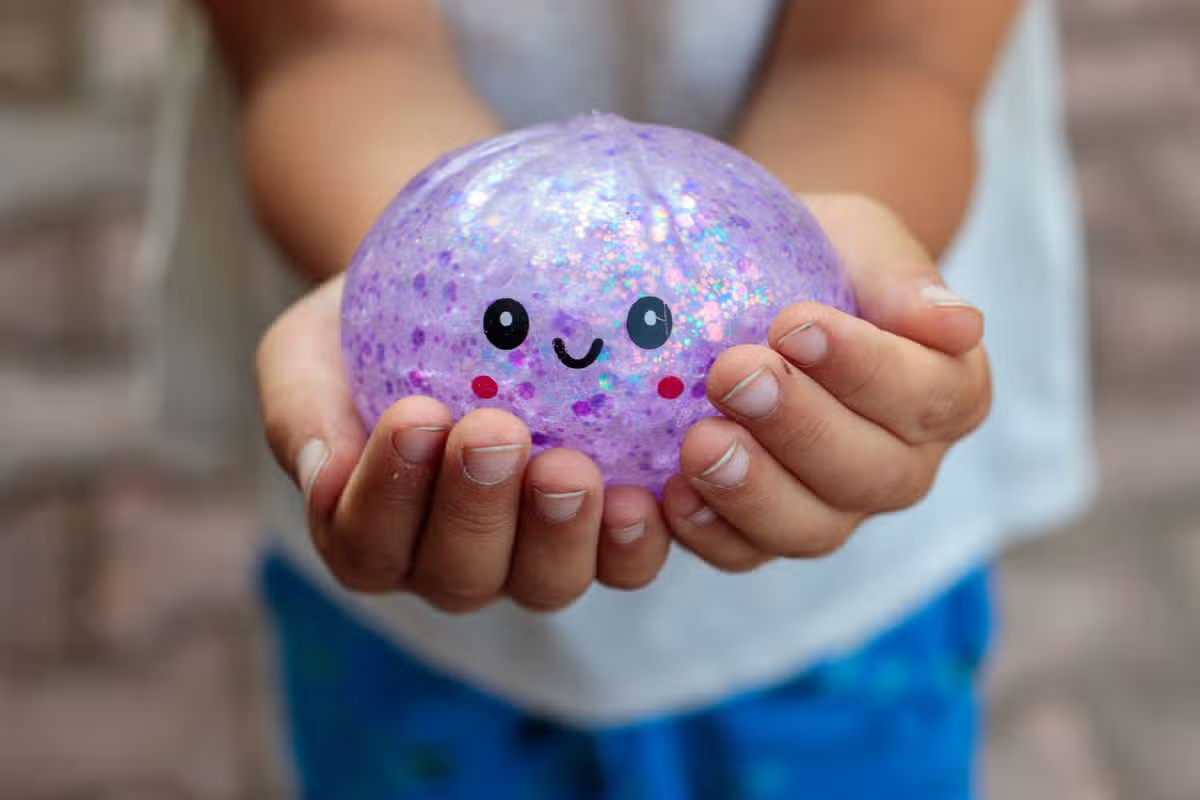
Parents are being told to leave certain children’s toys at home. If kids bring them to the airport, they may be taken from them at security. There is a high chance that items like NeeDoh cubes and other popular ‘squishy’ toys could be flagged and confiscated.
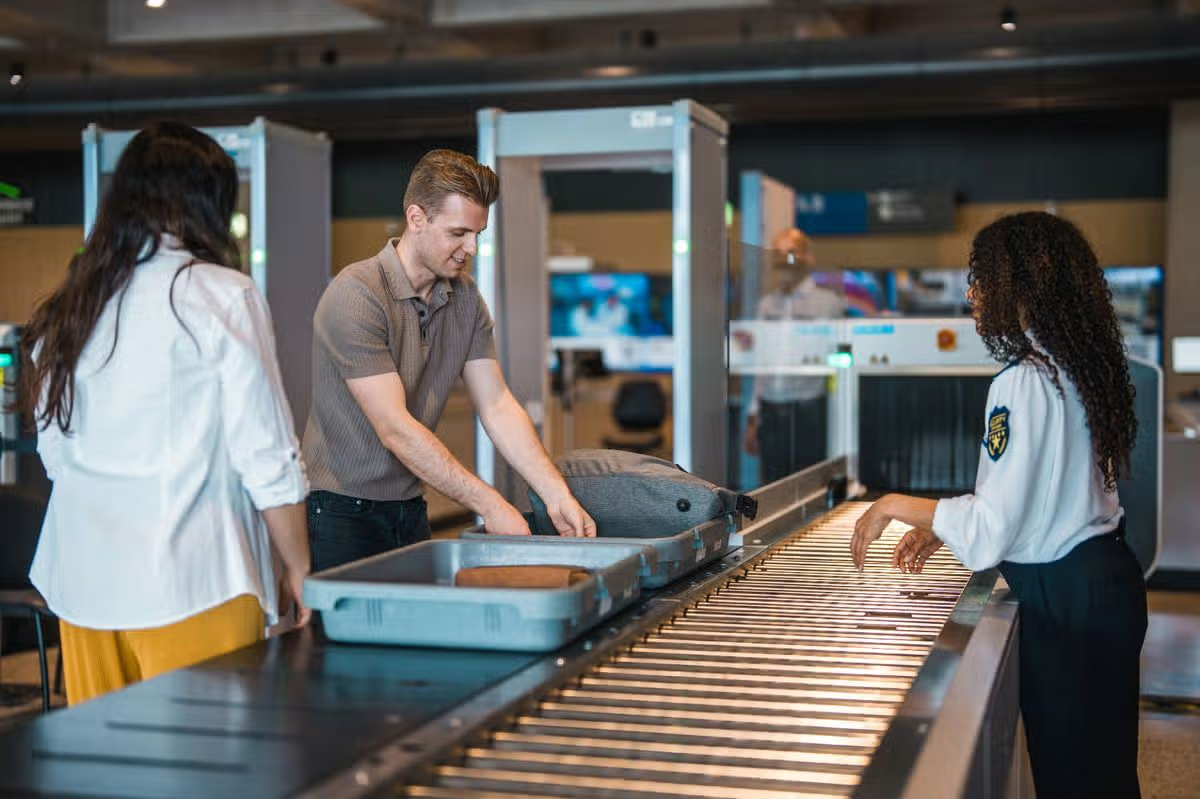
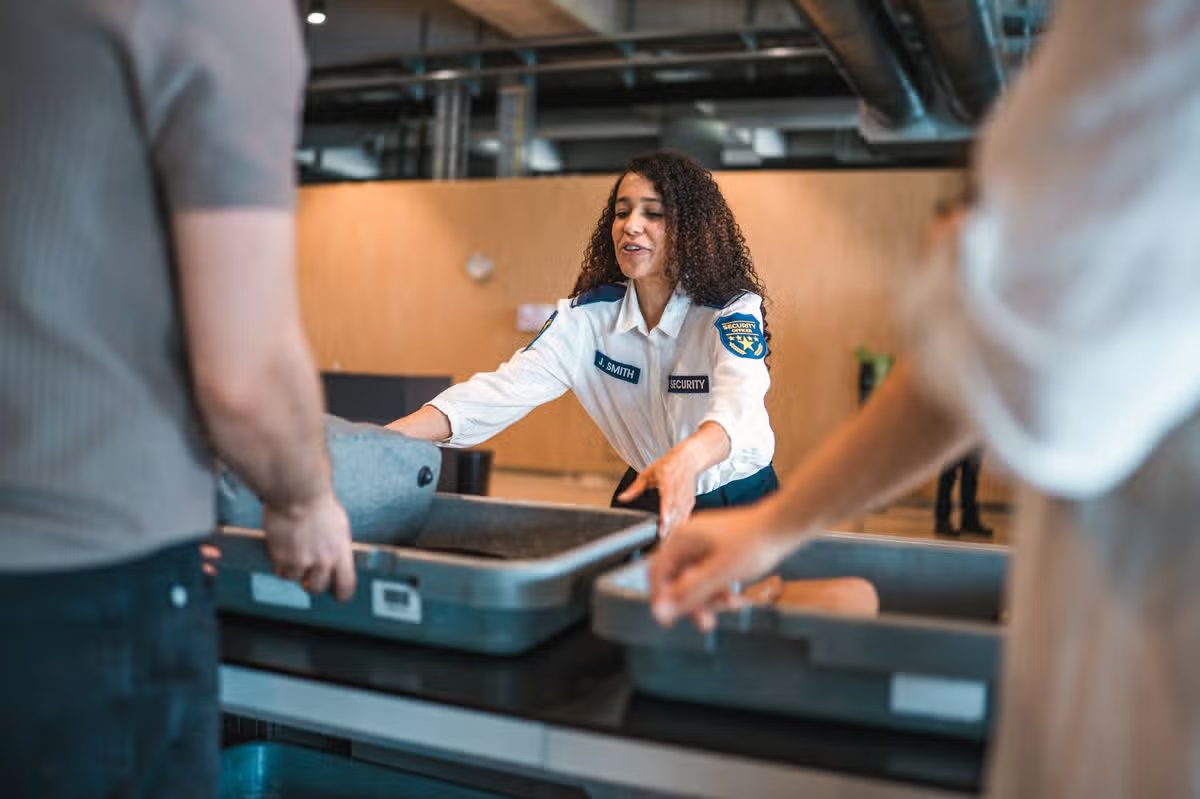
Even at airports using advanced scanners, gel-filled toys look highly unusual on security screens. This frequently triggers a manual bag check, causing travel delays, and some staff will not take the risk with these items going any further into the airport.
Travel specialist Kate Donnelly (@Thedonnelllyedit) said: “From my own personal experience, [squishy toys] do tend to come under closer scrutiny when passing through airport security. My top tip for parents this summer, pack these items in your whole luggage.
“There is a high chance that if you put these in your hand luggage, they will get confiscated. There are absolutely no markings on them to let you know exactly how much liquid is contained within them, and therefore, they are very easily removed.
“This means that you have upset children and you will have to pay out for a whole new load of toys when you get to your destination.” She suggested that the best thing to do is to pack toys safely in your main suitcase that gets checked into the hold, as this allows more liquids than hand luggage does, helping you avoid delays and reduce the risk of them being confiscated.
Content cannot be displayed without consent
Posting online, Luton Airport confirms that any squishy toys, including NeeDoh cubes, that contain a gel or liquid must comply with the strict liquid rule when packed in hand luggage. The airport said: “As the quantity of gel contained within these items cannot be accurately verified during the screening process, they are not permitted through security in hand luggage.”
Manchester Airport also said: “Things like squishy toys contain liquid – this includes NeeDohs, which use malt syrup. Smaller versions of the toy are under 100mls, but larger versions are not.
“The problem is that, as they don’t have measurements printed on them, security staff have to estimate their size. Our advice is that all but very small squishy toys should be placed in hold baggage.”
As a result, kids could be forced to bin their favourite toys before going on holiday. The issue is that there is often no way to verify exactly how much ‘liquid’ is inside one of these objects.
Not all UK airports follow the same rules about liquids in 2026 due to a staggered rollout of new high-tech 3D CT security scanners that allow the 100ml rule to be relaxed. Different locations are at different stages of upgrading, with a pause currently in effect this summer to avoid disruption over peak travel times.
Below is a list of what airports are following the new (2000ml) rules. At the airports accepting two litres in hand luggage, the scanners also mean people do not need to empty their bags, as scanners are powerful enough to detect these items, as well as electronics:
Belfast City
Belfast International
Birmingham
Bristol
Edinburgh
London Gatwick
London Heathrow (All terminals)
Teesside International
These airports are still following the original (100ml) rule:
Victoria Vigors’ holiday of a lifetime was left in tatters at the airport
Victoria, Roxie and Riley before their ill-fated ‘holiday of a lifetime’(Image: Jam Press)
A family’s dream holiday costing £6,500 was left in tatters after they were turned away at the boarding gate. Victoria Vigors, 41, arrived at Gatwick Airport ready for their all-inclusive two-week break to Hurghada, Egypt.
Victoria, who was with children Riley, 15, and Roxie, nine, checked in online for their easyJet flight. But problems emerged when staff scanned their boarding passes at the gate and noticed Roxie’s passport didn’t meet Egypt’s entry requirements for remaining validity.
“My stomach dropped, and I felt like I’d been kicked in the stomach,” Victoria, from Kent, told creatorzine.com.
“The kids crumpled and I burst into tears. I begged the staff but there was nothing they could do. We had to be escorted back to get our luggage off the flight. It was so embarrassing.
“The kids were devastated, Roxie kept saying it was her fault and we were so disappointed. It was a really bad day.”
Victoria had saved up for two years for the trip, which she described as the “holiday of a lifetime”. The 41-year-old said it would have been their first two-week trip abroad together, and their first time staying at an all-inclusive resort.
Roxie’s passport expires on January 4, 2027. However, Victoria said she hadn’t realised that could still prevent travel. UK government foreign travel advice states British passport holders must have at least six months’ validity remaining from the date they arrive in Egypt.
Because Roxie’s passport did not meet that threshold, Victoria said the airline refused to let them board. She said she hadn’t known the rules and believed everything was in order.
“I wasn’t aware of the rules. I was given her passport the day before we flew by her dad. In my head, it was six months anyway, so I didn’t think there’d be an issue. For people like me who don’t always travel and it’s the first time with my children, I wasn’t to know.
“I would have thought when I put her passport details in to check in that would tell me it wasn’t valid. That would be a simple system to install so save this agony and heartbreak. It’s crazy.”
Victoria said the family is now trying to secure an emergency passport in the hope they can still get away for at least the final days of the trip, after being told they can’t get a refund.
“I’d been saving up for two years. We were incredibly excited as we’d never had a two-week holiday abroad together or been to a resort like this. It was going to be the holiday of a lifetime.”
He said choosing the wrong option could automatically add 10 per cent to what you should be paying
Simon Calder issued the warning to Brits preparing to travel this summer(Image: ITV)
A travel expert has warned Brits going away that they are going to be ‘ripped off’ unless they make the right decision when paying for things on holiday. Simon Calder, who is a travel expert at the Telegraph, said it was essential that people going away paid for things in the local currency rather than pounds if they were using their credit card.
He said choosing the wrong option could automatically add 10 per cent to what you should be paying. It is something which catches out many travellers, with people unsure of which option to choose when given the choice between paying in pounds or the local currency.
Mr Calder explained why you should choose pounds, and why it can cost you if you choose the wrong option. He said: “Just at the start of the summer rush, I need to warn people about dynamic currency conversion.
“You’re in a foreign country, you’ve got your credit card, you come to pay, the shop assistant, the waiter says, ‘Okay, here’s the card terminal and look, do you want to pay in Euros or in good old British pounds?’
“And you might be tempted for thinking, ‘Well, I’ll pay in Sterling of course, then I’ll know how much it costs’. The one thing you will know is that you are going to be ripped off to the tune of typically 10 per cent.
“So, on a £20 lunch, you pay an extra £2, which you will never get back. Leave it for the waiter instead. So, just remember, paying by credit card, always pay in local currency.”
Content cannot be displayed without consent
Withdrawing money abroad
The dynamic currency conversion (DCC) that Mr Calder is warning people about is also a topic money-saving expert Martin Lewis has discussed. However, he used a similar example at ATMs, urging people to use the local currency when abroad.
He said that when an ATM or card terminal enquires whether you wish to pay in pounds or euros, it is essentially asking you who should perform the currency conversion.
“If it’s euros, do you want your card company to do the conversion? If it’s pounds, we will do the conversion for you and then charge your card,” Martin said.
According to consumer group Which?, DCC permits foreign retailers and ATM operators to convert a transaction into pounds at the point of sale, yet the exchange rates on offer are frequently far worse than those provided by banks and card issuers.
Mr Lewis even warned that ATMs abroad often try to convince the individual to use pounds due to the unfavourable exchange rate and even added withdrawal fees.
“I want euros, please. Are you sure? We won’t do the conversion. Are you absolutely sure? Yes, I want euros,” he said. “The ATM… they are desperate to persuade you to let them do the conversion because they make a lot of money from it.”
Economy passengers will continue to receive a complimentary beer or wine served with their main meal, but will now be required to pay if they want additional alcoholic beverages
04:15, 20 Jul 2026Updated 04:15, 20 Jul 2026
TUI Airlines has changed its rules on alcohol(Image: Getty Images)
A carrier has changed its rules concerning alcohol on board flights, leaving passengers with mixed responses.
TUI Airlines offers economy passengers up to three free alcoholic drinks on long-haul flights, but passengers will now have to pay for drinks from November 1.
Adults with existing bookings affected by the change will receive a £12.50 refund per flight, each way.
Passengers in the premium cabin will not be affected.
Passengers took to social media to respond to the change.
One Tiktok user said: “Good, I am glad. I sat on a 10-hour flight to Mexico last year, a wedding group of about 20 adults where absolutely pissed before even getting on.
“TUI still served them for about 7 hours. I was fuming; it was like a flight to Ibiza with 18-year-olds.”
Another user said: “All alcohol should be banned from airports and aeroplanes, it causes too much trouble.”
Others were angered by the change, with one Tiktok user saying: “TUI are dead to me.”
Another said: “It shouldn’t have to be a blanket ban for everyone. People just need to have more control. Many just enjoy one or two drinks, and I don’t see an issue with that.”
“Sadly, some people ruin it for everyone else.”
Earlier this year, Ryanair boss Michael O’Leary told The Times that airports should be banned from serving alcohol to passengers prior early flights to reduce disruption.
A Ryanair spokesperson subsequently told Metro: “The problem is not drinking on board one-hour flights; the excessive drinking occurs in airport terminals where no limits are placed on alcohol consumption, especially during flight delays.
“Ryanair have several processes in place to manage disruptive passengers onboard, including crew’s discretion to limit the number of drinks permitted to be purchased inflight.”
Ryanair introduced a €500 fine for disruptive passengers in June 2025.
Intoxication is a regular cause of trouble on aircrafts. Civil Aviation Authority statistics for 2019 showed that there were 390 occasions when airlines reported “difficulty in controlling intoxicated, violent or unruly passengers”.
By 2023, the number had risen to 1,245 incidents, and in 2024 it remained over 1,000.
Being drunk on a plane is a criminal offence and can be punished by a fine of up to £5,000 and two years’ imprisonment.
A travel enthusiast who has been to airports around the world claims that one in Europe is the hub he’d never want to fly through again, despite it being named the best in the continent
09:15, 19 Jul 2026Updated 10:02, 19 Jul 2026
The TikToker has been to over 60 countries (stock photo)(Image: Michael Nagle/Bloomberg via Getty Images)
A college student who has visited over 60 countries, passing through 90 airports along the way, has revealed his list of the five worst places to fly.
Theo, who posts as theoandtheglobe on TikTok, is a 22-year-old travel enthusiast who has made hundreds of videos documenting his trips, racking up over 47,800 followers on the platform in the process. But despite his deep love of travel, there are certain airports he would avoid in the future.
And topping his list is an airport that’s a major hub in Europe, with many Brits passing through to visit the City of Love or just to catch connecting flights. Theo started his list with: “First, Charles de Gaulle. CDG in Paris. I mean, pretty obvious and easy. It’s just a super chaotic airport, really inconvenient to fly through, and not fun.”
Theo’s comments come despite the Parisian hub being named the Best Airport in Europe in the 2026 Skytrax World Airport Awards. The airport gets mixed reviews online. One passenger said: “CDG airport is located in the suburbs of Paris. Despite being one of Europe’s busiest transportation hubs, I found it a bit weird. Immigration and customs procedures are manual and there are few counters, resulting in long wait times.”
But one happy traveller wrote: “I’ve travelled quite a bit to many airports and this one has to be the largest. It’s quite beautiful for the most part with impressive architectural features, various well-thought-out amenities, and shops and restaurants all over the place.”
Content cannot be displayed without consent
Theo continued his list of airports that left him unimpressed, saying: “Second is Kuala Lumpur in Malaysia. Super far from the city, terrible location, and the way they do security is the worst of any airport I go through, I’ve been through or flown through.
“It’s literally like, they do security at the start of a set of 10 gates, but there’s only one person working at the security. The person in front of me brought a full bottle of water and it took like 10 minutes, and I almost missed my flight. A very weird, inconvenient way to do security.”
“Third is Hong Kong. This airport is too reliant on modern technology. If you have a problem with your passport or boarding pass or anything, you have to wait way too long to see [a person]. There’s basically no employees here. It’s just kinda like a giant modern building, that happens to be an airport, and there’s no one working there.”
Continuing his list, Theo put Delhi fourth.
“This is for two reasons. Delhi actually is a really nice building and a really nice airport, but the two reasons are they check your documents outside of the airport. And it’s actual soldiers. I know it’s their job, but why are they holding freaking AK-47s? Why are they checking my documents to get into the airport? Pretty ridiculous.”
He added: “And the second reason is to go through security. You need to take out every single wire. You need to take out all your phone chargers, all your portable chargers, all your AirPods. It’s everything. It’s ridiculous if I’m being honest and security takes way too long.”
He finished his list by saying: “Last but not least is Bogota airport, and this airport is just not prepared for the people it gets. Avianca makes it a big hub of people transiting through from North America to South America. And you can tell the airport is just not meant or built for that at all. It’s a pretty bad building in my opinion.”
Have a story you want to share? Email us at webtravel@reachplc.com
Parents have warned holidaymakers about a viral toy as it is causing chaos at airport security this summer. Stress relief toys called NeeDohs and squishy shaped dumplings are popular among children, but they are causing problems at airport security.
The squishy toys contain liquid which parents say is being detected on scanners at airport security and have caused travellers delays as they wait to get their bags checked. Emma Barnes was travelling to Barcelona from Birmingham airport on May 29 with her ten-year-old twins when their cases were pulled aside by security.
The part-time teacher, from Chester in Cheshire said: “I didn’t know it was a thing until it happened to us. We had five or six squishies in total spread across random pockets in our bags. I didn’t think twice, I thought it was just a squishy toy the kids had and especially on a short hall flight when they don’t have a television, they need something.
“It caused us so much stress. It is stressful anyway at airport security and when the first case got pulled and I thought ‘oh no what is it’.”
Emma explained security officials went through their bags until they found one of her children’s NeeDoh squishies. She said: “The first case got pulled and they took the squishy out and said we can’t tell what the component is inside of it and they had to drug test it.
“My daughter then said to me ‘I put two in the other cases as well’. The queue behind us was getting massive and I was dying inside. The security was really nice, they scanned and swabbed them and gave them back to us.
“I wanted to help warn other parents travelling this summer as everyone’s kids have squishy toys. We could see the airport staff thinking ‘this is going to be a bad summer ahead’.”
Emma said next time she will treat the squishies. Other parents said online “my son’s got taken off him” and that “Play-Doh has the same issue”.
Leanne, from Derbyshire, had a similar experience at East Midlands airport earlier this year. Her seven-year-old daughter put a NeeDoh in a bag without telling her mum. “Thankfully we were allowed to keep it,” she said. “I have heard that some airports dispose of them.
“My little girl is in the special educational needs (SEN) pathway so they help her regulate emotions when she’s stressed, so she was so worried it would be taken from her. The security lady said they flag up all the time. It was not a nice experience but I do understand why it happened when we knew what our daughter had done.
“It has never been flagged until now. It is becoming a bigger and bigger thing – the scanners aren’t liking them at all.”
A spokesperson for Manchester Airport said: “Things like squishy toys contain liquid – this includes NeeDohs which use malt syrup. Smaller versions of the toy are under 100mls but larger versions are not. The problem is that as they don’t have measurements printed on them security staff have to estimate their size.
“Our advice is that all but very small squishy toys should be placed in hold baggage.”
A Birmingham Airport spokesperson added: “These items are not a security prohibited item, but as with any item carried as cabin baggage, they are required to clear security screening”.
Gatwick Airport said the toys are not prohibited but like all items, are subject to security screening. Government officials have also issued concerns about the toys, including Aberdeen City Council in Scotland who put out a warning on July 13 about potentially dangerous versions of the popular squishy toys, with more than 1,000 being seized from local shops in a month.
Hillingdon Council trading standards officers seized 500,000 squishy dumpling toys in two months at Heathrow airport which were coming into the UK to potentially be sold. Officials fear businesses are selling dangerous counterfeit versions and urge people to check where they are buying the toys from.
Hillingdon Council said: “Heathrow Airport is a gateway for goods entering the UK, and we’re proud to play a leading role in protecting consumers. As part of this work, our Trading Standards officers have been carrying out targeted checks on “squishy” toys at Heathrow. In the past two months, the council has seized 500,000 squishy toys. Many are similar in design and lack proper labelling and traceability information.
“The main issue is the absence of clear details of a responsible UK-based business and the correct UKCA or CE safety markings, making it hard to verify compliance and take action.”
Ryanair has released a statement claiming that 16 airports in Europe will create “long queues for UK families” as the school summer holidays loom and airports face their busiest time of year
Ryanair named the airports that could see long queues this summer(Image: Jakub Porzycki/NurPhoto/REX/Shutterstock)
Ryanair has released a strongly-worded statement claiming that “UK families face hours of extra queues as EU EES chaos continues”, naming 16 airports where “passengers are experiencing significant delays”.
The budget airline called for an emergency extension and flexibility in implementing the Entry/Exit System (EES), warning that without action families heading off on their summer holidays would face long waits. These delays would affect passengers no matter what airline they flew with.
Its statement read: “Ryanair today [July 15] warned millions of UK families travelling to Europe this summer to prepare for lengthy passport queues and airport delays caused by the EU’s failed Entry/Exit System (EES), which continues to create disruption months after its introduction.
“With schools now breaking for summer and passenger volumes reaching peak levels, the failed EES rollout is going to cause unnecessary delays and long queues for UK families.”
It claimed: “Ryanair has identified a number of recurring EES hotspots where passengers are experiencing significant delays due to slow processing times and excessive passport control queues on both arrivals and departures.”
The statement went on to name airports including both beach and city break destinations. This included family-friendly holiday hotspots such as Lanzarote, Tenerife South, Alicante, and Malaga, alongside destinations including Milan and Verona.
Ryanair went on to claim these airports suffered from similar issues, saying: “Months after EES went live, many airports still do not have fully functioning self-service kiosks in place, while border staffing levels and infrastructure remain inadequate to process peak passenger volumes. The result is avoidable delays, longer queues and unnecessary stress for UK passengers travelling during the busiest holiday period of the year.”
The airline gave advice to families heading off on their holidays soon, continuing: “Ryanair is advising UK passengers travelling to and from non-Schengen destinations, or transiting through affected European airports, to allow extra time for their journey and be prepared for extended waits at passport control, where EES checks may require passport scanning, fingerprint capture and facial image verification.”
Neal McMahon, Ryanair’s chief operations officer, said in a statement: “Families heading away for a well-earned summer holiday should be thinking about suitcases, suncream and sangria, not standing in passport queues for hours. The reality is that the EES system isn’t working properly and families are paying the price for a system that does not work months after launch. Passengers should not be the testing ground for unfished border infrastructure.
“We support calls from EU Member States to urgently extend the EES flexibilities. This will give airports and border authorities the time to improve the infrastructure, fix the broken devices and hire more staff so that families can travel through Europe without disruption.”
Full list of airports Ryanair named for ‘significant delays’
Lisbon
Tenerife South
Madrid
Lanzarote
Alicante
Malaga
Milan Bergamo
Milan Malpensa
Verona
Paris Beauvais
Berlin
Cologne
Frankfurt Hahn
Krakow
Budapest
Have a story you want to share? Email us at webtravel@reachplc.com
A plane passenger thought paying extra would guarantee a stress-free flight – but moments after taking his seat, another traveller made a request that quickly turned the journey awkward
The plane passenger wasn’t backing down (stock image)(Image: Getty Images)
For many travellers, paying extra to choose a seat is worth every penny, especially if it means avoiding the dreaded middle seat or securing a window view for a long-haul flight. That’s exactly what one passenger thought he was doing when he paid an extra £150 to reserve a window seat on his flight to Brazil. But shortly after boarding, another traveller approached him with a request that left him in an awkward position.
Sharing his story on Reddit, he explained: “This stranger who was seated on the middle plane seats across from me with his child asked me if I could give up my window seat for his kid. I said, ‘Sorry, but no. I paid an extra 200 dollars for this seat’.” The man assumed that would be the end of the conversation, but says the father responded by glaring at him instead of accepting his answer. He added: “In my head I said, ‘Okay f*** you too!’ and went back listening to my music while looking out the window.”
However, just a few minutes later, the situation escalated when a flight attendant came over to speak to him.
He continued: “Not even five minutes later a flight attendant taps me on the shoulder asking me if I could give up my seat for his kid.
“I pulled out my ticket and the receipt I got when I paid extra for the window seat and told her, ‘No, I paid extra for window seat’.
“She said, ‘Okay, sorry to bother you sir’. I saw her walk back to him and say, ‘no’ for me.”
The passenger claims the father shot him another angry look, seemingly expecting the airline staff to persuade him to move.
Wanting to know whether he’d handled the situation correctly, he turned to Reddit to ask if he was in the wrong for refusing to swap.
Most users backed his decision, arguing that paying extra for a specific seat meant he was under no obligation to give it up.
One person said: “I used to fly for work every few weeks. It was pretty common for this to happen.
“I did the exact same thing. If I paid extra for a seat, I said no. If I was just changing seats so family could sit next to each other, and they were polite, I usually switched.”
They added: “Didn’t matter to me. Just the politeness. I was going to read most of the time anyway. If they were rude I just said no and stuck my head in a book.”
Brits with holidays booked this year to Europe could risk facing issues entering Europe if they don’t check a number on their passport well in advance
15:11, 16 Jul 2026Updated 17:02, 16 Jul 2026
Important advice for anyone with a trip booked over the six weeks holiday (Image: Getty)
Schools across the UK will close for the six-week summer holiday, and thousands of families will be taking the opportunity to spend time together abroad during the peak travel season. However, a travel insurance specialist has issued an alert urging people to check a specific number on their passports before they jet away to avoid risk of being refused entry to Europe.
Travellers with passports issued before 2018 are being warned that they could face issues entering Europe if they don’t check a specific number, thanks to a ’10-year passport rule’. New analysis from Saga Travel Insurance found that the EU and Schengen ’10-year passport rule’ was the most discussed passport concern among travellers on Reddit, with discussions amassing 35,417 upvotes across the platform.
The Schengen area is a group of 29 European countries where travellers can move between countries without routine passport checks. It includes popular holiday destinations such as France, Spain, Italy, Greece and Portugal.
Michelle Cooper, Director of Saga Travel Insurance, said: “EU and Schengen countries require passports to be less than 10 years old on the day of entry. While all new passports last exactly ten years, passports issued before 2018 remain valid for 10 years and nine months.
“If you have an older passport, make sure you check both the issue date and expiry date before travelling to avoid problems at the border.” Michelle warns that passengers travelling with these 10-year and nine-month passports may face issues travelling in Europe if they’re in the final nine months of their passport.”
More tha
The analysis also found that more than three-quarters (80%) of holidaymakers are unaware that different countries have different passport validity requirements, according to Saga Travel Insurance’s survey. Meanwhile, half (50%) believe that every country requires a passport to have six months remaining before travel.
Michelle said: “It’s important to check the specific rules of the country you’re travelling to so that you know how long you need to keep your passport. Some destinations require three months remaining on your passport, while others require six months.
“If you travel to a country without enough time left on your passport, there is a possibility you’ll be denied entry into the country. This could be by your airline, before flying, or by border security, once you reach your destination. If you’re denied boarding or refused entry because your passport doesn’t meet those rules, travel insurance is unlikely to cover costs such as cancelled accommodation, missed flights or return travel expenses.
“This is because the responsibility typically sits with the traveller to ensure their passport meets the entry requirements of the country they’re visiting. That’s why checking your passport carefully before travelling is one of the most important things you can do before a holiday.”
Frequent flyers could be turned away for not having enough blank passport pages
Some countries require travellers to have a minimum number of blank pages remaining in their passports for stamps and visas. Michelle says: “People can sometimes focus entirely on expiry dates and forget to check how many blank pages they have left, but some destinations can refuse entry if there isn’t enough room for official stamps or visa documentation.
“If you’re a frequent traveller, you should regularly check how many blank pages you have remaining in your passport before booking a trip. You might also benefit from purchasing a passport with additional blank pages.
“As travel systems evolve, including the gradual rollout of digital border systems such as the EU’s Entry/Exit System (EES), physical passport stamping may become less common. But for now, requirements can still vary depending on destination and border process.”
What should you do if you lose your passport?
One in 20 (5%) Brits have needed an emergency replacement passport before travelling, according to Saga Travel Insurance’s survey. And, one in 25 (4%) have cancelled a holiday because they couldn’t find their passport before departure.
Michelle says: “If you lose your passport before travelling, you can apply for a one-week fast-track application. This is an in-person application that requires an appointment, so it’s important to factor in booking availability – as well as the additional cost. It’s £76 more than a standard passport but means you should still be able to go on holiday.
“If you lose your passport while abroad, you should report this to the HM Passport Office as soon as possible. You will also need to apply for an emergency travel document online so that you can travel home. You’ll typically need a valid digital passport photo, your phone number, an email address, and a debit or credit card to make the £125 payment.
“If the loss of your passport means that you need to delay or rearrange your journey home, travel insurance may be able to help with some of the associated costs depending on your policy. Check your insurance documents and contact your insurer as soon as possible to understand your next steps.”
Brits warned over new ETIAS travel checks for Europe
From late 2026, British travellers visiting most European countries will need to apply for a new European Travel Information and Authorisation System (ETIAS) before travelling. The new system is similar to the UK’s Electronic Travel Authorisation (ETA) scheme and will apply to visa-exempt travellers visiting 30 European countries for short stays of up to 90 days within a 180-day period.
Michelle says: “Travellers may not realise that visiting Europe will soon involve an additional pre-travel authorisation step. From late 2026, British holidaymakers will need to apply for ETIAS approval before travelling to many popular European destinations. The authorisation will be linked directly to your passport, meaning travellers could be denied boarding if their ETIAS details don’t match their travel document or if the authorisation has expired.
“Most ETIAS applications are expected to be processed within minutes, but it could take longer if additional checks are required. Holidaymakers should apply well in advance of departure to avoid last-minute disruptions.”
She added: “Similar systems already exist elsewhere. For example, UK travellers visiting the United States must apply for an Electronic System for Travel Authorisation (ESTA) before departure. These systems are becoming more common globally, so it’s important to check requirements for each destination well ahead of travel.
“As with passport validity rules, people are responsible for making sure they have the correct travel authorisation before they leave the country. If someone is unable to travel because they failed to obtain valid ETIAS or ESTA approval, travel insurance is unlikely to cover costs associated with denied boarding or cancelled trips.”
Breaking a little-known beach rule may carry a hefty financial penalty
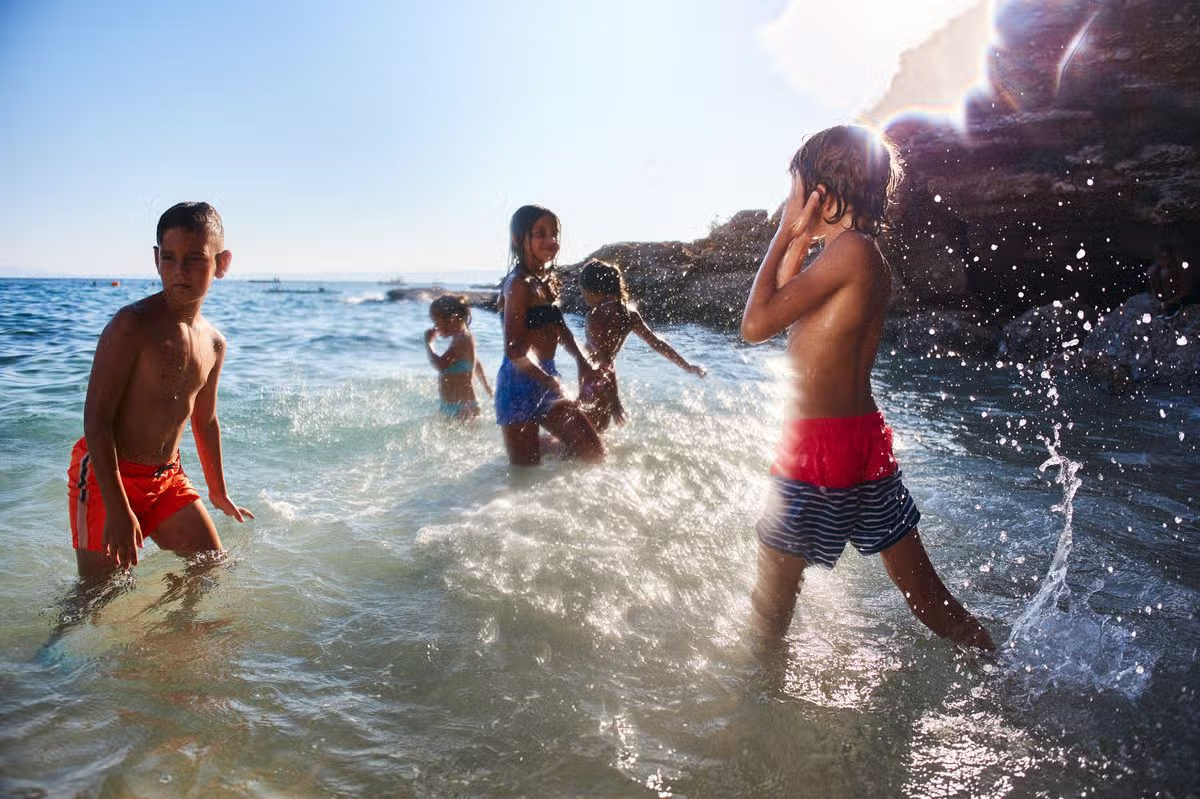
Group of children playing and splashing water in the ocean(Image: Getty Images)
Taking a dip in the sea is one of the highlights of any beach holiday. With the sun beating down, temperatures soaring and swimwear at the ready, millions of holidaymakers head into the water each year to cool off and enjoy time with family and friends.
Anyone travelling to Portugal hoping to do the same may want to brush up on local rules first, as breaking one little-known sanitation regulation could reportedly lead to fines of up to €750 (around £630). Knowing the law before you head to the beach could help you avoid an unexpected and potentially costly mistake.
It relates to urinating in the ocean, something many people – particularly children – have probably done at some point without giving it a second thought. While some may assume the sea would quickly dilute human waste, some travel experts say Portuguese rules are intended to protect marine ecosystems and coastal hygiene.
According to travel website Islands, beach sanitation rules allow authorities to issue fines of up to €750 for people caught urinating in the sea. It does mention, however, that there is no practical way for authorities to monitor the behaviour beneath the waves, and that enforcement is considered rare.
The law exists to reduce pollution in coastal waters, particularly in areas that attract large numbers of visitors during the summer months. Portugal’s beaches are among Europe’s most popular, drawing millions of holidaymakers each year to destinations including the Algarve, Lisbon Coast and Madeira.
Fortunately, most public beaches in Portugal provide public toilets or nearby facilities, making it easy for visitors to avoid any potential issues. Using designated toilets also helps protect water quality and the wider coastal environment.
Portugal is not the only European destination with strict rules covering beach behaviour. In parts of Spain, including Vigo and Marbella, local authorities have introduced similar bans on what they describe as “physiological evacuation” in the sea, with fines also reaching €750, according to local municipal regulations.
Holidaymakers should also be aware of other rules in Portugal. Several beaches prohibit loud music from portable speakers, while Albufeira has introduced regulations that could see people fined for wearing swimwear away from designated beach areas as part of efforts to tackle anti-social behaviour.
The UK Foreign, Commonwealth and Development Office advises British travellers to familiarise themselves with local laws and customs before travelling abroad. Checking the rules before heading to the beach could help visitors avoid unexpected penalties and ensure they enjoy a stress-free holiday.
Machines that scan our luggage could raise an alarm over this packet
The common item could be flagged as suspicious by airport scanners(Image: Getty)
If you have a long flight ahead or fancy some screen-free entertainment, bringing a pack of playing cards can seem like a good idea to beat boredom. But they can cause a security issue at airports, which could mean you’re held up while items are checked.
Many items are banned for being sharp and potentially dangerous, but even innocuous items such as corkscrews could be confiscated. But, some seemingly harmless items could also raise an alarm with security staff and require further checks.
The Transportation Security Administration (TSA), which oversees airport security in America, told Travel and Leisure that any deck of cards, from classic playing cards to games to collectables like Pokémon, could trigger a security red flag if they are picked up by scanners that notice the suspicious look of the otherwise innocent item.
Ian Cava from the TSA explained that the shape of the cards can trigger additional checks and make them appear as if there’s something hidden inside. He said: “When items are stacked tightly together, like decks, binders, or graded slabs, the X-ray image can make it difficult for officers to confirm there are no prohibited items concealed in or around them.”
Even family-friendly games like UNO have a strong chance of triggering alerts. A standard UNO deck has 112 cards, making it twice as thick as a regular 52-card deck. The X-ray operators cannot see through the thick stack, so they must check it for hidden contraband.
Although the advice comes from the TSA, people travelling from UK airports can also follow the guidance, as the security processes are quite similar. For an X-ray scanner, a tightly packed deck appears as an organic solid block that could be flagged as a potential explosive, electronic device, or dense liquid, all of which require further checks.
A standard bag search usually takes up to 15 minutes once your bag reaches the inspection table. However, during peak travel times, the queue of bags waiting to be manually checked can back up, significantly extending your wait.
Many UK airports are currently upgrading to advanced 3D scanners. If your security lane uses these newer machines, you often do not need to take anything out of your bag, drastically reducing false alerts. Because the rollout is not happening all at once across every UK airport, some lanes still use older X-ray machines that strictly require manual checks for dense items like cards and games.
Tips to get through security faster with playing cards:
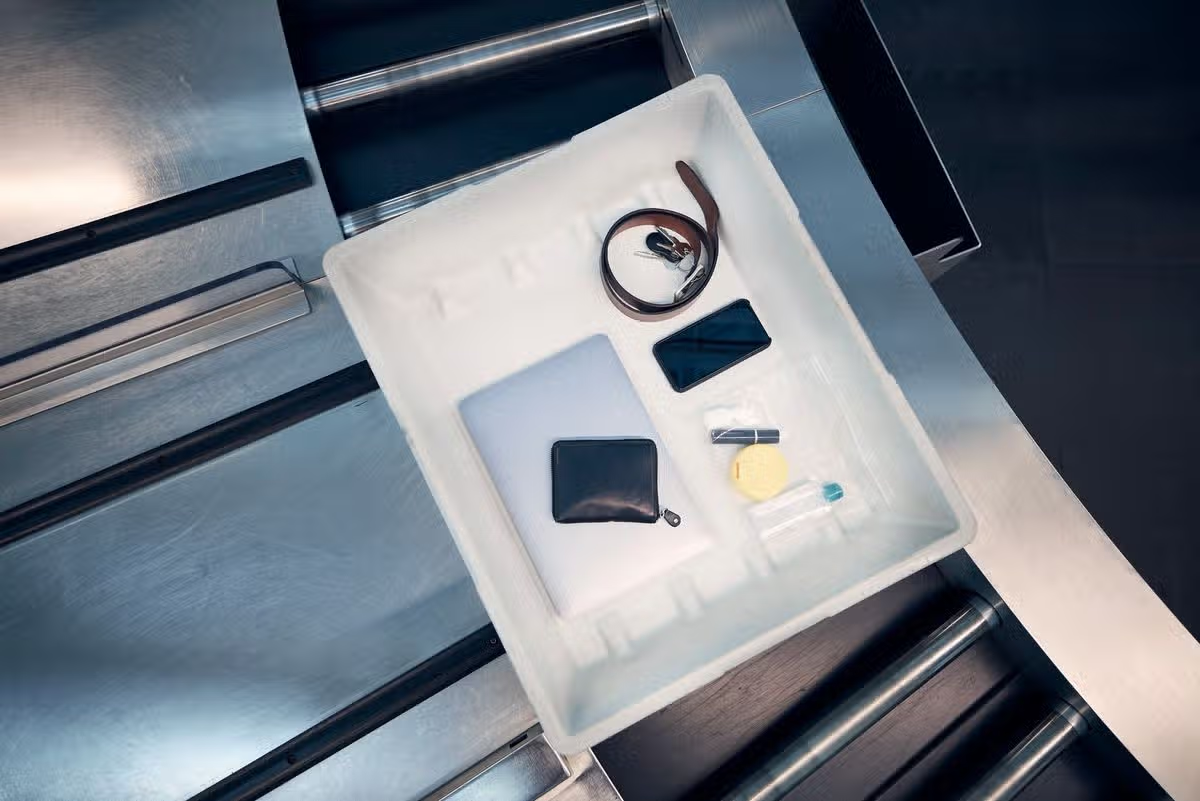
To avoid delays, treat playing cards like anything else you’d take out of your bag. Place the card box in a tray to be checked rather than waiting for the security alert to be triggered.
People can also avoid issues by not packing cards in metal tins or carry cases – typically provided or bought for collectables. Use a cardboard or plastic case because metal tins are harder to scan.
Putting any of your board games and cards in hold luggage is the safest way to avoid security delays, as they don’t go through manual bag checks that require you to wait. While this completely eliminates the risk of your hand luggage being pulled aside for a card or game check, passengers risk having their items bent, crushed, or lost if the airline misplaces their suitcase.
Fifteen destinations in particular are facing major airport delays as the EU’s new digital passport checks are causing ‘slow processing times and excessive queues,’ Ryanair warned
Ryanair has listed the destinations facing the worst delays (stock image)(Image: Dmitri Zelenevski via Getty Images)
Ryanair has warned UK families to prepare for lengthy passport queues and airport delays due to the EU‘s new automated border control system.
The budget airline said the new Entry/Exit System (EES) – which replaces physical passport stamps with a digital record for travellers – has continued to cause disruption months after becoming fully operational on April 10.
Fifteen destinations in particular are now facing significant delays due to “slow processing times and excessive passport control queues on both arrivals and departures,” Ryanair warned.
The airline added: “With schools now breaking for summer and passenger volumes reaching peak levels, the failed EES rollout is going to cause unnecessary delays and long queues for UK families.
“Months after EES went live, many airports still do not have fully functioning self-service kiosks in place, while border staffing levels and infrastructure remain inadequate to process peak passenger volumes.
“The result is avoidable delays, longer queues and unnecessary stress for UK passengers travelling during the busiest holiday period of the year.”
Ryanair has warned UK travellers going to and from non-Schengen destinations, or transiting through affected European airports, to be prepared for extended waits at passport control.
The new EES checks may require passengers to complete passport scanning, fingerprint capture and facial image verification.
Ryanair says it is supporting calls from EU Member States to urgently extend the current EES flexibilities into early 2027.
This will allow airports more time to fix malfunctioning kiosks, increase staff numbers and make sure the system is running smoothly before full enforcement is introduced, the airline said.
Ryanair’s Chief Operations Officer, Neal McMahon, said: “Families heading away for a well-earned summer holiday should be thinking about suitcases, suncream and sangria, not standing in passport queues for hours.
“The reality is that the EES system isn’t working properly and families are paying the price for a system that does not work months after launch. Passengers should not be the testing ground for unfished border infrastructure.
“We support calls from EU Member States to urgently extend the EES flexibilities. This will give airports and border authorities the time to improve the infrastructure, fix the broken devices and hire more staff so that families can travel through Europe without disruption.”
Ryanair identified 15 places where passengers have faced “recurring EES hotspots where passengers are experiencing significant delays due to slow processing times and excessive passport control queues on both arrivals and departures”.
Ljubiša Karovi was almost sucked out of the aircraft after a window smashed
15:47, 15 Jul 2026Updated 16:24, 15 Jul 2026
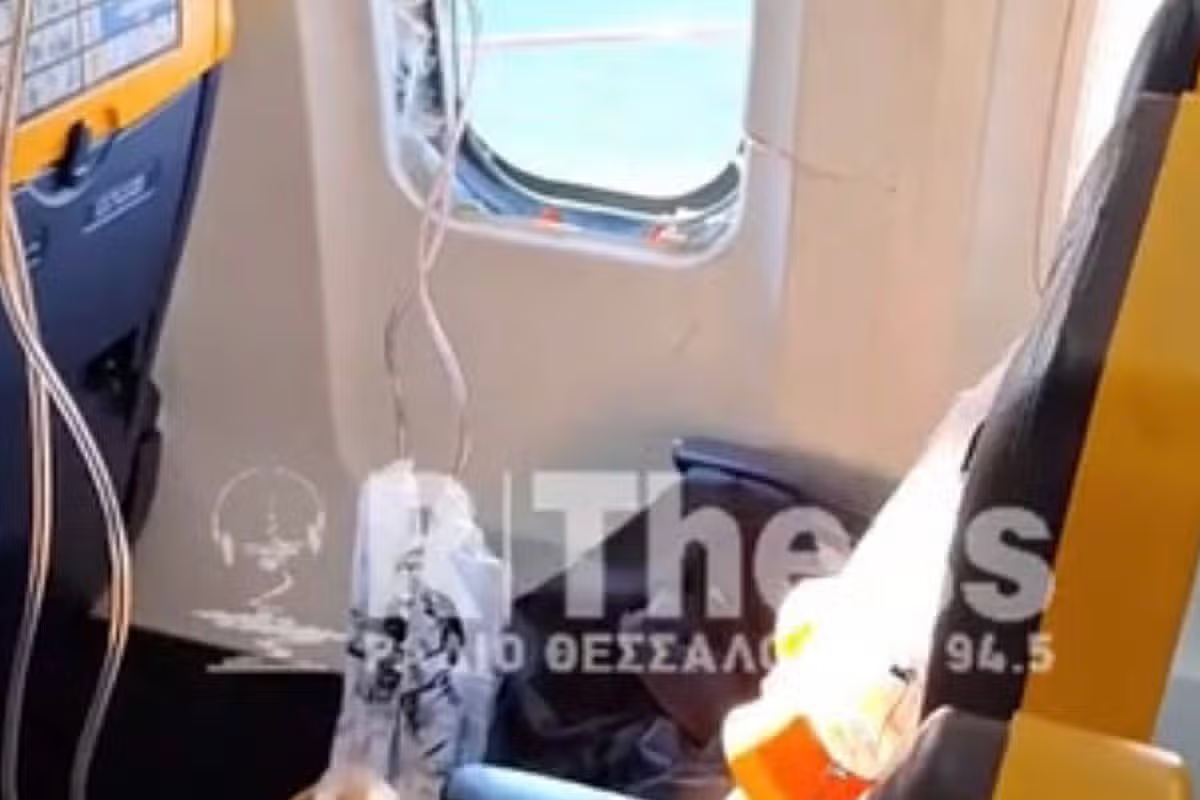
The damage to the ‘dislodged window’ (Image: -)
Ryanair’s chief executive has said an official investigation will determine what went wrong on a flight that saw a passenger almost sucked out of a shattered window.
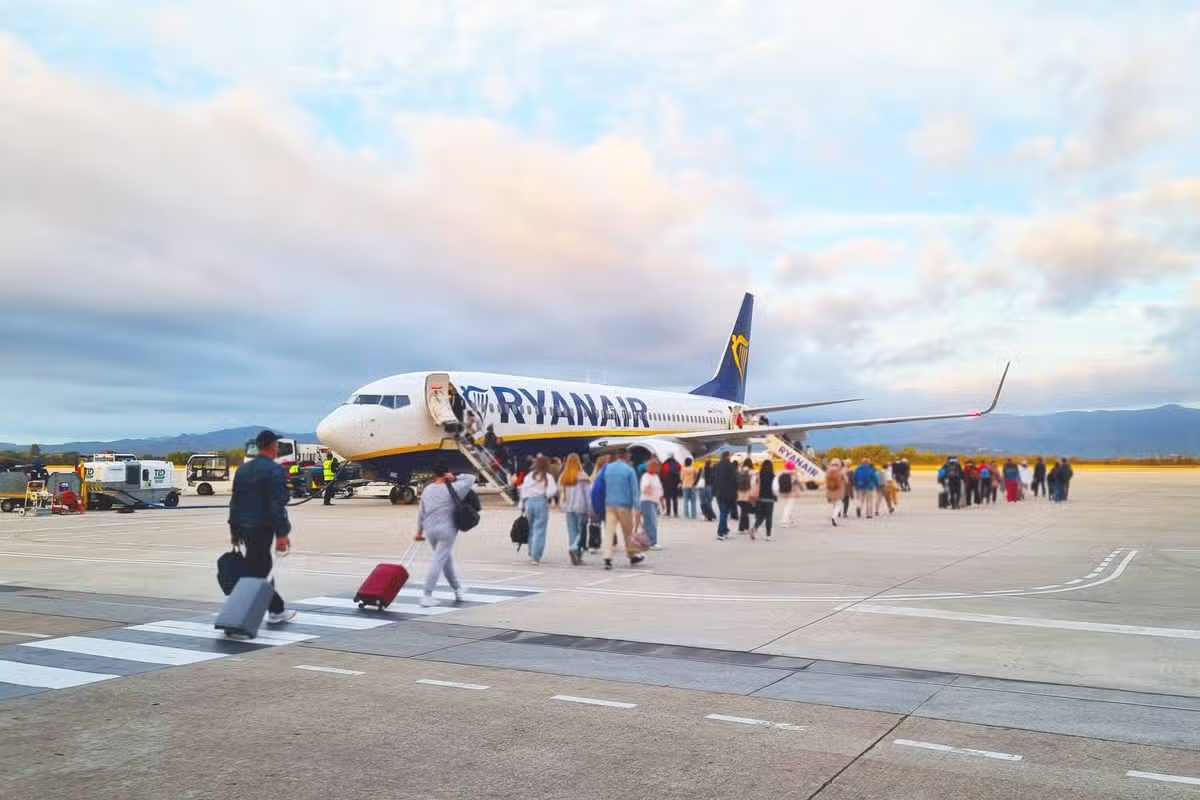
The shocking incident happened on a service from Thessaloniki in Greece to Memmingen, Germany, on a plane operated by Malta Air, a Ryanair subsidiary. Ljubiša Karovi, 61, was reportedly pulled from his seat and had to be held in by his legs and seatbelt when the cabin suddenly depressurised.
His wife, Svetlana Grković Maksimović, held onto his legs during the chaos as the plane made an emergency return to Greece. Passengers described hearing a loud bang while the aircraft was over North Macedonia, after which the pilot turned the Boeing 737-800 back towards Thessaloniki.
Maksimović has claimed debris struck the aircraft and damaged the window after what she thinks was an engine failure. In an interview with RTÉ News, Ryanair CEO Eddie Wilson said photographs showed visible damage to one of the engines but insisted it would be wrong to draw conclusions before investigators complete their work.
Content cannot be displayed without consent
“Anyone who’s looked at the photographs can see… clearly there’s damage to the engine,” he said. “But I’m not going to speculate on that. That aircraft will be investigated through the Greek authorities. We understand then we will put that out to the NTSB, which are the American investigators.”
The US National Transportation Safety Board is expected to be involved because the aircraft is American-built. Wilson said the incident was serious and that Ryanair would act on any findings or safety recommendations that follow.
Maksimović said her 61-year-old husband was “seriously injured and in shock”, and they did not know if they would ever fly again following the ordeal.
Another passenger, Sofia, told Radio Thessaloniki: “We thought the plane was going down. The decompression was extreme. It felt like we couldn’t breathe. The man who was injured was bleeding and then lost consciousness several times, most likely because of the lack of oxygen and the shock.”
Content cannot be displayed without consent
Pressed on whether passengers could feel confident flying with the airline over the summer, Wilson pointed to the carrier’s flight volume and maintenance regime, saying aircraft are checked regularly and that “the best-trained crews” were on display during the Thessaloniki diversion. “Aircraft are maintained every night,” he said, adding that Ryanair follows schedules set by regulators.
Ryanair, in a statement, said the flight returned “shortly after take-off when a passenger window dislodged in flight”. The airline said the aircraft landed normally, passengers were taken back to the terminal, and one person requested and received medical assistance on the ground.
Although the cause has not been confirmed by authorities, the BBC reported that a technical advisor appointed by the family believes the sequence began with a problem affecting the aircraft’s right engine, with debris then striking and shattering a cabin window, triggering the rapid loss of pressure.
People have been told that the more intense checks have ‘an upside’ after arriving
Brits told ‘one upside’ to tighter new Gibraltar border checks(Image: Getty)
Brits visiting Gibraltar now face new rules, including security screening and passport scrutiny, when landing in the British Overseas Territory. Travel journalist Simon Calder reported for The Telegraph that new rules came into force from today, July 15, as part of a post-Brexit deal.
The UK-EU agreement to create an open land border between Gibraltar and Spain has been signed in Brussels – and was brought into effect from Wednesday. It will make Gibraltar effectively part of Europe’s passport-free Schengen Zone, with the removal of checkpoints and border fences.
But the changes introduce tighter border controls at Gibraltar’s airport. On arrival at Joshua Hassan Gibraltar International Airport, Brits should expect two new sets of checks, which will satisfy entry into Gibraltar and the Schengen Area:
Gibraltar entry immigration controls – performed by the Gibraltar authorities
Schengen entry immigration controls – performed by the Spanish authorities
This includes registration under the Entry/Exit System (EES) where it applies. All of the updated entry requirements for tourists can be found on the GOV.UK website here.
The main page reads: “To enter Gibraltar, your [full UK] passport must have been issued within the previous 10 years and its validity must extend for at least three months after the day you intend to leave Gibraltar or the Schengen Area.”
If you are a British–Irish dual national and travel on your Irish passport, you will be treated as an EU citizen on entry to Gibraltar and the Schengen Area. You will not be subject to the 90-day limits, EES or ETIAS. If you travel on your British passport, the conditions above apply.
Content cannot be displayed without consent
What were the rules before July 15?
Before July 15, 2026, UK citizens visiting Gibraltar did not have their stay count toward the Schengen Area’s 90-day limit, and they only faced a single immigration check handled solely by Gibraltarian authorities upon arrival. Because the provisional UK-EU Gibraltar Agreement had not yet taken effect, Gibraltar operated entirely outside of the Schengen rules
UK nationals could visit Gibraltar for up to 90 days without a visa. Passports simply needed to be valid for the duration of the intended stay. But from today, tourists visiting the territory bordering Spain will face new rules.
What are the new ‘rules’?
As explained by Simon, he said: “From this summer, it gets a bit trickier to reach [Gibraltar] for British passport holders. The British Overseas Territory is not joining the Schengen area, but the effect for UK passport holders is the same.
On arrival in the Rock, you will be checked by Spanish passport officials to make sure that your passport meets those tricky rules on expiry and issue dates. They’ll also want to know if you’ve spent more than 90 days in the last 180 days in the Schengen area, and any time you spend in Gibraltar will count towards that total.”
With these new checks, Simon adds that there will be “an upside”. He claims that, with these stronger checks carried out in the airport upon arrival, visitors are considered inside the ‘frontier free zone’ and could travel straight into Spain without stopping again.
People should check their specific airport before travelling this summer
Different UK airports might have different rules in place this summer (stock image)(Image: Getty Images)
Airports in the UK have slightly different rules that could catch some travellers out this summer if they do not check them before packing. Certain airports have been upgraded to help relax a major security rule, while others have yet to make any changes.
The 100ml liquid-limit security rule means passengers can only bring liquids in containers of 100ml or less in hand luggage. The rule was put in place back in 2006 when police foiled a major terrorist plot, which prevented a group that planned to smuggle liquid explosives on board a flight leaving London that was bound for North America.
At the time, standard airport security X-ray machines were designed to detect metal weapons (such as guns and knives) and solid explosives, with no way to distinguish between a simple bottle of water and volatile liquids. For years, the rule has remained in place for the vast majority of airports.
But in 2022, the Government confirmed plans to relax the rules. As technology has advanced, some airports are relaxing the rules in 2026.
Certain UK airports featuring new 3D security scanners now allow passengers to carry liquids, gels, and aerosols in individual containers that can hold up to two litres (2000ml). These airports allow you to leave liquids in your hand luggage without needing clear plastic bags.
Content cannot be displayed without consent
As of July 15, 2026, the following airports have fully upgraded their systems to include new scanners that officially allow passengers to carry liquids in containers up to two litres in their hand luggage:
London Heathrow (All Terminals)
London Gatwick
Birmingham
Bristol
Edinburgh
Belfast International
Belfast City
Teesside International
Even at these hubs, reusable metal, insulated, or double-walled vacuum bottles must be empty when passing through security. You can refill them once you are inside the departure lounge.
Every other UK airport has yet to follow suit with the change, and still follows the commonly known limit of 100ml. But even with the same cap on liquids, certain airports have different ways of letting items through security.
For example. certain airports remain the same as last summer, where passengers need to use 100ml containers and place them in a clear, resealable plastic bag for scanning. These airports include:
London Stansted
London Luton
Glasgow International
East Midlands
Liverpool John Lennon
Cardiff
But, certain airports have relaxed the rules slightly. Although the strict limit on the amount of liquids is still in place, passengers can keep their liquids and electronics inside their bags for processing at these airports:
London City
Manchester
Newcastle
Leeds Bradford
Aberdeen
Southend
Why aren’t all airports changing at once?
The UK Government’s original goal was a blanket lifting of the 100ml rule, but issues arose, meaning the change had to be implemented gradually. To prevent massive security bottlenecks during the peak summer rush, the Department of Transport has largely frozen rule changes at airports that haven’t yet reached 100% compliance.
Major remaining hubs, such as Stansted, Luton, and Manchester, are continually updating their lanes behind the scenes. Gradual transitions to the “in-bag” rules are expected to resume late autumn/winter 2026 as travel volume drops.
People have been reminded to think before they start maxxing out their luggage limit, as their return journey could be what catches them out. Even if you fly out of a 2L-friendly airport like Heathrow, most international destinations still enforce the strict 100ml rule, so if you buy full-sized toiletries in the UK, you may have to check them into hold luggage on the way back or throw any leftovers away before coming home.
The warning comes as many Brits to prepare to go on their summer holidays
It is worth buying repellent before you travel
Holidaymakers have been warned to protect themselves against mosquitoes as health officials published new data on infections imported into the UK. The UK Health Security Agency (UKHSA) said diseases spread by mosquitoes, such as dengue fever and Zika virus, can be harmful for some people.
It urged travellers to use insect repellent, wear long sleeves and trousers and sleep under a treated bed net if necessary. People should also get any jabs they need for travel and check whether they need malaria tablets.
Dengue fever can feel similar to flu and symptoms include high temperature, severe headache, pain behind the eyes, muscle and joint pain and feeling sick. Chikungunya symptoms include fever, joint pain, headache, muscle pain, joint swelling and rash.
Most people with Zika suffer a mild illness, but it is serious in pregnant women and can cause stillbirth, miscarriage, problems with development and unusually small heads. Meanwhile, malaria can prove fatal, with symptoms including fever, vomiting and pain.
The UKHSA said eight Zika virus cases were reported from January to June 2026 – already above the seven cases recorded in 2025. Four of these were from Indonesia. Some 137 cases of imported dengue were reported in England from January to June this year, with South-East Asia and South Asia remaining the most common regions where people caught it. Some 27 cases were linked to travel to Thailand and 19 to the Maldives.
For comparison, the overall number of cases by the end of June last year was 161, though cases also tend to rise later in the year. A total of 59 chikungunya cases were reported from January to June this year, with Sri Lanka being the most commonly reported country of travel, accounting for 18 cases. There were 73 in the same period last year.
Meanwhile, 557 malaria cases were reported in England, Wales and Northern Ireland from January to May. Last year at the same point, there were 548. As well as mosquito-borne illnesses, there were 287 cases of typhoid and paratyphoid fever between January and June this year.
Typhoid and paratyphoid are caused by Salmonella bacteria, which is usually spread through contaminated food or water. Mosquitoes rely on standing water to lay their eggs. It then needs to be warm enough for the eggs to hatch, which can take just a few days if temperatures are high enough.
Dr Hilary Kirkbride, consultant epidemiologist and head of travel health at UKHSA, said: “Summer is a popular time to travel – don’t let illness spoil your holidays. Good preparation and planning is important for a safe and enjoyable trip.
“Check the TravelHealthPro website for the latest health advice for your destination, including which vaccines you may need and any important medications, such as anti-malarial tablets.
“To protect against mosquito-borne infections, use insect repellent, cover exposed skin and sleep under a treated bed net where needed. For enteric fever and other stomach bugs, make sure you take good food and water hygiene precautions.
“Even if you have visited a country before, you do not have the same level of natural protection against infections as permanent residents, so it is important to take precautions every time you travel.
“And if you are pregnant or trying to conceive, there are special precautions you should take, so please speak to a doctor, nurse or local travel clinic before planning your trip.”
Natalie Hitchins, Which? head of home products and services, said: “If you’re travelling somewhere that has mosquitoes, it’s worth checking that your repellent will actually do the job before you go.
“Which? tests found that while some repellents provided effective protection for almost 10 hours, some trendy alternatives failed to prevent bites for longer than a few minutes.
“Look for products containing active ingredients such as Deet, Icaridin (picaridin) or PMD, rather than relying on marketing claims alone.
“Insect repellent can help protect against mosquito bites, but it should be used alongside – never as a replacement for – any vaccinations or medications recommended by a healthcare professional.”
It might seem harmless at first glance, but it could lead to unnecessary delays
Reduce the risk of being stopped by airport security(Image: Getty Images)
Packing for a holiday can feel like navigating a minefield, with a long list of rules on what can and can’t go in your luggage. While some banned items are obvious, others seem completely innocent at first glance – yet bringing them to the airport could still result in officials delaying your journey.
There is one everyday item that is allowed by all major airlines, including Ryanair, Jet2, TUI, easyJet and British Airways, but could still attract attention during security screening if officers are unable to identify it clearly on the scanner. To avoid unnecessary delays or having to unpack your luggage at the checkpoint, travellers are advised to pack toiletries in a way that makes them easy to inspect.
A simple bar of soap – buyable at Sainsbury’s for 35p, for example – might seem like one of the most harmless items you could take on holiday. However, it is not the soap itself that can cause concern – it is the way a solid item may appear when passing through security scanners.
Airport security staff do not routinely search luggage simply because it contains a bar of soap. However, dense items can sometimes make X-ray images harder to interpret, particularly when they are packed alongside electronics, cables or other bulky belongings. If officers cannot clearly identify an item, they may carry out additional checks before allowing passengers through.
The government information website GOV.UK says: “Airport security staff will not let anything through that they consider dangerous – even if it’s normally allowed in hand luggage.” While soap clearly is not dangerous, if a bar of soap raises an alert on the scanner, they are legally required to stop the passenger and inspect it.
The US Transport Security Agency (TSA), for instance, says passengers are often asked to separate dense items because they can “clutter bags and obstruct clear images on the X-ray machine.” When a solid block of soap, cheese, or other dense organic material blocks the scanner’s view or mimics a threat signature, protocol requires a physical bag search or chemical swab testing to clear the item.
According to GOV.UK, solid bars of soap are permitted in both hand luggage and checked baggage. Security officers can still manually inspect any item they are unable to identify clearly during the screening process, regardless of whether it is allowed.
To reduce the chances of your bag being opened, experts recommend keeping dense items easy to access and, if requested, placing them in a separate tray during screening. Avoid storing them inside thick metal tins or rigid plastic cases alongside items such as power banks, charging cables and other electronics, as this can make X-ray images harder to interpret.
It’s also important not to confuse solid soap with liquid toiletries. While bars of soap are exempt from liquid restrictions, liquid soaps, shower gels and similar products carried in hand luggage must normally be in containers holding no more than 100ml, unless you’re travelling through an airport that has introduced next-generation security scanners permitting larger liquids.
The rules apply regardless of which airline you’re flying with, as baggage screening is carried out by the airport rather than carriers such as Ryanair, Jet2, TUI, easyJet or British Airways. A manual inspection is simply a precaution and does not mean you’ve broken any rules or packed a prohibited item.
Taking a few moments to think about how you pack everyday toiletries could help make your journey through security a little smoother. Although a 35p bar of soap is perfectly legal to travel with, storing it sensibly could help avoid unnecessary delays before your holiday even begins.
The travel expert has a message to anyone who has booked easyJet flights
Simon Calder has issued a message to anyone flying with easyJet(Image: Ashley Cooper/Getty)
Travel expert Simon Calder has issued a message to anyone with flights booked with easyJet. Last week, it was reported that the budget British airline has agreed to be bought by a US investment giant for £5.7billion.
EasyJet announced it had reached an “agreement in principle” with Apollo Global. It comes after a series of approaches by another American giant, Castlelake, which could come back with a counter offer.
It is unclear what the deal, if it happens, would mean for easyJet customers and employees. However, Simon has given his expert verdict on the situation.
Explaining the deal on the Travel Expert with Simon Calder podcast, he said: “easyJet for a fair while was the biggest budget airline in Europe, then Ryanair gradually overtook.
“We are now at the stage where Ryanair is almost twice as big as easyJet but its market capitalisation, in other words what investors think it is worth, is about five or six times easyJet.”
If the deal goes through, Simon explained the best case scenario would be if not much changes.
He said: “That easyJet continues on its trajectory which is one of steady growth and of course, offering great service, incredible safety standards and delivering very good value for the traveller.”
Many passengers are worried about what the potential deal could mean for flights and holidays already booked, especially in the coming weeks as we enter peak summer travel season.
Simon’s co-host Greg Dickinson urged: “Let us stress that if you have a holiday booked with easyJet this summer or a flight with easyJet, it is going ahead as normal.
“These changes are going to take months to get the deal completed, and it will be a year until we start seeing anything different.”
Simon agreed as he said: “I think that is absolutely right, do not fret. I’ve had some people say to me, ‘Is it alright to book with easyJet?’ Well, of course it is.”
The travel expert said that if you have flights booked next year and the potential takeover means the flight won’t run, passengers are entitled to ask the airline to find them an alternative at the airline’s expense.
He added: “It would not be a problem, carry on booking easyJet and the interesting element will be whether it goes through.”
A stock market statement said: “Apollo has followed easyJet for many years and continues to regard it as one of the most attractive businesses in the global aviation sector and a highly differentiated franchise with significant long-term growth potential.”
It added: “Apollo places a high value on people and believes that identifying and retaining key staff within the easyJet Group will be of paramount importance.” It also said other investments by Apollo in airlines had led to it “growing the employee bases”.
EasyJet was founded by entrepreneur Sir Stelios Haji-Ioannou in 1995 to offer low-cost fares in Europe. The first inaugural flights took off in November 1995, flying from Luton to Glasgow and Edinburgh. Sir Stelios and his family still own 15.3% of the airline.
Aarin Chiekrie, equity analyst at Hargreaves Lansdown, said: “EasyJet shareholders are strapping in for an exciting ride as Apollo enters the race to land the orange airline company.
“Apollo’s offer is now the preferred option and the one that easyJet’s management would recommend to shareholders. But the deal’s not off the runway yet, with Apollo having until August 7 to decide whether to make a formal bid. In that time, rival bidder Castlelake could still come to the table with improved terms.”
Overlooking one item in particular could ignite some travel disruption which is not ideal for holidaymakers
Packing this could land you in some serious trouble(Image: Getty Images)
Packing for a holiday often means working your way through a seemingly never-ending checklist. From remembering your passport and boarding pass to making sure you’ve packed enough clothes, there’s also the important task of checking your bags for items that could cause problems before you even board your flight.
The warning applies to anyone flying with major airlines, including Ryanair, Jet2, TUI, easyJet and British Airways, among others. While each carrier has its own baggage policies, dangerous goods rules are governed by international aviation regulations and enforced during airport security checks.
Non-safety matches, for example, can cost as little as 60p in supermarkets, but packing them could end up costing you precious holiday time. Although they may seem harmless, they are classed as dangerous goods and are prohibited in both hand luggage and checked baggage under aviation safety rules.
This could spell bad news for anyone heading off on a camping holiday, planning to light birthday candles abroad or travelling with matches tucked away in a backpack without giving them a second thought. Even if they were packed by mistake, finding them during screening could trigger additional inspections and slow your journey through the terminal.
According to the UK Civil Aviation Authority, non-safety matches are not permitted on commercial flights because they present a fire risk. If they’re discovered during baggage screening, they may be confiscated and your luggage could be held back while officers carry out further checks.
Depending on when they’re found, this could mean anything from a manual bag search at the checkpoint to checked luggage being removed from the aircraft before departure. While procedures vary between airports, prohibited items are routinely removed to ensure flights comply with aviation safety rules.
There is, however, one important exception. The Civil Aviation Authority says passengers are generally allowed to carry one small packet of safety matches on their person for personal use, but they must not be packed inside either hand luggage or checked baggage. “Strike anywhere” matches and all non-safety matches remain prohibited.
Before travelling, it’s worth taking a few moments to check coat pockets, backpacks and suitcases for forgotten items.
A 60p box of matches might seem insignificant, but packing the wrong type could leave you facing unnecessary delays before your holiday has even begun.
Budget airline Ryanair has shared an ‘important’ announcement on Facebook telling people to stop wearing jeans on flights – and passengers have plenty to say about it
Ryanair has issued an ‘important’ announcement for passengers travelling in jeans (stock image)(Image: Getty Images)
Ryanair has issued an ‘important’ message to passengers who choose to wear jeans on their flights, having previously threatened to introduce a ‘denim fee’ for travellers not adhering to this guidance.
Staying warm and comfortable during a flight can prove more challenging than expected, especially when you’re confined to your seat with limited movement for hours at a time. Fortunately, selecting the appropriate travel attire could dramatically improve your comfort levels while in the air.
For many, this means tracksuit bottoms or leggings, while others continue to wear less comfortable garments, such as jeans, on their journeys.
But now, Irish budget airline Ryanair has posted an announcement on its Facebook page addressing all passengers regarding their clothing choices on flights.
“Important Travel Announcement,” the company posted, accompanied by three images of a Ryanair aircraft in the sky, zoomed in to reveal various details.
The first two images showed a Ryanair plane soaring through the air, with a brilliant blue sky visible in the background. However, the third image displayed a banner trailing from the rear of the aircraft.
The message was short and sweet. It read: “Stop travelling in jeans.”
While there’s no real cause for concern here, the joke simply comes from most travellers preferring to dress comfortably on flights, as jeans are well known for being rather restrictive when sitting for extended periods of time.
But this didn’t deter passengers from joining in with the banter. Scores of people quickly headed to the comments section to share their views, with many insisting they had no intention of ditching their beloved denim on flights.
“I’m always flying in jeans because they are 200g heavier than sweats and you would just love to charge me for those 200g in my suitcase,” one person said. Another went on to say: “It’s how many layers we have under our jeans that you should be worrying about.”
“Noted. I’ll fly in pyjamas… unless that’s a €12 add-on too,” a third person said.
Someone else wondered: “What, should I just travel in a t-shirt and my pants to save weight?”
Another person went on to share the safety reasoning of flying in jeans, explaining: “Better jeans than shorts… much safer in case of an emergency evacuation (same applies to closed shoes vs flip flop by the way).”
One of the two pilots onboard a commercial plane made a personal announcement over the tannoy ahead of a flight, which left people in tears and feeling overwhelmed with emotion
Passengers were greeting with an announcement from the pilot
Passengers who had just boarded their flight were in tears after the pilot of the plane made an announcement over the tannoy before take off. Once passengers on a Southwest Airlines flight found their assigned seats and got comfortable ahead of an upcoming flight, two pilots came out of the cockpit of the plane to make an announcement to all the passengers and crew.
The pilot, Captain Svein, explained how he was “very excited” ahead of the upcoming flight as it was a “very special day” for him personally. He turned around and then explained how he had a brand new pilot on board with him who had “just finished training”.
In the video, which was posted on social media by Southwest Airlines, the pilot said: “I’m very excited today is a very special day for me personally and I would like to use this moment to introduce to you our latest addition to Southwest Airlines pilot group.
“She is right behind me, she just finished training and today is her very first day flying for Southwest Airlines.
“Just one more thing, she is my daughter.”
The video, which has been viewed over half a million times on social media, showed the entire plane started clapping and cheering after the dad made the announcement.
Content cannot be displayed without consent
The dad continued: “I’m so glad you folks are coming with us today to enjoy this little party. Thank you so much for flying Southwest Airlines thank you folks thank you.”
Southwest Airlines a major U.S. low-cost carrier headquartered in Dallas that serves over 100 destinations across 10 countries.
People in the comments section of the video that appeared on Southwest Airline’s TikTok page were thrilled for the father-daughter duo on their first flight co-piloting together.
One person said: “The safest flight to be on, he has his most precious cargo at the helm with him.”
A second said: “Probably his proudest dad moment for him, no doubt about it.”
A third simply said: “You should not make us cry.”
A fourth added: “The father has passed his legacy wings to his daughter on her first flight. As a qualified aviator, she’ll make a fine captain of her own aircraft someday.”
Content cannot be displayed without consent
Southwest Airlines said: “Like father, like daughter! Hanna recently joined Southwest as a First Officer, following in the footsteps of her dad, Captain Svein.
“He inspired her to start flying at the age of 15, and she was immediately hooked. She made it her mission to one day fly alongside him!.
“Just 8 years later, she accomplished that mission serving as her dad’s First Officer on her very first Southwest flight. Welcome to the Southwest Family, Hanna!”