Air travel

Europe’s ‘most beautiful airport’ just got a £3.5billion expansion

The airport has won a prestigious architecture award after a huge multi-billion Euro project, and it was the only European location on the list of the world’s most beautiful airports for 2026

The world’s most beautiful airports for 2026 have been announced, and only one European hub has made the list.

Prix Versailles published its World’s Most Beautiful; Airports List 2026, which included airports from around the world, “each one exhibiting extraordinary, distinctive architecture”, according to its press release. Among the winners on the list were Guangzhou Baiyun International Airport in China, and Pittsburgh International Airport in the US.

The sole European destination to make the cut was Frankfurt Airport, which unveiled its brand-new Terminal 3 in April, mostly for passengers taking long-haul flights. The £3.46 billion expansion took over 11 years, and became one of the continent’s largest infrastructure projects.

Sitting on 1.3 square kilometres of land, it’s around the same size as Frankfurt’s core city centre, and it includes a 2,900-square-metre culinary space, 112 check-in counters, premium lounges, and upmarket boutiques.

Content cannot be displayed without consent

The terminal is connected to the rest of the airport via a 3-mile-long Sky Line people mover, which can carry up to 4,000 passengers, with the journey taking just eight minutes. Terminal 1 has two train stations connecting the airport to passengers’ final destinations: a Regiobahnhof that takes passengers into the city centre and Fernbahnhof where you can take Germany’s high-speed ICE trains across the country.

Terminal 3 was designed by architect Christoph Mäckler, and the awards announcement said it “was contrived to be a lively urban environment”. It added: “To give travellers a smooth, familiar experience, its piers, boarding gates and lounges emulate the streets and squares of a city. Its aesthetics rely on noble materials in warm tones, like Jura limestone and travertine. Vast spaces, bathed in natural light thanks to large plate glass windows, create a soothing atmosphere while minimising the use of artificial light sources.”

Frankfurt is not generally a city break destination chosen by Brits, but it has a colourful old town with medieval houses and historic charm. Römerberg in particular is popular with tourists, and the cosy half-timbered houses make the perfect backdrop for Frankfurt’s famous Christmas market.

The Städel Museum is another must-visit for tourists, and this vast art gallery has works from the Middle Ages to the present day, as well as impressive visiting exhibitions such as a Monet show that’s on until July 5. If you don’t have much time to see the city, head for the Main Tower, which stands at 240 metres, for impressive 360-degree views.

Frankfurt is also known for being the financial capital of continental Europe, and its financial district is sometimes known as ‘Mainhattan’ after the River Main and its skyline’s resemblance to New York. Wander around and you’ll see lots of unique, contemporary architecture such as the glass-panelled Commerzbank Tower and art-deco style Messeturm.

Have a story you want to share? Email us at webtravel@reachplc.com

Source link

easyJet ‘important update’ alert for UK holidaymakers

easyJet is making passengers aware of new rules

Holidaymakers bound for a popular destination have been cautioned about extended airport queues and advised to factor in additional time when travelling.

easyJet issued a fresh alert to British passengers on Tuesday, June 16, warning them about substantial changes at the border that could throw travel plans into disarray. The airline updated its official guidance following the gradual introduction of stringent new security measures and evolving border rules.

Brits are also being reminded about the length of time they’re permitted to remain in the Schengen Area, following rule changes that have been introduced post-Brexit. easyJet’s ‘important updates’ message is aimed specifically at those flying to and from Gibraltar.

The alert explains: “EES border checks may be carried out for both arrivals and departures at Gibraltar Airport, which could result in longer waiting times when entering or leaving the country. Please allow extra time when planning both legs of your journey.”
The travel operator goes on to clarify that UK nationals can still visit Gibraltar visa-free for brief stays. The update continues: “For non-EU nationals, including UK nationals travelling visa-free, time spent in Gibraltar now counts towards the 90-day Schengen allowance.”

Additional guidance on Gov.uk clarifies that British passport holders are permitted to stay for no more than 90 days in any 180-day period across the following countries – Austria, Belgium, Bulgaria, Croatia, Czechia, Denmark, Estonia, Finland, France, Germany, Greece, Hungary, Iceland, Italy, Latvia, Liechtenstein, Lithuania, Luxembourg, Malta, Netherlands, Norway, Poland, Portugal, Romania, Slovakia, Slovenia, Spain, Sweden, and Switzerland.

easyJet’s alert adds: “Non-EU / Third-Country nationals may require a Schengen visa to enter Gibraltar and should check visa/entry requirements before travelling.”

Source link

Ryanair issues ‘fuel update’ as changes being made to flights

The airline shared an update for passengers in a post on social media

Ryanair has shared a ‘fuel update’ for passengers. The airline shared the news on social media, explaining that it is making changes to flights. Posting on YouTube, Ryanair shared an overview of its plans to improve flights over the coming years.

The video was titled: “Pathway to net zero carbon emissions goal.” As part of the changes, the airline said flights will produce less noise and require less fuel, among other benefits. Ryanair describes itself as Europe’s largest airline group.

In the post, Ryanair told customers: “We’ve developed a pathway to achieve our net-zero carbon emissions goal by 2050, which aligns with the Paris Agreement and the aviation industry’s Destination 2050 initiative. Ryanair’s pathway aims to show incremental progress in decarbonising in line with EU climate targets are possible.”

In the video, the airline highlighted key areas of change. Ryanair started by discussing the benefits of new technology, such as 210 ‘game-changer’ aircraft, which deliver 16% less fuel usage and 40% less noise.

Ryanair also shared how sustainable aviation fuel can reduce lifecycle emissions by 80%. As well as how measures, such as single-engine taxiing and dynamic flight planning, can improve efficiency.

On its website, Ryanair shared further details for passengers interested in its plans. The airline said 32% of its carbon-emission reduction targets would come from technological and operational improvements, 34% from increased use of sustainable aviation fuel, 10% from the Single European Sky initiative, and 24% from offsetting and similar measures.

Ryanair’s website says: “We have teamed up with Trinity College Dublin to put in place a number of innovative actions to accelerate the use of sustainable aviation fuel (SAF). By appointing best-in class researchers, we’ll achieve our goal of powering 12.5% of our flights with SAF by 2030.”

Destination 2050 describes itself as an industry alliance committed to climate-neutral European aviation. The website says: “We believe that together, policy-makers and the industry we can make net zero CO2 emissions happen by 2050. European aviation is committed to play its part and ensure that air transport can continue to grow sustainably in the future.

“By 2030, net CO2 emissions from intra-European flights would be reduced by 55% compared to 1990 levels through a combination of fleet renewal, sustainable aviation fuel (SAF), operational improvements and the EU Emissions Trading System (ETS) –in line with the new EU climate goal for 2030.”

Why is CO2 bad for the environment?

Carbon dioxide (CO2) is a greenhouse gas that holds heat in the Earth’s atmosphere. Although it is essential for maintaining the planet’s warmth, human actions have led to a significant increase in its levels, intensifying the greenhouse effect and causing global warming, severe weather events, and ocean acidification.

Source link

Travellers urged not to pack 1 item in suitcases due to it ‘ruining holidays’

A travel agent warned holidaymakers the item must always be kept in hand luggage after the Civil Aviation Authority (CAA) launched an awareness campaign following a rise in flight disruptions

Anyone who has ever travelled by plane will be familiar with the restrictions on hand luggage items at airport security – from liquids exceeding 100ml to batteries, tools and frozen goods. Security staff will refuse to allow anything they deem hazardous to pass through, meaning any attempt to do so could hold up your travels or result in the item being confiscated.

There are certain items, such as vapes, however, which must be packed in hand luggage rather than in larger suitcases stowed in the hold. Jake Cullum-Hollins took to TikTok to warn his 50,000 followers that another such item – power banks – are frequently “ruining” people’s holidays.

Content cannot be displayed without consent

These are portable chargers that enable their owners to top up mobile phones, tablets and laptops while on the move – without requiring access to a mains socket.

“People still aren’t following the rules when it comes to packing these correctly,” Jake began in a video. “Due to the rising number of cases where flights are having to be delayed, diverted or even to make an emergency landing because of power banks, the Civil Aviation Authority (CAA) is launching a massive awareness campaign.”

Jake clarified the guidance is straightforward – any item containing a lithium battery must be carried in hand luggage. This includes laptops, tablets, vapes and, indeed, power banks.

“It is really important to check your airline’s rules when it comes to things like power banks,” the travel agent reiterated. “Because some of them are now saying you cannot charge your items while you are on the flight.”

Earlier this year, the International Civil Aviation Organisation (ICAO) published an addendum to its Technical Instructions for the Safe Transport of Dangerous goods by Air, which read: “The operator must adhere to for lithium cells or batteries (including power banks) carried aboard the aircraft for use or sale on the aircraft by the operator (such as electronic flight bags (EFBs), personal entertainment devices, card readers etc).”

The guidance continued: “Spare lithium batteries and power banks must be individually protected to prevent short circuits when not in use. For example:

  • Keep them in original retail packaging
  • Cover terminals with tape
  • Place each battery in a separate plastic bag or protective pouch

Power banks:

  • Must be carried in carry‑on baggage
  • Must be individually protected when not in use
  • Must not be recharged on board the aircraft
  • Should not be used to charge other portable electronic devices on board the aircraft
  • Maximum of two power banks per person

The ICAO also advised: “The conditions for the carriage and use of these electronic devices and spare batteries (including power banks) must be provided in the operations manual and/or other appropriate manuals by the operators to enable flight crew, cabin crew and other employees to carry out the functions for which they are responsible.”

Responding to Jake in the comments, one TikTok user noted: “Airlines then need to have more adequate charging facilities on planes. Even when there is a port on the plain to plug into, it’s either outdated or doesn’t have a strong enough current to actually charge the phone.”

Jake later pointed out: “You can charge your devices at airports before boarding the planes – usually plenty of charging points around. When your device is in airplane mode it uses hardly and battery. Most long haul flights also have plugs to charge things like phones and laptops.”

Source link

‘Misleading’ alert to UK travellers over ‘five-star reviews’

Online reviews have become one of the most powerful tools people use when booking holidays, but experts warn that not every review tells the full story

Millions of Britons are gearing up for their summer getaways, but experts are urging travellers not to place too much trust in a sea of glowing five-star reviews.

Online reviews have emerged as one of the most powerful influences when selecting hotels, resorts and holiday rentals, with many holidaymakers depending on them to determine where to invest thousands of pounds. However, according to review verification specialist TruthEngine, not all reviews paint the complete picture. Daniel Mohacek, CEO of TruthEngine, said holidaymakers should view reviews as one element of their research rather than concrete evidence that a property will live up to expectations.

He said: “Reviews have become one of the most powerful tools people use when booking holidays. A string of five-star ratings can persuade someone to spend thousands of pounds on a hotel, resort or rental they have never seen in person.

“The problem is that not every review tells the full story. Some may be exaggerated, outdated, incentivised or, in some cases, not actually genuine.”

TruthEngine cautions that fake, manipulated and misleading reviews can leave holidaymakers arriving at destinations that bear little resemblance to what was advertised online. In some instances, guests uncover dated rooms, substandard facilities, hygiene problems, deceptive photographs or loud locations that were never flagged in the reviews.

One of the most common errors travellers commit, according to Mr Mohacek, is believing that a near-flawless review score automatically indicates a property is outstanding.

He said: “Holidaymakers should not assume that a high rating automatically means a property is perfect.”

TruthEngine recommends reading two, three and four-star reviews first, suggesting that these typically offer the most balanced and valuable insight.

He added: “Our advice is simple, to slow down before booking. Read the two, three and four-star reviews as these are the least faked, check recent feedback, compare different platforms and look at real guest photos.”

He also urged travellers to watch out for repetitive phrases, reviews that resembled marketing material rather than authentic experiences, and sudden spikes of glowing feedback appearing within a brief timeframe.

He said: “If the same complaints keep appearing, or if the reviews all sound too polished and too similar, that should ring alarm bells.”

Another frequent error is depending entirely on a single booking platform. TruthEngine advises cross-referencing reviews across multiple sites including Google, Tripadvisor, Booking.com, Airbnb and Expedia, while also examining social media and photographs uploaded by travellers.

Mr Mohacek added: “A holiday is one of the biggest purchases many families make each year. Taking 10 extra minutes to check whether reviews feel authentic could be the difference between a dream break and an expensive disappointment.”

For holidaymakers seeking a swift reality check, TruthEngine suggests a straightforward 30-second review assessment: examine the middle-range reviews, filter by the latest comments, cross-check several platforms, remain cautious of excessive references to particular staff members and take note of recurring grievances. According to Mr Mohacek, those additional few checks can uncover considerably more than a five-star rating ever could.

Source link

I asked travel experts the 1 check everyone going on holiday this summer needs to do

Your holiday could be ruined if you don’t do the vital check first.

Thousands of Brits are counting down to their summer holidays, but there is a very important check that needs to be done first. Many people have already been caught out, leaving their getaways in tatters.

Travel expert Simon Calder recently explained that “thousands upon thousands” of people haven’t realised before it is too late and missed their booked holidays. To help avoid it happening to more holidaymakers, I asked a range of travel experts the one important check everyone must do before heading to the airport.

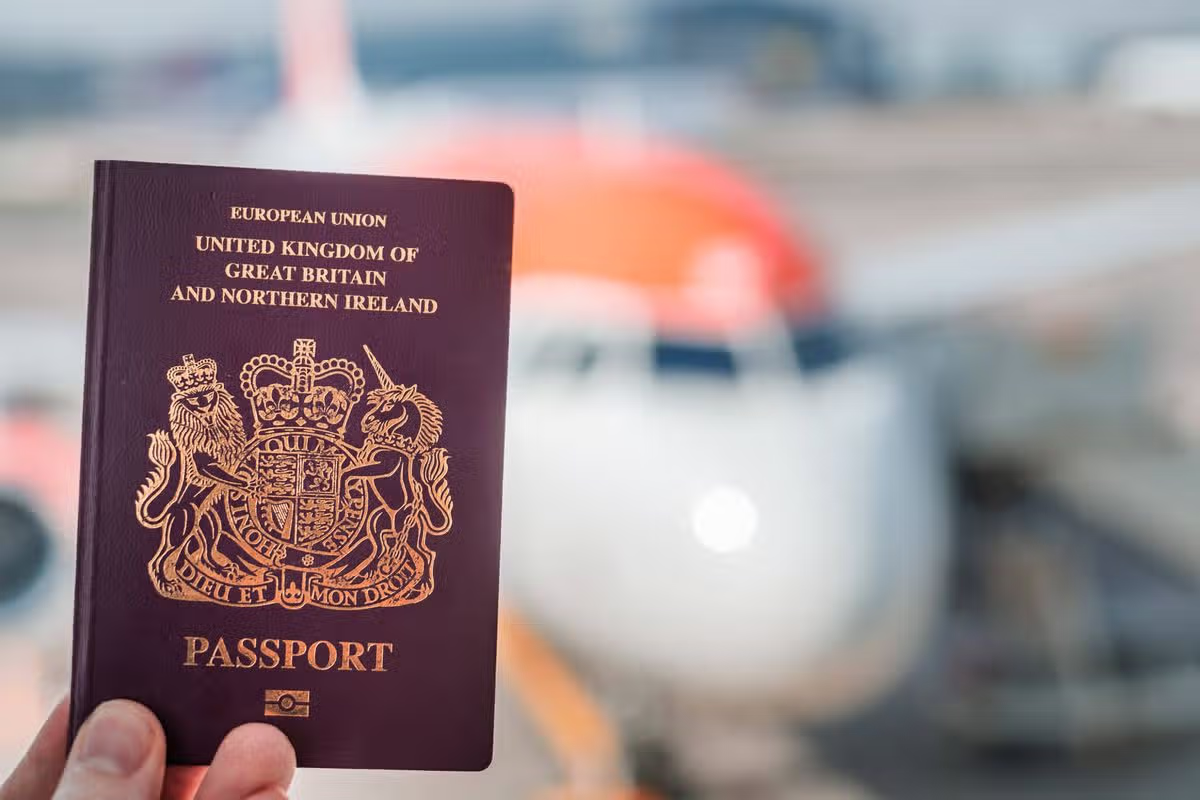
They all agreed that Brits heading to Europe need to not only check the passport’s validity but also ensure it was issued less than 10 years ago. Before 2018, passports could remain valid for as long as 10 years and nine months.

But now if you are heading to the EU or Schengen areas, you cannot have passports older than 10 years when you arrive at their holiday destination. It must also be valid for at least three months after the day you plan to return home.

The check every Brit needs to do

Francis Hellyer, CEO of tickadoo, said: “People check the expiry date, see it is months away, and relax. But for getting into the EU the border does not care about your expiry date, it cares about your issue date.

“If your passport is more than 10 years old on the day you land, you can be turned away at the gate even with eight months left on the page. Check the date of issue, not just the date of expiry.”

Natasha Inglis, Implementation and Client Success Director at Good Business Travel, added: “Your passport might still be in date, but that doesn’t always mean it’s valid for travel.

“Most travellers only look at their passport’s expiry date, but the issue date is just as important. For travel to EU countries, passports must be less than 10 years old on the day you arrive.

“This means that certain valid passports could still be rejected at the airport, so it’s really crucial to check both dates before you travel.”

Patrick Hill, Head of Paramount Cruises, said he is seeing “more and more” people getting caught out, especially when making last minute bookings.

He urged travellers to make the passport check before booking rather than before flying, and remember the new rules regarding the 10 year issue date.

Patrick explained: “If you renewed before October 1, 2018, the Passport Office sometimes carried over unused months from your old passport. The EU doesn’t count those. So check your date of issue, not just your expiry, they’re not the same thing.”

As well as passports not being allowed to be older than 10 years, there must be three months left after the date you plan to leave the Schengen area. However, Patrick noted that cruise lines often require six months from the end of the cruise.

He added: “Check both your issue date and expiry date the moment you start booking, not the week you travel. We’ve seen too many holidays evaporate at the check-in desk over a few missing months.”

How to check your passport

Find the date of issue on your passport photo page and add 10 years. Make sure your outbound flight falls before that date.

Next, find the date of expiry and minus three months. Make sure your return flight falls before that date. Ensure you check every passport included in your booking, especially children’s passports as they only last five years.

Francis Hellyer warned: “Do not assume that being allowed to check in means you are safe. Airlines turn away borderline passports to avoid EU fines, and immigration can still refuse you even after you board. If anything looks tight, renew now.”

He added: “When someone is refused boarding, the flight is only the start of the loss. We see how much a family spends on the holiday itself, the tours, the show tickets, the day trips, and a lot of that is non-refundable. A passport check takes two minutes and it is the cheapest insurance you will ever buy for the whole trip.”

Source link

TUI updates regulations for all passengers, including mask and health rules

New rules have come into force from June in the first update for three years

TUI Airways has officially updated its Flight Conditions of Carriage, with the new rules taking effect for bookings starting June 5, 2026. If you booked your getaway before this date, the previous rules (from March 2023) still apply to your trip.

The update streamlines legal language, tightens health policy provisions, and explicitly outlines fees for amendments. The TUI Conditions of Carriage is the official legal contract between you and TUI Airways when you buy a flight. The rules apply to every single passenger flying on a TUI Airways aircraft. This includes people who bought a “Flight Only” ticket and people who booked a TUI package holiday (where the flight is included).

It is a dense legal document split into distinct “Articles” (usually around 15–20 pages if printed). Because nobody reads the full text while packing, it is designed to protect both the airline’s operations and outline your consumer rights. In short, they state: “We promise to fly you and your bags to your destination, provided you show up on time, behave yourself, bring valid legal documents, and don’t pack anything dangerous.”

It covers rules around baggage size and weights, ticket validlty and banning passengers. The key updates and points of focus in the 2026 conditions include:

1. Health Requirements & Mask Policies (Article 1)

While daily travel has largely returned to normal, TUI has modernised its terms to give them a clear mandate for future public health scenarios:

  • Conditional Mask Requirements: The rules specify that if a local government or health authority mandates them, you must wear an appropriate mask at the airport and on board. Failing to comply can result in a refusal of carriage, and taking it off mid-flight will be treated under TUI’s disruptive passenger policy.
  • Health Statements : TUI retains the right to require you to fill out a health statement prior to flying out of or returning to a UK airport. Passengers showing symptoms of a major health outbreak, epidemic, or pandemic will be denied boarding.

2. Name Corrections vs. Substitutions

  • Spelling Mistakes: You can still correct genuine typos or spelling mistakes on your ticket for free, as long as TUI can reasonably verify it is an honest mistake.
  • Name Substitutions : If the change amounts to transferring the ticket to an entirely different person, it will not be treated as a free correction and will incur standard amendment/transfer fees.

3. Ticket Validity and Amendment Fees

  • Validity Period: Tickets remain valid for exactly one year from the date of issue.
  • Compassionate Exceptions: In the tragic event of a passenger passing away en route, or a death in a passenger’s immediate family after travel has started, TUI explicitly permits the tickets of the passenger and their accompanying immediate family to be changed so they can fly at a different time.
  • Voluntary Amendments: If you decide to change your flight details (date, time, or destination) 29 days or more before departure, you will face a baseline amendment charge of £50 / €50 per passenger per booking, plus any difference in the fare price, taxes, or associated fees.

Though technically part of their package holiday booking terms rather than the Flight Conditions of Carriage, TUI also launched a highly publicized Price-Match Promise. If you book a package holiday and find the exact same TUI-flight-inclusive deal cheaper elsewhere, you can claim a refund for the difference—but you must submit the claim within 72 hours of your original booking.

Source link

Airports’ four-letter code you won’t want to see on your boarding pass

One code can mean it takes longer to get through security. Here’s the code many travellers dread seeing on their boarding pass and what it means for their flight if they get it

Navigating the airport can be an exhausting ordeal. In an ideal world, we’d sail through the security queue to give ourselves time to browse the perfumed duty free outlets or enjoy a relaxed coffee, but there are many bottlenecks where you can find yourself delayed.

One indication that your journey through the airport might not run as smoothly as you’d hope can be identified once your boarding pass has been printed. Check-in personnel will often add codes to your ticket alerting airport staff to watch for particular things, and there’s one code travellers really won’t want to encounter if they’re jetting off to the World Cup.

Those flying to or from the United States may notice SSSS on their boarding pass, which stands for Secondary Security Screening Selection or Secondary Security Screening Selectee. Essentially, this code indicates you’ve been chosen for extra inspection, and this can be for a wide range of reasons.

Certain airlines won’t print SSSS, but may have their own method of flagging that a passenger requires additional screening. For instance, Southwest Airlines reportedly uses a chequerboard pattern which appears on boarding passes.

Citizens of particular countries, such as those with sanctions or political tensions with the USA, may be more likely to encounter SSSS on their boarding pass. But the Transportation Security Administration (TSA) remains tight-lipped about the precise criteria that could see your name flagged in this manner, reports the Express.

The ACLU (American Civil Liberties Union) has previously claimed that “TSA maintains a “Selectee List” (sometimes called the “Automatic Selectee List”) of people who are automatically and intentionally selected for enhanced screening every time they fly.”

However, there are other factors that could see passengers flagged for additional screening, including making one-way bookings and purchasing tickets with cash. Travellers who have previously passed through high-risk countries, regularly visit ‘unusual’ destinations, or display other flight patterns deemed suspicious may also find themselves subjected to extra screening.

Having a name similar to someone on a Department of Homeland Security watch list could be yet another reason you end up with additional security checks, and could even result in you being denied boarding. Passengers who are repeatedly flagged for extra screening can apply for the DHS Traveler Redress Inquiry Program (DHS TRIP), and if approved they’ll receive a Redress Control Number to use when booking flights, which should make their travels considerably smoother.

If you do spot SSSS or a similar code on your boarding pass, there’s no need to panic. More often than not, it simply means you’ll require some additional time to clear security.

Typically this involves an enhanced pat-down, a manual inspection of carry-on bags, and possibly the use of a handheld metal detector as you pass through the security lane. Travellers should make sure they adhere to their airline’s advice on when to arrive at the airport, as this will guarantee they have sufficient time to clear any additional security checks.

In the USA, the TSA advises arriving a minimum of two hours before domestic flights and three hours ahead of international departures.

Have a story you want to share? Email us at webtravel@reachplc.com

Source link

easyJet reveals the cheapest day to fly and how to find ‘bargain flights’

Passengers wanting to fly with easyJet could get some pretty cheap deals

Booking flights can be expensive, with many people clicking on random days of the week to find the best deal. But did you know two days of the week are likely to be better than the rest?

Travel experts at easyJet say that while the ‘cheapest day to fly’ often depends on factors like destination and flight availability, there are two days of the week you really want to look out for. The airline says: “The cheapest day of the week to fly can vary depending on the destination, flights available, and time of year.

“However, we’d recommend being flexible with your dates and considering flying outside of peak weekend flight times. By booking to fly on Wednesday or Thursday rather than Friday, you can find bargain flights (and get more time at your destination!).”

What is the cheapest month to fly in?

The low-cost airline also noted that the start and end of the year are key periods to look for if you want a trip that won’t break the bank. It adds: “The cheapest month to fly often depends on the destination and the type of trip you’re planning.

“For traditional warm-weather destinations in Spain or Italy, you can often find the cheapest plane tickets in the winter months of January and February. If you’re booking a trip to the mountains or traditional winter destinations like Finland, you’ll often find cheaper flights in November or March.”

As one of the world’s largest airlines, it operates a fleet of 355 aircraft, connecting 164 airports in 38 countries through 1,207 routes. While booking flights during these specific days and months is not a guarantee of the best deal, it urges people to use its Low Fare Finder when searching for the cheapest flight dates to secure the best deals.

Mum blocked from easyJet flight and left £700 out of pocket

In other easyJet news, a mother was prevented from boarding an easyJet flight with her family and lost £700 after being caught out by a crucial passport rule.

Bolaji Omisade was looking forward to a family trip to Greece and arrived at London Gatwick Airport with her husband and three sons. However, after checking in at the airport, easyJet staff informed her that she was not permitted to board the flight.

Confused by the situation, she was informed at check-in that, although her passport had not yet expired, it was no longer valid for travel due to passport regulations. You can read the full story here to make sure that you don’t fall foul of the same rule.

Source link

Simon Calder reveals 5 ‘worst’ destinations for EU border chaos this summer

There has been queues for hours, with some holidaymakers even missing flights

Many Brits are heading to Europe in the coming months for their summer holidays. However, there are major changes to entering European countries this year.

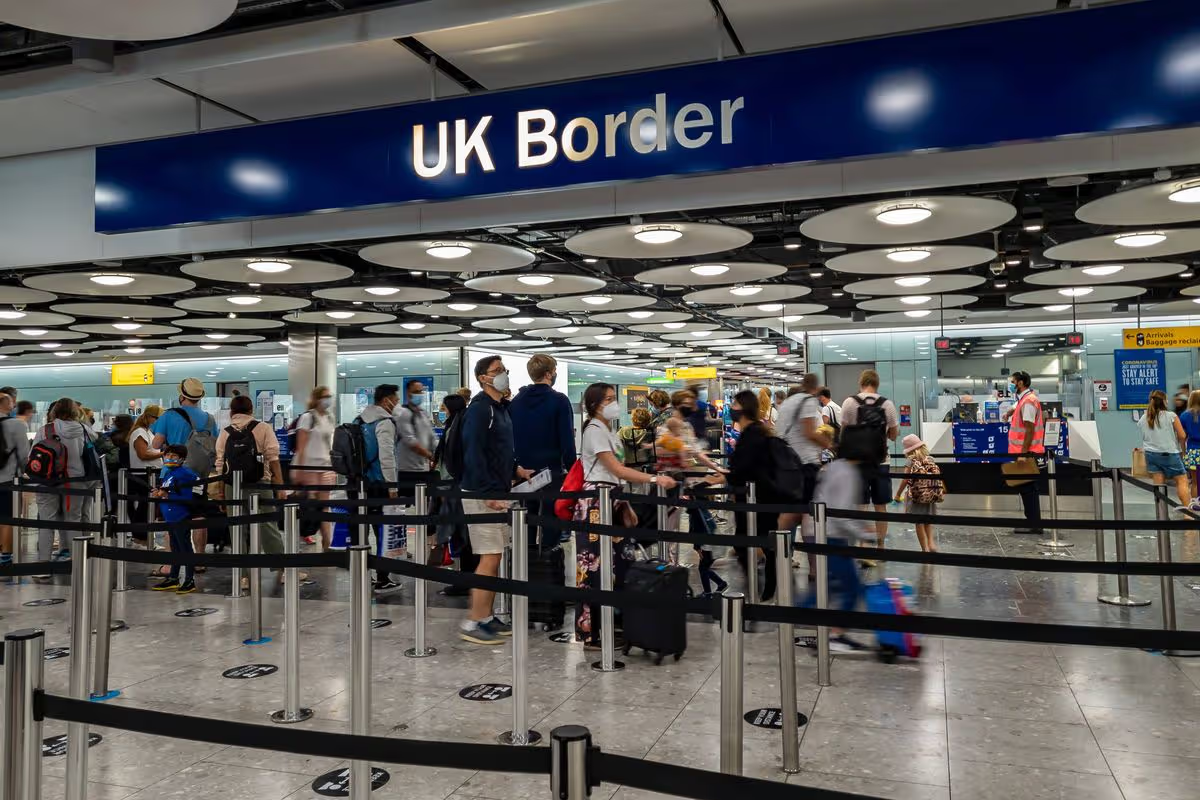
The new EU Entry/Exit System (ESS) was fully implemented on Friday 10, April, with significant travel disruptions happening as a result. Holidaymakers have found themselves in long queues lasting hours as they try to pass through the digital border system.

It has even left some missing their flights and having their holidays in tatters. The EES has replaced manual passport stamping and requires all Brits travelling to the Schengen area to “create a digital record” and register their biometric details, including fingerprints and a photograph.

As delays continue at European airports, there have been mounting worries about how it will affect travel during the summer holidays, which is famously one of the busiest periods to fly.

Travel expert Simon Calder says there has been “a litany” of people stuck in queues at Dover for hours or even missing their flights home due to delays.

He described the system as a “Euro shambles” before being pressed on where in Europe is the worst impacted by the new process. Simon named Milan Malpensa, Lisbon, Paris Charles de Gaulle, Frankfurt and Copenhagen as the airports with the “worst” delays.

Simon said on The Travel Expert podcast: “From what I have experienced, and certainly one of them is Milan Malpensa. The fingerprint stuff took an hour, and I was the first one off the EasyJet plane from Gatwick.

“Then, I went through the other terminal to check out and it took 45 minutes that time but they wanted those fingerprints again, which is absolutely not in the rules.”

He added: “I have heard terrible stories from Lisbon, other places frequently mentioned, Paris Charles de Gaulle and Frankfurt. Both of them are huge hubs where you have got a lot of people flying from various regional airports across the UK into Paris and Frankfurt to connect.

“That’s okay if you are going intercontinental but if you are trying to connect to somewhere in Europe it is awful.”

Simon explained he had a friend travel to Frankfurt last weekend, who experienced 90 minute queues.

A friend was there last weekend and it took 90 mins, connection could be toast. Simon went on to name Copenhagen as also experiencing bad delays.

Co-host Greg Dickinson said: “This was a rare instance where the Foreign Office said you may encounter long queues in or out of the airport.”

Despite the issues, Simon was optimistic about the future of travel this summer. When asked if he thinks there will be more delays this summer, he said: “I would hope we might see a bit less.”

‘Worst’ European airports for ESS delays

  • Milan Malpensa
  • Lisbon Airport, also known as Humberto Delgado Airport
  • Paris Charles de Gaulle
  • Frankfurt Airport
  • Copenhagen Airport

Source link

Jet2 makes major winter holiday update in Thursday, June 11 statement

Airports in major cities such as London, Manchester, Birmingham, and Bristol are affected

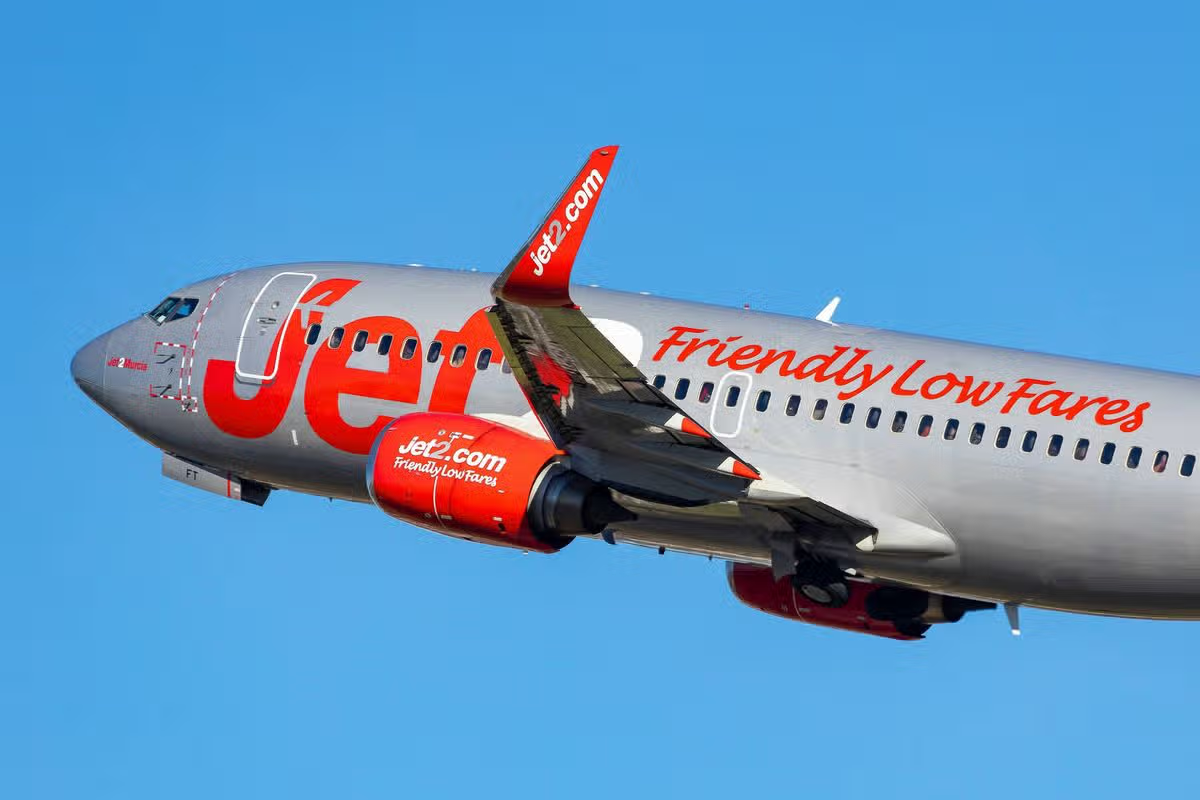
Jet2 has announced the launch of a brand-new range of travel options for Brits seeking some winter warmth. The 2027/28 Winter Sun programme will be the largest ever offered by the leisure airline and tour operator.

It will see nearly 4.5million seats go on sale for the winter, flying to 17 destinations from airports including Belfast International, Birmingham, Bournemouth, Bristol, East Midlands, Edinburgh, Glasgow, Leeds Bradford, Liverpool John Lennon, London Gatwick, London Stansted, London Luton, Manchester and Newcastle International.

The programme encompasses 181 routes, covering the Canary Islands (Tenerife, Lanzarote, Gran Canaria, Fuerteventura, La Palma, Mainland Spain (Alicante, Malaga), Balearics (Majorca), Portugal (Faro and Madeira), Turkey (Antalya), Malta, Morocco (Marrakech and Agadir), Cyprus (Paphos), and Egypt (Sharm El Sheikh and Hurghada).

Jet2 says it is the first airline and tour operator to go on sale for the winter of 2027/28. In the coming weeks, the airline and tour operator will also unveil details of its Ski, City Breaks and Iceland programmes for Winter 27/28.

Steve Heapy, CEO of Jet2, said: “Our winter sun programme for 2027/28 is on sale nice and early, and we are very pleased to be giving customers and independent travel agents fantastic choice and flexibility.

“The launch of our biggest ever winter sun programme gives customers from across all 14 of our UK airport bases huge choice. We have designed the programme in direct response to demand, so as well as offering 4.5 million seats, this will be our first year of full winter season operations to Egypt. We are not done yet, with even more exciting announcements about our Winter 27/28 programme coming soon.”

Key Winter Sun highlights by base for Winter 27/28 include:

Belfast International Airport

  • Over 155,000 seats for winter 27/28
  • 22 flights per week during peak period
  • Eight winter sun destinations on sale:
  • Alicante, Antalya, Faro, Fuerteventura, Gran Canaria, Lanzarote, Malaga, Tenerife

Birmingham Airport

  • 540,000 seats for winter 27/28
  • 66 flights per week during peak period
  • 16 winter sun destinations on sale:
  • Alicante, Antalya, Agadir, Faro, Fuerteventura, Gran Canaria, Hurghada, Lanzarote, Madeira, Majorca, Malaga, Malta, Marrakech, Paphos, Sharm el-Sheik, Tenerife

Bournemouth Airport

  • 11 flights per week during peak period
  • Eight winter sun destinations on sale:
  • Alicante, Antalya, Fuerteventura, Gran Canaria, Lanzarote, Tenerife
  • Agadir and Madeira– exclusive routes to Jet2

Bristol Airport

  • 210,000 seats on sale for winter 27/28
  • 34 flights per week during peak period
  • 12 winter sun destinations on sale:
  • Alicante, Antalya, Agadir, Faro, Fuerteventura, Gran Canaria, Hurghada, Lanzarote, Madeira, Majorca, Malta, Paphos, Tenerife

Edinburgh Airport

  • Over 300,000 seats on sale for winter 27/28
  • 40 flights per week during peak period
  • 13 winter sun destinations on sale: Alicante, Antalya, Faro, Fuerteventura, Gran Canaria, Lanzarote, Madeira, Majorca, Malaga, Malta, Paphos, Sharm el-Sheikh, Tenerife

East Midlands Airport

  • Over 340,000 seats on sale for winter 27/28
  • 49 flights per week during peak period
  • 15 winter sun destinations on sale: Alicante, Antalya, Faro, Fuerteventura, Gran Canaria, Hurghada, Lanzarote, Majorca, Malaga, Malta, Paphos, Sharm el-Sheikh, Tenerife
  • Agadir and Madeira– exclusive routes to Jet2

Glasgow International Airport

  • Over 350,000 seats on sale for winter 27/28
  • 47 flights per week during peak period
  • 15 winter sun destinations on sale: Alicante, Agadir, Antalya, Faro, Fuerteventura, Gran Canaria, Hurghada, Lanzarote, Majorca, Malta, Malaga, Marrakech, Paphos, Tenerife Madeira – exclusive route to Jet2

Leeds Bradford Airport

  • Over 400,000 seats on sale for winter 27/28
  • 59 flights per week during peak period
  • 16 winter sun destinations on sale: Alicante, Agadir, Antalya, Faro, Fuerteventura, Lanzarote, Majorca, Malaga, Tenerife Gran Canaria, Hurghada, Madeira, Malta, Marrakech, Paphos, Sharm El-Sheikh – exclusive routes to Jet2

London Gatwick Airport

  • Almost 320,000 seats on sale for winter 27/28
  • 38 flights per week during peak period
  • 14 winter sun destinations on sale: Alicante, Agadir, Antalya, Faro, Madeira, Fuerteventura, Gran Canaria, Hurghada, Lanzarote, Malaga, Malta, Paphos, Sharm el-Sheikh, Tenerife

Liverpool John Lennon Airport

  • Over 165,000 seats on sale for winter 27/28
  • 28 flights per week during peak period
  • 10 winter sun destinations on sale: Alicante, Antalya, Faro, Fuerteventura, Gran Canaria, Lanzarote, Majorca, Malaga, Tenerife Madeira– exclusive route to Jet2

London Luton Airport

  • Over 130,000 seats on sale for winter 27/28
  • 17 flights per week during peak period
  • Eight winter sun destinations on sale: Alicante, Antalya, Faro, Fuerteventura, Gran Canaria, Lanzarote, Madeira, Tenerife

Manchester Airport

  • Over 700,000 seats on sale for winter 27/28
  • 84 flights per week during peak period
  • 17 winter sun destinations on sale: Alicante, Agadir, Antalya, Faro, Madeira, Fuerteventura, Gran Canaria, Hurghada, La Palma, Lanzarote, Majorca, Malaga, Malta, Marrakech, Paphos, Sharm el-Sheikh, Tenerife

Newcastle International Airport

  • Over 320,000 seats on sale for winter 27/28
  • 50 flights per week during peak period
  • 12 winter sun destinations on sale:
  • Alicante, Antalya, Faro, Fuerteventura, Gran Canaria, Lanzarote, Majorca, Malaga, Malta, Paphos, Tenerife
  • Madeira– exclusive route to Jet2

London Stansted Airport

  • Over 430,000 seats on sale for winter 27/28
  • 60 flights per week during peak period
  • 17 winter sun destinations on sale: Alicante, Agadir, Antalya, Faro, Fuerteventura, Gran Canaria, Lanzarote, Madeira, Majorca, Malaga, Malta, Marrakech, Paphos, Sharm el-Sheikh, Tenerife La Palma and Hurghada – exclusive routes to Jet2

Source link

Jet2’s message to all passengers flying with soft-sided suitcases

The airline offered a reminder to passengers who should check the advice before travel

Jet2 has guidance for all passengers travelling with soft-sided luggage. The airline has an important travel reminder on its website, which shares ‘top tips before travel‘ for all customers. The guidance highlights the importance of checking that baggage is strong and suitable for use before travel.

While many passengers use soft-sided suitcase, Jet2 wants customers to be aware they can be vulnerable. Highlighting the message on the advice page, the airline said: “Please ensure your baggage is strong and fit for purpose, to protect the contents and to withstand the normal baggage handling process.

“Soft sided cases and handles, wheels and locks can be particularly vulnerable.” Nonetheless, many customes might still choose to travel with soft-sided suitcases.

Regardless of their choice, passengers are asked to make sure they label all of their luggage carefully. Jet2 says: “Label each piece of baggage with your name, flight number, and phone number.”

When packing, customers are urged to ensure any important documents and items are packed inside their hand luggage. This includes any essential medications and cash. “Never pack cash, valuable items, perishable goods, important documents or essential medications in your checked baggage,” the advice stated.

Passengers are also urged to add a name tag to their bags and ensure all zips are closed before travel. Jet2’s guidance says: “Secure your baggage and ensure all pockets and zips are fully closed. Please note that the security authorities in some countries may open your bags without you present to make any necessary checks.

“At check-in, each item of checked baggage will be given a destination tag showing your flight number. Do not get rid of your checked baggage receipts (if given) until you pick up all checked baggage at your destination airport. Never carry unidentified items on behalf of other people.

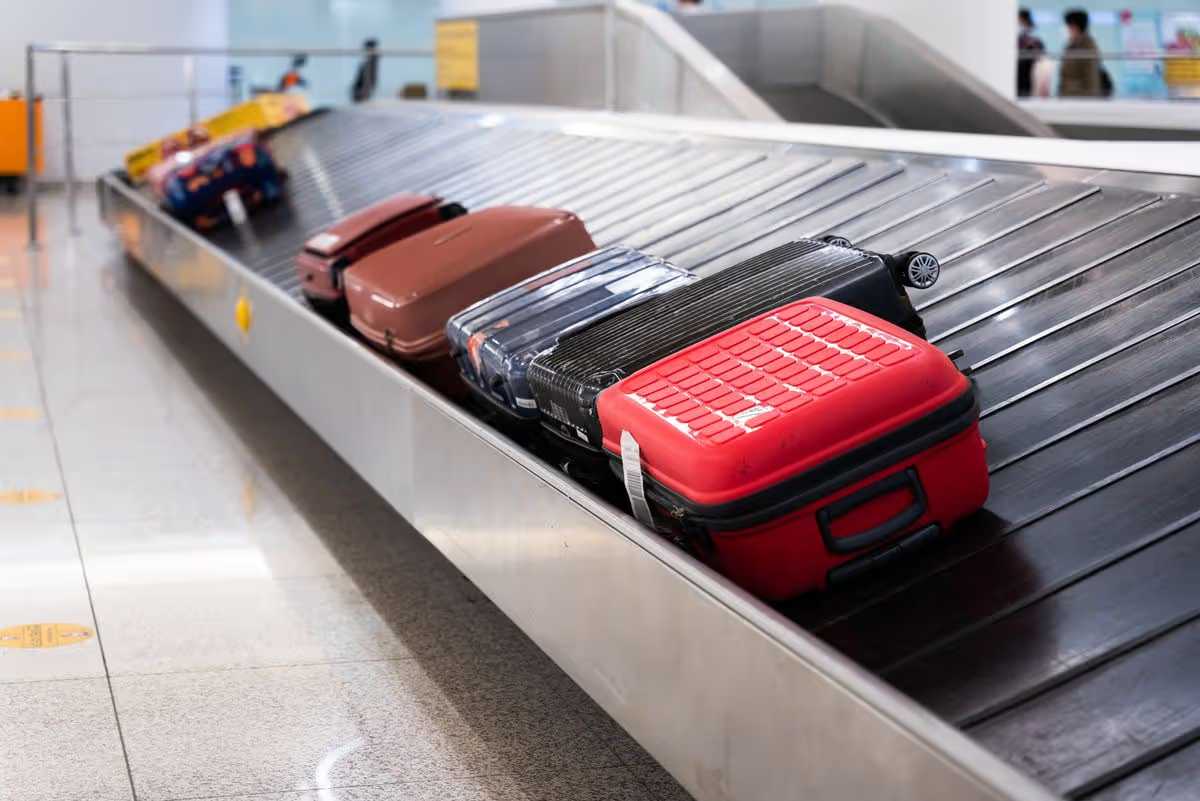
“Take care when claiming your baggage at your destination, as many suitcases look the same. It is best to always check the name on the baggage tag.”

For passengers in need of new luggage, it could be worth browsing high street retailers, such as Dunelm, Primark, Home Bargains, B&M, or TK Maxx. Luggage options typically include both hard-sided and soft-sided suitcases and bags.

While some passengers might prefer to use soft-sided bags because they offer more flexibility than other suitcases, hard-sided suitcases could be preferable when you’re transporting fragile items.

Source link

New Ryanair Thursday update as £8 fee investigated

The Competition and Markets Authority (CMA) has launched an investigation

Budget airline Ryanair is facing an investigation.

The Competition and Markets Authority (CMA) has announced it is looking at fees that parents are required to pay to sit alongside their children on flights. The CMA revealed that the airline insists at least one parent sits with their children aged between two and 11.

This is enforced through what Ryanair refers to as a mandatory family seat, while seat reservations remain optional for all other passengers. The charge typically comes in at around £8 each way, according to the CMA.

The regulator confirmed it was looking into “whether Ryanair’s approach to seat reservations may mean parents are being charged for the airline to meet its child safety and disability‐related obligations as set out under aviation rules”.

It further stated that it would “determine whether or not this practice is in line with consumer law”. Ryanair is “the only major airline flying out of the UK to impose this charge”, according to the watchdog.

Other carriers offer to seat children flying with a parent without the need for a paid reservation, or automatically allocate seats together during booking, the CMA said. The investigation will also examine whether Ryanair’s mandatory family seat fee is dripped during the booking process, which is when a business does not initially present customers with all unavoidable charges.

The CMA added that it was at the beginning of its investigation and has “reached no conclusions about whether Ryanair has broken the law”.

Hayley Fletcher, senior director of consumer protection at the CMA, said: “Lots of families save up to afford a summer holiday and we know that extra charges can quickly bump up the price. Our investigation will consider Ryanair’s approach to family seat reservations and how the cost is presented to consumers, to determine whether they comply with consumer law. For the past year, we’ve told businesses to ensure their customers are shown the total price upfront – those who don’t face the very real possibility of action from the CMA.”

Ryanair statement on CMA investigation

The airline responded with a statement: “Ryanair’s family seating policy fully complies with all relevant laws and regulations, and saves families money when travelling on the UK’s lowest fare airline. Ryanair does not charge any fee for children to sit beside their parent or accompanying adult.

“Like all adults who select a reserved seat, adults travelling with children pay one reserved seat fee, but can select reserved seats beside them for up to four children on the same booking free of charge.

“This means that parents travelling with children pay for only one (adult) reserved seat but pay nothing for the four other reserved seats for their children travelling with them.

“This bogus CMA investigation is a failed effort by the Starmer Government to pretend it cares about consumers when it has failed to abolish APD (air passenger duty) which would immediately deliver lower fares for all consumers and growth for the UK aviation, tourism and wider economy. Ryanair looks forward to disproving these false CMA claims during this bogus investigation.”

The CMA is an independent non-ministerial Government department, funded by the Treasury.

Source link

Airports that choose not to recognise ‘Sunflower Lanyards’ as of June 2026

People with hidden disabilities tend to use this as a way of making others aware

Travel can be made easier for some people living with an invisible disability or health condition by wearing a ‘Sunflower Lanyard’. Hundreds of airports around the world recognise it and what it may mean for some passengers – but not every airport is the same.

The Sunflower Lanyard isn’t recognised everywhere. Although many airlines and airports around the world support it, some international airports and locations ask you to use their own specific hidden disability programs or badges to get access to special fast-track lanes, priority boarding, or customised assistance.

Employees at participating venues are trained to recognise the lanyard and offer specific help, such as using simpler language, giving you extra time to process information, or guiding you to a quieter space. But, not every part of the world will instantly recognise or understand the lanyard.

On the Hidden Disabilities Sunflower website, it says: “It’s a misconception that people living with a disability don’t want to, or can’t travel. They do and they can. Globally, one billion people live with some sort of disability, and while some experience a disability that is visible, for many it is not visible.”

The system is designed for any condition that isn’t immediately obvious to others, including conditions like neurodivergence, mental health, sensory impairments, and chronic conditions, to name a few. The lanyard does not reveal your specific medical condition or disability.

What parts of the world accept and follow the Sunflower system?

According to the Hidden Disabilities Sunflower website, hundreds of airports and airlines do recognise the lanyards. As of April 2026, the number was around 325 – but checking the specific airport’s accessibility page can give more details such as finding out if staff can provide free Sunflower lanyards and where to collect them.

Because the lanyard operates on an “opt-in” basis for businesses, an airport will not recognise it unless its staff have been explicitly trained to do so. Holiday hotspot Spain made headlines because its airport authority (Aena) rolled out its own alternative system.

Most other non-participating airports simply do not recognise the lanyard at all, instead of replacing it with a local version. Outside of a few specific exceptions (such as Singapore Changi, Tokyo Haneda, and select major airports in India), the scheme is not widely adopted or understood by security staff across Asia and Africa.

What isthesystem

The Hidden Disabilities Sunflower lanyard system is an initiative that allows people to discreetly let others know that they have a non-visible disability and may need additional support, time, or help. Wearing the bright green lanyard that features yellow sunflowers indicates to trained staff that you have a hidden condition.

Anyone who feels they have a non-visible disability can use the lanyard. You do not need to show medical records or a doctor’s letter to get or wear one.

The system is designed for any condition that isn’t immediately obvious to others, including conditions like neurodivergence, mental health, sensory impairments, and chronic conditions, to name a few. For more information, click here.

Source link

Martin Lewis’ MSE issues Europe travel warning to ‘over two million’ people

MoneySavingExpert has shared important safety advice for holidaymakers

MoneySavingExpert (MSE) has issued a travel warning to millions of people. Founded by journalist and broadcaster Martin Lewis, MSE regularly posts consumer advice for Brits. In the latest Money Tips Email, the experts offered advice for anyone booking holidays.

In the email, the team told readers: “Summer is coming, and if you’re booked to go away and haven’t got your insurance yet, you need to do it NOW, today, straight away!” As the experts pointed out, booking travel insurance as soon as you book your holiday offers the maximum protection, including cover if something happens that prevents you from travelling.

Before setting off, it’s also advised to get a Global Health Insurance Card if you’re travelling to Europe. In the alert, MSE revealed that over two million cards are expected to expire this year. As a result, millions could miss out on the benefits if they don’t renew ahead of upcoming holidays.

The UK Global Health Insurance Card enables holidaymakers to access healthcare without paying more than a local resident would while travelling in the European Economic Area.

The NHS explains: “The UK Global Health Insurance Card (GHIC) lets you get necessary state healthcare in the European Economic Area (EEA), and some other countries, on the same basis as a resident of that country. This may be free or it may require a payment equivalent to that which a local resident would pay.

“The UK GHIC has replaced the existing European Health Insurance Card (EHIC). If you have an existing EHIC you can continue to use it until the expiry date on the card. Once it expires, you’ll need to apply for a UK GHIC to replace it.”

While people are advised they should also take out travel insurance, it could help you avoid paying the excess if you need medical treatment during your trip. MSE said: “Going to the EU? Ensure you’ve a valid (free) GHIC/EHIC – over 2m expire this year.

“The ‘Global Health Insurance Card’ (GHIC) and its predecessor, the EHIC, give access to state-run hospitals or GPs, mainly in European countries, for the same price as a local. So if they don’t pay, you don’t either. Over two million expire this year, check yours.”

A UK GHIC is free, and you can apply through the NHS website. The NHS advises avoiding unofficial websites, which may charge an application fee. People can apply for a new card up to nine months before their current card expires.

The NHS says: “You can apply for a UK GHIC if you’re a resident in the UK. You can also add your family members to your application when you apply.”

Source link

Ryanair passenger issues alert after being told she could be ‘denied plane seat’

A Ryanair passenger claims she was recently told it was “unlikely’ she’d be able to board a plane for an unexpected purpose. Aisling Finlay was left taken aback and has since issued an alert

A Ryanair passenger was left concerned after she was reportedly told she’d be “unlikely to board a plane”, and it’s not the first time someone has claimed they were denied a seat with the airline. Aisling Finlay recently opened up about her alleged travel issue, as she wanted to alert others to the fact that it could happen.

Aisling recently shared her story on TikTok, where she claimed she didn’t know something like this was possible when travelling with Ryanair. The clip has since gone viral as people couldn’t believe how events unfolded in the unlikely air travel tale that left many taken by surprise.

It’s not the first story of its kind to be shared either. Previously, a four-year-old boy was said to have been told he couldn’t board a plane either.

In the clip, she said: “There’s a high chance we’re not getting on this flight. So, a reminder to everyone to check-in way in advance, as they’re overbooking the planes.

“So, we’re flying to Spain at 11am. So, I checked in last night at about like 10pm, and weren’t able to like reserve a seat or allocate a seat, so I was like ‘strange’.

“And then our boarding card came up saying ‘seat allocated at the gate’, and then we arrived there, and they’re basically like ‘we’ve overbooked the flight by nine seats’.

“We’re number five and six to get on the plane. So she was like ‘it is unlikely you’ll get on the flight’. Brilliant.”

Content cannot be displayed without consent

The video has been viewed over 27,000 times since it was shared, and people were quick to comment too. Hundreds have since offered their thoughts on the matter.

One said: “In all my years travelling bumping has never happened to me, and I’ve never seen it happen. It must be a very new thing with Ryanair.”

Another added: “I had that once. Due to fly from Dublin to Bristol. They couldn’t get me on so they flew me to Birmingham and then paid for a taxi to Bristol, and a few weeks later I got £250 compensation. More than I paid for my whole trip.”

A third replied: “This is becoming so common. Happened two weeks ago. One member of our party didn’t get on, and was lucky to get a seat the next day. Check in as early as possible and book seats to make it safer.”

Meanwhile, a fourth also commented: “Most airlines do this!” One more also noted: “Every airline does this.”

What you need to know

When Ryanair was approached for comment, it stated as a policy the airline does not overbook flights. The airline also claimed the passenger travelled on the flight from Dublin to Palma de Mallorca on June 3.

However, some more information is available on its website. It states: “Ryanair, as a policy, does not overbook its flights. However, in the unlikely event that a seat is not available for a passenger with a confirmed reservation, we will seek volunteers to surrender their seats in exchange for benefits that we and the volunteer may agree upon before involuntarily denying boarding to other passengers.

“If there are insufficient volunteers, and we deny you boarding involuntarily, you are entitled to the rights set out below.” These rights are outlined on the website.

Source link

New museum is a ‘must-see’ as historic UK airport reopens after 67 years

The airport was once Britain’s main international gateway and birthplace of the ‘Mayday’ distress call

Croydon Airport has thrown open its doors to the public once more after being shut for 67 years. Once the nation’s main international airport, it closed down for good in 1959 and has remained vacant ever since.

Earlier this year, the airport received visitors for the first time as a heritage attraction. Now converted into a museum, the site enables people to discover the original terminal building on the first Sunday of each month.

Having initially opened in 1920, Croydon Airport played a pivotal role in the advancement of aviation in the aftermath of World War 1.

The location is celebrated as the birthplace of the ‘Mayday’ emergency call. In 1923, F.S. Mockford, Croydon’s Senior Radio Officer, devised the distress signal “Mayday, Mayday, Mayday”, taken from the French expression “m’aidez” (“help me”), reports Surrey Live.

Historic Croydon Airport said: “‘Mayday, Mayday, Mayday’ was subsequently approved by the Air Ministry as the required radio procedure to be used in an emergency. In 1924, the UK promulgated its approval and use through the publication of The Air Pilot: Great Britain.

“Adopted by the International Radiotelegraph Convention of Washington in 1927, ‘Mayday’ became the international standard distress phrase. The ‘Mayday’ distress call still saves lives today.”

The airport shut its doors due to its inability to accommodate larger aircraft, with its final flight departing the iconic terminal in September 1959.

The Croydon Airport Visitor Centre has an impressive 4.6 Google rating at the time of writing.

On Tripadvisor, recent visitors to the museum were full of praise, with one writing: “Fascinating trip through the history of passenger aviation!”

Another visitor said: “I have lived in the area all my life and even used to go to Purley Way Lido across the way from the airport as a child, and didn’t know the significance of Croydon Airport.

“I was amazed how well preserved the building was, and didn’t even know it had a control tower. If you are into aviation or history, it is a must-see.”

A third wrote: “Very nice and detailed tour, highly recommended. But you will have to keep checking for the tour date as it’s not year round function.”

One person commented: “This local gem has great volunteers and interesting history (such As being the world’s first control tower and carrying almost half of the UK’s air passengers in 1935). The tour, photos, and signage do give an interesting view as to what it was like in the 1920s and 1930.”

Finally, another said: “Great place to visit. Tour guide Micheal in the museum gave a great talk and overview. Would recommend for all ages. Visually great with so much so see. Definitely a must see for anyone who loves aviation.”

Source link

Martin Lewis’ MSE says people can cut costs by booking a hotel but not using it

The money-saving experts shared a tip for people booking expensive holiday destinations

A savvy travel tip could help holidaymakers save money on trips to expensive destinations. MoneySavingExpert (MSE), founded by journalist and broadcaster Martin Lewis, often shares money-saving tips for the public. According to a previous blog post from the MSE team, some travellers could save money by booking a hotel they don’t need.

The experts explained that package holidays can sometimes offer better deals than scheduled flights for certain destinations. So travellers could save money by booking their flight as part of a package deal, then booking their preferred accommodation, assuming they’re not keen on the hotel included with the package.

MSE said: “Scheduled flights to some destinations, such as Orlando and Sri Lanka, can be silly money, yet packages there can sometimes come in much cheaper. If you only need the flight, check if there’s a cheaper package holiday, then grab it but DON’T stay in the hotel.”

The guidance added that Martin has previously had success with the trick, helping a friend book a holiday to Sri Lanka. MSE said the passenger paid £300 for the holiday to cover their flights, when the cheapest scheduled deal was over £1,000.”

In another blog post dedicated to cheap package holidays, MSE reiterates the advice. The experts explained: “If you’re going away specifically for seven, 10 or 14 days to a traditional holiday destination, package holidays are often best. They can sometimes be much cheaper than booking a scheduled flight… even if you DON’T want to use the hotel.

“For example, we found flights for a seven-day trip to Florida for £689 per person – a package holiday for the same dates was just £662 per person. It won’t always work, but it’s worth a try.”

When checking flight prices, passengers may wish to compare prices on sites such as Skyscanner. Booking on different days could help customers find the best deals.

Skyscanner says: “Flight pricing changes constantly based on demand, season and route. There’s no fixed ‘cheapest day’ to book but with the right tools, you can stay informed.

“Historically, Skyscanner pricing trends have shown that some airlines release deals late on Mondays, which may lead to lower fares early in the week. Prices tend to rise again as the week progresses and demand increases.”

Some holidaymakers wait until the last minute for deals. Skyscanner explains: “On quieter routes or off-peak travel days, prices may drop as the departure date approaches. But on popular routes or peak dates, fares often increase as the flight fills up.”

Source link

Major airline confirms new direct route from Manchester airport starting next month

Passengers no longer need to make connecting flights as the new service is set to start from July 23, the first of its kind on a route to and from Manchester Airport

A major airline has announced it will be running a new direct service to a major capital city from Manchester Airport.

Riyadh Air will launch the service between the Saudi Arabian capital and Manchester from July 23.

Flights direct to Riyadh will operate three times a week, making one of the first direct links between the Saudi Kingdom and England’s north in decades. Many passengers have been forced to rely on connecting flights through European hubs or other Gulf airports – until now.

As per Riyadh Air, the airline will run the route on Tuesdays, Thursdays and Saturdays, with flight RX417 leaving Riyadh King Khalid International Airport at 1.45am local time before arriving into Manchester at 6.40am. The return service, RX418, will depart Manchester at 8.40am and land back in Riyadh at 5.20pm local time – right on time for the dinner service.

Riyadh Air told travel news website Travel and Tour World that the route has been designed to appeal to both business and leisure passengers, offering faster and more convenient travel between the Middle East and England’s north. The new direct service will mean business travellers will be able to attend meetings in Riyadh without overnight layovers, and holidaymakers can travel to Saudi Arabia without the need to make a connecting flight. Additionally, the flights will make use of Riyadh Air’s Boeing 787-9 Dreamliner aircraft, which feature wider seating, advanced lighting systems, and nifty travel technology designed to reduce jet lag on long-haul journeys. Riyadh Air said the new Manchester flight path forms part of Saudi Arabia’s wider Vision 2030 strategy, which aims to grow tourism, strengthen global connections, and expand the country’s aviation sector. Riyadh Air, which was founded in 2023, plans to grow its fleet of more than 100 aircraft over the next decade, while also aiming to connect travellers to more than 100 international destinations.

The Manchester route is among the first international services planned as part of the national airline’s wider summer 2026 expansion programme, with new connections also flying out of London.

The additional fares come as travel between the UK and Saudi Arabia continues to increase, with weekly seat capacity surging by up to 150% in recent years to meet rising business and tourism demands. Riyadh Air is now the only aviation firm to expand flight offerings and launch new direct routes between major British and Saudi airports, with British Airways recently boosting its London Heathrow to Riyadh service to up to 14 weekly flights and its Jeddah (JED) route to five flights per week. Wizz Air and Virgin Atlantic have also launched direct routes connecting Gatwick and Heathrow airports to cities like Medina, Riyadh, and Jeddah.

Source link

Simon Calder urges anyone with package holiday booked to do task ‘immediately’

Important message for anyone with a package holiday booked

Travel expert Simon Calder has shared important advice for anyone with a package holiday booked, as people are being urged to act ‘as soon as possible’. His message comes ahead of the peak travel season, and as new research by Citizens Advice has revealed that four million people have faced issues with their package holiday over the last year.

On today’s (June 8) episode of ITV’s Good Morning Britain, TV host Kate Garraway spoke to correspondent Nick Dixon about the findings. He said: “The complaints that we’ve been hearing about were involving all-inclusive holidays, with many saying they just didn’t ultimately match up to the glossy brochures we see online, or indeed at the travel agents.

“Citizens Advice say that they found 33% of holiday-related complaints ultimately were about things like poor quality hotels, bad food, facilities being unavailable as well – 19% down to customer service.” He added: “Things like long waits on the phone, complaints ignored and administration errors, and 25% of complaints ultimately led to stress, anxiety or upset.

“And if your dream holiday does turn into a wee bit of a nightmare, there are steps you can take… Many of us with these kinds of complaints about our holidays end up trying to fight for compensation, which is why it is so important to keep a record of everything just in case to have any chance of getting money back.”

British travel journalist and broadcaster Simon Calder then spoke to viewers, sharing a crucial message for those with a package holiday, especially if they encounter problems during their trip. He urged holidaymakers to act ‘immediately’.

Content cannot be displayed without consent

He said: “If you get to your destination and things aren’t right, maybe there’s a problem with your room, maybe the facilities are simply not as described, then you have to give the travel company immediate notice and allow them the opportunity to sort things out.”

How can I claim compensation for a holiday?

Reporting a problem right away is a legal concept called “mitigating your losses”. If you don’t allow the travel provider to address the room or facilities issue while you’re there, you could really hurt your chances of receiving a full refund or compensation.

Citizens Advice says: “If you’re still on holiday, tell the company or travel agent about the problem as soon as possible. You might be able to get it sorted quicker – like if there’s a problem with the room. If you don’t say anything until you get home, you might get less compensation or none at all.”

The person you need to contact depends on how you arranged your holiday. If you went for a package holiday, reach out to the customer service team of the tour operator you chose.

However, if you organised it yourself or set up a linked travel arrangement, you should contact the accommodation or service provider directly, such as the hotel or the company offering excursions. Make sure you include:

  • your booking reference
  • clear details of what went wrong
  • copies any evidence you have – like photos
  • copies of receipts
  • how much compensation you want

Citizens Advice adds: “It’s a good idea to send the letter by registered post and keep a copy, so you have proof that the holiday company received it. You can also email them – some of them have online forms. Keep a copy of what you send. If the company makes you an offer that you think is too low, you can ask for more. They might come back to you with a higher offer.”

Source link

Your legal rights as 4million report problems with package holidays

Of the complaints made to the Citizens Advice Consumer Service, 42% involved all-inclusive packages abroad

More than four million people had problems with a package holiday in the past year, a survey for Citizens Advice suggests. The survey found 76% of adults had been on a package holiday before, and 34% of them had experienced a problem. Some 8% had suffered an issue within the last 12 months specifically, equating to an estimated four million travellers, it said.

The charity said it received about 14 complaints a day about package holidays, including issues such as unexpected changes to the hotel, denied refunds, and poor customer service. Of the 3,500 package holiday complaints made to the Citizens Advice Consumer Service in the past year, 42% involved all-inclusive packages abroad.

A third of complaints (33%) related to the quality of the holiday falling short of the agreed deal, such as hotels being misdescribed, bad food or unavailable facilities. Customer service failures made up 19% of complaints, including long waits on the phone, ignored complaints and administration errors made by firms.

As a result, one in four of those who experienced an issue with a package holiday (25%) said they suffered stress, anxiety or upset, while 17% had to pay extra for daily expenses. Citizens Advice encouraged holidaymakers to check what protections were included within their booking.

One complainant, Zorana, a semi-retired NHS doctor from north-east England, reported spending £6,300 on an all-inclusive, seven-night trip to Lanzarote with her daughter through a UK holiday operator. Torrential rain on the second day resulted in “nightmare” flooding, leaving hotel guests without electricity, water, food or internet.

However the woman said she received no on-site support from their operator, causing them considerable stress. Zorana, 66, said: “We spent the morning on the beach and planned the sauna for later. But when we were eating lunch the rain started and didn’t stop.

“By the time we got to the spa, the hotel told us we couldn’t go in because it was flooded. Half an hour later the electricity had gone. Without electricity, everything stopped. There was no more internet and no more water because the pumps were not working.

“We all gathered in the hotel lobby, to hear what was going on. It was the weekend and reps from all the other travel companies were there, talking with people, reassuring them, giving them information. Some were already distributed to other places. We asked, ‘Where is our rep?’ And we were told he doesn’t work on weekends.

“We were very angry. Hotel staff told us our travel company was always a problem and never helped people. We came home after five days and I started to chase the travel company for a refund. But the customer service adviser said they can’t deal with it because compensation was offered. But their offer was not adequate.

“I mentioned the lack of support, the delay, the value of the holiday, that I had to find and pay for another hotel, and because of this it was reasonable that they should give me all my money back. I feel a victim twice over because I had the stress of our holiday being ruined, and then months of trying to get compensation.”

Citizens Advice consumer spokeswoman Jane Parsons said: “Too often, people are left stressed and disappointed when their dream holidays are spoiled because they’re not getting what they paid for. To make matters worse, they’re having to spend a lot of time and effort trying to resolve issues, sometimes with no luck.

“A record of any issues that occur and evidence should be kept – like clear details of what went wrong and when, photos and receipts. If something goes wrong with your holiday you might be able to get compensation from the company you booked with. You should tell them about any issues as soon as possible – if you don’t say anything until you get home you might get less compensation, or none at all.”

Chartered Trading Standards Institute chief executive John Herriman said: “This research highlights the real impact poor practice in the travel sector can have on consumers, specifically the problems for consumers booking holidays online, particularly through social media.

Left out of pocket

“Too many people are left out of pocket or dealing with stress when holidays don’t meet what was promised. What should be a time to relax and unwind can turn into the opposite. While it’s vital consumers understand their rights, check the protections included and keep clear records if something goes wrong, businesses must meet their legal obligations and ensure they deliver the standard of service people have paid for – and resolve issues raised quickly.

“Strong consumer protection depends on both informed consumers and responsible traders.”

Consumers are entitled to compensation for a holiday if it was lower in value than the one booked, spending extra money was required because of a problem, a large part of the booked services were not provided, something goes wrong that causes distress or disappointment or if the holiday was completely ruined.

Yonder surveyed 2,018 adults between April 17-19 about their experiences with package holidays, including problems. Respondents were asked to exclude issues outside the operator’s control, like geopolitical events or natural disasters.

Source link

Wizz Air’s updated June rule ‘won’t work’ at most UK airports

It seems sensible in theory, but thousands of budget travellers won’t benefit

Earlier this month, budget airline Wizz Air told all travellers to get to the airport three hours ahead of their flight due to new border control checks that have been brought in. Managing director Yvonne Moynihan warns that holidaymakers have missed their return or connecting flights due to lengthy airport queues since the rollout of the Entry Exit System (EES).

Problems were flagged when the travel system was launched in April, but as more people pass through airports this summer for the first time since regulations changed, travellers may face hold-ups. Taking to TikTok, travel specialist Kate Donnelly (@Thedonnellyedit) argues that the latest guidance from the airline is “useless” for most people jetting off this summer.

She said: “We know when you’re travelling short haul that the general advice is to get to the airport two hours before your flight. Wizz Air is advising people to arrive three hours before their departure to beat queues and reduce the risk of missing their flight due to the EES system.

“So, while this advice appears sensible, the reality is that most check-in desks only open two hours before departure, in some cases two and a half hours,” Kate argues that only certain travellers would actually gain from turning up at the airport three hours before take-off.

Details available directly on Wizz Air’s website (as of June 7) state: “Airport check-in and baggage drop-off start two hours and close 40 minutes before departure. It’s worth noting that at some airports, the check-in desk may open or close earlier.”

Content cannot be displayed without consent

Nearly all airports listed with an earlier-than-standard check-in time are international. London Luton Airport was the only UK airport with differing rules, with check-in desks that open “180 minutes (three hours) before the scheduled time of departure” for all travellers, reports the Express.

Kate also suggested that passengers travelling with hand luggage only could be among those who stand to gain the most from arriving early. Without any luggage to weigh and drop off, the whole process becomes considerably faster, and passengers “would be allowed to get straight through security and into duty-free”.

The airport itself remains one of the most significant factors that could cause delays, even for those who arrive earliest. Kate claims: “A lot of airports have more than one border control, meaning that you are still going to have to wait until the announcement is made for your gate so that you know which border control you need to go to.”

What is the general advice on when to arrive at the airport?

To avoid any issues, it is best to double-check with your specific airline about the earliest time check-in opens. Arriving as early as possible can give extra time for delays, but being ready too soon could result in pointless delays just by waiting around.

Kate said: “If you are travelling to the Schengen area this summer, two hours before your departure is enough time, based on the fact that the airport processes have not changed. Unless [airlines] decide to start opening up check-in desks earlier and announcing gates sooner, you might as well stick with the two-hour rule.”

The Schengen area is an extensive, border-free travel zone encompassing 29 European countries. It features numerous popular summer holiday destinations such as Spain, Turkey and Greece – which means many British holidaymakers will encounter EES checks.

Hold-ups are likely to come from first-time EES users who are required to scan their passport, have a photo taken, and submit a 4-fingerprint scan (children under 12 are exempt from fingerprints). This establishes a digital record valid for three years, and during new trips within that timeframe, travellers just need to scan their passport and provide one biometric identifier (photo or fingerprint).

Source link