Commenters who never have been — and never will go — complain about the cost, the influencers, the hype. Purists wax poetic about the days when they disappeared into three days of music and the field wasn’t overtaken by brands like Barbie and e.l.f. cosmetics. Defenders claim they can camp their way to an affordable weekend, and others spend the whole time posting. A select few even talk about great performances they saw — it’s still a music festival.
But one thing everybody can agree on: Coachella has changed. I should know. I’ve been covering it as a journalist since 2007.
Rapid advancements in technology and mass adoption of social media have brought out the best and worst of the festival — not just on screens thousands of miles away, but to those of us trying not to trip over the makeshift photoshoot you might have seen on Instagram.
Coachella pre-2010 was a purist’s paradise
Some of Coachella’s most iconic moments happened before smartphones: The Flaming Lips in a human hamster ball in 2004; Daft Punk’s 2006 pyramid set; Rage Against the Machine reuniting and calling for the George W. Bush administration to be tried for war crimes in 2007. If you even had a cellphone when Coachella started in 1999 it was probably a Nokia brick or a flip phone with an antenna that had limited talk and text options.
In the early years, there were no brand activations on the field; nobody knew what an influencer was and the only corporate sign you saw was for Heineken in the beer gardens. (There was no Heineken House with its own stage, just signs advertising the beer.)
The grounds were also considerably smaller, making it easier to explore the different stages and discover new music. You didn’t have fancy food options, but a slice of Spicy Pie was less than $10. (Coachella upgraded its food options from festival staples to weekend outposts of L.A. restaurants in 2014.)
The music was the draw. The festival’s track record includes artists like the Killers, the Black Keys, Childish Gambino and Kendrick Lamar climbing up from small type to headliner on the lineup poster.
Livestreams and influencers made Coachella’s reach global
The vibes started to shift in 2010 as smartphones grew in popularity, although the service on the field was spotty. It was the first year Coachella offered a livestream — available via Facebook and MySpace. The next year, the stream moved to YouTube, where it remains and draws millions of viewers.
As Coachella expanded to twin weekends due to popular demand on the ground in 2012, it also had the first viral moment fans could enjoy from thousands of miles away: Dr. Dre and Snoop Dogg brought 2Pac back to life via a hologram.
Celebrities were always at Coachella (I spotted Ryan Seacrest, Corbin Bernsen, David Hasselhoff and Danny DeVito in my early years), but the rise of social media made celebrity culture a key part of the event. By 2011, TMZ was posting about stars like Lindsay Lohan. Clips from Coachella went viral and ended up on shows like “Tosh.0” and referenced in “Community.”
The art, which was always part of the festival, became bigger and more iconic. On the growing photo app Instagram, larger-than-life sculptures of astronauts started appearing in selfies.
Brands saw an opportunity. American Express, H&M and Samsung launched activations on-site in 2015. The party scene outside the festival, with non-affiliated events that were timed because everyone was in town for Coachella, became marketing vehicles. Brands are still cashing in more than a decade later.
The next watershed moment was Beyoncé in 2018. Today, most headlining sets at the fest feel as if they are designed for the viewing experience on the livestream rather than the fans on the field (ahem, Justin Bieber and his laptop). But Beyoncé’s spectacle was just as mind-blowing on-site as it was at home. A year later, the “Homecoming” special debuted on Netflix, widening the reach.
Coachella became a key part of the pop culture landscape, and then it became a cornerstone of the influencer economy.
Behind all the hype, there’s still a music festival hiding
I inadvertently photobombed approximately 500 people just trying to go to and from the press tent last weekend and my inbox is overflowing with requests for coverage of off-site events with brands, celebs and TikTok influencers, including social media clips.
But at the end of the day, Coachella is still a music festival, and a really good one at that. The Strokes, David Byrne, Jack White, Iggy Pop, Turnstile, Wet Leg, Fujii Kaze and even Less Than Jake in the Heineken House were some of the best performances I had seen in years.
Coachella is what you make of it. And besides, everyone knows there are fewer influencers on Weekend 2.
Today’s top stories

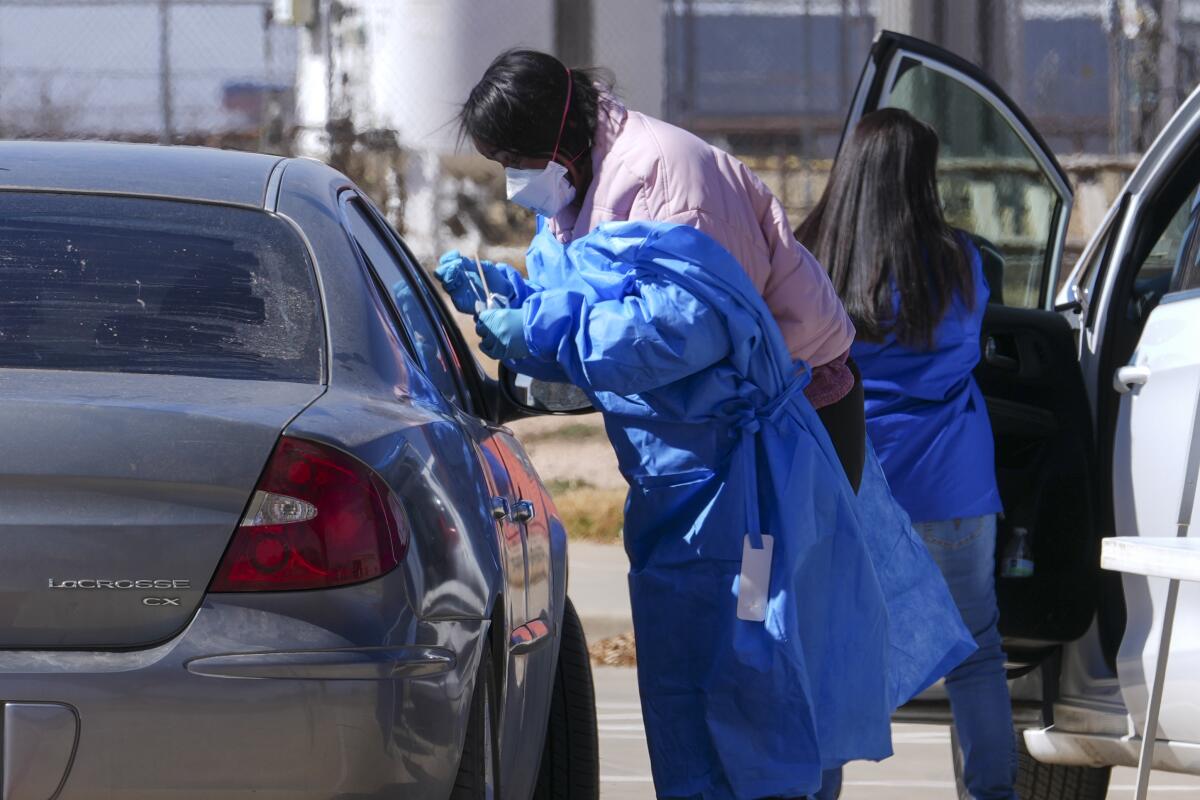
A health worker administers a measles test on Fernando Tarin, of Seagraves, Texas, at a mobile testing site outside Seminole Hospital District on Feb. 21, 2025.
(Julio Cortez / Associated Press)
Increasing measles cases in California
- California in 2026 has already seen its highest number of annual measles cases in seven years amid an ongoing resurgence of a disease once considered effectively eradicated in the U.S.
- The re-emergence comes as vaccination rates have tumbled nationwide in recent years.
Testing LAX’s long-awaited train
- LAX’s 2.25-mile electric train system will begin running without passengers next week as testing advances following a series of delays.
- The Automated People Mover system began construction in 2019 and was initially slated to open to the public in 2023.
Nationwide recall of a popular anxiety drug
- Specific bottles of Xanax, one of the most widely prescribed medications to treat anxiety and panic disorders, has been recalled due to its failure to dissolve at a standard rate.
- FDA officials are not warning against consuming the product at this time.
What else is going on
Commentary and opinions
This morning’s must-read
Another must-read
For your downtime

Reporter Deborah Vankin gets a massage by an “Aescape” robot at Pause Wellness Studio.
(Christina House / Los Angeles Times)
Going out
Staying in
A question for you: Are you planning on leaving California for another state? If so, tell us why.
Laura says, “I left California during the pandemic. Part of the push factor for me was politics, but not blue politics. I had been living in OC since 2018 and was surprised it was so Conservative (and conservative). That became a bigger source of discomfort for me as the vaccine question demonstrated how our neighbors’ decisions can impact us directly. Rather than moving elsewhere in California, which would have sorted out the political discomfort nicely, I moved to a much more affordable state where I had family.”
Email us at essentialcalifornia@latimes.com, and your response might appear in the newsletter this week.
And finally … from our archives

Kendrick Lamar performs at Coachella Music & Arts Festival at the Empire Polo Club on April 16, 2017.
(Amy Harris / Invision / AP)
On April 16, 2018, Compton’s own Kendrick Lamar became the first hip-hop artist to win the Pulitzer Prize for music.
He won for his album “Damn.,” which the Times’ Mikael Wood heralded as Lamar’s graduation to pop superstardom.
Have a great day, from the Essential California team
Jim Rainey, staff reporter
Hugo Martín, assistant editor, fast break desk
Kevinisha Walker, multiplatform editor
Andrew Campa, weekend writer
Karim Doumar, head of newsletters
How can we make this newsletter more useful? Send comments to essentialcalifornia@latimes.com. Check our top stories, topics and the latest articles on latimes.com.