TRAIN stations are no longer just a place to get from A to B, but are now attractions in their own right.
And a new awards has named some of the most beautiful ones in the world.
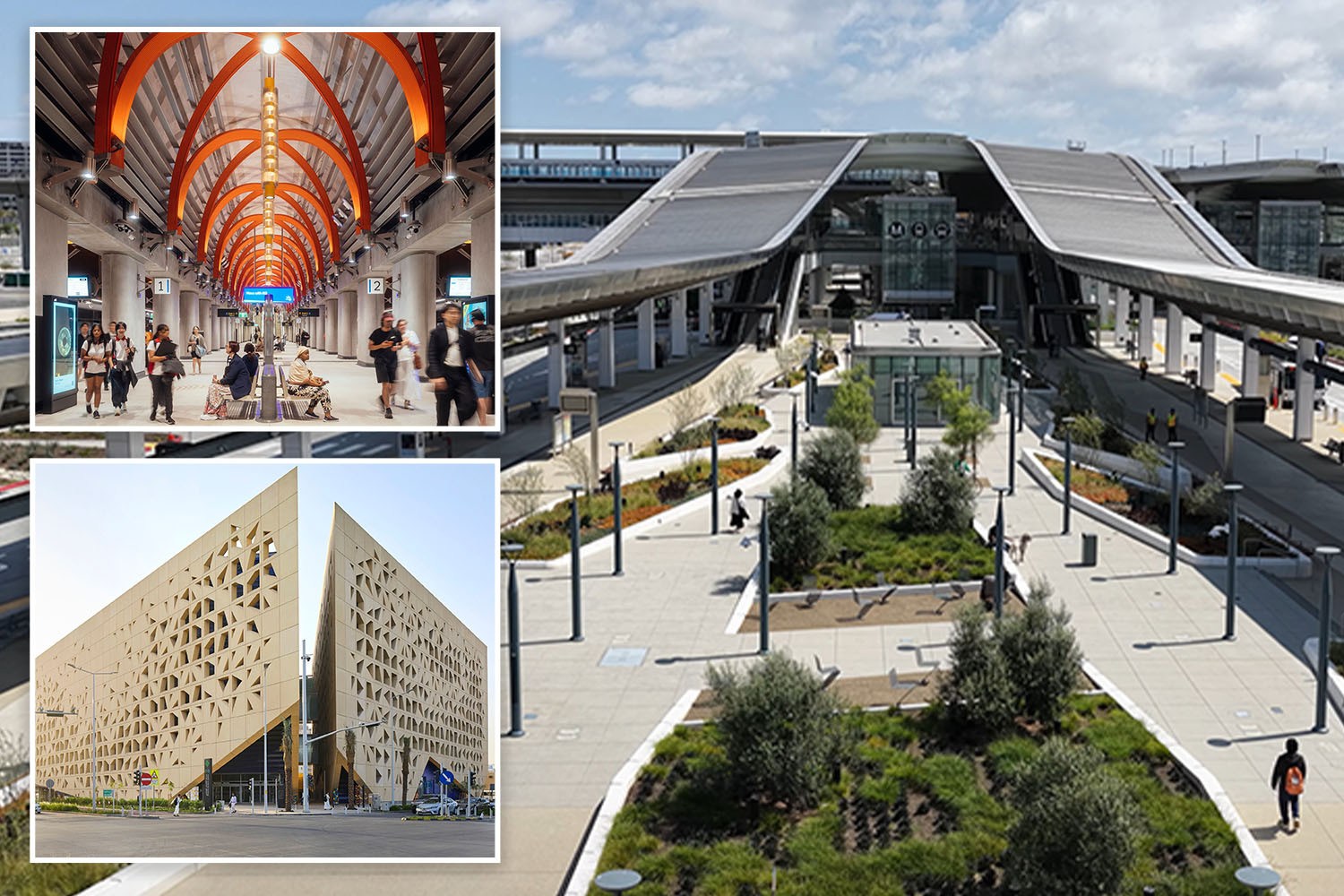
The world’s most beautiful stations have been namedCredit: Hufton+CrowA European winner was Lyon Part-Dieu StationCredit: Romuald NICOLAS
The World’s Most Beautiful Stations were revealed by Prix Versailles, a prestigious architecture and design award,
Prix Versailles Secretary General Jérôme Gouadain said they “give us proof that 21st-century passenger stations can be the bridges to a more desirable future”.
Sign up for the Travel newsletter
Thank you!
While none in the UK made the list, there were three in Europe.
One was Colosseo – Fori Imperiali Station in Rome which only opened last year on the city’s metro line.
It was praised for turning “travel into an archaeological adventure” as well as its “unexpected view of the Colosseum“.
Another Italian train station on the list was Monte Sant’Angelo Station in Naples.
Said to be inspired by city’s Mount Vesuvius, Dante’s Inferno and volcanic terrain, the dark orange doughnut-like structure above ground was called a “sculpture that the public can enter”.
The final European entry was Lyon Part-Dieu Station in France.
Despite having opened in 1983, it recently underwent a huge update last year.
According to Prix Versailles: “This regional, national and international train station, one of Europe’s top stations in terms of the number of connecting passengers transiting through it, has doubled in size thanks to the architectural teams at AREP and L’AUC, with additional access points and pass-throughs to boot.”
The Colosseo – Fori Imperiali Station is right by the famous ColosseumCredit: Casalgrande PadanaMelbourne’s Town Hall Station was compared to a cathedralCredit: Prix Versailles./Jim StepehensonWestern Station in Riyadh was one of two to win in Saudi ArabiaCredit: Omrania
Outside of Europe, Melbourne‘s Town Hall Station also made the top seven list.
Also a new railway station having opened last year, it was praised for both its “eight imposing columns like trees whose branches hold up the canopy above” as well as its “cathedral-like feel”.
Over in the US, LAX/Metro Transit Center was the only American station to be named one of the world’ most beautiful and one of the most futuristic designs on the list,
Saudi Arabia had two stations in Riyadh to have made the list.
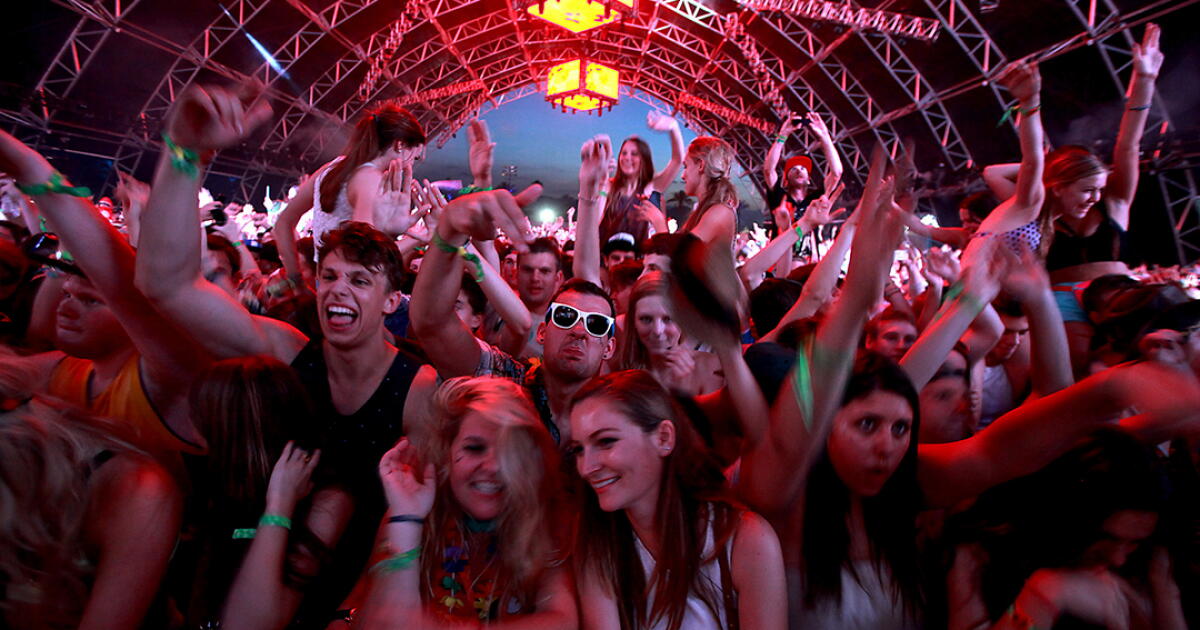
The tech giant in San Bruno, Calif., has renewed its partnership with festival promoter Goldenvoice, keeping exclusive livestream rights to the three-day desert festival through 2030. The next edition, in April 2027, will mark 15 years of Coachella on YouTube.
“We’re excited to bring the energy of the desert to millions of music fans around the world,” Neal Mohan, YouTube’s chief executive officer, said at its Made On YouTube event in New York City on Wednesday morning.
This year’s Coachella, headlined by Sabrina Carpenter, Justin Bieber and Karol G, drew the most concurrent viewers in the history of Coachella on YouTube, according to the company. Bieber, who was discovered on YouTube, even included a nostalgic homage to the platform into his set.
Over the years, the livestream has become an essential part of the Coachella experience, especially for fans who can’t make it to the desert. What started as a single feed has evolved into live coverage of every stage across both weekends.
Beyond Coachella, YouTube doubled down on livestreaming during its presentation, unveiling a slew of new live and AI-powered tools. In August, more than 600 million logged-in viewers watched live content on the platform each day on average, according to YouTube. The new live features include a new co-hosting function in which two creators can appear on the same stream together, and a live auto-dubbing tool that automatically translates speech in real time. Several of the updates are slated to roll out in early 2027.
“Whether it’s a music festival or a creator’s livestream, fandom is no longer a spectator sport,” added Mohan. “Just look at the sheer scale of the live communities we’re seeing today.”
YouTube isn’t the only streamer leaning into live. Netflix has spent the last few years buliding out its own live business, which now includes NFL and MLB games.
NEWBERRY SPRINGS, Calif. — Four decades ago, the cult hit “Bagdad Cafe” was filmed at a ramshackle diner in the Mojave Desert.
The tale of two women in the lonely landscape — a hardworking, rifle-wielding cafe owner and a stranded German tourist with a suitcase full of lederhosen — captivated viewers, particularly in Europe and Japan.
Busloads of international tourists rolled up to the actual Bagdad Cafe on a cracked, sunbaked stretch of Route 66.
Real-life proprietor Andrea Pruett, a sweet but steely Southerner who kept her own gun behind the counter, greeted them in French and German, then fed them buffalo burgers and omelets.
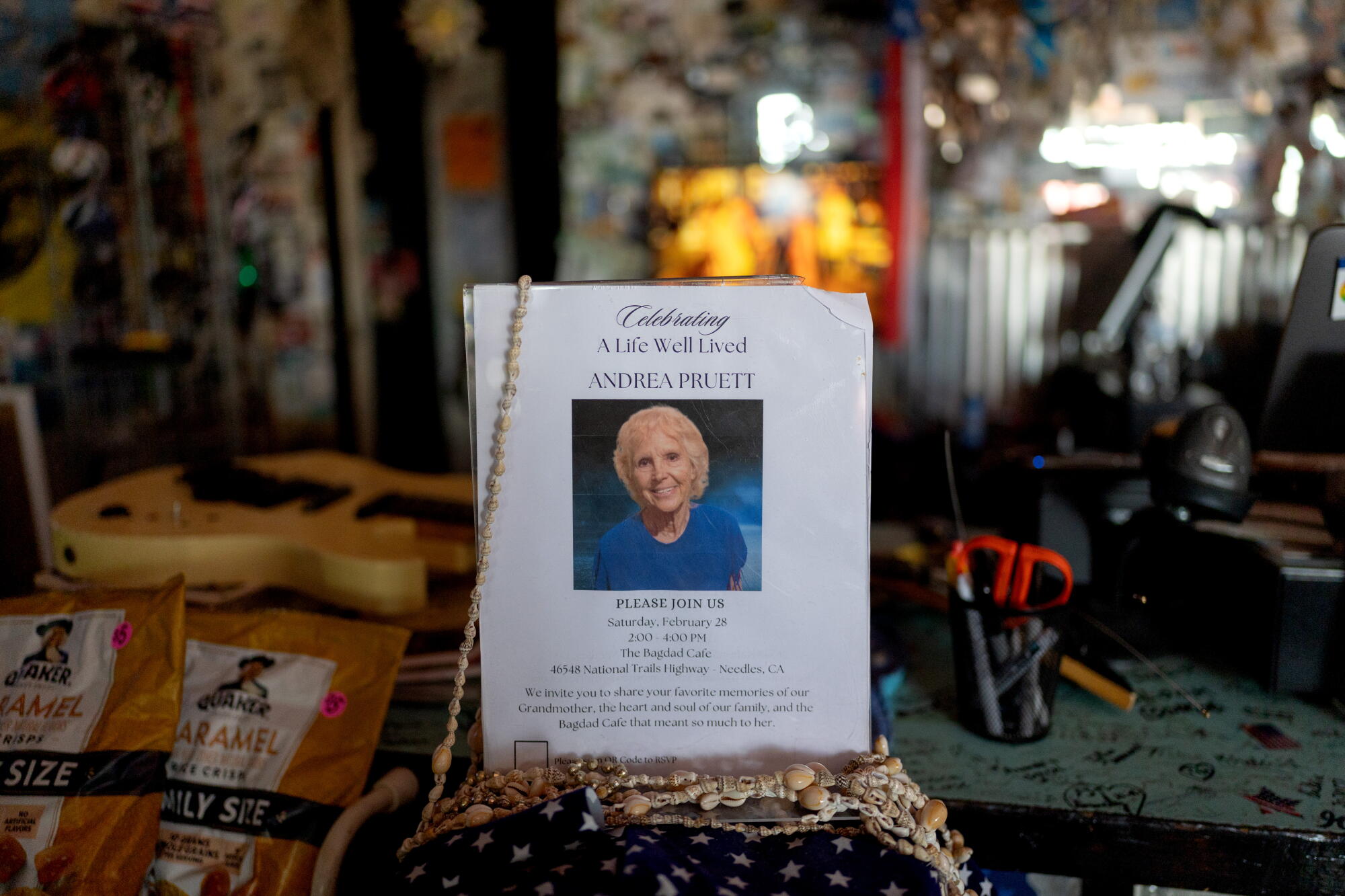
A memorial announcement for owner Andrea Pruett is seen at the Bagdad Cafe on Route 66 in the Mojave Desert.
As Pruett aged, her grip on reality loosened. But she refused to leave.
Now, the Bagdad Cafe is in limbo. Though T-shirts and tchotchkes are still for sale, the kitchen is closed. And Pruett’s family is figuring out what comes next.
Buses full of Europeans still come. So, too, do the roadtrippers celebrating Route 66, which turns 100 this year.
“We don’t get any locals, and we don’t cook any food right now,” said Mark Bradley, the cafe’s gruff but genial manager. “But we’re definitely on the map to see … it’s magic that takes place here.”
The cafe is a cacophony of color in an expanse of desert brown. Flags from all over — France, Brazil, Japan, New Zealand, Canada — hang from low ceilings. The walls are covered floor to ceiling by visitors’ passport photos and dollar bills with Sharpie signatures. “We’ve been here three times!” an Italian visitor raved in a guest book.
Pruett is still there, too. An urn holding her ashes sits by the front door.
A drone image shows the remote Bagdad Cafe on Route 66 in Newberry Springs.
In 1995, eight years after the movie’s European premiere, Pruett and her husband, Harold, stopped for burgers at what was then called the Sidewinder Cafe in Newberry Springs, 20 miles east of Barstow. They had just bought 640 acres for an ostrich ranch, which ultimately didn’t work out, though they kept some of the birds as pets.
The owner told them the A-frame, wood-shingled diner was for sale. “My husband looked at me and I said, ‘Don’t even think about it,’ ” Pruett told The Times in 2003.
But their son, actor Harold P. Pruett II — who was 26 and starring that year in a campy erotic horror flick called “Embrace of the Vampire” — declared the cafe “cool,” and that was that.
The Pruetts promptly rechristened it Bagdad Cafe, following German filmmaker Percy Adlon’s lead.
The exterior of the Bagdad Cafe.
Nearby Bagdad was a railroad town named in the 1880s by Southern Pacific Railroad officials after the Middle Eastern metropolis — without the H — because of the desert terrain.
Bagdad became a stop for steam-powered trains whose engines needed more water every eight miles or so in the desert climate, said Scott Piotrowski, past president of the California Historic Route 66 Assn.
The bustling little town was also a hub for gold, silver and copper mining camps.
Mining eventually faded, but cars on Route 66 overheated easily and often limped into town for water. A restaurant named, naturally, Bagdad Cafe, owned by a woman named Alice Lawrence, was the only place for miles with a dance floor and jukebox.
When Interstate 40 opened in 1972 about 10 miles north — taking most traffic and tourists away from Route 66 — it was the death knell for Bagdad, where all that remains today is a single scruffy cedar tree.
Thierry Farion, left, from France, and Aziz Khechine, right, from Tunisia, look at memorabilia inside the Bagdad Cafe.
At Pruett’s Bagdad Cafe, she embraced the movie. The two female characters, initially wary of each other, are both on a hiatus from their husbands, and the German tourist eventually draws big crowds by performing magic tricks.
“When people came in, it was like a director saying, ‘Action!’ ” said Pruett’s grandson, Greg Landers, 47, of Glassell Park. “She would just go right into welcoming people and telling them to sit down, answering their questions.”
A petite bottle-blonde who spoke with the laid-back drawl of her native Arkansas, Pruett showed off memorabilia signed by the “Bagdad Cafe” director. She got a yellow thermos like the one in the film, which, miraculously, never seems to run out of java, even when the coffee pot is busted.
A guest book displays messages at the Bagdad Cafe.
A desert road from Vegas to nowhere Some place better than where you’ve been A coffee machine that needs some fixing In a little café just around the bend
Pruett’s place drew desert eccentrics, including a gravelly-voiced man dubbed General Bob who sniped at customers who doubted his claims that he designed the Pentagon, built the Golden Gate Bridge, was a brain surgeon and was 109. (“Actually, he’s 83 years old, and if he wants to be older, I let him,” Pruett told NPR in 2003.)
Monaco’s Prince Albert II stopped in once. So did actress Renée Zellweger, who told Jay Leno on “The Tonight Show” that there was a “little old guy, he’s been sitting there for, I think, maybe 45 years on the same barstool. We had chicken fried steak together.”
When Huell Howser popped in unannounced for a 2001 episode of his California road trip show, General Bob, perched at the bar with a fedora atop his long silver hair, proclaimed he was 98 years old and “a real general, not a f—up.”
Marian Box, left, works the counter and talks to visitor Jaelene Kleckner.
For all the joy, desert life brought plenty of hardship.
One night in the 1990s, not long after Pruett bought the place, she was closing out the cash register when a man walked in, slammed a wooden 2-by-4 on the counter and ordered her to put all the money in a bag.
“She actually had a shotgun under the counter, and she pulled it out and said, ‘Stop,’ and cocked it,” said Landers, her grandson.
The man threw his hands up and said his family was in the car. They had been traveling and ran out of money. Pruett ushered them inside, fed them and sent them away with some cash — after making them wash their own dishes.
Pruett, who gave birth to Landers’ father, Corky, at 15, had a tough and impoverished youth. But she was “kind almost to a fault,” said Landers, a contractor who lived with her for a spell in his 20s and worked in the cafe. People who just about everyone else had given up on — she’d give them a place to stay and work to do.
In February 2002, the younger of Pruett’s two sons, Harold the actor, died of an accidental drug overdose. Her husband died two months later.
Pruett’s love for her customers kept her going, said Bradley, who has been around the cafe for 26 years as a frequent visitor and employee.
“She would have them crying as they left, but happy crying,” he said. “She could do that to people by giving them a hug and in just the few minutes that they were here. She had a magic to her.”
In 2016, Sarah Jane Woodall — a former nude model who posts popular desert travelogues on YouTube under the moniker Wonderhussy — stopped for breakfast and shot a video.
The cafe was quiet and grimy. She loved it.
“It was just, like, a lovable hot mess,” said Woodall, an Army kid who lived for a time in Germany, where people were obsessed with the movie.
The COVID-19 pandemic lockdowns devastated the Bagdad Cafe — and Pruett, who turned 80 in the summer of 2020.
The Europeans disappeared. Vandals busted the windows. Pruett let go of her waiters. Her kitchen closed and never reopened.
A sign for a former motel next to the Bagdad Cafe on Route 66 in Newberry Springs.
In 2021, her house burned down. She slept in the cafe, her thin frame curled up in a red vinyl booth.
That summer, Léa De Carmo, an aspiring actress, was driving back to Los Angeles from Las Vegas with a friend and, after a night of partying, craved a cup of coffee. They pulled into the Bagdad Cafe, where — as in the movie — the coffee pot was broken.
De Carmo, a native of Paris who had never seen the film, was stunned when she opened the door and “saw French flags and soccer team stuff everywhere.”
“It seems like all the French are led there for one reason or another,” said De Carmo, 29, who talked to Pruett that day for over two hours.
“She had essentially lost everything — her business, her house — but she just had this incredible energy and warmth and humor,” De Carmo said. “There was also this very deep loneliness.”
For the next four years, De Carmo drove from L.A. to Newberry Springs dozens of times, filming Pruett for a just-finished documentary called “The Keeper of Bagdad Cafe,” about her final years in the crumbling diner.
In the film, friends help Pruett move into an RV in the parking lot. As a woman gently washes her white hair with bottled water behind the cafe counter, Pruett says she can’t remember where she’s from.
“One thing she never forgot was the cafe,” De Carmo said. “She always knew where she was and that it was the place she wanted to be.”
Landers said his father, who died in 2022, asked her to move in with him in L.A., but she didn’t want to leave the Bagdad.
“It was just hard,” said Landers, who added that she might have fared better, physically, at least, in a dementia care facility. But she repeatedly said, “No, this is my place. This is where I want to be.”
Pruett’s friends in the desert stepped up. Bradley took care of her and the cafe, opening it each day for tourists to come in and take photos.
Woodall returned at the cafe’s request, filming the stained, decaying ceiling and the water-catching buckets and coffee pots on the floor. The YouTuber’s fans raised more than $25,000 — enough for a new roof.
In the video, Pruett stood by, smiling, quiet, a little confused.
For the next three years, she stayed at the Bagdad, even as her memory continued to fade. She died this January at 85.
On a Friday morning this summer, with the outside temperature already 115 degrees, Matt Parker stood behind the worn green Formica counter, setting a smart TV to the movie and preparing to make Nescafé instant coffee — a favorite of Europeans.
On a good day, they get three tour buses, he said.
Parker, 53, moved from L.A. County to Newberry Springs — where he used to camp with his dad and ride dirt bikes as a kid — a few years ago and fell in love with the cafe.
“You can’t recreate this,” he said. “We’re just caretakers of it. It’s a museum and church, in a sense, with all this stuff. Mrs. Pruett really focused on protecting it, protecting these people’s stuff — their mark.”
Andrea Pruett’s urn near the entrance of the Bagdad Cafe, which she ran for three decades.She died in January.
Landers said that, while the family figures out what to do with the cafe, he asked Bradley to keep it open like his grandma did.
Though her urn remains in the place she loved most, Landers hopes, someday, to bury her ashes in the Hollywood Forever Cemetery next to her youngest son.
Since her death, he can’t help but think of a scene from the movie. The German woman — forced to leave after her tourist visa expires — is gone and the bustling restaurant quiet again. A customer walks in and asks where the magic shows went.
A snoozing employee sits up and says: “The magic? It’s gone.”
In the end, the German returns to the Bagdad Cafe. And so do the crowds.