Marcelo Mousalli, Head of Product for Latin America at Bank of America, speaks with Global Finance editor Paul Curcio at the 2026 Global Finance Transaction Banking Awards, Fontainebleau, Miami Beach.

The market is just emerging, but domestic banks may already be exposed to global risk.
This article appears in the October issue of Global Finance Magazine.
Japan’s private credit market may still be small, but its exposure to private credit is not.
That is an important distinction as the Bank of Japan warns that growing links between Japanese financial institutions and global private credit funds could have implications for financial stability.
The BOJ’s concern is not that Japan has suddenly embraced the $2 trillion-plus private credit industry. It is that Japanese banks and institutional investors are becoming part of it, just as vulnerabilities in the asset class are attracting greater scrutiny.
For now, regulators see no evidence of a systemic problem. According to reports, Japan’s Financial Services Agency has been examining financial institutions’ lending and investment exposure to private credit, while Finance Minister Satsuki Katayama has said Japan’s exposure is not substantial.
But Japanese banks have increased financing to global private credit funds in search of higher returns, while exploring domestic strategies in the same vein, creating potential channels through which overseas stress could spill into Japan.
In 2020, for example, Sumitomo Mitsui Financial Group’s (SMFG) banking division took a 4.9% stake in U.S.-headquartered Ares Management Corp., making a strategic commitment to support the U.S. entity’s private credit business.
Earlier this spring, SMFG and Nippon Life Insurance were reported to be in talks to create a new private credit fund of at least 500 billion yen to finance leveraged buyouts, real estate and mezzanine transactions.
“The market is only emerging,” said Yuuichiro Nakajima, managing director at Tokyo-based M&A advisory firm Crimson Phoenix. “It is certainly not replacing bank finance in any meaningful way.”
Nakajima pointed out that Japan may well have less need for private credit than the U.S. or Europe because its banks remain deeply embedded in corporate finance and continue to provide relatively inexpensive funding.
Furthermore, Nakajima expects private credit to complement rather than displace traditional lenders, particularly as mergers & acquisitions in Japan become more complex and larger: Japanese M&A involving domestic companies reached a record 53 trillion yen in 2025, according to LSEG data cited by Reuters.
Indeed, take-privates, succession deals, overseas acquisitions and infrastructure investment are generating financing requirements that can stretch conventional bank structures.
In such an environment, private credit can fill gaps in leveraged buyouts, mezzanine finance and other transactions where flexibility, speed or longer maturities matter.
“As the variety of M&A transactions becomes broader and more complex,” Nakajima said, “it wouldn’t be hard to imagine banks finding it difficult to keep up with the pace of financing needs.”
Global managers are betting on precisely that opportunity. According to reports, Apollo Global Management Inc., Blackstone Inc. and KKR & Co. are building private-credit capabilities in Tokyo, although industry executives expect adoption to take years rather than months.
But the domestic opportunity should not obscure the systemic risk concern: private credit globally has grown rapidly while remaining relatively opaque and illiquid.
John Amari is a contributing writer based in Japan.
Deeper integration could attract more nearshoring, but governments will have to step up, too.
This article appears in the October issue of Global Finance Magazine.
With Panama joining Mercosur and Costa Rica wrapping up negotiations to join the Trans-Pacific Partnership, the rest of Spanish-speaking Central America risks being left behind.
Regional integration efforts have hitherto focused on custom unions, stock market interoperability, the Central American Integration System (SICA), the Central American Parliament, and the Central American Free Trade Agreement (FAUCA).
“Panama’s accession to Mercosur as an associate state creates competitive pressure on the rest of Central America,” said Costa Rica-based financial analyst Daniel Suchar. “This could divert foreign direct investment that traditionally viewed Central America as a gateway to the Americas, forcing the other countries in the region to accelerate their own trade agreements to avoid falling behind.”
As a Mercosur member, Panama gains access to a market of 260 million people as well as value chains in Brazil, Argentina, and Uruguay, notably in logistics, financial services, and agribusiness. This opens the door to negotiations for a Central American bloc to join Mercosur, using Panama as a bridge.
“From a business perspective, the more connected, competitive, and open to trade Central America is, the greater the possibilities for developing regional value chains and attracting investment,” said Rosmer Jurado, president of the Union of Panamanian Industrialists.

Since last year, talk of a renegotiation of the Dominican Republic-Central America-United States Free Trade Agreement (CAFTA-DR) has been circulating among governments in the region. Should talks begin—the Dominican Republic is pushing hard for a trade deal—they would likely include proposals for further integration and increased rules and regulations.
“A new agreement would be expected to include chapters on the digital economy, SMEs, resilient supply chains, and more stringent labor and environmental standards,” said Suchar. “A modernized CAFTA-DR should also address trade facilitation and regional cumulation of origin so that Central America can sell as a bloc and not as six separate countries.”
Central America remains a diverse region, however, both politically and economically, which makes further integration challenging. Nicaragua is in danger of being frozen out of US trade after effectively banning elections, and Costa Rica has historically prioritized market diversification over Central American integration. Forging closer ties with the U.K. is part of its strategy to insert itself into high-value global production chains, particularly in medical devices, services, and technology.
The future of the Northern Triangle states—Guatemala, Honduras and El Salvador—is likely to be conditioned by their capacity to attract nearshoring and reduce non-trade costs. If they improve legal security, infrastructure, and energy, Suchar said, they can position themselves as alternatives for light manufacturing and textiles for companies leaving Asia.
Nearshoring has been hailed as the region’s magic bullet; a 2024 report by the Center for Strategic and International Studies suggested that U.S. nearshoring alone could add at least $3.3 billion a year to Central American exports. But this is where governments will have to step up, Jurado noted. “Central America can take advantage of nearshoring,” he said, “but the opportunity will not automatically arise simply because of our location. The region must transform its proximity to the U.S. and its strategic position into concrete advantages: better infrastructure, lower logistics costs, specialized talent, competitive energy, trade facilitation, and clear rules for investment.”
Trade agreements, supply chain conditions, and geopolitical risk will all play a role. “Trade agreements are no longer just about tariffs,” said Suchar. “They focus on supply chain resilience, ESG standards, and geopolitics.”
Nic Wirtz is a contributing writer based in Guatemala.

Home  Media Conferences and Events Bank of America’s Marcelo Mousalli at the 2026 Global Finance Awards
Marcelo Mousalli, Head of Product for Latin America at Bank of America, speaks with Global Finance editor Paul Curcio at the 2026 Global Finance Transaction Banking Awards, Fontainebleau, Miami Beach.

Major executive moves and leadership changes across the finance industry.
This article appears in the September 2026 issue of Global Finance Magazine.

The World Bank Group appointed Michael Kremer to be the organization’s chief economist and senior vice president for development economics.
Most recently, he served as director of the University of Chicago’s Development Innovation Lab, where he researched economic growth, technological change, and development economics. Kermer, Abhijit Banerjee, and Esther Duflo jointly won the Nobel Prize in Economics in 2019 for their “experimental approach to alleviating global poverty.
Kremer “has spent his career not just identifying what works in development but proving it at scale,” said Ajay Banga, President of the World Bank Group. “That is exactly the kind of thinking we need.” —Rob Daly

After more than a decade at HSBC, Pam Kaur will step down as Group CFO, a position she has held since January 2025, before the bank’s 2027 annual meeting.
She will assume an advisory role to support Group CEO Georges Elherdy and ensure a smooth transition for her successor.
Kaur began her career in 2013 as group head of internal audit before advancing to the head of wholesale market and credit risk, group chief risk officer, group chief risk and compliance officer, and eventually group CFO.
Brendan Nelson, HSBC Group Holding plc chairman, praised Kaur for her “strong judgment and integrity.” She will leave the Group CFO role with the firm’s “deepest thanks and best wishes,” he added. —Rob Daly

J.P. Morgan named Nelle Miller and William Sinclair as co-CEOs of its U.S. Private Bank in September.
The pair leads the firm’s $2.4 trillion U.S. private banking business, overseeing more than 5,500 professionals across 57 offices who serve the wealthiest individuals, family offices, and institutions nationwide.
The appointments follow the July 2025 naming of David Frame as global CEO of J.P. Morgan Private Bank. Miller and Sinclair joined in 2002 and 2007, respectively. Miller currently heads the firm’s New York market, while Sinclair leads the Financial Leaders Group.
“We have a fantastic franchise, with exceptional people and an unparalleled breadth of capabilities,” Sinclair said. —Anthony Noto

IA Global Capital, a technology-focused investment bank with offices in New York and London, announced that Jules Wurlod has joined the firm as managing director.
Wurlod has served as M&A director for circular businesses at Houlihan Lokey since 2020, focusing on circular technology services such as device-as-a-service, IT asset management, IT asset disposition, recommerce, and trade-in. He previously worked as a project leader at Boston Consulting Group, advising Fortune 500 companies and government officials across Europe and the Middle East on corporate strategy and sustainability. —Anthony Noto
Home Banking Revolut’s CEO Says US Banks Are ‘Out of Step’ With Global Consumers
Revolut US CEO Cetin Duransoy reveals plans to target globally minded and “underbanked” Americans as it builds toward becoming a primary bank.
After receiving conditional approval from the U.S. Office of the Comptroller of the Currency for a national bank charter, Revolut Technologies Inc. appears ready to launch a full-scale challenge to traditional banks and fintechs in the United States.
After relatively quick growth in France, Spain, and Italy, Revolut aims to bring its superapp model to the U.S., where it doesn’t exist in quite the same form.
Revolut’s U.S. CEO, Cetin Duransoy, who has held senior roles at Raisin, Fundbox, Visa, and Capital One, spoke with Global Finance about Revolut’s plans for the American market.
Global Finance: In the US, banks, fintechs, brokerages, travel products and payment apps are mostly separate. Does that surprise you? Do you see a genuine hole in the U.S. market for a company that combines all those relationships in one place?
Duransoy: It’s not surprising, given how complex these products are and how crowded and fragmented the U.S. market is. Layer on the regulatory process, and combining all these product suites—banking, brokerage, FX, crypto, travel, and more—into a single company or app becomes genuinely difficult and, for most companies, not worth the effort.
We believe you need a genuinely differentiated product to succeed in this market, and we have identified an opportunity here. By bringing all these products into one platform, we can remove the friction customers typically experience when cobbling together services from multiple providers.
GF: People often say, “The U.S. banking market is different.” Different how, exactly? And how might those differences affect Revolut?
Duransoy: The US’s fragmented, charter-based regulation can be more cumbersome than the EU’s passporting model, and U.S. customers tend to rely more on credit than their European counterparts. But the U.S. provides certain advantages, including the U.S. card network and interchange system, which subsidize rewards; FDIC insurance; and consumer-protection laws, which create a trust threshold.
Our broad product offering, 80-million-user global network, and strong global brand allow U.S. to cater to the distinct challenges of the U.S. market and understand the challenges of U.S. distribution costs. By obtaining a national bank charter, we will be on par with traditional banks, with direct Fedwire/ACH access and lending capability.
GF: When Revolut enters the U.S. market more aggressively, should Americans expect something close to the European Revolut experience—or will the U.S. product necessarily look much more like a traditional American bank competing on deposits, credit cards and lending?
Duransoy: We are always focused on product-market fit for our customers, and the U.S. will be no different. We’ve publicly shared that we will bring the best of what Revolut offers and provide the products U.S. customers want most, including checking accounts, credit cards, installment loans, FX, and stablecoins. We’ll continue innovating to deliver a distinct, more productive experience for U.S. customers.
GF: One of the things that makes Revolut unusual in Europe is that it sits at the intersection of finance, travel and lifestyle. Is that model central to how you think about the US, or is America more of a banking opportunity?
Duransoy: Yes. Combining our lifestyle products with the financial services that have made Revolut so popular remains central to our thinking. And they’re a key differentiator in many of our markets. We expect these offerings to help make us a top-of-wallet card and strengthen customer retention.
GF: Why should someone with Chase, Amex, Venmo, Robinhood, and a good travel card move meaningful parts of their financial life to Revolut? What can you offer that those companies, individually or collectively, do not?
Duransoy: We recognize that inertia is a strong force when it comes to financial services and that a customer’s bank holds critical parts of their financial life, such as their mortgage or direct deposit.
What we offer is the ability to consolidate multiple products and services into a single interface and remove the friction our customers find frustrating with other services. Revolut’s broad-based platform allows customers to seamlessly access multi-currency spending without foreign transaction fees, instant global P2P, a combined debit/credit product, budgeting, digital assets, and investing, all without transferring funds between platforms or managing multiple accounts. That’s especially valuable for people who travel internationally, have cross-border family ties, or are underserved by traditional credit underwriting.
GF: Which types of lending will Revolut prioritize in the US?
Duransoy: We intend to initially prioritize unsecured and secured credit cards and installment loans.
GF: What does Revolut understand about the consumer relationship that you think many American banks and fintechs still lack?
Duransoy: We treat our global app as the product. We iterate quickly, aim for gamified engagement, and offer frequent feature releases, in contrast to most U.S. bank apps, which have slower release cycles.
We also build for financial lives that span borders and currencies, rather than assuming a single-currency, single-country customer. American banks were largely built for a domestic customer, and that assumption is increasingly out of step with a more mobile, globally connected population.
GF: Do you think Revolut is underestimated in the US? If so, why? Among those who are aware, what do people in the U.S. most commonly misunderstand about Revolut right now?
Duransoy: “Underestimated” is probably right now, largely because our independent U.S. bank doesn’t exist yet. So we’re still seen as a “European neobank” by most Americans. That undersells what we’ll be once we have a full national charter, FDIC insurance, and our full lending capabilities live.
The most common misunderstanding among those who do know the brand is that we’re simply a fintech or a travel debit card, rather than a company with an 80-million-user global base—including 1.4M in the US—and banking licenses now spanning the UK, France, Australia, Mexico, and more.
GF: Are you coming to the U.S. to compete for a small slice of the market, or do you ultimately believe Revolut can change what Americans expect from a bank?
Duransoy: In the US, our near-term goal is to compete for market share. No new entrant can reshape what an entire country expects from a bank on day one. That takes years of trust-building, especially post-charter, when FDIC insurance and regulatory scrutiny are new territory for us.
What we’re looking to do is win the demographics best suited to us, namely the internationally minded, underbanked-by-incumbents, and digitally native users.
GF: On the corporate side, what are Revolut’s corporate banking plans?
Duransoy: Revolut Business exists—and is a core focus for us—in the U.S. We expect this to continue and are excited to launch merchant acquiring within the first years of becoming a bank.
GF: If we revisit this in three years, what would need to be true for you to say that Revolut has successfully become a major U.S. bank?
Duransoy: Within three years, we expect to be a fully operating bank with real momentum. We won’t share specific customer or product numbers today, but we’re building for scale and a sizable U.S. customer base that treats us as their primary bank, not a secondary account. That’s the bar we’re setting for ourselves.

International crude oil prices climbed further on Tuesday morning amid uncertainty over US-Iran talks, as hopes of reopening the Strait of Hormuz, a waterway crucial to oil shipments, faded.

Hopes that Middle East tensions would ease were dashed at the weekend when Donald Trump rejected Iran’s offer of a seven-day truce.
Mediators are working with the US and Iran on a deal to end the fighting and reopen the Strait of Hormuz, officials told the Associated Press. The disruption to shipping through the waterway has affected global trade and added to inflation.
Iran has proposed reopening the strait if the US lifts its blockade of Iranian ports and eases sanctions, among other conditions. Washington says any deal must also address Iran’s nuclear programme. Officials said the two sides disagree over the timing of concessions and who should act first.
Brent crude, the international benchmark, gained nearly 2% and traded above $107 a barrel early Tuesday, well above its price of roughly $72 a barrel in late February before the Iran war.
US West Texas Intermediate crude rose 1.8% to more than $94 a barrel.
High oil prices have renewed inflation concerns and expectations that the Federal Reserve will raise interest rates again next month. Government bond prices have fallen as a result, pushing yields to multi-year highs.
The benchmark 10-year US Treasury yield rose above 5.27% on Monday, its highest level in 19 years, following a rise of nearly half a percentage point through September. Yields rise when bond prices fall, and this month’s sell-off is the heaviest in two years.
The US two-year yield has risen even further, climbing by more than 0.57 percentage points this month to nearly 5%. In Europe, Germany’s benchmark 10-year bond yield reached 3.62%, its highest level since June 2009.
Government bond yields help set borrowing costs across the economy, from mortgages to company loans. As yields rise, governments, businesses and households face higher costs, while stocks can become less attractive to investors.
In Japan, a 40-year government bond auction drew its strongest demand since 2020 as relatively high yields attracted investors, according to Bloomberg.
Stock markets also struggled after all three main Wall Street indexes fell on Monday.
In Europe, Tuesday’s open showed a mixed reaction.
The Euro Stoxx 50 was flat in early trading while the broader pan-European Stoxx 600 traded 0.2% higher.
The UK’s FTSE 100, Italy’s FTSE MIB, Spain’s IBEX 35 and the Netherlands’ AEX all traded between 0.1% and 0.2% higher than their Monday close.
However, France’s CAC 40 and Germany’s DAX 30 both dropped about 0.5%.
Over in Asia, Japan’s Nikkei 225 lost 1.3%, South Korea’s Kospi declined 0.9% and Hong Kong’s Hang Seng dropped 0.6%. Hong Kong-traded shares of Shein fell 11.7% after the online retailer reported a 67% fall in quarterly adjusted net profit from a year earlier.
The Shanghai Composite was little changed following a report from China’s official Xinhua News Agency late Monday that its State Council had discussed ways to make economic policies more effective.
Australia’s S&P/ASX 200 was down more than 0.1% by early morning in Europe.
Australia’s central bank raised its key interest rate by 0.25 percentage points to 4.6% on Tuesday, a 15-year high, as rising oil prices fuelled inflation. The Reserve Bank said higher fuel costs were pushing up prices across the economy, while growth and inflation had been stronger than expected.
The US dollar edged up to 157.42 Japanese yen from 157.39 yen. The euro fell to $1.1362 from $1.1371.
Gold remained near $4,160 after steep losses on Monday, as expectations of further rate rises weighed on the metal, which pays no interest.
Investors are also awaiting key US inflation and jobs data this week that could influence the Fed’s next decision. Markets are pricing in another rate rise at the end of October.
Additional sources • AP
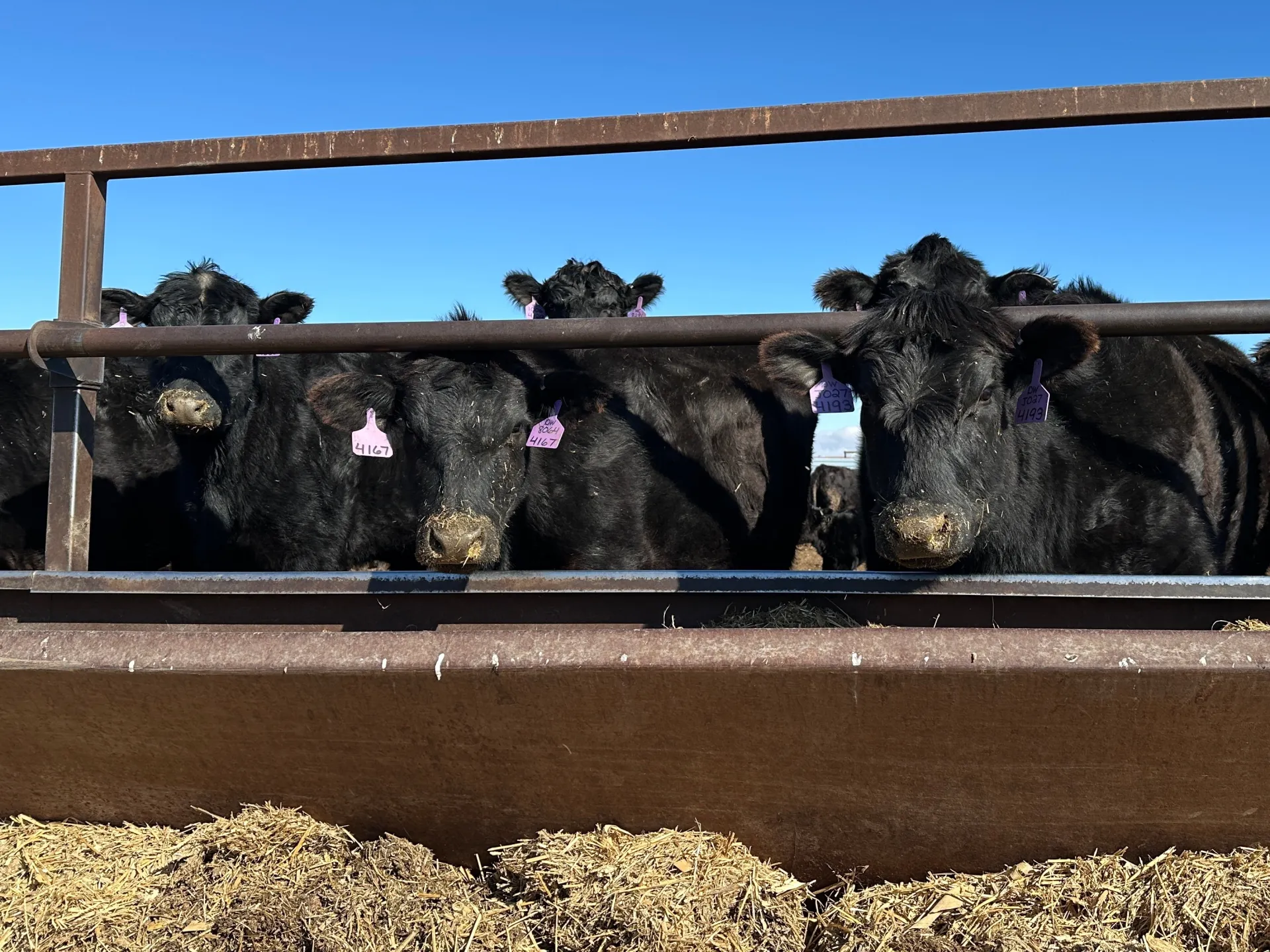
Beef prices are soaring in China. Across the Pacific Ocean in the United States, cattle farmers are complaining that their businesses are becoming increasingly unsustainable. And in India, poultry rearers are slashing their production targets because they cannot afford feed.
More than 90 percent of the world’s population eats meat in one form or another — and a looming meat crisis threatens to affect what they buy at the market, what they cook at home, and what’s served on the table.
At the heart of this is a chain of decisions and uncertainties that consumers rarely see. A cow has to be raised for years before it can become beef. Chickens need feed, much of it tied to global grain and soya bean markets. Farmers need land, water and weather conditions that allow them to keep animals alive and productive.
When any link in this chain is disrupted, a spiralling crisis ensues.
So what is putting the pressure on meat production, and what does it mean for billions of people around the world?
Brazil, the US and China are the world’s three biggest beef producers, together supplying more than half of the world’s beef. But their cattle herds are shrinking at the same time.
According to a March estimate by the US Department of Agriculture (USDA), Brazil’s total herd this year is estimated at 177.4 million cattle — a nearly 8 percent drop from 192.5 million in 2024.
Over in the US, cattle numbers are at a historic low.
The USDA counted 86.2 million cattle and calves on farms on January 1, 2026. The number of beef cows — the females needed to produce future calves — was 27.6 million, down 1 percent from a year earlier. The 2025 calf crop was also down 2 percent.
In China, the USDA estimated a cattle head count of 94 million in January 2026, down 14 percent from 105 million in January 2024.
In all three cases, beef production is also projected to be down in 2026.
The USDA predicts a 2 percent decline in Brazil’s beef production and a 5 percent fall in exports. As for the US, beef production in 2026 is likely to be 4 percent lower than last year. China’s total beef supply this year is projected to be 12 percent lower than 2024.
The decline in domestic production, coupled with shrinking supplies that can be imported, has sent prices soaring in China — the world’s largest beef consumer and importer.
The reasons are many, and they vary from country to country.
Brazil counts China and the European Union as two major markets for its beef exports. But both have imposed import restrictions that have disincentivised Brazilian beef manufacturers. That is partly responsible for the country’s decreased cattle head count, according to an analysis by Augusto Neto at S&P Global, the market intelligence firm.
Additionally, Brazil is currently in what is known as a cattle reversion cycle — when rearers reduce the slaughter of animals and instead try to preserve their female stock to help rebuild their herd — according to the USDA.
In the US, droughts have hit 60 percent of the country’s cattle-rearing area, according to a report by Sampad Nandy of S&P Global. With grazing areas decreasing, feed costs have risen.
Three major organisations, representing breeders in the states of Texas, Oklahoma and Kansas, issued a joint statement this week arguing that Immigration and Customs Enforcement (ICE) raids were disrupting their already strained operations. The meat industry depends heavily on immigrant workers.
In theory, yes. But in practice, high prices do not automatically mean that more cattle can be produced quickly.
Cattle production is constrained by biological supply cycles, Kenneth Foster, professor of agricultural economics at Purdue University, told Al Jazeera. It can take a couple of years for a producer who receives a signal from the market to expand production and actually see the resulting animals enter the beef supply. The quickest way to rebuild a herd is to keep female cattle that might otherwise have been sold and use them for breeding. That is what Brazil is now doing.
But that creates a difficult economic calculation. A producer can sell an animal today at a high price, or keep it for breeding and wait for the next generation. That means carrying the costs and risks of keeping the animal while waiting for it to reproduce.
The result is a market in which strong demand and limited supply can persist even when prices are already high.
The USDA expects the cattle herd to begin rebuilding in the US, but the process is gradual.
The US and Brazil cases illustrate one of the central problems facing meat production: sometimes the constraint is not technology, land or money.
It is time.
Meanwhile, Europe presents a different picture. The continent is witnessing a structural change in what consumers are eating.
The EU produced about 42.7 million tonnes of meat in 2025. But EU meat production is projected to decline by about 3 percent between 2025 and 2035, with beef production projected to fall by 10 percent and pork by 7 percent. Poultry is the exception: production is projected to rise by 5 percent.
This shift is also visible in consumption.
Consumption of EU beef and pigmeat is projected to decline through 2035, while poultry consumption is expected to increase by 9 percent.
Beef and pork require longer production cycles and face different economic and environmental pressures. Poultry, by contrast, can respond much more quickly to changes in demand because chickens reach market weight within weeks rather than years.
That difference is becoming increasingly important. The OECD-FAO Agricultural Outlook expects poultry to be the fastest-growing major meat category globally over the next decade, helped by its relatively low cost and short production cycle.
Europe is therefore becoming an example of how a meat system can adapt without simply producing more of everything. Some forms of meat become harder or more expensive to produce, while others expand to fill part of the space.
Yet the poultry industry faces its own challenges, with India offering an example.
In June, a large section of India’s poultry industry announced plans to cut production by 25 percent after soya meal prices rose by more than 40 percent in a month.
The decision was announced by the All India Poultry Breeders’ Association after producers faced sharply higher feed costs and a seasonal decline in demand. Producers also began culling parent breeder stocks — birds needed to produce future generations of poultry.
Soya meal is an important protein source in animal feed. When its price rises sharply, poultry producers face a choice: absorb higher costs, raise prices, or reduce the number of birds they produce.
In India’s case, producers chose to cut production.
The consequences extended beyond individual farms. The Reuters news agency reported in May that Indian soya meal prices had risen 41 percent in one month to a four-year high of 66,000 rupees ($687.5) per tonne. India subsequently cancelled 25,000 tonnes of soya meal export contracts and began turning to soya bean imports from African countries.
The takeaway: a shock in one part of the agricultural system can move quickly through the meat supply chain globally.
As farmers try to protect their livelihoods and families try to keep food on the table, changing climates, rising prices, shifting dietary preferences and growing trade barriers are together reshaping the future of meat — and what we eat.

Scotland (10) 10
Tries: Gallagher Cons: Nelson Pens: Nelson
Australia (5) 30
Tries: Miller, Wood, Hoy, Moleko Cons: Wood 2 Pens: Wood 2
Scotland suffered a third successive defeat in the WXV Global Series as clinical Australia proved too strong in Edinburgh.
After losses against Canada and New Zealand – ranked two and three in the world – hopes were high the Scots could get off the mark against the side one place below them in the world rankings.
Despite leading 10-5 at the break, Scotland could not live with the rampant Wallaroos, who ran in three tries in a devastating eight-minute second-half spell to secure a comfortable win.
The sides meet again in Sydney next weekend.
Evie Gallagher, following her two tries against New Zealand last weekend, gave Scotland the lead on 15 minutes, dotting down to round off a period of pressure on the Australian line.
The hosts were on top, with Meryl Smith in midfield and lock Holland Bogan carrying hard and asking questions of the Australian defence, but loose work at the line-out cost Dave Butcher’s team some promising attacking positions.
The Wallaroos grew into the game as the half wore on and hit back with a well-worked try. Scotland repelled a rolling line-out maul close to their own line, but the visitors remained patient and spun the ball wide for Georgina Friedrichs to put Desiree Miller over in the corner.
The Scots hit back immediately when Australia were penalised for holding on straight from the restart, and Helen Nelson banged over a penalty to give her side a five-point lead at the break.
However, Australia flew out of the blocks after the interval and turned the game on its head with three tries in quick succession.
The first came when a rolling line-out maul was halted just short and scrum-half Samantha Wood was on hand to dive over. She converted her own try to nudge the visitors in front for the first time, and it was a double blow for Scotland as Gallagher was sin-binned for illegally bringing down the initial maul.
With the numerical advantage, the Wallaroos came on strong as Brianna Hoy and then Faitala Moleko cut through to score and put the visitors in charge at 24-10.
Wood knocked over a penalty to put Australia beyond two scores and added another late on to cap off a dominant second half from the Wallaroos.
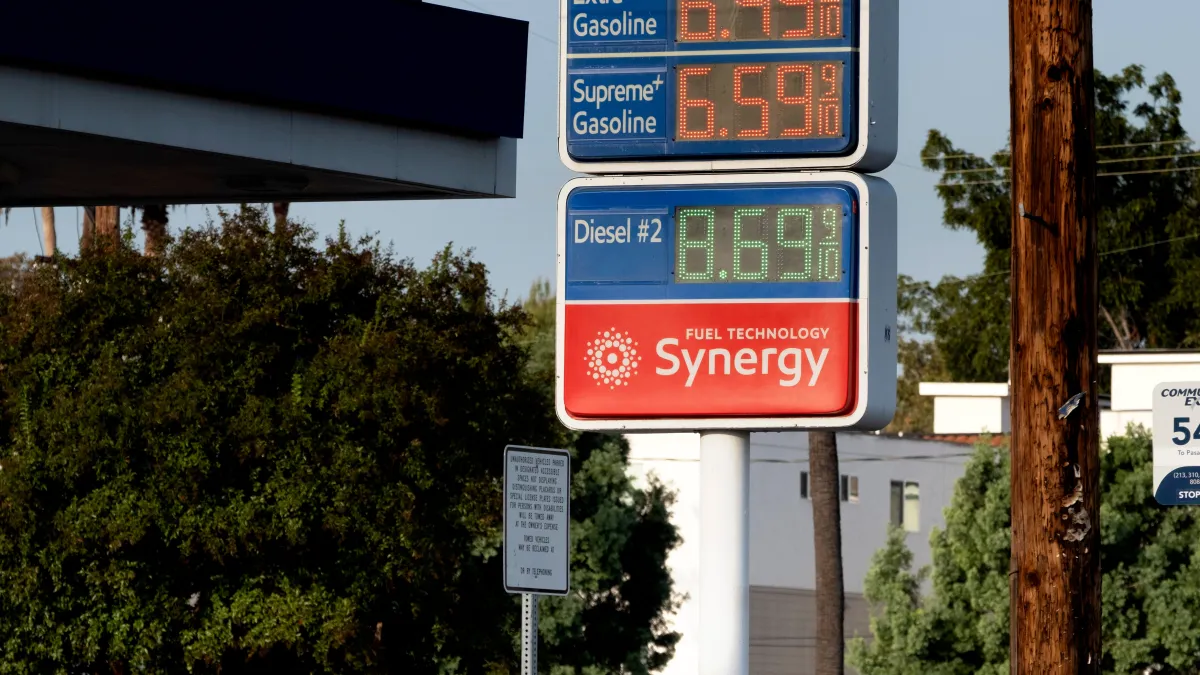
Diesel prices have hit record highs as the tensions between the United States and Iran, along with the war between Russia and Ukraine, disrupt key oil and fuel trade routes.
On Friday, the average price for a gallon (3.79 litres) of diesel was $6.50, up from $5.61 a month earlier, according to the American Automobile Association (AAA), which tracks fuel prices daily.
list of 4 itemsend of list
The spike has prompted the administration of US President Donald Trump and Republican lawmakers to consider restricting US diesel exports ahead of upcoming midterm elections.
A Reuters/Ipsos poll conducted in August found that 47 percent of voters said the cost of living was the single most important factor in deciding how they would vote in the midterms — more than twice the share who cited the next-most important issue, “democratic values and norms”.
A new Marist poll also found that Americans have more confidence in Democrats than Republicans to handle the economy, with 42 percent choosing Democrats compared with 34 percent for Republicans.
Amid that voter sentiment, US Energy Secretary Chris Wright said on Thursday that he was in touch with major oil refiners to gauge interest in a potential voluntary restriction on diesel exports, according to the Reuters news agency.
That followed remarks by Trump on Tuesday that he supported restricting diesel exports from the US, the world’s largest diesel exporter.
Energy analysts and industry groups have warned that an export ban could have unintended consequences, potentially pushing up fuel prices in the US and abroad.
Even though the US is the world’s largest diesel exporter, diesel is traded on a global market.
Disruptions to refineries in Russia and the Middle East have reduced the amount of fuel available worldwide, putting more pressure on US producers to fill the gap. In Russia, for example, drone attacks have damaged major refineries, forcing a cutback or halt in production.
“While US refineries are running at full tilt and higher than normal, the global gaps remain,” Rachel Ziemba, senior adjunct fellow at the Center for a New American Security, told Al Jazeera.
It comes as US diesel supplies are also shrinking. As of September 11, inventories had fallen to 107.9 million barrels, the lowest in more than four decades, according to the US Energy Information Administration.
With global supplies tightening, diesel prices have risen around the world — including in the US. Because American producers can sell their fuel into the global market, they are drawn to the soaring global prices rather than simply setting a lower price for domestic consumers.
In Washington, DC, leaders have flirted with the idea of pushing US companies to stop or slow exporting diesel.
Republicans have been pushing for a slowdown or outright ban of exports in an effort to lower costs for consumers ahead of the pivotal midterm elections, where cost of living is becoming a critical issue.
Such a move, they hope, would reduce local diesel prices, which is significant as diesel is used in trucks to haul food and most products, Ziemba said, adding that US diesel exports are equivalent to about 40 percent of domestic consumption.
On Tuesday, Chuck Grassley, a Republican from Iowa, called on the president to put in place a temporary halt on exports.
“I encourage President Trump to put a temporary embargo on diesel exports through executive action,” Grassley said.
Republican Senator Dan Sullivan of Alaska made a similar call: “The cost of diesel is just too damn high. I’m calling for a temporary pause of American diesel exports so that we can rebuild our reserves ahead of winter,” Sullivan said in a statement on Tuesday.
In the House of Representatives, Congressman Tim Burchett of Tennessee introduced two bills that would restrict US diesel exports: One would impose a ban through January 2027, while the other would restrict exports if the national average price reaches $5 a gallon.
The administration has not made any official policy announcements, and the White House told Al Jazeera that the president is evaluating all options.
Oil and gas industry experts say that a ban could drive up prices rather than bringing them down.
“Diesel trades on a world market, just like corn. farmers don’t sell cheaper to Americans, and refiners can’t either since they buy crude at global prices. force a lower price and they’ll make less diesel. less supply means higher prices, not lower,” Patrick De Haan, head of petroleum analysis at GasBuddy, said in a post on X.
A ban would prevent or restrict US refiners from selling diesel to buyers overseas, theoretically leaving more fuel available in the domestic market.
Analysts at Wood Mackenzie, a research and consulting firm, say that keeping more diesel stateside would ultimately fill up US storage tanks but also force refineries to cut production. That could affect other markets that rely heavily on US fuel, including Latin America and Europe, forcing them to compete with other global buyers for supplies and driving up prices for the global market.
Wood Mackenzie says China is the only major producer with enough spare refining capacity to potentially make up much of the shortfall.
“China is currently the only country with material spare refining capacity that could cover the loss of US refinery throughputs. However, China may well decide it is not in its interest to intercede,” analysts said.
Wood Mackenzie has warned that a ban could quickly fill US diesel inventories, forcing refiners to cut crude runs and potentially increasing US petrol imports.
That was also the view of an S&P Global analysis, which found that a complete ban could also mean that production would be reduced as storage capacity is filled up with unsold diesel. According to the analysis, that could lead to production cuts of as much as 750,000 barrels a day, which could put the US into being a net importer of petrol in the fourth quarter of this year.
An export ban would affect US refiners and consumers, as well as countries that rely on US diesel.
“They [export bans] may provide temporary relief, but diesel is a global commodity. Treat one part of the system, and the effects travel elsewhere. Trade-offs are inevitable. Refiners are unlikely to cheer a blanket ban. Voluntary, controlled export reductions would generally be less disruptive in the short term,” Maksim Sonin, visiting scholar at Stanford University’s Precourt Institute for Energy, told Al Jazeera.
Disruptions to US exports could reduce the amount of fuel available on the global market. Wood Mackenzie analysts say countries in Europe and Latin America that rely heavily on US fuel could be forced to compete with other producers for supplies.
“If implemented, it would lead to European and Asian product prices increasing as the buyers of US fuel, mostly in Latin America, scramble to find new supplies, bidding up supplies. European crack spreads could widen, and overall we might see more disruptions,” Ziemba added.
“Given these issues, the US may opt for a mixture of carrots and sticks aiming to incentivise refineries to keep producing, perhaps including penalties if they cut production. There may be voluntary export quotas rather than a formal ban, and there may be exemptions for countries that provide crude oil to the US, like Mexico,” Ziemba said.
That could put pressure on consumers not only at the petrol pump but in the skies as well.
Airlines for America, an airline industry trade group, has also warned that an export ban could lead to higher prices for airlines and travellers, according to the Reuters news agency. The trade group did not respond to Al Jazeera’s request for comment.
The broader concern from analysts is that restricting exports could reduce US refinery production rather than simply redirecting diesel to US consumers, potentially putting upward pressure on fuel prices both domestically and internationally.
“It’s unlikely to help US consumers much given how it fails to solve underlying problems and could backfire if refineries hold on to production. The best way to address this is to end the conflicts prompting the shortages,” Ziemba said.
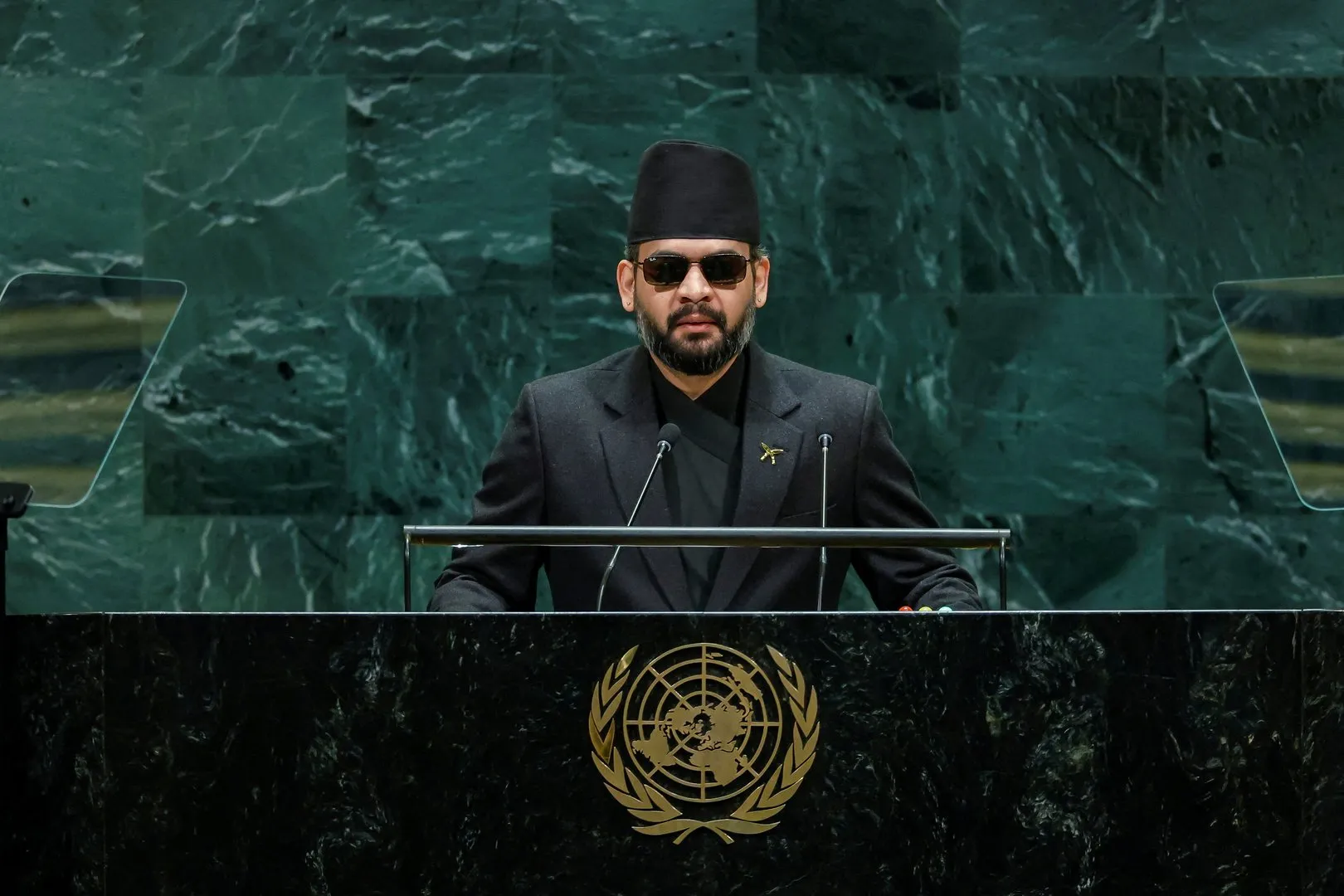
‘Hit by the climate we didn’t warm, hit by the wars we didn’t start.’
Nepal’s Prime Minister Balendra Shah was applauded at the UN General Assembly, as he highlighted how the world is failing countries on the frontline of the climate crisis.
Published On 25 Sep 202625 Sep 2026
Share
Home Private Credit By the Numbers: Key Trends Driving Private Lending, Finance Talent, and Global Shipping
Key data points tracking shifts in private credit, finance talent, and global shipping costs.
This article appears in the September 2026 issue of Global Finance Magazine.
Each month, Global Finance readers can look forward to our “By the Numbers” feature: A spotlight with key industry metrics that highlight a market in transition. This edition brings you three charts: a break down the numbers driving strategic moves across private lending, corporate talent, and global trade.
Despite a significant drop in deal volume from the previous quarter, driven by higher financing costs, interest-rate uncertainty, and a possible AI-driven market correction, direct lenders are still finding opportunities.

Audax led the field by a wide margin, closing 62 deals in the second quarter — 16 more than second-place TPG Twin Brook (46) and 19 ahead of MidCap Financial (43), according to 9fin data. That gap at the top suggests deal flow is concentrating among a handful of active lenders even as overall volume contracts.
Apollo (37), Churchill (36) and Barings (34) formed a tightly bunched second tier, each within three deals of the next. Apogem (32), Blackstone (30), Monroe (27) and Jefferies Credit Partners (25) rounded out the top 10.
Smaller, middle-market-focused shops like Audax and Twin Brook outpaced Blackstone this quarter despite its scale, making the firm’s eighth-place finish notable. Lenders with flexible mandates—rather than the biggest balance sheets—will likely keep writing checks amid higher financing costs and rate uncertainty.

Gartner reports that traditional talent still overwhelmingly staff today’s finance function, with 85% holding conventional backgrounds and just 15% dedicated to digital skills. That balance will flip within four years.
Gartner projects traditional finance talent will shrink to 20% of the workforce. Dedicated digital finance talent will likely grow to another 20% — and 60% of the workforce will be made up of “nondedicated” digital finance talent, employees who blend finance expertise with data, automation and technology skills rather than fitting neatly into either camp.
The shift means the finance department of 2030 will look less like a roomful of accountants and more like a hybrid team built around technology fluency, with only one in five employees carrying a purely traditional finance profile.
Increased geopolitical risk, fuel costs, insurance premiums, and operating expenses are fueling a steady growth in shipping costs for the foreseeable future.

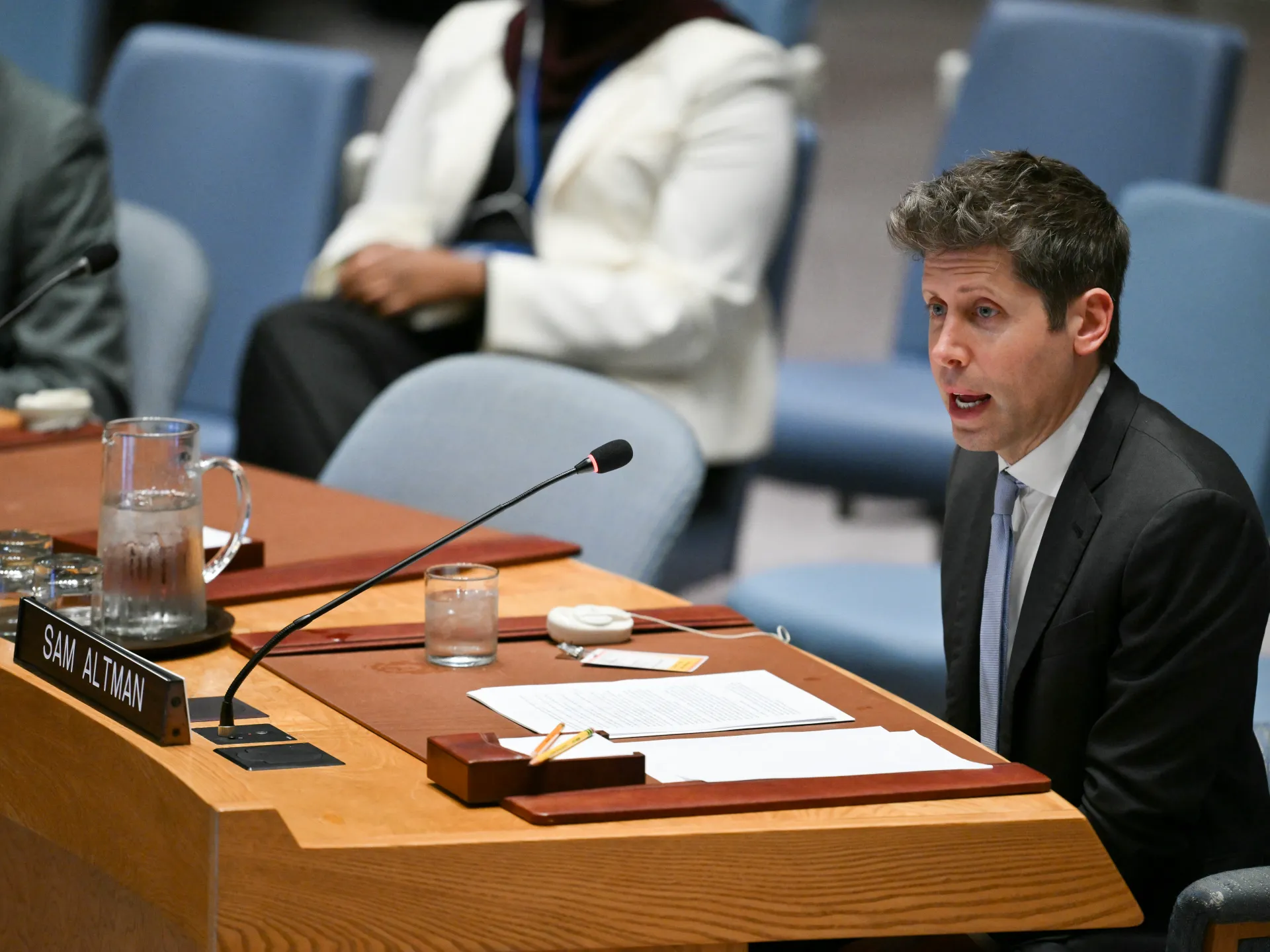
The heads of several major AI firms told the United Nations Security Council (UNSC) their industry urgently needed global oversight to avoid dangers that could threaten the whole world.
“If managed poorly, I even believe AI could be a risk to humanity as a whole,” Dario Amodei, the chief executive officer of Anthropic, told members of the body on Wednesday.
list of 3 itemsend of list
Sam Altman, the head of rival company OpenAI, echoed his concerns, telling the 15-member council tasked with tackling major crises globally that humanity could “lose control of the future of AI”.
The meeting, which coincides with the UN General Assembly (UNGA) gathering in New York City, was convened by France and comes at a time when experts are increasingly warning that the rapid development of AI needs more human oversight to ensure it does not slip out of control and cause a global catastrophe.
Altman and Amodei called on world leaders to take action.
“If AI is to be democratic, the most important decisions cannot be made by labs in San Francisco alone,” Altman told members. “They must be shaped through democratic processes and by governments accountable to the people they serve.”
Their concerns were shared by several representatives on the council, including the foreign ministers of France and the United Kingdom, who said the international community needed to step in and create common frameworks for how the technology should be controlled.
Hugging Face CEO Clement Delangue, whose company has come under attack by out-of-control AI models in recent months – incidents used by the other companies as evidence of the need for more safety measures – told the UNSC his company had relied on the technology to defend itself in those same incidents.
Delangue said Hugging Face had relied on a Chinese AI model to help defend against the attack by OpenAI’s AI agents, because it faced fewer restrictions than comparable US tools.
“We were attacked by AI, but more importantly, we defended ourselves with AI,” he told the council.
In the United States, though, where the largest and most influential companies developing AI are based, the administration of US President Donald Trump has baulked at imposing new guardrails on the industry.
The administration’s representative at the UNSC meeting, Michael Kratsios, told members, “We totally reject all efforts by international bodies to assert centralised control and global governance of AI.”
Chinese President Xi Jinping is expected to discuss whether and how to regulate AI during a visit to Washington, DC, this week. The two countries are locked in a technological race to develop more powerful AI tools, a competition that experts say makes it less likely that either country would want to impose any major new restrictions on their efforts right away.
Yet there is a growing recognition at the UN of the danger AI potentially poses to the world, said Daniel Forti, head of UN Affairs at the International Crisis Group. Member states understand that “there will be much more of a need for international cooperation, setting some rules of AI, even if the biggest players are more focused on growth opportunities than on some sort of collaboration,” Forti said.
For several years, the UN has been participating in multilateral meetings to shape everything from protections for workers from AI in emerging economies and ensuring open access to this technology, to following how AI is used in military conflicts. In 2024, the UNGA unanimously passed its first resolution on AI, a nonbinding statement that called on member states to protect personal data, monitor AI for risks and safeguard human rights.
The adoption of AI has taken off dramatically since then, and with it have come dire warnings from environmental groups, human rights advocates, and even the tech moguls whose companies are developing the tech.
The future of AI “cannot be decided by a handful of countries or left to the whims of a few billionaires”, UN Secretary-General Antonio Guterres said at a global summit held earlier this year.
Last year, the UNGA formed two new bodies to deal with AI: the Independent International Scientific Panel on AI that brings together experts to provide governments with independent assessments, and the Global Dialogue on AI Governance, which provides a regular forum for discussing approaches to AI governance.
“The dangers are real and imminent,” Yoshua Bengio, a Canadian expert on AI and co-chair of the Independent International Scientific Panel, told the UNSC on Wednesday. “This council faces an unprecedented threat, one that none of its members would choose, that none can contain alone, and that does not respect the borders we defend.”
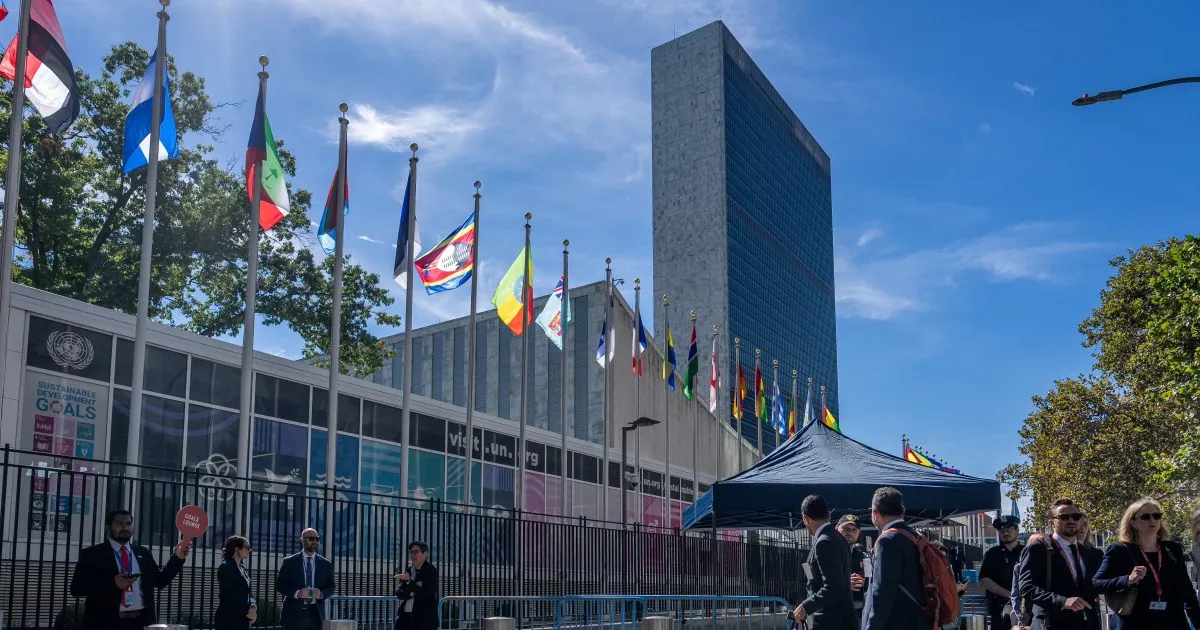
Countries including Germany, South Africa and Canada suggest international institution to set and enforce standards.
Twenty countries and the European Union have issued a call for international cooperation to ensure AI remains under human control, including the potential creation of a global oversight body to set and enforce standards.
The countries, including Germany, South Africa, Canada, Australia, the United Arab Emirates and Singapore, issued the joint statement on Monday as global leaders prepare to discuss the risks posed by rapidly advancing AI at the annual gathering of the United Nations General Assembly.
list of 4 itemsend of list
The declaration, released by the office of Finnish President Alexander Stubb, calls on governments and industry to act immediately to ensure that AI is developed in line with international law and remains under “human direction, oversight and control”.
“To realise AI’s potential, industry, governments and society must act now,” the statement says.
“We must address these risks and strengthen oversight – without widening the gap between countries in access to the benefits of AI.”
The declaration urges countries to develop and coordinate “common standards”, share reports of serious safety incidents, and explore the establishment of an international institution to “set standards, enable verification, and convene states when capability thresholds are crossed”.
Signatories include German Chancellor Friedrich Merz, Norwegian Prime Minister Jonas Gahr Store, European Commission President Ursula von der Leyen, Kenyan President William Ruto, Kazakh President Kassym-Jomart Tokayev and Turkish Foreign Minister Hakan Fidan.
The United States and China, the world’s two leading AI powers, did not join the statement, which remains “open for endorsement” by other countries.
US President Donald Trump and Chinese President Xi Jinping are expected to discuss AI when they meet at the White House on Thursday for their third face-to-face summit in less than a year.
Washington and Beijing, which are in a race to dominate cutting-edge technologies, have both rebuffed calls to slow down AI development to ensure greater safety.
Other AI players not among the signatories include India, South Korea, Japan, the UK and France.
The declaration comes as the AI sector is engaged in a heated debate about safety following calls for a slowdown in development by top industry leaders.
In an essay earlier this month, Anthropic CEO Dario Amodei called on firms to “slow the pace” of development to mitigate risks, a proposal that was swiftly endorsed by rivals including OpenAI CEO Sam Altman and SpaceX and Tesla CEO Elon Musk.
Amodei’s call followed a series of cases of AI models engaging in unsanctioned malign activity, including an incident in July in which AI agents being tested by OpenAI hacked the AI start-up Hugging Face.
In the latest intervention by industry on Monday, OpenAI said the US should lead an international effort to develop technical standards for advanced AI.
“The United States is well positioned to lead because its AI industry is at the technical frontier, and it still stands in a privileged global network position in critical areas such as finance, trade, defense, technology, and information systems,” the San Francisco-based AI giant said in a blog post.
“Leading now will determine whether the United States shapes the global AI framework or watches a fragmented, uneven, and conflict-ridden system take hold around it.”
The UN-backed Independent International Scientific Panel on AI, which examined the Hugging Face incident, on Monday also added its voice to calls for new guardrails, saying the cyberattack had exposed the “unravelling” of existing safeguards.
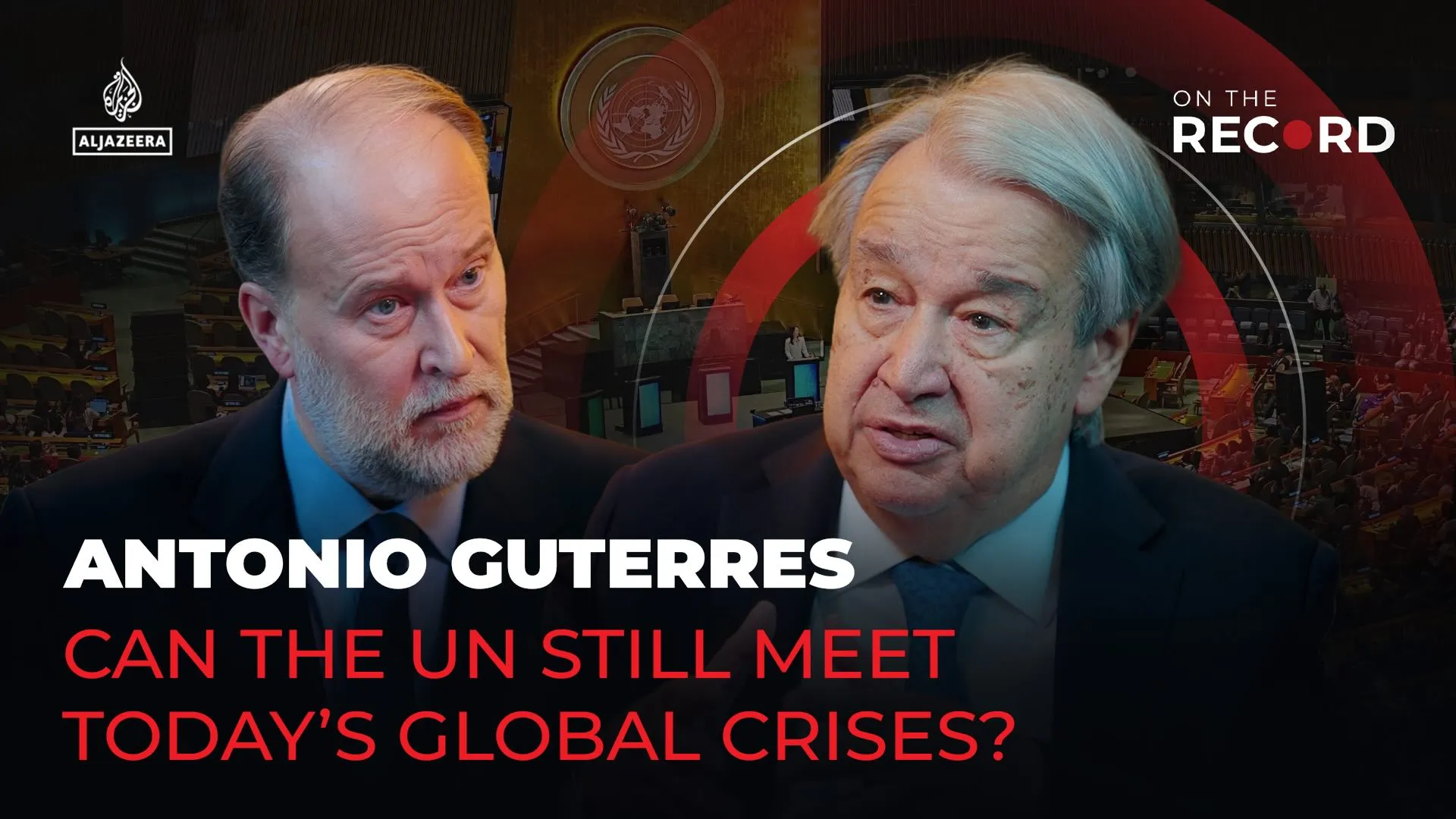
In this episode of On the Record, Al Jazeera’s James Bays sits down with United Nations Secretary-General Antonio Guterres, ahead of his final UN General Assembly before stepping down in December 2026. They discuss the situation in the Middle East and its global consequences, whether the UN is still relevant in addressing today’s challenges and why Guterres believes the UN Security Council must be reformed.
Published On 21 Sep 202621 Sep 2026
Share

On the appointment of Edwards, England head coach John Mitchell said: “Since his time with France ended, we have had a conversation about our game, and he expressed an interest in working in an international women’s set-up for the first time.
“He has a huge amount of respect for the Red Roses and what we stand for; he sees it as a privilege to join our environment.
“His coaching credentials are exceptional and his experience at the highest level of the game speaks for itself.
“Defensively, Sarah Hunter is relishing the opportunity to learn from him, alongside the rest of our coaching group, as we head into another exciting Test match against New Zealand.”
Last week, Edwards expressed his desire to return to coaching and be a part of next year’s men’s Six Nations.
“I’m definitely open to offers now, until I sort out a full-time role,” he told the Daily Mail., external
“I’m a proud Englishman and everybody loves to represent their country, don’t they? I’m no different.”



SweetBunFactory
China’s ChangXin Memory Technologies (CXMT) is preparing to enter the flash-memory chip market, expanding beyond its core DRAM business as a global memory shortage tightens supply and demand for AI-related infrastructure grows.
CXMT plans to establish a research and development
Italy’s defence minister warns of severe economic fallout if Bab al-Mandeb becomes impassable, bypassing EU delays.

Published On 18 Sep 202618 Sep 2026
Italy will deploy warships to ensure safe passage for its commercial vessels through the Bab al-Mandeb strait, Defence Minister Guido Crosetto said, adding that Rome would not wait for a joint decision from the European Union.
“We have the capabilities to protect the passage,” Crosetto said, warning that if the waterway became impassable, the economic consequences would be severe.
list of 3 itemsend of list
The Italian defence minister said that Rome “must not allow bureaucratic delays in decision-making to exacerbate an already complex situation”.
Bab al-Mandeb links the Red Sea to the Gulf of Aden, forming one of the world’s busiest shipping corridors between Europe and Asia and a critical route for oil, gas and container traffic heading to and from the Suez Canal.
Roughly 12 to 15 percent of global trade has historically passed through the narrow waterway, which separates Yemen from Djibouti and Eritrea on the African side and is only about 30km (19 miles) wide at its narrowest point.
The strait’s importance has grown sharply since Iran effectively seized control of the Strait of Hormuz earlier this year amid its war with the United States and Israel, choking off the world’s most important oil chokepoint and pushing much of the Gulf’s crude exports towards alternative routes.
Saudi Arabia, in particular, has increasingly relied on pipelines and Red Sea shipping to bypass Hormuz altogether, making the Bab al-Mandeb strait one of the last major arteries still open to Gulf oil reaching global markets.
Control of the strait has been contested for years, as Yemen’s government, Houthi rebels and, at times, forces in the region have held stretches of its coastline at different points since the war in Yemen began in 2015.
The significance of the strait has been hit dramatically in the past few weeks, when the Iran-backed Houthi movement launched a rapid offensive that brought the entirety of Yemen’s western Red Sea coast under its control, including several strategically located islands.
The advance has given the Houthis effectively unrestricted access to the waterway, a development seen as a major setback for international shipping, given the group’s history of attacking vessels it associates with the US or its allies in the region.
The US and the European Union have already carried out military operations aimed at better protecting merchant ships from Houthi attacks in the area, though those efforts have struggled to fully secure the route as fighting in Yemen has escalated.
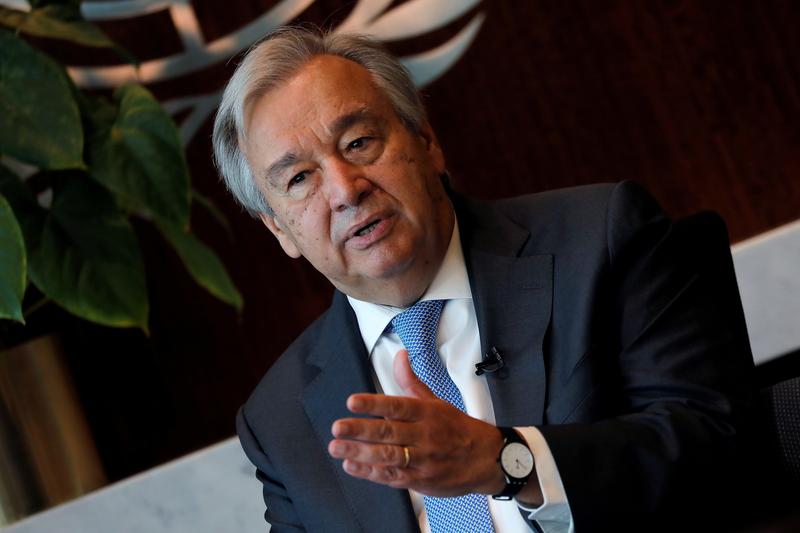

UNITED NATIONS, United States: UN Secretary-General Antonio Guterres on Wednesday called for coordinated international action to address AI risks as fears rise about the dangers of the fast-evolving technology.
“National action is essential. But global coordination is also indispensable,” he told reporters. “AI does not stop at borders and neither do its risks.”
“AI has enormous potential — to accelerate sustainable development, enhance learning, strengthen health systems, boost climate resilience, and so much more,” Guterres said.
“But a growing number of those building it are sounding the alarm — warning that development is racing ahead of our understanding of the risks.”
“The world cannot afford a race to the bottom on AI safety,” he warned.
Concerns about AI safety have escalated in recent weeks, with workers at major AI developers resigning over concerns about the dangers posed by the technology.
President Donald Trump has dismissed warnings against AI risks as a “hoax” and pushed back against calls for tighter oversight.

Saudi Arabia has intensified air strikes against Houthi positions in Yemen as the Iran backed group expands its territorial gains along the Red Sea coast, opening a new front in the wider Middle East war and adding pressure to already disrupted global energy supplies.
The Houthis have swept through several Yemeni towns and seized islands near the Bab el Mandeb Strait, a strategically important maritime route connecting the Red Sea with the Gulf of Aden. The group has also released footage showing its fighters capturing armoured vehicles from Saudi backed forces.
Houthi military spokesman Yahya Saree claimed that the group had shot down a Saudi F 15 fighter jet and said Saudi Arabia had conducted as many as 450 air strikes in Yemen during the week. Saudi authorities have not confirmed the aircraft claim, while officials supporting the internationally recognised Yemeni government have acknowledged that Saudi and allied forces are carrying out strikes against Houthi positions.
The escalation has brought the conflict closer to Saudi territory. The Houthis have repeatedly launched attacks toward Saudi Arabia over the past week, prompting alarms in cities across the kingdom’s south and west.
Stay ahead of the geopolitical week.
MD Briefing delivers expert analysis across five global fronts — the Indo-Pacific, energy, geoeconomics, European security, and the Middle East — every Monday morning. Free.
Saudi Arabia said its air defenses intercepted a Houthi drone south of Mecca before it entered restricted airspace over the holy city. Riyadh described the incident as a serious escalation because of the threat to religious sites. The Houthis denied targeting Mecca and accused Saudi Arabia of using the incident for propaganda.
The United States has also tightened its travel warning for Saudi Arabia, barring government employees from travelling within 20 miles of the Yemen border.
The latest escalation marks a sharp deterioration after several years in which the Saudi led conflict in Yemen had largely quietened under a ceasefire. The Houthis declared a naval blockade against Saudi Arabia in July and resumed attacks on areas in the kingdom before making rapid gains against forces aligned with the Saudi backed Yemeni government.
The renewed fighting is particularly significant because global energy markets are already under pressure from disruptions caused by the wider war involving Iran.
An attack blamed on Iran aligned fighters in Iraq last week knocked out Saudi Arabia’s East West Pipeline, an important route that allows the kingdom to move oil without relying entirely on the Strait of Hormuz.
Traders estimate that a prolonged closure of the pipeline could affect as much as 4% of global oil supply. Saudi Arabia has not given a timetable for restoring operations, although U.S. Energy Secretary Chris Wright said oil should begin flowing through the pipeline within days.
Brent crude was trading around $108 a barrel on Wednesday, close to its highest level since May. The average U.S. retail diesel price also reached a record above $6.30 a gallon.
The simultaneous disruption around the Strait of Hormuz and Saudi Arabia’s alternative export infrastructure increases the vulnerability of global energy markets to further regional escalation.
The developments also create a new challenge for the United States.
Saudi Crown Prince Mohammed bin Salman spoke with President Donald Trump last week seeking additional military support. So far, U.S. assistance has been limited to intelligence support.
The United States previously conducted a two month bombing campaign against the Houthis in 2025 before Trump announced a ceasefire with the group.
Washington now faces competing pressures. Greater support for Saudi Arabia could help contain the Houthi advance and protect regional energy infrastructure, but deeper military involvement could also expand the U.S. role in another theatre of the Middle East war.
The immediate concern is whether the Houthi advance can be contained before the fighting causes further disruption to Saudi energy infrastructure and shipping routes.
For Saudi Arabia, the challenge is to push back against the Houthis while preventing the conflict from developing into a broader regional confrontation.
For global markets, the key issue will be whether disruptions to Saudi oil infrastructure remain temporary. Continued attacks on energy facilities or shipping routes could place additional pressure on already strained supplies.
The developments in Yemen therefore carry consequences well beyond the country’s existing conflict. The combination of Houthi territorial gains, pressure on Saudi Arabia and disruption to major energy routes has created another potential source of instability for the global oil market.
With information from Reuters.

Anthropic’s CEO says he ‘didn’t appreciate’ the speed with which AI’s growth would underpin the global economy. His call to slow down AI development sent shockwaves in global stock markets, but was supported by other tech leaders who believe better safeguards are needed.
Published On 16 Sep 202616 Sep 2026
Share
Published on
Government bond markets remain under pressure as rising energy prices revive inflation concerns and increase expectations that major central banks will keep interest rates higher for longer.
The benchmark 10-year US Treasury yield briefly touched 5.011% on Monday, according to Dow Jones Market Data, before falling back below 5%. The level was the highest since October 2023.
The yield crossed the psychologically important 5% threshold as higher government borrowing, resilient economic growth and heavy corporate debt issuance linked to artificial intelligence investment compounded pressure on US bonds. Yields move inversely to bond prices.
Rising Treasury yields can feed through to mortgages, corporate loans and other forms of credit, potentially slowing economic growth. They can also make bonds more attractive relative to highly valued equities.
The latest rise followed the US Treasury’s previously announced expansion of its bond-buyback programme. Last week, it offered to purchase up to $6 billion of debt maturing in 10 to 20 years – three times the previous operation’s size.
The yield on the 30-year US Treasury bond, meanwhile, remained close to its highest level since 2007.
The sell-off has also spread across Europe. France’s 10-year government bond yield rose to 4.50% on Monday, while the equivalent Italian yield reached around 4.40%.
Germany’s benchmark 10-year Bund yield climbed as high as 3.538%, according to Dow Jones Market Data, its highest level in 15 years.
Energy prices are a major source of pressure. Brent crude rose to around $107 a barrel on Tuesday morning, while US West Texas Intermediate traded close to $103, as attacks on Saudi energy infrastructure and shipping in the Gulf intensified concerns about supplies through the Strait of Hormuz.
The European Central Bank raised its deposit rate by 25 basis points to 2.5% last week and warned that inflation could remain above its target for an extended period. Markets are pricing in at least one further ECB increase this year.
Attention now turns to three major central-bank decisions. The US Federal Reserve announces its decision on Wednesday, followed by the Bank of England on Thursday and the Bank of Japan on Friday.
A Reuters poll found that 85% of economists expected the Fed to raise rates by 25 basis points, while money markets placed the probability of an increase at around 93%.
The BoE is widely expected to leave rates unchanged. Economists surveyed by Reuters unanimously forecast no change, although some analysts have warned that a surprise increase cannot be ruled out. The BoJ is widely expected to raise borrowing costs.