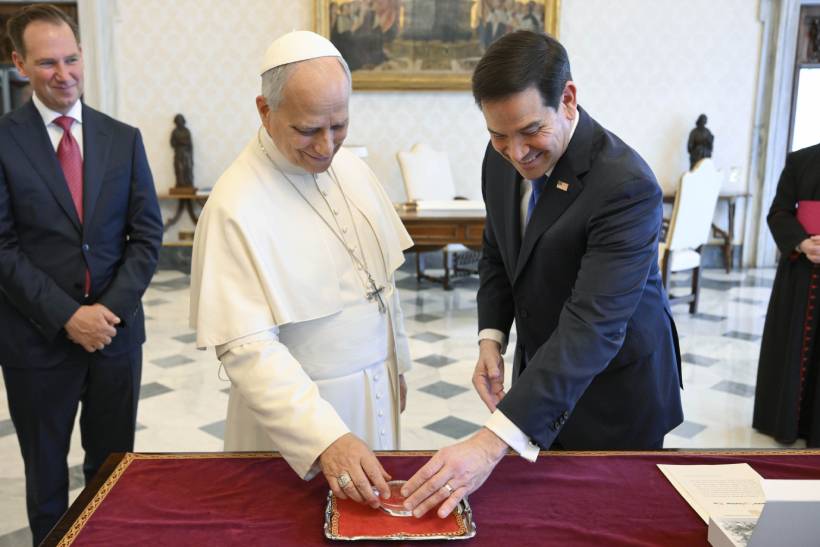
Pope Leo has called on global leaders to reduce international tensions and turn away from violence, delivering an emotional appeal during a visit to Pompei, Italy, on Friday. His remarks came just one day after he met U.S. Secretary of State Marco Rubio at the Vatican, where both sides discussed efforts to improve strained relations between Washington and the Holy See.
The meeting took place against a politically sensitive backdrop, with U.S. President Donald Trump having recently criticized the Pope over his comments on the Iran conflict. Pope Leo, the first U.S.-born pontiff and former Cardinal Robert Prevost, has increasingly spoken out on global conflicts in recent weeks after initially maintaining a relatively low public profile following his election in May 2025.
Speaking to worshippers in Pompei, the Pope urged prayers that world leaders would be inspired to “calm rancour and fratricidal hatreds” and to take responsibility for reducing global violence. He also warned against becoming desensitized to images of war, and criticized what he described as an international system that often prioritizes the arms trade over human life.
Why It Matters
The Pope’s intervention highlights the growing moral and diplomatic role of the Vatican at a time of heightened global instability, particularly amid ongoing tensions involving Iran, the United States, and wider geopolitical rivalries. His criticism of the global arms economy directly challenges dominant security-driven foreign policy approaches, especially in Western capitals.
As the spiritual leader of more than 1.4 billion Catholics worldwide, Pope Leo’s statements carry significant symbolic and diplomatic weight. His increasingly vocal stance on war and governance also places him in a rare position of open tension with major political actors, including the U.S. administration.
What’s Next
The Vatican is expected to continue engaging diplomatically with U.S. officials despite emerging tensions, particularly following the Rubio meeting. Pope Leo is likely to maintain his public messaging on peace, conflict prevention, and criticism of the global arms trade, reinforcing the Holy See’s traditional role as a moral voice in international affairs. At the same time, reactions from Washington and other governments may further shape the evolving tone of Vatican–state relations in the coming months.
With information from Reuters.