tensions

NATO considers ending its annual summits to avoid tensions with Trump

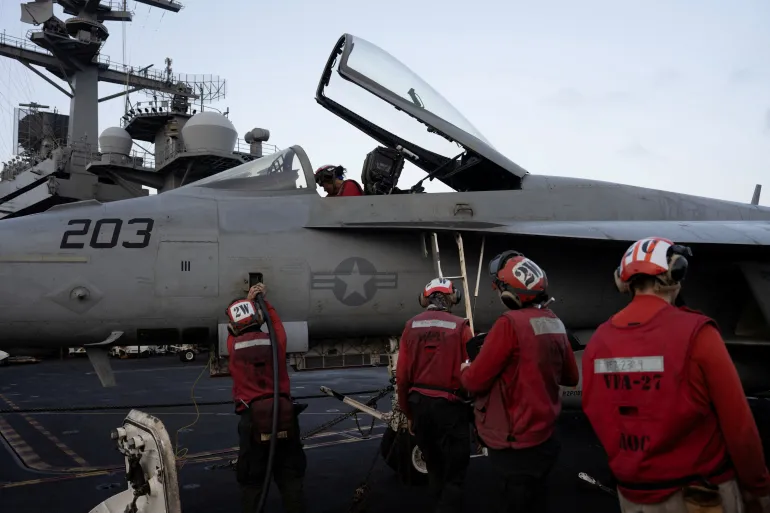
NATO is considering stopping its annual summits, a decision influenced by the potential tension with U. S. President Donald Trump in his last year in office. Trump’s administration has frequently criticized NATO’s 31 member countries, recently highlighting their lack of support for U. S. military operations against Iran. While NATO leaders have met every summer since 2021, they will gather this year in Ankara on July 7 and 8. Some member countries desire to reduce the number of summits, according to a senior European official and five diplomats.

The 2027 summit is planned for Albania, but discussions suggest there may be no summit in 2028, the year of the U. S. presidential election and Trump’s final full year in office. Some countries advocate for holding summits every two years instead. NATO Secretary-General Mark Rutte will have the final decision on this matter. In response to inquiries, a NATO official stated that regular meetings of Heads of State and Government would continue, along with ongoing consultations about security.

Sources indicated that while Trump is a factor, broader issues are influencing the decision. Some diplomats argue that annual summits push for attention-getting results that detract from longer-term planning. One diplomat noted, “Better to have fewer summits than bad summits. ” The strength of the alliance, they believe, is measured by the quality of discussions and decisions made.

Phyllis Berry from the Atlantic Council highlighted that reducing the frequency of high-profile summits could aid NATO in focusing on its work while lessening drama from transatlantic encounters. Historical context shows that NATO held fewer summits during the Cold War. Trump’s earlier summits were marked by his complaints over defense spending, with last year’s summit viewed as successful due to its lack of major conflict. This year’s meeting is expected to be tense, especially after NATO allies did not provide the support he wanted related to the Iran conflict.

With information from Reuters

Source link

Samsung faces setback in AI memory race amid labor tensions

Samsung Electronics union members hold placards with the words ‘Abolish upper limit’ during a protest outside the company’s semiconductor plant in Pyeongtaek, South Korea, 23 April 2026. The union has announced plans to launch an 18-day general strike from 21 May to 07 June, which could result in losses for the company of up to 30 trillion won (17.34 billion euros). Photo by HAN MYUNG-GU / EPA

April 26 (Asia Today) — South Korea’s race for dominance in high-bandwidth memory, a key component for artificial intelligence chips, is diverging as SK hynix consolidates its lead while Samsung Electronics faces mounting labor tensions.

Industry analysts say the competition is increasingly defined not just by technology, but by timing – with early execution and customer alignment proving decisive in securing long-term market share.

SK hynix recently received a corporate innovation award from the Institute of Electrical and Electronics Engineers, recognizing its leadership in developing and mass-producing successive generations of HBM chips. The company has capitalized on surging demand driven by AI computing, strengthening partnerships with major global clients.

SK hynix is rapidly expanding sales of its HBM3E products while simultaneously preparing for next-generation HBM4, supplying samples to key customers and advancing toward mass production. Analysts say early validation and supply relationships formed at this stage are likely to shape long-term market positioning.

In contrast, Samsung is attempting to close the gap through its own HBM4 development but faces internal challenges. Labor disputes over performance-based bonuses have escalated, with unions warning of a general strike. Industry observers say the tensions could affect not only production but also research, development and customer engagement.

HBM products require close collaboration with customers on customized designs and process validation, making speed of initial response a critical factor. Delays in testing or supply can lead to lost contracts, while early entry into supply chains often results in long-term partnerships.

Analysts warn that Samsung’s internal disruptions could weaken its ability to respond during what they describe as a “golden time” in the rapidly expanding AI semiconductor market. If supply stability and development pace falter, customers may shift toward multi-vendor strategies, potentially solidifying SK hynix’s advantage.

Experts also point to structural issues behind repeated labor disputes, including disagreements over performance-based compensation. They suggest moving beyond short-term negotiations toward a more transparent system based on objective metrics such as return on invested capital, total shareholder return and economic value added.

Such reforms, they say, could help prevent prolonged conflicts and support the company’s competitiveness in a fast-moving global market.

— Reported by Asia Today; translated by UPI

© Asia Today. Unauthorized reproduction or redistribution prohibited.

Original Korean report: https://www.asiatoday.co.kr/kn/view.php?key=20260427010008233

Source link

Despite Iran tensions, King Charles will follow his mother’s lead in celebrating U.S.-U.K. bonds

The challenge for King Charles III as he arrives in the United States this week is, as always, to live up to his mother’s example.

The late Queen Elizabeth II wowed Congress in 1991 with a speech that celebrated the shared democratic traditions of Britain and the United States, quoted Abraham Lincoln, Franklin D. Roosevelt and Ralph Waldo Emerson, and highlighted the deep bonds between the two nations.

Those themes will also be at the top of Charles’ agenda as he celebrates America’s 250th birthday and seeks to calm tensions surrounding Prime Minister Keir Starmer’s refusal to support President Trump’s war against Iran, said Douglas Brinkley, a presidential historian at Rice University in Texas.

“We’ve got to always make the distinction that there’s a difference between the government of the U.K. and the kings and queens of Great Britain, who are really always coming to try to put [on] a good face,” Brinkley told the Associated Press. “Politics come and go; prime ministers, presidents, come and go; but there’s something deeper about the special relationship between the United States and the U.K.”

Charles and Queen Camilla begin a four-day trip on Monday, when they will have tea with the president and First Lady Melania Trump, then tour the White House beehive, in a nod to the king’s focus on the environment.

The formal arrival ceremony will take place Tuesday, with a 21-gun salute, brass bands playing the national anthems of both countries and a contingent of U.S. service members passing in review. The ceremonies will be followed by a meeting between Trump and Charles.

Behind the scenes

But beneath the pomp and pageantry will be a carefully choreographed diplomatic event staged, like all royal visits, at the request of the British government. Starmer resisted pressure to cancel it after Trump belittled the British military’s sacrifices in Afghanistan and criticized him personally for failing to back the U.S. in its war alongside Israel against Iran.

Despite those tensions, Trump has continued to speak warmly about Charles.

“History has shown that President Trump really tries to be impressive whenever he’s dealing with British royalty,” Brinkley said. “And I’m sure it’ll be the same this time around.”

Ever since 1939, when King George VI became the first British monarch to set foot on the soil of the country’s former colony, there’s been a special sort of excitement whenever the royals come to the United States.

Take that first visit, which took place as World War II loomed over Europe. The royals toured the East Coast and attended a picnic at President Roosevelt’s private home in Hyde Park, N.Y. “King tries hot dog and asks for more,’’ declared the New York Times.

But the big moment was when the royals traveled to Mount Vernon to lay a wreath at the tomb of George Washington. It showed respect at a time of isolationism.

“People could see the handwriting on the wall and know that it was going to be important for the United States and Britain to stay strong for fighting against Hitler,” said Barbara Perry, a presidential scholar at the University of Virginia’s Miller Center.

But bonding over sausages had broader benefits, helping the royals build links to the general public as well as its leadership. After war broke out in September 1939, Queen Elizabeth, the wife of George VI and mother of the future Elizabeth II, wrote to First Lady Eleanor Roosevelt to say how moved she’d been by letters from Americans who enclosed small sums for British forces.

“Sometimes, during the last terrible months, we have felt rather lonely in our fight against evil things, but I can honestly say that our hearts have been lightened by the knowledge that friends in America understand what we are fighting for,’’ she wrote.

The queen’s connection

Queen Elizabeth II built on those relationships, making four state visits to the U.S. during her 70-year reign. She joined President Ford in celebrating America’s bicentennial in 1976 and met with President George W. Bush in 2007 as British and American forces fought in Iraq and Afghanistan.

Smoothing turbulent waters and reminding both sides about their common bonds were what those trips were all about.

Charles’ visit will be no different. It includes a commemoration of the Sept. 11, 2001, attacks, a ceremony honoring fallen service members and an event to be attended by Queen Camilla to mark the 100th anniversary of Winnie the Pooh stories by British author A.A. Milne.

Certain events will be avoided.

The royals won’t meet with Jeffrey Epstein’s victims, despite calls for the king to address his accusations related to his brother Andrew’s links to the convicted sex offender. Nor are there plans for Charles to meet with his son Prince Harry, who has been a critic of the monarchy since giving up royal duties and moving to California.

Those issues aren’t the priority, said Robert Hardman, author of “Elizabeth II: In Private. In Public. The Inside Story.”

“He’s going because 250 years ago the Founding Fathers of the USA kicked out his great-times-five grandfather, and he’s going to say, `No hard feelings, it’s been a great divorce, we’ve had a lovely 250 years and let’s reflect on the high points,’’’ Hardman said. “I mean, there are going to be some very, very large elephants in the room during that visit … but, you know, there are plenty of other things for the king to focus on.”

History, not politics

Charles’ speech to a joint session of Congress offers the chance to deliver the message that long-term friendship is more important than transient disputes.

He is also likely to offer a bit of humor, as his mother did when she addressed lawmakers in 1991.

Wearing soft peach amid a sea of gray suits, the diminutive monarch began her remarks with a joke about an earlier blunder at the White House when her lectern was so tall it obscured the audience’s view of her.

“I do hope you can see me today from where you are,’’ she deadpanned.

The chamber erupted in laughter. A standing ovation followed. Then she launched into a speech about democratic values, the rule of law and the Atlantic Alliance — the foundation of NATO.

Those are values that critics of the current U.S. administration say it has retreated from in recent years. But Charles will offer his own take on those ideas, Brinkley said.

“The theme of the speech is going to be American exceptionalism, American history, the importance of U.S.-British alliance, and some memories from the past,” he said. “But also about the love affair the two countries share with each other, even though it goes over rocky rapids from time to time.”

Kirka writes for the Associated Press.

Source link

A defining week in Africa: between moral voice, political tensions, and economic reality

Africa has shown itself in the past week again as a continent of dramatic contrasts, in which moral leadership, political turmoil, and financial aspiration come into collision in a manner that would not only chart its own future but also that of the world. The continent is going through a time that is both precarious and radical, as the potent moral rhetoric of a papal visit gives way to an ever-worsening political persecution and systemic economic disparities.

A Moral Voice in a Fractured Continent

The visit of Pope Leo in some parts of Africa, such as Angola and Cameroon, has been one of the most intriguing this week. His message attracted crowds of more than 10,0000 people, and it was not only religious but also very political, declaring Africa a beautiful but wounded continent and demanding unity, justice, and an end to violence.

It is not only the size of the meetings but also the content of the message that is important. The Pope was outspoken in an attack on corruption, inequality, and exploitative governance systems—the problems that are at the core of most of the struggles in Africa today. His words about people being more important than corporate interests are well-received in a continent where natural resource wealth has not always translated into widespread prosperity.

This visit was, in a sense, a symbol of a greater fact: Africa is not merely economically or politically challenged; it is morally and structurally challenged. The unity cry in Angola, the nation that is yet to overcome the adverse effects of decades of civil war, is a symptom of the bigger continental necessity to mend the wounds of the past and deal with the inequalities of the present.

Political Tensions and Disappearance of Space of Dissent

As the moral pleas of unity reverberated in stadiums, political realities on the ground painted an even more disturbing scenario. The South African arrest of activist Kemi Seba is part of an increasing trend in some parts of Africa, where there is an increased crackdown on dissenting voices.

Seba, the anti-colonial and anti-Western rhetoricist and critic of Western influence, now risks extradition to Benin on charges of inciting rebellion. His detention highlights a broader conflict: the fight between state power and political activism in an area where the democratic institutions are not yet balanced.

This is not a one-time event. Governments all over the continent are striking a fine balance between ensuring stability and political expression. In other instances, this equilibrium is leaning towards control over being open, and this leaves one worrying about the future of democratic governance.

The consequences are not confined nationally. The political situation in Africa is a topic of keen interest to the rest of the world, not just due to its size and population but because it offers one of the final avenues of democratic growth in the 21st century. Political space is reduced here, causing ripples way beyond the continent.

Structural Gaps in Economic Promise

Africa is still a puzzle economically. On paper, the figures are encouraging. Recently, South Africa obtained the promise of billions of investments, which indicates a great interest of other countries in the areas of green energy, infrastructure, and digital development. But the facts speak otherwise. Of these promised investments, only around 42 percent have been translated into real economic activity—much less than world averages. This delivery gap is indicative of an ongoing problem: it is one thing to attract investment and another to implement it.

Simultaneously, the recent climate financing agreement of South Africa with Germany that provides hundreds of millions of euros of loans and green energy assistance reminds us about the increased role of the continent in the global climate plan. Africa is also being increasingly viewed not only as a beneficiary of aid but also as a prime actor in the shift to sustainable energy.

However, structural problems are quite rooted. The effectiveness of economic initiatives is still hampered by policy inconsistency, poor infrastructure, and governance issues. Even the most ambitious plans of investment have a chance of failing without these underlying problems being addressed.

The Overlooked Crisis: Environment and Illicit Economies

The other trend of importance this week has been the further increase in wildlife trafficking in Nigeria, even though the legislation has been taking measures to reduce it. A lack of complete legislation on wildlife protection has allowed the illegal trade to continue, with several seizures of endangered species over the past few months.

The problem is indicative of a larger problem: that of a nexus between environmental degradation and ineffective enforcement. Africa has one of the most biodiverse regions in the world, but it is rapidly being threatened by illegal trade, climate change, and the exploitation of resources.

The inability to adequately deal with such problems not only damages the ecosystems but also weakens the governance and the stability of the economy. In places where there is poor regulation, illegal economies flourish and, as a result, establish parallel economies that undermine state power and promote corruption.

Africa: Moment between Opportunity and Uncertainty

Collectively, what happened this last week shows a continent at a crossroads. On the one hand, there is an increasing international appreciation of the significance of Africa, be it in climate policy, economic investment, or geopolitical strategy. Conversely, internal threats persist to restrict its ability to exploit these opportunities to their full potential.

The message of unity and justice that the Pope is calling for is the spirit of this moment. Africa is not poor in resources, talent, and potential. The greater challenge it confronts is alignment itself, leadership and citizens, economic growth and social equity, and global engagement and local realities.

Conclusion: A Turning Point, Not a Passing Moment

The events of this week do not represent one-off headlines, but they are evidence of larger trends that are defining the future of Africa. The continent is not just responding to the global events—it is steadily becoming one of the main arenas where the global issues are acted out.

The doubt now arises whether Africa will be able to utilize this moment of attention to become a changed continent. Will investment be translated into development? Will politics become more open? Do ethical demands of cohesion result in practical change?

The responses are unclear. Nevertheless, there is one thing that is clear: Africa is never at the periphery of world affairs any longer. It is here in the center, and what occurs here during times of this kind will make the continent and indeed the world.

Source link

China blocks South Korean spy chief visit amid Taiwan tensions

China’s Foreign Ministry spokesperson Mao Ning speaks during a press conference at the Ministry of Foreign Affairs in Beijing, China, 13 January 2026. Photo by WU HAO / EPA

April 21 (Asia Today) — China has denied entry to South Korea’s intelligence chief and signaled reluctance to improve bilateral relations, amid growing tensions over Seoul’s perceived stance on Taiwan, according to diplomatic sources.

A South Korean delegation led by lawmaker Cho Jung-sik of the Democratic Party of Korea recently visited Beijing and returned Sunday after holding talks on political issues and bilateral relations. The delegation had initially planned to include National Intelligence Service Director Lee Jong-seok.

However, Chinese authorities reportedly refused Lee’s visit, citing remarks in which he suggested that engagement with Taiwan could be used as leverage to encourage China’s cooperation in improving inter-Korean relations.

According to a diplomatic source in Beijing, China reacted strongly to the comments and demanded an explanation through diplomatic channels. The delegation was subsequently restructured to include deputy officials and retired military officers instead of Lee.

Although the visit proceeded, its outcomes were limited. Chinese officials maintained protocol by assigning a vice foreign minister to host the delegation, but expectations for substantive progress were low, sources said.

Beijing is believed to be increasingly dissatisfied with what it views as South Korea’s ambiguous position – publicly supporting the “One China” principle while maintaining a level of engagement with Taiwan.

Tensions have also been fueled by a recent dispute over how Taiwan is officially referenced, in which South Korea appeared to adjust its position following objections from Taipei. Chinese officials reportedly viewed the move as inconsistent and unfavorable.

The strained atmosphere has cast doubt on the possibility of a visit to South Korea this year by Chinese Foreign Minister Wang Yi, which Seoul has sought as part of efforts to stabilize ties.

Analysts say the situation highlights the need for South Korea to carefully manage relations with China while balancing broader regional dynamics.

— Reported by Asia Today; translated by UPI

© Asia Today. Unauthorized reproduction or redistribution prohibited.

Original Korean report: https://www.asiatoday.co.kr/kn/view.php?key=20260421010006584

Source link

European Markets Fall as US–Iran Tensions Reignite and Peace Hopes Fade

European stock markets slipped on Monday as investor sentiment weakened amid renewed tensions between the United States and Iran. The downturn followed the seizure of an Iranian cargo ship by US forces and Tehran’s vow of retaliation, raising fears that a fragile ceasefire nearing its expiry may collapse.

The situation has been further complicated by Iran’s rejection of fresh peace talks and ongoing uncertainty over maritime security in the Strait of Hormuz, a critical global energy route.

Market Reaction

The pan-European STOXX 600 index declined by 0.8%, reflecting broad-based caution across financial markets. Major indices also moved lower, with Germany’s DAX down 1% and France’s CAC 40 falling 0.9%.

Losses were concentrated in sectors sensitive to geopolitical risk. Travel and leisure stocks led declines, followed by banking and automobile shares, which also came under pressure. In contrast, energy stocks rose as oil prices surged, reflecting concerns about supply disruptions.

Oil and Energy Impact

Crude oil prices jumped sharply, with Brent crude rising more than 5% to around $95 a barrel. The increase reflects heightened fears of disruption in the Strait of Hormuz, through which a significant portion of global energy trade passes.

Energy-dependent European economies remain particularly sensitive to price volatility, adding to investor caution across broader markets.

Geopolitical Tensions

Market sentiment shifted sharply from the previous week’s optimism, when easing signals from the Strait of Hormuz had briefly boosted equities. That optimism faded quickly after renewed maritime incidents and political escalation.

The United States and Iran continue to exchange accusations over ceasefire violations, while diplomatic efforts appear increasingly uncertain. The rejection of fresh negotiations by Iran and continued US pressure have added to concerns that the conflict could intensify further.

Outlook

Financial markets remain closely tied to developments in the Middle East. With the ceasefire approaching its expiration and no clear diplomatic breakthrough in sight, volatility is expected to persist.

Investors are likely to remain cautious until there is greater clarity on both maritime security in the Strait of Hormuz and the future of US–Iran relations.

With information from Reuters.

Source link

Seoul shares rise nearly 3 pct, approaching 6,000 level on eased Middle East tensions

South Korean stocks rose nearly 3 percent Tuesday to inch toward the 6,000-point mark on hopes for renewed negotiations between Washington and Tehran. The local currency sharply gained against the U.S. dollar.

The benchmark Korea Composite Stock Price Index (KOSPI) added 159.13 points, or 2.74 percent, to close at 5,967.75, after reaching as high as 6,026,52.

The index swerved over and under the 6,000-point mark, marking the first such move since March 3, when the index traded at 6,180.45, the first trading day after the United States and Israel carried out air strikes on Iran on Feb. 28.

Trading volume was moderate at 881.9 billion shares worth 26.7 trillion won (US$18 billion), with gainers beating losers 669 to 197.

Foreigners and institutions scooped up a net 830 billion won and 1.25 trillion won, respectively, while individuals sold a net 2.4 trillion won.

The U.S. military began a blockade of the Strait of Hormuz on Monday after a breakdown of weekend talks in Islamabad, Pakistan, between Washington and Tehran.

However, Donald Trump said Iran wants to reach a deal with the U.S., raising hopes that the two sides could return to negotiations.

“Investors anticipate a second round of peace talks between the U.S. and Iran after Trump’s comments,” said Kang Jin-hyuk, an analyst at Kyobo Securities. “The Wall Street Journal also reported that the two sides have exchanged detailed terms on uranium enrichment, raising further hopes for a deal.”

Tech and financial shares led the rally.

Tech giant Samsung Electronics rose 2.74 percent to 206,500 won and SK hynix jumped 6.06 percent to 1.1 million won ahead of its first-quarter earnings report next week.

Major banking group Hana Financial Group increased 0.67 percent to 120,800 won and Samsung Fire & Marine Insurance added 3.82 percent to 489,500 won.

Top carmaker Hyundai Motor advanced 2.72 percent to 491,500 won and major gamemaker NC climbed 3.97 percent to 248,500 won.

Leading mobile carrier SK Telecom gained 3.24 percent to 95,500 won and retail giant Shinsegae rose 1.02 percent to 346,500 won.

However, defense shares went south as industry leader Hanwha Aerospace fell 0.46 percent to 1.52 million won and LIG D&A, formerly LIG Nex1, declined 0.53 percent to 934,000 won.

The local currency was quoted at 1,481.2 won against the greenback as of 3:30 p.m., up 8.1 won from the previous session.

Bond prices, which move inversely to yields, closed higher. The yield on three-year Treasurys fell 4.3 basis points to 3.339 percent, and the return on the benchmark five-year government bonds dropped 3.5 basis points to 3.519 percent.

Copyright (c) Yonhap News Agency prohibits its content from being redistributed or reprinted without consent, and forbids the content from being learned and used by artificial intelligence systems.

Source link

Cyanide Discovery in South China Sea Sparks Philippines–China Tensions

The Philippines has raised alarm after discovering cyanide on Chinese vessels operating near a disputed atoll in the South China Sea, intensifying tensions in an already volatile region.

Officials say laboratory tests confirmed the presence of the toxic substance in materials seized during naval operations at Second Thomas Shoal, known in the Philippines as Ayungin Shoal.

The area is a longstanding flashpoint between Philippines and China, with both sides asserting competing claims.

Why the Allegation Matters

Philippine authorities are framing the discovery as more than an environmental violation. According to security officials, the use of cyanide could damage marine ecosystems, kill fish stocks, and weaken the reef structure beneath a grounded Philippine naval vessel stationed at the shoal.

That ship plays a critical role in maintaining Manila’s territorial claim, meaning any environmental damage could also have strategic consequences.

Officials have gone as far as calling it an act of sabotage.

Rising Tensions at Sea

The accusation comes against a backdrop of repeated confrontations in the area. Manila has previously accused Beijing of interfering with resupply missions to its troops stationed on the grounded vessel, including a violent 2024 incident that injured a Filipino sailor.

China has consistently denied such allegations, instead accusing the Philippines of encroaching on its territory.

Despite recent diplomatic talks aimed at reducing friction, incidents at sea continue to test fragile understandings between the two sides.

The Bigger Dispute

The South China Sea remains one of the world’s most contested regions. China claims nearly the entire waterway, overlapping with claims from several Southeast Asian nations.

A 2016 international tribunal ruling rejected Beijing’s sweeping claims under international law, but China does not recognize the decision.

With more than $3 trillion in global trade passing through these waters each year, even localized tensions carry global significance.

Implications: Environment Meets Geopolitics

This incident adds a new dimension to the dispute by linking environmental harm with strategic rivalry.

If proven, the use of cyanide could:

  • Escalate diplomatic tensions between Manila and Beijing
  • Draw wider international attention to environmental practices in contested waters
  • Further complicate already fragile cooperation efforts in the region

It also underscores how control over maritime territory is not just about military presence, but also about sustaining the ecosystems that support it.

Analysis: A Dangerous New Phase

The allegation signals a shift in how disputes in the South China Sea are unfolding. Beyond naval standoffs and legal arguments, there is now a growing risk of indirect tactics that target resources and infrastructure.

Whether intentional or not, the incident deepens mistrust and makes de-escalation more difficult.

The cyanide discovery is more than an environmental concern. It is a geopolitical flashpoint that could further inflame one of the world’s most sensitive maritime disputes.

As tensions persist, even seemingly small incidents have the potential to ripple far beyond the waters where they occur.

With information from Reuters.

Source link

Riot police push back protesters demanding higher wages in Venezuela | US-Venezuela Tensions

NewsFeed

Police pushed back protesters in Venezuela’s capital as they demanded an increase to the minimum wage of 130 bolivars ($0.27) per month. Earlier this week, Venezuela’s interim president, Delcy Rodriguez, promised ‘a responsible increase’ in salaries by May 1, but didn’t disclose the amount.

Source link

NATO Secretary General Mark Rutte meets with Trump amid Iran tensions

April 8 (UPI) — NATO Secretary General Mark Rutte was set to kick off a visit to Washington on Wednesday with a meeting with U.S. President Donald Trump after European allies’ lack of support for the Iran war prompted fresh threats to pull the United States out of the defensive alliance.

Rutte was expected to use the meeting, at which U.S. Secretary of State Marco Rubio and Defense Secretary Pete Hegseth will also be present, to try to smooth over trans-Atlantic tensions stoked by the refusal of several NATO countries to let U.S. military planes to use their airspace or bases.

Allies also declined to take part in military action to reopen the Strait of Hormuz, effectively blockaded by Iran since the start of the war on Feb. 28, and provide naval vessels to escort oil and gas tankers through the key sea lane.

Trump’s frustration with what he views as a NATO relationship that is unfairly weighted in European allies’ favor boiled over last week after the spat over the strait, with him questioning the point of U.S. membership and saying he would rethink how much the United States contributes to the alliance going forward.

Rubio has also adopted an increasingly hawkish stance calling it a “one-way street” where the United States was always there for other NATO members but was told ‘no’ when it needed to use their military bases, begging the question why it was in the alliance.

The position of European NATO allies is that they were not consulted before the United States launched its airborne offensive in Iran — with the majority of states were not even informed beforehand — and that as a purely defensive alliance, the action has no relevance to NATO.

Former U.S. Ambassador to NATO Kurt Volker told Euronews that vocal criticism of military action against Iran expressed by countries including Germany, France, Spain and Finland ran counter to their own interests.

“The messaging from Europe has been terrible,” said Volker, explaining that it created an opening for Trump to deflect blame onto partners who refused assistance, if his Iran gambit backfires.

“The Europeans could have said, ‘we all have a stake in this and let’s see how we can help,'” added Volker who said this could have been achieved without getting pulled into direct military confrontation with Iran.

Patrick Bury, Senior Associate Professor in Warfare at Bath University, said Rutte had a delicate balancing act to perform of persuading Trump of the alliance’s value while as diplomatically as possible defending members’ right to stay out of the war

“His job is to keep the U.S. in NATO. He represents the alliance as a whole, rather than individual member states,” said Bury.

Matthew Kroenig, vice president and senior director of the Atlantic Council’s Scowcroft Center for Strategy and Security, said if any one could talk Trump down it would be Rutte, calling him a “Trump whisperer.”

Acting Attorney General Todd Blanche speaks during a press conference on the Trump Administration’s efforts to combat fraud at the Department of Justice Headquarters on Tuesday. Last week, President Donald Trump fired Attorney General Pam Bondi over her handling of the Epstein files and the lack of investigation into individuals he felt should face criminal charges. Blanche, a former personal lawyer to Trump, will lead the Justice Department temporarily. Photo by Bonnie Cash/UPI | License Photo

Source link

South Korean Prosecutor refuses oath at inquiry, tensions rise

Prosecutor Park Sang-yong submits a written explanation for refusing to take the witness oath during a parliamentary inquiry at the National Assembly in Seoul. Photo by Yonhap News Agency

April 5 (Asia Today) — A senior South Korean prosecutor refused to take an oath before a parliamentary inquiry, escalating tensions between the prosecution and lawmakers and raising the possibility of coordinated action within the prosecution.

Park Sang-yong, a deputy chief prosecutor leading an investigation into alleged illegal financial transfers to North Korea, declined to be sworn in as a witness during a National Assembly inquiry into allegations of politically motivated prosecutions under the previous administration.

Under South Korean law, witnesses may refuse to take an oath if their testimony could expose them to criminal liability.

Park submitted a seven-page written explanation to the committee chair and left the hearing after about 38 minutes. He later said the inquiry itself was unconstitutional and illegal, arguing that participating would amount to cooperating with an improper process.

“The law allows a refusal to take the oath if justified, yet I was prevented from following that procedure,” Park said after leaving the session.

Justice Minister Jeong Seong-ho criticized the move as “highly inappropriate,” saying it undermined accountability. The acting prosecutor general also expressed regret, calling the incident unacceptable.

The dispute stems from an investigation into alleged payments to North Korea involving a South Korean company. Park has also faced separate allegations of misconduct during the probe, which are under investigation by prosecutors.

Within the prosecution, signs of collective action have emerged. Members of the investigative team reportedly created a group chat, fueling speculation about a coordinated response to the inquiry.

Legal experts warned the standoff could weaken the effectiveness of the parliamentary probe and deepen concerns over institutional conflict between the legislature and prosecution.

Some analysts said the episode reflects broader tensions over the independence of investigative authorities and the limits of parliamentary oversight.

— Reported by Asia Today; translated by UPI

© Asia Today. Unauthorized reproduction or redistribution prohibited.

Original Korean report: https://www.asiatoday.co.kr/kn/view.php?key=20260405010001293

Source link

Venezuela’s ‘Chavismo’ movement faces a crossroads after US attack | US-Venezuela Tensions News

A new economic partner?

Libertad Velasco, a Chavista who grew up in the 23 de Enero neighbourhood, was only a teenager when Chavez came to power.

She went on to become one of the founding members of the youth wing of Chavez’s party, the United Socialist Party of Venezuela (PSUV). Eventually, she became the head of a government agency to expand access to higher education to members of vulnerable communities.

Still, Velasco described the period after Maduro’s abduction as a sort of awakening.

“It’s like we’re looking at ourselves without makeup,” Velasco said. “Now, everything is laid bare, revealed in its purest state, and we are beginning to recognise ourselves again.”

Since the US attack and Maduro’s removal, Velasco has thought deeply about her “red lines”: the ideals she feels should not be violated under the new government.

Standing up against invasive foreign powers remains one of her top priorities.

“I refuse to be colonised,” Velasco said. “For me, we shouldn’t have relations with Israel, and abandoning anti-imperialism is non-negotiable.”

Yet Velasco does not believe that the Venezuelan government has crossed that line yet. Rather, she is open to the prospect of the US as a trading partner to Venezuela, paying for access to its natural resources.

“It is a customer who should pay market price for the product they need. If Venezuela must act as a market player to lift people out of suffering, I can go along with that,” Velasco said.

Delia Braches in her home in Caricuao, Venezuela
Delia Bracho of Caricuao, Venezuela, says she has grown disillusioned with the Chavismo movement [Catherine Ellis/Al Jazeera]

But it is unclear whether that is happening. Critics point out that the Trump administration has demanded greater control over Venezuela’s natural resources. It has even claimed that Chavez stole Venezuelan oil from US hands.

Already, Venezuela has surrendered nearly 50 million barrels of oil to the US, with the Trump administration splitting the proceeds between the two countries.

Rodriguez, Venezuela’s interim president, has also agreed to submit a monthly budget to the US for approval.

Among Chavistas, there remains debate about whether the relationship with the US is beneficial or exploitative.

But economic recovery is an overwhelming priority for many Venezuelans of all political leanings. Under Maduro, Venezuela entered one of its worst economic crises in history. Inflation is currently at 600 percent, and living standards remain low.

Many Chavista loyalists blame US sanctions for their economic woes. Yet, analysts credit a combination of factors, including declining oil prices, economic mismanagement and pervasive corruption.

Delia Bracho, 68, lives in a district of Caracas called Caricuao, where water is delivered just once a week. Once a committed Chavista, she said her faith in the movement has faded.

Today’s movement, she explained, has been “ruined”, and she no longer wants anything to do with it.

“It’s like when you put on a pair of shoes,” she said. “They break, and you throw them away. Are you going to pick them up again, knowing they are no longer useful?”

Despite her initial fear after the US intervention, Bracho said she now feels cautiously optimistic that Venezuela might change for the better.

“It’s not that everything is fixed, but there is a different atmosphere — one of hope.”

Source link

Iranian IRGC’s ties to Hezbollah deepen tensions in Lebanese politics | Israel attacks Lebanon News

Beirut, Lebanon – The accusation from Lebanon’s prime minister that Iran’s Islamic Revolutionary Guard Corps (IRGC) is in charge of Hezbollah’s operations against Israel comes as relations between the Shia group and the Lebanese government are at their lowest in years.

But, according to analysts, that animosity does not mean that Prime Minister Nawaf Salam was incorrect in his analysis of the situation.

Recommended Stories

list of 3 itemsend of list

In comments made on Sunday to the Saudi Arabian television station al-Hadath, Salam said that the IRGC – a branch of Iran’s military that answers directly to that country’s supreme leader – was directing Hezbollah in its fight against Israel, and in launching drones at Cyprus from Lebanon.

Israel’s latest attacks on Lebanon have, since they started in early March, killed more than 1,000 people and displaced at least 1.2 million, more than 20 percent of the country’s population. Human Rights Watch researchers say the mass displacement alone could amount to a war crime.

While Salam’s claims might be hard to definitively prove, analysis from experts and reporting suggest that the IRGC has played a crucial role in Hezbollah’s preparations for reentering the war waged against Lebanon since 2023.

IRGC calling the shots

In his interview with al-Hadath, Salam accused the IRGC of “managing the military operation in Lebanon” and of firing a drone at a British Air Force base in Cyprus, earlier this month. He accused IRGC officials of entering Lebanon with false passports.

On March 2, Hezbollah fired six rockets across the border. The group said that it was in response to the assassination of Iran’s Supreme Leader Ali Khamenei on February 28, and a response to more than a year of unanswered Israeli aggression on Lebanon, which had killed hundreds.

The move shocked much of Lebanon’s population and political establishment, after Hezbollah had reportedly given assurances to its allies in government, including Parliament Speaker Nabih Berri, that it would not enter the war in support of Iran, its close ideological ally.

The Lebanese government – which had already been moving to disarm Hezbollah – responded by banning the powerful group’s military activities and asking some Iranians believed to have links to the IRGC to leave. But the action has had little impact on the ground, where Hezbollah continues its war efforts against Israel, including battling the Israeli military on the ground in southern Lebanon – the fight that Salam believes is managed by the IRGC.

Ties between the IRGC and Hezbollah are longstanding.

Hezbollah was founded in 1982, three years after the Islamic revolution in Iran. The group was created in coordination with the IRGC and has since counted Iran as its benefactor and spiritual guide.

Immediately after a November 2024 ceasefire between Hezbollah and Israel, Iran sent IRGC officers to Lebanon to conduct a post-war audit and restructure, according to reporting by the Reuters news agency.

Hezbollah’s chain of command was reportedly restructured from a hierarchical one to smaller cells with greater decisional autonomy, something also practised by the IRGC and known as the “mosaic” defence.

Nicholas Blanford, a nonresident senior fellow with the Atlantic Council, said that sources in Hezbollah and the Lebanese government had told him that the original Hezbollah rocket attack on March 2 was conducted by the Islamic Resistance, Hezbollah’s military wing, possibly in direct coordination with the Quds Force, the IRGC’s foreign unit. Hezbollah’s senior leadership may not have been aware of the plans for the attack.

“I think the IRGC is calling the shots,” Blanford told Al Jazeera. “They are working together.”

Lebanese government out of options

On Tuesday, Lebanon’s Foreign Minister Youssef Rajji declared the Iranian ambassador to Lebanon a persona non grata and gave him until Sunday to leave the country.

The move indicates that Lebanon is trying to counter Iranian influence in Lebanon and came just hours after Israel’s Defence Minister, Israel Katz, announced that his country’s military would create a “security zone” in southern Lebanon stretching to the Litani River, roughly 30km (20 miles) north of the Israeli border – essentially an illegal occupation of the area.

But analysts and experts said there is little Lebanon can do before the war with Israel ends.

The Lebanese government had worked under heavy international pressure to disarm Hezbollah during the ceasefire period from November 2024 until earlier this month. But Israel violated the ceasefire more than 10,000 times, according to UN peacekeepers in Lebanon. For any progress to be made on disarmament, analysts said, Israel cannot continue attacking Lebanon.

“What the Lebanese government was supposed to do was a gradual disarmament of the party, which is also something that many Lebanese would like to happen,” Ziad Majed, a Lebanese political scientist, told Al Jazeera. “However, it cannot happen while Israel is bombing.”

However, the attacks don’t seem likely to cease in the short term. US President Donald Trump said that his envoys, Steve Witkoff and Jared Kushner, had engaged in talks with Iran on Monday over a possible end to the war. Iran subsequently denied that talks took place.

Many in Lebanon believe that Israel’s campaign in Lebanon won’t be included in any potential agreement between Iran, the US, and Israel to end the war. Katz’s statement on Tuesday seems to suggest Israel plans to carry on its invasion of southern Lebanon until its forces reach the Litani River.

Hezbollah’s threats

The government’s efforts to retake control of southern Lebanon may be even more difficult now that it is dealing with a reemboldened Hezbollah.

Mahmoud Qamati, deputy head of Hezbollah’s political council, compared the Lebanese government to France’s World War II Vichy government, which collaborated with the Nazis. Qamati was criticised for his comments, but later said they were misinterpreted.

More ominous comments came from Wafiq Safa, who was until recently the head of Hezbollah’s Liaison and Coordination Unit. He sent a message to the Lebanese government during a recent press interview.

“We will force the government to backtrack on the decision to ban the party’s military activities after the war, regardless of the method,” he said.

Source link

UK Foreign Office updates Egypt travel advice amid Middle East tensions

The Foreign Office has advised against travel to certain countries.

At the start of this month, the UK Government issued guidance advising British citizens in Bahrain, Israel, Kuwait, Lebanon, Palestine, Qatar and United Arab Emirates to register their whereabouts. The Foreign, Commonwealth and Development Office (FCDO) is then able to send them direct updates.

There are roughly 300,000 British nationals in the region, of which over 170,000 have registered their presence with the FCDO. The Foreign Office has been revising its travel guidance for Middle Eastern countries and those in the vicinity, as the ongoing conflict continues to cause significant disruption.

The Government stated it is in discussions with commercial operators and regional countries regarding the arrangement of additional flights, as regional airspace has now partially reopened.

One of the most recent updates from the UK Foreign Office relates to entry into Egypt from Jordan.

Guidance stated: “Ferry services operate between Aqaba, Jordan and Taba Heights and Nuweiba in Egypt. Contact ferry operators directly for schedules and availability. Please check travel advice for Jordan for the latest on exit requirements.

“If your stay in Sinai will exceed 15 days, or you are planning to travel in Egypt beyond the Sinai Peninsula, including to fly from mainland airports, for example Cairo or Hurghada, you will need an entry visa”, reports the Liverpool Echo.

The statement continued: “If entering at Taba Heights, this costs 35 US dollars. If entering at Nuweiba, this costs 30 US dollars. Visas can be purchased at the port terminals. Travellers should obtain USD in cash before travelling given payments are often required in cash.”

Currently, the Foreign Office advises against all but essential travel to certain regions of Egypt. Ignoring advice from the Foreign, Commonwealth and Development Office could invalidate your travel insurance.

There is an increased risk of regional tension which could result in travel disruption and other unforeseen consequences. The Foreign Office stated: “British nationals should take sensible precautions, considering their own individual circumstances.”

These precautions include:

  • Subscribing to FCDO Travel Advice email alerts.
  • Keeping an eye on local and international media for the latest updates.
  • Signing up to local information alerts/resources and following the instructions of the local authorities.
  • Avoiding areas surrounding security or military facilities.

The Foreign Office strongly advises against all travel within a 20km radius of the Egypt-Libya border, with the exception of the town of El Salloum, where it recommends only essential travel.

Active military operations targeting criminal activity are ongoing in this area.

It recommends against all travel to North Sinai Governate owing to ongoing criminal activity and terrorist attacks targeting police and security forces that have led to fatalities.

The complete list of areas the FCDO advises against travelling to can be found here.

Source link