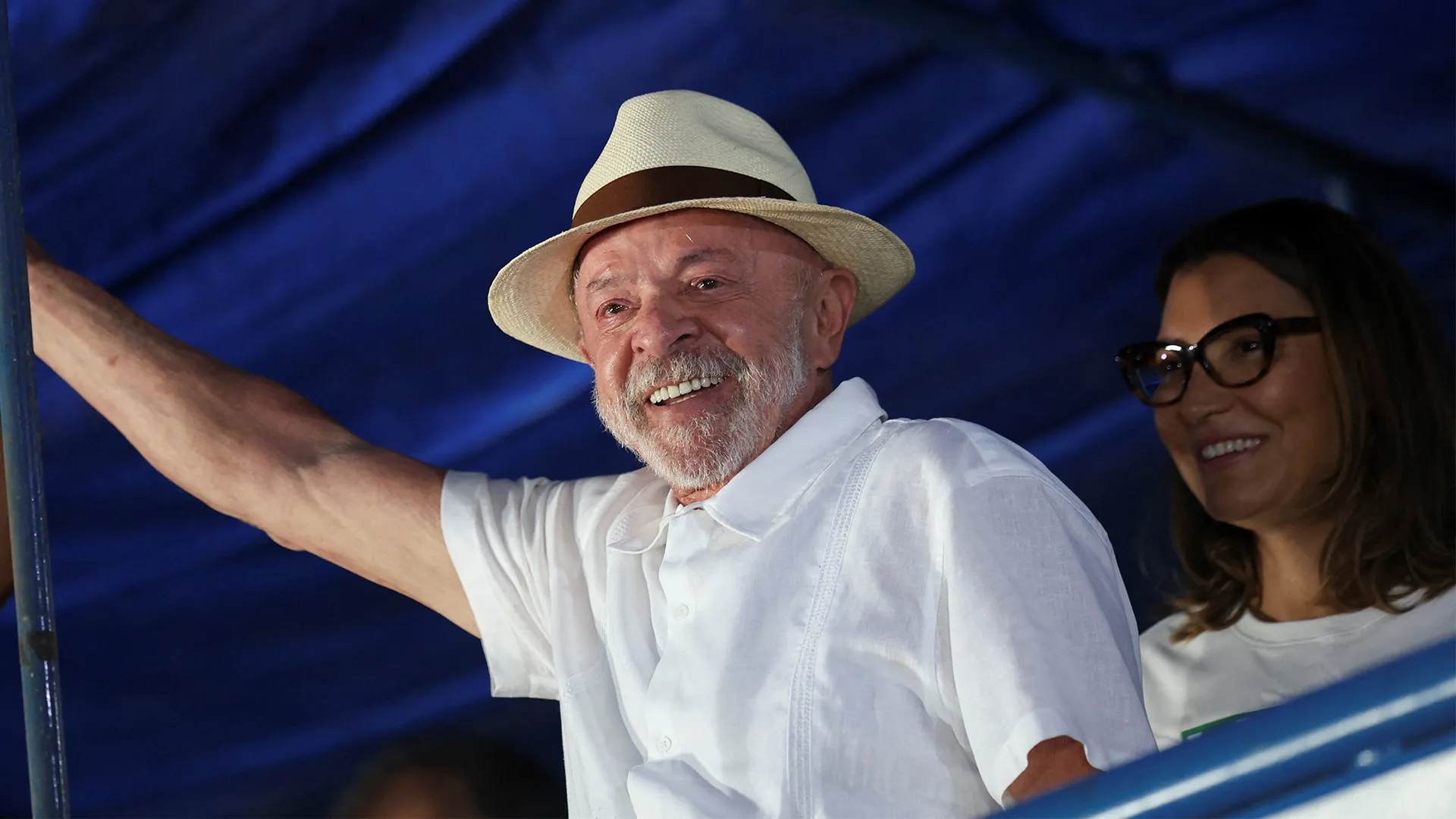
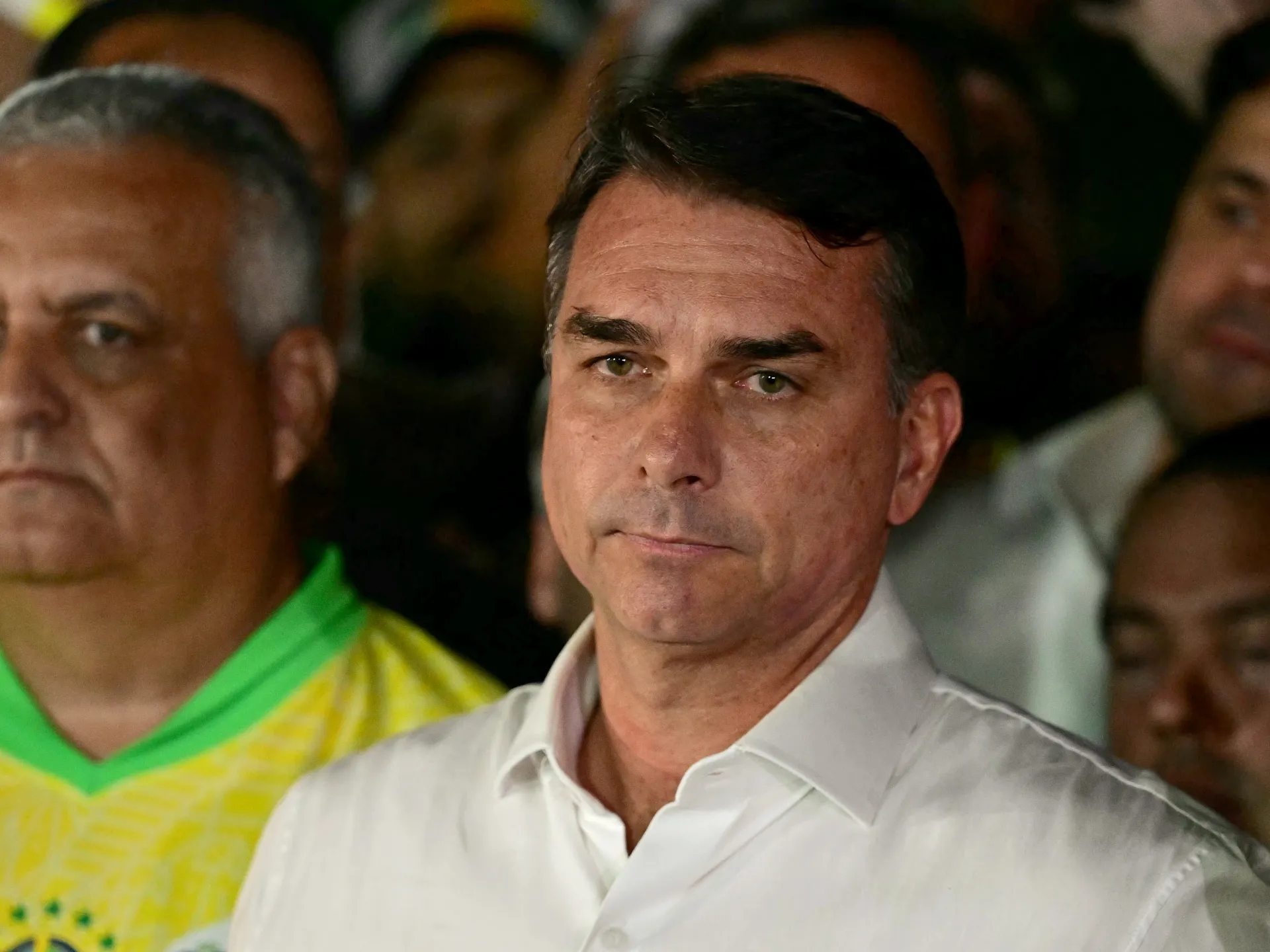
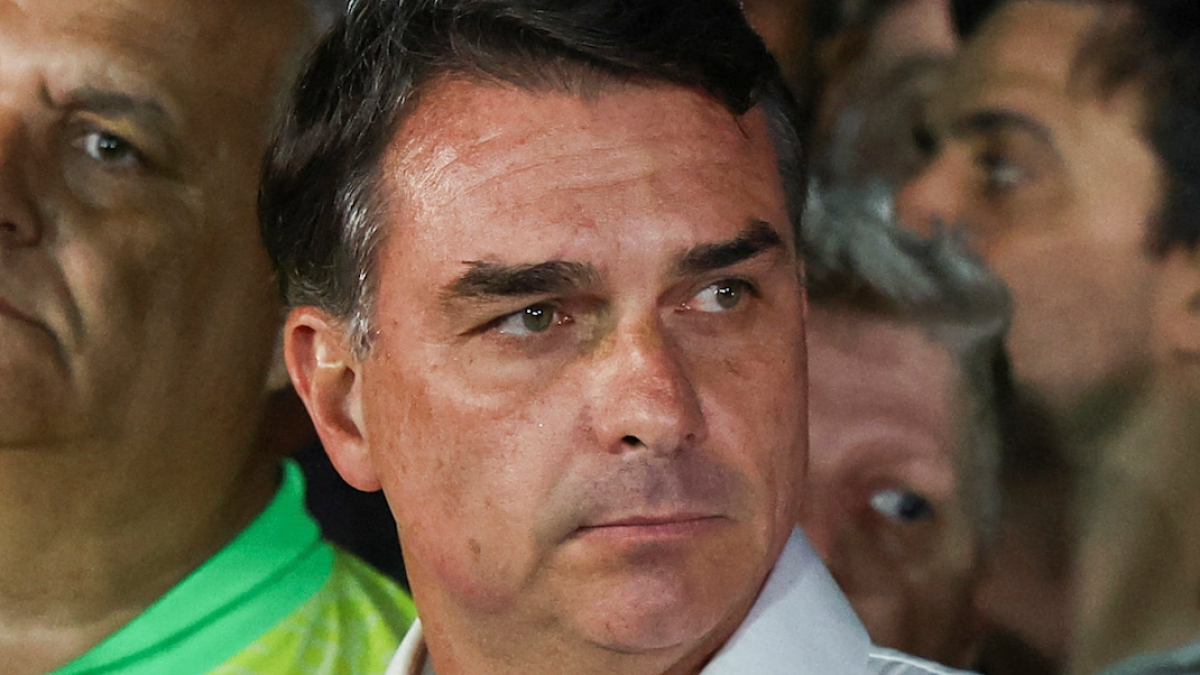
Brazilian President Luiz Inacio Lula da Silva has criticised Flavio Bolsonaro for leaving the country amid reports he was headed to the US. Bolsonaro reportedly fled after election defeat, and a Supreme Court order to surrender his passports amid a money-laundering probe.
The political party of Senator Flavio Bolsonaro has acknowledged the result of Brazil’s presidential run-off, despite the right-wing candidate pledging to annul the outcome.
On Monday, Valdemar Costa Neto, the leader of the right-wing Liberal Party, issued a statement saying his political group had accepted the outcome of the vote.
Recommended Stories
list of 3 itemsend of list
Still, he echoed Bolsonaro’s concerns about the circumstances surrounding the election.
“We recognise the presidential election results,” Costa Neto said. “But we believe the issues raised need to be properly clarified.”
On Sunday, Bolsonaro was defeated by left-wing incumbent President Luiz Inacio Lula da Silva by a margin of more than 4.4 million votes.
Bolsonaro has yet to formally concede. In a post-election speech, he called the election results “unacceptable”, citing a last-minute extension to voting hours.
“We will take legal action,” he told supporters. “I will request that these elections be annulled.”
An extension to Sunday’s vote had been sought by the campaigns of both candidates — but for different reasons.
Bolsonaro’s camp had pointed to inclement weather that impeded some voters from reaching polling stations. Parts of southern Brazil, considered a right-wing stronghold, had experienced heavy rains on Sunday.
Lula’s campaign, meanwhile, pushed for longer voting hours after it accused some cities of limiting public transportation on election day.
The left-wing leader’s allies framed those reductions in service as an attempt at election interference, aimed at preventing Lula’s working-class base from voting.
Media reports indicated that Pablo Souza, a transportation official in the city of Salvador, was arrested on Sunday over the matter.
In response to the petitions, Supreme Court Justice Cristiano Zanin agreed to extend voting by two hours.
Whereas polls across the country had been slated to close at 5pm Brasilia time (20:00 GMT), Zanin’s order allowed those that had not already closed to remain open until 7pm (22:00 GMT).
Following his loss, Bolsonaro cried foul, saying that the justice’s decision had disadvantaged his voters.
He pointed to Zanin’s relationship with Lula as support: Lula had appointed Zanin to the high court in 2023, and Zanin had formerly served as the left-wing politician’s personal lawyer.
“With a simple stroke of a pen, at the request of a former partner, [Zanin] changed the rules of the game mid-match,” Bolsonaro said in his address on Sunday night.
But experts signalled they were sceptical of Bolsonaro’s claims of malfeasance.
An analysis by Pedro Burgos, a professor at the Brazilian educational institute Insper, found that the extension resulted in 35,000 additional votes across the country, less than 0.03 percent of the total.
That amount was far short of Lula’s 4.4 million vote advantage. The incumbent won more than 64.25 million votes, compared with Bolsonaro’s 59.83 million.
Still, some right-wing allies rallied to Bolsonaro’s support. US President Donald Trump, who has clashed with Lula in the past, told reporters that the vote seemed “rigged”.
“Elections have to be indisputable and it looked very bad to me,” Trump said on Monday. “It looked like another rigged election, frankly.”
Still, Trump stopped short of suggesting that he would get involved on behalf of Bolsonaro, saying instead he “did not take sides” in the election.
Bolsonaro’s refusal to accept his loss has raised concerns about whether he will abide by the democratic process or follow in the footsteps of his father, Jair Bolsonaro, who served as Brazil’s president from 2019 to 2023.
After his defeat to Lula in the 2022 election, the ex-president refused to acknowledge the outcome.
Instead, he and his allies sought to overturn the results, including through a legal challenge, and prosecutors accused him of plotting a coup to prevent the legal transfer of power.
Separately, he was also barred from serving in public office for eight years, after a court found he had misused his public office to spread misinformation about the election.
Flavio Bolsonaro, along with his siblings, has sought to have his father released. The family has denounced the elder Bolsonaro’s trial as a case of political persecution.
Still, it is unclear whether Flavio Bolsonaro will continue with his legal challenge over Sunday’s election.
The Brazilian news outlet Folha de S Paulo reported on Monday that legal advisers and political allies have convinced Bolsonaro to abandon his quest to have his loss annulled, citing the large margin of Lula’s victory and its validation by the Supreme Court and election authorities.
Bolsonaro also announced on Monday that federal police asked him to hand over his passports amid speculation that he could leave the country following his loss.
He said that he would comply with the order and had no plans to leave.
“To withstand the chaos, I’m going to organise the opposition,” the right-wing politician said.
Brazil’s right-wing Senator Flavio Bolsonaro has called for the presidential election result to be ‘annulled’ after losing to incumbent Luiz Inacio Lula da Silva. He called the circumstances ‘unprecedented’ after voting was extended by two hours.
Speaking at the World Investment Forum in Doha, state minister says peace and security are essential for trade and investment prosperity.
Published On 25 Oct 202625 Oct 2026
Qatar’s Minister of State for Foreign Trade Affairs Ahmad bin Mohammed al-Sayed has called for greater international cooperation and economic stability, warning that trade and investment cannot flourish without peace and security.
Speaking at the United Nations-led World Investment Forum in Doha on Sunday, al-Sayed said geopolitical upheaval and growing economic fragmentation were threatening global investment prospects.
Recommended Stories
list of 3 itemsend of list
“The global economy is undergoing changes. There are geopolitical changes. These are all issues that redefine the landscape of global investment,” he said.
“We believe that investment in the future is related to investment in peace and security,” the minister added.
“Trade will prosper, and long-term investment will create its potential only with a safe and stable environment.”
Organised by the UN Conference on Trade and Development (UNCTAD), the World Investment Forum brings together heads of state, policymakers, CEOs and investors to discuss global investment, opportunities, challenges and sustainable development.
Al-Sayed’s remarks come as several conflicts continue to rage around the world, and with growing fears of an escalation in the US-Israel war on Iran in the coming weeks.
Shipping through the Strait of Hormuz, a vital waterway for global oil and liquefied natural gas (LNG) shipments, has been disrupted since the US and Israel launched the war on February 28. Iran responded by effectively blocking the strait and attacking targets across the region.
Prior to the war, one-fifth of the world’s traded oil and gas flowed through the strait.
In the past week, escalating attacks on shipping in the strait and uncertainty over diplomatic efforts to end the nearly eight-month war have led to a surge in oil prices, putting further pressure on the global economy.
On Thursday, oil prices climbed about 4 percent to a five-month high, with Brent futures crossing $113.17 a barrel.
‘Further cooperation, less isolation’
Al-Sayed stressed the need for predictable international rules and stronger economic partnerships at a time of heightened uncertainty.
“In our world, which is facing further uncertainty and economic fragmentation, our message stays clear. It is a call for further cooperation and less isolation, further cooperation and less division,” he said.
Iranian strikes on Qatar’s Ras Laffan industrial complex in March damaged facilities, with repairs expected to take several years.
The minister outlined Qatar’s efforts to strengthen supply chains, diversify economic partnerships and “open new markets for our exports”.
He said Qatar attracted 373 foreign direct investment projects in 2025, a 50 percent increase from the previous year, generating more than 15,000 jobs.
Qatar has also unveiled infrastructure projects worth $38.5bn over the next five years, alongside an anticipated $22.5bn in private sector investment in hospitality and real estate, al-Sayed added.
Rwanda’s controversial Formula One GP leads Lewis Hamilton to call for freedom for DR Congo, while renewing Palestine plea.
Published On 23 Oct 202623 Oct 2026
Seven-time Formula One champion Lewis Hamilton has renewed his call for freedom for Palestine when pressed on the controversial decision to award a Grand Prix to Rwanda.
The 41-year-old is the only Black competitor in the motorsport and said an African race would make people more aware of the continent, but recognised there were concerns and used the issue to expand on his stance on humanitarian issues across the world.
Recommended Stories
list of 4 itemsend of list
Human rights campaigners Amnesty International recently accused Formula One of hollow words and offering Rwanda a “sportswashing prize” – an accusation levelled at countries perceived to be using sport to improve a tarnished image abroad.
Hamilton, who was speaking before Sunday’s US Grand Prix, has long called for a Gaza ceasefire amid Israel’s genocidal war and returned to the matter – as well as other conflicts – when asked about a Grand Prix in Rwanda.
“I think we need to make sure we’re pushing to free Congo, free Sudan, free Syria, free Palestine,” Hamilton said.
“There’s a lot of peace that I’m hoping we get to at some stage.”
Rwanda in the spotlight after Formula One GP award
Rwanda President Paul Kagame has been accused of repressive methods to keep his grip on power, with opponents dying in prisons, independent media muzzled, and other abuses.
Neighbouring Democratic Republic of the Congo (DRC) joined the criticism of Formula One’s decision to award a race to Rwanda, which is accused by the DRC, the United States and United Nations experts of backing the M23 rebels fighting in the DRC.
“Of course, I don’t get to choose where we go,” Hamilton continued.
“Naturally, there are problems all over the world today, so I’ve seen many of the stories. But I think we really have to approach it with humility.
“Of course, going there doesn’t mean that you neglect the things that are happening there.
“So hopefully many people start to educate themselves a little bit more about what is happening there and what has happened there for hundreds of years. I hope that does spark the conversation.
“Growing up in England, they never taught us anything about Africa. It needs to be on the curriculum.
“A lot of the problems they have there are still results of colonialism and the West intervening.”
Formula One’s return to Africa has been Hamilton’s dream
Hamilton said a race in Africa was a dream that could keep him going longer in the sport now that Formula One has done a deal with Rwanda for a Grand Prix in the early 2030s.
The Ferrari driver will be 42 in January and has a contract for 2027. Fernando Alonso, the oldest active F1 driver, is 45 and recently signed up for another season with Aston Martin.
“I’m now forced to stay a lot longer because we have a race in Africa, and that’s been my dream, to be able to race in Africa,” Hamilton said on Thursday in a news conference alongside championship leader Kimi Antonelli.
“I have to keep fighting to try and stay fit. If I can still punch out good results over the next year, we’ll keep it going.”
Antonelli, who replaced Hamilton at Mercedes last season and is still only 20 years old, encouraged him: “You got to do at least the first one.”
Hamilton, the sport’s first and only Black champion, has long campaigned for a race in Africa – a continent that last hosted a race at South Africa’s Kyalami circuit in 1993 – and spoke of his efforts.
“Countless meetings with the stakeholders, so many meetings with (F1 CEO) Stefano (Domenicali) at his office in London, but also on race weekends, countless calls: ‘What’s happening? Where are we going? Who are you meeting with?’
“Many meetings with different presidents from different countries. Lots of phone calls with different presidents from different countries within Africa,” he recalled.
“I think for me, it’s a place that deserves to have a Grand Prix. It’s about more than just one country. It’s about the continent itself.”
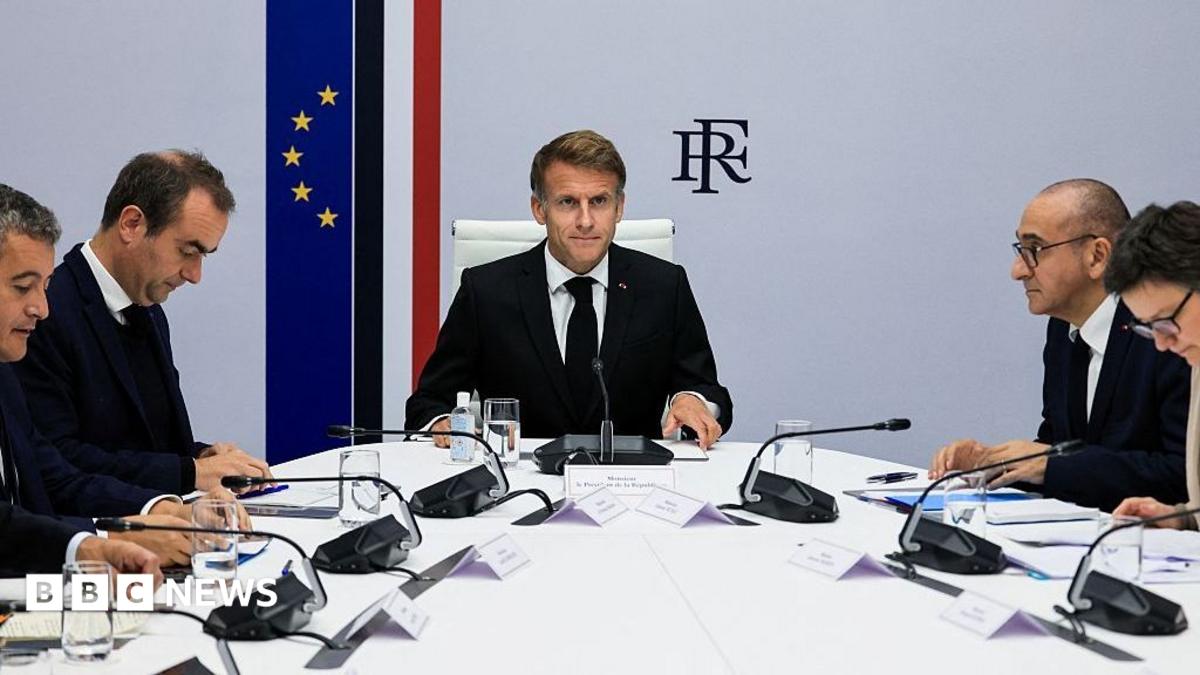
French President Emmanuel Macron has called for “calm and order” after a major day of protests turned into rioting and looting on Saturday, and as some disorder continued in Paris on Sunday.
In a national address from the Élysée Palace, he warned those who had taken part not to “escalate”, adding: “We all feel anger and shame.”
Some 550,000 demonstrators took to the streets for largely peaceful protests against rising fuel prices, the cost of living and deteriorating public services, including schools.
Macron said a distinction must be drawn between the “legitimate demands” of protesters and “those who destroyed, smashed and looted”.
Police have arrested about 2,400 people, according to France’s interior ministry.
The French president said “nothing justifies” the “unbridled” violence seen and said those involved would face justice.
Groups of rioters, some dressed in black and wearing masks and balaclavas, also came out in Paris, Marseille and other towns and cities, with some setting fire to cars and buildings.
On Sunday, looting and clashes with police continued on a smaller scale in parts of the capital and Lyon.
Tear gas and stun grenades were fired at hundreds of people in Paris, according to the AFP news agency, and bottles and rocks were again hurled at police.
But spare a thought for Harry Styles who had that happen to him — after being hypnotised on a video call.
Harry Styles was hypnotised on a video call which cut outCredit: GettyHarry revealed he was left ‘disorientated’ and slept for hours after the incidentCredit: Getty
The As It Was singer has revealed he was left “disorientated” and slept for hours after the incident, as he was so out of it he was unable to get the hypnotherapist back on the call.
He made the hilarious admission on stage at Madison Square Garden in New York on Saturday night, when he spotted the therapist in the crowd at his concert.
Sign up for the Showbiz newsletter
Thank you!
He told the crowd: “I got some hypnotherapy — and I spotted my therapist in the crowd, there he is. I’ll just share a quick story with you about my experience . . .
“We were doing it remotely. I was in London, he was in New York — and I was under, I was hypnotised.
“Then my wifi went out. The call hung up. He was trying to call me back — and I was hypnotised.
“I woke hours later, disorientated, with a lot of missed calls. Hypnotherapy — would recommend, it was the greatest nap of my entire life.”
I could always do with a kip but am not sure I’ll be following Harry’s lead with this suggestion.
He is currently deep into his 30-date New York residency as part of his Together, Together tour — and you’ll soon be able to see footage.
He is currently deep into his 30-date New York residency as part of his Together, Together tour — and you’ll soon be able to see footageCredit: AFPJohn Wilson has been filming Harry in the Big Apple since August, for a documentary being made by Universal PicturesCredit: Getty
It’s been announced indie filmmaker John Wilson has been filming Harry in the Big Apple since August, for a documentary being made by Universal Pictures.
The project will feature a mix of live performances as well as glimpses into Harry’s life, as well as stories from his army of fans.
Instead of it going straight to streaming services, like similar documentaries for other artists, demand is so high that it may be released in cinemas.
I gave his tour five stars when I went to the opening night, in Amsterdam in May.
So I would not need much persuading to get along to the pictures and see it all over again.
JAY’S SAY ON AI
Jay Aston believes it’s ‘cheating’ if countries submit songs produced by AI for the Eurovision Song ContestCredit: GettyJay, whose band Bucks Fizz won in 1981 with Making Your Mind Up, said: ‘I can see why people do it – it’s very lazy. It’s cheating’Credit: Getty
BUCKS FIZZ star Jay Aston believes it’s “cheating” if countries submit songs produced by AI for the Eurovision Song Contest, amid a brewing controversy about its usage.
No rules have yet been introduced to ban its use and Swedish broadcasters have admitted they have no way of testing whether songs submitted for the contest have used AI.
However, Norway has banned fully AI-generated tracks from its submissions.
In an exclusive chat at best magazine’s Heroes Awards, Jay, whose band won in 1981 with Making Your Mind Up, said: “I can see why people do it – it’s very lazy. It’s cheating.
“Obviously for Eurovision I do think it should be a really homegrown song.
“I imagine that it will happen. I don’t think it should, but if everyone’s doing it, then you’ve got to compete.
“But I think that we are influenced by so many things, even when we’re writing with pen and paper, we’re still influenced.
“The world is full of influencers – where do you draw the line?I guess we’re going to have to get used to it because we’re not going to stop it.”
The UK is yet to announce who will represent us in Bulgaria next May, but given we came dead last this year with Look Mum No Computer’s song Eins, Zwei, Drei, the only way is up.
Tate’s late summer vibe
Tate McRae poses in tiny shorts on the set of her new music videoCredit: Pierre-Ange Carlotti
IT’S still summer for Tate McRae as she poses in tiny shorts on the set of her new music video.
She looked sensational as she promoted her single Housewife, after the video racked up more than five million views following its release on Friday.
According to the Official Charts, it is on course to debut at No3 this Friday, while Olivia Rodrigo and Chappell Roan’s collaboration Expectations is set to top the charts.
In fact, it looks like there could be lots of change in the Top Ten, with Taylor Swift’s Patient Zero down to No6, while Zach Bryan and Lana Del Rey’s new collaboration Lies is on track to go to No10.
And it’s good news for Fontaines D.C., because following the release of their album Dopamine Chamber on Friday, their track Marianne is at No8 followed by Six Shot Morning at No9.
SKYE’S THE LIMIT FOR FREYA
BRITISH rising star Freya Skye is about to set history aged just 17, becoming the youngest solo headliner at the O2 Academy Brixton in South London.
Freya, who has garnered millions of fans through the Disney film Zombies 4 and a stint on Junior Eurovision in 2022, has sold out her entire 74-date world tour across Australia, New Zealand, North America, Asia, Europe and Latin America.
She will play two nights at the 5,000-capacity venue in Brixton next month and across her tour, she’s sold 222,000 tickets.
It’s a groundbreaking start to her career, particularly as she is yet to even release her debut album.
But I’ve been told fans should expect that in 2027, with massive opportunities in the pipeline to turn her into the next British superstar.
The singer, who will tour the UK next year to mark 25 years since he won the show, said: “Adele got suspended for standing up for me . . . She punched a girl.”
SAM PLAN FOR TOUR NEXT YEAR
SAM FENDER is gearing up to return in 2027 and will announce a string of shows in the coming weeks.
The Seventeen Going Under singer has updated his website with a logo for “SF27” which teases “live shows, music, more.”
It comes days after a rumour that he could headline Glastonbury next summer, which would be amazing.
It’s been a quiet year for Sam following his busy 2025 which saw him go to No1 with his third album, People Watching, and play an extensive tour.
Although he hasn’t been out and about in 2026, his music has still been omnipresent, with his Olivia Dean collaboration Rein Me In becoming the longest-reigning No1 single of all time in the UK, with 23 weeks at the top.
Miley on Dolly good form
Miley Cyrus has returned to the stage for her first full-length concert in four years, fuelling hope she may finally tour againCredit: GettyMiley’s set included a cover of Jolene, to honour her late godmother Dolly PartonCredit: Getty
MILEY CYRUS has returned to the stage for her first full-length concert in four years, fuelling hope she may finally tour again.
She performed at the Hollywood Bowl in LA on Friday ahead of a second gig performance there last night, in a tentative return to live shows.
Miley has been open about how anxious she gets performing to big crowds, but looked in her element during her 18-song set.
This included a cover of Jolene, to honour her late godmother Dolly Parton.
Thanking fans, she said: “It’s been 20 years of us on this journey, this evolution, this meta-morphosis. You have not skipped a beat.
“I am so, so appreciative of your support. It’s been steadfast, and it’s been deeply felt. The appreciation I have for you is never forgotten on show days.”
DAYTIME TV ARE A RATINGS WINNER
Indie rockers Daytime TV are riding high with new single Meditate and forthcoming album RodeoCredit: Handout
INDIE rockers Daytime TV are riding high with new single Meditate and forthcoming album Rodeo, so there’s no stopping them, unless frontman Will Irvine’s rock ’n’ roll antics land him in handcuffs again.
The singer was arrested in America after being caught buying booze underage, but reckons his Scottish roots came to the rescue.
I’m told one cop said: “This guy’s from Scotland, He knows William Wallace.”
Incredibly, the officer handed back the band’s contraband, leaving them feeling invincible.
Will added: “They’ve given us back the beer and we realised we were unstoppable, because the police had given us booze.”
Will, John Caddick, Naomi Boschetti and Gareth Thompson hit the road last week, kicking off their UK tour in Hull.
If they make it through the tour without another run-in with the law, Daytime TV will be ones to watch.
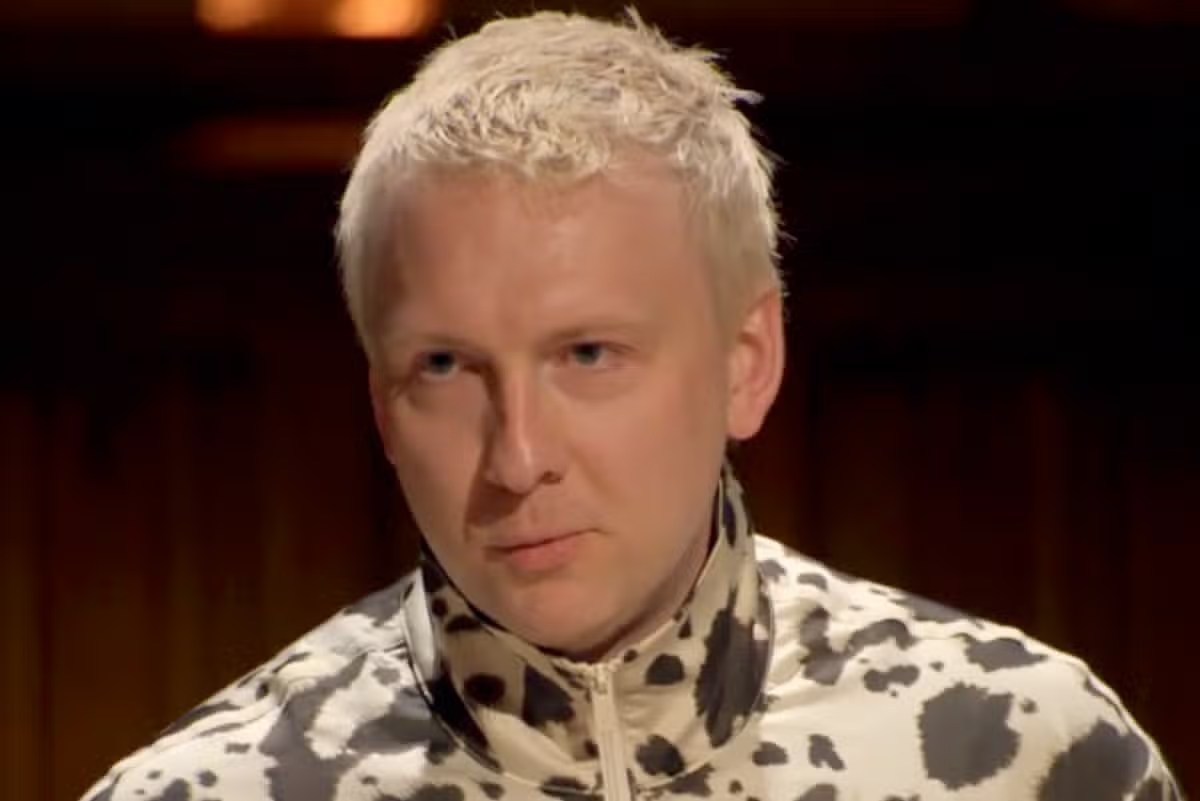
Strictly Come Dancing fans have made the same remark about new host Josh Widdicombe after a rocky start to his co-hosting duties on the BBC show and calls for him to be replaced on the programme
There have been some calls by viewers to replace Josh Widdicombe as a Strictly Come Dancing host
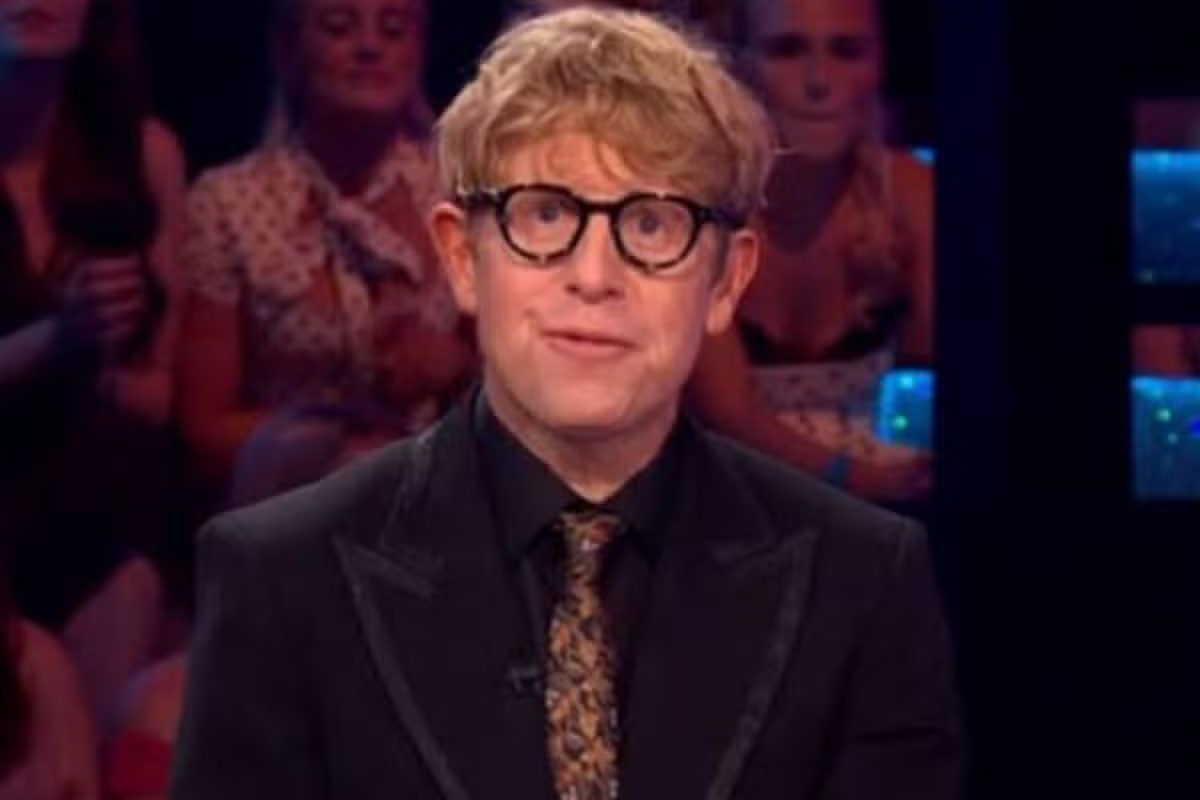
Josh Widdicombe is winning support from Strictly Come Dancing viewers after his first appearances as co-host drew a wave of criticism online. Fans have begun rallying behind the comedian, whose arrival on the ballroom show initially divided opinion. The 43-year-old joined Emma Willis and Johannes Radebe in a presenting shake-up at the BBC programme. Together, the trio replaced long-standing hosts Tess Daly and Claudia Winkleman, who stepped down last year.
A persistent complaint from audiences throughout the initial episodes centred on having two main presenters on the primary dance floor at once feeling superfluous. Numerous viewers also contended that Widdicombe’s comedic credentials would prove far more effective in the upstairs section with the dancers, where impromptu interactions occur naturally, instead of co-hosting the more formal introductions and judges’ commentary.
Social media detractors additionally branded Josh‘s initial outings on the show as “wooden”, “awkward”, or “out of his depth” for a rapid-fire live ballroom programme, with certain audiences believing his approach didn’t instantly gel with the conventional Strictly ambience.
Nevertheless, opinion seems to be changing, with an increasing proportion of audiences embracing Josh after last weekend’s show.
Reflecting on his performance on X following last Saturday’s October 10 episode, one viewer wrote: “I might be the only one but I actually like josh a host.”
Another agreed: “I really like him too!” A third concurred: “I think he’s brilliant,” while someone else added: “I’m enjoying these presenters, it’s a fun vibe.”
As fourth remarked: “I really enjoyed tonight. I think Josh is so natural and I found him genuinely funny tonight.”
The support will come as a welcome boost for Josh, following widespread calls from BBC viewers to have him removed or replaced.
Many argued that Emma, 50, is more than capable of hosting the main floor on her own, with some dismissing Widdicombe’s presence alongside her as unnecessary.
Neither the BBC nor the show’s producers have signalled any plans to replace Widdicombe. Production staff and fellow cast members, including the professional dancers, have publicly rallied behind the presenting trio, emphasising that new line-ups need a brief period to find their feet and pointing to the chemistry already building behind the scenes.
Strictly Come Dancing airs next on Saturday 17 October 2026 at 6:15pm on BBC One and BBC iPlayer.
Ensure our latest DWP headlines always appear at the top of your Google Search by making us a Preferred Source. Click here to activate or add us as Preferred Source in your Google search settings
Joe Lycett was voted off after telling the Faithful he was desperate to become a Traitor, admitting afterwards ‘I’ve done this to myself’
21:07, 16 Oct 2026Updated 21:08, 16 Oct 2026
Joe was the architect of his own downfall – and he knows it
Banished Faithful Joe Lycett was so desperate for a green cloak that after being voted out of The Celebrity Traitors he called for a rule change allowing dumped players to return as baddies.
His exit last night came after he loudly proclaimed he wanted to be recruited into the turret – which didn’t happen – but nobody believed him when he truthfully announced his disappointment the next morning.
“I’d like to motivate the Traitors to find an unknown clause in the contract that can bring back a Faithful that’s been banished to recruit because I’m there if they want me,” he laughed.
The comedian, 38, received 11 of the 14 votes after what seemed like a big slip-up at the round table in which he said that if he went, the Traitors would need to recruit again. Afterwards he acknowledged that he only had himself to blame. “I sort of didn’t play being a Faithful or a Traitor right. I tried to straddle both, and I was being greedy and I was rightly punished for it.
“I’m a silly billy – it was a combination of me begging for recruitment and then the Faithful being thick as mince. I concede I’ve done this very much to myself, but I was too hungry to be recruited. And you know, if being passionate is a crime, then banish me from the castle.”
Joe, who was instrumental in exposing Richard E Grant as a Traitor by asking him what he was on the first day, said the experience of being kept separate from friends and family during filming had been enjoyable. Asked to explain what he’d learned about himself by taking part in the game, he said: “The word that comes to mind for this whole experience is gratitude. It’s made me really grateful for my life. I’m really grateful that I am in a position that I get to experience this, because I’m famous enough to be in the mix. I loved having my phone taken away from me, and I’m really grateful for the fact that I have a lovely life to miss.”
Admitting that the game was sometimes “infuriating”, but also “joyous and thrilling”, Joe said he thinks the most likely winner is Romesh Ranganathan. “I think Romesh is a front runner,” he said. “I think he’s kind of unreadable but may get heat just on that basis. Then I think there could be a real curve ball, like Jerry or Joanne, someone who’s playing it in a way that’s out there.”
But he said it was hard to stick to strategies when you were inside the castle. “I’ve gone to Round Tables not knowing who I was going to vote for, and I don’t know who’s a Traitor – any of them could win at this stage.”
Miranda Hart formed such a close bond with Joe during their time filming together that she wept when he left – having refused to put his name on her slate and writing Ross instead. During the programme she explained: “Three or four years ago, due to illness, I thought that I might not ever have a gentle walk around a park again. Now I find myself on a Scottish Highland wheelbarrowing along a very large head. It’s really exciting.”
Miranda, 53, has been suffering from chronic fatigue syndrome for many years, which she believes was caused by having Lyme disease as a teenager. Having recently recovered enough to sign up for the programme, she has joined in with the missions wholeheartedly. In last night’s effort she grew tired carrying the statue parts at one point so swapped to transport a giant head in a wheelbarrow towards the plinth where it could be erected on top of its body, earning money for the prize pot. The current fund stands at £46,000, after the players successfully constructed five out of the six statues.
The comedy star tearfully told James Acaster that having fun outside with Joe had made her feel the happiest she’d felt in a long time. “I can’t believe how emotional I’m getting,” she said, as the floodgates opened. “Connection and laughter and joy are bigger than this game and to meet someone and to just play and laugh, it’s all us humans need.”
The good news is that she is proving so popular in the castle that many fans are calling for a return of her BBC sitcom Miranda, which last aired with a Christmas special in 2015. Another suggestion is that she stars in a different show. “A Miranda detective series like Jonathan Creek would be… such fun!” one fan said.
Joe felt that he would miss her too. “Miranda is someone that I’ve met briefly in the past and I’ve always loved. I’m really pleased that I got a chance to play with her, do some sort of an improv, essentially, and kind of mess about. I got very close with her.”
He said that – against his expectations – he’d got on well with everyone. “I really, really liked them all – and didn’t expect to when I saw the lineup. I thought, well, there’s going to be some people I’m going to find difficult, or are divas or whatever. And the reality was completely different.”
Joe’s high point came right at the start when he asked the question that sparked Richard E Grant’s astonishing outburst. The comic said he was glad he hadn’t been persuaded to ignore it. “I know lots of people tried to steer me away from it, but I was like, there’s no game around that, he absolutely meant it when he said it to me. God knows what was going through his head. It was an absolutely superb, classic, Richard E. Grant way of responding to this game. It’s one of the most iconic performances I’ve ever seen.”
Rob’s murder left all the Faithful confused while banished Hannah admitted her spreadsheets hadn’t helped her as a Traitor
Beckett’s kicked the bucket – as Claudia described his murder
While comedian Rob Beckett found being murdered funny in The Celebrity Traitors, Professor Hannah Fry said she’d cried more during her five days of playing the game than at any other point in her life.
Hannah was banished at the round table last night with 12 of the 15 remaining players writing her name on the slate – giving them a landslide 80% victory. Speaking straight after leaving the castle, she admitted that she’d found her time there to be a rollercoaster of emotions. “I laughed more, cried more and got more excited than I ever have in the entirety of the rest of my life combined,” she explained.
“I really preferred being Faithful. I think it’s just a much more authentic experience,” she added, saying that one of the lessons learned was that she hated “lying to people’s faces”. “I think there’s actually some pride in being a rubbish Traitor.”
The maths guru, who has two daughters aged eight and six with her ex-husband, said that being a Traitor had been far harder than playing as a Faithful – which is what she’d gone into the game to do. “One of the reasons why I didn’t want to be a Traitor is because the only way your game ends is by being banished or winning – having people vote for you and having heat on you is part of the role of being a Traitor.”
Hannah confessed she’d avoided voting for Julie Hesmondhalgh out of guilt because the actress was “lovely” and had instead gone for Jerry Hall as “the one person on that whole table who could handle being voted for”.
The 42-year-old said she always knew she might not last long in the game. “On the first day, I asked Michael Sheen who he would murder, and he said, ‘You’. At that point I knew I was really in trouble.”
And the BBC presenter also confessed that getting the roman numerals right in her final mission – to help with the group £8,000 – had been far tougher than it looked. “I knew that everyone was going to expect me to be the one to solve it, but I think people have this image in their heads that mathematicians just sit around thinking of big numbers all day – it couldn’t be further from the truth. I haven’t used a number since I was about 16, I’m all about the x’s and y’s.”
Along with the trickier moments, there was also some highs. “Killing Rob Beckett was one of the best evenings I’ve had in my entire life,” she laughed. “I was running through the woods in the middle of the night, opening the door to Rob’s face. It was delightful.”
Speaking after being killed face-to-face with the traitors, dad-of-two Rob said that he cared less about the game and more about the juicy stories the other celebs were sharing in the castle. “What I loved most was meeting everyone and talking to them,” he explained. “When you have Michael Sheen, Richard E . Grant, Jerry Hall, James Blunt, I don’t care who’s a Traitor. Give me the anecdotes, I want the gossip. So everyone was going back to the hotel writing ideas of who it might be in their notepad, and I’ve got a notepad full of anecdotes that they told me that can only get wheeled out when I’m drunk at a party.”
When The Traitors arrived as his crypt to tell him he’d been murdered, he responded jovially: “Thank you very much James Acaster!” But he did say he expected comedy sidekick Romesh Ranganathan to “avenge my death”.
Rob, 40, reckoned the only Traitor he’d potentially identified at the start was Richard E Grant – so was “gutted” when the actor blurted it out. But the funnyman realised too late how James Acaster had been giving him a wide berth. “I gave James the benefit of the doubt because he desperately wanted to be a Faithful, but then that’s the oldest trick in the book, saying that. He had been really quiet, and on reflection, he’d avoided me a lot which makes sense, because I know him quite well. And then Maya Jama does not change her personality, whatever’s happening. So she’s going to be a great Traitor, I think she could win it.”
Confessing he was happy to go home because he’d been missing his kids, aged eight and 10, Rob said his highlight in the castle has been hitting it off with Jerry Hall. “I love her. She’s got such an amazing energy. She’s just so chilled. We just floated on together. She tells me her life motto probably every eight minutes, and that is ‘what will be, will be’.”
He now wants Jerry, 70, to win – along with his close pal Romesh. “Jerry Hall’s my pick, a rank outsider, but she’s my pick. The ultimate finale would be Leigh-Anne, Jerry and Romesh staring down Acaster. Three on one and they take his sorry ass to the cleaners.”
He believes his relaxed way of playing the game far outweighs the high-pressure path that Hannah had been forced down. ”I’d say, don’t stress yourself about it. All the money goes to charity. Have a good time for a long time.”
One of the surprising things Hannah discovered in The Celebrity Traitors was that she is actually related to Irish comedian Joanne McNally because their cousins are married. “We’re basically sisters,” she laughed. “I really loved her so much. She described herself as coming out of the womb as a show pony – that’s the perfect description of that woman. She is phenomenal. She knows exactly who she is, and she is totally unapologetic about it. I cannot tell you how much I admire her.”
While she’d like to see Joanne win, Hannah now thinks that fellow Traitor Maya or Faithful Leigh-Anne are the most likely to reach the final. “I think Maya is playing the most amazing game. When someone looks like that, I think that you expect her to have a bit of a chip on her shoulder because she’s one of the most beautiful women alive, but she’s also just so much fun. No airs and graces, totally delightful to be around.”
She also believes that Leigh-Anne has a great chance in the game, because she’s been woefully underestimated. “My God, that woman hasn’t got a single thing wrong. She’s the most perceptive person I’ve ever come across in my entire life. Is she psychic?
“Leigh-Anne needs to keep quiet about how good she is because I don’t think people have necessarily noticed. As soon as Maya notices that Leigh-Anne is that good, she’s going to kill her.”
Last night’s episode ended with boxer turned YouTube star King Kenny being recruited into the turret – much to his enormous surprise. “Being a Faithful was fun, but being a Traitor is going to be better,” he declared.
Urging Maya Jama and James Acaster not to double-cross him, he admitted he had concerns about joining them halfway through the game. “I worry the Traitors can switch on me at any time.”
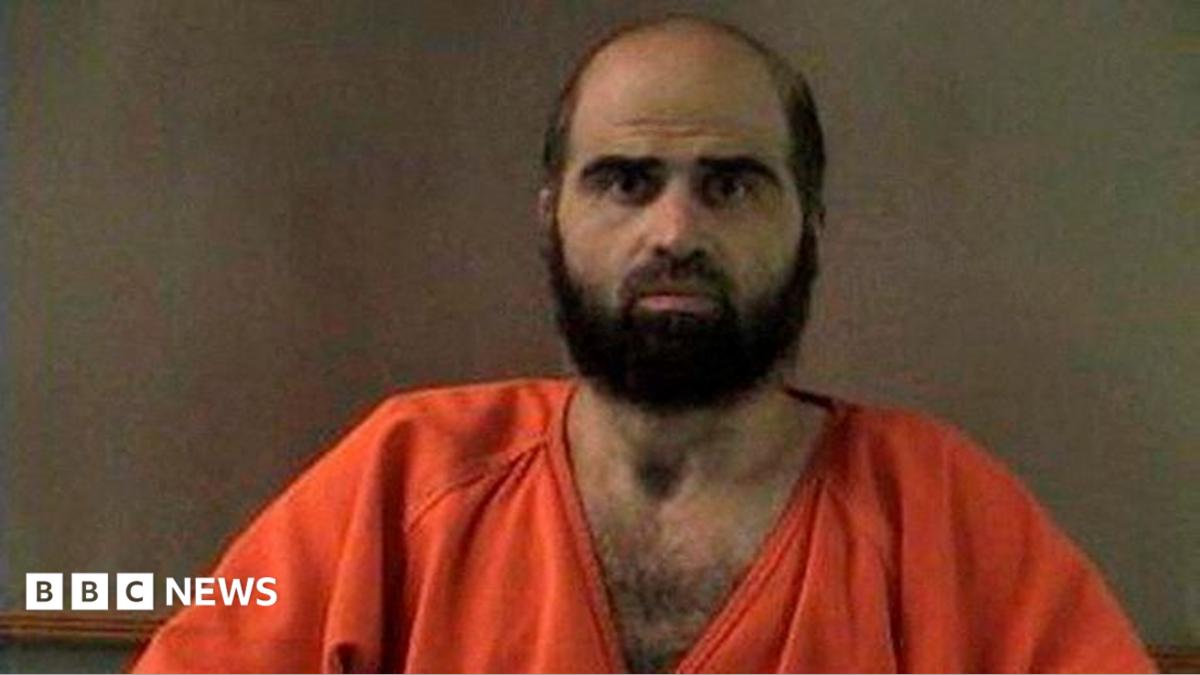
The Pentagon announced last week it would execute Hasan on 3 December 2026 by firing squad.
Hegseth then said the execution would be livestreamed for the public to watch, adding that “people need to understand that there’s serious consequences for these types of things”.
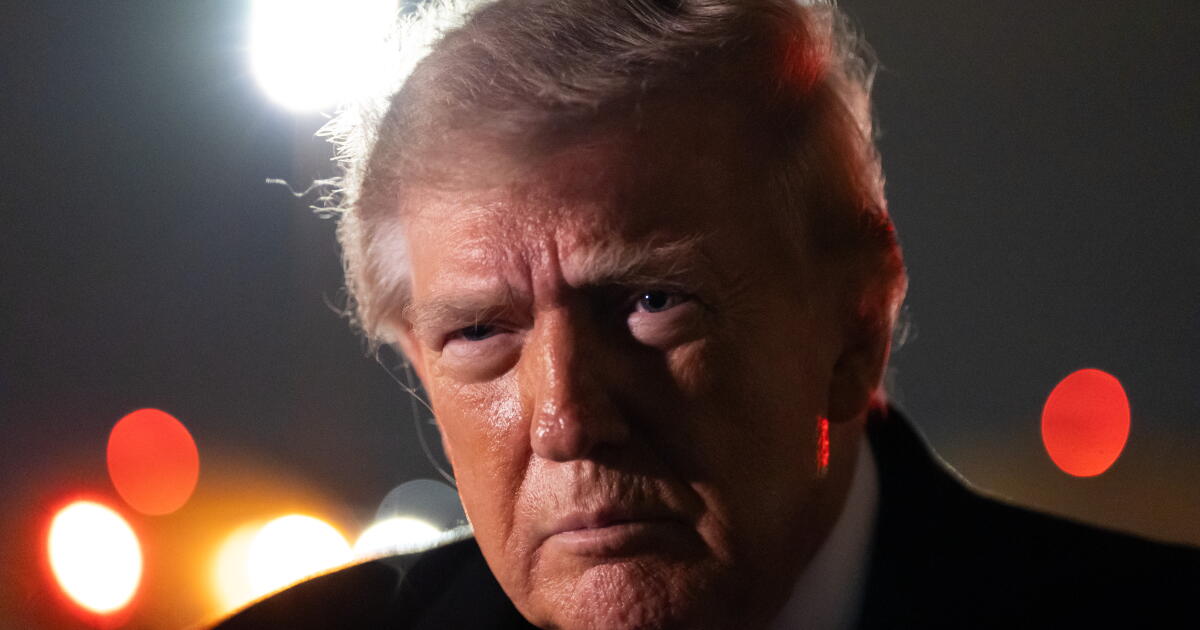
Trump last Friday called Hasan “totally nuts”, adding: “I really don’t care how he goes, as long as he goes, and I think that the death penalty is a very worthy way of going for him.”
He also said he “absolutely” approved the livestream plans but said the Pentagon was still “making a determination” on it.
Hasan opened fire in a crowded medical building where deploying soldiers were awaiting check-ups and vaccines.
He later admitted in court that he was the gunman and apologised for “any mistakes”. He said during his court-martial in 2013 that he believed he was protecting Muslims and the Taliban in Afghanistan from the US military.
The killings on 5 November 2009 were the deadliest ever non-combat attack on an American military base.
US military law requires that a military execution be approved by the US president. It also requires appellate review, when a higher court inspects the decision and gives a final judgement on its legality to move forward.
While there were more than 2,700 executions across 17 countries last year, only two nations carried them out publicly. According to Amnesty International, 11 public executions were known to have been carried out in Iran in 2025 and another six in Afghanistan.
The President’s ally says conservatives “cannot give an inch” in Latin America as he accepts an award in Washington.
Published On 15 Oct 202615 Oct 2026
Argentine President Javier Milei has urged his ally, US President Donald Trump, to come out of the United States midterm elections in a stronger position, calling the vote important for the West as a whole.
Milei made the appeal on Wednesday at a Hispanic Heritage gala in Washington, where a Hispanic association gave him an award, ahead of November’s vote.
Recommended Stories
list of 2 itemsend of list
Conservatives, he said, “cannot give an inch in our reconquest of the hemisphere”, according to Agence France-Presse (AFP).
Milei flew into the US capital on Wednesday for meetings with investors and the gala. He is due to address the US Chamber of Commerce on Thursday.
Argentina’s President Javier Milei attends the Hispanic Heritage Gala in Washington, DC, on October 14, 2026 [Alex Wroblewski/AFP]
Milei’s lifeline
Trump firmly backed Milei a year ago, when his government also faced crucial legislative elections. He has called Milei his “favorite president”.
That backing, together with a currency swap agreement with the US Treasury, helped Milei to success in those polls, analysts have argued.
The centrepiece of the package, announced by Treasury Secretary Scott Bessent, was a $20bn swap with Argentina’s central bank, in which the US exchanged dollars for pesos. The swap came shortly after Milei’s party lost a key provincial election.
Trump made clear at the time that the support hinged on a Milei victory. “I’m with this man because his philosophy is correct,” he said ahead of a White House lunch with the Argentine leader. “If he wins, we’re staying with him. And if he doesn’t win, we’re gone.”
Trump also warned that the US would not be “generous” if Milei lost. The remarks unsettled Argentine markets, with the main stock index giving up earlier gains and falling about 2 percent, The Associated Press reported.
The package drew criticism in the US. Democratic lawmakers accused Trump of prioritising a foreign bailout while the US government was shut down.
Meanwhile, it emerged over the weekend that Bristol director of rugby Pat Lam did not select three of his key players because of the state of the StoneX Stadium pitch.
Pedro Rubiolo, AJ MacGinty and Steven Luatua were rested for the trip to north London.
“They came off big injuries last season so it wasn’t worth putting them on that pitch,” Lam explained.
“If we were playing the game at home or if it was a semi-final, they would have played.”
Saracens have been contacted for comment.
Lam has previously voiced his opposition to artificial pitches being used in the Prem.
Following the Bears’ league win at Newcastle in April, Lam blamed the pitch for causing a number of injuries to his team.
“These pitches are hard – I’m not a big fan of them,” Lam said at the time.
“We always take injuries on them and we’ve taken a few more.”
Newcastle installed a new pitch at Kingston Park this summer before the 2026-27 season and have kept it fully artificial.
Prime Minister Mark Carney’s Thanksgiving message comes a week ahead of Alberta’s vote on a separatism referendum.
Published On 12 Oct 202612 Oct 2026
Prime Minister Mark Carney has used his Thanksgiving message to Canadians to call for national unity, a week before the oil-rich province of Alberta is set to vote on a proposal to secede from Canada.
“We can’t build big things on fault lines,” Carney said in his video message on Monday, warning that Canada faces threats to its economy, security and way of life.
Recommended Stories
list of 3 itemsend of list
“We have to be strong, and we are stronger together.”
His comments come as Albertans head to the polls on October 19 to decide whether to begin the process of seeking independence. The initial referendum is non-binding, but it proposes to hold a binding vote in the future to decide whether Alberta should secede.
The question facing voters is: “Should Alberta remain a province of Canada, or should the Government of Alberta commence the legal process required under the Canadian Constitution to hold a binding provincial referendum on whether or not Alberta should separate from Canada?”
The vote follows a growing push by a vocal group of separatists, fuelled by longstanding grievances over federal energy and environmental policies.
The secessionist movement has accused the Canadian government of unfairly targeting Alberta’s oil and gas industry, the cornerstone of the province’s economy.
The movement is also being watched south of the border, as Canada’s relationship with the United States under President Donald Trump has become strained.
An investigation by The Globe and Mail earlier this month revealed that US Republican operatives met with secession organisers in Alberta to talk about campaign strategies. Separatist leaders had reportedly offered access to the province’s water and oil royalties in exchange for US support for independence. Separatist leaders have disputed those claims.
Carney’s comments also come after another secessionist movement, the Parti Quebecois, won the most seats in a provincial election in Quebec last week, allowing it to return to power after more than a decade.
The Parti Quebecois, however, only won 59 seats out of a total of 129 in Quebec’s National Assembly, leaving it short of a majority government.
Still, following that victory, US tech entrepreneur Elon Musk, considered the richest man on the planet, applauded the results. He has been known to use his wealth and influence to support political causes, particularly on the far right.
“Good. Quebec should separate,” Musk wrote on social media. “They would be better off. Alberta and Saskatchewan should separate too.”
Carney, who grew up in Alberta, said he was filming the message from a classroom at his former school, St Francis Xavier High School in Edmonton.
“I’m back home a lot these days because we are building big things again in Alberta: thousands of new homes, high-speed rail, a new pipeline to the West Coast that will create lasting opportunity and prosperity for hundreds of thousands of people in this province and across the country,” he said.
Despite the secessionist movement’s growing visibility, polls suggest most Albertans oppose independence.
WASHINGTON — A bipartisan group of six senators — four of them Republicans — called Sunday for the Trump administration to “immediately reverse course” on a plan to purchase diesel from Russia as part of an effort to lower high fuel prices.
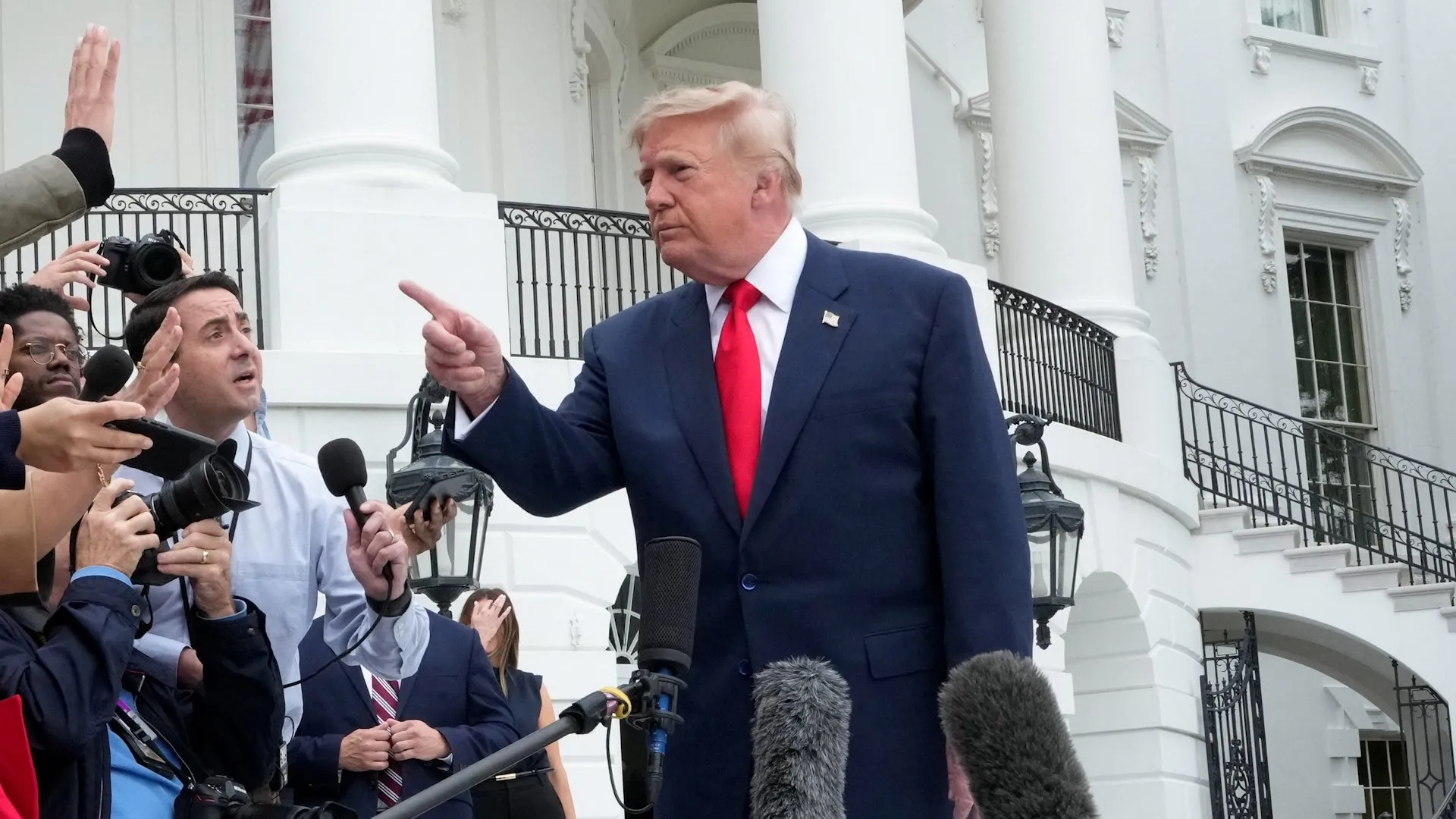
President Trump shocked lawmakers when he announced on social media Friday that he had struck a deal with Russian President Vladimir Putin in a phone call. He said Russia will immediately supply more than 300,000 tons of diesel to the American and global market, followed by an additional 500,000 tons in November and 1 million tons “immediately thereafter.” Russia will deliver an additional 3 million tons “within a short period of time” after that, he wrote.
Four Republican senators and two Democratic senators signed onto the statement released Sunday protesting the deal. They said the administration failed to consult with Congress or submit any explanation to justify its decision as required by statute.
“The United States should not provide Putin with a financial lifeline while Russia continues to kill Ukrainian civilians. The Administration must immediately reverse course,” they wrote.
The Republican senators who signed onto the statement are Sens. Susan Collins of Maine, Lisa Murkowski of Alaska, Thom Tillis of North Carolina and John Curtis of Utah. The Democratic senators are Sens. Jeanne Shaheen of New Hampshire and Richard Blumenthal of Connecticut.
Tillis, in an interview that aired Sunday on NBC’s “Meet the Press,” said there’s a legitimate case for saying the president is not following the law if the administration goes through with its diesel purchase plan.
“We were very clear that Russia is the aggressor. Russia is the one who can end this war by backing out of territory that they occupied,” Tillis said.
Trump’s announcement came just a few weeks after Congress passed legislation that directed Trump to impose substantial tariffs on the top importers of Russian oil or natural gas, with an exception for countries that import less than 15% of Russia’s natural gas exports and have taken significant steps to reduce those imports.
The congressional effort was aimed at cutting the flow of money Russia receives from oil and gas sales to finance its war against Ukraine.
The lawmakers also noted that Congress explicitly banned Russia energy imports in 2022 — after Russia’s full-scale invasion of Ukraine — to prevent the United States from financing the war.
“Congress was clear: the U.S. should not import oil from Russia until it ends its aggression against Ukraine and ceases threats against our NATO Allies,” the six lawmakers wrote in their statement. “President Trump’s decision to allow Russian diesel imports to the U.S. runs directly counter to that law.”
Sen. John Barrasso (R-Wyo.), when asked whether the president’s action would be in violation of U.S. law, said Trump is focused on reducing the cost of energy.
“The president is balancing and has to make tough decisions,” Barrasso said on CBS’ “Face the Nation.”
He also encouraged Trump to enforce the sanctions law that Congress passed last month.
“This is just another point of leverage for the president to use against Putin in an effort to get a long-term solution in that part of the world,” Barrasso said.
Trump has recently sought to blame record U.S. diesel prices on Ukraine rather than the U.S.-led war in Iran, which has elevated world energy prices.
‘I think it’s time for Ukraine to get a new president’.
US President Trump criticised Ukraine’s Volodymyr Zelenskyy as he called for new leadership in Ukraine and pressed Zelenskyy to stop hitting Russian oil Refineries.
Andy Burnham has called on Green leader Zack Polanski to reverse a motion passed by members of his party declaring Zionism a form of racism.
The prime minister said the motion, approved on Sunday at the party’s conference in Brighton, was “completely wrong” and showed “terrible judgement”.
The motion defined Zionism as an ideology supporting “an ethnonationalist Jewish state” and backed a “single democratic Palestinian state in all of historic Palestine”, which includes modern-day Israel.
In the wake of the vote, Polanski has said he would not accept anyone being excluded from the Green Party “because of the religious or communal body they are part of”.
The Green leader has declined media interviews since the motion was passed and did not answer questions from a BBC reporter about the motion ahead of Burnham’s comments.
It comes as polls close in Thursday’s Holborn and St Pancras by-election, in which Polanski is a candidate.
The motion has complicated the final days of Polanksi’s campaign in the contest, where the Greens have been looking to overturn a substantial Labour majority in the seat vacated by former Prime Minister Sir Keir Starmer.
It has sparked days of controversy, with four of the five Green MPs opposing it, its co-deputy leaders split on supporting it, the Green deputy leader in Wales resigning, and condemnation from members and Green counterparts in Europe.
Polanski did not vote on the Zionism motion, having left the conference early to return to London for the by-election campaign.
An amendment he had backed to specify that the motion should not be used to discipline Jewish members attending synagogues that consider themselves Zionist was voted down by members.
Before the vote, he had also said he wanted to see the reference to a single Palestinian state changed, arguing: “I don’t believe we as a Green Party of England and Wales, or even the British government, should be deciding what the future settlement looks like.”
The Green Party has an internal democracy model, under which official party policy is decided by members. However, these positions are not necessarily included in the party’s general election manifestos.
Syrian authorities questioned why search and rescue operations were called off before the fate of 10 sailors was known.
Published On 8 Oct 20268 Oct 2026
Syria has called for an “independent and transparent” investigation into the sinking of a cargo ship in the Black Sea, demanding answers over the fate of the ship’s 10 crew members, including nine Syrians and an Egyptian, who remain unaccounted for.
The Togolese-flagged Alfa Watan, went down in Bulgaria’s exclusive economic zone early on Tuesday, amid a rising number of drone strikes hitting Black Sea shipping during the Russia-Ukraine war.
Recommended Stories
list of 3 itemsend of list
It is unclear who carried out the attack.
Mazen Aloush, from the Syria’s port authority asked the International Maritime Organization (IMO) and Bulgarian authorities to find out why a search and rescue mission was called off, before the missing sailors were found.
“Their fate is still unknown” said Aloush, adding that “the reasons that led to the suspension of search and rescue operations” had to be established.
The attack on Tuesday also hit the Palau-flagged Able, setting it ablaze. Eighteen Turkish and Indian crew members were rescued from the burning vessel, while the Alfa Watan sank.
Both commercial ships were managed by Turkey-based companies, according to the Equasis merchant shipping database.
The Syrian sailors’ union said contact with the ship’s crew had been lost and no survivors had been found after search operations were halted.
The fire-damaged “Royad Mammadov” ship in the Black Sea after a fire aboard the vessel outside Romania’s territorial waters left two people dead on October 5 2026 [Reuters]
Aloush condemned the targeting of a civilian commercial vessel saying it was a serious breach of maritime security and a threat to sailors.
He said Syrian General Authority for Ports and Customs was closely monitoring the incident.
He urged authorities to use all available technical means to locate and inspect the wreckage to help establish what caused the ship to sink.
He called for international and maritime bodies to strengthen measures to help commercial shipping as attacks in the Black Sea rise.
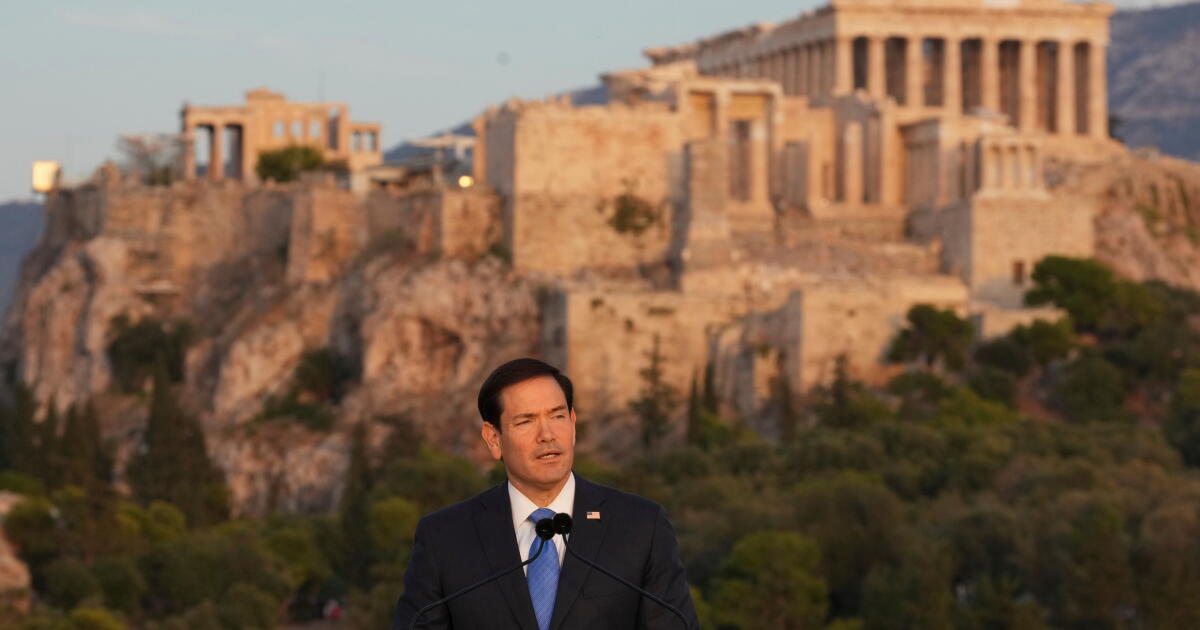
ATHENS — U.S. Secretary of State Marco Rubio called for the nations of the West to return to their civilizational roots and restore the values that drove the rise of Europe and North America to global dominance for centuries.
In Athens to discuss deepening economic, energy and security cooperation with Greece, Rubio delivered a speech later Wednesday near the ruins of the Acropolis, a widely recognizable symbol of the city’s ancient civilization associated with the creation of popular participatory government and the social contract.
Rubio aimed to remind listeners of qualities he says were born in Greece and later defined the West, such as curiosity, courage, ambition, a restless spirit of exploration and a drive to discover the unknown.
“It has become fashionable today to believe that enlightened foreign policy means prioritizing the ‘global community’ over one’s own people. And I think here, too, we have much more to learn from the men of Ancient Greece. They knew that there was nothing selfish or wrong about loyalty to your nation, nor anything selfish or wrong about fighting to defend its interests above all else,” Rubio said.
Rubio urges Europe to uphold its traditional values
“Today, we find ourselves at a crossroads,” he said. “The next decade will write the story of the next century. The course we take will determine whether the West maintains its place at the head of the world, or resigns itself to a future of atrophy, and servitude, and decline. We will either choose to act now or lose the choice to act at all.”
Rubio is seen by many as the gentle face of the Trump administration and has been frequently dispatched to clarify or otherwise address concerns about the president’s frequently undiplomatic statements.
Rubio, along with Vice President JD Vance, is seen as one of the leading contenders to assume Trump’s mantle at the top of the Republican Party, which faces stiff challenges in next month’s congressional midterm elections. Republican Party, which faces stiff challenges in next month’s congressional midterm elections.
The Trump administration has repeatedly accused countries in Europe of backsliding on their traditional values and democratic principles by stifling the free speech of conservatives and falling short on commitments to international partners like the United States.
Many of those countries have rejected the complaints and accused the U.S. under Trump of being guilty of similar behavior and worse with its staunch anti-immigration stance that some believe is racist.
Left-wing groups protest across Greece
Ahead of his visit to Athens, about 1,500 people gathered to protest Rubio’s presence and the war in Iran, chanting “American killers!”
The demonstration was organized by a communist labor union and other left-wing groups and was held ahead of extensive road closures planned in Athens. Organizers said similar protests were held in at least 12 other Greek cities. Police banned public demonstrations Wednesday in central.
Rubio seeks to reassure NATO allies
Rubio is on the second leg of a three-nation tour of NATO allies that has already taken him to Iceland and will end in Portugal on Thursday. The trip is aimed at reassuring U.S. partners that the Trump administration is committed to their success and security despite what has been an often brusque and sometimes rude approach to traditional friends that has stirred unease.
Rubio began emphasizing historical themes on Thursday, when he met Iceland’s foreign minister at the site of the landmark 1986 summit between former President Ronald Reagan and then Soviet leader Mikhail Gorbachev, a meeting that many believe marked the beginning of the end of the Cold War and was a catalyst for the eventual dissolution of the Soviet Union.
It remains unclear what impact Rubio’s visits will have, although on Tuesday in Reykjavik, he sought to reassure Iceland that President Trump’s administration has no designs on the island. Rather, he said the U.S. shares Iceland’s deep concerns about Arctic security as tensions between the U.S. and Russia rise in the High North and elsewhere.
Iceland has been uneasy about Trump’s intentions toward it after he posted a map showing the colors of the U.S. flag sprawling across all of North America and extending to Iceland and Greenland. That wariness has persisted despite an agreement last month to increase the U.S. presence in the neighboring Danish territory of Greenland that appears to have ended Trump’s demands for the U.S. to take full control of the island.
But after Rubio’s talks in Reykjavik, those tensions appeared to be on the wane. Rubio said the United States would not do anything in Iceland without Iceland’s consent.
Visit follows allegations of misconduct by U.S. ambassador
Before delivering his speech in Athens, Rubio declined to comment when he was asked about allegations of misconduct leveled at U.S. Ambassador to Greece Kimberly Guilfoyle.
At a joint news conference with the Greek foreign minister, Rubio said he would not address the matter while visiting a foreign country, but added: “Suffice it to say our embassy here is doing a great job. Our ambassador has been a strong ambassador here.”
The top Democrats on the Senate Foreign Relations and House Foreign Affairs committees, Sen. Jeanne Shaheen and Rep. Gregory Meeks, have initiated probes into claims reported last month by the Wall Street Journal that Guilfoyle acted improperly while serving as the top U.S. envoy to Greece.
The Journal reported that Guilfoyle told guests at a reception that the U.S. could undermine the Greek government if it chose to, promoted the business interests of one particular Greek construction and energy company, and allowed its lobbyist into private diplomatic meetings.
Guilfoyle, a former Fox News Channel host and California prosecutor who was once engaged to Trump’s son Donald Jr., has denied any wrongdoing, and Rubio has defended her before.
Lee writes for the Associated Press. AP writer Derek Gatopoulos in Athens contributed to this report.
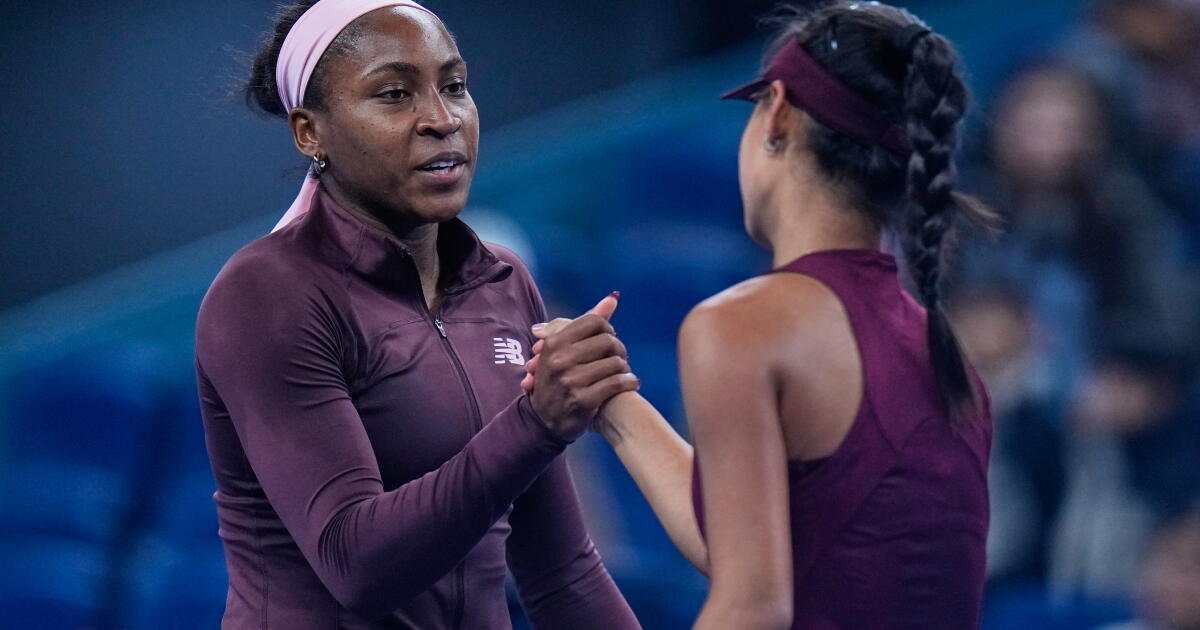
Coco Gauff is calling out the racist abuse she’s received online after following the rules during her latest match at the China Open.
The two-time Grand Slam champion defeated 16-year-old Sun Xinran 7-5, 6-1 on Monday to move on to the round of 16 at the Beijing event. After the match, Gauff took to social media to address the racist comments and messages she’d received for halting a point mid-rally and explained the point in question.
“[H]ey everyone, you can dislike me or disagree about what happened without being racist,” Gauff wrote in a post on X, replying to a user who directed profanity and a racist slur toward her. “[T]he amount of racist comments/dms I’ve received in the last few hours is insane. Lastly, I’m not a cheater or a thief.”
The tennis star then shared a screenshot of the lengthy explanation she posted to Instagram explaining the rules and why she stopped play when she did.
The point in question occurred during the first set, when Gauff was serving and down 4-5. She raised her hands to halt the point toward the end of a lengthy rally, just before Sun returned a volley that could have put her just two points shy of winning the first set.
But just as Sun closed into position to take her shot, the electronic advertising boards around the court flickered as it changed what was displayed.
“I saw it flicker in the beginning of the point but was not sure if that is what I actually saw,” Gauff wrote in her explanation. “[W]hen it flickered again I raised my hands before she hit her shot because this is when I was sure I saw the light flicker and it wasn’t my mind doing tricks.”
The chair umpire then conducted a video review of what happened, and ruled that the flickering ad constituted a “hindrance” outside of the control of the players, like some paper getting blown onto the court. According to the WTA rules, a point should be replayed from the beginning in such instances.
In her Instagram post, Gauff also explained that players are told that they can keep playing a point and challenge once it is over. Both Sun and Gauff would have been permitted to challenge the point regardless of who won it.
She called it an “unfortunate situation” and added that “it’s weird” that she’s “getting hate for following the rules.” Gauff also praised Sun and her talents, saying “it was an honor to share the court in front of her home crowd.”
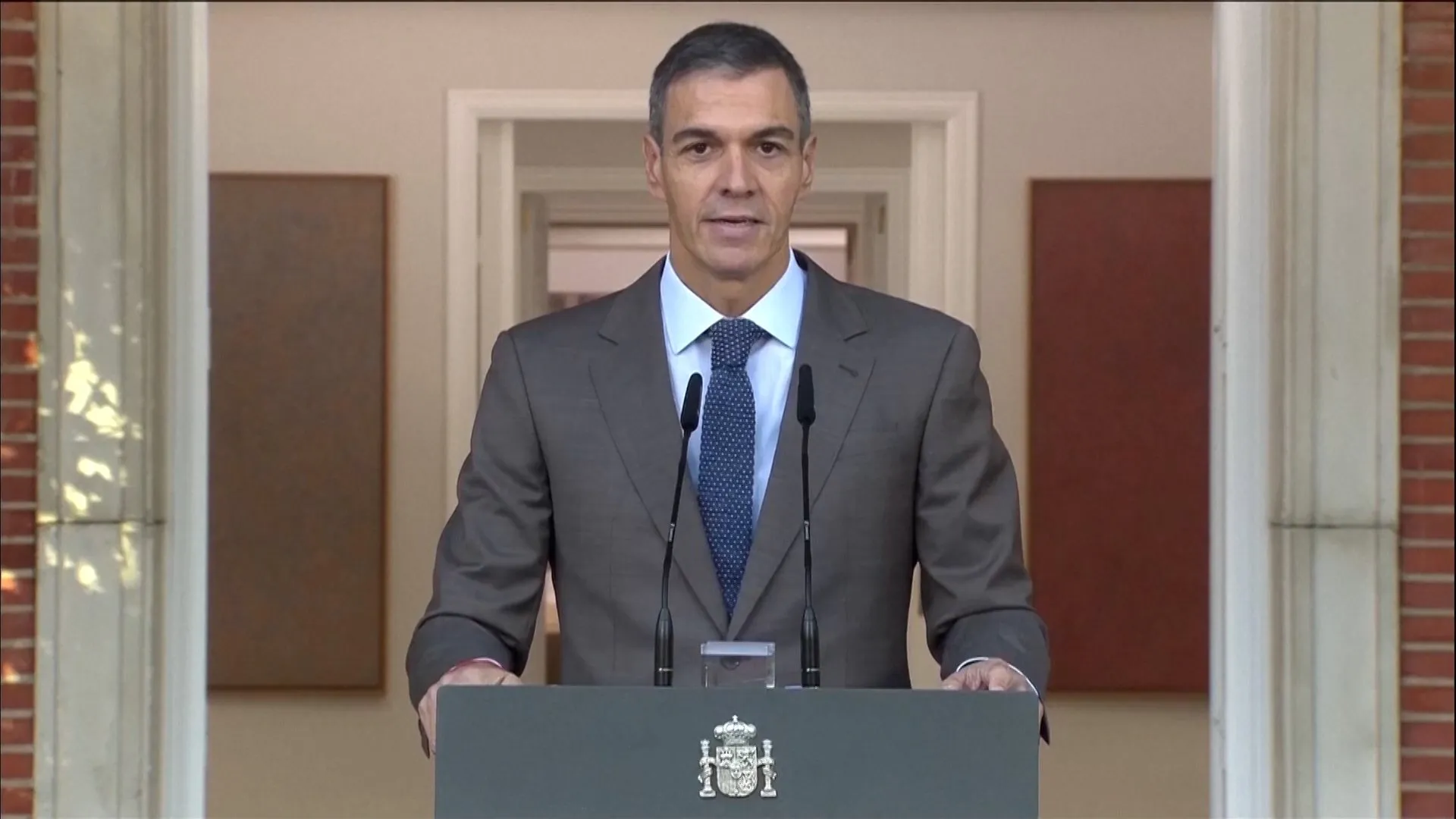
Mounting anger over Spain’s housing crisis and a defeat in parliament over housing measures have led Prime Minister Pedro Sanchez to call an early election on November 29. The Socialist leader is taking a gamble as he faces a tough campaign with his minority government weakened.














![The fire-damaged “Royad Mammadov” ship in the Black Sea after a fire aboard the vessel outside Romania’s territorial waters left two people dead on October 5 2026 [Reuters]](https://i0.wp.com/www.aljazeera.com/wp-content/uploads/2026/10/2026-10-05T150002Z_1974670076_RC22XNAQIP2B_RTRMADP_3_ROMANIA-INCIDENT-1791231511.jpg?w=640&ssl=1)