rubio

Rubio is optimistic on eventual Iran nuclear talks despite congressional skepticism

Secretary of State Marco Rubio said Tuesday that he is optimistic about the potential for a resumption in nuclear talks with Iran despite a shaky ceasefire in the war that is looking increasingly in doubt.

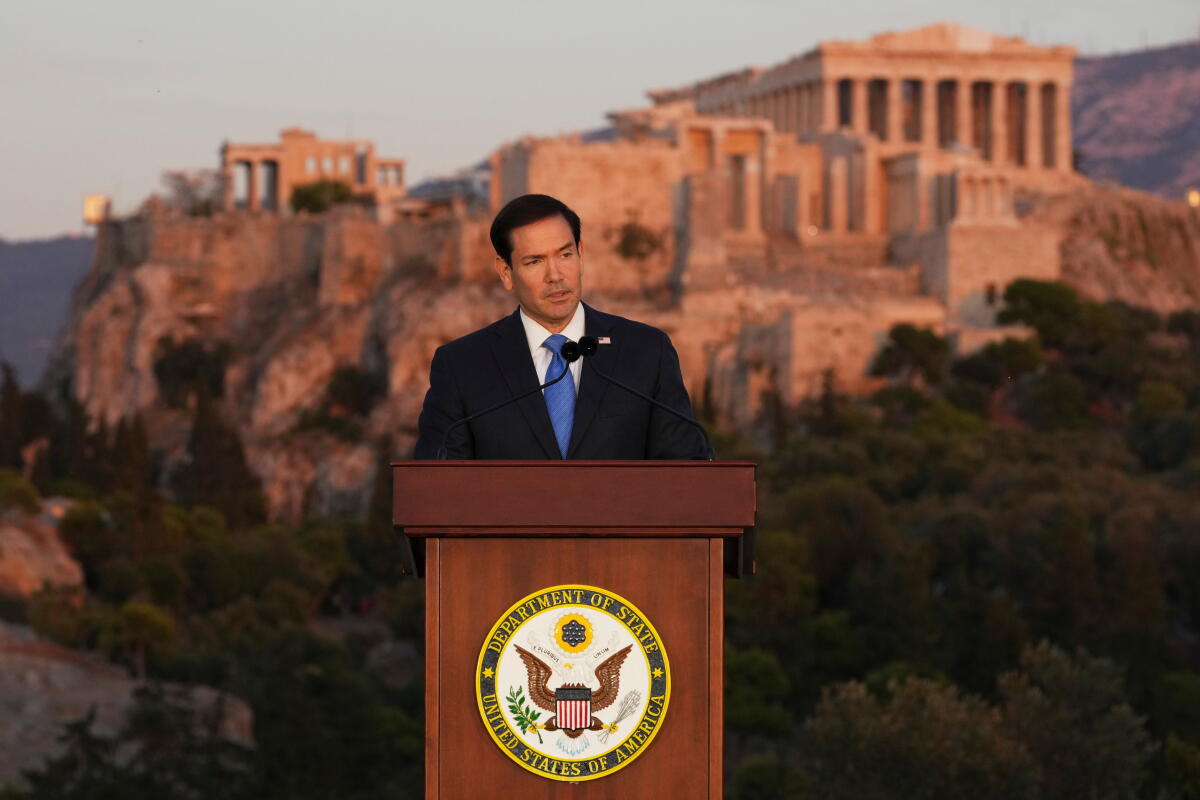
Rubio defended the Trump administration’s approach to Iran and other global hot spots in back-to-back hearings before the Senate Foreign Relations Committee and a House Appropriations subcommittee. He was briefly disrupted by protesters at each session.

In his first public testimony since the Iran war began at the end of February, Rubio said the Iranians have agreed to negotiate on nuclear points that they had not been willing to address in the past but would not offer an assessment on what those talks might produce.

“They have agreed to negotiate aspects of their nuclear program that just a month ago, just a year ago, they were refusing to even mention,” Rubio told the Senate. He noted, however, that there was no guarantee “it will lead to a deal that’s acceptable” and that negotiations have been made difficult by the instability of Iran’s leadership.

Rubio’s optimism ran counter to pessimistic reports from two semiofficial Iranian news agencies that Iran has stopped communicating with mediators after Israel threatened to bomb Beirut as it fights the Hezbollah militant group. President Trump disputed that Iran has cut off communication with mediators, calling Iranian reports of a cessation in talks “false and erroneous.”

Democrats criticize Trump administration’s approach to Iran, and Rubio defends it

Rubio’s wide-ranging testimony was met with fierce objections from Democrats, including tough questions about the status of U.S. foreign assistance to respond to diseases such as the Ebola outbreak in Africa. Rubio insisted that the dismantlement of the U.S. Agency for International Development had not affected Washington’s ability to assist with global humanitarian responses.

Sen. Chris Van Hollen (D-Md.) blasted Rubio and Trump for foreign aid cuts and overseas intervention. Van Hollen specifically took aim at the U.S. and Israeli decision to strike Iran, accusing the Republican president of entering the war on behalf of Israel.

Israeli Prime Minister Benjamin Netanyahu “said he’s been waiting 40 years to do this,” Van Hollen said. “It turns out he finally found a president who was both stupid and reckless enough to join him. Let’s face it, Mr. Secretary, the Trump foreign policy has become a dumpster fire.”

Rubio’s testimony, which was taking place as Israel and Lebanon began a new round of political talks at the State Department with the situation between Israel and Hezbollah still uncertain, did not provide definitive answers on any of the main questions of the day.

He said Iran is not guaranteed a massive payout for reopening the Strait of Hormuz, the crucial waterway for global oil shipments, and would have to commit to further concessions on its nuclear program to get significant sanctions relief.

“The more they give, the more they would get,” he said, later adding, “They’re not going to get it as a signing bonus.”

Rubio also said there are indications that Iran’s new supreme leader, Mojtaba Khamenei, is taking a bigger part in the discussions despite not being seen publicly since the war began.

“I think there are indications out there that he is increasingly engaging at some level, although all of his communications have been in writing and through intermediaries,” he said.

Democratic senator says drugs being on boats isn’t a targeting criterion for U.S. strikes

On other issues, Rubio dismissed questions about the legality of Pentagon strikes against dozens of alleged drug-smuggling vessels in the Caribbean Sea and the eastern Pacific Ocean, which have killed more than 200 people since early September.

Sen. Tim Kaine (D-Va.) said the military’s targeting criteria for those strikes does not include drugs being present on the boat. He called it “odd” but said he could not share much more because the criteria are classified.

Rubio pushed back, saying every strike has a legal officer who makes a determination on whether a strike is legal. He also said the U.S. military has “walked away from strikes” multiple times because they did not meet the targeting criteria.

The Trump administration says the U.S. is at war with drug cartels, while many Democrats have questioned the legality and effectiveness of the strikes.

The Republican former senator faces a second congressional hearing Tuesday and a pair of others Wednesday about the State Department’s annual budget request, though questions have mostly focused on top foreign policy issues.

Rubio wades into Taiwan arms sales opposed by China

Rubio acknowledged that the Trump administration is holding up a new potential $14-billion arms sale to Taiwan but said it remained under consideration and would not be canceled. He noted that the U.S. recently sold arms to Taiwan in December worth $11 billion.

He said the deal is not under review because of pressure from China, although he said the Chinese bring up the issue in discussions with the United States. Trump also has described it as a great negotiating chip.

“They are constantly talking about Taiwan arms sales, but that in no way is what is holding up our decision-making or the White House’s decision-making,” Rubio said. “It is something the president will have to decide on the timing of when and how that is executed on.”

Protesters chant at Rubio about Cuba

Rubio, the son of Cuban immigrants, also was questioned about the Trump administration’s escalatory behavior toward Cuba, as Trump has hinted that the small island country could be the next U.S. target after operations in Iran are wrapped up.

He faced chants from protesters who urged him to “stop killing Cubans” when he entered the Senate briefing room. The protesters were quickly pulled from the room. Their chants also included “Let Cuba live!”

Rubio defended the administration’s approach to Cuba and said it would remain focused on changing the Cuban government’s policies.

“I really don’t believe this system is capable of reform unless new people take over or a new mindset takes hold,” he said.

Despite a series of meetings between U.S. and Cuban officials, Trump and Rubio have renewed threats against the island’s government, which take on greater weight following the administration’s announcement of criminal charges against former President Raúl Castro.

Over his congressional career and now as America’s top diplomat, Rubio has maintained that Cuba is a national security threat due to its ties to U.S. adversaries, and that Trump is intent on addressing it.

Amiri, Lee and Finley write for the Associated Press. Amiri reported from New York.

Source link

Marco Rubio: Iran must reopen Strait of Hormuz, discuss nuclear program

June 2 (UPI) — Secretary of State Marco Rubio told the Senate on Tuesday morning that Iran must reopen the Strait of Hormuz and commit to future talks on its nuclear program before the United States will make concessions.

He testified before the Senate Foreign Relations Committee before a scheduled afternoon meeting with a House panel on State Department spending. Both sessions were planned so that Rubio could defend the department’s nearly $36 million budget request for the 2027 fiscal year.

Rubio is also President Donald Trump‘s national security adviser.

The Washington Post reported that Rubio’s testimony with lawmakers has been mostly friendly. He served in the Senate for 14 years and in the House for 8, representing Florida.

Lawmakers from both sides of the aisle have expressed frustration with the cost and potential political fallout from the war with Iran.

“This war and the administration’s decision to blockade has now held the entire world economy, and the U.S. economy, hostage to the ability to negotiate an agreement with Iran,” said Sen. Chris Murphy, D-Conn, The Post reported.

The Strait of Hormuz, which has been closed by Iran since late February, must reopen, Rubio stressed. The strait is a critical waterway for shipping of much of the world’s oil, gas and fertilizer. The closure has caused gas prices to rise, causing anxiety as Republicans fear losing House and Senate seats in November.

Rubio said Trump demands that Iran enter into negotiating “severe and long-term limitations” on its nuclear program, including disposing of enriched uranium, and those talks could take months.

But he said he’s optimistic that Iran is more willing to negotiate on nukes.

“They have agreed to negotiate aspects of their nuclear program that just a month ago, just a year ago, they were refusing to even mention,” The Guardian reported Rubio said. He warned that it’s “not a guarantee that ultimately it will lead to a deal that’s acceptable,” and Iran’s leadership instability has made the negotiations more difficult.

Rubio said Iran had intended to use its conventional weapons capabilities as a “shield” to protect its nuclear program, The Guardian reported.

“What they tried to do is, they were going to try to build a conventional shield and hide behind that conventional shield,” he said, explaining why Trump wanted to start the war.

He also admitted, after questioning by Sen. Ted Cruz, R-Texas, that another sticking point for Trump was that Iran stop supporting terrorist proxy groups. He said Trump is not willing to ease sanctions just for opening the strait.

Rubio said that Iranian Ayatollah Mojtaba Khamenei is believed to be alive.

“I would imagine, given what’s happened to multiple leaders in that system, being very public is probably not something that’s recommended for them internally,” he said. “But that said, I think there are indications out there that he is increasingly engaging at some level, although all of his communications have been in writing and through intermediaries.”

Along with Iran, lawmakers were expected to ask Rubio about the president’s comments about Cuba and Taiwan.

Secretary of State Marco Rubio and President Donald Trump participate in a Cabinet meeting in the Cabinet Room of the White House on Wednesday. Photo by Samuel Corum/UPI | License Photo

Source link

Rubio says Trump envoy Barrack to step down from Syria post | Politics News

Trump envoy Tom Barrack to exit formal Syria post but retain key role managing US policy in Syria and Iraq.

US Special Envoy for Syria Tom Barrack will step down from his post following the expiration of his formal mandate, but he is set to maintain a central diplomatic role managing policy for Syria and Iraq, US Secretary of State Marco Rubio announced.

Barrack, a billionaire real estate investor and longtime confidant of President Donald Trump, has served as the administration’s primary envoy to Syria since May 2025, while concurrently serving as the US ambassador to Turkiye.

Recommended Stories

list of 3 itemsend of list

“Ambassador Tom Barrack has played an invaluable role as our Special Envoy to Syria,” Rubio wrote in a statement posted on the social media platform X. “While that title is expiring, he will continue to play a leading role for the Trump Administration in Syria and Iraq, where his expertise, relationships, and understanding of the America First agenda will continue to deliver wins on behalf of our great country.”

“Barrack’s special envoy title has expired, but his role has not, and he remains Washington’s lead on Syria, Iraq, and Turkiye,” Nanar Hawach, senior Syria analyst at the think tank International Crisis Group, told Al Jazeera.

“The expiry changes little in practice, because he was already coordinating those three files together before it lapsed. By keeping him in place without naming a successor, Washington signals it wants continuity and his existing access rather than a reset on Syria.”

During his yearlong tenure as Syria envoy, Barrack oversaw Washington’s pivot towards the post-Assad administration of interim Syrian President Ahmed al-Sharaa. He heavily influenced US policy by pushing for the easing of heavy economic sanctions on Damascus and coordinating counter-Islamic State operations alongside regional allies, including Turkiye and Gulf Arab states.

The private equity mogul raised substantial capital from Emirati sovereign funds. While acquitted in 2022 of federal charges that he acted as an unregistered agent for Abu Dhabi, his connections routinely led to questions about Gulf financial influence over US policy.

Barrack’s tenure in Syria also drew significant scrutiny. His mediation of a ceasefire and integration pact between Damascus and the Kurdish-led Syrian Democratic Forces (SDF) drew sharp criticism from the Kurdish leadership, who accused Washington of abandoning its longtime allies to favour central state authority.

He also prompted intense backlash in Lebanon after warning journalists at a chaotic news conference to act “civilised” rather than “animalistic”.

His public assertions that “benevolent monarchy” and authoritarian governance are better suited for the Middle East than democracy caused controversy, while opposition leaders in Turkiye, where he remains ambassador, routinely criticised him for behaving like a “colonial governor”.

State Department officials have not yet announced a successor for the Syria envoy position.

Source link

Russia warns Rubio strikes on Kyiv to continue, urges U.S. evacuation

Smoke rises following overnight Russian strikes on Kyiv on Sunday amid the Russian invasion. More than 600 drones and 90 missiles struck several sites across Kyiv overnight on Sunday, resulting in multiple fatalities and more than 80 injuries, according to Ukrainian President Volodymyr Zelensky. Photo by Sergey Dolzhenko/EPA

May 25 (UPI) — Russia on Monday warned the United States it will continue targeting “decision-making centers” in Kyiv and advised Washington to evacuate its personnel from Ukrainian capital as it ratcheted up pressure in the conflict.

Russian Foreign Minister Sergey Lavrov told U.S. Secretary of State Marco Rubio in a phone conversation the Russian Armed Forces are now launching “systematic and consistent strikes against facilities in Kyiv used by the Ukrainian Armed Forces and against the relevant decision-making centers,” according to a readout supplied by the Kremlin.

The Russian assault is in response to “the Kyiv regime’s ongoing terrorist attacks against civilians and civilian objects on Russian territory,” the statement said.

Lavrov also warned Rubio that the United States, “along with other states with missions in Kyiv, ensure the evacuation of their diplomatic personnel and other citizens from the Ukrainian capital.”

Earlier Monday, Moscow decried what it called “a bloody drone attack” on a college dormitory on Friday in Luhansk, a part of Ukraine occupied by Russian forces and claimed as a “people’s republic.”

Twenty-one people, including children, were killed and 42 others injured in strike, Russian President Vladimir Putin claimed while calling it a deliberate “terrorist strike.”

Ukraine, however, described it as an attack on the headquarters of Russia’s Rubicon drone military unit in Starobilsk, Luhansk.

That incident was followed by Russia’s largest-ever drone and missile attack on Kyiv overnight from Saturday into Sunday, in which two were killed more than 80 injured.

Strikes were recorded in almost every district of the city, hitting cultural targets such as The National Art Museum, the Chornobyl Museum, the National Philharmonic, the Ukrainian National Academy of Music and the Kyiv Opera Theater, the Kyiv Independent reported.

Julie Davis, the chargé d’affaires at the U.S. embassy in Kyiv, condemned the overnight strikes on Monday, calling them “deliberate strikes on civilian populations and civilian infrastructure” which she deemed “unacceptable.

“As President Trump has stated before, this war must end. We extend our deepest condolences to all those affected by this horrific tragedy.”

Such strikes in the capital are set to continue, Russia warned Monday, although insisting they are aimed at military rather than civilian targets.

“All this has exhausted our patience In this situation,” the Foreign Ministry said. “The Armed Forces of the Russian Federation are beginning to launch consistent and systemic strikes at enterprises of the Ukrainian defense industry in Kiev, including specific facilities for designing, manufacturing and programming drones and preparing them for operation.”

The strikes “will target decision-making centers and command posts,” Moscow claimed.

Firefighters conduct work while smoke rises from a building after it was attacked by Russian drones in Kyiv, Ukraine, on October 17, 2022. Photo by Vladyslav Musiienko/UPI | License Photo

Source link

Rubio tamps down expectations on Strait of Hormuz agreement

May 25 (UPI) — Secretary of State Marco Rubio tamped down expectations Monday for progress toward reopening the Strait of Hormuz after signaling a day earlier that he might have “good news” within hours.

Speaking to reporters at India’s Palam Air Base in New Delhi on Monday, the United States’ top diplomat said an agreement was “still a work in progress.”

“We thought we might have some news last night, maybe today,” he said, adding the holdup is that it takes time to hear back from the Iranians.

“I’m very confident — we should all be very confident — that we’re either going to have a good agreement or we’re going to have to deal with it another way. We’d prefer to have a good agreement.”

The United States is seeking to have Iran restore shipping traffic through the Strait of Hormuz before negotiations enter a subsequent phase focused on Iran’s nuclear program.

Rubio said what is on the table for opening the strait is “pretty solid,” but there is “a very real, significant time limit” to negotiations on the nuclear issue.

“Hopefully, we can pull it off,” he said.

Rubio is in India until Tuesday to discuss energy security, trade and defense cooperation with senior Indian officials. Meanwhile, U.S.-Iran negotiations have been ongoing through Pakistani and Qatari mediators.

After reporters that negotiations were edging toward completion, an Iranian Foreign Ministry spokesperson later Monday said that talks were focused on ending the war, with no discussions yet on its nuclear enrichment program, the semi-official Tasnim news agency reported.

The spokesperson also voiced skepticism over U.S. reliability, stating there is no guarantee Washington will hold up its end of the agreement once one is reached.

Speaking alongside Indian External Affairs Minister Subrahmanyam Jaishankar at a joint press conference on Sunday, Rubio said that he believed more news about the agreement would come from President Donald Trump.

“But I do think perhaps there is the possibility that over the next few hours the world will get some good news, at least with regards to the straits,” he said.

The on-again, off-again negotiations have been conducted amid a fragile cease-fire called in April in the war that began in late February.

Trump has sought a new agreement to prevent Iran from securing a nuclear weapon since 2018, when during his first administration he unilaterally withdrew the United States from a landmark Obama-era multinational nuclear accord called the Joint Comprehensive Plan of Action.

Calling it “defective at its core,” Trump has criticized several aspects of the JCPOA, including its sunset provisions easing restrictions on Iran’s nuclear program.

Critics have rebutted his accusations, saying that not all aspects of the JCPOA were to expire and that the expiring provisions afforded time were intended to afford time for further diplomacy.

Source link

Rubio says US will find ‘another way’ if Iran talks fail | News

US secretary of state says a ‘pretty solid’ deal is on the table in terms of opening up the Strait of Hormuz.

The United States will either secure a strong agreement with Iran or confront the country “another way”, US Secretary of State Marco Rubio says after President Donald Trump moved to temper expectations that an agreement to end the war is close.

“We thought we might have some news last night, maybe today. I wouldn’t read too much into it,” Rubio said in New Delhi on Monday, referring to the potential agreement to end the US-Israeli war on Iran, which began on February 28.

Recommended Stories

list of 3 itemsend of list

“We have what I think is a pretty solid thing on the table in terms of their ability to open up the straits, get the straits open,” he told reporters in the Indian capital, where he has been on an official visit.

Washington and Tehran have observed a ceasefire since April 8 while mediators push for a negotiated settlement although Iran has continued to block the Strait of Hormuz to most shipping and the US has blockaded Iran’s ports.

A day earlier, Trump wrote on Truth Social ⁠⁠that the US blockade would “remain in full force and effect until an agreement is reached, certified, and signed”.

“Both sides must take their time and get it right,” he added.

There was no immediate response from Iran’s government. But the Tasnim News Agency, linked to Iran’s Islamic Revolutionary Guard Corps, said the US was still obstructing parts of a potential deal.

“We’re either going to have a good agreement, or we’re going to have to deal with it another way. We’d prefer to have a good agreement,” Rubio said.

Points of contention

A senior Trump administration official outlined what he said were the latest contours of the issues being negotiated.

Speaking on the condition of anonymity, the official told the Reuters news agency that Iran had agreed “in principle” to dispose of its highly enriched uranium and open the Strait of Hormuz in exchange for the US lifting its naval blockade.

The US understood that Supreme Leader ⁠⁠Mojtaba Khamenei had endorsed the broad template of the deal, he added.

There was no immediate confirmation from Iran or elaboration on what an “in principle” ⁠⁠agreement meant.

The US official said Washington envisioned first reopening the strait and lifting the US naval blockade. Negotiating the details of the nuclear measures would take more time, he said.

The official pushed back on suggestions that Iran had not accepted disposing of its stockpiled enriched uranium. “It’s a question about how,” the official said.

Charles Kupchan, a senior fellow at the Council on Foreign Relations, said the back and forth between the US and Iran means a deal will not likely be agreed anytime soon.

“I think this is kind of par for the course for the Trump administration. One day they walk this way. The next day they walk that way,” he told Al Jazeera.

“Part of the conversations are private. Part of it is public diplomacy, but until we have a concrete sense that the Iranians are likely to say yes to getting rid of their highly enriched uranium … and to opening this Strait of Hormuz with no restrictions, I think one can say that we’re still far away from a lasting deal,” Kupchan said.

Source link

U.S. announces criminal case against former Cuban President Raúl Castro

Federal prosecutors on Wednesday announced charges against former Cuban President Raúl Castro in the 1996 downing of civilian planes operated by Miami-based exiles as the Trump administration escalated pressure on the socialist government.

The indictment was related to Castro’s alleged role in the shootdown of two small planes operated by the exile group Brothers to the Rescue. Castro, now 94, was Cuba’s defense minister at the time. The charges included murder and destruction of an airplane.

Acting Atty. Gen. Todd Blanche and other top Justice Department officials made the announcement in Miami at a ceremony to honor those killed in the shootdown.

President Trump has been threatening military action in Cuba ever since U.S. forces captured the Cuban government’s longtime patron, Venezuelan President Nicolás Maduro. After ousting Maduro, the White House ordered a blockade that choked off fuel shipments to Cuba, leading to severe blackouts, food shortages and an economic collapse across the island.

Since Maduro’s capture, Trump has ratcheted up talk of regime change in Cuba after pledging earlier this year to conduct a “friendly takeover” of the country if its leadership did not open its economy to American investment and kick out U.S. adversaries.

Trump’s first administration indicted Maduro on drug-trafficking charges and used that to justify removing him from power during a surprise military raid in January that whisked the Venezuelan leader to New York to face trial.

Secretary of State Marco Rubio on Wednesday urged the Cuban people to demand a free-market economy with new leadership that he said will chart a new course in relations with the U.S.

“In the U.S., we are ready to open a new chapter in the relationship between our people,” Rubio, the son of Cuban immigrants, said in a Spanish-language video message. “Currently, the only thing standing in the way of a better future are those who control your country.”

Cuba’s deputy foreign minister, Carlos F. de Cossío lashed out at Rubio on X, saying he “lies so repeatedly and unscrupulously about Cuba and tries to justify the aggression he inflicts on the Cuban people.” Rubio “knows full well that there is no excuse for such cruel and ruthless aggression.”

Raúl Castro believed to wield power behind the scenes

There’s no indication Castro will be taken into U.S. custody anytime soon.

He took over as president from his ailing older brother Fidel Castro in 2006 before handing power to a trusted loyalist, Díaz-Canel, in 2018.

While he retired in 2021 as head of the Cuban Communist Party, he is widely believed to wield power behind the scenes, underscored by the prominence of his grandson, Raúl Guillermo Rodríguez Castro, who previously met secretly with Rubio.

Last week, CIA Director John Ratcliffe traveled to Havana for meetings with Cuban officials, including Castro’s grandson. Two other senior State Department officials met with the grandson in April.

“The symbolic nature is absolutely crucial,” said Lindsey Lazopoulos Friedman, a former prosecutor at the U.S. attorney’s office in Miami who handled national security cases and crimes involving Cubans.

“Even though Raúl Castro will likely stay and die in Cuba, you can use the indictment as a pressure point, a tactical advantage, to extract other concessions like the release of prisoners or to keep Russia out,” she added.

The investigation into Castro stretches back to the 1990s

Starting in 1995, planes flown by members of Brothers to the Rescue, a group founded by Cuban exiles, buzzed over Havana dropping leaflets urging Cubans to rise up against the Castro government.

The Cubans protested to the U.S. government, warning that they would defend their airspace. Federal Aviation Administration officials also opened an investigation and met with the group’s leaders to urge them to ground the flights, according to declassified government records obtained by George Washington University’s National Security Archive.

“This latest overflight can only be seen as further taunting of the Cuban Government,” an FAA official wrote in an email to her superiors after one intrusion in January 1996. “Worst case scenario is that one of these days the Cubans will shoot down one of these planes.”

But those calls went unheeded and on Feb. 24, 1996, missiles fired by Russian-made MiG-29 fighter jets downed two unarmed civilian Cessna planes a short distance north of Havana just beyond Cuba’s airspace. All four men aboard were killed.

Raúl Castro faced earlier indictment

Guy Lewis, who was a federal prosecutor, uncovered evidence linking senior Cuban military officials to cocaine trafficking by Colombia’s Medellin cartel. Following the shootdown, the investigation expanded, and prosecutors pursued charges against Raúl Castro for leading a vast racketeering conspiracy by Cuba’s armed forces.

“The evidence was strong,” Lewis said in an interview.

In the end, the Clinton administration indicted four individuals, including the MiG pilots, the head of the Cuban air force and the head of a Cuban spy network in Miami — the only one to see the inside of a U.S. prison — for providing valuable intelligence about the flights.

The incident led the U.S. to harden its position against Cuba, even though the Cold War had ended and the Castros’ support for revolution across Latin America was a fading memory.

But Castro himself was spared as the Clinton administration — which had quietly sought to expand relations with Cuba prior to the incident — raised foreign policy concerns about such a high-profile indictment.

“Raúl was definitely one who slipped through the noose,” Lewis said. “The crime is notorious. Three U.S. citizens and one legal permanent resident were killed in a premeditated orchestrated murder. That should never be forgotten.”

Goodman and Richer write for the Associated Press. Richer reported from Washington.

Source link

Concerns over federal funding for L.A. Olympics raised by state lawmakers

As Los Angeles prepares to host the 2028 Olympics, state lawmakers are raising concerns that potential clashes with President Trump could cause chaos.

State Sen. Susan Rubio (D-Baldwin Park), speaking at a legislative hearing this week on the 2028 Games, expressed concern about Trump’s animosity toward California and questioned whether that could affect the federal financial support that is essential to the Olympics.

“I know we rely a lot on the federal funding,” Rubio said. “Can you assure me that we’re not going to be left in the middle of the planning carrying the bag?”

Rubio was addressing Joey Freeman, the vice president of state affairs for the LA28 Organizing Committee, who testified before lawmakers.

Freeman assured legislators that the organizing committee had a “wonderful working relationship” with the Trump administration. He said the committee successfully advocated for $1 billion in federal funds for state and local law enforcement, and $94 million to boost transportation planning.

LA28 leaders previously projected that the Games will cost more than $7.1 billion. They’ve said the money will come from a mix of sources, including corporate sponsors, ticket sales, merchandise, the federal government and the International Olympic Committee.

Rubio, however, said she remained worried that the federal dollars could fall through.

“As a state, our funding is also stretched thin, and at the end of the day we don’t want to have to step in to save the Olympics,” Rubio said.

Several other concerns were raised during the roughly three-hour hearing, including questions about how to best protect visitors and participants from federal immigration raids. The Trump administration’s increased enforcement actions by Immigration and Customs Enforcement and U.S. Border Patrol last year in the Los Angeles area led to clashes with protesters and widespread concerns about immigrant rights.

Sen. Lena Gonzalez (D-Long Beach) said legislators were working on a package of bills to help rein in ICE during the event.

“Immigration is still front and center,” she said. “People are feeling even more worried that they’ll continue to be deported and kidnapped.”

Other lawmakers grilled Freeman for more information about ticket sales. LA28 previously advertised tickets as being affordable for locals, but many shoppers last month were dismayed to find prices in the thousands.

Freeman said he did not have specifics on the community ticketing program, which earned a rebuke from Sen. Laura Richardson (D-San Pedro).

“You’re in an official state hearing and I think you know there was a problem because it was well-publicized in the news,” she said. “The fact that we came to this committee and you don’t know how many tickets were issued, you don’t know how many of those were under $100 — you don’t have the information that we need.”

Paul Krekorian, executive director of the Los Angeles Office of Major Events, chalked up many of the concerns surrounding the games to political negativity. He pointed to the success of the Olympics in Los Angeles in 1932 and 1984.

“You hear the tickets are too expensive, there aren’t going to be enough opportunities, it’s going to be a big disruption, there’s going to be a lot of traffic, the city just went through these horrible fires, how are we going to pull this off?” he said. “I just want to remind all of us — L.A. knows how to do this.”

Source link

Trump builds momentum with at least 3 more wins; Rubio drops out, Kasich takes Ohio

Donald Trump romped to victory Tuesday in Florida, chasing Marco Rubio from the race, but Ohio Gov. John Kasich won his home state, raising hopes for those seeking to stop Trump and settle the presidential contest on the floor of the Republican National Convention.

Trump also won North Carolina and Illinois and was locked in a close fight with Sen. Ted Cruz in Missouri.

“I’m getting ready to rent a covered wagon, we’re going to have a big sail and have the wind blow us to the Rocky Mountains and over the mountains to California,” Kasich said at a jubilant rally outside Cleveland.

That is just the sort of extended nominating fight the GOP establishment sought to avoid by stacking the political calendar with big early contests, capped by Tuesday night’s winner-take-all primaries in Florida and Ohio. California votes on June 7, near the close of the primary season.

Now, many of those same party types see an inconclusive nominating contest as the best and perhaps only chance of thwarting Trump, even if it threatens to shred the GOP in the process.

The setback in Ohio, where Trump campaigned hard, was his most disappointing performance since he finished second to Cruz in February’s Iowa caucuses.

His unhappiness was evident as he addressed reporters at his posh Mar-a-Lago private club in Palm Beach, Fla., and complained about the miseries of running for president.

“Lies, deceit, viciousness. Disgusting reporters. Horrible people,” the Manhattan businessman and reality TV star said. “Some are nice.”

Cruz, speaking with 99% of the Missouri votes counted, once more insisted he was the only candidate who could defeat Trump.

“Starting tomorrow morning, every Republican has a clear choice. Only two campaigns have a plausible path to the nomination — ours and Donald Trump’s,” the Texas senator told supporters in Houston. “Nobody else has any mathematical possibility whatsoever. Only one campaign has beaten Donald Trump over and over again.”

With Trump’s unmatched string of victories, no other candidate is nearly as well positioned to win the nomination ahead of the July convention in Cleveland. He padded his overall delegate lead with Tuesday’s victories, putting him ahead of Cruz and Kasich, who had not won a state before Ohio.

But there were signs Tuesday that not just the establishment but rank-and-file Republicans have yet to rally around the party’s polarizing front-runner.

Nearly 3 in 10 Republican voters across the five states said they would not vote for Trump if he wins the party’s nomination, according to exit poll interviews. Four in 10 said they would consider voting for a third-party candidate if the choice came down to Trump or the Democratic front-runner, Hillary Clinton.

Defections of that magnitude could badly undermine Trump in the general election, and that prospect will probably be stressed by his opponents going forward into next week’s contests in Arizona and Utah.

Rubio spoke to the controversy surrounding the GOP front-runner as he departed the race.

In a Miami concession speech delivered less than half an hour after the polls closed in Florida, the freshman senator congratulated Trump, wagging a finger and shushing members of the audience who booed his kind words.

Ohio Gov. John Kasich votes Tuesday in Westerville, Ohio.

Ohio Gov. John Kasich votes Tuesday in Westerville, Ohio.

(Matt Rourke / Associated Press)

Rubio then devoted the bulk of his lengthy remarks to warn against succumbing to the anger and frustration that have fueled Trump’s improbable rise.

“The politics of resentment against other people will not just leave us a fractured party,” Rubio said, as disconsolate family members stood by onstage. “They’re going to leave us a fractured nation” where people hate each other for their political views.

“Do not give in to the fear,” Rubio said. “Do not give in to the frustration.”

The son of Cuban immigrants and, at age 44, the youngest candidate in the field, Rubio was seen as one of the GOP’s rising stars, with a capacity to broaden the party’s support among millennial voters and the nation’s fast-growing Latino population.

But he failed to win more than a few contests and was never seriously competitive in his home state. Trump captured 99 delegates in Florida’s winner take-all-primary, more than a quarter of those at stake in Tuesday’s balloting.

The victory in winner-take-all Ohio gave Kasich 66 delegates, more than doubling his total but still leaving him well behind Trump. His goal is to build momentum with a series of wins positioning him as the strongest candidate heading into the Cleveland convention even if, as seems inevitable, Kasich is shy of the 1,237 delegates needed to win the nomination outright.

Pennsylvania, where Kasich was born, is the next big target on April 26.

The results Tuesday followed one of the oddest, most contentious weeks in a campaign that has been filled with strange and surreal moments.

The precipitating event was a racially charged near-riot at a Trump rally Friday night in Chicago, which was canceled out of security concerns.

Trump’s opponents quickly seized on the moment and the violent imagery that played around the world to once more challenge his temperament and fitness to be president. They accused him of fomenting the unrest through belligerent remarks that seemed to egg on his audiences into physically confronting dissenters.

Trump denied any responsibility, blaming the violence on what he called professional agitators linked to Democratic hopeful Bernie Sanders. He said the protesters provoked his supporters and were stifling their rights to free speech and assembly.

“I don’t condone violence,” Trump said repeatedly, though he sympathized with backers who chose to “be effective” with protesters in the audience. (Previously he used more pugilistic language.)

Trump said he might even pay the legal fees for a supporter who sucker-punched a demonstrator at a North Carolina rally, drawing widespread condemnation. He won the state anyway.

Indeed, for weeks increasingly desperate Republican opponents have mounted an effort to stop Trump, to seemingly little effect.

More than $10 million in negative ads blazed across the Florida airwaves in just the last week alone, attacking Trump for his ethics, the failings of his business empire and his all-over-the-map political ideology.

Those meant nothing to Mark Owens, who stepped into the Miami Beach sunshine Tuesday and lighted a cigar after casting a ballot for the political neophyte.

“We’ve trusted politicians for 200 years to run our country,” Owens said. “It’s time to give someone else a shot.”

With polls suggesting Florida was firmly in Trump’s grasp, much of the campaign focused on Ohio, another traditional fall battleground.

Trump laid on extra events, including an election-eve rally outside Youngstown in place of a planned Florida appearance, and he turned his attention to attacking Kasich after long ignoring the Ohio governor.

He assailed him for his support as a congressman for the North American Free Trade Agreement, a pact with Canada and Mexico that, Trump said, devastated the state’s economy. He also laid on personal insults in a bid to snatch a victory in Kasich’s home state and clear the governor from the race.

Kasich, whose strategy centered on staying above the salvos flying among other candidates, accused Trump of creating a “toxic” political atmosphere and, wrapping himself in the establishment mantle, spent Monday stumping alongside Mitt Romney, the party’s 2012 nominee.

With Kasich suddenly a factor in the GOP contest, the skirmishing here in Ohio seems a likely preview of what is to come.

While he pledged to take the high road at his victory party Tuesday night, Kasich sent a different message speaking to reporters earlier in the day.

He said, “I will be … forced going forward to talk about some of the deep concerns I have about the way this campaign has been run by some others — by one other in particular.”

There is no doubting who he had in mind.

mark.barabak@latimes.com

Twitter: @markzbarabak

Times staff writers Michael Finnegan, Kurtis Lee and Seema Mehta in Los Angeles and Kate Linthicum in Miami contributed to this report.


Source link

Pope Leo’s American roots give him unique political power

Addressing reporters on a recent flight to Algeria, Pope Leo XIV invoked the Gospel, called himself a peacemaker and pledged to keep speaking out on behalf of the downtrodden.

“Too many people are suffering in the world today,” he said. “Too many innocent people are being killed, and I think someone has to stand up.”

Pontiffs have a tradition of weighing in on global strife, and Leo’s words were in keeping with long-standing church teaching. Appearing in front of reporters in this fashion was also not new: Pope John Paul II began taking questions from journalists on the papal plane in the 1970s.

But the first American pope was in fact wading into an unprecedented political tempest — responding to a series of broadsides from President Trump that drew Leo into debates over the war with Iran, immigration policies and more, all while Catholics in the U.S. and around the world looked on.

Missionaries hold the American flag in St. Peter's Square

Missionaries from Austin, Texas, gather for prayer in St. Peter’s Square on May 11, 2025.

(Marco Di Lauro / Getty Images)

With no permanent peace deal in sight to end the war, two of Trump’s top lieutenants — Vice President JD Vance and Secretary of State Marco Rubio, both Catholics and potential 2028 presidential candidates — have also been pulled into the fray. On Thursday, Rubio met Pope Leo at the Vatican in what he said was a long-planned diplomatic visit. Next month, Vance will release a memoir, “Communion: Finding My Way Back to Faith,” detailing his 2019 conversion to Catholicism.

Trump’s invective has not abated, even in the week his chief diplomat met the pontiff. Ahead of Rubio’s visit, Trump repeated his claim that Leo was “just fine” with Iran developing a nuclear weapon. In response, Leo said that his critics should go after him “truthfully,” noting that the Catholic Church has spoken out against all nuclear weapons.

Against the backdrop of this sparring, Rubio sought to downplay the drama after his official visit to the Holy See, which lasted about two hours. On X, he said the meeting with Leo focused on their “shared commitment to promoting peace and human dignity.”

The episode has revealed the unique power Leo holds on the U.S. stage, with his inherent understanding of the country’s politics and an ability to deliver his message in an accent that at times reveals his Chicago roots.

“He’s speaking in English and he’s American,” said Father James Martin, a Jesuit priest and author, most recently of the memoir “Work in Progress.” “People can’t dismiss him as not understanding the United States.”

For weeks, Leo has been asked to respond to a cascade of insults from Trump, including accusations that he is “weak on crime,” that he was chosen as pope because of Trump, and that the leader of the world’s 1.4 billion Catholics should “get his act together.”

In measured tones, Leo has repeatedly said he does not want to fight with the president. He counters that he is merely preaching the Gospel. On that flight in April, the pope told journalists: “I do not look at my role as being political, a politician. I don’t want to get into a debate with him.”

He added: “I will continue to speak out loudly, looking to promote peace, promoting dialogue and multilateral relationships.”

He may not be a politician, but Leo’s preaching, ranging from Iran to immigration and global warming, has touched a nerve with Trump. In the U.S., Catholics often serve as a powerful swing vote and hold a wide range of views on those issues. But even in a time of deep division and political malaise, enthusiasm for the pontiff, born and raised in the Chicago area, is hard to dismiss.

Leo’s ascendancy comes as engagement with the Catholic Church appears to be growing in the United States. Though comprehensive data are hard to come by, parishes are reporting renewed interest.

Mark Gray, a senior research associate at the Center for Applied Research in the Apostolate at Georgetown University, said there was evidence of an increase in baptisms, a trend that appeared to predate Leo’s election as pope last May.

Some of the new American converts lean more conservative, experts said, part of a broader rise in traditionalism. Amid tensions over whether the church should focus more on traditional issues of morality, such as abortion and marriage, or global concerns like war and migration, Leo has stressed that all are welcome and that he wants the church to function as a big tent.

Making history

U.S. presidents have long sought to court the pope, mindful of the country’s sizable Catholic population and its potential as a swing vote in elections. Woodrow Wilson was the first president to meet with the pope, in 1919, during talks after the end of World War I. Since Dwight Eisenhower made a trip to Rome in 1959, every president has traveled to meet the pope, some more than once.

That includes Trump, who traveled to see Pope Francis in 2017, accompanied by First Lady Melania Trump and his daughter Ivanka Trump. He also attended Francis’ funeral in 2025.

Asked if there was any precedent for Trump’s clash with the pope, Steven Millies, a professor of public theology at Catholic Theological Union in Chicago, invoked an English king who changed the course of church history: “Henry VIII invites a comparison,” he said. Henry rejected Catholicism in the 1500s and founded a new church in order to ratify a divorce rejected by the pope.

Though Trump — who is not Catholic — has not suggested any such schism, he certainly appears to have discarded most niceties. The president has not apologized for any of his comments, though he did, after widespread backlash, take down a social media post that appeared to depict him as Christ.

Trump is constitutionally blocked from seeking another term, so picking a fight with Pope Leo may not have lasting political implications for him. But it’s a different story for Vance and Rubio, both of whom may need to appeal to the country’s Catholic voters to further their ambitions.

In the 2024 election, the Catholic vote tilted more decisively to the right, with 55% supporting Trump compared with 43% for Kamala Harris, according to the Pew Research Center. Four years earlier, Catholics were evenly divided, with 50% supporting Joe Biden, a practicing Catholic, and 49% backing Trump.

Rubio noted as he headed to Rome that “obviously we had some stuff that happened” between the White House and the Vatican. Vance, who has frequently expressed his support for the pope but is also known for his often-punchy defense of the president’s positions, drew some derision in April when he was asked at a conference about Trump’s comments and suggested that Leo should “be careful when he talks about matters of theology.”

Secretary of State Marco Rubio, right, gestures while speaking with Pope Leo XIV

Pope Leo XIV exchanges gifts with U.S. Secretary of State Marco Rubio in the pope’s private library at the Vatican on Thursday.

(Vatican Media via Associated Press)

He later modified his tone, posting on X: “Pope Leo preaches the gospel, as he should, and that will inevitably mean he offers his opinions on the moral issues of the day. The President — and the entire administration — work to apply those moral principles in a messy world. He will be in our prayers, and I hope that we’ll be in his.”

Still, the rift could cloud the upcoming release of Vance’s memoir, overshadowing a book meant to burnish a potential 2028 bid with questions about Trump’s antagonism toward the pontiff.

Two Catholics have served as president — Biden and John F. Kennedy. During an era of stronger anti-Catholic sentiment, Kennedy famously gave a speech as a candidate emphasizing the separation of church and state. Biden was more openly devout, attending Mass every weekend and quoting Catholic hymns in his speeches. Vance is the second Catholic vice president, following Biden’s two terms as President Obama’s deputy.

In a statement, White House spokeswoman Taylor Rogers said Trump’s social policies were a boon for U.S. Catholics and alluded to electoral politics without mentioning the pope. “President Trump has great respect for the more than one billion Catholics around the world, especially the Catholic Americans who helped power his landslide election victory in 2024,” she said.

The Midwestern pontiff

It’s been a year since the man born Robert Prevost in 1955 stepped out onto the Vatican balcony as pope, a role that predates the United States by nearly 2,000 years. The first American pope’s compatriots quickly seized on his Midwestern upbringing (he’s a White Sox fan) and relatable family dynamics (one of his two brothers supports Trump). In a nod to his Chicago roots, an Iowa-based clothing store, Raygun, began selling a T-shirt bearing the slogan “Da Pope.”

Leo also served for years as Bishop of Chiclayo in Peru, building a global profile that helped propel him to the papacy. It hasn’t stopped Chicagoans from claiming him as one of their own — even showing up at the Vatican with Chicago-style deep-dish pizza.

Known as “Bob” before becoming Pope Leo, the new pontiff chose a name that clearly signaled his intentions as a leader, invoking memories of Leo XIII, an intellectual considered a pioneer of modern Catholic social teaching and an advocate for workers. Millies said the choice signaled that Leo wants to refocus on justice and care for others as well as the rising threats around the globe. Leo has cited artificial intelligence as one of those challenges.

With a more low-key presence than his predecessor, Pope Francis, some observers have labeled Leo as quiet. But as his tug of war with Trump shows, his messages are frequently not subtle. In fact, his reserved style may be a reflection of his Midwestern roots.

Pope Leo XIV presides over the Prayer Vigil for Peace at St. Peter's Basilica

Pope Leo XIV presides over the Prayer Vigil for Peace at St. Peter’s Basilica, on April 11.

(Antonio Masiello / Getty Images)

This mild manner comes across in public statements that nonetheless make a lasting impact.

Last fall, Leo questioned Trump’s decision to rename the Department of Defense as the Department of War. “Let us hope it is just a way of speaking,” he said. More recently, he took aim at the president’s preferred method of communication, his social media site Truth Social. Asked about Trump’s vitriol on the platform, Leo said: “It’s ironic — the name of the site itself. Say no more.”

Perhaps no message has been clearer than the pope’s decision on how to spend the Fourth of July this year. For the nation’s 250th birthday, as Trump hosts a giant celebration, the pope will be an ocean away. His plans? Visiting Lampedusa, an Italian island that serves as a stop for migrants traveling to Europe.

Lucey writes for Bloomberg.

Source link

After Italy visit, Rubio says he can’t stop Trump’s jabs at pope

Italy’s Prime Minister Giorgia Meloni meets Secretary of State Marco Rubio at Palazzo Chigi, in Rome, Thursday. Rubio was in the Italian capital for high-level meetings with Italian and Vatican officials. Photo Guiseppe Lami/EPA

May 8 (UPI) — Secretary of State Marco Rubio highlighted his support for NATO, the pope and Italy on Friday during his visit to the country, but said President Donald Trump may still continue social media attacks.

“The president will always speak clearly about how he feels about the U.S. and U.S. policy,” Rubio said after being asked by reporters in Rome if he would ask Trump to limit his verbal attacks. He said, “the president of the United States is always going to act on what’s in the best interest of the United States.”

He added that Trump’s decision to remove troops from Germany was already in the works.

“There was always a plan to do some shifting within NATO,” Rubio said. He added that the troops that are being removed from Germany “represent less than 14% of our total troop presence there.”

Rubio, who visited Pope Leo XIV with his wife and several State Department employees Thursday, gifted the pope a crystal football with the State Department’s logo on it, while the pope gave Rubio a pen made from an olive branch.

Italian Prime Minister Giorgia Meloni gave Rubio documentation of his family’s Italian origins in Piedmont, in the country’s northwest.

Rubio said it was a “true honor” to get the documentation. He said visiting Piedmont is “one more reason to be back” in Italy. He’ll give a speech in Italian next time he visits, he said.

“I need to learn a third language,” Rubio said.

Meloni and Trump had been cordial until the president began attacking the pope and Italy stayed out of the war in Iran.

Meloni said the meeting was a “frank dialogue, between allies who defend their own national interests but who both know how precious Western unity is.”

Polls in Italy show that most Italians are against joining the war against Iran. Meloni said, “we are not at war, and we do not want to go to war.”

President Donald Trump delivers remarks at an event he is hosting for a group that includes Gold Star Mothers and Angel Mothers in honor of Mother’s Day in the Rose Garden of the White House on Friday. Photo by Aaron Schwartz/UPI | License Photo

Source link

Rubio presses Europe on Iran action as he seeks to mend ties with Italy and Vatican

U.S. Secretary of State Marco Rubio urged European allies Friday to move beyond rhetoric and take concrete action against Iran, even as he sought to repair strained ties with Italy and the Vatican during a two-day visit following tensions over the U.S.-Israeli war in Iran.

Speaking after meetings with Premier Giorgia Meloni and Foreign Minister Antonio Tajani, Rubio warned that Tehran was attempting to assert control over the strategic Strait of Hormuz, calling the move “unacceptable” and a threat to global security.

“Everybody says Iran is a threat. Everybody says that Iran can’t have a nuclear weapon … but you’ve got to do something about it,” Rubio told reporters in Rome. “If the answer is no … then you better have something more than just strongly worded statements to back it up.”

Clear ‘red line’

Rubio said Iran was trying to normalize control over an international waterway, a precedent he warned could encourage similar actions elsewhere. He also cautioned Tehran against targeting U.S. maritime assets, saying the United States had thwarted attacks on three Navy ships in the strait.

“The red line is clear. They threaten Americans, they are going to be blown up,” he said.

Rubio said Washington was pursuing a diplomatic track, including a proposed U.N. Security Council resolution aimed at preserving freedom of navigation. He added the U.S. was awaiting Iran’s response on Friday to ongoing diplomatic efforts.

Rubio’s visit comes after weeks of sharp disagreements between Washington and Rome over the Iran war, tariffs and President Trump’s criticism of both Meloni and Pope Leo XIV.

Differences remain over Iran war

Meloni described her meeting with Rubio as “constructive, frank and productive,” focused on both bilateral relations and major international issues. She said the talks covered strategic topics, including the Middle East, freedom of navigation in the Strait of Hormuz, Ukraine, China and areas of Italian interest such as Libya and Lebanon.

“We both understand how important the trans-Atlantic relationship is, but we also understand that each country must defend its own national interests,” Meloni stressed after the meeting.

Tajani struck a more conciliatory tone after meeting his U.S. counterpart, reaffirming the importance of the trans-Atlantic alliance.

“I am convinced Europe needs America — Italy needs America — and the United States also needs Europe and Italy,” Tajani said, adding he hoped “tensions have been calmed.”

He said discussions covered the Iran conflict and its spillover into Lebanon, as well as Venezuela and Cuba. The U.S. State Department said Rubio also raised the need to protect economic interests and end the war in Ukraine.

Despite the effort to ease tensions, differences remain over the Iran conflict. Italy has opposed the U.S.-Israeli bombing campaign, with Meloni calling it “illegal,” and has resisted involvement in offensive operations.

Tajani said Italy would be prepared to contribute naval forces to demine the Strait of Hormuz once a permanent ceasefire is reached, and would maintain its role in the U.N. peacekeeping mission in Lebanon. He also stressed the importance of continued U.S. troop presence in Europe amid concerns about possible reductions.

No final decision on NATO troops adjustments

Rubio said “no final decision” had been made on NATO troop adjustments, noting that any changes would depend on U.S. national interests and global priorities.

The U.S. has announced a decision to pull 5,000 military personnel from Germany and Trump has threatened to withdraw more troops from Italy and Spain over their stance on the war.

Italy, a key logistics hub for U.S. and allied operations in the Mediterranean and beyond, has already signaled limits to its cooperation. In March, it declined to allow U.S. bombers bound for the Middle East to use a base in Sicily without parliamentary approval, reflecting constitutional constraints and strong domestic opposition to the war.

Meloni, weakened by a recent referendum defeat and facing public unease over the conflict, has insisted that any use of Italian bases for offensive operations would require parliamentary backing.

The war has also raised economic concerns in Italy, with Meloni warning that disruptions in the Strait of Hormuz risk driving up energy costs and inflation, while U.S. tariff threats weigh on the country’s export-driven economy.

An attempt to de-escalate at the Vatican

Rubio also sought to ease tensions with the Vatican following Trump’s criticism of the pope’s calls for peace. After a lengthy meeting on Thursday with the pontiff and Vatican Secretary of State Cardinal Pietro Parolin, Rubio said Washington remained committed to a “productive and fruitful” relationship with the Catholic Church.

“The president’s perspective is clear. He thinks that Iran is a threat, and it needs to be addressed. And that position remains unchanged,” Rubio said.

Rubio confirmed that Cuba was also discussed at the Vatican, with Washington hoping the church’s Caritas charity organization would continue distributing humanitarian aid.

Rubio said the U.S. has provided about $6 million in humanitarian aid to Cuba, to be distributed through Caritas, should the Cubans allow it. He added Washington has also offered up to $100 million in additional aid, but the Cuban government has not accepted it so far. Rubio blamed Cuba’s government for blocking assistance and worsening conditions, describing it as “incompetent.”

U.S. officials said the Vatican talks underscored strong bilateral ties and a shared commitment to promoting peace, even as differences over the Iran war persist.

Zampano and Winfield write for the Associated Press.

Source link

Pope Leo Urges Global Leaders to Ease Tensions After Meeting Rubio, Calls for End to Violence and Arms Trade

Pope Leo has called on global leaders to reduce international tensions and turn away from violence, delivering an emotional appeal during a visit to Pompei, Italy, on Friday. His remarks came just one day after he met U.S. Secretary of State Marco Rubio at the Vatican, where both sides discussed efforts to improve strained relations between Washington and the Holy See.

The meeting took place against a politically sensitive backdrop, with U.S. President Donald Trump having recently criticized the Pope over his comments on the Iran conflict. Pope Leo, the first U.S.-born pontiff and former Cardinal Robert Prevost, has increasingly spoken out on global conflicts in recent weeks after initially maintaining a relatively low public profile following his election in May 2025.

Speaking to worshippers in Pompei, the Pope urged prayers that world leaders would be inspired to “calm rancour and fratricidal hatreds” and to take responsibility for reducing global violence. He also warned against becoming desensitized to images of war, and criticized what he described as an international system that often prioritizes the arms trade over human life.

Why It Matters

The Pope’s intervention highlights the growing moral and diplomatic role of the Vatican at a time of heightened global instability, particularly amid ongoing tensions involving Iran, the United States, and wider geopolitical rivalries. His criticism of the global arms economy directly challenges dominant security-driven foreign policy approaches, especially in Western capitals.

As the spiritual leader of more than 1.4 billion Catholics worldwide, Pope Leo’s statements carry significant symbolic and diplomatic weight. His increasingly vocal stance on war and governance also places him in a rare position of open tension with major political actors, including the U.S. administration.

What’s Next

The Vatican is expected to continue engaging diplomatically with U.S. officials despite emerging tensions, particularly following the Rubio meeting. Pope Leo is likely to maintain his public messaging on peace, conflict prevention, and criticism of the global arms trade, reinforcing the Holy See’s traditional role as a moral voice in international affairs. At the same time, reactions from Washington and other governments may further shape the evolving tone of Vatican–state relations in the coming months.

With information from Reuters.

Source link

U.S. Secretary of State Rubio, Pope Leo XIV meet at the Vatican

1 of 3 | Pope Leo XIV (L) talks with Secretary of State Marco Rubio during a private audience in Vatican City on Thursday. Photo courtesy Vatican Media/EPA

May 7 (UPI) — U.S. Secretary of State Marco Rubio met Thursday with Pope Leo XIV at the Vatican, a moment of diplomacy in the wake of President Donald Trump‘s repeated attacks on the Catholic leader.

Rubio and the pope talked about “the situation in the Middle East and topics of mutual interest in the Western Hemisphere,” State Department spokesman Tommy Pigott said, The Washington Post reported.

“The meeting underscored the strong relationship between the United States and the Holy See and their shared commitment to promoting peace and human dignity,” Pigott said.

The meeting, which was a little more than 2 hours long, was not open to the press. There has been tension between the White House and the Vatican in recent months, with Trump directing insults at the pope and the pontiff (who is the first U.S.-born pope) criticizing the United States’ actions in the Middle East.

Rubio also met with Vatican Secretary of State Cardinal Pietro Parolin. Pigott said Rubio and Parolin talked about “mutual cooperation and pressing international issues” and efforts “to achieve a durable peace inthe Middle East,” CBS News reported.

The meeting comes after Trump said in an interview Monday that the pope’s views on the U.S. attacks on Iran “are endangering Catholics and a lot of people” and that the Catholic leader “thinks its just fine for Iran to have a nuclear weapon.” In recent months, the president has also criticized Pope Leo on social media, saying the pontiff is “WEAK on crime” and “terrible for Foreign Policy.”

For his part, Pope Leo has said that he “has no fear of the Trump administration.”

“Should anyone want to criticize me for proclaiming the Gospel, they should do so with the truth,” the pope said in response to Trump’s comments Monday. “For years the Church has spoken out about all nuclear weapons, so there’s no doubt about it, there. So I simply hope to be listened to for the value of God’s word.”

Source link

Vatican and State Department stress solid ties after Rubio’s fence-mending visit over Trump attacks

The Vatican raised the “need to work tirelessly in favor of peace” in talks Thursday with U.S. Secretary of State Marco Rubio, who came to Rome on a fence-mending visit after President Trump’s criticisms of Pope Leo XIV over the Iran war.

Both the Vatican and the U.S. State Department stressed that Rubio’s meetings with Leo and the Vatican’s top diplomat underscored strong bilateral ties. Those relations, though, have been strained over Trump’s repeated broadsides about Leo’s calls for peace and dialogue to end the U.S.-Israeli war.

Rubio, a practicing Catholic, has often been called on to tone down or explain Trump’s harsh rhetoric. He had an audience first with Leo, which was complicated at the last minute by Trump’s latest criticism of the Chicago-born pope. During a 2½-hour visit, Rubio then met with the Vatican secretary of state, Cardinal Pietro Parolin, who on the eve of his visit had strongly defended Leo and criticized Trump’s attacks.

“Attacking him like that or criticizing what he does seems a bit strange to me, to say the least,” Parolin said Wednesday.

After the meetings, the U.S. State Department said that Rubio and Parolin discussed “ongoing humanitarian efforts in the Western Hemisphere and efforts to achieve a durable peace in the Middle East. The discussion reflected the enduring partnership between the United States and the Holy See in advancing religious freedom.”

In a separate statement about the audience with Leo, U.S. State Department spokesperson Tommy Pigott said that the two discussed the situation in the Middle East and the Western Hemisphere. “The meeting underscored the strong relationship between the United States and the Holy See and their shared commitment to promoting peace and human dignity,” he said.

The Vatican, for its part, said that during Rubio’s meetings with both Leo and Parolin, “the shared commitment to fostering good bilateral relations between the Holy See and the United States of America was reaffirmed.”

It said the two sides exchanged views on the current events “with particular attention to countries marked by war, political tensions, and difficult humanitarian situations, as well as on the need to work tirelessly in favor of peace.”

Rubio also has meetings Friday with Italian Premier Giorgia Meloni and Foreign Minister Antonio Tajani. Those meetings might not be much easier for Washington’s top diplomat, given both have strongly defended Leo against Trump’s attacks and have criticized the Iran war as illegal — drawing the president’s ire.

A mission to smooth ties

The tensions began when Trump lashed out at Leo on social media last month, saying the pope was soft on crime and terrorism for comments about the administration’s immigration policies and deportations as well as the Iran war. Leo then said that God doesn’t listen to the prayers of those who wage war.

Later, Trump posted a social media image appearing to liken himself to Jesus Christ, which was deleted after a backlash. He has refused to apologize to Leo and has sought to explain away the post by saying that he thought the image was a representation of him as a doctor.

Rubio said that Trump’s recent criticisms of Leo were rooted in his opposition to Iran potentially obtaining a nuclear weapon, which he said could be used against millions of Catholics and other Christians.

Leo has never said Iran should obtain nuclear weapons and that the Catholic Church “for years has spoken out against all nuclear weapons, so there is no doubt there.”

“The mission of the church is to preach the Gospel, to preach peace. If someone wants to criticize me for announcing the Gospel, let him do it with the truth,” Leo said late Tuesday, after Trump again accused him of being “OK” with Iran having a nuclear weapon.

By Thursday, tensions seemed to have eased.

Rubio gave Leo a small crystal football paperweight. He acknowledged Leo’s known allegiance to the Chicago White Sox, saying “you’re a baseball guy,” but noted that the football had the seal of the State Department on it.

“What to get someone who has everything?” Rubio joked as he gave Leo the paperweight.

Leo, for his part, gave Rubio a pen apparently made of olive wood — “olive being of course the plant of peace,” Leo said — with his coat of arms on it and a picture book of Vatican artworks.

Trump also has criticized Meloni and other NATO allies for a lack of support for the Iran war, recently announcing plans to withdraw thousands of American troops from Germany in the coming months.

Vatican seen as willing to have dialogue

Giampiero Gramaglia, former head of the ANSA news agency and its onetime Washington correspondent, said that he didn’t expect much to come out of Rubio’s visit for Italian or Vatican relations. He, and other Italian commentators, believe Rubio instead was looking to smooth over relations with the pope for his own political ambitions, as well as the upcoming midterm U.S. congressional elections and 2028 presidential race.

“I doubt Rubio has the role of conciliator for Trump,” he told Italy’s Foreign Press Association. “I have the perception that Rubio’s mission is more about himself” and his political ambitions as a prominent Catholic Republican.

The Rev. Antonio Spadaro, undersecretary in the Vatican’s culture office, said that Rubio’s mission wasn’t to “convert” the pope to Trump’s side. Rather, Washington “has come to acknowledge — implicitly but legibly — that (Leo’s) voice carries weight in the world that cannot simply be dismissed.”

“The situation created by President Trump’s remarks required a high-level, direct intervention, conducted in the proper language of diplomacy: a semantic corrective to a narrative of frontal conflict with the church,” he wrote in an essay this week.

Cuba is also on the agenda

Rubio said that topics other than the Iran war were on the agenda for the Vatican visit, including Cuba. The Holy See is particularly concerned about the Trump administration’s threats of potential military action there following its January ouster of Venezuelan President Nicolás Maduro.

Trump has said frequently that Cuba could be “next,” and even suggested that once the Iran war is over, naval assets deployed in the Middle East could return to the United States by way of Cuba.

Rubio is the son of Cuban immigrants and a longtime Cuba hawk.

“We gave Cuba $6 million of humanitarian aid, but obviously they won’t let us distribute it,” Rubio said. “We distributed it through the church. We’d like to do more.”

Winfield and Lee write for the Associated Press. Lee reported from Washington.

Source link

Before Vatican trip, Rubio defends Trump remarks on Pope Leo over Iran | Donald Trump News

United States Secretary of State Marco Rubio has pushed back on comments that President Donald Trump accused Pope Leo XIV of “endangering Catholics” over his stance on the Iran war, saying his early remarks had been mischaracterised.

“Well, I don’t think that’s an accurate description of what he said,” Rubio told reporters on Tuesday when asked about Trump’s comments that the pope was “endangering a lot of Catholics”.

Recommended Stories

list of 3 itemsend of list

Rubio said the president’s concern was rooted in the threat Iran could pose to “places that have a lot of Catholics and Christians and others”, and questioned why “anyone would think that it’s a good idea for Iran to ever have a nuclear weapon”.

He also pointed to rising tensions in the Strait of Hormuz, accusing Tehran of “holding the whole world hostage” and endangering commercial shipping.

Trump had earlier criticised the pope in remarks to right-wing radio host Hugh Hewitt, suggesting the pontiff was too soft on Tehran.

“The pope would rather talk about the fact that it’s OK for Iran to have a nuclear weapon, and I don’t think that’s very good,” Trump said.

“I think he’s endangering a lot of Catholics and a lot of people. But I guess if it’s up to the pope, he thinks it’s just fine for Iran to have a nuclear weapon,” he added.

The exchange comes in advance of a meeting between Rubio and Pope Leo XIV at the Vatican on Thursday, which the US ambassador to the Holy See said is expected to be “frank”, underscoring tensions between Washington and the Catholic Church.

“Nations have disagreements, and one way to work through them is through dialogue,” Ambassador Brian Burch said on Tuesday.

“I think the secretary is coming here in that spirit, to have a frank conversation about US policy and engage in dialogue,” he added.

The pope has not said Iran should have nuclear weapons, but has opposed the war, which Trump says is aimed at stopping Tehran’s nuclear programme.

War of words between Trump and Pope Leo

Strains between Trump and Pope Leo began in March after the pontiff spoke out against the war in Iran and criticised the use of Christian rhetoric to justify military action.

The dispute escalated in April when Trump attacked the pope on social media, calling him “weak on crime” and accusing him of aligning with the “radical left”.

Pope Leo later responded during a trip to Algeria, saying he was not afraid and would keep speaking out against the war.

“I will continue to speak out loudly against war, looking to promote ⁠peace, promoting dialogue and multilateral relationships among the states ⁠to look for just ⁠solutions to problems,” he said, speaking in English.

“Too many people are suffering in the world today. Too many innocent people are being killed. And I think someone has to ‌stand ‌up and say there’s a better way.”

Cardinal Pietro Parolin, the Vatican’s top diplomat, said he did not know if Leo would respond to Trump’s latest comments.

“The pope will go ahead on his path, in the sense of preaching ‌the Gospel [and] ⁠peace,” Parolin, the Vatican’s secretary of state, told journalists. He said Leo would speak about peace at every opportunity, “convenient and inconvenient”.

Rubio is also set to meet on Friday with ⁠Italian Prime Minister Giorgia Meloni, who defended the pope, while her defence minister has said the war in Iran puts US leadership at risk.

The pope has also criticised the Trump administration’s hardline immigration policies and called for dialogue between the United States and Cuba, which has faced frequent blackouts linked to US sanctions.

Source link

Secretary of State Marco Rubio to meet with Pope Leo in Italy

May 4 (UPI) — U.S. Secretary of State Marco Rubio is scheduled to meet this week with Pope Leo XIV in Italy, with planned topics including the Middle East and Cuba.

The State Department announced Monday that Rubio will meet this week with Leo, and an official Vatican calendar notice confirmed the meeting will take place Thursday.

The Washington Post quoted the announcement as saying Rubio, a prominent Catholic in President Donald Trump‘s administration, will “discuss the situation in the Middle East and mutual interests in the Western Hemisphere.”

A USA Today report indicated Rubio and Leo are also expected to discuss Cuba, which has been subject to a U.S. oil embargo and other measures in an attempt to force the smaller country into an economic deal.

The meeting will be the first time a high-ranking administration official has met with the pope since Trump took to social media last month to brand Leo “weak on crime” and “terrible for foreign policy.”

“He wasn’t on any list to be Pope, and was only put there by the Church because he was an American, and they thought that would be the best way to deal with President Donald J. Trump,” Trump wrote in April. “If I wasn’t in the White House, Leo wouldn’t be in the Vatican.”

Rubio and Vice President JD Vance previously met with Leo during a private audience at the Vatican in May 2025, one day after the pope’s Inauguration Mass.

President Donald Trump signs a series of executive orders in the Oval Office of the White House on Thursday. Trump signed an order to expand workers’ access to retirement accounts. Trump also signed legislation ending a 75-day partial shutdown of the Department of Homeland Security after the House voted in favor of funding. Photo by Aaron Schwartz/UPI | License Photo

Source link

Former Miami Congressman David Rivera is convicted in a secret Venezuela lobbying case

A former Miami congressman and longtime friend of U.S. Secretary of State Marco Rubio was convicted Friday in connection with a secret $50-million lobbying campaign on behalf of Venezuela during the first Trump administration.

Jurors found Republican David Rivera and an associate, Esther Nuhfer, guilty on all counts, including failing to register as a foreign agent with the Justice Department and conspiracy to commit money laundering as part of their work for former President Nicolás Maduro’s government.

The seven-week trial offered a rare glimpse into Miami’s role as a crossroads for foreign influence campaigns aimed at shaping U.S. policy toward Latin America, one highlighting the city’s reputation as a magnet for corruption and anti-Communist crusaders among its sizable exile population.

It included testimony from Rubio, Texas Congressman Pete Sessions and a top Washington lobbyist — all of whom testified that they were shocked to learn belatedly of Rivera’s consulting contract with a U.S.-based affiliate of Venezuela’s state oil company, PDVSA.

In an 11-count indictment unsealed in 2022, prosecutors alleged that Rivera was tapped by then Foreign Minister Delcy Rodríguez — now Venezuela’s acting president — to work Republican connections from Rivera’s time in Congress to get the first Trump administration to abandon its hard-line stance and ease crippling sanctions on Venezuela.

As part of the charm offensive, prosecutors alleged, Rivera and Nuhfer, a political consultant, manipulated influential friends, including Rubio and Sessions, like “pawns on a chess board.” The goal: to try to normalize relations with the new Trump administration at a time when the Maduro government was buffeted by serious accusations of human rights violations.

“As long as the money kept coming in, they didn’t care from where,” prosecutor Roger Cruz said of the defendants during closing arguments.

‘Massive secret’ threatened to damage Rivera’s political career

But the two held onto the “massive secret” and didn’t disclose their lobbying work as required, for fear it would have ended Rivera’s political career as an anti-Communist stalwart, Cruz said.

To hide his work, prosecutors allege, Rivera also set up an encrypted chat group called MIA — for Miami — with his main conduit to the Maduro government: Venezuelan media tycoon Raúl Gorrín, who was subsequently charged in the U.S. with bribing top Venezuelan officials.

Members of the group used playful code words to discuss their activities: Maduro was the “bus driver,” Sessions “Sombrero,” Rodríguez “The Lady in Red,” and millions of dollars “melons,” according to copies of text messages presented to the jury.

“It was all about la Luz,” Cruz said, referring to the Spanish word for light, which Rivera and others repeatedly used to discuss payments from Caracas.

Attorneys for Rivera and Nuhfer said the two acted in good faith and believed they were under no requirement to disclose their work. The three-month, $50-million contract with Rivera’s one-man consulting firm, they say, was focused exclusively on luring oil giant ExxonMobil back to Venezuela — commercial work that is generally exempt from the Foreign Agents Registration Act.

Wholly distinct from that consulting work, they say, were Rivera’s meetings with Rubio and Sessions, which occurred after the consulting contract had expired and was focused on ushering in leadership in Venezuela that would be less hostile to the U.S.

“He was working every possible angle to get Nicolás Maduro out,” defense attorney Ed Shohat said during closing arguments. “There was not a word in the chats about normalizing relations.”

Nuhfer’s attorney, David Oscar Markus, likened the government’s case to the 17th century Salem witch trials, presuming ill intent that was belied by the flimsiest of evidence.

“My client does not have a dark heart,” he said.

Exxon meetings for Rodríguez

Prosecutors said Rivera used the contract with New York-based PDV USA as cover for illegal lobbying.

Once exposed, the partners tried to hide the work — backdating documents and coming up with sham agreements like one to justify a wire transfer of $3.75 million to a South Florida company that maintained Gorrín’s luxury yacht.

The political activity included setting up meetings for Rodríguez in New York, Caracas, Washington and Dallas. As part of the effort, the two roped in Sessions, who later tried to broker a meeting for Rodríguez with the CEO of ExxonMobil that had succeeded Trump’s then-secretary of State, Rex Tillerson. After a secret meeting in Caracas with Maduro, Sessions also agreed to deliver a letter from the Venezuelan president to Trump.

The outreach quickly unraveled, however. Within six months of taking office, Trump sanctioned Maduro and labeled him a “dictator,” launching a “maximum pressure” campaign to unseat the president.

However, nearly a decade later, Rodríguez has emerged as the second Trump administration’s trusted partner after the U.S. military’s ousting of Maduro.

Before being elected to Congress in 2010, Rivera was a high-ranking Florida legislator. During that time, he shared a Tallahassee home with Rubio, who eventually became the Florida House speaker.

Rivera has previously faced controversy, including allegations that he secretly funded a Democratic spoiler candidate in a 2012 congressional race. Last year, federal prosecutors dropped the case after an appeals court threw out a sizable fine imposed by a lower court. Rivera was also investigated — but never charged — for alleged campaign finance violations and a $1-million contract with a gambling company while serving in the Florida legislature.

Goodman writes for the Associated Press.
Source link