Ahead of the Wisconsin game, USC got back two key offensive linemen from injury, left guard Hayden Treter and Paige.
However, the line still struggled against Wisconsin, allowing quarterback Jayden Maiava to get sacked five times and playing a factor in the Trojans’ limited run game.
Paige said the group needed to do “a little bit of everything” better in the run game. Raymond told reporters that factors like communication and physicality were among the causes of the line’s struggles.
“It wasn’t good enough,” Raymond said Wednesday.
Treter, who previously missed two games because of injury, was listed as out on Thursday’s availability report after exiting the loss to Wisconsin early.
Alston, freshman tight end Mark Bowman and defensive tackle Jahkeem Stewart were among the notable USC players listed as questionable Thursday. Bowman, who racked up two touchdowns and more than 200 receiving yards in his first five collegiate games, hasn’t played since the Oregon loss in late September.
Stewart, who has been listed on the availability report and then played in each of the last four games, said he feels “great.”
“Just slowly getting better for the team,” Stewart said. “Can’t wait to go out there and perform.”
While the Trojans are dealing with some injuries, the highest-profile injury is on the other side as the Buckeyes will be without their star quarterback Julian Sayin, who was injured during Ohio State’s win over No. 4 Indiana on Oct. 17.
Sayin, who is expected to miss the rest of the season, had the second-most passing yards in the Big Ten (2,007), tied for the most passing touchdowns (19) and the highest passer rating (184.9).
Since Ohio State had a bye last week, coach Ryan Day hasn’t had to announce whether freshman Luke Fahey or sophomore Tavien St. Clair will get the start in Sayin’s stead. Riley and defensive tackle Jide Abasiri both told reporters that the team is preparing for both and will be ready to adjust during the game.
“There’s an expectation that there will probably be some sort of adjustment in some way, and we’ll have to do a good job handling that,” Riley said of planning for two quarterbacks. “I think that’ll be one of the keys, I’m sure, to this matchup.”
The Trojans are set to kick off their high-stakes Halloween-homecoming matchup with the Buckeyes at 4:30 p.m. Saturday.
Vatican confirms the pope submitted a mail-in ballot in his native Chicago ahead of November 3 midterm elections
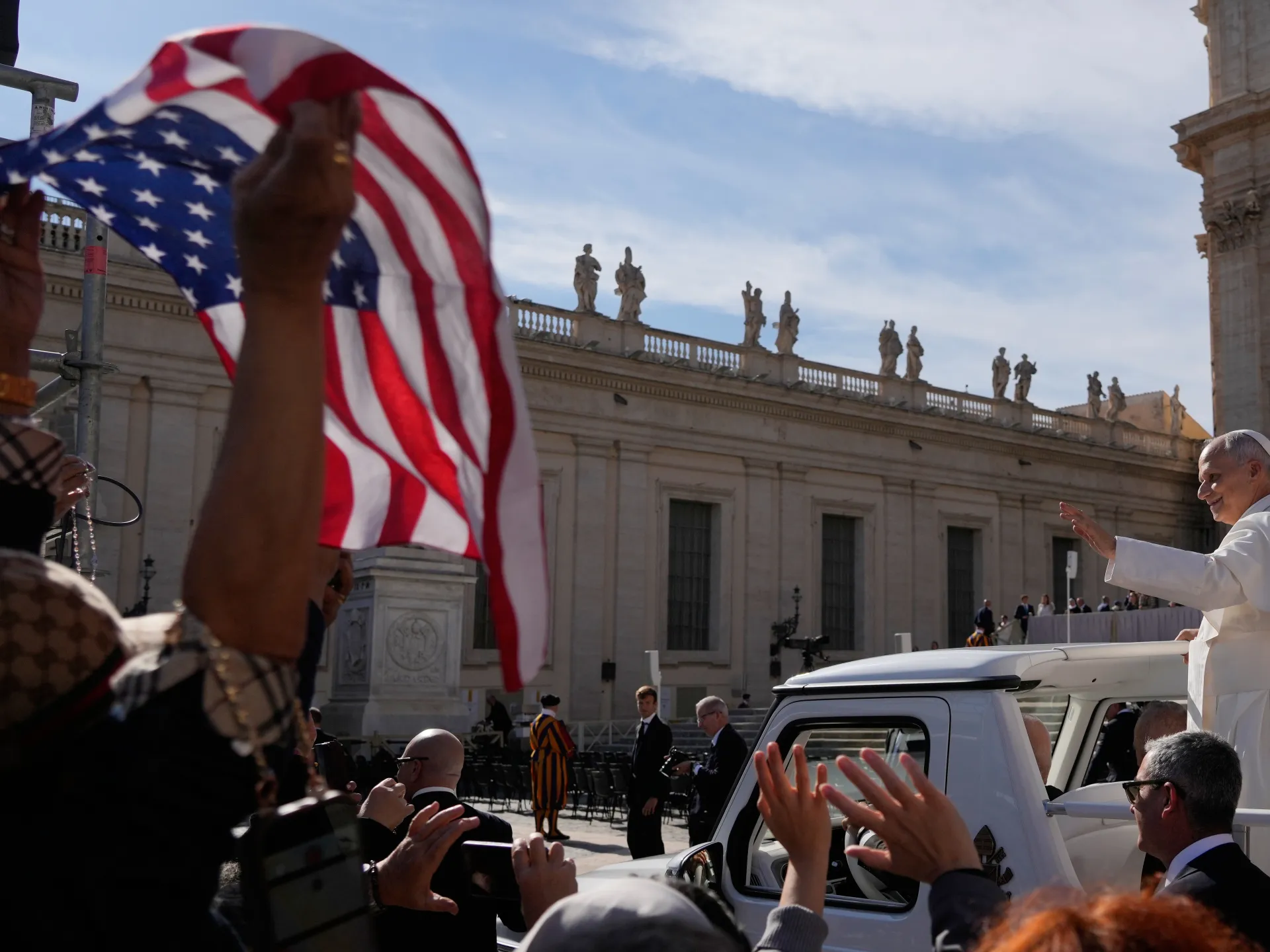
Pope Leo XIV has become the first pontiff to vote in a United States general election after casting a mail-in ballot in Chicago, where he was born.
The Vatican confirmed on Friday that the pope submitted a mail-in ballot in the city ahead of the November 3 midterm elections, citing his longstanding belief in civic participation.
Recommended Stories
list of 3 itemsend of list
Leo, formerly Robert Prevost, “has exercised his right to vote as a United States citizen”, as he has done “whenever he was eligible to do so”, the Vatican’s press office said.
“The Holy Father expresses his belief in the right and the duty of citizens to participate in democratic processes,” it added.
The Vatican did not say which candidates Leo voted for.
In a note commenting on Leo’s vote, the US Conference of Catholic Bishops urged Catholics to put “our faith before our politics” and “uphold human dignity and the common good”.
“In voting, our Holy Father sets the example that encourages each citizen to exercise their civic responsibility,” said the conference’s director of public affairs, Chieko Noguchi.
Leo is a citizen not only of the US but also of Peru, where he lived as a priest and bishop for more than 20 years, as well as of the Vatican, where he is head of state.
US federal law allows citizens living abroad, even those working for foreign governments, to vote via absentee ballot.
Americans working for foreign governments are not automatically at risk of losing their US citizenship, but the US State Department says on its website that it may “actively review” the citizenship status of Americans who “serve as a foreign head of state, foreign head of government, or foreign minister”.
A regular voter
In this year’s midterm elections, voters in the solidly Democratic state of Illinois, where Chicago is located, will select a successor to retiring Senator Dick Durbin and choose whether to re-elect Governor JB Pritzker.
Leo requested a mail-in ballot on October 3, just 10 days before he underwent surgery to remove a cancerous tumour from his right lung. He has slowly been resuming his activities at the Vatican after being released from the hospital on October 17.
Since 2000, Leo has voted in five primary elections as Prevost, requesting Democratic ballots twice and Republican ballots three times, according to records held by the Illinois State Board of Elections, which do not show which candidates he supported.
Illinois voters must declare a party preference to receive a primary ballot.
While registered in heavily-Democratic Cook County, Prevost requested Democratic primary ballots in 2008 and 2010. After moving to the more conservative Will County, he requested Republican primary ballots in 2012, 2014 and 2016.
Clashes with Trump
Since Leo’s ascent to the papacy in May 2025, US President Donald Trump has clashed with the pontiff several times.
Trump criticised the pope for repeatedly condemning the US-Israel war on Iran and for challenging his administration’s crackdown on immigrants.
Earlier this year, Trump called Leo “weak” and captive to the “radical left”, kicking off a remarkable back-and-forth argument.
Leo responded by telling reporters: “I’m not afraid of the Trump administration or of speaking out loudly about the message of the Gospel, which is what the church works for.”
Fabricated political polling has forced its way into the spotlight during the midterm election period in the United States.
Revelations that a small number of fraudulent firms have released fictitious results – some of which were picked up by news outlets and polling trackers – have raised concerns about how easily false information can acquire credibility.
Recommended Stories
list of 3 itemsend of list
Those datasets can be used to cast doubt on the electoral process. And when bad actors are unmasked, their existence can be leveraged to undermine voter confidence in election information overall.
The latest example occurred earlier this month, when Wedgewood Polls released a statement on social media admitting its statistics about a bevy of battleground states – like Texas, Ohio, Michigan, Kansas and Maine – were fake.
Wedgewood described its work as “an experimental project” designed to highlight the “vulnerabilities, lack of oversight and overall low barrier to entry” in the US polling industry.
“Having previously worked in the polling and research sector, we watched as the public’s trust in polling eroded alongside a rise in unverified, low-quality methodology,” the firm said in a statement posted to its social media account, which has now been deleted.
It justified its false data as a test to see how easy it would be for fabricated polling to gain traction among voters and the media.
“The short answer: Far too easy,” Wedgewood said.
But Wedgewood’s admission came after its surveys had already circulated through the political information ecosystem, reaching prominent media outlets like The New York Times.
The incident was the second such scandal in the 2026 election cycle, following the exposure of another operation, Median Strategies, which acknowledged in August it had also faked results as a “short-term social experiment”.
In an increasingly polarised US political environment, the incidents have roiled a polling industry – and a public – struggling to adapt to an ever-changing information landscape.
How fake polls gained credibility
Wedgewood, which launched in June, published surveys covering competitive races across several states. Its results attracted attention from political campaigns, commentators and organisations that compile polling data.
The New York Times said its polling tracker had listed 15 Wedgewood surveys between June and October. The newspaper subsequently removed them.
In the wake of the scandal, it explained that the firm had answered questions about its personnel, methodology and funding before its results were included.
While the Times said Wedgewood’s surveys were not incorporated into the newspaper’s own presidential approval or national congressional polling averages, the case revealed a vulnerability in the process by which polling information becomes established as credible.
Polling aggregators help journalists and voters make sense of a crowded field of surveys by collecting results from multiple research organisations. Their value depends partly on their ability to distinguish reliable research from poorly conducted or fraudulent work.
Wedgewood’s success in passing some of those checks suggests that transparency on paper is not necessarily proof that research has been conducted as claimed.
According to FiftyPlusOne, a polling and forecasting website that investigated the firm, inconsistencies in the raw data and the technical identifiers associated with survey responses helped raise suspicions about its authenticity.
The investigation prompted Wedgewood to acknowledge that most of its results were fabricated.
Though Wedgewood has denied trying to mislead the public, some pollsters are not convinced, suggesting the group could was up to something more nefarious.
“We were investigating Wedgewood for faking their data,” said data journalist G Elliott Morris, who was involved in FiftyPlusOne’s probe. “They are trying to cover up for their fraud with the ‘we were doing a social experiment’ excuse.”
How fake polling has impacted elections
The consequences of fake polling extend far beyond the polling industry.
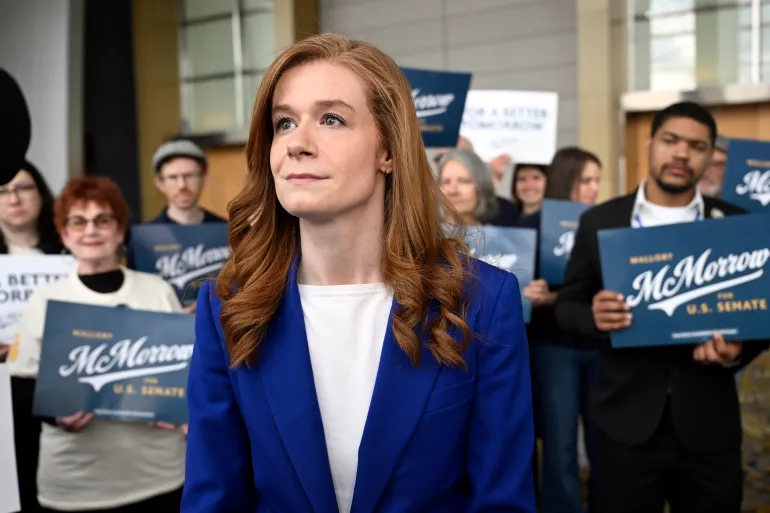
Mallory McMorrow, who ran unsuccessfully in Michigan’s Democratic Senate primary, has argued that a Wedgewood survey showing her support in the single digits damaged her campaign.
McMorrow said the poll left her volunteers demoralised, and journalists repeatedly contacted her to ask whether she should abandon the race.
Donations, she added, also evaporated, with Democratic supporters looking to other campaigns to invest.
Michigan State Senator Mallory McMorrow, a former candidate for the US Senate, stands with supporters in Detroit on April 19 [Jose Juarez/AP Photo]
In a social media post, McMorrow described the poll from Wedgewood – and another from the firm Mitchell Research and Communications – as a “one-two punch” that “killed her campaign”. She suspended her Senate bid in July.
“By that point, we took a risk and we spend our money. We put our ads up. They were working. But the damage was done. And I was drowned out by outside spending and the narrative that we had completely collapsed,” she wrote.
Experts say McMorrow’s account illustrates a broader problem: Even when a poll does not accurately measure public opinion, its findings can still influence the decisions of people who believe it does.
Why it matters
The Wedgewood controversy demonstrates how fraudulent data can become ammunition in an already polarised political environment.
Researchers at the University of Washington’s Center for an Informed Public tracked how discussion of Wedgewood’s admission spread across social media.
Initially, much of the conversation was concentrated among polling experts and people who followed election data. But the story subsequently gained traction among influential political commentators and partisan accounts.
Some posts focused on the fact that prominent outlets and polling aggregators had listed Wedgewood’s results. Others used the revelation to question polling more broadly, particularly surveys suggesting that Democrats were competitive in closely contested races.
The researchers found the controversy became intertwined with claims that polling was systematically misleading voters or understating support for particular political parties.
“Within 24 hours, the right-wing media ecosystem had succeeded in drawing attention to the story and setting some of the most salient frames: that poll numbers around the midterms, especially poll numbers favoring Democrats, cannot be trusted,” the Center for an Informed Public wrote in its analysis.
President Donald Trump, who has regularly made false claims about US election integrity, seized on the revelations to criticise the Times for including Wedgewood’s surveys in its polling tracker.
“The New York Times got caught,” Trump wrote in a Truth Social post. “Everything about The Failing New York Times is ‘ARTIFICIAL’.”
He also suggested the Wedgewood case would help his $15bn defamation suit against the Times.
“Our powerful Lawsuit against them is getting stronger and stronger everyday,” he added.
What can be done?
No laws exist in the US that criminalise fake polls outright.
Some advocacy groups and law scholars have argued that the publication of fake polls constitute commodities and wire fraud, warranting federal prosecution.
“Deterring this sort of fraud before it can happen – and raising awareness of it – is vital,” Tyler Yeargain wrote for the Missouri Law Review in 2020.
He argued that enforcement of election-related laws against fake pollsters has “not been fully utilized”.
“Prosecution would serve a strong federal interest,” he wrote. “The interest at stake is weightier than concerns over how fake polls can shade the accuracy of an academic endeavor in prediction markets. It is instead to deter other wrongdoers, the sort who would weaponize fake polls to manipulate elections.”
Brendan Carr, the head of the Federal Communication Commission (FCC), which regulates broadcasts in the US, said there has been “a significant surge” in fake polls during the 2026 midterms, urging networks not to amplify them. Otherwise, Carr said, they could lose their licence to operate.
President Donald Trump listens as Federal Communications Commission Chairman Brendan Carr speaks at a campaign rally in Wasilla, Alaska [File: Lindsey Wasson/AP Photo]
“Broadcasters are prohibited by the terms of their federal licenses from engaging in News Distortion or promoting Broadcast Hoaxes,” Carr wrote on social media. “It is important that broadcasters comply with their public interest obligations.”
But the FCC’s sole Democratic commissioner, Anna Gomez, disagreed with Carr’s assessment.
“Pollsters who intentionally mislead the public should answer for it, but broadcasters who report publicly available polling data should never be punished when a poll is wrong,” she wrote on X. “FCC rules on news distortion or hoaxes do not apply to a station that reports this data in good faith.”
Without a clear legal remedy against fake polls, experts argue the onus is placed on media outlets and voters themselves to evaluate the quality of the election data they see.
Mark Baldassare, the survey director of the Public Policy Institute of California (PPIC), said there are ways to quickly spot which surveys are real – and which are not.
“Look for transparency,” Baldassare told PPIC’s Stephanie Barton in an interview. “A credible survey will list its mission, the purpose of its polling, and its sponsors or funders.”
“A poll guided by partisan groups or campaigns that is publicly released may have a message to relay to the public.”
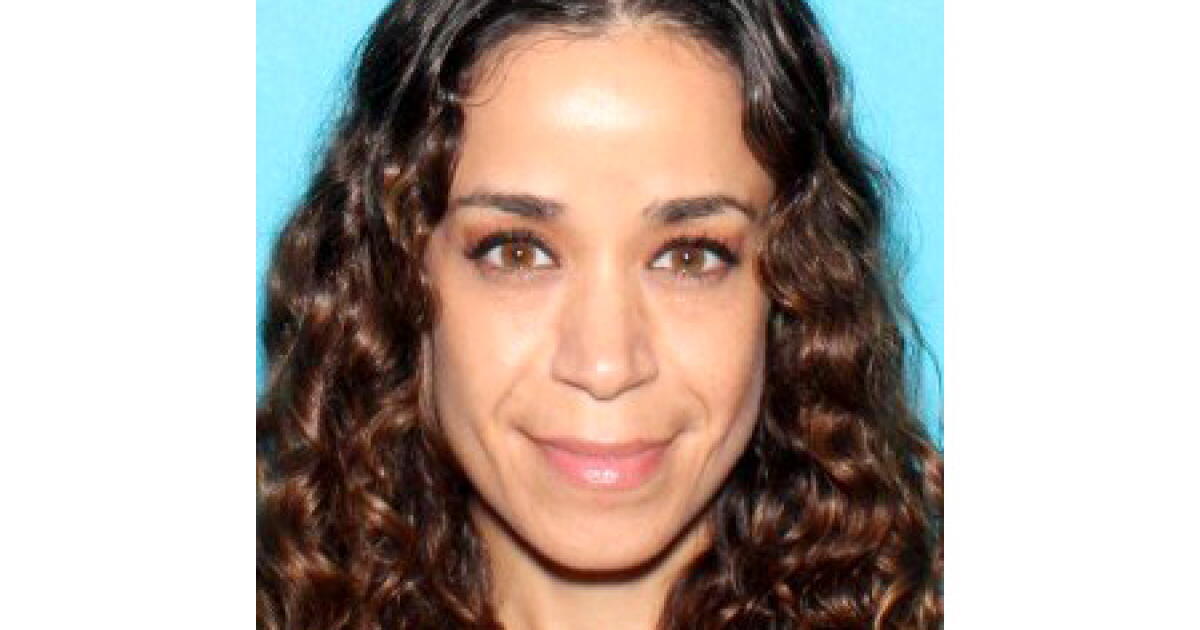
Nearly a year after Christina Downer disappeared, her actor boyfriend was among two people arrested on suspicion of murdering her, Los Angeles police said Friday.
Downer’s brother is “Saturday Night Live” writer Jimmy Fowlie. Los Angeles Police Department officers arrested Delorean Bijon Brandon, 41, and Kaylee Nicole Markowski, 34, on Thursday after a lengthy investigation that kicked off after Downer was reported missing just before Christmas last year.
Both Brandon and Markowski were booked at the Metropolitan Detention Center with bail set at $2 million each. It is not clear if they are being represented by attorneys.
At first, the disappearance appeared to be a missing person’s case. Downer’s ex-husband requested a welfare check on Dec. 18, 2025 when he hadn’t heard from her. At the time, Downer’s boyfriend, Brandon, claimed that she had moved out several months earlier, leaving behind everything she owned including her car and dog, according to LAPD.
A few days later on Dec. 22, Fowlie shared a missing persons flier on his Instagram, writing that Downer had been missing and the family was concerned for her safety. In a separate post, he shared a photo of Downer and her dog, Rex, and wrote in the caption that his sister was very attached to the dog and had last been seen in Koreatown.
“I heard from her on Nov 26th. She was active on social media up to Dec 15th,” he wrote, noting that the last time anyone had spoke to her on the phone was Oct. 5. Fowlie said in the post that the family had “reason to believe” that in the weeks before she went missing, her phone and social media had been compromised and that whoever had Downer’s phone used it to hide “the fact that she was gone,” by requesting money and create an illusion that she’d skipped town and gone off the grid.
But when Downer’s phone washed ashore on the beach in Santa Monica, LAPD’s Robbery-Homicide Division took over the investigation.
Early this month, investigators searched an Airbnb in Joshua Tree in connection with Downer’s disappearance, according to NBC. It is not clear what, if anything, investigators found at the location.
In November 2025, Morocco’s King Mohammed VI decreed that October 31st of each year will be a national holiday, designated as “Aid Al Wahda” (Unity Day in English), according to a statement from the Royal Cabinet.
The royal proclamation marks the adoption of a United Nations Security Council resolution that supports the Kingdom’s position on the Western Sahara issue, which has been widely described in the news as a “Sahara Victory at the UN.” The move is intended to underscore Morocco’s national unity and sovereign identity.
The Security Council resolution renewed for one year the mandate of the long-standing United Nations peacekeeping mission in the disputed Western Sahara, referencing Morocco’s Autonomy Proposal presented in 2007 — which envisions the territory as self-governing under Moroccan sovereignty — as a basis for negotiations.
The resolution is historic as it directly and explicitly joined the growing momentum in support of the Moroccan initiative as the basis to end the dispute under Morocco’s sovereignty.
The creation of “Unity Day” adds a significant new date to the nation’s calendar, reinforcing the importance of the UN’s resolution and its implications for the region. Unity Day will serve as a unifying occasion to celebrate national unity and the Kingdom’s territorial integrity, and it will also be a day on which the King grants royal pardons.
Voter ballots were mailed to all registered California voters starting Oct. 5. But if you prefer to vote in person, here’s what you need to know about casting your ballot ahead of and on election day, Nov. 3.
How can I vote in person now?
The first vote centers opened for early in-person voting on Oct. 24 but only in Voter’s Choice Act counties. L.A. County is among the 30 VCA counties where you can vote in person early.
But in-person early voting expands significantly Saturday, with locations open across the state.
To find your polling location, you can visit your county elections official’s website or the secretary of state’s website here.
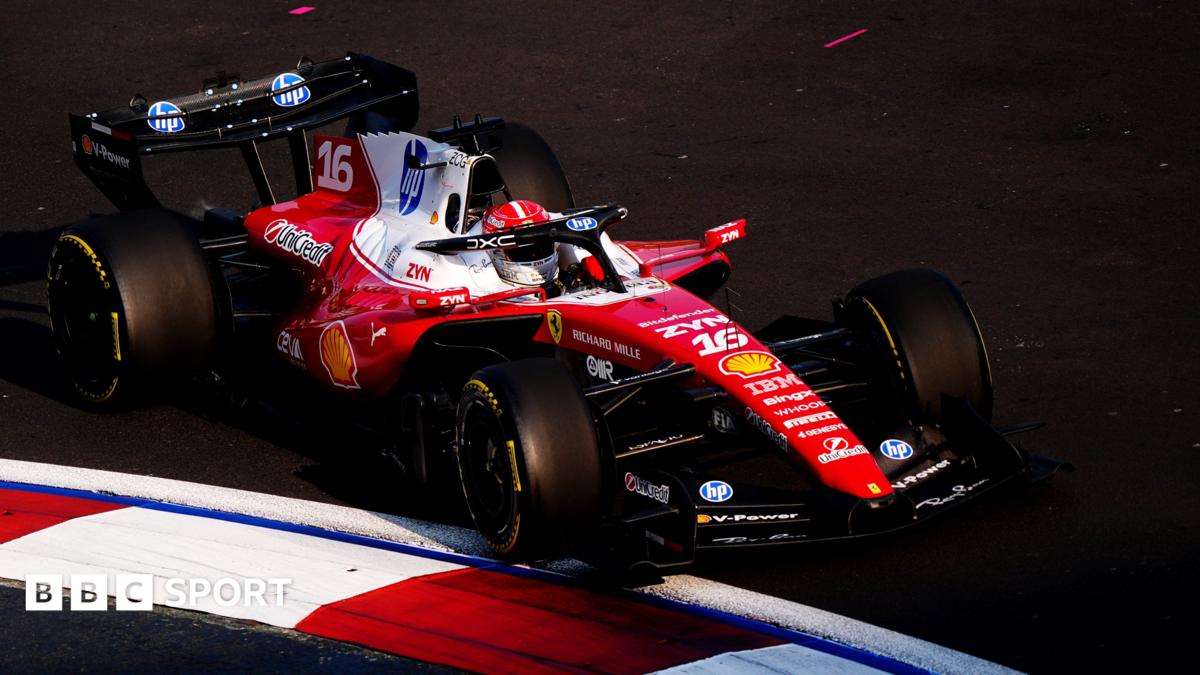
Ferrari’s Charles Leclerc headed McLaren’s Lando Norris in Friday practice at the Mexico City Grand Prix.
Mercedes driver Kimi Antonelli, who is poised to clinch his first world title on Sunday, was fourth fastest behind team-mate George Russell.
Only a victory by Russell or Ferrari’s Lewis Hamilton can theoretically stop Antonelli becoming champion on Sunday. Even then, Antonelli only needs ninth place if Russell wins and 10th if Hamilton does.
Leclerc, who topped both sessions on Friday, was 0.103 seconds quicker than Norris, with Russell just 0.003secs further adrift.
Antonelli was 0.217secs off the pace, and ahead of the Red Bulls of Max Verstappen and Isack Hadjar.
Leclerc’s team-mate Lewis Hamilton was 11th overall after stopping on track with a technical problem before completing his qualifying simulation runs on the soft tyre.
Behind Hadjar, Racing Bulls duo Arvid Lindblad and Liam Lawson sandwiched Pierre Gasly’s Alpine, while McLaren’s Oscar Piastri completed the top 10.
Verstappen and Lawson face a trip to the stewards after a collision in the stadium early in the session.
“I don’t think it’s called unlucky,” said Verstappen. “Maybe not very smart behaviour what he was trying to do there.
“At the end of the day it is not going to change my weekend, but if I were him I would act a little smarter and when you’re fighting for your seat it’s not very smart behaviour.”
Lawson is one of three drivers competing for two seats at Racing Bulls, Red Bull’s junior team, next year, alongside current team-mate Arvid Lindblad and Bulgarian Formula 2 front-runner Nikola Tsolov.
Verstappen added: “When he saw me coming, he suddenly started to accelerate. I don’t know what was going through his head, that he wanted to drive me off the track in the hairpin.
“That’s not very sensible behavior from someone in his position, to pick a fight with me.”
The first session was marked by 10 of the 11 teams running ‘rookie’ drivers in their cars.
One of them was Cadillac’s Colton Herta, who the team are considering promoting to a race seat in place of Valtteri Bottas next season.
Initially, the team felt his running in Mexico had given him enough points under the F1 system to earn a ‘superlicence’, which is required to race in F1.
But further investigation by governing body the FIA revealed the American nine-time Indycar race winner is still one point short and will have to complete one further practice session this year to secure his licence.
The team plan to do that before the end of the season.
Brazil has summoned Argentina’s top diplomat in the country to answer questions about right-wing candidate Flavio Bolsonaro, who fled first to Argentina, then to the United States, after losing Sunday’s presidential election.
On Thursday, Brazil’s Foreign Ministry called in Argentina’s charge d’affaires, Maria Emilia Cortes, sources inside the government told the news agency Reuters.
Recommended Stories
list of 3 itemsend of list
Argentina’s Foreign Minister Pablo Quirno, however, has denied on social media that his government received a formal request for explanations regarding Bolsonaro’s decision to flee into Argentina late on Tuesday.
The circumstances surrounding Bolsonaro’s departure threaten to further strain relations between Brazil’s recently re-elected President Luiz Inacio Lula da Silva and his Argentinian counterpart, libertarian Javier Milei.
After Sunday’s election, Bolsonaro was given a deadline to surrender his passports. Officials ordered him to remain in the country as part of an ongoing legal case.
He is part of an ongoing investigation into a money-laundering scheme, known as the Banco Master scandal.
Investigators are probing a multimillion-dollar payment Bolsonaro received from Banco Master’s former head, Daniel Vorcaro, allegedly to finance a film about his father, former President Jair Bolsonaro.
The younger Bolsonaro has denied any wrongdoing and called the case politically motivated.
A senator since 2019, Bolsonaro ran this year as the right-wing presidential candidate for his father’s political movement, the Liberal Party.
But after advancing to the run-off, the senator fell short by more than 4 million votes. Lula won Sunday’s race with 51.8 percent of the vote, securing a historic fourth non-consecutive term.
Bolsonaro, however, has refused to concede, though the Liberal Party has acknowledged Lula’s victory.
Instead, he made an unsubstantiated allegation of electoral malfeasance, pointing to a Supreme Court decision to extend voting hours on Sunday.
Both candidates’ campaigns had requested extensions, though for different reasons: Bolsonaro’s camp pointed to inclement weather delaying voters in parts of Brazil, while Lula’s party raised concerns about efforts to restrict public transport on election day.
But Bolsonaro argued that the last-minute extension had disadvantaged voters in regions considered right-wing strongholds.
After arriving in Miami on Wednesday, he declared himself the “legitimate president-elect” of Brazil.
He, his wife and two daughters had travelled from Brazil through northern Argentina, before boarding a chartered aircraft that passed through Ecuador to reach the US.
US President Donald Trump and Milei, both right-wing leaders, have been openly supportive of the Bolsonaro family.
The Brazilian senator later thanked Milei for his assistance, although he did not provide details about the nature of the help. A spokesperson for the Argentinian president described the journey as a rescue.
Bolsonaro, the spokesperson said, had escaped “from the claws of communism, which seeks to imprison all opposition figures”.
Trump, too, has suggested that Sunday’s election was “rigged”, though he declined to “take sides” after the result was announced.
The US president has previously issued sanctions and tariffs in response to the prosecution of Jair Bolsonaro, after the former Brazilian president denied his defeat in the 2022 election. He was convicted in 2024 of plotting a coup to prevent Lula from taking power and sentenced to 27 years in prison.
Relations between Lula and Milei have been strained since the Argentinian leader took office in 2023. Milei has repeatedly criticised Lula.
The diplomatic dispute follows an earlier deterioration in relations, with the South American countries each recalling their ambassadors in August after a series of public disagreements.
A wave of youth-led protests has swept Europe, with demonstrators denouncing rising prices and a lack of prospects.
Published On 31 Oct 202631 Oct 2026
Germany and France are preparing for potential protests over the weekend that could coincide with Halloween festivities.
Approximately 150,000 people in Germany have registered to turn out in about 30 cities, including Berlin, Frankfurt and Cologne, to protest on Saturday.
Recommended Stories
list of 3 itemsend of list
Police plan to deploy thousands of additional officers across the country. Some luxury jewellery shops and clothing stores have boarded up windows to protect against potential looting or violence.
Protests in Germany are led by a group dubbed “GenZ regelt!”, which translates to “Gen Z has got this!”.
The German protest movement’s complaints include the high cost of living, poorly maintained schools, government spending cuts and, more broadly, politicians taking decisions with little regard for the younger generation.
A wave of largely youth-led protests has swept across Europe in recent weeks, many with similar complaints: rising prices, declining educational facilities and what many protesters see as a lack of prospects for their future.
France braces again
Many of those grievances mirror those of the youth-led protests that have convulsed French cities and towns for three consecutive weekends.
Shops and businesses in Paris and other cities were boarding up windows on Friday.
French police are preparing for another weekend of potential protests and violence by deploying 70,000 police officers nationwide. More than 40 metro stations in Paris will be closed.
Authorities have also said face-covering masks will not be allowed at the demonstrations.
France’s interior minister has warned of a “very high risk” of disorder over the weekend.
Two weeks ago, widespread unrest broke out in cities and towns across France as demonstrations against the cost of living and conditions in schools descended into large-scale looting and riots.
Since then, French authorities have sought to clamp down on violent protests, but last weekend saw further demonstrations across the country, including intermittent clashes with the police.
Alain Di Crescenzo, president of France’s Chamber of Commerce, said businesses were worried.
“Shopkeepers can’t wait for Saturday to be over,” Di Crescenzo told broadcaster France Inter.
Halloween “is not helping matters”, he said, “because we’re going to have people wearing masks”.
Comedian Romesh Ranganathan and actor Sebastian Croft have won the 2026 series of The Celebrity Traitors following a very dramatic final episode, which saw James Blunt sabotage himself
22:47, 30 Oct 2026Updated 22:48, 30 Oct 2026
Romesh and Bash win Celebrity Traitors
Comedian Romesh Ranganathan and actor Sebastian Croft have won the 2026 series of The Celebrity Traitors as faithfuls.
The pair were the last two remaining at the firepit at the end of the BBC show with the players having voted out traitor and TV presenter Maya Jama during the final roundtable.
It had been quite the dramatic turn of events, with it ending with both players revealing their true identity. Sebastian – also known as Bash – said: “I began this game as a faithful, but I’m ending this game as a faithful.”
Romesh, who paused for dramatic effect, told his co-star: “Bash, I began this game as a faithful, and I’m ending this game as a faithful.” Both were thrilled to be faithfuls and secure the huge prize fund for their charities.
In an emotional scene, Sebastian said: “That was just incredible, this might actually be the best day of my life,” with Romesh adding: “I just really hope my mum’s proud, and also my youngest son Charlie, who wanted me to come on the show. Dad won, please show me some respect.”
It was a dramatic firepit – as all the players originally decided to banish again. Former Little Mix star Leigh-Anne Pinnock received the most votes and was booted out of the castle. It was then things took a turn.
Traitor Kenny opted to end the game but the other players chose to banish again, with Romesh gunning for James Blunt. It seemed like it was all going to end with an exit for James, but Bash’s decision to split the vote meant Kenny was booted out next.
Players were then given the option to banish again, with James choosing to banish again despite Romesh saying his conversation with Sebastian had changed his mind on whether he was a faithful or a traitor. Both Romesh and Sebastian voted James out.
To see more of the stories you love from The Mirror and to find them easily in Google then make us your preferred source. Free and easy-to-do, just click on the link here to find more from The Mirror at the top of your feed.
Sebastian said of his decision: “I believe you’re both faithful, and I’m sad to be in this predicament, and I’m sorry James because I truly believe that you’re a faithful, but I’m a man of my word, and so I’ve had to go for you.”
Earlier in the show, the final mission saw the teams tasked with finding two underground bunkers in the Scottish Highlands filled with gold, with one team boarding a helicopter and others getting into buggies. Once they found the bunkers they had to blow them up with dynamite.
To find the bunkers, the team in the buggies had to answer questions, before waving in the helicopter team to drop off the dynamite and detonator, with Jama, Croft and Pinnock hanging off the side of the helicopter to deliver the equipment. The group successfully found and detonated both bunkers, adding £18,500 to the prize pot, bringing it to £83,000.
After being voted out at the final roundtable, Maya did not reveal her identity as a traitor as per the rules for the last episode, but told her fellow players: “Thank you, alright, love you all, good luck, you’re going to need it.”
Actor Michael Sheen was murdered at the beginning of the final. After discovering his fate , he said: “The time has come, can’t say I’m surprised, but I am incredibly disappointed, gutted that I got so close to the end. It’s been absolutely unforgettable, and I’ve loved every minute.”
Heartstopper actor Sebastian said he would be donating his £41,500 half of the prize pot to the charity Choose Love, while Romesh said he would be giving his money to the Refugee Council.
There are about 2,000 safety-net clinics in California that deliver primary care to underserved populations. Proposition 44 would set limits on how these federally qualified health centers spend their money.
The basics
Proposition 44 asks voters to require federally funded community health centers to spend at least 90% of their total annual revenue on “program services advancing their charitable purpose.”
The impact
If the proposition passes, the state attorney general will be responsible for determining what services fall into that category. If spending on administrative or non-healthcare functions exceeded 10% of total revenue, a clinic would have to pay a penalty equal to the amount it overspent.
Dig deeper
Proposition 44 was backed by the Service Employees International Union-United Healthcare Workers West, the same union that is pushing Proposition 40, the controversial billionaire tax. The union appears to be the main supporter of the proposal and says the restrictions would prevent excessive spending on executive salaries, fundraisers and other administrative expenses.
There is a diverse array of opponents, including the California Medical Assn., the California Teachers Assn., the Planned Parenthood Affiliates of California, the state Democratic Party and the state Chamber of Commerce. They say the proposition’s vague wording could result in vital services being excluded from the list of program expenses permitted. A study commissioned by the California Primary Care Assn. found that clinics could face up to $1.7 billion in collective penalties in the first year of the measure’s implementation.
A parade of short-priced winners opened the Breeders’ Cup on Friday, with the afternoon’s heaviest favorite capturing the headline race as Hughes won the $2 million Juvenile.
Hughes, named for New Jersey Devils forward and U.S. Olympic hockey hero Jack Hughes, held off American History and Salahudin in the 1 1/16-mile race at Keeneland Racecourse in Lexington, Ky., to remain undefeated in five starts and clinch the 2-year-old championship.
The son of Into Mischief, ridden by Flavien Prat for trainer Bob Baffert, went off at odds of 4-5 and returned $3.64 after covering the distance in 1 minute 42.27 seconds.
The winner of the Juvenile normally is anointed the early favorite for next spring’s Kentucky Derby, but Hughes will have to vie for that label with U.S.S. Valor, who skipped the Juvenile after a very impressive win in the Champagne Stakes last month at Belmont Park.
Friday’s win was the third in a Grade 1 race for Hughes, following victories in the American Pharoah at Santa Anita and the Del Mar Futurity.
Baffert also had the favorite in the Juvenile Fillies, but Miss Monica was runner-up behind second choice Emphatic ($7.92). The other losing favorite was Folsom Blues, who was second in the Juvenile Turf behind third choice Haffner ($9.46).
The other races were won by favorites — Libertango ($5.74) in the Turf Sprint and Sun Goddess ($3.70) in the Juvenile Fillies Turf.
Ryan Moore rode Sun Goddess and Haffner for trainer Aidan O’Brien, who broke a tie with Baffert for most Breeders’ Cup wins (23-22).
There are nine more races Saturday beginning at 10:10 a.m. PDT. The final race, the $7 million Classic, is scheduled for 3:16 p.m.
Earlier this month, authorities worldwide urged website administrators to execute emergency updates after a nonprofit programming foundation flagged critical security flaws that could allow hackers to breach systems.
Government and corporate websites briefly went offline to patch the vulnerabilities, nicknamed PHP2Shell, which were discovered by independent cybersecurity experts using artificial intelligence (AI).
Recommended Stories
list of 3 itemsend of list
The vulnerabilities were embedded in the code of a widely used open-source web programming language, PHP, for more than a decade. They had gone unnoticed, however, because it would have been too complicated for humans to exploit them without the use of advanced AI.
But cybersecurity experts, as well as those maintaining important software, say PHP2Shell could be the first in a deluge of security flaws exposed by emerging AI. They say much of the world’s most critical digital infrastructure is maintained by volunteers, who often lack the resources and time to respond to newly discovered threats.
“There’s been a lot of people in the AI safety community that said this is one of the first areas where we are going to see the harmful impact of AI,” said Peter Slattery, a research scientist at MIT’s FutureTech, who studies how cybersecurity experts are dealing with the new technology and tracks real-world incidents involving AI.
A digital world built on volunteer work
PHP got its start in 1995, when Danish-Canadian programmer Rasmus Lerdorf sought to track how many people visited his online resume. Over time, others around the world improved Lerdorf’s software, and it grew in popularity.
As with other open-source coding projects, anyone could download, modify and share improvements. Websites like Facebook and Wikipedia were built using PHP, which runs about 70 percent of the world’s websites.
In 2021, a dedicated nonprofit, the PHP Foundation, was launched to coordinate development. Like many other foundations maintaining open-source software, it operates on a meagre budget.
Most of the digital infrastructure consumers use is powered by open source software. The Mozilla Firefox browser is open source, as are languages like Perl, Python, and JavaScript. The software that lets a computer communicate with others on the internet is often open source, with many servers using products like Apache HTTP Server, maintained by the Apache Software Foundation.
“The world today, including proprietary software vendors, relies on open source software for its digital infrastructure,” said Amanda Brock, CEO of OpenUK, a nonprofit that supports open source software.
The world’s largest corporations, like Meta, Google, OpenAI and Anthropic, depend on that volunteer-built, open-source infrastructure. Now, those companies’ own AI tools are uncovering security flaws in the infrastructure at a pace that needs far more resources for groups like the PHP Foundation to keep up.
“It’s simply not possible with the resources in place to fix all of the known vulnerabilities,” Brock said. “Foundations are attempting to manage these challenges, but the smaller ones don’t have hundreds of millions in funding, and managing this at the pace AI requires is proving impossible.”
A deluge of new bugs to fix
The PHP2Shell vulnerabilities were found through several advanced AI models, which can employ far more complicated attempts to hack past security barriers than humans could.
Developers of other software are also discovering far more security flaws than in the past because AI is being used to probe defences.
Google said it uncovered more than 1,000 security bugs in the last update for its Chrome browser, more than in the last two dozen updates combined. Mozilla, the foundation behind the Firefox browser, found more than 400 security vulnerabilities in April, a significant jump from the previous record of 76 bugs discovered just one month earlier.
“We have maybe 10 times more issues than usual because we are using AI to find them,” said Jarek Potiuk, part of the volunteer security team at the Apache Software Foundation. (In keeping with the foundation’s non-hierarchical ethos, Potiuk said he has no real title).
Potiuk said there is an “industry-wide movement” to conduct scans using AI models and identify security vulnerabilities, much like was done to find the bugs in PHP. But the scans themselves cost money – used to pay for the tokens for AI models – and afterwards, humans must pore over them to weed out false positives.
“Every project, every foundation is doing this right now – spending enormous amounts of time to find these issues,” Potiuk said. “AI helps to find them, but you have to verify things, you have to review them.”
Earlier this year, Anthropic launched Project Glasswing, offering $100m in credits to support its advanced Claude Mythos AI model to search for security vulnerabilities in the world’s critical software. In one month, more than 23,000 vulnerabilities were found across more than 1,000 open source projects.
The Apache Software Foundation has taken advantage of another scheme, the Alpha-Omega project, to scan for security bugs across the 290 software packages it maintains. The project, backed by companies like Anthropic, Amazon, Google, Microsoft and OpenAI, spends about $7m a year helping open-source developers find critical security bugs.
But those working on finding and fixing the security flaws say the corporate world could be doing a lot more, given the trillion-dollar valuation of companies whose products would not work without free software like the packages the Apache Foundation provides.
“They are helping a lot, but we need more active players in this area,” Potiuk said, “because it’s highly disproportional – the impact it has on the corporate world versus the open source world”.
When a major security flaw like PHP2Shell is uncovered, it often comes down to a handful of volunteers to fix it.
Keeping the internet’s infrastructure as decentralised and open-source as possible is crucial, Potiuk said. Instead of buying out something like PHP, major players like Google or Microsoft could, for instance, pay staff to dedicate some of their work hours to maintaining open-source projects they use.
Real-world targets
The 2021 Log4Shell vulnerability, which allowed hackers to remotely run code on millions of devices through a widely used library maintained by the Apache Software Foundation, underscored the critical role open-source software plays in system security. That bug was discovered without the use of AI.
Suddenly, cars, microwaves and a host of electronic devices connected to the internet were vulnerable, Potiuk said.
“That was the moment when the whole ecosystem realised how important it is to take care of open source,” he said.
A bug like that, if found by a malicious hacker and exploited before there is a chance to patch devices, could have caused a major disruption.
Slattery said the database of incidents he and his colleagues maintain shows that an increasing number of vulnerabilities are being detected, and it is a matter of time before some are exploited in the real world.
“We are starting to see both a lot more vulnerabilities detected and addressed in time, but also attacks on a wide range of systems,” Slattery said. “We have been moving in this direction for a long time. There are more and more things now you can attack.”
Welcome to Bunker Talk. This is a weekend open discussion post for the best commenting crew on the net, in which we can chat about all the stuff that went on this week that we didn’t cover. We can also talk about the stuff we did or whatever else grabs your interest. In other words, it’s an off-topic thread.
This week’s caption reads:
Illustration shows a visit to the Commandobunker of Kemmel, in Heuvelland, Friday 18 March 2022. After World War II, in the middle of the cold war, several countries including Belgium, France and Great-Britain, decide to build a bunker to coordinate west Europe aerian defence. BELGA PHOTO KURT DESPLENTER (Photo by KURT DESPLENTER / BELGA MAG / Belga via AFP) (Photo by KURT DESPLENTER/BELGA MAG/AFP via Getty Images)
PRIME DIRECTIVES:
If you want to talk politics, do so respectfully and know that there’s always somebody that isn’t going to agree with you.
If you have political differences, hash it out respectfully, stick to the facts, and no childish name-calling or personal attacks of any kind. If you can’t handle yourself in that manner, then please, discuss virtually anything else.
No drive-by garbage political memes. No conspiracy theory rants. Links to crackpot sites will be axed, too. Trolling and shitposting will not be tolerated. No obsessive behavior about other users. Just don’t interact with folks you don’t like.
Do not be a sucker and feed trolls! That’s as much on you as on them. Use the mute button if you don’t like what you see.
So unless you have something of quality to say, know how to treat people with respect, understand that everyone isn’t going to subscribe to your exact same worldview, and have come to terms with the reality that there is no perfect solution when it comes to moderation of a community like this, it’s probably best to just move on.
Finally, as always, report offenders, please. This doesn’t mean reporting people who don’t share your political views, but we really need your help in this regard.
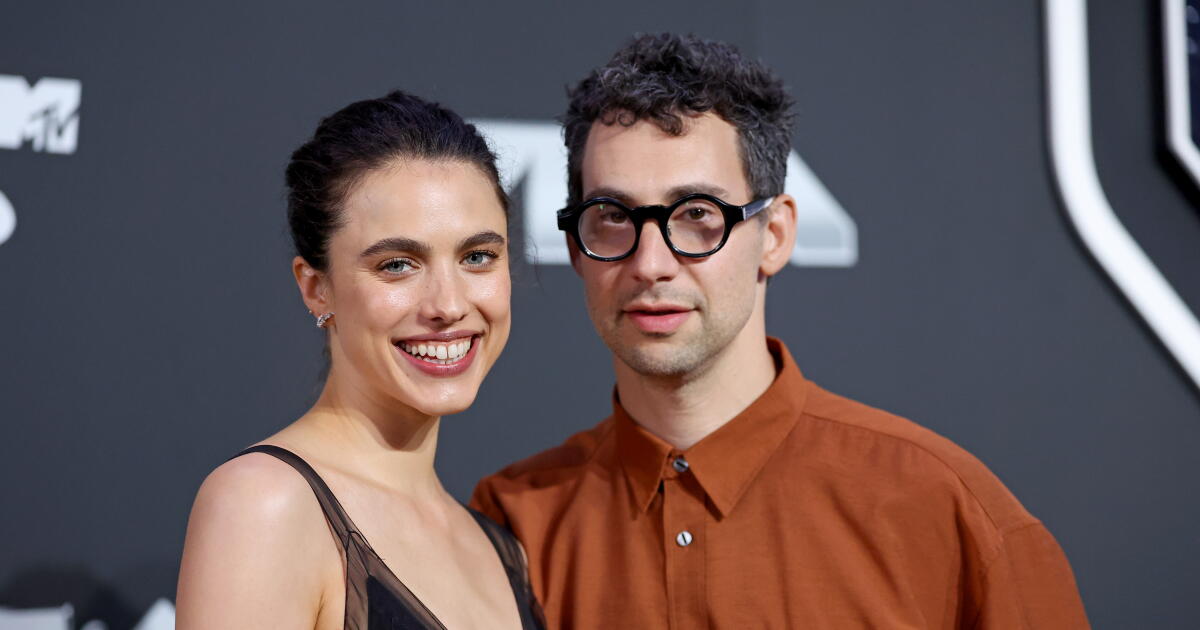
It’s official: Former entertainment power couple Margaret Qualley and Jack Antonoff are ending their marriage.
“The Substance” star Qualley and Bleachers rocker Antonoff filed papers for an “uncontested joint divorce” on Friday in Kings County Supreme Court in New York. Representatives for Qualley, 32, and Antonoff, 42, did not immediately respond to The Times’ request for comment.
The Emmy-nominated actor and the Grammy-winning musician, also known for collaborations with pop stars Taylor Swift and Lorde, separated in the summer. A source close to the couple confirmed to People at the time that the estranged partners were going through a “rocky” period.
“They share a deep affinity and love for one another, and though their romantic partnership is ending, they will absolutely be lifelong friends,” the source told the outlet.
Speculation about the pair’s split began in July, with internet fans noticing that Qualley — daughter of actor Andie MacDowell and Paul J. Qualley — appeared to delete photos featuring Antonoff (formerly of rock bands fun. and Steel Train) from her Instagram page. Among the scrubbed photos were reportedly wedding pictures she shared in March to promote the musician’s song “dirty wedding dress.”
Qualley and Antonoff married in August 2023, a little over a year after they got engaged and two years after first sparking up a romance in August 2021. Lana Del Rey, then-item Zoë Kravitz and Channing Tatum, and Swift were among the attendees at their nuptials at Parker’s Garage on Long Beach Island.
News of the Qualley-Antonoff split arose days after the latter was spotted attending Swift and Travis Kelce’s lavish wedding bash at New York City’s Madison Square Garden without his wife. Antonoff’s ex-girlfriend, “Girls” creator and “Famesick” author Lena Dunham, was also in attendance.
Antonoff has been on the road for the Bleachers Forever tour since June and recently performed at the Troubadour in West Hollywood. He kicks off the European leg of the tour next week in Italy. He spoke to the Guardian in an interview published this week about still performing music inspired by his romance with Qualley. “It’s beautiful,” he said.
“I don’t rewrite the past, I have no shame about the things I’ve said. My life has been dedicated to making it impossible for me to rewrite the past, because I’m standing there, singing about how I felt during the good times,” he said, “so when the bad times hit I can’t look myself in the mirror and pretend that those times didn’t exist. I would rather live through something publicly than even escape it privately.”
“We are in a much stronger financial position heading into 2027,” Tracy Krohn said, adding, “our Q3 results continued this positive trend.”
Krohn emphasized production resilience without drilling or M&A: “In
Seeking Alpha’s Disclaimer:This article was automatically generated by an AI tool based on content available on the Seeking Alpha website, and has not been curated or reviewed by humans. Due to inherent limitations in using AI-based tools, the accuracy, completeness, or timeliness of such articles cannot be guaranteed. This article is intended for informational purposes only. Seeking Alpha does not take account of your objectives or your financial situation and does not offer any personalized investment advice. Seeking Alpha is not a licensed securities dealer, broker or US investment adviser or investment bank.
The Trump administration has frozen, terminated or delayed billions in congressionally approved research grants since last year. Proposition 38 aims to backfill some of that loss by creating a stable source of money to fund immunology and immunotherapy research.
The basics
Proposition 38 would authorize the state to issue $8.4 billion in bonds to fund immunology and immunotherapy research to uncover treatments that help the immune system fight diseases such as cancer and Alzheimer’s disease more efficiently.
The impact
The measure would require at least $4.2 billion of the funds to be used for immunology research on cancer, heart disease and Alzheimer’s. It also would authorize the state to enter a partnership with an immunology and immunotherapy research institute selected by the California Department of Public Health and allocate half of the bond revenue to it. The remaining funds would be used for competitive grants that focus solely on immunology and immunotherapy research.
Californians would take on an increased cost of $500 million to $600 million annually to repay the bond for about 20 years, according to the Legislative Analyst’s Office.
The Yes on 38 campaign says the proposition pays for itself: 10% of all proceeds from the licensing of immunotherapies must be returned to the state to offset the total cost of the bond measure, including interest.
However, it’s difficult to predict whether any research projects will lead to marketable treatments.
Dig deeper
Proposition 38 is backed by organizations including the Michael J. Fox Foundation for Parkinson’s Research and the ALS Assn., as well as a majority of local chapters of Democratic organizations across the state. Supporters say the proposed funding could give those afflicted with chronic illness hope and potentially more options for treatment.
Its opponents have said the proposed criteria for awarding the grant funding would appear to create an extremely small pool of qualified recipients. Only the California Institute for Immunology and Immunotherapy, co-founded by billionaire Gary K. Michelson, would qualify under the proposed criteria, according to No on 38, the campaign against the proposition.
Robin Swanson, spokesperson for the Yes on 38 campaign, said “lots of institutions would qualify for funds under this measure.”
But she said at a virtual news conference in mid-September that it was “very likely” that the California Institute for Immunology and Immunotherapy “will qualify for half of the funds under the current criteria.”
Ultimately, Swanson said, the decision lies with the California Department of Public Health.
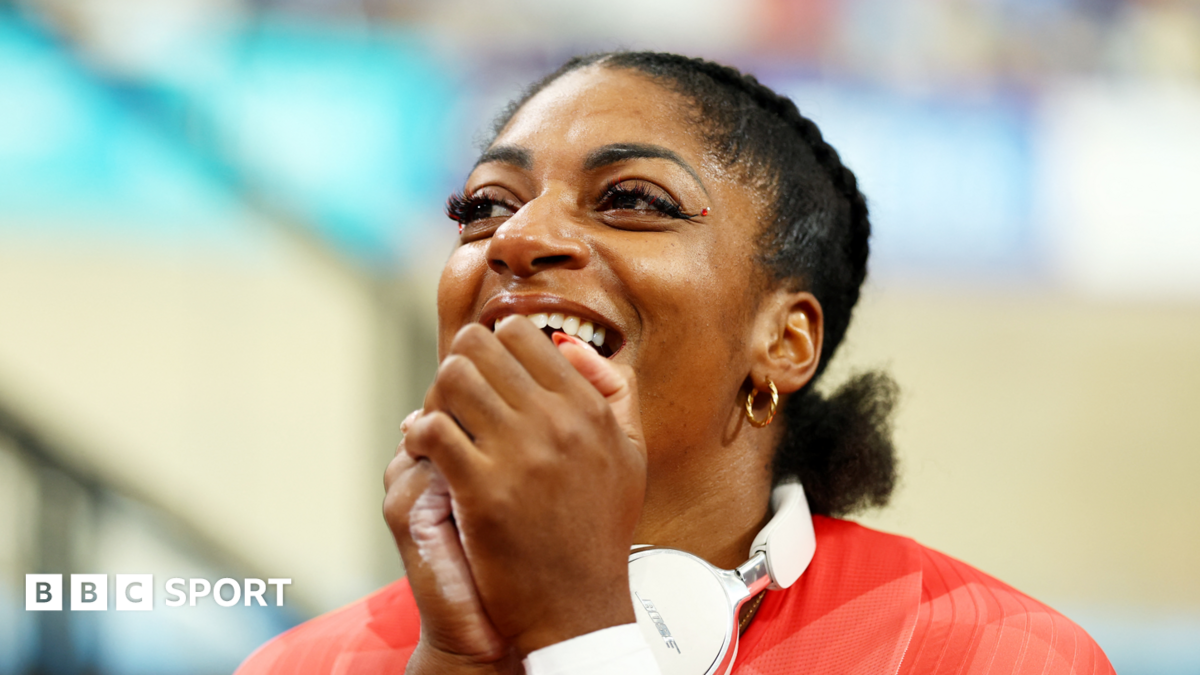
Great Britain’s Kadeena Cox set a new world record as she won C4 1km gold at the Para Cycling Track World Championships in the Netherlands.
The 35-year-old crossed the line in 1 minute 9.545 seconds to win her seventh world title.
Cox faced a nervous wait as Tara Neyland took to the track afterwards in pursuit of a medal, but her Australian rival could not eclipse the Briton’s time.
Cox, who is a five-time Paralympic gold medallist, was draped in a British flag by her team following victory as she joyously celebrated her first world title since 2024.
In the men’s tandem B 1km time-trial, Britain’s James Ball defended his title as he won gold alongside new partner Aaron Pope.
The pair dominated in the final, crossing the line in 59.563 seconds as Ball secured his eighth world title, with Pope winning his first.
In the women’s pursuit final, Britain’s Sophie Unwin alongside Jenny Holl won silver behind New Zealand’s gold medallists Emma Foy and Jessie Hodges.
Unwin and Holl had earlier set a new world record of 4:30.262 in qualifying, before it was broken by Foy and Hodges’ time of 4:29.672.
In the men’s C4 final, Britain’s Archie Atkinson won bronze, while compatriot Fin Graham also took bronze in the C3 1km time-trial.
The United States has scrapped a traditional group photo of foreign ministers after European officials refused to be pictured alongside Russian Foreign Minister Sergey Lavrov.
The move exposes deep rifts at the heart of the Group of 20 (G20), whose foreign ministers are meeting in the southern city of Atlanta in the United States for talks overshadowed by the wars in Ukraine and Iran.
Recommended Stories
list of 3 itemsend of list
“There will be no family photo featuring our European partners together with Mr Lavrov,” German Foreign Minister Johann Wadephul said, according to the dpa news agency.
Lavrov, who remains under Western sanctions imposed after Russia’s 2022 full-scale invasion of Ukraine, arrived in Atlanta ahead of the talks, Russian state media reported. Moscow said on Thursday that he would use his speech to argue against international sanctions. Ukraine was not invited, the Abu Dhabi-based newspaper The National reported.
A diplomatic source told the AFP news agency that Russia’s presence at the G20 “in no way legitimises its actions”.
The European Union’s foreign policy chief Kaja Kallas pledged on Thursday to urge G20 partners to strengthen support for Ukraine and pursue accountability through a special tribunal and claims commission, after a Russian strike on a Ukrainian railway station killed at least 14 people earlier that day.
The meeting also comes weeks after US President Donald Trump issued sanctions waivers allowing Russia to export diesel to ease fuel prices before the November 3 midterm elections.
Opening the talks, US Secretary of State Marco Rubio urged members to cooperate on economic and geopolitical crises threatening global trade, energy and food supplies, and freedom of navigation, dpa reported. Iran blocked the Strait of Hormuz after US-Israeli strikes began in late February, and global energy prices have risen sharply since.
“Both maritime and food security drive economic security,” Rubio wrote on X.
No joint statement is expected. A diplomatic source told the AFP news agency that Washington will instead publish a chair’s summary it has drafted. The source added: “The G20 is no longer really a forum where foreign ministers can reach agreement on a statement.”
No government has said whether Rubio and Lavrov will hold a formal bilateral meeting.
China sent Executive Vice Foreign Minister Ma Zhaoxu in place of Foreign Minister Wang Yi, according to a delegation list released by the Department of State. South Africa, a founding G20 member, has been excluded by Washington, and the African Union is represented by Burundi’s Edouard Bizimana.
The Atlanta talks are the last ministerial meeting of the US G20 presidency before leaders meet in Miami on December 14 and 15.
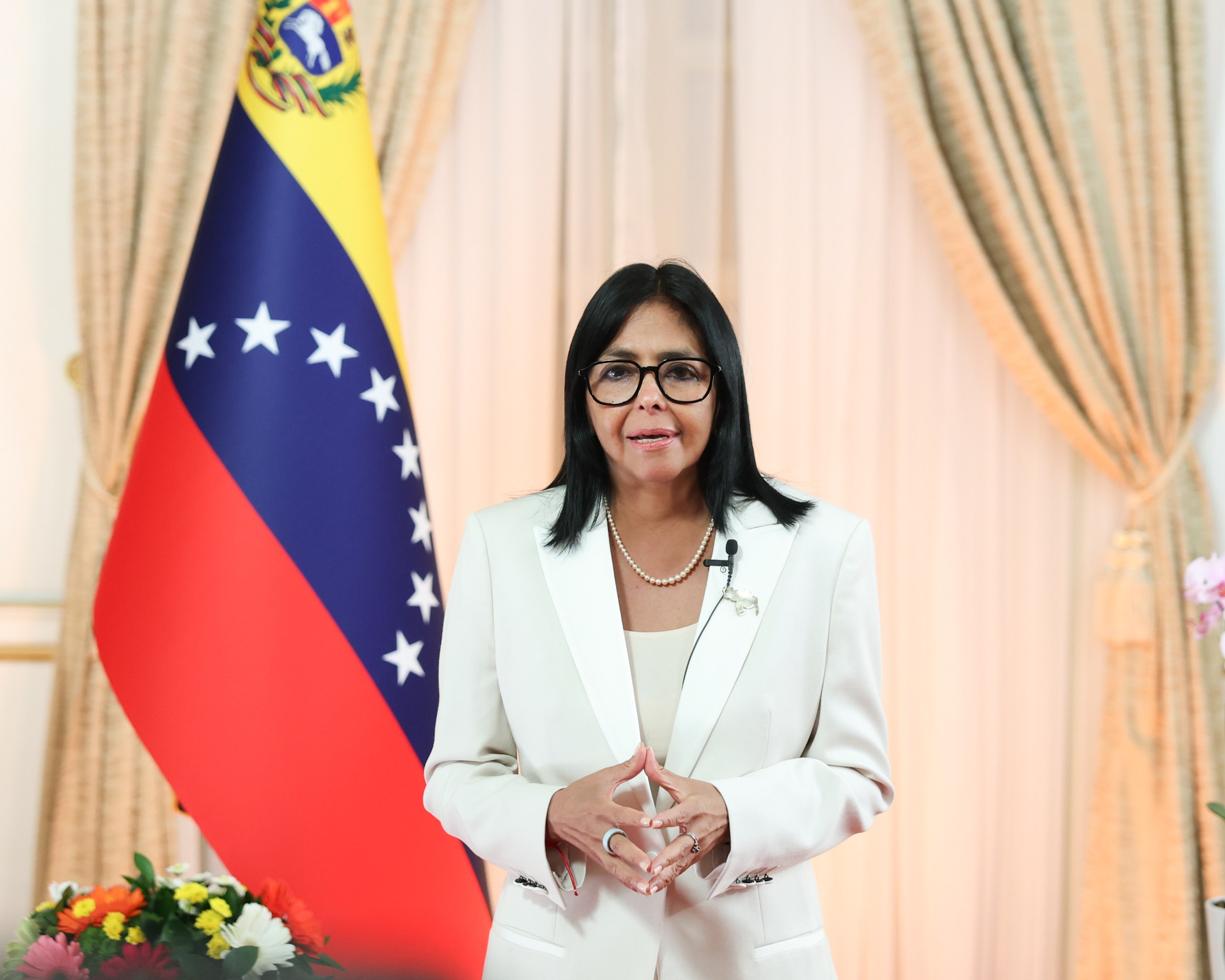
Rodríguez announced that workers’ incomes would follow GDP growth, though increases might still fall below inflation. (Presidential Press)
Caracas, October 29, 2026 (venezuelanalysis.com) – Venezuelan Acting President Delcy Rodríguez defended an ongoing plan to privatize state assets and return nationalized companies to former owners on Thursday.
“I have ordered the evaluation of non-essential state assets to be offered to the private sector or returned to their previous owners,” she said in a televised address to the nation.
“This is already in motion. The right to private property is guaranteed by our Constitution,” Rodríguez added.
In April, the acting president established a commission to evaluate the “strategic” value of state-owned companies, land, and other assets, to determine whether they should be retained, privatized, or liquidated.
Former President Hugo Chávez implemented a program of nationalizations in the 2000s to assert state control over strategic economic sectors, including electricity, telecommunications, and heavy industries.
After enacting a pro-business overhaul of hydrocarbon and mining legislation earlier this year, the Venezuelan parliament is on the verge of approving the partial privatization of the electricity sector. Foreign companies are likewise in talks to acquire the country’s largest aluminum smelter, while a consortium headed by Sunergon Oil is reportedly pushing the takeover of several industrial plants associated with the oil industry.
Business sector representative Luigi Pisella, who heads the commission, recently proposed a law enshrining multinational corporate participation in privatized public entities alongside local capital.
“I have encountered no resistance to this idea,” he stated in an interview with Banca y Negocios. “Most investors agree it is indispensable to have local partners whose experience is essential to navigate the complex Venezuelan environment.”
Pisella added that “different models of private participation” are being evaluated, but ruled out the “strategic alliances” whereby the state grants the assets in a concession-type deal while retaining ownership. The business sector spokesman argued that “no one is going to invest” without the full transfer of property.
In Thursday’s address, Acting President Rodríguez also promised that workers’ incomes would be increased quarterly next year, with the raise being at least on a par with GDP growth.
“For 2027 we are scheduling increases to workers’ incomes in four different moments, in amounts that can never fall short of economic growth in the preceding trimesters,” she explained.
Rodríguez did not mention adjusting the minimum wage, which has been frozen since 2022 and is currently worth around US $0.15. Instead, Venezuelan authorities have leaned on non-wage bonuses, which do not factor into vacation pay, severance, and other labor benefits in what amounts to a de facto subsidy to employers. Public sector workers currently have a monthly income floor of $240.
While Venezuela’s GDP is predicted to grow 5-10 percent in 2026, even raising non-wage bonuses by that amount falls short of inflation. Finance website Ecoanalitica estimates that prices measured in USD will end up rising 20-30 percent in 2026, meaning that an income adjustment pegged to GDP growth would amount to a loss of purchasing power.
In her message, Rodríguez went on to tout ongoing labor reform talks involving business lobbies and select trade unions.
Private sector associations such as FEDECÁMARAS and FEDEINDUSTRIA want to slash labor costs for employers, further reducing social security contributions and eliminating the retroactive nature of severance pay and other benefits such that any future wage hike would not trigger corresponding increases.
Finally, the acting president defended recent judicial reforms and ongoing US-endorsed talks with a sector of the Venezuelan opposition that will appoint a new Supreme Court and National Electoral Council. The US State Department has claimed that new presidential elections will be held in 2027.
Rodríguez offered no specifics on an electoral timetable, stating only that “there will be elections, with a renewed electoral authority and the world as a witness.”
The Celebrity Traitors have crowned their winners – as Sebastian Croft and Romesh Ranganathan took home the prize money for charity after last minute drama from James Blunt