In 2018, Jordan Spieth and Justin Thomas – two of the three youngest players on Furyk’s team – starred as they won three out of four points as a foursomes and fourballs pairing.
With 21-year-old Jackson Koivun having impressed during an unbeaten Presidents Cup debut in last month’s comeback victory over the Internationals in Chicago, Furyk says he is excited to inject more youth into the US side.
“I really love the guys who have played for us in the past few years,” the 56-year-old, who played in nine consecutive Ryder Cups between 1997 and 2014, told the BBC.
“We have tough, gritty veterans who have been around the block, and I’m excited, we have a lot of great, young talent who have yet to play in this cup and I’d bet two or three of them will be at Adare.”
During the news conference, Furyk said he will ask his team to “do more than any American team has in the past” to seal an elusive away win and vowed to address his side’s dismal recent record in foursomes.
The US won just three points from a possible 16 in the alternate-shot format over the past two Ryder Cups.
“I know those numbers very well. I’ve lived them the last four,” said Furyk.
“It’s not an anomaly. There’s some issues. We understand that. Not something I’m very happy with. I plan on making some changes.
“As captains we need to do a better job – not only putting the folks into good pairings in good positions, but I don’t think we are preparing for those matches in a proper way.”
The 2027 Ryder Cup – the second to be staged in Ireland after the K Club in 2006 – will take place on 17-19 September.
The Trump administration has warned France and Germany to release emergency diesel reserves to help lower global fuel prices or risk facing a potential US ban on diesel exports, according to people familiar with the discussions.
The warning represents a sharp escalation in Washington’s pressure on European allies as President Donald Trump looks for ways to increase fuel supplies and bring down prices ahead of the November midterm elections.
US officials have become increasingly frustrated with France and Germany, which Washington believes have not fully acted on earlier commitments to release emergency oil and petroleum reserves as global fuel markets face mounting disruptions.
“It is in Europe’s best interest to work with the United States as we pursue multiple pathways to boost the supply of refined products and lower costs for consumers,” a US official told Reuters.
Stay ahead of the geopolitical week.
MD Briefing delivers expert analysis across five global fronts — the Indo-Pacific, energy, geoeconomics, European security, and the Middle East — every Monday morning. Free.
A second source familiar with the discussions said the United States had asked the European Union to release 120 million barrels of diesel over the next six months.
The demand highlights the growing importance of Europe’s fuel reserves at a time when disruptions to major energy-producing regions are tightening global supplies.
Washington Raises Pressure on Europe
The US administration’s warning comes as Trump considers restricting US diesel exports as part of a broader effort to increase domestic supplies and reduce fuel prices for American consumers.
The approach creates a difficult balance for Washington. Limiting exports could increase the amount of diesel available inside the United States, potentially putting downward pressure on domestic prices. But it could simultaneously reduce supplies available to international markets, particularly Europe, which has become increasingly dependent on imported refined fuels.
US Energy Secretary Chris Wright said on Wednesday that the administration expected European countries to announce additional diesel supplies soon.
“We’ve lost some diesel exports from the Middle East, although we’re restoring those, and we’ve lost diesel exports from China,” Wright told reporters.
The disruptions have exposed the vulnerability of global refined fuel markets to geopolitical conflicts and changes in trade flows.
Germany’s economy ministry did not immediately respond to a request for comment, while France’s energy ministry declined to comment.
The White House’s pressure also appears to have become a broader diplomatic issue among Western allies.
An official at the French presidency said Trump and French President Emmanuel Macron did not discuss the issue when they met on the sidelines of the UN General Assembly in New York last week.
Macron, however, plans to convene a video conference of G7 leaders to address rising fuel prices and the availability of refined petroleum products.
The discussions are expected to include coordination over the release of emergency reserves in cooperation with the International Energy Agency.
Why Europe Matters to the Fuel Market
Europe’s position in the global fuel market has changed substantially since Russia’s invasion of Ukraine.
European countries previously relied heavily on Russian crude oil and refined petroleum products. The subsequent sanctions and restrictions on Russian energy imports forced European governments and companies to find alternative suppliers.
The result has been greater dependence on imports from countries including the United States and suppliers in the Middle East and Asia.
That dependence has become more significant as the conflict involving the United States, Israel and Iran has disrupted energy flows from the Middle East.
The loss or reduction of refined fuel exports from major suppliers can quickly affect diesel markets because refining capacity cannot always be shifted between regions immediately.
Diesel is particularly important because it powers much of Europe’s commercial transport, heavy industry, agriculture and logistics sectors. Sustained shortages can therefore affect the broader economy rather than simply increasing prices at fuel stations.
The US Faces Its Own Fuel Dilemma
For Trump, the issue also has a strong domestic political dimension.
Fuel prices are highly visible to American consumers, making gasoline and diesel costs politically sensitive ahead of the November midterm elections.
The administration is therefore examining multiple ways to increase available supplies and reduce costs.
But a potential US diesel export ban could have consequences beyond America’s borders.
The United States has become an important supplier of refined petroleum products to international markets. Restricting those exports could tighten supplies elsewhere, potentially pushing international prices higher even if American prices fall.
That creates a difficult policy tradeoff for Washington.
The administration wants to protect US consumers from high fuel costs while maintaining sufficient supply in global markets. European governments, meanwhile, face pressure to use their own emergency reserves even as they seek to maintain energy security following the loss of Russian supplies.
Europe Seeks a Coordinated Response
France appears to be pursuing a broader G7 response rather than treating the issue as a bilateral dispute with Washington.
Macron’s planned meeting would allow the world’s major industrial economies to discuss the availability of refined products and potentially coordinate emergency stock releases through the International Energy Agency.
Such coordination could help prevent individual countries from taking measures that unintentionally worsen shortages elsewhere.
But disagreements over how much fuel should be released, when reserves should be used and who should bear the cost could complicate the process.
Emergency reserves are designed primarily to protect countries against severe supply disruptions. Releasing large quantities can provide temporary relief, but it also reduces the buffer available if another disruption occurs.
That makes Europe’s response particularly consequential at a time when energy markets remain exposed to geopolitical shocks.
A New Test for Transatlantic Energy Relations
The dispute illustrates how the global energy system has become increasingly intertwined with broader geopolitical and trade relationships.
Europe needs reliable fuel supplies after cutting its dependence on Russian energy, while the United States is attempting to use its position as a major energy producer and exporter to address domestic price pressures.
Trump’s warning to France and Germany adds another layer to that relationship by linking European reserve policy to continued access to US diesel exports.
Whether Europe ultimately releases the amount of diesel Washington has requested will depend on national assessments of market conditions, domestic energy security and the risks of further supply disruptions.
For now, the dispute signals that the energy consequences of conflicts in the Middle East are reaching far beyond the region itself.
As the United States and its European allies try to contain fuel prices, they face a common problem but increasingly different pressures over how the burden of stabilising global energy markets should be shared.
China said on Monday that a two-month extension of its trade truce with the United States would give both sides more time to assess the implementation of their existing arrangements and discuss further steps to resolve economic and trade disputes.
China’s Commerce Ministry confirmed that the truce would remain in place through January 10, saying the extension would provide a “relatively stable and predictable policy environment” for businesses and allow the two countries to continue their talks.
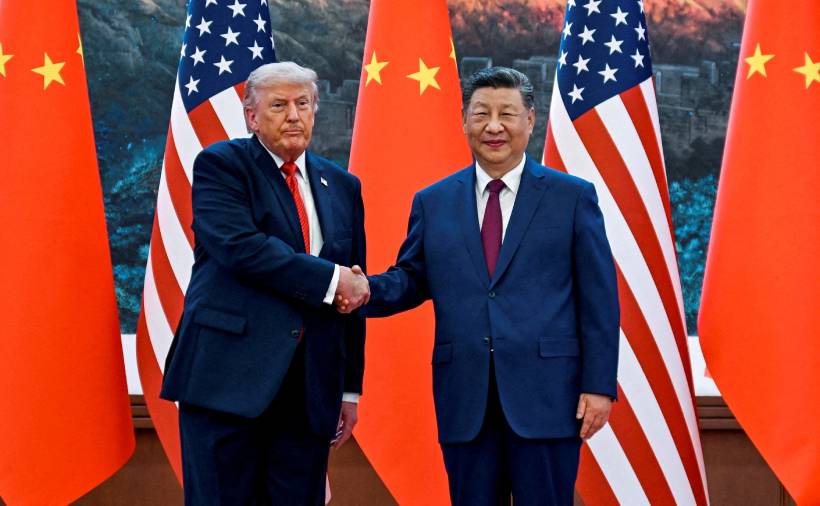
The extension was among the main outcomes of a summit between Chinese President Xi Jinping and US President Donald Trump in Washington last week, their second meeting this year.
Background
The United States and China have spent years imposing tariffs and other trade restrictions on each other, with tensions extending beyond tariffs to technology, investment, supply chains and market access.
Stay ahead of the geopolitical week.
MD Briefing delivers expert analysis across five global fronts — the Indo-Pacific, energy, geoeconomics, European security, and the Middle East — every Monday morning. Free.
The latest extension follows an agreement by the two sides to establish a trade council that will oversee discussions on a range of economic issues.
One of its first tasks will be to discuss reciprocal tariff reductions covering about $30 billion worth of goods, with the aim of maintaining more stable economic and trade relations between the two countries.
China’s Commerce Ministry said the arrangement would also create better conditions for Chinese exporters seeking access to the US market.
The two sides will hold regular discussions on investment opportunities and barriers, policy transparency and predictability, and concerns raised by businesses.
Why it matters
The extension gives US and Chinese companies more time to operate under a relatively predictable trade environment while negotiators work through remaining disputes.
Agriculture is one of the main areas covered by the latest arrangements. A White House list showed that China plans to reduce tariffs on a range of US agricultural products, including corn, wheat, dairy products and meat, although soybeans were not included.
The proposed cuts appear linked to a US-stated Chinese commitment to purchase $17 billion worth of agricultural products. China has already resumed large-scale purchases of US soybeans under an agreement reached last year that called for annual purchases of 25 million metric tons.
The countries will also establish an agriculture working group under the new trade council, with its first meeting expected before the end of the year.
Energy trade is another part of the agreement. China will import 10 million metric tons of US coal annually in 2027 and 2028, according to the White House. That would account for about 2% of China’s annual coal imports. US liquefied natural gas and oil were not included in the list.
The arrangements extend beyond traditional trade. The two countries have agreed to establish a communication channel for artificial intelligence related incidents and hold another dialogue by the end of November.
China will also consider approving foreign financial institutions, including US backed firms, to operate and open branches in the country. Washington and Beijing will meanwhile continue discussions on increasing direct flights between the two countries.
What’s next
The immediate focus will be on implementing the agreements reached at the presidential summit.
The agriculture working group is expected to meet before the end of the year, while the AI dialogue is due to continue by the end of November. The two countries will also use the new trade council to discuss tariffs, investment, market access and regulatory concerns.
The extension runs until January 10, giving negotiators another two months to evaluate whether the existing arrangements are being implemented and determine what further agreements can be reached.
Whether the two sides can turn the temporary truce into longer-term trade arrangements will depend on progress across the different areas covered by their negotiations, including tariffs, agricultural purchases, investment and technology.
The International team produced a brilliant fightback in the foursomes on day two of the Presidents Cup to take a 7-3 lead over the United States.
The US had been 3-2 up after the fourballs on Thursday but in a stunning turnaround were beaten in all five matches in the alternate-shot format in Medinah on Friday.
It boosted their hopes of a first victory in the event since 1998 and only a second since the competition began in 1994.
Geoff Ogilvy’s side secured their first point of the day as Sungjae Im and Hideki Matsuyama saw off Russell Henley and Jacob Bridgeman 3&2.
Canadian duo Corey Conners and Nick Taylor then produced a stunning result as they held on to beat world number one Scottie Scheffler and Sam Burns by one hole.
Burns almost snatched a half when his 20-foot putt at the last lipped out.
Open champion Ryan Fox and Min Woo Lee also edged a see-saw contest with Collin Morikawa and Wyndham Clark by one hole, before Adam Scott and Christiaan Bezuidenhout defeated Justin Thomas and Cameron Young 3&2.
Tom Kim and Si Woo Kim wrapped up the day with a dominant 4&3 victory over Patrick Cantlay and Xander Schauffele.
There will be four further foursomes matches and four more fourballs on Saturday, with 12 singles games taking place on Sunday.
The Kremlin has signalled that Russia’s position on potential peace talks with Ukraine remains unchanged, despite a planned meeting between US Secretary of State Marco Rubio and Russian Foreign Minister Sergey Lavrov in New York.
Kremlin spokesman Dmitry Peskov said there were still no conditions for formal Ukraine peace talks to begin, while insisting that Moscow remained open to negotiations.
His comments came ahead of the Rubio Lavrov meeting, which is expected to provide an opportunity for Washington and Moscow to discuss the prospects for ending the war.
However, Peskov said there were no concrete plans for further high level meetings involving either the United States or Ukraine to discuss a potential peace agreement.
Stay ahead of the geopolitical week.
MD Briefing delivers expert analysis across five global fronts — the Indo-Pacific, energy, geoeconomics, European security, and the Middle East — every Monday morning. Free.
Moscow Maintains Its Position
The Kremlin also said there had been no change in its position regarding a possible direct meeting between Russian President Vladimir Putin and Ukrainian President Volodymyr Zelenskiy.
Peskov reiterated that Zelenskiy could travel to Moscow for such a meeting and said Russia would provide the necessary security guarantees.
He also said the Ukrainian president was aware of the decisions that Moscow believes would be necessary before meaningful progress could be made.
The comments underline the continuing gap between the two sides over the conditions for direct negotiations.
Ukraine has repeatedly rejected the possibility of holding talks in Moscow and has instead proposed a neutral location for any direct meeting between the two presidents.
US Diplomacy Faces a Difficult Path
The Rubio Lavrov meeting comes as Washington continues to engage both Moscow and Kyiv over the possibility of a diplomatic settlement.
The meeting itself does not necessarily indicate that formal peace negotiations are imminent. Russia continues to say that the conditions for talks have not been established, while Ukraine has maintained its own requirements for any negotiations with Moscow.
That leaves the United States attempting to maintain communication with both sides while the basic framework for potential negotiations remains unresolved.
The disagreement over the location of a Putin Zelenskiy meeting is also significant because it reflects broader differences over the political conditions surrounding any future negotiations.
For Moscow, the latest statements reinforce its existing position that Ukraine must address Russian demands before a presidential meeting can produce meaningful progress. Kyiv, meanwhile, has rejected Moscow’s proposed setting and continues to favour a neutral venue.
What Comes Next
The Rubio Lavrov meeting could provide an indication of whether Washington and Moscow can narrow some of their differences, but the Kremlin’s latest statements suggest that Russia is not currently changing its stated position on the conditions for peace talks.
The immediate diplomatic focus will therefore be on whether the US Russian dialogue can establish enough common ground for further discussions involving Ukraine.
Until the disagreement over the conditions and format of negotiations is addressed, the prospect of a direct Putin Zelenskiy meeting remains uncertain. The New York meeting may keep diplomatic channels open, but it does not by itself resolve the fundamental differences separating Moscow and Kyiv.
Scrum-half Seren Lockwood has been ruled out of Wales’ second WXV Global Series fixture, against USA in Cardiff on Saturday, after failing a head injury assessment.
Lockwood was taken off during the first half of Wales’ eight-try victory over South Africa and is now going through World Rugby’s return to play protocols.
It is a blow for Wales with Lockwood and Keira Bevan proving a promising half-back partnership in a new-look backline.
Her absence paves the way for Lleucu George to return at 10, with Bevan reverting to her usual position of nine at Cardiff Arms Park.
“It’s always sad to see an individual coming off, but the HIA is great to have on board, we’re looking after her,” said Wales head coach Sean Lynn.
“She’s not going to be available this weekend, but I’m super excited to see the half-back combination that we’ve got this week.”
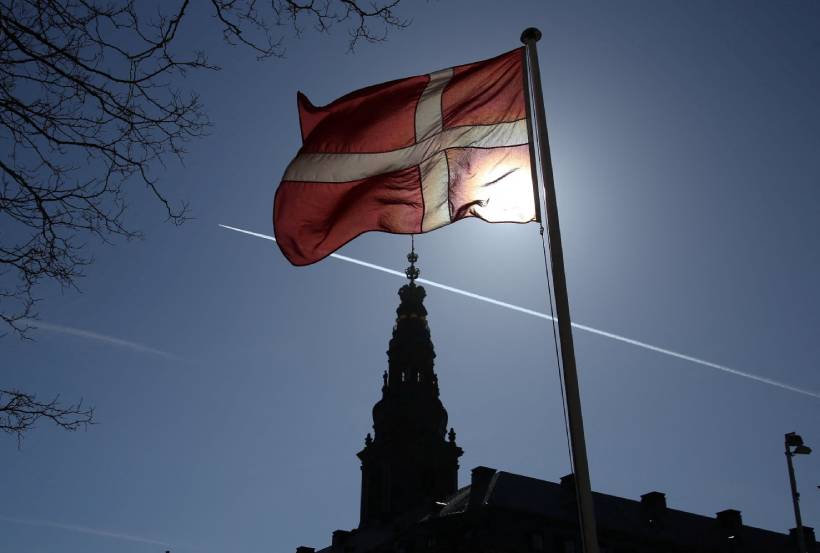
The United States, Denmark and Greenland are preparing to sign an agreement that could reshape the American military presence in the Arctic and ease a diplomatic dispute that has strained relations within NATO.
US President Donald Trump is due to meet Danish Prime Minister Mette Frederiksen and Greenland Prime Minister Jens Frederik Nielsen in New York on Tuesday for a trilateral signing ceremony. The agreement is expected to allow Washington to expand its military infrastructure on Greenland, a strategically located and mineral rich territory of the Kingdom of Denmark.
The deal follows months of tension after Trump refused to rule out using military or economic pressure to bring Greenland under US control. The comments triggered a diplomatic crisis with Denmark and raised concerns about divisions within NATO.
The US military presence is set to expand
The agreement is expected to give the United States access to two additional military sites in Greenland, alongside the existing Pituffik Space Base.
Stay ahead of the geopolitical week.
MD Briefing delivers expert analysis across five global fronts — the Indo-Pacific, energy, geoeconomics, European security, and the Middle East — every Monday morning. Free.
One of the proposed locations is Narsarsuaq, a former Cold War airbase where only a small population remains. The other is Mestersvig, which is currently used by the Sirius Dog Sled Patrol, an elite Danish special forces unit.
The expansion would significantly increase the US military footprint on the island and mark the first major expansion of American military infrastructure there since the Cold War.
During that period, the United States operated 17 installations in Greenland and had more than 10,000 personnel on the island.
Greenland’s location between North America and the Arctic gives it considerable strategic importance. Its geography also places it close to major Arctic routes and areas of growing competition involving Russia, the United States and other NATO members.
NATO could play a larger role
Danish Foreign Minister Lars Lokke Rasmussen has said the agreement would place Arctic security more firmly within NATO’s collective framework rather than leaving responsibility primarily to Washington and Copenhagen.
That could be significant because the Greenland dispute exposed tensions within the alliance at a time when NATO members are already facing growing security concerns in the Arctic.
The Arctic has become increasingly important to NATO because of its geography, military access and emerging economic opportunities. Greater US military activity in Greenland could therefore become part of a wider alliance approach to Arctic security.
However, the precise role NATO would play remains unclear because the full text of the agreement has not yet been published.
What happens to Greenland’s sovereignty?
The agreement also leaves questions about the balance between US security interests, Danish sovereignty and Greenland’s aspirations for greater autonomy.
Greenland is a self governing territory within the Kingdom of Denmark. Its government has repeatedly maintained that decisions about Greenland’s future must involve Greenlanders themselves.
Trump said on Friday that the agreement would give the United States “permanent control over security, and all other needs, in Greenland.”
Denmark has not endorsed that description. Copenhagen has instead said that the agreement respects the kingdom’s sovereignty and Greenland’s right to self determination.
It remains unclear whether the agreement will modify the 1951 US Denmark defence treaty, which has provided the legal basis for America’s military presence on the island, or establish a separate framework.
From acquisition ambitions to military access
The agreement represents a significant shift from Trump’s earlier push to acquire Greenland outright.
Greenland is roughly three times the size of Texas but has a population of only about 57,000 people, concentrated in small communities along its coastline. The island is also rich in natural resources, adding an economic dimension to its strategic importance.
Trump’s earlier comments about potentially using economic or military pressure to obtain Greenland created an unusual dispute between the United States and Denmark, both members of NATO.
The new agreement appears to offer a different approach: rather than changing Greenland’s sovereignty, Washington would gain a substantially larger military presence on the island.
Why does Greenland matter to the US?
Greenland’s strategic location makes it important to North American and Arctic defence. It sits between the United States, Europe and the Arctic and can provide access for monitoring activity across the region.
For Washington, expanding military infrastructure could strengthen its ability to monitor Arctic air and maritime activity and support wider North American defence.
For Denmark and Greenland, however, the issue involves more than military strategy. Any expansion of US activity has to operate within Denmark’s sovereignty over the territory and Greenland’s right to determine its political future.
The agreement therefore seeks to address two competing pressures at once: the United States’ desire for greater Arctic security access and Denmark and Greenland’s insistence that such cooperation must not amount to a transfer of sovereignty.
If signed as expected, the deal could mark a new phase in the Arctic relationship between the three governments. It would not resolve every disagreement over Greenland’s future, but it could replace the earlier confrontation over US acquisition with a more structured framework for American military access and NATO security cooperation.
California is considering Proposition 40, which would impose a one-time 5% tax on its billionaires. This initiative is seen as a way to generate funds for healthcare, education, and food assistance, given that California is home to around 250 billionaires worth over $2 trillion. However, political analysts suggest that the proposition’s chances of passing are uncertain, especially with rising debates around income inequality and the implications for the state’s economy.
Opinion polls indicate a divide in support for the tax. A UC Berkeley poll from August showed 48% of likely voters in favor while 41% opposed, and a September poll showed support at 52%. However, historically, California ballot measures need strong initial support to succeed, and undecided voters often lean towards rejecting measures. Critics of the proposition argue it might drive billionaires out of the state, lowering potential tax revenue in the future.
Notable figures, including billionaires like Sergey Brin, are actively campaigning against Proposition 40, with Brin sharing his personal experiences to express concerns about socialism and its effects. Additionally, Governor Gavin Newsom opposes the measure and is advocating for a federal wealth tax instead.
California’s history with ballot initiatives reveals a complex relationship with taxation. While the state has a history of direct democracy, it has only approved about a third of citizen initiatives in the past. A recent attempt to raise taxes on high earners, Proposition 30 in 2022, was rejected, reflecting that even in a predominantly Democratic state, voters may not support aggressive tax increases on the wealthy.
The uniqueness of this initiative lies in its retroactive tax structure, which could limit billionaires’ ability to avoid the tax by relocating. However, supporters like economist Emmanuel Saez argue that the tax will not significantly deter wealthy individuals or tech startups, stressing California’s attractive qualities, such as its universities and infrastructure, which he believes outweigh potential tax burdens.
Overall, Proposition 40 encapsulates the ongoing conversation about wealth inequality in America and the contentious debate surrounding the taxation of the ultra-rich, making it a critical issue for California voters in the upcoming election on November 3.
Kevin Warsh has broken away from US President Donald Trump in his first Fed move, and he has done it with the entire committee behind him.
ADVERTISEMENT
ADVERTISEMENT
The Federal Open Market Committee lifted rates on Wednesday after holding them at 3.5% to 3.75% since December, ending a pause that had grown harder to justify as energy costs pushed prices higher.
Not a single member dissented in a unanimous 12-0 vote.
That matters because the pressure ran in both directions as three regional presidents had voted for a hike in July, while the White House spent months demanding cuts.
Nobody voted for either extreme.
At the time of writing, the market reaction to the decision has been fairly muted likely due to the fact that the hike was widely expected.
A statement stripped to the bone
The Fed’s communication was as striking as its decision.
The statement ran to three short paragraphs, a fraction of the length markets are used to, with no forward guidance and no hedging.
“Inflation remains elevated,” it read, adding that “today’s policy action will support a timelier return to the Committee’s 2 percent goal.”
The word “timelier” carries an implicit admission that the return had been too slow.
Then a sentence the Fed almost never writes: “The Committee will deliver price stability.” Not seeks to, not is committed to. Will.
The economic assessment was also confident throughout.
Activity is “expanding at a solid pace”, domestic spending “has been resilient”, productivity growth is “strong” and capital investment “robust”, while job gains “have kept pace with the workforce”.
Uncertainty remains elevated, the Fed said, owing partly to “geopolitical developments”, its formulation for the Iran war.
By describing an economy in good health, the committee removed the argument that higher rates would damage growth, which is precisely the case US President Donald Trump has been making.
Boxed in by the data
The decision had been building for months.
Three regional Fed presidents dissented in July in favour of an increase, the most in one direction since 2016, and several others said afterwards they were ready to move unless inflation eased which it did not.
The Fed’s preferred gauge, the personal consumption expenditures index, ran at 3.7% in both June and July, with core inflation at 3.3%. Before the Iran war sent fuel prices climbing, core stood at 3%.
Consumer prices held at 3.4% in August, but the monthly increase of 0.4% was the sharpest since May, evidence the energy shock is feeding through. Inflation has now been above the 2% target for more than five years.
Warsh had effectively committed himself at Jackson Hole in August, telling the symposium he “would be hard pressed to describe broad financial conditions as restrictive” and warning that unless underlying inflation moved to target “clearly and at sufficient speed”, the Fed had “work to do”.
Markets took him at his word as the CME’s FedWatch tool put the probability of a rate hike above 90% before today’s decision.
Defying the president who chose him
US President Donald Trump had spent months demanding the opposite, insisting the country should have the lowest interest rates in the world and choosing Warsh partly on the expectation he would deliver them.
Warsh himself said while campaigning for the job that rates could come down.
The treatment of his predecessor sharpened the stakes as Jerome Powell was publicly attacked for moving too slowly, and the US Justice Department opened a criminal investigation into testimony he gave to Congress.
Today’s decision could also have a restoring effect on the perceived independence of the Federal Reserve as an institution.
The technical details point to a Fed settling in at the new level.
The interest rate on reserve balances rises to 3.90% from Thursday, the primary credit rate to 4%, and standing repurchase operations will run at 4%. Seven regional reserve banks requested the discount rate increase.
The Fed’s new dot plot shows 12 of 18 officials expect another 0.25% hike by year-end, taking rates to 4.125%, while four see rates reaching 4.375%.
The hawkish signal extends well beyond 2026 as 14 officials see rates ending 2027 above today’s level, while the 2028 median stands at 3.9% versus 3.4% expected.
The longer-run rate also rose to 3.2%, suggesting officials increasingly believe neutral rates have moved higher while economists also expect more to follow.
WASHINGTON: Jason Eaton insisted he was acting on orders from the CIA and Mossad when he shot three Palestinian college students who were walking past his home a few days after Thanksgiving. He said the US and Israeli intelligence agencies transmitted the messages to him via FM radio and that God was commanding him to protect his Jewish neighbors.
Eaton’s claims were at the heart of his insanity defens e as he went on trial Monday on attempted murder charges in a case that shook Burlington, Vermont, and reverberated in the West Bank, where the three wounded men grew up and became friends as schoolmates in Ramallah before moving to the US for college.
Jason Eaton appears in court during his trial in Burlington, Vt., Monday, Sept. 14, 2026. (AP)
The November 2023 shooting, weeks after the start of the Israel-Hamas war, spawned calls for a hate crime investigation. But no hate crime charges were filed as questions persisted about whether anti-Palestinian animus, an altered mental state or something else had compelled Eaton to open fire on Hisham Awartani, Tahseen Aliahmad and Kinnan Abdalhamid, who were all 20 at the time.
The men testified one after another as Eaton, now 51, watched stoically from the defense table in a Burlington courtroom. He has pleaded not guilty but doesn’t dispute that he was the shooter. If convicted, he faces up to life in prison. If found not guilty by reason of insanity, he could be ordered to undergo mental health treatment.
Defense lawyer Joshua O’Hara, previewing testimony from a defense psychiatrist, told jurors in an opening statement that Eaton was suffering from a delusional, psychotic disorder after losing his job at a credit union two weeks before the shooting.
While listening to a local NPR affiliate, Eaton believed he was hearing messages that he attributed to the CIA, O’Hara said. At first, the messages were encouraging and validating, the lawyer said, but subsequent messages turned dark, insisting that Eaton “has to go out and shoot somebody.”
Prosecutor Sally Adams told jurors that a state psychiatrist who is slated to testify concluded that Eaton did not have a mental disease or defect. Evidence will show he intended to kill the men, was not legally justified in shooting them, and does not meet the test of legal insanity, Adams said.
Authorities found three shotguns in Eaton’s apartment and a Ruger .380-caliber handgun that crime lab testing concluded was the gun used in the shooting, Adams said. Eaton had purchased the gun seven months earlier from a Vermont gun store.
“If the defense tries to focus on the story that Mr. Eaton tells about why he intended to kill these three young men, that story is only part of the whole picture,” said Adams, the chief administrative deputy at the Chittenden County State’s Attorney’s Office.
Awartani, Aliahmad and Abdalhamid, all of whom are now 23, told jurors of their holiday weekend visit to Awartani’s grandmother’s house, a trip to a bowling alley to celebrate his twin cousins’ birthday, and the walk they took near the University of Vermont campus after dusk that ended in bloodshed.
Awartani, who was studying at Brown University in Rhode Island at the time, said they were smoking cigarettes and speaking a mix of English and Arabic. Two of them said they were wearing traditional Palestinian scarves known as keffiyehs. Awartani said he first noticed Eaton standing on a porch as they approached the apartment house where he lived.
Within seconds, Awartani said, Eaton was off the porch and walking toward them. His face was expressionless and he didn’t say anything. As Eaton got to about five to 10 feet (1.5 to 3 meters) away, “he pulled out a handgun and started shooting at us,” said Awartani, who was paralyzed from the waist down in the shooting and now uses a wheelchair.
Jacob Pyne, who lived in a different apartment in the same house as Eaton, testified that he heard four to six gunshots, followed by footsteps going up the stairs of the apartment house. He said he ran outside and heard two men speaking, one of whom was more vocal and yelling, “I’ve been shot, help me.” He then brought the men blankets and called 911.
Abdalhamid, a student at Haverford College near Philadelphia, said he fled and hid behind another home after seeing Aliahmad fall to the ground. He said he only realized later when he sat down that he had also been wounded. Awartani was shot in the chest and the bullet ricocheted off his scapula, causing paraplegia in his spinal cord. Aliahmad, who was a student at Trinity College in Connecticut, was struck in the collarbone, and Abdalhamid was shot in the right buttock.
O’Hara, the supervising attorney at the Chittenden County Public Defender Office, told jurors that Eaton was confused by the messages he said he was receiving, and became convinced that the CIA and Mossad were enlisting him into “overwatch duty” to protect a Jewish family living across the street.
“These were delusions,” O’Hara said. “He believed in the moment that he was doing something that was right. He had been commanded to do this. And that he did not have the ability to appreciate the wrongfulness of his conduct in the moment because he believed he’d been instructed to do this by a government agency or God.”
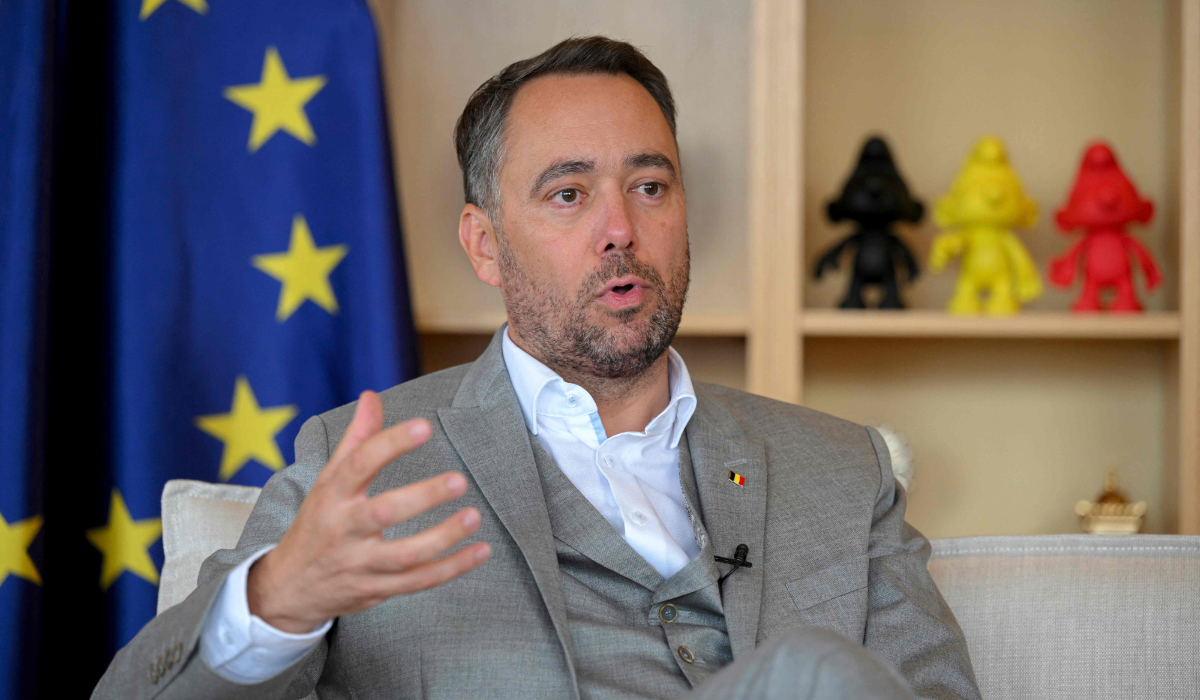
BRUSSELS, Belgium: Belgium’s top universities condemned on Monday the government’s refusal to help 13 students from war-torn Gaza who received scholarships at Belgian universities reach the country.
Brussels set aside plans to evacuate the Palestinian students last week in a case that has split the coalition government.
The rectors of the European country’s top 10 universities expressed their “dismay” at the move in a letter, accusing the administration of using the students as “bargaining chips” in a “disgraceful political horse-trading.”
Centrist Foreign Minister Maxime Prevot has advocated in favor of evacuating the students but has faced opposition from the Flemish conservatives party of Prime Minister Bart De Wever, according to a government source.
Prevot said one member of the five-party coalition demanded concessions on migration, including the creation of deportation centers, in return for greenlighting the evacuations.
“They must not be treated as bargaining chips or as variables to be adjusted in political debates on migration,” the rectors wrote of the Gaza students.
“Their cases must be assessed for what they are: those of students and researchers who have been awarded scholarships on the basis of their academic merit and who have all expressed their intention to return to their home countries to contribute to their reconstruction.”
The students are among about 1,500 Palestinians in Gaza currently waiting to reach Belgium, having been granted the right to do so, mainly under family reunification rules, according to several NGOs.
Yet, evacuations from the Palestinian territory at war with Israel are proceeding at a trickle, with activists and now the universities accusing the government of deliberately slowing down the process.
“Discussions in recent weeks also show that the obstacles cited do not stem from insurmountable constraints but rather from a lack of political will,” the university chiefs wrote.
The case is not isolated, with Palestinian students hoping to study in Italy, Turkiye, the Netherlands, Germany also reporting delays in recent months.
Palestinian militant group Hamas launched an attack on Israel on October 7, 2023, which killed 1,221 people, according to official Israeli figures.
Israel’s offensive has since claimed at least 73,470 lives in Gaza, according to the Gaza health ministry, which operates under Hamas.
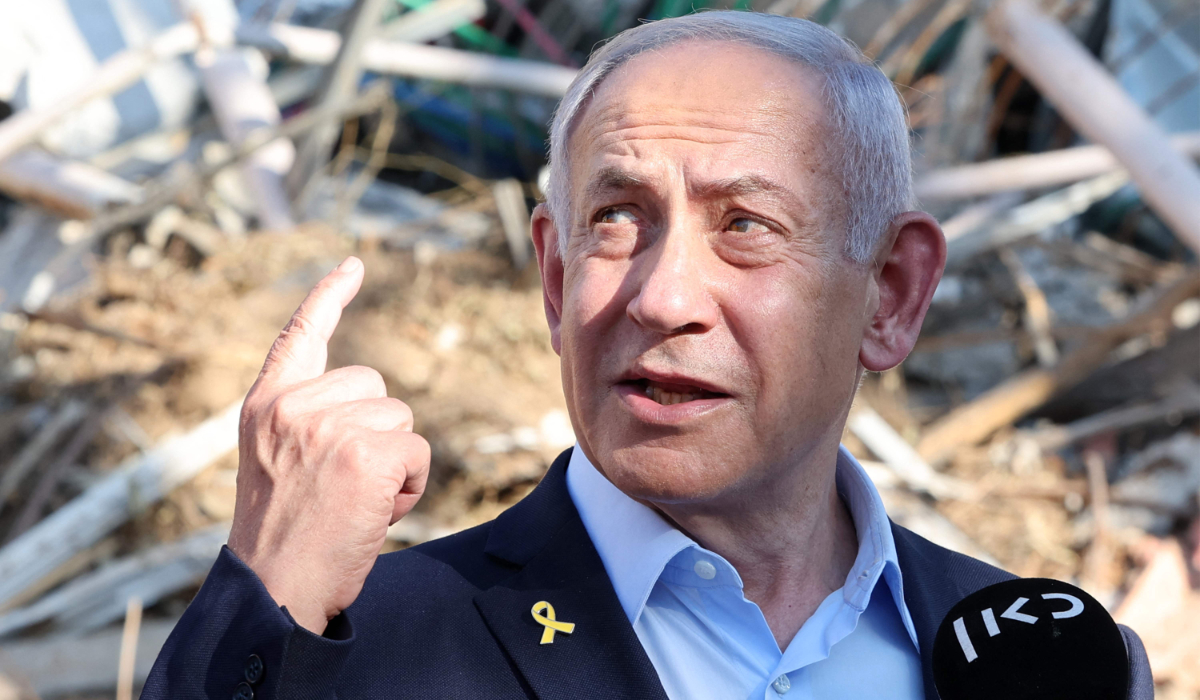
JERUSALEM: Prime Minister Benjamin Netanyahu warned on Monday of heavy reprisals on Israel’s enemies if they attacked, as he lauded the recent demolition of a Hezbollah tunnel network in southern Lebanon.
Netanyahu said Israel’s destruction of Hezbollah positions at the Beaufort and Ali Al-Taher ridges was a “massive victory” and vowed to “continue to destroy terrorist infrastructure.”
“I say to our enemies: If you haven’t learned the lesson by now, and you choose to attack us again, you will suffer even heavier blows. There is still work to complete,” Netanyahu added, according to a video published by his office.
On Thursday, Israel blew up what it described as a vast network of tunnels under the Ali Al-Taher ridge where Hezbollah kept a command center, living quarters and stocks of weapons with which to strike northern Israel and invading Israeli troops.
A huge fireball was seen in the area, with the US Geological Survey recording a tremor equivalent to a 4.1 magnitude earthquake.
The blast came a week after Israeli troops said they had seized the strategic highlands as they solidified control of a “security zone” in southern Lebanon.
Israel said the tunnel network was built over two decades with the help of Hezbollah’s patron Iran, whose clerical government has also backed Hamas in the Gaza Strip.
Israel and the United States attacked Iran in late February, sparking the Middle East war.
Hezbollah dragged Lebanon into the wider conflict when it fired rockets at Israel in solidarity with Iran.
Israel has struck south Lebanon during the war and its forces continue to occupy what it calls a “security zone” there.
The Ali Al-Taher ridge lies on the edge of Israel’s security zone just a few kilometers from the UNESCO-listed Beaufort castle, another strategic site that Israel captured in recent months.
Israel and Lebanon signed a US-sponsored framework agreement in late June that involves the disarmament of Hezbollah, a gradual withdrawal of Israeli forces from Lebanon’s south and the deployment of the Lebanese army to the region, starting in test areas known as “pilot zones.”
Central banks’ record, price-insensitive gold buying is a more credible signal of the dollar’s structural trajectory than this year’s currency markets, because FX markets are structurally bad at pricing the discontinuous, wartime-style tail risk central banks are actually hedging — so this autumn’s calmer dollar should not reassure anyone that de-dollarization has stalled.
In June, the European Central Bank made an announcement most people missed: gold has overtaken US Treasuries as the world’s single largest reserve asset. Central banks bought 289 tonnes of it in the second quarter alone — a record for that quarter and five times Q1’s pace — with Poland’s central bank openly telling investors it was “buying the dip.” Here is the part that should stop you: gold’s price fell 22% between January and September. Central banks were never more convinced buyers of an asset than while it was crashing. Either the reserve managers are wrong, or currency markets — which show none of this urgency — are the ones asleep at the wheel.
Gold peaked at $5,589 an ounce on 28 January, the same month the dollar index hit a four-year low of 95.5 and the dollar’s share of global reserves fell toward its lowest level since 1995. Both moves reflected the same story: Fed rate cuts through 2025, a US debt load past $37 trillion, and BRICS states settling more trade outside the dollar. Then the picture split. Kevin Warsh, confirmed as Fed chair in May, signalled a hawkish pivot in August; the Iran war pushed oil and inflation higher through September, and markets began pricing a rate hike rather than a cut. The dollar index clawed back to 99.46. Gold fell to $4,330. Central-bank buying did not follow the price down — Poland alone added 82 tonnes this year toward a 700-tonne target, and a World Gold Council survey found a record 45% of central banks plan to buy more within twelve months.
State the gap plainly. Two signals, same underlying question — is the dollar-centred monetary order changing — and they disagree by a wide margin. The buying signal says yes, decisively: record quarterly purchases, gold displacing Treasuries at the ECB’s own reckoning, 74% of surveyed reserve managers expecting the dollar’s reserve share to keep falling over five years, and buyers adding tonnage through a 22% drawdown rather than fleeing it. The price signal says not yet: the dollar just posted one of its sharper rallies of the year, gold is down sharply from its high, and nothing in currency markets shows the kind of stress a genuine regime shift would produce.
Stay ahead of the geopolitical week.
MD Briefing delivers expert analysis across five global fronts — the Indo-Pacific, energy, geoeconomics, European security, and the Middle East — every Monday morning. Free.
The strongest objection to trusting the buying signal is a good one, and it needs to be taken seriously rather than waved away: foreign exchange is the deepest, most liquid market in the world, turning over more than $7 trillion a day. A few hundred tonnes of central-bank gold buying — perhaps $30–40 billion a quarter — is a rounding error against that. If professional currency traders, sitting on far more capital and far better short-term information than a handful of reserve managers, saw a serious de-dollarization story unfolding, it would already be in the price. Instead the dollar just rallied. On this view, central banks are not seeing something markets are missing; they are pattern-matching off 2022, when Russia’s $300 billion in reserves was frozen overnight, and over-hedging a tail risk that has not recurred and mostly will not.
That objection assumes FX markets and central-bank reserve committees are pricing the same kind of risk, on the same time horizon, and they are not. Currency markets are exceptionally good at pricing continuous, high-frequency variables — rate differentials, growth surprises, this week’s inflation print — because that is what moves flows daily. They are structurally poor at pricing discontinuous, low-probability events until those events occur: equity volatility did not price 2008 in 2007; sovereign spreads did not price the Russia reserve freeze in the weeks before it happened. A reserve freeze, a secondary-sanctions campaign, or exclusion from SWIFT-style settlement infrastructure is exactly that kind of event — binary, rare, and catastrophic for whoever it hits — which is precisely why Poland’s central bank governor, Adam Glapiński, described his buying not as a trade but as insurance: reserves that keep the state secure “under all circumstances, including wartime, which of course we’re not expecting.” That is not the language of someone chasing momentum. It is the language of someone who manages the one asset class that keeps its value if their country is ever cut off from the dollar system, and who would rather hold it and be wrong for a decade than not hold it and be wrong once.
The buying pattern itself supports that reading. Momentum money sells into a 22% drawdown; insurance money adds to it. Central banks did the latter through the first half of this year, which is the behavioural signature of a structural reallocation program with a fixed multi-year target — Poland’s is explicit, 700 tonnes — not speculative flow riding gold’s rally. Meanwhile the dollar’s autumn recovery has an identifiable, largely cyclical cause: a new, more hawkish Fed chair and a war-driven oil shock forcing a rate-hike repricing. Neither event reverses the debt trajectory, the BRICS settlement trend, or the reserve-freeze precedent that pushed the dollar to a four-year low in January. A rally built on this year’s Fed chair and this year’s war is not proof that last year’s structural story is over; it is evidence that a cyclical force is currently strong enough to mask it.
The Scenarios
Base case (55%): The gap persists rather than resolves. The dollar holds most of its autumn gains through the current rate-hike cycle, gold range-trades below its January peak, and central banks keep buying at a steadier, slower pace toward stated targets like Poland’s 700 tonnes. Nobody is “proven right” on any particular Tuesday, because reserve diversification is a decade-scale hedge, not a trade with a catalyst date. This is the least satisfying outcome for anyone wanting a verdict, and the most likely one.
Downside case (for dollar holders): A discrete trigger — a fresh reserve-freeze or secondary-sanctions episode, plausibly connected to the still-live US-Iran war spilling into action against a third country’s assets, or a shock to Fed independence under a more political Warsh chairmanship — crystallizes the exact tail risk central banks have been hedging. Gold spikes back through its January high, the dollar index breaks below its 95.5 low, and the gap closes in weeks rather than years, vindicating the reserve managers all at once and catching FX markets flat-footed exactly as the theory predicts.
Upside case (for the dollar): The Iran war resolves, Warsh’s rate hikes cool inflation without a recession, US fiscal metrics stabilize, and BRICS local-currency settlement growth stalls on friction between its own members. Central-bank gold buying does not reverse but plateaus as reserve managers hit conventional diversification ceilings — most target 15–20% of reserves in gold, not open-ended accumulation. The gap closes gradually as price drifts up toward the buying signal over several years, with no crisis required to force the reconciliation.
The Takeaway
The dollar’s calmer autumn is not evidence the de-dollarization hedge was a mistake; it is evidence that currency markets and central-bank reserve committees are pricing two different things on two different clocks, and only one of those clocks rings in a crisis. Central banks bought through a 22% drawdown because the point of the position was never this quarter’s return.
Watch for: the World Gold Council’s Q3 2026 Gold Demand Trends report, expected in early November. A third consecutive quarter of buying that ignores price direction will confirm this is policy, not opportunism — and the moment currency markets have to agree with that policy will not be a quiet one.
Vandals spray red paint on Charlie Kirk statue days after its unveiling to mark one year since his death.
Published On 14 Sep 202614 Sep 2026
A new memorial statue of the slain right-wing activist Charlie Kirk has been vandalised days after it was installed outside Turning Point USA’s headquarters, the youth-focused organisation he co-founded.
Turning Point chief operating officer Tyler Bowyer said on Sunday that the bronze statue, alongside an accompanying sign, was defaced with red spray paint in Phoenix, Arizona.
“This morning we woke up to radical criminals vandalizing our Headquarters. Crossing over Charlie’s face, scratching out Jesus and the Cross & spraying red paint on his neck,” Bowyer wrote on X.
The statue was unveiled on Thursday to mark one year since Kirk’s death. Kirk, a co-founder of Turning Point and staunch ally of US President Donald Trump, was fatally shot while speaking to students at Utah Valley University.
The man accused of killing Kirk, Tyler Robinson, faces a possible death penalty after pleading not guilty to murder charges earlier this month.
Phoenix police said they received calls on Sunday morning about a vandalised memorial outside Turning Point’s headquarters.
Turning Point accused the vandals of intentionally spraying the statue’s neck, the spot where Kirk was shot in the attack, which was captured on video.
“We will restore the statue and replace the signs, but we are also reviewing the footage of the incident and are working with law enforcement to identify who did this and hold them accountable,” Turning Point said in a post on X.
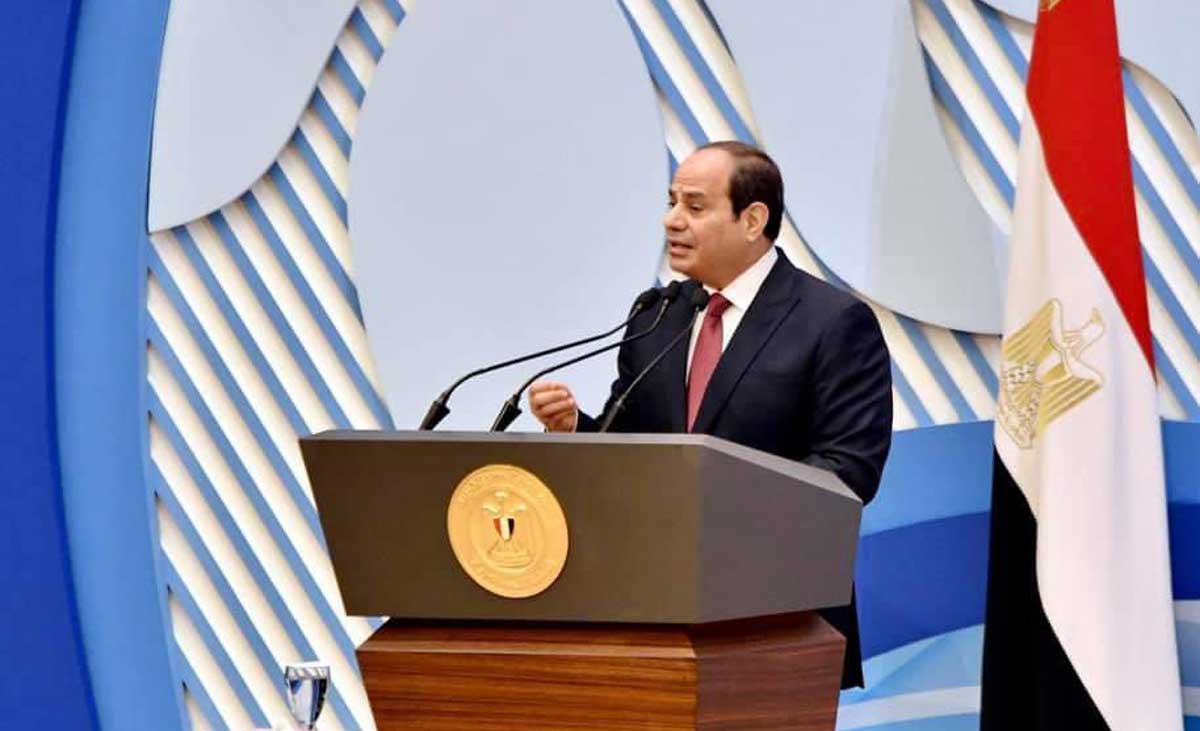
Egypt can leverage the US-China rivalry and its strategic partnership with Beijing to bolster its national security and its position as a global logistics hub through several strategic avenues:
1) Enhancing its status as a global logistics and trade center, through:
– Developing the Suez Canal Economic Zone: Leveraging the massive Chinese investments and projects in the TEDA zone in Ain Sokhna to establish vital industries such as green hydrogen, solar panels, and electric vehicles, transforming Egypt from a mere waterway into a global manufacturing and logistics hub.
– Linking the Belt and Road Initiative with Egypt’s Vision 2030: Integrating Egyptian ports, such as East Port Said, Alexandria, and Ain Sokhna, into the Chinese maritime trade network, while maintaining a balance that allows for alternative investments in other ports and logistics corridors to expand its options and international network of allies.
Stay ahead of the geopolitical week.
MD Briefing delivers expert analysis across five global fronts — the Indo-Pacific, energy, geoeconomics, European security, and the Middle East — every Monday morning. Free.
– Alternative Supply Chains: Egypt offers a secure regional base for global and Chinese companies seeking to diversify their supply chains away from areas of direct conflict, leveraging its strategic location connecting three continents.
2) Enhancing National Security and Red Sea Security, through:
– Diversifying Sources of Armament and Military Technology: The partnership with China allows Egypt to acquire advanced military technology, such as drones, air defense systems, and space and satellite technology, without the stringent political conditions imposed by Washington, thus strengthening the independence of Egyptian military decision-making.
– Securing Navigation in the Red Sea and the El-Mandeb Strait: This can be achieved by utilizing the Chinese military presence in Djibouti and China’s interest in maritime security to coordinate and build a joint security umbrella protecting the Suez Canal from emerging threats, such as attacks in the Red Sea, given that the stability of this waterway is a vital shared interest for both Egypt and China.
– Balancing Political Pressures: By employing flexible diplomacy and strategic balancing, Egypt’s rapprochement with China (especially after joining the BRICS group) provides it with strong leverage in its negotiations with the United States and Western international institutions, and vice versa.
3) Egyptian Expansion and Influence in Africa via China, through:
The Joint Projects (Triangular Cooperation) by acting as a strategic gateway for Chinese investments directed towards the African continent, through the implementation of joint infrastructure projects (roads, power plants, dams) in cooperation between Egyptian and Chinese companies in the Nile Basin and Horn of Africa countries, Egypt can enhance its influence and development diplomacy.
Here, Egypt can benefit from international and Chinese competition over Africa, the Red Sea, and Ethiopia, and from its partnership with China, to strengthen its national security and its position as a logistical and commercial hub. Thus, Chinese economic influence can become a factor of stability and development for Egypt, rather than a new arena for international competition in the future. Egypt can enhance its national security and logistical standing by leveraging its unique strategic location as a link between Africa, Asia, and Europe and by transforming international competition and its partnership with China into well-considered development opportunities. This can be achieved by studying and understanding the following strategic dimensions:
– First: Mechanisms for Egypt to Benefit from International Competition and the Chinese Partnership
– Developing Global Logistics Hubs: Continuing to expand and develop the Suez Canal Economic Zone in conjunction with Chinese investments, such as the TEDA Zone in Ain Sokhna, to transform the canal from a mere waterway into a global manufacturing and re-export hub.
– Continental Connectivity and Infrastructure: Leading regional connectivity projects in Africa, such as the Cairo-Cape Town Highway and the Lake Victoria-Mediterranean Waterway Project, and utilizing funding from China’s Belt and Road Initiative to connect African trade to the Red Sea.
– Diversifying security and military partnerships: Leveraging international competition in the Red Sea to secure navigation and combat piracy and terrorism through building flexible alliances and modernizing Egyptian naval capabilities (the Berenice naval base) without aligning completely with any single international power.
– Localizing industry and technology: Making technology transfer and the localization of industries, such as electric vehicles, renewable energy, and communications, a requirement in investment contracts with China and Western countries. This will reduce reliance on imports and bolster Egyptian economic security.
– Second: Chinese Economic Influence: Stability and Development or an Arena of Competition? Future indicators of Chinese influence in Egypt and the region point to two overlapping scenarios:
– The first scenario: A factor of stability and development, achieved by focusing on infrastructure, providing soft loans, creating local job opportunities, and supporting regional integration. This would have a positive impact on Egypt and Africa, contributing to easing conflicts stemming from poverty and offering African countries alternative financing options for developing their economies.
– The second scenario: Chinese influence within Africa as a negative factor, transforming it into a new arena of international competition. Increased Western (American and European) fears of Chinese hegemony and attempts to contain it through counter-initiatives or political pressure could turn the Red Sea region and Africa into areas of military and political polarization, forcing countries to choose between the Eastern and Western blocs.
– Third: Analyzing China’s role regarding the Grand Ethiopian Renaissance Dam (GERD) issue and whether Beijing can play a role in supporting stability and negotiations between Egypt and Ethiopia
On the other hand, given China’s growing relations with Ethiopia and the Nile Basin countries, its role regarding the GERD issue can be viewed positively for Egypt. Beijing can play a role in supporting stability and negotiations, even though its economic interests might make it more cautious about clashing with Ethiopia. Here, China adopts a pragmatic and cautious approach, balancing its substantial economic interests in Ethiopia with its strategic relationship with Egypt. This limits its role to quiet diplomacy and calls for negotiations without exerting direct pressure or engaging in confrontation with Addis Ababa. This can be understood through:
1) Analyzing China’s role regarding the GERD
– Technical and financial support: Chinese companies and funding have contributed directly to the infrastructure and electricity distribution stations associated with the GERD and Ethiopian projects.
– Non-interference policy: Beijing traditionally adheres to the principle of non-interference in the internal affairs of other countries and avoids taking public stances against Ethiopian development projects.
– Diplomatic balance: China is careful to issue joint statements with Egypt emphasizing the importance of international law and the need to avoid harming water security, but these remain diplomatic statements that fall short of exerting pressure through mediation.
2) Can Beijing support stability and negotiations between Egypt and Ethiopia?
– The capacity exists: China possesses significant economic and financial influence over Ethiopia, enabling it to exert influence if it so desired, given the scale of its investments and loans.
– The will to exert pressure is lacking: China refuses to become a serious mediator or a pressure party and prefers to distance itself from the sharp points of contention between Egypt, Ethiopia, and Sudan.
– Maximum possible role: Beijing’s available role is limited to quiet mediation and encouraging the parties to return to regional negotiating tables without imposing binding solutions.
3) Economic interests and avoiding confrontation:
– Deep strategic partnership: For China, Ethiopia is a key gateway and the heart of Africa for implementing the Belt and Road Initiative and penetrating the Horn of Africa.
– Interconnected projects: Chinese interests in Ethiopia are linked to agricultural, electricity, and railway projects that directly benefit from the dam’s energy.
Here, we conclude that major economic interests make China very wary of losing its Ethiopian ally, which keeps its position biased towards avoiding confrontation and refraining from imposing any forced settlement on it.
From this, we understand that Chinese influence holds enormous developmental potential for Africa, but it remains surrounded by the risks of geopolitical competition with other powers, most notably the United States. Egypt’s ability to achieve diplomatic balance and rely on a policy of multiple partners is the guarantor of transforming this influence into a stabilizing factor that supports its national security.
CAIRO: A vessel has been struck by an unknown projectile while transiting the Strait of Hormuz, the United Kingdom Maritime Trade Operations said early on Sunday.
It said the crew’s status, damage assessment and environmental impact were unknown.
President Donald Trump is making himself the centre of the Republican Party’s campaign for the 2026 midterm elections, but growing concerns within his own party are raising questions about whether a Trump focused strategy can attract the independent voters Republicans need to retain control of Congress.
At the Republican Party’s first ever midterm convention in Dallas this week, Trump urged voters to “pretend that I’m on the ballot” as he sought to recreate the enthusiasm and turnout that helped him win the presidency in 2016 and 2024.
The strategy is designed to energise Trump’s loyal supporters, but it comes with significant risks. Trump’s approval ratings have fallen sharply among independents, while inflation and the war with Iran have created vulnerabilities for Republicans seeking to defend their congressional majorities.
Trump Puts Himself at the Centre
Trump’s message at the convention was straightforward: the midterms should be treated as a referendum on his presidency.
Stay ahead of the geopolitical week.
MD Briefing delivers expert analysis across five global fronts — the Indo-Pacific, energy, geoeconomics, European security, and the Middle East — every Monday morning. Free.
Rather than allowing individual Republican candidates to campaign primarily on local issues, the party is seeking to nationalise the election around Trump’s agenda and political brand.
The approach reflects Trump’s continued dominance within the Republican Party. His most committed supporters remain highly loyal, and party activists believe his presence can motivate voters who might otherwise stay home during a midterm election.
But the strategy also exposes Republicans to Trump’s weaknesses.
A president who is popular among Republican voters but significantly less popular with independents could become an obstacle for candidates fighting in competitive districts and states.
The Independent Voter Problem
The divide between Republican voters and independents is particularly important.
A Reuters/Ipsos poll conducted in late August found Trump’s overall approval rating at 33%, the lowest level of his presidency. His approval among Republicans stood at 82%, while among independents it had fallen to 22%.
That creates a difficult electoral calculation.
Republicans need Trump’s supporters to turn out, but they also need to persuade voters who are not firmly aligned with either party.
Five of the 15 Republicans interviewed at the convention expressed doubts about whether Trump was the party’s strongest messenger for reaching independents.
Even those who supported putting Trump at the centre of the campaign acknowledged that the strategy carried risks.
The Economy Could Be Trump’s Biggest Vulnerability
The convention also highlighted a gap between Trump’s political messaging and voters’ economic concerns.
The high cost of living remains one of the most important issues facing American voters, but Trump devoted relatively little attention in his convention speeches to addressing those concerns.
He instead claimed that food prices were rapidly declining, despite government data indicating otherwise.
Trump also promised a $5,000 “Trump dividend” for every American adult if Republicans retain control of Congress, without explaining how the payments would be financed.
The economic issue presents a particular challenge because Republicans cannot rely solely on Trump’s popularity with their base if voters are dissatisfied with their personal financial circumstances.
Republicans Still See Trump as Their Best Option
Despite the concerns, most Republicans at the convention supported the strategy.
Ten of the 15 Republicans interviewed said putting Trump front and centre was the party’s best approach. They argued that his ability to energise Republican voters outweighed the risks created by his lower support among the broader electorate.
For many Republicans, the alternative may appear even less attractive.
Trump remains the party’s most powerful political figure, and his supporters are among the most engaged parts of the Republican electorate.
The question is whether that enthusiasm can be converted into the broader coalition required to win competitive races.
Democrats Welcome the Strategy
Democrats have little incentive to discourage Republicans from making the election a referendum on Trump.
The Democratic Party can use the president’s economic record, approval ratings and handling of foreign policy to argue that voters should reject Republican candidates as a way of rejecting Trump’s agenda.
Republicans are attempting to counter that strategy by portraying Democrats as increasingly radical and warning that a Democratic victory would threaten American values and way of life.
For Republican activists, the argument is that concerns about the Democratic Party could ultimately outweigh dissatisfaction with Trump.
But that calculation may be more difficult in closely contested districts where voters are less ideologically committed.
Vulnerable Republicans Keep Their Distance
The tension between Trump’s national strategy and individual candidates’ electoral needs was visible at the convention itself.
Some of the Republican Party’s most vulnerable candidates did not attend the Dallas gathering, instead remaining focused on their own districts.
For candidates representing competitive areas, distancing themselves from the national political environment could allow them to emphasise local concerns and avoid becoming entirely associated with Trump’s approval ratings.
That creates a potential contradiction within the Republican campaign.
The party leadership wants Trump at the centre of the election, while some candidates may have more to gain by keeping their own campaigns focused on local voters.
What Comes Next?
Trump is likely to remain heavily involved in the Republican campaign as the midterms approach.
His political organisation can provide candidates with fundraising, publicity and access to a highly motivated voter base.
But Republican candidates will have to decide how closely they want to associate themselves with him, particularly in competitive districts.
The party’s success may ultimately depend on whether it can combine Trump’s ability to mobilise his core supporters with messages that address the economic concerns of independent and moderate voters.
Implications and Analysis
The Republican Party’s dilemma is fundamentally about the difference between mobilising voters and persuading voters.
Trump is highly effective at the first. His political brand can generate enthusiasm among Republicans and give supporters a reason to participate in an election in which he himself is not on the ballot.
The harder question is whether he can do the second.
Midterm elections are not presidential elections, and congressional candidates often need to build broader coalitions than those required to win a party’s presidential nomination. If Republican candidates make the election entirely about Trump, they may benefit from stronger turnout among his supporters but also inherit his weaknesses among independents.
The Dallas convention therefore represents a calculated gamble.
Republicans appear to believe that Trump’s ability to energise their base is more valuable than the potential cost of alienating voters outside it. Democrats, meanwhile, are likely to welcome any strategy that allows them to make the election a referendum on a president whose approval among independents has fallen sharply.
The Republican Party’s challenge will be to ensure that Trump remains an electoral asset rather than becoming the only issue voters are asked to consider.
If his political machinery succeeds in bringing disengaged Republicans back to the polls, the strategy could strengthen the party’s position.
But if economic dissatisfaction and concerns about Trump’s broader record dominate among independents, putting him at the centre of the campaign could give Democrats exactly what they want: a national election in which every Republican candidate is forced to defend a president who is not actually on the ballot.
NEW YORK: An Iranian American jeweler from New York has been released from prison in Iran, but he is prohibited from leaving the country, according to his family and federal officials.
Kamran Hekmati was let out of Tehran’s notorious Evin prison on Sept. 5 after completing about half of a two-year sentence, his family recently wrote on a website advocating for his release.
The family said they are also “desperately afraid for his health and well-being” as he requires regular medical checkups to ensure his bladder cancer doesn’t relapse.
“The Iranian regime couldn’t care less,” the family wrote of Hekmati’s medical challenges. “Much like other wrongful detention cases in Iran, Kamran appears to be caught up in Iran’s traditional approach of detaining Americans to obtain political concessions from the US.”
Representatives for the family and the federal government didn’t say where Hekmati, who turned 62 in August, is currently staying in Iran.
But Shohreh Nowfar, Hekmati’s cousin in California, said Friday that the family is “excited” and hopeful that his passport can be returned soon so he can leave the country, which has been at war with the US and Israel for more than six months now.
“We continue to hope this is a signal from the Iranian side as to their willingness to send Kamran home,” added Kieran Ramsey, chief investigative officer at Global Reach, a US nonprofit working on Hekmati’s case.
The Iranian American, who is also Jewish, owns a jewelry business in Manhattan’s Diamond District and has lived with his family for years in Great Neck Estates, on suburban Long Island.
He was arrested by Iranian authorities last July after having his passport seized while trying to fly out of the airport in Tehran that May.
Hekmati’s family says he was charged under an Iranian law that bans Iranian citizens from visiting Israel within the last 10 years. But they maintain his last trip to Israel was 13 years ago — prior to the passage of the law — for his son’s bar mitzvah.
“Mr. Hekmati did nothing wrong,” said US Rep. Thomas Suozzi, a Long Island Democrat who advocated for the State Department to officially designate Hekmati as wrongfully detained earlier this year. “We cannot rest until he is reunited with his family.”
The State Department similarly called on Iran to lift its so-called exit ban so Hekmati can return to the US It also said the country should “immediately release” Iranian American journalist Reza Valizadeh and other Americans “unjustly detained in Iran.”
Valizadeh and Hekmati are the two Americans so far officially designated as wrongfully detained in Iran, while up to eight others who have not been publicly named are prohibited from leaving the country, according to Ramsey.
Valizadeh’s lawyer, Ryan Fayhee, declined to comment Friday, citing the risks his client could face behind bars.
But in recent months, the journalist has sent voice messages describing conditions inside Evin prison, a high-security facility that holds many of the Islamic Republic’s political prisoners.
In an August recording, Valizadeh, who has been imprisoned since 2024, said prison officials have not allowed his family to visit for the past five months. He also said medical care is “almost non-existent,” save for the most basic medications.
“Diseases that were eradicated decades ago have returned inside the prison, including pulmonary and gastrointestinal tuberculosis,” he said in the voice message, which was shared by CBS.
Valizadeh also said that prior to his release, Hekmati had been granted a medical furlough for cancer treatment but was ordered back to prison after about a month, rather than being allowed to begin chemotherapy.
Valizadeh is among at least nine reporters currently jailed in Iran, according to the Committee to Protect Journalists.
He was arrested after returning to Iran to visit his elderly parents and charged with collaborating with the US government.
Valizadeh obtained US citizenship in 2022 while working in Washington, D.C., for Radio Farda, the Persian-language arm of Radio Free Europe, which receives US government funding.
The US-China G-2 concept is both normatively exclusionary and strategically constraining. The inherent limits of a G-2 framework—hierarchy, power structure, and systematic constraints—make it a non-starter in a multipolar reality. Here, I completely agree; the concept of a G2 is unworkable and constitutes a strategic exclusion of many international actors in a multipolar world order characterized by a complex distribution of power and multiple centers of decision-making. The Structural and Political Constraints, represented in:
· Unacceptable Hierarchy: This framework attempts to impose a bipolarity that ignores the rise of major regional and international powers such as the European Union, India, and Russia.
· Lack of Methodological Flexibility: This framework fails to accommodate global issues that transcend borders and require broad collective cooperation, not just bilateral understandings.
· Conflicting Interests: The current strategic and geopolitical competition between Washington and Beijing makes it impossible to manage the international system through joint governance. The structural conflict of interests between Washington and Beijing renders joint management of the international system impossible, amidst a fierce struggle for technological leadership, economic dominance, and the reshaping of national security rules. This manifests itself in:
Stay ahead of the geopolitical week.
MD Briefing delivers expert analysis across five global fronts — the Indo-Pacific, energy, geoeconomics, European security, and the Middle East — every Monday morning. Free.
– First: The Roots of the Strategic Conflict
A) The Challenge to Hegemony: China seeks to reshape international rules and challenge absolute American supremacy.
B) The American Shift: Washington adopts a strategy of confrontation and containment to reduce Chinese influence and supply chains.
– Second: Arenas of International Conflict
A) Technology and Trade: The chip war, tariffs, and control over advanced technology.
B) Regional Sovereignty: The escalating competition in the South China Sea and the Taiwan issue.
Trump’s China policy has shifted from confrontation to accommodation. If we wonder how true that is, to claim that Donald Trump’s policy toward China has completely shifted from confrontation to accommodation is inaccurate. It is merely a superficial shift toward de-escalation and managing disputes through deals, while the underlying geopolitical and structural competition remains intense.
– Manifestations of De-escalation and Deals (Tactical Accommodation)
· Diplomatic Summits: A state visit to Beijing in mid-May 2026 and frequent summits with President Xi Jinping to reduce escalating tensions.
· Trade Settlements: Temporarily reducing some reciprocal tariffs and concluding major deals, such as Boeing aircraft orders and easing chip restrictions for major companies.
· Regional Crisis Management: Seeking cautious coordination or neutralizing China’s role in some global energy and shipping crises.
– Constants of Conflict and Confrontation (Ongoing Competition)
· Technological Restrictions and Economic Structure: The complex core of the conflict over intellectual property and control of advanced technology remains unresolved.
· Legal and Institutional Pressures: Reciprocal restrictions and legislation continue, with China activating its blocking statute to counter extraterritorial US sanctions.
· The Taiwan file and military strategy: Divergent major strategic interests and military deterrence in the Indo-Pacific region.
China wants to be seen on par with Washington. The Chinese gave Trump everything he wanted but nothing of substance. Taiwan was off the table at the Beijing May 2026 meet. Here, political assessments of the Beijing summit held in May 2016 vary. Some believe China successfully established itself as a rival to Washington, while others consider the results to have ranged from symbolic gains to continued ambiguity regarding issues such as Taiwan and trade deals. The summit’s dimensions and outstanding issues can be summarized as follows:
· International parity: Beijing sought to solidify its image as a major power capable of competing with and managing the power struggle with the United States.
· Taiwan’s position: Taiwan was naturally absent from the direct bilateral talks between the two leaders, amidst strong Chinese warnings to Washington about the dangers of arms sales to the island.
· Mutual gains: Opinions differed regarding the extent of concessions. Analysts believe the Trump administration did not secure any decisive, substantive commitments on certain regional issues in exchange for a temporary easing of trade tensions.
Beijing has sought to solidify its image as a major power capable of rivaling and managing the struggle for influence with the United States. It aims to establish itself as a major power on par with Washington through a variety of economic, technological, and military tools, skillfully managed through a policy of gradual retaliation and the management of international competition. This is achieved through:
– First: Economic and Technological Tools
Rare Earth Minerals: Controlling the production of raw materials vital to advanced technologies and imposing export restrictions on them.
Trade War: Reciprocal and gradual retaliation against US tariffs to mitigate the effects of economic pressure.
Supply Chains: Leveraging the Belt and Road Initiative to enhance global trade routes.
– Second: Geopolitical and Diplomatic Presence
Multipolarity: Supporting a new international order that limits unilateral US hegemony.
Partnerships and Alliances: Expanding diplomatic and economic influence in vital regions such as Africa and Latin America.
There were some raised questions related to whether US-China friendship is bad for India and whether their infighting is bad for India too. Here, I partially agree with this view, as the interaction between Washington and Beijing presents both gains and risks for India. The conflict grants New Delhi strategic room for maneuver and security alignment with the US, but sharp conflicts or a sudden rapprochement between the two giants could exert economic and political pressure on India’s interests.
– First: Risks of US-China Conflict and Friendship for India
· Bilateral Accords Between Washington and Beijing: If the two powers reach trade agreements or strategic stability without India’s involvement, it could diminish New Delhi’s importance as a crucial ally for containing China.
· Economic and Trade Pressure: Global conflicts, tensions, and reciprocal tariffs affect the stability of markets and supply chains upon which India depends.
· Regional Military Escalation: Direct conflict increases the likelihood of India’s regional involvement due to its direct border disputes with China.
– Second: Opportunities and Gains for India from Competition
· Strengthening Strategic Partnerships: US-China competition is driving Washington and Western countries to deepen military and technological cooperation with India to counterbalance Beijing’s influence.
· The strategy of multiple independence: India benefits from competition by implementing a policy of multiple alignment, protecting its decision-making independence without being completely dependent on any party.
The interaction between Washington and Beijing presents India with both opportunities and risks, most notably strategic room for maneuver, security cooperation with the US, and potential economic pressures. In terms of gains and risks, these can be assessed as follows:
– Strategic Gains
· Role for Maneuvering: New Delhi skillfully balances its relations between the two powers.
· Security Cooperation: Stronger cooperation with the US and the Quad countries to counter China’s influence.
· Economic Gains: Global companies are seeking to relocate their factories from China to India.
– Risks and Threats
· Military Escalation: A direct confrontation could force India to choose sides.
· Sudden Rapprochement: Any major deal between the US and China could marginalize India’s regional role.
· Economic Pressures: Markets and supply chains could be affected by any trade tensions between the two giants.
Beyond the US and China, India and others are building a G Minus Two for Indo-Pacific. Here, the fundamental error in the statement lies in describing India and other countries as building a G-2 alliance with the United States and China. The G-2 concept actually refers to a potential bipolar hegemony or joint management of the world solely by Washington and Beijing, while India and other regional powers are pursuing a strategy known as G-Minus Two to expand their options for independence. This can be understood through:
– Rejection of Bipolar Hegemony:
India adopts a policy of strategic independence and rejects any bipolar system or joint US-China hegemony that diminishes the role of emerging powers.
– The G-Minus Two Strategy:
New Delhi is working with partners such as Japan’s Ministry of Foreign Affairs, Australia, and Indonesia to build a network of flexible partnerships that balance influence and protect regional interests.
Here, the statement of Beyond US and China, India, and others building a G Minus Two for Indo-Pacific, accurately describes the shift of major regional powers like India towards building a network of independent strategic partnerships, moving away from the bipolar hegemony of the US and China. This is achieved through:
– Concepts of International Alliances
The G2 concept refers to a shared global management or potential bipolar hegemony confined exclusively to Washington and Beijing.
The G-Minus Two concept: expresses the middle power strategy of expanding its economic and defense cooperation with countries such as Australia, Japan, Indonesia, and South Korea to safeguard its strategic independence.
– Dimensions of the G-Minus Two strategy
Diversifying partnerships: avoiding the trap of bipolar polarization between the two superpowers.
Securing sea lanes and supply chains: building flexible regional blocs to enhance Asian stability.
The last major data point before the Fed meets has arrived, and it arrived while Americans were paying record prices at the pump.
ADVERTISEMENT
ADVERTISEMENT
The US Bureau of Labor Statistics reported on Friday afternoon that the annual rate held steady, with core inflation, which strips out food and energy, easing to 2.4% from 2.5%.
Every figure matched the consensus of economists and the monthly number is where the pressure shows.
Prices rose 0.4% in August against 0.1% in July, a fourfold acceleration and the fastest pace in three months. The annual rate stayed flat only because it is measured against the strong summer of 2025.
What it means for the Fed meeting
Markets had largely made up their minds before the figures landed.
CME’s FedWatch tool put the probability of a quarter-point increase at the 16 September meeting at 67.4%, up sharply from around 40% before Chairman Warsh’s Jackson Hole address in late August.
Following the inflation data release, those odds moved to 91.6%.
Warsh’s first keynote as chair was the turning point as he argued the American economy had strengthened rather than weakened, that the labour market was consistent with full employment, and that he “would be hard pressed to describe broad financial conditions as restrictive.”
On inflation Warsh was blunt by stating that “we must be confident that underlying inflation is moving to our objective, clearly and at sufficient speed. Otherwise, we have work to do.”
By that test, Friday’s numbers are ambiguous.
Core inflation has now fallen for a second month and sits within half a point of the 2% target, which is underlying inflation moving in the right direction. The monthly acceleration points the other way.
Warsh also refused to say what would trigger a move, rejecting forward guidance as a practice that “has overstayed its welcome”. The Fed has held its benchmark rate at 3.50% to 3.75% since December, though three regional presidents dissented in July in favour of an increase, the most in one direction since 2016.
A fuel shock with no obvious end
The pressure is coming from energy, and it is intensifying.
US crude futures topped $100 a barrel this week as fighting between American and Iranian forces escalated around the Strait of Hormuz, with Washington striking five Iranian tankers after attempted missile attacks on a US Navy warship.
Diesel is where it bites hardest.
The US national average crossed $6 a gallon on Friday for the first time in the country’s history, at least in nominal terms, according to the American Automobile Association, and leaving truckers and farmers paying around 63% more than a year ago.
In California the average is close to $8. As for petrol, it is averaging $4.22 nationwide, against $2.98 before the war began.
Ukraine’s strikes on Russian refineries prompted Moscow to ban diesel exports, removing roughly 800,000 barrels a day, while disruption around Hormuz has cost another 1.2 million.
Refineries representing about 5 million barrels a day of capacity have been shut by the two wars, and close to 8% of global diesel supply is currently disrupted.
Some retailers have already added delivery surcharges, and the effect on grocery prices tends to arrive with a lag, which means the energy shock in Friday’s numbers may not yet be the whole of it.
World War Two continues to shape relations between Russia, China, Taiwan and Japan, with competing interpretations of the conflict increasingly intersecting with present day geopolitical tensions.
The issue resurfaced last week when Russian diplomats in Taiwan screened a film about Japanese militarism and World War Two. The screening raised concerns in Taiwan that Moscow was helping Beijing promote a narrative of a rising Japanese military threat while also creating divisions between Taipei, Tokyo and their Western partners.
The disagreement reflects fundamentally different interpretations of who fought Japan, who ultimately defeated Japanese forces in East Asia and which governments have the right to claim that legacy.
What’s Happening
Russia’s presentation of Japan’s wartime history comes against the backdrop of its own unresolved dispute with Tokyo over territory captured at the end of World War Two.
Stay ahead of the geopolitical week.
MD Briefing delivers expert analysis across five global fronts — the Indo-Pacific, energy, geoeconomics, European security, and the Middle East — every Monday morning. Free.
Soviet forces entered the war in East Asia only during its final weeks, when the Red Army moved into Japanese occupied northeastern China. Soviet forces withdrew from most of the region in 1946 and transferred many captured Japanese weapons to Mao Zedong’s communist forces.
The Soviet Union quickly recognized Mao’s government after the People’s Republic of China was established in October 1949 following the communist victory over Chiang Kai shek’s Republic of China.
Soviet forces also seized four islands off Japan’s Hokkaido at the end of the war. Russia calls them part of the Kurils, while Japan refers to them as the Northern Territories. Moscow continues to control the islands.
Russia and Japan have never signed a formal World War Two peace treaty, with the territorial dispute remaining a major obstacle.
China’s View of World War Two
Beijing presents the history of the war as a central part of China’s national narrative.
The Chinese government says China sacrificed 35 million people during its struggle against Japan, which Beijing dates back to Japan’s 1931 invasion of Manchuria.
China officially refers to the conflict as the Chinese People’s War of Resistance Against Japanese Aggression and describes World War Two as the World Anti Fascist War.
Beijing argues that China and the Soviet Union were the mainstays of resistance against Japan and Germany, while Chinese communist guerrilla forces formed the backbone of the resistance inside China.
This interpretation gives the wartime struggle an important role in China’s broader political narrative and its portrayal of Japan’s contemporary military posture.
Taiwan’s government argues that the People’s Republic of China cannot claim credit for a war fought before the PRC was established in 1949.
During World War Two, the Republic of China under Chiang Kai shek was China’s government, while Taiwan itself was under Japanese colonial rule. Republican forces carried out much of the fighting against Japan.
The Chinese civil war was temporarily suspended during the conflict as Chiang’s forces and Mao’s communists formed an uneasy alliance against Japan.
Taiwan also points to the formal Japanese surrender at the end of the war. The Republic of China, represented by Chiang’s government, signed the surrender alongside the other Allied powers, including the Soviet Union.
From Taipei’s perspective, Mao’s communist forces used the war to strengthen themselves and subsequently benefited from the civil war that resumed after Japan’s defeat.
Why It Matters
The competing historical narratives are not simply disagreements about the past. They influence how the governments involved portray present day security threats and diplomatic relationships.
For China, Japan’s wartime history remains an important element of its criticism of Japanese military development. For Taiwan, however, Beijing’s use of that history is also connected to its claim over Taiwan and its attempt to define the historical legitimacy of the Chinese state.
Russia’s involvement adds another layer because Moscow has its own unresolved territorial dispute with Japan stemming directly from the final stages of World War Two.
The screening of a film about Japanese militarism in Taiwan therefore carries significance beyond historical commemoration. Taipei sees the issue through the lens of its current relations with Japan and the West, while Russia and China share interests in challenging what they portray as a resurgence of Japanese military power.
Key Stakeholders
Russia retains control of the disputed islands off Hokkaido and has never concluded a formal World War Two peace treaty with Japan.
China presents itself as a central force in the wartime resistance against Japan and emphasizes the enormous Chinese sacrifice during the conflict.
Taiwan argues that the Republic of China, rather than the People’s Republic of China, represented China during World War Two and carried out much of the fighting against Japan.
Japan remains directly affected by the competing historical narratives, particularly because of its territorial dispute with Russia and its increasingly important relationship with Taiwan.
What’s Next
The dispute over World War Two history is likely to remain intertwined with current tensions in East Asia.
For Taiwan, the concern is that Russia and China could use wartime history to portray Japan as an emerging military threat and undermine Taipei’s growing ties with Tokyo and other Western partners.
For Japan, historical disputes remain connected to its relationships with both Russia and China.
For Russia and China, emphasizing their wartime resistance against Japan provides a historical framework through which they can criticize what they see as a revival of Japanese military power.
Analysis
The significance of the dispute lies in how history is being used as a tool of contemporary geopolitics. The same war produces fundamentally different political narratives depending on which government is telling the story.
Beijing emphasizes China’s enormous wartime sacrifice and the role of communist forces. Taipei emphasizes the Republic of China’s role as the government that fought Japan and signed the Japanese surrender. Moscow emphasizes the Soviet Union’s final campaign against Japan and retains territory captured during that period.
These competing narratives matter because they provide historical legitimacy for present day political positions. As Japan strengthens its security relationships with Taiwan and Western partners, wartime memory can be used to frame those developments not simply as responses to current security concerns, but as part of a longer historical confrontation.
The dispute therefore shows how the legacy of World War Two remains an active element of East Asian power politics rather than simply a question of historical interpretation.
The college rivals turned teammates on the U.S. national team showed off their growing chemistry in Team USA’s blowout victory against Hungary on Thursday in Berlin. The Americans knocked out their quarterfinal opponents 108-56, notching the team’s 34th consecutive win in World Cup play since 2006.
“We’ve played against each other so many times, so I’m sure we know each other’s game like the back of each other’s hand,” Reesesaid when asked after the game about playing with Clark. “Just easily dishing it off to her. She dishes it off to me. She knows my spots. I got one to her today, maybe two. So it’s fun. We just continue to build chemistry because we know we’re gonna be USA teammates for a while.”
The strength of Clark and Reese’s two-person game was on full display Thursday. Clark assisted on six of Reese’s nine points, and Reese returned the favor during the third quarter. After securing a steal, she hit Clark for an easy transition layup.
Reese ended the game with nine points, six rebounds, three assists and two steals. Clark finished just shy of a double-double with 10 points, nine assists, three rebounds and two steals.
Clark also has complimented Reese as a competitor and teammate during the tournament.
“We’re both fiery, fiery competitors and we want to win and it’s one of the things I really admire about her game,” Clark told the Associated Press in an interview published Wednesday. “She’s competitive and she has a tremendous motor; like, she has one of the best motors in the league. She works just as hard as anybody on the court. So, it’s been fun to to be able to play with her.”
Clark, who set records at Iowa, and Reese, who won an NCAA championship at Louisiana State, have been household names since their college matchups. Thanks to their intensely loyal — and often vocal — fan bases, that rivalry has been carried into their WNBA careers, where every matchup and interaction invites heightened scrutiny, especially online.
Clark told the AP that many of these stories about her and Reese’s relationship are “false takes.”
“No matter what, there’s always going to be people that create those narratives and say whatever they want to say,” Clark said. “There’s definitely no stopping that and they’re always going to be there.”
Reese and Clark are among Team USA’s young core, dubbed the “young and turnt” crew by teammate Paige Bueckers during training camp in December. The World Cup marks the first major international competition for six of those players: Bueckers, Clark, Reese, Aliyah Boston, Sonia Citron and Kiki Iriafen.
Team USA is set to play Spain in the semifinals on Saturday.