Born into an African American family with a grim history of enslavement, Marian Anderson was determined from an early age to master the art of singing for the concert hall. A contralto of great range and warmth, Anderson’s abundant gifts as a performer of spirituals, arias and German Leider brought her global fame even as she endured the indignities of racial discrimination at home. Her Easter Sunday performance at the Lincoln Memorial in 1939 in front of 75,000 spectators remains a touchstone of defiance in an age of racial violence.
Anthony Tommasini’s excellent biography of Anderson, “Voice of A Century,” reclaims the singer as a great artist who only embraced her power as a symbol of racial equality much later in life. I spoke with Tommasini about Anderson, Franz Schubert and Albert Einstein.
✍️ Author Chat

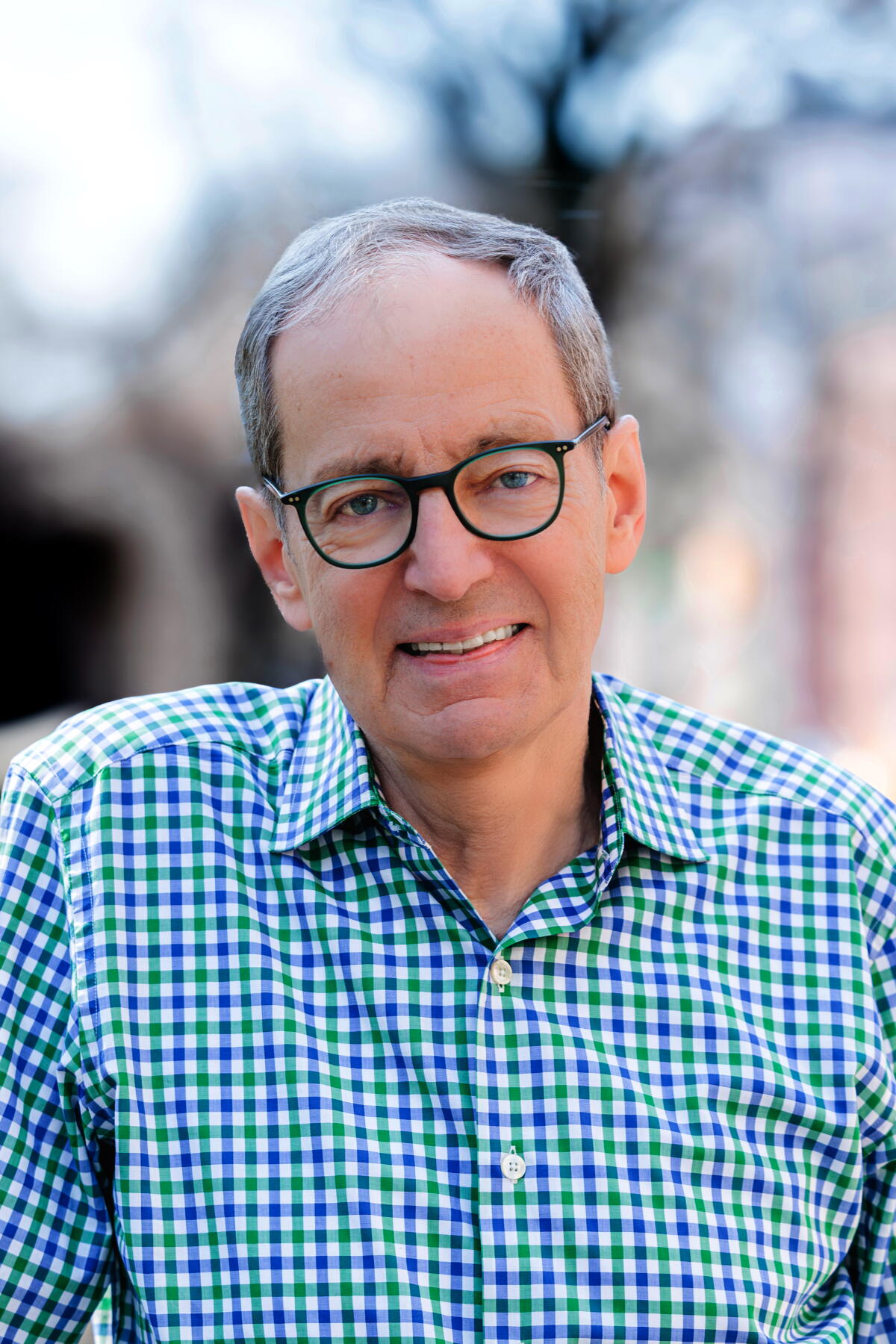
Anthony Tommasini’s biography reclaims Anderson as a great artist who embraced her power as a symbol of racial equality later in life.
(Ahna Tessler Photography)
I feel like people know Marian Anderson in the abstract, but they regard her as a symbol rather than an artist. And among the virtues of your book is that you reestablish Anderson’s legacy as a great singer and performer.
She was a contralto, which is the lowest female vocal register. But that register had such resonance, and she had complete control over it. She also had enormous range; the uncanny, beautiful thing about Anderson’s voice is that when she started ascending even into the soprano sphere, she held those notes so beautifully. They were emanating from below, grounded in that low voice. It made for a mesmerizing sound. I’ve made a playlist to accompany the book.
She embodied this kind of fierce dignity and grace in the face of racial discrimination. But as you point out, she was reluctant to make herself a symbol of the civil rights movement, preferring to let audiences focus on her artistry.
In 1939, she was banned from performing in Washington’s Constitution Hall because of her race, and her manager, with help from Eleanor Roosevelt, arranged a performance in front of the Lincoln Memorial on Easter Sunday. Yet, the night before the performance, she was trying to get out of it. She felt the whole affair had turned into a civil rights demonstration. When it came time to write her memoirs in 1956, she wanted to excise the event from the book. She felt that what she could do is be an example of excellence and possibility for aspiring black artists.
She did play to segregated audiences, even long after she had become a national star.
[This type of segregated performance featured what] was called vertical seating. But she refused to forsake her career, which she had worked so hard to attain, and so she played these segregated shows. Eventually, there was a performance in Virginia which was boycotted, and that sort of broke the trend. She then performed in front of an integrated audience in Florida.
There is an encounter with Albert Einstein, of all people, who counsels her to take a stand against these racist booking policies.
In 1937, she showed up for a concert in Princeton, New Jersey, only to discover she was being refused a room at the Nassau Inn. As it turns out, she had a friend in Princeton who had seen her at Carnegie Hall and had meekly gone backstage to meet her. This was Albert Einstein, who was teaching at Princeton University at the time, and who offered to put Anderson up for the night at his house. He really pressed her on being more outspoken on racial equality.
Anderson played Europe multiple times in the 1930s, right before the rise of Hitler and the Third Reich. As you write, German audiences were blown away by Anderson’s mastery of their music, specifically Franz Schubert’s Lieder, or art songs, which were among Anderson’s most beloved repertoire.
So extraordinary, right? She also made two tours of the Soviet Union during that time. They went crazy for her in the Scandinavian countries, as well. But for the German audiences who are so nationalistic about their Leider, it was confusing. They couldn’t imagine how a Black American woman could sing their music so beautifully.
Anderson was the first Black soloist to perform at the Metropolitan Opera in New York, in Verdi’s opera Un ballo in maschera.
That was really a huge risk and a huge leap for her. She wasn’t a trained opera singer, and she had to dig deep into that material. She was already 58 by that time. There is a radio recording of the performance. There’s this dignity, like she’s calling upon this power. It’s exhausting and it’s draining, but it’s also exhilarating.
This Q&A was edited for length and clarity.
📰 The Week(s) in Books

Book jacket for “Body Language” by Meg Howrey
(Los Angeles Times illustration; jacket from Doubleday)
Marlon James has published his highly anticipated new novel “The Disappearers,” a sprawling story about gay culture in ’80s Jamaica, and Mark Athitakis is quite taken with it. “James is … determined to unwind the cliches of gay fiction: the tragic victim, the heartwarming gestures of solidarity, the blunt porniness,” he writes. “Mere survival will have to be enough for most of these characters; the sense of fear is pervasive, but so is a determination to work through it.”
What’s it like to be the primary dissenting liberal voice on Fox News? Stephen Battaglio found out when he talked to Jesssica Tarlov about her hybrid memoir and self-help book “I Disagree.” “I have a good amount of shyness to me,” she tells Battaglio. “I have a lot of imposter syndrome. I’m constantly in wonder that I ended up getting to do this and that hopefully, am the right person to do it.”
Meg Howrey’s fifth novel, “Body Language,” a twisted family saga, is “smart, sardonic and powerful,” according to Meredith Maran.
Finally, Emily Wilson, the classicist who has been a lightning rod of controversy over her disparaging remarks in regard to the film version of “The Odyssey,” is going to translate Homer’s epic for a second time, reports Emily St. Martin.
📖 Bookstore Faves

The Hammer Museum’s gift shop is one of the best art book shops in L.A.
(Eric Petschek)
Sure, the Hammer Museum’s gift shop stocks the requisite art-themed mugs, tea towels and tchotchkes, but it’s also one of the best art book shops in L.A. Inside the sleekly designed Hammer Store is a vast inventory of monographs, children’s books and critical texts about modern and contemporary art. In an email exchange, store managers Sara Beattie and Brooke Berlin tell us what museumgoers are buying right now.
Hammer’s store is really the best museum bookshop in L.A. How do you decide what to put on the shelves?
We’re an eclectic bunch of book nerds and love the written word. We start by looking at upcoming programming, exhibitions and the season, and we buy accordingly. And we have a great team that gives us suggestions. We’ve learned to trust our instincts. The Hammer is an experimental institution, and we approach our buying in that spirit.
Do you have patrons that are not necessarily there to check out museum exhibits?
Of course! We’re not only a museum, but a cultural center, which means there’s always something happening — like mindful meditation on Thursdays, or family programming on weekends, or people coming in just to enjoy a meal at Lulu.
What kinds of books tend to do well for you?
Art monographs, especially on contemporary or Los Angeles artists; books about living more conscientiously; and everyone loves a children’s book (even if it’s just to heal your inner child). We love finding unique books that can’t be found elsewhere. Whenever we can, we work with small presses and book distributors. They often make books that can only fully be enjoyed or understood by seeing them in person.
Is there any particular title that is presently selling well?
“Mindfulness in the Garden: Zen Tools for Digging in the Dirt” by Zachiah Murray; Sanzu Wada’s “Vol. 1 Dictionary for Color Combinations”; “The Hippest Trip in America: By Land, Air and Sea” by Alake Shilling.
Why do we still enjoy art books, when we can look at millions of paintings and sculptures on the internet?
Why go outside if you can look through a window? There is a lot of talk of people returning to the analog or physical media, and that includes renewed interest in physical books. BookTok is huge. People love talking about books and showing off their special deluxe book editions on TikTok. Art books by their very nature are deluxe, image filled and thoughtfully designed. A well-produced book is an art object in itself. Nothing beats the experience of paging through a beautiful book. That experience can’t be replicated on a screen.
The Hammer Museum store is located at 10899 Wilshire Blvd., Los Angeles.