Amanda Cannon was taken ill while on holiday with her daughter
08:10, 19 Oct 2026Updated 08:16, 19 Oct 2026
Amanda Cannon is fighting for her life in Turkey(Image: Marisa White/SWNS)
A British nan is fighting for her life in Turkey after suffering a heart attack while on holiday as her family faces a £25,000 hospital bill.
Amanda Cannon, 58, was rushed to intensive care after collapsing during a trip with her daughter Marisa White on October 10. The grandmother-of-nine from Redhill, Surrey, reportedly went without oxygen for 10 minutes after suffering what doctors believe was an epileptic seizure and cardiac arrest.
She is currently on life support in a private hospital in Antalya, Turkey. Relatives say her treatment is costing around €3,500 (£3,000) a day, with the bill already reaching €30,000 (£25,000).
Hannah Cooper, the mum of Amanda’s grandchildren, flew to Turkey with her five-year-old daughter after receiving a distressing call from Marisa. She said Amanda suddenly “jolted backwards”, turned blue and stopped breathing. Marisa immediately began CPR before paramedics arrived and took over.
No travel insurance
But because she has no travel insurance, her former daughter-in-law Hannah said Turkish medics would not stop treatment for religious reasons. They fear the mounting costs could run into hundreds of thousands of pounds if her condition does not improve.
Hannah, 33, from Shoreham-by-Sea, Sussex, told Talk to the Press: “She’s now in a deep coma. She’s got kidney failure, liver failure. They said there’s a 20 per cent chance that she’ll wake up and if she does, she’ll be in a vegetative state.”
She added: “I got a phone call from her daughter saying that she just suddenly jolted backwards, went grey, purple, blue, started foaming from the mouth and stopped breathing. Her daughter gave her CPR. Then when the ambulance got there, they took over. She went without oxygen for about 10 minutes.”
Doctors later told the family Amanda had suffered what appeared to be a seizure as well as a heart attack. She was placed on life support and remains in coma.
Amanda travelled to Turkey with daughter Marisa, who Hannah said suffered from many severe physical and mental health conditions. Concerned she would struggle to deal with the crisis alone, Hannah booked flights and travelled out to support her.
She said: “She doesn’t have the mental capacity to cope with what’s going on. The language barrier is so hard. We have to keep going on Google Translate to speak to the doctor because he doesn’t understand us and we don’t understand him.”
Medical costs stacking up
As the family tried to come to terms with Amanda’s condition, they were shocked to learn of the mounting medical costs. Hannah said she received a phone call asking for £5,000 shortly after Amanda was admitted.
She said: “I said to them that I don’t have £5,000, but I’d be flying over to Turkey. Since then, I’ve had several emails asking for payment.”
Hannah later discovered Amanda’s stay in the private intensive care unit was costing around €3,500 every day. She also revealed that the hospital wouldn’t release her to a public one until they cleared half of the bill.
Hannah said: “I’ve asked for a transfer to a state hospital where it would still cost money, but not like this.”
The family launched a GoFundMe appeal with an initial target of £15,000, but now fear the total bill could be far higher. Despite no longer being with Amanda’s son, Hannah said the 58-year-old has remained a huge part of her life.
She said: “She’s been like a second mum to me for 17 years. She’s always been my biggest supporter.”
Toll on family
The ordeal has also taken a toll on Amanda’s grandchildren.
Hannah said: “My eldest is asking a lot of questions and is upset. My little girl just keeps saying she wants to see her nan.”
She said doctors would either wait until Amanda was biologically dead or keep her alive. Hannah and her daughter are set to return to the UK on Sunday, October 18, while Marisa plans to fly back to Turkey after collecting medication.
Hannah concluded: “We’re upset, shocked and confused. We just don’t know what’s going to happen next.”
In the mindbending documentary “You Can See Everything,” comedian Nathan Fielder and professed inventor Elizabeth Holmes sit in her beach house staring at each other like gunslingers. Fielder is the creator of the TV series “The Rehearsal” and “Nathan for You” who constructs discombobulating sham realities that include bogus businesses such as Dumb Starbucks. Holmes is the former billionaire CEO of Theranos who pretended she’d built a revolutionary blood testing machine to squeeze investors for a few dollars more.
Each is an expert in the con. But Fielder is deadpan and cold where Holmes is earnest and warm — and he’s been nominated for Emmys while, in May of 2023 when the film begins, she’s about to serve an 11-year sentence in federal prison. As the camera cuts between close-ups of his narrowed eyes and her big, blue ones, Fielder tries to suss whether he can trust the famous fibber to be honest with him. The showdown is riveting.
“You’re being real right now?” Fielder asks, dubious.
Holmes beams. “I’m always being real,” she swears with a smile.
Her charm hits Fielder in the gut. His face stays neutral yet you can see his own confidence bleed out across the screen.
Co-directed by Fielder and Lance Oppenheim (“Primetime”), “You Can See Everything” is the closest Fielder has come to making a traditional documentary. A thrillingly cringe-tastic interviewer, he blurts out blunt questions like a bungee jumper leaping off a bridge, including asking Holmes’ romantic and business partner Billy Evans, the heir to a San Diego boutique hotel chain, whether it’s possible a woman convicted of fraud might be with him for his money.
At nearly three hours long, “You Can See Everything” won’t bore you for a minute. The hook is right there in the title, Fielder’s challenge to the audience: Here’s how Holmes held up to his scrutiny — do we think she’s telling the truth? But be alert. Fielder remains a trickster. One shot in particular proves you can see everything while being blind to what you’re actually watching.
In the first half of the movie, Holmes and Evans, the father of her two young children, give the small crew complete access to their lives during her last weeks of freedom, including inviting Fielder to sleep in their guest bedroom. It’s an act of “radical transparency,” Evans says. As evidence, there’s a fully nude shot of Evans in the shower, testifying to the intimacy the subjects claim they’re granting the team and the confidence they have that the documentary will make them look great. (Evans also boasts that he’s “excellent” in the sack.)
Holmes maintains both her innocence and her eerie smile, a rictus of empathy. She constantly nods, subliminally snake-charming the listener into a sense of agreement. That assessment might be fair or it might be her reputation making you over-analyze her tics. Doubling down, she even insists she’s never told a lie in her life — a claim that momentarily leaves Fielder at a loss for words.
Yet at times, Holmes really does appear to be sincere. Once she surrenders herself to the Bryan Federal Prison Camp in Texas (where, in an unmentioned coincidence, Epstein collaborator Ghislane Maxwell is also incarcerated), the tone shifts into film noir as Fielder struggles to reconcile Elizabeth Holmes’ dual identities. Is she the sweet-natured scientist, the only version of her he’s ever met, or a femme fatale who may still be running a scam?
“It’s personal,” Fielder says of his fixation. How frustrating that he of all people — the dark prince of pranks — may be Holmes’ latest patsy. Composer Ari Balouzian borrows bits of Bernard Herrmann’s violin score from “Vertigo” while cinematographer David Bolen makes the audience hold its breath by framing an image of Fielder and Holmes like they might kiss.
When the movie’s style gets weird, that’s when Fielder is most in his wheelhouse. Stop reading now if you want to preserve the surprise. Micro-analyzing his encounters with Holmes, he reenacts them with an actor, Amanda Seyfried, whose emotional intensity blows into the film like a gust of fresh air. Seyfried, of course, won an Emmy and a Golden Globe for playing Holmes in the 2022 miniseries “The Dropout.” The twists to come, however, feel as much like last year’s naughty hit “The Housemaid,” the domestic thriller in which Seyfried played a shady wife with a marriage made of lies.
Evans initially seems to think they’re participating in a project closer to Netflix’s glossy portrait of Meghan Markle and Prince Harry. The couple doesn’t know much about humor, pop culture or Fielder himself. Fumbling to figure out what makes him tick, Evans attempts to neg the provocateur as someone who lacks the passion to think differently. (Evans may also be the person who used Holmes’ social media account to write a flattering post calling JD Vance “Lisan al-Gaib,” revealing he’s entirely missed the point of “Dune.”)
But thinking differently is Fielder’s awkward superpower. Sooner or later, all of his projects circle around to his concern that he’s simply wired to be unpleasant. His interactions with Holmes are pure cringe comedy, like when she starts to cry perhaps a bit on cue and he stiffly sputters, “Do you want, like, a tissue?” For the record, he brings her one.
As a viewer, the biggest strike against Holmes is this documentary’s very existence. Whether or not you think she’s guilty of fraud, she is about to be separated from her infant and toddler until they’re in grade school. Who on Earth would genuinely want Fielder, the human equivalent of a skunk, to crash their last moments with their loved ones as he does his darnedest to stink up the place?
Fielder is most comfortable as the film’s villain, shooting himself lurking in the couple’s house like “Halloween’s” Michael Myers. At times, his presence does feel monstrous. In one scene, he needles Evans about whether he thinks his soulmate has ever lied to him while Holmes is on the phone in the next room, tearing up as she asks how often she’ll be able to bathe in prison.
The film doesn’t drill into the technical details of Theranos beyond one dizzying scene where Fielder tries to pin Holmes down on exactly what she meant when she said her machine can run hundreds of different tests. She means it just as I would if I bragged I can benchpress a beer keg — that is, once I strength-train beyond my piddly 5 lb dumbbells.
Instead, it tilts into becoming a caper flick as Seyfried’s commitment to understanding her character’s motivation inspires the actor to invite herself along. The drama they uncover is psychological, as befits an era where Silicon Valley CEOs are closer to cult leaders than engineers, making their cash from being televangelists for their IPOs. And both are attuned to the moments when Evans lets his aggravation slip. One scene is a doozy.
Ultimately, suspicion reigns. “You Can See Everything” is an absorbing study of public presentation and private doubts, a documentary that asks more questions than it answers. I hope Fielder will smile and nod approvingly at me if I say I left the film distrusting him, too, especially Seyfried’s re-staging of a long monologue Holmes delivered in prison where recording devices aren’t allowed. Can we believe that Holmes really did say, “I’m tired of having other people speak for me,” or was that laugh line written by the master manipulator himself? I’m now as paranoid as he is — and what a pleasure.
Nathan Fielder would rather you not read this article. At least not until you’ve seen his new movie.
He has a point.
Now in theaters, “You Can See Everything,” the nearly three-hour documentary Fielder co-directed with filmmaker Lance Oppenheim about convicted Theranos founder Elizabeth Holmes, is full of head-spinning twists and turns best left unspoiled, and the filmmakers have gone to extreme lengths to keep them that way. At its secret premiere at the Telluride Film Festival last month, audience members were required to lock their phones in pouches and warned that security guards with night-vision goggles would be watching for anyone trying to record the screening. Afterward, Fielder pleaded with the crowd to keep the film’s biggest surprises to themselves.
Holmes was convicted in 2022 of defrauding investors in her failed blood-testing company and sentenced to more than 11 years in federal prison. Fielder and Oppenheim began filming her and longtime partner Billy Evans, an MIT graduate and heir to a family-owned San Diego hotel business, shortly before she reported to prison in 2023, gaining extraordinary access to the couple and their two young children.
Holmes and Evans welcomed the cameras, hoping they would help vindicate her. But the closer Fielder and Oppenheim got to the couple, the harder it became to distinguish candor from calculated performance. Fielder, whose series “Nathan for You” and “The Rehearsal” put real people through elaborate, often uncomfortable experiments, began to wonder whether the tables had been turned.
“I really am struggling to this day to understand exactly what I experienced in this,” Fielder admitted during a post-screening Q&A at Telluride. “I don’t quite know what I went through.” He said he hoped audiences might help him make sense of the “glitchy feeling” it left in his head.
Having seen the film twice, we’re not entirely sure we can help him.
In deference to Fielder’s wishes, this is your last chance to turn back: Major spoilers follow. For those still with us, here are 10 of the film’s strangest moments — by no means the only ones — along with a few clues from Fielder himself about how they came to be.
Evans takes ’radical transparency’ too far
Evans has a theory about why the world sees his partner as a monster: Nobody really knows her. “In the absence of knowing somebody, it’s really easy to make them feel other and scary,” he tells the filmmakers. His proposed solution is “radical transparency” — a familiar Silicon Valley mantra with an ironic resonance given Theranos’ notorious culture of secrecy. The filmmakers are allowed virtually unlimited access to the family’s life, with Fielder even invited to move into their rented house in Del Mar, near San Diego. In one scene, Evans stands completely naked in the shower, brushing his teeth with the bathroom door wide open and the cameras rolling, as Fielder stands awkwardly nearby. At Telluride, Fielder, who had initially planned to stay behind the scenes, admitted he was still perplexed by the couple’s openness. “I’m a weird guy — why do they want me there?” he said. “That messed with my head a little bit.”
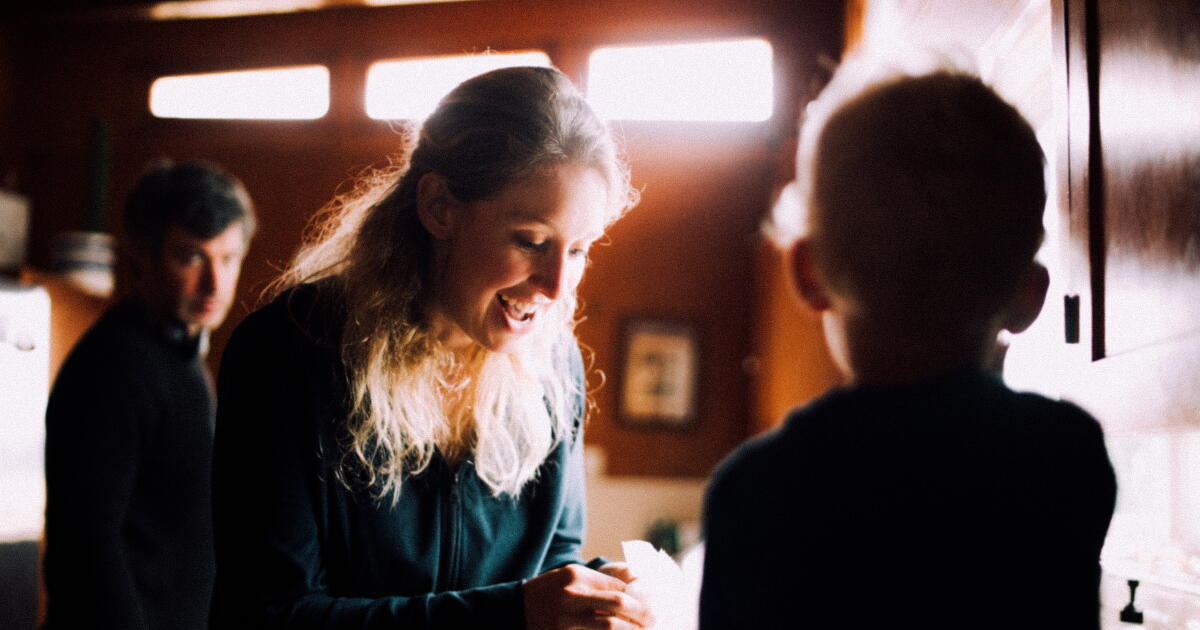
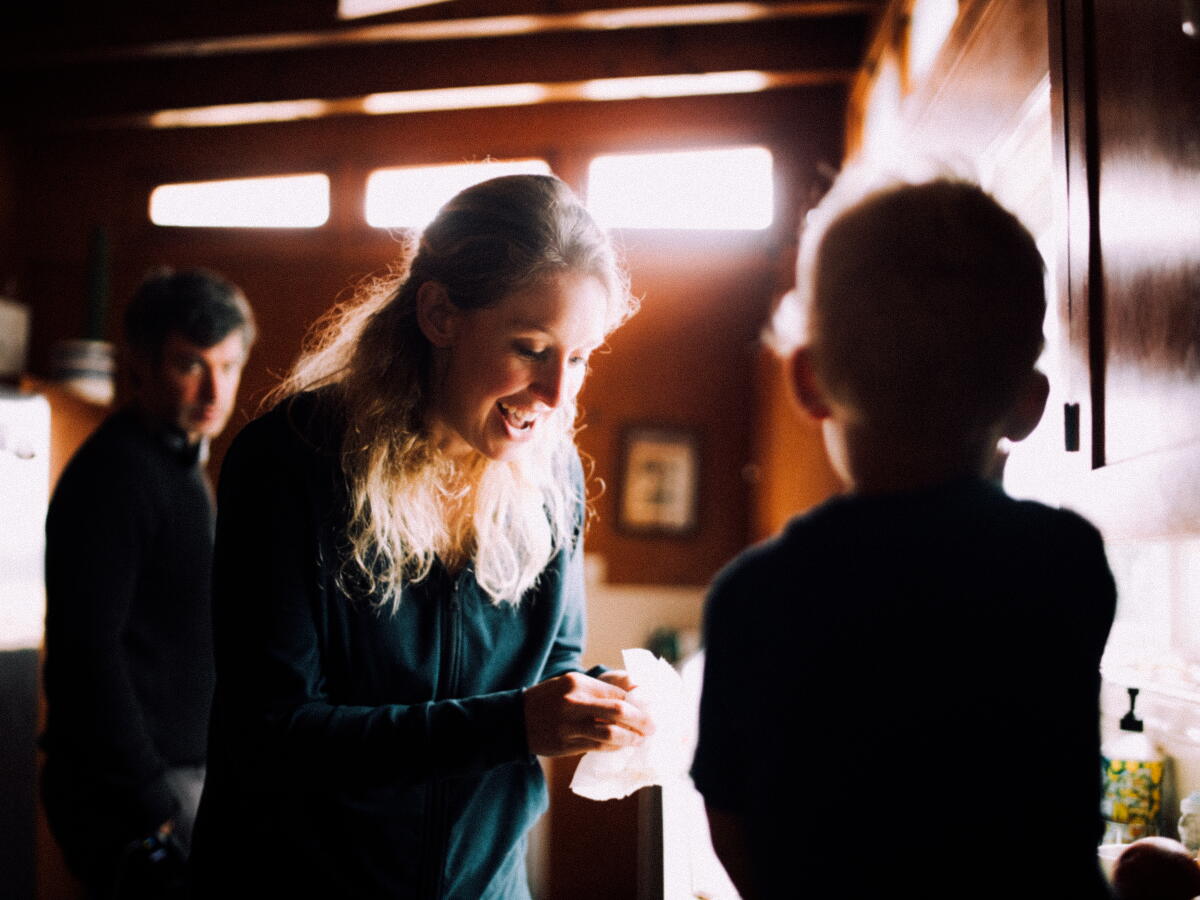
Fielder observes Holmes and her family in a scene from the documentary “You Can See Everything”
(A24)
Theranos, the sequel
A federal fraud conviction apparently hasn’t ended Holmes’ ambitions to revolutionize medical testing. Before heading to prison, she and Evans begin laying plans for a new venture involving lasers and artificial intelligence that Evans describes as “2.0” — a chance, he says, “to put the band back together and do it all again.” Holmes declares, “From wherever I am, I’m going to continue to work inventing, even if it’s inventing from a cage.”
Holmes claims she’s never told a lie
For someone convicted of defrauding investors, Holmes has a remarkably uncomplicated view of her own honesty. Asked by Fielder whether she’s ever told a lie in her life, she replies, “I don’t think so.” Pressed — surely she’s pretended to be sick to get out of a party? — she concedes she has, explaining that she thought he meant the criminal case against her. In a scene that became the centerpiece of the film’s teaser trailer, Holmes fixes Fielder with an unwavering stare. “Why would I deceive you?” she asks. “There’s no reason for me to do that.” When Fielder asks whether she’s being real with him, she doesn’t miss a beat: “I’m always being real.”
The Theranos device gets a second look
Holmes hauls out of storage the infamous Theranos device, the machine that helped bring down her company. “So this is the famous scam device,” Fielder says. “It is not a scam device,” Holmes replies. When she insists the machine can perform any medical test, Fielder finds himself drawn into an absurd debate over the meaning of the word “can.” Did she mean it could actually perform those tests, or that it theoretically would once the necessary chemistry had been developed? The man who has made a career out of baffling other people seems genuinely baffled himself, reduced to explaining the word “can” to the founder of Theranos.
Holmes and Evans enter federal court in 2022.
(Nic Coury / Associated Press)
Elizabeth Holmes meets Abbott and Costello
Still trying to make his point, Fielder turns to Abbott and Costello. He plays Holmes the classic “Who’s on First?” comedy routine — two people hopelessly talking past each other. Holmes watches politely and says she finds it funny. But she seems to have missed the central joke: The first baseman’s name is actually Who. “I didn’t pick it up,” she admits. Fielder’s attempts to explain the joke and why he showed it to her get him nowhere. Evans, watching the exchange, regards his wife’s difficulty following the joke as further evidence that her mind simply works differently from everyone else’s.
Fielder gives Holmes an escape kit
On the morning Holmes is due to report to prison, Fielder arrives with a parting gag gift: hair dye and glasses, in case she’d prefer to disguise herself and flee the country. Fielder is famous for excruciatingly awkward deadpan comedy, but Holmes’ parents are there, the family is preparing for an emotional goodbye and he seems to realize almost immediately that he has misjudged the situation. “I didn’t know your parents would be here,” he says, assuring everyone that it’s “just kind of like a joke.” The more he tries to explain himself, the more uncomfortable things become. “Maybe not appropriate for the moment,” he concedes.
Amanda Seyfried becomes a surprise co-star
Seyfried won an Emmy for playing Holmes in Hulu’s “The Dropout,” which Holmes had avoided watching for fear it would be too emotionally disturbing. Fielder persuades Holmes to watch it for the first time, on a laptop in the couple’s bed. She soon breaks down in tears and asks him to turn it off. Later, Fielder visits Seyfried at her apartment and shows her footage of Holmes watching her performance. So we watch Seyfried watch Holmes watch Seyfried playing Holmes as Fielder watches her. And things only get weirder from there.
At Telluride, Fielder said the filmmakers initially doubted Seyfried would want to participate. But after a brief phone call, she invited them over and agreed to be filmed. Neither side knew where things would lead. “It just actually evolved in that organic way, which was really exciting,” Fielder said.
Seyfried as Holmes in a scene from Hulu’s “The Dropout.”
( Beth Dubber / Hulu)
Seyfried plays detective
Seyfried soon finds herself reenacting Holmes’ conversations with Fielder as he tries to make sense of their encounters. She becomes so invested that she joins Fielder on a visit to Evans’ home, hoping she might get him to open up in ways Fielder can’t. “I feel like an undercover cop right now,” she says, clearly getting a rush. There, after meeting the couple’s children, she unexpectedly winds up on a prison phone call with Holmes herself. With only two minutes for the family to talk, Seyfried suddenly seems mortified to be intruding. “I’m so sorry — I don’t want to ruin your two minutes with your beautiful family,” she says. Fielder, naturally, has a camera running.
Evans takes control of the narrative
With Holmes behind bars, Evans seems determined to manage her public image himself. Armed with power of attorney, he takes over her verified X account, posting messages in her name, some of which sound nothing like the carefully controlled Holmes, including one telling another user to “f— off.” “There’s just so much trust that most things I don’t really consult her on,” Evans says at one point. “I know what she’d want.”
Evans’ attempts to steer the documentary itself begin even before Holmes reports to prison. In a meeting later reenacted in the film, after Holmes leaves the room, he raises the subject of money with Fielder, Oppenheim and executives from A24, the studio behind the film, demanding a share of the profits. Fielder says A24 reluctantly agreed, leaving him worried that the integrity of the project may have been compromised. When Holmes later insists she has no financial interest in the film, Fielder is taken aback. Either she’s “fully sincere,” he tells Seyfried, or “she honestly might be the most manipulative person that’s ever lived.” (The film notes at the end that Evans later changed his mind and decided not to accept payment.)
On Oct. 5, Holmes’ X account promoted the documentary with a tantalizing warning: “I really don’t think you are ready for this doc.” Whether that was Holmes speaking or Evans speaking for her is anyone’s guess.
Seyfried confronts Evans
Things turn ugly during that same visit to Evans’ home. A conversation about conjugal visits and Evans’ sex life gives way to a heated argument over his use of Holmes’ X account. Evans brings up the social media backlash Seyfried faced for criticizing Charlie Kirk after his shooting death, then attacks her portrayal of his partner in “The Dropout.” Soon he’s threatening vengeance against people he believes have wronged Holmes. “I’m going to ruin their lives,” he declares. Asked whose lives he means, Evans replies, “F—ing everyone. I’ve got vengeance in my heart.”
Later, away from Evans, Seyfried offers her own assessment: “He is bat— crazy.”
What is pornography? We tend to think of it monolithically, as something created by and for hetero men, reinforcing sexist stereotypes and machismo behavioral codes. For over 20 years, Erika Lust has been fighting against those preconceptions, creating adult content that expands the parameters of pornography while approaching it as something akin to mainstream independent cinema. Her subscription-only website features content that leaps over gender boundaries, and has pulled in fans around the globe.
In her new book “Lust,” the filmmaker makes a convincing case for an ethical, intelligent porn that can expand our ideas about sex and intimacy. I recently chatted with Lust about sex, power and the internet.
You’re reading Book Club
An exclusive look at what we’re reading, book club events and our latest author interviews.
By continuing, you agree to our Terms of Service, which include arbitration and a class action waiver. You agree that we and our third-party vendors may collect and use your information, including through cookies, pixels and similar technologies, for the purposes set forth in our Privacy Policy such as personalizing your experience and ads.
✍️ Author Chat
Are we calling it pornography? Adult content? What do you call it?
For me, it is pornography. What I do is pornography because I work with explicit images, but I also work with cinema, and I strive for cinematic vision and craft. I don’t just pick up a camera, film people having sex and put it online. It is a whole creative process. So when I talk about my work, I see myself first as a filmmaker whose subject matter happens to be pornography.
What compelled you to create adult content?
I was born in Sweden, and I became a feminist quite young. I studied political science in college. When I was exploring my sexuality in my late teens and early twenties, I became more and more interested in finding out about our desires and who we are and what we are attracted to. And then I started to watch porn [and] felt horrible watching it. I felt a little bit troubled by the images. Why are all these female characters just there to please the man? It wasn’t about the women, it wasn’t their stories, and that made me feel a bit angry. When I talked to other women about this, they felt the same way. I felt there was something to explore there. Of course at the time, I had no idea I would be doing this for a living.
There are a lot of tired tropes about adult content that you debunk in your book. That the performers come from broken homes and are forced to do things on camera without their consent and so on.
It’s so easy for people to think that in the sex industry there’s going to be exploitation. But my experience is the opposite. Because people I work with dare to talk about sex. The conversation is over the table, not under the table. The people I have met and worked with in this business are intelligent and smart, with a very clear plan of their future. They take care of themselves, their bodies and their sexuality.
In “Lust,” Erika Lust debunks tropes and stereotypes surrounding the production of pornography.
(Jahel Guerra)
How has technology affected how we think about sex?
There’s a lot of sex anxiety going on in our society, and I think that also has a lot to do with technology and how it has taken over our lives. And I’m reading more articles about the intimacy crisis, and the fear that people have of connecting with other people, and young people who are not having sex. Technology has gone wild. It has taken over our lives. People are afraid of other people, of friction, of negotiating boundaries. They don’t know how to explain their own desires so they would rather talk to robots. I think we need to disconnect from technology, and think more deeply and talk to each other — not just about sex, but about everything.
Given the ubiquity of free adult content on the web, how do you compel customers to subscribe to your site?
I think people that subscribe are looking for something completely different, something more elevated, and they understand that that kind of film costs money. I can’t shoot without paying my crew and my staff. Shooting with an Alexa camera is not the same thing as picking up my mobile phone. And then I need crew members who can work with that technology, I need gaffers and electricians, I need to pre-light the set the day before, and so on. The budgets that I’m working with are really budgets for independent films. We have a staff of 45 working with me and my husband.
It’s the last artistic underground, really. I did notice that Bruce LaBruce, a filmmaker whom you mention in your book, has a collection of his films presently being shown on Criterion Channel.
I never think it’s going to become mainstream. My true hope is that we can at least be known as an independent porn culture making quality films that aren’t exploitative. That people understand that it exists, and that it’s an option apart from the mainstream porn websites.
This Q&A was edited for length and clarity.
📰 The Week(s) in Books
Chuck Lorre has written a memoir, “Sitcom,” about his career
(Christopher Patey / For The Times)
How does Bonnie Garmus follow her blockbuster 2022 novel “Lessons in Chemistry”? With “Peck & Peck,” a “whimsical and winning ode to the written word, and send-up of the pretensions of its gatekeepers,” writes Leigh Haber.
Chuck Lorre, one of the most successful and prolific writers and producers in TV history, has written “Sitcom,” a memoir in which he reveals, among other things, his decade-long tenure as a card-carrying Scientologist. Writing the book “was cathartic,” he tells Mary McNamara. “There’s a little bit of therapy going on in this book. I got to say some things out loud that in the past I would have kept hidden because they were embarrassing.”
At a time when it seems like anger and hostility has become the fossil fuel of everyday life, author and conflict expert Priya Parker’s new book “The Art of Fighting” argues for civil and spirited debate as a balm for our troubled times. “As a conflict resolution facilitator for the last 25 years, I can say that healthy community needs healthy conflict,” Parker tells Margaret Wappler.
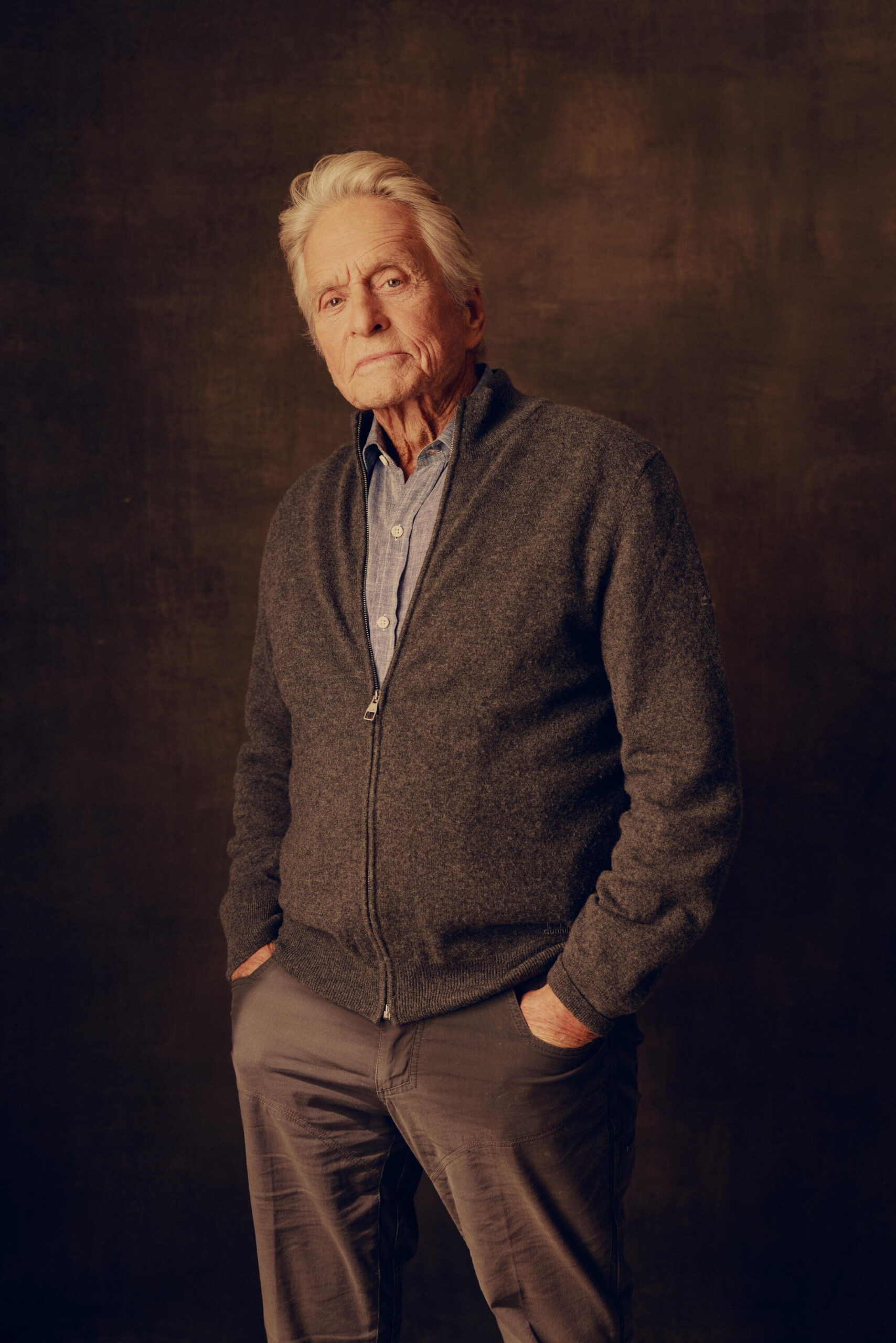
Finally, Maddie Connors talked to Michael Douglas about his new memoir, “One Helluva Ride,” a book about his life and career. “Your 80s may be a good time to share,” the 82-year-old actor tells Connors. “People interested in movies, we give them a certain insight into the process, and maybe they could learn something. For others, it’s just gossip.”
📖 Bookstore Faves
Formerly a pop-up bookstand, Reverie Bookstand is a brick-and-mortar bookstore on Sunset Boulevard in Echo Park.
(Reverie Bookstand)
Located on a busy stretch of Sunset Boulevard in Echo Park, Reverie Bookstand is doing its level best to buck the AI tsunami, selling used books created by humans in a variety of subjects. In an email exchange, owner Tim Horner tells us what’s selling in his store.
What prompted you to open the store?
I was driving by and I saw it was for lease. I had been selling books for some years as a scout for other bookstores, and also at flea markets where I would pop up with a ”bookstand.” So it wasn’t a brand new idea; I had always dreamt of it. The owner of the building was a part of a small team that ran a collective DIY venue and gallery called Echo Curio around 12 years ago. It has since shut down, but Echo Curio was a place I came to as a young person back in the day. So the landlord was sympathetic to the cause and the idea of having a bookstore here. So I went for it.
What genres does the store tend to emphasize?
I specialize in poetry, mysticism, occult and out-of-print secondhand books and paper goods. All the books here in the store are used books. So far it hasn’t been difficult to keep the shelves full, I know some spots.
Who are you customers?
The clientele here is diverse. Students, working-class people, artists, local neighborhood families, musicians and people from all walks of life who simply love books and reading. A thing I am grateful for is how kindhearted and empathetic (most) book people are. It gives me a lot of strength and motivation everyday to know that my book-buying addiction is not in vain but is actually going to some strange use in helping connect people with literature.
What’s selling right now?
The things that are selling the most are things California-related and writers from California especially — Joan Didion, John Steinbeck, Octavia Butler.
Why do we still need bookstores when AI can write books for us?
I think bookstores are relevant still because we all need some type of human connection for our well-being, and books encourage that behavior. Whether it’s connecting with a space and people or connecting with authors, a bookstore is a place where you can actually browse for something and be in the moment with other people that are possibly interesting. The gesture alone validates itself in that you’re telling the world. I am open to ideas, things, places, people, and along the way you find a book you didn’t know existed, a nicer copy of something you already have, or a book you’ve been meaning to read but had forgotten about. And until this point there is no tangible way to browse for these things I have online yet and hopefully ever.
Five days. That’s how long President Trump’s latest press secretary, Katie Zacharia, lasted before she was fired Friday.
Her stint, which was about as long as the recommended shelf life for an open can of beans (if refrigerated), broke the previous record set by Anthony Scaramucci.
During Trump’s first term, Scaramucci lasted 11 days as White House communications director — the suggested length of time before a sealed pack of hot dogs expires.
Their minuscule tenures represent an impressive race to the bottom in a once-prestigious role that was created just under a century ago, during the Great Depression.
The press secretary typically stuck in the job for years or entire terms, rather than days or weeks. For reference, Scaramucci’s dizzying 2017 arrival and departure broke a 72-year-old record.
Jonathan Daniels served just 19 days (recommended expiration time for a tub of sour cream) in 1945. He at least had a valid excuse for his short run: President Franklin D. Roosevelt died.
Trump told reporters Friday that Zacharia might continue to work for him “in some form, but maybe a more pleasant form.”
He sowed further confusion when he recounted his conversation with Zacharia, claiming that he told her, “Honestly, if I were you, I’d reconsider” and asked her, “Katie, do you need this? I don’t think you need this.”
With verbal chops like those, who needs an articulate press secretary? Apparently not Trump, judging by his appointment of someone whose debut was anything but professional.
Let’s take a trip down memory lane and recall her first day on the job. It was Monday.
Zacharia appeared wholly unprepared when she took the lectern to address the press corps. She looked down and read nervously from a script, took just three questions and embarrassingly mixed up references to “her husband” and “her president.” She abruptly exited the briefing after just 11 minutes.
Zacharia previously worked as a conservative commentator and senior communications advisor for Trump Media & Technology Group (Truth Social). She monitored the president’s social media posts to discern what was of importance to him, then would go on air to talk about those topics. In essence, she was a press secretary, just not in the White House.
She told the conservative outlet Human Events on Thursday that she had been aiming for a job within the administration, frequently appearing as an expert voice on conservative platforms such as Fox News.
“My philosophy is, I’m on TV enough where if he sees me and he likes me, then I will be recruited for the job,” she said. “I do not believe that lobbying for that job would have been successful, and I wanted to work for it. I wanted to audition for it.”
She succeeded Karoline Leavitt, who served quite a long time — 19 months — before leaving to “spend more time with my family,” then immediately signed on with Fox News as an on-air contributor.
The revolving door of Trump administration press secretaries has at least been entertaining. Most stayed on significantly longer than Zacharia (the bar is low, after all), and at least a few managed to leave a lasting impression.
Sean Spicer kicked off the parade in 2017, scolding journalists his first day on the job when defending the size of Trump’s inauguration crowd. It was record-breaking, he claimed. It was not.
Spicer became the inspiration for one of the best recurring “SNL” sketches ever when Melissa McCarthy transformed into him, embodying the new administration’s disdain toward the press: “I’m not here to be your buddy!” she screamed at befuddled reporters.
McCarthy’s “Spicy” is hard to beat, but a Zacharia parody could come in a close second should it end up as the premise for “SNL’s” cold open this weekend.
When Trump announced her appointment last week in a social media post, he referred to her as “an attorney.” She referred to herself as a lawyer.
But when a reporter asked Trump on Monday where she had passed her bar exam, the president threw the question to Zacharia, who was standing behind him on the South Lawn. She stepped up to the mic and answered, “When I moved to China.”
By Wednesday, reporting surfaced that Zacharia sat for the California bar exam after graduating from Pepperdine University’s law school in 2011, but did not pass. In China, she worked in international transaction law, which didn’t require admission to a state bar.
If history is any indicator, whoever replaces Zacharia as Trump’s press secretary should have a go bag packed and stashed directly behind the lectern.
The once-respected position has been degraded by six years of poor decisions and a volatile president who prefers to communicate with the electorate at 3 a.m. in ALL CAPS via his own social media platform.
Here’s to the next White House press secretary. May you outlast the shelf life of a carton of milk.
A beloved Coronation Street star has candidly opened up about their struggle with alcohol
Coronation Street legend reveals alcoholism struggle and says bosses saved their life(Image: ITV/REX/Shutterstock)
A Coronation Street actor has opened up about their alcoholism, and revealed that soap bosses sent them to rehab.
Kevin Kennedy joined the ITV soap in 1983 as Curly Watts, renowned for his hapless romantic endeavours and succession of peculiar employment roles. Throughout his tenure on the enduring show, he featured in numerous major storylines.
From his passion for astronomy to his turbulent love life, his years in Weatherfield were packed with drama. Nevertheless, he was last spotted in 2003 when he departed alongside wife Emma (Angela Lonsdale) for a fresh start in Newcastle.
Following his departure, Kevin has remained active, featuring in programmes including BBC’s Doctors, Mrs Browns’ Boys and Holby City.
And on Wednesday (October 14), he turned up on Good Morning Britain to discuss his latest musical, The Picture of Dorian Gray. Kevin also opened up about his battle with alcoholism, disclosing that he has remained sober for 28 years.
He said: “Well, ITV and Coronation Street, effectively saved my life, sending me into rehab. And I was very, very, I still am very grateful for that. You know, I was in there 4 weeks and came out slightly different.”
When questioned about whether his addiction had been impacting his work on the soap opera, he revealed: “Well, that’s the thing about addicts. They’re very resourceful, intelligent people. They have to be. This is why for the charity [Kennedy Street Foundation] that we do, we promote visual recovery.”
Regarding what guidance he would offer those concerned that alcohol or drugs may be becoming an issue, Kevin said: “Well, the rule of thumb with alcohol or any drug or addiction is if it’s costing you more than money, then maybe it’s time to look at it.
“What I would say to you is, we do recover. We do recover. It’s not all doom and gloom. It’s going to take a lot of hard work and a lot of commitment, and you have to go to various health centres; there’s enough out there.
“And if you do, as you’re told, and if you do, as is suggested, then you will recover. I can guarantee you if you put down that drink and that drug, do what’s suggested, your life will get better.”
While on GMB, Kevin spoke fondly about his time on Corrie, saying: “Oh, I mean, all of it is my favourite, actually. I’m very proud of that body of work, yeah, poor boy [Curly], he went through it!”
Kevin continued: “Even now when people come up and they do and they say, ‘oh, I remember when you did that’. I think that’s really humbling experience and I really love it. So it’s great.”
Good Morning Britain airs Monday to Friday at 6am on ITV1.
LONDON — It’s the day after the London premiere of “Sense and Sensibility,” and its stars, Daisy Edgar-Jones and Esmé Creed-Miles, have shed the glamour of the evening before. Both are curled in chairs in an otherwise empty room in an upscale Hyde Park Corner hotel, modestly dressed in jeans, sneakers and casual tops. Each drinks from an enormous glass bottle of water rather than wasting time with a cup.
The spectacle of a blockbuster red carpet is familiar for Edgar-Jones, whose career took off after the 2020 limited series “Normal People” and has since included “Where the Crawdads Sing” and “Twisters.” But last night marked the biggest such occasion so far for Creed-Miles, best known for the Prime series “Hanna.”
“I was a bit nervous with my friends and family all there,” admits Creed-Miles, who plays the more emotional of Jane Austen’s Dashwood sisters, Marianne. “I’m very lucky because Daisy has done it before and she’s so cool about it.”
“Absolutely not,” says Edgar-Jones, who plays the sensible Elinor. She grins sheepishly. “If anything, I think I’m getting more nervous.”
Both actors understood the high stakes of remaking Austen’s 1811 debut novel, most famously adapted in 1995 by screenwriter and star Emma Thompson and director Ang Lee — a movie that became a generational touchstone nominated for seven Oscars. The new version, in theaters Friday, was adapted by Diana Reid and directed by Georgia Oakley, best known for her evocative 2022 feature debut, “Blue Jean.”
Oakley wanted to re-create the emotions of reading the book as a teenager.
“In comparison to other Austen novels, I remember it feeling quite wild,” Oakley says, speaking separately over Zoom. “I also wanted to capture the spirit of the two older sisters as the beating heart of the story. My memory of it was that their story was the main love story of the book.”
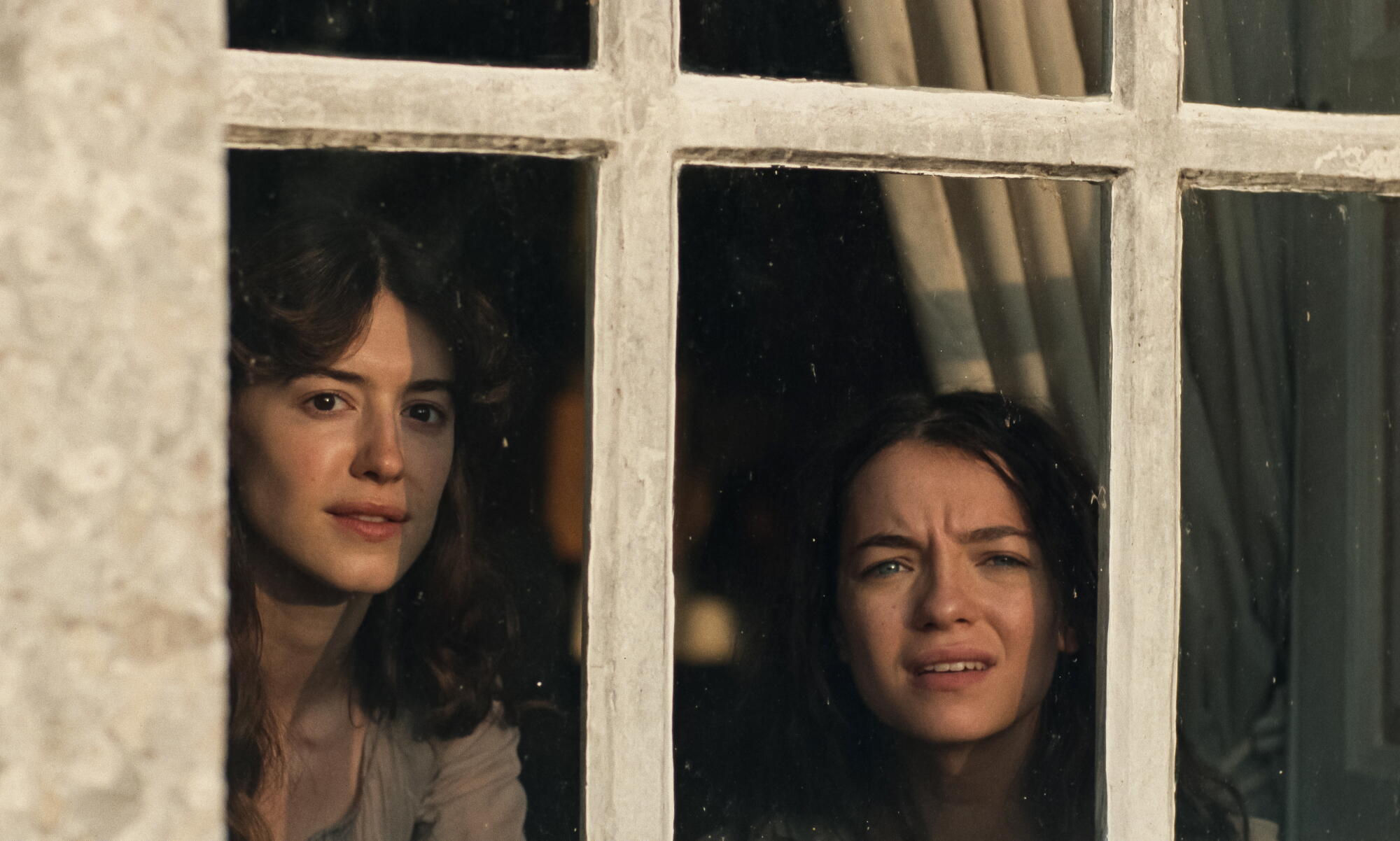
Daisy Edgar-Jones, left, as Elinor and Esmé Creed-Miles as Marianne in a new version of “Sense and Sensibility.”
(Focus Features)
Oakley’s “Sense and Sensibility” emphasizes that relationship between Elinor and Marianne. Although they approach the world differently, they find common ground in each other. It was essential to find the right actor for each role, but also to ensure there was both tension and chemistry between them. Edgar-Jones, 28, was cast first without an audition. There was never any question as to which sister she would play.
“I have played a significant Marianne before,” Edgar-Jones says in a nod to affluent, tortured outcast Marianne Sheridan, her role in “Normal People.” “And I love both characters, but I’m moving into my late 20s now. Elinor has a maturity and a wise older soul quality that I really liked and felt I was right to occupy. I have always been attracted to characters who don’t necessarily have the words to express how they feel.”
Oakley appreciated Edgar-Jones’ restraint. “She is able to show so much by seemingly doing very little,” Oakley says. “Elinor has a lot on her shoulders, so I was looking for an actor who could give a sense of that from the very beginning.”
Creed-Miles, 26, faced a more uphill climb to become Marianne. She describes her first audition as awful.
“It was really bad,” she says. “Maybe I was nervous. I can be a bit of a mess. But someone saw something in me, I guess, and they called me back. This time I worked my ass off and spent days preparing the scenes. They liked that audition enough to bring me in for chemistry reads with Daisy and some of the boys.”
“There’s an earthy, undone nature to the world Georgia made,” Edgar-Jones says of director Oakley’s take on Austen.
(Erik Carter / For The Times)
“The first audition didn’t go exactly to plan,” says Oakley, who didn’t expect to see the actor again. “But [the second time] I was so moved by Esmé performance. We have this idea of how we think people are supposed to speak in a period drama, and Esmé seemed to not be affected by any of that.”
Edgar-Jones and Creed-Miles had previously worked together on the 2018 drama “Pond Life,” which was an asset going into “Sense and Sensibility.”
“It’s a summer I have never forgotten,” Edgar-Jones says of the experience, her first film role. “I met Esmé and we fell in love. We watched a lot of ‘Love Island.’ And then COVID happened and we weren’t reunited until our chemistry read.”
Although they hadn’t completely stayed in touch, there was a natural rhythm between them. “We had so much history and nothing was ever overly discussed,” Edgar-Jones adds. “It was instinctual. That level of intimacy takes time to develop and the fact that I already had years with Esmé meant that it felt very lived in.”
“Sense and Sensibility” was filmed entirely on location around England, primarily in the sweeping countrysides and dramatic coasts of Devon and Dorset. Oakley wanted to emphasize nature and to show how the Dashwood women’s emotional landscapes evolved alongside the shifting landscapes around them, both in the countryside at Barton Cottage and in the more confining social landscape of London. There is a naturalistic aesthetic to the film, augmented by the locations, the costumes and the hair and makeup design. The characters wear muted, sweeping gowns, their hair often loose.
“There’s an earthy, undone nature to the world Georgia made,” Edgar-Jones says. “Sometimes there’s distance you can sometimes get from watching a period drama because obviously we no longer wear corsets and bonnets and ride in horse-drawn carriages. But even though this feels very much of the Regency time, it also feels very close.”
“I loved how authentic everything felt,” Creed-Miles adds. “It didn’t feel frilly for the sake of itself. The clothes helped me find a sense of Marianne. I needed the costumes to close that gap.”
“We wore no makeup, even to the point where sometimes I’d put on some lip balm and Georgia would be like, ‘Take it off,’ ” Edgar-Jones recalls.
“The characters started to feel like real people in my life who I knew,” says Creed-Miles. “It was almost like a split personality.”
(Erik Carter / For The Times)
Creed-Miles says the unbuttoned aesthetic felt more true to the time, even if some commenters online have claimed it’s not period accurate.
“We don’t have depictions of women’s internal lives in the way that we do now,” she says. “When you look at a portrait there’s a composure that’s not the same as having a phone picture of someone when they’re getting out of bed in the morning.”
Oakley fills the screen with a palpable yearning. The camera often lingers over the actors’ faces, revealing Elinor’s inner turmoil and Marianne’s dramatic heartbreak. For many scenes, Oakley asked the cast to do silent takes.
“We wanted to tell a story that had space for some quieter moments,” the director says. “The actors were free to speak or make noises, but they couldn’t say the words of the scene.”
“In making this, I realized Elinor isn’t devoid of emotion,” Edgar-Jones says. “She’s full of it, but she’s learned how to govern it. Realizing that she was an extraordinarily passionate person and not a stone was really important for me. By the end, I felt completely marinated in it.”
“The characters started to feel like real people in my life who I knew,” Creed-Miles agrees. “It was almost like a split personality.”
“Circumstances have changed for young women quite drastically over the past 200 years,” director Oakley says. “But the fundamental contradictions around what it means to be a young woman haven’t changed nearly as much as we would like to think.”
(Erik Carter / For The Times)
Oakley’s interpretation of “Sense and Sensibility” has a wistful, almost Brontë-like quality. You can feel each character’s pain and joy and hopefulness. At the premiere, the audience audibly gasped and cheered, even though Austen’s story is well known to many. Oakley didn’t want to make her film overly contemporary, but she feels the story resonates today because Austen is so timeless.
“Circumstances have changed for young women quite drastically over the past 200 years,” Oakley says. “But the fundamental contradictions around what it means to be a young woman haven’t changed nearly as much as we would like to think. There’s this enormous gap between what we tell young women that they can reasonably expect from their lives and what the world is prepared to offer them.”
Creed-Miles admits that she’s recently fought with someone on Instagram about whether Austen was a feminist.“They didn’t have that terminology back then, but she was a rebellious author in that she used these sociocultural structures to explore the trials and tribulations of femininity,” Creed-Miles says. “It was really important to Georgia that we kept that alive. Reading Austin as an adult, I have so much respect and admiration for the themes she was exploring with a really deft hand. It’s never rammed down your throat.”
Edgar-Jones, an Austen fan, agrees that she captured a truth about the human experience. That’s what allows the author’s work to be retold and reimagined over decades.
“The joy of adaptation is that every new person who says these words will bring a piece of themselves and give it new meaning,” Edgar-Jones says. “And every time we explore something again, it will be colored with the context of today. Great art, like this, should be brought to life again and again.”
MANY parents usually spend years saving up for family holidays abroad.
But one savvy couple has managed to swap life in the UK for a full-time travel adventure – all while saving £36,000.
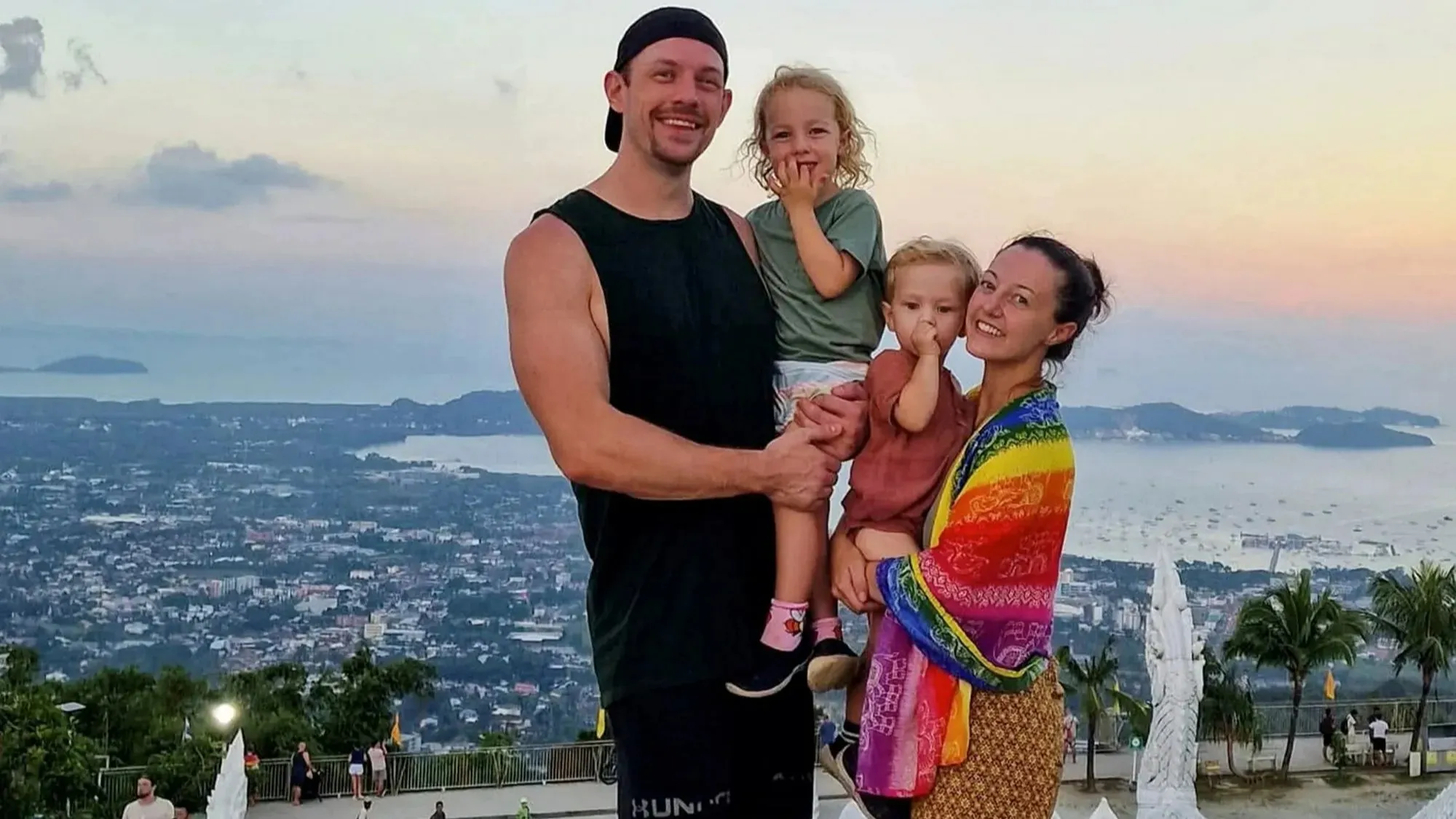
Steven, Aurora, Atlas and Ruth in Phuket, ThailandCredit: SWNSSteven and Ruth enjoying quality time with their kids in Sri LankaCredit: SWNS
Back in 2023, Ruth and Steven Rowe made a decision which shocked a lot of people after “selling everything they owned” and buying a one-way ticket to Sri Lanka.
They have been globe-trotting ever since on a budget of just £30 a day, and have turned the world into a classroom for their two children Aurora, five, and Atlas, four.
Ruth, 35, and Steven, 36, said they had always dreamed of travelling full-time and, as the moment approached to put the children into a nursery, they felt the time was right.
Ruth said: “We knew those early years were precious and we wanted more time together as a family before school routines took over.”
The family-of-four looking over a field Bali – one of the 17 countries they have visitedCredit: SWNSSteven, carrying Aurora, and Ruth with Atlas in her armsCredit: SWNS
They flogged all their belongings on Facebook Marketplace or via car boot sales and set off from the village of Eardisley, Herefordshire, with just two suitcases of clothes and a few toys.
The family has already been to 17 different countries, ticking off bucket-list destinations such as Costa Rica, Guatemala, Ecuador, and Indonesia.
They stay four weeks at a time in Airbnbs and have also visited the likes of Thailand, Malaysia, Cyprus, the USA, Colombia, and Peru – all while saving around £12,000 a year.
They currently have no plans to return and want to continue world-schooling in exotic locations – while spending around £2,000 a month, compared to £3,000 back in the UK, as a result of their rent and outgoings being less.
Ruth and Steven had been renting a barn conversion and had both children during the Covid-19 pandemic.
They had travelled extensively before having kids but couldn’t shake the feeling that there was still so much of the world they wanted the children to experience.
Ruth added: “We wanted more time with them as we know those early years are precious, so we thought, why not just do it? So we did.
“Selling everything was an exhilarating experience.
“Our car, furniture and most of our possessions all went through Facebook Marketplace and car boot sales.
“We kept only a handful of memory boxes filled with special items from the children’s early years and a few clothes.
“We set off at the start with two big suitcases, a medium and a small one – and a stroller.
“And since then we’ve downsized to just two suitcases – it is really surprising how little you really need.
“Possessions don’t make you happy, life experiences do.”
They arrived in Sri Lanka with no return ticket and no real plan beyond seeing where life took them.
Ruth added: “And we’re still travelling now. We’ve been travelling full-time ever since, slow-exploring the world as a family, while my husband runs his coaching business remotely and we embrace world-schooling on the road.
“It’s been beautiful, chaotic, challenging and incredibly freeing.”
Steven, Aurora, Ruth and Atlas pictured together in GuatemalaCredit: SWNSThe family pose in Antigua, GuatemalaCredit: SWNS
The couple also support themselves financially via Steven’s online coaching business – which he can still run wherever they are in the world.
However, Steven revealed the lifestyle isn’t always glamorous.
He added: “We use Airbnbs mainly but I’ve been working out of little cupboards in some places – it has been challenging at times but we’re in a fortunate position.
“We aim to live off around £30 a day and we stay in places for a month at a time so I can work Monday to Friday.
“But it can vary greatly; a two-bed apartment in one country can be £800 but a smaller one in another country £1,300.”
The couple say their children are now educated through “life experiences” – be it picking up Spanish in Latin America or learning about volcanoes while hiking in Peru.
And they say giving the kids no screen time whatsoever on their travels has helped them to become more patient and creative.
Ruth added: “They are also learning counting through things like paying a tuk-tuk driver in different currencies and the first time Aurora ever wrote her name it was in sand on a beach with a stick.
They also visited a waterfall in ColombiaCredit: SWNSChilling out at the Pacific coast of Costa RicaCredit: SWNS
“We give them no screen time at all – which I think has taught them patience on their travels and to be more creative when they are bored sitting on a bus.
“They thought the TV back home was a radio as we’d only use it for Spotify and we think that’s allowed their imagination to flourish.
“I have just seen their confidence grow so much, and of course there’s no way of really telling how they would have been at home, but they are just so open and talk to anyone – young and old.
“I will sit down and teach them some reading and phonics and writing – but we’re not rigid with it and it’s still very much about learning through playing.
“It wasn’t a case of we hated the UK – we just love the world. But I was never a fan of the cold and rain so that is something I don’t miss.
“Also, we’ve found children aren’t treated like nuisances like you find in some restaurants in the UK.
“They are welcomed in and looked after, lots of places have playgrounds too to keep them entertained; that was a big difference to the UK too.
“Sri Lanka is just the most welcoming place we’ve ever been – people would invite us to eat in their homes and absolutely loved the kids.
“Costa Rica is beautiful with all the wildlife and jungle, Guatemala is underrated – it is also an incredible place and one of our favourites.”
Ruth was also not a fan of the cold and wet British weather – but admits she misses British chocolate.
She added: “The only thing I miss is friends and family – and also British chocolate.”
Steven also believes the lifestyle has been transformational for the children.
He said: “These positive environments have brought such positive developments so far in our children. Atlas was swimming independently at two.
“This way they get one-to-one without being part of the larger school system, which we have no issue with, we just see the benefits from doing it this way.
“We make sure the children are at the centre of what we do, we always research kids’ clubs and activities wherever we stay.
“They are loving learning about all the wildlife too – we had iguanas and sloths outside our doors in Costa Rica.
“Aurora had surf lessons in Bali and will be sandboarding in the Peruvian desert; it’s magical for them.
“The children have most enjoyed all the swimming they’ve been able to do and all the wildlife has been a massive enjoyment for them too.”
The three-peat is slowly, agonizingly having the life squeezed out of it by a collection of hardscrabble Midwesterners with no regard for stardom or status.
Two games into the National League Championship Series, the three-peat was formally placed on life support Monday after the mighty Dodgers lost a second consecutive game to those little giants known as Milwaukee Brewers.
Shohei Ohtani strikes out during the sixth inning
(Robert Gauthier/Los Angeles Times)
This time the score was 7-4 after another devastating night at American Family Field, and now the Dodgers trail two games to none in a best-of-seven series that appears beyond their control.
For a second consecutive game, their ace was knocked out. For a second consecutive game, their powerful offense petered out.
For a second consecutive game, they looked like a weary, aging band of fallen stars that had stumbled into a surprisingly deep pothole and had no idea how to climb out.
For the Dodgers to win this series and continue their journey toward a third consecutive championship, they must beat the Brewers in four of the next five games, the last two of which would be played in Milwaukee.
It doesn’t seem likely. It doesn’t even seem possible.
Not once in in their previous two title seasons did they trail anybody two games to none, and they certainly don’t seem equipped to survive it now.
Look at how they lost Monday. On second thought, don’t look, because what you’ll see bears scant resemblance to the swaggering, self-assured Dodgers of postseasons past.
They pitched their October ace Yoshinobu Yamamoto, and he’s always saved them, right? Not this time. He couldn’t make it out of the third inning, battered by scattered wildness and scathing swings.
They were handed runs on two errors by the Brewers’ shaky rookie starter, Logan Henderson, and they’ve always capitalized, right? Not this time. They couldn’t make the Brewers pay for their clumsiness, managing just three hits, the slumps of their superstars ever deepening, Will Smith and Shohei Ohtani becoming absolute offensive liabilities.
Even with all this, they sent Henderson packing after four innings and took aim at a heavily used Brewers bullpen and surely they could summon the firepower to send at least one of those relievers running, right? Not this time, as four Brewers relievers set a postseason record by pitching five perfect innings.
The last two innings being a sad microcosm of the previous seven.
Entering the eighth inning, the Dodgers trailed only 4-3 and had the top of their order coming up in what still could have been a trademark Dodgers October comeback.
Mookie Betts strikes out in the eighth inning.
(Robert Gauthier/Los Angeles Times)
Not so fast.
Facing Abner Uribe, Mookie Betts struck out. Facing Aaron Ashby, Freddie Freeman struck out and Teoscar Hernández grounded out. Yeah, with perhaps their season on the line, they couldn’t even get the ball out of the infield.
The Brewers, of course, sealed the deal with two runs on three singles in the bottom of the eighth, and the Dodgers went meekly 1-2-3 in the ninth.
It was surely, truly painful for Dodgers fans to witness the final out, a strikeout by … yep, last season’s World Series hero Miguel Rojas.
The three-peat is dying, and it’s almost unbearable to watch.
Having both of their aces beaten in Milwaukee, the Dodgers will come home with Blake Snell and Tyler Glasnow starting in Games 3 and 4, respectively.
In any other scenario, both pitchers are aces as well, and the Dodgers would have a huge advantage. But neither pitcher has looked great in the postseason, and both will be pitching while bearing the weight of a stressed-out Dodgers Nation.
“Yeah, it’s certainly a challenge,” manager Dave Roberts said. “I think that if you look at Game 3, I like where we’re at as far as in a vacuum, who’s pitching, where our bullpen is at, being at home. Then you’ve got to go from there.”
Perhaps the most frustrating thing about Game 2 is that the Dodgers led … then blew the lead … then led … then blew the lead … then led …then blew the lead.
The Brewers’ final tying blow came on William Contreras’ fifth-inning homer against Kris Bubic, who has struggled in this postseason and perhaps shouldn’t have been in the game. The Brewers’ final go-ahead run came in the sixth on Contreras’ bases-loaded single after Brice Turang surprisingly was intentionally walked in front of him.
But neither of those plate appearances was the game’s most important. The key moment that actually didn’t score any runs was Jake Bauers’ 12-pitch walk in the third inning.
That loaded the bases, and Christian Yelich then greeted an exhausted Yamamoto with a two-run single.
“Yeah, it just got to a certain point where it was straight compete mode, a little bit of like blackout, just kind of in the flow a little bit competing,” Bauers said. “It was fun. It was a fun at-bat. I knew that was a moment where the guys needed something, the team needed something.”
Funny, but those are the kind of things Dodgers hitters used to say, back when they were confident and full of life.
But Smith is one for 23, and Ohtani is three for 19, and the Dodgers have just one extra-base hit against the Brewers, and nobody is saying anything about the fun of competing.
In fact, things are so lousy, Roberts appeared to call out Smith for not using the ABS challenge in the early innings against Turang. Both times strikes were called balls, and Turang took advantage of the missed calls to double and walk and score twice.
Yamamoto also seemed annoyed that his catcher could be letting his batting woes affect his work behind the plate.
“Obviously in that spot, Will didn’t feel like it was a strike, but obviously if you look back, that’s a called third strike, he doesn’t double, and that changes the outing,” Roberts said of Turang’s first-inning at-bat.
Roberts still has hope. But he’s not looking past Game 3.
“As far as can we do it, absolutely, but it’s just you want to get that first one,” he said.
Dodger Stadium will be filled with fans in what could be a celebration. Or a wake.
One word that could describe Aria Vega’s whirlwind 2026? Chévere.
The Colombian expression for “awesome” is also the name of the fast-rising star’s global smash hit. Released in January, the breezy tropical swing of “Chévere” — and the rest of her sun-kissed singles — embodies the spirit of Colombia’s Caribbean coast where she hails from.
Ahead of the Latin Grammys on Nov. 12, where Vega will be in the running for the best new artist award, Vega is taking what she calls her “Costeñita Core” pop movement on the road, with her first-ever U.S. tour.
“Looking back at all the dreams I’ve accomplished and made come true, it’s all blessings,” a wide-grinning Vega says over Zoom from Miami.
“I’ve been crying tears of joy with my family, my friends and my combo chévere, as I like to call my fandom. Every artist wishes and dreams of a Latin Grammy, and for me, just to be one of the nominees is like, ‘Yo, I’m a winner!’”
Vega was born Mariana Padilla Pérez in Barranquilla, where she lived the lifestyle of the costeños — or the people of Colombia’s Caribbean coastal region. She has been steadily chasing her dreams of superstardom since competing on “Idol Colombia” in 2014; but Vega finally started making waves last year when she integrated more costeño culture, rhythms and slang into her mellowed, Spanglish pop flow.
“Chévere” exploded in popularity after fellow Colombian singer Ryan Castro jumped on the remix in February. Since then, Vega has pushed “Costeñita Core” further into the mainstream with songs like the alluring “Cule Poco (Sirena_Besarico_Costeña),” and the sultry “Compa Coleto (Uy_Como),” offering unhurried takes on champeta and other Afro-Caribbean rhythms.
Vega just kicked off her U.S. Cariavales Tour, which includes a stop at the Roxy in Los Angeles on Oct. 13. Just a week before, she was handpicked by her pop foremother and icon from Barranquilla — Shakira — to perform as part of her 12-show residency in Madrid.
In an interview with The Times, Aria Vega opened up about her Latin Grammy nomination, representing costeños and getting a co-sign from Shakira.
How did the success of the song “Chévere” change your life? I didn’t expect to be on [so many] airplanes and flights. Right now, I’m starting to feel the weight of that. I’ve seen what it’s like to live on the road. The remix happened after Ryan [Castro] sent me a DM on Instagram saying, “‘Chévere’ is a banger!’” I was really excited to even get that message from him, because I’m a fan of his music. That was a really cool moment.
What can you tell us about your upcoming debut album? It’s Afro-Caribbean-inspired music. Right now, the album is really long. I have recorded more than 30 songs for it. I’m working on cutting it down to hopefully 15 songs that will touch your heart and soul … I want to make people vibe with my songs, feel cool, and feel chévere. That’s my goal with this album [I call] “Costeñita Core.”
What does “Costeñita Core” mean to you? It’s an energy that you either vibe with or you don’t. It’s like our food, our slang and experimental fashion. Caribbean maximalism and shifting [mainstream] culture. Overall, it’s about making bold choices and being rebellious.
How do you feel about representing costeño culture through your music and visuals? It’s a big responsibility. I feel really happy and excited when I see comments that say things like, “It’s an honor for you to represent us, and we love what you’re doing.” I get emotional because I don’t always get that response … There’s also people that say, “I feel that I’m not represented by her in any way.” It’s a mixture of feelings. What can I say? I’m doing this with a lot of love for Barranquilla, Colombia and Colombia’s Caribbean coast. I want to be a voice of the Caribbean coast.
What did it mean for you when Shakira selected you to perform for her residency in Madrid? As soon as my team told me about this opportunity with Shakira, I was going crazy because she’s so inspiring. She’s also from Barranquilla. Her music has been a part of [my] life. It has been like a companion for me. Since I was like 5 years old, there’s always been a Shakira song that I was vibing with. I’m really excited even about the possibility of meeting her.
How do you feel about performing in L.A. for the first time on your U.S. tour? I’ve been to Los Angeles before in meetings with my agents and stuff like that, and it felt like a movie. It’s Hollywood vibes and I’ve never felt that energy in my life. It’s really special getting to perform all my songs that are not just in Spanish, but in Costeñol [the costeño dialect of Spanish] at the Roxy. I’m going to wear outfits with cultural designs and perform traditional dances that have been part of my life, ever since I was literally in my mom’s belly. Los Angeles is a coastal city too, so there’s something that connects us.
What are your thoughts about being nominated in the category of best new artist at this year’s Latin Grammys? Everyone says it’s a really important category, because you can’t be nominated twice. You can only be nominated once in your career. Hopefully I’ll go to Las Vegas for that Latin Grammy and I’ll take it over to la costa.
What will you do if you win the award? Maybe I’ll do a concert at home. I want to do something that feels honest and authentic, because that’s what led me to being nominated. I dream of becoming a bearer of my culture. What better way to do it than being recognized in the eyes of the Latin Recording Academy?
What was the inspiration for your latest single “Compa Coleto (Uy_Como)”? My muse is always my tiburón, my shark. It’s no secret that I’m in love. It just makes sense to talk about him in these really loving and cool songs. It’s a song with flirtatious vibes. When you understand the song’s lyrics, it just makes sense to flirt that way and have fun with it.
Who do you want to collaborate with in the future? I would love to collaborate with Shakira and Beéle. I feel they do a lot for Barranquilla as well. I would love to collaborate with Bomba Estéreo from Santa Marta. Maybe I’ll do vallenato music with Silvestre Dangond. That would be really cool. Felipe Peláez has an amazing voice. It would be cool to bring these sounds of our own to the world.
Movie stars are an endangered species. They still exist, sure. Their beautiful faces still fill 50-foot screens, beaming down on us. Yet, there is a shortage of, say, Michael Douglas. A man who, over the span of decades, played an American president, a troubled detective, and a Wall Street tycoon so convincingly that the FBI recruited the actor to do a PSA for investment bankers about the perils of financial fraud.
On the Shelf
One Helluva Ride
By Michael Douglas Grand Central Publishing: 496 pages, $35
If you buy books linked on our site, The Times may earn a commission from Bookshop.org, whose fees support independent bookstores.
The night before I meet Michael Douglas on Zoom, I have a hard time sleeping. I want to be well-rested before I meet the leading man — perhaps one of the last leading men from an era in Hollywood that felt limitless. What do I mean by that? He’ll tell you. His new memoir details his movie-making career as a prolific producer and actor, along with his affair with his “Romancing the Stone” co-star Kathleen Turner, mudslides in Mexico, snorting cocaine with O.J. Simpson, encounters with Princess Diana and screaming matches with Paul Verhoeven that end in blood. In short: the life of a movie star.
“People say to me: Michael Douglas. When I see your name, I don’t know what I’m going to get, but I know it’s going to be good,” Michael Douglas says.
(David Urbanke / For The Times)
Halfway through our conversation, something unanticipated happens: Douglas reveals that he doesn’t quite see himself as a movie star. After gentle pushback, he elaborates. Instead, Douglas sees himself as a chameleon.
“People say to me: Michael Douglas. When I see your name, I don’t know what I’m going to get, but I know it’s going to be good,” he says.
He’s speaking from his home in New York. Behind him is a moody 18th-century Orientalist painting, its scene too indistinct for me to make out. His smiling face — which, like most American moviegoers, I had watched 50 feet tall in the dark — glows with warmth even on my laptop screen. It seems abnormal even to witness him in miniature.
To be clear: Michael Douglas is a movie star, whether or not he wants to cop to it over Zoom. It’s in his blood. His father, Kirk Douglas — born Issur Danielovitch to Russian Jewish immigrant parents — was a legendary actor whose shadow Douglas struggled to escape, as he details in the early chapters of his memoir. He spent his childhood on movie sets, watching his father spar with iconic directors like Stanley Kubrick. Michael Douglas was subject to violent and angry outbursts as well. “Dad’s volatility kept us on edge,” he writes. He felt suffocated by his father’s legacy, often hoping to shake the title of “Kirk Douglas’ son.”
Early in his career, Douglas left his starring role on TV’s “The Streets of San Francisco” after producing his first film, “One Flew Over the Cuckoo’s Nest,” which became a breakout success. On that film, he had to deliver the shattering news to his father that he was too old to play the lead — essentially, firing his father from his dream role. It was a betrayal. Instead, the role went to Jack Nicholson, who would later win an Academy Award for his humanizing portrayal of Randle McMurphy. The film won multiple Academy Awards, launching Douglas’ career as a heavyweight producer and later an actor. Escaping the shadow of being Kirk Douglas’ son has been a lifelong battle for the actor.
(Grand Central Publishing)
Occasionally, inheritance can be a burden. In his own life, Douglas details how he was a distracted father and husband who lost sight of his son, Cameron Douglas. During Cameron’s childhood, Douglas was elsewhere — on location in the Mexican jungle in “Romancing the Stone,” then a disastrous film production in Morocco for “Jewel of the Nile” that included a fatal plane crash that resulted in three crew members’ deaths. To cope with the breakneck pace of show business, Douglas sought refuge in women, cocaine and work.
Cameron’s troubled youth reached a crescendo when he was sentenced to five years in federal prison for drug smuggling, with an additional sentence for drug possession in prison — serving seven years in the end. It was enormously painful for Douglas, who also struggled with addiction, and had sought out treatment to provide an example to his son.
In a late chapter, he recalls confiding in Rob Reiner, who also had a son who struggled with addiction issues. In the memoir, Douglas addresses the killing of Rob and Michelle Reiner in December 2025; their son Nick has been charged with murder. “We both had sons with serious drug issues and we both, at times, had been at the end of our rope,” Douglas writes. “It was a heartbreaking confessional for us, but I know we gave each other some measure of comfort during the hard times.”
Why trudge through movie history, turning over every stone and every wound, in a nearly 500-page memoir? Because, according to Douglas, it’s time.
“Your 80s may be a good time to share,” the actor says, who recently turned 82. “People interested in movies, we give them a certain insight into the process, and maybe they could learn something. For others, it’s just gossip.” His battle with Stage 4 oral cancer brought the contours of his life into stark relief, sharpened by seven weeks of radiation and chemotherapy. His official diagnosis was tongue cancer, but he told the public he had throat cancer, hoping to stall speculation in the press about the possibility of disfigurement — and, more specifically, the prospect of losing his tongue. It was isolating, and Shane Salerno — the memoir’s co-author — stayed by Douglas’ side.
Michael Douglas.
(David Urbanke / For The Times)
As much as Douglas’ memoir, “One Helluva Ride,” is a revealing and delightful account of a life in show business, it is also a love letter to California — a place where Douglas spent much of his adult life, beginning at UC Santa Barbara. The college travel brochure read: campus by the sea. “I remember the cover of it was a guy walking down the beach with a surfboard, two girls in two-piece bathing suits. In 1963, I never saw a two-piece bathing suit back east.” He was sold.
The California years made an impression. Douglas is still, at heart, a hippie. Raised in stiff East Coast prep culture, he was reborn in the California sunshine. “I transferred into becoming a hippie, influenced by the Maharishi Mahesh Yogi, hallucinatory drugs, and the world that existed in the early ‘60s in San Francisco.”
Strangely, Douglas argued that some of the utopic sentiments of the 1960s are returning. “People are beginning to look back at that time, and realize how important family is — cooperation, sharing,” he says. “Socialism is not a four-letter word or something that’s terrible. There are other things to pursue in life other than just making money.”
“Your 80s may be a good time to share,” Michael Douglas says.
(David Urbanke / For The Times)
Like the characters he portrayed, Douglas is far from perfect. He admits that he struggled — in his first marriage, and later as a father. After marrying Diandra Luker, Douglas was unfaithful, having relationships with co-stars, most notably Turner on the set of “Romancing the Stone” in the Mexican jungle. The two denied the relationship for years. Now, with Turner’s blessing, Douglas writes about their involvement in his memoir.
Before Turner, there was Diane Thomas, the film’s waitress-turned-screenwriter, with whom Douglas had an affair. Thomas’ life was tragically cut short in a car accident involving a Porsche that Douglas had gifted her.
Then there were the rumors. On the set of “Basic Instinct,” some speculated that Douglas and Sharon Stone were having an affair. They weren’t, he explains. Douglas was instead locked in a power struggle with director Verhoeven, who, during one particularly heated argument with the actor, suffered a burst artery in his nose, turning the confrontation into a bloody scene. Douglas, meanwhile, was involved with another co-star, Jeanne Tripplehorn. “They were so focused on a possible relationship between Sharon and me, they missed the real relationship happening between me and Jeanne,” he writes.
When he and his current wife, actor Catherine Zeta-Jones, made it official, Douglas went to the other room to make breakup calls to five other women. (By this point in the memoir, Douglas has enough goodwill to pass this off as charming.) “From the moment I met Catherine, and we formed our family, I was a new man,” he writes.
The memoir enshrines Douglas’ petty show-business grievances too: a repaired grudge against David Letterman, a TV co-star who stole his longtime girlfriend, and a bouquet sent to Julia Roberts to apologize for his drunken buffoonery. In Douglas’ words: “There’s two or three people that I share my hostilities with.” He clashed with Brian De Palma, who was originally attached to direct “Fatal Attraction” and tried to have Douglas fired. De Palma underestimated Douglas and was replaced by Adrian Lyne. Years later, De Palma apologized, but Douglas rejected it.
It is impossible to tell the story of Douglas’ career without the women he encountered. The films he championed helped establish a new type of female lead — in all their powerful, morally ambiguous and deranged glory. “An actress was not allowed to play a villain,” he says. In “One Flew Over the Cuckoo’s Nest,” the actor struggled to cast Nurse Ratched. “A whole number of leading actresses turned that part down until we found Louise Fletcher, who went on to win an Oscar.”
For Glenn Close, Sharon Stone and Kathleen Turner, acting opposite Michael Douglas was transformative. After her role as a murderous, sex-crazed bisexual in “Basic Instinct,” Stone became one of the biggest stars of the 1990s and earned an Oscar nomination for Martin Scorsese’s “Casino.” Close‘s portrayal of the mistress-turned-lovesick psychopath in “Fatal Attraction” earned the actor her first lead Oscar nomination after three supporting nods. Turner went from being primarily known as the sexy femme fatale of “Body Heat” to a Golden Globe-winning star with box-office clout after her collaboration with Douglas. Sure, she sued him, too, but their friendship survived.
However, it wasn’t until his role as Gordon Gekko, the fast-talking, impulsive tycoon in 1987’s “Wall Street,” that Douglas was in full force, winning an Academy Award for lead actor. Directed by Vietnam veteran Oliver Stone, Douglas delivered an unforgettable performance about the dangers of unchecked capitalism and greed. At an early New York screening, Douglas recalls Wall Street traders being stunned by the film’s stinging accuracy. “A lot of the Wall Street characters were there, very cocky at the time; they all were shocked because we caught them.”
To his surprise, Wall Street financiers approached him on the street to praise Gekko — anointing him as their hero. “I said, ‘I was the villain.’ ‘No, no, no,’” he said. “So it showed me a lot.”
It speaks to Douglas’ gifts as an actor that he could transcend the caricature of white male entitlement he portrayed with such precision. In “Falling Down,” filmed during the 1992 uprising triggered by the Rodney King verdict, Douglas plays an unemployed defense worker, a man so consumed by disillusionment and blinded by his own sense of victimhood that he cannot recognize the harm he inflicts on others. The character would prove eerily prescient, anticipating an archetype that would take shape in the decades to come. An entire generation mistaking the actor’s brilliance as an invitation.
Perhaps that is the strange thing about being a movie star: Audiences decide who you are, and what you mean to them. For a chameleon, an actor who spent a lifetime resisting other people’s definitions of him, that might be the ultimate paradox.
As our conversation winds down, I remind him of his immense contributions to filmmaking, through producing and acting. It seems redundant, but I say it anyway. His response is polite.
“Quirky,” he said. “‘Falling Down,’ ‘The War of the Roses’ — I love those quirky films.”
“I’m proud of my movies,” he says. “I’m very proud of my movies.”
Connors is a culture journalist in L.A. She covers books, food, entertainment and offbeat Los Angeles. She’s currently at work on a book of essays about tourism in all its forms.
The slogan of the 1933 Chicago World’s Fair, which plays a prominent role in the new LACMA exhibition “Home of the Future, 1925–1985: Designing Domestic Utopias,” was blunt: “Science Finds, Industry Applies, Man Conforms.”
Those words capture a central tension in the sprawling show, which occupies interconnected galleries at the far end of the museum’s Resnick Pavilion. Many of the beautiful, sometimes ingenious products and technologies developed with the rise of the modern era gripped the popular imagination and made life easier, healthier and more connected. But they didn’t free people from domestic labor or deliver the prosperity and security heralded by their promoters. They instead often raised expectations, forced dependency and gave rise to a vision of progress that reinforced social exclusion, bred anxieties about status, and concealed the environmental costs of a culture built on consumption.
Sound familiar?
The desire for these transformative products was never innate, and LACMA’s exhibition zeroes in on that idea from the start. “Good design is seldom accepted. It has to be sold,” Midcentury photographer Julius Shulman is quoted as saying in the catalog.
The show traces the hard sell of a domestic utopia via world’s fair posters, model home catalogs, magazine advertisements, television specials and science-fiction imagery — along with close to 200 physical objects of every sort, including kitchen appliances, electronics and furniture. In each of its four documented eras — pre- and post-Depression, post-World War II, the height of the Cold War, and the counterculture ’60s and ’70s — promoters dressed the same promise in new terms, whether through cleanliness, leisure, security or freedom.
Arthur Radebaugh, “Closer Than We Think! Robot Housemaid,” 1959.
(Chicago Tribune / TCA, photo courtesy San Francisco Academy of Comic Art Collection, Billy Ireland Cartoon Library and Museum, Ohio State University)
At every turn a vision of a better life was made to seem desirable and, just as important, inevitable. Like any good advertising, it worked best when soothing our anxieties and tapping into our fantasies.
In the 1920s and ’30s, new discoveries about hygiene inspired products by soaring talents in the nascent field of industrial design who set out to create clean, easily maintained homes — laboratories for healthy living in an age still ravaged by diseases like polio and tuberculosis. Mathias J. Weber and Russell E. Vanderhoff’s seductively streamlined Health-o-Meter scale gave the illusion that homeowners could be scientists, for the first time monitoring their own weight and growth. Kohler’s Integra, introduced as “the toilet of the future” at the Chicago fair, had a dramatic black finish made to equate sanitation with modern design. And Bruce Goff’s gleaming Vitrolite kitchen for Libbey-Owens-Ford glass company, shown in Charles Turzak’s rendering, integrated pigmented structural glass counters and cabinets into a polished, easily cleaned whole.
American Stove Co., Magic Chef stove, series 1400, introduced 1935.
(Lynton Gardiner / The Wolfsonian–Florida International University )
Vast expansions in electricity, telecommunications and production promised to connect the country and ease the tedious work of cooking, washing and cleaning. The American Stove Co.’s Magic Chef stove, one of the first ovens to be equipped with a clock, recast kitchen work as something that could be measured and controlled. Frank G. Brotz’s Kohler Electric Sink, which incorporated a motorized dishwasher into the familiar basin, promised release from the “thrice-daily drudgery” of washing dishes. Western Electric’s clear-cased Model 302 telephone enticed gawkers with an impressively complex system of wires and mechanisms.
George R. Lum for Western Electric Co., Telephone, model 302, desk set 1938.
(AT&T Archives and History Center)
Many of the names who dreamed up these wonders are now etched in design history. Isamu Noguchi created a baby monitor before baby monitors were a thing: the Radio Nurse, a dark Bakelite receiver resembling an abstract face. Walter Dorwin Teague gave corporate products a precise, machine-age polish, while Raymond Loewy brought the same sleek optimism to objects like the globe-shaped New World radio for Colonial Radio Corp., molded in glossy, heat-resistant Catalin and embodying quite literally the new reach of communications.
Selling this promise of a technological future to those clinging to the dream of American prosperity was an especially potent exercise during the Depression. In his illustrated 1932 manifesto “Horizons,” Norman Bel Geddes cast “new design” as a path toward “economy, efficiency, comfort and happiness.” As the economy faltered, an orderly, healthy home could be sold as a form of salvation, with prosperity seemingly within reach. At the Chicago fair, corporations sponsored full-scale model homes and filled them with products already available or soon to be. For rural households still without electricity, Lester Beall’s 1937 Rural Electrification Administration poster “Wash Day” turns federal infrastructure into a household fantasy. Inside the black silhouette of a farmhouse, a pristine white washing machine appears at an almost monumental scale, set against flat fields of saturated color.
Irving Harper of George Nelson and Co. for Herman Miller Inc., Marshmallow Love Seat, model 5670, designed 1956, this example made c. 1960s.
(Jonathan Urban / Museum Associates / LACMA)
By the ‘40s and ‘50s, the postwar home and its many accouterments — powered by wartime advancements, growing abundance and an ethos of “buy now, pay later” — amplified the promise. Plastic, prefabrication and push-button convenience suggested that mass production could bring elegant, futuristic living — and freedom from drudgery — within reach of the masses. George Nelson treated furniture as a flexible system, producing (with designer Irving Harper) the candy-colored Marshmallow Love Seat; replacing conventional upholstery with 18 brightly colored circular cushions mounted on a spare steel frame. Eero Saarinen produced the molded-fiberglass Pedestal chair, sweeping the seat and stem into a single sculptural form intended to eliminate what he called the “slum of legs” beneath tables and chairs.
Eero Aarnio for Asko Oy, Ball Chair, designed 1963.
(Jonathan Urban / Museum Associates / LACMA)
Architects attempted to make the home itself into a sexy product. At Disneyland, Monsanto’s House of the Future, designed by architects Richard Hamilton and Marvin Goody, was a gleaming, cross-shaped structure of molded plastic, raised above the ground on cantilevered supports and partnered (in renderings) with a plastic heliport. Its kitchen featured molded surfaces and electric appliances. Promotional images and films conjured a playful, adaptable and benevolent house — plastic as the building block of family happiness.
Buckminster Fuller’s Dymaxion house was an aluminum, factory-made “dwelling machine” that could be delivered by air and assembled almost anywhere. Its unified form, modular furnishings, water-recycling system and labor-saving technology promised a more efficient life, less tied to conventional building and household routines.
Hamilton & Goody Architects, Monsanto House of the Future, 1956.
(MIT Museum)
Institutions like the Museum of Modern Art and magazines like Arts & Architecture promoted prototype homes from now legendary industrial designers and modernist architects like Saarinen, Charles and Ray Eames, Marcel Breuer, Albert Frey, Gregory Ain and even Frank Lloyd Wright.
Effective pitches could turn a product, whatever size, into a fantasy of freedom. In the General Motors film “Design for Dreaming” (1956), directed by William Beaudine, a woman enters a fabulous kitchen as if in a magical dream. The promise, said curator Wendy Kaplan, was that the fictional woman would have more time for “tennis and hanging with … friends.” The dream even hinted at a life beyond domesticity — perhaps even freedom to “actually have a profession,” Kaplan added.
But the housewife in these displays was still expected to remain responsible for the home. Liberation came through a more efficient kitchen, not a change in who cooked. And appliances that reduced some labor often raised the bar: more frequent washing, more cleaning, more elaborate meals, as University of Chicago home economics professor Hazel Kyrk described in “Economic Problems of the Family.”
Frank G. Brotz for Kohler Co., Electric Sink, introduced 1926, this example 1928, Kohler Co.
(Kohler Archives)
That universal “everyone” did not, however, include everyone. Government-backed home ownership and the suburban boom excluded many Black, Latino and Asian Americans through redlining, restrictive covenants and discriminatory lending — a fact reflected in the almost complete absence of minorities in these vast selling campaigns.
A few welcome exceptions on the creators’ side are architect Paul R. Williams’ “Small Home of Tomorrow,” which proposed a simple, well-designed home fitted with gee-whiz appliances; Arthur Elrod and William C. Raiser’s swirling, vivid orange Ebony test kitchen, which treated cooking as creative craft; and the proposed multiracial community of Soul City, founded by Floyd McKissick, which imagined homeownership as a claim to economic autonomy that segregation denied.
The vision of a utopian domestic future took a strange turn during the Cold War, marrying the breathless excitement of the space age with the existential dread of nuclear annihilation. The same scientific power that had transformed lives now produced weapons capable of destroying humanity. The home was imagined as both shelter and command center.
Office of Donald Deskey Associates. Drawing, design for Undersea Lounge: Scheme 3 Interior Perspective, ca. 1960s. Designed by Russell Heston (b. 1929).
(The Estate of Donald Deskey, courtesy Cooper Hewitt, Smithsonian Design Museum / Art Resource, NY)
As the age’s potent mix of terror and delirium spun on, designers and illustrators proposed ways to live comfortably in space, underwater or in underground bunkers. Paul László’s “Atomville, U.S.A.,” a vision of suburbia half a century in the future, buried the family home beneath an earthen shell that doubled as a helicopter landing pad. Its sunken gardens and swimming pool promised comfort, while a blast door, escape hatches and air filtration protected against nuclear fallout. Donald Deskey Associates imagined a hypnotic “Undersea Lounge,” a self-contained interior for living beneath the water, while NASA illustrator Rick Guidice vividly depicted physicist Gerard K. O’Neill’s proposed Stanford Torus — an enormous, wheel-shaped suburb in space.
Bob Lerner for LOOK Magazine, Anne Anderson in RCA Whirlpool Miracle Kitchen, 1959, kitchen designed 1956.
(Library of Congress, Prints and Photographs Division, LOOK Magazine, Photograph Collection / Robert S. Lerner Photography, LLC)
An endless array of products leaned into the public’s awe at the age’s sci-fi possibilities. This included prescient pieces ahead of their time, like the video-enabled AT&T Picturephone, and those that would never come to pass, such as the RCA Whirlpool Miracle Kitchen. The latter’s spread in Look Magazine (displayed for crowds at the 1959 American National Exhibition in Moscow) showcases a Roomba-like vacuum and other astonishing appliances that seem to work by themselves. But men hidden behind two-way mirrors actually operated them. Others, like the two-wheeled Ford Gyron Remote Control Car of the Future, only managed to come to life as children’s toys; and some were just plain ridiculous, like Honeywell’s H316 Kitchen Computer, which required a two-week training course just to retrieve a recipe.
By the late 1960s, confidence in technological progress was fraying. Environmental damage, plastic waste and the conformity of suburbia prompted designers and countercultural communities to imagine other ways of living — up to a point. The residents of Drop City, a Colorado artists’ community, built domes from the curved steel tops of salvaged cars. Architects Barry Simpson and Charles Hosford made a folding stool that could serve as a seat, stepstool or side table. Small, portable, multipurpose designs, from inflatables to cardboard furniture offered a life with fewer possessions. The Whole Earth Catalog, founded by writer and editor Stewart Brand, promoted ecological knowledge and self-sufficiency, but was still a compendium of things to buy.
Companies, too, found ways to sell all natural products, flexibility and individual expression. Zanotta advertised the first beanbag chair, the polystyrene-filled “Sacco,” as “A Big Bag, a Soft Seat.” Its formless body accommodated slouching, lounging or lying down, selling freedom from both conventional posture and the bourgeois living room. Even resistance to consumerism could be packaged as a new consumer ideal.
The pairing of objects with their promotional campaigns is the show’s most illuminating contribution, shedding light on the massive, often strange apparatus needed to drive these incredible designs — some icons, some welcome surprises — forward in each age. It reveals how the country’s 20th century manufacturing prowess expanded into the production of dreams. Corporations, government and the media taught consumers what progress should look like, which anxieties a product might soothe, and what kind of future to desire.
Isamu Noguchi; Zenith Radio Corporation, Radio Nurse receiver and Guardian Ear transmitter with original box, 1937.
( Museum Associates / LACMA)
But the sheer abundance of objects — I haven’t even mentioned the fascinating companion show-within-the-show, “The Kitchen and Its Discontents” — leaves less room for examining those campaigns and the work they performed. The excellent catalog follows those connections further, tracing how often hypnotic visions of the future home both reflected and shaped ideas about lifestyle, progress, gender, race, labor and consumption; in the galleries, those ideas remain largely suggestive.
Still, the exhibition offers a revelatory history — and a telling roadmap to our present. While the future imagined here made life easier, cleaner, more beautiful and more exciting, it did not arrive as advertised. The plastic home didn’t remake housing; the automated kitchen didn’t free women from domestic work; the self-sufficient home gave way to new forms of reliance. Yet a similar techno-utopian pitch survives in today’s smart homes and domestic technologies, from assistants like Alexa to artificial intelligence marketed as a way to make life easier. These tools may offer real benefits even as they addict and distract us. And while the systems sustaining our comfortable, consumption-driven lives launch us toward climate disaster.
These rooms powerfully evoke what Kaplan in the catalog calls America’s “restless forward motion, powered by the conviction that tomorrow’s design would solve today’s problems.” That ingenuity is worth celebrating. But its promises deserve open-eyed scrutiny.
Just over two years after the U.S. Air Force retired the last of its KC-10A Extender aerial refueling tankers, four of those aircraft may be bound for a new career in North Africa for a mysterious end user.
The Air Force Life Cycle Management Center (AFLCMC) put out a contracting notice yesterday “solely for information and planning purposes” with the express intent “to identify potential industry sources that possess the capability, expertise, and facilities to execute the regeneration, one-time flight clearance, depot-level return to service, worldwide ferry delivery, in-country Contractor Logistics Support (CLS), and operational/maintenance training for up to four (4) KC-10 Extender aircraft.”
The KC-10s could be “transferred via Excess Defense Articles (EDA) to a partner nation in North Africa,” the notice adds, without naming the country in question.
Retired KC-10 tankers seen at the boneyard at Davis-Monthan Air Force Base in Arizona in 2025. US Military
The Air Force operated KC-10s between 1981 and 2024. TWZ has reached out to the U.S. Air Force, as well as the U.S. State Department, for more information. The State Department directed us to contact the Pentagon.
The EDA program allows for materiel deemed extraneous to U.S. military needs to be transferred to allies and partners either at a reduced cost or as a grant. The foreign nation in question has to pay for those assets to be delivered, as well as refurbishment, if applicable.
It is important to note here that the Extender, as designed, is capable of refueling receivers using either the boom or the probe-and-drogue method. Tankers equipped for the probe-and-drogue method are, by far, more common internationally. We will come back to this later on.
A KC-10 seen refueling F-16 fighters via the boom. USAFA KC-10 refuels a US Navy F/A-18 Hornet via the probe-and-drogue method. USN
While we don’t know what the North African country might be in line now to receive the quartet of KC-10s, Egypt and Morocco would seem to be the most likely candidates based on their current and planned aircraft inventories. They are also both major U.S. allies.
The Egyptian Air Force currently does not operate any dedicated aerial refueling tankers. The country is in the process of acquiring two new C-130J-30 Hercules aircraft for use as airlifters, as well as tankers, using the probe-and-drogue method. It does already fly C-130s, but none explicitly configured for aerial refueling duties. Egypt also has a very diverse array of fighters that includes U.S.-made F-16 Vipers that can only be refueled in mid-air via boom.
A US Air Force KC-10 refuels an Egyptian F-16 during an exercise in 2023. USAF/Staff Sgt. Emily Farnsworth
A Moroccan F-16 seen linking up with a US Air Force KC-135 tanker during an exercise. USAF
As mentioned, the KC-10 was designed to connect with receivers via probe-and-drogue, as well as boom, and could be used to refuel other tactical jets in Egyptian or Moroccan service. As an aside, fighters belonging to both regularly receive foreign tanker support during exercises, as already seen earlier in this story. Just last month, Chinese YY-20 tankers (also sometimes referred to as Y-20Us) notably did just this in an exercise in Egypt.
Footage released by Egypt’s official authorities from the “Eagles of Civilization 2026” joint air exercise shows Egyptian **MiG-29M/M2s and Rafale fighters receiving aerial refueling from a Chinese Y-20 tanker aircraft. pic.twitter.com/pvxkpsDHxG
Whichever country may be in line to receive the four KC-10s, there is a question about the current state of those aircraft. Earlier in this story, we talked about the Extender’s capabilities as designed.
McDonnell Douglas (since absorbed into Boeing) delivered a total of 60 KC-10s to the U.S. Air Force between 1979 and 1987. The Extender was derived from the three-engine DC-10 airliner, the last of which was produced in 1989. The Air Force lost one of its KC-10s in an accident in 1987.
Of the remaining 59 KC-10s, 10 were put up for auction in a non-flyable state last year. For reasons that remain unclear, a single engine had been removed from under one of the wings of each of those aircraft. These Extenders were also among the first to be retired, and their booms had been stripped to be used as spares for the examples that remained in service until 2024. Private aerial refueling contractor Omega Air looks to have subsequently won those auctions. Omega also operates two ex-Dutch KDC-10 tankers, which are broadly similar to the KC-10, as well as another DC-10 converted into a probe-and-drogue-only tanker. The company has several Boeing 707-based tankers, as well.
One of Omega Air’s KDC-10s refuels US Air Force F-16s. USAF
The condition of the remaining 49 Extenders is unclear. Congress included a provision in the annual defense policy bill, or National Defense Authorization Act (NDAA), for the 2026 Fiscal Year that required the Air Force to preserve remaining retired KC-10s, but only stipulated they be maintained “in the same storage condition” they were in as of September 30, 2025. The bill, which was signed into law in December 2025, also made clear that the Air Force could still “dispose” of the aircraft in accordance with existing property management statutes.
Regenerating military aircraft, especially larger ones, back to service can be costly, complex, and time-consuming, even when they are kept in storage in a highly maintained state. In this particular case, acquiring KC-10s via the EDA program, with a very low up-front purchase price, could still be attractive to the right buyer, especially compared to the cost of acquiring new-production tankers.
Personnel at the boneyard at Davis-Monthan Air Force Base apply a protective coating to a KC-10. USAF
For a country like Egypt or Morocco that has never operated a boom-equipped tanker, second-hand Extenders could be a valuable entry point to future aerial refueling capabilities, as well. In general, organic aerial refueling capability is an important force multiplier for any air arm.
There is a possibility that KC-10s could be regenerated not as tankers, but as cargo aircraft, though this seems less likely to be the case. Cargo carrying was also an important duty for the Extenders while in U.S. Air Force service, and they still could operate in this role even when returned to service as tankers.
Though the aging KC-10s were getting increasingly more difficult to operate and maintain, the Air Force’s decision to retire them was still controversial. The Extender was a highly flexible tanker that could carry more fuel than the KC-46s that supplanted them. Clearly, there are others still interested in operating them.
It should be stressed that the AFLCMC contracting notice does not present the transfer of the four KC-10s as a done deal. At the same time, it has revealed that one of America’s partners in North Africa could breathe new life into four of these retired tankers.
EastEnders actress Maddy Hill has broken her silence about her real-life pregnancy away from the BBC soap
22:34, 10 Oct 2026Updated 22:35, 10 Oct 2026
Nancy Carter reunited with her mum, Linda, in EastEnders (Image: BBC)
An EastEnders actress has opened up about her being pregnant the same time as her on-screen character in the the BBC soap.
In recent episodes, Nancy Carter, played by Maddy Hill, made a welcome return to Albert Square to seek advice from her younger brother, Johnny Carter (Charlie Suff) insisting that their “interfering” mother, Linda Carter (Kellie Bright), remained unaware of her visit.
However, Nancy was rumbled when she attended the hospital for abdominal pain, and was met by a shocked Linda, and her grandmother, Elaine Peacock (Harriet Thorpe). In a twist, Nandy was revealed to be pregnant but remained tight-lipped about the father’s identity.
That same day, Nancy turned up at Peacock Palace, accompanied by her baby’s mysterious father, who happened to be her sheepish elder brother Lee (Danny Hatchard).
It soon transpired that Nancy is acting as a surrogate for Lee and his partner Jess, but the couple is now separated and not on good terms. Nancy is now pursuing legal guidance from Johnny regarding custody of the baby, as Lee wants to be a single parent with no involvement from his ex-girlfriend.
As actress Maddy Hill embarks on a dramatic baby storyline in EastEnders, she has opened up about her real-life pregnancy. In a behind-the-scenes video showcasing her return to the soap after a four-year absence, the soap star spoke about what it is like expecting a child.
Content cannot be displayed without consent
In the “day in the life” video on the EastEnders Instagram page, Maddy spoke about how she’s glad she doesn’t have to spend long in makeup, due to needing to go for a wee about “every 10 minutes” while pregnant.
Shortly after, Maddy went to chat with actress Kellie Bright, who plays her on-screen mum, and appeared to confirm she is expecting a baby girl.
Looking at Maddy’s bump, Kellie asked: “How is she today?”, prompting Maddy to reply, “She’s lively today”. Kellie added, “Oh, she’s a lively one,” as Maddy added that the baby liked the lunch of quiche, potato, and aubergine salad. “There’s something joyful about playing a pregnancy, even when it’s a complicated pregnancy,” she said.
Maddy’s behind-the-scenes video prompted a response from fans who “didn’t realise” that she is pregnant. Taking to the comments, one person asked: “Is she pregnant in real life? Looks very real x.” A second added: “Omg is she actually pregnant irl? Looks so real”, while a third chimed in: “Wahhhhhh such big congrats.”
“Congratulations Maddy! Good to have Nancy back!”, shared one viewer as another echoed the sentiment: “Was saying to my friend bump looks real, didn’t realise it’s her real life pregnancy, congrats Maddy!” Meanwhile, Kellie Bright wrote on the post: “I love you @maddyhill90, and I can’t wait to get my hands on that baby!!!!!”
EastEnders airs Monday to Thursday on BBC One and iPlayer
Twenty-one years into its run, “Dancing With the Stars” is one of the hottest and buzziest shows on TV right now.
ABC’s competition series kicked off its 35th season in September, scoring its biggest premiere ratings since 2020. Fueling a lot of that viewership power are Gen Z and millennial viewers, attracted by a cast loaded with social media influencers, reality TV stars and nostalgic favorites. And a certain 55-year-old late-night sidekick has emerged as a social media hit with his lovable underdog journey: Guillermo Rodriguez.
Best known as the former parking lot security guard-turned-sidekick on “Jimmy Kimmel Live!,” who was discovered after he was caught sleeping in the car of the show’s announcer, Rodriguez regularly steals the spotlight on the late-night talk show with his humorous, humble interactions in comedy bits and as a red-carpet correspondent. Now, he’s expanding his profile as a celebrity contestant on “Dancing With the Stars,” paired with dance pro Witney Carson.
Rodriguez says he’s been asked to join the show before, but he passed because of a busy schedule and his insecurity as a dancer — “I’m not a dancer,” he tells me. “I dance when we have Thanksgiving, Christmas, but it’s for two seconds, four seconds. Not a minute and a half!”
He praises Carson, who is competing while pregnant, for her patience and encouragement in his journey.
“Oh, my God, Witney is a great partner,” he says. “She’s telling me, ‘Listen, just follow me. Follow the steps. Remember, do not look at the floor; look up. And just be yourself. If I want to ask you to be a diva, you be a diva. I don’t want you to laugh.’ She’s been fantastic. She’s helping me a lot. She tells me, ‘The audience know that you’re not a professional dancer, and that you’re trying hard and everything. Just enjoy because this only happens once in a lifetime.’” Read more from my conversation with Rodriguez in Guest Spot.
You’re reading the Screen Gab newsletter
Sign up to get recommendations for the TV shows and streaming movies you can’t miss, plus exclusive interviews with the talent behind your favorite titles, in your inbox every Friday.
By continuing, you agree to our Terms of Service, which include arbitration and a class action waiver. You agree that we and our third-party vendors may collect and use your information, including through cookies, pixels and similar technologies, for the purposes set forth in our Privacy Policy such as personalizing your experience and ads.
Also in this week’s Screen Gab, our writers recommend a miniseries about a mysterious sea creature terrorizing a small coastal town and a pair of psychological horror dramas exploring female rage. And just a quick PSA — not funded by taxpayers, I promise — before I wrap up: “Felicity” is now streaming on Netflix. If you want to get (re)acquainted with collegiate angst, the art of making “hey” pack the same power as a Keats poem or experience Keri Russell’s controversial haircut moment, give it a whirl. As a superfan who returned to it often when it was on Hulu, it’s my duty to warn you to proceed with caution when it comes to Season 4. — Yvonne Villarreal.
Turn on
Recommendations from the film and TV experts at The Times
Josh Hartnett as Calvin and Mackenzie Davis as Fonda in Netflix’s “Below.”
(Netflix)
“Below” (Netflix)
A first-rate sea monster miniseries, set in a small fishing village in Newfoundland, where the natives add an “s” to some verbs (“anyway you slices it,” “I gets it”), making them sound a little like Popeye. Creator Jesse McKeown drops enough “Jaws” references to let you know he’s aware of the similarities, but “Below,” which goes some crazy places in its latter half, is very much its own aquatic whirligig. Josh Hartnett plays fisherman Calvin Penney, attempting to harvest blue ice for vodka in the face of declining stocks, but finding his haul smelling strangely of ammonia. Mackenzie Davis is marine researcher Fonda Howander (year’s best name), who has an idea about that. (Global warming, your real-world villain.) The series, in which I detect a quality of Canadian naturalism, uses its special effects budget sparingly, and I would say, wisely; when something extraordinary happens, it doubly registers. But the series’ strength is in its evocative background and nicely drawn characters, going about their messy human business, as the town debates whether to let the government transplant them to somewhere less remote while Calvin tries to get his adult kids on his page. — Robert Lloyd
Summer H. Howell as the titular teenager in Prime Video’s “Carrie.”
(Robert Falconer / Prime Video)
“Carrie” (Prime Video) and “Monster: The Lizzie Borden Story” (Netflix)
Killer women usher in the Halloween season with these two new horror series. The TV adaptation of Stephen King’s novel loosely follows the 1976 big-screen classic starring Sissy Spacek, but reimagines the bloody prom queen Carrie (Summer H. Howell) in today’s world, replete with cyberbullies and smartphones. The limited series from horror master Mike Flanagan (“The House on Haunted Hill,” “Midnight Mass”) pits the terror of the modern world — school shootings, conspiracy-theory fanaticism — against a naive girl’s deadly telekinetic powers for a smart and powerful reimagining of the chilling classic. “The Lizzie Borden Story” is the fourth season of the “Monster” anthology series from Ryan Murphy and Ian Brennan, and it stars Ella Beatty as the titular character. With the help of an enviable cast (Sarah Paulson, Vicky Krieps), it dramatizes the events before, during and after the 1892 ax murders of Borden’s father and stepmother, and jumps timelines to connect Borden’s story with that of another violent female killer who shocked the country a century later. Does it take historical liberties? Absolutely, and it makes for a thrilling new take on a notorious chapter in American crime. — Lorraine Ali
Guest spot
A weekly chat with actors, writers, directors and more about what they’re working on — and what they’re watching
Witney Carson and Guillermo Rodriguez perform during Mariah Carey night on “Dancing With the Stars.”
(Eric McCandless / Disney)
When Guillermo Rodriguez signed up to compete on “Dancing With the Stars,” he came in with no dance background and the least nimble body, but he had experience in how to win over fans as the scene-stealing sidekick on “Jimmy Kimmel Live!” Now, Rodriguez has danced the cha-cha, paso doble, foxtrot and samba before millions of people — captivating audiences with assisted knee walks, floor drops and a bare-chested message for the world. He may be the lowest-scoring star on the leaderboard each week, but the 55-year-old knows how to hold an audience and, with professional partner Witney Carson, has managed to stay alive in the competition. After channeling his inner diva for Mariah Carey night on the show (cheekily performing to “Obsessed”) and making it past this week’s elimination round, Rodriguez spoke to us about how he’s feeling at this stage in the competition. — Y.V.
How is the diva life treating you?
Oh, my God, Yvonne, it’s hard work. Being a diva is not easy.
What body part is hurting you today?
You know what — my legs. My legs and my back hurt bad. If you’re in the 20s and 30s, it’s OK, but when you’re like in the 50s, it’s hard. In the 20s and 30s, you have all the energy and also your body is young.
When you get home from rehearsals or after performance night, what’s your routine? Are you doing a bath soak? Are you elevating your feet?
I actually I get in the pool, I get in the hot tub. But someone was telling me I gotta get a massage and I gotta get a cold plunge because that’s gonna help the body. Also, you know what is helping me. I haven’t [had a] drink in two months, and I feel good. I have a shot, I have a drink, so it can relax me and everything. But with “Dancing,” I cannot have a drink because I don’t wanna forget the steps.
You’ve said that you’re doing the show because you want to dance with your wife. How’s that going? Have you been showing her any moves at home?
I have a little bit. And she said, “Well, wait, this is it?” I go, “No, this is only the beginning [steps]. I still got to show [you] more. She goes, “Oh, now I understand why you’re so tired.” And I go, “Yeah, we have to rehearse and everything, and you gotta smile at the camera, you gotta watch your steps, you gotta move your hips and everything.” And I tell her, “When I move to the left, I hear a noise like [mimics creaking noises], ‘Oh, oh, my body is clicking!’ I move left to the left — my knee is making noise!’” But I’m having a lot of fun. It’s great.
How has this experienced changed you so far? How do you feel when you’re out there performing?
It changed me in that I get nervous and it’s hard, but when I go over there [onstage], I like it. I enjoy. You get like a minute and 12 or 40 [seconds], depending on the music. But I’m happy. I get to push myself.
I get out there and [I think], I gotta give my best. And I feel so good because a lot of the audience, they like it a lot. They go crazy and everything, and that makes me feel so good. You know what — I might not be the best dancer, but I’m trying my best, and the people see it. But who knows what’s gonna happen. I might go home next week.
Witney Carson and Guillermo Rodriguez perform the paso doble on “Dancing With the Stars.”
(Christopher Willard / Disney)
We’ve seen you in the bottom a few times. This week, you were there again. What was going through your head this week as you waited for the names to be called?
I feel very nervous. I said, “Oh, my God, this is it. We going home.” I told Witney [before the show], “Witney, I think this is it. I think we’re going home.” She said, “Well, listen, if we’re going home, we did a good job. You told me that you wanna pass the first week, and you already passed the first week, so you don’t have nothing else to lose.” But I feel very nervous. And then when they say, “The couple going home is Ciara [Miller] and Brandon [Armstrong],” I was like, “Oh, my God.” It was hard. And the dance was hard too. Samba is a fast dance. We didn’t have too much time to rehearse because we were going to New York back and forth.
The fandom for “Dancing With the Stars” goes hard. What has surprised you about the fan response?
A lot of the fans are voting for us. I want to say thank you to all the fans. They‘re keeping us alive. They’re voting a lot. They’re making it happen and everything. I was so surprised. [This week,] Carrie Ann [Inaba] give us bad comments, and the audience started booing. I was like, “Wow, this is so amazing! The audience is on our side.” They want us to keep going. And I told Witney, “Witney, we gotta keep going.” We dance for the people. If we make it past next week, it will be great. If we go home, we did it and that’s it.
On the other side of that, there can be some negative talk too, some frustrated fans who think other contestants should still be there. How do you deal with that? Or when the beefs get stirred up on social media? Are you paying attention to that?
I don’t know. The first week I was listening to the comments and everything, but now I don’t listen. I just go have fun. Everybody has different opinions. You cannot please everybody. So I just go have fun, enjoy, and that’s it. If they like it, [or] they don’t like it. Some people say, “Oh, he’s too old. He’s out of shape.” I say, “You know what? Come and dance yourself. It’s not easy.” Every week I try to do better and better.
How do you think Jimmy Kimmel would do in the competition?
Oh — you want me to be honest? He doesn’t dance. And he told me that. He told me, “You know me, that I’m not good.” And I go, “Yeah, I know you’re not good. You’re like a rock.” I told him, “Jimmy. I think when it’s time and they say, ‘Dancing the cha-cha-cha, here’s Jimmy Kimmel,’” I said, “I’m gonna come right away before you start and I’m gonna spray WD-40 so you can move good.”
Is there a song you really want to dance to if you had the opportunity to pick it?
Oh, I would like to dance to one that goes [begins singing “You’re the Best” by Joe “Bean” Esposito, which is featured in the “Karate Kid” soundtrack]: “You’re the best. You’re the best around. No one’s ever gonna keep you down. You’re the best.” I’m like, oh, my God, I would love to dance that one.
I know you’re super busy with all the rehearsals, but is there a show that you are enjoying right now,one that helps you unwind?
Oh yeah, there’s a show that I’m watching right now. It’s called “The Studio” with Seth Rogen. I cannot wait for the new season. I love the show. Seth Rogen is doing a great job. Bryan Cranston too, and Ike Barinholtz. Oh, my God, everyone in the cast is so funny.
We have to get you on that show, Guillermo. You can play yourself.
Yeah, I want to. I want to be in that show. Hopefully, it happens soon.
Michael Kearns, a trailblazing AIDS activist and author credited as the first out gay actor, has died. He was 76.
Filmmaker and professor Roland Palencia confirmed the actor’s death on social media, writing that Kearns had died Monday evening after feeling unwell and calling the paramedics on Sunday. Palencia said that the actor had been in and out of emergency rooms more than five times in the last few months.
“Michael Kearns was a friend, mentor, neighbor, and my movie buddy,” Palencia wrote. “For the past year, we watched an average of a movie a month. Our favorite theater was the Vista Theater in Los Feliz, with a larger-than-life screen and within walking distance of where we both lived. Our favorite film this year was ‘The History of Sound.’
“It is a strange feeling to know we will not see the living Michael again, who spoke in hyperbolic, superlative tones. For him, nothing in life was small enough; everything had magnified significance. He himself and his legacy are larger than life,” he continued. “I will miss him deeply. Our next movie was going to be ‘La Bola Negra,’ a film based on Federico García Lorca’s first openly gay play, the Spanish playwright [was] killed in 1936 by the fascist Francisco Franco army. Michael was our Los Angeles García Lorca.”
Born Jan. 8, 1950, and raised in St. Louis, Kearns felt odd from an early age.
“I couldn’t throw a ball particularly well. I didn’t excel in sports,” he told talk show host Sheila Kuehl during a 1998 appearance on “Get Used to It.”
“But one day I was put in the school play, and I excelled. Suddenly I realized I could entertain, and from that moment on it was just like this realization, ‘Oh my God, here is something that I can do, I have found it,’ and I was only 8 years old. From that moment on, to this very moment, I’ve never ever veered from that path.”
Kearns realized along the way that his path to stardom wouldn’t be so simple. He had initially been drawn to the theater as a means to escape his home life, and himself, but he ultimately found the craft inspired the opposite: “As I got into my 20s, coinciding with an awakening of other areas of my life — spiritual, sexuality — I found that the theater and being an actor was more of a way to truly connect with who I was as a person,” he told Kuehl.
Around this time, Kearns made his way to Chicago, where he studied acting at the original Goodman School of Drama, which became the Theatre School at DePaul University, and graduated in 1972. It was here that Kearns got his first taste of casting bias, and realized that he was facing a real dilemma: Did he want to be gay or did he want to become a commercially successful actor?
“In spite of the fact that most of the teachers were gay or lesbian, they had that Hollywood philosophy that if they knew you to be a homosexual, you were not as eligible to play heterosexuals,” he continued. “By that point I was out, out, out. I mean, there was no way I was going to alter my offstage behavior to please anyone.”
Kearns acted across film and television from the 1970s through the aughts, including roles in “Body Double,” “Nine Lives,” “Street Asylum” and “Beverly Hills, 90210.” During an era when it could be dangerous to be queer, the actor was out, and in 1991, he made television history when he shared that he was HIV positive on NBC’s “A Closer Look,” and the next day, “Entertainment Tonight.” The following year, he appeared on a segment of ABC’s dramedy series “Life Goes On” and played a character with HIV.
In 1975, Kearns used his acting chops to pull off a literary stunt in which he posed, both in nude photographs and in extensive interviews, as author Grant Tracy Saxon, a pen name for TV writer Thom Racina who penned “The Happy Hustler,” a faux memoir (it was actually fictionalized erotica) about a high-priced male sex worker. Years later, Kearns became an author himself and published five theater books including “T-Cells & Sympathy” and “Acting = Life,” which were nominated for Lambda Literary Awards.
The actor’s first major theater role in Los Angeles was in Tom Eyen’s comedy “The Dirtiest Show in Town” in 1972. Perhaps his most celebrated performance was playing the title role in Charles Ludlam’s “Camille” at Highways Performance Space in 1993. He also acted in James Carroll Pickett’s “Dream Man,” in 1985 and toured with the production internationally.
Kearns, who considered himself “a political creature as well as an actor,” also garnered acclaim for his solo theater works, which were inspired by the AIDS epidemic and his grief surrounding the too-frequent death of his friends. “Intimacies” and “More Intimacies,” in which he played a dozen diverse characters with AIDS, as well as solo pieces “Rock” and “Going In: Once Upon a Time in South Africa,” made Kearns feel that he had found new purpose and depth in his work.
“Somewhere in that time, I became an artist,” Kearns told The Times in 1994. “Whatever that pain, that loss, that tragedy was, I managed to spin it like an alchemist into something passionate. And it’s been increasingly so since.”
In 1992, he married his husband, Philip Juwig, who died the same year. Bereft, Kearns spent three years thinking, “What now?” and kept coming back to the same thing: He wanted to be a dad. In 1995 he adopted a baby girl, Tia Katherine Kearns, whom he named after his grandmother.
In 2017, he interviewed his daughter for the summer issue of Honeysuckle Magazine about her identity as a Black woman, her work as an artist and her unique upbringing. She said that she attended a progressive school and didn’t feel judged, noting, “they doted on my dad because he had a skill set that other dads didn’t; for school fundraisers; he could climb a ladder and decorate with panache.”
Later in the interview, she revealed that she had her dad’s passion for political activism.
“I think my political consciousness was formed early on,” she said. “I think it would have been impossible for me not to have an awareness of the world and political climate with a dad who is an openly gay actor and activist. Your openness and courage forced me to be honest with myself and the world I live in.”
Kearns gushed in a 2015 interview that his dream creative collaboration would be directing a project written by his daughter that explored race.
In the last couple of decades, the social justice crusader worked with Angelenos to develop their own voices through writing workshops. He also served as an artistic associate at the Skylight Theatre in Los Angeles, artist-in-residence at Housing Works, and artistic director of QueerWise, a Spoken Word collective he founded in 2012.
Kearns was widely recognized for his work, including the Robert Chesley Playwrighting Award (2005), honoring lifetime achievement in LGBTQ+ theater, and a COLA Fellowship (2005) from the city of Los Angeles Cultural Affairs Department to fund major new creative works. His acting career was highlighted by a Drama-Logue Award and a Los Angeles Drama Critics Circle Award nomination for his lead role in “Camille.” Additionally, his national advocacy earned him the Victory Award (1999) from the Gay & Lesbian Victory Fund, alongside honors from the ACLU of Southern California (1987).
Nimesh Patel’s stock in comedy has been on an upswing lately. From sold-out shows to a skyrocketing social media following and the release of his first Netflix special, “Buy the Dip,” last month, it’s been amazing the difference a year makes. The new hour filmed in Washington, D.C., delivers surgically precise, dryly delivered jokes and personal stories about America falling apart from the heart of our nation’s capital.
Despite the dire circumstances, it’s in our country’s DNA to believe in the power of the rebound. So does Patel, who’s seen one play out with his own career after taking an unexpected hit. Last fall, the comedian faced public backlash for his decision to accept — and then reject — a spot on the controversial Riyadh Comedy Festival, for which he’d been offered $125,000 to perform along with major names like Dave Chappelle, Bill Burr, Sebastian Maniscalco, Whitney Cummings and many more. The rollout of a comedy festival in Saudi Arabia, a nation whose government has been accused of human rights abuses and, according to U.S. intelligence, the brutal murder of journalist Jamal Khashoggi at its consulate in Turkey, lead to a war of words on the internet aimed at the comedians on the lineup. Hearing the scrutiny loud and clear and ultimately deciding the money wasn’t worth it, Patel decided to pull out and tell the world via Instagram that he wasn’t going, opting instead (and somewhat grudgingly) to make up for the lost bag with 40 extra shows added to his nationwide theater tour. The response to his video announcement drew even more ire from comedy fans. Looking back on it now, he admits his delivery at the time, looking tired and somewhat annoyed by his own decision, wasn’t the greatest.
“People read that as sarcasm and like woe is me,” Patel said in a recent conversation with The Times over Zoom. “I can see why they thought that I was a poor actor in the video that I posted. But everyone acts better than the person they see on the screen until it becomes their life and then they’re like, ‘Oh s—, yeah, I probably would have done the same thing.’ So, f— them!”
Despite the roasting he received, Patel stuck to his word and did the shows. Stepping on stage night after night to earn the money he had planned on making last year from one canceled gig in Saudi Arabia gave him the reps he says he needed to perfect the new hour of material. The title “Buy the Dip” is a nod to the remnants of his former career in finance — it’s stock market terminology about buying a failing asset with the hope that it will go up in value again. But it also describes the optimism from which he now makes his decisions as a parent and as someone who still believes that things can get better, even at their lowest.
“I have to be an optimist, I have to believe the world is getting better, because otherwise, what the f— did I do by having a kid?” he said.
In his Netflix debut special, “Buy the Dip,” comedian Nimesh Patel turns personal setbacks and a troubled America into sharply observed jokes grounded in unexpected optimism.
(Courtesy of Netflix)
His belief in positivity followed him to D.C. to record the special, the town where he says he got his first big breaks as a comedian opening for major acts like Maz Jobrani at the Warner Theatre, headlining the Bier Baron and the DC Improv and even the Kennedy Center — “or the now-defunct Trump whatever you’re supposed to call it,” he joked. When it comes to his comedy trajectory, taking the long view is essential to realizing that Patel’s path to this special started over a decade ago when Chris Rock discovered him while on stage in Brooklyn and helped him get writing gigs on “Saturday Night Live” and the 2016 Oscars ceremony, two opportunities that solidified his resolve to go into comedy full-time after he lost his job in finance.
As an Indian American comedian, he knows there is a spotlight of cultural representation on him, which he notes in the special and even makes fun of. That kind of attention isn’t on just him but also on Indian Americans in even higher-profile jobs, such as, say, the first Indian American director of the FBI, the chronically embattled Kash Patel.
“Let me be clear, it’s really difficult to both be proud of Kash and despise him at the same time,” Patel says. On the one hand, there’s the astonishing feat of going from being one of the few Indian kids in Virginia amid post-9/11 racism to becoming head of the nation’s domestic intelligence agency. On the other there’s a career riddled with gaffes and allegedly immoral conduct that makes him an easy punching bag for the writers at “SNL” with the help of his late-night TV doppelganger Aziz Ansari.
“For him to go from that to then be serving the country at this level, that is an incredible achievement, and it’s just so sad that that is who our representative is at the moment,” Patel said. “Just like when an Uber driver says to me, ‘Your last name is Patel? Like Kash?’ I’m like, ‘Yeah, just like that, but not like that at all, you know?’”
Patel revisits the backlash he faced after accepting, then withdrawing from, Saudi Arabia’s Riyadh Comedy Festival, and how dozens of extra tour dates helped shape his new material.
(Courtesy of Netflix)
While trying to distance himself from one person who shares his family name, when it comes to his actual family, Patel has plenty of jokes of being too close to them. Like many millennials, he’s squeezed tight between caring for aging parents and raising a child. At 40, he says in the special that people in his age bracket have become the “Sandwich Generation.” Though, to be fair to his toddler, keeping track of his parents is a much harder task at times.
“They won’t take help. They’re very independent, and I imagine I was the same way when I was growing up,” Patel said. “So it’s that in itself is just like the Progressive commercial that we’re all becoming our parents, but in real life and not driven by a corporate marketing team. It’s just funny to see that play out.”
Whether the obstacles he faces in life are laugh-out-loud funny or career hurdles that threaten to topple him into the abyss, the idea that he can always bounce back is the key to staying unfazed during the highs and the lows of life. And to the extent that anyone can take a lesson from Patel in the art of staying even-keeled, he hopes the special will make people feel a little less bad about the country being on the brink of destruction.
“Everyone knows that we’re not in a good spot right now,” he said. “The dip is here now. I fully believe that we can recover, I hope that we can. It’s going to be a lot of pain. I don’t know if we’re at the bottom just yet, but I’m optimistic, and I have to be. Otherwise, I don’t know what I’m doing.”
It never has been about the glory for Semaj Morgan.
Not the touchdowns. Not the name, image and license deals. And not even the 2024 national championship he won with Michigan.
For the UCLA wide receiver, all of that plays second fiddle to giving back to his community in Detroit and touching the lives of the people around him through the Semaj J. Morgan Foundation — an initiative he started when he was 17 years old.
“My foundation is definitely the best thing that I do. It’s great being a football player, but being able to give back and show people that I really care for others and not just about football and money, I want to be able to pour back into the people that support me and show me love,” Morgan said. “A lot of people don’t get to wake up every day and know that there’s going to be food around. A lot of people in the city of Detroit don’t even know if they’re going to eat at all.”
UCLA receiver Semaj Morgan is surrounded by children he has helped through his foundation.
(Courtesy of the Morgan family)
Morgan decided he wanted to start the foundation when he handed out toys with the Dream Team Male Mentoring group, telling his dad, Semaj T. Morgan, that community service was his calling. But at 17, he was too young to have his name on the paperwork, so his parents opened the foundation for him.
Since the foundation’s launch in February 2023, Morgan has hosted turkey drives, during which he gives away 2,000 turkeys, 2,000 food bags and 1,000 hot meals along with hats, coats, scarves and gloves, in an effort to tackle the health and food gaps in his community.
Morgan also has spearheaded back-to-school giveaways, handing out backpacks and supplies to children.
“We don’t do it just to do it. We do it because we’re trying to close the educational gap that our kids in Detroit suffer from,” Morgan’s father said.
“When you have a kid that’s going to school with the same notebooks and pens and highlighters and erasers that their counterparts have, now they have more confidence when they go to school.”
Morgan received a grant from the Ballmer Group, founded by Clippers owner Steve Ballmer and his wife, for the foundation’s DiscoverWorks Summer program. The initiative serves 250 families, giving students the opportunity to get their test scores up in the morning and go on field trips in the afternoon, alongside other enrichment activities such as robotics and mentoring.
UCLA quarterback Nico Iamaleava celebrates with Semaj Morgan after scoring a touchdown against Purdue at the Rose Bowl on Sept. 19.
(Ronaldo Bolanos/Los Angeles Times)
But the endeavor closest to Morgan’s heart is the foundation’s Mother’s Day and Father’s Day events.
“These are mothers and fathers who lost their sons to gun violence. Semaj is their son, and he takes his NIL money, and he takes them to dinner, buys them gifts as if their son was here,” Morgan’s father said. “These are parents that a lot of these children’s murders have not been solved, so this is a way for us to bless these parents, let them know that they’re not forgotten. There’s never a dry eye in the room.”
The events — which started out with 10 moms and five dads and are up to 35 moms and 20 dads — are particularly special to Morgan, who was friends with some of the sons of the parents involved. Morgan said that seeing the parents and hearing their testimonies puts everything in his life into perspective.
While Morgan is humble about the effect his foundation has had on the people around him, others are taking notice.
UCLA receiver Semaj Morgan holds up a Michigan state Senate certificate recognizing his foundation’s work to support people in Detroit.
(Courtesy of Morgan familiy)
Morgan was recognized on the Michigan House floor by state Sens. John DaMoose and Rosemary Bayer for the community service that he’s led in Detroit.
And during the 2024-25 academic year, Morgan was nominated for the inaugural Big Ten Jackie Robinson Community & Impact Award by his previous school, Michigan, for his philanthropic work.
“He understands his mission and call in life, and that’s to bless other people. He’s not about him; he’s about other people, and it’s very rare that you see individuals at such a young age understand their mission and cause in life,” Morgan’s father said.
“Football is one thing, but when he’s giving out turkeys, food bags, hats and coats, he has a bigger smile than getting in the end zone because he understands these people need help.”
Morgan’s desire to help others was inspired by Curtis Blackwell — Morgan’s travel football coach and president of Sound Mind Sound Body Sports Academy. Morgan’s father said Blackwell always urged players to give back to others.
Blackwell, who coached Arizona Cardinals cornerback Will Johnson, Buffalo Bills cornerback Maxwell Hairston and former Michigan safety Makari Paige alongside Morgan, stresses education before football and places an equal emphasis on academics, athletics and life skills.
And because Michigan does not get the same high school football exposure as Texas, Florida or California, Blackwell was keen on getting his players on college visits, leading to Morgan receiving more than 25 offers — a direct result of the travel the team made to raise players’ exposure.
“Growing up in a single-parent home, I was fortunate to get a scholarship to college, and it was because of my coaches. And had it not been for my coaches, I don’t know where I would be,” Blackwell said. “If we as coaches are the best people to really influence young people, they will listen to their coach more than their mom, their teacher. And so if we can get the coaches to be the teachers off the field, we could really change their attitude.”
Blackwell was astounded that Morgan was the pupil who took the program’s mission the furthest, surpassing the efforts of NFL players and affecting people well before he’s turned 21.
“You don’t have to wait till you get to the NFL to make an impact. You don’t have to wait till you retire to give back. You can do something every step along the way, and that’s what we teach to our kids — lift as you climb,” Blackwell said. “Semaj took that and ran with it. He has a really big heart and he’s a person that is a giver, not a taker. He’s going to give you the shirt off his back.”
UCLA receiver Semaj Morgan catches a touchdown pass against Purdue at the Rose Bowl Stadium on Sept. 19.
(Kevin Terrell / Getty Images)
Morgan earned his bachelor’s degree at Michigan and is working on his master’s degree at UCLA while playing football and running his foundation from the West Coast. But he may miss his first foundation event when UCLA travels to Ann Arbor to play his former school in November, although coach Bob Chesney already gave him permission to stay in Michigan after the team leaves.
Morgan’s greatest achievement that weekend may not involve the scoreboard at the Big House.
“I might not have done the best on the field last year, but being able to come home knowing that I’m touching people’s lives, that’s the biggest thing for me,” Morgan said. “To do this at such a young age, and grow so rapidly and touch so many lives, it’s great for me. After football, I want to continue to give back to people. I eventually want to be able to start football programs.”
Away from the TV sets and shows, Stephen Mulhern’s had his fair share of drama and heartbreak over the years
Inside Stephen Mulhern’s life from shock suspension and famous ex to health crisis(Image: ITV)
He’s one of the country’s beloved presenters, but Stephen Mulhern has faced his fair share of drama and heartbreak in real life.
The TV star and magician has become a staple on screens since shooting to fame. His big break came at 20, when he appeared on The Big Big Talent Show, hosted by Jonathan Ross in the late 90s.
Away from the TV sets and stages, though, what do we know about Stephen’s life? Who is his famous ex-partner? What was the ‘worrying’ illness he had to endure? Here’s everything we know about Stephen Mulhern.
Stephen’s shock suspension
Before becoming a national treasure, Stephen Mulhern started out as a keen magician and was the youngest member of the Magic Circle. The iconic magic organisation broke with tradition and allowed a 17-year-old Stephen at the time into their ranks
However, Stephen ended up getting suspended from the organisation after he broke one of their rules – never reveal your tricks. The presenter taught viewers a card trick on the TV show ‘Finger Tips.’ His membership was later reinstated.
“The trick was to put a box on your head and turn this ratchet so it looks like your head is spinning, so I did it on Fearne, and then showed them how to make it,” he told Heat Magazine in 2015.
Stephen added, “Well, the Magic Circle deemed it too good to reveal, so they suspended me.”
Stephen’s father’s death
Stephen was left devastated in November 2024 when his father, Christopher, died at the age of 76. Stephen developed an interest in comedy and magic from his father, who taught him tricks as a child.
“Magic was my dad’s hobby — and he was great at it,” he told The Sun in 2025 before adding: “Rather than a bedtime story, he would do a magic trick. He’d make a handkerchief vanish and appear under the pillow.”
And during an appearance on his ITV show, The Accidental Tourist in 2025, Stephen opened up about his father. Before setting off on his adventure, Stephen confided in the cameras: “If I were to tell my dad this, my dad passed away at the start of the year.”
Overcome with emotion, he had to pause the interview, apologising with a simple: “Sorry.” He then added, “[My dad] wouldn’t believe it. I hope he would be proud.”
Stephen’s health crisis
In November 2024, just weeks after his dad’s death, Stephen found himself in a health scare after reportedly collapsing at a Pizza Express and was subsequently rushed to the hospital.
Stephen was suspected of having had an adverse reaction to medication, which was exacerbated after consuming alcohol with his meal. He had also undergone a procedure earlier that day, which required anesthesia.
A source told The Mirror at the time: “Stephen has had an incredibly tough time over the past few weeks. His beloved father recently passed away, which has hit him hard and has been understandably very stressful.
“In addition, he had a procedure which took place yesterday (Wednesday). Following the anaesthetic that was administered, he had a few drinks, which made him unwell, and he was taken to the hospital as a precaution. He is now back home recovering.”
Furthermore, a similar medical emergency in March 2022 saw him hospitalised again and needing several weeks to recover under ‘doctor’s orders’. This sparked concern among fans who noticed his absence from episodes of Ant and Dec’s Saturday Night Takeaway.
After missing three consecutive weeks of TV, Stephen took to X, previously known as Twitter, to provide an update to his followers: “Hello all, Sorry I’ve been quiet on here recently, and thank you for all your lovely messages. I’ve had some time off and been resting up on doctor’s orders.”
Stephen’s famous ex
Stephen previously dated EastEnders star Emma Barton, who plays Honey Mitchell. The pair reportedly met during a 2008 pantomime production of Snow White, where Barton starred as the titular character and Mulhern played Muddles.
Despite keeping their romance under wraps, they parted ways amicably in 2011. Stephen also spoke about the relationship reaching a “natural end” in a candid chat with Celebs Now back in 2018.
He shared, “Last time I went on a date was about four years ago. That makes me sound really sad! I need a life. I need to stop working so much.”
Meanwhile, in 2024, Stephen was romantically linked to This Morning’s Josie Gibson after they were seen hand in hand outside a studio during the finale taping of Ant and Dec’s Saturday Night Takeaway.
The duo, Stephen and Josie, appeared rather close, igniting rumours of a secret romance. However, Josie addressed the rumours and told OK! Magazine that she and Stephen are nothing more than “best friends”.
Deal or No Deal airs Monday to Friday at 4pm on ITV1.
The most forgotten hero in Dodger history stepped out of the shadows in 1987 as their instant general manager and created the miraculous monster that came to be in 1988.
The resuscitation of a Dodger brand during what was quite possibly its darkest moment? It all started with Fred Claire, the longtime Dodger executive who died Monday in his Pasadena home on his 91st birthday.
His quiet presence will forever be missed. His audacious impact should never be forgotten.
Claire was an endlessly kind, disarmingly honest and eternally humble sort whose love for the Dodgers was perhaps best illustrated by the story of his most prized souvenir.
After the Dodgers clinched the 1988 World Series championship in a stunning victory over the heavily favored Oakland A’s, catcher Rick Dempsey approached Claire in the champagne-soaked clubhouse. In Dempsey’s back pocket was the game ball used by Orel Hershiser to strike out Tony Phillips for the game’s final out.
Fred Claire talks with Dodgers coach Joe Amalfitano at a batting cage during spring training.
(Kirk McKoy / Los Angeles Times)
Dempsey handed the ball to Claire in gratitude for the belief shown by the general manager in signing Dempsey and several other journeymen who helped lead the team to the title.
Claire quietly accepted the ball, took it home, put it on a shelf, but several years later realized it was needed elsewhere. At the time, the National Baseball Hall of Fame only had two final-out balls. Once again believing that the Dodgers were more important than himself, he donated his jewel to Cooperstown. The shelf remained empty.
“I just played one role in all this,” Claire told me several years ago. “In getting through our difficult times, I always believed in ‘We.’”
Referring to the Dodgers’ 1987 season as a difficult time was an understatement.
In April, longtime general manager Al Campanis was fired for making racist remarks about Black Americans on the TV show, “Nightline.”
Peter O’Malley, the Dodgers’ president at the time, made the sudden and strange choice to replace Campanis with Claire, the team’s public relations boss who had spent the first 11 years of his career as a sportswriter.
There was much criticism. There was overwhelming disbelief. But instead of apologizing for the promotion, Claire ran with it. One day after taking the job he cut popular pitcher Jerry Reuss and signed unemployed Mickey Hatcher and set the stunt man tone.
”I wanted some fire, and Mickey was the guy who could give us that,” Claire told me. “I don’t know if there were people who doubted me, but I never doubted myself. I knew I had the job for today, and I was going to make the most out of that day.”
He slowly turned a stuffy and entitled team into a lean and scrappy one, and by the time he made the brilliant move of signing free agent Kirk Gibson in January of 1988, the stage had been set.
Nine months later, it was only fitting that Gibson’s famous walk-off homer against Dennis Eckersley of the A’s in the World Series opener scored Mike Davis, who was also signed by Claire.
And the most valuable position player in that series? None other than the guy Claire signed first.
“Fred Claire was amazing,” Hatcher told me. “For a guy who was suddenly put into the limelight, he asked all the right questions, listened to everyone, and believed in all of us.’’
It was this great belief in collaboration that burned Claire in 1993 when he traded seemingly frail pitcher Pedro Martínez for second baseman Delino DeShields on the advice of his medical staff.
Martínez, of course, became a Hall of Famer while Claire became saddled with the stain of one of the worst trades in Dodger history. The perception surely irked a man who was just following organizational advice, but Claire never backed down from his role in the deal.
“The facts have to be the facts, and those facts are, I traded Pedro,” Claire told me.
That was Fred Claire personified, honest to the end, refusing to sacrifice his integrity, never surrendering his dignity.
Because he was too modest for acclaim and too quiet for headlines, Claire essentially disappeared from the Dodgers orbit for nearly two decades after his firing, instead focusing on teaching, consulting, and co-writing an autobiography entitled, “Fred Claire: My 30 Years in Dodger Blue.”
During this time he also became a touchstone for all Dodger alumni, as many former players contacted him daily for advice or help or just to remember the good old days. He never failed to answer a call, never turned down a request, seemingly every former Dodger knew his number and leaned on his goodness.
He was finally honored at Dodger Stadium in the summer of 2017 in an emotional ceremony that was long overdue. By then, he was heavily involved in the last great fight of his life, a battle against cancer that led him to become an important advocate and fund raiser for City of Hope.
In one of his final visits there last month, Claire didn’t focus on his illness, but rather his room number. He was quite proud that it was 4217, because Jackie Robinson was 42. Claire was with Robinson shortly before his death and constantly stressed the connection between the icon and his franchise.
In our final correspondence, on the day before he died, Claire texted me and several others with seven photos.
There were images of him with wife Sheryl, with Lasorda, with Dave Roberts, with several champagne-stained Dodgers in a celebratory clubhouse.
There was also a picture that did not contain him but spoke volumes about his character. It was a simple photo of a plaque bearing the number 42 and accompanied by a quote.
“A life is not important except in the impact it has on other lives.”
Actor Robert Kelker-Kelly, who was a familiar face in daytime dramas in the 1990s with turns in “Days of Our Lives” and “General Hospital,” has died.
Kelker-Kelly died Saturday evening at his home in St. Peters, Mo., the city’s Police Department confirmed Monday to The Times. Law enforcement officials responded Saturday evening to a report of an unconscious man who was not breathing. Police arrived at the actor’s home along with paramedics and “life-saving measures were administered but were unsuccessful,” police said.
Police said officers found nothing suspicious at the scene. A cause of death was not revealed, but police noted that Kelker-Kelly was said to have complained of chest pain before he became unresponsive. A spokesperson for the St. Charles County Ambulance District confirmed paramedics responded Saturday to a report of a man in cardiac arrest. Kelker-Kelly was 62.
Kelker-Kelly primarily acted in TV and was best known for his work in long-running daytime dramas, which also included “Another World.” Notably, he portrayed the rebellious heartthrob Beauregard “Bo” Brady in “Days Of Our Lives” from 1992 to 1995. He began his turn as Bo, which lasted for more than 586 episodes, following the departure of original actor Peter Reckell, who would return to the show off and on in the following decades.
During his tenure, Kelker-Kelly portrayed the spouse of Hope Brady and love interest of Lisa Rinna’s Billie Reed. She spoke negatively of that experience and called her co-star a bully in her memoir, released earlier this year. He did not respond to People’s request for a response at the time.
Kelker-Kelly made his official debut in “Another World” in 1987 and appeared in more than 400 episodes in a handful of roles until 1998, according to the actor’s IMDb page. He was also known for his work as Stavros Cassadine in “General Hospital” and its spinoff series “Port Charles.” John Martinuzzi originated the role. Kelker-Kelly’s “General Hospital” tenure lasted from 2001 to 2014 and was his final TV role. His television credits also include “Jack’s Place,” “Touched by and Angel” and “Rescue 77.”
The actor was born April 18, 1964, in Wichita, Kan. His mother was a nurse and his father a pathologist. Kelker-Kelly’s parents divorced when he was 7 years old, and he later moved in with his father. The actor was in and out of colleges but studied acting and grew fond of Shakespeare, according to People.
After his acting career, Kelker-Kelly became a professional pilot. He married production assistant Linda Ratner in 1988; they divorced four years later. Kelker-Kelly then married “Days of Our Lives” actor Miriam Parrish in 1997. That marriage ended in 2013. He is reportedly survived by a daughter, Amelia Rose Kelly.
Former ‘American Idol’ singer Caleb Flynn has been sentenced to life without parole after being convicted of murdering his wife and attempting to cover up the crime.