life

Vogue Williams admits she has ‘separate life’ to Spencer Matthews

Vogue Williams and Spencer Matthews have been married since 2018 and share three children, but she admits she initially didn’t fancy him and likes to keep a ‘separate life’

Vogue Williams has revealed she prefers to maintain a “separate life” from husband Spencer Matthews. The 40-year-old encountered the former Made in Chelsea star whilst filming The Jump on Channel 4 back in 2017.

The Irish podcast presenter initially admits she “didn’t fancy” Spencer and believed he “wasn’t for her”. Yet she says her mates “really wanted me to sleep with Spencer” and thought he’d fit in with their circle.

Nevertheless, shortly after their first meeting, romance flourished, and in January 2018 Spencer proposed during an outing to see The Lion King in London. The couple wed that June at Glen Affric, the Matthews family’s Scottish estate.

Speaking recently at Meta’s HQ in Dublin, Vogue acknowledged she enjoys maintaining a “separate life” from her spouse. This came as she recounted an incident where he irritated her whilst she was preparing to spend time with My Therapist Ghosted Me co-host Joanne McNally.

Asked who she favours between Joanne and Spencer, Vogue answered: “Well it depends what I need them for. I went for a walk with Joanne on Sunday morning and Spenny was insistent that he wanted to go for lunch and then Joanne was like, ‘I’m not hungry, I want to go home.'”

She continued: “So I was in a huff with Spenny, as I was going on a walk with Joanne and he interrupted it. I try to, I like to have a separate life as well, Spenny he has his friends and I have my friends.”

In her autobiography Big Mouth, Vogue confesses she worried a romance with Spencer wouldn’t “have gone very well” regardless because he “was yet to form a serious bone in his body”. Vogue meanwhile acknowledges she tended to find herself “getting serious quickly”.

The duo nevertheless “got on famously” following Spencer’s arrival at The Jump dressed in tracksuit bottoms, slippers, and “reeking of booze”. Vogue penned: “I had done a lot of work with my therapist up to this point; we had decided that if I continue to fall for guys I felt I needed to fix or help I was just repeating a pattern and that it always ended the same way (disastrously).

“Spencer, being a man made of red flags, was not for me I decided, and I didn’t really fancy him anyway so it was all good. I did, however, love his personality.”

The pair now have three children together – Theodore, Gigi and Otto. Vogue has previously revealed she would have “swiped past” Spencer had they encountered each other on a dating app.

She shared this during an earlier episode of Vogue and Amber, whilst responding to a listener finding it difficult to discover love through digital platforms. Vogue remarked: “You’re just judging someone completely on the way they look.

“And I always say this, Spencer is obviously gorgeous, but he wouldn’t have been my type when we met. And I would have swiped past him on a dating app.

“And then we met, and we were mad about each other because we just loved each other’s personalities. So, I think trying to meet somebody in real life, although it can be hard, can be a really amazing thing.”

Source link

Maturing but still messy, Joe Swanberg is back at SXSW a veteran

“The Sun Never Sets” is filmmaker Joe Swanberg’s 10th indie to premiere at SXSW but his first to play the event since 2017. The astonishing pace with which he made his early work — loose, idiosyncratic stories that were progenitors of the emergent style known as mumblecore — has slowed significantly, but also given way to a newfound maturity as both a person and an artist.

Introducing “The Sun Never Sets” at its world premiere on Friday night to a sold-out crowd at the Zach Theater, Swanberg called his latest “my favorite film I’ve ever made.” Shot on 35mm in Anchorage, the movie follows a 30-ish woman, Wendy (Dakota Fanning in a vibrant turn), torn between pursuing a fresh romance with a reckless old flame (Cory Michael Smith) or continuing on with the settled-in-his-ways divorced father of two (Jake Johnson) she’s been seeing for a few years.

A woman in shades walks in a parking lot in a mountain town.

Dakota Fanning in Joe Swanberg’s “The Sun Never Sets,” filmed in Alaska.

(SXSW)

“I guess this is what they tell you about getting older and doing this job longer,” said a thoughtful Swanberg in a video interview from his home in Chicago shortly before the South by Southwest festival. “You get better at it and you sort of mature and all of this.”

The film marks Swanberg’s fourth collaboration with Johnson, a partnership that goes back to 2013’s “Drinking Buddies.” (The actor partly financed the new project along with his brother.) Following completion of the third season of the Netflix anthology series “Easy” in 2019, for which he wrote and directed all the episodes, Swanberg was planning to take a break. A divorce and the pandemic caused that pause to grow even longer.

In the intervening years Swanberg produced a number of projects for other filmmakers, did some acting and opened a small video store in Chicago. Swanberg knew Anchorage-based producer Ashleigh Snead, who encouraged him to consider shooting something there. The scenic location would give Swanberg the opportunity to expand his visual style from his usual couches, bars and apartments of much of his work. (There still are a surprising number of scenes on couches and in bars.)

“Joe’s a real filmmaker,” says Johnson in a separate interview. “And I think sometimes he doesn’t get that credit because he can make movies with nothing. This is a real adult movie. This is a film about how complicated breakups are and how messy they get. And it’s in beautiful Alaska.”

A director looks at a monitor on a film set.

Swanberg, center, on the set of “The Sun Never Sets.”

(SXSW)

Swanberg has now gone from someone making talky, provocative and at times controversial films about the lives of post-collegiate 20-somethings to exploring the nuances and specifics of being a 44-year-old divorced father of two still trying to figure out his place in the world. His original cohort of SXSW-affiliated filmmakers, many of whom also fell under the rubric of mumblecore — nobody much liked the name, but no one ever came up with anything better, so it stuck — included Greta Gerwig, Lena Dunham, Barry Jenkins, Ti West and others who have gone on to more conventional mainstream success.

But Swanberg doesn’t seem to feel left behind. Rather, he only sees doors opening.

“It’s gone so much better than I thought it was going to go for me,” he says. “I mean, when I was making these really tiny, sexually explicit 71-minute movies, I was like, I’m just grateful to be here. I can’t even believe these festivals are showing this work and it’s so cool that there’s a space for me in this ecosystem.

“And so to watch my friends go off to do these giant movies, to see Greta doing ‘Barbie’ and stuff like that, to me it just opens up the possibilities,” he adds. “Each time a friend of mine sets some new record or moves into some new space, I’m kind of like: Oh, that just opened up for all of us now.”

His earlier work often featured raw sex scenes, sometimes featuring Swanberg himself. From practically the start of his career, well predating the #MeToo-era reckoning that began in 2017, Swanberg weathered accusations that he was exploitative and manipulative of his female performers. His stepback from productivity coincided with a moment when his explorations of sexual power dynamics fell out of favor. It would be easy to interpret that Swanberg preemptively soft-canceled himself to avoid a broader scandal. He doesn’t see it that way.

“Certainly in Chicago, where I’ve spent the last five years, I’m not unwelcome places,” he says, drawing a distinction between himself and “people who lose jobs or are capital-C canceled. But also my work has always pushed those boundaries and always attracted some amount of positive and negative attention.”

Though “The Sun Never Sets” has numerous kissing scenes, it doesn’t go too much further than that.

“I won’t do it,” Johnson says of more graphic scenes. “When I worked with Joe early on, I was like, ‘I love you, man — I’m not doing this.’”

For her part, Fanning had no reservations about working with Swanberg. He offered both Fanning and Smith the opportunity to work with an intimacy coordinator, but neither felt it was necessary.

“There was no planet where you’d ever be asked to do anything you were uncomfortable with,” Fanning says. “If there was ever a moment like, ‘I don’t want to do that,’ he’d be like, ‘Oh, then let’s not.’ There was a day where there was a scene and it was pouring rain outside. And we both looked at each other and he was like, ‘We’re not going to do it. The scene’s cut.’ He’s just open. And I just trusted him implicitly.”

Two people laugh in a room with art hanging in it.

Jake Johnson and Dakota Fanning in the movie “The Sun Never Sets.”

(SXSW)

Swanberg has long worked in an unusual style in which the script is essentially a detailed outline and the actors work to come up with their own dialogue during rehearsals. For “The Sun Never Sets,” Swanberg and Johnson developed the longest, most complete outline Swanberg has ever used, including some dialogue exchanges. Then the actors were allowed to make it their own.

Fanning recalled an early Zoom call with Swanberg and Johnson on which they explained the process.

“It’s still made like a real film,” Fanning says. “And Jake and Joe promised it’s not like we’re just flying by the seat of our pants: ‘You will know what to say, I promise.’ And then friends that know me asked, ‘Are you so nervous?’ And I was, but for some reason, I don’t know why, I just knew that it was going to be fine. And that just proved to be true.”

Even though it takes places in Anchorage, Swanberg calls “The Sun Never Sets” “extremely personal.”

“I was definitely writing a movie about a divorced mid-40s guy dating a younger person,” he says. “The questions of marriage and having children were sort of an amalgam of two real relationships that I merged into one onscreen.” He describes the material as “questions that I had and have about what my own relationships are going to look like post-divorce.”

That comes through in Fanning’s rich, layered performance, which might rank among the best of her already lengthy career. Swanberg’s style draws both an ease and an intensity from Fanning, who captures a woman at a pivotal moment of figuring out what she wants amid the emotional whirlwind she is going through. (At the film’s premiere, Fanning said, “I’ve never put so much of myself into a role before.”)

“I think the goal of Joe’s films, and I think at least my goal with this film, is trying to make everything feel real,” she says. “Things are just a mess some of the time.”

Dakota Fanning and Cory Michael Smith sit and look at each other in 'The Sun Never Sets'

Dakota Fanning and Cory Michael Smith in “The Sun Never Sets.”

(SXSW)

Swanberg himself appears in a small role as the new husband of the ex-wife of Johnson’s character. And the characters of the two kids in the movie are named after the director’s own children. With a newfound maturity and emotional depth, Swanberg is continuing to make movies that are part diary, part generational markers.

“It’d be really cool in my 40s to make movies about characters in their 40s,” he says, “and in my 50s, 60s and 70s. It’d be neat to be making sexually explicit movies about 70-year-olds in their dating lives and sex lives and stuff. It’s really exciting to have movies about characters at this phase of their life, whether they’re finally settling down in their 40s or whether they’re getting out of relationships and reexamining their life. It’s where my head is at.”
.

Source link

Trump’s delay of wheelchair rule frustrates disabled flIers

Seth McBride’s life was forever changed on a snowy mountainside in British Columbia.

McBride was — and is — a thrill-seeker. Growing up in Juneau, Ala., with the untamed outdoors as his stomping ground, he loved to rock climb, mountain bike and, especially, strap on his skis and fly, soaring headlong off heart-pounding cliffs, crags and cornices.

A few months before his senior year in high school, McBride was at a terrain park at Whistler Blackcomb resort. He was 17. He launched a maneuver he’d completed many times before, a back flip off a steep jump. Only this time, he over-accelerated, over-rotated and came down on his neck. Right away he knew something was wrong.

“As soon as I landed,” McBride recalled more than 25 years later, “I lost all sensation in my legs and my lower back.”

The prognosis was grim; doctors told McBride he probably would never walk again, and he hasn’t.

But that’s scarcely slowed him down.

Views of the 47th president, from the ground up

Before they had kids, McBride and his wife biked 6,500 miles — McBride using a special, hand-cranked cycle — from Portland, Ore., to the southern tip of Argentina. He’s traveled the world as a wheelchair rugby player, winning gold, silver and bronze medals at Paralympic Games in Beijing, Rio de Janeiro and London.

McBride — adventurer, daredevil — appears unflappable. Until it comes to air travel.

It’s not the hassles and aggravation that most people put up with. Every trip requires McBride, 43, to undergo a special regimen, dehydrating himself so he won’t have to use the bathroom in flight. Every excursion includes the likelihood of being uncomfortably jostled or, worse, dropped as he’s being transferred to his seat. He can never be certain his wheelchair, his lifeline, won’t be damaged or missing once his plane lands.

“There are very few places or in my life that I feel less independent” than an airport, said McBride, who still plays competitive rugby at the club level. “None of the systems are set up for wheelchair users to be able to manage things on their own.”

Wheelchairs at Portland International Airport in Oregon

Wheelchairs at Portland International Airport. The all-purpose equipment can’t serve the various needs of disabled travelers.

(Will Matsuda / For The Times)

For a time, as the Biden administration was winding down, it looked as though that was about to change somewhat. The federal government issued a set of regulations that would require airlines, among other things, to assume liability for damaged and delayed wheelchairs and improve training for staff working with passengers facing mobility issues.

But the Trump administration, which has made deregulation one of its highest imperatives, put those requirements on hold while a trade association and several major airlines sue to keep the changes from taking effect.

For McBride and others like him, it’s a disappointing setback that follows years of pressing Washington to make air transit just a bit more decent and humane.

“It sucks,” McBride said of the dignity-deflating status of a wheelchair traveler. “I know quite a few people who simply won’t fly anymore.”

::

When the Biden administration published new airline regulations in the Federal Register, it spelled out its reasoning.

Passengers forced to surrender their wheelchairs “must rely on airline staff and contractors to properly handle a wheelchair or scooter and return it in a timely manner in the condition it was received. Advocates have stressed … that, when an individual’s wheelchair or scooter is damaged by an airline, the individual’s mobility, health and freedom are impacted until the device can be returned, repaired or replaced.”

What’s more, “Advocates note that wheelchairs are often custom fitted to meet the needs and shapes of each user. Spending time in an ill-fitting chair can cause serious injury, such as pressure sores, and even death because of a subsequent infection.”

The Department of Transportation estimated that, in 2024, 1 of every 100 wheelchairs or scooters placed on a domestic flight was lost, damaged or delayed. Which may not seem like a terribly large number, unless you’re the person whose well-being, and even survival, depends on their wheelchair or scooter being at the ready and operational upon arrival.

Mia Ives-Rublee directs the Disability Justice Initiative at the Center for American Progress, a left-leaning think tank. She said airlines, which cater to luxury travelers and treat everyone else like sardines, have long put profit and expedience ahead of the needs of their disabled passengers.

“We’ve seen this tension continue to build as disabled people become more active and the world becomes more accessible. They want to travel, or have jobs that require travel,” said Ives-Rublee. While discrimination is plainly illegal, “Airlines aren’t doing enough to protect our devices,” which has the effect of making it “very difficult for disabled people to travel.”

Ives-Rublee has had nearly a half dozen wheelchairs broken by airlines in the last 20 years, which can be costly as well as life-threatening. A manually operated wheelchair can run as much as $2,000, Ives-Rublee said. A mechanized wheelchair can cost as much as a used car.

Travelers at Portland International Airport in Oregon

McBride mainly travels from Portland’s airport. “There are few places in my life” he feels less independent.

(Will Matsuda / For The Times)

(McBride said he’s suffered nicks and scrapes on his “everyday chair.” Worse, was the damage done to wheelchairs he uses in rugby competition, which “is obviously a big deal” when he’s traveling for a match.)

In their lawsuit opposing the rules change, airlines and their trade group said the Biden administration overstepped its authority and the new requirements were too burdensome. Strict liability for wheelchair damage also could expose air carriers to “unreasonable financial risk,” the suit claimed.

The wheelchair rules were supposed to take effect just before Biden left office. The Trump administration postponed them until March 2025, then pushed implementation to August 2025. Now, the Department of Transportation says it will issue a new rule this coming August, with a 60-day comment period to follow — meaning no change will come until at least 2027.

Ives-Rublee hasn’t much hope for relief.

“Given the nature of the administration right now, I doubt they’re putting much effort into protecting” the Biden-era regulations, she said

::

The last thing McBride wants is anyone feeling sorry for him. He’s no victim.

“It was something s— that happened to me,” he said of the accident that left him paralyzed. “But s— stuff happens to people all the time. What matters is how you move forward and what you can do with your life after that happens.”

McBride was seated at the kitchen table of his custom-built home, two miles above the Columbia River in rural Washington state. The house — one level, bright and airy, with concrete floors to smooth the path of his wheelchair — perches at the end of a steep dirt road. A forest in the backyard gives his children, ages 4 and 8, the same freedom to romp through nature he enjoyed growing up in Alaska. There’s also a climbing wall in his son’s bedroom.

Working remotely, McBride writes for New Mobility, a magazine for wheelchair users, and heads communications and marketing for the United Spinal Assn., a nonprofit advocacy group.

His politics run to the left side of the spectrum. (On a cold, drizzly morning, McBride wore a black Oregon Ducks hoodie, honoring his alma mater, the University of Oregon, and its home in liberal Eugene.) Yet while he’s no Trump fan, McBride doesn’t consider making life easier for wheelchair users to be a partisan issue. After all, he pointed out, it was a Republican president, George H. W. Bush, who signed into law the landmark Americans
With Disabilities Act.

“We’ve made a lot of progress as a community working with Republicans, working with Democrats,” he said, as the sun made a brief appearance, illuminating the Douglas firs outside his door. “The basic issues of people being able to access the same services and the same experiences as everyone else shouldn’t be political. … It’s a safety thing.”

He’s not unalterably opposed to deregulation, per se.

“I think it’s a huge issue within systems when it’s overly complex for companies or people to do anything,” McBride said. “But lots of time regulations are there for a reason. It’s when private companies aren’t necessarily doing a good enough job protecting the safety or the rights of all people within a society.”

Given a chance to address Trump or the head of his Transportation Department, Sean Duffy, McBride would say this: Come, let’s take a plane ride.

“Go on a trip with my rugby team and see what it’s like when you have multiple wheelchair users on the same plane,” he said, “and how difficult it is and why we feel like regulations are needed so we can have a modicum of safety and dignity when we’re flying.”

The cost of accommodation might take away some from the airlines’ bottom line. But certain things can’t be priced in dollars and cents.

Source link

Inside Chase Infiniti’s life off-screen as fans left cofused over movie star ‘parents’

Chase Infiniti has only been in the spotlight for two years but she has already brushed shoulders with Hollywood greats like Leonardo DiCaprio and Jake Gyllenhaal

Rising star Chase Infiniti has already become one of Hollywood’s most talked-about stars after just two big roles.

It’s hardly a surprise considering her unique name and stellar leading performance in One Battle After Another alongside industry giant Leonardo DiCaprio.

While Leo and other cast members managed to bag nominations at this year’s Oscars, Chase didn’t receive a nod.

However, she is set to present an award during the ceremony, which airs on ITV1 tonight (Sunday, March 15) at 10.15pm.

As viewers tune into the long-awaited award show, we’re certain many will be curious to learn more about Chase’s background.

How did Chase Infiniti get her name?

The 25-year-old actress was born Chase Infiniti Payne in Indiana, America. Her name was inspired by legendary films Batman Forever and Toy Story.

She shared in an interview with the Today Show that her parents “had watched Batman Forever and they were obsessed with Nicole Kidman as Chase Meridian”. They decided to name their child, whether it would be a boy or girl, Chase.

When the couple were searching for a middle name, they landed on Buzz Lightyear’s iconic catchphrase from the Toy Story series: “To infinity and beyond!”

Chase has reflected on her parents seemingly predicting she would have a career in movies, telling the Today Show: “It’s really crazy. I’m like ‘How did [they] predict that!'”

Are Chase Infiniti’s parents movie stars?

Content cannot be displayed without consent

Chase’s parents are not movie stars. However, new fans may be confused by chatter on the internet suggesting that she is Kerry Washington and Tony Goldwyn’s daughter.

It is actually a running joke on the internet that Chase is the love child of Kerry and Tony’s characters in Scandal.

The hit political drama followed Tony as President Fitzgerald Thomas Grant III. He sparks a heated affair with former White House Communications Officer Olivia (played by Kerry), which he is determined to hide from the public.

The online joke came after viewers noticed a striking resemblance between Tony and upcoming actor Tyriq Withers, with others later bringing Chase into the conversation.

It went even more viral when leading star Kerry unexpectedly played into the social media discussion last month, sharing a playful selfie with her ‘Scandal children’.

She tagged her co-star in the caption, writing: “It’s a family reunion at the @naacpimageawards (Missing you @tonygoldwyn).”

What else has Chase Infiniti starred in?

The rising star is building an impressive career, having featured in Apple TV’s Presumed Innocence alongside Jake Gyllenhaal in 2024.

She then appeared in One Battle After Another in 2025, and has been nominated for a BAFTA, Critics Choice Award and Golden Globe for her part as Leo’s on-screen daughter, Willa.

Her recognition throughout awards season left film fans stunned when she didn’t earn an Oscar nominations, with many arguing she was ‘snubbed’.

The Gen Z star is also set to feature in The Handmaid’s Tale sequel, The Testaments, premiering on April 8.

The Oscars will air on ITV1 and ITVX tonight (March 15) at 10.15pm.

For the latest showbiz, TV, movie and streaming news, go to the new **Everything Gossip** website

Source link

How Honduras helped vice presidential candidate Tim Kaine find his mission in life

Not long after Jesuit priest Jack Warner met a bearded, 22-year-old Midwesterner in 1980, the two Americans bonded, drawn together by the goals and questions that led them both to El Progreso, a small city not far from vast banana fields — the campos bananeros.

Warner was 35 and had arrived a year earlier to form the Teatro La Fragua, a theater company for Hondurans. As the young priest looked to forge a relationship with the campesinos, his friendship blossomed with Tim Kaine, who had taken a year off from Harvard Law School to join the Jesuit mission.

“He was 22 years old,” Warner said, “and it was the typical thing that a 22-year-old would do: What do I do with my life?”

Kaine, now a 58-year-old U.S. senator from Virginia and the Democratic vice presidential nominee, has often said that his time in Honduras helped him answer that question, giving him “a North Star” to guide his life toward public service. It’s central to his biography and likely to arise Tuesday night when he debates his Republican opponent, Mike Pence.

Election 2016 | Live coverage on Trail Guide | Sign up for the newsletter

When Kaine traveled to Honduras, the nation was in the throes of turmoil, flanked by countries torn by civil war and ruled by the heavy hand of a U.S-backed military bent on stamping out what it perceived to be communism spreading in the region.

“I got a firsthand look at a system — a dictatorship — where a few people at the top had all the power and everyone else got left out,” Kaine said in July at the Democratic National Convention.

He also witnessed extreme poverty. His experiences, coupled with the Jesuit goal of being “men for others,” led him to become a civil-rights lawyer for 17 years, specializing in housing-discrimination cases. Honduras convinced him, he said, “that we’ve got to advance opportunity for everyone.”

Kaine now serves on the Senate Committee on Foreign Relations and this year co-sponsored a bill that would increase aid to Central America’s “Northern Triangle” — Guatemala, El Salvador and Honduras.

Key to his experiences in Honduras was the friendship and example of Warner and a handful of other Jesuits. And a Christmastime visit to a poor man’s house taught him a lesson that resonates decades later.

During his time in El Progreso, Kaine lived in a barracks, along with Warner and other Jesuits. After their work days wrapped up about 5 p.m., he and Warner frequently commiserated over office duties, students, the teatro and the poetry Kaine was writing. Warner, a former English teacher, worked with Kaine on his verse. Over time, they became confidants.

Father Jack Warner admires a painting created by an actor who performs in the Teatro la Fragua in El Progreso, Honduras.

Father Jack Warner admires a painting created by an actor who performs in the Teatro la Fragua in El Progreso, Honduras.

(Veronica Rocha / Los Angeles Times )

Both men grew up in the Midwest — Kaine in the Kansas City, Kan., suburb of Overland Park; Warner in St. Louis — and had been drawn to the Jesuit mission of social justice from an early age.

Kaine attended Rockhurst High School for boys, run by Jesuit priests who ran a demanding schedule of daily Masses, theology classes and community service activities with retreats.

Kaine, who earned a bachelor’s degree in economics at the University of Missouri, was at Harvard Law when he began to question his faith and the path he should take in life, he says. Because he had made a brief trip to Honduras in 1974 to deliver donations to the Jesuits, he decided to write them and see whether they could use some help. They said yes.

“He took a rather strong decision to seek out an answer — not everyone comes to Progreso,” Warner said.

Kaine had to tell his law school dean, and his parents, of this new direction. “The dean, not to mention my parents and friends, were confused about what I was doing and even questioned whether I would come back,” Kaine once recalled in a Virginia Tech speech.

By September 1980, Kaine was rumbling along in a bus into northern Nicaragua, where he visited another American Jesuit, Father James Carney. In Honduras months earlier, Carney had encouraged peasants to fight for their land, and he was expelled by the Honduran military, which saw him as one of the leftist priests who embraced liberation theology and the Sandinista revolution in Nicaragua.

Activists, some of them priests or the peasants they worked with, would be banished or killed by authorities. Carney would later disappear in what was believed to be a clandestine Honduran military operation backed by the CIA.

“It was a time when anytime the police stopped you, you got really nervous. You never knew what was going to happen,” Warner recalled. “We were under a military dictatorship at the time and very heavy military control. It was scary, and one had to live very carefully.”

We were under a military dictatorship at the time and very heavy military control. It was scary, and one had to live very carefully.

— Father Jack Warner, on Honduras in the 1980s

In El Progreso that September, Kaine soon met another Jesuit, Brother James O’Leary, a missionary also from Missouri.

O’Leary, who died in 2002, was often described as an outspoken, occasionally cranky but also skilled carpenter, painter and electrician who built houses and chapels for the poor. Kaine worked with him at his Loyola Technical Vocational Center, helping to boost the school’s enrollment and teaching carpentry and welding. As a youngster, Kaine had picked up skills working in his father’s ironworking shop in the Kansas City area.

Kaine declined to be interviewed for this story, but in a speech at the 2008 Democratic National Convention, he recalled what O’Leary taught him.

“I learned from a great mentor there, Brother Jim O’Leary, that faith is about more than words or doctrine — it’s about action,” he said. “And that led me to spend my life in public service.”

One of Kaine’s former students at the vocational center, Alex Hernandez Monroy, recalled the daily lessons in carpentry and welding from the shaggy-haired young American.

“His Spanish wasn’t very good, but despite all that he interacted with us,” said Hernandez Monroy, then 13 and now 48. Although Kaine couldn’t pronounce certain words, the students appreciated his efforts.

“Something very important that he did was that he visited the families of the students,” he said. “We were not used to interacting with Americans, so it had an impression on us to see someone like him educating us.”

Their debate might not matter much, but Mike Pence and Tim Kaine would be key White House players »

Using some of the skills he learned from Kaine and O’Leary, Hernandez Monroy teaches carpentry to a group of 15 students at the school. “They taught us that we could help our kids,” he said. “The majority of our youth are at risk, so that left an impression on us.”

::

About 35,000 people lived in El Progreso in 1980, when it was dominated by the presence of the United Fruit Co., the world’s largest — and often exploitative — banana company. Today it has a population of about 200,000, and the winding roads leading to the city are lined by brightly colored, one-story concrete homes.

During Kaine’s time there, however, it was a collection of dusty, rural villages and banana camps, with mountaintop towns accessible only by foot or mule. As a center for union activity, it became a target of the communism-fearing Reagan administration.

While war raged in neighboring El Salvador and Nicaragua, Honduras remained calm — but was gripped in fear. It was the staging ground for many of the United States’ clandestine operations aimed at toppling other governments.

People dared not speak about activism or union organizing lest they risk being among those who “disappeared.” More than a dozen priests were killed in the 1970s and 1980s after being associated with liberation theology, considered a Marxist-tinged doctrine that preached to the poor.

While Catholic priests in Central America were attacked for advocating on behalf of the poor, Kaine maintained a low profile and didn’t attract notice from the military.

Warner, a slender man with gray shoulder-length hair, recalled Kaine’s time in Honduras during a recent interview at the theater in El Progreso.

“His interest was in the students and what he was doing in his work, which is what we were all doing,” Warner said. “Trying to figure how we can do the work without being kicked out of the country for exploring it.”

Kaine also saw poverty and expressed his feelings about it through writing, as did Warner.

The priest maintained a daily newsletter with accounts of poverty and life in El Progreso. “We all have our defenses to shut out the existence of human misery, most of which consist of closing our eyes and pretending it doesn’t exist,” Warner wrote in a December 1980 newsletter. “Hopelessness then becomes a way of life for both parties.”

Warner published one of Kaine’s poems, titled “Still Life,” in which he described the “thick misery” of the town of San Pedro Sula. “In the saddest slum of San Pedro, lives are played out in the shade of a highway where buses glide like lost thoughts overhead.”

He likened the challenges, or “questions marks” facing the town to fingers testing the wind. “Each predicts change that just won’t come.”

Kaine spent nine months in El Progreso before returning to Harvard. He has kept in occasional touch with Warner and has returned to Honduras several times, most recently last year. This year, he and 25 senators called for an end to immigration raids in the U.S. targeting women and children who were fleeing violence in Honduras, Guatemala and El Salvador.

When he accepted the nomination for vice president, Kaine said that the three basic values he absorbed in Honduras hold true today: “Fe, familia y trabajo.” Faith, family and work.

Students take a break before heading to class to learn carpentry at Loyola Technical Vocational Center, where Tim Kaine volunteered, in El Progreso, Honduras.

Students take a break before heading to class to learn carpentry at Loyola Technical Vocational Center, where Tim Kaine volunteered, in El Progreso, Honduras.

(Veronica Rocha / Los Angeles Times )

“I came to understand the power of faith and communal worship,” Kaine said at Virginia Tech in 2006. “I learned how to speak Spanish and began to understand how the things which can seem to divide us — like language and skin color — were so much smaller than the dreams and fears that unite us.

Kaine also has repeatedly recalled what became one of his most indelible memories of Honduras.

He and Father Jarrell Wade, a Jesuit known as Father Patricio, had traveled by mule to visit a dirt-poor family around Christmas. As they prepared to leave, the husband handed Wade a bag. “Merry Christmas, padre,” he said.

Inside the worn bag were fruits and vegetables he had saved for the priest. Wade took the bag and thanked him.

Kaine was appalled and angered that the priest would take food from such a poor family — “I was fuming” — until Wade imparted the lesson: “You must be really humble to accept a gift of food from a poor person, and the most important thing in life is the ability to give.”

veronica.rocha@latimes.com

Twitter: @VeronicaRochaLA

Times staff writer Tracy Wilkinson in Washington contributed to this report.

ALSO

Tax troubles threaten Trump as election day nears, and so does his own approach to campaigning

These donors gave to Trump’s GOP rivals. Now 95% are sitting out the general election

Trump wanted to fire women who weren’t pretty enough, say employees at his California golf club


Source link

Inside Alex Kingston’s life from famous ex-husband to Strictly co-star dig

Alex Kingston was awarded eighth place in Strictly Come Dancing last year with her professional partner Johannes Radebe.

Alex Kingston admits she felt “worthless” after her high-profile divorce from a Hollywood icon.

Saturday Kitchen Live returns today, Saturday, March 14, on BBC One with presenter Matt Tebbutt joined by this week’s special guest Alex Kingston, famed for ER, Doctor Who and more recently Strictly Come Dancing.

As the 63-year-old returns to our screens this weekend, here’s an insight into the life of the fan-favourite actress.

Hollywood marriage

Alex Kingston was married to none other than Schindler’s List and Harry Potter legend Ralph Fiennes, after they met as students at the Royal Academy of Dramatic Art (RADA) in 1983.

They dated for a decade, married in 1993 but divorced in 1997 after Fiennes had an affair with his Hamlet co-star Francesca Annis who was 18 years his senior.

For the latest showbiz, TV, movie and streaming news, go to the new **Everything Gossip** website.

After discovering the affair, Alex found it too difficult to stay in London and so started a new life in Los Angeles and joined the cast of ER in 1997.

Previously speaking about the break-up to the Daily Mail, she shared: “I was feeling worthless, that I would never find anyone else as good as my husband, which is ridiculous, but I had so little self-esteem.

“Divorce is awful, but it is also something I don’t regret happening to me because it has shaped who I am now.”

She went on to marry her second husband, German writer Florian Haetel, two years later and had their daughter Salome Violetta Haertel.

Their marriage wasn’t to last either though as they separated in 2009 and divorced four years later.

Two years after her second divorce, the star went on to marry TV producer Jonathan Stamp with the pair still happily together.

Strictly

Alex competed in Strictly Come Dancing 2025 with partner Johannes Radebe and proved to be a fan-favourite with BBC viewers.

However, she didn’t get the best critique from harsh judge Craig Revel-Horwood when he jibed that Alex looked like she was having a “midlife crisis” during her Halloween Week salsa routine to Mousse T Fellow’s Horny.

Reacting to the unexpected comment to Prima Magazine, she said: “When I did the Strictly Halloween ‘Horny’ number, I wasn’t fully aware of the scathing critique Craig had given me about looking like a woman who is having a midlife crisis.

“I didn’t realise that he was saying it or know about the follow-through in terms of people saying, ‘That’s just outrageous, how dare you say something like that?’

“It was a little mean-spirited for Craig to say that and also I just felt like it’s exactly the opposite of what I’m trying to advocate.

“It’s like, no, if you want to dance and swing a devil’s tail around and you’re in your 90s, do it. I mean, this is your life. So live it!”

Health scare

Alex was diagnosed with and treated for uterine cancer in 2024 and, after a hysterectomy and radiation, she is now in remission.

The star initially dismissed symptoms including boating as a sign of aging but suffered a “shocking” haemorrhage while on stage at Chichester Festival Theatre.

It was after this incident that Alex was given the unexpected diagnosis, telling the BBC: “I never went down the cancer road in my head.

“It was a shock, because I have a very positive outlook on life in general.

“Even though my body was telling me there was something very seriously wrong.”

Alex added that it was this experience in 2024 that pushed her to say yes to Strictly Come Dancing the following year as “life is too short”.

Alex appears on Saturday Kitchen on BBC One on March 14 at 10am

Source link

Pristine waters teeming with marine life: a deep dive into the Greek island of Alonissos | Greek Islands holidays

Greek divers surface around me shouting about “megalo” groupers. I’m surrounded by enormous grins above the water and big fish below. A happy place to be. A bunch of us, divers and snorkellers, are hanging around Agios Petros reef off the island of Alonissos, and there’s a reason the groupers are big here. The National Marine Park of Alonissos Northern Sporades, established in 1992, is Greece’s largest working marine protected area (MPA) – two bigger MPAs have just been created, but are not yet operational. The protective measures appear to be working, judging by the size, abundance and diversity of marine life – glassy waters teeming with colourful fish and precious shells make swimming here an absolute dream.

For those who like to go deeper, Alonissos is the site of Greece’s first underwater archaeological park and museum – the impressive Peristera wreck, with its giant cargo of amphorae preserved from the 5th century BC. This one is for certified divers descending with accredited local dive centres. I’m with one of those schools, Ikion Diving, but today we’re doing something more accessible. We’re in the village of Steni Vala for the launch of a citizen science project, the Highly Protected Mediterranean Initiative (much more fun than it sounds). Ikion is partnering with the universities of Thessaloniki and the Aegean to offer free snorkelling and diving trips logging native and alien species. I’m worried about my fish ID skills, but the effervescent biologist Katerina Konsta runs a great briefing and we’re given dive slates with images to mark (imparting a childish delight at playing scientist).

Everyone buddies up. I have come solo, so Katerina is stuck with me, and we complete two gentle transects of the reef. It’s a sea of colour: reds and blues, yellows, silver and gold. Friendly little wrasse, painted combers, sizeable parrotfish and 35 salema porgy accompany us as I try not to double-count them. No sign of invaders – lionfish, rabbitfish, redcoats or bluespotted cornetfish. Back at the dive centre, we input the data, and I’m gratified to find that my card matches Katerina’s, give or take a grouper.

It has been great fun – a very gentle introduction to fieldwork, in what I’m going to declare the best place in the Mediterranean to spot fish. I do not say this lightly. Over several years, I have sailed east to Greece from Gibraltar; my boyfriend, Wolfi, sailed west from Turkey. We both freedived. Neither of us has seen this much life underwater, though he is reminded of particular parts of the Turkish coastline where, as a teenager 20 years ago, he regularly found now-rare giant triton (Charonia tritonis) and giant tun snails (Tonna galea) – a great source of envy as I have never seen either in the wild.

‘A happy place to be’ … Susan Smillie diving off Alonissos. Photograph: Wolfgang Hainzl

With the smug glow of having done something worthwhile, I wander down to the charming harbour, where I find Wolfi soaking up the atmosphere, and I boast about all the groupers I’ve seen. Fish tavernas line the front, but I have a local person’s recommendation, so we’re heading for Tassia’s Cooking (if you can’t get in, Sossinola is also good). Having made friends with so many fish today, I find I just can’t eat one, so I opt for creamy fava bean and vine leaves, followed by moussaka – all homemade, well priced and really good.

A five-minute stroll from Steni Vala’s harbour, behind Glyfa beach, we find our night’s accommodation, Ilya Botanic Suites, by a shady olive grove. Calming and compact, these minimalist rooms reflect the landscape; fine-grained terrazzo softened with vertical wooden blinds and plants, and – the best bit – a small plunge pool to sink into after the hard work of counting fish.

The next day we head north to Gerakas, where I’m in the water for under a minute when I find a beautiful grouper snagged on the end of a tangled line. We get some pliers and release the distressed creature; it heads down to the safety of the rocks and we make for the tiny port of Kalamakia for the excellent Margarita fish taverna (owned by a fisher). Our meal of fresh Thunnus alalunga (Alonissos tuna), scorpion fish and lobster comes to about €180 for two with drinks – expensive by Greek standards, but all locally caught and the quality is excellent.

Kritamo restaurant in Patitiri has great cocktails and modern Greek cuisine. Photograph: Kritamo

Away from the water, Alonissos is surprisingly lush for an Aegean island – Aleppo pines and oaks, maples and olive trees stud the hills. It even boasts a mountain (just, at 475 metres), Kouvouli. At 20km long, the island’s interior is easy to cover over a couple of days (you’re more likely to meet handsome goats than other humans), but, be warned, some roads only loosely resemble that description, and a quad bike is preferable to a car if you don’t want to lose your deposit. There are plenty of bike trails (and beautiful ravine hikes), but in the searing July heat we opt for shady forest walks and quick stops for clifftop views. And, let’s be honest, on a Greek island in summer, the best days start and finish in the sea.

Happily, you can access a range of beaches on both sides of the island for sunrise and sunset views. On the eastern shore is the much-loved Agios Dimitrios, a sweeping triangular stretch of white pebble. It’s organised with cafes and sunbeds, great for families, but for me it’s most stunning from above, that tongue of white plunging like an arrow into turquoise sea. Kokkinokastro is another beautiful beach, and Gialos, with its old windmill perched on the cliffs, offers a wonderfully moody sunset. But my favourite, hands down, is the small and secluded Kremisma beach. Absolutely beautiful. It’s a short walk from a car park and a slightly steep drop (ignore the frayed rope), and there are no sunbeds, no bars, nothing at all (perhaps literally – it’s said to be nudist-friendly, though personally I wouldn’t recommend stripping, which is not customary in Greece).

Off the pebble beach is a rocky little coastline that’s perfect for spotting marine life. Wolfi and I by now are on one baby moray eel each, and I have swooned over a shiny brown cowrie, but he’s ahead on octopus. Competitive, me?

Patitiri harbour. Photograph: Rolf Richardson/Getty Images/Collection Mix: Subjects RF

The busy little port town of Patitiri, where you will arrive, is home to most residents and offers plenty of accommodation, shopping, beaches, tavernas and a museum (a steep climb makes a morning visit best). To get a sense of why Alonissos is important, visit the monk seal information centre, run by MOm (the Hellenic Society for the Study and Protection of the Monk Seal). The marine park was established to protect its population of monk seals (one of the most endangered marine mammals in the world). There are gifts, and footage of seals you won’t see up close (a sobering photo of someone with a nasty bite illustrates another reason you shouldn’t try).

For nightlife, don’t miss the tiny and eclectic Drunk Seal bar, at its best after midnight. Overlooking the port, you will find Kritamo restaurant, with great cocktails and a contemporary spin on Greek cuisine. Down among the throng of the town, the old-school taverna Archipelagos cooks Greek classics – goat in tomato, stifado – very well. A few kilometres along the coastline, pretty Votsi and Rousoum Gialos harbours are also worth a stroll for dinner.

Behind and above Patitiri sits Chora, the historic hilltop “old town”, where locals lived until it was devastated by an earthquake in 1965 (establishing the port as the new capital). Most of the stone houses have since been extensively restored, while several churches and the original Byzantine walls survived. It’s beyond charming – all cobbled alleys crowded with candlelit tavernas and flowering balconies. The views over both coastlines make it ideal for sunset and dinner (evening temperatures help with the steep streets). There’s also a museum where landlubbers can “dive” the Peristera shipwreck, using VR to navigate the piles of amphorae.

Great fun, but you don’t need scuba skills or simulation to find real treasures underwater in Alonissos. With Wolfi and I neck and neck in sightings, I end the week on an absolute high, spotting a stunning giant triton snail in the shallows, followed by a giant tun snail partly buried in the sand. Numbers of both have plummeted in the Mediterranean due to overfishing and shell collectors, so it’s a joy to see them alive and well in Alonissos’s practically pristine waters.

Ilya Botanic Suites in Steni Vala has double suites with a hot tub and garden view from £105 a night. Free scuba diving and snorkelling trips: to take part in a reef check in Alonissos, contact Kostas (info@ikiondiving.gr) or check the website (sporadesdiving.gr). Return ferry tickets to Alonissos from Skiathos, about £45; or from Volos, Thessaly (2.5 hours’ drive from Thessaloniki), or Mantoudi, Evia island (2 hours’ drive from Athens, connected by a bridge), about £80


Source link

‘Love Is Blind’ Season 10 reunion: Five takeaways from the Ohio crew

The 10th season of “Love Is Blind” ventured to Ohio, yielded a record seven engaged couples and made structured cape blazers and the idea of daily Pilates classes feel like rage bait.

With the season over, and just two couples saying “I do,” the cast of the popular Netflix dating series came together for this week’s reunion special to share updates on their lives since the cameras went down — and to unpack the twists, turns and lies that played out over the season. The result was a reunion that finally provided (mostly) satisfying questions and answers about participants’ pasts and presents instead of dancing around topics.

You are reading Screen Gab newsletter

Sign up to get recommendations for the TV shows and streaming movies you can’t miss, plus exclusive interviews with the talent behind your favorite titles, in your inbox every Friday

By continuing, you agree to our Terms of Service and our Privacy Policy.

Unable to budget the time for a trip to Cabo — or even Malibu — to process it all, TV editor Maira Garcia and I have brought our running “LIB” thread out of our Slack DMs to unpack our thoughts in this safe place.

Also in this week’s Screen Gab, our streaming recommendations include a spray-tan crime comedy and a Morgan Freeman-narrated mind trip about the rise and fall of dinosaurs. Plus, we tell you where you can stream the slate of best picture nominees ahead of this Sunday’s Academy Awards ceremony.

This is your cue to block off some “couch time” in your calendar this weekend.

— Yvonne Villarreal

Turn on

Recommendations from the film and TV experts at The Times

A man and a woman, each with their hands raised to mimic pistols, stand in front of a marina

Will Forte as Martin and D’Arcy Carden as Vicki in a scene from “Sunny Nights.”

(Lisa Tomasetti / Hulu)

“Sunny Nights” (Hulu)

D’Arcy Carden fans, and I can’t imagine anyone who’s ever seen her work isn’t one, will be elated to find her at full force starring in this dark, sometimes violent Australian crime comedy alongside Will Forte, who, yes, has fans of his own. They play brother Martin (cautious) and sister Vicki (impulsive), who have traveled to Sydney to flog a tanning spray at a lifestyle convention, though Martin has an ulterior motive, to win back his wife, Joyce (Ra Chapman). What with one thing and another, they find themselves repeatedly in need of cash and mixed up with a panoply of criminals, some fairly sympathetic (former rugby star Willie Mason, excellent as former rugby star Terry; Jessica De Gouw as Susi), and others not at all (Rachel House as kingpin Mony, just out of the jug). All are trying to change their lives, or at least their business plan, including Joyce, a journalist stuck writing clickbait articles for an editor who doesn’t want to know, and Megan Wilding as Nova, an animal control worker who knows something important about an exploding crocodile. — Robert Lloyd

A group of dinosaurs sludge through snow

A still from “The Dinosaurs.”

(Netflix)

“The Dinosaurs” (Netflix)

This four-part series will have you mentioning the Carnian pluvial episode in every conversation. Aptly narrated by Morgan Freeman and executive produced by Steven Spielberg, the sweeping CGI-enhanced nature documentary traces the evolutionary history of dinosaurs, from their origins in the Triassic period to their extinction 66 million years ago. And it’s more proof that attention spans, no matter a person’s age, will always lock in for dinosaurs. Before morning, your Google search history will include terms like “Marasuchus,” “Vulcanodon,” “Heterodontosaurus” and that Carnian pluvial episode (a.k.a. the longest downpour in history, which lasted more than a million years). Prepare to have your perception of time forever altered. Still, it’s a surefire way to give your mental health a break from current events — though, for a certain generation, it may also unlock those “Land Before Time” memories. — Y.V.

Catch up

Everything you need to know about the film or TV series everyone’s talking about

Three images, one of a man holding a gun, a woman clasping her hands and a man in a bloodied tank top.

Scenes from “One Battle After Another,” left, “Hamnet” and “Sinners.”

(Warner Bros. Pictures; Focus Features)

The 98th Academy Awards will broadcast Sunday at 4 p.m. Pacific. How many of the best picture nominees have you seen? Is it less than the number of think pieces you’ve read on Timothée Chalamet’s comments on ballet and opera? We’re here to help. If you’re feeling inspired to be a studious viewer ahead of film’s big night, here’s where you can stream the best picture nominees:

  • “Bugonia” (Peacock): Directed by Yorgos Lanthimos, the surreal comedy thriller follows a paranoid bee keeper (Jesse Plemons) who kidnaps a pharmaceutical CEO (Emma Stone), convinced she is an alien responsible for destroying humanity. The film received four Oscar nominations.
  • “F1” (Apple TV): From “Top Gun: Maverick” director Joseph Kosinski, the sports drama stars Brad Pitt as retired F1 driver Sonny Hayes, who agrees to compete in the globe’s most prestigious racing event to salvage his reputation and the failing team of his buddy. The film received four Oscar nominations.
  • “Frankenstein” (Netflix): Guillermo del Toro’s adaptation of the classic horror tale transforms Jacob Elordi into the tragic monster, known here as The Creature, and features Oscar Isaac as its titular mad maker. The film received nine Oscar nominations.
  • “Hamnet” (Peacock): Based on Maggie O’Farrell’s novel, Chloé Zhao’s historical drama explores the grief, love and strained marriage of William Shakespeare (Paul Mescal) and his wife, Agnes (Jessie Buckley). The film received eight Oscar nominations.
  • “Marty Supreme” (Available to rent or buy on platforms like Prime Video and Apple TV): Directed and co-written by Josh Safdie, the film is loosely based on the life of American table tennis player Marty Reisman, here called Marty Mauser and played by Timothée Chalamet. It is expected to be released on HBO Max later this spring. The film received nine Oscar nominations.
  • “One Battle After Another” (HBO Max): Paul Thomas Anderson’s satirical political thriller, a loose adaptation of Thomas Pynchon’s “Vineland,” follows a paranoid ex-revolutionary (Leonardo DiCaprio) trying to save his daughter when an old enemy (Sean Penn) resurfaces. The film received 13 Oscar nominations.
  • “Sentimental Value” (Available to rent or buy on platforms like Prime Video and Apple TV): Joachim Trier’s Norwegian drama follows two sisters (played by Renate Reinsve and Inga Ibsdotter Lilleaas) as they reunite with their estranged filmmaker father (Stellan Skarsgard). The film received nine Oscar nominations. It is expected to be released on Hulu later this month.
  • “Sinners” (HBO Max): Ryan Coogler’s gothic horror drama is set in 1932 Mississippi and follows twin brothers (played by Michael B. Jordan) who, trying to leave their troubled past behind them, return to their hometown to start anew — only to face new horrors. It became the most-nominated film in Academy Awards history with 16 total nominations.
  • “The Secret Agent” (Hulu, Disney+): Directed by Kleber Mendonça Filho, the Brazilian historical political thriller stars Wagner Moura as a former professor fleeing persecution during the 1970s military dictatorship while trying to protect his son. The film received four Oscar nominations.
  • “Train Dreams” (Netflix): Based on Denis Johnson’s 2011 novella of the same name, the film is an intimate birth-to-death portrait of a quiet railway laborer (Joel Edgerton) as he watches the world change around him. The film received four Oscar nominations.

Break down

Times staffers chew on the pop culture of the moment — love it, hate it or somewhere in between

It’s crazy to think that about six years ago, golden goblets, pods and “the experiment” were disparate ideas and objects that were on the precipice of infiltrating the culture. Now, you can’t think of one without the others. “Love Is Blind,” the reality dating show that tests the premise of whether singles can find love sight unseen and marry at the end, marked a milestone this year with its 10th season, filmed in Ohio.

While the series has produced a number of marriages and engagements, some have ended in breakups and divorce, as we saw on Wednesday’s Season 10 reunion. So while the answer to the question “Is love blind?” seems to be no, the series has nonetheless made for entertaining television for viewers who have made dissecting the people, fights and makeups a sport. Why are we so invested? Because it’s a reflection of where we are as a society when it comes to relationships and what we expect from partners emotionally, politically, physically and financially. With that in mind, Yvonne and I sat down with our golden goblets to unpack the Season 10 reunion. Here are five moments that stood out. — M.G.

Jordan and Amber are now divorced

Jordan Faeth and Amber Morrison were one of two couples to say “I do” at the altar. Morrison, a single mom, discussed with Faeth over the course of the show if he was ready to be a stepparent and where they would live, given that Morrison owned a home and her daughter was happy at her school. At the reunion, the couple revealed that they never moved in together and that they divorced after four months. Morrison talked about how her daughter was distraught after the breakup, leading to an emotional moment where Morrison ran offstage in tears. It raised an important question that fans have debated closely: Should parents be on the show? Seasons 6 and 9 also featured single parents, neither of whom made it to the altar. Given the compressed timeline of when people meet, become engaged and head to the altar, deciding whether marriage should include parenthood at the start adds another layer of complexity, not to mention how it could affect a child, who suddenly has a stranger in their life. The outcome wasn’t necessarily surprising, but it was sad.
Vic and Christine: boring but perfect. More, please

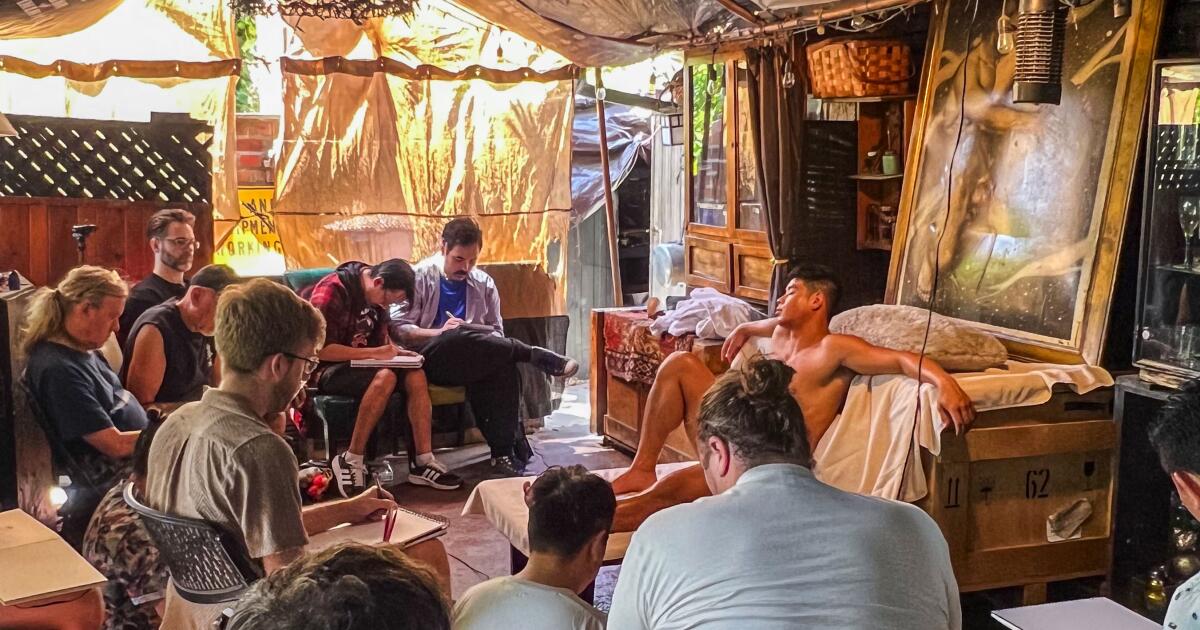
The other couple to make it down the aisle was Vic St. John and Christine Hamilton, who hit it off from the get-go and seemed to exist in their own blissful bubble. According to Netflix production, the show only budgets for six couples to go on a trip after the reveal and engagement. But they continued to track them, with St. John and Hamilton spending time in Malibu instead, taping dispatches together and getting to know each other without the rest of the cast in proximity. Throughout the course of the show, you see their connection grow. Their mature and thoughtful conversations about being an interracial couple and potentially raising biracial children were exactly the type of discussions you would hope they’d have before proceeding down the aisle. It may not make for dramatic TV, but it was genuinely thrilling to see a couple so well-suited for each other continuing to thrive. And in an effort to make up for not getting to go to Cabo, Mexico, with everyone else, the show offered them a trip paid by … Turbo Tax? It was an odd product placement, but if they want to foot the bill for their honeymoon, no one’s complaining. As long as it’s somewhere tropical on a beach — and not Lake Erie.

Who took accountability?

Despite not making it to the altar on screen after the blazer cape breakup, Connor Spies and Bri McNees are still together. But the bigger record-scratch moment arrived later, when it was revealed that Devonta Anderson broke up with Brittany Wicker a few days after what he told her was a work trip but was actually a getaway to Austin, Texas, to attend a concert with McNees, Ashley Carpenter and Priyanka Grandhi. Wicker didn’t seem thrilled that she had to find out about the trip from Amber (who found out from Jordan, who can’t remember that he even knew about it). McNees didn’t like the implication that she may have broken “girl code” with the whole fiasco — but if all the women are as close as they say they are, why wouldn’t you check in about such an arrangement regardless of the relationship status? (It was weird, too, that Connor thought it was a girls’ trip.) And the fact that it was the same three women who listened to Chris Fusco talk poorly about his former fiancée Jess Barrett — giant sigh. During the reunion, after Barrett voiced her disappointment in her friends about that incident, Carpenter apologized for not doing more to defend her in the moment.

Meanwhile, Nick unleashed his best attempt to channel Andy Cohen and grilled Fusco about his highly questionable behavior and the backlash over his comments to Barrett about her body, specifically stating he usually dates women who do Pilates or workout daily, and for trying to make the moves on McNees. Fusco, mostly quiet and stone-faced (could it be the shame?), acknowledged he was not proud of the moments he watched back and apologized to Barrett. His seat mate, goalkeeper Alex Henderson, was also on the defense. The self-proclaimed nomad never fully seem to vibe with his fiancée, Carpenter. He admitted she’s not his usual type. She still maintained he wasn’t telling the whole truth about his job or dating history, and overall lifestyle. Throughout his segment, Henderson was noticeably irritated by the insinuation that his stories didn’t add up. But he did seem to enjoy being asked to describe his relationship with Carpenter as if it was a soccer match, prompting him to cite a Liverpool game that ended in a tie. Are you laughing too?

Can this be a TikTok?

To commemorate the milestone season, the audience for the reunion special consisted of 150 former participants of the series. And while the time spent getting life updates with some of them throughout the show felt less forced and time-consuming than reunions past, it still felt like an add-on better suited to live in a separate (shorter) special or as social media content. If we wanted an update on these people’s lives, we can find them on social media. A gender reveal courtesy of someone’s dead grandmother, as sweet and touching and lovely as that may for an expectant couple, is not the sort of jaw-dropping moment a show like this needs. And maybe the money saved — assuming production footed the bill for those flights — could have sent every couple to Cabo.

Did you hear? Nick Lachey is from Ohio, guys.

His constant mention of his hometown roots was unquestionably the biggest declaration of love in the 90-minute special. Sorry, Vanessa.

ICYMI

Must-read stories you might have missed

Source link

It takes a village – the pioneering tourism project breathing new life into India’s mountain communities | India holidays

Kathdhara village is a riot of colour as the early evening light turns the clouds the rosy hue of Himalayan salt. Bright red chillies lie drying in front of cornflower blue doorways. The pink of a sari and the orange of marigolds pop against a backdrop of verdant terraced fields, where cabbages grow in perfect rows like a picture from a Peter Rabbit book.

Just 22 families live in this remote hamlet in Binsar Wildlife Sanctuary, in the Kumaon region of Uttarakhand, north-east India. As we stroll with our guide, Deepak, taking in views of the layered hills and soaring, snow-capped Panchachuli peaks beyond, we are welcomed by villagers tending homes and gardens, strings of Diwali fairy lights adding extra sparkle to the scene.

I’m here to explore the foothills of the Himalayas and sample village life on a walking holiday with Village Ways, a pioneer of responsible, community-based tourism in India, which is celebrating its 21st anniversary this year. Dreamed up by Manisha and Himanshu Pande, the couple who run the Khali Estate, a small hotel in the reserve, the goal is to help address urban migration and support traditional rural life through low-impact tourism. Village Ways launched in 2005 with just five villages in the reserve, which guests hike between, and now more than 30 villages are involved in different parts of the country, from Madhya Pradesh to Kerala.

A view of the Kumaon ranges in Uttarakhand. Photograph: Monarch/Balan Madhavan/Alamy

“The idea was to bring the community together to run something collectively, training people in all aspects of business. Everyone has a role to play,” says Manisha. “The Village Ways model has captured the attention of the government, too, and we’re collaborating on various projects in other states now, which is exciting.”

Most accommodation is in small, village-built guesthouses sleeping up to eight, rather than homestays, and money is evenly distributed to everyone from cleaners to porters, with committees making joint decisions. Back at the Kathdhara guesthouse, we join Diwali celebrations, sharing sweets, lighting lamps and praying to the goddess Lakshmi by a makeshift shrine. We feast on a delicious thali – spicy yams, dal, hemp chutney and warm roti – and sleep soundly, cocooned by the silence of the mountains.

The next day brings blue skies, and after breakfast we set out on a gentle walk to the neighbouring Gonap village. Binsar Wildlife Sanctuary was created in 1988, a 47 sq km (18 sq mile) area to help protect the broadleaf oak forest and wildlife. For the people living here, it altered their relationship with the forest, ending tree felling and hunting – tempting many to abandon village life for the cities. Village Ways offered an alternative – former hunters turned guides, sharing knowledge of the land and wildlife with guests, and seeing outsiders’ interest in local customs and traditions renewed their sense of pride.

We hike through pristine pine, oak and rhododendron forests (come in March or April to see the land painted red, pink and white when they bloom). I’m fascinated by the Himalayan oaks, which play a key role in storing and releasing water and stabilising the land with their vast root networks. We see the bright red flowers of wild turmeric and countless medicinal plants, from goat weed (some believe the juice stops bleeding) to Indian tobacco (used for toothache).

Gonap village, in Binsar Wildlife Sanctuary. Photograph: Steve Taylor ARPS/Alamy

Leopards roam here too and, though they remain elusive, we spy footprints and scat, as well as porcupine quills. But the sanctuary is best known for its amazing birdlife – more than 200 species are found here – and we stop frequently as Deepak points out the crested serpent eagle, leaf warbler, black-headed jay and noisy parakeets.

Gonap itself is tiny – home to just seven families today. We’re welcomed to the guesthouse with chai and plates of warm pakora – enjoyed with staggering mountain views as Eurasian griffon vultures float on the thermals. Deepak leads us to a tiny temple, past houses with gardens heaving with jumbo lemons and air potatoes on giant stalks, the sounds of cicadas in the air.

No roads connect the five villages in the Binsar circuit, but the paths between them offer easy walking and there’s plenty of time to rest. A higher-altitude route in the nearby Saryu and Pindar valleys, close to the border with Tibet, offers more challenging hikes. But limited time means we head back to the Khali Estate from Gonap, stopping at Zero Point lookout – the highest vantage spot in the reserve, at 2,500 metres – to gawp at the 360-degree Himalayan panorama, dominated by Nanda Devi, the second highest mountain in India.

Built 150 years ago by a British commissioner, Gen Sir Henry Ramsay, the Khali Estate makes a picturesque base, with accommodation in stone rondavel cabins and a sitting room with roaring fire. During his time in Kumaon, Ramsay is credited with developing local infrastructure, founding a leper colony in the historical capital of the region, Almora, and regulating tree felling. We delve into the estate’s history on a tour with Himanshu, poring over photos and library texts, and learn how it was also a retreat for the Nehru family and an ashram for Mahatma Gandhi. Surrounded by forest, it’s utterly peaceful. Later, I fall asleep to the distant sound of barking deer.

For visitors wanting to learn more about the region’s history and the characters who shaped it, Village Ways has launched a new itinerary, Khali in Kumaon. As well as the Binsar walks, it takes in the lakeside hill station of Nainital, where we had stopped on the 270-mile journey from Delhi. Guests will also explore Almora, with its local primary school supported by Village Ways, the museum of the Anglo-Indian hunter turned conservationist Jim Corbett, and the Gandhi trail, heading into the hills to see some of the first looms he established for homespun cotton – a symbol of economic independence and resistance to British rule – at Anasakti ashram.

The Khali Estate. Photograph: Village Ways

But our last day is very much focused on the present, as a stream of villagers arrive at Khali from far and wide to join the anniversary celebrations. Other Village Ways founders – Brits who worked in development and tourism – are here too, and there are talks, feasting and dancing. I learn about the Village Ways charitable trust, which supports healthcare in these remote villages, training local women to run mobile clinics. Since Village Ways’ inception, it has hosted 7,000 guests, benefiting about 5,000 people, from artists to taxi drivers, according to Manisha, and 470 villagers are directly involved in decision-making as members of the village tourism committees in six states.

I buy locally made scarves and handicrafts, and many of the young villagers – now guides, cooks or porters – tell me about the positive impact tourism has had on their lives. “Since I joined as a guide three years ago I’ve learned lots about Binsar and our birds – and my English has really improved,” said 23-year-old Ashirwad Joshi from Dalar village. “I’m very happy to be part of it and share my knowledge with visitors – it makes me proud.”

When we leave the next morning for the long drive to Kathgodam and onward train journey to Delhi, it’s the feeling of mutual respect and warmth that stays with me. The challenges are many, from ageing village populations to a decline in international visitor numbers to the area since Covid, but the Village Ways mission is very much full steam ahead – taking its ethos to other parts of the country. This type of tourism – one that involves communities as partners and is collaborative rather than exploitative – benefits locals and travellers alike. In these times of division, it is to be celebrated more than ever.

The trip was provided by Village Ways, which creates bespoke itineraries, tailored to travellers’ interests. The suggested 10-day Khali in Kumaon itinerary (available until 30 May, and from 15 September to 30 November 2026) costs from £1,315pp, based on a party of four, including transfers, rail travel, accommodation and most meals

Source link

‘Life covered in soot’: Gas shortage forces Gaza families to cook over wood | Israel-Palestine conflict News

Gaza City, the Gaza Strip – Shortly before the call to sunset prayer, Islam Dardouna stretches her hand towards a pot hanging over a makeshift stove fashioned from a battered metal can, with scraps of paper and pieces of wood feeding the fire beneath it.

Then she pauses. She turns her face away from the rising tongues of smoke. Her face stained with a thin layer of soot and her clothes steeped in the lingering smell of fumes, she takes a deep breath but does not immediately lift the lid.

Recommended Stories

list of 3 itemsend of list

In her right hand, Dardouna holds an asthma inhaler as though it were a ladle or tongs. With her other hand, she tries to prepare food for her three children.

“I can no longer tolerate the fire at all,” the 34-year-old says in a strained voice as she raises the inhaler to her mouth.

“We heat water on it, cook on it … everything. It completely destroyed my health,” she said, pointing to her chest.

Islam Dardouna suffers from respiratory problems that have worsened significantly due to constant exposure to wood smoke and relies regularly on asthma inhalers
Islam Dardouna suffers from respiratory problems that have worsened significantly due to constant exposure to wood smoke, and relies regularly on asthma inhalers [Abdelhakim Abu Riash/ Al Jazeera]

Dardouna has been displaced from Jabalia in northern Gaza since the start of Israel’s genocidal war against Palestinians in the territory in October 2023.

She now lives with her husband – 37-year-old Muath Dardouna – and their children in Sheikh Ajleen, west of Gaza City.

A year and a half ago, their home was destroyed. Since then, the family has moved from place to place until they eventually settled in this camp alongside other displaced families.

Everything changed after the war began. But for Dardouna, having to cook daily over an open fire in the face of cooking gas and fuel ranks among the worst.

“Our entire life now is a struggle, searching for wood and things we never imagined we would need one day,” she says. “There is no cooking gas and no gas cylinders. We lost all of that during displacement.”

What makes the situation even harder is that she suffers from asthma and chronic chest allergies, conditions she says began during Israel’s 2008 war on Gaza when she inhaled the smoke of a phosphorus bomb that dropped on her house. Her situation improved over the years, but has dramatically worsened during the current war.

“I developed airway obstruction, and recently there were masses found in my lungs,” said Dardouna, who in January was hospitalised for six days after suffering from oxygen shortage.

“The doctors prescribed an oxygen cylinder for me,” she says, quietly. “But unfortunately, I cannot afford it.”

A prolonged shortage

Like so many others across Gaza, Dardouna is struggling amid a prolonged shortage of cooking gas and fuel that has persisted since the start of the war.

Supplies have remained severely limited even after a “ceasefire” came into effect in October that included provisions allowing the entry of fuel and essential goods into the territory.

However, the quantities that have entered since then remain far below the population’s actual needs, according to official sources in Gaza and United Nations agencies.

The UN Office for the Coordination of Humanitarian Affairs says the availability of cooking gas in Gaza remains “critically constrained”, with the limited quantities entering the territory covering less than three percent of what is required.

As a result, many families have been forced to rely on alternative and often hazardous cooking methods.

UN data indicates that about 54.5 percent of households rely on firewood for cooking, roughly 43 percent burn waste or plastic, and only around 1.5 percent are able to cook with gas.

Humanitarian groups warn that such unsafe alternatives endanger people’s health and the environment due to prolonged exposure to smoke and toxic fumes produced by burning plastic and other waste.

Amid these conditions, cooking over open fires made from wood, scrap materials or plastic has become a daily reality across displacement camps and neighbourhoods throughout Gaza.

The crisis has intensified during the Muslim holy month Ramadan, when families must prepare both suhoor meals before their daily fast and iftar meals afterwards.

Firewood has become expensive, requiring a daily budget. Lighting the fire before dawn is also often difficult due to the lack of lighting and unfavourable weather conditions, so the family often skips the pre-dawn meal entirely.

“Today, for example, it’s raining and windy. I couldn’t light the fire,” said Darduna’s husband, Muath, who is also helping out with the daily cooking.

“Even when we break our fast, we wish we could drink a cup of tea or coffee afterwards, but we can’t, because lighting the fire again is another struggle.”

A former psychosocial support worker for children, Muath says it pains him to see his children fasting without suhoor.

“Every detail of our lives is literally suffering,” he says. “Fetching water is suffering. Cooking is suffering. Even going to the bathroom is suffering. We are truly exhausted,” he added.

“Our lives are covered in soot,” Muath says, pointing to the black smoke stains left by the fire.

Soot and black smoke stains left by wood fires cover the hands and skin of Islam and many other women forced to cook over open fires since the war on Gaza began
Soot and smoke stains left by wood fires cover the hands of Islam Dardouna and many other women forced to cook over open fires since the war on Gaza began in October 2023 [Abdelhakim Abu Riash/ Al Jazeera]


He describes gas as “one of our dreams”, recalling how “it felt like Eid day” when the family got a gas cylinder a few months ago. “
But we don’t even have the stove to use it, and many families are like us,” he said.

“We are living on the edge of nothing. Displacement and war stripped us of everything,” he adds. “We are willing to live with the simplest rights in tents. But there is no heating, no gas, no lighting. It feels like we are living in open graves on Earth.”

Serious implications

In a statement on Wednesday, the General Petroleum Authority in Gaza warned of the “catastrophic and dangerous consequences of the continued halt in cooking gas supplies” to the territory, stressing that the crisis “directly affects the lives of more than two million residents” amid already dire humanitarian conditions.

The authority said Gaza had already been facing a shortfall of about 70 percent of its actual gas needs compared with the quantities that entered after the “ceasefire” announcement.

It added that the “complete suspension of gas supplies places the Gaza Strip before a looming disaster that threatens food and health security”, particularly during Ramadan.

The authority also said that preventing gas from entering the enclave constitutes a “clear violation of the ceasefire understandings”, calling on mediators and international actors to intervene urgently to ensure the regular flow of cooking gas into Gaza.

Across Gaza, many families now rely on ready-made meals from aid distributions and charity kitchens because of economic collapse and the difficulty of cooking.

“Even when food arrives ready hours before iftar,” Muath says, “heating it becomes another problem.”

The frustration of daily survival pushes Muath to the brink.

“As a father now, I cannot even provide the most basic things,” he says. “Imagine my son simply wants a cup of tea … even a little wind can stop me from making it.”

‘The fire suffocates you’

In a nearby tent, Amani Aed al-Bashleqi, 26, sits watching food being cooked over an open fire for iftar while her husband stirs the pot.

She said cooking on fire makes food taste “flavourless” – not because the taste changes, but because “exhaustion and suffering have become part of every bite”.

“We start cooking early so we can finish by iftar, and after breaking the fast, my husband and I are completely exhausted and covered in soot.”

At times, Amani says she cannot boil water for her baby’s milk because lighting the fire is difficult and not always possible
At times, Amani Aed al-Bashleqi says she cannot boil water for her baby’s milk because lighting the fire is difficult and not always possible [Abdelhakim Abu Riash/ Al Jazeera]

Like Dardouna, al-Bashleqi says the smoke causes severe headaches and health problems.

“The fire suffocates you. All the women in the camp suffer health problems from cooking on fire,” she says. “But we have no choice.”

She has a seven-month-old baby, and her biggest worry is boiling water for his milk.

“Sometimes I boil water and keep it in a borrowed thermos, but I don’t always have one,” she says. “And sometimes when he wakes up at night, I mix the milk with water without boiling it, even though I know that’s not healthy. But what can I do?”

Nearby, Iman Junaid, 34, displaced from Jabalia to western Gaza City, sits with her husband Jihad, 36, in front of the fire preparing food.

Junaid blows on the flames while she pushes an empty plastic oil bottle under the fire.

Behind them, bags full of plastic bottles are piled up. The family collected them to fuel the fire because cooking gas has been unavailable for months.

A mother of six, Junaid says she knows the health dangers of burning plastic, but has “no other choice”.

Iman Junaid and her husband Jihad rely on empty plastic bottles to fuel their cooking fire because they cannot afford the rising price of firewood
Iman Junaid and her husband Jihad rely on empty plastic bottles to fuel their cooking fire because they cannot afford the rising price of firewood [Abdelhakim Abu Riash/Al Jazeera]

“My little daughter is one year old, and her chest always hurts because she inhales the smoke,” she says. “Our life is collecting and burning plastic and nylon.”

“With the price of wood rising, we now wish we could even find wood. Gas has become almost impossible … we’ve forgotten it.”

She said there were many promises that gas would enter Gaza after the “ceasefire”, but “nothing happened”.

For Dardounah, the solution is not simply bringing cooking gas into Gaza. “What we need is for life to become possible again,” she says.

“Let gas enter. Let goods enter at reasonable prices. Let there be basic necessities for a normal life.”

Source link