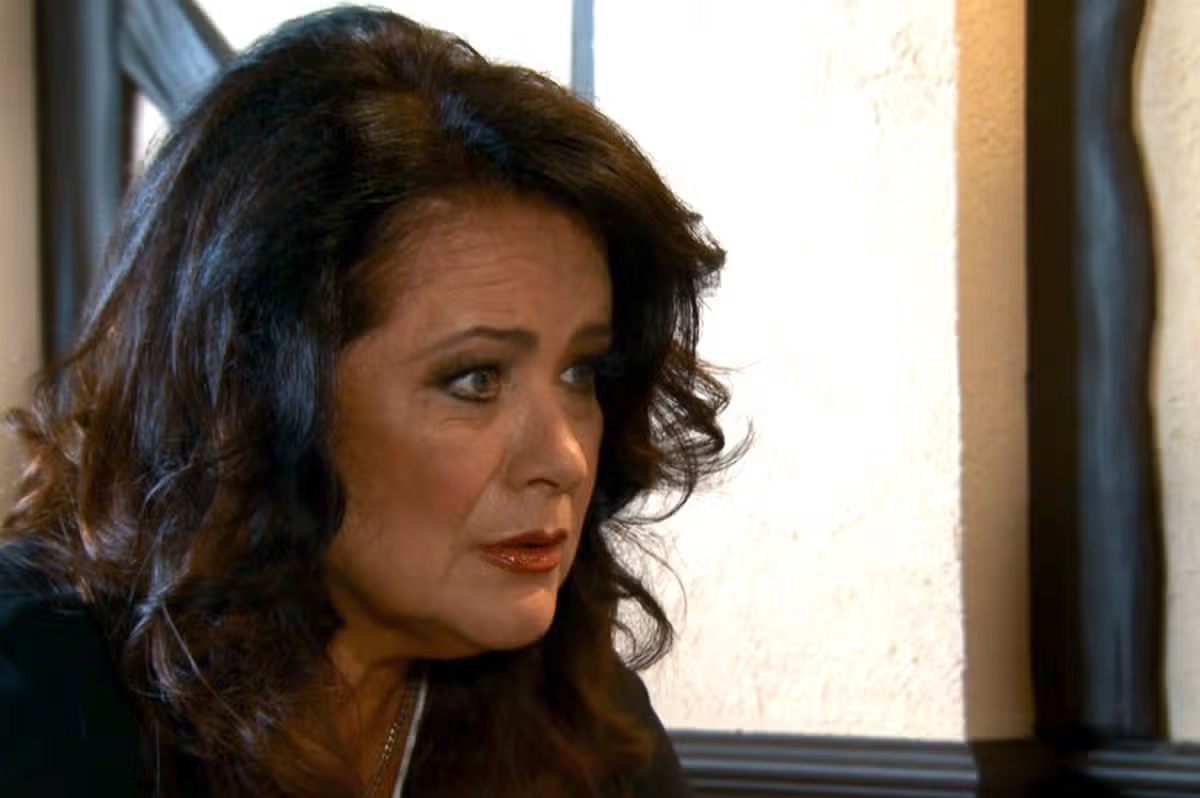
Especially at the moment, as it was recently revealed that Christina’s long-lost granddaughter Lucy Parkinson (Anya Dewin) is living on the cobbles. And in Monday’s episode (October 5), Christina tries to get to know Lucy, who is unaware of the truth.
In real life though, Christina star Amy’s life couldn’t be more different from her on-screen Weatherfield alter-ego’s… Here, we’re taking a look inside the soap favourite’s life.
What has Amy been in?
Amy Robbins boasts an extensive television portfolio spanning many years. The RADA-educated star has featured in programmes.
These include Where the Heart Is, Heartbeat, Hollyoaks, EastEnders, Holby City, Doctors, and even Emmerdale. She appeared on the ITV soap in 2022, playing the defence barrister in the court case of the village serial killer Meena Jutla (Paige Sandhu).
Amy’s romance with husband
Amy is loved-up with her husband and fellow actor Robert Daws whose career spans almost 50 years. Robert has appeared in the likes of Death in Paradise, Holby City an he played Tuppy Glossop in ITV’s comedy Jeeves and Wooster from 1990 to 1993.
Robert also appeared on Coronation Street in 2010 playing Tom Hughes. As for Amy and Robert, the pair started dating while working on ITV medical drama The Royal in which Amy played Dr. Jill Weatherill and Robert played her on-screen husband Dr Gordon.
Talking about their romance, Amy told The Mirror in 2007: “We were friends for a long time. But I just knew I wanted to be with him. We are like two sides of the same person and have a similar outlook on life. We are both big family people and put our families first. People even say that we look alike.”
Amy and Robert also share two daughters, Elizabeth and May. However, according to Amy her first experience of childbirth was traumatic. She added to the publication: “It was a nightmare. I remember going into the labour ward and thinking I’d gone into hell and all these women were being tortured.
Amys’ famous brother
Amy belongs to a remarkably gifted theatrical family. Amy’s sibling Ted previously enjoyed his moment in Corrie’s spotlight, appearing in the programme seven years ago as Mary Taylor’s romantic interest, Brendan Finch.
Nevertheless, he’s equally recognised for his contributions to productions including Calendar Girls, The Slammer, Diddy Movies, and Benidorm. In 2023, Amy revealed the guidance Ted offered her after discovering she’d secured a role in the popular ITV soap.
She told The Mirror: “He told me not to underestimate the feeling of standing in the Rovers for the first time. He said it would be overwhelming, and he was right.
“His other piece of advice was not to call William Roache ‘Ken’ like he did. Ted bumped into William and accidentally said ‘hello Mr Barlow’.”
Amy’s other family
Meanwhile, Amy’s sister, Kate Robbins, is also a recognisable face, and the duo featured together in the 1986 sketch programme Robbins.
Kate has appeared on screen in programmes including Spitting Image, After Life, and EastEnders, whilst her daughter is I’m A Celeb and Rivals star, Emily Atack.
But that’s not everything, as Amy’s first cousin once removed is The Beatles icon Paul McCartney. Paul is Amy’s mum’s cousin, and she’s spoken warmly of him, stating: “He’s everything you would hope him to be, genuinely lovely.”
Coronation Street airs Monday to Friday at 8:30pm on ITV1 and ITVX
MICHAEL Douglas has denied he’s a sex addict and said he was a “healthy product of the Sixties” after his affair revelation with Kathleen Turner.
The actor, 82, confessed to having a relationship with Kathleen as they filmed their 1984 action flick Romancing The Stone.
Michael Douglas has denied he’s a ‘sex addict’ in his new bookCredit: GettyThe actor revealed he had an affair with Kathleen Turner when he was married to his first wifeCredit: DHUB_Search_Shutterstock_Editorial_NUK
At the time, Michael was married to his first wife Diandra Luker.
The Basic Instinct star opened up about his colourful love life and insisted he was not a “sex addict” despite his multiple flings.
Sign up for the Showbiz newsletter
Thank you!
Speaking to The Times, he was asked if he ever wondered why he had slept with so many women.
Michael replied: “I don’t know if I slept with so many women, I don’t see it that way. No, not me, no. I was a healthy product of the Sixties.”
The actor insisted he was ‘ a healthy product of the Sixties’Credit: DHUB_Search_Shutterstock_Editorial_NUKThe Wall Street star is now smitten and happily married to Catherine Zeta JonesCredit: AFP
He added: “My curiosity is why, of all countries, of all the press that I do, why are the Brits so consumed with the issues of sex?”
In the nineties, it was reported that Michael had entered rehab for a sex addiction.
But Michael has said in an excerpt from his upcoming memoir One Helluva Ride: “I was never a ***ing sex addict.”
Shared by People, Michael dished about his extramarital romance with Kathleen.
Michael penned: “Kathleen was smart, funny, and sexy with a deep, sultry voice that became her signature.
“I instantly liked her, and we were immediately attracted to each other.”
Michael then claimed that his marriage to Diandra “was in a bad place” and that he had been having an affair with Romancing The Stone screenwriter Diane Thomas prior to meeting Kathleen.
In the book, he described himself as “technically married, but separated” as he had an affair with Kathleen.
He noted that audiences spotted their chemistry, and they were forced to deny everything and put it down to them both being “terrible flirts” due to him being married.
“It was a lie meant to protect my wife and son, a lie we told the world for 40 years.”
In his book, Michael confessed: “The truth is that during the production of Romancing the Stone, Kathleen and I fell hard for each other and began a relationship.”
He said that their relationship “grew naturally” and noted how much they respected and cared for one another, “and how attracted we were to each other”.
Michael added: “Like every other guy in the world at the time, I was knocked sideways by Kathleen….”
They continued their romance until it fizzled out when his wife visited on set and made it clear to Kathleen they were still married.
Diandra warned her off and Kathleen “didn’t want to interfere”.
Although their romantic relationship was over, they continued to star in movies together until 1989.
His first marriage to film producer Diandra Luker lasted from 1977 to 2000.
After 18 years together, Diandra filed for divorce in 1995, leading to a protracted legal separation which was finalised in 2000.
Michael is now smitten and happily married to Catherine Zeta Jones.
Catherine and Michael first met in August 1998 at the Deauville American Film Festival in France.
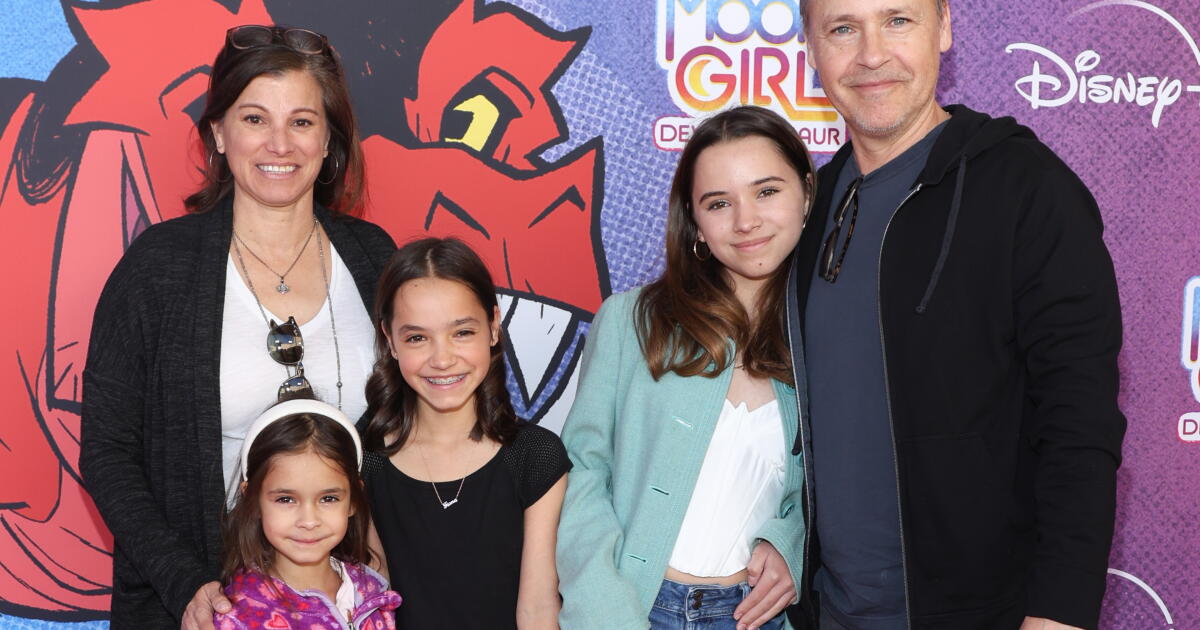
The official cause of death for Fiona Lowe, the 13-year-old daughter of actor Chad Lowe and niece of Rob Lowe, has been revealed.
The database for the Los Angeles County Medical Examiner confirmed that Fiona Lowe died Tuesday by suicide and died in a hospital. Chad Lowe, the Emmy-winning star of “Life Goes On,” and his family announced Fiona’s death in a statement shared with People on Tuesday. The actor shares Fiona and two other daughters with wife Kim Painter.
Before the medical examiner’s report became public, Lowe’s family did not reveal a cause of death but in its statement mentioned contact information for a mental health lifeline. The family in its statement said it was “heartbroken by the loss” and remembered Fiona as a “loving girl who was smart, creative, and loved to dance.”
“She was adored by her sisters and she was deeply loved by her parents. In fact, she was the light of our lives,” the family added. Lowe and his loved ones also said Fiona’s death is “devastating for our entire family” and asked for prayers and privacy.
Fiona’s death comes after the “Pretty Little Liars” actor’s family lost their home in the Palisades fire, which killed 12 peopleand consumed more than 6,500 structures. He shared videos and photos of the destruction to his Instagram page.
Lowe, 58, is the younger brother of actor Rob Lowe. He and Painter married in 2010 and welcomed Fiona in 2012. Fiona celebrated her 13th birthday in November and was the second of the couple’s three daughters. Lowe and Painter first welcomed daughter Mabel in 2009 and their youngest daughter, Nixie, in 2016.
Suicide prevention and crisis counseling resources
If you or someone you know is struggling with suicidal thoughts, seek help from a professional or call 988. The nationwide three-digit mental health crisis hotline will connect callers with trained mental health counselors. Or text “HOME” to 741741 in the U.S. and Canada to reach the Crisis Text Line.
Maria Astorini, a retired character actress and a minor star, is 37 years late delivering her memoir. But the project, which she has tried her best to forget, has been pulled out from under the rug by her publisher. Forced to deliver a manuscript, Maria writes an autobiography clocking in at a shade over 200 pages.
The result is Elizabeth Castellano’s second novel “Proof of Progress,” a wry, poignant and very funny twirl through a life that swerves past triumph and failure, boredom and joy, public life and private sorrow. I recently spoke with her about Bloomingdale’s, Calvin Trillin, and how cellphones are the enemy of good fiction.
You’re reading Book Club
An exclusive look at what we’re reading, book club events and our latest author interviews.
By continuing, you agree to our Terms of Service, which include arbitration and a class action waiver. You agree that we and our third-party vendors may collect and use your information, including through cookies, pixels and similar technologies, for the purposes set forth in our Privacy Policy such as personalizing your experience and ads.
✍️ Author Chat
”Proof of Progress” traces the life of your protagonist, Maria Astorini, from childhood to her mid-60s. It reminded me of something Bob Dylan wrote recently about growing older, which is that you finally get rid of the illusion that life is under your control.
For Maria, there is a lot of serendipity that feels like fate, of being in the right place at the right moment, or meeting the right person, which sends her off in a different direction. I like that in a novel. It was also helpful to be writing primarily about an era without phones, so that she’s able to meet a lot of people.
We’re seeing this a lot in contemporary narratives: writers setting their stories in pre-phone eras, so their characters can actually interact with each other.
She’s talking to people, she’s meeting people, so she’s able to be sent on different paths. Even meeting her husband probably wouldn’t have happened with the phone.
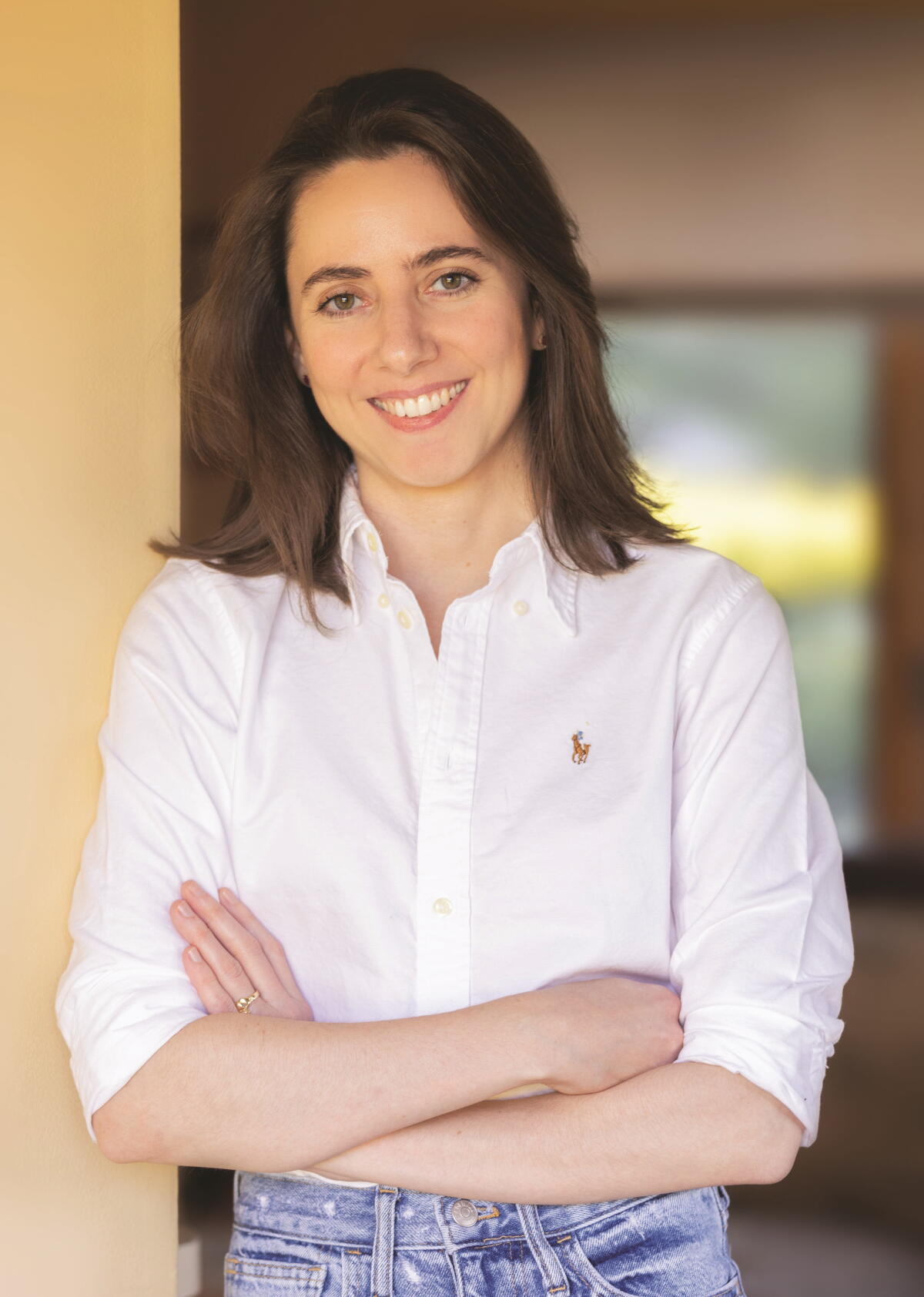
“Proof of Progress” is Elizabeth Castellano’s second novel.
(Harper Collins / Carl Timpone)
You have written a very funny book, and funny books don’t get the respect they deserve.
Anytime you have humor in a book, you’re not taken quite as seriously. Even in Barnes & Noble, when you look for humor, it’s on the back wall or on the floor. And that’s where you find the David Sedaris books, which is crazy. My last book was about a beach town, so I got lumped in with the beach read group. I had people who were looking for a fun beach read and then they picked up my book, and it’s about zoning code violations. I’m happy that this book is being marketed as literary and humorous. I’m in better shape in that sense.
It’s really hard to write funny. Or is it?
The best way I can describe it is like a stand-up comedian having a notebook full of jokes and anecdotes and she has to put together an HBO special. Sometimes I just had one line of something funny. I had all these ideas and thoughts and different things from old books that I was writing. I tried to put all of it together and find a character that could tell this story, and the through line that I could create from all of this material. So I wrote it backwards and out of order.
Who do you think is funny? Who do you like to read?
J.D. Salinger, David Sedaris, Maria Semple. I love Calvin Trillin. I think he’s a great writer.
Your protagonist is very late on a contract and has to rush to get the book written, which gives the narrative propulsion and momentum.
I had a two-book deal, so while I was working on the publicity for my first book, I raced to finish this book. And when I was finished, I realized it didn’t work and had to throw out the whole manuscript. I saved maybe six or seven little anecdotes from that original book. So it took another year to write. That was the inspiration for “Proof of Progress.”
Your writing career is a bit like Maria’s acting career, in that you chanced upon it.
I was a theater major. I don’t think I took one English course. Then I graduated right into the Recession of 2008. There were no jobs. Eventually, I applied to be an apprentice buyer at Bloomingdale’s, even though I hate shopping. That was the last resort. Then I decided, maybe I’ll be a writer, because it felt like something that I could do. I wrote a lot of things that were rejected before I wrote my first book, “Save What’s Left” [2023]. And that’s probably why I wrote Maria the way I did. We zig, we zag, we endure.
This Q&A was edited for length and clarity.
📰 The Week(s) in Books
Kyle MacLachlan’s new memoir is a funny, candid and self-aware reflection on his 40-year career in Hollywood.
(Christopher Patey / For The Times)
We loved him as Special Agent Cooper in “Twin Peaks” and as Jeffrey Beaumont in “Blue Velvet,” but according to Kyle Maclachlan’s new memoir, “Fictional Selves,” there is another unknown character: “Other Kyle,” the actor’s ever-present shadow figure. “There’s definitely another entity, an observer, the ego, the harder self,” MacLachlan tells Rachel Brodksy.
After a nine-year absence from fiction, John Green has returned with “Hollywood, Ending,” a darkly humorous show business cautionary tale that Green couldn’t have written “without spending a lot of time on film sets,” he tells Emily St. Martin. “I hope the book is a love letter to movies. But I also wanted to be honest about how difficult it is to make a work of art that, in order to be commercially successful, has to be loved by millions of people.”
Katya Suvorova’s memoir, “Ungrateful Immigrant Daughter,” is a “heart-wrenching tale of immigration” that “pulls back the velvety red curtain to reveal one story behind the oversexualized stereotypical post-Soviet mail-order bride narrative so ingrained in post-Cold War U.S. culture,” writes Diana Ruzova.
Finally, Vroman’s and Book Soup, two of L.A.’s most beloved bookstores, have been sold by longtime owner Joel Sheldon to tech executive Robert Hoffman, reports Suhauna Hussain.
📖 Bookstore Faves
Outpost Books is a new bookstore in South Pasadena.
(Simran Malik)
Walking into Outpost Books is like stepping into a smart book lover’s cozy den. With its southwestern-themed design and a well-curated selection of new and used books, the indie book store in South Pasadena already feels like home to this community of rabid book lovers. I spoke with owner Nicole Novembrino about her new store.
Why a bookstore?
I was a sales rep for a publisher of art books, but I looked at my life, wondering what I could do for a living that would give me real meaning and purpose. I love books, and so I decided to open a bookstore. It’s not easy, and you can second-guess yourself a million times along the way, or get a normal job. But I’m so glad I did it. Everyone in the neighborhood is so happy!
Why did you choose to open in South Pasadena?
I live in El Sereno nearby, and South Pasadena is such a great community. When we first opened, people were coming in and thanking us for opening in the neighborhood. There aren’t any other bookstores in this particular South Pasadena neighborhood. I definitely didn’t want to take any business away from other stores.
Pasadena loves its bookstores.
This is a very bookish community. The donations I’m getting from people are really smart volumes. I think I’ve had just one Nora Roberts book! The landlords are great, as well. They came to our opening and told me the store is all they could have dreamed of for the space, which is so sweet.
The kids section is really fun, with the tent and the fake tree stumps.
We have a lot of kids books with a southwestern theme. I’ve been collecting them over the years from my trips to the desert. You might find a book called “Armadillo Rodeo” in there.
How did you land on the western theme?
My mom is from New Mexico, so every family vacation was a trip to the Southwest, and I loved stopping and collecting things at the trading posts along the way. I wanted to give the store that kind of feel. I chose the name Outpost for that reason. It is a lived-in place where you can just hang out and find cool things and read.
Outpost Books, 1010 ½ Fair Oaks Ave., South Pasadena, (626) 399-0595
A couple of years ago, in a column about Father Greg Boyle, I noted that he is quite particular and even a bit preachy about the right way to eat a steak.
It should be medium rare, never well-done, and served with a proper elixir.
Doors drummer John Densmore took note. One thing led to another, and in July, Densmore, Boyle, former Times reporter Greg Krikorian and I went to dinner at the Smoke House in Burbank.
We did not necessarily follow Boyle’s meat and beverage protocols, but we jabbered away in a red leather booth, and a good time was had by all.
Then, in August, I got an email from Boyle.
“John walks into the Homeboy Art Academy,” he wrote, “and starts jamming as the homies are playing ‘Stand By Me.’”
Boyle sent a short video, and there’s Densmore, still keeping perfect time at 81.
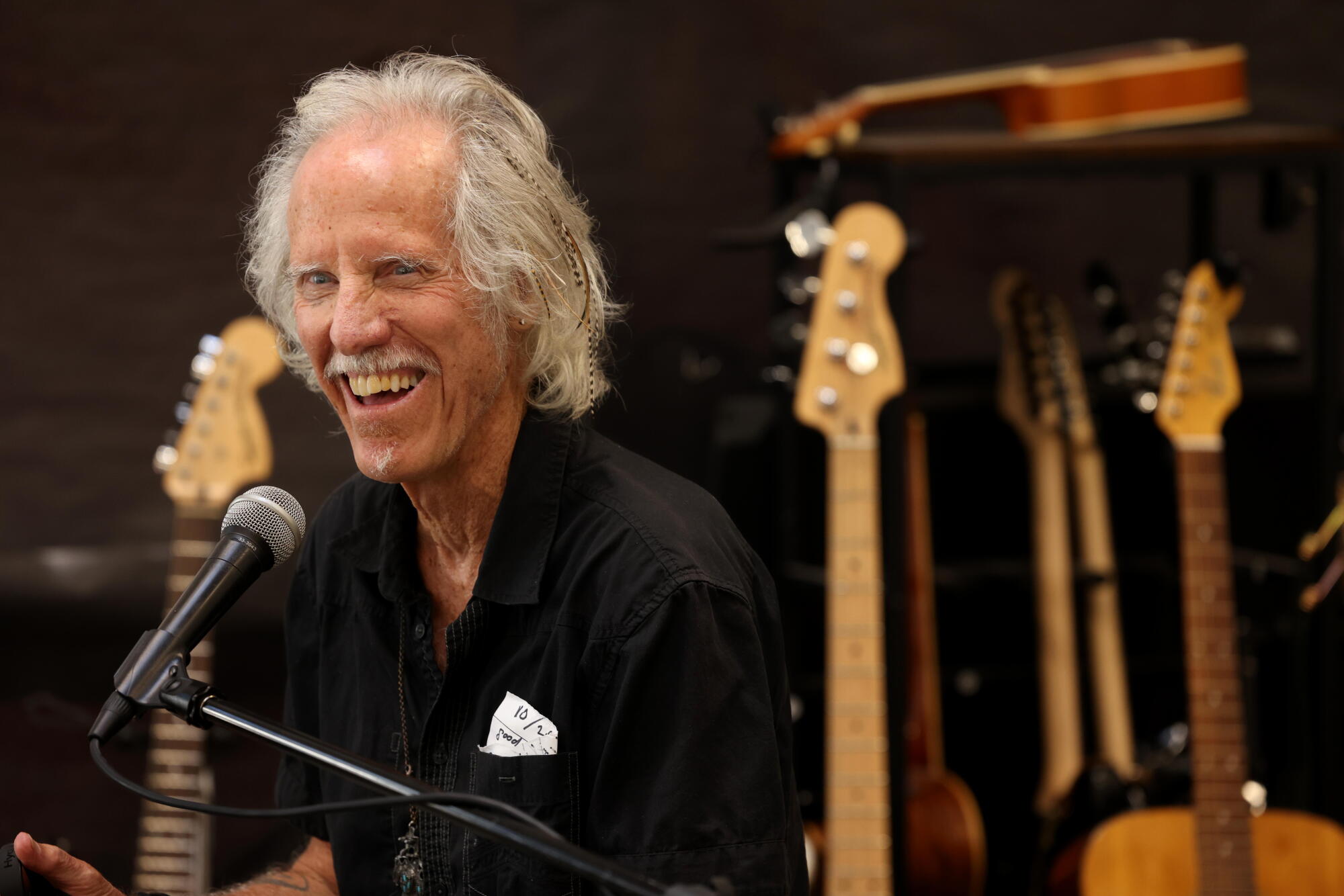
John Densmore enjoys an upbeat moment while teaching a music class at Homeboy Art Academy.
I wasn’t surprised. Densmore’s a busy guy, with various charitable causes and artistic ventures. He and former Public Enemy rapper Chuck D just fused music genres on an album called “No Country for Old Men.” But he’s an admirer of Boyle and his decades-long mission of gang intervention and rehabilitation.
“Hey,” Densmore told the musicians he played with that day, “maybe I can do something here.”
He suggested that he return and stage a music workshop or a drum circle.
They said of course.
On Wednesday, before the music began, Densmore insisted that I see the Homeboy Art Academy, whose founder is artist Fabian Debora.
“I grew up in the projects when Father Greg first came in,” Debora told me, referring to Homeboy’s early days in the 1980s, when Boyle was pastor of Dolores Mission Church in Boyle Heights. “Through the arts, I found my way to healing and transformation. Then I said, ‘How can I fulfill a need that was missing in my life?’”
The answer is the academy he now runs with Dre Comers, located near Metro’s Chinatown station, providing art instruction to tens of thousands of people. On Wednesday, teachers were busy helping students with artwork in various stages of completion, including a painting of Boyle with a halo.
Most of the participants are young adults, many of whom were born decades after the Doors’ last album was released. One student, in his 20s, welcomed us and asked Densmore what he was known for.
“I’m a drummer,” Densmore said.
He was known to far more people in the music room, including longtime musician/instructors Joe Calderon and Martin Flores. They’re part of the Young Musicians Foundation’s Music Heals program, funded in large part by legendary songwriter Mike Stoller, who co-wrote dozens of hit songs including “Jailhouse Rock,” “Hound Dog,” “Poison Ivy” and “Stand by Me.”
The latter song appears on a brand new “Music Heals” album designed by art academy participants and released Tuesday, so with Densmore’s arrival on Wednesday, it was a big week for Homeboy arts.
“When you’re playing music,” Densmore told about 30 students and instructors, you can enter a state of timelessness. “It’s kind of like a meditation … A little bit of infinity creeps in … And everybody can get into that space. If you want to be a professional musician, cool. If you wind up playing the piano in a closet and nobody hears it, you’re still getting into this space that kind of heals and feeds you.”
And then it was concert time, with Densmore on drums and instructors Calderon on guitar, Flores on percussion and Mackenzie Azela on bass. Fabian Debora Jr. (bass and vocals) and Ralph Quintero (vocals) are both in the Homeboy rehabilitation program.
The band kicked off with a blues number called “Got My Mojo Working,” then it was Ben E. King’s “Stand by Me” followed by Cream’s “Sunshine of Your Love.”
It all went off pretty smoothly for a group that hadn’t worked together except for a quick minute on Densmore’s previous visit. The musicians were smiling, the spectators tapped and clapped, and that magical sense of timelessness was real, spanning multiple generations.
In a place filled with people confronting the challenge of rebuilding their lives, the lyrics of one particular song were a reverie.
No, I won’t be afraid.
Oh, I won’t be afraid.
Just as long as you stand by me.
Doors drummer John Densmore, right, leads a jam session while teaching a music class at Homeboy Art Academy in downtown Los Angeles.
Debora Jr., 27, told me it was pretty cool to be playing with a member of the Doors, a band he knew about through his elders. Quintero, 50, who is studying psychology and wants to be a drug counselor, said he still couldn’t believe he had just performed with a member of the Doors.
“It’s an honor,” he said.
Everyone in the room grabbed either shakers or a small drum, and with Densmore instructing and conducting, the ensemble conjured what he called the heartbeat of Mother Earth. The music rose and fell, rose and fell as the players became one, followed by an orchestrated hush that served as a silent accent.
“Like sex,” Densmore said.
He moved on to a brief Q&A, and one of the first questions was about what it was like to be around Doors lead man Jim Morrison.
“I miss his artistry,” Densmore said. “I don’t miss his self-destruction. So I’m 81. He died at 27. And there’s different ways to do this. Hopefully you guys will keep on breathing like I am.”
As Densmore packed up his things, a young man named Jeremiah asked the drummer if he’d record a short video for the family of his girlfriend. She had just lost her grandfather, a longtime Doors fan.
“That was their go-to music, every car trip,” Jeremiah said.
He sent the clip to his girlfriend and asked her what the family’s favorite songs were. “Riders on the Storm” was one. Along with “Break on Through,” “Touch Me,” and “L.A. Woman.”
John Densmore, right, congratulates musicians Joe Calderon, from left, Fabian Debora Jr., with bass, and Ralph Quintero after they performed.
At Homeboy, Boyle’s mission has been twofold, in a sense. To show love to his charges while preparing them for lives unlike the ones they’ve known. And through his books and teachings, to remind us all that we belong to each other.
There was a bit of that gospel in the note that Flores, program director at Music Heals, sent Densmore after his visit. He thanked him, telling Densmore he had “provided our students with not only an incredible artistic experience, but also a deep sense of connection, inspiration and hope as they navigate their journeys.”
Densmore answered immediately.
“I think I might have gotten more out of it than I gave.”
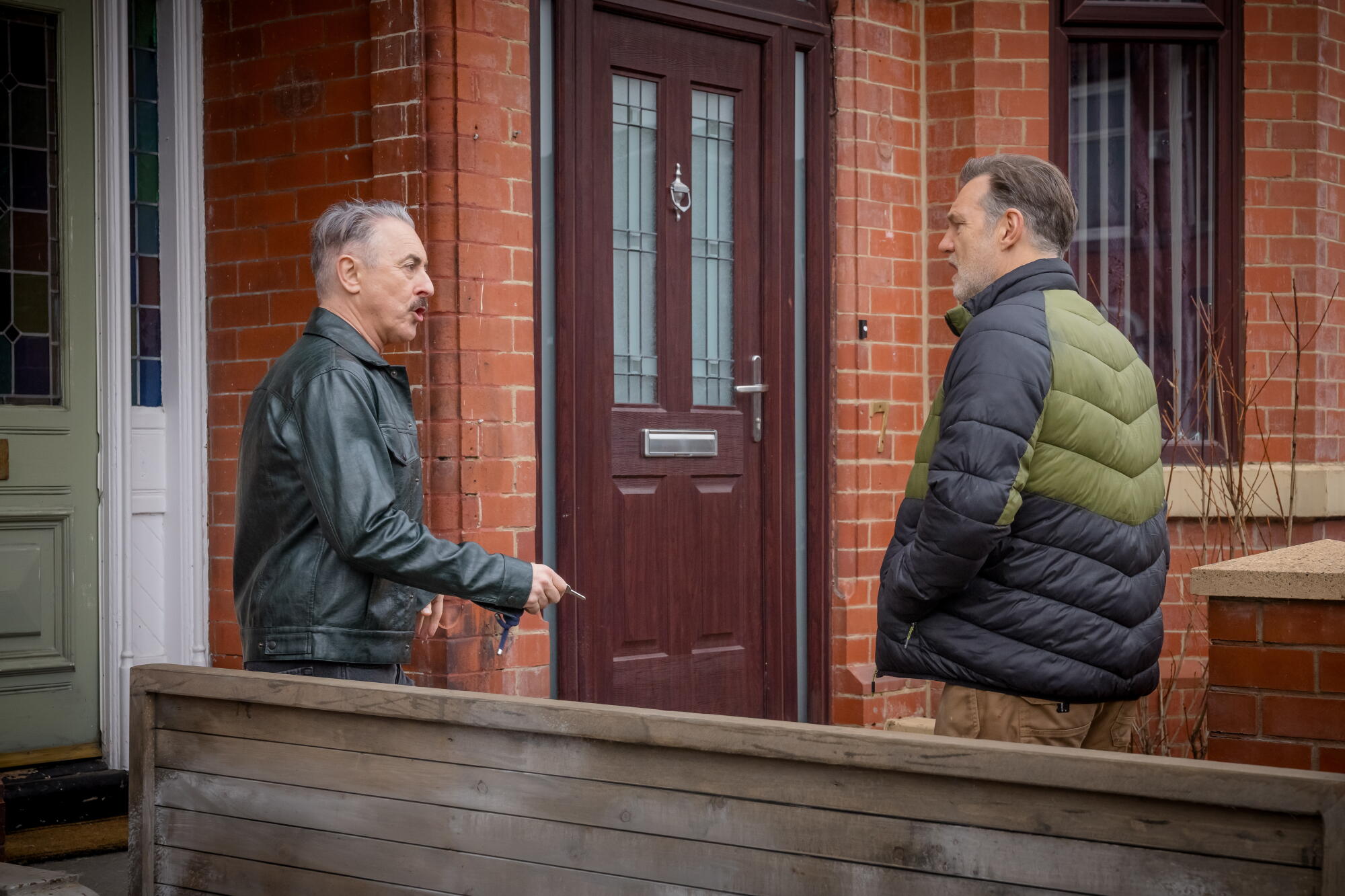
“Tip Toe,” a fine new drama from Russell T Davies premiering Friday on Starz, begins at the end, with Leo Struther (Alan Cumming, phenomenally good), a gay Manchester bar owner, hanging dead from a streetlight outside his house, as a woman screams and his neighbor Clive Goss (David Morrissey) stands breathing heavily on his porch. Then, as so many series do nowadays, it goes back in time — 10 days here — to tell the tale that got them there.
And so you are prepared from the beginning for tragedy, though not everything that happens in its five episodes will be tragic — some of what we see will be sweet and even celebratory — and one might forget for a moment where this is all heading, and even believe that what we’ve already seen will turn out differently.
The series sets off in a comparatively light mood. Chasing a one-night stand who’s stolen his laptop, Leo finds he’s locked himself out of his house, and, dressed only in his underwear, goes next door to ask if he can borrow a phone to call his friend Stephanie (Elizabeth Berrington) to bring him a spare key; here we meet the Goss family, Clive, an out-of-work electrician; his wife, Marie (Pooky Quesnel), who doesn’t like Clive; 16-year-old son George (Jackson Connor), gay and closeted; and 25-year-old son Saul (Joseph Evans), an easygoing hunk who lives at home, secretly makes money on OnlyFans and accepts everyone for who they are. Leo and the Gosses have been living amicably at arm’s length for 14 years, though their lives are about to become closely entwined, with disastrous results.
In an act of something like willful, somewhat disturbing friendliness, or a desire not to have to deal with Leo the next time he’s locked out, Clive makes a copy of Leo’s key and installs a lock box by his door. (By the Chekov’s gun rule, a key copied in Episode 1 is bound to be turned in a lock in whatever later act Davies deems advantageous.) Then, Leo gives Clive work at his bar.
Alan Cumming and David Morrissey play neighbors whose relationship escalates to violence in “Tip Toe.”
(Ben Blackall / Starz)
Leo’s bar, Spit and Polish, sits on Canal Street in Manchester’s long-established “gay village.” It’s a safe space for his employees and regulars, including Zee (Iz Hesketh), who’s been sleeping hidden in the bar, frightened of new flatmates since coming out as a trans woman, and Melba (Paul Rhys, brilliant), a former drag performer who holds down the end of the bar like Norm from “Cheers” and carries a torch for Leo.
Things will go generally downhill from here, in a narrative of escalating misunderstanding — not in the sense of an innocent mistake, of simply getting the wrong end of the stick (though that’s part of it), but as a contemporary habit of mind, blinkered, closed to facts but open to conspiracies. (Clive, a consumer of social media disinformation, believes that AIDS and COVID are fake); he lives in fear.
Directed by Peter Hoar, it’s a rough watch, yet beautifully wrought and delicately performed, inspiring and depressing, hopeless and hopeful by turns Davies has points to make — hanging your protagonist is not subtle — but his dialogue carries a lot of weight lightly; long conversations ebb and flow and rise and fall like compressed playlets. If there is something schematic about the arc, the characters within it, Clive as much as Leo, are completely human. They stand for something bigger than themselves, but they also stand for themselves.
Davies brought gay life in its infinite variety to television with the 1999 series “Queer as Folk” (also set on Canal Street) and gender fluidity to “Doctor Who,” the series he revived in 2005 and returned to in 2023. (The Tardis is currently in limbo.) His “Cucumber,” about middle-age gay men, and “Banana,” about young LGBTQ+ people, are also set in Manchester, where Davies has lived since the late 1980s. “Tip Toe” has been crafted for an age of surging homophobia and anti-gay violence. “The president of America has given these men permission to attack us,” says Melba, as he sits with Leo late one night by the canal. The series’ dark prophet, he gives it its title.
“It’s a storm, it’s a tide, it’s a great big tsunami. We’re in the middle of it right now … If you’d asked me in 1996 what do you think 2026 will be like, I’d have said ‘glory days’ … But they tricked us didn’t they? They let us all come out, so now we’re standing in he open ready for them to shoot us down. I used to walk into a room and just go, ‘Ta-da!’ Now I tip toe, just in case.”
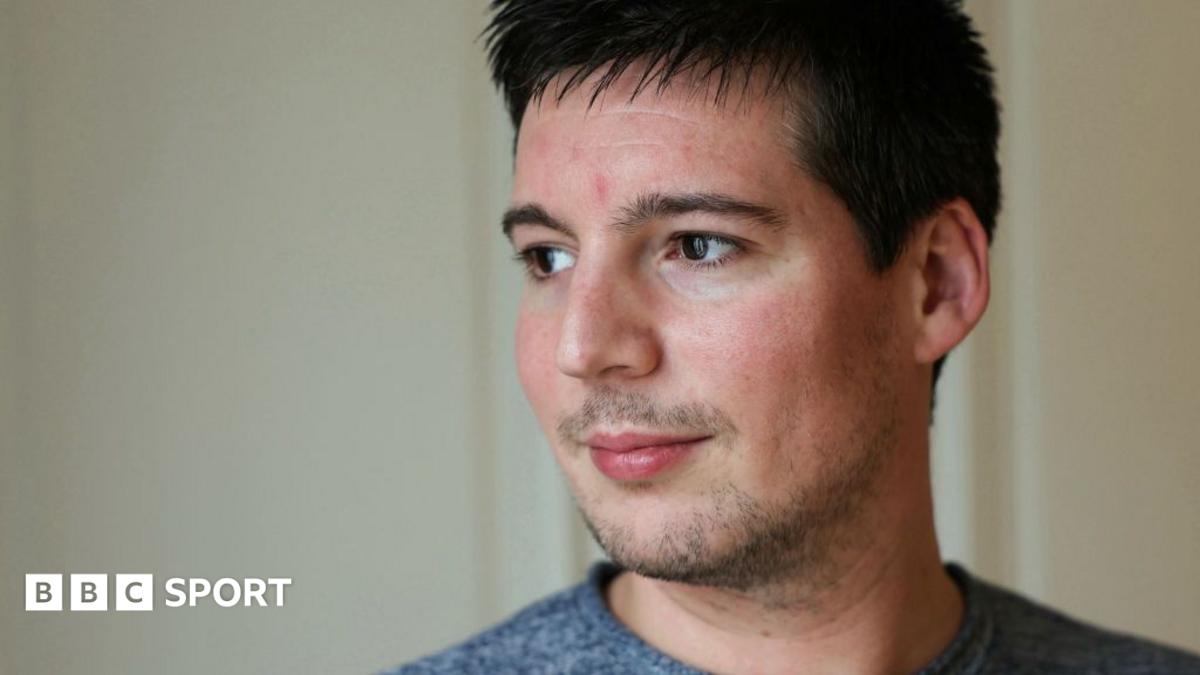
Pinto became part of Portugal’s witness protection programme in 2020 after agreeing to co-operate with authorities and provide files obtained through the Football Leaks operation.
He posted on X on Friday, external that the decision to terminate his participation in the programme on 10 October has put him in a “life-threatening situation”.
The 37-year-old said it had left him with no alternative but to relocate to an undisclosed location for an indefinite period because of “multiple death threats” and “the serious risk of an assassination attempt”.
BBC Sport has approached the Commission for the Protection of Victims of Crimes in Portugal for comment.
Pinto has described himself as a whistleblower, but was convicted in Portugal of offences including illegal access to data and attempted extortion and given a four-year suspended sentence.
He wore a bulletproof vest during his first trial in 2020, which was also subject to heightened security measures.
Earlier this year, he was acquitted in a second trial of 241 counts of illegally accessing email accounts belonging to a number of sports bodies in Portugal, including Benfica.
Pinto repeated allegations from 2018 that Infantino intervened to help City and Paris St-Germain avoid financial fair play sanctions from European football’s governing body Uefa.
A statement from Pinto’s lawyers released on Friday said the decision to end his participation in the witness protection programme left him at heightened risk, noting legal proceedings stemming from the leaks remained ongoing, including the case against Manchester City.
Pinto has set up a fundraising page to help him “survive this serious situation”, which he claims was “created by the Portuguese State”.
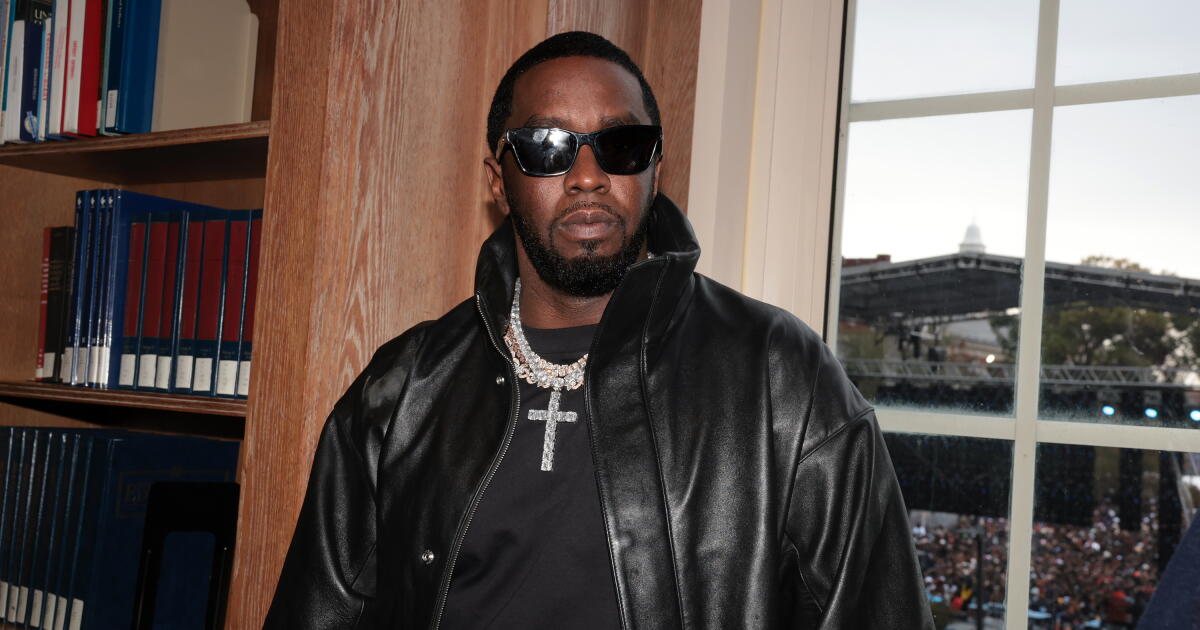
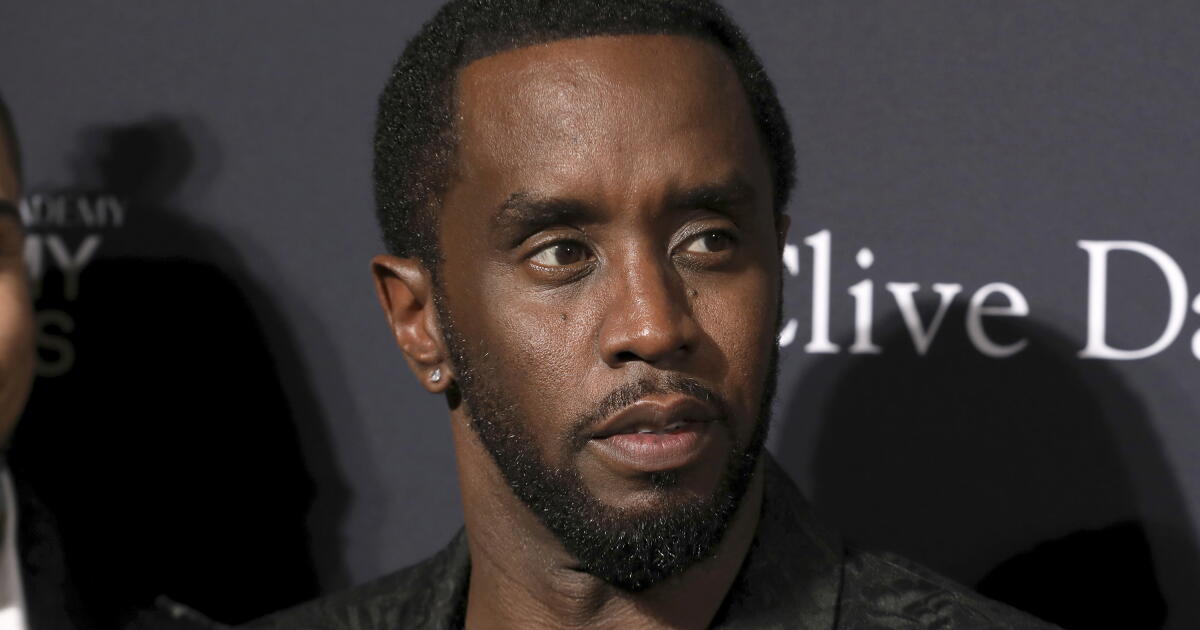
Sean “Diddy” Combs has reportedly been placed in solitary confinement following allegations of his lavish federal prison lifestyle.
The action follows NBC News’ Tuesday reporting of detailed accounts of four anonymous inmates who alleged that the 56-year-old has been paying men for special services including massages, using a contraband phone and keeping an illegal stash of alcohol.
Combs is currently serving a 50-month sentence at FCI Fort Dix, a low-security federal prison in New Jersey, after he was convicted of transporting prostitutes across state lines for drug-fueled sex performances known as “freak-offs.”
Following the news, Combs was placed in a Special Housing Unit (SHU), better known as solitary confinement, a source told the outlet.
This is not the first time the disgraced music mogul has stepped foot inside the SHU. In July, the music artist and producer spent some solo time after getting into a prison fight, sources told TMZ and NBC News.
Allegations of Combs’ pampered incarcerated lifestyle emerged just as his release date moved up again, according to the Federal Bureau of Prisons inmate database.
He is now scheduled to be released on Jan. 21, 2028.
Sources told NBC News that Combs pays inmates to clean and cook special meals for him, including curry chicken, pizza and empanadas and that the hip-hop artist also receives Chinese-style massages.
To pay for this labor, inmates allege that individuals outside of prison are depositing thousands of dollars into the commissary accounts of those serving the “Bad Boy for Life” rapper.
One source told NBC, “This is not some normal s— you see in jail. This is some rich s—. It looks crazy, but again, it’s Diddy.”
The news outlet also reviewed footage obtained from inside the correctional facility which showed Combs using a phone, a prohibited item across state and federal prisons. Multiple inmates claim he uses it to scroll Instagram and view explicit nude content shared by an old girlfriend.
Two sources also say Diddy has access to a “jailbroken” tablet where he watches movies and documentaries, including “Sean Combs: The Reckoning,” the Netflix docuseries produced by his adversary Curtis “50 Cent” Jackson.
(After learning of this detail, the “In Da Club” reacted with amusement on his Instagram account, sharing an image of the article and stating in his caption: “coming to a prison near you”).
Other claims state that the “Mo Money Mo Problems” rapper is purchasing an antidepressant drug known as Remeron, or “rem-roms,” from other inmates and keeping a stash of smuggled liquor.
“Hell yeah, I drank with him,” one of the men, who recounted drinking Hennessy with Combs, told NBC.
Combs’ representatives on Friday claimed to be unaware of any actions taken against the rapper: “We have no idea that he’s there. And we have no idea when he’s exiting, if he is. BOP doesn’t share that information with us.”
They also shared a statement on Wednesday following allegations against Combs.
“The continued scrutiny of every mundane detail of Sean Combs’s life in prison has reached the point where the media characterizes ordinary prison life as news,” the spokesperson said via email. “The only real news is that Sean continues to serve his sentence within the rules and he patiently awaits the court’s decision on his appeal.”
The Federal Bureau of Prisons did not immediately respond to a request for comment on Friday; however, a FCI Fort Dix spokesperson on Wednesday said they cannot comment on the “conditions of confinement for any incarcerated individual,” nor can they “confirm or deny the existence of a corresponding investigation.”
“Like all correctional agencies, contraband, particularly cell phones, narcotics, and weapons, remains a constant challenge, and we continue to tackle the problem of contraband being introduced into our facilities,” the spokesperson said on Wednesday. “Inmates are not permitted to have access to cell phones, and all incarcerated individuals in the Federal Bureau of Prisons (BOP) who are found to violate the ‘Inmate Discipline Program’ policy are subject to sanctions.”
Last year, Combs’ was involved in a lengthy and public trial involving allegations of sexual assault and other violence. His former girlfriend Casandra “Cassie” Ventura and producer Rodney “Lil Rod” Jones lodged civil complaints against the music tycoon.
In July 2025, Combs was found guilty on two counts of a prostitution-related charge, but the magnate was found not guilty of racketeering conspiracy and sex trafficking, which carried heavier penalties, including a maximum sentence of life in prison.
Hollywood is filled with book-to-screen adaptations that have ignited grumbling and spirited debates. Even before its release, Zoe Kazan’s interpretation of John Steinbeck’s sprawling 1952 masterwork, “East of Eden,” roused passionate opinions from loyalists of the text on social media.
Much of the discourse surrounds Kazan’s creative choice in how to portray the book’s infamous antagonist, Cathy Ames, in Netflix’s seven-episode limited series out Thursday.
Steinbeck’s multigenerational saga ruminates on family, the power of choice and the nature of good and evil — deeply exploring the biblical stories of Cain and Abel and the fall of Adam and Eve — through the intertwined destinies of two families, the Trasks and the Hamiltons. Cathy (later known as Kate) functions as a chilling, destructive force in the saga.
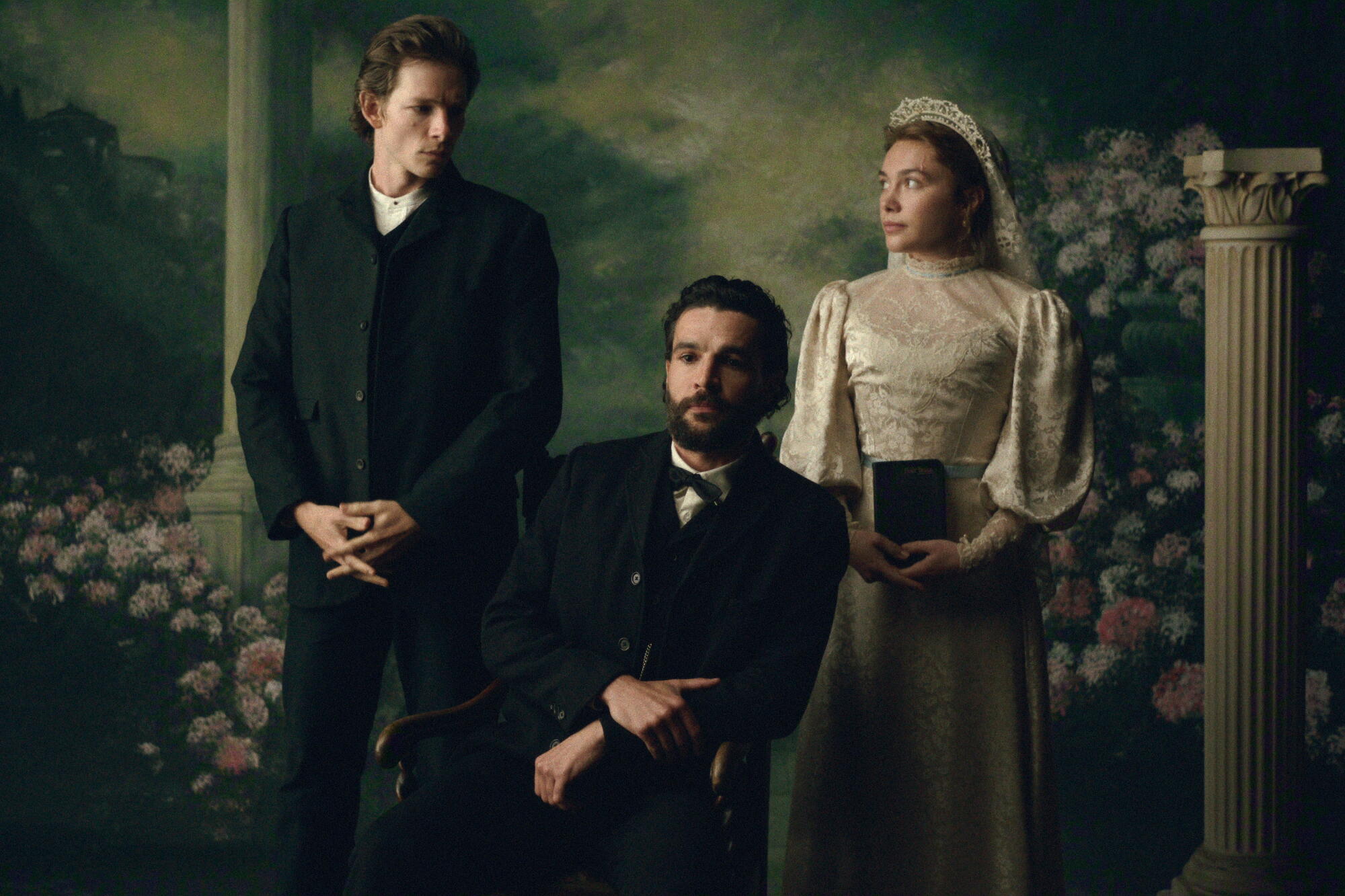
Kazan pared down much of the Hamilton family’s story for the show and centered Cathy (Florence Pugh), whose arrival alters the lives of the Trask brothers, Adam (Christopher Abbott) and Charles (Mike Faist). In doing so, Kazan dared to humanize the character who has been considered one of literature’s most definitive symbols of pure evil, described by Steinbeck to be a “psychic monster” born without a conscience or kindness.
“I’m trying to protect my mental health by not being too much online,” Kazan said in a video call from London on a recent weekday. “I do think it is not surprising to me that this character brings up a lot of strong feelings for people … I’m excited to see what people think once they actually see what we have made and aren’t just anticipating something.”
Mike Faist as Charles Trask, Christopher Abbott as Adam Trask and Florence Pugh as Cathy Ames in Netflix’s “East of Eden.”
(Netflix)
When Kazan, an actor who has expanded her creative footprint behind the camera, first pitched the series in 2019 and was asked about which actor she envisioned as Cathy, she replied: “I have one.” She had seen Pugh in “Midsommar,” “Lady Macbeth” and “Little Women,” marveling at how the actor’s ultra femininity lived alongside her masculine energy.
“The range on that girl … I was like, if anybody can do that, they can play Cathy,” Kazan says. “It allowed me to write Cathy as complicated and mysterious [as I wanted] and with so much shadow and light.”
When it came to Adam and Charles, Kazan knew Abbott and Faist could depict the psychological nuance beyond the binaries of the nature versus nurture debate: “I wanted an Adam where you felt what his true nature was and the nature that his father had pushed him into … and I knew we needed that in Charles as well.”
Adapting a classic is hardly a simple endeavor, particularly one that has been done before. That Kazan would choose “East of Eden,” which unpacks legacy and generational shadows is apt: Her grandfather, Elia Kazan, famously directed the 1955 film version starring James Dean. The actors of the Netflix series are eager for viewers to see her vision come to life.
“When you do an adaptation of a book, especially a seminal American novel, no matter what, you’re always going to be up against it because … whenever somebody reads a book, the budget in their heads is unlimited,” Abbott says. “I think this is such a great adaption in its own right.”
Pugh adds: “I’m excited for people to do the stuff that I’m doing now, which is [to say], ‘Oh my God, let’s read this and see how it fits against what I’ve got in my head.’”
Over a video call together, Pugh, Abbott and Faist reflected on their journey to adapting Steinbeck’s epic story, including their first experiences with it and filling in the shades of these characters who remain timeless allegories of the human condition. This conversation, which contains spoilers, has been edited for clarity and length.
Florence Pugh, left, Christopher Abbott and Mike Faist take on some of literature’s most indelible characters — Cathy Ames, Adam Trask and Charles Trask — made famous in John Steinbeck’s classic “East of Eden.” (Photographs by Sophia Spring / For The Times)
When did you first encounter the book?
Faist: My first encounter with the story was the James Dean, Elia Kazan film. That was a movie that I watched, especially when I first moved to New York and wanted to be an actor. It wasn’t until Zoe and Florence asked if I’d be interested in doing this, that I picked up the book.
Pugh: I want to say maybe my early 20s, I read the book. I only watched the movie recently to prepare myself for these kind of conversations. I’m rereading the book now while we’re heading into press, just so I can like fine-tune what I thought I knew … there’s so much love that’s being breathed into every single sentence of every chapter [in this adaptation], and that is solely down to Zoe’s fantastic brain and her ability to want to dig deeper.
Abbott: A lot of my favorite books I’ve picked up and put down numerous times before actually plowing through it — that was the case here until Zoe approached me about doing it. I was like, “Well, this is a perfect excuse to finally [finish].”
This adaptation lit up social media early on for centering Cathy. She is such a polarizing figure. Some see her solely as an evil monster. Some argue there is more nuance to what’s driving her actions. Florence, how do you see her?
Pugh: It’s tricky because I know I’m gonna get asked this again and again, and I guess I’m still trying to figure out how to word it without totally pissing people off. I love finding characters that people automatically think are villains and trying to find a way for you to love them — it’s my favorite thing to do.
I read these episodes, and I was listening to Zoe and how she was wanting this to come from Cathy’s perspective, how Cathy was her hero and how she’s just been championing Cathy ever since she first read the book — that was so f— exciting to know that we’re not gonna just point the finger and say that she’s evil. It is my job to do my skills as good as possible so that I can argue in defense of them. I believe that I can argue for her, which is terrifying but also really cool. I care for her deeply. I understand where she went and why. Does she do some terrible things? Absolutely. Is she a product of the situation that she grew up in? Totally. You can’t get raped as a child and and you be totally fine for the rest of your life.
Florence Pugh as Cathy Ames. She hopes the adaptation prompts curiosity: “I’m excited for people to do the stuff that I’m doing now, which is [to say], ‘Oh my God, let’s read this and see how it fits against what I’ve got in my head.’”
(Netflix)
That detail was not explicitly stated in the book. What were your conversations with Zoe about it?
Pugh: That’s why we ended up choosing the way that we explained it and the way that we showed it — that little girl is so tiny you can’t even imagine anything bad happening to her, and the fact that she’s holding “Alice in Wonderland,” [in her mind], there’s so many through lines through Cathy and Kate’s life that all come back to that moment. You don’t need to do much. Everybody has the sinking feeling of what might happen to a vulnerable child in that situation. In the book, I think it’s constantly playing with the themes of can we trust her? Is she already a monster as a child?
What Zoe has done is made her a real human, and has given her cause and has given her time to understand. That moment that is alluded [to in the book ] — if Cathy asked the boys to tie her down, and whatever it is that they were doing to her — it’s no longer alluded [in the series]. That [assault] happened, but maybe people didn’t believe her.
Mike, what were you interested in excavating with Charles, this Cain archetype who’s tormented by rejection and jealousy?
Faist: What is amazing about this story is — and it’s the entire through line of the entire novel — is this idea of timshel. What happens in a person’s life, and the burdens that they carry, then the choices they make, and every single moment as they continue to live it. Charles jumped out at me. There was just something about him that I was very drawn to — and along with that pull, there’s this feeling of dread, where you say, “Oh God, I can’t believe that I’m about to jump in and do this thing.” You end up surrendering yourself to it. It is scary and deeply exciting.
Abbott: I don’t have a brother. You forget too that they’re half brothers and what that dynamic is like, what kind of Freudian s— pops up. I think the through line for Mike and I, because there’s a lot of conflict there, that it always comes from a place from love. The letters, as they [Charles and Adam] get older, that are written or the letters that he starts to write and doesn’t send, when there is hate between them, it’s because they love each other so much. Otherwise, it would just be indifference. A lot of that happens in the things that are unsaid.
1
2
1.Mike Faist as Charles Trask. (Netflix)2.Christopher Abbott as Adam Trask. He found the sibling relationship intriguing: “I don’t have a brother. You forget too that they’re half brothers and what that dynamic is like, what kind of Freudian s— pops up.”(Kirsty Griffin / Netflix)
When Zoe approached you, Chris, to play Adam, you questioned whether she actually meant for you to be Charles?
Abbott: I’m just used to being typecast, so I thought she made a mistake. Zoe’s mentioned this idea of masculine and feminine energy — what one presents and what one actually holds, and the old switcheroos of that. The very first email, I was like, “Oh, are you sure?” But I was excited to play with all the nuance of and the layers of what this is. I had seen the movie before, and it [covers] only the last 100 or so pages. It’s really gratifying to play a part where you get to see someone’s whole life and how this guy goes from being this wanderer, drifter to this to stoic, depressed, rigid older man.
What moment between these characters were you most eager or nervous to depict?
Faist: The scene that I reflect back on the most, that actively had the biggest impact on me, is the scene between Cathy and Charles, where she comes into his room and the two of them share this intimacy together. We had talked about what we were wanting to do, then on the day, none of it was really working. I remember Florence had this really specific thing she wanted to bring to the scene. And it was really powerful — there’s these very rare moments when you genuinely feel someone’s objective actively working against your own. [Pugh makes a quizzical face.] No, it’s good! It creates this friction and this tension that does exist and does live.
Abbott: That was your favorite, huh?
Faist: I’m sorry, Chris! That one was just such a visceral feeling of, I know what my character wants in this thing, and her character is very much wanting the exact opposite and the literal clash of that that moment and the feeling of that — I’ll never forget that.
Pugh: It’s such an important scene to get right because it literally is the ending moment of those two; it added so much pressure on the day of shooting. It’s actually really hard when you’re trying to do a sex scene that’s consensual, but it’s definitely not at the right time. The coolest thing about it is it wasn’t working and we had to push everyone out. Everyone was whispering and everyone was trying to figure out what they were comfortable with us doing and, eventually, Mike and I were just like: Right. Done.
Florence Pugh, with Christopher Abbott, left, and Mike Faist, says “East of Eden” endures because “every single one of these characters is struggling to survive realistically.”
(Sophia Spring / For The Times)
Chris, you have the daunting task of, in the closing moments of the series, delivering the word that’s the thrust of the whole story —timshel.
Abbott: I think that was the last scene I shot. I can’t say I was being lazy, but the character had a stroke so he was laying there. You just gotta listen [in a moment like that]. Hoon [Lee, who plays Lee] is reading from the Bible. You take in the room. I nailed it in one. [Pugh and Faist laugh.]
People have deep feelings about “East of Eden.” And it seems to have had a real resurgence recently, even outside of curiosity about this adaptation. Why do you think that is?
Abbott: That’s a big, existential [thing to think about]. There’s a ton of themes in the book that are relevant: displacement, family, love. The themes in the book aren’t specific to the time period. All great works are that.
Pugh: It’s also about generational trauma and change in healing. One of the things I recognized immediately when I started rereading the book months ago, the first few pages about the Salinas Valley describe very quickly that this place is about growth, change and moving on. What I’ve taken from our adaption of Cathy and her generational trauma and what she’s doing to her kids is that not everybody is going to get it right. The reason I think why people keep picking it back up is every single one of these characters is struggling to survive realistically, and they are all making decisions that affect and domino-effect other people around them. Us learning about how we could have done better will always be relevant. And especially with America, and what we’re watching in terms of its constant battle against racism and immigration. It’s relevant to life and to our lives.
Sean “Diddy” Combs’ release date has been moved up once again, just as reports of his alleged pampered federal prison lifestyle have emerged.
The 56-year-old is scheduled to be released on Jan. 21, 2028, from FCI Fort Dix, a low-security federal prison in New Jersey, according to the Federal Bureau of Prisons inmate database.
The disgraced music mogul was sentenced to 50 months in prison last October after he was convicted of transporting prostitutes across state lines for drug-fueled sex performances known as “freak-offs.”
The initial release date for Combs was projected for June 2028.
Time in the jailhouse for the “Mo Money Mo Problems” rapper has been shortened several times this year. The last update to his sentence occurred this summer, moving his release to late February 2028.
News of his shortened prison stint comes as reports of Combs’ special lifestyle have emerged in a report by NBC News published Tuesday.
According to four inmates — who were granted anonymity by the outlet to speak freely about life inside the prison — Combs has allegedly been paying men to clean and cook special meals for him, including curry chicken, pizza and empanadas, and that the hip-hop artist receives Chinese-style massages.
One man told NBC, “This is not some normal s— you see in jail. This is some rich s—. It looks crazy, but again, it’s Diddy.”
The news outlet also reviewed footage obtained from inside the correctional facility, where Combs appeared to be using a contraband phone, which multiple inmates claim the artist-producer is using to scroll Instagram and view explicit nude content shared by an old girlfriend.
There are also claims that the “I’ll Be Missing You” singer is purchasing an antidepressant drug known as Remeron, or “rem-roms,” from other inmates and that he keeps a secret stash of liquor that was smuggled into the prison by guards.
“Hell yeah, I drank with him,” one of the men told NBC. He recounted drinking Hennessy with Combs.
Sources also allege that individuals outside the prison are depositing thousands of dollars into the commissary accounts of those performing services for the “Bad Boy for Life” rapper.
A spokesperson for Combs responded to the Los Angeles Times’ request for comment.
“The continued scrutiny of every mundane detail of Sean Combs’s life in prison has reached the point where the media characterizes ordinary prison life as news,” the spokesperson said via email. “The only real news is that Sean continues to serve his sentence within the rules and he patiently awaits the court’s decision on his appeal.”
In an emailed statement to The Times, a FCI Fort Dix spokesperson said they cannot comment on the “conditions of confinement for any incarcerated individual,” nor can they “confirm or deny the existence of a corresponding investigation.”
“Like all correctional agencies, contraband, particularly cell phones, narcotics, and weapons, remains a constant challenge, and we continue to tackle the problem of contraband being introduced into our facilities,” the spokesperson said. “Inmates are not permitted to have access to cell phones, and all incarcerated individuals in the Federal Bureau of Prisons (BOP) who are found to violate the ‘Inmate Discipline Program’ policy are subject to sanctions.”
Combs’ legal troubles hit a peak last year after he was involved in a lengthy and public trial involving allegations of sexual assault and other violence. Among the accusers were his former girlfriend Casandra “Cassie” Ventura and producer Rodney “Lil Rod” Jones, who lodged civil complaints against the music tycoon.
In July 2025, Combs was found guilty on two counts of a prostitution-related charge, but the business titan was cleared of racketeering conspiracy and sex trafficking, which carried heavier penalties, including a maximum sentence of life in prison.
Times staff writer Alexandra Del Rosario contributed to this report.
As autumn approaches, the rhythmic thud of wooden mallets pounding lamb echoes across courtyards and back lanes in Kashmir, where cooks prepare Wazwan – a lavish, multi-course mutton feast that remains central to traditional wedding celebrations.
Wazwan arrived in the valley from Central Asia in the 14th century, when rulers brought skilled chefs along with the carpet and shawl weavers that later defined the region’s craft heritage.
Today, the feast is both a marker of social status and a powerful symbol of Kashmiri identity.
Among its guardians is 74-year-old Ghulam Nabi Baba, a veteran Wazwan chef who traces his lineage to those early migrants. His forefathers settled in Srinagar’s old city as part of a community of cooks known as Wazpora.
“There were only seven mutton dishes at that time. Over the centuries we added more, and now there are around 20,” Baba said.
He explained how the number of dishes and the amount of meat often reflect a family’s wealth.
“Forty years ago in Delina [a village in north Kashmir] I cooked 4,500kg (9,920 pounds) of meat. That was a very big wedding. Normally, at an average marriage we cook 200kg (440 pounds),” he added.
Despite the expanding menu, the core techniques have changed little. Lightly spiced meat is still pounded by hand before being simmered slowly over wood fires – a labour-intensive process Baba has followed since joining his father as a cook at 15.
But the pressures of modern life are reshaping the tradition. Baba’s son has chosen to open a restaurant rather than work weddings, saying the round-the-clock demands are too exhausting.
He believes he is still carrying forward the family’s centuries-old culinary legacy – just in a different setting, as Wazwan adapts to contemporary tastes and lifestyles.
Summer mornings in the Hill Tracts region of Bangladesh are a respite from the dissonance of honking cars and construction of the capital city of Dhaka. It was a welcome change to hear chickens and the sound of … wait, was that Julie Andrews’ voice echoing over the hills?
I was visiting my home country when I heard a group of schoolchildren playing ektaras, a traditional string instrument, and singing the “Do-Re-Mi” song for their morning assembly.
I used my phone to show them a picture of Andrews. “Do you know her?” They immediately leaped in excitement. They didn’t know the composer Richard Rodgers or lyricist Oscar Hammerstein II. But they knew Andrews — even though 60 years have passed since “The Sound of Music” and these children live in a remote Bangladeshi village. The recognition is evidence of something extraordinary.
Andrews is turning 91 on Thursday, and there are calls online to bubble wrap her, just in case. She is indeed a global treasure, and she has been earning plaudits and admirers for eight decades.
Andrews trained in the Italian bel canto tradition and from a young age sang challenging coloratura arias with precision, clarity and range. The bright, happy tone, perhaps a subconscious decision rather than anatomical alone, provided her respite from the doodlebug bombs that fell during her childhood in England in World War II. British critics had dubbed her as the “youngest prima donna,” a title usually reserved for opera greats, and it wasn’t undeserved. At just 12, she routinely floated high Fs above the treble staff during live performances.
Yet before opera could claim her, Broadway stepped in. From “The Boy Friend” to “My Fair Lady” and then “Camelot,” she won the hearts of theater goers and creators alike. Lyricist Alan Lerner described her as “an amazingly quick study in music … who meets any challenge with an unabated eyelid that makes you wonder how Britain ever lost the empire.”
Her voice then was so precise that the late maestro André Previn, who led the London Symphony Orchestra, proclaimed: “No one’s diction in any field of singing can come close. … You understand every syllable from the second balcony — I don’t understand how you do that.”
It’s inaccurate to romanticize her legacy in 2026 as simply nostalgic. That would overlook the depth and progressive nature of her characters. She was essentially the first female superhero on the big screen, as Mary Poppins — who could fly and create alternate realities with the snap of her heels, but whose more stunning superpower at the height of the Cold War was to charmingly portray capitalism as dangerous.
In “Victor/Victoria,” she navigated a gender-bending performance that challenged societal norms, playing a woman who impersonates a man impersonating a woman when it was taboo to speak about any layer of that. Her most overlooked and perhaps her best dramatic role was in “Duet for One,” a 1986 film about a musician who suffers from multiple sclerosis. Tragically this became a moment of life imitating art, foreshadowing her own destiny to lose her instrument after throat surgery in 1997.
Rather than retreat, Andrews adjusted and leaned into voice acting with characters like the dominant Queen Lillian in “Shrek” films, Gru’s hilariously villainous mother in “Despicable Me” and the mysterious Lady Whistledown in “Bridgerton,” for which she won an Emmy, twice.
In real life, the flying super governess fought to adopt two babies from Vietnam just after the fall of Saigon, helping to raise awareness of the need for adoptive parents. She then co-founded the Operation USA disaster relief charity and opened the Japanese wing for the United Nations Development Fund for Women.
Whether it was to support UNICEF after the devastating Bhola cyclone hit present-day Bangladesh in 1970 or jetting to Jordan and Senegal to support women’s and children’s activities, she was a quiet champion for the underserved. In her most famous role, in “The Sound of Music,” she was a savior for children being displaced by war.
Andrews is mostly out of the public eye, but her singing is eternal and accessible. YouTube is home to a trove of Andrews performances, including “This Is My Beloved” from “Kismet,” full-voiced “When You Wish Upon a Star,” from pianissimos to fortes, high B-flats and all — her classical skill shines through. These recordings remind us that beyond just the formulaic legato phrasing that singers from the Italian tradition follow, and the clear resonance, her work it set a gold standard for musical storytelling that few have surpassed since.
Julie Andrews is no longer trilling on the Alps, nor is she reprising her role as queen of Genovia in a “Princess Diaries” film, but her voice, and what it represented for more than 80 years, endures. It lives on not just in films and recordings but also ringing in the minds of children and adults alike, from her hometown of Walton-on-Thames to the Hill Tracts of Bangladesh. In an age of doom scrolling (and alarmingly low singing standards), her vast career offers a rare resonance and a continuing masterclass.
Shams-il Arefin Islam, a Yale-Berkeley College associate fellow who works on climate mitigation and adaptation, is a classically trained tenor.
WASHINGTON — President Trump’s administration was set to issue a last-minute reprieve Tuesday over the planned closure of a camp in Qatar that houses more than 1,000 Afghans who assisted America’s war effort or are the relatives of U.S. service members.
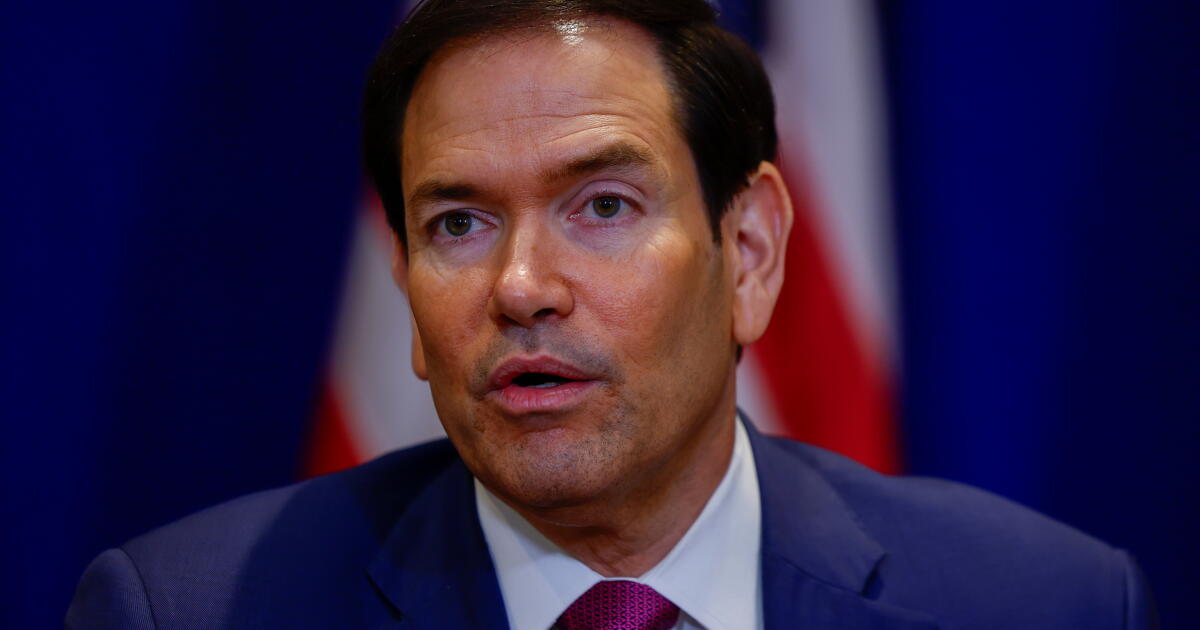
Secretary of State Marco Rubio is expected to sign off on a diplomatic note to Qatar extending for nine months the life of Camp As Sayliyah, which had been due to close Wednesday at the end of the U.S. budget year, according to two U.S. officials familiar with the matter. The officials spoke to the Associated Press on the condition of anonymity to offer details before the public announcement.
The decision comes months after Rubio told Congress that the U.S. was still in discussions with several third-party countries to take the 1,039 Afghans who worked as interpreters or in other roles helping the American war effort as well as relatives of U.S. service members who have been stranded in Qatar for more than a year.
Rubio’s testimony in June came after the AP and other outlets reported that war-torn Congo was among the countries where the Trump administration was considering resettlement.
The State Department would not immediately comment on Rubio’s extension for the camp but said it “continues to work toward a positive resolution that provides safety for these remaining people to start a new life outside of Afghanistan while upholding the safety and security of the American people.”
The department also repeated its claim that the camp is a legacy of an attempt by President Biden’s administration “to move as many Afghans to America as possible without properly vetting them” — an assertion that has been denied by former officials and refugee advocates.
The group of Afghans in Camp As Sayliyah includes those who fought or worked alongside the U.S. military between 2001 and 2021, with more than 70% of the camp’s residents being women and children, according to statistics from #AfghanEvac. The group has spent the last five years advocating for Washington to make good on its promise to resettle those whose service has put them at risk since the chaotic U.S. withdrawal from Afghanistan and the Taliban’s reassertion of control.
“This is a victory for those people, and they’re going to have some semblance of knowing that they’re safe there because they’ve been worried that at any moment somebody’s going to come and rip them out of there,” Shawn VanDiver, a Navy veteran who heads #AfghanEvac, told the AP.
But he added that there needs to be a permanent solution to this years-long crisis.
Despite the camp’s reprieve, which protects those housed there from possible forcible removal to Afghanistan, residents have little hope of being allowed to enter the United States.
Upon entering his second term, Trump, a Republican, paused his Democratic predecessor’s Afghan resettlement program as part of a series of executive orders cracking down on immigration, including dramatically altering refugee admissions to focus on white South Africans. Only five Afghans have been admitted to the U.S. since October 2025, #AfghanEvac says.
The refugee changes left thousands of people who fled war and persecution — and had gone through a sometimes years-long vetting process to start new lives in America — stranded at places worldwide, including the base in Qatar.
Advocates have warned that if there is no alternative, the only other option for the group of residents would be to go back to Afghanistan, where they face likely reprisal from the Taliban.
In the coming nine months, the State Department said it would “continue to work to identify options for voluntary resettlement of all Camp As-Sayliyah residents.” It gave no additional details.
Lee and Amiri write for the Associated Press. Amiri reported from New York.
The new parents shared their happy life update in a joint Instagram post Monday featuring the public social media debut of their new bundle of joy.
“We took Labor Day literally this year,” Palvin wrote in the caption accompanying a photo of she and Sprouse holding their baby girl between them. The snapshot captured the family of three from the back as they watch a Dodgers game on TV while wearing matching jerseys.
The model debuted her baby bump in May at the Cannes Film Festival, where the couple posed together while walking a red carpet. They also announced that they were expecting on social media. Sprouse later shared in a July episode of his “Wildmen” podcast that they would be having a baby girl and that he was “excited to be a girl dad.”
On Tuesday, the actor once again took to his podcast to share some new tidbits about his daughter and life as a new parent.
“She’s very lovely, her name is Sylvie,” Sprouse said of his daughter. “Sylvie Sprouse. And she’s a very well-behaved baby.”
The former Disney Channel star also shared some details about Sylvie’s birth including some of the different options at Cedars-Sinai Medical Center.
“There’s moments when I look at Sylvie and I’m like, ‘This is the coolest thing ever,’” Sprouse said of being a new dad. “She’s looking at me and her eyes are opening … she’s looking at me and she smiles or something and it’s the cutest thing. My heart like jumps out of its chest.”
The “Suite Life of Zack & Cody” star and Victoria’s Secret model first met in 2017 and have been in a relationship since 2018. They were married in 2023.
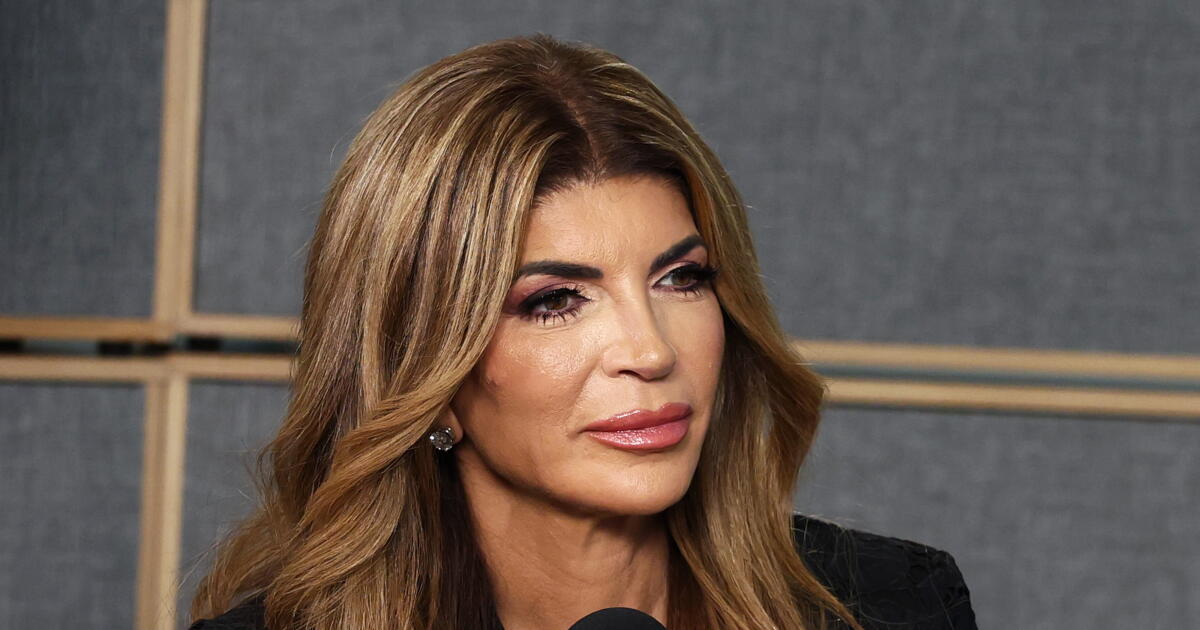
“Real Housewives of New Jersey” star Teresa Giudice is asking for privacy for her daughter Milania Guidice after an incident at the airport resulted in police intervention.
On Wednesday, Tampa International Airport police were called to step in when Milania, 20, reportedly became emotional and ran away from her reality star mom, older sister, Gia Giudice, and a counselor traveling with the family. Police bodycam footage, obtained by TMZ, revealed the family was fighting over a recent health scare involving Milania.
In the video, the family is in an elevator with police, and Teresa is heard explaining that her daughter “had fentanyl in her system” and that she wants to save her daughter’s life. “You’re reckless,” Teresa says to Milania. “After you get help, you never have to speak to me again.”
Milania retorted that she “was laced” and said, “I go to college.” Milania, who attends the University of Tampa, then asked if she was going to be placed “back in the psych ward.” Earlier in the clip, a police officer is heard explaining that Milania had been released from a Baker Act facility and was being transported to a rehabilitation facility.
“As a mother, there is nothing more important to me than the health, safety, and well-being of my children,” Teresa wrote in a statement on Instagram on Monday. “The past few months have been incredibly difficult for our family, and I feel it is important to say something while also protecting my daughter during an extremely vulnerable time in her life.
“Milania has experienced tremendous heartbreak and significant psychological trauma after losing two of her best friends. Grief affects everyone differently, and watching your child try to process that kind of loss is something no parent can ever truly prepare for.”
In July, Milania’s best friend, Victoria Zardoya, died on a weekend trip to Tampa, during which the 20-year-old sustained fatal injuries when she fell while exploring the ruins of Ft. Dade from the Spanish-American War with a group of friends.
It’s unclear who the second friend is.
“Right now, my only focus is my daughter — making sure she is surrounded by love, family, support, and the care she needs,” Teresa’s statement continued. “I understand that because our family has lived much of our lives in the public eye, there will naturally be questions and speculation. But Milania is my daughter before she is anything else. She is a young woman going through an incredibly difficult and deeply personal time, and she deserves the opportunity to heal without every moment of her pain being analyzed publicly.
“I am asking, from one mother to another, and from one family to all of you, to please show Milania compassion and kindness and allow her the privacy she needs right now,” the statement concluded.
In May, Milania was arrested and charged with simple assault after an incident at the New Jersey home of Teresa and Luis “Louie” Ruelas, Milania’s stepdad. Milania allegedly punched someone in the forehead, who was referred to in court by the initials “LR.”
If found guilty, she faces up to six months in jail, probation and a $500 fine. Her next hearing is Tuesday.
EXCLUSIVE Some of the biggest stars of Coronation Street, EastEnders and Emmerdale have united for a new staging of a classic play and looked back on their time on the world’s longest-running TV soap
17:35, 27 Sep 2026Updated 18:05, 27 Sep 2026
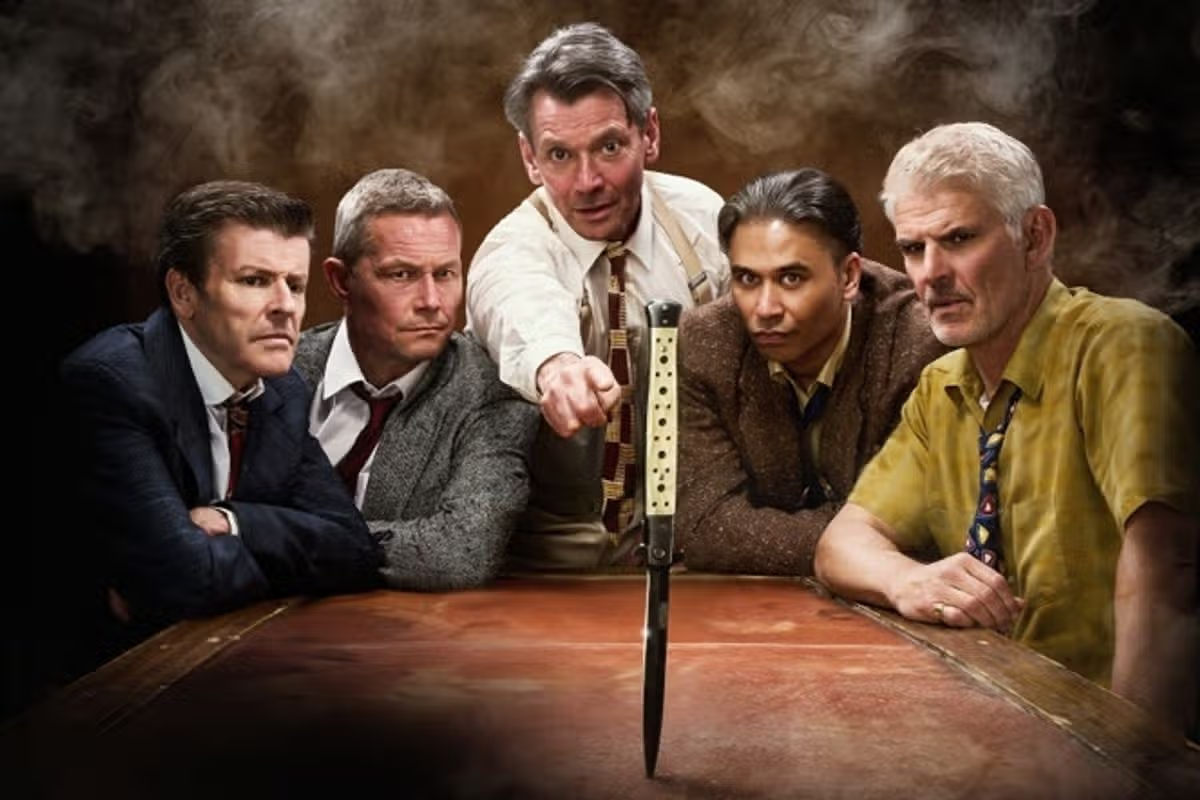
Twelve Angry Men is on tour across the UK
Coronation Street, Emmerdale and EastEnders have been the UK’s biggest soaps for decades and now the stars truly have aligned as a group of actors from each of them have united to take on a stage production based on a film that is often one of the greatest films ever made
Soap legends Bill Ward, Tristan Gemmill, Ben Nealon and Gray O’Brien have teamed up together to appear as four of the jurors in Twelve Angry Men, which follows a jury as they deliberate the guilt of a boy on trial for murdering his father. All four of them have gone on to carve out successful careers on the boards since their time on screen, but Gray, 58,who played the villainous Tony Gordon on Coronation Street, has admitted he would be keen to return to TV if the opportunity was there.
“It’s not that I choose to do theatre, I’ll be brutally honest. It’s because nowhere in telly will employ me. That’s the thing about men coming out of soaps. Look at some of the best actresses we have in this country, Suranne Jones, Katherine Kelly, they’ve all used Coronation Street as a springboard into other things but it doesn’t work that way for men and I don’t know why that is,” he tells The Mirror.
Tony was the second husband of Underworld boss Carla Connor (Alison King). Introduced as a ruthless businessman, things quickly turned evil and he raped Carla before tying her up in the factory and setting it on fire during a major siege week in 2010. Carla made it out alive, but Tony did not. Gray admits he had no idea where the character was going when he first signed up to appear, but didn’t expect things to pan out as they did.
“It’s only supposed to be about seven houses,” he laughs when discussing the increasingly dramatic nature of the programme. Prior to joining Coronation Street, Gray had appeared in Casualty and River City, but joining the Manchester-based soap was a poignant moment for Gray because his father was such a fan.
“My father was a huge fan of Coronation Street, everyone says they are the biggest fan, but he was. Unfortunately, he died in 2000 and I joined in I think 2007 so he didn’t get to see it and he would’ve loved the part,” he adds.
But the star is happy with his latest role as touring fits in with his lifestyle and ultimately has happy memories of his time on set. It’s a similar case for Bill Ward, who played Charlie Stubbs and, after years of high-profile storylines, one of which saw Charlie abuse Shelley Unwin (Sally Lindsay), his character was murdered by girlfriend Tracy Barlow (Kate Ford) almost 20 years ago.
“I loved it, and people do still talk to me about it,” he smiles, adding “It was a really, really great piece of writing. The writers, I was very, very lucky. The writers really, really wrote for that character, for Charlie Stubbs, and I always used to look forward to getting the next week’s script to see what he would be up to because it was always it was very thoughtful, but it was also very innovative. A lot of the kind of the absolute delight, and I loved my time on it.”
Following his stint in Coronation Street, Bill, 59, went on to play James Barton in Emmerdale, but has also enjoyed a stellar career in theatre, starring in productions of Legally Blonde and Everybody’s Talking About Jamie amongst a host of others.
Things are never safe in soap land and a decade on from Charlie’s dramatic exit, former Casualty star Tristan Gemmill, 59, arrived to play Tracy’s ex-husband Robert Preston. Like Charlie, Robert did not exit in a black cab and his departure from the street was also explosive – being shot through the door of the Rovers Return Inn on Christmas Day.
At the time, Tristan’s children were young and he recalls having to calm them down when they saw the hard-hitting scenes. “Being shot through the door of the Rovers was harsh. It a hell of an exit. We all watched it on Christmas Day with my kids. I thought ‘Oh, look, we’ve had Christmas lunch. Let’s sit down and watch Daddy’s episode of Coronation Street because it’s where he leaves the show.’ It was a big mistake! They got so upset and I spent hours calming them down!”
For Ben Nealon, who played Alex Harkinson on EastEnders but is better known for starring as Capt Jeremy Forsythe on Soldier Solider, the theatre is definitely home, but he is always pleasantly surprised when members of the public recognise him for his signature role.
“With Solider Solider, it’s strange. In some ways, was really lucky, and all of us who were in it were really lucky to be last bastion of a show that was on television when there were still only five channels
“We had 17 million viewers, which is bigger than Game of Thrones now. I’m still amazed that that people come up and say ‘Hey, Jeremy!’ because it’s such a long time ago.” When asked if there is one genre he prefers, Ben, 59, admits he feels “really lucky” to have had a career spanning over three decades to begin with.
“I love doing theatre because of the rehearsal process, the immediacy of it. Of doing, it changes every night based on where you are, what the audience are like.
“I think in television these days, very rarely do you get a chance to rehearse much at all. You might do a couple of rehearsals for the camera and then off you go, so to have that in-depth analysis that you get in a in a rehearsal room for two or three weeks is is a real joy, and, and I think why most of do this job.”
After decades of starring on stage and screen, the four actors are keen to discuss taking on roles of various jurors in a new production of Reginald Rose’s legal drama. “It’s things like social justice, immigration, racism, one man standing against a mob, these are all ideas that he comes back to again and again and again.
“And so I’ve sort of gone backwards into his other work, if you see what I mean, and tried to find reasons, and I’ve researched the period,” Bill says.
Having already hit a few venues in the UK on its lengthy tour, Tristan is thrilled with the way audiences have responded. He explains, “We’re finding that the audiences are, are really engaged because the, Reginald Rose, the writer, has, has structured it in such a clever way where, where by, at the, at the beginning, you just see 12 blokes walk into a room.
“You know that it’s a jury deliberating on a murder case, but you don’t know any more than that. And then as, as time goes on, you almost fill in the gaps backwards, so that eventually you know what everybody in the room knows, because they’ve sat in the court for three days and listened to the proceedings. So, the way he drip-feeds the information is, is really clever.”
Bianca Dyke appeared in series six of ITV’s Benidorm – but who is the actress’ real-life soap star father?
Benidorm Bianca Dyke star has famous actor dad in real life and fans will be floored
Benidorm fans will be stunned to find out that Bianca Dyke star Bel Powley is not the only famous member in her family.
Bel joined the cast of the ITV sitcom back in 2014, with the rest of the Dyke family: dad Clive (Perry Benson), mum Tonya (Hannah Waddingham) and brother Tiger (Danny Walters).
During their stint on the show, the family became firm favourites and famously had a rivalry with the Garveys who were also stopping at the Solana resort.
As for Bianca, she turned her attention to fellow holiday-goer Martin Weedon (Nicholas Burns), thinking he was a wealthy businessman, only to end things after realising he wasn’t.
Benidorm was not actress Bel’s first time on the screen. She shot to fame playing Daisy Millar in CBBC’s M.I. High from 2007 to 2008. Her other acting credits include the TV series Everything I Know about Love and the 2015 coming-of-age film The Diary of a Teenage Girl.
She also played Claire Conway in The Morning Show from 2019 to 2025 and is currently portraying Petunia Dursley in the upcoming new Harry Potter television series.
In real life though, Bel is the daughter of actor Mark Powley, who is best known for playing P.C Melvin in police drama The Bill from 1987 to 1990. He’s also appeared in several soaps including Coronation Street in 2001 as Rob Lucas and Emmerdale in 1999 playing Liam Hammond.
Talking about her childhood, Bel told Hollywood Authentic: “I never even really wanted to be an actor. I was really academic. But my dad’s an actor [Mark Powley], and my mum’s a casting director [Janis Jaffa]. So it was always kind of in the family.
“I went to a Saturday drama group called Youngblood Theatre Company, which was all improvisation-based, where I met a lot of my mates. A casting director came in once to cast a CBBC show called M.I. High about child spies, and I got the job.”
She added: “So I basically ended up being a child actor, to my parents’ dismay, because they thought I was going to be the first academic of the family. I ended up following in my dad’s footsteps.”
Bel is also married to fellow actor Douglas Booth. Douglas has starred in the likes of Great Expectations, Romeo and Juliet and ITV’s recent cop drama The Blame, alongside Michelle Keegan.
Douglas and Bel first met at a chemistry read audition over 10 years ago. Three years later in 2016, they worked together on the film Mary Shelley and a romance quickly blossomed.
Going from strength to strength Douglas proposed to Bel in July 2021 on Primrose Hill in London. Then in October 2023, Douglas and Bel made things official by getting married at Petersham Nurseries in Richmond.
“I woke up in the morning, and I was like, ‘I just want to do it all over again, right now’,” Bel told Hollywood Authentic before sharing: “I think in 10 years’ time, we’ll get married again.”
Fans have been deciphering the lyrics on the tracks of Taylor Swift’s new extended albumCredit: TAS Rights ManagementFans believe one song is about the former husband of her actress pal Sophie TurnerCredit: Splash
Taylor sings on the track, her new single: “If you wanna party with somebody who might know about the Devil on his shoulder under his halo . . . When the toxins take their hold, you’d rather die than let it go.
Sign up for the Showbiz newsletter
Thank you!
“But if you’re sick of him, I got you, I was Patient Zero. I’ve been there, felt the reeling, done the healing, said the curses and prayers when the fever turns a dreamer into a pathetic ghost.”
Taylor has revealed that the track resulted from a get- together with friends where one of them told how she had been contacted by an ex’s new girlfriend, asking if she had had the same experiences with the guy.
She added: “And everyone in our group just immediately started saying, ‘Oh, I’ve been through that too’.
“And I thought to myself, ‘If this has happened to all of us, it’s such an interesting angle on humanity and on relationships.
“And I wonder if I could write something from the perspective of getting this phone call, and really only from the perspective and the side of the phone call of the ex who’s been through it before.”
The extended album also includes an open apology to one of Taylor’s exes, who most fans are sure is Tom Hiddleston.
Taylor also previously dated Joe Jonas – and her track suggested she felt sympathy for SophieCredit: GettyAnother of the tracks appeared to offer an olive branch to ex Tom HiddlestonCredit: Getty
Their two-month romance played out very publicly in 2016, when the Night Manager actor became a laughing stock after wearing an “I heart TS” T-shirt.
On Pink Clouding, Taylor sings: “Years later, I still wonder how to tell you sorry.
“I didn’t wanna let you down. So I left you up there on a pink cloud.”
She adds: “I hope you realised my kind of trouble wasn’t worth it and the way I treated you, you never deserved it.
“And I swear to God, to this day, I wake up scared that I left scars on a good person.
“And I gave you zero reason to believe it. So be it. But it didn’t mean nothing. Just ’cause I could leave it.
“I hope you landed safely on the ground. And I hope you’re so happy now.”
Tom definitely is, but I’m not so sure Joe will feel the same, now he is trending all over social media again.
FLO LOOKS SHRED HOT
Florence Pugh wore a fabulous silver gown in a photoshoot for Vanity FairCredit: Nadine Ijewere/Vanity FairFlorence wore a futuristic headpiece for her cover image for the magazineCredit: Nadine Ijewere/Vanity Fair
FLORENCE PUGH looks like she’s ready to go to a disco in this fabulous silver gown on the cover of Vanity Fair.
The Dune actress wore the backless dress with a futuristic headpiece for the mag cover.
Florence said: “I don’t want to be a secret, but I also don’t want everything to be divulged.
“The important thing is that we’re happy, and I feel solid and safe and sturdy. And that’s worth its weight in gold in our lives.”
MANIFEST’S TURKISH DELIGHTS
VIRAL Turkish girlband Manifest are taking over the UK after landing in London to meet their fans.
The band hosted a VIP boat party on the Thames with Bizarre hanging out with them as they took in the sights of the capital, complete with Union Jack umbrellas.
During the boat ride, the girls treated us to an exclusive first performance of their as-yet-to-be-named debut English single.
They were also filming a Netflix documentary special, with Bizarre’s Jack set to make a cameo.
They will headline their first UK show next month, skipping smaller venues to headline at OVO Arena Wembley.
From what we have seen of Manifest so far, I’m sure it will be one to remember.
DUA’S SUCH A SWEETIE
Dua Lipa left little to the imagination with this creative top – that looked like it could have been made out of SmartiesCredit: Instagram/@dualipa
IF you like a tucking into the occasional tube of Smarties, this picture of Dua Lipa will hit the sweet spot.
The singer posed in a top that looked like it was made up of hundreds of the sugar-covered chocs. tied together with string.
Dua has been hard at work on a new record, the follow-up to her No1 album Radical Optimism which came out two years ago.
Fans should expect an announcement some time next year.
DOLLY’S LAST DUET WITH U2
Dolly Parton’s final vocal performance is being released as a duet with BonoCredit: Getty
DOLLY PARTON’s final vocal performance is being released as a duet with Bono on U2’s first album in nine years.
The Irish band have announced Carnaval de Luz will be out on November 12.
It includes Torn, which Dolly started before handing it over to U2 to work on, with the help of Snow Patrol’s Johnny McDaid.
Bono told Rolling Stone: “When she got ill, she got out of her bed to sing this song. And you can hear that. I can’t even listen to it now. She sang her heart out, and I cannot believe that’s an 80-year-old woman.”
Bono said it came about after Dolly, who died last month, turned down an Irish folk-themed side project he was working on.
Brian Eno, Ryan Tedder, Martin Garrix have also been involved in the album.
ELTON JOHN is opening the Apple Music Hall at Battersea Power Station in London on Monday.
Tickets go on sale at 9am the same day at applemusichall.com.
The opening series for the 600-capacity venue will also include Charli XCX, Chase & Status, Burna Boy, Arlo Parks and Troye Sivan.
Sets will later be available to watch on Apple Music.
ROBBIE: I ASKED TO JOIN OASIS
Robbie Williams has revealed he asked if he could join Oasis after Liam Gallagher left the bandCredit: Getty
On stage in Bogota, Colombia, where he is on tour, Robbie said: “I am a massive Oasis fan, so two years after they broke up I thought, ‘I’ll phone Noel Gallagher’.
“I phoned Noel and said, ‘Noel, you need a new lead singer. Let it be me’. He laughed and put the phone down. That was the last time I spoke to Noel and it makes me sad.”
Given the beef between Robbie, Noel and Liam over the years, I think it was probably a wise move.
Rob, above with Liam at Glasto in 1995, will be hoping he can get tickets for next year’s reunion tour.
I’ve still not had my code for ticket sales this weekend and the wait is killing me.
Harvey Weinstein’s winding legal saga took a new turn this week, one that reaffirmed that the former Hollywood kingmaker — whose alleged history of sexual assault and abuse sparked the cross-industry #MeToo reckoning — will likely spend the rest of his life in prison.
Weinstein, 74, was sentenced on Wednesday to 15 years in prison for a felony sex crime tied to allegations from former “Project Runway” production assistant Miriam “Mimi” Haley. After a retrial last year, a majority-female jury found the disgraced Hollywood mogul and co-founder of the defunct Weinstein Co. guilty of sexually assaulting Haley in 2006 at his New York apartment.
Haley described the lasting and “devastating” effects of Weinstein’s assault as she addressed the court during Wednesday’s sentencing.
“Making the decision to speak up will have me looking over my shoulder for years to come,” she said. “It’s a life sentence for me.”
Weinstein said he has “remorse for Miriam Haley’s pain,” but maintained that he’s innocent.
The New York sentencing this week was not the first time Weinstein received a lengthy prison sentence for sex crimes. Since the damning sexual assault and harassment allegations against Weinstein first entered the legal spotlight in 2017, the Oscar-winning producer has faced convictions for rape and sexual assault over the course of trials — and retrials — from 2020 to 2025.
Weinstein has already served more than six years in New York, leaving him with about nine years left on that sentence. A pending resentencing in California — he was sentenced to more than a decade for a 2013 rape — could keep the mogul behind bars for life, the Associated Press reported.
Here’s a look back on Weinstein’s previous convictions and the prison sentences that followed.
March 2020: 23-year prison sentence in New York
Weinstein was first sentenced for his sex crimes against women in New York almost three years after the #MeToo movement upended his career as a prolific movie producer.
The mogul’s 2020 sexual assault trial, the first in a handful that would follow in the coming years, ended in February 2020 with a jury delivering a mixed verdict. The jury convicted Weinstein of committing a criminal sexual act and third-degree rape based on accusations from Haley and former actor Jessica Mann, respectively. The jury acquitted him on the most serious charges, including two counts of predatory sexual assault.
Harvey Weinstein arrives at a Manhattan courthouse for jury deliberations in his rape trial, Monday, Feb. 24, 2020, in New York.
(Seth Wenig / Associated Press)
A month later, New York Supreme Court Judge James Burke announced that Weinstein would carry out a 23-year prison sentence for his crimes. He was ordered to serve 20 years for his 2006 attack against Haley in his Manhattan apartment. The judge added three years to Weinstein’s sentence for raping Mann in a Manhattan hotel in 2013. Weinstein was to serve those sentences consecutively.
At the time, the Miramax co-founder denied all wrongdoing and planned to appeal. Those efforts come into play in 2024.
February 2023: 16 years in California
Weinstein, a movie titan who once dominated Hollywood and produced some of the modern film industry’s most defining titles, including “Pulp Fiction” and the divisive Oscar best picture winner “Shakespeare in Love,” was tried in his stamping grounds in October 2022. He was prosecuted for allegations that he raped and attacked four women in Beverly Hills hotel rooms between 2004 and 2013. Before the trial, Weinstein was indicted on 11 counts of rape, forcible oral copulation and sexual battery in Los Angeles and Beverly Hills. He denied all wrongdoing.
The acrimonious trial, which stretched more than a month, ended in December 2022 with a jury convicting Weinstein of forcible rape, forcible oral copulation and sexual penetration by a foreign object. The jury acquitted Weinstein of the sexual battery of a massage therapist and failed to reach verdicts on counts involving two other women. Los Angeles County Superior Court Judge Lisa Lench declared a mistrial on the charges that left the jury deadlocked.
Weinstein’s conviction hinged on an account from an Italian model and actor identified in court as Jane Doe 1. She said the producer barged into her hotel room in Beverly Hills, where she was staying while attending a film festival, to assault her. He was sentenced to 16 years in prison in February 2023.
Harvey Weinstein appears in court at the Clara Shortridge Foltz Criminal Justice Center on Oct. 4, 2022, in Los Angeles.
(Pool / Getty Images)
“There is no prison sentence long enough to erase the damage,” Doe said during the sentencing. “He deserves to experience the same shame, humiliation and fear as I did.”
Lench ruled at the time that Weinstein cannot serve his New York and Los Angeles sentences concurrently. His attorney said the producer would return to New York to carry out the remainder of that sentence before going to prison in California.
Earlier this year, a three-panel judge from California’s 2nd District Court of Appeal unanimously agreed to deny Weinstein’s efforts to appeal the Los Angeles conviction. The Los Angeles trial judge was also ordered to resentence the mogul.
“This is not the end of the appellate process,” Juda Engelmayer, Weinstein’s publicist, said in June. “We intend to seek review in the California Supreme Court because we continue to believe significant legal errors affected the proceedings and warrant further review.”
Weinstein is awaiting resentencing for this case.
April 2024 to now: New York retrial leads to an updated prison sentence
In a dramatic reversal of the landmark #MeToo case, a state appeals court found that the judge who presided over Weinstein’s 2020 trial prejudiced his case by allowing four women who said Weinstein had assaulted them to serve as witnesses, even though their allegations were not part of the case. The appeals court also ruled the judge made a mistake in ruling prosecutors could cross-examine Weinstein about uncharged and decades-old allegations if he decided to testify.
What ensued was a retrial in 2025 that exceeded a month and featured emotional testimony from former accusers Haley and Mann, and model Kaja Sokola, who did not testify against the mogul in the 2020 trial.
The fallen Hollywood boss was retried on the allegations that led to his original rape and criminal sex act convictions. He was also tried on a new sexual assault charge stemming from Sokola’s allegation that he forced oral sex on her in 2006 when she was 19. Weinstein pleaded not guilty and his defense maintained the alleged sexual encounters were consensual. He did not take the stand, similar to his first trial in New York and his rape trial in Los Angeles.
Before Weinstein was convicted in June 2025 of forcing oral sex on Haley, he declared “it’s just not fair.”
“My life is on the line, and you know what? It’s not fair,” he said at the time. “It’s time, it’s time, it’s time, it’s time to say this trial is over.”
Time, it appears, is of the utmost importance for Weinstein, considering his renewed prison sentences in New York and an incoming sentence in California. Weinstein spoke at length with the Hollywood Reporter in March about carrying out his sentence and the possibility of dying behind bars. The former executive was jailed at the notorious Riker’s Island jail complex in New York at the time of the interview.
“It scares the s— out of me. Cold and heartless,” he told THR. “It’s incredible to have the life that I had and the things that I did for society and not have the leniency to deal with me in a kinder way. Whatever they think I did bad in my life, I didn’t get the death penalty.
Americans have demonized us as criminals, buffoons, lechers, invaders, criminals and job stealers since the fall of the Alamo. Latino culture typecasts hombres as eternal machos always a few drinks away from brawling or bawling. Educators view us as underachievers. The political class long stereotyped Latino men as a sleeping giant who could change the country, if only we showed up to vote with the same enthusiasm as attending a Raiders game or lining up for a sneaker drop.
The blame game continues. A study released this month by UCLA’s Latino Policy & Politics Institute basically paints Latino men as little better than MAGA minions, trumpeting a gender gap on standing up to this administration’s deportation deluge, defending democracy and “fighting the Trump agenda.” To the media and to outraged internet commentators, it didn’t matter that two-thirds of Latino men had responded that each of those three issues was “very important” or “somewhat important.”
We just aren’t anti-Trump enough, which marks us as alien to the president’s critics. The UCLA paper’s cover page even features a red man and a blue woman conversing in what look like Aztec speaking glyphs — as if the sexes can’t understand each other and probably never will.
To explain the Latina-Latino political chasm, UCLA offers hypotheses straight out of “Men Are From Mars, Women Are From Venus.” The women supposedly work more in caretaker jobs like teaching and healthcare, softening their views toward the least of us. The men are in blue-collar sectors with a Darwinian outlook. But it doesn’t take a fancy academic paper to come to that conclusion — all you need to do is, you know, talk to Latino men.
When Trump descended that damned escalator in 2015 to announce his first presidential run by sliming Mexican immigrants as rapists and drug dealers, I knew that this racist excuse for a leader — the most anti-Latino politician in our nation’s history — would nevertheless appeal to many Latino men.
The reasons were evident: Trump’s fame. His strongman persona. His riches. His default setting of, as we Mexicans say, me vale madre — I don’t give a damn what people think. Yet three successive Democratic presidential campaigns willfully ignored these flashing sirens, instead insisting that Green New Deals and diversity, equity and inclusion programs would appeal to working-class Latino men.
Pundits thought we were still motivated by the radical politics of the Chicano movement, as previous generations were. What they didn’t realize was that assimilation had transformed Latino men into the modern equivalent of President Nixon’s silent majority.
A “Latino Americans for Trump” office in Reading, Pa., during the 2024 elections.
(Joe Lamberti / Associated Press)
I’ve always thought Latino male Trumpers were deluded — but I’ve always understood where they’re coming from. They’re believers in rancho libertarianism, my neologism for the individualistic politics exemplified by the Mexican men who raised me and who I grew up with.
Rancho libertarians, like their Scotch-Irish cousins from another mother, are forever skeptical of government, respect insurgents who want to take on the establishment, love their people and subscribe to a bootstraps approach to life. Not as praiseworthy is a tendency to dislike being told what to do, and in proving a point, to not only cut off their nose to spite their face but to lop off their heads as well.
No wonder so many Latino men went for Trump. To quote another Mexican saying, por eso estamos como estamos. That’s why we’re the way we are.
And look at what it’s earned us.
MAGA has been a miasma on this land, but especially for the blue-collar Latinos whom Trump increasingly courted with each election cycle. Immigration agents have arrested U.S.-born Trump supporters and thrown their friends and family members into squalid detention centers to await certain deportation. Diesel and gas prices are outrageously high, after Trump started a war with Iran that seems to have no end.
Nothing has degraded more for Latino men, however, than the simple pleasures of life.
When my dad and my brother had a pool party for some cousins and their children last month at our Anaheim home — no more than 15 people — the cost of carne asada, chicken, chorizo and tortillas from a local carnicería was more than $200. That side of the family never supported Trump while not exactly being wokosos, either. As Spotify blasted Antonio Aguilar and Banda El Recodo, they complained about the economy and the Republicans who have rubber-stamped the Trump agenda, when we should have been talking about the Dodgers and vacations back to our ancestral Mexico state of Zacatecas.
If my Arellano cousins are ready to stick it to Trump on election day, so should the Latino men who supported him two years ago.
In 2024, Latinos were the pivotal vote that delivered swing states to Trump. In this year’s midterms, Latino men are the swing vote within that constituency, from congressional races once considered safely red in Texas and Florida to local elections across the country. It’s gotten so dire for Republicans that Florida Rep. Maria Elvira Salazar put out a television ad warning Trump that “the same Hispanics who brought you to the White House … feel betrayed today.”
Honor remains big among rancho libertarians, and no politician has insulted the Latino way of life more than Trump. Helping to flip the House and Senate to the Democrats wouldn’t end his influence, but it sure would help. Plus, it would be a perfect rebuke to a pendejo who fooled too many good Latino men.
American society, whether the left or the right wing, will never fully accept us. We’ll always be thought of as too conservative, too dumb, too reactionary, too violent by too many.
Well, if we’re going to be loathed, we might as well stand on the right side of history. It’s time for Latino men to stand up and hit Trump with another Mexican saying:
“You only need to find one person in this entire world who doesn’t find you completely insufferable.”
That’s the wisdom Taylor Swift dispenses near the end of “Cleveland!,” one of four new songs on a newly expanded edition of “The Life of a Showgirl,” and if that exclamation point doesn’t tell you she’s found that person then I don’t know what would.
Released Thursday night, almost exactly a year after the original album came out, “The Life of a Showgirl: The Encore” tacks four bonus songs onto the blockbuster 2025 LP that set a new record for the biggest opening week of all time even as it drew the harshest reviews of her career. It also follows Swift’s high-profile wedding in July — her husband, the NFL star Travis Kelce, grew up in Cleveland Heights — and comes just as Grammy voters are about to decide on nominations for February’s awards ceremony, where “The Life of a Showgirl” is eligible for Swift’s eighth album of the year nod. (In case you haven’t been keeping track, that would tie her with Frank Sinatra for the most in Recording Academy history.)
In a statement ahead of “The Encore’s” release, Swift said she’d taken a trip to Sweden to celebrate “Showgirl’s” success with Max Martin and Shellback, her two principal collaborators on the album. “Really we just wanted to reflect and take in how grateful we were for the moment we were in,” she wrote, “but there was a studio there and we did what we do when we feel anything at all: We wrote more songs.”
Here are the four “Encore” tracks, ranked from worst to best.
4. ‘Cleveland!’ The exclamation point really is hilarious. (No shots at Cleveland.) I kind of dig the airy jangle-pop production, which reminds me a bit of “Ruin the Friendship,” by far the best song on the original “Showgirl.” But writing about her and Kelce’s romance as a bulwark against all the hate she receives as a rich and powerful pop star feels pretty uninspired, at least as rendered here. “The taste of me is acquired, but it’s his favorite dish”? Alas, no.
3. ‘Patient Zero’ “Encore’s” lead single — with a splashy music video set to premiere during Sunday night’s MTV Video Music Awards — has Swift fielding a phone call from a woman who’s dating one of the singer’s exes and could use a little advice. (“I’ve gotta be honest — I’ve been expecting your call,” Swift tells her.) That’s a rich premise, and I like the way the unexpected fiddle lick scrapes against the glossy synths. Again, though, the lyrics lack the emotional sophistication with which she once would have told a story like this one. And the song’s central image — a guy with a “devil on his shoulder under his halo” — is downright awkward.
2. ‘Pink Clouding’ OK, now we’re getting somewhere. This shimmering electro-pop number takes its title, as I just learned, from a term used among people experiencing addiction to describe the temporary euphoria one might feel in the early stages of recovery. (Recall that Swift wrote “Lavender Haze” a few years ago after hearing the phrase on “Mad Men.”) Here she’s looking back with regret at a relationship that she can see now was clearly a rebound: “You met me at a cursed time / I told you I was fine / And you were so good / That’s why you haunt me like you should.”
1. ‘Babylon’ Look, I’m not crazy about “liberated libertine.” And “Love is ice upon the ladder that you need to climb”? It’s giving Airbnb wall art. But man, oh man, does Swift finally tap into something deep in “Encore’s” closer: a trembling acoustic-guitar ditty about someone who’s realized only too late what they let slip away. Listen for yourself to hear how she sings it — this is a beautifully tender vocal performance — but the verse about the all-but-abandoned young mom sneaking into the bathroom to call her mom is an absolute killer. Taylor Swift: good songwriter!
Growing up, Alejandra Villarreal was accustomed to the dry Mexican heat, trapped inside the small historic venues where she and her sisters would perform as kids. But as temperatures hit 103 degrees outside the Fonda Theatre in Hollywood, she couldn’t help but shout.
“¡Ay, qué calor!” she said, swinging her bass guitar.
Inside the nearly 100-year-old theater, Alejandra was onstage for a sound check. She ran through distorted, metal-influenced riffs as her sisters — drummer Paulina Villarreal and lead vocalist-guitarist Daniela Villarreal — prepared for the second of three sold-out shows at the Fonda, as the rapidly rising rock band the Warning.
The Warning has been shaking the walls of L.A. theaters since the group first landed in the city eight years ago — but this year feels especially monumental for the sisters.
Released in August, the band’s most recent album, “Everything’s Falling,” is a snarling, noisy and melodic rock joyride that rarely, if ever, slows down.
Written between L.A. and their hometown of Monterrey, the straight-to-the point lyricism documents the Villarreal sisters’ frustrations, anger and failures — most fiercely on “Kerosene,” which lambasts a jealous critic who “falls asleep with me on your screen,” so sings Daniela.
“Kerosene” recently shot up to the No.1 spot on the Billboard Mainstream Rock Airplay chart, which made the Warning the first Mexican and first all-female band to make the spot. Another single, their Spanish-language anthem “Ego,” was nominated for rock song at the 2026 Latin Grammys.
Members of the Warning hold up Billboard No. 1 awards after performing at the Fonda Theatre.
(Kayla Bartkowski / Los Angeles Times)
The legend of the Warning began in 2014, when Alejandra was just 9 years old and Paulina and Daniela were 12 and 14, respectively. The sisters came home from a Sunday carne asada with their family — and recorded a righteous cover of Metallica’s “Enter Sandman.”
Dressed in floral blouses and white capris, the girls thundered through the song with a focus and technical ability that sparked the interest of audiences worldwide — earning them a current total of 27 million views, not to mention praise from Metallica guitarist Kirk Hammett.
“We were wearing our sandalias, our church clothes,” Paulina said. “It’s just pretty crazy to think that one random Sunday afternoon we recorded that and it jump-started our whole career.”
The idea for the group came from playing the video game “Rock Band,” which led the sisters to performing at local “Battle of the Bands” competitions and posting cover songs to YouTube.
But the success of the “Enter Sandman” cover changed the course of their lives, taking them from local venues like Cafe Iguana — or, as Paulina calls it, “Monterrey’s Whisky a Go Go” — to appearing on the Ellen DeGeneres Show and various international music festivals.
“We started having adult responsibilities way early in our lives,” Paulina said. “We didn’t have that [average] teenage experience at all.”
“We didn’t go to normal school, we didn’t go and hang out with other teenagers,” she continued. “We were mostly hanging out with adults like our parents, [or] on tour and working. So there was this huge disparity between what our friends were living through and what we were going through.”
Over the course of its 13-year career, the Warning has opened for acts ranging from the Foo Fighters to Yungblud, writing and recording tirelessly in between. Now that the bandmates are all in their 20s, they say they “wouldn’t change it for anything.”
“When I was 10, I was like, ‘This is what I’m going to do for the rest of my life,’” Alejandra said. “I guess I did miss out on high school and ‘the norm.’ But honestly, I’m very grateful that we did this.”
In “Everything’s Falling,” the Warning contends with self-imposed songwriting limits that boxed them in as children — and tear down old personas to reveal their continuous, however imperfect, process of growth.
“All of our lives, we felt like we needed to sound a certain way,” said Alejandra. “English is not our first language, so we always found ourselves using really complex words — so that people would say, ‘They know the language.’ The lyrics of this album are very straightforward. We don’t have anything to prove anymore. It was a very liberating album to make.”
1/4
(Kayla Bartkowski / Los Angeles Times)
2/4
(Kayla Bartkowski / Los Angeles Times)
3/4
(Kayla Bartkowski / Los Angeles Times)
4/4
(Kayla Bartkowski / Los Angeles Times)
The group’s highly technical progressive rock style, influenced early on by bands like Muse, Metallica and Paramore, brought it a legion of Gen X fans who admired the sisters’ dedication to shredding, mathematical guitar solos and classical training base.
On their latest album, the sisters introduce new levels of fuzz and overdrive that blur their usually crisp instrumentals, plus verses that “lean into femininity” and take inspiration from a source that may surprise some: K-pop.
The rising global genre, known for its catchy harmonies and bouncing performance style, inspired the sisters to bring pop elements to their recording sessions.
“We love getting inspired outside of our genre,” Paulina said. “I think what happens a lot in rock is that, it’s very purista [purist]. Especially as women, whatever you do is very scrutinized. So if you ever step out of those confines it’s like, ‘Well [if] you’re not rock, you shouldn’t even be participating.’”
The sisters’ desire to defy expectations is most apparent in their jam-packed touring schedule.
(Kayla Bartkowski / Los Angeles Times)
“I fainted onstage [in July], and it was very dramatic,” recalled Paulina. “More than it being scary, I think people for the first time realized how hard we work. People were like, ‘Oh, your team is pushing you too hard.’”
“Nobody’s forcing us to be here,” she added, resolutely. “We’re grown women. We know what we’re doing and we know how much we can take.”
Daniela, the lead vocalist, had come down with a cold during the group’s L.A. shows, which required her to step back from interviews to rest her voice. The first night, she sang through the entire setlist, screaming and all — but by the third, she could only perform a few songs. Rather than cancel the concert, the Warning insisted that the show go on.
A la Karen Carpenter, Paulina sang lead vocals from behind the drum kit, calling on the crowd to clap and sing along to the music. They also brought out fans and collaborators to help them perform, including songwriter Annie Schindel, as well as rock acts Holy Wars and Dead Poet Society.
“We push forward through a lot of bad experiences,” Alejandra said. “One time I felt like I was dying — and that was the one of the few times we canceled a show. We only do it in extreme measures, because we know how much planning a show takes.”
One could blame it on the “Mexican work ethic,” they said.
Before taking on Hollywood, the sisters joined regional Mexican artist Carín León on the first night of his sold-out weekend at the Sphere in Las Vegas: the first time a Latin artist had ever headlined the venue. The band released the bluesy rock single “Love to be Loved” earlier this year with the Sonora native, recalling the first time they played it together “a highlight of our lives.”
“[Even if] we do our own thing in a different genre, we still shared that pride because of where we come from,” Paulina said. “Everything about that show was so Mexican … The unity, the community that we have outside of our country. Hopefully the people that went there felt how special it was.”
“I cried,” Alejandra added. “[Watching Carín perform], it was emotional.”
(Kayla Bartkowski / Los Angeles Times)
A week later, at the Fonda, they smiled as fans launched into chants like “Olé, Olé, Olé” and “Viva Mexico.” The line had been forming since 3 p.m., and once the show had begun, the Warning transformed from jovial 20-somethings to well-seasoned professionals.
“I feel like there will be a very clear change in what we do, ‘Everything’s Falling’-forward,” Paulina said. “I feel like we really allowed ourselves to be more emotional in the music and these shows, and that feels really powerful.”