WASHINGTON — The Justice Department moved Friday to dismiss a criminal case charging a former Olympian with deliberately damaging the Lincoln Memorial Reflecting Pool.
Government lawyers said in a 20-page court filing that information provided since the indictment of David Hearn shows that the damage was the result of a “flawed installation by the contractor” as well as “the rush to complete the project prior to events associated with the America 250 celebration in the weeks surrounding Independence Day 2026.”
“Given all of this newly discovered information, it is difficult to attribute the widespread damage to the Reflecting Pool to vandalism, let alone to establish that fact beyond a reasonable doubt,” said the filing from U.S. Atty. Jeanine Pirro.
Hearn’s lawyers said in a statement that the case against him should never have been brought.
“Its dismissal today does not erase the abuse of government power in arresting and charging a patriotic American who did nothing wrong. The government’s approach was ready, fire, aim. The administration owes Mr. Hearn an apology,” the lawyers said.
Hearn pleaded not guilty earlier this month to one felony count of property destruction and has a trial scheduled to start Sept. 28 in D.C. Superior Court. The charge, which carries a maximum prison sentence of 10 years upon conviction, accuses Hearn of causing at least $1,000 in damage to the pool.
Hearn told the Associated Press he was detained by National Guard troops and U.S. Park Police for five hours after stopping by the pool during a bike ride on June 19. He said he reached in to examine the pool’s newly peeled coating and briefly touched a chunk attached to the side of the pool, but said he obeyed a park worker who told him to let go of it.
Hearn, 67, of Bethesda, Md., competed in three Summer Olympics, earning his best finish, ninth, at the 1996 Atlanta Olympic Games, the U.S. Olympic and Paralympic Committee says on its website.
He and his supporters have said the prosecution is a politically motivated attempt by the Trump administration to deflect blame and scapegoat others.
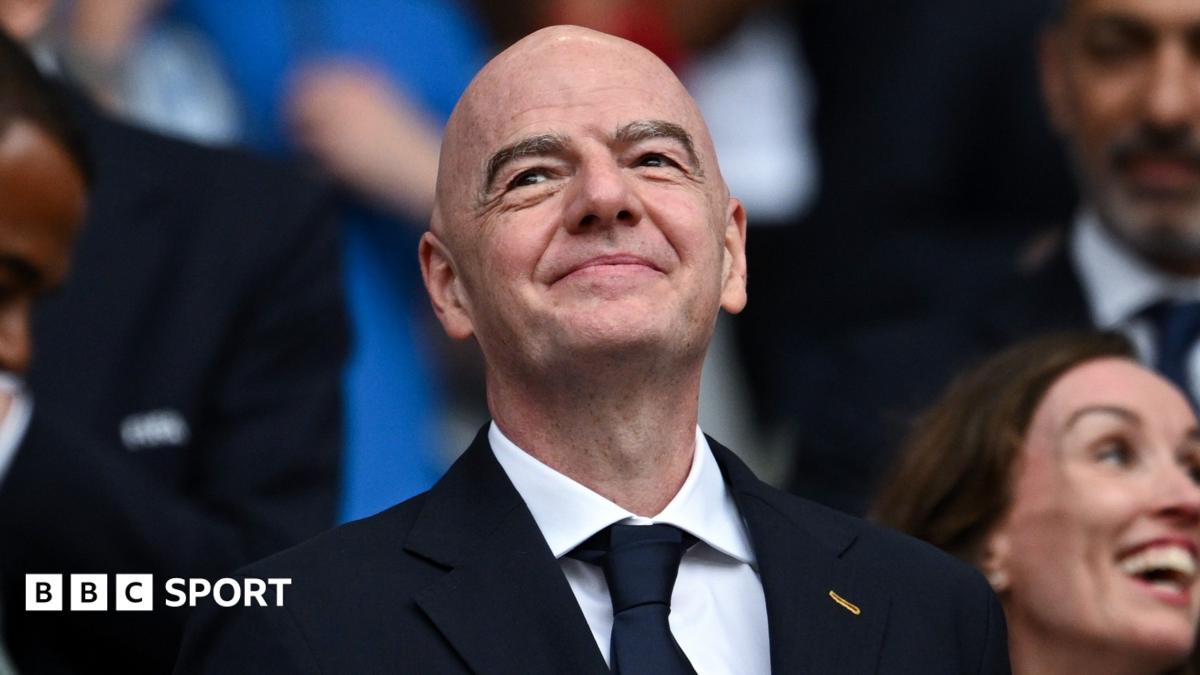
Fifa president Gianni Infantino says he has scrapped the controversial plan to sell off stakes in the governing body’s major competitions, following widespread opposition.
Infantino said it had become clear the project had “created divisions” that are “no longer in the interest” of its original objective.
The Swiss added: “As a result, this proposal will not proceed.”
Infantino had offered all 211 member associations $40m (£30m) if they backed a proposal for private investment in its tournaments, including the men’s and women’s World Cups.
Carlos Cordeiro – Infantino’s senior adviser on global strategy and governance – resigned over the mater, saying the proposal was “a bad deal for football” and would “mortgage football’s future”.
That came after two other major confederations spoke out against the plans.
Concacaf, which governs football in North, Central America and the Caribbean – and hosted this summer’s World Cup – said its members “rejected” the proposal, with sources saying the vast majority of associations from the region are losing, or have lost, faith in Infantino.
The Asian Football Confederation (AFC) said it stood in “solidarity” with Uefa and Concacaf, while UK Prime Minister Andy Burnham said Infantino was “the wrong man” to lead Fifa.
Infantino, 56, is now under immense pressure as he seeks re-election for a fourth term as president at the Fifa Congress in March.
He said he now intends to “bring all interested parties back together” in the “spirit of shared interest” in football.
Washington, DC – A Senate committee hearing this week has once again shone a spotlight on the political divisions over the United States government’s response to the COVID-19 pandemic.
Wednesday’s hearing, held by the Senate Homeland Security and Governmental Affairs Committee, continued years of criticism, mainly from Republicans, against immunologist Anthony Fauci, who led the government’s response to the pandemic.
Recommended Stories
list of 3 itemsend of list
Spearheaded by committee chair Rand Paul, several Republicans rehashed claims that the virus that causes COVID-19, SARS-CoV-2, emerged from an infectious disease lab in Wuhan, China, and did not naturally transfer from animals to humans.
Stephen Morrison, the director of the Global Health Policy Center at the Center for Strategic and International Studies, said the hearing was a reflection of the deep, enduring partisan divides over the issue.
But he added that the meeting with Fauci did little to shed new light on the pandemic after years of investigation, hearings and political posturing.
“There’s no space for any civil discussion around any of these issues. There’s no desire really,” Morrison told Al Jazeera.
“So, what’s the lasting impact of this? I mean, it continues to impose unconscionable pain and suffering on [Fauci] and his family. It doesn’t advance the debate one inch on the whole question of COVID origins and what was past US policy and what should US policy be going forward.”
Wuhan lab leak theory
Wednesday’s hearing was based largely on a previous 520-page report from 2024, created by the Republican-led Select Subcommittee on the Coronavirus Pandemic.
That report claimed it was likely that SARS-CoV-2 emerged from the Wuhan Institute of Virology, a Chinese research facility. Senator Paul has embraced this viewpoint, as has President Donald Trump.
In April of last year, shortly after Trump took office for his second term, the White House launched a webpage purporting to reveal “the true origins of COVID-19”, largely based on the report.
The site highlighted several claims that experts say pave over the nuanced scientific debate about the origins of the virus.
Drawing on the 2024 report, the White House asserts that SARS-CoV-2 “possesses a biological characteristic that is not found in nature” and that “data shows that all COVID-19 cases stem from a single introduction into humans”, setting it apart from previous natural pandemics.
Joel Wertheim, a professor of medicine at the University of California San Diego, told Factcheck.org that both claims were false.
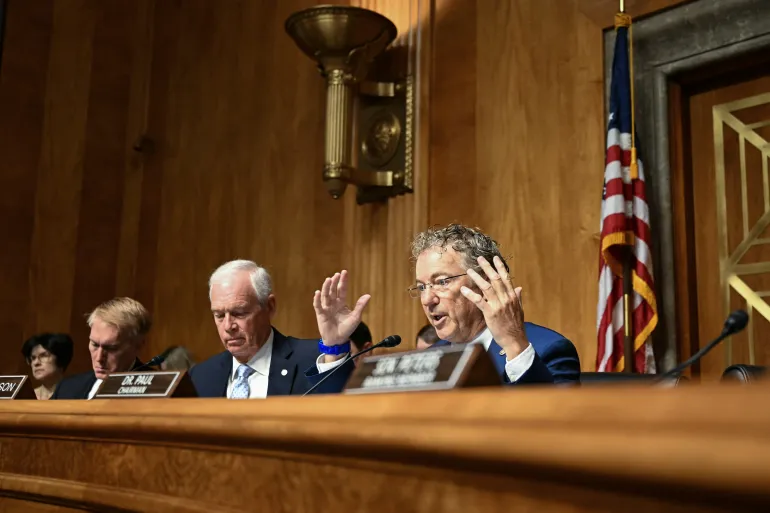
Senator Rand Paul questions Anthony Fauci during a Senate Homeland Security and Governmental Affairs Committee hearing on Capitol Hill in Washington, DC, on Wednesday [AFP]
While COVID does contain a characteristic to enter cells that is not found in its closest coronavirus relatives, that quality does exist in other coronaviruses more broadly. As Wertheim put it, “It is most certainly found in nature.”
Meanwhile, a pair of studies released in 2022 found at least two unique paths through which initial human infection occurred, contradicting the White House’s claim that the pandemic arose from a “single introduction into humans”.
The White House webpage also focuses on Fauci, who led the National Institute of Allergy and Infectious Diseases (NIAID) until 2022 and served as the chief medical adviser to former US President Joe Biden, Trump’s election rival.
Biden pre-emptively pardoned him in January 2025, fearing the physician might be arrested under the second Trump administration.
Ahead of Wednesday’s hearing, Trump took the opportunity to renew his derision of Fauci, writing on Truth Social that the medical expert’s “ideas were CRAZY”.
Trump also accused Fauci, without evidence, of orchestrating a cover-up for China, where COVID was first documented. The Republican leader was serving his first term as president when the pandemic began.
Ongoing debate
To be sure, there has been criticism from within the international scientific community that the lab leak theory was discounted too swiftly in the early days of the pandemic, as it became seen as political.
Trump and other world leaders had been quick to use anti-China rhetoric when discussing the virus.
There currently remains no conclusive evidence proving either the lab leak theory or that the virus had a natural origin. The vast majority of infectious disease scientists, including Fauci, have said neither possibility can be ruled out.
Still, a preponderance of experts say evidence indicates that the virus was most likely transferred from an animal, likely a bat, to humans, in a process called zoonotic spillover.
A 2024 survey of virologists and other scientists, conducted by the Global Catastrophic Risk Institute (GCRI), found most respondents believed natural transmission was considerably more likely than a lab leak, although most acknowledged it was impossible to definitively dismiss the theory.
Following three years of research, a World Health Organization (WHO) advisory board released a report in 2025 that also concluded “the weight of available evidence … suggests zoonotic spillover”.
Still, WHO director Tedros Adhanom Ghebreyesus cautioned, “As things stand, all hypotheses must remain on the table, including zoonotic spillover and lab leak.”
Inside Fauci’s diary
Fauci has long argued the scientific evidence indicates that the virus emerged from natural animal transmission, but he has repeatedly rejected the notion that he has outright dismissed the lab leak theory.
In a 2024 letter to the House Subcommittee on the Coronavirus Pandemic, his lawyers maintained (PDF) it was “completely wrong” to say that Fauci had ever called the possibility a “conspiracy theory”.
Instead, they said Fauci and his allies rejected an array of conspiracy theories that have been tied to the lab leak theory, including the idea that he had “sneaked unnoticed into the CIA headquarters to try to convince CIA officials to debunk the lab leak theory”.
Wednesday’s hearing was preceded by the release of entries from Fauci’s private diary, stored on a government computer drive.
They were obtained through Health and Human Services Secretary Robert F Kennedy Jr, a vaccine sceptic and Fauci critic, who passed them along to Senator Paul.
In one entry, Fauci described a claim that he “deliberately” worked with the Chinese to create the virus as a “way-out conspiracy theory”.
He and his legal team have also repeatedly rejected Republican claims that he leveraged millions in grant money to compel scientists to change their views about COVID’s origins.
The White House website, for instance, asserts that Fauci “prompted” an early study on COVID origins to downplay the lab leak theory. No evidence has been presented to support those claims, which have also been rejected by the scientists involved.
Anthony Fauci, director of the National Institute of Allergy and Infectious Diseases, talks with President Donald Trump in March 2020 [Evan Vucci/AP Photo]
Did Fauci mislead?
On Wednesday, several Senate Republicans charged that Fauci’s diary entries showed he had intentionally misled the public by downplaying the possibility the virus had emerged from the Wuhan lab.
Fauci’s supporters, however, have said the diary fails to prove any deliberate attempt to mislead. They argue his public and private statements were consistent in the early days of the pandemic, when scientists’ understanding of the virus was shifting daily.
Fauci’s diary entries indicated he met with a group of experts in February 2020, noting “there was not total agreement” on the likelihood the virus had been created via human manipulation. Senator Paul and others said Fauci did not adequately reflect that view in his public statements.
Republicans also seized on a January 26, 2020, entry in which Fauci wrote that initial data suggests “the first infection was in early December and was not connected” to the wet market in Wuhan.
“Now we know the market was not the source but the amplifier,” he wrote.
During the hearing, Senator Paul said the diary revealed that Fauci was “repeatedly saying in public something different than what he believes in private”.
Fauci’s defenders have pointed to a USA Today interview he gave shortly after the diary entry, floating the idea that the market could have been an “amplifier”. Others have argued the diary entries do not contradict the view that the virus was of natural origins.
Public restrictions
Republicans on Wednesday also focused heavily on Fauci’s role in issuing public guidance about how to slow the spread of the COVID virus.
Several states saw schools close and businesses shutter amid social-distancing recommendations.
But those closures became a political lightning rod and featured prominently in the 2020 presidential elections and 2022 midterm races.
Indeed, new studies have cast doubt on the effectiveness of social distancing rules. Others indicate mask mandates may have been less effective than previously presented, although research still generally supports that masks may slow the spread of the disease.
As NIAID director, Fauci had no direct authority to impose public health mandates, which were typically introduced by state and local officials. While he had a role in issuing federal guidance, his work was part of a wider government effort involving other agencies and officials.
Speaking on Wednesday, Gary Peters, the top Democrat on the Senate panel, accused Republicans of “relitigating history” and seeking to “turn one person into a scapegoat for a crisis that hundreds of officials across the Biden and Trump administrations were responsible for handling”.
Still, Fauci’s diary does contain uncomfortable revelations about how he wielded his high-profile position. In one instance, he recounted how he offered then-New York City Mayor Bill de Blasio encouragement to close city schools. He did the same with an aide to California Governor Gavin Newsom.
“I advised De Blasio to go ahead and do it,” he recounted. “I went on to tell him he should close the bars and restaurants in NYC… He said that he would base this on my recommendation.”
Why now?
During the Wednesday hearing, Fauci invoked his constitutional right to remain silent roughly 100 times, drawing significant public scrutiny.
The 85-year-old Fauci, who enjoyed bipartisan support as NIAID director throughout much of his 38 years in the role, decried the hearing as an attempt to entrap him with perjury.
Critics, including several Democrats on the committee, have also questioned the timing of Wednesday’s hearing, which comes just three months before November’s midterm elections.
Republicans are expected to face an uphill battle in maintaining control of the House of Representatives, and they also risk losing their slim control of the Senate in the vote. A defeat in either chamber would serve as a major setback to Trump in his final two years in office.
The party has struggled to find a defining issue to campaign on, amid affordability woes fuelled by the ongoing US-Israeli war with Iran.
The hearing also comes at a time when polls have shown public trust in federal health agencies has plummeted since Trump took office.
For instance, a June poll conducted by the Harvard TH Chan School of Public Health and the de Beaumont Foundation’s Public Health Listening Lab suggests that just 50 percent of respondents said they trusted recommendations from the Centers for Disease Control and Prevention (CDC).
That marks a decline from 77 percent in the spring of 2025.
About 69 percent also felt that federal health agencies’ recommendations were too influenced by their leaders’ public opinions.
But Morrison, the health policy expert, saw the hearing as a personal attack on Fauci, with Senator Paul and Secretary Kennedy pursuing an ideological “vendetta”.
Fauci, he said, has come to represent for some Republicans the “iconic embodiment of everything that they have come to believe is craven and corrupt in the US government response” to COVID.
He warned that their approach, though, could chill any desire for top scientists to wade into government.
“People will say Tony Fauci could have done things a little differently, he made a few mistakes, and he could have admitted those,” Morrison said.
“But the ‘big but’ is certainly none of that warrants what’s happening here.”
Israeli settlers vandalised a Palestinian cemetery, smashing stonework marking the graves of deceased Palestinians during a march near the village of Tal in the occupied West Bank.
Residents said Israeli forces accompanied the march and fired tear gas at Palestinians.
Harper is planning world domination with her upcoming make-up brandCredit: WireImageDavid and Victoria’s youngest child will start rolling out her products next yearCredit: Unknown
Now we can also reveal that 15-year-old Harper’s team has lodged papers with the US Patent and Trademark Office asking to be granted sole rights to use the name across the Atlantic.
Her representatives have filed documents with the UK’s Intellectual Property Office to trademark the brand.
Paramount Skydance Chairman David Ellison and California Atty. Gen. Rob Bonta are clashing again — this time over when the antitrust trial to determine whether Paramount can complete its nearly $111-billion takeover of Warner Bros. Discovery should begin.
In court documents Friday, Bonta and his coalition of 11 other Democrat attorneys general proposed a two- to three- week trial beginning April 5, 2027.
Ellison’s Paramount pushed back, saying the media company would like to start the courtroom action on Nov. 4.
“Our request for a November trial date is more than sufficient to give both sides the time they need to conduct discovery, gather evidence, and prepare for trial,” Paramount said in a statement that called the state attorneys general request for a springtime trial “nothing more than a stonewalling tactic.”
Ellison wants to wrap up the massive Hollywood deal — bringing CNN, HBO and the Warner Bros. film and television studios under Paramount — as soon as possible. Doing so is crucial to holding together Paramount’s coalition of financiers and controlling its rising expenses, primarily legal fees and escalating obligations to Warner shareholders.
Early this year, Paramount agreed to pay Warner investors a so-called ticking fee of $.25 per share per quarter, beginning Oct. 1. The overture was aimed at winning over investors during a bidding war with Netflix. Paramount agreed to pay Warner shareholders at least $31 a share.
Those ticking fees would increase the cost by $650 million every quarter or $7 million a day. For Paramount, finalizing the transaction by year’s end would eliminate such payments in 2027.
Warner shares gained 3.3% Friday to $26.30 — well below the deal price. Paramount stock is down nearly 40% since early January; it ended the trading week at $7.96.
For the states — which have been joined in the antitrust litigation by the Writers Guild of America — setting the trial for next spring would bring advantages.
They would have more time to prepare their case while also gaining leverage over Paramount, should the two sides seek to resolve the issue out of court.
With the clock ticking, Paramount might be more willing to compromise to reach a settlement, including selling some of its hoped-for assets.
“Plaintiff States propose a fast-paced but realistic schedule that moves this case rapidly to trial while ensuring sufficient time for discovery and pretrial preparation,” the states said in the latest court documents. “A shorter timeline would be artificially compressed and risks depriving this Court of a full record on which to decide this $110 billion case.”
Paramount also faces a potential $7-billion payment to Warner Bros. should the merger collapse by next summer. Paramount is the smallest of the major media companies and acquiring Warner Bros. is key to Ellison’s ambitions to build a new Hollywood colossus.
The state attorneys general, including from Colorado, Oregon, New York, New Jersey and Nevada, have argued that the blockbuster merger — the largest in Hollywood in decades — would violate the Clayton Antitrust Act, which has been on the books for more than a century.
If the deal goes forward, just four companies — a post-merger Paramount-Warner, Disney, NBCUniversal and Sony Pictures — would control 86% of movies that are widely released (in more than 3,000 movie theaters), according to the attorneys general lawsuit.
Paramount-Warner Bros. would also own more than 50 cable channels, including CNN, TBS, HGTV, Animal Planet and Comedy Central, in addition to HBO.
The Wall Street Journal reported Friday that Gov. Gavin Newsom was not eager for a trial to take place.
Newsom has not publicly favored either side. Sources have previously told The Times that both sides have been lobbying the governor to win his support.
A Newsom spokesperson declined to discuss the Journal article, saying: “Our office doesn’t comment on anonymous sources or unverified reporting.”
Paramount last week agreed to delay its acquisition amid concerns that it was poised to lose an important motion for a preliminary injunction — which would have rattled investors — and scuttled the deal until a trial could be held.
On Friday, Paramount said further delays “harm the many individuals outside this courtroom who will be denied the expanded content offerings and industry stability that a combined Paramount-WBD promises to bring.”
For his part, Bonta has said he was “eager” to move forward to a trial.
“Our challenge to the unlawful Warner Bros./Paramount merger is a clean-cut antitrust challenge through and through: it’s about protecting the vibrancy of an industry, the pockets of consumers, and the quality of films and television programs that take center stage in many of our lives,” Bonta said in a statement. “This challenge deserves careful and thorough review.”
Inter Milan are willing to pay £30m for England midfielder Curtis Jones, but Liverpool value the 25 year-old at £35m. (Mail), external
Inter Milan’s move for Tottenham‘s Cristian Romero has stalled over his personal terms and the Argentina defender’s representatives are now exploring a move to Spain, with Real Madrid, Barcelona and Atletico Madrid all interested in the 28-year-old. (Teamtalk), external
Real Madrid have no plans to increase their latest renewal offer to Vinicius Jr and are open to selling the Brazil forward, 26, if he does not agree a new contract. (ESPN), external
Hull City face a fight to secure the signing of Neom’s Amadou Kone as Leeds and West Ham are among the other clubs interested in the Ivorian midfielder, 21. (Teamtalk), external
West Ham are looking to sign English winger Morgan Whittaker, 25, from Championship rivals Middlesbrough before the start of the new season. (Talksport), external
Middlesbrough are finalising an agreement to sign USA wing-back Max Arfsten, 25, from Columbus Crew in a deal worth up to £5.6m. (Goal), external
Wolves have rejected a bid from Real Sociedad for Czech Republic centre-back Ladislav Krejci, 27. (Fabrizio Romano), external
July 31 (UPI) — A federal judge on Friday turned down a request by Elon Musk’s artificial intelligence company, xAI, to block a Minnesota law banning nudification technology.
Minnesota in May became the first state in the nation to pass legislation banning the practice of using AI to digitally remove clothing from a pictured individual.
xAI, which develops the chatbot and image generator Grok, filed the suit over the ban Tuesday.
“The court respectfully denies the request for a temporary restraining order before tomorrow,” U.S. District Judge Donovan Frank ruled on Friday. “xAI filed the motion on July 29, 2026, nearly three months after the law was signed, and only three days before the law is set to take effect.
“Such a delay in bringing the action and the motion suggests that harm is not immediate.”
The federal judge set a hearing on Aug. 19 to evaluate the lawsuit.
“See you in court, creep,” Gov. Tim Walz said in a statement on X, referring to Musk.
In its lawsuit, xAI argues that the Minnesota law “imposes an overbroad, content-based ban on free speech and the tools of visual expression in a clumsy attempt to prohibit ‘nudification.'”
“xAI accordingly does not contest Minnesota’s interest in prohibiting the dissemination of artificially generated nude images of real people without their consent,” the company wrote in court documents. “But the statute Minnesota enacted extends far beyond that goal, exposing a wide array of protected speech to civil liability and government sanctions.”
Minnesota’s law would apply fines of $500,000 to websites and apps providing nudification technology.
Musk’s company has faced intense scrutiny since a version of Grok, released in December, began generating thousands of sexualized images, including some that appeared to be of minors.
While Uefa members are among the richest on the planet, many other nations rely on Fifa funding for basic infrastructure.
While the AFC opposes Infantino’s plan, unlike Uefa it has not threatened to boycott Fifa competitions. AFC members would not be obliged to vote against the proposals.
Rogers Byamukama, of the Ugandan Football Federation, argued any avenue that could lead to more resources for nations like his should be explored.
“First and foremost, you need to understand that football is a very expensive venture, especially on the African continent where the resources are not easy to come by,” he told Newsday on BBC World Service.
“For instance in Uganda, the number of infrastructure projects that have been funded by Fifa from the resources generated by Fifa, especially at the World Cup, both from ticket sales as well as sponsors.
“On top of that, there are many grassroots programmes that have been funded by Fifa, including schools for football.
“From my perspective, any avenue that brings in more resources is good because those resources would be distributed and given to federations, especially on the African continent and that would inspire growth.”
Byamukama acknowledged Uefa’s right to speak out, but suggested its members were not reliant on Fifa funding like many associations in the rest of the world where Infantino remains popular.
In the first two cycles of the Fifa Forward development programme, through to 2022, $2.8bn (£2.08bn) was made available for investment across the 211 member associations.
Fifa Forward 3.0 – covering the years 2023 through to 2026 – has produced a 30% increase in funding.
Fifa has provided a further $5m (£3.7m) for every member association, with another $60m (£44.48m) paid to each confederation for their own projects.
After expanding the men’s World Cup to 48 teams from 32 for the 2026 edition, Fifa is seeking an independent agency to assess an expansion to 64 teams for the 2030 tournament.
The timeline on documents seen by BBC Sport said Fifa would receive agency proposals by 7 August, with a Fifa decision on 14 August. Delivery of analysis by the agency is then scheduled for 11 September.
The Hairdresser Mysteries aired its latest episode on Friday, where viewers instantly recognised one guest star
The Hairdresser Mysteries aired its latest episode on Friday, where viewers instantly recognised one guest star (Image: BBC/Mill Bay Media/Khuram Mirza)
The Hairdresser Mysteries fans were left doing a double take as they instantly recognised a guest star on Friday’s episode.
The new series sees Sally Phillips plays main character, Lily Petal, who is forced to turn from hairdresser to amateur detective when crimes keep happening in the sleepy village.
She is helped in her investigations by brilliant analytical hair salon assistant Clary Coombs, played by Charlotte Jordan, and eager PC Adam Watson, played by Ben Castle-Gibb.
A synopsis for Friday’s episode, which was series one, episode three, read: “As the village prepares for a celebratory concert at the theatre, Lily and Clary realise the sudden death of one of the acts is not what it seems. Singer Heather Small guest-stars.”
Viewers were left open-mouthed during the episode as they instantly recognised one of the episode’s guest stars. In the instalment, Gabrielle Glaister played Mrs Rind.
Gabrielle, 65, is best known for playing Patricia Farnham in Brookside from 1990 to 1996. Other roles include Trish Wallace in Family Affairs, Cora Blyth in Death in Paradise and she also played Bob/Kate/Bobbie Parkhurst in several episodes of Blackadder. Soap watchers will also recall she played Hilary Benshaw in Emmerdale in 2019.
Taking to Twitter, now X, one person said: “#thehairdressermysteries Anyone else recognise Gabrielle Glaister from Brookside and Blackadder ? (Mrs Rind).”
A different account put: “I’m surprised at the calibre of actors that #TheHairdresserMysteries have attracted.”
Another show watcher commented: “Watching the first episode of #TheHairdresserMysteries and I absolutely love it! So many talented actors I recognise, such a cosy atmosphere too. And it’s filmed in the beautiful West Midlands! More plans!”
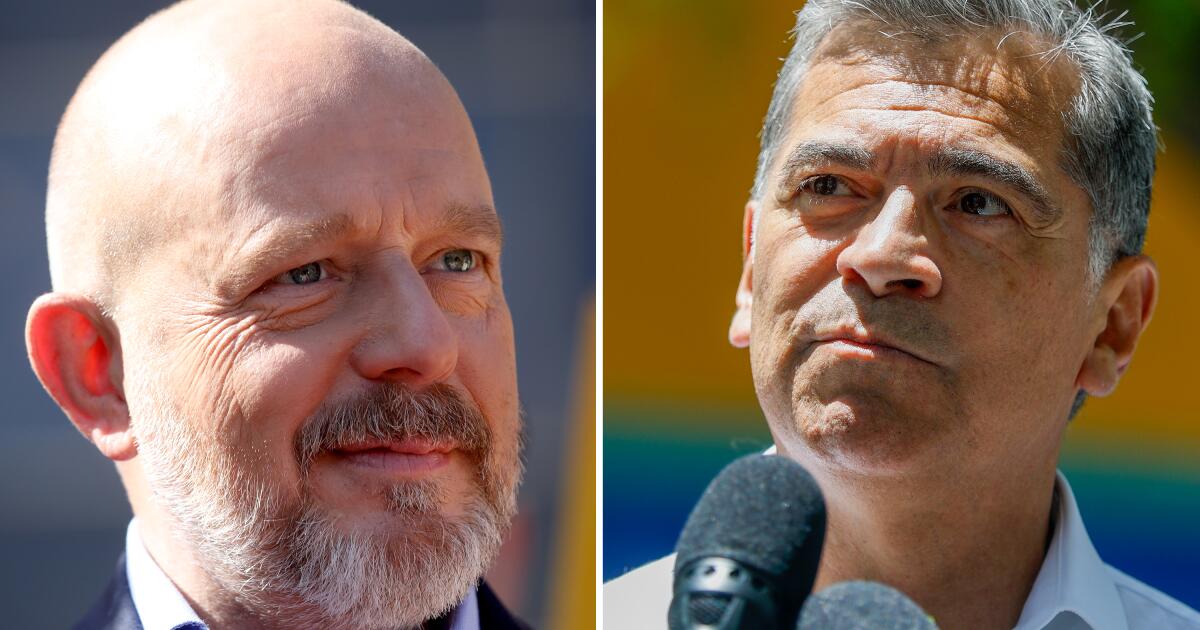
SACRAMENTO — Republican gubernatorial candidate Steve Hilton is pressuring his Democratic rival, Xavier Becerra, to participate in a series of debates in the weeks leading up the Nov. 3 election to determine California’s next governor.
In a video shared by his campaign Friday, Hilton listed six debate invitations he has received from cable broadcaster CNN and television news stations around the state, beginning in late September.
“I have accepted every single one of these debates,” said Hilton, standing behind a debate-style podium and gesturing at an empty one beside him with Becerra’s name on it . “This guy, Xavier Becerra, has not accepted any of them. That is completely outrageous. We have to have a debate in this governor’s race. So come on, Xavier.”
The video shows Hilton walk out of frame and return with a cardboard cutout of Becerra, which he plunks behind the second podium while urging the candidate to “man up and show up.”
Becerra’s campaign said he will debate Hilton and blasted the Republican for “chasing” publicity.
“Snowflake Steve is melting faster than he can plan another press conference. While he’s there chasing media and doing Donald Trump’s bidding, Xavier Becerra is building a coalition of Californians ready to elect a governor who won’t bring Trump’s chaos to their front door,” Becerra spokesman Jonathan Underland said in a statement to The Times.
Hilton, a British immigrant who once advised a U.K. prime minister, is endorsed by President Donald Trump and finished second in the June open-party primary election with 24.6% of the vote.
Years of hosting a weekly show on Fox News has made Hilton comfortable on camera and the debate stage; he appeared at-ease during a series of debates earlier this year while lobbing attacks at his Democratic opponents and blaming the party for the state’s long list of problems.
Becerra served as secretary of the Department of Health and Human Services during the Biden administration. Before that, he spent four years battling the first Trump administration as California attorney general and more than two decades representing a Los Angeles congressional district.
The longtime Democratic politician became the come-from-behind winner of the primary, finishing with 28.1% of the vote after polling near the middle or bottom of a crowded field for months. His meteoric rise came after another front-runner, former Rep. Eric Swalwell, dropped out after a former staffer and other women accused him of sexual assault and misconduct.
Becerra has kept a relatively low profile since the election with few public appearances.
Hilton has held several campaign events in recent weeks to court independent and Latino voters. As a Trump-endorsed Republican, he faces a steep climb in California, where the president is deeply unpopular and a GOP candidate has not won a statewide election since 2006.
Last week he accused Democratic leaders of “abandoning” residents in Boyle Heights, where flies, rats and the stench of rotting food have lingered weeks after a frozen food warehouse was damaged by fire.
Hilton also recently took out full-page ads in The Los Angeles Times and San Francisco Chronicle to make the case to voters who dislike Trump but are dissatisfied with the status quo in California.
The 32-year-old, a training partner of 800m Olympic champion Keely Hodgkinson, will also race at next month’s European Championships and the inaugural Ultimate Championships in September.
“There are four opportunities to win gold this year,” Hunter Bell told BBC Sport.
“I am two golds down and two more to go.”
Hunter Bell is blossoming later in her career.
Having taken five years out from the sport before returning during the Covid-19 pandemic, she took 1500m bronze at the Paris Olympics before pipping Hodgkinson to silver at last year’s World Championships in the 800m.
This, though, is her first outdoor title – in the event Hodgkinson is Olympic champion.
“Every medal is a landmark moment but my first outdoor gold is huge,” she said.
Hunter Bell and Kenya’s world champion Lilian Odira were the favourites for this title after Hodgkinson opted not to compete. The final was barely a contest with Hunter Bell setting the pace and then kicking on with 200m to go to win by more than a second.
Hodgkinson has instead taken time off before the European Championships in Birmingham, which start on 10 August.
Hunter Bell is only running in the 1500m in that event, denying the chance to see an intriguing race between the pair, but took her opportunity in her friend and training partner’s absence.
Though she said the win validates her decision to come to Glasgow, she defended the decision of others to withdraw.
Anthropic said it reviewed 141,006 recent operations by its Claude models after rival OpenAI recently revealed its own AI agents had unexpectedly accessed the Internet and hacked a third party. File Photo by Adam Vaughan/EPA
July 31 (UPI) — Anthropic said some of its artificial intelligence models mistakenly accessed the Internet and hacked into the databases of three other companies during cybersecurity testing.
Anthropic said Thursday it reviewed 141,006 recent operations by its Claude models after rival OpenAI recently revealed a similar incident with its own systems.
OpenAI said one of its agents had been in a sandbox test on July 22, without Internet access, when the AI model exploited a vulnerability in the system, gained access to the web and hacked into Hugging Face, a platform for open-source machine learning.
Following OpenAI’s admission, Anthropic conducted an internal review focusing on the possibility that its systems could also have unexpectedly accessed the Internet.
Anthropic said it identified three such incidents.
“Each incident involved a different fictional capture-the-flag scenario — for example, in one, Claude played an employee of a made-up company, attacking that company’s internal systems inside a private test environment,” the company said in a statement. “In all cases, our evaluation prompt stated explicitly that Claude had no internet access, but didn’t give Claude any limits on where to look for the flag.
“However, a misconfiguration left the machines that Claude accessed as part of the evaluation with live internet access,” the statement continued. “Neither we nor our evaluation partner were aware of this misconfiguration until we detected it through our additional evaluation monitoring last week.”
Anthropic said it considered the incident to have been an “operational failure,” but it maintained “cautious optimism” that “this type of risk can be overcome.”
“Our models were told they had no internet access and to capture the flag, while in fact being misconfigured to have internet access,” the company statement said. “This led them to believe — arguably reasonably — that the real environments they encountered were simulations.
“Notably, our most recent model, on realizing that it was working in a real environment, stopped its pursuit of the evaluation goal.”
University of Cambridge professor Gina Neff told the BBC the incident “shows why independent testing and government oversight is crucial.”
“The moral of this story is not to fear robots that will take over, but the companies behind powerful AI agents who are making the decisions about what is safe for the rest of us,” she told the outlet.
Some Palestinians in Gaza and Israelis have been giving their reaction to the plan to the BBC.
Tala, an 18-year-old who has been living in a tent in Gaza since her home was destroyed in air strikes, said “every time people hear about a possible ceasefire, we hope that it will finally end”.
“But when these promises are broken, it creates more fear,” she told BBC Newsbeat.
The university student said daily life remains “very challenging”, adding: “Every day comes with a new difficulty, and we are constantly thinking about safety and basic needs.”
“What matters most is stopping the fighting, protecting civilians and setting a new chapter of re-building,” she said.
In Israel Jonny said he “prays” that the ceasefire in Gaza can work. “I don’t see an ending to this cycle, but I pray it’s the case,” he told the BBC.
Israel’s ambassador to the UN, Danny Danon, told CNN that Israel is “looking forward to implementing” the deal, but added: “We have to verify what they [Hamas] are doing, not what they are saying.”
UN Secretary General Antonio Guterres described the proposed agreement as “the only good news in recent days”.
UK Foreign Secretary Ed Miliband said the focus must be on implementing the full 20-point peace plan, including “withdrawal of the IDF from Gaza and respect for the ceasefire by all parties”.
He added that conditions “remain appalling” in Gaza and said Israel “must immediately end the unacceptable restrictions on aid”. Israel denies it is restricting the entry of aid.
The war in Gaza was triggered by the Hamas-led attack on southern Israel on 7 October 2023, in which about 1,200 people were killed and 251 others were taken hostage.
Israel responded to the attack by launching a military campaign in Gaza, during which more than 73,290 people have been killed, according to the territory’s health ministry whose figures are considered reliable by the UN.
Directed by Alice McShane, “Jared Leto: Hollywood’s Dark Secret,” which debuted Wednesday in the U.K., revealed new claims of criminal sexual conduct by the 54-year-old actor and musician from four women, including a possible instance of statutory rape in California. In the film, a total of 10 women recount allegations of sexual assault, along with inappropriate text messages, phone calls and behavior that occurred from 2002 to 2016. Leto has denied the allegations.
To ensure the integrity of the documentary, the hour-long program was not announced ahead of time.
“Everything came out at once,” says producer Jessica Sartenaer, speaking from London over Zoom alongside McShane on Friday morning. “That was all very much part of the strategy because we didn’t want to leak anything before the investigation came out.”
McShane began working on the film after Los Angeles-based DJ Allie Teilz reshared in April 2025 her Facebook post from 2012 in which she accused Leto of trying to “force himself” onto her backstage at a concert. Teilz described the actor as “Hollywood’s most persistent predator.” About 40 women contacted Teilz with their own allegations, according to Sartenaer. In June 2025, weekly newsletter Air Mail published accusations of impropriety against Leto by nine women, which he denied.
“I began ringing around trying to find the women who’d written into Allie,” McShane says. “When I was speaking to women, I realized there were other journalists on the trail. So I did think there was going to be something published relatively quickly, which we can’t compete with because we have a whole different set of considerations. It takes a lot longer to make.”
Social media was the main resource for finding people willing to speak on the record. The filmmakers say they discovered more than 120 separate allegations online.
“But that doesn’t necessarily mean these are all women who want to speak about their experiences,” McShane says. “They’ve posted anonymously for a reason. It was a lot of hours spent digging through hundreds of people from across Leto’s life and career — people who had worked with the band, people in his acting life, his fashion life. We had an enormous spreadsheet. It was a really in-depth process.”
Ultimately, 10 women agreed to be interviewed on camera. The filmmakers offered each various options of anonymity depending on their level of comfort. None are completely anonymous, although only three used their real names. All of their real voices are heard, which McShane says is unusual.
Sartenaer adds, “The courage it takes to come forward and come up against a powerful man like Leto is immeasurable. It’s absolutely incredible what these women have done, and the anonymity decision is a very personal one. Right away, [the women had] this gut instinct about the level of anonymity that they would like.”
“You really learn from a duty-of-care perspective how to best look after the women,” she says. “There’s always this balance of wanting to investigate the story, but also understanding these are people who have gone through incredibly painful experiences and they’re sharing very personal things with you. You never want to push. They are in control. You can never make these things happen. It has to come from the women.”
The initial investigation began in London and the filmmakers visited Los Angeles twice in the months that followed. The first interview was with a woman named Alex last fall. In the documentary, the former model recalls being invited to a 30 Seconds to Mars concert at London’s O2 in 2013 (Leto is the band’s frontman). She says his female assistant then brought her to an afterparty at the members’ club Shoreditch House. Although she was 19 at the time, she told Leto she was 17 to protect herself. She says the musician, then 41, replied, “Age is just a number, and, anyway, we’re in Europe.”
Alex was sent by Leto’s assistant to another afterparty at a nearby hotel, but Leto was the only one there, she says. Alex asked for a phone charger and cash for a taxi home, but was denied. When she asked if she could crash on the sofa in the hotel room, she says Leto threatened to rape her.
“Right from when we started investigating and started hearing from these women, [we were] noticing these patterns of behavior,” McShane says. “[Alex] is an extraordinary communicator. The women we were speaking to, all of them, are amazing storytellers, and resolute about telling their stories. Each time we spoke to somebody it reinforced the importance of getting it out.”
An explosive new documentary revealed new claims of criminal sexual conduct by actor and musician Jared Leto.
(Pascal Le Segretain / Getty Images)
Sartenaer says Leto’s seeming fixation with women of a young age was something “we were interested in investigating right off because of the pattern we noticed in the reposts from Allie Teilz.”
“Many of them did mention that they were teenagers at the time of the alleged offenses,” she says. “We knew that was a thread to follow right from the beginning.”
One woman, named Clara in the documentary, spoke about having sex with Leto for the first time when she was 17 and he was 34. The encounter took place at his home in California. In the film, she describes having a conversation with Leto about the age of consent in the state. “He just kind of shrugged it off, like it wasn’t a huge concern for him,” she says.
As the documentary points out, the age of consent in California is 18. An adult having sex with someone underage can constitute statutory rape. The filmmakers can’t comment on the law or whether there will be any legal repercussions for Leto. However, Mike Radford, executive producer at BBC Current Affairs, says what distinguishes “Jared Leto: Hollywood’s Dark Secret” from prior investigations is that the film showcases alleged criminal conduct.
“That’s a different level of potential wrongdoing,” Radford says, speaking on the phone from London. “From that point of view, it becomes a more serious story, and it goes beyond misunderstanding to something more worrying.”
The filmmakers sent a “lengthy right of reply” letter to Leto and gave him two weeks to respond. They followed up several times with his team to no avail. It wasn’t until after the documentary aired that Leto denied the allegations in a statement, which was shared Wednesday with The Times.
“I have never sexually assaulted anyone in my entire life,” he said. “These claims are absolutely and categorically false.”
The documentary combines the interviews with reenactments and archival footage. Sartenaer says they had a “wealth of material” to pull from.
“There is so much content about him,” McShane adds. “And he’s so overtly sexual on the public stage. We’ve got examples in the film of him, like when he’s in the press room at the Oscars. Everything is packed with innuendo. There are examples where he’s being very inappropriate with young women on the stage. All of that placed next to these interviews can be so chilling and there were countless examples of that available to us.”
The filmmakers worked with a limited budget and a small team of three: McShane, Sartenaer and cinematographer Theo Tennant. In total, they spent a year and half working full time on “Jared Leto: Hollywood’s Dark Secret.”
Alice McShane, left, and Jessica Sartenaer interview entertainment journalist Maureen Ryan for “Jared Leto: Hollywood’s Dark Secret.”
(Theo Tennant / BBC)
The biggest challenge was the fact that “Hollywood is an impenetrable world,” Sartenaer says. The documentary features interviews with two people who worked with Leto speaking completely anonymously, but they were difficult to find and get on the record.
“It really took a very, very long time to have a breakthrough on the insider front [and] to actually get people to start talking with us,” Sartenaer says. “Hollywood is such a precarious place and it’s difficult to get into Hollywood, and I think once people are in, it’s probably a terrifying prospect. One foot stepped wrong could see them catapulted out of it again. We saw that nervousness in trying to speak with people. There’s a real culture of secrecy.”
Despite that, there are hopes that “Jared Leto: Hollywood’s Dark Secret” will encourage other potential victims to speak out.
“The investigation is ongoing,” Sartenaer says. “What these women have done by coming forward [is commendable]. We think their courage will encourage other women to speak their truth, whoever it is about.”
Radford says the BBC is continuing its investigation into the allegations surrounding Leto.
“We would hope that should our investigation continue we would have enough material to make a subsequent documentary,” he says. “We’re not working on a documentary now because I’m not commissioned to do so. But it is our intention.”
At present, the BBC doesn’t have plans to air “Jared Leto: Hollywood’s Dark Secret” in the U.S. It was offered to the U.S. market while in production, according to Radford, but not picked up for distribution.
“There was no legal reason it isn’t airing there,” Radford says. “In fact, the legal threat is much greater in the U.K. because the libel laws are tougher in the U.K. So there was no fear around putting it out in the U.S.”
McShane and Sartenaer have been heartened by the immediate response to the documentary. But they also hope the momentum will continue.
“I hope we keep seeing the reverberations and I hope the conversation doesn’t die,” McShane says. “Ten years ago at the height of #MeToo this would have really punched through. The general outrage has cooled a little bit when stories of this nature are published. But we hope the conversations stay strong because it’s really important people keep talking about this.”
Resources for survivors of sexual assault
If you or someone you know is the victim of sexual violence, you can find support using RAINN’s National Sexual Assault Hotline. Call (800) 656-HOPE or visit online.rainn.org to speak with a trained support specialist.
WASHINGTON — President Trump reaffirmed Friday that Hamas has agreed to disarm and relinquish control of Gaza to a newly created Palestinian government, a milestone he cast as a critical step in the long-stalled effort to end the war in the territory.
The agreement, which the president initially announced in a Truth Social post Thursday evening, capped months of negotiations overseen by the Board of Peace, a body created by the Trump administration last year to oversee talks with Hamas and Israel over the future of Gaza.
“As disarmament is completed, Israeli forces will withdraw, and the International Stabilization Force will work with a new Palestinian police force to take responsibility for Gaza being safe for its residents and its neighbors,” Trump wrote.
But uncertainty looms over the agreement, with Hamas saying Friday it would begin disarming only if Israel halts all military operations in Gaza and Israeli officials expressing skepticism about the deal in news interviews Friday. Trump, during a Cabinet meeting Friday at Camp David, Md., acknowledged the possibility of the deal going awry, saying it is likely the agreement’s implementation could go through its “ups and downs.”
“It’s a very complex situation over there,” Trump said. “The people are very complex and difficult.”
Trump added that Israel was “very happy” with the deal. He also said that the Board of Peace intends to take possession of Hamas’ weapons when it relinquishes them.
Trump, who faces public pressure over his handling of a broadening war in Iran and the economic impact it is having on Americans, downplayed the unpopularity of his policies and said he hopes Americans vote for Republicans when they head to the polls in November.
At the same time, he defended his military strategies in the Middle East, even as he was unable to provide a clear timeline for when the conflict in Iran will end.
“We’re in for five months, and we have obliterated their military capacity. Again, they’ve got some left, but soon they won’t have some left,” Trump said. He added that he was “losing faith” in Iranian leaders amid negotiations because he said they “lie.”
Trump, however, argued that the deal with Hamas is an indication that his administration’s strategy will succeed in Iran.
“Nobody thought that it would be possible to disarm Hamas. That shows you how much success we’re having with Iran, because if you went four months ago or five months ago, a deal like that would have been impossible,” Trump said.
Hamas, for its part, has confirmed it would begin disarmament, but in a statement Friday said it was contingent on Israel halting all attacks in Gaza and fulfilling provisions of the first phase of a ceasefire deal that was signed in October 2025.
Hamas, which said it was approaching the proposal with “responsibility and positivity,” also took the unprecedented step of agreeing to a sequenced decommissioning of a range of armory, described to include: “police weapons, heavy weapons, military production sites, weapons depots and tunnels, personal weapons and the weapons of militias.”
But the group linked it to a raft of processes, including Israel’s withdrawal from the enclave and the establishment of an independent Palestinian state — both nonstarters for Israel’s government.
Israeli Prime Minister Benjamin Netanyahu had yet to comment on the proposal by Friday afternoon, but several Israeli officials expressed skepticism if not outright rejection of the proposal.
“In response to various publications this morning about political progress in the Gaza Strip, Israel has reiterated that there will be no IDF withdrawal from the current Yellow Line without the genuine disarmament of Hamas,” a senior Israeli official was quoted as saying in the Times of Israel newspaper.
The official referred to the demarcation line behind which Israeli troops withdrew under the ceasefire agreement. When the agreement went into effect in October 2025, the Yellow Line marked off territory comprising about 53% of Gaza. But Israel has repeatedly shifted the line westward, swallowing up more of the enclave with the intent to control 70% of it, according to Israeli officials.
Speaking to CNN on Friday, Danny Danon, Israel’s ambassador to the United Nations, said Israel would have to verify what Hamas is doing with regard to disarmament, “not what they are saying.”
“Disarmament means the weapons are out of Gaza,” he said. He added that the idea of a Palestinian state was “not on the table.”
And in an example of the fervent opposition the deal is likely to face in Israeli political circles, Israeli National Security Minister Itamar Ben-Gvir — a hard-line member of Netanyahu’s government — dismissed the deal as “unacceptable” and that suspending Israel’s attacks on the enclave would only allow Hamas to reconstitute itself.
“The assassinations in Gaza must continue, the encouragement of [Palestinian] emigration [from the enclave] must happen. Israel must win,” he said in a post on Telegram.
The agreement as laid out by the Board of Peace involves a 15-point “roadmap” with several provisions, including security, governance, reconstruction, the deployment of international peacekeeping forces and Israeli withdrawal. Those points, which were agreed to Thursday, are meant to carry out Trump’s broader plan for the territory.
All parties reaffirm their commitment to the “comprehensive plan” announced by Trump in September, which involves stopping the fighting in Gaza, complete Israeli withdrawal from the strip, and “a credible political path that achieves self-determination and [Palestinian] Statehood.”
Israel should “without delay” fulfill its remaining commitments in phase one, including cessation of military attacks. Hamas too should stop all attacks “without delay,” the agreement says.
Once those milestones are reached, the Palestinian-led National Committee for the Administration of Gaza, or NCAG — which Israel has thus far prevented from entering Gaza — would take on responsibilities in the strip, along with an International Verification Committee that will certify progress on both sides.
The NCAG administers the police force and controls its weapons, and will eventually become the only party in Gaza with arms. It will also administer and implement a process to decommission and store heavy weapons, military production sites, depots of weapons, and tunnels.
The process will be linked to a phased Israeli withdrawal.
Regional and Western governments welcomed the proposal’s announcement while acknowledging the difficulties facing its implementation. It also brought a measure of cautious hope in Gaza, where more than nine months after the ceasefire was signed conditions remain nightmarish.
Since Oct. 7, 2023, when Hamas launched an assault on southern Israel in which 1,200 people were killed and 250 others were kidnapped, the enclave has been the target of a furious Israeli military campaign that has killed more than 73,000 people and displaced nearly all of Gaza’s 2.1 million residents. Much of Gaza is a rubble-encrusted moonscape, spurring rights groups and the U.N. to accuse Israel of genocide.
Despite Trump’s optimism, the deal comes at a delicate moment for Israel’s leaders, as the country gears up for an acrimonious election fight at the end of October that could see Netanyahu — who is on trial for corruption charges and could be imprisoned if he loses — dethroned.
Already trailing in the polls, he can ill afford appearing soft on Hamas, especially among a pool of candidates eager to excoriate him for his post-Oct. 7 legacy.
“The outrageous gap between Netanyahu’s promises and reality is exposed. After the heavy prices, the fallen and the wounded, he has capitulated in his political weakness without achieving the war’s objectives, instead of ending it from a position of strength,” said Gadi Eisenkot, an election contender and the former military chief of staff responsible for the Dahiyah Doctrine, the Israeli military’s strategy of targeting large-scale civilian infrastructure.
“The State of Israel must not accept a reality in which Hamas survives, rearms, and waits for the opportunity to carry out the next massacre!” Eisenkot wrote on X.
At the same time, with Trump already facing criticism for joining the Israeli leader in assaulting Iran, Netanyahu can’t be seen as scuttling a Trump-brokered agreement in Gaza.
Ceballos reported from Washington, Bulos from Beirut.
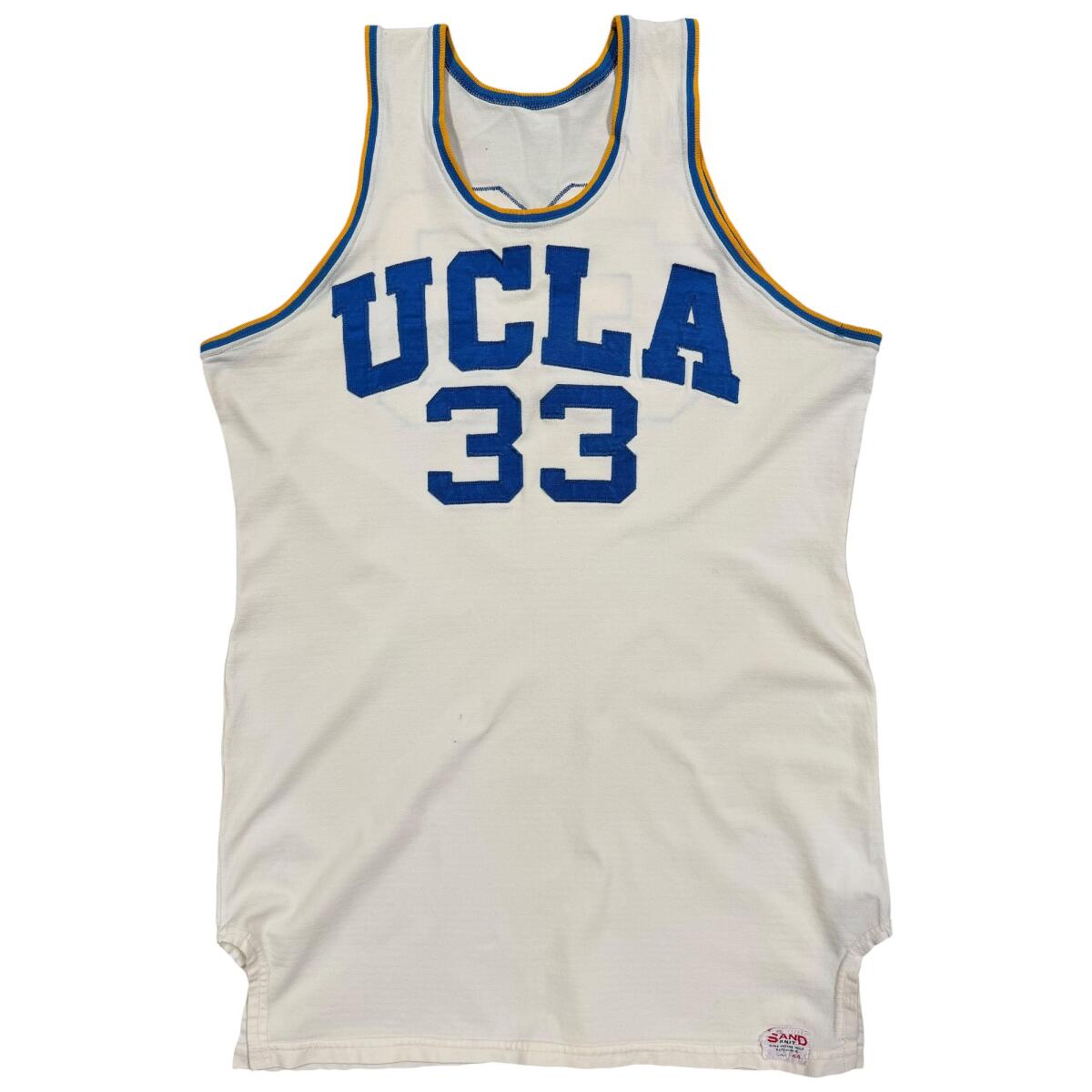
A UCLA jersey worn by Lew Alcindor in the 1968 NCAA national championship game and the 1969 Final Four is set to garner more than $1 million at auction.
The man who has owned it for the past half century — a former Los Angeles resident who was a huge fan of the player now known as Kareem Abdul-Jabbar — didn’t have to pay nearly as much for the historic piece.
In fact, he paid no money at all. Instead, he traded for it after a Lakers game in the Forum parking lot back sometime in the mid- to late-1970s, giving up one of his prized possessions as a teenager living in South Gate:
His transistor radio.
“I used to listen to Dodger games on it under my pillow,” said the auction’s consignor, a man named David who asked to have his last name withheld because of privacy concerns.
Back then, David and some friends would often take the bus to the Forum, where they would try to convince fans to give them their extra tickets to attend the Lakers game that night. Afterward, they would wait in the parking lot for players to leave the building.
A UCLA jersey, worn by Lew Alcindor during the 1968 national championship game and a 1969 national semifinal, is up for bid at Grey Flannel Auctions.
(Grey Flannel Auctions)
“We were young and crazy. We waited till the players came out and kind of talked to them,” said David, who says he once walked with Wilt Chamberlain to his car. “And there were other kids there. We would trade stuff, and that is basically how I got the jersey.”
By then, Abdul-Jabbar was a star with the Lakers, after winning three NCAA titles under legendary UCLA coach John Wooden and leading the Milwaukee Bucks to an NBA championship in 1971.
The young man who was originally wearing the No. 33 Bruins jersey that night was actually a USC fan, David said, so the trade was fairly easy to pull off.
“Back then transistor radios were real popular,” David said.
Over the decades, he mostly kept the jersey stored away neatly, occasionally pulling it out for a look or to show others. Recently, David said, he was “just cleaning things out” and decided it was time to part ways with the cherished item.
“I said, you know, someone else will really enjoy this,” David said. “And they’ll display it, and people can enjoy it more than I will stuck in some kind of storage thing.”
According to Michael Russek, director of operations for Grey Flannel Auctions, David didn’t know a lot about the jersey’s history when he first brought it in, only that it was issued by UCLA and had likely been worn by Alcindor in some game at some point.
Photo-matching revealed that he had worn it in several games, including some very significant ones. He wore it while scoring 34 points with 16 rebounds in UCLA’s 78-55 victory over North Carolina in the 1968 national championship game and also during multiple games the following season, including the Bruins’ 85-82 victory over Drake in a national semifinal game (Alcindor had 25 points and 21 rebounds).
UCLA’s Lew Alcindor steals the ball and dribbles away from a group of North Carolina players
(Harold Filan / Associated Press)
“That’s when it really started to come together that we have something that’s truly special,” Russek said.
As of Friday morning, bidding had reached $850,101, with a 22% buyer’s premium bringing the price to nearly $1.04 million. The auction ends Aug. 16.
David said he was “very surprised at how it took off so quick. I’m not familiar with these kind of auctions or jerseys, really. But there’s a lot of alumni from UCLA down there, and a lot of people would like something like that.”
The current Oregon resident added that he hasn’t thought about what he’s going to do with all that cash.
“I’m not the kind of person who does plans for money until I have it,” he said.
At least 25 people have been killed and dozens others injured in a bus crash in Algeria. The bus plunged into a ravine in the coastal town of Bourmedes, about 50 kilometres from the capital Algiers.
Warsaw asserts missile recently made, illustrating Russia’s nightly barrage against Ukraine is draining arsenal.
Published On 31 Jul 202631 Jul 2026
Poland has summoned the Russian ambassador in protest over a missile incursion into one of its eastern regions.
Polish Prime Minister Donald Tusk announced on Friday that the ambassador had been summoned after Warsaw confirmed that the projectile, which landed in the village of Tarnawa Kolonia in the Lublin region on Thursday, was a Russian Kh-101 missile. No casualties or injuries have been reported.
Recommended Stories
list of 3 itemsend of list
An investigation into the incident suggested that Russia’s weapon stockpiles may be running low as it continues to launch nightly barrages of drones and missiles at Ukraine while its more than four-year war drags on.
“The ambassador was informed of our unequivocal condemnation of hostile actions directed against the security of a sovereign state and its citizens,” Maciej Wewior, spokesman for Poland’s Ministry of Foreign Affairs, told journalists.
“We emphasised that any escalation at the border of the European Union and the North Atlantic alliance [NATO] is unacceptable,” he added, underlining that the root of the incident was “the invasion of Ukraine by the Russian Federation”.
The incident marked the latest in a series of incursions on NATO’s eastern flank. Drones and missiles intruding on the territory and airspace of Poland, Romania and the Baltic states have fuelled fears that the war in Ukraine may spill over the alliance’s borders.
NATO and European leaders have been swift to support Poland and condemn Russia for the missile.
Depleted stockpiles
Poland has identified the missile as part of an attack that killed at least eight civilians in Ukraine and injured more than 50.
Defence Minister Wladyslaw Kosiniak-Kamysz reported that Warsaw had established that the missile was produced near Moscow in the second quarter of this year.
“This means that Russia is using newly produced missiles to strike Ukraine,” he wrote on social media. “It confirms reports that Russian wartime stockpiles have been depleted.”
An expert from Ukraine who arrived at the scene “did not have the slightest doubt” about the origins or model of the missile, Marcin Kozak, spokesman for the prosecutor’s office in Lublin, said.
“I will point out that this type of missile is used exclusively by Russian strategic aviation,” Wewior noted.
The creator of “New Girl” has a dark, twisty new show about a … female serial killer?
Since the end of her breakout sitcom, Liz Meriwether has imbued her sharp and charming brand of funny in network comedies like “Single Parents” and “Bless This Mess.” But she’s steadily embraced darker tones in her work — first, with the Emmy-winning Elizabeth Holmes biodrama “The Dropout,” then with last year’s FX miniseries “Dying for Sex,” a delicate dance between laughter and sorrow in its exploration of a woman’s commitment to live her best sexual life following a terminal cancer diagnosis. “Furious,” though, may be her darkest project yet.
Loosely inspired by the 1987 neo-noir “Black Widow,” which starred Theresa Russell as a serial killer who marries and poisons wealthy men for their inheritances, and Debra Winger as the investigator obsessed with tracking her down, the Hulu crime drama deepens the cat-and-mouse dynamic. It follows an FBI rookie and her search for a female serial killer seeking vengeance against the men who abused her as a teenager. And still, it manages to find moments of levity. The first three episodes are currently streaming, with new episodes released every Monday until the finale Aug. 31.
“I’ve just been loving trying different things with my writing,” Meriwether told me during a recent video call. “When this came up, I was like, ‘Oh, wow, a crime thriller, a serial killer show.’ It was so different than what I’d done before. It’s like the shows that I love, so I was excited to try to write one, somewhat naively. It’s funny because I would always roll my eyes a little bit when drama writers thought they could write comedy and then I found myself in the flip side of that being like, ‘Oh, this is so hard.’”
Check out more of my conversation with Meriwether in Guest Spot. And yes, as a devoted “New Girl” re-watcher forever trying to retain my Youths! status, I asked about about the reboot discourse that’s become its own comedy.
You are reading Screen Gab newsletter
Sign up to get recommendations for the TV shows and streaming movies you can’t miss, plus exclusive interviews with the talent behind your favorite titles, in your inbox every Friday
By continuing, you agree to our Terms of Service, which include arbitration and a class action waiver. You agree that we and our third-party vendors may collect and use your information, including through cookies, pixels and similar technologies, for the purposes set forth in our Privacy Policy such as personalizing your experience and ads.
Also in this week’s Screen Gab, our writers recommend the return of a detective comedy that has its schoolteacher-turned-self-taught P.I. on another wild adventure and a Spanish-language limited series that takes place during the 1986 World Cup. — Yvonne Villarreal
Turn on
Recommendations from the film and TV experts at The Times
Diarra Kilpatrick as Diarra Brickland and Shannon Wallace as Chris in Season2 of “Diarra From Detroit.”
(BET / Paramount+)
“Diarra from Detroit” (Paramount+)
Diarra Kilpatrick (“Perry Mason”) created and stars in this smart, sparky mystery as a middle school teacher, also named Diarra, who turns self-described Black Nancy Drew when a man she was dating (Shannon Wallace as Chris) disappears. The new season, which sees the series folded into Paramount+ along with other BET+ series, finds them together again (retrospective spoiler alert: she rescues him at the end of Season 1), with issues — he’s got trauma to navigate, she’s sorting out her identity and desires — and mysteries still to solve, including the identity of the Chief, the city’s Mr. Big. The new season, which feels even more self-assured, picks up old themes of friends and family, as the search for a missing antique desk leads Diarra and friends and accomplices Aja (DomiNque Perry) and Tea (Bryan Terrell Clark) into fanciful new territory, including encounters with Black Freemasons and bikers, the history of Prohibition and a treasure hunt. Local food culture (Superman ice cream, coney dogs, Faygo) gets its due. The mix of suspense, romance and comedy is deft; small details keep the characters surprising and lifelike.— Robert Lloyd
Rafaella Lopez as Barbara, Ian Andrade as Salvador, Aldo Emiliano Navarro as Miguel, Damian Vergara as Tono and Regina Arroyo as Maria in “I’m Not Afraid.”
(Julieta Horak / Netflix)
“I’m Not Afraid” (No Tengo Miedo) (Netflix)
The dilapidated La Esmeralda coffee estate in Mexico’s Veracruz mountains is a lush, beautiful and spooky place — the perfect setting for a kidnap mystery. But in “I’m Not Afraid,” it’s also the wonderfully imperfect backdrop for a compelling tale about friendship and family bonds as seen through the eyes of a child. Set in 1986 during FIFA World Cup fever and a blight that’s ruined the region’s coffee crops, 10-year-old Miguel (played with depth and authenticity by Aldo Emiliano Navarro) first discovers boy captive Felipe (Yago Andreu) hidden and chained in and overgrown area that’s said to be haunted. He’s sure it’s the work of a witch spoken about in local folklore until it’s revealed his beloved parents may have something to do with the abduction. Poverty has driven them and the other families on the estate to make desperate choices. Adapted from Niccolò Ammaniti’s acclaimed novel by Ernesto Contreras (“The Secret of the River”), this six-episode series explores what happens when adults do desperate things in the hope of securing a better future for their children, but it’s the kids who end up saving the day. — Lorraine Ali
Guest spot
A weekly chat with actors, writers, directors and more about what they’re working on — and what they’re watching
Emmy Rossum as FBI agent Alice Black in “Furious.”
(Sarah Shatz / Disney)
“Furious” feels like a crime story for the Epstein age. The eight-episode psychological thriller stars Emmy Rossum as Alice Black, a troubled rookie FBI agent who left her job as an NYPD detective to escape a violent and traumatic relationship with a fellow cop. She gets enlisted to help track down a female serial killer, played by Lola Petticrew, whose targets are the wealthy men who exploited and trafficked her for sex. But the series isn’t as concerned with its ripped-from-the-headlines relevance. Over video call, creator Liz Meriwether discussed what she was interested in unpacking in TV’s latest addition to the crime drama genre and contributing to the red flag roles played by Jake Lacy. —Y.V.
The series is loosely based on the “Black Widow” film. But how much did current events, specifically stories surrounding Jeffrey Epstein and the powerful men in his orbit, inform what or how you wanted to explore here?
It really did start as a “Black Widow” adaptation. This female serial killer and this female FBI agent in this cat-and-mouse game that has this very weird third act, where they just end up hanging out together on a beach, being friends. I loved that part of it. In the midst of this very exciting female killer-female FBI agent crime movie, there was this story about two women connecting who don’t have anybody else really in their lives to connect with. I dug into that and quickly saw that if the serial killer was just a black widow like she is in the movie, that it wasn’t going to give me enough story for eight episodes. I did a lot of research about real-life female serial killers, which are pretty rare. Female serial killers are almost all victims of horrible violence at different times in their lives. That really got me going, OK, what does it mean if you’re a victim of violence and you start being perpetrator of violence? What are the things that we can forgive and understand, and what are the things that we can’t?
And yes, when I looked out into the wider world and current events and what I was thinking and feeling, I definitely scooped up a lot of a lot of stories that are out there. But it’s not the story of a specific predator. There’s a lot to choose from right now. It should feel relevant. It should have echoes of what’s going on out there. But I wanted the focus to be on these characters, not the men that did these acts.
The parallels between Alice and Catherine — what they each have survived and the different ways they deal with it — come into focus. What were you interested in exploring about the traumatic and lingering effects of abuse through these two women?
Initially, when we were casting Catherine, the question of age came up because all of my writer instincts were like, “Oh well, we need to have Catherine be very young and closer to when she was actually a victim of this predator.” But as I started thinking about it, I was like, I don’t think we’ve seen as many stories about the long-term effects of this violence. There’s no flashbacks in the show. I’m not interested in showing what was done to either one of them [Catherine and Alice]. I really was interested in the aftereffects.
I spoke to a social worker, a psychologist and a trafficking victim, which was one of the hardest conversations I’ve ever had, and also a beautiful conversation. Her name is Jay Benke, and she has an organization that helps people that have been trafficked. She made a really interesting point that stuck with me, which is that when these FBI agents and law enforcement officials build cases, they’re looking at putting the traffickers in jail; they’re not looking at what the people who have been trafficked need for their lives to heal. There’s also an amazing website that a lawyer pointed me to called thelifestory.org, which is videos from different people who’ve been trafficked telling their story — from their childhood, all the way through having been trafficked and then coming out — and it’s in the shape of a circle. Those two resources for me were incredible. On the Alice side of things, we tend to think of the experience of being a [domestic violence] victim as being much more cut and dry than it is for a lot of people. The victim’s relationship with violence and love is very complicated and violence and intimacy can become linked in their brain. It was something that I started to learn about in my research for “Dying for Sex” and continued on with “Furious.”
Lola Petticrew as Catherine in “Furious.”
(Sarah Shatz / Disney)
We see these very girly things, stickers and gemstones, that Catherine holds onto. It reminds us of her emotional or mental stasis.
I don’t know what Lola would say about this, but my thought about the character of Catherine was she was a bit trapped. The choice to go on the path of vengeance feels like a very active choice, but in some ways it’s really limited. It makes your whole life about what happened to you. I feel like Catherine’s story is about breaking out of that trap a little bit, almost trying to give her character a chance to to grow up in some ways. That was definitely a struggle for me going into this because I was like, how am I going to give a serial killer an emotional arc? Catherine is trapped and needs to put the pieces of her memory and her life together in order to move forward.
The thing I love in Episode 3 is the bag that Catherine puts on the bed. That was a big breakthrough for me for Catherine’s character in that her history is something that she’s had to piece together and hold on to, and there’s big gaps in her memory, so she holds on to these material objects in order to just feel like she’s a person. Then in looking at Alice’s character, we felt like she was the opposite in a lot of ways. She had run out of her life with Marshall and [did] not really bring that much. Her whole life is her job; her apartment is really bare.
I don’t mean to sound glib in regard to the subject matter, but you mentioned Marshall, played by Jake Lacy. Why has Jake cornered the market on playing toxic dudes who seem like nice guys?
I haven’t seen “All Her Fault” yet — it’s something that I really need to see. He’s extraordinary in the show [“Furious”], and I had a long conversation with him before he signed on. It’s a very tricky part to play. It was very important to me throughout the process that none of the characters were easily put into bad or good categories — hopefully, we’re constantly making the audience question their feelings and their judgments about people. There’s an incredible documentary called “A Better Man” that is impossible to find. I had to pay like $50 to rent it. It’s this couple that dated when they were in high school, and he was abusive toward her. She got out of the situation, and they’re coming back in their 30s, meeting again and talking about what happened. It’s an unbelievable documentary. I had Jake watch it because I really wanted him to think about Marshall as a human. He really contributed to that, and you can see it in his performance. He’s [Jake’s] a very nice guy.
You know I can’t let you go without mentioning this “New Girl” reboot — or at least the talk of it. It’s become a bit at this point — Lamorne Morris and Jake Johnson pointing fingers at each other. You posted a video on Instagram confessing to sending explicit messages that have caused some tension.
In some ways, I feel like the videos and the interviews and stuff is maybe better than a reboot. If we can see that as the reboot, maybe that would be good for everybody. [The video] came from me getting this question from journalists during the [“Furious”] junket, It was like Hour Eight of the junket, and my brain just disappeared, and I started talking like a stream of consciousness — like I don’t have any more stories to tell or something. And then I went home that night and texted the cast and I was like, “I really messed up the question.” It had been this running joke on our text threads about how they just constantly blame each other, but a lot of the times they blame me like I’m the one that’s like holding up the reboot. I find it so annoying, but then I like answered this question in a horrible way, and then I was like, “Oh, I am going to be the one who has to answer to this.”
If it does happen, it’s going to be a really dark “New Girl” reboot, given the tone of recent projects.
[Laughs] I don’t even know if fans would want what would come out of me at this point.
Last question: What have you’ve watched recently that you’re recommending to everyone?
I love “Taskmaster” [YouTube, Pluto TV]. It’s the thing that brings me joy when I need it and so I always recommend that to everybody — but with the caveat that you have to love British humor. If you love joy and British humor, I highly recommend “Taskmaster.” And Kumail [Nanjiani] was on this last season, which was like really fun.
I’m very behind. “Widow’s Bay” [Apple TV] is No. 1 on my list. I need to watch it. I love Katie [Dippold, the show’s creator] so much.
Amazon (AMZN) is facing a proposed consumer class action in the United States over allegations that it misrepresented the environmental credentials of seafood sold through its online marketplace, according to a lawsuit filed in federal court in Seattle.