Born into an African American family with a grim history of enslavement, Marian Anderson was determined from an early age to master the art of singing for the concert hall. A contralto of great range and warmth, Anderson’s abundant gifts as a performer of spirituals, arias and German Leider brought her global fame even as she endured the indignities of racial discrimination at home. Her Easter Sunday performance at the Lincoln Memorial in 1939 in front of 75,000 spectators remains a touchstone of defiance in an age of racial violence.
Anthony Tommasini’s excellent biography of Anderson, “Voice of A Century,” reclaims the singer as a great artist who only embraced her power as a symbol of racial equality much later in life. I spoke with Tommasini about Anderson, Franz Schubert and Albert Einstein.
You’re reading Book Club
An exclusive look at what we’re reading, book club events and our latest author interviews.
By continuing, you agree to our Terms of Service, which include arbitration and a class action waiver. You agree that we and our third-party vendors may collect and use your information, including through cookies, pixels and similar technologies, for the purposes set forth in our Privacy Policy such as personalizing your experience and ads.
✍️ Author Chat
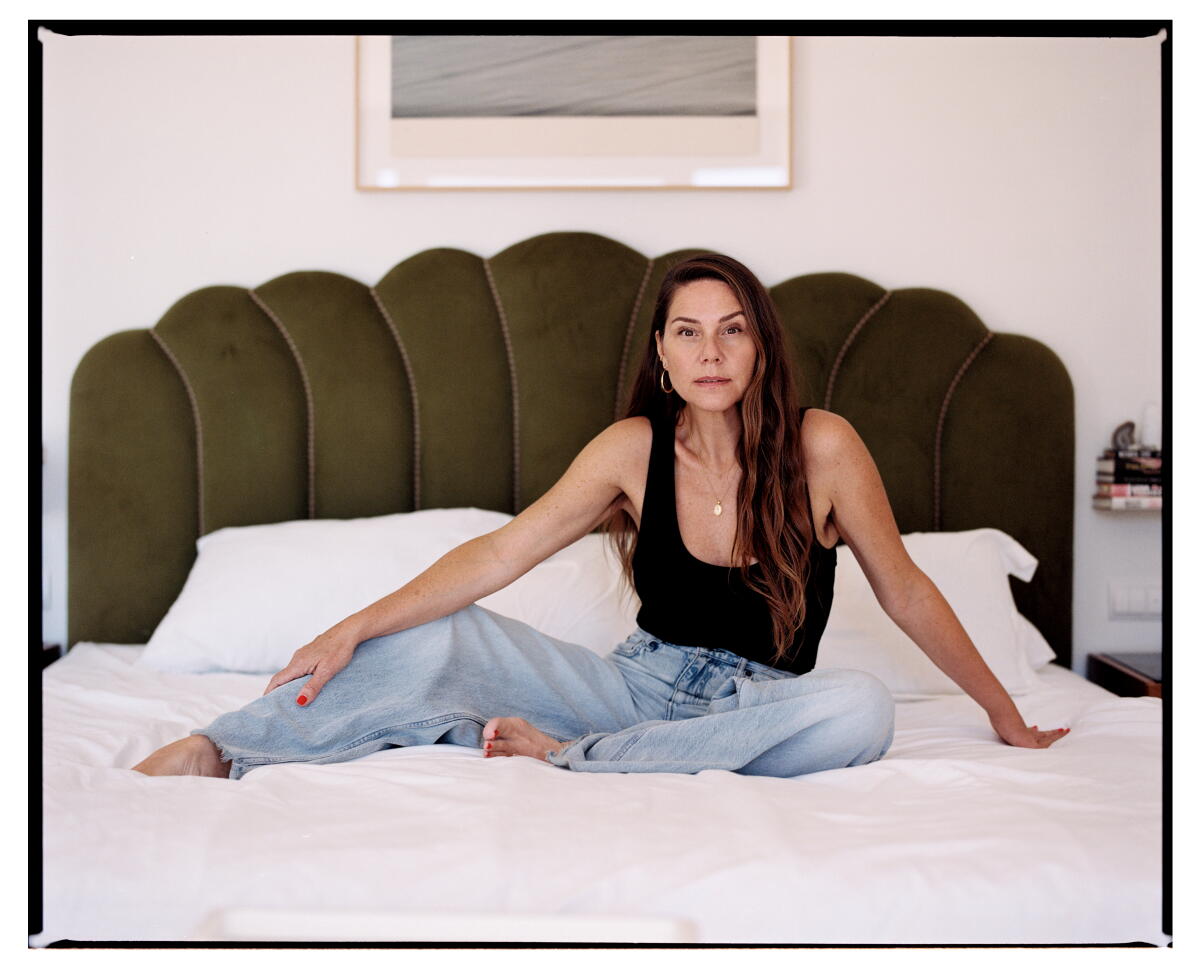
Anthony Tommasini’s biography reclaims Anderson as a great artist who embraced her power as a symbol of racial equality later in life.
(Ahna Tessler Photography)
I feel like people know Marian Anderson in the abstract, but they regard her as a symbol rather than an artist. And among the virtues of your book is that you reestablish Anderson’s legacy as a great singer and performer.
She was a contralto, which is the lowest female vocal register. But that register had such resonance, and she had complete control over it. She also had enormous range; the uncanny, beautiful thing about Anderson’s voice is that when she started ascending even into the soprano sphere, she held those notes so beautifully. They were emanating from below, grounded in that low voice. It made for a mesmerizing sound. I’ve made a playlist to accompany the book.
She embodied this kind of fierce dignity and grace in the face of racial discrimination. But as you point out, she was reluctant to make herself a symbol of the civil rights movement, preferring to let audiences focus on her artistry.
In 1939, she was banned from performing in Washington’s Constitution Hall because of her race, and her manager, with help from Eleanor Roosevelt, arranged a performance in front of the Lincoln Memorial on Easter Sunday. Yet, the night before the performance, she was trying to get out of it. She felt the whole affair had turned into a civil rights demonstration. When it came time to write her memoirs in 1956, she wanted to excise the event from the book. She felt that what she could do is be an example of excellence and possibility for aspiring black artists.
She did play to segregated audiences, even long after she had become a national star.
[This type of segregated performance featured what] was called vertical seating. But she refused to forsake her career, which she had worked so hard to attain, and so she played these segregated shows. Eventually, there was a performance in Virginia which was boycotted, and that sort of broke the trend. She then performed in front of an integrated audience in Florida.
There is an encounter with Albert Einstein, of all people, who counsels her to take a stand against these racist booking policies.
In 1937, she showed up for a concert in Princeton, New Jersey, only to discover she was being refused a room at the Nassau Inn. As it turns out, she had a friend in Princeton who had seen her at Carnegie Hall and had meekly gone backstage to meet her. This was Albert Einstein, who was teaching at Princeton University at the time, and who offered to put Anderson up for the night at his house. He really pressed her on being more outspoken on racial equality.
Anderson played Europe multiple times in the 1930s, right before the rise of Hitler and the Third Reich. As you write, German audiences were blown away by Anderson’s mastery of their music, specifically Franz Schubert’s Lieder, or art songs, which were among Anderson’s most beloved repertoire.
So extraordinary, right? She also made two tours of the Soviet Union during that time. They went crazy for her in the Scandinavian countries, as well. But for the German audiences who are so nationalistic about their Leider, it was confusing. They couldn’t imagine how a Black American woman could sing their music so beautifully.
Anderson was the first Black soloist to perform at the Metropolitan Opera in New York, in Verdi’s opera Un ballo in maschera.
That was really a huge risk and a huge leap for her. She wasn’t a trained opera singer, and she had to dig deep into that material. She was already 58 by that time. There is a radio recording of the performance. There’s this dignity, like she’s calling upon this power. It’s exhausting and it’s draining, but it’s also exhilarating.
This Q&A was edited for length and clarity.
📰 The Week(s) in Books
Book jacket for “Body Language” by Meg Howrey
(Los Angeles Times illustration; jacket from Doubleday)
Marlon James has published his highly anticipated new novel “The Disappearers,” a sprawling story about gay culture in ’80s Jamaica, and Mark Athitakis is quite taken with it. “James is … determined to unwind the cliches of gay fiction: the tragic victim, the heartwarming gestures of solidarity, the blunt porniness,” he writes. “Mere survival will have to be enough for most of these characters; the sense of fear is pervasive, but so is a determination to work through it.”
What’s it like to be the primary dissenting liberal voice on Fox News? Stephen Battaglio found out when he talked to Jesssica Tarlov about her hybrid memoir and self-help book “I Disagree.” “I have a good amount of shyness to me,” she tells Battaglio. “I have a lot of imposter syndrome. I’m constantly in wonder that I ended up getting to do this and that hopefully, am the right person to do it.”
Finally, Emily Wilson, the classicist who has been a lightning rod of controversy over her disparaging remarks in regard to the film version of “The Odyssey,” is going to translate Homer’s epic for a second time, reports Emily St. Martin.
📖 Bookstore Faves
The Hammer Museum’s gift shop is one of the best art book shops in L.A.
(Eric Petschek)
Sure, the Hammer Museum’s gift shop stocks the requisite art-themed mugs, tea towels and tchotchkes, but it’s also one of the best art book shops in L.A. Inside the sleekly designed Hammer Store is a vast inventory of monographs, children’s books and critical texts about modern and contemporary art. In an email exchange, store managers Sara Beattie and Brooke Berlin tell us what museumgoers are buying right now.
Hammer’s store is really the best museum bookshop in L.A. How do you decide what to put on the shelves?
We’re an eclectic bunch of book nerds and love the written word. We start by looking at upcoming programming, exhibitions and the season, and we buy accordingly. And we have a great team that gives us suggestions. We’ve learned to trust our instincts. The Hammer is an experimental institution, and we approach our buying in that spirit.
Do you have patrons that are not necessarily there to check out museum exhibits?
Of course! We’re not only a museum, but a cultural center, which means there’s always something happening — like mindful meditation on Thursdays, or family programming on weekends, or people coming in just to enjoy a meal at Lulu.
What kinds of books tend to do well for you?
Art monographs, especially on contemporary or Los Angeles artists; books about living more conscientiously; and everyone loves a children’s book (even if it’s just to heal your inner child). We love finding unique books that can’t be found elsewhere. Whenever we can, we work with small presses and book distributors. They often make books that can only fully be enjoyed or understood by seeing them in person.
Is there any particular title that is presently selling well?
Why do we still enjoy art books, when we can look at millions of paintings and sculptures on the internet?
Why go outside if you can look through a window? There is a lot of talk of people returning to the analog or physical media, and that includes renewed interest in physical books. BookTok is huge. People love talking about books and showing off their special deluxe book editions on TikTok. Art books by their very nature are deluxe, image filled and thoughtfully designed. A well-produced book is an art object in itself. Nothing beats the experience of paging through a beautiful book. That experience can’t be replicated on a screen.
The Hammer Museum store is located at 10899 Wilshire Blvd., Los Angeles.
Known for being ‘The GC’ on screen and larger than life, viewers will see a different side to Gemma Collins in her new Sky documentary series.
Gemma Collins has not had a lot to celebrate whilst making her Sky series.
Gemma Collins admits she has had “the worst year of her life” which corresponded with a time she had cameras following her every move.
The former TOWIE star, also known by her celebrity persona ‘GC’, and was due to get married to partner Rami and start a family during filming for Sky documentary series called ‘Gemma Collins: Everything. All At Once’. The series was originally called Four Weddings and a Baby, but as Gemma admits “things didn’t go to plan”.
Her relationship with Rami has had issues, the pair have also been sadly unable to conceive, and worst of all Gemma’s beloved mum Joan died at the end of July after several years of health issues. Admitting her life and TV series hasn’t been going to plan, 45-year-old Gemma said: “Mum’s been unwell for sixteen years and I’ve been dealing with that on the side, but her health started going downhill during filming and she passed away last month[actually July 2026].
“My fiancé Rami has also been struggling with his mental health and using alcohol to cope, and on top of that we had fertility issues. It was like drowning. It was the worst year of my life. I couldn’t keep hiding it.
“Being The GC was escapism. I could put the make-up on, get the hair big, and forget what was going on in the real world. But there’s been a real turn in media where people want to see the real me again. They’re sick of the bluff. I’m not afraid and I know I don’t need to deal with all this on my own.”
In the eight part series viewers will see Gemma embark on her fertility journey, and she questions whether she has left things too late, putting her career before having a family. On trying for a baby Gemma says: “Rami and I went to the Portland, and I started thinking maybe there could be a miracle. We could get an egg donor and make it work. But, as you’ll see on the show, it got increasingly difficult.
“I still have Tristan, and my nephews. I’ve known Tristan since he was three: I did his nappies, I gave him his bottles. I love that boy. With my mum gone, I’m going to be the mum of the family now, the matriarch, and I’m really happy and excited for that. If it’s meant to happen, my mum will send it to me, and a miracle will happen. If it doesn’t, I’m at peace with that.”
Gemma admitted she found filming on some days very hard but insisted she had to continue. The other deeply personal issue in the series is the loss of her mum Joan, and Gemma allows the cameras into moments like when she deals like this and when the bravado she usually uses on screen drops.
She said: “The camera crews are at your house and you’re thinking, ‘This is my life, it’s so s**t. How can I let people see it?’. But unless you go through hard times, I don’t think you grow as a person. This was the hardest thing I’ve ever done, but it’s also the thing I’m most proud of.”
On her mum Gemma added: “My mum passed away peacefully, and we were all in the room. She’s come back to me in so many ways already, which gives me great comfort. She comes back to me in spiritual ways and sends me signs. There was this butterfly in the house towards the last few days of my mum living, and it wouldn’t go away. When she passed, Tristan went to me, ‘There’s Nanny’. He went, ‘Nanny, if that’s you, flap your wings ten times,’ and it did.”
* Gemma Collins: Everything. All At Once launches 15 September on Sky and streaming service NOW.
As a young sportswriter studying journalism at the University of Missouri, Seth Wickersham looked to Los Angeles for inspiration. At the campus bookstore, Wickersham bought his first sportswriting anthology, “The Last of the Best,” a collection of columns from the Los Angeles Times’ Jim Murray, one of four sportswriters ever to win a Pulitzer Prize.
Collections of work from Murray, Rick Reilly, Frank Deford and others offered Wickersham a road map for the career he wanted to build — and he has, with 26 years’ worth of work at ESPN meriting an anthology of his own. “Be on That Hill: Stories From the Summits of Sport,” which will hit bookshelves Sept. 22, is Wickersham’s third book. He said assembling an anthology is both “the coolest thing you could ever imagine happening” and “this weird mind warp.”
“When you’re just on a treadmill like I’ve been, the years just go,” says Wickersham, who’s been covering sports since he was hired by ESPN The Magazine straight out of college. “You don’t realize it, but then you take stock of it, and you’re like, ‘Holy cow, I’ve been doing this 26 years …’ It’s surreal to go back and look at it.”
Football has always been Wickersham’s first love — he weaved his journey as a high school quarterback into “American Kings” — but his latest book features stories about a college basketball coach on the job hunt and an NHL enforcer’s attempts to avoid head injuries.
“I’m trying to write about people who have a certain level of inner turmoil,” Wickersham says, “whether it’s Sean McVay after he wins the Super Bowl, or Jerry Jones when he’s threatening to sue the NFL to stop Roger Goodell from signing a contract extension.”
The sports media industry has changed dramatically since Wickersham’s career began. ESPN The Magazine no longer exists. Access to coaches and players is increasingly hard to secure. But Wickersham’s journalistic goals are the same today as they were when he bought Murray’s anthology.
“I want to be a link on a chain,” he says. “It’s hopefully an installment of a body of work that one day might help me be a link on a chain of the best who did this.”
This Q&A was edited for length and clarity.
You’re reading Book Club
An exclusive look at what we’re reading, book club events and our latest author interviews.
By continuing, you agree to our Terms of Service, which include arbitration and a class action waiver. You agree that we and our third-party vendors may collect and use your information, including through cookies, pixels and similar technologies, for the purposes set forth in our Privacy Policy such as personalizing your experience and ads.
✍️ Author Recommendations
In addition to Jim Murray’s anthology, here are some other sports books that have inspired Wickersham.
“The Breaks of the Game” by David Halberstam: This is the Pulitzer-winning Halberstam’s first sports book, following the 1979-1980 Portland Trail Blazers. “When it comes to trying to decode a team, that’s the standard,” Wickersham says.
“Joe Namath and the Other Guys” by Rick Telander: Namath, the Hall of Fame New York Jets quarterback, serves as an example of quarterbacks’ rising celebrity profile in “American Kings,” and Telander is one of Wickersham’s favorite sportswriters. “The portrait he gave of Joe Namath in his twilight was just so rare,” Wickersham says. “I don’t think a book like that has ever been done.”
“When Nothing Else Matters” by Michael Leahy: Another book about an athlete in his twilight. This one documents Michael Jordan’s time with the Washington Wizards. “He worked his tail off as a reporter and really gave a brutally honest glimpse into what it was like to live and play with Michael Jordan the last few years of his career,” Wickersham says.
“The Franchise” by Michael MacCambridge: Wickersham read this history of Sports Illustrated in college. “It really not only gave a glimpse into how so many of these great stories by my heroes … were done,” he says, “but also how those guys got hired at Sports Illustrated. It was like a job road map.”
📰 The Week(s) in Books
Our fall book recommendations answer your call for learning and discovery this season.
(Kissi Ussuki / For The Times)
Our Fall Preview includes 29 books to keep on your radar this fall, as well as television and movies we’re excited about.
This week, we caught up with Raine De Leon, owner of Sons and Daughters Books, a formerly online bookstore that opened a brick-and-mortar location earlier this year. Here’s what they had to say about their IRL location, the local bookshops that inspired them and more.
This interview was edited for brevity and clarity.
Your bookstore began as an online store in 2024. What motivated you to open an online store? How did it grow from there?
A brick-and-mortar was always the end goal, since I wanted a physical space for writers, readers and other artists to come together for events and community building. Originally, the online store was actually an online poetry journal, where I published poets from around the world, wrote reviews, and held virtual readings. I wanted to translate that into an in-person experience.
What other bookstores, in Los Angeles or elsewhere, served as inspiration for the type of bookstore you wanted to open?
Skylight Books in Los Feliz and Village Well Books and Coffee in Culver City really inspired how I wanted the store to feel: warm, inviting and dynamic enough to serve both a neighborhood and a larger L.A. audience. I took inspiration from the Painted Porch in Texas in regard to curating the selection of books in the store. City Lights in San Francisco was also a huge inspiration for not only my store, but my life in general. The place it holds in the history of its community, the history of publishing and the history of poetry are profound, and I am trying to emulate that legacy as best I can.
What inspired the name Sons and Daughters Books?
The poet Charles Olson wrote a landmark essay, “Projective Verse,” in 1950. In it, he talks about poetic lineage and influence, and he says something to the effect of “We are the sons of the poets who came before us,” and that really spoke to me. I expanded it out to “Sons and Daughters,” with that same sentiment, to be a little more inclusive.
What type of selection can people expect at Sons and Daughters Books?
Our selection is almost all new books with focus on fiction, poetry, social sciences and more. We also have a cart of used books out on the floor every day, and on Sundays I bring out two more carts of used books.
For the new books, I selected each book in the store myself. I may not have read every book on these shelves, but I went line by line in our inventory sheets to select books that I wanted people to be aware of. Even though I am the only staff member, our “Staff Rec” table features reviews and picks from those closest to me. I wanted our selection to be extremely specific to me, my loved ones and the community the store is now in.
In the time you’ve been open, what events have been the most popular? Any particular upcoming events you’re excited about?
Our two most popular events are definitely our weekly stand-up comedy open mic night and our thriller book club.
September is our fullest month yet in regard to events, and I’m very excited for a few. We have two book launch events. The one on Sept. 26 is for “Valley Girl Manifesto” by Noelle Cope, a collection of both poetry and prose. The other, on Sept. 19, is for “Anger Is a Gift,” a new poetry anthology from FlowerSong Press. Both celebrate poetry, locality and connection.
Our full events calendar, which continues to grow, also features community workshops, silent reading clubs and more.
Sons & Daughters is located at 7817 Melrose Ave., Los Angeles.