ByMichael R. Sisak, Eric Tucker, Alanna Durkin Richer and Larry Neumeister
Associated Press
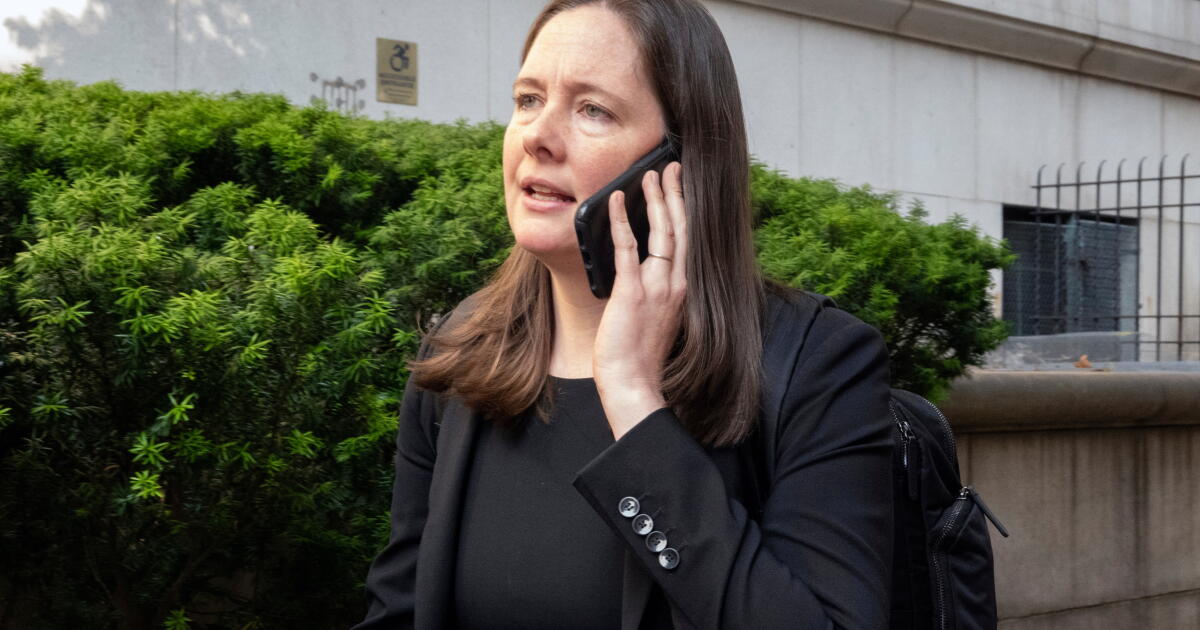
NEW YORK — The Trump administration last year illegally fired Maurene Comey, the daughter of former FBI Director James Comey, from her job as a federal prosecutor in New York, a federal judge ruled Monday.
Maurene Comey, who was an assistant U.S. attorney for a decade, was illegally fired in July 2025 despite her work on some of the nation’s highest-profile cases and consistently receiving “the highest accolades from supervisors and peers alike,” Judge Jesse M. Furman found.
After her firing, Comey sued the Justice Department and others, saying her termination violated the constitutional separation of powers, the 1st Amendment and the Due Process Clause of the 5th Amendment.
She asserted that she was fired because she was the daughter of James Comey, whom President Trump has long viewed as an enemy, or because of her perceived political affiliation and beliefs, the judge noted.
Furman rejected the government’s claim that Comey could be fired because federal prosecutors exercise the president’s “conclusive and preclusive” powers.
He said the government’s claim that Congress is barred from regulating the removal of federal prosecutors “flies in the face of nearly two centuries of Supreme Court precedent.”
Furman added: “Indeed, to accept Defendants’ argument would be to unsettle the very equilibrium established by this Nation’s constitutional system.”
The firing violated the separation of powers, the Administrative Procedure Act and her 5th Amendment due process and statutory rights, the judge ruled.
Furman reserved judgment on Comey’s 1st Amendment claim pending further arguments to be submitted by each side, though he said he was inclined to dismiss the claim because it was largely moot since she is now in private practice and no longer seeks actual reinstatement.
The judge granted Comey retroactive reinstatement and back pay from the date of her firing through Dec. 20 to “make her whole” and ensure that she doesn’t suffer adverse employment consequences for the “unlawful termination.”
Comey’s lawyers, Ellen Blain, Nicole Gueron, Deepa Vanamali and Margaret Donovan, lauded the ruling.
“This hard-earned victory belongs to Ms. Comey, to all civil servants, and to all fighting for the rule of law,” they said in a statement. “As the Court correctly held, to accept the government’s argument about unlimited executive power ‘would be to unsettle the very equilibrium established by this Nation’s constitutional system.’ This decision reaffirms our bedrock system of checks and balances: the President is not above the law.”
The Justice Department didn’t immediately respond to an email seeking comment.
The Justice Department during the Trump administration has fired scores of career employees, including prosecutors and FBI agents, who participated in investigations of President Trump or who were perceived as opposed to the administration’s agenda. Some of those firings have also resulted in federal lawsuits.
The firing of Maurene Comey was seen as particularly personal, given her father’s longtime adversarial relationship with Trump.
The president fired James Comey as FBI director in May 2017 as the bureau was investigating ties between Russia and the Republican’s successful 2016 campaign for the White House. Trump in the years since has repeatedly called for Comey to be jailed, and his Justice Department has worked with mixed success to make that happen.
An earlier criminal case accusing James Comey of having lied to Congress in 2020 was dismissed by a judge who concluded that the prosecutor who filed the charges was illegally appointed. A separate pending indictment charges the former FBI director with threatening Trump through an Instagram photo of seashells in the numerical arrangement of “86 47,” a case he has sought to dismiss that some legal experts have greeted with skepticism.
Sisak, Tucker, Durkin Richer and Neumeister write for the Associated Press. Tucker and Durkin Richer reported from Washington.
A bittersweet homecoming — emphasis on the bitter — propels Polish filmmaker Paweł Pawlikowski’s spare, precise drama “Fatherland,” which takes an episode from the life of Nobel Prize-winning German author Thomas Mann and, with the help of some poetic license, creates a story full of simmering anger and sorrow. Only rarely do the dignified characters allow their emotions to come storming out. When they do, though, the sound seems to reverberate, the tumult of the past ringing in our ears.
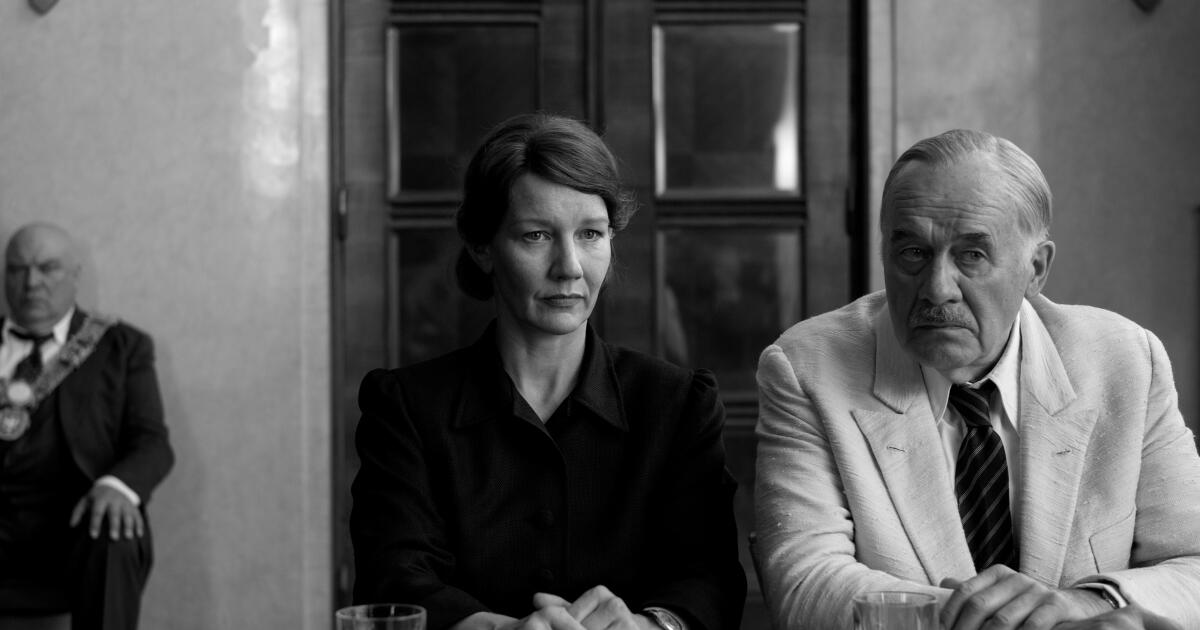
Like Pawlikowski’s previous two features, “Ida” and “Cold War,” “Fatherland” is a period piece shot in black and white in a boxy 4:3 aspect ratio so that the frame resembles an old photograph, although his images contain no hint of nostalgia. It’s 1949, and the 70-something Mann (Hanns Zischler) has returned to Germany for the first time since fleeing to America 16 years prior. Accompanying him is Erika (Sandra Hüller), his daughter and fellow writer, who begrudgingly serves as interpreter, personal assistant and driver. In addition, she’ll offer her brutally honest thoughts on the flowery speeches he will deliver while being honored for his artistry.
Quickly, they discover that while the war may be over, the bombed-out buildings remain, as do the lingering resentments within Germany, which is controlled by the United States in the west and the Soviets in the east. Thomas, an outspoken critic of Nazism, leading to his exile, believes that his public appearances can unite the country he loves. The cynical Erika knows better, convinced he’s a PR tool for a nation hoping to refurbish its tarnished reputation.
Drawing inspiration from “The Magician,” Colm Tóibín’s fictionalized 2021 Mann biography, Pawlikowski uses this trip as a jumping-off point, introducing real-life individuals who were not present and inventing a new central dynamic. (In truth, Thomas traveled with his wife, not his daughter.) But those creative liberties merely accentuate Pawlikowski’s narrative and thematic aims, which, as in “Ida” and “Cold War” include pairing an intimate story with the larger rumblings of postwar Europe. Thomas and Erika arrive in a Germany torn apart and the ruptures within their family are nearly as tumultuous.
The film is haunted by the specter of Klaus (August Diehl), Erika’s brother, who is actually the first person we see onscreen. In a masterful unbroken shot, Klaus is on the phone from France with his sister, expressing his bottomless anguish. “I don’t believe in anything anymore,” Klaus, who is also a writer, declares. “I can’t remember the last time I felt something.” He’s talking about the fractured Germany, but his depression speaks to something closer to home too. Concerned, Erika encourages Klaus to join them. He declines, but his absence — and a shocking later revelation — informs so much of their journey, personalizing the sense of disrepair Thomas and Erika experience.
Working with his usual cinematographer Łukasz Żal, Pawlikowski prefers a static camera, leaving plenty of headroom above the characters so that they feel entombed by their surroundings. The effect is especially disconcerting as this father and daughter navigate glad-handers and former Nazi collaborators in West Germany who are anxious to bury the past. But Thomas and Erika are no fools, coolly telling off smiling Hitler sympathizers during a tony reception. There has been no more satisfying slap in cinema this year than the one Erika lands on a smug German actor, leading to a wicked punchline that shouldn’t be spoiled.
Such moments of barbed humor are infrequent in “Fatherland,” but Pawlikowski wields them like grenades, shattering the stifling niceties enveloping Thomas and Erika. The Germany of “Fatherland” is one of contradictions, with Erika uncovering letters sent to Thomas’ hotel that savagely accuse him of betraying his country, despite state officials eager to embrace him as a symbol of the nation’s creative and cultural excellence. In contrast to the gorgeous monochrome visuals, this is a land that stinks of complicity and delusion — of opportunists desperate to scramble onto the right side of history. Pawlikowski has said that he keeps returning to the past in his films because addressing our modern ills directly would be too daunting. But whether in Frankfurt or, later, Weimar — where Soviet officials are as keen to canonize Thomas — this father and daughter aren’t simply driving through Germany but taking a tour across fascism’s long shadow, which still darkens the world.
Both leads are exceptional, with Zischler articulating the great writer’s arrogance and willful denial of the inconvenient truths he wants to ignore. As for Hüller, this is another superb performance in a series of them in recent years. Where Thomas is aloof and proud, Erika is prickly and sardonic, excellent tools for protecting a surprisingly fragile heart. Their journey to Germany will heal neither the nation nor the divisions within this family. You can’t go home again and in the case of the characters in “Fatherland,” maybe you shouldn’t try.
‘Fatherland’
In German, French, Russian and English, with subtitles
NEW YORK — “860,” the title of Billy Crystal’s tremendously moving new Broadway show at the Imperial Theatre, refers to the address of his house in the Pacific Palisades that was destroyed in last year’s fire.
Crystal re-creates the events of Jan. 7, 2025, as the wildfire that began in the Santa Monica Mountains started making its way down toward his home at 860 Chautauqua Blvd. Video clips of the escalating emergency are shown as a cardigan-clad Crystal, standing in a facsimile of his home office (the conjuring work of scenic designer Scott Pask), re-creates the horror of having to decide what to take with him as the evacuation orders come in.
The photos, awards and other memorabilia aren’t just souvenirs of his storied career. They are pieces of the life he built with his wife, Janice, and their two daughters as well as a record of the friendships that made Hollywood feel like a welcoming community for a wide-eyed Long Island kid.
“860,” impeccably directed by Scott Ellis, occurs in a series of flashbacks. Crystal brings us back to what it was like as he and his wife made their way across a jam-packed Sunset Boulevard in separate cars to the safety of their daughter’s house as smoke and flying embers turned their small-town paradise overlooking the Pacific Ocean into an apocalyptic war zone.
A baseball superfan, Crystal gives us the play-by-play as though he were calling a World Series game that had taken an unimaginable turn. Hana S. Kim and Kylee Loera’s video design turns us into eyewitnesses of that terrible day.
I was in Los Angeles when the Palisades and Eaton fires broke out, but I was far enough away not to feel the immediacy of the threat. Crystal had me in full fight-or-flight mode, as if I were in the car behind him going 5 mph along the only route out of danger.
Billy Crystal in “860” at the Imperial Theatre on Broadway.
(Avery Brunkus)
Making a show about a recent public trauma isn’t easy to pull off, but Crystal has managed it as perhaps only he could. “860” is a meditation on loss, but it’s also a theatrical memoir of his multifarious career as a comic, actor, filmmaker and celebrated Oscar host. He returns to his days on “Soap,” the controversial nighttime parody of a daytime soap opera created by Susan Harris that featured Crystal in the role of Jodie Dallas, one of TV’s first openly gay characters.
Crystal was living in an apartment in then-smog-filled Hancock Park with his wife and daughters when he was filming the show’s third season. The couple wanted to move to an area that had better air quality for their children, and someone asked if he knew about the Pacific Palisades.
“It was a small town, good schools, beautiful afternoon breezes from the nearby ocean, one main street with some shops, a deli named Mort’s that had lean corned beef and a lot of people who didn’t put mayonnaise on pastrami,” Crystal recounts.
The house they came to see wasn’t for them, but a for-sale sign at 860 Chautauqua caught their eye. The real estate agent told them that the owners “were very motivated to sell because they were very motivated not to be together anymore.”
It was December 1979 when, with a 30-year mortgage in hand, they moved into the house. Two women who grew up at 860 (“Imagine the twins from ‘The Shining’ — but they’re 55”) paid a welcome call to say how pleased they were that their former home was back in the hands of show people.
The original owners were vaudevillians who had a mind-reading act and were passionately into the occult. They socialized with the comic luminaries of their day, including humorist Will Rogers, who would regularly stop by on his horse. Behind a secret wall, Crystal found a hidden room with a cork board that had clippings that suggested maybe it wasn’t such an accident that the house became his.
Crystal, the emcee of all emcees (as his performance at this year’s Hollywood Bowl Opening Night once again proved), tells the story of his home with buoyant humor and charm, turning loss into living memory. To set up the meaning of what was destroyed, he takes us back to his roots, starting with his graduation in 1970 from NYU, where he took a film production class with a young Martin Scorsese, who would critique his work in a manner that Crystal, the Al Hirschfeld of celebrity impersonators, hilariously captures.
Crystal’s comic timing was honed in the clubs doing stand-up. Jack Rollins, the producing titan who managed Mike Nichols, Elaine May and Woody Allen, imparted some wisdom after watching Crystal’s act. Crystal thought he killed it that night, but Rollins told him that he failed to “leave a tip,” meaning reveal something about himself in his jokes.
Opening for Blood, Sweat & Tears in Scranton, Pa., a huge opportunity, Crystal faced a hostile audience. But he won the crowd over and thought maybe he could really make this stand-up comedy thing work. But then he was sent back out onstage after lead singer David Clayton-Thomas decided he didn’t want to perform and had to win the jeering music fans over again — and then a third time. While driving home on the New Jersey Turnpike to his wife and baby that night, he felt his future in front of him, having found not only his calling but also his voice.
Crystal’s luckiest break may have been in not being drafted during the Vietnam War, but a close second was being invited to do his Howard Cosell-Muhammad Ali routine at a televised gala for the boxing legend. Crystal not only crushed it but he made a lifelong friend in Ali, who was already his personal hero.
Bonds forged in comedy, like the one he had with Robin Williams, deepened into a lasting brotherhood. Norman Lear cast Crystal as Rob Reiner’s best friend on “All in the Family,” and life imitated art. Their successful collaborations — crystallized in the fake orgasm scene at Katz’s Delicatessen in “When Harry Met Sally” — were an outgrowth of their telepathic comic rapport.
In reviewing his famous life, Crystal reanimates parts of our own. And it’s this shared history that helps us understand what he lost when his house went up in flames. The magnitude of the devastation is made personal for all of us.
But just when you think things can’t get any worse, something completely unthinkable happens. For Crystal, this occurred at the end of 2025, his annus horribilis, when Reiner and wife Michelle were found stabbed to death at their Brentwood home.
Some things are too painful for words, and Crystal knows that sense cannot be made from senselessness. But he’s already told us so much about this unique friendship that nothing more needs to be said.
Crystal doesn’t wallow in grief or self-pity. He bears the weight of his losses with his wit and generous spirit to help us carry the weight of our own. (When he walked into a store to buy a new wardrobe after the fire, he reports, the salesclerk looked at him and said, “Let me guess … Ozempic?”)
No one gets out of this world without becoming a master of the art of losing, to invoke the poet Elizabeth Bishop. But laughter can sustain us through our losses, and Crystal thinks it’s no accident that one of the few things that was salvaged from the ashes of his home was a stone from his garden with the word “laughter” engraved on it.
I found Crystal’s previous solo show “700 Sundays” to be a touch mawkish, so I wasn’t expecting to be so powerfully moved by “860.” But this is just a brilliantly conceived and executed piece, and I hope it yields Crystal another Tony Award.
But even more, I hope the production finds its way home to where it belongs, Los Angeles. We could really use the fortifying laughter.
NICOLE Kidman’s daughter Sunday Rose has addressed being labelled a “nepo-baby” after she posed for Vogue.
The 18-year-old model has followed in her famous parents’ footsteps after launching her career on the runway at age 16.
Nicole Kidman’s daughter Sunday Rose addressed nepo-baby criticism as she posed for VogueCredit: Sebastián Faena/VogueThe 18-year-old has followed in her famous parents’ footstepsCredit: Getty
Sunday – who is the daughter of Hollywood actress Nicole, 59, and country singer father Keith Urban, 58 – made her cover debut for Vogue Germany this month and opened up about getting opportunities due to her parents.
“I’m very aware that I’m given opportunities that not everyone can have, and I’m truly grateful to be able to take advantage of them,” she said.
Sign up for the Showbiz newsletter
Thank you!
“When I’m at work, I make sure to always give my best, never come to work with a negative attitude, no matter how tired or jet-lagged I may be, and treat everyone with respect.”
Sunday often steps out with her famous parents as she continues to make a name for herself in the industry.
What is pornography? We tend to think of it monolithically, as something created by and for hetero men, reinforcing sexist stereotypes and machismo behavioral codes. For over 20 years, Erika Lust has been fighting against those preconceptions, creating adult content that expands the parameters of pornography while approaching it as something akin to mainstream independent cinema. Her subscription-only website features content that leaps over gender boundaries, and has pulled in fans around the globe.
In her new book “Lust,” the filmmaker makes a convincing case for an ethical, intelligent porn that can expand our ideas about sex and intimacy. I recently chatted with Lust about sex, power and the internet.
You’re reading Book Club
An exclusive look at what we’re reading, book club events and our latest author interviews.
By continuing, you agree to our Terms of Service, which include arbitration and a class action waiver. You agree that we and our third-party vendors may collect and use your information, including through cookies, pixels and similar technologies, for the purposes set forth in our Privacy Policy such as personalizing your experience and ads.
✍️ Author Chat
Are we calling it pornography? Adult content? What do you call it?
For me, it is pornography. What I do is pornography because I work with explicit images, but I also work with cinema, and I strive for cinematic vision and craft. I don’t just pick up a camera, film people having sex and put it online. It is a whole creative process. So when I talk about my work, I see myself first as a filmmaker whose subject matter happens to be pornography.
What compelled you to create adult content?
I was born in Sweden, and I became a feminist quite young. I studied political science in college. When I was exploring my sexuality in my late teens and early twenties, I became more and more interested in finding out about our desires and who we are and what we are attracted to. And then I started to watch porn [and] felt horrible watching it. I felt a little bit troubled by the images. Why are all these female characters just there to please the man? It wasn’t about the women, it wasn’t their stories, and that made me feel a bit angry. When I talked to other women about this, they felt the same way. I felt there was something to explore there. Of course at the time, I had no idea I would be doing this for a living.
There are a lot of tired tropes about adult content that you debunk in your book. That the performers come from broken homes and are forced to do things on camera without their consent and so on.
It’s so easy for people to think that in the sex industry there’s going to be exploitation. But my experience is the opposite. Because people I work with dare to talk about sex. The conversation is over the table, not under the table. The people I have met and worked with in this business are intelligent and smart, with a very clear plan of their future. They take care of themselves, their bodies and their sexuality.
In “Lust,” Erika Lust debunks tropes and stereotypes surrounding the production of pornography.
(Jahel Guerra)
How has technology affected how we think about sex?
There’s a lot of sex anxiety going on in our society, and I think that also has a lot to do with technology and how it has taken over our lives. And I’m reading more articles about the intimacy crisis, and the fear that people have of connecting with other people, and young people who are not having sex. Technology has gone wild. It has taken over our lives. People are afraid of other people, of friction, of negotiating boundaries. They don’t know how to explain their own desires so they would rather talk to robots. I think we need to disconnect from technology, and think more deeply and talk to each other — not just about sex, but about everything.
Given the ubiquity of free adult content on the web, how do you compel customers to subscribe to your site?
I think people that subscribe are looking for something completely different, something more elevated, and they understand that that kind of film costs money. I can’t shoot without paying my crew and my staff. Shooting with an Alexa camera is not the same thing as picking up my mobile phone. And then I need crew members who can work with that technology, I need gaffers and electricians, I need to pre-light the set the day before, and so on. The budgets that I’m working with are really budgets for independent films. We have a staff of 45 working with me and my husband.
It’s the last artistic underground, really. I did notice that Bruce LaBruce, a filmmaker whom you mention in your book, has a collection of his films presently being shown on Criterion Channel.
I never think it’s going to become mainstream. My true hope is that we can at least be known as an independent porn culture making quality films that aren’t exploitative. That people understand that it exists, and that it’s an option apart from the mainstream porn websites.
This Q&A was edited for length and clarity.
📰 The Week(s) in Books
Chuck Lorre has written a memoir, “Sitcom,” about his career
(Christopher Patey / For The Times)
How does Bonnie Garmus follow her blockbuster 2022 novel “Lessons in Chemistry”? With “Peck & Peck,” a “whimsical and winning ode to the written word, and send-up of the pretensions of its gatekeepers,” writes Leigh Haber.
Chuck Lorre, one of the most successful and prolific writers and producers in TV history, has written “Sitcom,” a memoir in which he reveals, among other things, his decade-long tenure as a card-carrying Scientologist. Writing the book “was cathartic,” he tells Mary McNamara. “There’s a little bit of therapy going on in this book. I got to say some things out loud that in the past I would have kept hidden because they were embarrassing.”
At a time when it seems like anger and hostility has become the fossil fuel of everyday life, author and conflict expert Priya Parker’s new book “The Art of Fighting” argues for civil and spirited debate as a balm for our troubled times. “As a conflict resolution facilitator for the last 25 years, I can say that healthy community needs healthy conflict,” Parker tells Margaret Wappler.
Finally, Maddie Connors talked to Michael Douglas about his new memoir, “One Helluva Ride,” a book about his life and career. “Your 80s may be a good time to share,” the 82-year-old actor tells Connors. “People interested in movies, we give them a certain insight into the process, and maybe they could learn something. For others, it’s just gossip.”
📖 Bookstore Faves
Formerly a pop-up bookstand, Reverie Bookstand is a brick-and-mortar bookstore on Sunset Boulevard in Echo Park.
(Reverie Bookstand)
Located on a busy stretch of Sunset Boulevard in Echo Park, Reverie Bookstand is doing its level best to buck the AI tsunami, selling used books created by humans in a variety of subjects. In an email exchange, owner Tim Horner tells us what’s selling in his store.
What prompted you to open the store?
I was driving by and I saw it was for lease. I had been selling books for some years as a scout for other bookstores, and also at flea markets where I would pop up with a ”bookstand.” So it wasn’t a brand new idea; I had always dreamt of it. The owner of the building was a part of a small team that ran a collective DIY venue and gallery called Echo Curio around 12 years ago. It has since shut down, but Echo Curio was a place I came to as a young person back in the day. So the landlord was sympathetic to the cause and the idea of having a bookstore here. So I went for it.
What genres does the store tend to emphasize?
I specialize in poetry, mysticism, occult and out-of-print secondhand books and paper goods. All the books here in the store are used books. So far it hasn’t been difficult to keep the shelves full, I know some spots.
Who are you customers?
The clientele here is diverse. Students, working-class people, artists, local neighborhood families, musicians and people from all walks of life who simply love books and reading. A thing I am grateful for is how kindhearted and empathetic (most) book people are. It gives me a lot of strength and motivation everyday to know that my book-buying addiction is not in vain but is actually going to some strange use in helping connect people with literature.
What’s selling right now?
The things that are selling the most are things California-related and writers from California especially — Joan Didion, John Steinbeck, Octavia Butler.
Why do we still need bookstores when AI can write books for us?
I think bookstores are relevant still because we all need some type of human connection for our well-being, and books encourage that behavior. Whether it’s connecting with a space and people or connecting with authors, a bookstore is a place where you can actually browse for something and be in the moment with other people that are possibly interesting. The gesture alone validates itself in that you’re telling the world. I am open to ideas, things, places, people, and along the way you find a book you didn’t know existed, a nicer copy of something you already have, or a book you’ve been meaning to read but had forgotten about. And until this point there is no tangible way to browse for these things I have online yet and hopefully ever.
GARETH Gates has shared a rare photo of his stunning teenage daughter Missy as he proudly revealed she has passed her driving test.
The Pop Idol star, 41, took to Instagram to celebrate the milestone, sharing a picture of his 17-year-old daughter holding up her practical driving test pass certificate.
Gareth Gates shocks fans as he shares snap with stunning rarely-seen daughter, 17Credit: Instagram/@gareth_gatesGareth proudly showed fans Missy had passed her driving test.Credit: Instagram/@gareth_gates
Alongside the snap, Gareth wrote: “My beautiful (not so little) princess passed her driving test today. Well done @missygates_x Daddy is super proud of you”
The singer, who usually keeps his daughter out of the spotlight, added: “How do I have a daughter that’s 17 and can drive?!”
Sign up for the Showbiz newsletter
Thank you!
He also shared a second picture of the pair posing together beside a swimming pool at sunset, with Gareth wearing a white shirt and shorts while Missy opted for a grey top and flowing white skirt.
Fans were quick to congratulate the teenager, with one commenting: “Well done missy”
The singer usually keeps his daughter out of the spotlightCredit: instagram/garethgatesGareth shares his only daughter with ex-wife Suzanne MoleCredit: James Curley
Another follower recalled meeting Missy as a baby, writing: “I remember the day she was born- I was at your Joseph and the amazing technicolour dream coat show! Congratulated you backstage”
At the time, he joked: “I must, however, warn the good British public that Missy moo now has wheels so watch out!”
Gareth shares his only daughter with ex-wife Suzanne Mole and has previously spoken about her hopes of following in his footsteps with a career in music.
He revealed that Missy is a talented singer and dancer, explaining: “She’s got a great voice. She’s a great dancer. The more that she gets to be in and around that music world, the more that she learns.”
When it comes to City Section sports royalty, the Johnson family at Crenshaw High is in a class by itself.
Marques Johnson started the legacy in 1971, igniting the rise of Crenshaw basketball before moving on to UCLA and the NBA. He’s a City Section Hall of Famer. His son, Kris, was a City Section player of the year and led Crenshaw to consecutive state titles.
Now the last of the Johnsons for at least awhile — 6-foot-1 Shiloh Johnson — has transferred to Crenshaw from Windward. She’s the daughter of Marques and is a top junior girls’ basketball player.
Marques has been a strong supporter of the Crenshaw community and authored the book, “Crenshaw Chronicles.”
Just seeing him in the Crenshaw gym this winter with all the City and state championship banners on the walls will be something to enjoy. And look for Shiloh’s siblings and cousins to drop by, too.
“It’s always a great feeling,” Marques said.
Shiloh is now walking through the halls where her grandfather was a teacher, her aunt was a counselor and four of her five siblings went to school.
This is a daily look at the positive happenings in high school sports. To submit any news, please email eric.sondheimer@latimes.com.
Tobey Maguire closed off one chapter of his love life by helping ex-wife Jennifer Meyer enter a new one.
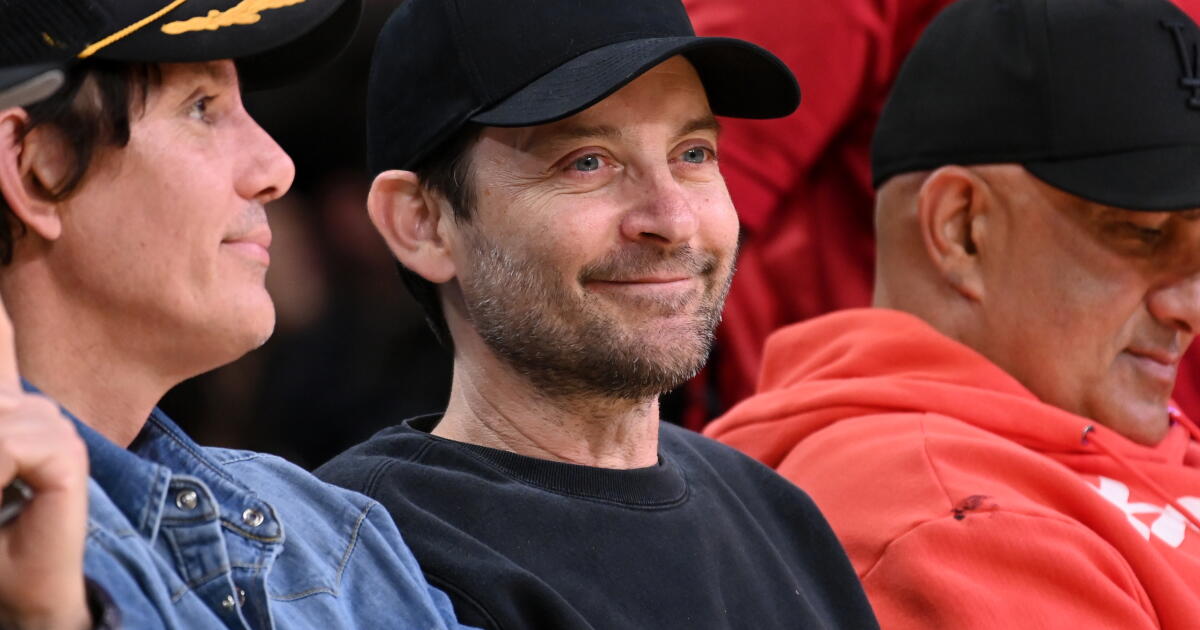
The “Babylon” and “Spider-Man” star, 51, officiated Meyer’s marriage to music executive Geoff Ogunlesi at the Four Season Resort Lanai in Hawaii over the weekend, according to photos published Sunday by TMZ. Maguire can be seen pronouncing Ogunlesi and jewelry designer Meyer, 49, husband and wife as the newlyweds share a kiss in a photo from the luxury golf course wedding. Other photos published by TMZ show Amazon’s billionaire owner Jeff Bezos and wife Lauren Sánchez Bezos and Leonardo Di Caprio were among the guests present for the ceremony.
Maguire and Meyer’s meaningful reunion came more than a week after they finally settled their divorce. The former spouses, who share two teenage children, officially terminated their marriage on Oct. 1, according to court documents filed in Los Angeles County Superior Court. The exes married in 2007 and announced their separation in 2016.
Meyer and Ogunlesi reportedly began their romance in the summer of 2023 and made their relationship red-carpet official at the Baby2Baby Gala later that fall. They got engaged in August 2024 and in December 2025, Meyer announced she was expecting her third child. The pair welcomed their first child together, a baby girl in June.
The designer has since shared scenes from her latest chapter of motherhood on Instagram, posting photos of herself cradling her daughter, taking the baby out on the town and spending time with her loved ones, including her daughter with Maguire and her now-husband.
“Last few months…. 10000000000/10,” she captioned an Instagram carousel of photos in August.
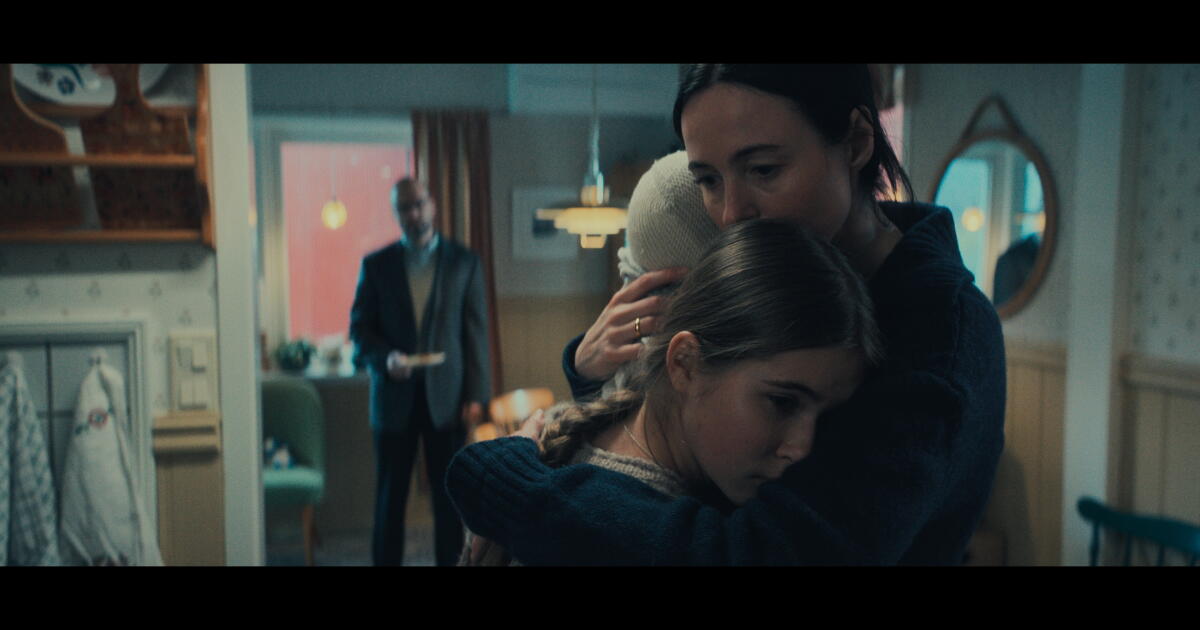
“We’re all hiding a little bit of our personality inside,” says director Cristian Mungiu of the characters in “Fjord,” a searing drama inspired by real Norwegian child welfare cases. “The film speaks about a limit of intimacy, after which you will need to make a choice not knowing precisely what happens. This is why I wanted the film to start at the end of a conversation in which you don’t really know what kind of punishments exist in this family.” Lighting and shallow focus deepen the uncertainty of a mother (Renate Reinsve) comforting her daughter (Vanessa Ceban) and a father (Sebastian Stan) waiting to have his say: “You need to admit when you’re wrong.” “You see the role of a mother who tries to play this more empathic part, while the father is the one playing the role of the educator who imposes his rules,” Mungiu says. “This shot speaks about our way of storytelling and designing everything to be ambiguous enough about their relationship. At the same time, this also speaks about a theme in the film: this idea that there isn’t anything like right and wrong and the truth. And we all believe that the truth belongs to us. And this is the problem.”
N-DUBZ rapper Dappy filmed himself driving in his car with his daughter, despite pals claiming he does not have a licence.
The star, 39 — real name Costadinos Contostavlos — has filmed himself behind the wheel of a Mercedes and posted a number of clips online.
Dappy filmed himself driving in his car with his daughter, despite pals claiming he does not have a licenceThe N-Dubz rapper filmed himself behind the wheel of a Mercedes and posted a number of clips online
In one video seen by The Sun, Dappy is driving and swearing at the camera with his 11-year-old with him in the passenger seat.
Insiders said the footage, posted on his Instagram account, had been passed to Herts Police.
Sign up for the Showbiz newsletter
Thank you!
Drivers face six points and a £200 fine if they hold or use a phone while driving.
A source said: “Dappy won’t be getting points on his licence as he doesn’t have one. He never passed his test.
In one video, Dappy is driving and swearing at the camera with his 11-year-old with him in the passenger seatDappy became a household name after he and his cousins Tulisa and Faser formed hip-hop group N Dubz in 2000Credit: Rex
“He thinks he’s above the law and can do what he likes but driving without a license and filming himself is putting innocent members of the public at risk.
“He needs to be stopped if not for himself but for others.”
The Sun have contacted Dappy’s representatives for comment.
Dappy became a household name after he and his cousins Tulisa and Faser formed hip-hop group N Dubz in 2000.
‘Dappy won’t be getting points on his licence as he doesn’t have one. He never passed his test’, revealed an insider‘He needs to be stopped if not for himself but for others’, warned a source
They got their big break in 2008 with debut album Uncle B.
Since then they have landed four UK Top Ten singles and four UK Top Ten albums.
Actor Chad Lowe returned to Instagram on Thursday for the first time following the Sept. 29 death of his 13-year-old daughter Fiona.
The actor shared a spiritual message from author and psychologist Gerry Hussey through Instagram Stories.
“When you ask yourself the deeper, bigger questions,” Hussey said on Olivia Hunt’s podcast “On Healing” after being asked about God, “and you move beyond the human existence — as through meditation or something — as you experience transcendental experience, [you find] we are connected to everything that is.
“And there’s nothing there, but peace and love,” he continued. “When we die. Where do we go? We return to a state of peace and love.”
Fiona’s manner of death was ruled a suicide by the Los Angeles County Medical Examiner in a report released Oct. 2. She died in a hospital.
“We are deeply heartbroken by the loss of our beloved Fiona,” Lowe, the Emmy-winning star of “Life Goes On,” and his family said in a Sept. 29 statement announcing Fiona’s death.
Fiona was the second of Lowe and his wife Kim Painter’s three daughters. The couple also shares Mabel, 17, and Nixie, 10.
Mabel shared an emotional post about her sister on Oct. 3.
“I love you so much fiona,” Mabel wrote in a post containing photos of the sisters. “i wish your short time here was easier and i hope your mind is at ease now. I will honor you forever and keep your memory alive. I love you, i hope you knew just how much.”
Lowe is the brother of “St. Elmo’s Fire” actor Rob Lowe, whose youngest son paid tribute to his late cousin after her death. He posted Emily Dickinson’s poem “Hope Is the Thing With Feathers,” according to an Oct. 5 Page Six report.
“HOPE is the thing with feathers that perches in the soul, and sings the tune without the words, and never stops at all,” John Owen Lowe shared in an Instagram Stories post. “And sweetest in the gale is heard; and sore must be the storm that could abash the little bird that kept so many warm.”
Chad and Rob’s father, Chuck, shared a photo of his granddaughter on Instagram after her death was announced, per People, with the caption, “Rest in peace sweet Fiona.”
Delisting comes days after Trump administration reportedly reopened talks with Myanmar’s government.
Published On 10 Oct 202610 Oct 2026
The United States has removed sanctions on the daughter of a Myanmar businessman accused of supporting the military-installed government.
The US Department of the Treasury removed Theint Win Htet from its sanctions list on Friday, according to its website, after she sued them in July.
Recommended Stories
list of 3 itemsend of list
The decision followed a Reuters news agency report that said US President Donald Trump’s administration has opened talks with Myanmar’s government, a break from years of US policy that sanctioned the generals responsible for a coup in 2021 against Myanmar’s democratically elected government.
In January 2024, the Treasury Department under former President Joe Biden’s administration targeted the Shwe Byain Phyu Group of Companies, which was founded by Theint Win Htet’s father, Thein Win Zaw, along with his family.
The department said the company supplied fuel to the military and owned at least 20 firms with close ties to the military leadership.
Theint Win Htet originally requested her removal in a lawsuit filed against the Biden administration. That case was dismissed last year. She then filed a second complaint in July, arguing that she has no role in her father’s business.
The sanctions had blocked her US credit cards, restricted her foreign bank accounts and forced her to abandon her master’s degree at Columbia University in New York. She now lives in Thailand with her mother, who was taken off the US sanctions list last year.
Theint Win Htet’s lawyer, Washington, DC-based sanctions specialist Erich Ferrari, filed a notice with the federal court in the US capital on Friday to voluntarily dismiss the lawsuit after her delisting.
‘Deplorable’
The group Justice For Myanmar has condemned the Treasury Department’s decision, saying Myanmar’s military is escalating attacks on civilians.
“It is deplorable that the US government continues to delist Myanmar cronies and their family members that provide funding for the junta’s terror,” the group said.
The Biden administration imposed sanctions on military officers and companies after the 2021 coup, which sparked a civil war that has killed about 100,000 people and displaced more than 3.5 million.
Washington lifted sanctions in July last year on several other Myanmar nationals and a company accused of aiding the military.
Hayden Panettiere‘s former fiancé, Wladimir Klitschko, was granted temporary guardianship of her estate on Friday, following the actor’s sudden death in August.
Klitschko appeared in virtual court on Thursday alongside their 11-year-old daughter Kaya, according to People.
Kaya is the sole heir of the estate of the “Heroes” star, who on Aug. 16 was found unresponsive in a Greenville, S.C., residence. The Greenville County Coroner’s Office ruled the death an accidental overdose involving several drugs, including fentanyl.
Klitschko filed a petition in a Los Angeles County court on Sept. 24, requesting that he be allowed to act as Kaya’s representative. The Ukrainian boxer and Olympic gold medalist has had full custody of their daughter since 2018.
The filing cites items that were seized from her home in a federal investigation with no assurance that they will be returned, as well as unauthorized people who gained access to her Los Angeles residence.
“Without an immediate appointment for these purposes, there is a high probability that property belonging to Hayden’s Estate may be lost, damaged or dissipated before a duly appointed personal representative can be in place to protect it,” the filing stated.
According to the petition, Panettiere and Klitschko hired security before her death to protect her home because an unnamed person gained access inside. Her ex-fiancé feared that the same person would continue to “misappropriate” items belonging to the actor’s estate.
A day before their Oct. 8 court date, Klitschko submitted a supplemental claim to the earlier petition where he believed someone from outside of Panettiere’s family was selling some of her possessions, including jewelry, to a pawn shop, per ABC News.
In addition to seeking guardianship, Klitschko also asked the courts to grant him the ability to “request and authorize law enforcement investigation into the recovery of Hayden’s property believed to have been misappropriated.”
Panettiere and Klitschko had an on-and-off relationship between 2009 and 2018 and were briefly engaged in 2013. In 2014, the “Nashville” and “Ice Princess” star welcomed their daughter, but relinquished full custody to Klitschko in 2018 due to her struggles with postpartum depression and substance abuse.
“It was the hardest thing I could do,” she said during a 2022 appearance on “Red Table Talk.” “But the best thing for my daughter was to make sure she was OK, take care of myself and make sure I could be a good mom to her. And sometimes that means letting go.”
Klitschko has always spoken highly of Panettiere, lamenting his loss on Instagram, where he shared a picture of the two with Kaya (with an orange dot covering her face) on Aug. 18. In his post, he stated that the family was going through “profound shock and grief.” He also acknowledged his ex-fiancé’s experience navigating demands of the entertainment industry.
“Nothing will erase the times we shared or the place she had in our lives,” he wrote in the Instagram caption. “To our daughter Kaya, I will always speak of her mother with respect and make sure she remembers the person she was.”
The next hearing is scheduled for Dec. 7, when permanent guardianship of the estate will be decided; however Kaya does not need to be present.
Times staff writer Alexandra Del Rosario contributed to this report.
Michael Kearns, a trailblazing AIDS activist and author credited as the first out gay actor, has died. He was 76.
Filmmaker and professor Roland Palencia confirmed the actor’s death on social media, writing that Kearns had died Monday evening after feeling unwell and calling the paramedics on Sunday. Palencia said that the actor had been in and out of emergency rooms more than five times in the last few months.
“Michael Kearns was a friend, mentor, neighbor, and my movie buddy,” Palencia wrote. “For the past year, we watched an average of a movie a month. Our favorite theater was the Vista Theater in Los Feliz, with a larger-than-life screen and within walking distance of where we both lived. Our favorite film this year was ‘The History of Sound.’
“It is a strange feeling to know we will not see the living Michael again, who spoke in hyperbolic, superlative tones. For him, nothing in life was small enough; everything had magnified significance. He himself and his legacy are larger than life,” he continued. “I will miss him deeply. Our next movie was going to be ‘La Bola Negra,’ a film based on Federico García Lorca’s first openly gay play, the Spanish playwright [was] killed in 1936 by the fascist Francisco Franco army. Michael was our Los Angeles García Lorca.”
Born Jan. 8, 1950, and raised in St. Louis, Kearns felt odd from an early age.
“I couldn’t throw a ball particularly well. I didn’t excel in sports,” he told talk show host Sheila Kuehl during a 1998 appearance on “Get Used to It.”
“But one day I was put in the school play, and I excelled. Suddenly I realized I could entertain, and from that moment on it was just like this realization, ‘Oh my God, here is something that I can do, I have found it,’ and I was only 8 years old. From that moment on, to this very moment, I’ve never ever veered from that path.”
Kearns realized along the way that his path to stardom wouldn’t be so simple. He had initially been drawn to the theater as a means to escape his home life, and himself, but he ultimately found the craft inspired the opposite: “As I got into my 20s, coinciding with an awakening of other areas of my life — spiritual, sexuality — I found that the theater and being an actor was more of a way to truly connect with who I was as a person,” he told Kuehl.
Around this time, Kearns made his way to Chicago, where he studied acting at the original Goodman School of Drama, which became the Theatre School at DePaul University, and graduated in 1972. It was here that Kearns got his first taste of casting bias, and realized that he was facing a real dilemma: Did he want to be gay or did he want to become a commercially successful actor?
“In spite of the fact that most of the teachers were gay or lesbian, they had that Hollywood philosophy that if they knew you to be a homosexual, you were not as eligible to play heterosexuals,” he continued. “By that point I was out, out, out. I mean, there was no way I was going to alter my offstage behavior to please anyone.”
Kearns acted across film and television from the 1970s through the aughts, including roles in “Body Double,” “Nine Lives,” “Street Asylum” and “Beverly Hills, 90210.” During an era when it could be dangerous to be queer, the actor was out, and in 1991, he made television history when he shared that he was HIV positive on NBC’s “A Closer Look,” and the next day, “Entertainment Tonight.” The following year, he appeared on a segment of ABC’s dramedy series “Life Goes On” and played a character with HIV.
In 1975, Kearns used his acting chops to pull off a literary stunt in which he posed, both in nude photographs and in extensive interviews, as author Grant Tracy Saxon, a pen name for TV writer Thom Racina who penned “The Happy Hustler,” a faux memoir (it was actually fictionalized erotica) about a high-priced male sex worker. Years later, Kearns became an author himself and published five theater books including “T-Cells & Sympathy” and “Acting = Life,” which were nominated for Lambda Literary Awards.
The actor’s first major theater role in Los Angeles was in Tom Eyen’s comedy “The Dirtiest Show in Town” in 1972. Perhaps his most celebrated performance was playing the title role in Charles Ludlam’s “Camille” at Highways Performance Space in 1993. He also acted in James Carroll Pickett’s “Dream Man,” in 1985 and toured with the production internationally.
Kearns, who considered himself “a political creature as well as an actor,” also garnered acclaim for his solo theater works, which were inspired by the AIDS epidemic and his grief surrounding the too-frequent death of his friends. “Intimacies” and “More Intimacies,” in which he played a dozen diverse characters with AIDS, as well as solo pieces “Rock” and “Going In: Once Upon a Time in South Africa,” made Kearns feel that he had found new purpose and depth in his work.
“Somewhere in that time, I became an artist,” Kearns told The Times in 1994. “Whatever that pain, that loss, that tragedy was, I managed to spin it like an alchemist into something passionate. And it’s been increasingly so since.”
In 1992, he married his husband, Philip Juwig, who died the same year. Bereft, Kearns spent three years thinking, “What now?” and kept coming back to the same thing: He wanted to be a dad. In 1995 he adopted a baby girl, Tia Katherine Kearns, whom he named after his grandmother.
In 2017, he interviewed his daughter for the summer issue of Honeysuckle Magazine about her identity as a Black woman, her work as an artist and her unique upbringing. She said that she attended a progressive school and didn’t feel judged, noting, “they doted on my dad because he had a skill set that other dads didn’t; for school fundraisers; he could climb a ladder and decorate with panache.”
Later in the interview, she revealed that she had her dad’s passion for political activism.
“I think my political consciousness was formed early on,” she said. “I think it would have been impossible for me not to have an awareness of the world and political climate with a dad who is an openly gay actor and activist. Your openness and courage forced me to be honest with myself and the world I live in.”
Kearns gushed in a 2015 interview that his dream creative collaboration would be directing a project written by his daughter that explored race.
In the last couple of decades, the social justice crusader worked with Angelenos to develop their own voices through writing workshops. He also served as an artistic associate at the Skylight Theatre in Los Angeles, artist-in-residence at Housing Works, and artistic director of QueerWise, a Spoken Word collective he founded in 2012.
Kearns was widely recognized for his work, including the Robert Chesley Playwrighting Award (2005), honoring lifetime achievement in LGBTQ+ theater, and a COLA Fellowship (2005) from the city of Los Angeles Cultural Affairs Department to fund major new creative works. His acting career was highlighted by a Drama-Logue Award and a Los Angeles Drama Critics Circle Award nomination for his lead role in “Camille.” Additionally, his national advocacy earned him the Victory Award (1999) from the Gay & Lesbian Victory Fund, alongside honors from the ACLU of Southern California (1987).
Halle Berry has several loved ones in her corner amid her contentious custody case with ex-husband Olivier Martinez, who accused the Oscar winner of physically abusing their 12-year-old son. Among the actor’s supporters is Nahla Aubry, the 18-year-old daughter Berry has kept largely out of the public eye.
Aubry, whom Berry shares with ex-boyfriend Gabriel Aubry, spoke against her former stepfather Martinez and in support of her mother in a declaration filed Monday in Los Angeles Superior Court. In his request for a restraining order filed last week, Martinez accused Berry of physically abusing their son, Maceo, “putting her hands around his neck, and choking him” during a Sept. 26 incident. Martinez was granted the restraining order and is seeking sole legal and physical custody. Nahla Aubry said in her declaration, obtained by The Times, that Martinez’s allegations left her “shocked, very sad, and very upset.”
“The statements Olivier claims my mom made are wholly inconsistent with the values she has taught me my entire life,” Aubry said. She added elsewhere in her declaration: “I have never witnessed her act violently toward anyone.”
A legal representative for Martinez did not immediately respond on Thursday to The Times’ request for comment.
In her declaration, Aubry spoke about her experiences splitting time between her mother and father’s homes amid their separation and and said her mother “consistently provided me with stability, support, guidance” and that she “never heard” the actor speak negatively about her family or her ex-boyfriend. Aubry said she lived with her brother for most of her life and has “never heard my mom say anything about Olivier” to her brother, contradicting claims Martinez raised in his request for a protective order.
Martinez pointed to an alleged 2023 incident when Berry is accused of telling their son, then 9, that his father is “ ‘a white b— trying to rob a Black woman’ due to child support issues,” according to court documents. She added that Berry has “always” encouraged her children to keep “loving relationships with our fathers.” Aubry also said in her declaration that while Berry can be strict, she is also “warm, supportive and deeply involved in our lives.”
“I have never witnessed her act violently toward anyone, however, I do remember Olivier beating up my father in our driveway when I was little,” she said, referring to a 2012 brawl between Gabriel Aubry and Martinez.
In addition to denying the claims of abuse against her mother, Aubry spoke about her stepbrother’s behavior, writing in his declaration he can be “very impulsive” and “often acts without thinking and then refuses to take responsibility for his actions.” Aubry noted she last spoke to her brother a day after the alleged September incident and that he did not seem upset, and that the current restraining order prohibits her from contacting her brother.
Berry’s fiancé, Van Hunt, and her attorneys also filed declarations in favor of the “Monster’s Ball” actor. Attorney Marina Z. Beck in her declaration accused Martinez of refusing to provide information to Berry about their son and his education, of interfering with their son’s therapy and of refusing to follow therapist recommendations. The court documents also include screenshots of text message exchanges between Berry and Martinez and an email from their son’s school about his disruptive behavior days after the alleged incident.
Berry and Martinez were married from 2013 from 2015. Their divorce finally ended in August 2023, when they agreed to joint custody of their son and Berry agreed to pay Martinez $8,000 a month in child support.
In his request for a restraining order, Martinez also asked that Berry refrain from drinking or partaking in other substances during her visitation time and asked that she complete sobriety testing “before, during and after” her visitation, according to court documents. The judge denied those sobriety testing requests until a further hearing for the order on Oct. 16.
Patrick Baghdaserians, an attorney for Martinez, told The Times last week the welfare and safety of Berry and Martinez’s child remains paramount.
TOM CRUISE has built a career on cheating death, but even the veteran star couldn’t escape a crash landing at the weekend.
The Hollywood heavyweight is facing one of the most humiliating moments of his career after Digger, his first film since the last Mission: Impossible, bombed with critics and at the box office.
Tom Cruise’s box office disaster Digger is the latest setback for the Hollywood starCredit: AlamyA heavily made-up Cruise as a corrupt tycoon in DiggerCredit: Alamy
And it comes at the end of a bruising year for the star, from the collapse of his whirlwind romance with actress Ana de Armas to his daughter Suri dropping his surname.
The satirical black comedy took just £15million globally in its opening weekend, and industry experts fear it could lose as much as £100million.
Sign up for the Showbiz newsletter
Thank you!
It is one of the weakest debuts of Cruise’s career — a bitter result for a film billed to be the start of his next big chapter, as the ageing star looks to slow down the stunts and be taken seriously.
Instead, his bold attempt to prove he could move beyond the action-man image has been met with a resounding thumbs down.
It was meant to be a daring creative swing for a star who has spent decades being synonymous with blockbuster action.
But audiences appear to just want the old Tom back.
Ana, Tom and her dogs arriving for a London night out to celebrate her birthday in April this yearCredit: BackGridCruise’s ex Ana de Armas has a new love and plenty of top rolesCredit: Getty
The film’s £125million production budget, coupled with an estimated £75million marketing spend, means its disappointing box-office debut is unlikely to justify its hefty price tag.
Reviews were so divisive that Warner Bros reportedly resorted to running “decide for yourself” adverts in the run-up to release, after estimates were repeatedly revised down.
One fan summarised it as: “Tom Cruise’s Digger is a disaster — I couldn’t wait for it to be over.”
For Cruise, who has been box office gold since Risky Business and Top Gun in the Eighties, the figures will make uncomfortable reading.
His last major disappointment was 2017’s The Mummy, but since then he has enjoyed one of the biggest career resurgences in Hollywood.
Top Gun: Maverick became a global phenomenon, while Mission: Impossible kept him at the top of the action game well into his 60s.
Digger was supposed to prove there was another side to him. Instead, it marks his lowest box office opening in nearly 20 years.
Though Cruise certainly did everything he could to sell it.
Tom’s estranged daughter Suri ditched his surname ‘Cruise’Credit: SplashTom back in the cockpit for 2022’s smash hit sequel Top Gun: MaverickCredit: Alamy
Defending the film after the mixed reviews, Cruise told a screening audience: “OK, the door’s open. Now I want to push it again.”
He added: “This film is handmade. People want to see real things.”
But the response has left the awards buzz that once surrounded Digger fading fast.
Cruise had been tipped to land his first competitive Oscar after years of nominations, but those hopes now look considerably more distant.
It could also force the Hollywood veteran to reconsider whether audiences really want to see him outside of blockbuster action. There is already a clear indication of where he may go next.
Rather than continuing to take creative risks, Cruise is returning to familiar territory with a sequel to 1990’s Days Of Thunder, co-starring Anne Hathaway, while Top Gun 3 is also in the works, with him reprising his role as Maverick.
For a star whose career has been built on refusing to play it safe, it could be that the safest option is exactly what he needs.
Speaking to GQ, Cruise said: “Life, I’m coming right at it. It’s coming at me and I’m coming right at it.”
He certainly was not wrong about the second part.
Because Digger is far from the only thing to have knocked him off his stride this year.
Cruise in action for the final Mission: Impossible movieCredit: AlamyThe star with William, Kate and Becks at the Digger premiere in LondonCredit: Getty
In July, it emerged that his 20-year-old daughter Suri had seemingly severed her final tie with her famous father, after more than a decade of estrangement.
The college student has dropped the Cruise surname entirely, opting to go by Suri Noelle, her mother Katie Holmes’s middle name.
She publicly registered to vote in Pennsylvania, where she is studying, under the new moniker.
Suri was born in April 2006, and her parents tied the knot six months later.
They divorced in 2012 over irreconcilable differences, and the pair’s last public appearance together was that same year.
Insiders have since claimed Cruise and Suri have not seen one another privately in more than a decade.
Katie, meanwhile, has been enjoying a summer of love after making things official with a new man on her arm — artist Jason Bard Yarmosky — who is said to have helped her move on from the “trauma” of her marriage to Tom. But Tom’s love life has been rather more bruising.
Last October, Cruise suffered an even more public heartbreak, when The Sun exclusively revealed he had split from Ana de Armas after less than nine months together.
The star was first linked to the Cuban-born actress, 37, in February 2025, and they went public in the spring after being pictured holding hands during a break in Vermont.
Two months later, Tom whisked Ana to Madrid on his private jet, before they flew to London by helicopter for her 37th birthday, sharing selfies and describing it as “a fun night out on the town”.
But a source close to the couple told The Sun at the time: “Tom and Ana had a good time together but their time as a couple has run its course.
“They are going to remain good friends but they aren’t dating any more.
“The spark had gone between them but they still love each other’s company and they’ve both been really adult about it.”
A year on, the contrast between the former couple could hardly be starker. While Cruise licks his wounds, Ana appears to have moved on in spectacular fashion.
She has been linked to Venezuelan musician Beto Montenegro after the pair were spotted dancing at a concert in Madrid and sharing kisses on a romantic getaway to Spain’s Formentera island.
Before that, she was briefly pictured with venture capitalist Marcelo Valente in Los Angeles following the Cruise split.
A source said of Beto: “He’s an extremely charming and sophisticated guy, and he checks all the boxes Ana’s looking for right now.
“It’s an exclusive relationship, and they’ve had a pretty magical summer.”
Ana has also been getting back in front of the cameras, with a strong slate of projects, including espionage thriller Impunity.
And just this week she was pictured rubbing shoulders with an A-list crowd at a private Louis Vuitton party in Paris, joining Emma Stone and Chloe Grace Moretz.
She looked every inch the Hollywood star in a long-sleeved blouse, carrying a Louis Vuitton box clutch with gold trim.
There is still some unfinished business between the exes. Their joint project, Deeper, has been put on hold because of budget issues.
It all leaves Cruise facing a very different end to the year than the one he had planned.
He has, of course, bounced back from career setbacks before, and with Top Gun 3 and Days Of Thunder 2 on the way, he will be hoping a return to familiar territory can restore his reputation.
But for now, the man who has spent a lifetime defying gravity is facing being brought back down to earth.
Maysa Abu Daoud and her daughter Mary al-Najjar among five Palestinians killed in Gaza City attack.
Published On 4 Oct 20264 Oct 2026
The Latin patriarch of Jerusalem, Cardinal Pierbattista Pizzaballa, has expressed his “deep sorrow and grief” over the “tragic” killing of two Christian women in an Israeli air attack on Gaza City.
Maysa Abu Daoud and her daughter Mary al-Najjar were among five Palestinians killed in the attack that hit the ground floor of a building in the Remal neighbourhood on Saturday, in the latest Israeli violation of a United States-brokered “ceasefire” agreement with the Palestinian group Hamas.
In a statement, the patriarch extended his “heartfelt condolences” to the loved ones of the two women and to the Christian community in Gaza.
Their funeral took place on Saturday at Saint Porphyrius Church in Gaza City’s Old City.
The two women were Palestinian Christians from Gaza City who devoted their time to helping parishioners and displaced people sheltering at the Holy Family Church, according to Palestine’s Higher Presidential Committee for Church Affairs.
The committee’s chairman, Ramzi Khoury, described their deaths as a “painful loss” for their families, the church and its parishioners.
People inspect the damage after an Israeli attack on a residential apartment in the Remal neighbourhood of Gaza City [Omar al-Qattaa/AFP]
Mary’s son, 14-year-old Fouad al-Najjar, told the Anadolu news agency the strike hit the building at about 1:30am (22:30 GMT).
“My grandmother and my mother died. May God have mercy on them,” he said.
Al-Najjar appealed for an end to Israel’s genocidal war on Gaza, saying Palestinians were losing their loved ones every day.
“We are exhausted by this war and have endured so much,” he said. “For almost three years, we have been living through the same destruction, the same grief and the same war.”
Palestinian Lutheran pastor Munther Isaac, who serves in Ramallah and directs the Bethlehem Institute for Peace and Justice, wrote on X: “The genocide continues in Gaza.”
Civil Defence members carry the bodies of Maysaa Abu Daoud and her daughter Mary al-Najjar during their funeral at the Greek Orthodox Church of Saint Porphyrius in Gaza City [Omar al-Qattaa/AFP]
The Gaza Strip is home to fewer than 1,000 Christians. The community was already small before the war, and many of its members have been killed since then in attacks on their homes and churches throughout the war that began in October 2023.
On October 19, 2023, an attack on the Saint Porphyrius Church compound killed at least 18 people. Two months later, the Latin Patriarchate of Jerusalem said an Israeli sniper shot dead a woman and her daughter inside the Holy Family parish compound in Gaza.
An Israeli strike on the Holy Family Catholic Church compound on July 17, 2025 also killed three people and wounded others, including parish priest Father Gabriel Romanelli.
According to the Ministry of Health in Gaza, Israeli attacks have killed at least 74,228 people, including at least 1,445 since the start of the “ceasefire” in October 2025.
The official cause of death for Fiona Lowe, the 13-year-old daughter of actor Chad Lowe and niece of Rob Lowe, has been revealed.
The database for the Los Angeles County Medical Examiner confirmed that Fiona Lowe died Tuesday by suicide and died in a hospital. Chad Lowe, the Emmy-winning star of “Life Goes On,” and his family announced Fiona’s death in a statement shared with People on Tuesday. The actor shares Fiona and two other daughters with wife Kim Painter.
Before the medical examiner’s report became public, Lowe’s family did not reveal a cause of death but in its statement mentioned contact information for a mental health lifeline. The family in its statement said it was “heartbroken by the loss” and remembered Fiona as a “loving girl who was smart, creative, and loved to dance.”
“She was adored by her sisters and she was deeply loved by her parents. In fact, she was the light of our lives,” the family added. Lowe and his loved ones also said Fiona’s death is “devastating for our entire family” and asked for prayers and privacy.
Fiona’s death comes after the “Pretty Little Liars” actor’s family lost their home in the Palisades fire, which killed 12 peopleand consumed more than 6,500 structures. He shared videos and photos of the destruction to his Instagram page.
Lowe, 58, is the younger brother of actor Rob Lowe. He and Painter married in 2010 and welcomed Fiona in 2012. Fiona celebrated her 13th birthday in November and was the second of the couple’s three daughters. Lowe and Painter first welcomed daughter Mabel in 2009 and their youngest daughter, Nixie, in 2016.
Suicide prevention and crisis counseling resources
If you or someone you know is struggling with suicidal thoughts, seek help from a professional or call 988. The nationwide three-digit mental health crisis hotline will connect callers with trained mental health counselors. Or text “HOME” to 741741 in the U.S. and Canada to reach the Crisis Text Line.
Funeral prayers were held at Gaza City’s Saint Porphyrius Greek Orthodox Church for a Palestinian mother and daughter who were among five killed in an overnight Israeli airstrike on an apartment.
Maria Astorini, a retired character actress and a minor star, is 37 years late delivering her memoir. But the project, which she has tried her best to forget, has been pulled out from under the rug by her publisher. Forced to deliver a manuscript, Maria writes an autobiography clocking in at a shade over 200 pages.
The result is Elizabeth Castellano’s second novel “Proof of Progress,” a wry, poignant and very funny twirl through a life that swerves past triumph and failure, boredom and joy, public life and private sorrow. I recently spoke with her about Bloomingdale’s, Calvin Trillin, and how cellphones are the enemy of good fiction.
You’re reading Book Club
An exclusive look at what we’re reading, book club events and our latest author interviews.
By continuing, you agree to our Terms of Service, which include arbitration and a class action waiver. You agree that we and our third-party vendors may collect and use your information, including through cookies, pixels and similar technologies, for the purposes set forth in our Privacy Policy such as personalizing your experience and ads.
✍️ Author Chat
”Proof of Progress” traces the life of your protagonist, Maria Astorini, from childhood to her mid-60s. It reminded me of something Bob Dylan wrote recently about growing older, which is that you finally get rid of the illusion that life is under your control.
For Maria, there is a lot of serendipity that feels like fate, of being in the right place at the right moment, or meeting the right person, which sends her off in a different direction. I like that in a novel. It was also helpful to be writing primarily about an era without phones, so that she’s able to meet a lot of people.
We’re seeing this a lot in contemporary narratives: writers setting their stories in pre-phone eras, so their characters can actually interact with each other.
She’s talking to people, she’s meeting people, so she’s able to be sent on different paths. Even meeting her husband probably wouldn’t have happened with the phone.
“Proof of Progress” is Elizabeth Castellano’s second novel.
(Harper Collins / Carl Timpone)
You have written a very funny book, and funny books don’t get the respect they deserve.
Anytime you have humor in a book, you’re not taken quite as seriously. Even in Barnes & Noble, when you look for humor, it’s on the back wall or on the floor. And that’s where you find the David Sedaris books, which is crazy. My last book was about a beach town, so I got lumped in with the beach read group. I had people who were looking for a fun beach read and then they picked up my book, and it’s about zoning code violations. I’m happy that this book is being marketed as literary and humorous. I’m in better shape in that sense.
It’s really hard to write funny. Or is it?
The best way I can describe it is like a stand-up comedian having a notebook full of jokes and anecdotes and she has to put together an HBO special. Sometimes I just had one line of something funny. I had all these ideas and thoughts and different things from old books that I was writing. I tried to put all of it together and find a character that could tell this story, and the through line that I could create from all of this material. So I wrote it backwards and out of order.
Who do you think is funny? Who do you like to read?
J.D. Salinger, David Sedaris, Maria Semple. I love Calvin Trillin. I think he’s a great writer.
Your protagonist is very late on a contract and has to rush to get the book written, which gives the narrative propulsion and momentum.
I had a two-book deal, so while I was working on the publicity for my first book, I raced to finish this book. And when I was finished, I realized it didn’t work and had to throw out the whole manuscript. I saved maybe six or seven little anecdotes from that original book. So it took another year to write. That was the inspiration for “Proof of Progress.”
Your writing career is a bit like Maria’s acting career, in that you chanced upon it.
I was a theater major. I don’t think I took one English course. Then I graduated right into the Recession of 2008. There were no jobs. Eventually, I applied to be an apprentice buyer at Bloomingdale’s, even though I hate shopping. That was the last resort. Then I decided, maybe I’ll be a writer, because it felt like something that I could do. I wrote a lot of things that were rejected before I wrote my first book, “Save What’s Left” [2023]. And that’s probably why I wrote Maria the way I did. We zig, we zag, we endure.
This Q&A was edited for length and clarity.
📰 The Week(s) in Books
Kyle MacLachlan’s new memoir is a funny, candid and self-aware reflection on his 40-year career in Hollywood.
(Christopher Patey / For The Times)
We loved him as Special Agent Cooper in “Twin Peaks” and as Jeffrey Beaumont in “Blue Velvet,” but according to Kyle Maclachlan’s new memoir, “Fictional Selves,” there is another unknown character: “Other Kyle,” the actor’s ever-present shadow figure. “There’s definitely another entity, an observer, the ego, the harder self,” MacLachlan tells Rachel Brodksy.
After a nine-year absence from fiction, John Green has returned with “Hollywood, Ending,” a darkly humorous show business cautionary tale that Green couldn’t have written “without spending a lot of time on film sets,” he tells Emily St. Martin. “I hope the book is a love letter to movies. But I also wanted to be honest about how difficult it is to make a work of art that, in order to be commercially successful, has to be loved by millions of people.”
Katya Suvorova’s memoir, “Ungrateful Immigrant Daughter,” is a “heart-wrenching tale of immigration” that “pulls back the velvety red curtain to reveal one story behind the oversexualized stereotypical post-Soviet mail-order bride narrative so ingrained in post-Cold War U.S. culture,” writes Diana Ruzova.
Finally, Vroman’s and Book Soup, two of L.A.’s most beloved bookstores, have been sold by longtime owner Joel Sheldon to tech executive Robert Hoffman, reports Suhauna Hussain.
📖 Bookstore Faves
Outpost Books is a new bookstore in South Pasadena.
(Simran Malik)
Walking into Outpost Books is like stepping into a smart book lover’s cozy den. With its southwestern-themed design and a well-curated selection of new and used books, the indie book store in South Pasadena already feels like home to this community of rabid book lovers. I spoke with owner Nicole Novembrino about her new store.
Why a bookstore?
I was a sales rep for a publisher of art books, but I looked at my life, wondering what I could do for a living that would give me real meaning and purpose. I love books, and so I decided to open a bookstore. It’s not easy, and you can second-guess yourself a million times along the way, or get a normal job. But I’m so glad I did it. Everyone in the neighborhood is so happy!
Why did you choose to open in South Pasadena?
I live in El Sereno nearby, and South Pasadena is such a great community. When we first opened, people were coming in and thanking us for opening in the neighborhood. There aren’t any other bookstores in this particular South Pasadena neighborhood. I definitely didn’t want to take any business away from other stores.
Pasadena loves its bookstores.
This is a very bookish community. The donations I’m getting from people are really smart volumes. I think I’ve had just one Nora Roberts book! The landlords are great, as well. They came to our opening and told me the store is all they could have dreamed of for the space, which is so sweet.
The kids section is really fun, with the tent and the fake tree stumps.
We have a lot of kids books with a southwestern theme. I’ve been collecting them over the years from my trips to the desert. You might find a book called “Armadillo Rodeo” in there.
How did you land on the western theme?
My mom is from New Mexico, so every family vacation was a trip to the Southwest, and I loved stopping and collecting things at the trading posts along the way. I wanted to give the store that kind of feel. I chose the name Outpost for that reason. It is a lived-in place where you can just hang out and find cool things and read.
Outpost Books, 1010 ½ Fair Oaks Ave., South Pasadena, (626) 399-0595
The new parents shared their happy life update in a joint Instagram post Monday featuring the public social media debut of their new bundle of joy.
“We took Labor Day literally this year,” Palvin wrote in the caption accompanying a photo of she and Sprouse holding their baby girl between them. The snapshot captured the family of three from the back as they watch a Dodgers game on TV while wearing matching jerseys.
The model debuted her baby bump in May at the Cannes Film Festival, where the couple posed together while walking a red carpet. They also announced that they were expecting on social media. Sprouse later shared in a July episode of his “Wildmen” podcast that they would be having a baby girl and that he was “excited to be a girl dad.”
On Tuesday, the actor once again took to his podcast to share some new tidbits about his daughter and life as a new parent.
“She’s very lovely, her name is Sylvie,” Sprouse said of his daughter. “Sylvie Sprouse. And she’s a very well-behaved baby.”
The former Disney Channel star also shared some details about Sylvie’s birth including some of the different options at Cedars-Sinai Medical Center.
“There’s moments when I look at Sylvie and I’m like, ‘This is the coolest thing ever,’” Sprouse said of being a new dad. “She’s looking at me and her eyes are opening … she’s looking at me and she smiles or something and it’s the cutest thing. My heart like jumps out of its chest.”
The “Suite Life of Zack & Cody” star and Victoria’s Secret model first met in 2017 and have been in a relationship since 2018. They were married in 2023.
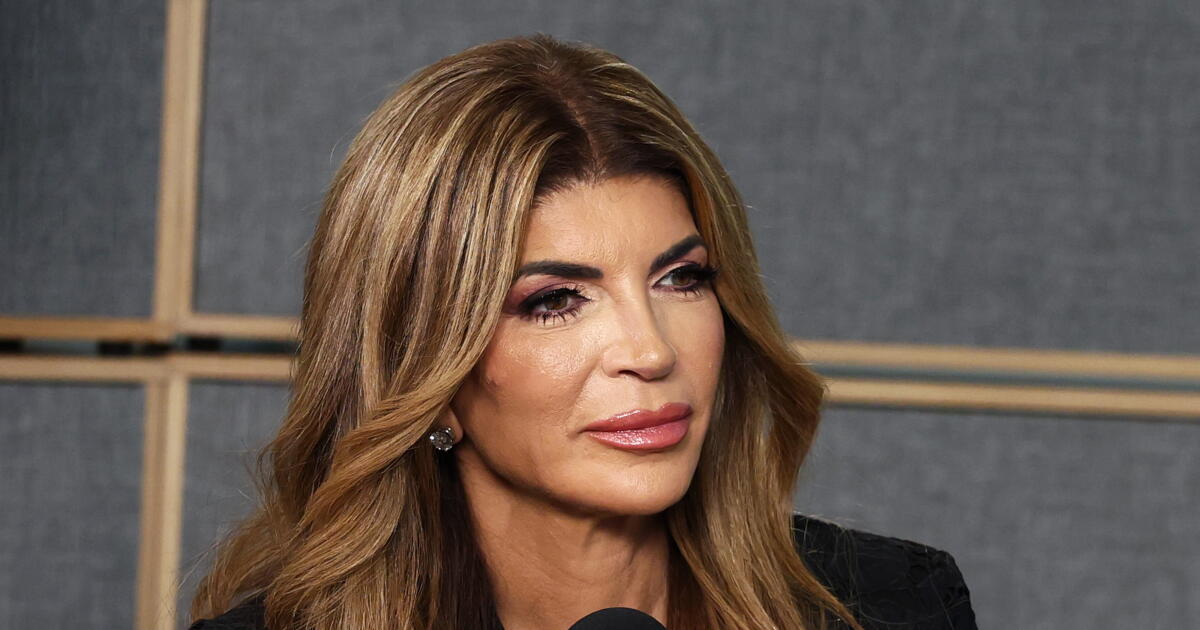
“Real Housewives of New Jersey” star Teresa Giudice is asking for privacy for her daughter Milania Guidice after an incident at the airport resulted in police intervention.
On Wednesday, Tampa International Airport police were called to step in when Milania, 20, reportedly became emotional and ran away from her reality star mom, older sister, Gia Giudice, and a counselor traveling with the family. Police bodycam footage, obtained by TMZ, revealed the family was fighting over a recent health scare involving Milania.
In the video, the family is in an elevator with police, and Teresa is heard explaining that her daughter “had fentanyl in her system” and that she wants to save her daughter’s life. “You’re reckless,” Teresa says to Milania. “After you get help, you never have to speak to me again.”
Milania retorted that she “was laced” and said, “I go to college.” Milania, who attends the University of Tampa, then asked if she was going to be placed “back in the psych ward.” Earlier in the clip, a police officer is heard explaining that Milania had been released from a Baker Act facility and was being transported to a rehabilitation facility.
“As a mother, there is nothing more important to me than the health, safety, and well-being of my children,” Teresa wrote in a statement on Instagram on Monday. “The past few months have been incredibly difficult for our family, and I feel it is important to say something while also protecting my daughter during an extremely vulnerable time in her life.
“Milania has experienced tremendous heartbreak and significant psychological trauma after losing two of her best friends. Grief affects everyone differently, and watching your child try to process that kind of loss is something no parent can ever truly prepare for.”
In July, Milania’s best friend, Victoria Zardoya, died on a weekend trip to Tampa, during which the 20-year-old sustained fatal injuries when she fell while exploring the ruins of Ft. Dade from the Spanish-American War with a group of friends.
It’s unclear who the second friend is.
“Right now, my only focus is my daughter — making sure she is surrounded by love, family, support, and the care she needs,” Teresa’s statement continued. “I understand that because our family has lived much of our lives in the public eye, there will naturally be questions and speculation. But Milania is my daughter before she is anything else. She is a young woman going through an incredibly difficult and deeply personal time, and she deserves the opportunity to heal without every moment of her pain being analyzed publicly.
“I am asking, from one mother to another, and from one family to all of you, to please show Milania compassion and kindness and allow her the privacy she needs right now,” the statement concluded.
In May, Milania was arrested and charged with simple assault after an incident at the New Jersey home of Teresa and Luis “Louie” Ruelas, Milania’s stepdad. Milania allegedly punched someone in the forehead, who was referred to in court by the initials “LR.”
If found guilty, she faces up to six months in jail, probation and a $500 fine. Her next hearing is Tuesday.