thrills

Erika Lust discusses her new book ‘Lust’

What is pornography? We tend to think of it monolithically, as something created by and for hetero men, reinforcing sexist stereotypes and machismo behavioral codes. For over 20 years, Erika Lust has been fighting against those preconceptions, creating adult content that expands the parameters of pornography while approaching it as something akin to mainstream independent cinema. Her subscription-only website features content that leaps over gender boundaries, and has pulled in fans around the globe.

In her new book “Lust,” the filmmaker makes a convincing case for an ethical, intelligent porn that can expand our ideas about sex and intimacy. I recently chatted with Lust about sex, power and the internet.

You’re reading Book Club

An exclusive look at what we’re reading, book club events and our latest author interviews.

✍️ Author Chat

Are we calling it pornography? Adult content? What do you call it?

For me, it is pornography. What I do is pornography because I work with explicit images, but I also work with cinema, and I strive for cinematic vision and craft. I don’t just pick up a camera, film people having sex and put it online. It is a whole creative process. So when I talk about my work, I see myself first as a filmmaker whose subject matter happens to be pornography.

What compelled you to create adult content?

I was born in Sweden, and I became a feminist quite young. I studied political science in college. When I was exploring my sexuality in my late teens and early twenties, I became more and more interested in finding out about our desires and who we are and what we are attracted to. And then I started to watch porn [and] felt horrible watching it. I felt a little bit troubled by the images. Why are all these female characters just there to please the man? It wasn’t about the women, it wasn’t their stories, and that made me feel a bit angry. When I talked to other women about this, they felt the same way. I felt there was something to explore there. Of course at the time, I had no idea I would be doing this for a living.

There are a lot of tired tropes about adult content that you debunk in your book. That the performers come from broken homes and are forced to do things on camera without their consent and so on.

It’s so easy for people to think that in the sex industry there’s going to be exploitation. But my experience is the opposite. Because people I work with dare to talk about sex. The conversation is over the table, not under the table. The people I have met and worked with in this business are intelligent and smart, with a very clear plan of their future. They take care of themselves, their bodies and their sexuality.

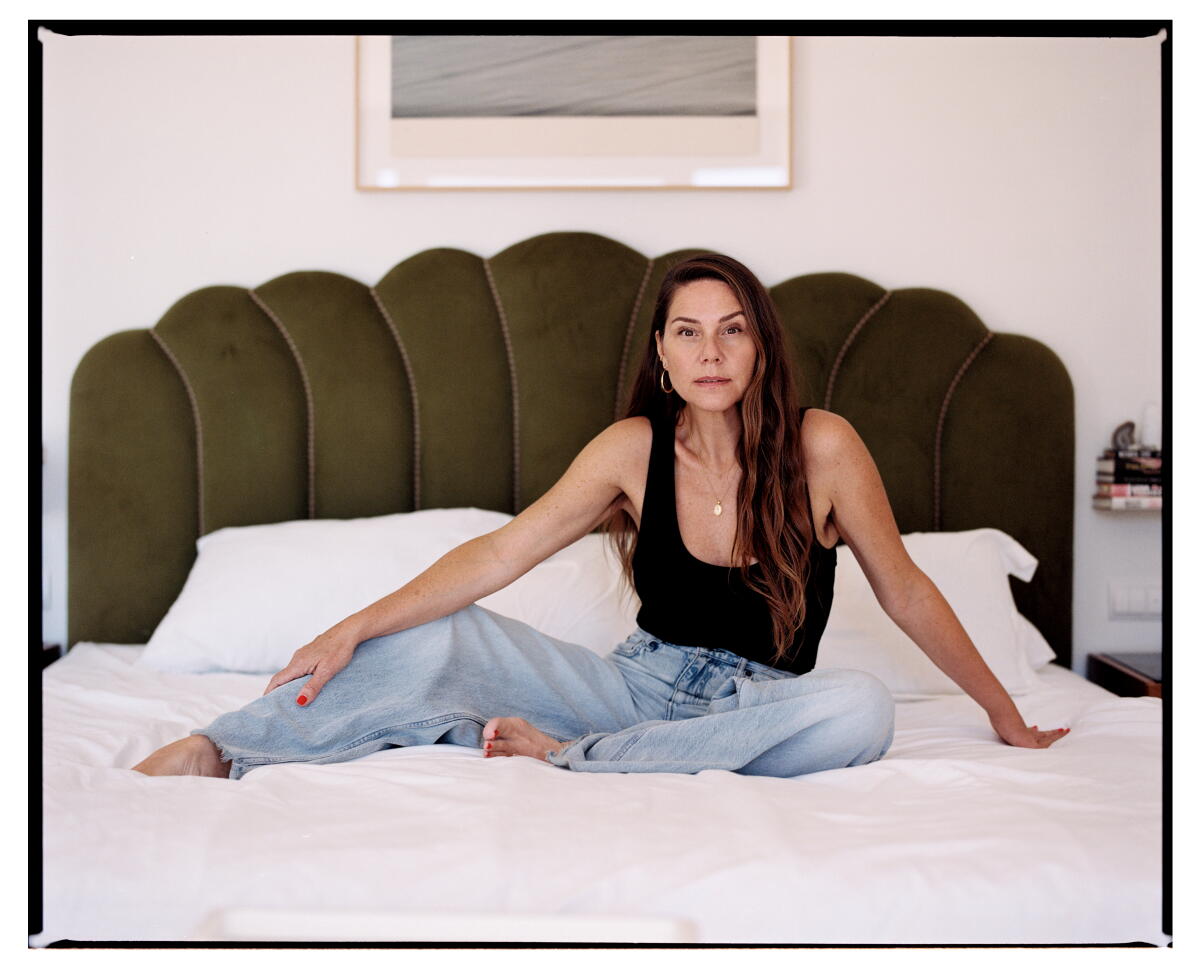
In "Lust," Erika Lust debunks tropes and stereotypes surrounding the production of pornography.

In “Lust,” Erika Lust debunks tropes and stereotypes surrounding the production of pornography.

(Jahel Guerra)

How has technology affected how we think about sex?

There’s a lot of sex anxiety going on in our society, and I think that also has a lot to do with technology and how it has taken over our lives. And I’m reading more articles about the intimacy crisis, and the fear that people have of connecting with other people, and young people who are not having sex. Technology has gone wild. It has taken over our lives. People are afraid of other people, of friction, of negotiating boundaries. They don’t know how to explain their own desires so they would rather talk to robots. I think we need to disconnect from technology, and think more deeply and talk to each other — not just about sex, but about everything.

Given the ubiquity of free adult content on the web, how do you compel customers to subscribe to your site?

I think people that subscribe are looking for something completely different, something more elevated, and they understand that that kind of film costs money. I can’t shoot without paying my crew and my staff. Shooting with an Alexa camera is not the same thing as picking up my mobile phone. And then I need crew members who can work with that technology, I need gaffers and electricians, I need to pre-light the set the day before, and so on. The budgets that I’m working with are really budgets for independent films. We have a staff of 45 working with me and my husband.

It’s the last artistic underground, really. I did notice that Bruce LaBruce, a filmmaker whom you mention in your book, has a collection of his films presently being shown on Criterion Channel.

I never think it’s going to become mainstream. My true hope is that we can at least be known as an independent porn culture making quality films that aren’t exploitative. That people understand that it exists, and that it’s an option apart from the mainstream porn websites.

This Q&A was edited for length and clarity.

📰 The Week(s) in Books

Chuck Lorre has written a memoir, "Sitcom," about his career

Chuck Lorre has written a memoir, “Sitcom,” about his career

(Christopher Patey / For The Times)

How does Bonnie Garmus follow her blockbuster 2022 novel “Lessons in Chemistry”? With “Peck & Peck,” a “whimsical and winning ode to the written word, and send-up of the pretensions of its gatekeepers,” writes Leigh Haber.

Chuck Lorre, one of the most successful and prolific writers and producers in TV history, has written “Sitcom,” a memoir in which he reveals, among other things, his decade-long tenure as a card-carrying Scientologist. Writing the book “was cathartic,” he tells Mary McNamara. “There’s a little bit of therapy going on in this book. I got to say some things out loud that in the past I would have kept hidden because they were embarrassing.”

At a time when it seems like anger and hostility has become the fossil fuel of everyday life, author and conflict expert Priya Parker’s new book “The Art of Fighting” argues for civil and spirited debate as a balm for our troubled times. “As a conflict resolution facilitator for the last 25 years, I can say that healthy community needs healthy conflict,” Parker tells Margaret Wappler.

Finally, Maddie Connors talked to Michael Douglas about his new memoir, “One Helluva Ride,” a book about his life and career. “Your 80s may be a good time to share,” the 82-year-old actor tells Connors. “People interested in movies, we give them a certain insight into the process, and maybe they could learn something. For others, it’s just gossip.”

📖 Bookstore Faves

Formerly a pop-up bookstand, Reverie Bookstand is a brick-and-mortar bookstore on Sunset Boulevard in Echo Park.

Formerly a pop-up bookstand, Reverie Bookstand is a brick-and-mortar bookstore on Sunset Boulevard in Echo Park.

(Reverie Bookstand)

Located on a busy stretch of Sunset Boulevard in Echo Park, Reverie Bookstand is doing its level best to buck the AI tsunami, selling used books created by humans in a variety of subjects. In an email exchange, owner Tim Horner tells us what’s selling in his store.

What prompted you to open the store?

I was driving by and I saw it was for lease. I had been selling books for some years as a scout for other bookstores, and also at flea markets where I would pop up with a ”bookstand.” So it wasn’t a brand new idea; I had always dreamt of it. The owner of the building was a part of a small team that ran a collective DIY venue and gallery called Echo Curio around 12 years ago. It has since shut down, but Echo Curio was a place I came to as a young person back in the day. So the landlord was sympathetic to the cause and the idea of having a bookstore here. So I went for it.

What genres does the store tend to emphasize?

I specialize in poetry, mysticism, occult and out-of-print secondhand books and paper goods. All the books here in the store are used books. So far it hasn’t been difficult to keep the shelves full, I know some spots.

Who are you customers?

The clientele here is diverse. Students, working-class people, artists, local neighborhood families, musicians and people from all walks of life who simply love books and reading. A thing I am grateful for is how kindhearted and empathetic (most) book people are. It gives me a lot of strength and motivation everyday to know that my book-buying addiction is not in vain but is actually going to some strange use in helping connect people with literature.

What’s selling right now?

The things that are selling the most are things California-related and writers from California especially — Joan Didion, John Steinbeck, Octavia Butler.

Why do we still need bookstores when AI can write books for us?

I think bookstores are relevant still because we all need some type of human connection for our well-being, and books encourage that behavior. Whether it’s connecting with a space and people or connecting with authors, a bookstore is a place where you can actually browse for something and be in the moment with other people that are possibly interesting. The gesture alone validates itself in that you’re telling the world. I am open to ideas, things, places, people, and along the way you find a book you didn’t know existed, a nicer copy of something you already have, or a book you’ve been meaning to read but had forgotten about. And until this point there is no tangible way to browse for these things I have online yet and hopefully ever.

Reverie Bookstand is located at 1519 Sunset Blvd., Los Angeles.
Source link

The new novel ‘Proof of Progress’ captures the serendipity of a life well lived

Maria Astorini, a retired character actress and a minor star, is 37 years late delivering her memoir. But the project, which she has tried her best to forget, has been pulled out from under the rug by her publisher. Forced to deliver a manuscript, Maria writes an autobiography clocking in at a shade over 200 pages.

The result is Elizabeth Castellano’s second novel “Proof of Progress,” a wry, poignant and very funny twirl through a life that swerves past triumph and failure, boredom and joy, public life and private sorrow. I recently spoke with her about Bloomingdale’s, Calvin Trillin, and how cellphones are the enemy of good fiction.

You’re reading Book Club

An exclusive look at what we’re reading, book club events and our latest author interviews.

✍️ Author Chat

”Proof of Progress” traces the life of your protagonist, Maria Astorini, from childhood to her mid-60s. It reminded me of something Bob Dylan wrote recently about growing older, which is that you finally get rid of the illusion that life is under your control.

For Maria, there is a lot of serendipity that feels like fate, of being in the right place at the right moment, or meeting the right person, which sends her off in a different direction. I like that in a novel. It was also helpful to be writing primarily about an era without phones, so that she’s able to meet a lot of people.

We’re seeing this a lot in contemporary narratives: writers setting their stories in pre-phone eras, so their characters can actually interact with each other.

She’s talking to people, she’s meeting people, so she’s able to be sent on different paths. Even meeting her husband probably wouldn’t have happened with the phone.

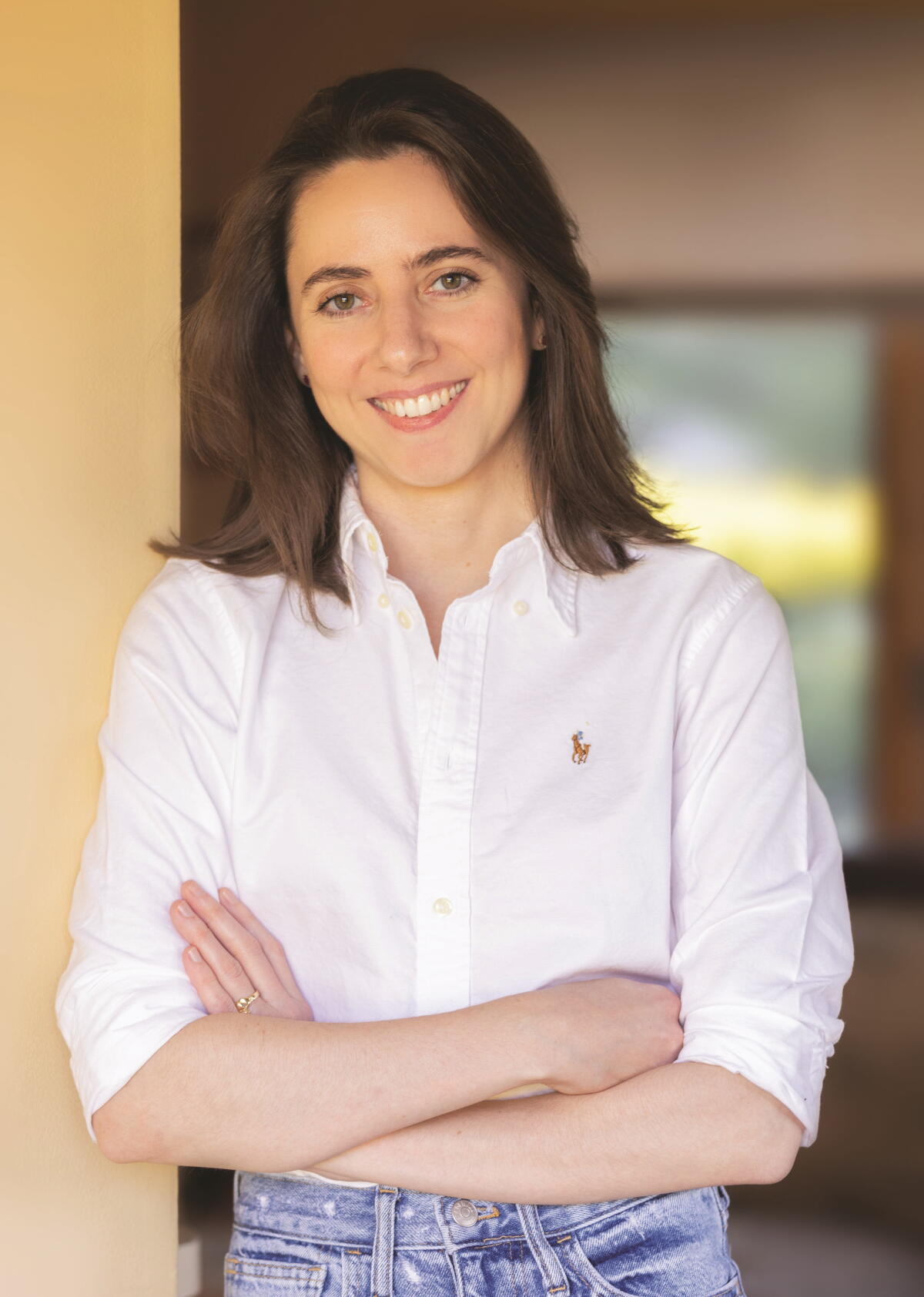
A smiling woman (the author) leans casually in a doorway.

“Proof of Progress” is Elizabeth Castellano’s second novel.

(Harper Collins / Carl Timpone)

You have written a very funny book, and funny books don’t get the respect they deserve.

Anytime you have humor in a book, you’re not taken quite as seriously. Even in Barnes & Noble, when you look for humor, it’s on the back wall or on the floor. And that’s where you find the David Sedaris books, which is crazy. My last book was about a beach town, so I got lumped in with the beach read group. I had people who were looking for a fun beach read and then they picked up my book, and it’s about zoning code violations. I’m happy that this book is being marketed as literary and humorous. I’m in better shape in that sense.

It’s really hard to write funny. Or is it?

The best way I can describe it is like a stand-up comedian having a notebook full of jokes and anecdotes and she has to put together an HBO special. Sometimes I just had one line of something funny. I had all these ideas and thoughts and different things from old books that I was writing. I tried to put all of it together and find a character that could tell this story, and the through line that I could create from all of this material. So I wrote it backwards and out of order.

Who do you think is funny? Who do you like to read?

J.D. Salinger, David Sedaris, Maria Semple. I love Calvin Trillin. I think he’s a great writer.

Your protagonist is very late on a contract and has to rush to get the book written, which gives the narrative propulsion and momentum.

I had a two-book deal, so while I was working on the publicity for my first book, I raced to finish this book. And when I was finished, I realized it didn’t work and had to throw out the whole manuscript. I saved maybe six or seven little anecdotes from that original book. So it took another year to write. That was the inspiration for “Proof of Progress.”

Your writing career is a bit like Maria’s acting career, in that you chanced upon it.

I was a theater major. I don’t think I took one English course. Then I graduated right into the Recession of 2008. There were no jobs. Eventually, I applied to be an apprentice buyer at Bloomingdale’s, even though I hate shopping. That was the last resort. Then I decided, maybe I’ll be a writer, because it felt like something that I could do. I wrote a lot of things that were rejected before I wrote my first book, “Save What’s Left” [2023]. And that’s probably why I wrote Maria the way I did. We zig, we zag, we endure.

This Q&A was edited for length and clarity.

📰 The Week(s) in Books

Kyle MacLachlan's face reflected in six different directions.

Kyle MacLachlan’s new memoir is a funny, candid and self-aware reflection on his 40-year career in Hollywood.

(Christopher Patey / For The Times)

We loved him as Special Agent Cooper in “Twin Peaks” and as Jeffrey Beaumont in “Blue Velvet,” but according to Kyle Maclachlan’s new memoir, “Fictional Selves,” there is another unknown character: “Other Kyle,” the actor’s ever-present shadow figure. “There’s definitely another entity, an observer, the ego, the harder self,” MacLachlan tells Rachel Brodksy.

After a nine-year absence from fiction, John Green has returned with “Hollywood, Ending,” a darkly humorous show business cautionary tale that Green couldn’t have written “without spending a lot of time on film sets,” he tells Emily St. Martin. “I hope the book is a love letter to movies. But I also wanted to be honest about how difficult it is to make a work of art that, in order to be commercially successful, has to be loved by millions of people.”

Katya Suvorova’s memoir, “Ungrateful Immigrant Daughter,” is a “heart-wrenching tale of immigration” that “pulls back the velvety red curtain to reveal one story behind the oversexualized stereotypical post-Soviet mail-order bride narrative so ingrained in post-Cold War U.S. culture,” writes Diana Ruzova.

Finally, Vroman’s and Book Soup, two of L.A.’s most beloved bookstores, have been sold by longtime owner Joel Sheldon to tech executive Robert Hoffman, reports Suhauna Hussain.

📖 Bookstore Faves

Outpost Books is a new bookstore in South Pasadena.

Outpost Books is a new bookstore in South Pasadena.

(Simran Malik)

Walking into Outpost Books is like stepping into a smart book lover’s cozy den. With its southwestern-themed design and a well-curated selection of new and used books, the indie book store in South Pasadena already feels like home to this community of rabid book lovers. I spoke with owner Nicole Novembrino about her new store.

Why a bookstore?

I was a sales rep for a publisher of art books, but I looked at my life, wondering what I could do for a living that would give me real meaning and purpose. I love books, and so I decided to open a bookstore. It’s not easy, and you can second-guess yourself a million times along the way, or get a normal job. But I’m so glad I did it. Everyone in the neighborhood is so happy!

Why did you choose to open in South Pasadena?

I live in El Sereno nearby, and South Pasadena is such a great community. When we first opened, people were coming in and thanking us for opening in the neighborhood. There aren’t any other bookstores in this particular South Pasadena neighborhood. I definitely didn’t want to take any business away from other stores.

Pasadena loves its bookstores.

This is a very bookish community. The donations I’m getting from people are really smart volumes. I think I’ve had just one Nora Roberts book! The landlords are great, as well. They came to our opening and told me the store is all they could have dreamed of for the space, which is so sweet.

The kids section is really fun, with the tent and the fake tree stumps.

We have a lot of kids books with a southwestern theme. I’ve been collecting them over the years from my trips to the desert. You might find a book called “Armadillo Rodeo” in there.

How did you land on the western theme?

My mom is from New Mexico, so every family vacation was a trip to the Southwest, and I loved stopping and collecting things at the trading posts along the way. I wanted to give the store that kind of feel. I chose the name Outpost for that reason. It is a lived-in place where you can just hang out and find cool things and read.

Outpost Books, 1010 ½ Fair Oaks Ave., South Pasadena, (626) 399-0595

Source link

Anthony Tommasini discusses Marian Anderson biography ‘Voice of a Century’

Born into an African American family with a grim history of enslavement, Marian Anderson was determined from an early age to master the art of singing for the concert hall. A contralto of great range and warmth, Anderson’s abundant gifts as a performer of spirituals, arias and German Leider brought her global fame even as she endured the indignities of racial discrimination at home. Her Easter Sunday performance at the Lincoln Memorial in 1939 in front of 75,000 spectators remains a touchstone of defiance in an age of racial violence.

Anthony Tommasini’s excellent biography of Anderson, “Voice of A Century,” reclaims the singer as a great artist who only embraced her power as a symbol of racial equality much later in life. I spoke with Tommasini about Anderson, Franz Schubert and Albert Einstein.

You’re reading Book Club

An exclusive look at what we’re reading, book club events and our latest author interviews.

✍️ Author Chat

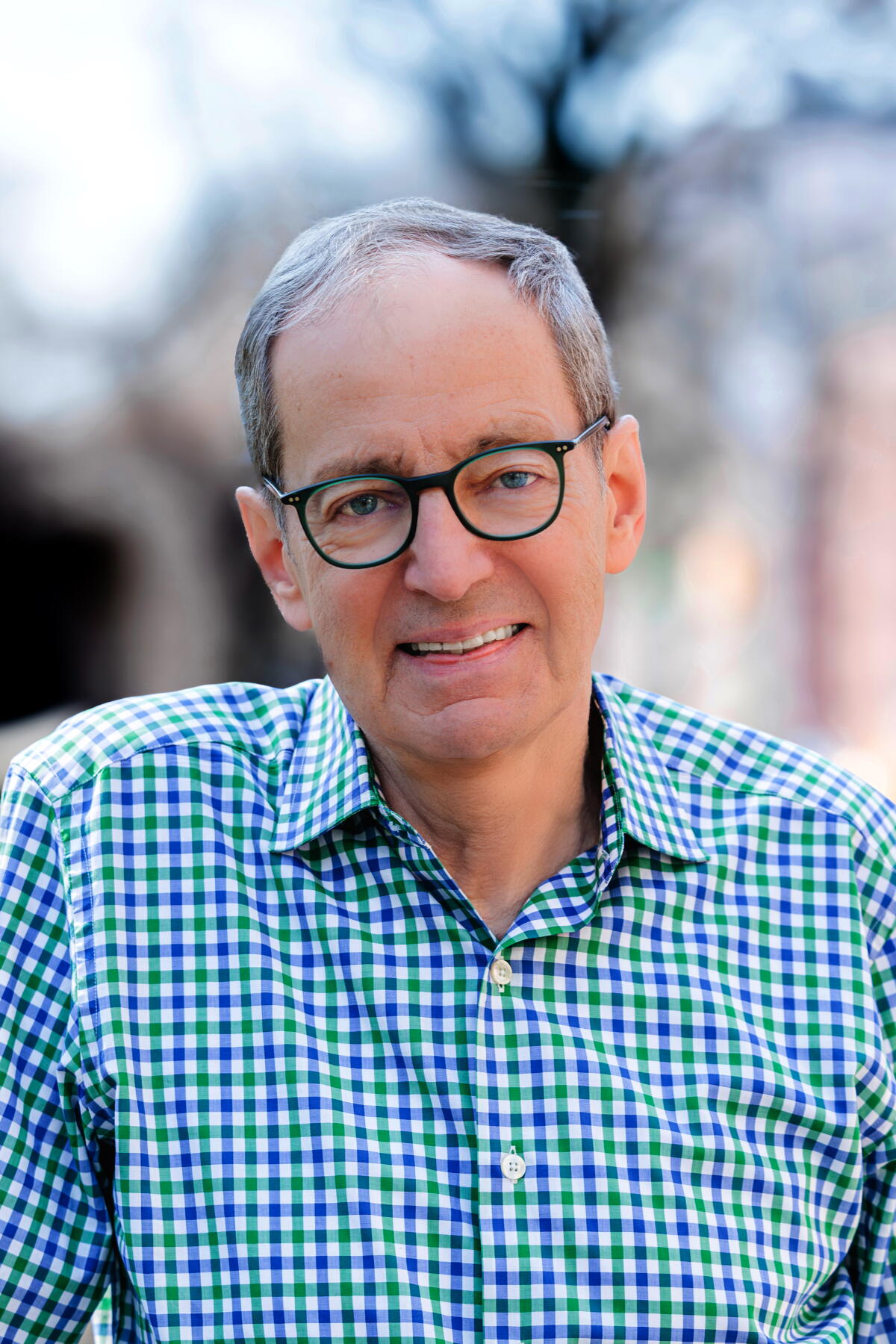
Anthony Tommasini is the author of a new biography on Marian Anderson

Anthony Tommasini’s biography reclaims Anderson as a great artist who embraced her power as a symbol of racial equality later in life.

(Ahna Tessler Photography)

I feel like people know Marian Anderson in the abstract, but they regard her as a symbol rather than an artist. And among the virtues of your book is that you reestablish Anderson’s legacy as a great singer and performer.

She was a contralto, which is the lowest female vocal register. But that register had such resonance, and she had complete control over it. She also had enormous range; the uncanny, beautiful thing about Anderson’s voice is that when she started ascending even into the soprano sphere, she held those notes so beautifully. They were emanating from below, grounded in that low voice. It made for a mesmerizing sound. I’ve made a playlist to accompany the book.

She embodied this kind of fierce dignity and grace in the face of racial discrimination. But as you point out, she was reluctant to make herself a symbol of the civil rights movement, preferring to let audiences focus on her artistry.

In 1939, she was banned from performing in Washington’s Constitution Hall because of her race, and her manager, with help from Eleanor Roosevelt, arranged a performance in front of the Lincoln Memorial on Easter Sunday. Yet, the night before the performance, she was trying to get out of it. She felt the whole affair had turned into a civil rights demonstration. When it came time to write her memoirs in 1956, she wanted to excise the event from the book. She felt that what she could do is be an example of excellence and possibility for aspiring black artists.

She did play to segregated audiences, even long after she had become a national star.

[This type of segregated performance featured what] was called vertical seating. But she refused to forsake her career, which she had worked so hard to attain, and so she played these segregated shows. Eventually, there was a performance in Virginia which was boycotted, and that sort of broke the trend. She then performed in front of an integrated audience in Florida.

There is an encounter with Albert Einstein, of all people, who counsels her to take a stand against these racist booking policies.

In 1937, she showed up for a concert in Princeton, New Jersey, only to discover she was being refused a room at the Nassau Inn. As it turns out, she had a friend in Princeton who had seen her at Carnegie Hall and had meekly gone backstage to meet her. This was Albert Einstein, who was teaching at Princeton University at the time, and who offered to put Anderson up for the night at his house. He really pressed her on being more outspoken on racial equality.

Anderson played Europe multiple times in the 1930s, right before the rise of Hitler and the Third Reich. As you write, German audiences were blown away by Anderson’s mastery of their music, specifically Franz Schubert’s Lieder, or art songs, which were among Anderson’s most beloved repertoire.

So extraordinary, right? She also made two tours of the Soviet Union during that time. They went crazy for her in the Scandinavian countries, as well. But for the German audiences who are so nationalistic about their Leider, it was confusing. They couldn’t imagine how a Black American woman could sing their music so beautifully.

Anderson was the first Black soloist to perform at the Metropolitan Opera in New York, in Verdi’s opera Un ballo in maschera.

That was really a huge risk and a huge leap for her. She wasn’t a trained opera singer, and she had to dig deep into that material. She was already 58 by that time. There is a radio recording of the performance. There’s this dignity, like she’s calling upon this power. It’s exhausting and it’s draining, but it’s also exhilarating.

This Q&A was edited for length and clarity.

📰 The Week(s) in Books

Book jacket for "Body Language" by Meg Howrey

Book jacket for “Body Language” by Meg Howrey

(Los Angeles Times illustration; jacket from Doubleday)

Marlon James has published his highly anticipated new novel “The Disappearers,” a sprawling story about gay culture in ’80s Jamaica, and Mark Athitakis is quite taken with it. “James is … determined to unwind the cliches of gay fiction: the tragic victim, the heartwarming gestures of solidarity, the blunt porniness,” he writes. “Mere survival will have to be enough for most of these characters; the sense of fear is pervasive, but so is a determination to work through it.”

What’s it like to be the primary dissenting liberal voice on Fox News? Stephen Battaglio found out when he talked to Jesssica Tarlov about her hybrid memoir and self-help book “I Disagree.” “I have a good amount of shyness to me,” she tells Battaglio. “I have a lot of imposter syndrome. I’m constantly in wonder that I ended up getting to do this and that hopefully, am the right person to do it.”

Meg Howrey’s fifth novel, “Body Language,” a twisted family saga, is “smart, sardonic and powerful,” according to Meredith Maran.

Finally, Emily Wilson, the classicist who has been a lightning rod of controversy over her disparaging remarks in regard to the film version of “The Odyssey,” is going to translate Homer’s epic for a second time, reports Emily St. Martin.

📖 Bookstore Faves

The Hammer Museum's gift shop is one of the best art book shops in L.A.

The Hammer Museum’s gift shop is one of the best art book shops in L.A.

(Eric Petschek)

Sure, the Hammer Museum’s gift shop stocks the requisite art-themed mugs, tea towels and tchotchkes, but it’s also one of the best art book shops in L.A. Inside the sleekly designed Hammer Store is a vast inventory of monographs, children’s books and critical texts about modern and contemporary art. In an email exchange, store managers Sara Beattie and Brooke Berlin tell us what museumgoers are buying right now.

Hammer’s store is really the best museum bookshop in L.A. How do you decide what to put on the shelves?

We’re an eclectic bunch of book nerds and love the written word. We start by looking at upcoming programming, exhibitions and the season, and we buy accordingly. And we have a great team that gives us suggestions. We’ve learned to trust our instincts. The Hammer is an experimental institution, and we approach our buying in that spirit.

Do you have patrons that are not necessarily there to check out museum exhibits?

Of course! We’re not only a museum, but a cultural center, which means there’s always something happening — like mindful meditation on Thursdays, or family programming on weekends, or people coming in just to enjoy a meal at Lulu.

What kinds of books tend to do well for you?

Art monographs, especially on contemporary or Los Angeles artists; books about living more conscientiously; and everyone loves a children’s book (even if it’s just to heal your inner child). We love finding unique books that can’t be found elsewhere. Whenever we can, we work with small presses and book distributors. They often make books that can only fully be enjoyed or understood by seeing them in person.

Is there any particular title that is presently selling well?

“Mindfulness in the Garden: Zen Tools for Digging in the Dirt” by Zachiah Murray; Sanzu Wada’s “Vol. 1 Dictionary for Color Combinations”; “The Hippest Trip in America: By Land, Air and Sea” by Alake Shilling.

Why do we still enjoy art books, when we can look at millions of paintings and sculptures on the internet?

Why go outside if you can look through a window? There is a lot of talk of people returning to the analog or physical media, and that includes renewed interest in physical books. BookTok is huge. People love talking about books and showing off their special deluxe book editions on TikTok. Art books by their very nature are deluxe, image filled and thoughtfully designed. A well-produced book is an art object in itself. Nothing beats the experience of paging through a beautiful book. That experience can’t be replicated on a screen.

The Hammer Museum store is located at 10899 Wilshire Blvd., Los Angeles.

Source link