book exploder

Valeria Luiselli on ‘Beginning Middle End,’ her new book

Does the arbitrary nature of our daily existence cohere into something resembling a story? And if so, how do we begin to tease out meaning from that story?

Valeria Luiselli posits these questions in her new book, “Beginning Middle End,” but mercifully she doesn’t weigh down her fiction with pedantry. Rather, Luiselli tucks her ideas into the folds of an all too human story about a woman, stinging from a recent divorce, and her younger daughter as they embark on a journey across Sicily. The book is written in fragmentary fashion, discrete chunks of prose that accrete into a greater whole, much like the ancient mosaics that are among of the novel’s thematic touchstones.

I recently spoke with Luiselli about Proteus, Pliny the Elder and Polaroid photos.

You’re reading Book Club

An exclusive look at what we’re reading, book club events and our latest author interviews.

✍️ Author Chat

There are resonances of your last novel “Lost Children Archive” in “Beginning Middle End.” Certain character names are repeated, and there is also an audio-visual component, as there was previously. Additionally, a QR code in your new novel allows the reader to access audio recordings related to the book. Is this part of a larger project you have in mind?

I learned a lot about [sound and sound recording] when I was writing “Lost Children.” After I finished it I devoted the next five years to a work in progress called “Echoes From the Borderlands,” recording the sounds of the Mexican-U.S. borderlands. I think of “Beginning Middle End” as a book that exists both in its textual version and in its sonic translation.

The story is told in a fragmentary fashion, with short paragraphs that are separated by subheadings. And the last third of the book contains Polaroid pictures and postcards that relate to the story. There is also a mosaic tessera that is integral to the narrative. What is it that appeals to you about the notion of a story that is constructed from lots of discrete parts?

I’ve been interested for some time now in thinking about how to shorten the distance between process and result in such a way that the signs of the process can be read in the final project. When I’m working on something, I’m collecting postcards and archival material, and taking Polaroid pictures along the way, partly because I know that my process in writing is not linear. And I use Polaroids almost as Post-It notes, as another form of note taking.

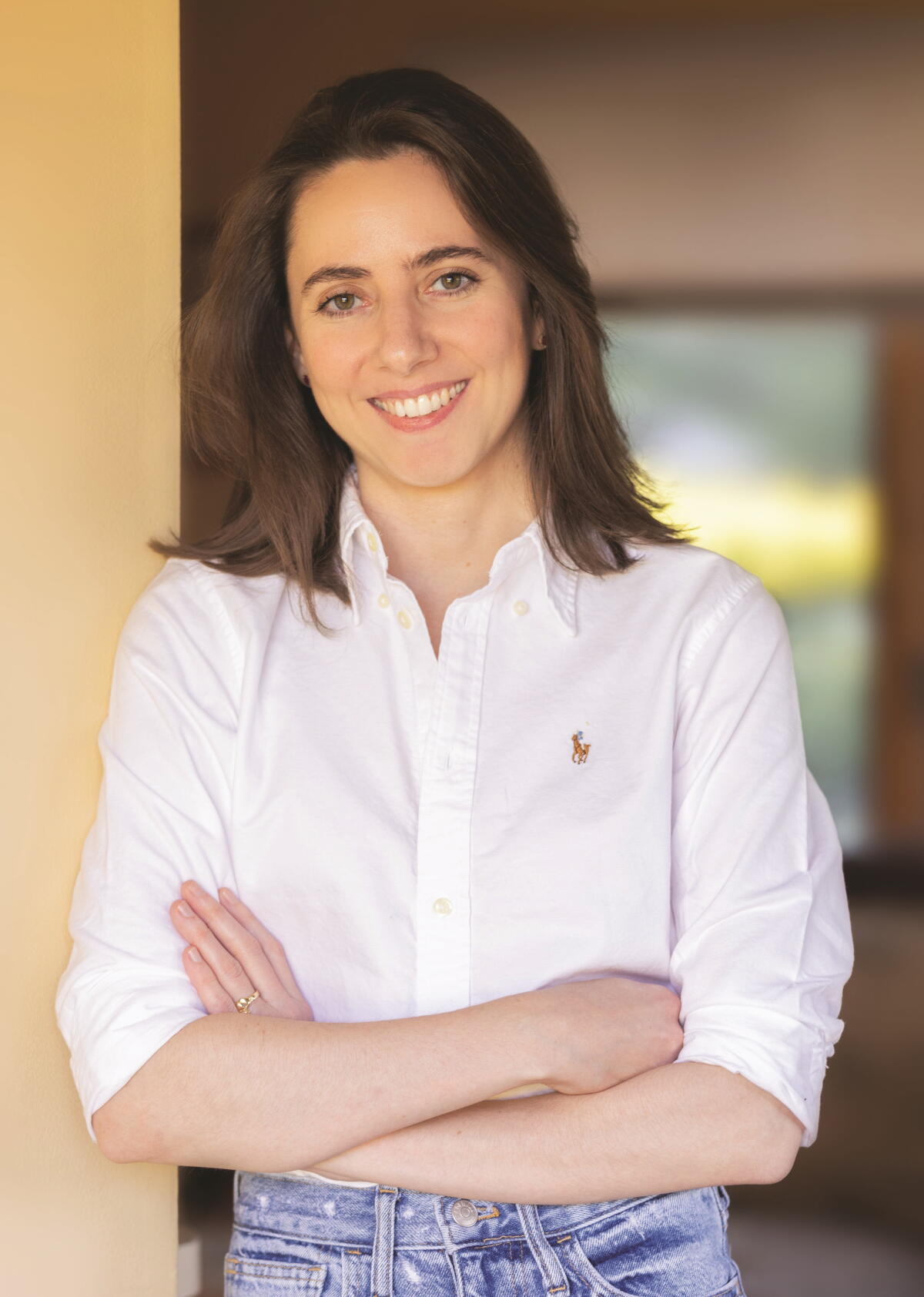
Valeria Luiselli's new novel, "Beginning Middle End," is about memory and imagination.

Valeria Luiselli’s new novel, “Beginning Middle End,” is about memory and imagination.

(Clayton Cubitt)

It’s such a fascinating creative process.

It can be incredibly frustrating. Because sometimes it’s years before I know what language I’m going to be using in its final form.

Your book is about many things, but the act of storytelling is definitely a major theme. Not just in fiction, but in the way we shape our own personal narratives and how they are transmitted. And this notion of “the middle” as a space that hovers between two poles, the place where you are looking behind and ahead, between life and death, and so on.

The mother in the story is in the mess of the middle, trying to make sense of things and laying out events, but not really finding the deeper threads that tie life together and give it some kind of meaning. And it is only until her daughter arrives at the end of the book that you can read the novel backwards somehow, and understand in hindsight how she, the daughter, has seen a relationship all along between all these seemingly arbitrary events. She is the one that finds meaning in a sequence, where the mother sees only chaos.

The book is grounded in Greek and Roman Classical texts. Proteus and Pliny the Elder feature prominently. Where does your interest in the Classics come from?

The early pre-Socratic philosophers were the first to observe nature without the scaffolding of mythology, who were really just trying to make sense of it. And so that’s how I arrived eventually at Pliny, who has this 37-volume compendium of observations of nature that ask all the important questions about the oceans and rivers and mountains and the sky and the clouds. Pliny became a kind of ghost that led me through the years in which I was writing this novel.

Your novel delves into the relationship between memory and imagination.

What guides me are questions that press on me. I have little interest in plots early on. I become interested in plot as an emanation from questioning things. And one of those questions was about the relationship between memory and imagination. How are the two things connected? How much is our imagination shaped by our memory?

One of the writers that has best addressed that question is Jorge Luis Borges in the last story he ever wrote, “Shakespeare’s Memory,” where the protagonist has two consciousnesses inhabiting his interiority. When a train passes, he doesn’t know what it is, because he’s in Shakespeare mode. He doesn’t have a memory of the sound of a train. That story can be read as an allegory for how our memories and imaginations work as readers. We have all our life events that compose our being and our memory of life, but we also have everything we have read. And I think that that’s really where the discussion around imagination and memory gets very interesting.

This Q&A was edited for length and clarity.

📰 The Week(s) in Books

Classical illustration of Odysseus on ship with crew sailing away from the cyclops

Christopher Nolan’s film adaptation of “The Odyssey” ignited a fire in the literary world, inspiring harsh critiques from Homer translator Emily Wilson and staunch defenses from Joyce Carol Oates and Susan Orlean.

(Illustration by Jim Cooke / Los Angeles Times; Source: Louis-Frédéric Schützenberger)

Chris Young was serving two life terms without parole for a low-level drug charge when Kim Kardashian intervened. The reality TV mogul successfully petitioned President Trump to commute Young’s sentence in 2021. Now Young has written “The Wound Is Where the Light Enters,” a searing memoir that “not only reveals the system’s horrors, but also celebrates the redemptive power of hope, intellect and community,” writes Julia M. Klein.

Justin Halpern, the co-showrunner of ABC’s “Abbott Elementary,” has written his first novel, called “Get Lost,” and Stuart Miller talked to him about it. Of taking on the challenge of writing alone, Halpern told Miller that “I’m definitely still codependent, but the novel forced me to venture into waters that I never would have gotten into on my own.”

The battle over Christopher Nolan’s movie adaptation of “The Odyssey” rages on. In the wake of Homer translator Emily Wilson’s excoriating critique of the film, Emily St. Martin reports that Susan Orlean and Joyce Carol Oates have publicly rallied behind Nolan. In a recent post on X, Oates wrote that Wilson’s “tone of dismissal & haughty superiority strike a sour note.”

Steve Wasserman takes a deep dive into “Too L.A.,” a newly published collection of author Eve Babitz’s rich trove of mostly unsent correspondence. The letters “brilliantly reveal Babitz’s eye for the deep shallow as well as explore the porous boundary between the largely self-inflicted injuries of her private life and the glittering sheen of her public persona,” writes Wasserman.

📖 Bookstore Faves

Whitmore Rare Books in Pasadena caters to customers who value the physical experience of reading books.

Whitmore Rare Books in Pasadena caters to customers who value the physical experience of reading books.

(Pierre Galant Photography)

Although it lives on a busy Pasadena street corner, Whitmore’s Rare Books feels like something a book hound might discover in London or New York: an elegantly appointed space with a large bookshelf running along the length of one wall that contains some of the store’s inventory of antiquarian treasures. Founded by a former lawyer turned bookseller and Pasadena native Dan Whitmore, the store is doing brisk business among a younger clientele that still values the tactile pleasures to be found from beautiful books. I spoke with Whitmore about what’s selling in his store.

How long have you been in the rare book business?

I stumbled into a first edition when I was in law school in Philadelphia in 2006 and I was bitten by the bug to start a collection. I worked as a lawyer for a year out here in L.A. and quit my job in 2009 to pursue rare books full time. So we’re coming up on 17 years, which is a good stretch, although there are people who’ve been in the trade for 50 or 60 years.

How do you find your inventory?

You amass this database of knowledge over time, and there really isn’t a substitute for it. I know people think that the AI boom is going to just turn around and be able to do what we do, but it’s not quite that simple. You really have to understand the market and the way that the market tends to shift over time. More modern material can shift a bit faster. But a Shakespeare folio or Darwin’s “On the Origin of Species” or Adam Smith’s “The Wealth of Nations,” books that document important moments in history where something new is introduced to the world, will always have value.

We just bought a first edition of “Alcoholics Anonymous,” and a second edition that was inscribed by Bill Wilson. These are books that have had such a profound impact on so many people’s lives that there’s this really strong market for early AA books.

What is selling presently?

I would say things like fantasy, science fiction, especially some of the classics: “Lord of the Rings,” “The Hobbit.” Some of these iconic works are having a moment right now, such as “Dune,” “I, Robot” and the “Foundation” trilogy. There are new buyers coming in, and I think some of that is tech money — people who maybe grew up reading these books and find inspiration there.

Why should we spend a lot of money on old books, when we can buy new ones for a lot less?

I don’t think that everyone is a collector or should be. I think that there are people who love the physical objects. They love the connection to history, that feeling of thinking about what it must have been like when someone opened the book and read that for the first time, and they get to have that experience again.

Whitmore Rare Books is at 121 E. Union St. in Pasadena.

(Please note: The Times may earn a commission through links to Bookshop.org, whose fees support independent bookstores.)

Source link

Dan Werb on ‘Our Wild Familiars,’ his new book about animals in cities

In 2007, for the first time in recorded history, more humans were living in urban spaces than rural ones. The animal kingdom has followed suit. In our cities, we are surrounded by synanthropes — wild animals that have adapted to human-modified environments and have learned to thrive in them — yet most of us are unaware of the biodiversity of this urban wildlife and how it functions along a parallel track with its human brethren.

Dan Werb’s latest book “Our Wild Familiars” explains how these “soil churners … epidemic vectors and ecosystem partners” have a crucial role to play in the future sustainability of our communities. I talked to Werb about coyotes, the health benefits of birdsong and seagulls with junk-food issues.

You’re reading Book Club

An exclusive look at what we’re reading, book club events and our latest author interviews.

✍️ Author Chat

You are an epidemiologist.

I was trained as a social epidemiologist — somebody who can look at how societal factors influence the health of populations. I study how society determines who lives and dies, who is sick and who is healthy.

I’m wondering if it was your interest in Zoonotic viruses that led you to this subject?

The last book I wrote was called “The Invisible Siege.” It is an overview of the history of coronavirus science, starting in the ‘80s, braided with the much longer history of the coronavirus family. And it ends with this scientist who is describing being in northern Thailand and moving through Myanmar and Yunnan Province in China in the ‘90s. And he stumbles upon this exotic animal market near the Shan Autonomous state, which is an ethnic enclave in northern Myanmar that’s been at war with the junta there forever. And this market’s got cloud leopard skins, civets and every crazy, exotic animal that you can imagine. And they were all being sent directly into China. And it’s exactly this kind of trafficking that is carrying all these viruses, like this superhighway of exotic animals into urban areas.

But not all urban animals are vectors for disease. In fact, we have fostered very cushy urban environments for many different species. Pigeons, for example, who don’t have to fly in cities because they have no natural predators.

Chris Shell, a coyote expert from Altadena that I interviewed, pointed out that pigeons do have to worry about predators now, because there are red tail hawks and coyotes and other creatures. Our urban ecosystems are becoming more complex. There are some biologists that are describing our time right now in North America as the great urban shift. They’ve done modeling exercises showing that over the next few decades there are literally going to be thousands of species moving into urban areas. They’re increasingly going to be mega-fauna, much larger animals.

Why is that happening?

We’re seeing the continuing acceleration of the transformation of wild spaces into human modified spaces. But it’s also because of extreme weather events. If you look at the horrible fires that occurred in Los Angeles last year, one of the things that happened was hundreds of thousands, even millions, of animals had to flee those areas that were on fire, and they fled into urban areas. What do urban areas provide? Constant sources of freshwater, continual sources of food waste, and other prey. You’ve got climate change happening, and that’s causing this real shift of animals moving into different places.

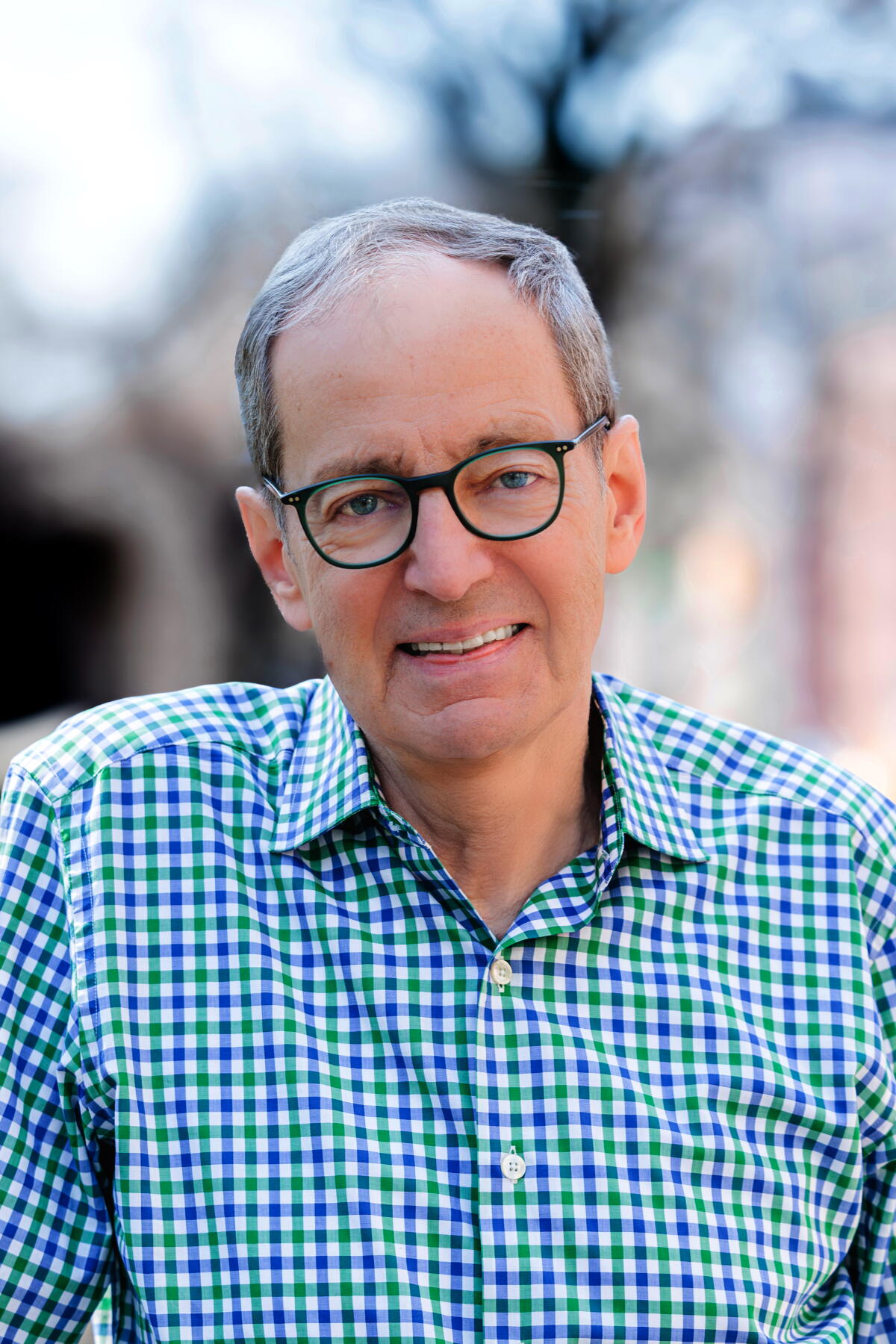
Dan Werb, author of "Our Wild Familiars," a new book about wild animals who've managed to survive in human communities.

Dan Werb, author of “Our Wild Familiars,” a new book about wild animals who’ve managed to survive in human communities.

(Joseph Fuda)

What about a less traditional metropolitan space, like L.A. County, which is a hodgepodge of so many different kinds of topography and terrain.

L.A. is super fascinating because lot size isn’t directly related to income. It’s very much more heterogeneous and variable, even within neighborhoods. The wealthier a neighborhood is, the higher the biodiversity is going to be, because we’re going to have larger lots, more green space, fewer fences, things like that.

We have a complicated relationship with coyotes in L.A., especially those of us who have lost pets to them. But according to your book, we have trapped them in our cities.

Coyotes need to have pathways that allow them to move in and out cities. As it is now, they move into urban environments looking for food and water, and they can’t get out. They get trapped in cities, and conflict happens. Like black bears in suburbs across large parts of North America that dig into people’s garbage.

And bears and other animals eating, say, fast food leftovers is a nutritional disaster as well.

It’s like an ecological trap. They see no reason why they would leave, even though staying is actually more dangerous for them. And there are all kinds of ecological traps across cities that manifest in different ways. One that I always think about is seagulls at the seashore that have evolved over tens of millions of years to be able to hunt fish and shellfish. And the fish are right there, yet they’re eating french fries because it’s slightly less work.

You mention the Wallis Annenberg Wildlife Crossing that spans the 101 freeway in Agoura Hills, the first animal crossing of its kind in America, as a potential solution to this problem.

I think it’s great. One hopes there will be more projects like that undertaken in other cities around the world.

We’ve discussed all the rotten things that are going on with animals in cities. Why is it a wonderful thing that animals have come into our cities and our lives?

If we hear birdsong, we’re less stressed. If we hear additional birdsong, it multiplies the stress-relieving effect. Being close to animals is biologically beneficial for us. It’s really about connection. I look at AI, and there’s this kind of sense that an AI chat bot can decrease loneliness. But it’s just an echo chamber. I think a true connection is bridging some kind of divide in the way that you think or perceive the world. And in that sense, being aware of an animal who is aware of you takes you out of yourself in a way that I think is really, really special.

This Q&A was edited for length and clarity.

📰 The Week(s) in Books

Book jacket for "You Won't Get Free of It: Stories of Mothers and Daughters" by Rachel Aviv

Book jacket for “You Won’t Get Free of It: Stories of Mothers and Daughters” by Rachel Aviv

(Los Angeles Times illustration; book jacket from Knopf)

The ostensible topic of Rachel Aviv’s new essay collection, “You Won’t Get Free of It,” is mothers and daughters, but according to Julia M. Klein, Aviv’s sparkling, sharp-eyed pieces “involve the slipperiness of truth and the crushing inadequacy of our mental-health system and social safety net.”

“Cool Machine,” the final volume of Colson Whitehead’s Harlem trilogy, is an “American epic disguised as a heist novel,” writes Leigh Haber. “Whether or not New York is your jam, or a place you have escaped from or to, Whitehead’s Harlem Trilogy is destined to live on as an American classic.”

Whitney Friedlander profiles Jessica Knoll, one of America’s most successful authors of sexy thrillers that “depict the absolute worst things one person could do to another — but in such a sensational, tongue-prickling-sour-candy kind of way that her books come off as devilishly evil beach reads.”

Finally, Dan Tana’s book about his legendary, eponymously-named restaurant in West Hollywood, “Everybody Came to Tana’s,” has been posthumously published. Sixty-two years after the restaurant’s opening, it’s still a tough reservation to snag. “In a town that’s always trying to be something that it’s not, it’s not trying to be anything,” his daughter Katerina tells Maddie Connors. “Dan Tana’s is longevity in the midst of ephemera.”

📖 Bookstore Faves

The Philosophical Research Society is a Los Angeles Historic Cultural Monument in Los Feliz.

The Philosophical Research Society is a Los Angeles Historic Cultural Monument in Los Feliz.

(Philosophical Research Society)

There is nothing else in L.A. like the Philosophical Research Society. The nonprofit was founded by scholar Manly Hall in 1934 as a place for the curious to explore wisdom, philosophy, mysticism and mythology across all cultures. Its visually striking Mayan Revival Los Feliz campus, a Los Angeles Historic Cultural Monument, features an auditorium, a gallery and a library of 30,000 volumes. The PRS bookshop is its own gem, a well-curated miscellany of books for spiritual seeking and enlightenment.

In a joint email exchange, PRS staffers dama, Jarrett Schaefer, Kelly Carmena and Amanda Brass explain what makes the store a sui generis experience.

How does the bookshop tie in thematically with the Philosophical Research Society?

The PRS Bookstore is a reflection of all that we do here at PRS. It is an extension of the library created by Manly Hall where you will find foundational texts in alchemy, mythology, philosophy, astrology, and art. You will also find a selection of books based on themes explored in our talks and screenings and from recommendations made by the team at PRS.

It’s a very well-curated inventory of new and secondhand books — I assume you’re very careful about what you stock on the shelves.

We select works that are meaningful to us and hope that they will resonate with everyone too. We highlight works by mystics and visionaries. In our staff recommendations section, you’ll find titles like Ben Caldwell and Robeson Taj Frazier’s “Kaos Theory,” art books by Penny Slinger, Betye Saar and Remedios Varo, Yoko Ono’s “Grapefruit,” “Red Tarot” by Christopher Marmolejo, “The Bhagavad Gita,” and “Time, Myth & Matter” by LD Deutsch. We also feature items from local artists like Moss Candles, Black Willow Jewelry, and perfume by Syd Botanica. Our secondhand books are donation-only and are a kaleidoscopic bag of surprises.

The Philosophical Research Society features an auditorium, a gallery, a library of 30,000 volumes and a bookshop.

The Philosophical Research Society features an auditorium, a gallery, a library of 30,000 volumes and a bookshop.

(Philosophical Research Society)

What book genres tend to sell well?

Esoteric art, mythology, tarot and divinatory practices, ancient philosophy, and hermeticism are all popular subjects. The top-selling book every year is Manly Hall’s seminal work “The Secret Teachings of All Ages,” which is an encyclopedic outline of symbolic philosophy. The used astrology books and children’s books are quite popular too.

Do you have author events?

We’ve hosted book talks with Mark Mothersbaugh, Michelle Coltrane, Mitch Horowitz and Susan Orlean. We regularly co-present events with publishers like Hat & Beard Press, Angel City Press, the Library of Esoterica, Sky Press, Ouroboros Press and Bibliomancers. There are also monthly events that are centered around the bookstore: The Manly Hall Book Club, Astro Study Group, Surrealist Study Group, Tarot Salon and an Esoteric Game Night.

Philosophical Research Society is at 3910 Los Feliz Blvd. in Los Angeles.

(Please note: The Times may earn a commission through links to Bookshop.org, whose fees support independent bookstores.)

Source link

‘An act of service risks inverting into a selfish act’: This book explores the mother-daughter relationship

Mothers and daughters are often caught in a double bind: biologically kindred yet divided by competing claims on identity and selfhood. In Cay Kim’s debut novel “The Future Perfect”, that bond is tangled by cultural discontinuity.

The novel’s mother has been reared in a South Korean household that places a high value on academic rigor and head-down discipline. She devotes all of her energy to grinding that work ethic into her daughter (Kim’s characters are unnamed), who is shuttled between her native Seoul and Minnesota, and grapples with finding the one true way for her to navigate the world.

I spoke with Kay, a native of Seoul who relocated to the States, about mothers, daughters and the unstoppable power of language.

You’re reading Book Club

An exclusive look at what we’re reading, book club events and our latest author interviews.

✍️ Author Chat

Author Cay Kim

Author Cay Kim

(Margaryta Bushkin)

This is your first novel. Did you start writing it in college?

This actually originated from a long poem that I wrote. I didn’t know I was going to turn it into a novel at the time. I just had the idea, the summer before my MFA, to expand each stanza into a chapter. That made the writing process relatively easier for me because it was such a straightforward process. I already had the frame of it.

Even though the novel is grounded in a very specific milieu — that of a child who is ensnared between Korean and American cultures — it’s very much a universal story, of a mother who feels the burden of raising a perfect daughter and is resentful when the daughter rebels against her ministrations.

It’s something that occupies so much of my head space. I wanted the mother to be portrayed as a victim of her society. The way that people choose to parent isn’t something that they learn in a vacuum. She has deep-seated beliefs about suffering and self-abnegation. But there’s a point at which an act of service risks inverting into a selfish act.

A big concept for the mother is endurance.

Exactly. It’s a generational trauma the mother is dealing with. She has had such ingrained beliefs passed down to her, and she’s unable to recognize when her methods result in her own mental and physical splintering, as well as her daughter’s.

Is it a function of the mother’s ego, or some kind of twisted narcissism?

She is putting herself through so much suffering because she believes she is doing the right thing. And there’s an extent to how much you can excuse that self-unawareness.

Yet despite this, the daughter feels tied to her mother, even when they are at loggerheads and she is living thousands of miles away.

The mother is such an integral part of the daughter’s consciousness that severance is impossible. They have a shared history and the daughter wants to share things with her mother, even when they are fighting. When she feels lonely at Stanford, the daughter verbalizes the fact that she has learned loneliness from her mother.

There are a lot of scenes in the novel tied to meals prepared by either the mother or the grandmother.

I do a lot of thinking about how cooking plays a role in our everyday lives. It’s something that people can spend hours preparing, only to have it disappear. It’s her mother’s domain. It is so opposed to the way the father thinks, which is very much tied to capital, to amassing and saving money.

The daughter really comes into herself when she is exposed to American culture.

Minnesota is where she acquires language for the first time. Language is so important to this character. Then she is shuffled back to Korea, and this disjunction is the thing that propels her narrative development. But as the story goes on, the daughter reaches a point where she has such mastery of expression and that is a power she acquires.

“The Future Perfect” is written in a very precise and concise way. What fiction writers do you admire, or who may have served as models?

I love writers whose use of language jolts the mind. My favorite writer of all time is Marguerite Duras. “The Lover” reads so easy but when you pay attention to the language, it’s very precisely engineered. I also love Clarice Lispector, for the way she expresses human spirituality.

Is this book drawn from your life? I ask that only because your protagonist winds up attending Stanford, as you did.

When I first started learning how to write, my teacher always used to say that writing shouldn’t necessarily contain the factual truth, but it should have emotional truth. And I feel like that has been the core of my writing practice throughout my life, and that even for those that don’t think consciously about it, that’s often the case.

This Q&A was edited for length and clarity.

📰 The Week(s) in Books

A country music artist performs onstage in a fully packed arena

Country music performer Kenny Chesney sat down with Holly Gleason, the co-author of his new memoir, to talk about writing the book.

(Jill Trunnell)

The state of Ohio is celebrating America’ssemiquincentennial by offering a statewide reading project that features Toni Morrison’s fictional oeuvre, thus providing a vivid alternative history of the country. “Not only does her work re-center African Americans in the story of our country, it also tackles major events from our founding, through slavery, to the impact of Jim Crow, to the great migration and beyond,” Literary Cleveland Executive Director Matt Weinkam tells Leigh Haber.

Chef-Podcaster-Author etc. Eddie Huang has written his first novel, a lightly autobiographical twirl through the foodie-verse called “Come Undone.“ “This book was very much about breaking up with your family to start your own,” he tells Mariella Rudi.

At a time when teen literacy is declining, Rudi polled five high school teachers to find out what books students should be reading now.

Gabrielle Korn’s novel “Long Island Girls” is a Millennial coming-of-age story that drips with Y2K nostalgia and the ways in which youthful optimism and hope can drift into middle-aged cynicism. “One thing I wanted to capture about early adulthood is the constant humiliation,” Korn tells Emily St. Martin. “The thing about being young is that people are so resentful of your youth, but you don’t understand that it’s resentment, you just think everybody hates you.”

📖 Bookstore Faves

The Loved Ones bookshop

The Loved Ones bookshop

(James Alan Duran)

J.C. Gabel, the owner of local book imprint Hat and Beard, has opened a new bookshop called The Loved One, and it already feels like an essential anchor for Historic Filipinotown’s burgeoning cultural scene. The store, which is also a gallery and events space, is expansive (5,000 square feet) and inviting, with patinated hardwood floors and a wall of picture windows that bathes the interior in natural light. I spoke with Gabel about his future plans for his new space.

What is the mission statement of The Loved One?

The Loved One reflects our ongoing commitment to independent publishing, original exhibitions, and the belief that books (and ideas within them) are best experienced in conversation with one another, in-person, whenever possible. In our post-post digital age, the serendipitous nature of organically curating physical objects is, in a sense, the point of the entire operation. We envision The Loved One as a space where everyone can exchange ideas, free from data-mining tech overlords, AI slop and click-bait tomfoolery.

What kind of books are you selling?

We’re going to focus mostly on new books about the visual arts, but we’ll also have several curated tables of fiction and nonfiction organized by subject and publisher, to highlight and promote the work of publishers we admire. Moreover, our genre-based book clubs and live author events — which will run weekly by August — will also influence the titles carried in the shop, too. Lastly, we’re bringing back Big Table, our books and conversation podcast — which we started with Dub Lab during COVID — now that we have a physical space to host and record these conversations.

It’s a very large space. What are your plans for it?

We are really keeping the space as modular as possible so we can change the interior of both storefronts to exhibit art and photography, as well as host author events, artist talks, live music, comedy, book clubs, etc.

You’re also a publisher, with Hat and Beard. How will that tie into The Loved One?

At least half of the arts programming I bring to the table will tie back to Hat and Beard’s original publications; the other half will be curated by Aubrie Wienholt and her team, working in tandem with myself and the H&B family. H&B will, of course, continue to program events all over the city regularly, but it will be nice to have a storefront again for the publishing house. We also intend to sell our rare and limited edition bundles of our books at TLO. There will finally be a physical space where one can come see this work in person before purchasing.

What about Historic Filipinotown? The Loved One is such a cool addition to what is becoming a vital cultural hub for L.A.

We are honored and thrilled to be working out of Historic Filipinotown. So much has opened in and around this neighborhood since COVID. It is a really vibrant community. There is a great camaraderie among all the small businesses in and around our cluster off Temple Street and Glendale Boulevard. Our immediate neighbors, Couplet Coffee and the bar 1642, are both actively involved in our programming monthly: Couplet has sent over a pop-up barista to serve coffee and tea at our literary events, and most of our after-parties are now held at 1642, two doors down.

Source link

James Ellroy on ‘Red Sheet,’ his new book

For 45 years, in his novels, short stories and essays, James Ellroy has been creating the definitive under-history of his Los Angeles hometown, mapping in his work the subterranean currents of power, corruption, sex and lies that have shaped the polity of the city. Ellroy’s latest is another compelling entry in his ongoing project.

“Red Sheet” is a multilayered American epic that blurs fact and fiction, a deep dive into anti-Communist paranoia, from the corridors of City Hall to the dank precincts of the LAPD. The novel also marks the return of Fred Otash, a real-life Hollywood fixer whom the author has featured in previous novels, including his last book, “The Enchanters.” I recently talked to Ellroy about Otash, L.A. in the ‘60s and L.A. today.

You’re reading Book Club

An exclusive look at what we’re reading, book club events and our latest author interviews.

✍️ Author Chat

Freddie Otash has been something of a twisted muse for you. In “Red Sheet,” Otash is an LAPD detective trying to smoke out Communist sleeper cells in Kennedy-era L.A. He was, in fact, a real person, a notorious Hollywood fixer. How did you first become aware of him?

I had seen a documentary about his specious role in the cover-up caper surrounding Marilyn Monroe’s death. I’d been hearing about him for years, and then I created the Jack Vincennes character who worked for scandal magazines in my book “L.A. Confidential,” played by the scurrilous Kevin Spacey in the vastly overrated movie of the same name.

Did you ever meet him?

Years ago I met a producer named James B. Harris, who produced all the old Stanley Kubrick movies and had optioned one of my early books called “Blood on the Moon.” I asked him if he knew Freddie Otash, and he said everyone in Hollywood knew Freddie Otash. I was planning my novel “American Tabloid” and so I arranged to meet him. He was unpleasant and charmless and way past his prime. I spent some time with him in Miami, where he was living in a place called the Jockey Club, and I had to listen to him talk about his many conquests of the world’s most beautiful and desirable women. I didn’t believe a word of it.

But he did have useful stories, I’m assuming.

Otash I used for the character Pete Bondurant in “American Tabloid.” We entered into a deal whereby I would pay him 10% of what Knopf was paying me in exchange for him keeping his mouth shut. He has become that valuable literary artifact: the great detective.

"Red Sheet: A Novel" by James Ellroy

“Red Sheet: A Novel” by James Ellroy

(Knopf)

Your book deals with a piece of legislation called the Rumford Act that would tear down the city’s racist racial housing covenants in 1963, but the act in ’62 had enemies in high places, namely Mayor Sam Yorty and his power base. You were 14 in L.A. in 1962. Did you feel this racial tension?

I remember vividly how the world was changing. I knew there was de facto segregation in housing. I remember Nixon’s pathetic campaign for governor in 1962. But I remember racial barriers breaking down, particularly in school. Just talking with Black kids in school, because why wouldn’t you? And I had been this dumb, bigoted kid.

What’s interesting about the characters in your book is that their ideological alliances are quite fluid, depending on the circumstances. Communists are married to John Birchers, who may be, in fact, red-diaper babies, and so on.

People are endlessly complex. Going back to Freddie Otash again. He knew Tom Bradley in the ‘40s, when Bradley was a cop. And Freddie becomes a bag man for the civil rights movement, and the Rumford Act in particular. He’s about the most unlikely guy you would expect to support civil rights. I wanted to show [how] complex human beings and their beliefs can be, and this book is a primer on that.

You are so closely associated with Los Angeles, and you lived here for most of your life. Why do you live in Denver now?

Helen Knode is my all-time life partner, who is also my second ex-wife. Ten years ago, we decided to get back together, but she was living in Colorado. She came up with the idea of me getting a loft in her building, and we would have the keys to each other’s places, and that’s why I did it. I like it in Denver, though it’s quite hot at the moment.

Do you miss L.A? What are you feeling about the city now?

I was just there on my book tour. I feel like it’s a complete dump. It’s just totally run-down. When I got off the airplane, I noticed a smog layer, so smog is back. I saw many young, odd-looking, overly adorned young people. I don’t know. … It’s a kid’s town now, to a certain extent.

This Q&A was edited for length and clarity.

📰 The Week(s) in Books

A country music artist performs onstage in a fully packed arena

Country music performer Kenny Chesney sat down with Holly Gleason, the co-author of his new memoir, to talk about writing the book.

(Jill Trunnell)

Greg Sarris is the chairman of the Federated Indians of Graton Rancheria in Sonoma County. He’s also an acclaimed novelist whose his first book in 28 years, “The Last Human Bear,” is loosely based on the life and teachings of Pomo spiritual leader Mabel McKay, a constant lodestar for Sarris. “An American Indian woman is as richly complicated as anybody else. I wanted to show this rich and complicated character who’s negotiated a history that she’s showing you,” Sarris tells Maddie Connors.

In “Daughters of the Sun and Moon,” author Lisa See excavates the events surrounding the Chinese Massacre of 1871. In doing so, she also digs into her own Chinese heritage in L.A. “My great-grandfather’s fourth wife was 16 when he brought her here, and she was never let out,” See tells Emily St. Martin. “My mom used to say these women would all get together, and she used to describe it as birds twittering together, because they actually had this opportunity to be with each other, but on really very rare occasions.”

Fear not, literary Cassandras: Authors can still generate online heat, thanks to BookTok and other social media outlets. So much so that more books are being adapted into streaming content than ever before. “With the advent of BookTok, it allows you to have so much social chatter around these authors,” producer Bryan Unkeless tells Gary Goldstein. “They’re becoming new rock stars, in a way.”

Finally, Kenny Chesney sat down with Holly Gleason to discuss their collaboration on “Heart Life Music,” Chesney’s new memoir. “I didn’t know if there was a story there,” the country megastar tells Gleason. “Over time you wore me down, to make me pause and … reflect.”

📖 Bookstore Faves

The interior of Counterpoint Records & Books.

The interior of Counterpoint Records & Books.

(David Jones)

In a city that has so often seen its old-school retail businesses turned into nail salons and real estate offices, Counterpoint Records & Books remains an outlier. Originally established in 1979 by John and Susan Polifronio, the store on Franklin Avenue has remained, even as many of its nearby store-mates have shuttered, offering a well-curated selection of secondhand books and records from every conceivable genre. I chatted with David Jones, who is one of the owners of the Franklin Avenue store, about Counterpoint’s enduring success.

Counterpoint is an Eastside institution, but businesses along your strip on Franklin have gone under while you have survived. What is the secret to your longevity?

Firstly, we are lucky enough to own the building we do business in, which has given us a lot of freedom to be able to pursue doing business our way. That didn’t happen until we were in business for almost 20 years, but now in our 47th year we feel lucky to be able to continue to provide a physical, in-person shopping experience. I think our success is tied to this. People are looking for an experience away from their screens, and I think we provide that without being anachronistic or nostalgic by keeping up with and stocking contemporary music, digital media and all types of books.

Is your clientele mostly local? I’m guessing it’s a multigenerational clientele, given the store’s long history.

We definitely have a younger demographic these days, but we have a very intergenerational staff, and I think that attracts an all ages clientele. We meet folks daily from all over the world as a destination that people return to and tell their friends about. I think word-of-mouth is our greatest form of outreach. People say we feel special to them, as if they’ve stumbled onto a secret by shopping here. It’s something I love and am very proud of.

How have books maintained their staying power despite the countless distractions of daily life?

I think of it as one of life’s greatest luxuries. To be honest, I never thought too much about the staying power of books until the pandemic. During that time, people would come in and thank us for being open and a place they could come to escape what was happening. It was a real turning point for me. I started to think more about the importance of what we do and how much of an effect it has on people. I never took what we do for granted, but it gave me a sense of urgency that I didn’t quite have before.

Counterpoint Records & Books is at 5911 Franklin Ave. in Hollywood.

(Please note: The Times may earn a commission through links to Bookshop.org, whose fees support independent bookstores.)

Source link

David Sedaris on his new book of essays, ‘The Land and Its People’

There’s a good reason why David Sedaris is the most beloved humorist in America. He has an unerring ability to tap into the absurdity and petty annoyances of American culture more cogently than any other writer of his generation. He is also funny as hell.

Sedaris’ latest collection, “The Land and Its People,” finds the author grappling with the seductions and consolations of technology, creeping mortality, unwanted sexual advances and feral dogs, for starters. I recently chatted with Sedaris about books, nannies and iPhones.

My fiction is always way, way over the top. I can’t write any story where people are reasonable.

— David Sedaris

You’re reading Book Club

An exclusive look at what we’re reading, book club events and our latest author interviews.

✍️ Author Chat

Your first book was a collection of short stories. Was it always the intent to move into writing essays, or did you have designs on being a novelist?

It never occurred to me that I would write essays about my life. I started off writing fiction, and then I started doing these readings in Chicago. Then I was to read at this variety show at this place called Park West. I was limited to about five minutes, and so I just plucked something from my diary. And it worked. I would walk onstage wearing a tie with a stack of diaries in my hand. Then I started doing these radio shows, and I thought I could read my fiction, but it had to be nonfiction. So a lot of the earliest pieces that I ever read were just things plucked from my diary.

What actually happened was that after this piece I wrote called “The Santaland Diaries” had been on the radio, I had this other book that I had already written, and I was just kind of waiting for someone to call and ask if they could publish it. But it couldn’t be published unless “Santaland” was included.

That book was “Barrel Fever” in 1994 which was a big hit. Now you were that rare creature: a bestselling essayist.

With essays, there’s a kind of shorthand to it. If you’re writing fiction, you have to world-build with every story, whereas with an essay I can just get up on stage and say “my sister and I went shipping” and people know who my sister is, and I can just get right into it. My fiction is always way, way over the top. I can’t write any story where people are reasonable.

What makes you unique is that you are onstage in front of an audience more often than 99% of authors. You can workshop material to see if it lands, much like a comic.

Yes, and I don’t ever want to waste an opportunity to do that. The frustrating thing about being on a book tour is that I can no longer make any changes to the book. So I’ve been bringing out some little, short things I’ve been working on to get it on its feet.

Much of your writing is observational. Do you find, given your public profile, that it becomes harder to do that?

It depends on where I am. If I’m hanging out in places where people don’t read, or in another country, then it doesn’t make any difference. The bigger problem is that when you’re spying on the world now, the world is just looking at their phones.

"The Land and Its People" is the new collection of essays by David Sedaris.

“The Land and Its People” is the new collection of essays by David Sedaris.

(Little, Brown and Company)

I know you aren’t big on the phone, or at least taking pictures with your phone. In one of your essays in the new book, you are on a Kenyan safari with your partner Hugh and you adamantly refuse to snap a single photo.

If you’re at a book signing, you meet someone and then stand up and someone takes a picture with their phone. I’d rather talk to that person, you know? The picture thing, it just doesn’t make any sense to me. It doesn’t mean anything. I was invited to the Academy Awards because I wrote something about a movie, which was crazy. But it never for one moment occurred to me to go up to anybody to take a selfie. All that means is that I bothered this person. By the way, I have never once asked Hugh to send me his safari pictures.

What books make you laugh out loud?

I’m always happy to find a funny book, but they are hard to find. Did you read “Rejection” by Tony Tulathimutte?

It’s on my nightstand.

Oh my God, I laughed out loud so many times at that book. And he’s not a humorist. I’m not even sure if he thinks the book is funny. There’s a short story in there, about a guy who’s just a complete a— and his girlfriend moves in with him and he makes her put all of her stuff in the oven.

I like things that are funny that aren’t supposed to be funny. Somebody said to me a few weeks ago, “How can we laugh with the world in such terrible shape?” I said, it’s easy. Just get rid of any sense of empathy or compassion! If you’re writing satire, you have to go big. You can’t tone it down. Then it’s not satire anymore, it’s just cereal milk.

You do write in the new book about this kind of language policing that is prevalent now.

I hate it. I mean, the New Yorker is pretty good to me. I can’t complain. But I turned something in to them, and they told me I couldn’t use the word “nanny” in the piece. I mean, a nanny is a real profession, like a pharmacist. I told them I wouldn’t cut it. It just makes me think about young people who are starting out, who can’t say no because they need the money.

(This Q&A was edited for length and clarity.)

📰 The Week(s) in Books

Illustration of a book and two ink-drawn hands measuring it with measuring tape

(Illustration by Jim Cooke / Los Angeles Times; Photo via Getty Images)

Leigh Haber is blown away by Anne Patchett’s 10th novel, “Whistler.” “This exquisite writer has once again delivered an incandescent work of fiction — sweet, but never sentimental, infinitely wise and suffused with love,” Haber writes.

Songwriter and Sheryl Crow collaborator David Baerwald has written a novel called “The Fire Agent,” about his grandfather Ernest, a musician and a prisoner of war in a Japanese internment camp during World War I. “One of my characters tells Ernst that he has ‘yuyo,’ which might best be described as grace,” Baerwald tells Bethanne Patrick. “Its Japanese meaning is closer to the state of a river rock that has been washed over and tumbled thousands of times, so that it’s both distinct, and a meaningful part of its environment.”

Rasheed Newson, a showrunner for “The Chi” and “Bel-Air,” has written “There’s Only One Sin in Hollywood,” a novel about an often-neglected chapter of Hollywood’s Golden Age. “I wanted to do a deep dive into Black queer history during the Golden Age of cinema,” Newson tells Meredith Maran. “The first thing that came to me was Xavier’s character. I decided to make him the 10-years-younger, queer rival of Sidney Poitier, to highlight the acceptable versus unacceptable — meaning, straight versus gay — 1950s Black movie star.”

Finally, Adam Messinger, a staffer at West Hollywood’s Book Soup, attempts to answer the question: Why are books shrinking? One possible culprit may be social media. “Holding the book up to take a photo of it is easier,” writer and social media influencer Caroline Mason tells Messinger. “Although I do sometimes still drop it.”

📖 Bookstore Faves

Lost Books in Montrose looks and feels unlike any other bookstore in L.A. — a verdant terrarium filled with new and used books and vinyl. Created by Last Bookstore co-owners Jenna and Josh Spencer, Lost Books also sells plants. Moss has colonized the ceiling, and tall trees keep sentry over the store’s diverse and eclectic inventory. I asked Josh Spencer about how Lost came about.

What was the thinking behind opening Lost?

It was spontaneous. My wife and I were eating dinner in the very charming neighborhood of Montrose, and saw a very cool vacant storefront. It also happened to be on Honolulu Avenue, and with both of us being from Hawaii, we took it as a sign. We did not want to franchise the Last Bookstore at the time, and wanted the new store to have its own name and unique vibe.

You also sell plants. Where did that idea come from?

My wife grew up in a rain forest on Maui. She loves plants, and we thought that a pairing of nature with literature was exciting and not done before.

Who are your customers?

Mostly locals in Montrose, La Cañada, La Crescenta, Glendale. But we get a fair number of tourists and also people from other parts of L.A. People who love beauty, nature and books. And vinyl!

Are you seeing that big vinyl resurgence we’ve been hearing about?

Absolutely! Our vinyl does very well for us.

What genres or types of books do well for you there?

Classics, kids books, mysteries, graphic novels, art, self-help, memoirs, cookbooks and gardening of course!

Lost Books is located at 2233 Honolulu Ave., Montrose.

(Please note: The Times may earn a commission through links to Bookshop.org, whose fees support independent bookstores.)

Source link

Gertrude Stein finally gets the look she deserves in this new book

In Deborah Levy’s new novel “My Year in Paris With Gertrude Stein,” the celebrated British author turns her keen observational and critical eye toward Stein, a writer that Levy feels has been criminally redacted from the canon of modernist masters that emerged at the turn of the 20th century. “My Year in Paris With Gertrude Stein,” however, is anything but a dry-as-dust revisionist treatise.

Levy couches her thoughts on Stein’s life and work within the story of three women in contemporary Paris, including Levy’s fictive avatar as the narrator, grappling with her own notions of identity as she writes about Stein and her partner Alice B. Toklas. I spoke with Levy about Stein, Toklas and Picasso.

You’re reading Book Club

An exclusive look at what we’re reading, book club events and our latest author interviews.

✍️ Author Chat

Have you always had an abiding interest in Gertrude Stein?

She has always been lurking there for a number of reasons. When I was studying modernist literature, I was pointed to all the usual suspects — T.S. Eliot, Ezra Pound, Beckett, Joyce. But no one ever pointed to Gertrude Stein. She was absent in Britain, anyway. I’m not sure it’s the same in America.

I feel like in America she certainly is not frequently cited among that pantheon of modernist writers that you just mentioned.

I thought her most commercial work, “The Autobiography of Alice B. Toklas,” was quite enchanting. But when you start to dig into her other writing, you find this mixture of very obtuse, very violent work, and some brilliant work.

You write in the book that you sometimes don’t understand Stein, but this doesn’t diminish your enjoyment of her work.

The thing about avant-garde writers is that they either crash or they triumph. For readers, it’s either someone popping a vein at the new and strange, or someone over-praising the work. And I thought, well I’m allowed to have mixed emotions about Stein’s writing. Sometimes she is totally brilliant, and sometimes less so.

Author Deborah Levy

Author Deborah Levy

(Sheila Burnett)

You also celebrate Stein and Toklas’ fierce individuality, which runs counter to the usual narratives about female authors during this time.

Well, female writers are supposed to suffer or commit suicide. And the glorious thing about Stein and Alice is that the art of living was very important to them. Travel, conversation, or driving around. This really appeals to me. You know, Stein would have a roast chicken leg in one hand and one hand on the steering wheel, with the dogs in the back.

I feel like Stein’s legacy as a writer has been occluded by her renown as a collector of the greatest modern art of the century, most notably Picasso before he became Picasso. She is remembered more for collecting others art than for her own art.

If you’re going to collect this bold, daring art of your own time, and you’re buying it cheap, because it’s being mocked, you have to know how to defend it. Stein wasn’t an art historian. She studied psychology with William James and then studied medicine at Johns Hopkins. Through her conversations with Picasso and others, she really began to acquire the apparatus to defend the work, and that fascinated me.

You write that Stein wanted to kill the 19th century with her work by dismantling and then reassembling language.

She was going to write through continuous present tense. She got rid of commas so she could hurtle through time and make her thoughts move forward. No question marks, because it was self-evident to her when someone was asking a question in her writing. She really was a pioneer.

Her prose reads like Beckett’s, decades before his novels were published.

The critic Roland Barthes wrote that all writing has some kind of behavior. A lot of avant-garde writing behaves like Stein, but she wasn’t imitating any other thing. She made something new for her century.

(This Q&A was edited for length and clarity.)

📰 The Week(s) in Books

Book jacket for "Marilyn and Her Books: The Literary Life of Marilyn Monroe" by Gail Crowther

Book jacket for “Marilyn and Her Books: The Literary Life of Marilyn Monroe” by Gail Crowther

(Los Angeles Times illustration; book jacket from Galley Books)

Marilyn Monroe was an avid reader who traveled with her treasured library of books wherever she lived. Yet, the stubborn image of Monroe as a literary dilettante remains. Now Gail Crowther has written “Marilyn and Her Books” which sets out to debunk that misconception of the screen legend. Crowther’s sharp account is both the story of Monroe’s library and “what we’ve projected upon Monroe when we’re asked to consider that she had one,” writes Mark Athitakis.

As Cuba struggles with a faltering economy and President Trump’s saber-rattling overtures, Ada Ferrer’s timely new memoir “Keeper of My Kin” “argues that the grand narratives of exile and revolution are, at their core, made up of private reckonings with irretrievable consequences,” writes Mariella Rudi.

When Eagle Rock’s Read Books was threatened with a massive rent hike from its landlord, co-owners Jeremy and Debbie Kaplan rallied the community around the fight for tenant’s rights and started an activist organization called Save North East Los Angeles Shops. “Commercial landlords [have] unbelievably unrealistic expectations of rent, and a small business can only sell a T-shirt or a hamburger or a service for what the market will bear,” neighborhood preservationist Aaron Peskin told Emily St. Martin.

Finally, Swan Huntley found a novel way to put off writing her next book: She hiked to every Erewhon store in Los Angeles.

📖 Bookstore Faves

A Good Used Book's beautiful interior

A Good Used Book’s beautiful interior

(A Good Used Book)

Jenny Yang and Chris Capizzi started A Good Used Book in 2017 by selling secondhand titles at local flea markets and the Grand Central Market downtown. Seven years later, after a brief COVID blowback, the pair opened their own storefront in Historic Filipinotown. Now, A Good Used Book has blossomed into a vital community space featuring a vast selection of previously loved books across all genres. The store also hosts pop-up markets on the weekends, with more events scheduled in the coming year. I spoke with Capizzi about his store.

Who are your customers?

Our customer base is pretty broad. We’re selective about the books we carry, but we want anyone to be able to find themselves somewhere in the shop, whether you’re just getting back into reading or you’re the kind of person who already has strong opinions about translations. And we try not to take ourselves too seriously, so even though we may have critical theory, we also have “Choose Your Own Adventure.”

How do you pick inventory? Is there any emphasis on any particular genres that might be popular?

We definitely do the work to find books, but honestly a lot of the time the books seem to find us. In terms of what we carry, we focus mostly on classic, modern and contemporary fiction, but we love genre fiction too, like sci-fi, crime and horror. And a big part of what makes the store feel like us are our nonfiction and culture sections — humanities, sciences, film, music, fashion and design. Anything for that curious person who just wants to go a little deeper.

I know the store is about much more than books. Can you tell me about some of the other community events you guys organize?

During the week we’re all about the books. Every Sunday we host the Every Sunday Funday Market that features two food pop-ups out front, one savory and one sweet, and four or five local vendors and artists inside. We rotate vendors selling and making ceramics, jewelry, Japanese retro radios, soaps and candles, zines and prints, and even Persian perfumes. And we always have drinks going out of our vintage Coleman cooler, too. It’s a lot of things happening at once, but it adds up to a pretty easy, fun Sunday afternoon.

A Good Used Book is located at 307 Glendale Blvd., Los Angeles.

(Please note: The Times may earn a commission through links to Bookshop.org, whose fees support independent bookstores.)

Source link

Inside ‘Mighty Real,’ Barry Walters’ history of LGBTQ+ music

For more than 40 years, Barry Walters has been closely watching the dance floors of New York and San Francisco, chronicling the ways in which LGBTQ+ culture has influenced mainstream culture. As a writer for the Village Voice, the Advocate and Spin, among others, Walters became one of music journalism’s most eloquent and crucial voices, championing artists like the Pet Shop Boys and Madonna during their formative years.

Walters’ new book, “Mighty Real, draws on his deep firsthand knowledge, offering a comprehensive history of LGBTQ+ music from 1969 to 2000. I recently spoke with Walters about Babs, Madge and Bowie.

You’re reading Book Club

An exclusive look at what we’re reading, book club events and our latest author interviews.

✍️ Author Chat

In the book, you make a distinction between pre-Stonewall LGBTQ music and post-Stonewall LGBTQ music.

Gay culture before Stonewall really had to be hidden, or at least secretive. I think of Barbra Streisand as a quintessential pre-Stonewall figure. Judy Garland, as well. These women are tough, and even though they sing songs written by men, it’s not in a submissive way. They are singing like they are the champions, even when they are suffering through what men do to women through the torch songs they perform.

What can you say about the encoded nature of certain songs that spoke to gay culture in a way that flew under the radar of hetero listeners in the pre-Stonewall era?

The music that spoke to gay culture, by necessity, had to be encoded. “Secret Love” by Doris Day is a good example. It’s about struggling to have something that’s otherwise forbidden. Sinead O’Connor covered that song. There was a song I loved as a young child called “Have I The Right?” by the Honeycombs, which was written by two British gay men at a time when homosexuality was illegal in England. You know, have I the right to be with whomever I want to be with?

What, in your view, was the big bang of post-Stonewall LGBTQ music?

David Bowie to a large degree. Right around the time that “Hunky Dory” was being released in 1971, he told the Evening Standard newspaper that he was gay, flat out just said it. And it was such a strange thing to say that many people doubted his sincerity.

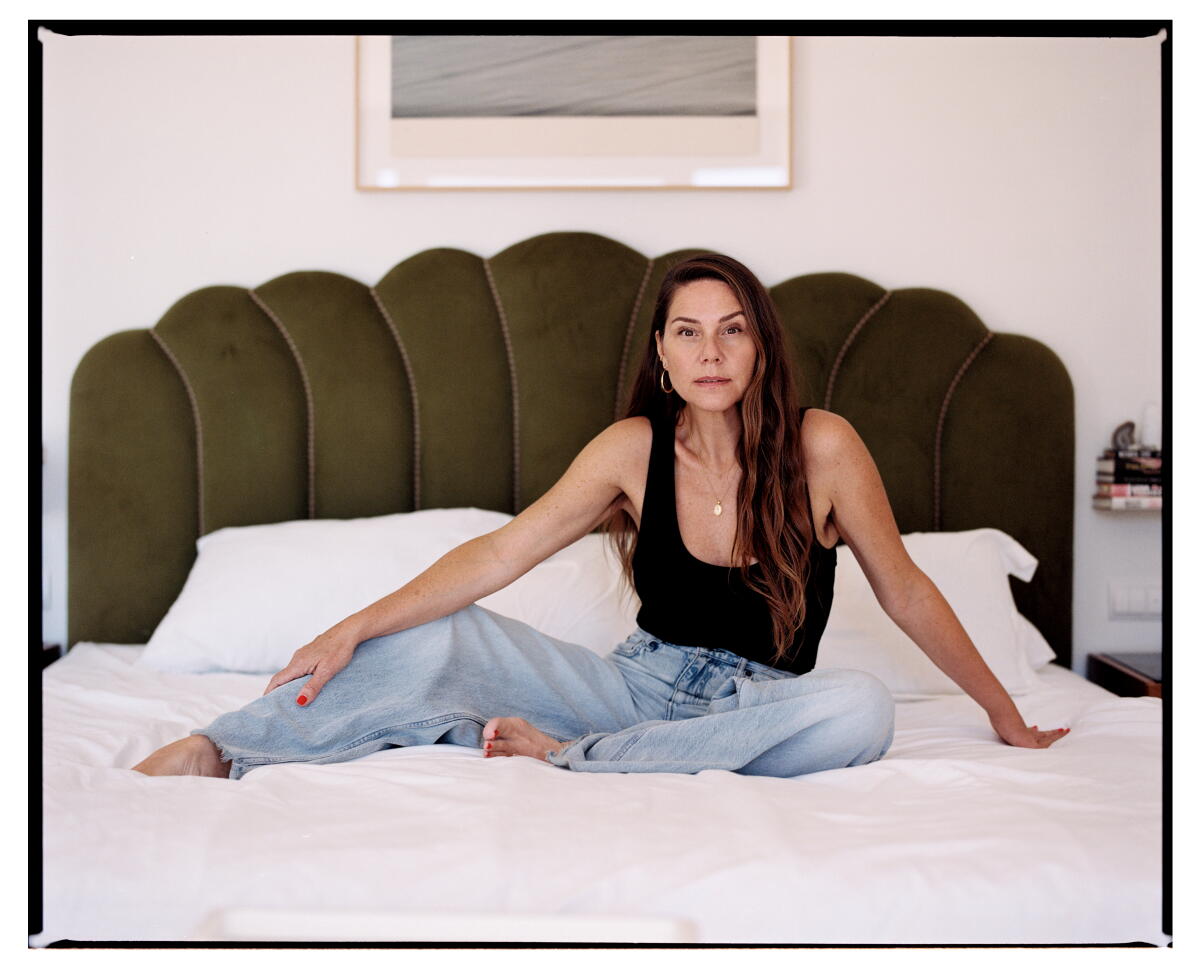
Barry Walters wrote a new book about the history of LGBTQ music.

Barry Walters, a writer for the Village Voice, the Advocate and Spin, among others, wrote a new book about the history of LGBTQ+ music.

(Kelly Lawrence for Walters)

I remember seeing Bowie wearing that dress on the cover of “The Man Who Sold The World,” thinking that was the most transgressive act any rock star had ever committed.

And then he performed “Starman” on Top of the Pops in 1972 and he put his arm around his guitarist Mick Ronson, who also looked gorgeous. They were displaying a familiarity men aren’t supposed to have.

I thought I knew everything about pop music, but you have uncovered so many fascinating stories. Tell me about Olivia Records.

Olivia Records was an independent record label in the Bay Area owned and controlled by lesbians for female artists. This is years before punk or indie rock, when so many small labels cropped up. They pioneered so much. They would recruit fans in different cities to man the merchandise and to help get their records in stores. The idea of a merch table was something new at the time. They also created the forerunner of Burning Man. They would go find a farm somewhere and create an impromptu village, with food, sanitation and the rest.

You have given the most space in your book to Madonna, whom you have written about extensively over the years. Why is Madonna such a huge figure in the history of LGBTQ music?

Her art is so queer. I feel like she is one of us. She’s very much like Grace Jones, in that her sensibility is so aligned with gay culture. I related to Madonna on multiple levels. In the early ‘80s, I would see her around town, dancing at the same New York clubs I was frequenting, like Danceteria. She was steeped in gay culture, and then she brought all of this into the mainstream, and that was profound. I also feel like she was misunderstood in many ways. When straight men called her a slut, things like that. That is so far from the truth. She is such a complex artist. If you are making that claim, you don’t know anything about her.

(This Q&A was edited for length and clarity.)

📰 The Week(s) in Books

Illustration of a man swimming away from a book-shaped shark

(Javier Pérez / For The Times)

Pulitzer prize winner Elizabeth Strout has a new novel called “The Things We Never Say,” and Julia M. Klein approves. “[Strout] reprises her familiar themes: the mysteries of human personality, the perils of solitude, the occasional possibility of grace … in deceptively simple, occasionally mannered prose that draws readers in and immerses them in her fictional worlds,” Klein writes.

They’re on a boat! Paula L. Woods climbed aboard a 130-foot yacht in Marina del Rey to soak in the vibes of the Yacht Girls Book Club. “I wanted conversations with like-minded women that were intellectual but fun,” club founder Aloni Ford told Woods. “And talking about books seemed to be the ideal way to achieve that.”

“PEN15” co-creator Anna Konkle has written a memoir called “The Sane One,” and Rachel Brodsky talked to her about it. “In some ways, ‘PEN15’ was a reaction to loving memoirs,” she tells Brodsky. “Raw memory has always been very exciting to me.”

Finally, our Times critics take the measure of this summer’s hottest beach reads.

📖 Bookstore Faves

Kinokuniya bookstores sell Japanese manga, stationery and literature.

Kinokuniya bookstores sell Japanese manga, stationery and literature.

(Courtesy of Kinokuniya)

When Kinokuniya opened its first L.A. shop in 1977, it was primarily to provide Japanese expats with imported books and magazines to read in their native tongue. Forty years later, the store has become a locus of Japanese printed matter for Angelenos eager to scoop up Japanese literature and manga in Japanese and English, as well an expansive selection of imported stationery products that, in L.A., can only be found in Kinokuniya’s three stores. I spoke with Sakura Yamaguchi, who manages two of Kinokuniya’s stores downtown (the third is in Mar Vista) about its many-splendored pleasures.

How did the store travel from Japan to Los Angeles?

Books Kinokuniya was founded by Moichi Tanabe in 1927. Located in the Shinjuku district of Tokyo in a two-story wooden building, the first Kinokuniya started with five employees, including Mr. Tanabe himself. In 1969, Kinokuniya opened its first overseas bookstore in San Francisco. The first Los Angeles store opened in 1977.

Who are your customers?

We first started as a store for Japanese customers, so we imported Japanese books and magazines and sold them, mainly. But in the past 10 years, Japanese manga/anime, stationery and literature has been quite popular in the U.S. Therefore our customers are a mix of Japanese-speaking customers and non-Japanese speakers who are interested in Japanese culture.

What percentage of your clientele buys Japaneselanguage products?

Forty percent Japanese-language products versus 60% English books.

What specific titles are selling for you right now?

“Witch Hat Atelier Grimoire Edition, Volume 1,” “JoJo’s Bizarre Adventure: Purple Smoke Distortion” and the “Strange Houses” series.

Are you seeing more young people turning to printed matter? It seems like there is an analog revival at the moment.

We have been trying to make exclusive editions that come with freebies to make the printed manga more attractive, but without that our English manga sales have been increasing and our main target for the manga is young people. There are many titles that are published exclusively in e-book format, but we frequently hear from customers asking when they will be released in print form. Also, recently there has been a growing number of cases where titles that were originally available only in digital format have later been published as physical books.

Kinokuniya at the Bloc in Los Angeles is located at 700 W 7th St.

(Please note: The Times may earn a commission through links to Bookshop.org, whose fees support independent bookstores.)

Source link