A little-known airport rule could mean your phones or laptops are confiscated – and it applies in the UK affecting passengers with the likes of TUI, BA, Ryanair and easyjet

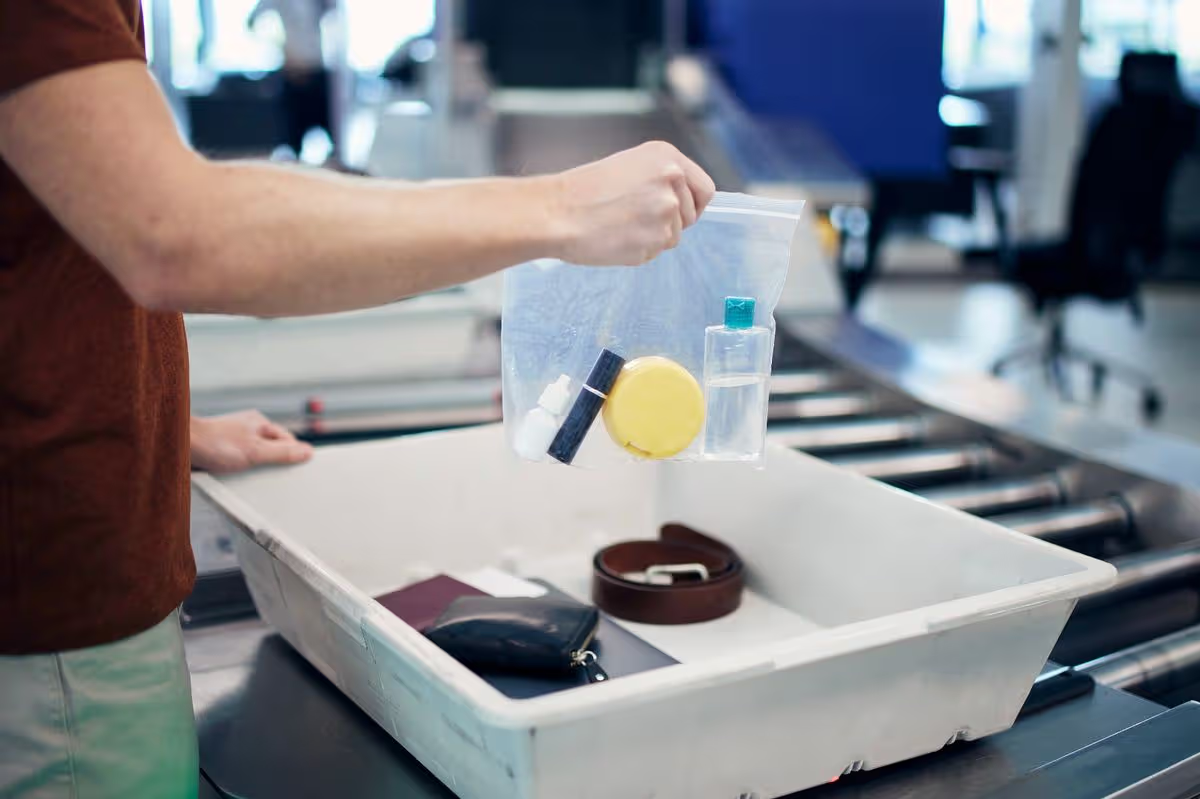
Airport security check before flight. Passenger holding plastic bag with liquids above container with laptop and personal items.(Image: Getty Images/iStockphoto)
Brits should take heed of a little-known airport rule that could mean your phone or laptop gets confiscated before you’ve even boarded your flight.
The restriction is enforced at airport security, and has been known to catch out passengers flying on the likes of TUI, British Airways, Ryanair, or easyJet, and more, as the airlines themselves don’t enforce it.
Most of us take at least one electrical item in our luggage, be it a mobile phone, tablet, or laptop, and no doubt yours will hold your boarding pass and maybe a Netflix show or two to enjoy along the way. However, should you get to airport security and find your battery is at 0%, then you may have a problem. All electrical devices need to be powered up, as airport staff are allowed to ask you to turn these items on.
READ MORE: ‘I’m a travel expert – tourists should never make this mistake when getting holiday money’
If a flat battery stops you from doing this, then you may be refused boarding, or may have to make the choice to leave your item behind. The UK government’s official website, which provides extensive travel guidance and updates, states: “Make sure your electronic devices are charged before you travel. If your device does not switch on when requested, you will not be allowed to take it onto the aircraft.”
Should you make the mistake of having an uncharged device in your hand luggage, the choices vary depending on the airport you’re travelling from and your airline. If you’ve not checked your bag yet, you can put it in there, and it’ll be put in the hold.
READ MORE: Jet2 ‘arrive early’ alert for anyone travelling to popular European destination
The advice from British Airways’ (BA) website is clear. “Please ensure that any items in your hand baggage are fully charged and switched on before you arrive at the airport. If your device is not charged, please place it in your checked baggage.”
They also advise: “If you are connecting, make sure that you do not deplete power in your devices during the first part of your journey as charging points at airports might be very limited and you may need an adapter.”
For London-Heathrow passengers, BA say those with flat batteries may need to rebook on a later flight to give them time to recharge, but that that “a fee might apply”. Alternatively passengers can leave goods at Bagport, the lost property office, and get a reference number for their item. Once at their destination, they can contact Bagport to arrange for the retrieval of their item.
Meanwhile TUI has warned passengers: “If you’re carrying any electronic devices in your hand luggage that are capable of holding a charge, you’ll need to make sure they’re fully charged when you go through airport security. This is part of new security measures that have been introduced by airports in the UK and abroad. We recommend you keep things like mobile phones switched on until you board the plane, as there might be more checks at the departure gate.”
It’s not just a flat battery that could prove an issue. Both easyJet and Jet2 have a list of prohibited items which include damaged batteries – so check your gadgets before you even set off for the airport. Jet2’s website is quite clear: “Damaged Personal Electronic Devices (PEDs) and/or spare/loose lithium batteries/cells (including power banks) are forbidden from carriage in all circumstances.”
Ryanair doesn’t provide any additional guidance other than keeping your phone charged. Under the FAQ ‘What happens if my smartphone or tablet dies before airport security?’, it states: “If you have already checked in online and your smartphone or tablet dies, you will receive a free of charge boarding pass at the airport.” However, it is not mentioned what your options would be if security refuses to let you through.
You can find out more about airport security on gov.uk.
Have a story you want to share? Email us at webtravel@reachplc.com