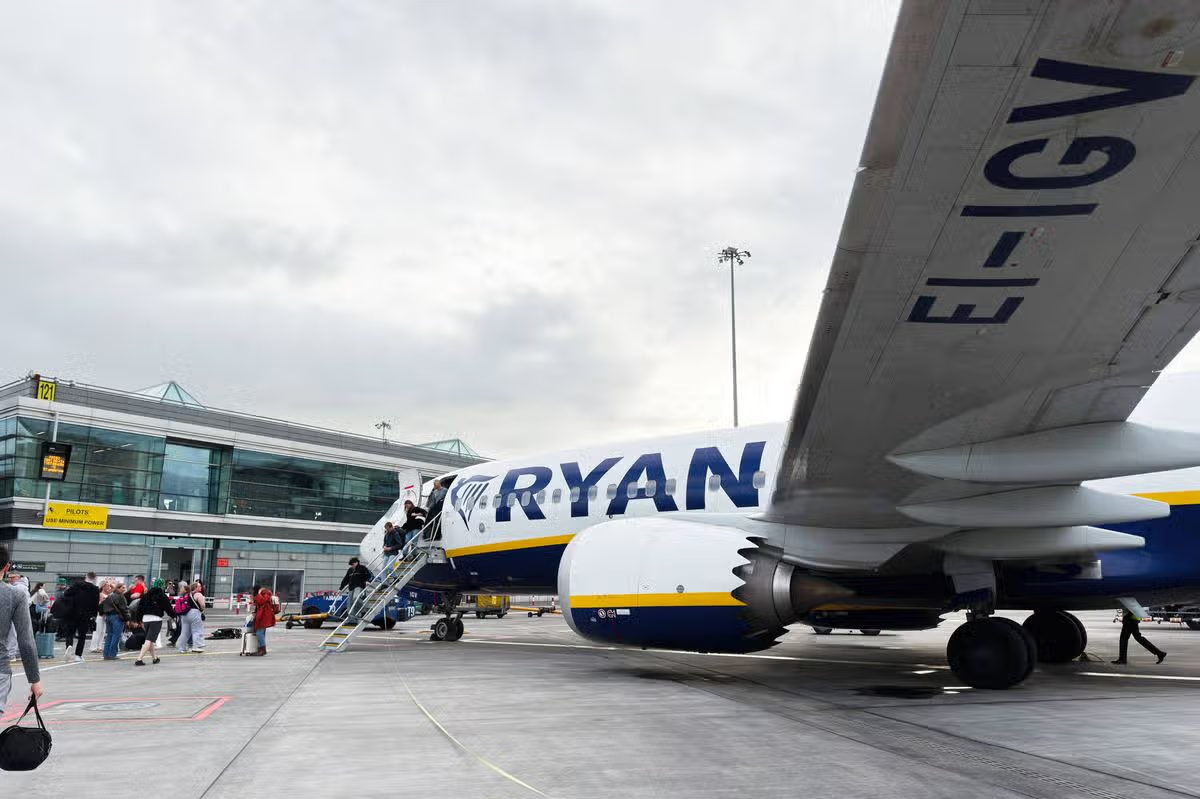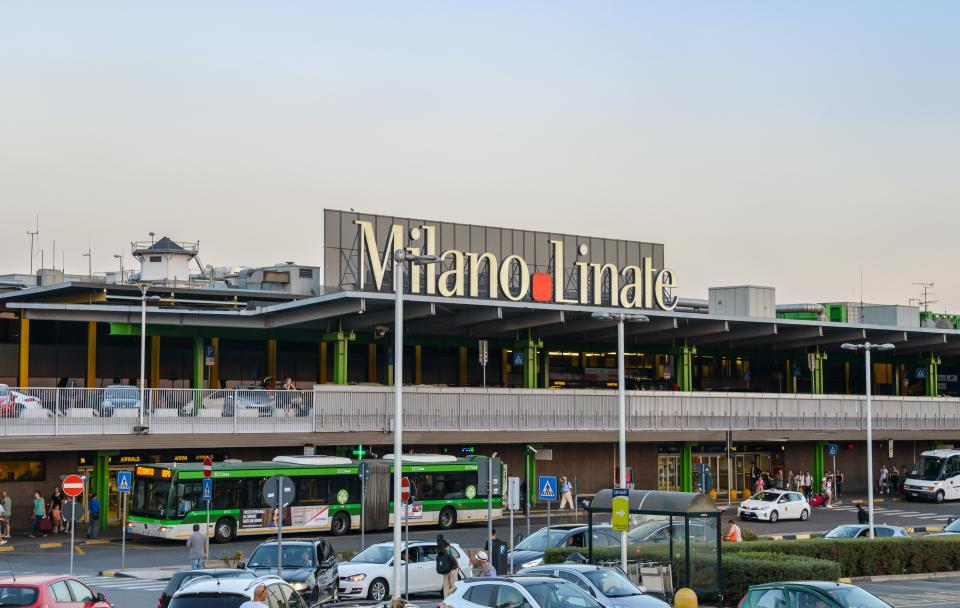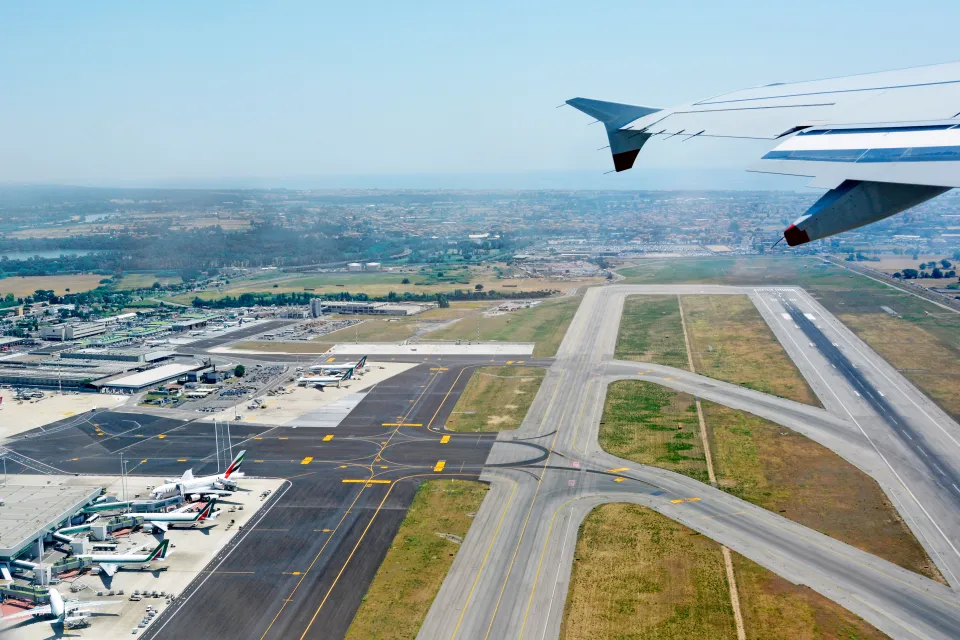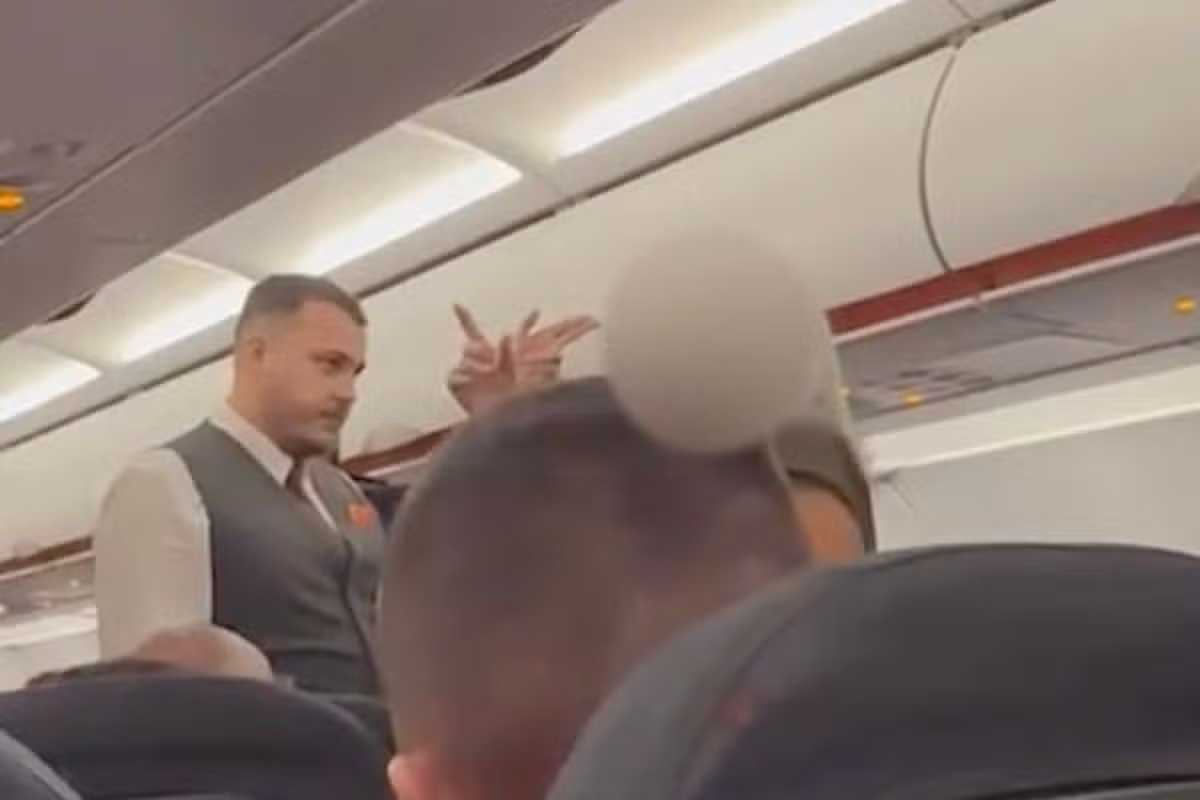
A woman concerned about a name discrepancy between her easyJet holiday booking and passport was urged by the airline to get in touch directly to resolve the issue
Airlines have different rules(Image: Getty)
Budget airline easyJet has urged a customer to get in touch after she queried whether she needed to make an amendment to her booking. The prospective passenger had secured a holiday with the carrier but had concerns about a potential issue with her trip.
Taking to the easyJet holidays Facebook page, Jessica asked: “Booked holiday with my “first” and “last name” My “given name” on my passport includes my middle name.
“Do I need to amend my booking? I fly in 2 weeks and haven’t yet checked in if that makes a difference.”
She received a response from easyJet stating: “According to the International Air Transport Association (IATA), there’s no middle name rule as such, but their guidance is the recorded name on a reservation and ticket should match the name in your official travel document.” A follow-up reply from Anga then added: “Hi Jessica, thank you for reaching out.
“Please note that the name on your booking needs to match what is on your passport. To assist you with adding your middle name, kindly DM us with your booking reference, booker’s name and email address used on the booking.”
The UK government website advises travellers to ensure two key things are consistent when booking a trip, reports the Liverpool Echo. It states: “The name on your passport must match the one you use when you book your travel.”
Content cannot be displayed without consent
However, it does not clarify whether a middle name featured in your passport must also be included when making a booking. Different airlines have their own policies, so it’s always advisable to check with them directly if you have any worries about anything on your travel documents.
Ryanair, for instance, addresses the question on its website, stating: “For security reasons, the first name and surname on your booking must match the names on your travel document(s). We do not require middle name or second/double-barrelled surnames for flights.”
Jet2 similarly states that middle names aren’t required, except in one particular scenario. On its website, it explains: “We don’t we don’t need your middle name(s) on your booking unless two people on the booking have identical first and last names. Please make sure all names are spelt exactly as they are on your passport.”
Tui has also confirmed it’s not essential. Responding to a query about the website not accepting a full name, it clarified: “Our website only allows for a maximum 15 characters in the name box.
“Just enter what you can and contact us so we can make a note of your full name on the system. Just so you know, we only need your title, first name and surname. You don’t have to include middle names.”
If you’ve made a purchase in duty-free, you may want to check ahead of time to see if you’re actually able to use it on board, as there’s one item strictly prohibited
People travelling to and from holidays need to know this rule(Image: Miragest via Getty Images)
Brits travelling abroad need to stay alert to the items they can and cannot take onboard, but do they know about the rules regarding items they buy at the airport?
Travelling with bottles in any shape or form usually comes with its restrictions, as many airports ask for you to pack liquids in measurements only up to 100ml. However, there are some far stricter rules when it comes to the liquid you’re buying in duty-free – particularly alcohol.
At most airports, you can buy bottles of wine, spirits, beers, and more; sometimes up to a liter of each is sold at discounted prices. And yet, despite being able to make the purchase at the airport, you are strictly prohibited from drinking it or even opening it on the plane.
Duty-free alcohol is generally allowed on board, passing as a form of carry-on luggage, when purchased after getting your security checks. Although it is almost always placed inside a sealed Security Tamper-Evident Bag, paired with the receipt.
Within aviation law, this bag must remain sealed throughout the whole duration of the flight, a rule that is consistent across all airlines. Passengers must not consume their own duty-free alcohol on the plane, as all alcohol must be purchased from the cabin crew.
If there’s anything else you’ve purchased from duty-free, you will need to ensure it is placed in a separate bag or in your carry-on luggage to avoid it being trapped inside the sealed bag for the duration of the flight.
The rule is consistent, yet each airline may handle people consuming this alcohol differently, with potential fines for those who break the rules.
Jet2 states: “You may not bring on board alcohol for the purposes of consumption whilst on the aircraft. For safety reasons, we restrict the consumption of alcohol on board. Only alcoholic drinks purchased on board may be consumed during the flight. It is an offence to be drunk on any aircraft. Jet2.com reserves the right to serve alcoholic drinks to customers at our absolute discretion.”
After some recent confusion with passengers boarding Ryanair flights, a spokesperson made it clear where they stand when it comes to drinking on board. They said: “We are not ‘banning’ or ‘confiscating’ duty-free alcohol at boarding gates. As per Ryanair’s T&Cs, passengers can carry duty-free alcohol onboard but must not consume it during the flight.”
Across the majority of airlines, when it comes to alcohol consumption, they have a zero-tolerance policy on ‘disruptive behaviour’ and have the right to reject drunken and disorderly passengers from boarding the flight.
Meaning, even if you’re yet to take a swig of your duty-free bottle, you should be wary of how much alcohol you’re drinking within airport bars and restaurants.
As for the duty-free bag itself, this is often allowed as an extra courtesy to take on the flight, provided that it fits under your seat. However, this is typically limited to one bag per person and does not encourage passengers to hop on board with multiple additional bags after a huge shopping spree.
Latest paper boarding pass rules for all major UK airlines in 2026 – The Mirror
Need to know
Major airlines and some airports have different stances on bringing paper tickets to the airport
15:25, 15 May 2026Updated 15:26, 15 May 2026
Some airlines will have specific policies in place(Image: Sean Gallup, Getty Images)
Boarding pass rules: What Brits need to know before flying in 2026.
British holidaymakers risk having their trips ruined if they don’t check their airline’s boarding pass policies before heading to the airport. Some major airlines are ditching paper boarding passes altogether in favour of digital options.
Budget carrier Ryanair has gone fully digital since November 2025. Passengers must now use the Ryanair app to receive their boarding passes electronically.
The airline claims its digital boarding passes “get rid of 300 tonnes of paper annually”. It says it contributes to “lower airport costs and fares for all Ryanair passengers”.
EasyJet accepts digital tickets via its free app, but doesn’t allow phone scans of PDFs. However, 21 airports in the easyJet network still require printed passes for UK-bound travellers.
Wizz Air also has five destinations that don’t support mobile boarding passes, meaning passengers need paper copies. Travellers are urged to check their airline’s specific policies for both outbound and return flights to avoid being caught out at check-in.
It was hit shortly after taking off from Gatwick Airport. The moment was captured on camera
14:40, 15 May 2026Updated 15:38, 15 May 2026
The plane was struck shortly after take-off (stock image)
An easyJet aircraft was forced to make an emergency landing after being struck by lightning shortly following takeoff. Flight U28305 was hit not long after departing from runway 08R at Gatwick Airport on Thursday, 14 May at 2.22pm.
Turbulent weather conditions, including strong winds and heavy rain, were reported in the area at the time. The lightning strike was captured on camera and widely shared across social media platforms.
The aircraft continued to climb briefly before the pilots, having reached 16,000 feet, requested permission to land and turned back to Gatwick for a full inspection. The plane, an Airbus A319 registered as G-EZDH, had been scheduled to travel to Milan, Italy, but touched back down at Gatwick just 27 minutes after taking off.
easyJet confirmed that no passengers or crew were injured, and that the aircraft returned ‘as a routine precaution’. A spokesperson stated: “EasyJet can confirm that flight U28305 from London Gatwick to Milan diverted back to London due to a lightning strike on the aircraft. The aircraft landed safely and was met by emergency services as a routine precaution.”
Content cannot be displayed without consent
According to the National Weather Service, aircraft are struck by lightning on average once or twice annually. It notes: “They are designed and built to have conducting paths through the plane to take the lightning strike and conduct the currents.
“Actually, aircraft often initiate the strike because their presence enhances the ambient electric fields typical for thunderstorms and facilitates electrical breakdown through air.”
Aircraft must undergo a compulsory inspection following a lightning strike to assess any potential damage. Numerous planes aren’t required to be built with lightning protection as standard. There hasn’t been a lightning-related commercial transport aeroplane crash in decades.
easyJet boss has hit out at a new rule expected to come into force
easyJet boss issued a warning(Image: soniabonet via Getty Images)
Passengers flying within Europe could soon see a significant shift in baggage rules, and travellers are being put on notice.
At present, those travelling on basic fares with easyJet, as well as with Ryanair, are restricted to one small personal item, with any extra luggage attracting additional fees. Following changes to EU regulations, Ryanair was required to enlarge the maximum dimensions of its personal bags last year. The revised rules permit passengers to carry hand luggage measuring up to 40 x 30 x 20cm, a 20% boost from the former 40 x 20 x 25cm restriction.
easyJet’s personal bag specifications already complied with these requirements, meaning no adjustment was necessary. And now further EU regulatory shifts could enable travellers to bring both a cabin bag measuring up to 100cm and a personal bag without incurring additional charges.
In February, the European Parliament voted overwhelmingly to grant all passengers the entitlement to carry a small case in addition to the complimentary under-seat bags currently allowed. The Parliament’s proposal would give passengers the right to bring on board, at no extra charge, one personal item (such as a handbag, rucksack or laptop) and one small piece of hand luggage with maximum combined dimensions of 100cm (length, width and height) and weighing up to seven kilos.
The proposed reforms, which must receive approval from the European Council before becoming law, would apply to all travellers flying to or from an EU airport on an EU-based airline. This directly affects the overwhelming majority of short-haul flights departing from the UK.
While this may seem like a positive development for passengers, easyJet has slammed the proposals to enforce free additional baggage as a “lunatic idea”. Chief executive Kenton Jarvis insisted that granting all passengers the right to extra free carry-on luggage would be “crazy” and “terrible for the consumer”.
The easyJet boss described it as “politicians completely not understanding their subject and getting involved with things they shouldn’t”, adding: “There just isn’t the space in the cabin, so that’s another lunatic idea. We would go back to the days of having to offload cabin bags and put them in the hold – it was one of the number one causes of delayed boarding in the old days.”
Baggage fees accounted for a significant portion of easyJet’s more than £2.5bn in annual income from extras, or ancillary revenue, “and that would have to be passed on” through increased fares for all passengers, he warned.
Anyone with holidays planned needs to know the rules before they fly
Boarding passes might need to be in a certain form, or passengers are not getting past check-in desks(Image: Getty | Franziska & Tom Werner)
Getting your boarding pass sorted is one of the first things to clear before jetting off on holiday, but some Brits risk being caught out at the check-in desk by overlooking a rule certain airlines have introduced. It is essential to know whether your documents need to be in a specific format to pass through the airport smoothly.
Previously, most UK carriers left it up to passengers to choose between printing boarding passes at home or having them on smartphones at the airport. However, it’s important to understand what your airline now allows, as failing to do so could put your entire trip in trouble.
Paper boarding passes are steadily being phased out in favour of digital options. Most airlines now issue tickets via email, apps, or other methods rather than paper.
In many instances, travellers can still print their passes at home or at the airport. It’s advisable to verify your airline’s specific policies (both outbound and return) beforehand, according to the Express.
Ryanair
Budget airline Ryanair has switched entirely to digital as of November 2025. Passengers travelling with the carrier will receive their boarding pass electronically via the Ryanair app once check-in is complete.
On its website, the airline states that its digital boarding passes “get rid of 300 tonnes of paper annually” and contribute to “lower airport costs and fares for all Ryanair passengers”.
Discussing check-in, Ryanair say that all “passengers will still receive email reminders to check-in online 48 and 24 hrs pre-departure. If any passenger arrives at the airport but hasn’t checked in online (having ignored these reminders), they will still be required to pay the airport check-in fee.”
Ryanair added that “special assistance is available at all airports” for travellers requiring support with digital passes and check-in. Full details can be found here.
EasyJet and WizzAir
For most flights, airlines such as easyJet accept digital tickets. EasyJet does not accept PDF scans displayed on phones, and all digital tickets must be presented via the free EasyJet app. Certain non-UK airports continue to require printed passes.
As of 2026, 21 airports in the easyJet network do not currently accept mobile boarding passes. If you are returning to the UK from any of these locations, you will need to print your boarding pass on paper:
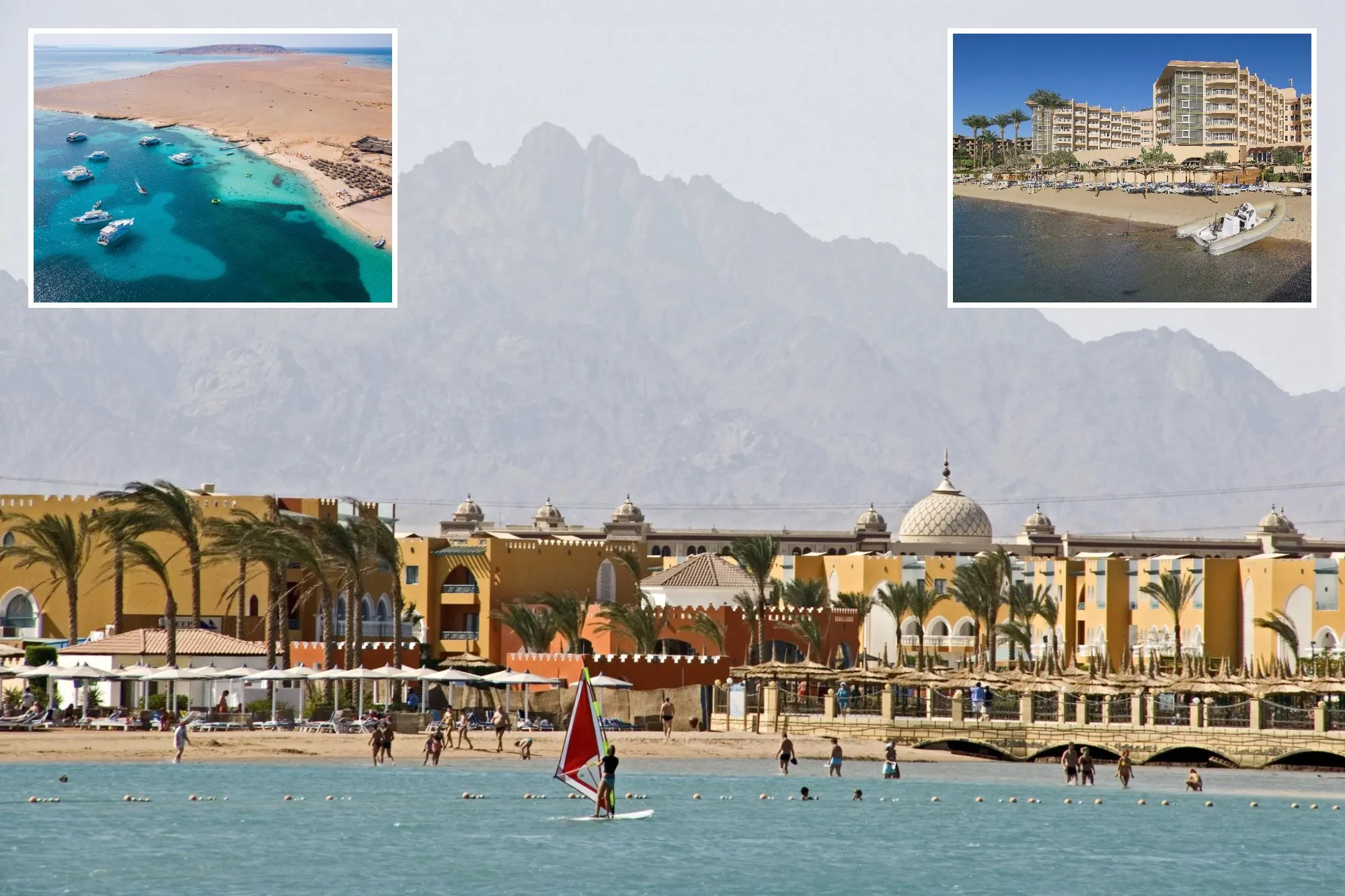
Egypt: Hurghada (HRG), Luxor (LXR), Marsa Alam (RMF), Cairo Sphinx (SPX), Sharm El Sheikh (SSH)
Other Regions: Aqaba, Jordan (AQJ), Belgrade, Serbia (BEG), Pristina, Kosovo (PRN), Tirana, Albania (TIA), Ivalo, Finland (IVL) and Sitia, Greece (JSH)
A handful of airports that handle Wizz Air flights also do not support mobile passes, though there are just five such destinations, as of 2026:
Agadir (AGA)
Marrakesh (RAK)
Cairo Sphinx (SPX)
Zaragoza (ZAZ)
Tirana (TIA)
What about other major UK airlines?
For those flying with other carriers, it is best to check your airline’s website to determine whether a specific policy applies. Rules are larely the same but may vary from location to location.
British Airways: Allows printing at home or at airport kiosks. Digital passes are available via the BA app.
Jet2: Supports both physical and digital tickets. You can print from “Manage My Booking” or use the Jet2 app.
TUI: Both printed and digital passes are accepted.
Virgin Airways: Although the airline “highly recommends” digital, printed copies are accepted, and kiosk printing remains available at major hubs like London Heathrow and Manchester.
When it comes to the major UK airlines, the rules aren’t so strict. However, there are limits on how many batteries and gadgets of a certain kind you’re allowed to take on board
Lithium batteries are causing issues on planes(Image: Getty Images)
Jet2, BA and easyJet all have strict limits on how many gadgets passengers can bring with them on a flight.
The rise of tech powered by lithium-powered batteries, such as mobile phones, electric toothbrushes and vapes, as well as transport devices including ebikes, has caused some big issues.
Fire brigades across the UK are tackling lithium-ion battery fires at a rate of one every five hours, new figures show this week.
Concerns about fires have caused some airlines to ban certain devices. In recent years, numerous airlines have barred passengers from carrying power banks on flights amid fears they could ignite. Vietnam Airlines, Vietjet Air, and most recently Emirates have all prohibited power banks on flights, whilst Cathay Pacific introduced a similar ban last April. Other airlines have introduced prohibitions on AirPods.
When it comes to the major UK airlines, the rules aren’t so strict. However, there are limits on how many batteries and gadgets of a certain kind you’re allowed to take on board.
Each customer is allowed to carry a maximum of 15 lithium battery-powered PEDs, such as mobile phones, laptops, tablets, watches and toothbrushes, providing the capacity of each battery doesn’t exceed:
for lithium-ion batteries: 160Wh, or
for lithium-metal batteries: 2g lithium content.
These devices should be carried in your hand luggage and in all cases, must be packaged in a way that protects against damage.
Customers are permitted to carry no more than 20 spare/loose lithium batteries, providing they are each individually protected against short circuit, the capacity of each battery doesn’t exceed 100Wh for lithium-ion batteries and for lithium-metal batteries, 2g lithium content.
Additionally, customers are also permitted to carry no more than two spare/loose lithium batteries with a watt-hour rating exceeding 100Wh, but not exceeding 160Wh, providing they are each individually protected against short circuit.
Customers may carry no more than two power banks per person, not exceeding 160Wh, providing they are individually protected against short circuit. In all cases these must not be charged whilst onboard the aircraft, and should not be used in-flight.
British Airways
British Airways limits lithium-ion batteries to 100Wh or less for general travel, with up to four spare batteries allowed per person in cabin baggage, provided they are protected from damage. Power banks are restricted to carry-on only, with a maximum of two, and batteries between 100-160Wh require airline approval.
Capacity Limits: Under 100Wh: Allowed in carry-on (up to 4 spares) or installed in devices (checked or carry-on). 100Wh – 160Wh: Requires special approval. Usually limited to two spares. Over 160Wh: Forbidden on board.
Carry-on Requirements: Spare batteries and power banks must be in hand luggage only. They must be in original packaging, or have terminals insulated with tape to prevent short circuits.
EasyJet
EasyJet requires all lithium-ion batteries, spare batteries, and power banks to be carried in cabin hand luggage only, with a general limit of 100Wh per battery (roughly 27,000mAh). Batteries above 160Wh are prohibited, while those between 100-160Wh require airline approval. Items must be protected from short circuits.
Capacity Limit: Maximum 100Wh (or 160Wh with approval).
Power Banks: Maximum 100Wh (~27,000mAh at 3.7V).
Quantity: Generally up to 15-20 spare batteries/devices per person.
Carry-on only: Absolutely no spare lithium batteries/power banks in checked luggage.
Ryanair
Ryanair strictly permits lithium batteries and power banks up to 100Wh (or ~27,000mAh) in carry-on luggage only; they are strictly prohibited in checked baggage. Passengers may carry up to 20 spare batteries/power banks (under 100Wh) that must be individually protected against short circuits.
Capacity Limit: Batteries > 100Wh are generally not permitted.
Carry-On Only: Spare batteries and power banks must be in your carry-on bag or on your person.
Wizz Air
Wizz Air restricts spare lithium batteries and power banks to carry-on baggage only, with a maximum capacity of 100 Wh (typically ~27,000 mAh) per unit without special approval. Batteries between 100 Wh and 160 Wh require prior approval, while those over 160 Wh are prohibited. A maximum of 2 spare batteries per person is allowed.
Location: All spare batteries, power banks, and e-cigarettes must be in cabin baggage only. They are forbidden in checked bags.
Standard Limit: Lithium-ion batteries up to 100 Wh are permitted for personal use without prior approval.
Large Batteries (100–160 Wh): Batteries or power banks between 100 Wh and 160 Wh require prior approval from Wizz Air.
Excessive Batteries (>160 Wh): Prohibited in both carry-on and checked luggage.
Quantity Limit: Maximum of 2 spare batteries per person.
easyJet passengers are being warned they could face serious consequences if they don’t completely switch off certain electronic devices
EasyJet customers must make sure of one thing while on board(Image: BrasilNut1 via Getty Images)
Holidaymakers travelling with easyJet this summer are being warned that they could unknowingly fall foul of strict cabin rules unless they fully switch off a commonly used electronic device before stepping on board. The trouble is that many passengers only discover the rule once they’ve already reached the airport or are on the verge of boarding, where last-minute slip-ups could spell serious problems.
According to EasyJet, the warning relates to e-cigarettes and vaping devices, which must be carried in hand luggage only and are strictly forbidden from being stowed in hold baggage under any circumstances. The airline’s official policy states: “All electronic cigarettes and vaping devices must be carried in the cabin, re-charging is strictly prohibited and the device must be completely switched off.”
It also advises passengers to keep their devices on their person where they can be kept an eye on throughout the flight, reducing the risk of accidental activation. These rules are in place due to concerns over lithium-ion batteries, which are used to power vaping devices and are well known for posing a fire risk if they become damaged or overheat.
The UK Civil Aviation Authority categorises lithium batteries as a significant safety risk in aviation due to their potential for ‘thermal runaway’, producing intense heat and flames that are notoriously difficult to extinguish in confined spaces. The International Air Transport Association has highlighted a worldwide rise in lithium battery-related incidents, which has gone hand in hand with the increasing prevalence of portable electronic devices, prompting airlines across the globe to tighten their rules considerably.
EasyJet also warns that passengers must take precautions to prevent their vaping devices from being switched on accidentally during flights, including ensuring they are fully powered down before boarding. The airline stipulates that travellers may carry no more than two spare batteries in their hand luggage, and that these must be properly protected to prevent them from coming into contact with metal objects.
Under UK aviation rules, vaping devices must be kept in hand luggage at all times. Official government guidance states that e-cigarettes are strictly prohibited from hold baggage.
Industry experts point out that confusion often arises because rules can vary between airlines and destinations, which can leave passengers unknowingly packing the wrong items before they even reach airport security. Aviation safety specialists also warn that using or charging vaping devices while on board flights is strictly prohibited by all major airlines, with penalties ranging from confiscation to fines or even travel bans in severe cases.
As summer travel demand picks up, holidaymakers are being urged to check airline regulations before they set off to avoid delays, confiscations, or being refused entry at the boarding gate.
Aviation sector sources told the that consumers are exercising caution(Image: skynesher via Getty Images)
Holidaymakers planning trips to Mediterranean hotspots are being met with an enticing development as airlines grapple with concerns over possible jet fuel shortages this summer.
Ticket prices on major routes to destinations across Spain, Italy and France have tumbled by double digits – and in some instances drastically – as carriers attempt to entice hesitant travellers into making bookings. Costs have declined by 10% or more on 15 sought-after routes, including flights from Heathrow Airport to Nice, Manchester to Palma, and Gatwick Airport to Barcelona.
In the most striking case, fares between Milan and Madrid have nosedived by as much as 44%, according to analysis by the Financial Times.
The unexpected price cuts arrive as airlines wrestle with a decline in bookings, with numerous travellers postponing holiday arrangements amid warnings that jet fuel supplies could face disruption following tensions related to the closure of the Strait of Hormuz.
Industry insiders say consumers are holding fire, creating a high-stakes “confidence game” as airlines cut prices aggressively to fill seats before the peak summer holiday period.
One airline boss compared the present climate to the uncertainty experienced during the Covid pandemic, cautioning there remains “a lack of visibility” over how the situation will develop.
Analysis of fares between early April and early May reveals prices dropping on more than half of the busiest routes to southern Europe, particularly to seaside destinations around the Mediterranean. Significantly for families, the steepest reductions are being witnessed on traditional summer routes, with eight of the top 50 routes recording decreases of 20% or more. In contrast, only a small number of routes have experienced similarly sharp rises.
Travel industry insiders told the FT that holidaymakers were “freezing in the headlights”, resulting in them making reservations later than normal or opting for UK getaways instead.
Research indicates one in five Britons has already switched an overseas holiday for a domestic break this year, with another fifth contemplating doing likewise.
Airlines are now being compelled to boost demand through reduced fares even as fuel expenses climb and timetables are scaled back. Approximately two million seats have already been removed globally from May timetables, reflecting both elevated costs and weaker demand.
Low-cost carriers including easyJet and Wizz Air have acknowledged that passengers are making bookings later, while also seeking to reassure travellers.
EasyJet has committed not to impose fuel surcharges on existing package reservations, while British Airways has guaranteed prices will not increase after holidays are settled.
Despite the unpredictability, industry insiders emphasise the overwhelming majority of flights are still anticipated to run. Even in a worst-case scenario, only approximately 5% to 15% of flights could be axed and passengers would probably be transferred onto alternative services.
easyJet, TUI and Jet2holidays are some of the UK’s biggest package holiday providers
05:07, 10 May 2026Updated 08:57, 10 May 2026
Jet2holidays, TUI and easyJet all make passengers aware in advance(Image: Ceri Breeze via Getty Images)
Travellers planning to book holidays with easyJet, Jet2, and TUI are being cautioned by the travel firms that they could face additional charges they may not have previously been aware of.
With summer now just around the corner, millions of Brits are eagerly looking forward to a well-deserved break in the sun. easyJet, TUI, and Jet2holidays rank among the UK’s biggest package holiday providers, with countless travellers turning to them to arrange all manner of trips overseas – and 2026 is set to be a busy one.
When browsing the respective websites, customers can explore a vast range of holidays and will be presented with a price for their chosen trip. Each of these operators helpfully outlines why these holidays may carry extra costs, and how much travellers might be expected to fork out.
It all comes down to tourism taxes. The amount you’ll pay depends on your destination, the length of your stay, and whether you’re travelling during peak season.
Alongside the quoted price for your holiday, whether booked through TUI, easyJet, or Jet2holidays, you’ll also find an estimated tourism tax figure for the full duration of your trip. This is typically payable directly at your accommodation upon arrival.
In any destination where a tourism tax applies, all holidaymakers will be required to pay a standard rate – regardless of which airline or travel operator they have chosen to book with.
The money-saving guru has urged those who have paid for trips with major holiday firms and airlines to avoid the DIY approach
15:04, 08 May 2026Updated 15:15, 08 May 2026
Martin Lewis gave advice for anyone booking holidays amid the Iran conflict(Image: ITV)
Martin Lewis has delivered a stark warning to anyone who has already booked a holiday for this summer – and explained why people could be making a big mistake getting flights and hotels separately. In a recent update, the money-saving guru has urged those who have paid for trips with major holiday firms and airlines, including TUI, Jet2, Ryanair, Wizz, easyJet and British Airways, to pay close attention.
It was suggested this week that the UK could be worst hit by jet fuel shortages because it has ‘critically low levels’ of supplies and poor refining tools, by Goldman Sachs. The giant investment bank Goldman Sachs said in a research note to clients: “The UK is the largest net importer of jet fuel in Europe, and it holds no strategic reserves, leaving commercial inventories as the primary buffer.”
During his Money Show Live on ITV, the financial expert responded to an audience member who asked: ‘If my flight’s cancelled due to no jet fuel will you definitely receive at the moment package holidays give you a certain as well.’ Mr Lewis explained that holidaymakers would lose their hotel booking costs if they had arranged accommodation independently from flights reserved with airlines such as Jet2, TUI, Wizz, Ryanair or easyJet – as they would not be protected under consumer regulations.
He said: “No. And I think this is what people need to be very aware of. If you booked a package holiday where you booked everything in one, then under the package holiday regulations and rules and protections generally if your flight went you would get everything back.”
He added: “And so actually at the moment package holidays give you a certain level of extra security that you wouldn’t get if you did a DIY booking where you bought your hotel and flight separately.” The reason for this, he explained, stems from the fact that the hotel reservation itself remains entirely valid: “Because the point is if you lose your flight and you’ve DIY booked, there’s nothing wrong with your hotel.
“The issue is you can’t get there. Your hotel is still there. It’s not faulty. It’s not cancelling. So, you don’t have those consumer rights.” If the accommodation provider hasn’t violated any terms, then guests might examine how they’ve paid for their booking – but that route offers no solution either. He said: “So, you would then say, ‘What about using a credit card or debit card protection?’ It won’t work because there’s nothing faulty. And that’s just giving you the same replica rights that you would have with the retailer.”
For those still seeking a solution, travel insurance may seem like the next logical port of call. Mr Lewis revealed: “So, you’ then say, ‘What about travel insurance?’ This is the bad bit. We were checking 40 travel insurance policies. Of those, only a few would have covered you for the knock-on eventuality of your flight being cancelled due to jet fuel and then your hotel costs.
“Only about three or four and most of those were package bank accounts where it’s linked to your bank account. Only one standalone provider. So we need to be blunt at the moment. There is a big risk in those circumstances. If you’re booking, you want something with free or limited cancellation quite short before. So you could just cancel it. You should always talk to the provider.
“Government are saying there isn’t one at the moment and they’re working on consolidating flights and doing things so there won’t be one, but people’s hotel costs if they book separately and other knock-on costs are potentially at risk.”
Speaking on his ITV programme, he also cautioned that neglecting to take one vital step after booking could leave holidaymakers with absolutely nothing if their plans fall through. With the ongoing turmoil in the Middle East sparking serious worries over jet fuel supplies, Mr Lewis warned that those who book a holiday and put off arranging insurance could risk losing everything should something go wrong in the interim.
Mr Lewis emphasised that travel insurance ought to be bought the instant a holiday is booked: “The reason you do that is because half of the cover you’re paying for is in case something happens that stops you going before the trip. And if you don’t have the travel insurance place, you’ve got no cover. So, you may as well have it in place. But at this time of year when many people have already booked, I have a slight adaptation, which is this. If you’ve booked and you don’t have it yet, just get it now.
“Get it done as soon as possible.” A Money Show Live viewer named David said: “I booked flights to Australia for a family group of seven to travel in March next year. I took out insurance immediately. One of our group is now pregnant and can’t travel on the dates planned. It costs £5,000 to reschedule, which I’m happy to report the insurance covered.”
Mr Lewis also commented on the complexities facing larger groups: “Very quick aside on that, think of who you’re booking for. So, if it’s a family group and one can’t go, they’ll often cover you. But if there’s a large group of friends going, you often all get independent travel insurance. Well, then if one can’t go or and you can’t all go on the trip, it’s only the person who’s who’s got that cover. So, you’d need a group insurance policy so that if one can’t go, you all can’t go.”
Jet2 today said now people choosing a package holiday as their preferred method of booking is up 5% to 51% since February. In the same period, the number of people preferring to book through different providers has dropped by six percentage points to 20%. Those choosing ‘accommodation only’ has dropped to 2%.
The primary reasons for choosing a package holiday have remained steady, with value (36%) and ease (36%) the main drivers, however the benefit of ‘added security with one provider, ATOL/ABTA protection’ has increased by four percentage points since February to 26% the poll said.
This protection means that customers are covered should any changes happen to their bookings, including the option of receiving refunds if their travel plans are cancelled, and that those holidays are held to the highest standards when it comes to customer service, changes to bookings, and health & safety.
Jet2 has confirmed it will not introduce surcharges on any booked flights or holidays to cover cost increases, for example jet fuel, assuring customers that the price they book with Jet2 is the price they will pay.
Steve Heapy, CEO of Jet2 said: “Consumers want assurance during times of uncertainty and package holidays provide that assurance. On top of all the protection that our package holidays guarantee, Jet2 is well known as being a consumer champion that goes above and beyond to look after customers. Ahead of a busy summer season, this means new and existing customers know that their well-deserved holidays are in the very best hands with us, and we are very excited about welcoming everyone onboard and taking them on their breaks.”
Jet2 customers are being reminded of a rule the airline has that does not allow passengers to bring on board an item that is commonly available in airports. The popular airline reiterated its blanket ban for customers this week – and there are no exceptions.
Holidaymakers are advised not to bring the item with them beyond the gate leading to the aircraft. Most airlines have their own rules, which vary depending on which one you fly with, though many share the same for health and safety reasons.
Jet2 has a strict rule in place about bringing hot drinks on board, including teas, coffees and hot chocolates. The rule also applies to any hot food – even if it was purchased from a shop, cafe or restaurant in the airport terminal.
Jet2 reiterated the rule online to a passenger who asked whether they could bring a drink with them. The airline said: “You are able to bring any snacks or soft drinks on board bought in the terminal (after security).” However, it added: “Hot drinks are not permitted to be brought on board.”
People who are due to board flights will need to finish their hot food or drinks before being allowed on board. This rule applies to other airlines as well, like Ryanair, but some are more relaxed, like easyJet.
Content cannot be displayed without consent
What is the reason for this Jet2 rule?
On its website, Jet2 states: “You can’t bring hot food or hot drinks onboard our planes for safety reasons.” The Jet2 ban applies only to drinks customers bring on board.
Usually, passengers can purchase a variety of hot foods, as well as teas, coffees, and hot chocolates, on board Jet2 flights. Customers must remember the payment rule that applies to all flights.
Elsewhere, certain airlines, like easyJet, will allow hot drinks bought in the airport on board. This is provided the cup has a secure lid.
In other Jet2 news, the airline announced two new routes to a ‘stunning’ island with ‘sandy beaches‘, ‘aquamarine waters’, ‘cobbled streets’ and ‘rolling hills’. The new routes follow Jet2’s claims of continued customer demand and independent travel agents booking holidays for the short hop to the island.
Jet2 has confirmed significant expansion to its Jersey programme for summer 2027, by putting two new routes and additional capacity on sale, as well as extending the season. The airline has introduced flights and holidays from Birmingham and Bristol for Summer 2027.
In addition to the new routes, extra capacity to Jersey has been added from Manchester, and the summer season to the destination has been extended. It means Jet2 will operate to Jersey right through to the end of October.
Each airline has set rules about when to arrive at the airport to avoid delays – check which apply to you before you make your way to the airport this May half-term
Different airlines have different check-in guidelines
If your family is headed abroad in May, it might be wise to pay attention to the latest airport arrival advice from airlines including Ryanair, easyJet, Jet2 and TUI.
Airports are expected to be packed during the school holiday period, and with fluctuating jet fuel prices concerns, many travellers want to be extra prepared for potential delays, longer queues and last-minute schedule changes.
The rules have remained mostly the same in recent months, but some airlines have specific requirements for different types of passengers or groups.
Ryanair
Ryanair advises passengers to arrive at the airport at least two hours before departure to allow enough time for check-in, bag drop and security, and also says passengers must be at the boarding gate at least 30 minutes before departure time.
Even if you’ve booked through an online travel agent, you’ll still need to verify your booking at the airport, and you’re also told to arrive at least two hours early.
Passengers flying easyJet are warned on their website that airports can become especially busy during school holidays, and to allow extra time for traffic, train disruptions and queues.
The airline warns that bag drop at most UK airports closes 40 minutes before departure, although some airports and destinations may close earlier at 60 minutes. Twilight bag drop services are available the evening before flights that are scheduled for the morning.
Jet2
For Jet2, you should arrive at the airport at least two hours before the scheduled departure, or earlier, since the airline’s check-in desks generally open around two-and-a-half hours before flights.
Jet2 closes check-in desks 40 minutes before departure. Traveller are urged to check its latest travel information page at least 12 hours before flying for updates on delays or disruptions.
Like some others, the airline also offers its Twilight Check-in service at selected UK airports, allowing customers on morning flights to drop off bags the night before.
TUI
TUI’s standard check-in opens at least 2.5 hours before short- and mid-haul flights, but for long-haul flights you can check in 3.5 hours before departure.
The company warns that arriving earlier than this will not allow passengers to pass through security sooner, and that those travelling with hand luggage only and who have already checked in online can go straight to security after arriving at the airport.
For groups travelling together on the same booking, TUI advises that only one person needs to go to the bag drop with all passports, visas, boarding passes, and luggage.
For all airlines, general advice is to keep travel documents easily accessible, check flight updates online before leaving for the airport and prepare for longer queues during peak travel periods such as the May half-term.
The Department for Transport has announced it is consulting on major changes for holidays
07:40, 06 May 2026Updated 07:41, 06 May 2026
Rules are being changed for flights this summer which could see people shifted onto different aircraft on the same day at totally different times with no penalty to the airline(Image: PA)
Concerns have been raised about potential changes which will mean the end of a ‘14-day rule’ this summer with flights being changed or cancelled at the last minute. The Department for Transport has announced it is consulting on major changes to holidays amid uncertainties about jet fuel supplies as the Middle East crisis continues with no end in sight.
With intense pressure on jet fuel widely tipped to cause travel problems this summer, the government announced over the weekend that airlines will be allowed to group passengers from different flights onto fewer planes. This means that at the last minute, people could be switched to a different flight.
The DfT says it will help cut the likelihood of last-minute flight cancellations this summer in the event of significant disruption due to ongoing global uncertainty caused by the Middle East conflict. It lets carriers such as Ryanair, easyJet, Jet2, British Airways, Wizz Air UK, and TUI, consolidate flights on routes where there are multiple trips to the same destination on the same day.
However, consumer experts said that currently, passengers are protected by a 14-day rule, and it’s ‘not fair’ for people to be shifted at the last minute to suit airlines without compensation. Rory Boland, Editor of Which? Travel said: “Millions of Britons will have already booked their flights for this summer, often paying over the odds for flights at peak times.
“Existing rules already allow airlines to move customers to new flights so long as they give them more than 14 days’ notice and offer the choice between a new flight or a refund. It’s only for cancellations within 14 days that compensation is payable, rightly.
“It’s not fair for the rules to now be bent in favour of airlines and potentially leave passengers holding the bill. Many passengers will understand that disruptions can occur and may be happy to travel a few hours or a day later, but for those on short trips or connecting flights it could mean the trip is no longer worthwhile.
Conservatives say it could see passengers “herded on to a different plane, at a time of the airline’s choosing”. The DfT says, however, that the measure is designed to give passengers “greater confidence” by helping airlines to lock in their schedules earlier.
Heidi Alexander, the transport secretary, adds: “There are no immediate supply issues, but we’re preparing now to give families long-term certainty and avoid unnecessary disruption at the departure gate this summer.
“This legislation will give airlines the tools to adjust flights in good time if they need to, which helps protect passengers and businesses.”
The Department for Transport said the measures would:
help move passengers onto similar services much earlier, helping avoid stressful delays at the airport
prevent running flights which have not sold a significant proportion of tickets
reduce wasted fuel from flying near-empty planes
Current rules
If your flight is cancelled by the airline, you have a legal right to a choice between being re-routed or a refund. If a flight is subject to a significant delay – at least 2 hours for short-haul, 3 hours for medium-haul and 4 hours for long-haul – passengers are entitled to care and assistance, including food, drink and overnight accommodation where necessary.
Rob Bishton, Chief Executive of the UK Civil Aviation Authority, said: “Passengers in the UK are well protected by some of the strongest rights in the world, offering reassurance if disruption does occur.
“Airlines have a duty to look after their passengers when they face disruption, and should offer a choice between a refund or alternative travel arrangements, including with another airline, if a flight is cancelled.
“Relaxing the rules around slots at airports will allow airlines more flexibility and so we expect them to give passengers as much notice as possible of cancellations during this period.”
If notified of changes to their flights by airlines, passengers are advised to speak to their airline, travel agent or tour operator in the first instance.
Simon Calder described the EU’s Entry Exit System (EES) as ‘passport roulette’
13:20, 05 May 2026Updated 13:20, 05 May 2026
EES has been causing problems at certain European airports(Image: Getty)
A leading travel journalist has suggested the European Union’s new Entry/Exit System (EES) could be put on hold for the entire summer following reports of chaos and significant delays at airports. Speaking on BBC Breakfast, Simon Calder – who has branded the system ‘passport roulette’ – acknowledged that while some locations had performed ‘really well’, others were ‘struggling’.
EES is an automated system gradually replacing the traditional passport stamp. It requires people from third-party nations such as the UK to have their fingerprints registered and photograph captured before entering the Schengen Area, which encompasses 29 European countries, predominantly within the EU.
For the majority of UK travellers, the procedure takes place at foreign airports. The system saw a soft launch in October 2025 and was meant to be fully operational across all borders by April 10, 2026.
Yet there have been numerous accounts of passengers missing flights and enduring lengthy queues at airports as systems buckle under the sheer volume of people attempting to register. Several countries have suspended EES at various points, with Greece postponing the system for UK travellers over the summer to enhance the travel experience.
Portugal has halted EES for extended stretches to ease travel to and from the country, with speculation mounting that Italy may do likewise. Mr Calder indicated it was not beyond the realms of possibility. “It was always going to be really exciting to see what happens when you roll out a digital borders scheme and you ask 29 national governments to implement it,” Mr Calder said. “They have all gone their own way.
“Some of them have done it really well. Others, well, they are still struggling and we might find that, actually, the whole scheme gets put on a sort of hold for the rest of the summer.
“That’s certainly what a lot of airlines and train operators would like, not to mention the Port of Dover, where they haven’t even started taking biometrics from motorists yet.”
Headlines were made in April 2026 when passengers travelling with both Ryanair and easyJet missed their flights from separate Milan airports owing to EES complications. Footage from one incident revealed a crowd gathering at Milan Bergamo, with exasperated passengers informing staff they had been held at the gate for over an hour, demanding to know what action to take.
It’s understood that approximately 30 passengers were left behind. Ryanair said in a statement: “Due to passport control delays at Milan Bergamo Airport on 16 April, a number of passengers missed this flight from Milan to Manchester.” One passenger claimed they were kept waiting until the aircraft had departed, only to then be informed they would need to arrange their own return flights. A number of travellers on a Ryanair service from Tenerife South to East Midlands on 10 April also missed their homeward journey, once again blaming hold-ups at passport control.
Ryanair recently issued a blistering statement on social media, demanding the EES rollout be postponed until September. The low-cost carrier tore into France, Portugal, Poland, Italy, Spain, and Germany for their failure to ‘ensure that adequate staffing, system readiness, or kiosks are in place’.
Content cannot be displayed without consent
Branding the system as ‘half-baked’, the Ryanair statement said: “Despite knowing for over three years that EES would become fully operational from 10 April 2026, France, Portugal, Poland, Italy, Spain, and Germany have failed to ensure that adequate staffing, system readiness, or kiosks are in place.
“As a result, passengers are suffering long passport control queues and, in some cases, missing their flights.
“Ryanair calls on these EU Governments to suspend the rollout of the EU’s passport control Entry/Exit System (EES) until September to ensure that passengers are not needlessly forced to suffer long passport control queue delays at European airports during the peak summer season.”
An overlooked European city, just two hours from the UK, warrants a visit, thanks to its balmy rays of sunshine 300 days out of the year and affordable flights that start from £29
The European city is brimming with charm, alongside narrow streets and lively squares(Image: Getty Images)
Just two hours from the UK is a beautiful Mediterranean city that basks in a remarkable 300 days of glorious sunshine every year, and flights start from just £28.99 with easyJet.
Montpellier, in southern France, is often bypassed in favour of tourist hotspots such as Paris, but it definitely deserves a place on your travel list. The charming city offers a scenic escape from busy crowds, with a laid-back atmosphere amid its medieval architecture, bustling squares and delightful cafés.
You won’t be short of sun-soaked rays here, as Montpellier is widely considered one of France’s sunniest locations, with an average of 300 days of sunshine every year and summer daylight extending to around 10 hours. Thanks to its Mediterranean climate, it enjoys mild winters and hot, dry summers, so rainfall is rarely an issue, with temperatures reaching around 17C in May and 22C in June.
A spring escape couldn’t come at a better time as easyJet launched a new route from Manchester Airport to the sun-kissed city of Montpellier earlier this year. The first flight departed at the start of April this year, with services scheduled to operate twice-weekly on Mondays and Fridays throughout the summer season.
One-way direct tickets can be booked from £28.99, with the journey taking just over two hours from Manchester – meaning you’ll be basking in those southern rays in no time. If you needed another excuse to experience the Mediterranean lifestyle in Montpellier, you’ll be pleased to hear that it has an impressive selection of sights and attractions.
There’s the historic city centre to wander through, with the stunning Place de la Comédie, the historic Promenade du Peyrou, and the Gothic Saint-Pierre Cathedral. And a visit to the city isn’t complete without exploring its pedestrian-friendly Old Town, with winding medieval streets, chic boutiques, and lively squares filled with cafés, restaurants, and hidden courtyards.
Meanwhile, the botanical gardens, Jardin des Plantes – the oldest in France – provide a tranquil escape, boasting an impressive collection of plants and peaceful walkways. The Peyrou Promenade, on the other hand, offers stunning panoramic views across the city and the surrounding countryside, ideal for taking in the atmosphere of this overlooked European gem.
Following the launch of the new flights to Montpellier, Kevin Doyle, easyJet’s UK country manager, said: “We are really pleased to be celebrating our inaugural flights to the fantastic city of Montpellier, just a stone’s throw from the Mediterranean coast. By introducing new connections from Manchester on our unrivaled leisure network, customers from across the northwest can now enjoy even more choice this summer to book and travel with ease.
“We’re continuing to provide our customers with even more choice and connectivity at fantastic fares, and we look forward to welcoming them onboard.”
Stephen Turner, chief commercial officer at Manchester Airport, added: “We are proud to connect the people of the North with more destinations than any other airport in the country outside London, so it’s fantastic to be celebrating this inaugural flight today.
“Montpellier is not currently served by any other airline so passengers planning a holiday to the south of France this summer will have even more choice of destinations when flying from Manchester. We’re sure this new route will prove extremely popular.”
For more information, or to book easyJet flights, visit their website.
Do you have a travel story to share? Email webtravel@reachplc.com
EasyJet has issued a new statement this Saturday, May 2 as UK travellers consider their holiday plans amid concern over jet fuel shortages
Robert Rowlands Deputy editor, money and lifestyle, content hub
17:33, 02 May 2026
(Image: NurPhoto, NurPhoto via Getty Images)
EasyJet has issued a new update for UK travellers currently looking to book their summer flights. Holidaymakers up and down the country are busy making plans for the warmer months ahead.
However, they are doing so amid uncertainty hanging over parts of the airline industry. This follows jet fuel shortages brought about by the effective closure of the Strait of Hormuz by Iran.
Lufthansa has already confirmed that 20,000 of its flights are to be axed as a result. Industry experts warn that further airlines are likely to slash their capacity in the coming weeks – with Ted Wake, managing director of Kirker Holidays, last week predicting that “I think other airlines within the UK market will be doing something similar.”
Across the Atlantic, we reported earlier today that budget carrier Spirit Airlines has announced it is grounding all of its flights, as the jet fuel crisis, combined with mounting financial pressures, pushed the airline to the edge of collapse. easyJet has now set out new commitments to customers alongside a fresh statement.
It is all part of a bid to put the minds of UK passengers at rest as they weigh up their summer travel options. Ryanair and Wizz Air have also moved within the past 24 hours to offer their own reassurances to British holidaymakers.
In a statement released today, easyJet said: “easyJet is not seeing any disruption to fuel supply. We continue to operate our flights and package holidays as normal, are not making changes and intend to operate our full summer schedule. We remain in close contact with suppliers who continue to provide uninterrupted supply and are diversifying exporting from additional countries globally to bolster supplies going forward.”
easyJet made the latest statement as it introduced new measures designed to give UK travellers greater peace of mind when booking flights. The airline has unveiled a ‘Book with Confidence Promise’ in a move to reassure passengers ahead of the summer season.
The carrier says it is guaranteeing that customers won’t be hit with post-booking price rises or fuel surcharges. easyJet says it plans to operate its complete network schedule, which includes more than 50 million seats and 30 new UK routes.
According to the airline, the ‘Ultimate Flexibility’ policy enables holidaymakers to amend or cancel their bookings up to 28 days prior to departure. Kenton Jarvis, CEO at easyJet said: “We understand that global events may affect travellers’ confidence at the moment, but we believe that everyone has a right to book their flights and holidays with confidence.
“That’s why we’re launching our ‘Book with Confidence Promise’. Our customers won’t be charged any more after they book, including no fuel surcharges, and package holidays customers can continue to benefit from Ultimate Flexibility when they book with easyJet Holidays.”
Jet2, easyJet and TUI have all pledged not to impose additional charges on travellers for fuel price increases. In new remarks published today, Michael O’Leary, the boss of Ryanair, Europe’s largest airline, told The Times that 80 per cent of its fuel supply until March 2027 had been secured in advance. He confirmed the company would not be reducing any flights, despite the crisis costing the firm approximately £37 million each month in extra fuel costs on its unhedged supply.
Eddie Wilson, chief executive of Ryanair, warned that rival airlines could soon begin “gouging” their schedules should prices remain elevated. He said: “What’s going to happen with airlines that are not financially robust, they either have to decide whether they are going to continue flying at a loss or start gouging their schedules. That’s not something we are contemplating.”
Meanwhile, Wizz Air has also moved to reassure customers. Speaking to renowned UK travel broadcaster and journalist Simon Calder on his Independent travel podcast, the airline expressed confidence that it will deliver a full schedule of flights this summer.
“We have just launched our biggest-ever network from the UK and in particular from Luton,” said Yvonne Moynihan, managing director of Wizz Air UK. “Despite the challenging geopolitical crisis, business goes on as usual. In airlines, we are well used to crises, so we are resilient and we’re well adapted.
“For low-cost airlines like Wizz in the UK, we don’t see any shortage of fuel.” She said that if jet fuel shortages affected the UK, the airline would get fuel from elsewhere.
“We can take more fuel than is required in those destinations,” she said. “We can even fly to other countries and and pit-stop, if you will, if we need additional fuel.
“But we’re not seeing an Armageddon situation. We have fuel supply. We have other mechanisms for uplifting fuel.”
A Jet2 spokesman said: “We remain in continual dialogue with our fuel suppliers, as is standard practice. Based on the conversations we have been having, we see no reason not to look forward to operating our scheduled programme of flights and holidays as normal.”
Airlines UK said: “UK airlines continue to operate normally and are not experiencing issues with jet fuel supply.”
Budget airlines have spoken amid warnings that the UK faces greater exposure to jet fuel shortages due to the Middle East conflict
05:41, 02 May 2026Updated 07:16, 02 May 2026
Travellers have been concerned at the possibility for disruption this summer due to the continuing Middle East crisis(Image: Getty Images)
Following warnings from a leading analyst over potential jet fuel shortages that could hit the UK during the summer, Europe’s biggest budget airlines have stated they remain confident in their ability to keep flights running as normal throughout the peak holiday season.
Ano Kuhanathan, head of corporate research at insurer Allianz, has warned that the closure of the Strait of Hormuz leaves Britain considerably more exposed than other European countries to supply disruptions. Roughly three quarters of Europe’s jet fuel comes from the Middle East and passes through the vital shipping lane.
He explained: “The UK is Europe’s most structurally exposed market to jet fuel shortages, relying heavily on imports to meet aviation demand and running persistent refining kerosene deficit, leaving it particularly vulnerable to supply shocks.”
Despite these concerns, senior figures at Britain’s top budget airlines have voiced confidence in their capacity to deliver a full flight schedule throughout the summer.
A spokesperson for Jet2 said: “We remain in continual dialogue with our fuel suppliers, as is standard practice. Based on the conversations we have been having, we see no reason not to look forward to operating our scheduled programme of flights and holidays as normal.”
The announcement comes in the wake of a separate warning from Heathrow airport on Wednesday, which stated it anticipates passenger numbers for the remainder of the year to be impacted by the ongoing situation in the Middle East. Laura Lindsay, spokesperson for the price-comparison site Skyscanner, suggested that travel demand is changing rather than vanishing. She told The Independent’s daily travel podcast: “We know that people do still want to get away. It may be reduced internationally and increased domestically, for example.”
Jet2 has revealed that holidaymakers are increasingly making last-minute bookings since the outbreak of the Iran conflict amid growing concerns over the impact of the war and fears surrounding jet fuel supply.
The company said summer passenger bookings to date are up 6.2% thanks to expansion across its airline and package holiday operations, but in a sign of rising unease among travellers, it disclosed that the “booking profile has become increasingly close to departure” due to the Middle East conflict.
It stated it is well shielded from the fuel cost surge triggered by the Iran war for the crucial summer period, adding it is “maintaining frequent dialogue with our fuel suppliers and airport partners on fuel supply”.
Michael O’Leary, Ryanair’s chief executive, said that “the risk of a supply disruption is receding”, with no disruption risk before the end of June. However, he pointed out that the UK faces greater vulnerability compared to other major nations. EasyJet has confirmed it intends to run “a full schedule across its network”. Garry Wilson, chief executive of easyJet Holidays, said: “Our operations remain unaffected, so customers can be confident that not only will their holiday go ahead as planned, but there will be no surprise extra payments.”
Yvonne Moynihan, managing director of Wizz Air UK, said: “We have just launched our biggest-ever network from the UK and in particular from Luton.
“Despite the challenging geopolitical crisis, business goes on as usual. In airlines, we are well used to crises, so we are resilient and we’re well adapted.
“For low-cost airlines like Wizz in the UK, we don’t see any shortage of fuel.”
The airline boss explained that if a shortage were to emerge in the UK, Wizz Air could source fuel from alternative countries – a tactic known as “tankering”.
“We can take more fuel than is required in those destinations,” she said. “We can even fly to other countries and and pit-stop, if you will, if we need additional fuel
“But we’re not seeing an Armageddon situation. We have fuel supply. We have other mechanisms for uplifting fuel.” Wizz Air is Europe’s third-largest budget airline, behind Ryanair and easyJet.
Jet2, easyJet and TUI have all committed to not imposing any additional charges on passengers for fuel price increases.
In a world of smartphones and content creators, airlines have strict rules on taking photos or videos while on board, with British Airways tightening its passenger regulations
16:41, 01 May 2026Updated 16:42, 01 May 2026
Holidaymakers need to be aware of the regulations for taking photos or videos during a flight (Image: Getty Images/Stock Image)
Every airline has passenger regulations, but holidaymakers may not be aware of the restrictions on taking photos during a flight, as British Airways tightens its rules.
Heading off on holiday is always an exciting time, and it’s natural to want to document the journey, from arriving at the airport and boarding the plane to landing at that sun-drenched destination. But for those eager to take photos or videos during their flight, there are stringent guidelines to follow.
A vast number of airlines that fly thousands of Brits to holiday hotspots every year have specific policies on using a camera on board. While they affirm that it’s not a blanket ban and passengers are still allowed to take photos or videos during the flight, they can’t capture everything on board.
Just recently, British Airways introduced tougher guidelines on taking photos and videos while on board and revised its passenger terms. In an update under section 11a on its ‘behaviour on the aircraft’ conditions, the airline noted that none of its crew should be filmed without their consent.
The update stated: “If, while you are on board the aircraft, we reasonably believe that you have filmed, live-streamed or photographed our crew or other colleagues without their consent, we may take any measures we think reasonable to prevent you continuing your behaviour.”
The airline went on to warn that passengers who fail to comply with these rules could be asked to disembark upon landing or be refused passage on the remaining legs of their journey, as shown on their ticket. That’s not all; the incident could be reported to the relevant authorities “with a view to them prosecuting” the passenger for any criminal offences that may have been committed.
BA also pointed out that if diversion expenses arise due to unacceptable conduct, and they redirect the aircraft to an “unscheduled place of destination” and remove a passenger from the plane, that traveller will be liable for the “reasonable and proper costs of the diversion”.
They’re not the only airline to have a policy of this nature in place. Outlining their own policies on the common habit, a Virgin Atlantic spokesperson told the Mirror: “We know our customers enjoy capturing moments during their journey, and photography and filming are permitted onboard. However, we ask that customers always seek permission before including other people, including our crew, in any photos or videos. The comfort and well-being of our customers and crew is always our priority, and our crew may ask customers to stop filming or photographing to protect the privacy of those onboard.”
Meanwhile a spokesperson for Wizz Air told us: “Wizz Air is proud of its cabin crew, who play a vital role in maintaining the safety and security of everyone on board. Filming or taking pictures of cabin crew without their consent is not tolerated on board. Passengers are required to follow crew instructions at all times, and where behaviour is considered disruptive, unsafe, or causes concern to crew or other passengers, appropriate action may be taken in line with our Conditions of Carriage. Our priority is always to help ensure a safe and respectful onboard environment for both passengers and crew.”
As for easyJet, a spokesperson told us: “Customers are welcome to take personal photos and videos as long as it doesn’t disturb the privacy of other customers or include the crew without their consent, so everyone can have a pleasant flight.”
Meanwhile, Ryanair states in its terms and conditions: “Recording or photographing our personnel, whether at the airport or onboard the plane, without their consent is strictly prohibited. Only recordings or photographs personal to you may be permitted.”
While airlines have these regulations in place, it doesn’t mean holidaymakers can’t document their flights. They’re still free to capture images of their seat, the view through the window, cabin features, meals, drinks and any other personal moments – provided they don’t film a crew member directly without their permission.
The same rule applies to photographing or filming fellow passengers on board without their consent. So as long as travellers remain mindful of their surroundings and what they’re recording, it shouldn’t be an issue.
Do you have a travel story to share? Email webtravel@reachplc.com
This lesser-known city break destination is less than two-and-a-half hours from the UK, and it’s a great place for people who love walking as its city centre has a huge car-free zone
The city has incredible sights such as its hilltop castle(Image: Getty Images)
A new easyJet route will connect London-Luton Airport with an often overlooked European city break destination that’s ideal for long weekends away.
With a flight time of under two-and-a-half hours, this Central European destination may not be on your radar for a short break, yet it offers fairytale castles, a medieval old town, and the opportunity to explore on the river.
The new route to Ljubljana begins on October 26 and prices start at £40.99 one-way. Autumn is a great time to visit this leafy city, or you could book later in the year and visit the Festive Fair Christmas market to enjoy traditional sausages and mulled wine from stalls along the river.
Ljubljana Castle dominates the skyline thanks to its position on a green hill overlooking the city. This medieval fortress looks like something from a child’s storybook, and it’s either accessed by road through a forest trail or on a funicular railway that gives great views across the city.
Inside, it’s just as spectacular. You’ll find an ornate chapel, vast formal gardens, and even the quirky Museum of Puppetry. There are also restaurants with outdoor terraces where you can sit and watch the sun go down.
If you love simply walking around and exploring new cities, then Ljubljana is perfect as it’s compact and easy to get around. As a bonus, it has the largest car-free zone in the European Union, taking up a large part of the city centre. This means you aren’t navigating your way through traffic and roads when you explore.
Some places to explore on foot include Prešernov Trg Square, famous for the distinctive pink Franciscan Church of the Annunciation. In this cobbled square, you’ll also find Področje lastnega vremena, a unique and interactive artwork that translates as The Area With Ljubljana’s Own Weather. Step onto it and you’ll feel the rain on your face no matter what the weather.
Cross the Tromostovje, or triple bridge, and you’ll find the medieval old town, full of colourful baroque architecture and winding lanes to explore. Another option is to see the city by boat. Old-fashioned wooden boats glide along the river, and can be an excellent way to see the bourgeois townhouses and sights such as the Dragon Bridge with its dramatic sculptures.
Compared to major European city break destinations, Ljubljana can be a more affordable option. According to Numeo, a meal at an inexpensive restaurant can be found for around £13, while local beers cost around £2.60.
There are lots of accommodation options to choose from right in the car-free centre. Zlata Ladjica Boutique Hotel is a 5-star property that overlooks the river and has individually designed rooms with warm, rustic accents. Rooms start from around £250 a night. Or for a simpler, budget option, try Cacao Rooms, which offers clean, comfortable rooms steps from the historic squares at around £107 a night.
Have a story you want to share? Email us at webtravel@reachplc.com
A travel specialist has said some people are giving themselves ‘too much time’
The new system could cause delays for people travelling abroad(Image: Lu ShaoJi via Getty Images)
Travellers can avoid ‘pointless’ time-wasting this spring and summer by knowing exactly when to turn up at European airports with enough time to get through the new EES checks. Getting the timing spot on could help passengers feel less worried about missing their flights if they find themselves stuck in lengthy passport control queues.
Travel specialist Kate Donnelly (@Thedonnellyedit) said: “There is a lot of mixed information out there, and some people are saying that you need to get to the airport four to five hours before your departure. This is absolute nonsense. You need to be at the airport a minimum of three hours before your flight.
“Firstly, the bag drop in most European airports only opens two hours before departure, in some cases it may be three hours. [So] getting there four to five hours before your flight just means you’re going to be sitting waiting for the check-in desks to open.”
Kate went on to explain that, once you’ve cleared security and duty-free, most airports should have multiple border control points, reports the Express. She said: “You need to wait for your gate to be announced in order to know which one you have to pass through.
“[Even] if you haven’t had to wait to check a bag (you’re travelling with just hand luggage) and you’ve gone straight through, you are still going to be sitting in the main airport waiting for your gate to be called. This is why getting there hours ahead of time is pointless.”
Content cannot be displayed without consent
How much time should I allow myself?
Depending on which airline you fly with, some carriers open their check-in desks several hours ahead of departure. Getting your timing spot on will give you the best chance of sailing through the airport, even if there are potential EES-related delays.
Most airlines work to similar timeframes, though this can vary by route. For instance, airlines tend to open check-in desks for long-haul flights considerably earlier than for shorter trips, as they require additional time for security and document checks, including visa verification.
It’s worth double-checking directly with the airline operating your service, or you may receive guidance a few days before you’re due to depart. Below is some general advice on when some of the more popular airlines will begin checking passengers in:
British Airways: Two to three hours before the flight
easyJet: Two hours before the flight
Jet2: Three hours before the flight
Ryanair: Two to three hours before the flight (airport dependent)
TUI: 2.5 hours before (short-haul) / 3.5 hours before (long-haul)
Virgin Atlantic: Four hours before the flight
Some airlines – like Jet2, easyJet, TUI, British Airways, and Ryanair – offer a twilight check-in service for people catching early departures. Passengers who are staying close enough to the airport to arrive the night before can drop off bags at select airports the night before their flight, so they can head straight to security on the day of their flight.
What is the new EES system?
The European Union’s (EU) Entry/Exit System (EES) launched on October 12, 2025. This new digital border system has altered the requirements for British citizens travelling to the Schengen area, which includes the following countries:
Austria
Belgium
Bulgaria
Croatia
Czechia
Denmark
Estonia
Finland
France
Germany
Greece
Hungary
Iceland
Italy
Latvia
Liechtenstein
Lithuania
Luxembourg
Malta
Netherlands
Norway
Poland
Portugal
Romania
Slovakia
Slovenia
Spain
Sweden
Switzerland
The UK, the Republic of Ireland, and Cyprus are not part of the Schengen area. EES does not apply when travelling to any of these countries.
If you are travelling to a Schengen area country for a short stay on a UK passport, you may be required to register your biometric details, such as fingerprints and a photograph, upon arrival. No action is needed before you reach the border, and EES registration is completely free of charge.
EES registration will replace the existing manual passport stamping system for entering the EU. EES may require additional time per traveller, so travellers should be prepared for longer waits than usual at border control.
The airline advises passengers to avoid putting it in their hold luggage if possible
Important advice from the airline is likely to affect millions of passengers(Image: Getty)
EasyJet says passengers should keep one type of item with them, ideally in their hand luggage rather than their check-in bags. All passengers can bring one small under-seat cabin bag per person on board for free. It can be a maximum size of 45 x 36 x 20 cm (including any handles and wheels) and must be kept under the seat in front of you.
Regarding what travellers should keep in their hand luggage or handbags, the airline stresses the importance of carrying any medication so it’s always within reach. A statement on EasyJet‘s website reads: “We do advise you to pack your medication in your hand luggage where possible, especially if it is medication that you may need to take during the flight.”
In an additional note, the airline says: “If you pack medicines in your hold luggage, we do not require a letter from your healthcare practitioner.” It adds: “We’re unable to refrigerate medication on board.”
There are certain types of medication and equipment passengers can bring on board. EasyJet says: “If you need to bring medication with you, please pack it in your cabin bag wherever possible.” A letter from your healthcare practitioner is only required if you are bringing any of the following items on board:
Liquids that exceed 100ml.
Sharp objects such as needles.
Oxygen cylinders and concentrators.
Any medical equipment that may be considered as dangerous goods in the aircraft cabin, a list of which can be found here.
EasyJet explains: “The letter should confirm that this medication is prescribed to you and it’s necessary for you to bring the items on board. We do not require a letter from your healthcare practitioner for all other medications and equipment.”
These include gel packs and cooler bags to maintain the temperature of your medication. As well as food and specialist devices such as dialysis machines (subject to size regulations), CPAP machines and nebulisers.
If travelling with medication containing a controlled drug, EasyJet advises passengers to check with their doctor or pharmacist if their prescription contains a controlled drug, as some countries have strict laws regarding these medications. Controlled drugs are medications that are subject to high levels of regulation as a result of government decisions, such as Diazepam, Lorazepam, Codeine or Tramadol.
EasyJet said: “If you need to travel with medicine that contains a controlled drug, please check the embassy rules for the country you’re travelling to, as well as the entry requirements before you fly. You will need to prove your medication is yours, either with a prescription or a letter from your doctor.”
Crutches and walking frames can be brought on board. EasyJet’s cabin crew can store them and return them after landing. Walking frames can be stored on board if space is available, or they will be put into the aircraft hold and returned after landing.
Portable medical equipment can be brought on board in addition to your cabin bag allowance. Portable medical devices must be no larger than 56 x 45 x 25 cm, otherwise they will have to travel in the hold. If you need to carry a small portable medical device, such as:
CPAP machines
TENS machines
Nebulisers
Portable dialysis machines
EasyJet said: “Then this may be carried in addition to your cabin bag allowance, provided that it’s no larger than 56 x 45 x 25 cm and that you have informed our Special Assistance Team, at least 48 hours before your flight that you require an additional medical bag for your journey. Non-essential medical equipment which exceeds your cabin-bag allowance will be charged in line with our baggage policy and may need to be placed in the hold.
“If you need to bring several medical devices or a large piece of medical equipment, please contact our Special Assistance team at least 48 hours before your flight so that they can advise you.”