A MUM was left devastated after her family were forced to miss a “holiday of a lifetime” because of a common passport mistake.
Victoria Vigors, from Kent, had spent £6,500 on a two-week holiday to Egypt with her whole family.
Victoria Vigors was forced to miss her dream trip she had booked for the whole family because of her daughters passportCredit: Jam Press/@uk_victoriaHer daughter Roxie blamed herself after her passport wasn’t valid at the gateCredit: Jam Press/@uk_victoria
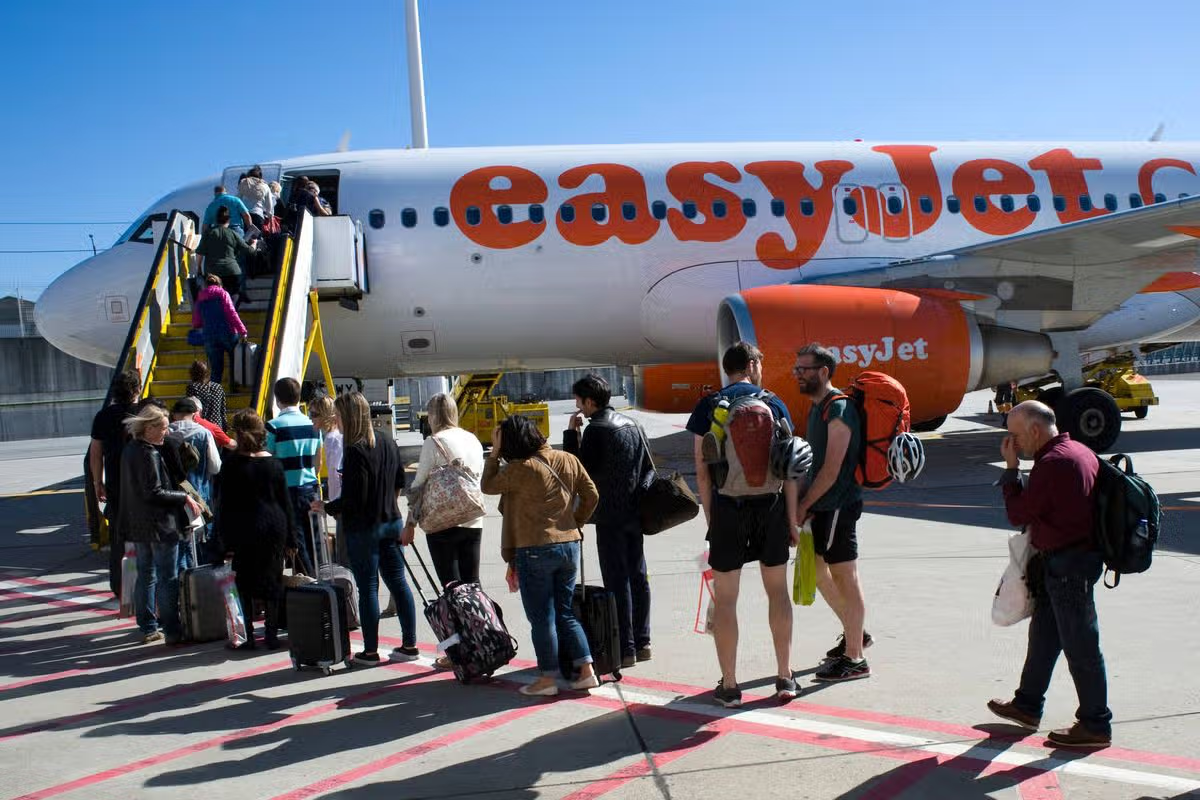
However, the 41-year-old was left horrified after they arrived at London Gatwick, only to be stopped at the gate along with her 15-year-old son Riley and nine-year-old daughter Roxie.
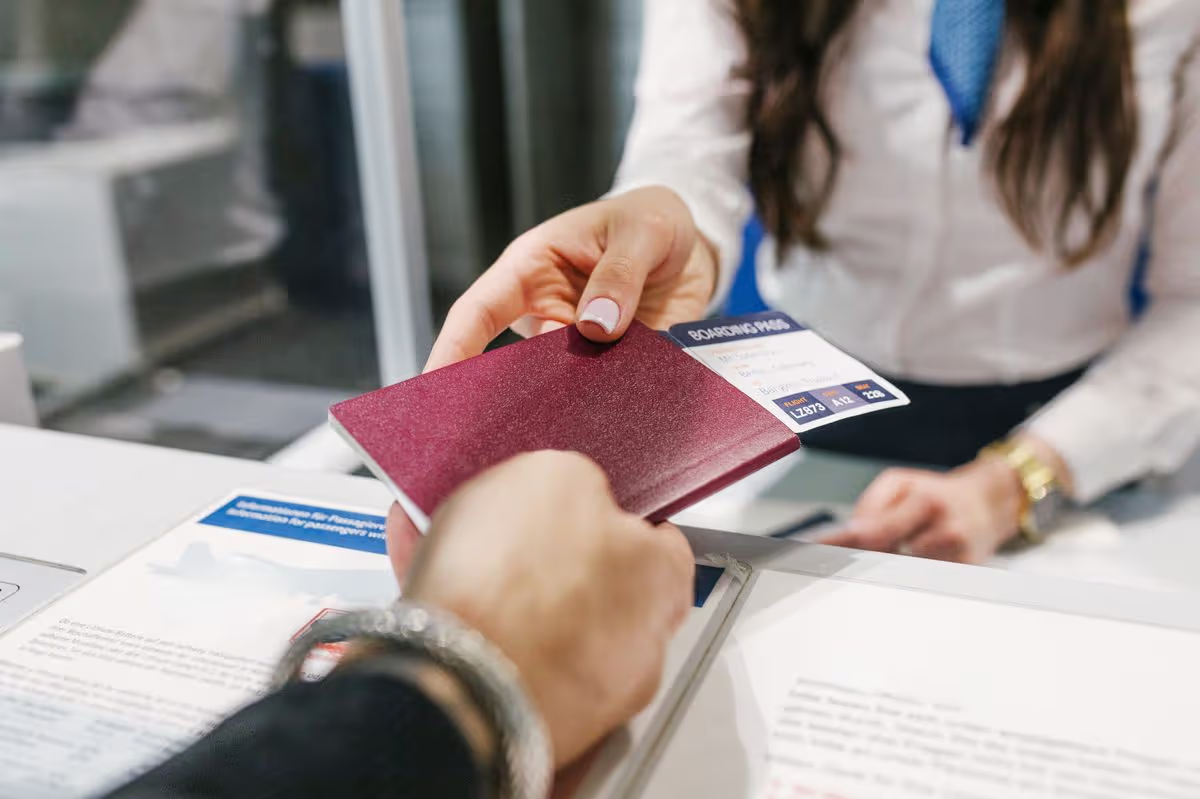
When staff scanned their boarding passes at the gate, they discovered Roxie’s passport did not have the required period of validity remaining for travel to Egypt.
Sign up for the Travel newsletter
Thank you!
This was because her passport technically expired on January 4, 2027, but with Egypt requiring at least six months left on them, it meant it wasn’t valid.
Victoria told creatorzine.com: “My stomach dropped and I felt like i’d been kicked in the stomach.”
“The kids crumpled and I burst into tears. I begged the staff but there was nothing they could do.
“We had to be escorted back to get our luggage off the flight – It was so embarrassing.”
She said not only were the kids devastated, but that Roxie thought it was her fault.
She continued: “I wasn’t aware of the rules. For people like me who don’t always travel and it’s the first time with my children, I wasn’t to know.
“I would have thought when I put her passport details in to check in that would tell me it wasn’t valid.
“That would be a simple system to install so save this agony and heartbreak.”
The family weren’t able to get a refund for the holiday eitherCredit: Jam Press/@uk_victoriaVictoria, along with her daughter Roxie, and son Riley, pictured, hope to make the last few days of the holiday stillCredit: Jam Press/@uk_victoria
The family are now trying to get an emergency passport to try and enjoy the last few days of the trip they’ve paid for, as they were unable to get a refund.
She added: “I’d been saving up for two years.
“We were incredibly excited as we’d never had a two-week holiday abroad together or been to a resort like this.
“It was going to be the holiday of a lifetime.”
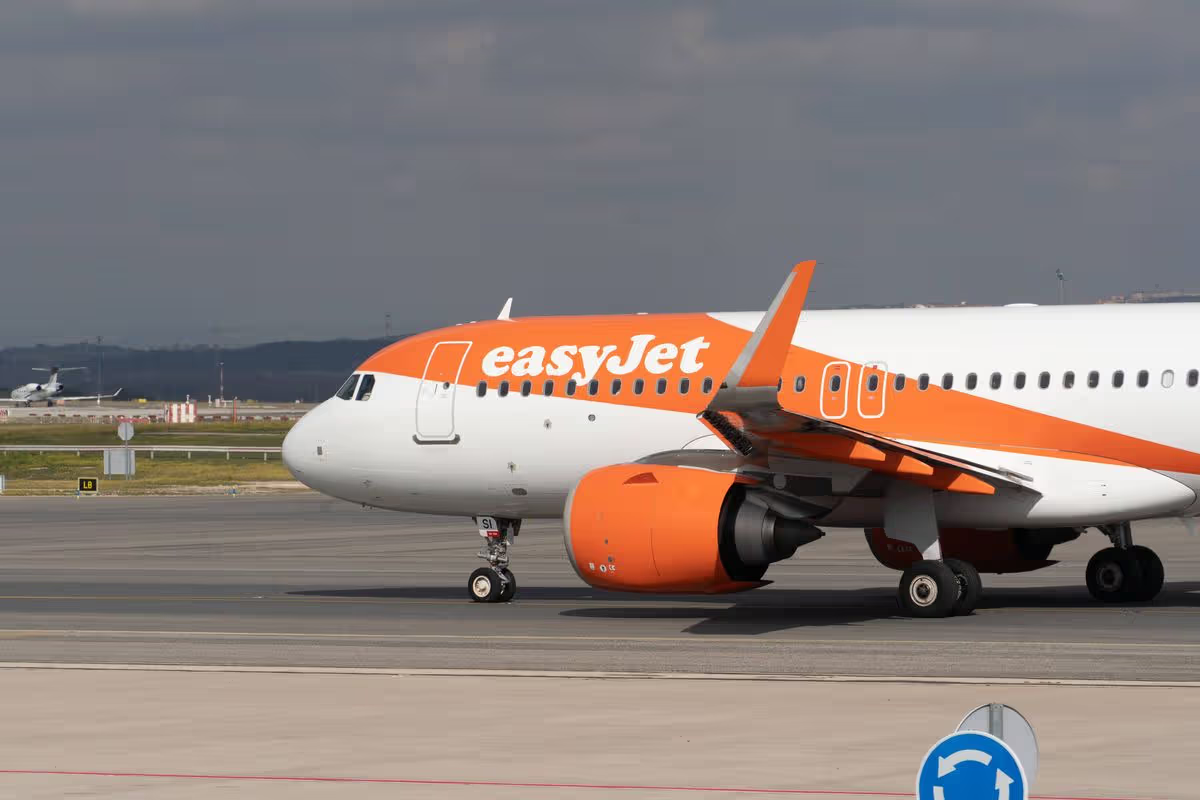
An EasyJet spokesperson said: “Unfortunately Ms Vigors and her daughter were unable to fly as her daughter’s passport did not meet passport validity rules.
“We remind customers during booking, check-in and by email before they travel to ensure they are aware of the travel documentation requirements for their trip, and it is customers’ responsibility to ensure they have valid documentation for travel.”
It’s not the only country with strict rules, as Turkey requires Brits to have at least 150 days left, which is around five months.
Victoria Vigors’ holiday of a lifetime was left in tatters at the airport
Victoria, Roxie and Riley before their ill-fated ‘holiday of a lifetime’(Image: Jam Press)
A family’s dream holiday costing £6,500 was left in tatters after they were turned away at the boarding gate. Victoria Vigors, 41, arrived at Gatwick Airport ready for their all-inclusive two-week break to Hurghada, Egypt.
Victoria, who was with children Riley, 15, and Roxie, nine, checked in online for their easyJet flight. But problems emerged when staff scanned their boarding passes at the gate and noticed Roxie’s passport didn’t meet Egypt’s entry requirements for remaining validity.
“My stomach dropped, and I felt like I’d been kicked in the stomach,” Victoria, from Kent, told creatorzine.com.
“The kids crumpled and I burst into tears. I begged the staff but there was nothing they could do. We had to be escorted back to get our luggage off the flight. It was so embarrassing.
“The kids were devastated, Roxie kept saying it was her fault and we were so disappointed. It was a really bad day.”
Victoria had saved up for two years for the trip, which she described as the “holiday of a lifetime”. The 41-year-old said it would have been their first two-week trip abroad together, and their first time staying at an all-inclusive resort.
Roxie’s passport expires on January 4, 2027. However, Victoria said she hadn’t realised that could still prevent travel. UK government foreign travel advice states British passport holders must have at least six months’ validity remaining from the date they arrive in Egypt.
Because Roxie’s passport did not meet that threshold, Victoria said the airline refused to let them board. She said she hadn’t known the rules and believed everything was in order.
“I wasn’t aware of the rules. I was given her passport the day before we flew by her dad. In my head, it was six months anyway, so I didn’t think there’d be an issue. For people like me who don’t always travel and it’s the first time with my children, I wasn’t to know.
“I would have thought when I put her passport details in to check in that would tell me it wasn’t valid. That would be a simple system to install so save this agony and heartbreak. It’s crazy.”
Victoria said the family is now trying to secure an emergency passport in the hope they can still get away for at least the final days of the trip, after being told they can’t get a refund.
“I’d been saving up for two years. We were incredibly excited as we’d never had a two-week holiday abroad together or been to a resort like this. It was going to be the holiday of a lifetime.”
ANOTHER family missed their flights home and were forced to spend nearly £2,000 due to massive airport queues abroad.
Matthew Wilson, his wife and their son were travelling home to Manchester from Milan back in April.
The Wilsons missed their flights home after long queues at EESCredit: Getty
They were returning to the UK after a nine-night holiday when they got stuck huge passport queues due to the new European entry rules.
Talking to the iPaper, Matthew said that despite easily getting through security, they were then stuck in another queues for 90 minutes, in which they only moved about 10m in that time.
Sign up for the Travel newsletter
Thank you!
Frustratingly, he family were then told by ground staff that their luggage had been removed from the plane as the flight was going to depart while they still stuck in the queue.
They were then forced to wait three hours before easyJet, who the family were flying with, offered the family a flight back home – but this was six days later than the original flight.
Rather than waiting, Matthew spent £1,969 on new flights from Barcelona, taxis, food and accommodation.
This was on top of the money they had already paid on the flight they missed which had cost £377.
Not only that, but their travel insurance provider also said they were unable to recuperate his costs.
Matthew said: “It was very stressful – we will think twice before travelling in Europe again.”
The family then spent £2,000 to get home after the delaysCredit: AlamyThe operator of Milan Airport apologised saying EES ‘requires longer processing time’Credit: Getty
The airport operator apologised, adding that EES “requires more complex operations than before and longer processing times”.
Not only that, but it said that on the day the Wilsons were due to fly home (April 12), there were malfunctions at the automatic gates due to issues connecting to the border systems.
This resulted in “particularly long waiting times” as passengers had to be manually checked at passport control.
The flight to Manchester had been held for nearly an hour “but it had to then depart due to crew reaching their safety regulated operating hours”, explained easyJet.
There have been warnings over wait times because of EES – and it’s only set to get worse.
Rafael Schvartzman – the vice-president forEuropeat the International AirTransportAssociation (Iata) – warnedqueue timescould stretch to as much as six hours this summer.
Mr Schvartzman said: “What we are seeing is a very hard risk of really challenging times or waiting times, talking about expectations of three, four, five, six hours which is unacceptable.
“We know for a fact there are many cases where people have lost flights or their connectivity.”
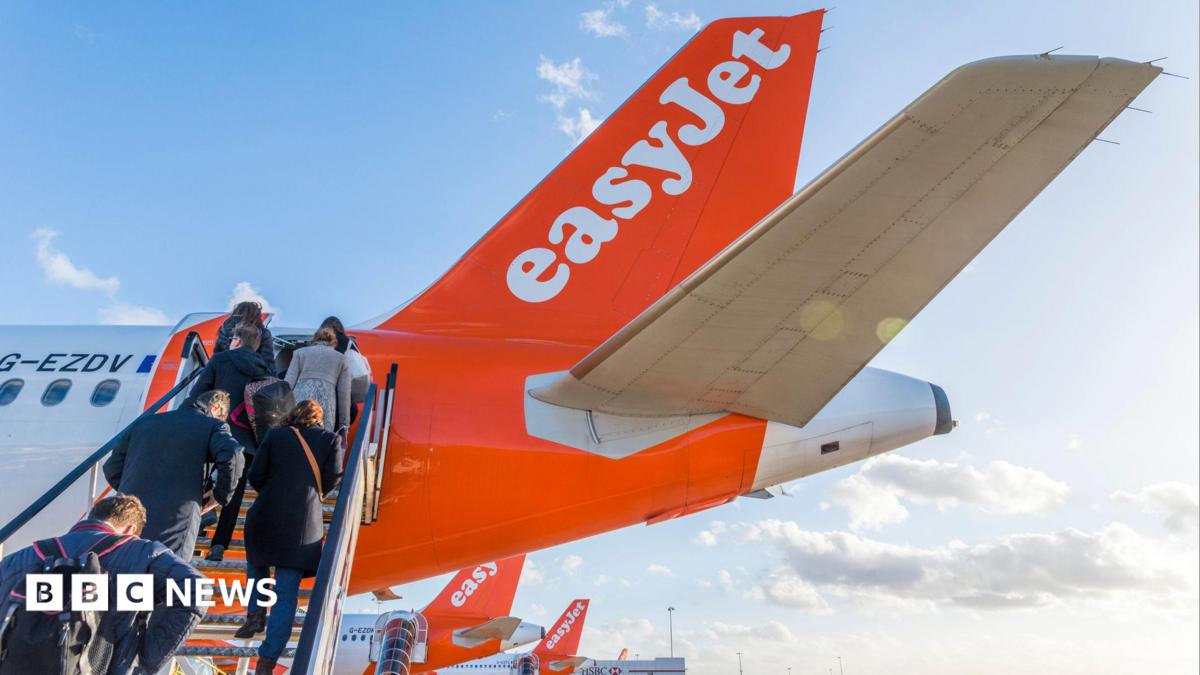
Lots of people travel with easyJet, but there’s a certain rule passengers need to follow. If they don’t stick to it, they could end up having to pay more money
easyJet passengers should follow the rule (stock image)(Image: Peter Charlesworth, LightRocket via Getty Images)
If you’re set to travel soon, and you’re flying with easyJet, there are some crucial travel tips you need to come to terms with before you depart. This is information you don’t want to ignore, as failing to follow the guidelines could see you having to cough up extra cash during your journey.
Everyone wants to squeeze as much value as possible out of their holiday budget, so it pays to know exactly what baggage is included before you book. Many travellers tend to focus on the headline ticket price, but baggage fees can swiftly add a considerable sum to the total cost of a trip.
According to Ricky Durrance, travel expert at package holiday specialists Teletext Holidays, getting to grips with easyJet’s baggage rules can save you a tidy sum and help you make the most of your baggage allowance. The good news is that every easyJet passenger is allowed to bring one small bag on board without any extra charge.
However, that’s where things get complicated as, if your bag won’t fit beneath the seat in front of you, you’ll probably need to pay an additional fee.
Overhead locker space is restricted and frequently comes at a price, so it’s worth weighing up whether a checked bag represents better value. The easyJet website states: “Our low fares include one small cabin bag free of charge.
“Your bag can weigh up to 15kg, but we do ask that you’re able to lift and carry it yourself. You can purchase additional bags online when you make your booking or any time before you travel, via Manage bookings on our website or mobile app.
“Buying online is always cheaper than at the airport. Fees vary depending on the route selected, flight and time of booking.”
However, it’s crucial to remember that, if you wish to pay for a large cabin bag, charges can be steeper during busy travel periods. For couples and mates travelling together, it’s worth crunching the numbers to determine whether sharing a checked suitcase makes more financial sense before you book.
Things you may be overlooking
Managing your baggage allowance can be a right faff, and it becomes even trickier when your suitcase eats up a substantial chunk of the weight limit. easyJet’s large cabin bag allowance permits up to 15kg.
However, many hard-shell cabin cases tip the scales at between 3.5kg and 4.5kg when empty, meaning the usable space for clothes and other belongings can end up being considerably less than anticipated.
You may find yourself with as little as 10.5kg available for packing, which can disappear remarkably quickly. In contrast, a shared 23kg checked bag using a similarly weighted case still leaves upwards of 18.5kg free for packing, which can make a world of difference.
Ricky added: “It’s also worth knowing that booking your baggage allowance sooner rather than later can help save you money.”
easyJet’s baggage fees tend to be cheaper when added at the point of booking rather than closer to the departure date. For those booking a package holiday rather than directly through the airline, it’s worth checking this as early as possible, ideally at the time of booking.
When airlines levy extra charges for every kilogram and each bag, careful planning of your luggage before you travel is absolutely crucial, according to Ricky.
The travel expert has a message to anyone who has booked easyJet flights
Simon Calder has issued a message to anyone flying with easyJet(Image: Ashley Cooper/Getty)
Travel expert Simon Calder has issued a message to anyone with flights booked with easyJet. Last week, it was reported that the budget British airline has agreed to be bought by a US investment giant for £5.7billion.
EasyJet announced it had reached an “agreement in principle” with Apollo Global. It comes after a series of approaches by another American giant, Castlelake, which could come back with a counter offer.
It is unclear what the deal, if it happens, would mean for easyJet customers and employees. However, Simon has given his expert verdict on the situation.
Explaining the deal on the Travel Expert with Simon Calder podcast, he said: “easyJet for a fair while was the biggest budget airline in Europe, then Ryanair gradually overtook.
“We are now at the stage where Ryanair is almost twice as big as easyJet but its market capitalisation, in other words what investors think it is worth, is about five or six times easyJet.”
If the deal goes through, Simon explained the best case scenario would be if not much changes.
He said: “That easyJet continues on its trajectory which is one of steady growth and of course, offering great service, incredible safety standards and delivering very good value for the traveller.”
Many passengers are worried about what the potential deal could mean for flights and holidays already booked, especially in the coming weeks as we enter peak summer travel season.
Simon’s co-host Greg Dickinson urged: “Let us stress that if you have a holiday booked with easyJet this summer or a flight with easyJet, it is going ahead as normal.
“These changes are going to take months to get the deal completed, and it will be a year until we start seeing anything different.”
Simon agreed as he said: “I think that is absolutely right, do not fret. I’ve had some people say to me, ‘Is it alright to book with easyJet?’ Well, of course it is.”
The travel expert said that if you have flights booked next year and the potential takeover means the flight won’t run, passengers are entitled to ask the airline to find them an alternative at the airline’s expense.
He added: “It would not be a problem, carry on booking easyJet and the interesting element will be whether it goes through.”
A stock market statement said: “Apollo has followed easyJet for many years and continues to regard it as one of the most attractive businesses in the global aviation sector and a highly differentiated franchise with significant long-term growth potential.”
It added: “Apollo places a high value on people and believes that identifying and retaining key staff within the easyJet Group will be of paramount importance.” It also said other investments by Apollo in airlines had led to it “growing the employee bases”.
EasyJet was founded by entrepreneur Sir Stelios Haji-Ioannou in 1995 to offer low-cost fares in Europe. The first inaugural flights took off in November 1995, flying from Luton to Glasgow and Edinburgh. Sir Stelios and his family still own 15.3% of the airline.
Aarin Chiekrie, equity analyst at Hargreaves Lansdown, said: “EasyJet shareholders are strapping in for an exciting ride as Apollo enters the race to land the orange airline company.
“Apollo’s offer is now the preferred option and the one that easyJet’s management would recommend to shareholders. But the deal’s not off the runway yet, with Apollo having until August 7 to decide whether to make a formal bid. In that time, rival bidder Castlelake could still come to the table with improved terms.”
Overlooking one item in particular could ignite some travel disruption which is not ideal for holidaymakers
Packing this could land you in some serious trouble(Image: Getty Images)
Packing for a holiday often means working your way through a seemingly never-ending checklist. From remembering your passport and boarding pass to making sure you’ve packed enough clothes, there’s also the important task of checking your bags for items that could cause problems before you even board your flight.
The warning applies to anyone flying with major airlines, including Ryanair, Jet2, TUI, easyJet and British Airways, among others. While each carrier has its own baggage policies, dangerous goods rules are governed by international aviation regulations and enforced during airport security checks.
Non-safety matches, for example, can cost as little as 60p in supermarkets, but packing them could end up costing you precious holiday time. Although they may seem harmless, they are classed as dangerous goods and are prohibited in both hand luggage and checked baggage under aviation safety rules.
This could spell bad news for anyone heading off on a camping holiday, planning to light birthday candles abroad or travelling with matches tucked away in a backpack without giving them a second thought. Even if they were packed by mistake, finding them during screening could trigger additional inspections and slow your journey through the terminal.
According to the UK Civil Aviation Authority, non-safety matches are not permitted on commercial flights because they present a fire risk. If they’re discovered during baggage screening, they may be confiscated and your luggage could be held back while officers carry out further checks.
Depending on when they’re found, this could mean anything from a manual bag search at the checkpoint to checked luggage being removed from the aircraft before departure. While procedures vary between airports, prohibited items are routinely removed to ensure flights comply with aviation safety rules.
There is, however, one important exception. The Civil Aviation Authority says passengers are generally allowed to carry one small packet of safety matches on their person for personal use, but they must not be packed inside either hand luggage or checked baggage. “Strike anywhere” matches and all non-safety matches remain prohibited.
Before travelling, it’s worth taking a few moments to check coat pockets, backpacks and suitcases for forgotten items.
A 60p box of matches might seem insignificant, but packing the wrong type could leave you facing unnecessary delays before your holiday has even begun.
Several major airlines including Ryanair, TUI, easyJet, British Airways and Jet2 ban this item
Make sure you don’t pack this item(Image: Greggory DiSalvo via Getty Images)
Preparing for a summer getaway can seem like an endless to-do list, particularly if you’re jetting off for a birthday, wedding or other special event. However, one budget-friendly item many holidaymakers pop into their suitcase could wind up being seized before they even step onto the aircraft.
Multiple major airlines, including Ryanair, TUI, easyJet, British Airways and Jet2, ban passengers from bringing party poppers. Leaving them behind could spare you needless hassle and hold-ups at the airport.
The item in question is party poppers, and despite appearing innocent, they are forbidden on most commercial flights. They may only set you back a few pence at around £2 for a pack of 20, but they must never be packed in either hand luggage or checked baggage, and doing so could lead to your bags being inspected, with the items likely seized.
This ban exists because party poppers contain a small explosive charge used to create the popping effect. Although the quantity is minuscule, aviation safety regulations classify them as explosive articles and forbid them from being transported on aircraft.
The UK Civil Aviation Authority (CAA) includes party poppers among the dangerous goods that passengers must not carry in either cabin baggage or hold luggage. The regulations also extend to other novelty explosives, including sparklers, fireworks and flares.
If security personnel find banned items during checks, they may confiscate them from your baggage before departure. Depending on the situation, travellers could also experience hold-ups while bags are inspected or further security procedures are undertaken.
Airport security regulations can differ marginally between nations and carriers, but dangerous goods rules are extensively implemented throughout the aviation sector. Passengers are therefore urged to verify both their airline’s luggage policy and official government advice prior to flying.
Party poppers are frequently packed by mistake following birthdays, weddings or other celebrations, especially when families are travelling with youngsters. While they might appear like a harmless addition to your suitcase, they are handled in the same manner as other banned explosive items under aviation safety regulations.
The government also reminds travellers that security personnel have the ultimate say on whether an item is allowed through screening. Even where an object seems innocent, it can still be confiscated if it is deemed a safety hazard or violates airport security rules.
Inspecting your baggage before heading to the airport could help prevent needless delays, extra security checks and the frustration of having belongings seized before your relaxing holiday away even gets underway.
Susannah Streeter, chief investment strategist at Wealth Club, said Apollo was focusing on EasyJet’s potential.
“While the carrier has been buffeted recently by higher fuel costs and geopolitical turbulence, it has built a resilient European network, a strong balance sheet and, crucially, a fast-growing holidays business. That’s likely to be one of Apollo’s biggest attractions.”
“Package holidays generate higher margins and more predictable revenues than airline tickets alone,” she added.
“For passengers, it’s very much business as usual for now, with flights, bookings and loyalty schemes unaffected while any deal works its way through the regulatory process.”
The latest statement from EasyJet does not mean a deal has been confirmed. Apollo has been set a deadline of 17:00 on 7 August to either make a firm bid for EasyJet or walk away. Castlelake’s deadline to make a firm offer is 3 August.
However, on Sunday, EasyJet said it had reached an agreement in principle with Castlelake, a US investment firm, over a potential takeover offer worth around £5.2bn.
One significant regulatory hurdle to any EasyJet takeover is that European Union regulations stipulate the carrier must be majority-owned by EU citizens.
Castlelake had proposed going into partnership with two EU nationals, businessmen Peter Bellew and Mark Breen. They would own an EU-based company that would have majority control of the airline.
Apollo said it will take “all necessary steps” to meet any EU conditions surrounding the deal.
EasyJet said the offer from Apollo represented an 81% increase from its share price of £3.94 on 28 May, the last day of trading before the takeover interest from Castlelake was made public.
Until EasyJet reached agreement with Castlelake, it had accused the US firm of being “highly opportunistic” with its bids, arguing that its share price had been “temporarily depressed” partly due to the impact of Iran war on the travel sector.
EasyJet said on Friday it had agreed in principle to Apollo Global Management’s cash offer of £7.15 a share, worth about £5.7 billion (€6.6bn), which the board judged a “superior outcome” for shareholders than the £6.90 a share tabled by US private equity firm Castlelake.
ADVERTISEMENT
ADVERTISEMENT
Having accepted Castlelake’s proposal only last Sunday, the Luton-based airline said it was “no longer minded to recommend” it.
Investors welcomed the auction as easyJet shares climbed around 15% to roughly £6.75 on Friday morning, their highest level since early 2022, though they remain below Apollo’s offer price.
The bid represents an 81% premium to the £3.94 at which easyJet closed on 28 May, the last trading day before Castlelake’s interest became public, a valuation that reflects how badly the airline had been beaten down.
The conflict between the US and Iran sent jet fuel prices soaring and disrupted travel plans, with easyJet’s shares losing more than a third of their value before the takeover interest emerged.
The damage showed in the accounts.
In May the airline reported a headline loss after tax of £377 million (€442mn) for the six months to the end of March, 27% deeper than a year earlier, even as revenue grew 12% to £3.95 billion (€4.6bn).
It warned that the second half of the financial year would also be hit by higher fuel costs and reduced visibility over bookings, though CEO Kenton Jarvis said easyJet was “well placed” to weather the turbulence.
Industry-wide, the International Air Transport Association warned last month that global airline profits are on course to halve this year.
The Brussels problem
The obstacle now facing both bidders sits in EU law, which requires airlines flying within the bloc to be majority-owned and effectively controlled by EU member states or qualifying European nationals.
Castlelake had proposed to satisfy the rule by partnering with two Irish aviation executives, Peter Bellew and Mark Breen, who would have held a controlling stake through an EU-based company.
Concern over such regulatory hurdles helps explain why easyJet’s shares have lagged the bid prices on offer. Apollo, for its part, says it will take “all necessary steps” to win merger clearance and any approvals relating to the EU’s Foreign Subsidies Regulation.
Apollo has also promised to retain the easyJet name by extending the existing licence with easyGroup, the vehicle of founder Sir Stelios Haji-Ioannou, who with his family owns roughly 15% of the airline and collects a royalty on its revenue.
That pledge may prove decisive in winning over the carrier’s most influential shareholder as neither offer is yet firm.
Under British takeover rules, Castlelake must decide by 3 August whether to bid or withdraw, with Apollo facing a deadline of 7 August.
Should a deal succeed, easyJet would leave the London Stock Exchange, joining the latest wave of British companies bought by foreign capital this year.
A technical fault at the Met Office meant that National Air Traffic Services (NATS) were unable to access weather data – so planes were not safely able to take off.
Sign up for the Travel newsletter
Thank you!
The issue delayed 155 Ryanair flights and impacted almost 30,000 of its passengers.
On July 7, Ryanair reported delays of up to three hours.
easyJet also experienced disruption too with 253 of its flights delayed.
Ryanair has now accused NATS of repeatedly failing passengers and has warned of further delays if it continues.
Ryanair Chief Operations Officer, Neal McMahon said: “Nearly three years after NATS’ catastrophic 2023 system meltdown, UK passengers are once again being delayed because NATS’ systems have failed.”
“The most astonishing part is that NATS continues to charge airlines and passengers more every year while delivering a worse service.”
As a result, Ryanair has called on NATS CEO, Martin Rolfe, to resign.
Issues have caused travellers to be delayed for up to three hoursCredit: GettyRyanair has called for urgent change to stop a summer of chaosCredit: Alamy
A NATS spokesperson told Sun Travel: “A Met Office technical issue overnight on 6/7 July meant that we were not receiving vital weather information into our NATS systems for a short period of time.
“Accurate weather information is vital for air traffic controllers and pilots in managing flights safely. As a result, some air traffic restrictions were put in place and removed soon after.
“We continue to work with the Met Office who are working to fully resolve the problem.”
A Met Office spokesperson added: “An issue we had which temporarily delayed delivery of some of our data is now remedied.
“We know customers rely on our data and we’re sorry for the disruption this caused.”
Hundreds of easyJet and Ryanair flights have been hit by delays today following an issue at the National Air Traffic Services, with 30,000 Ryanair passengers said to be impacted
Air traffic control issues have caused delays (Image: AFP via Getty Images)
Hundreds of UK flights have been delayed due to an issue at the UK’s air traffic control (ATC).
There was widespread disruption across UK airspace this morning after an issue at the Met Office meant the National Air Traffic Services (NATS) didn’t receive weather information.
As a result, Ryanair saw 155 of its flights delayed, impacting almost 30,000 passengers, with delays of up to three hours. EasyJet was hit harder, with 253 flights delayed – 13% of its total number of planned departures today.
“A Met Office technical issue overnight meant that we were not receiving vital weather information into our NATS systems this morning. Accurate weather information is vital for air traffic controllers and pilots in managing flights safely,” a spokesperson for NATs said
“As a result, some air traffic restrictions were put in place early this morning and these have now been removed. We continue to work with the Met Office, who are working to fully resolve the problem.”
The Met Office has been contacted for comment.
“Nearly three years after NATS catastrophic 2023 system meltdown, UK passengers are once again being delayed because NATS’ systems have failed,” Ryanair Chief Operations Officer, Neal McMahon, said.
“Today’s outage delayed 155 Ryanair flights and disrupted almost 30,000 Ryanair passengers. Families travelling on holiday, people travelling for work and thousands of visitors to the UK have once again paid the price for NATS’ failure.”
Back in August 2023, a technical problem experienced by NATS saw very significant delays and cancellations across the UK. An outage resulted in hundreds of flights being delayed or canceled. In some cases, passengers waited several days for alternative flights. More than 700,000 passengers suffered cancellations and delays.
An investigation into the incident found that an engineer was unable to correct the fault from home, and so arrived at work more than three hours after the incident began in a bid to fix it.
A single flight from Los Angeles to Paris triggered the failure at 8.30am BST on Monday 28 August, the Civil Aviation Authority previously said. The air traffic control system had been confused by a duplicate code – DVL – which represents both Deauville in France and Devil’s Lake in North Dakota, USA.
Despite the engineer’s best efforts to resolve the problem on site, he was unable to do so. The system was eventually restored at 2.30pm after its manufacturer, Frequentis Comsoft, found the fault.
Following an independent review, Jeff Halliwell, Chair of the Independent Review Panel, said: “The incident on 28 August 2023 represented a major failure on the part of the air traffic control system, which caused considerable distress to over 700,000 aviation passengers, and resulted in substantial costs to airlines and airports. Our report sets out a number of recommendations aimed at improving NATS’ operations and, even more importantly, ways in which the aviation sector as a whole should work together more closely to ensure that, if something like this does ever happen again, passengers are better looked after.”
Rob Bishton, Chief Executive of the UK Civil Aviation Authority, added: “This final report gets to the heart of what went wrong in August 2023 and sets out a number of recommendations that are sector-wide in their scope. It is vital that we learn the lessons from any major incident such as this. I would personally like to thank the Panel for all of their efforts in producing a thorough and wide-ranging report, that will help improve the UK’s aviation system for the future.”
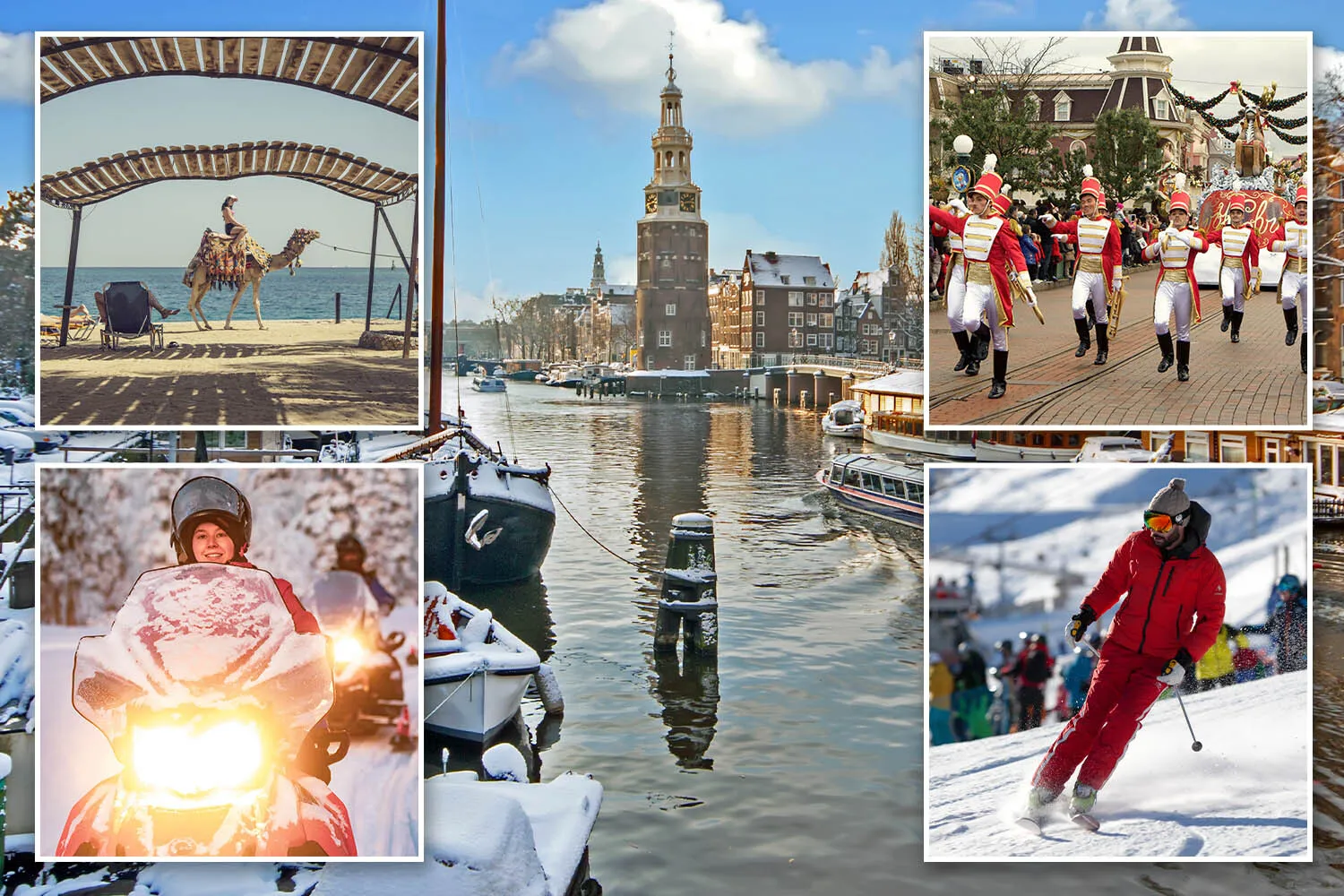
IT MAY be sizzling at the moment – but set your sights on winter breaks to bag some real value.
Now is the best time to book a Christmas getaway, says Sophie Swietochowski, with prices as low as they go for the next few weeks. You can try out these top deals . . .
Sign up for the Travel newsletter
Thank you!
WINTER SUN IN EGYPT
You’ll be waited on hand and foot if you head to Hurghada this ChristmasCredit: Getty
THOSE wanting to spend Christmas on the beach in luxury lodgings should set their sights on Hurghada.
It’s around a five-hour flight, temperatures will reach 23C and you’ll be waited on hand and foot.
You can score a cracking deal with easyJet if you book before July 21, using the code FOOTBALL26.
There’s £100 off a seven-night B&B getaway to the 4H Cook’s Club El Gouna with a new price from £876pp based on two sharing and including flights from Bristol on December 19.
The Suomo resort will take your breath away with its thick woodland coated in fresh snow,Credit: supplied
IF bucket list is what you’re after, that’s what you’ll get when you whisk the kids off to Finnish Lapland.
Who wouldn’t dream of seeing Santa Claus on Christmas Day?
The Suomo resort will take your breath away, with its thick woodland coated in fresh snow, and cosy wooden lodges where you can hunker down with some wine or a board game around a roaring fireplace.
Along with feeding the reindeer, little ones will get to join the elves filtering through letters and go husky sledding or tobogganing, all while wrapped in their snowsuit and boots — free for all guests.
The four-night package costs from £1,890pp based on a family of four sharing and includes all of the experiences mentioned above, plus flights from Stansted on December 23.
You’ll stay in the Scandi-decorated Arctic Circle Hotel with all meals included and a meeting and gift from Santa.
The price includes four days’ worth of park tickets for the whole familyCredit: Alamy
DISNEY doesn’t come cheap, no matter what time of year you visit, but if you book now you can bag seriously good deals over Christmas.
Disney Enchanted Christmas brings the magic from November 7 to January 6 and this season, for the first time, the joy will spread beyond Disneyland Park as you celebrate in Arendelle style in World Of Frozen.
Queen Anna, Elsa ,Olaf and friends, will welcome guests into the Kingdom of Arendelle at Disney Adventure World, plus there are carol singalongs and character meet-and-greets.
Three nights’ room-only in Disney’s Santa Fe hotel is from £745.96pp based on a family of four sharing, flying from Heathrow on December 23.
This price includes four days’ worth of park tickets for the whole family.
The Christmas markets will be in full force in the lead-up to the big dayCredit: Getty
SOME cities simply come alive in winter — and Amsterdam is undoubtedly one of those.
The frosted canals of the Netherlands city are lit up by old-fashioned lampposts and pokey cafes serve up piping- hot mugs of Choco- mel spiked with rum to give it some extra warmth.
The Christmas markets will be in full force in the lead-up to the big day.
But these are not your stereotypical tat stalls — everything here if authentically Dutch.
Don’t forget to sample the oliebollen — warm doughballs dunked in powdery icing sugar.
Check in at the 4H Leonardo Museumhotel Amsterdam City Centre which is slap-bang in the heart of the action.
Four nights’ room-only costs from £485pp based on two people sharing and including flights from Liverpool on December 23.
These pistes are often praised for their world-class ski schools that exceed many others in EuropeCredit: Getty
Few scenes are more spectacular at Christmas time than those from the top of a snow-drenched ski slope, the sun reflecting off the mountain-scape.
Crystal Ski has some great deals at the moment, including this one to Andorra. The resort of Grandvalira is perfect for both pros and beginners, with one of the largest ski domains in Europe, home to a whopping 215 km of interconnected slopes, meaning there’s great variety.
These pistes are often praised for their world-class ski schools that exceed many others in Europe, plus it’s a little more affordable than the Alps.
Seven nights’ half board at the 4* Residence Pas de la Casa Alaska is from £825pp based on two people sharing including flights from Gatwick on December 20.
Pilots and cabin crew are set to strike on Sunday, with passengers facing cancellations and delays
EasyJet travellers could face delays this weekend(Image: pablorebo1984 via Getty Images)
EasyJet passengers with travel plans should keep a close eye on their apps and emails for any last-minute updates arising from strike action in a popular holiday destination. Those flying to or from Italy on Sunday, July 5, face the risk of delays and cancellations.
Travel expert Kate Donnelly (@Thedonnellyedit) has reminded anyone who has trips booked to or from the European destination with the airline to monitor their inboxes carefully, as the situation could change at short notice. It comes as airline workers walk off the job this weekend, July 5.
She said: “If you’re travelling to Italy on July 5, you may well already be aware that multiple strikes are set to take place involving air traffic control and ground handling staff. But, now another one has been added to the calendar.”
Reports have confirmed that EasyJet’s Italian operation will strike on Sunday, July 5, with flights expected to be disrupted throughout the entire 24-hour period. According to the Strike Tracker website, the issue will last until midnight, with normal service expected to resume from Monday, July 6.
It says: “EasyJet pilots and flight attendants in Italy will stage a 24-hour national strike on July 5 (00:00-23:59), called by FILTCGIL, FITCISL, UILTUIL, UGL Trasporto Aereo and ANPAC. Flights to/from Italian airports may be cancelled or delayed. Travellers should check flight status with the airline.”
Content cannot be displayed without consent
Kate points out that this is an airline-specific issue, meaning it “won’t matter which airport you are arriving or departing from”. Any flight booked through EasyJet could potentially be affected, reports the Express.
She said: “If you are on an EasyJet flight, it could be impacted on this date. With this particular strike action, there is obviously the risk of delays, but also a higher risk of flight cancellations.
“Airlines will obviously do what they can to try and minimise disruption. Make sure you keep an eye on your app notifications and your emails because, if they do make changes ahead of the date, you will be notified directly by them first.”
Can I get compensation if EasyJet cancels my flight due to strike action?
If EasyJet reschedules your flight as a result of their own Italian pilots or cabin crew walking out, you are legally entitled to compensation. Internal staff strikes are not regarded as extraordinary circumstances.
If the airline can prove that your flight was rescheduled due to Air Traffic Control closing the skies or the airport’s baggage handlers staging a walkout, this is considered an “extraordinary circumstance”. In this case, you will receive a refund or be rebooked, but no additional compensation.
Even where the airline is not at fault, EasyJet is still legally obliged to take care of you. If your rescheduled flight leaves you stranded at the airport or stuck in Italy overnight, they are required to provide:
Free food and drink vouchers
Free hotel accommodation
Free transport between the hotel and the airport
To claim compensation or expenses from easyJet for a delayed or cancelled flight, you must submit a claim directly through the official easyJet Compensation Claims Portal or the easyJet Expense Claim Form. You will need your booking reference and your exact flight number.
What you need to know about boarding pass policies for the UK’s biggest airlines, including the carriers that have gone completely paperless and the destinations that require a printed pass
16:31, 29 Jun 2026Updated 16:31, 29 Jun 2026
Check your airline’s rules before setting off for the airport(Image: Getty Images)
Getting your hands on your boarding pass was once a straightforward affair. You’d turn up at the airport, check in at the desk, and a member of staff would hand you a printed copy.
These days, however, with increasing numbers of passengers choosing to check in online and airlines offering digital boarding passes, the whole process can feel rather bewildering.
If you haven’t got the airline’s app, do you need to download it? And if you choose to use a digital boarding pass, what happens should your phone go missing or your battery gives out?
Here’s what some of the UK’s biggest airlines have to say about boarding passes and what’s expected of you when you travel with them, reports the Liverpool Echo.
Ryanair
Ryanair has confirmed it has “moved to 100% Digital Boarding Passes (DBP)”. This means you’ll receive your boarding pass via the Ryanair app once you’ve checked in — which can be done either through the website or the app itself.
All travellers will be required to download the Ryanair app and check in online, with reminder notifications sent 48 and then 24 hours before departure. Any passenger who fails to check in online will face an airport check-in fee of €/£55 for most flights, or €/£30 for flights departing from Spain.
Once you’ve checked in, your boarding pass should appear automatically within the Ryanair app. Should you lose your phone or your battery runs flat after checking in, Ryanair confirms it will print a replacement boarding pass free of charge.
Travellers departing from certain airports in Morocco are still required to have a printed boarding pass. Ryanair explain: “Passengers flying from Morocco must check in online as normal and then present their DBP at the airport to collect a printed boarding pass, with the exception of those flying from Marrakech, Fez, Agadir, Tangier, Nador or Oujda, where you can now use your digital boarding pass on the Ryanair app.”
Jet2
Jet2 provides a paperless option for its flights and package holidays. By downloading the Jet2 app, passengers can access documents such as boarding passes all in one place.
Jet2 advise that “you can save boarding passes for up to eight passengers on one device.” It added: “When using multiple boarding passes per device, please make sure your group stays together at the bag drop, security, gate and when boarding the plane.”
For those who prefer the peace of mind that comes with a printed boarding pass, Jet2 explains you can: “Log in to Manage My Booking, then select ‘Get boarding pass’. From here, you can either get a PDF boarding pass sent to you or save it to your device. No need to print – just show the pass on your screen when you get to the airport.”
TUI
TUI explains: “if you’re flying with TUI Airways (flight numbers starting with TOM or BY), you have a choice. TUI Airways accepts both digital and paper boarding passes.”
It clarifies that passengers who would rather have a printed boarding pass should be sure to use A4 paper, ensure their copy is legible with no tears or damage, and that the barcode is clearly visible, as it will need to be scanned at the airport.
It’s important to bear in mind that not all TUI package holidays involve TUI Airways flights. If you’ve arranged a package holiday but the flight is operated by an airline such as Ryanair or easyJet, you’ll need to verify the regulations for the particular airline you’re travelling with.
EasyJet
There is a list of airports that don’t accept mobile boarding passes on easyJet’s website, including Antalya and Izmir. The majority of these are located in Egypt, Turkey, and Tunisia. If you’re travelling to one of these airports you should check in online and print a boarding pass.
That said, for most easyJet flights, the airline suggests downloading its app to keep all your trip details in one place. It says: “For more convenience and to access your boarding passes offline, you can download mobile boarding passes directly to your Apple or Google wallet.”
For those who prefer a paper boarding pass, these remain perfectly acceptable, with easyJet’s website stating: “The best way to store your boarding passes is to use the free easyJet mobile App or you can choose to print them out. You cannot use a PDF scan of your boarding pass on your mobile device as the airport security team will be unable to scan them.
“If you lose your boarding pass don’t worry, you can simply print them again. If printing, make sure the entire boarding pass is clearly printed.”
Have a story you want to share? Email us at webtravel@reachplc.com
Travel expert Simon Calder has explained the rights of British Airways and easyJet passengers after numerous flights were cancelled
11:52, 29 Jun 2026Updated 12:01, 29 Jun 2026
British Airways was one of the airlines to be badly affected(Image: 2026 Kevin Carter)
Travel expert Simon Calder has issued a stark warning to British Airways (BA) and easyJet passengers, telling them they ‘will not be getting any cash’ after thousands found their flights axed over the weekend. Hundreds of services were thrown into chaos following a bout of thunderstorms, with Heathrow and Gatwick bearing the brunt of the disruption.
On Saturday alone, more than 900 inbound and outbound flights were delayed — some by as much as 11 hours — with dozens cancelled outright. South-East England and North-West Europe were among the worst-hit regions.
Travel expert Mr Calder said the chaos had left approximately 40,000 passengers ‘stranded’. He broke down exactly what passengers are entitled to when flights are delayed or cancelled, and precisely what obligations airlines have towards them, reports the Express.
Content cannot be displayed without consent
What are your rights?
Mr Calder said: “It has been a miserable Saturday for 30,000 or more passengers on British Airways to and from London Heathrow and EasyJet in and out of Gatwick. The reason? Thunderstorms in the London area have caused air traffic control restrictions, and as those airports are operating at full stretch, especially on Saturdays in summer, unfortunately there’s no slack in the system, and the biggest airlines at those airports have no option but to cancel flights.”
“BA’s cancelled around 100, including an Airbus superjumbo going to and from Los Angeles. EasyJet has cancelled 82, including some really long ones to Hurghada in Egypt and also Antalya in Turkey.
“Under air passenger rights rules, the airline must get you to your destination as soon as possible, including booking a flight on another airline if necessary. Meanwhile, they have to provide you with hotel accommodation and meals as necessary until they can get you where you need to be. You will not, though, be getting any cash compensation. Good luck, everybody.”
What happened?
Mr Calder continued: “200+ flights cancelled today on British Airways to/from Heathrow and on easyJet to/from Gatwick, with 35,000 passengers stranded.
“Under air passengers’ rights rules, they are entitled to be flown to their destination as soon as possible on any airline, plus meals/hotels as appropriate.
“Dozens more flights cancelled on Sunday to and from Heathrow and Gatwick airports by British Airways and easyJet due to poor weather”.
“(It) follows more than 200 grounded flights on Saturday (and) brings the number of passengers whose flights have been cancelled this weekend to around 40,000.”
In an updated statement on Saturday afternoon, NATS said: “Severe thunderstorms across the south east of England and Europe continue to impact flights, and this is expected to continue for the remainder of today and overnight.
“To ensure the safety of the travelling public, aircraft need to avoid affected areas and be spaced further apart, which limits the number of flights that can operate safely.
“We understand disruption is frustrating, but we’re working closely with airlines and airports to reduce disruption as much as possible.
“Passengers should continue to contact their airline for the latest information on their flight.”
Passengers have been urged to read up on their airline’s mobile boarding pass requirements
Passengers flying soon have been urged to stick to the rules(Image: Getty)
With many youngsters soon breaking up from school for the summer holidays, it won’t be long before families begin making their way to the airport.
However, before loading up the car and wheeling out the luggage, it’s worth brushing up on the rules surrounding mobile boarding passes, as certain airports do not accept them. On top of location-specific restrictions, one budget airline has gone entirely paperless since November 2025. Here’s what you need to know if you’re travelling with easyJet or Ryanair.
What are easyJet’s mobile boarding pass rules?
The airline encourages travellers to use mobile boarding passes, as they allow all travel information to be stored in one secure, easy-to-access location. They also help reduce paper waste by eliminating the need for printed boarding passes.
For added convenience and offline access, you can also save your mobile boarding passes directly to your Apple Wallet or Google Wallet.
Not all airports accept mobile boarding passes. Easyjet explains: “The majority of our airports accept mobile boarding passes, however, the airports listed below do not currently accept mobile boarding passes.”
This includes:
ADB – Izmir
AGA – Agadir
AYT – Antalya
AQJ – Aqaba
BEG – Belgrade-Beograd
DJE – Djerba
ESU – Essaouira
EVE- Harstad
HRG – Hurghada
JSH – Sitia
LXR – Luxor
NBE – Enfidha-Hammamet
RAK – Marrakech
RBA – Rabat Sale
RMF – Marsa Alam
SCR- Scandinavian Mountains
SPX – Cairo Sphinx
SSH – Sharm El Sheikh
It adds: “If you’re flying from an airport that doesn’t currently accept mobile boarding passes, please check in online at www.easyJet.com and print out a paper boarding pass for your flight.
“Many of these airports require all passengers to complete a document check before going to security. If travelling from an affected airport, please make sure you, and anyone you’re travelling with goes to our Bag Drop for a document check before going through security.”
Ryanair confirmed it has “moved to 100% Digital Boarding Passes (DBP). This means all passengers will receive a DBP to their Ryanair App when they check-in online.”
Passengers simply need to check in online via Ryanair.com or through the Ryanair App before arriving at the airport. Once checked in, your DBP will appear automatically within the Ryanair App.
You should present your DBP at airport security and at the boarding gate for your flight. The airline explains the shift to fully digital means:
DBP lowers airport costs and fares for all Ryanair passengers.
Provides a better service (including flight info) for customers on day of travel.
Improves customer service and re-booking during flight disruptions.
Better for our environment (gets rid of 300 tonnes of paper annually).
If you have completed online check-in and your smartphone or tablet is lost, stolen, or runs out of battery, you can get a complimentary boarding pass at the airport.
It adds: “If passengers don’t have a smartphone or tablet, as long as they have already checked-in online before arriving at the airport, they will receive a free of charge boarding pass at the airport. However, they will not be able to access real-time flight updates or benefit from enhanced customer service during any flight disruptions.”
If passengers don’t check-in online before arriving at the airport, they will be required to pay the airport check-in fee.
The decision of where to sit on a plane could impact the rest of your holiday
08:31, 27 Jun 2026Updated 08:35, 27 Jun 2026
Picking the right seat could make a big difference(Image: Getty)
As millions of Brits gear up to jet off on their summer holidays, one decision that many may have overlooked could make or break their entire trip. Choosing the right seat on the plane might be the difference between relaxing on a sun-soaked beach or making endless trips to the toilet.
Research has revealed that whether passengers opt for a window, middle, or aisle seat could potentially affect their chances of catching a viral infection before the holiday has even got underway. However, your seat selection alone won’t be the sole factor determining your overall risk of falling ill.
How close you are to someone carrying a virus is the single biggest indicator of how likely you are to pick up an infection. This is followed by how busy the flight is, as the greater the number of passengers on board, the higher the likelihood that some will be carrying viruses.
Airflow throughout the cabin, passenger movement, contact with shared surfaces (such as in the bathroom) and whether or not you wear a mask will all have a bearing on your risk of catching a viral infection during a flight.
Dr Sophie Dix, Head of Medical Affairs at online pharmacy MedExpress, has offered guidance on how travellers can lower their risk of falling ill while flying, including advice on where to sit. She said: “Although there is no guaranteed way to avoid picking up an illness while flying, there are practical steps people can take to reduce their exposure to germs and viruses on planes.”
She shared her top tips for travellers looking to lower their chances of picking up an infection. Here’s what she advised.
Seat selection matters
“The best advice to avoid getting sick on the plane is to try and reduce as much contact with germs and other passengers as possible, so choosing where you sit may have more impact than you might have originally thought.
“Window seats are a great option as they are often far away from high traffic areas such as bathrooms and busy walkways. Aisle seats also increase your exposure to people who frequently pass by throughout the flight, queue for the toilet, and access luggage from overhead compartments. One study found that sitting in a window seat can reduce your interactions with other passengers or crew by up to five times compared to if you sit in a middle or aisle seat.”
She added: “Additionally, research may suggest that leaving the middle aisle free reduces the spread of airborne diseases by 37%, so choosing seats that appear to have middle aisles empty could be a strong choice. Whilst protection from illness is never guaranteed, this highlights that creating distance between other passengers greatly reduces your chances of getting sick.”
Wipe down any surfaces
“Surfaces such as tray tables, armrests, seatbelt buckles, touchscreens, magazines and window shutters can harbour germs easily as they are used so frequently by previous passengers. Wiping down surfaces with disinfectant wipes or sanitiser greatly reduces your risk of coming into contact with germs on them.
Wash your hands regularly
“Maintaining good hygiene standards while travelling can greatly reduce your chances of getting sick. Washing your hands regularly with soapy water or hand sanitiser, especially after coming into contact with surfaces, is a simple but effective way to stop the spread of germs while you’re on the plane.
Stay hydrated
“Cabin air on planes can be extremely dry and irritate your nose and throat whilst travelling, leaving you feeling more run down and vulnerable to picking up any viral infections. Make sure to drink plenty of water and keep on top of hydration throughout the flight to strengthen your immune system. Keep water easily accessible throughout the flight, and drink regularly, especially if you’re travelling with children.
Wear a face mask
“Wearing a face mask greatly reduces the spread of any airborne viruses, as we saw throughout the COVID-19 pandemic. Crowded flights may become a hotspot for any infections due to the cramped space and close proximity to other passengers, so taking preventative measures may help reduce the spread of any current infections.
Ensure you’re well rested
“Those who don’t get adequate rest before a flight are over 4 times more likely to catch a cold compared to those who are fully rested. This is due to your immune system being weaker when you haven’t got enough sleep, making you more susceptible to picking up any infections.
Shoppers looking to ‘travel in style’ could do just that with the latest travel deal at Home Bargains
Take a look at the latest deal at Home Bargains(Image: Home Bargains)
Home Bargains is helping shoppers prepare for their summer holidays with a “spacious yet compact” cabin bag that meets the hand luggage requirements of several major UK airlines. The discount retailer, which has over 600 stores nationwide, claims it is “perfect for your adventures”.
It may be renowned for its affordable homeware and furnishing deals, but Home Bargains’ range extends far beyond side tables, lamps and ornaments. From garden accessories and beauty buys to travel essentials, shoppers can find plenty of wallet-friendly options.
Take the Salisburys Carry-On Cabin Lightweight Backpack, for instance, which retails for a more-than-affordable £9.99. It comes in black, and boasts a very simple aesthetic to suit various tastes.
Describing the product, Home Bargains said: “Travel light and in style with the Salisburys Carry-On Cabin Lightweight Backpack in sleek black! Perfect for your adventures, this spacious yet compact backpack is designed for easy packing and effortless carrying.
“Every Salisburys product has been designed, manufactured and extensively tested to stand the rigours of today’s travel. Every Light Luggage product has been designed, manufactured and extensively tested to stand the rigours of today’s travel.”
According to Home Bargains, the cabin bag measures approximately 45 x 30 x 15cm, making it suitable for use with the cabin luggage allowances of most major airlines, namely easyJet, British Airways, Virgin Atlantic and KLM. Please note, it could be too long for Ryanair, Wizz Air and Jet 2.
Weighing around 760g, it features multiple zipped compartments for organising belongings, a fully lined interior and a lightweight construction designed for travel. Interested shoppers can find out more, and view additional product images, on the Home Bargains website.
It’s available both in-store and online as Home Bargains offers standard delivery across the UK mainland from £3.95, while orders over £100 qualify for free delivery. A £10 delivery fee applies to larger furniture items, and most standard parcels are expected to arrive within four working days.
Home Bargains is also selling the Salisburys Under Seat Bag which will also set you back £9.99. The product description reads: “Meet the Salisburys Under Seat Bag – your perfect travel companion!
“With its spacious zipped compartments and sleek design, it’s ideal for keeping your essentials close at hand while you jet off on your next adventure. Salisburys presents its broadest line-up of tried and tested luggage solutions with contemporary features to help the modern tourist navigate the hurdles of twenty-first century travel.
“Salisbury Under Seat Bags solve modern travel issues of the check-in case. A fantastic size bag that is versatile for the needs of your modern travel. Large open zipped storage compartment with small zip side pouch.”
LESS than two hours from the UK is a fairytale-like city that is getting easyJet flights for the first time.
EasyJet is launching a new route between the UK and Nuremberg in Germany from three UK airports this year.
Sign up for the Travel newsletter
Thank you!
EasyJet is launching new flights to Nuremberg in Germany from three UK airportsCredit: Alamy
Flights to Nuremberg will head off from Manchester, London Luton and London Gatwick.
Manchester flights will start on November 2, flying on Mondays and Fridays.
Then in London, Gatwick flights will start on November 19 flying on Thursdays and Sundays and Luton flights will start on November 23 flying on Mondays, Wednesdays, and Fridays.
The city is known for its ‘old charm’ and famous Christmas marketCredit: Alamy
You may have heard of or even watched Nuremberg the film, but how much do you actually know about the city?
When in the medieval city make sure to head to the Imperial Castle (Kaiserburg), which looks over the city and Old Town.
Between 1050 and 1571, every Holy Roman Emperor lived at the castle and today visitors can see the main imperial palace, with different floors for different groups of nobility.
Visitors can head around the grounds for free, but if they want to go inside any of the buildings they’ll need to get a ticket.
There’s also Weißgerbergasse, which is one of the city’s only streets to survive the Second World War and is lined with colourful timber-framed houses.
The street is home to a number of independent cafes as well as galleries.
For some more souvenir shopping, drop by the Craftsman’s Courtyard where you can watch live sessions of artists making pottery, glass ornaments and keepsakes.
When in the city, you can explore the Imperial Palace or the courtroom where the Nuremberg Trials took placeCredit: Alamy
For history fans, you can learn more about the Nuremberg Trials at the East Wing of the Palace of Justice.
Here you can tour Courtroom 600, which is where the international war crimes trials were held and above the courtroom you will find an exhibition about the trials.
When exploring the city, make sure to also drop by Zum Gulden Stern, which is an 800-year-old bratwurst kitchen.
Inside, the restaurant has an old-world feel – ideal for enjoying with one of the kitchen’s famous hand- grilled, smokey pork sausages.
And for something sweeter, try Lebkuchen, which is Nuremberg’s version of gingerbread.
And with flights launching in time for the festive season, it is ideal for a winter break to one of Europe’s oldest Christmas markets.
The city is also known for its Christmas market with traditional giftsCredit: Getty
The Christkindlesmarkt dates back to the 16th century and visitors can explore around 180 wooden stalls, with red and white striped roofs.
Mass produced, plastic items are banned from being sold at the market, so instead you’ll find traditional handmade gifts including collectible figurines.
The new flight route comes as easyJet has also announced it will be launching other new routes,including to Morocco, France and Egypt.
Flights from London Luton to Rabat in Morocco will launch on November 5.
Over at London Southend Airport, flights to Lyon in France will start on December 3, with flights on Thursdays and Sundays.
A route between London Southend to Sharm El Sheikh in Egypt will start in the new year on January 4, with flights each Monday and Friday.
Flights will launch with easyJet in NovemberCredit: Alamy
The airline is also expanding flights to Budapest in Hungary, from Bristol, Belfast and Liverpool airports.
Scotland will get a new service as well, between Edinburgh to Tromsø, Norway from November 30.
And over in Manchester, there will be flights to Vienna, Austria, launching on November 19.
Isle of Man will get its first international route with the airline, to Geneva, starting on December 19.
The Civil Aviation Authority (CAA) has issued a warning to passengers about the dangers of packing power banks in hold luggage after a surge in lithium battery incidents on UK flights
13:34, 26 Jun 2026Updated 14:16, 26 Jun 2026
BBC News showed footage of the power bank fire breaking out in the overhead locker of a flight(Image: Getty Images)
UK-based airlines have prohibited a common electrical device labelled the ‘number one safety risk to aircraft’ after footage emerged showing it erupting into flames inside a cabin. Passengers on flights are being urged not to place power banks or vapes in their checked luggage as the busy summer holiday travel season gets underway across parts of the UK.
Several carriers have begun implementing outright bans on power banks that travellers use to charge their phones and tablets amid mounting safety concerns. Generally, power banks are permitted only in hand luggage, not checked baggage, because of worries they could explode and catch fire mid-flight.
Power banks house rechargeable lithium batteries, which pack a considerable amount of energy into a compact space, and when defective can trigger fierce fires that spread rapidly.
Content cannot be displayed without consent
On BBC Breakfast today, correspondent Katy Austin described it as a ‘terrifying situation’ on a recent flight. She said: “Flames broke out in the overhead baggage compartment of an Air China plane last October. The cause is thought to have been a lithium battery. They’re in loads of commonly used devices like laptops, vapes, phones, and power banks. They can store a lot of energy in a small space, but if they overheat or are defective, this video of a test in a lab shows just how quickly a fire can start.
“Last year, UK authorities were informed of 643 incidents where lithium batteries were detected packed in hold bags. That’s nearly twice the number the year before. Reports of devices overheating or malfunctioning also nearly doubled to more than 200. Most were in the cabin where crew could deal with the situation. The fear is that incidents in the hold could not be discovered until it’s too late to control.”
“It contains a lot of energy in a very small space, which is fantastic for, you know, our devices. It means we can use them for longer. But the problem with that is when things go wrong, the fires can be quite ferocious and you can’t put these fires out in the way you can with a normal fire that you might have because these fires are like self fueling.
“The advice for plane passengers is to take items like mobile phones, vapes, and power banks on board with you. Never charge power bank on a flight and turn off laptops completely if they’re going to be put in check-in bags.”
The CAA revealed that reports of passenger devices overheating or malfunctioning last year were almost double the figure from 2024. Instances of lithium battery-powered gadgets being wrongly packed in hold baggage surged by 91% during the same timeframe.
CAA director of aviation safety Giancarlo Buono said: “Pack right for a safe flight, and that means don’t put your batteries in your checked bag. Take them into the cabin with you. This simple tip will make your flight safer for you, and the other passengers you’re flying with.”
Research involving airline passengers revealed that 36% have no idea about the risks associated with packing batteries in hold luggage.
easyJet
EasyJet enforces stringent rules stipulating that all lithium-ion batteries, spare batteries and power banks must be carried in cabin hand luggage only, with a blanket ban on hold luggage due to the risk of fire. Power banks below 100Wh (approximately 27,000mAh) are permitted without prior approval; those between 100-160Wh require authorisation from the airline.
Portable electronic devices containing batteries must be transported exclusively as carry-on baggage.
Should any of these items find their way into checked baggage, steps must be taken to prevent accidental activation and to safeguard the devices from harm; all devices must be completely powered down (not left in sleep or hibernation mode). EasyJet imposes a limit of 15 portable electronic devices per passenger.
Portable electronic devices housing non-spillable batteries must not exceed 12V or 100Wh, and passengers are permitted to carry a maximum of 2 spare batteries. When bringing smart baggage into the cabin, travellers must be able to quickly and easily detach and remove the lithium battery/power bank, although it may remain inside the bag.
Smart baggage will not be accepted for travel if the lithium battery/power bank cannot be readily detached and removed by the passenger. If smart luggage is to be checked into the hold, the lithium battery/power bank must be removed from the smart luggage at Bag Drop and taken into the cabin.
Any exposed terminals must be protected against short circuits. The lithium battery/power bank must be detachable, so if it cannot be removed from your luggage, the bag will not be permitted on board.
Passengers may carry up to 15 personal electronic devices (this includes but is not limited to: smartphones, tablets, laptops, cameras, handheld game consoles, headphones, power banks). Spare lithium batteries (including power banks) must be individually protected to prevent short circuits by placing them in their original retail packaging, or by otherwise securing terminals by taping over any exposed terminals or putting each battery in a separate plastic bag or protective pouch, and must only be transported in carry-on baggage.
Passengers are also permitted to bring up to 20 spare lithium batteries, as long as they don’t surpass 100Wh each. Spare lithium batteries, including power banks taken into the cabin, must not go beyond 100Wh and mustn’t be used to charge or power other portable electronic devices during taxi, take-off or landing.
They must not be placed in cabin baggage stored in the overhead locker. Rather, they ought to be kept in cabin baggage under the seat in front of you, or carried on your person.
Devices or batteries exceeding 100Wh are banned in both the cabin and hold, apart from electric wheelchair batteries. Spare batteries, including power banks, are not allowed in checked baggage.
TUI’s regulations forbid passengers from packing loose lithium batteries, power banks, or spare batteries in checked-in luggage. These items must only be carried in hand luggage.
Power banks must generally not exceed 100Wh, and terminals must be safeguarded against short circuits. Devices shouldn’t be recharged while on board.
Dry AA(A) batteries (type Alkaline, NiMh, NiC) for small personal items such as a pocket torch or a radio are permitted, provided they’re inside the device or contained in sturdy packaging. When devices are placed in hold baggage, measures must be taken to protect the device from damage and prevent accidental activation; the device must be completely switched off (not in sleep or hibernation mode).
Spare batteries and power banks should be individually protected against short circuits by keeping them in their original packaging, with terminals covered in tape or placed in a plastic bag in hand luggage.
Airline approval is always required for medical devices. For further information, see section Baggage – Medical baggage.
TUI fly requires that all power banks must be carried in hand luggage, never in checked baggage. They must be packaged to prevent short circuits (original packaging or terminals covered with tape).
Generally, capacity is limited to 100 Watt-hours (Wh) per battery, with power banks not permitted to be used for charging devices or recharged while onboard.
Hand Luggage Only: Due to fire risk, all lithium-powered battery packs must be in the cabin. Capacity Limits: Power banks up to 100 Wh (roughly 27,000 mAh at 3.7V) are generally permitted.
Safety Requirements: Terminals must be protected against short circuits, such as by taping them or keeping them in individual plastic bags.
In-flight Usage: Power banks cannot be used to charge phones or laptops during flight, nor should they be recharged using aircraft power outlets.
Storage: Keep them in your seat pocket or under your seat, not in overhead bins
The US Federal Aviation Administration recorded 644 lithium battery fires onboard flights in the past 20 years, with the global figure stretching into the thousands
EasyJet pilot and head of flight operations at the Civil Aviation Authority, Glenn Bradley(Image: Supplied)
A pilot has urged passengers not to pack an electrical item in their luggage, to avoid potentially disastrous consequences.
Eleven days ago, passengers aboard a British Airways Boeing 787-9 Dreamliner flying from London Heathrow Airport to Harry Reid International Airport in Las Vegas noticed an acrid smell.
A blaze had broken out in the cabin, triggered – it would later become clear – by a lithium battery. The fire scorched the inside of the jet before crew could extinguish it. Clark County Fire Department responders rushed to meet the singed plane on the tarmac.
The fire was one of 644 such incidents on planes recorded by the US Federal Aviation Administration in the past 20 years, with the global figure stretching into the thousands.
Other incidents are much scarier.
Do you have a story to share? Email webtravel@reachplc.com
On January 28 last year, 176 passengers were evacuated from Air Busan Flight 391 when a battery blaze completely destroyed the plane as it taxied for take-off at Gimhae International Airport. Three were injured.
Lithium batteries are used six times more now than in 2020, raising the risk of fire with them. They can ignite due to a process called thermal runaway, where a damaged or short-circuited cell rapidly generates heat. This creates a chain reaction that releases extreme heat, and can be triggered by being crushed and overcharged.
Many of us know of the dangers of lithium batteries on flights and that items containing them such as phones, power banks and vapes must only be stored in hand luggage. However, it’s easy to let less obvious gadgets slip into hold luggage, according to easyJet pilot and head of flight operations at the Civil Aviation Authority (CAA), Glenn Bradley.
“The batteries are in everything, including portable fans. Lithium batteries in the hold are the most dangerous thing,” Glenn explained.
While flight attendants are trained to put out cabin fires, accessing luggage in the hold is impossible during a flight, which is why the prospect of a lithium battery fire is taken extremely seriously.
“We all carry about four of these batteries when we fly, so on a plane there could be a thousand. The fact is, they don’t explode on a daily basis, but if they do, we want to be able to manage them,” he added.
If a passenger realises they’ve left a battery-containing item in their hold luggage, they should immediately tell crew.
When that happened on a UK-bound easyJet flight in May, it was diverted to Rome. The captain judged the power bank charging in a passenger’s luggage to be too dangerous to ignore.
Glenn spoke with the Mirror as part of a CAA safety campaign. Passengers are urged to “pack right for a safe flight” by taking their batteries in the cabin with them.
Passengers should:
Take items like mobile phones, vapes and power banks on board with you.
Never charge a power bank on a flight.
Turn off laptops completely if they’re going to be put in check-in bags.
Getting it wrong could lead to your bags being removed from the flight, causing significant delays or, even worse, result in a fire that may be impossible to contain.
Giancarlo Buono, director of aviation safety at the CAA, said: “Flying is by far the safest way to travel and we want to keep it that way. Pack right for a safe flight, and that means don’t put your batteries in your checked bag. Take them into the cabin with you. This simple tip will make your flight safer for you, and the other passengers you’re flying with.”
CAA figures show reports of overheating or malfunctioning passenger devices nearly doubled between 2024 and 2025, following a 98% year-on-year increase. Cases of lithium battery-powered devices being incorrectly packed in checked baggage also rose by 91% in 2025.
EasyJet has announced 13 new routes, including new city breaks for UK tourists
EasyJet has issued an update today, June 25, on new routes for UK travellers(Image: Michael Mulkens via Getty Images)
EasyJet has today revealed 13 brand-new UK routes set to launch this winter. Among them are flights and package holidays to a never-before-served destination in Germany.
This festive season, EasyJet will launch flights and packages to Nuremberg. Services will be departing from Manchester from 2 November on Mondays and Fridays, London Gatwick from 19 November on Thursdays and Sundays and London Luton from 23 November on Mondays, Wednesdays, and Fridays.
Nuremberg is home to one of Europe’s oldest and most celebrated Christmas markets. The iconic Christkindlesmarkt, which dates back to the 16th century, draws visitors from across the globe to soak up the festive atmosphere of one of Germany’s most beloved seasonal destinations.
EasyJet will also be expanding its offering from its London airports, with fresh routes launching to Morocco, France and Egypt. Flights from London Luton to Rabat get under way on 5 November, followed by London Southend to Lyon from 3 December, running on Thursdays and Sundays.
Completing the new additions, flights from London Southend to Sharm El Sheikh will kick off on 4 January, departing on Mondays and Fridays. The airline is also expanding its connections to Hungary, with fresh flights and package holidays to Budapest taking off from three UK airports.
Services from Bristol and Belfast International will commence on 17 November, operating on Tuesdays and Saturdays, while flights from Liverpool will get under way on 19 November, running twice weekly on Thursdays and Sundays – perfect for a festive weekend getaway.
In Scotland, a brand new service from Edinburgh to Tromsø in Norway will launch on 30 November, operating twice weekly on Mondays and Thursdays and providing passengers with the only direct route to the ‘Gateway to the Arctic’. Meanwhile, in time for the festive period, flights from Glasgow to Krakow in Poland will commence on 13 November, with departures twice weekly on Mondays and Fridays.
EasyJet will enhance its Manchester network with a fresh service to Vienna in Austria, launching on 19 November with departures up to twice a week on Mondays and Fridays. Additionally, EasyJet is introducing its first international route from the Isle of Man, with a new weekly service to Geneva starting on 19 December, operating on Saturdays. The route will offer the only direct link between the Isle of Man and Switzerland.
The new routes take the airline’s total number of winter services introduced over the past fortnight to 26. Last week’s announcement featured a new direct service from Manchester to Sphinx Airport, alongside the carrier’s first ever international route from Cornwall Airport Newquay to Geneva. The airline says that package holidays can be booked through EasyJet holidays on all new routes with the exception of Luton to Rabat. All packages include flights and hotel, plus 23kg luggage and transfers on beach destinations such as Sharm El Sheikh, they say.
Holidaymakers can reserve their winter getaway with a deposit of £60 per person and until 1 July 2026, can save money on new bookings using the code FOOTBALL26.
Kevin Doyle, EasyJet’s UK Country Manager, said: “We’re thrilled to be announcing a further 13 new routes this winter, bringing the number of new routes on sale over the past two weeks to a total of 26. A real statement of our commitment to giving customers across the UK more choice from their local airport.. From winter sun escapes to magical Christmas market breaks, there’s never been a better time to book a flight or package holiday with EasyJet. We look forward to welcoming even more customers on board for their winter holidays.”
EasyJet and EasyJet Holidays say they have introduced their Book with Confidence Promise to reassure customers on their travel plans. The airline says that the pledge guarantees that flight and package prices will not increase in price once booked and confirms that EasyJet intends to operate a full schedule across its network, despite competitors cutting routes, as EasyJet prepares to fly over 50 million passengers this summer.