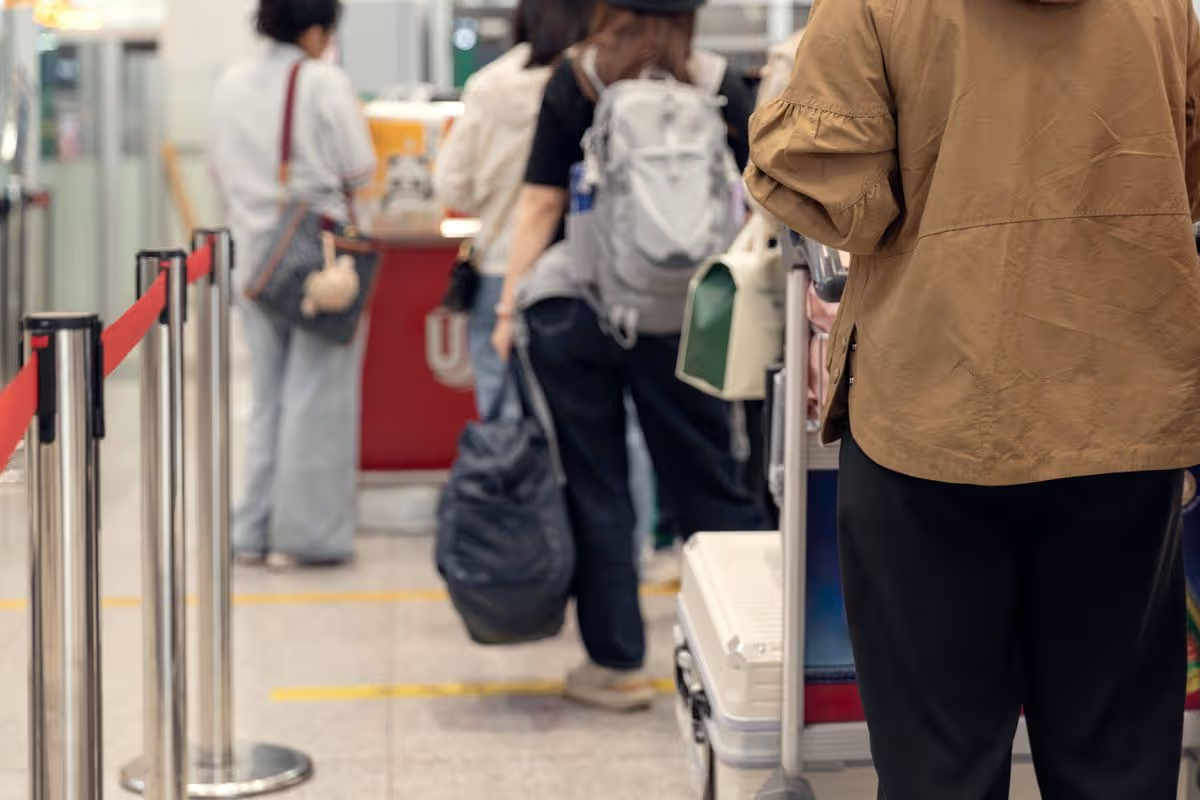
A travel specialist has said some people are giving themselves ‘too much time’

The new system could cause delays for people travelling abroad(Image: Lu ShaoJi via Getty Images)
Travellers can avoid ‘pointless’ time-wasting this spring and summer by knowing exactly when to turn up at European airports with enough time to get through the new EES checks. Getting the timing spot on could help passengers feel less worried about missing their flights if they find themselves stuck in lengthy passport control queues.
Travel specialist Kate Donnelly (@Thedonnellyedit) said: “There is a lot of mixed information out there, and some people are saying that you need to get to the airport four to five hours before your departure. This is absolute nonsense. You need to be at the airport a minimum of three hours before your flight.
“Firstly, the bag drop in most European airports only opens two hours before departure, in some cases it may be three hours. [So] getting there four to five hours before your flight just means you’re going to be sitting waiting for the check-in desks to open.”
Kate went on to explain that, once you’ve cleared security and duty-free, most airports should have multiple border control points, reports the Express. She said: “You need to wait for your gate to be announced in order to know which one you have to pass through.
“[Even] if you haven’t had to wait to check a bag (you’re travelling with just hand luggage) and you’ve gone straight through, you are still going to be sitting in the main airport waiting for your gate to be called. This is why getting there hours ahead of time is pointless.”
How much time should I allow myself?
Depending on which airline you fly with, some carriers open their check-in desks several hours ahead of departure. Getting your timing spot on will give you the best chance of sailing through the airport, even if there are potential EES-related delays.
Most airlines work to similar timeframes, though this can vary by route. For instance, airlines tend to open check-in desks for long-haul flights considerably earlier than for shorter trips, as they require additional time for security and document checks, including visa verification.
It’s worth double-checking directly with the airline operating your service, or you may receive guidance a few days before you’re due to depart. Below is some general advice on when some of the more popular airlines will begin checking passengers in:
- British Airways: Two to three hours before the flight
- easyJet: Two hours before the flight
- Jet2: Three hours before the flight
- Ryanair: Two to three hours before the flight (airport dependent)
- TUI: 2.5 hours before (short-haul) / 3.5 hours before (long-haul)
- Virgin Atlantic: Four hours before the flight
Some airlines – like Jet2, easyJet, TUI, British Airways, and Ryanair – offer a twilight check-in service for people catching early departures. Passengers who are staying close enough to the airport to arrive the night before can drop off bags at select airports the night before their flight, so they can head straight to security on the day of their flight.
What is the new EES system?
The European Union’s (EU) Entry/Exit System (EES) launched on October 12, 2025. This new digital border system has altered the requirements for British citizens travelling to the Schengen area, which includes the following countries:
- Austria
- Belgium
- Bulgaria
- Croatia
- Czechia
- Denmark
- Estonia
- Finland
- France
- Germany
- Greece
- Hungary
- Iceland
- Italy
- Latvia
- Liechtenstein
- Lithuania
- Luxembourg
- Malta
- Netherlands
- Norway
- Poland
- Portugal
- Romania
- Slovakia
- Slovenia
- Spain
- Sweden
- Switzerland
The UK, the Republic of Ireland, and Cyprus are not part of the Schengen area. EES does not apply when travelling to any of these countries.
If you are travelling to a Schengen area country for a short stay on a UK passport, you may be required to register your biometric details, such as fingerprints and a photograph, upon arrival. No action is needed before you reach the border, and EES registration is completely free of charge.
EES registration will replace the existing manual passport stamping system for entering the EU. EES may require additional time per traveller, so travellers should be prepared for longer waits than usual at border control.