Sydney Sweeney has thrilled fans with her latest lingerie offeringCredit: Instagram/sydney_sweeneyShe wore a barely-there lingerie set with some lace stockingsCredit: Instagram/sydney_sweeney
The actress is gearing up for the holiday season with several fresh pieces from her lingerie brand, SYRN, and she has modeled them all in her new campaign video.
Sign up for the Showbiz newsletter
Thank you!
As well as the nod to Jack Skellington, Sydney also wore a Cindy Lou Who inspired look, an all-white lingerie set, and a deep wine-hued set.
Commenting on Sydney’s latest offering, one person said: “She’s literally becoming the modern day Marilyn Monroe in real time.”
Sydney also channelled Cindy Lou WhoCredit: Instagram/sydney_sweeneyAnother shot from the video saw her in a wine-colored lingerie setCredit: Instagram/sydney_sweeneyLooking festive, Sydney also rocked all whiteCredit: Instagram/sydney_sweeneyThe actress even gave fans a cheeky glimpse of her buttCredit: Instagram/sydney_sweeney
“I love her,” declared a second.
“She is perfect from head to toes,” penned a third.
“Oh my god! What a woman,” said a fourth.
“I’m female & i loved it. WOW. flaunt that sexy body babe,” added a fifth.
Most read in Entertainment
While a sixth wrote: “Is the most amazing Christmas ad I’ve seen, Syd and her references were awesome.”
Though a seventh critiqued: “The rest are so cute! But I think the Cindy Lou is in poor taste…”
The Euphoria star sparked controversy once again last month when she posed completely naked in an ad for the sports betting app, Novig.
Photos showed Sydney wearing no clothes and concealing her breasts and private parts with various sports equipment.
The pics ignited massive discourse online, especially from female athletes, who accused Sydney of sexualizing women’s sports.
However, Sydney was unbothered by the backlash and is focused on leveling up in her career, a source told The U.S. Sun exclusively.
“Sydney’s goal is to become a billionaire mogul and ‘boss lady’ as soon as possible.
“She wants to do things entirely on her own terms, confident that her unique talent and beauty give her an edge, and she doesn’t care if people dislike her,” the insider said.
“Sydney is on the fast track to becoming an icon and an elite businesswoman, like Madonna, who she sees as the benchmark for combining sex appeal with massive entrepreneurial success.”
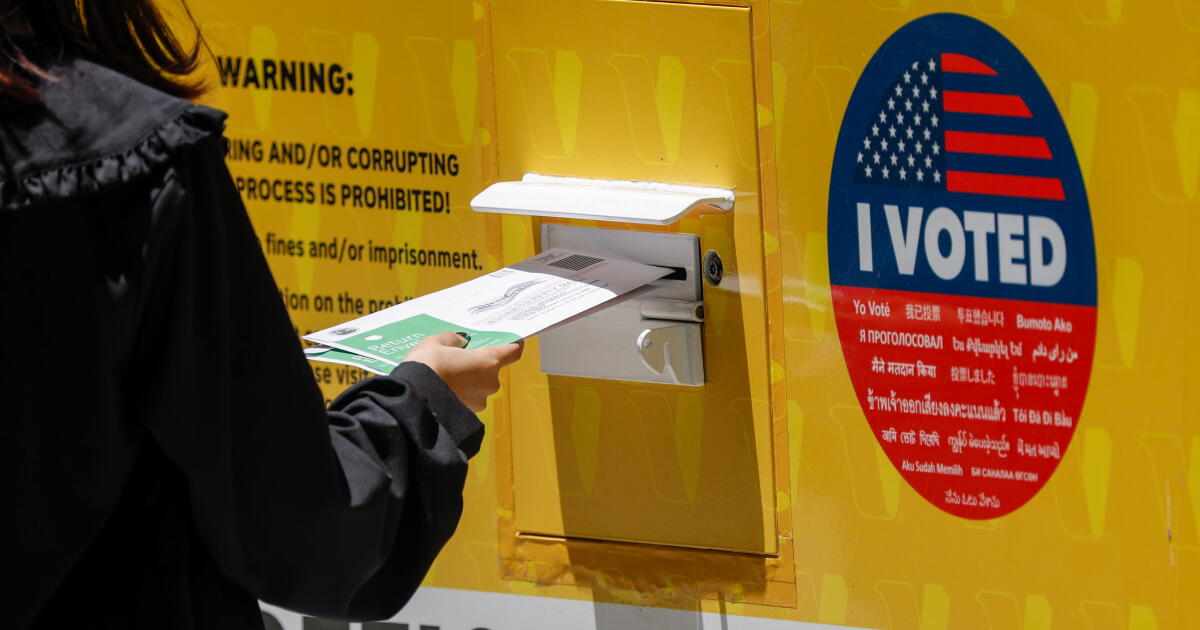
Top Democrats in Congress have joined a California immigrant and the Nevada State Democratic Party in suing the Trump administration over its unprecedented voter fraud probes in both states and broader efforts to meddle in state-run elections nationwide — alleging they are a “pretext to seize control over elections.”
In addition to Senate Minority Leader Chuck Schumer, House Minority Leader Hakeem Jeffries and several national Democratic groups, the plaintiffs include Erick Jose Jimenez, an “active California voter” and naturalized U.S. citizen since 2006 who now “fears that he will be unlawfully targeted for voting and disenfranchised (or worse)” given the Trump administration’s track record of misidentifying naturalized citizens as noncitizens.
Lauren Bis, a White House spokesperson, said in a statement that while “Democrats and the media continue to dismiss concerns about voter fraud, the Trump Administration is taking decisive lawful action to protect our elections,” including by “prosecuting election crimes, strengthening election infrastructure security, and protecting vulnerable voters from fraud and coercion.”
“Anyone who illegally votes in our elections will be held accountable,” Bis said.
A Justice Department spokesperson said “election integrity is a top priority” and that the department’s actions are “grounded in the law and being litigated in open court.” A Homeland Security spokesperson said it is “laser focused on prosecuting and removing aliens who vote and preventing the dilution of the votes of U.S. citizens.”
Officials from both agencies have asserted that California and other states have ineffective policies for ensuring noncitizens do not vote — relying in part on voters attesting to being citizens — and staunchly defended their own processes for identifying noncitizens on state rolls.
Democrats and leading elections experts say isolated voter fraud does occur and should be taken seriously, but that there is no evidence of widespread fraud.
The lawsuit alleges a coordinated effort between Trump and other administration officials — in violation of the 10th Amendment and other federal law — to intimidate state and local elections officials nationwide into removing voters from rolls, denying ballots to legally registered voters and segregating the ballots of others “based on spurious and unreliable claims that they are not citizens.”
It says the president is pushing the above efforts not “in a vacuum,” but in the face of repeated steps by Congress and the courts to block his election agenda.
The lawsuit, backed by prominent Democratic elections attorney Marc Elias, follows another filed in the same court last month by attorneys with the UCLA Voting Rights Project, on behalf of the Coalition for Humane Immigrant Rights, or CHIRLA, and a California voter named Pedro Trujillo.
That ongoing lawsuit challenges the Trump administration’s use of unproven federal databases to allege registered California voters are not citizens, which it says risks misidentifying eligible voters and has left naturalized citizens frightened — the same argument made by Jimenez.
Jimenez, who could not be reached for comment, has “eagerly and consistently exercised his right to vote” since becoming a citizen two decades ago, and plans to vote in the Nov. 3 election but fears being misidentified as a noncitizen and targeted, Tuesday’s lawsuit says.
Administration officials have defended the accuracy of their lists, including in the lawsuit the Justice Department filed against California last week. In that case, the Trump administration has asked the court to force California to set aside the ballots of the 20,000 “likely noncitizens” it flagged until their citizenship is confirmed.
First Assistant U.S. Atty. Bill Essayli, the lead federal prosecutor in L.A., has said that list was compiled using public California voter registration records and third-party and law enforcement data, and that federal authorities have “overwhelming evidence” that those voters are ineligible.
However, other administration officials have acknowledged the lists may not be entirely accurate. Acting Deputy Atty. Gen. Trent McCotter said Monday that “there may be some names on there who, it turns out, ultimately are citizens.” A Homeland Security official said in a court filing Monday that “discrepancies” have been found in about 189 of the records.
California Secretary of State Shirley Weber and Dean Logan, head of the Los Angeles County Registrar-Recorder/County Clerk’s office — both named defendants in the California case — have accused the Trump administration of illegally interfering in state elections and trying to purge voters in the immediate lead up to an election in violation of federal law using inaccurate data.
Logan’s office said Tuesday that a preliminary analysis of a subset of the administration’s list found many were born in the U.S., weren’t registered or had never voted.
Federal authorities this week teased a “separate batch” of 17,000 potential noncitizen voters in their federal court challenge to California’s handling of alleged voter fraud.
In response, Los Angeles County officials questioned the accuracy of the government’s earlier list of 20,000 alleged noncitizen voters — saying a preliminary review of a subset of those voters found evidence that nearly 40% were born in the U.S.
The claims came in filings shedding new light on the unprecedented Homeland Security inquiry into California’s voter rolls just weeks before the Nov. 3 election.
On Monday, Nicolas Bartell, a Homeland Security official, wrote in a sworn affidavit that — in addition to developing the disputed list of 20,000 “likely noncitizen” voters at the heart of the litigation — his agency has also developed a “separate batch of more than 17,000 voting records potentially tied to noncitizens.”
“Our review is ongoing as USCIS receives records on a rolling basis before the election date,” wrote Bartell, the associate director of the Fraud Detection and National Security Directorate at U.S. Citizenship and Immigration Services.
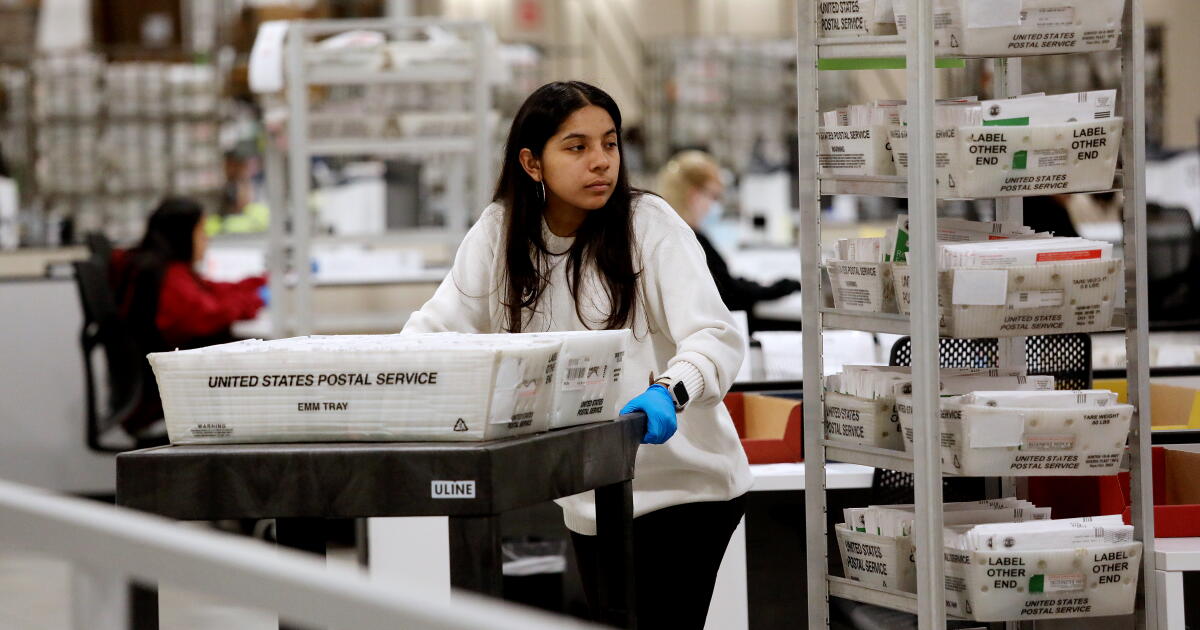
On Tuesday, Monica Flores, a top official in the L.A. County Registrar-Recorder/County Clerk’s office, wrote in an affidavit that staff members had reviewed a sample of 200 registrations from the list of 20,000 voters whom the Justice Department alleged last week were “likely noncitizens.” The office found that more than half — 112 — had been canceled or were inactive, meaning no ballot was sent to those voters.
In instances where those voters’ birthplace was “meaningfully reported, 38.9% indicate that they were born in the United States, which is strong evidence of citizenship,” Flores wrote, while 71.2% showed no record of ever voting.
Flores wrote that similarly vetting the citizenship of thousands of additional voters before the election would not only be “administratively impossible and take key personnel away from their critical election duties,” but would also “risk disenfranchising voters who are validly registered.”
Also Tuesday, Rachel Evans, an attorney in the California secretary of state’s office, wrote in an affidavit that the office since August has received and been complying with grand jury subpoenas for the detailed voter records of about 300 people.
Evans’ acknowledgment came a day after federal prosecutors charged 28 people across California with federal election-related crimes, including fraudulent voter registration and making false statements in a naturalization application, and suggests federal prosecutors are pursuing criminal cases against hundreds more.
Taken together, the filings indicate that the legal battle between the Trump administration and California over alleged fraudulent voting is only just gearing up — with no end in sight before Nov. 3 — as is the political sparring over the issue.
First Assistant U.S. Atty. Bill Essayli, the lead federal prosecutor in Los Angeles, posted to X on Tuesday that Flores’ acknowledgment that her office could not possibly vet voters’ citizenship before the election was a “massive concession,” proving the federal government’s case.
Gov. Gavin Newsom’s office said that “any credible allegation of voter fraud should be taken seriously and investigated,” but that federal officials charging just 28 people in a state with 23 million voters showed they have no evidence of widespread fraud.
“Yes, non-citizen voter registration and voting does happen in isolated instances — in California and the rest of the country alike — but it is so rare that the Trump admin is parading around town about .0001% of California voters,” Newsom’s office wrote on X.
The broader case
On Monday, Justice Department lawyers filed a request for an emergency restraining order requiring state election officials to segregate any ballots from the 20,000 voters flagged on the initial Homeland Security list until their citizenship is proved. They argued the state is violating the law — and harming the federal government — by refusing to do so.
State attorneys argued Tuesday that the federal government has no authority over California elections and seeks to violate federal law precluding voter roll purges in the 90 days before an election.
State officials wrote that the Justice Department appeared to have “individualized evidence” of noncitizenship for the 28 people it had charged, and that nothing was preventing it from working through existing “statutory channels” to block those individuals’ ballots. But they argued that it does not have evidence to back its claims against all 20,000 voters whose ballots it is seeking to sequester.
Those contentions — and Bartell’s claim of a second list of 17,000 potential noncitizen voters — only add to an already heated debate about the scope of the inquiry and its legitimacy.
In July, Homeland Security Secretary Markwayne Mullin alleged in a letter to California Secretary of State Shirley Weber that there “may be as many as 190,832 noncitizens registered to vote in California,” and demanded that the state work with federal authorities to investigate. The state asked that Homeland Security first provide more information, including about its methodology for identifying that figure.
Last week, acting Deputy Atty. Gen. Trent McCotter wrote follow-up letters to Weber and Dean Logan, head of the L.A. County registrar’s office, asserting that 20,000 “likely noncitizens” were on state rolls, and again demanding state cooperation within 48 hours to remove them. Weber balked, arguing that federal law precludes systematic roll purges within 90 days of an election to protect eligible voters.
Weber and other state officials also questioned the drop from 190,000 to 20,000, and the reliability of the federal government’s underlying data and methodology. “What happened to the 170,000? You just got those wrong?” California Atty. Gen. Rob Bonta asked.
On Monday, McCotter said the 190,000 figure was “the ceiling,” inclusive of cases that federal authorities had high, medium and low confidence in, while the 20,000 figure was “the floor,” inclusive of only high confidence cases.
Potential flaws in the list have been a major point of contention among California officials, who have pointed to substantial inaccuracies in lists elsewhere, including in Nevada, where a state review found that the 185 voters whose citizenship was questioned by the Trump administration were all citizens.
Now, it appears the federal government’s disputed list of 20,000 voters won’t be the last in California.
How voters were identified
In court filings, federal officials described purchasing California voter registration information before USCIS and Homeland Security Investigations agents worked to identify any voters who are not citizens. They said that they did so in part by comparing the state data with “third party commercial data” sets and law enforcement data sets, and that they further vetted their list by culling dead people.
Essayli pointed to those descriptions to dispel arguments that federal authorities have not provided their methodology for identifying potential noncitizens on voter rolls. He said that the federal process was robust and trustworthy and that federal authorities had compiled “overwhelming evidence of tens of thousands of ineligible voters on the state’s rolls.”
Independent election experts saw it differently.
“They admitted to using some of the same tools amateur election conspiracy theorists use, like unidentified third party software, commercial lists, and public versions of [the state’s] voter roll,” Gowri Ramachandran, an election administration expert at the Brennan Center for Justice at NYU School of Law. “These amateur data matching efforts don’t get any better merely because the Department of Justice relies on them.”
“If DOJ could prove many more cases, we would have heard about it,” Rick Hasen, director of the Safeguarding Democracy Project at UCLA School of Law, wrote in a blog post. “They’ve been on an aggressive hunt nationally for such fraud. It’s not surprising they’ve found little because it is a small problem.”
First came the letter from acting Deputy Atty. Gen. Trent McCotter — just three weeks before the Nov. 3 election — demanding that Los Angeles County’s top elections official launch a sweeping investigation into thousands of voters the Trump administration alleges are “likely noncitizens” and withhold their ballots in the meantime.
The letter arrived with a thumb drive purporting to contain the list of voters in question, and a handwritten note providing the password. Dean Logan, head of the L.A. County Registrar-Recorder/County Clerk’s office, said accessing the device broke security protocols, and he wouldn’t open it.
Then came an Excel spreadsheet, listing some 20,000 voters by name, date of birth and address. It appeared to contain voters from across the state of California, not just L.A. County, and provided no information on the Trump administration’s methodology for questioning those voters. Logan’s office again pushed back.
“We cannot withhold or refuse to count ballots based solely on unverified allegations, nor can we disregard the legal requirements governing our election — and we certainly have no authority to act on records that are outside of our jurisdiction,” Logan said.
On Friday, the back and forth escalated yet again, when the Justice Department warned in a letter to L.A. County attorneys that county elections officials who tabulate ballots from the flagged voters could face criminal prosecution for being “aiders and abettors to a federal crime.”
For the last week, Trump administration officials and California election leaders have been locked in a fiercely contentious standoff over alleged election fraud that independent elections experts say is like nothing they have ever seen before.
The battle — which escalated into a federal lawsuit filed Thursday by the Justice Department against the state, Secretary of State Shirley Weber and Logan — features striking assertions of official misconduct. They include willful indifference to systemic election fraud among California officials, as alleged by Trump officials, and a nefarious effort by the administration to “lay the groundwork” for questioning any unfavorable election results next month, as alleged by California leaders and independent elections experts.
With little public clarity around the voters whose registration is being contested and how the administration came to question their eligibility, the debate has centered instead on the efficacy of vetting voter rolls right before an election and the increasingly bitter claims of political meddling from the many federal, state and local officials involved.
“More dangerous nonsense from a President losing his grip on reality,” Gov. Gavin Newsom posted on X.
Acting Deputy Atty. Gen. Trent McCotter sent a letter demanding that L.A. County’s top elections official investigate thousands of voters the Trump administration alleges are “likely noncitizens.”
(Finn Gomez / Getty Images)
“No, Governor. You are violating federal law by facilitating voting by noncitizens,” responded First Assistant U.S. Atty. Bill Essayli, the top federal prosecutor in Los Angeles, whose office is leading the lawsuit.
“Mail ballots are already in most voters’ hands, and Election Day is less than three weeks away. Every count, recount, hand count, lawsuit, and audit has found that there’s no widespread voter fraud in the U.S. The Trump Admin’s last-minute demands are meritless, and we look forward to making our case in court,” California Atty. Gen. Rob Bonta wrote on the same platform.
“We produced a list of 20,000 noncitizens on your voter rolls, and your response is ‘it’s too late’ because you already mailed the ballots. Not good enough,” Essayli shot back. “It’s a violation of the U.S. Constitution and federal law for California to dilute the votes of American citizens.”
Both sides have accused the other of being unreasonable and of ignoring practical concerns about voting and election security, though in very different ways.
Trump administration officials have said their effort “should not be controversial,” and reflects a common-sense approach to election oversight. “The law is clear, aliens in the United States cannot vote in federal elections,” McCotter said.
In its lawsuit, the Justice Department argued it is “not practicable or feasible” for the federal government to investigate “thousands, let alone tens of thousands, of individuals” before the November election alone, so California and local officials should be required to help them do it.
California officials — joined by independent elections experts — have accused the Trump administration of breaking the law to bolster a grand election conspiracy the president has propped up for years without evidence, including by trying to purge voters from rolls right before an election.
David Becker, executive director of the nonpartisan Center for Election Innovation & Research, said the National Voter Registration Act prohibits states from conducting systemic maintenance of voter lists within 90 days of an election, and that the U.S. Supreme Court recently affirmed that limit.
Bonta said the timing of the Justice Department’s demands “reeks of desperation and bad faith.”
Dean Logan, head of the L.A. County Registrar-Recorder/County Clerk’s office, attends the opening of a new ballot processing center in City of Industry in 2024.
(Irfan Khan / Los Angeles Times)
State officials and election experts also have questioned why Homeland Security Secretary Markwayne Mullin suggested California had some 190,000 noncitizen voters on its rolls as recently as July if the number now stands at 20,000.
“What happened to the 170,000? You just got those wrong?” Bonta said. He also noted with derision that the administration’s lawsuit repeatedly hedges its assertions by saying that federal officials “believe” that noncitizens “may be” registered in California.
“You believe, or you know?” Bonta said. “They may be or they are?”
Kiersten Pels, a Justice Department spokesperson, said the 20,000 flagged voters “are the ones that have been manually verified” as ineligible, but that number “can and will go up” as federal authorities continue their work. She referred additional questions about the figures to Homeland Security, which did not respond to questions.
Becker said the administration’s figures “should be treated with serious skepticism,” given similar claims falling apart elsewhere. He cited a Homeland Security claim of about 16,000 noncitizens on Nevada voter rolls dropping to 185 voters before Nevada officials investigated and found every single one of those voters was a citizen.
California officials have not shown a similar interest in launching their own investigation.
In a letter to McCotter, Weber wrote that treating the 20,000 voters on the Justice Department’s list as “ineligible until proven otherwise” would not only violate the 90-day quiet period before an election, but amount to “an unprecedented suspension — and even denial — of voting rights.”
She said if the Trump administration has any proof for its claims, California would “review that evidence and any supporting data or methodology” and “take the appropriate steps in compliance with federal and state law” to address any problems. “However, I will not disenfranchise thousands of Californians — or order any county elections official to do so — based solely upon an unsupported and likely inaccurate ‘belie[f]’ that certain voters are ‘likely’ noncitizens.”
A spokesperson for Logan’s office said Friday that it was reviewing the Justice Department’s spreadsheet — in part to determine how many of the voters are actually in L.A. County — but had yet to receive requested information on the methodology used for flagging those voters.
Nevada Secretary of State Cisco Aguilar, chair of the Democratic Assn. of Secretaries of State, said the Trump administration’s efforts in California are “another attempt by the federal government to harass and intimidate elections officials,” and that their timing is “obviously a political attempt” to prevent voters — particularly Latino voters —from holding the Trump administration accountable for its failed leadership.
But he also said that California officials — to the extent they can under the law, and working closely with Bonta — should work to refute the Trump administration’s claims through their own review of the data, just as Nevada officials did.
“We are not afraid to defend our elections,” he said. “And California should take that same approach. You cannot be reactive to these situations. You have to be strategic.”
The U.S. Department of Justice has ratcheted up its pressure campaign on California election officials to ferret out alleged voter fraud ahead of the Nov. 3 midterm election, demanding that officials statewide prove the U.S. citizenship of thousands of voters flagged by the federal government as potential noncitizens, or withhold or set aside their ballots.
Acting Deputy Atty. Gen. Trent McCotter made the demand — which experts called highly questionable at a time when votes are already being cast — in letters to state election officials Tuesday, including Secretary of State Shirley Weber and Dean Logan, head of the L.A. County Registrar-Recorder/County Clerk’s office.
The letters, reviewed by The Times, call on the state officials to respond to the Justice Department within 48 hours.
McCotter wrote that the Justice Department had provided Logan’s office with a “password-protected thumb drive with a list of names the Federal Government believes are likely noncitizens who were sent a vote-by-mail ballot” for the Nov. 3 election.
“We request that you review the list within 48 hours to determine whether any citizens are listed. For individuals whom you cannot independently confirm citizenship status, we request that you immediately instruct the appropriate elections officials to segregate — not cancel — those individuals’ vote-by-mail ballots until their citizenship status can be determined,” McCotter wrote to both Weber and Logan.
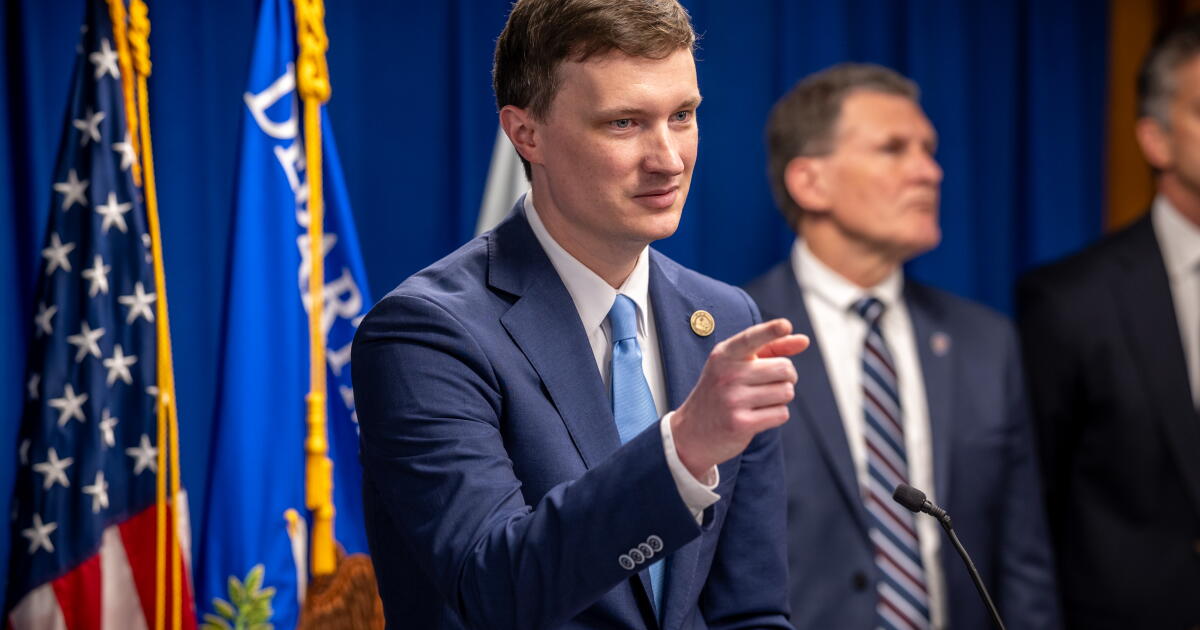
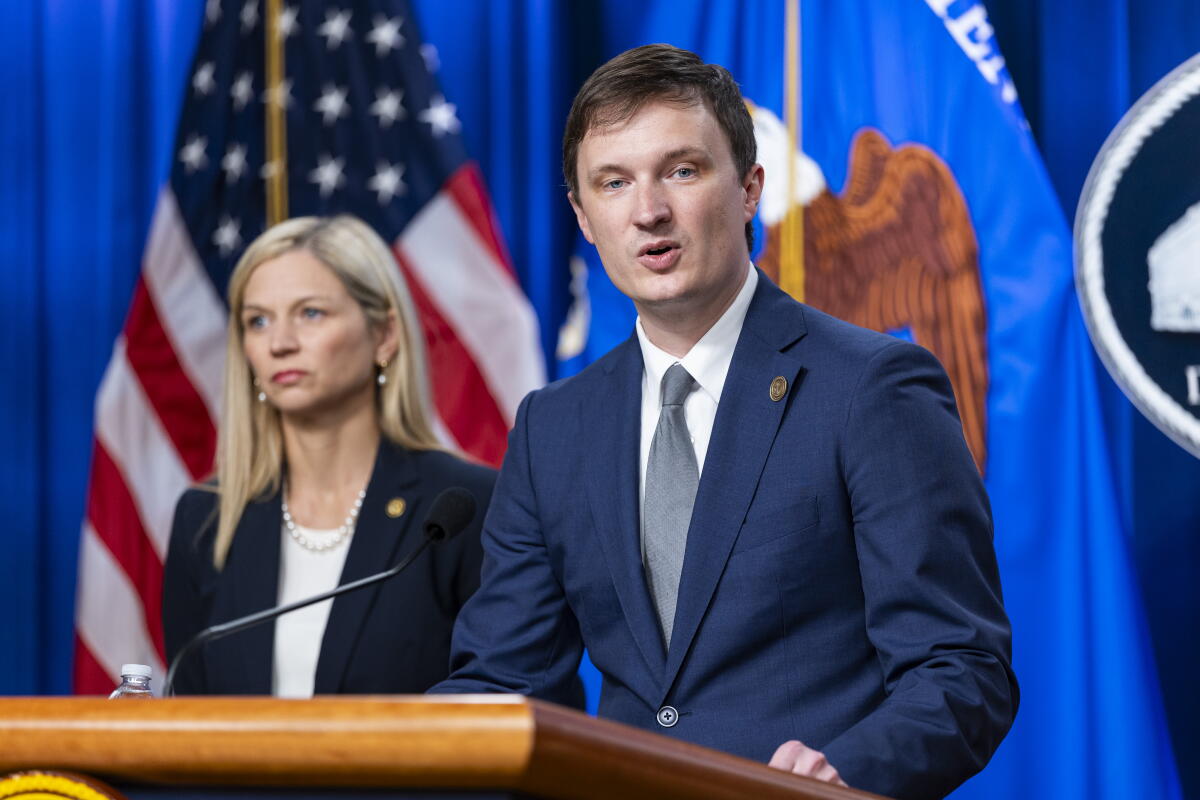
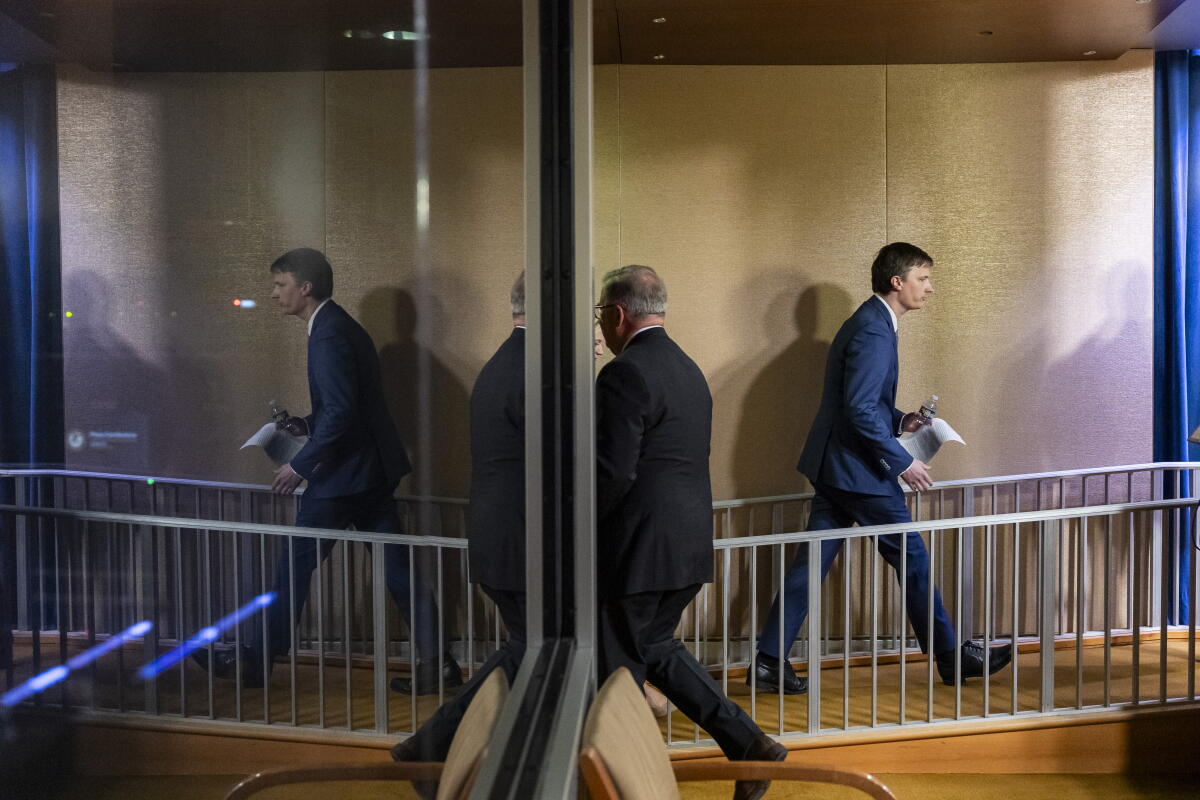
The demand letter came from U.S. Acting Deputy Atty. Gen. Trent McCotter, shown entering a news conference in September 2026 in Washington.
(Finn Gomez / Getty Images)
Voters on the federal list who haven’t already been sent a ballot should not be sent one until their citizenship is verified, while ballots already returned by voters on the list should not be counted until their citizenship is verified, McCotter wrote.
Weber’s office in a statement late Wednesday criticized the Justice Department for telling it to obtain a list of an unknown number of voters it hadn’t been given directly from Logan’s office, investigate all of those voters and “take action” all within 48 hours, based on inaccurate federal data that has led to U.S. citizens being purged from rolls in other states, and under threat of litigation despite the Justice Department providing no legal authority for the demand.
Weber said the Justice Department’s “relentless efforts to unlawfully gain access to states’ protected voter data and purge voter rolls serve only to cause chaos and fuel public distrust in our elections,” and that California already has “robust state law requirements” to ensure only U.S. citizens vote.
Logan said his office was reviewing the Justice Department letter in coordination with Weber and California Atty. Gen. Rob Bonta, but had not accessed the USB drive because state officials “do not consider the device a secure medium” and accessing its contents “would conflict with established data privacy and information security protocols.”
He said that maintaining accurate voter records is a fundamental responsibility of his office, but also that federal and state laws “are clear on how voter eligibility is established — and any action to remove a voter from eligibility must be based on verifiable information, not assertions of unconfirmed data matching.”
Weber previously questioned the basis for a claim by Homeland Security Secretary Markwayne Mullin in July that there may be more than 190,000 noncitizen voters on California rolls, and rebuffed Trump administration offers to work with her office to purge state rolls of such ineligible voters ahead of November without additional information on how it reached its conclusions.
Similar Trump administration lists have been shown in other states to be substantially inaccurate, and to include many voters who are indeed citizens. Election experts say that makes the demand on California — where ballots have already been mailed out — even more concerning.
“One must question why the DOJ would violate its own rules about investigating elections close to election day, and over a week after they knew the state had already mailed ballots out, particularly when their past claims have been full of errors,” said David Becker, executive director of the nonpartisan Center for Election Innovation & Research.
Becker noted the Trump administration alleged that there were nearly 16,000 noncitizens registered in Nevada, later reduced that number to 185 after additional scrutiny, and then determined all of them were in fact citizens.
A Justice Department spokesperson, in a statement to The Times, defended the agency’s demands to California — saying it “should not be controversial, as the criminal statute is clear: only American citizens may vote in federal elections. It is a federal crime for noncitizens to vote in U.S. elections, and the DOJ is asking California to ensure that is not occurring.”
The spokesperson said the agency could not provide the exact number of voters whose citizenship is being questioned, but that it is in the thousands.
California Secretary of State Shirley N. Weber speaks during the state Democratic Party convention in Anaheim on May 31, 2025.
(Damian Dovarganes / Associated Press)
McCotter wrote that if Weber cannot implement his demands for how to segregate ballots and verify voter citizenship for those on the federal list, the Justice Department “will have no choice but to seek emergency relief” — an apparent reference to seeking court intervention.
McCotter copied on the letters First Assistant U.S. Atty. Bill Essayli, the lead federal prosecutor in Los Angeles whose office previously sent Logan’s office a series of grand jury subpoenas for individual voter records as part of a criminal investigation into illegal voting.
Essayli’s office referred questions to the Justice Department. Bonta’s office referred questions to Weber and Logan.
Rick Hasen, director of the Safeguarding Democracy Project at UCLA School of Law, said that he is “not aware of anything like this ever happening this close to an election,” and that it may in fact be illegal under the National Voter Registration Act, which “prevents systematic purges of voters 90 days before the election.”
He said that the question of whether that preclusion against purges applies to the removal of noncitizens is an issue that is currently before the U.S. Supreme Court, in an Arizona case the high court will hear in December, but that the Justice Department’s actions strike him as “legally questionable.”
Hasen said the “whole point of that 90-day rule is to prevent the inadvertent disenfranchisement of eligible voters by mistake in the rush before the election,” and that risk is increased by the inaccuracies of similar lists presented by the Trump administration in other states. “So if there is an attempt to go to court — if DOJ tries to sue over this — they might have a hard time getting a judge to agree that this is something that the registrar must do or even can do.”
The fact that election officials are already busy receiving and preprocessing ballots would only bolster the state’s position in such a case, Hasen said.
“It’s obviously not a convenient time,” he said. “And given the fact that the lists have proven to be wildly inaccurate, at least in other states, it might be sending the registrar on a wild goose chase, when they have more relevant things to do in the election.”
But that “chaos” may be the point, Hasen said. “This is potentially another example of DOJ just making the work of state and local election administrators — which is already quite difficult and stressful — even harder,” he said.
Attorneys with the UCLA Voting Rights Project filed a lawsuit last month on behalf of the Coalition for Humane Immigrant Rights, or CHIRLA, and a California voter named Pedro Trujillo, in which they challenged the Trump administration’s use of unproven federal databases to allege registered California voters are not citizens.
On Wednesday, they told the Justice Department that they would be seeking emergency relief from such practices, given McCotter’s letters.
“The federal government’s attempt to pressure California election officials into acting on lists that may misidentify eligible voters is an alarming abuse of power as election season gets underway. This puts our communities and our fundamental rights at risk,” said Carl Bergquist, a CHIRLA attorney.
The Justice Department in recent weeks has announced scattered arrests of alleged noncitizen voters around the country, and Trump administration officials — including Essayli — have pointed to such arrests as proof that noncitizens are voting illegally.
Such voting does happen, Hasen said, but after months of the administration aggressively searching for such voters, the relatively small number of arrests “belies the contention that it’s widespread” or criminal, with many of the few cases identified the result of “administrative error or misunderstanding” rather than an intent to illegally cast ballots.
In his letters to Weber and Logan, McCotter wrote that allowing “noncitizens to vote cancels citizen votes,” and that ferreting out illegal noncitizen voters is a joint responsibility of state and federal officials.
“States are responsible for voter registration, and the Federal Government is responsible for maintaining immigration records to enable verification of citizenship,” he wrote. “Working together, we can more effectively protect against voter dilution and promote election integrity.”
WHAT luck! We admire the northern royal albatross – his jet-black wings spanning more than three metres as he circles above our little tour boat.
“They love gliding on this south-westerly breeze,” says Rachel, captain of the Sootychaser.
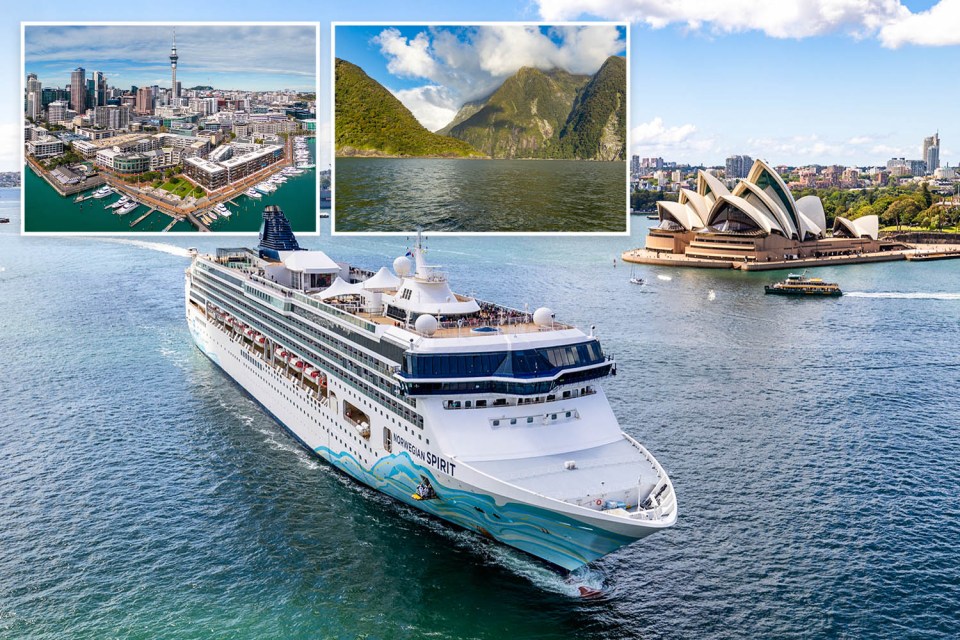
Norwegian Cruise Line offers an 11-day journey setting sail from Sydney, Australia and ending up in New ZealandCredit: SuppliedNew Zealand’s capital city of Auckland is the final stop on a truly epic cruise down underCredit: Getty
But within seconds our attention switches as Rachel spots some adorable blue penguins — the smallest in the world — on the other side of the boat.
With fur seals, oyster catchers, black swans and sooty shearwaters also ticked, this boat trip around Port Chalmers harbour in New Zealand’s South Island has turned into a wildlife adventure that keeps on giving.
Sign up for the Travel newsletter
Thank you!
Lady luck has been with me since I set out on a 12-night cruise from Sydney.
It was a bucket-list departure as we sailed past the Opera House on our way to Auckland on Norwegian Cruise Line’s ship, Norwegian Spirit.
The Tasman Sea was unusually calm as Captain Nordin navigated Spirit into Milford Sound, a deep fjord with steep cliffs and gushing waterfalls, the low mist clearing to reveal a cloudless blue sky.
Cruising New Zealand’s scenic fiordlands, a vast, wild area at the bottom of the South Island, always promised to be a highlight of the trip and didn’t disappoint.
It was spectacular. From Milford we sailed past the softer scenery in Doubtful Sound — so-named because when Captain Cook was passing in 1770 he didn’t think his ship would get into it.
Last up was Dusky Sound, named by Cook as he first saw it as the sun set. Port Chalmers is the nearest that most cruise ships can get to Dunedin, the Gaelic word for Edinburgh. “Scottish settlers travelled thousands of miles to this unknown land, but at least the weather was very familiar,” our guide Robert says with a laugh.
UNESCO world heritage site Milford Sound in Fjordland national park, New ZealandCredit: GettyA little blue penguin – the smallest in the world – are among the unique wildlife you can spot on the cruiseCredit: AFP
He’s not joking. We’re here in New Zealand’s summer, but the sky is grey and it is drizzling.
Things didn’t improve next day, when strong winds prevented Spirit getting into Lyttelton, the port for Christchurch.
Instead there was a day at sea with fabulous views as we sailed past snowy peaks.
I also worked up a sweat in Spirit’s thermal suite and followed up with an altogether different spirit — a margarita in Magnum’s, my favourite bar.
Built in 1998 and with room for just under 2,000 passengers, Spirit is NCL’s oldest and smallest ship, but looking very spruce after a £89million refurb in 2020.
They doubled the size of the spa, updated cabins, turned a waterpark at the back of Deck 10 into an adults-only area and added so many more places to eat and drink that it took me a week to try them all.
As NCL is the king of cruising casual, I booked whichever restaurant I fancied instead of being told when or where to eat, or what to wear. Jeans in the restaurant at dinner? No problem.
Steaks in Cagney’s, noodles in Silk, pasta in Onda by Scarpetta, stir-fry straight off the griddle in the fun Teppanyaki, and a superb Coq au Vin in the Bistro — I munched my way through the lot of them.
They were all really good (top marks went to the Bistro) and usually cost extra, but I paid nothing, thanks to NCL’s generous Free At Sea package.
It includes free meals in up to four speciality restaurants on cruises over nine nights (fewer nights nets fewer restaurants) as well as covering drinks and wifi and giving USD$50 (around £38) off the cost of shore excursions.
There were plenty of included places to eat as well.
Taste, one of two main dining rooms, was good, and I liked the outdoor seating at the Garden Cafe (a posh name for the buffet), but The Local was my favourite, for its salads, burgers, fish and chips and chicken wings.
Outside, the weather was getting better and better, with sunshine and blue skies as we explored New Zealand’s North Island. Wellington, the capital, stole my heart with its relaxed feel, clean streets and waterfront bars.
I rode a cable car to the top of the botanic gardens and wandered back to town, admiring the exotic plants and trees along the way.
In Napier the next day, I joined a hike and wine tour up the lofty Te Mata Peak with guides Helen and Anne.
“We’ve learned from experience it’s good to do the wine after the walk,” says Helen.
Wise words. What started as an easy path from the car park got steeper as we climbed — one foot wrong and you would be tumbling down the grassy bank.
Panting with exertion, it was a joy to finally dive into four tipples, including a cheery sweet rosé aptly named Fleurty.
Tauranga was different again — a beautiful beach resort, with miles of soft sand and stylish apartments that would look right at home on the French Riviera (but were a lot cheaper).
The next day, in Auckland, it was time to say goodbye to Spirit and New Zealand — but I’m not dis-Spirited because, with Lady Luck on my side, I’ll be back.
GO: NEW ZEALAND CRUISE
SAILING THERE: Norwegian Cruise Line offers an 11-day Melbourne, Milford Sound and Eden cruise from Sydney to Auckland departing on February 16, 2027, from £2,030pp for an ocean-view cabin.
Price includes Free At Sea package of drinks, four speciality restaurants, 150 minutes of wifi for one device at a time and USD$50 off shore excursions.
A new passport rule will be introduced across 13 airports from this month, and it’s good news for holidaymakers as it could allow for a smoother travel experience
10:29, 09 Oct 2026Updated 12:18, 09 Oct 2026
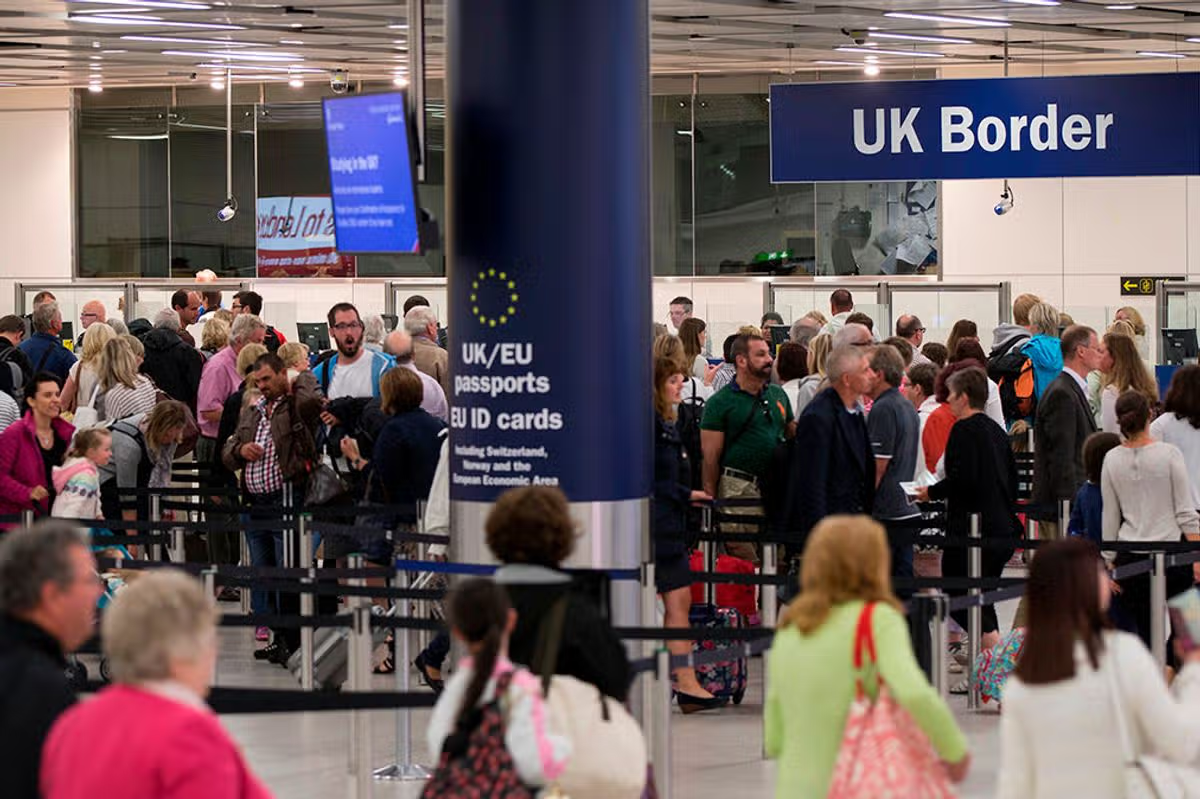
Going through border control after landing back in the UK is about to get easier for British passport holders (Image: Getty Images)
Airports across the UK are rolling out new contactless technology that will allow Brits to pass through the e-gates without presenting their passports. This is due to an enhanced facial recognition system that will capture the returning passenger’s face at the e-gates and cross-reference it with their passport photograph already stored on file.
The upgraded technology, being introduced at the e-gates of 13 UK airports, will help to speed up security checks and is said to dramatically cut queues by up to 25 per cent, according to the Home Office. It will also provide British passport holders with a smoother journey home, as they no longer need to rummage around for their document or face lengthy border control queues.
Phil Douglas, director general of Border Force, said: “This is a win for travellers coming to our brilliant country. By using state-of-the-art technology, we are making journeys smoother and faster, all while fully maintaining the UK’s robust border security. Our digital transformation also builds on our work this summer to extend eGates to children aged eight and above, making life a little easier for families.”
To make the process more efficient, it’s been reported that airlines would forward passport photos of their British passengers to border control at each airport on the day of arrival, which would then be uploaded onto the e-gates system. Douglas added: “Because we know who’s coming and can load up that gallery of who is arriving, it’s not a one in 60 million check, it’s a one in tens of thousands check [because the system only needs to check against the passports of passengers travelling on that particular day].”
The phased introduction of the revamped system began on Tuesday, 6 October, and will initially launch at Birmingham and East Midlands airports over the coming weeks. By early next year, the new ‘contactless borders’ will be rolled out across other UK airports already equipped with e-gates.
Steve Griffiths, managing director of East Midlands Airport, said: “We’re delighted to be the first UK airport to have contactless eGates introduced by Border Force. As an airport committed to providing an effortless travel experience, we welcome any technological innovation that can help to safely make our customers’ journeys smoother, swifter and simpler. This complements changes that we carried out to our immigration hall recently to help improve the flow of arriving passengers through the area.”
Full list of 13 UK airports impacted
Birmingham Airport
Bristol Airport
Cardiff Airport
East Midlands Airport
Edinburgh Airport
Glasgow Airport
London City Airport
London Gatwick Airport
London Heathrow Airport
London Luton Airport
London Stansted Airport
Manchester Airport
Newcastle International Airport
While the system will initially be introduced for British passport holders using e-gates at UK airports, there are proposals to extend it to other nationalities holding biometric passports, including those from Europe, Australia, Canada, Japan, New Zealand, Singapore, South Korea, and the US. Officials hope it will streamline re-entry into the UK and prevent disruptions at border controls.
Passengers who cannot be identified at the e-gate under the new system would need to revert to the existing method and scan their passports instead. Should this also prove unsuccessful, they will be directed to a staffed border control desk where their passport will be manually verified.
Do you have a travel story to share? Email webtravel@reachplc.com
LUCY Mecklenburgh & Ryan Thomas have put their Cheshire mansion on the market for £1.25million.
But former Towie star and Coronation Street actor may not see a penny after his money woes were revealed.
Ryan Thomas and Lucy Mecklenburgh’s Cheshire mansion is on the market for £1.25millionCredit: GettyJust five years on and the sprawling mansion has nearly doubled in valueCredit: Splash
Ryan, 42, has previously spoke about his financial difficulties after he was declared bankrupt in 2013 over an unpaid £40,000 tax bill.
The soap star first purchased the Edwardian property near Stockport for just £675,000 in 2021.
Sign up for the Showbiz newsletter
Thank you!
But just five years on and the sprawling mansion has nearly doubled in value.
They have spent thousands of pounds renovating the property and have modernised the kitchen, living room, bedrooms.
The property also boasts a walk-in wardrobe, Pilates room and a stunning outdoor patio.
The Sun have reached out to reps for comment.
Last October, The Sun revealed that Ryan was down to his last £1 in his company’s bank account.
The actor runs a media firm called R James Thomas Ltd which takes in cash from his TV and endorsement work.
Annual accounts filed to Companies House showed just a solitary pound in the company account for the 12 months to the end of January last year.
His cash balance was £41,361 in the previous 12 months.
With assets taken into account, the firm had a bottom line of £28,275 when the books were filed to Companies House.
A Corporation Tax bill of £55,062 reveals he still enjoyed a profitable year.
Meanwhile, the books also revealed at the time that he had more than £30,000 of a Covid Bounce Back Loan still to pay.
Ryab teamed up withWaterloo Roadstar younger brother Adam forITVgame show 99 To Beat.
The show launched last March but by August, it was axed after just one series.
Despite his TV successes, the star previously confessed he has struggled managing his finances.
He found fame at just 16, earning £100,000 – but he said he lacked a financial role model growing up.
Ryan said: “I had money from a very young age – and for a 16-year-old I had a hell of a lot of money.
“So, I did have a credit card growing up and it caused me a few problems.
“It’s so long ago I can’t remember how much I took my eye off the ball, but I know that I was always late paying it back and it became a debt that I never knew existed.”
Young Ryan would also foot the bill for nights out with his friends which meant he would spend more than he should.
In addition, Ryan revealed he filed for bankruptcy in 2013 due to an unpaid tax bill, which he said was down to him being careless.
The dad – who is engaged to former TOWIE star Lucy – said: “But I don’t regret any of the things that happened to me because I actually feel like they’ve been a real blessing.
“I’ve learnt so much and I don’t think to myself ‘oh, I did this, I did that’ because I’m the sort of guy who takes a day at a time anyway.
“I don’t really think about too much into the future and during that time I was earning anyway, so it wasn’t like I was jobless.
“I just lost everything and started again.”
After leaving the cobbles, he won Celebrity Big Brother in 2018 and made a guest appearance in Neighbours.
Major League Baseball wrapped a postseason advertisement around the front page of The Times this week. “OCTOBER STARTS TODAY,” the headline screamed.
Beneath those enormous letters, Shohei Ohtani smiled. Who else?
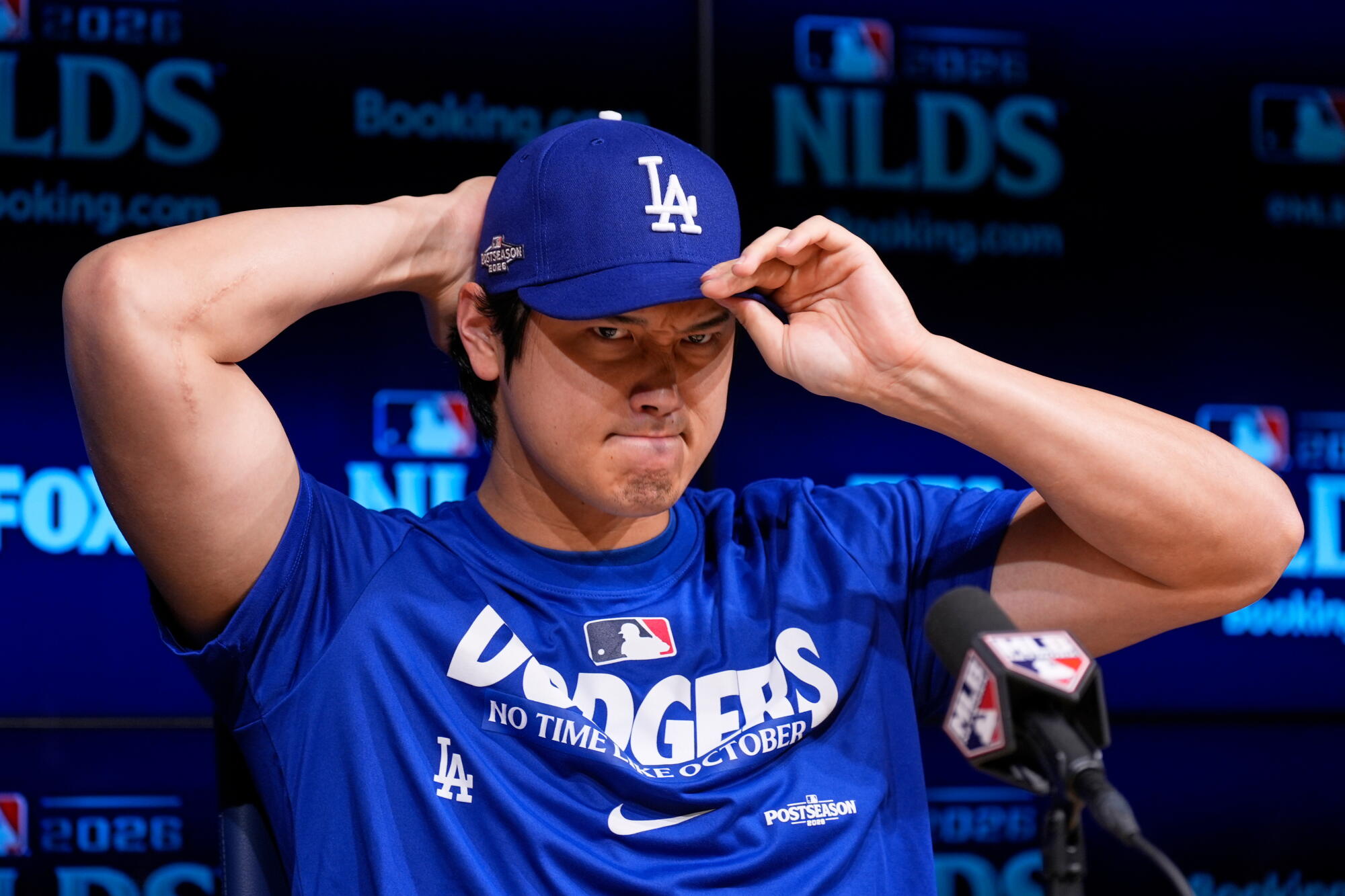
And so dozens of reporters crammed into a cramped room within Dodger Stadium on Friday afternoon, on the eve of the National League Division Series between the Dodgers and the Atlanta Braves, waiting for Ohtani to answer a few versions of “How are you?”
It’s not just about attracting casual fans to watch the icon whose face adorns everything from airplanes to skin care products. For the Dodgers and their fans, it’s about whether their most famous player can be a game-changer in October.
The Dodgers could have shut him down as a pitcher rather than let him continue to try to pitch through knee and biceps injuries. They didn’t, and that backfired.
The Dodgers could have shut him down as a hitter, not for the season but for a stint on the injured list. They didn’t. They gave him just a few days off, and that backfired.
Then the Dodgers did put him on the injured list, but activated him for the final five games of the regular season rather than give him extended rest for the playoffs, limiting his activity to controlled workouts.
That might backfire, or it might not, and the repercussions of the former could represent a significant hurdle in their quest for a third consecutive World Series championship. Giving Ohtani time off during the regular season would have carried no penalty; the Dodgers would have won the NL West with or without him.
If the Dodgers decide Ohtani needs a few days off now, they would face this unpleasant dilemma: play one man short, or put him on the injured list. Under MLB rules, a player put on the injured list during a postseason series must sit out the next series. So, if Ohtani starts wincing at the end of his swings during the NLDS, a stint on the injured list would mean he could not play again until the World Series — if the Dodgers get there.
Shohei Ohtani speaks during a news conference at Dodger Stadium on Friday.
(Mark J. Terrill / Associated Press)
Ohtani has not hit a home run since Aug. 18. Since then, he is batting .157, and he has struck out in 41% of his at-bats. In those final five games, he hit the ball hard in the first two, then hit ground balls in the final three. In the on-deck circle, he did not always take a swing.
In batting practice Friday, he hit lots of home runs.
The general sense of how Ohtani is feeling now: good enough.
Ohtani said he feels “really good” as compared to before he went on the injured list, but acknowledged he isn’t sure what he might need to do to address the injuries over the winter.
“As of now, it’s something I’m just going to have to manage,” he said through interpreter Will Ireton.
Dodgers manager Dave Roberts offered this medical update: “Shohei’s not 100%, but he’s going to be in the lineup.”
Same for Freddie Freeman, who has not homered in a month. The difference, Roberts said, is how encouraged the manager was by Freeman’s workouts this week.
“With Shohei, I’m not so sure,” Roberts said. “I know that once the lights turn on, the postseason starts, the focus will be heightened. I expect good things. I really do. We just haven’t seen it enough to really — for me to forecast it.”
Ohtani plays when he says he can. After he tore up his left shoulder in Game 2 of the 2024 World Series, he had trainers tape the shoulder in place and took 11 at-bats over the final three games of the series. He had one hit, a single.
“I do pride myself on playing every day,” Ohtani said. “I do see it as an obligation as a professional to be on the field every single day.”
Andrew Friedman, the Dodgers’ president of baseball operations, acknowledged recently that communication with Ohtani has been “awesome” but “fully sharing exactly how he’s feeling, maybe not as awesome.”
Said Friedman: “He’s not always the best reporter of how he feels. Freddie’s the same way. Clayton Kershaw. I’ve been around a lot of these guys that feel like their job is to be out there to help the team however they can, and sometimes will downplay some things that are bothering them. But again, it’s because he wants to help the team win.”
The Dodgers are talented enough that Ohtani not hitting well would not damage their chances as much as, say, Sale not pitching well for the Braves. In the NLDS and the first three games of the NLCS last October, Ohtani hit .103 with no home runs and struck out in 48% of his at-bats.
In the NLCS clincher, he hit three home runs (and struck out 10 batters). The Dodgers could trade a few bad days from Ohtani for that one really good day.
In that MLB advertisement, the one that featured Ohtani, the league acknowledged that its screaming headline was not exactly accurate. The explanation also fits the Dodgers’ hopes of Ohtani starring in October.
The ad, after all, appeared on Sept. 29.
October starts today?
“Logic and reason would tell you otherwise,” the ad read. “But October isn’t about being reasonable.
The EU’s new Entry and Exit System (EES) requires most UK travellers to register their biometric data before entering the Schengen area
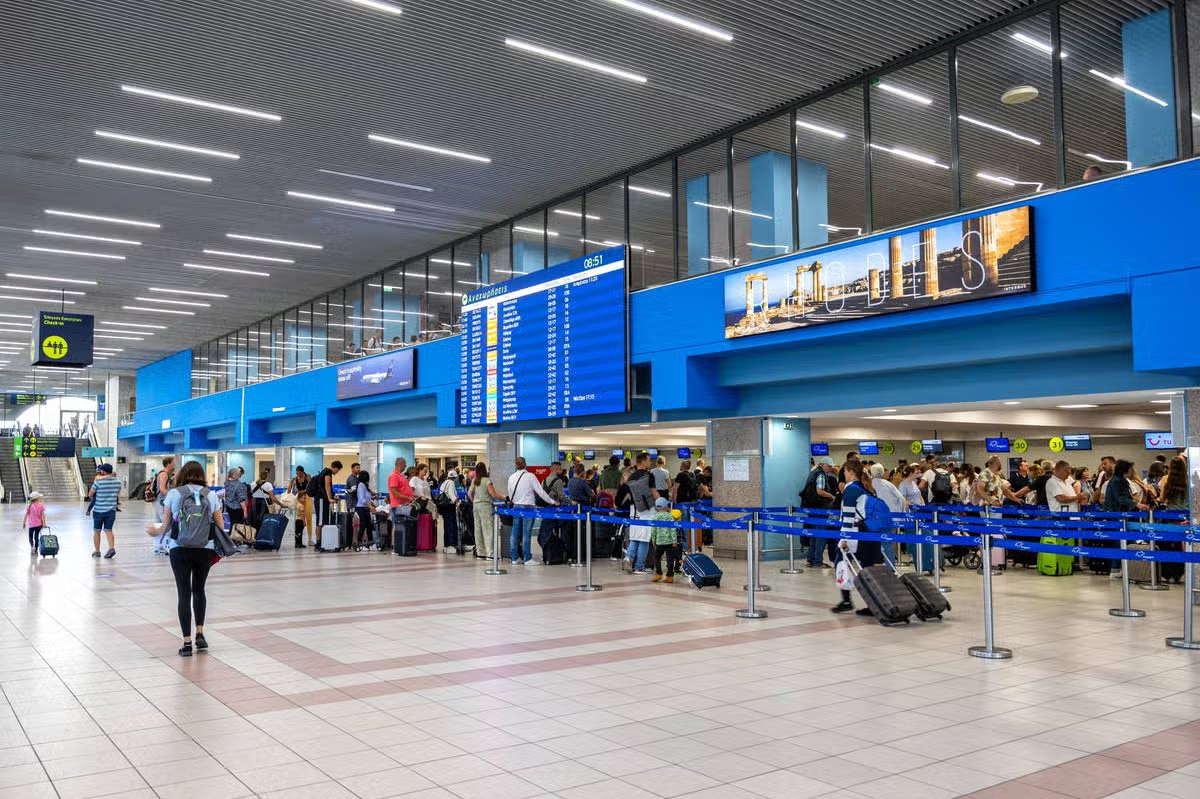
EES has led to queues and delays already this year(Image: Boarding1Now via Getty Images)
UK travellers heading to Europe are now subject to a new Entry/Exit System (EES), which was introduced earlier this year.
This means the majority of non-EU citizens will be required to register their biometric data at one of 29 participating countries, including a host of popular holiday destinations such as Spain and Greece. Some UK travellers will need to have their photograph taken and their fingerprints scanned before they can pass through into Europe’s Schengen area.
Countries that are part of the EES are: Austria, Belgium, Bulgaria, Croatia, Czechia, Denmark, Estonia, Finland, France, Germany, Greece, Hungary, Iceland, Italy, Latvia, Liechtenstein, Lithuania, Luxembourg, Malta, Netherlands, Norway, Poland, Portugal, Romania, Slovakia, Slovenia, Spain, Sweden, and Switzerland.
As a result of the new system, travellers no longer need to have their passports stamped. Over the summer, the EES resulted in lengthy queues and significant delays at a number of airports.
Due to the disruption caused, Greece initially suspended EES checks for UK passport holders in April 2026, though this decision was subsequently reversed in order to comply with EU regulations. Earlier this month, however, Greece and eight other countries – France, Portugal, Germany, Italy, Malta, Switzerland, the Netherlands, and Belgium – have indicated they require additional time before fully implementing the EES.
EU sources say the system is regarded as a success, with approximately 200m registrations and 70,000 people prevented from entering the Schengen area, up from 43,700 in June. These include individuals without visas, those who have exceeded their 180-day allowance, or Britons who have overstayed their 90-day allowance.
People who do not have to register on EES
Some travellers may not be required to register their biometric data on the new system. According to the EU website, you do not need to use the system if the following apply:.
You are a non-EU national who holds a residence card or permit and are immediately related to a non-EU national who can travel through Europe like an EU citizen.
People exempt from border checks due to certain privileges e.g. a head of state.
You are a non-EU national who holds a residence card and are immediately related to an EU national.
You hold a residence permit or long-stay visa.
You are a non-EU national travelling to Europe as part of an intra-corporate transfer for the purpose of research, studies, training, pupil exchange, voluntary services, educational projects, or au-pairing.
You are a national of Andorra, Monaco and San Marino and hold a passport issued by the Vatican City State or the Holy See.
You are a diplomat on a short stay (under certain conditions).
You are a national of a European country using EES, such as Cyprus and Ireland.
Federal investigators have sent Los Angeles County elections officials at least five grand jury subpoenas for individual voter records as part of a criminal investigation into illegal voting, according to partially redacted records reviewed by The Times.
The subpoenas — released in response to a public records request — appear related to a nationwide effort by the Trump administration to identify noncitizens who have illegally cast ballots in U.S. elections.
The subpoenas were issued in the U.S. District Court for the Central District of California. They were sent to L.A. County Registrar-Recorder/County Clerk Dean Logan’s office at the request of prosecutors in the office of First Assistant U.S. Atty. Bill Essayli.
“The enclosed subpoena has been issued in connection with an official criminal investigation being conducted by the Department of Homeland Security, Homeland Security Investigations,” Assistant. U.S. Atty. Michael Wheat — based out of the district’s Orange County office — wrote in a letter accompanying a Sept. 10 subpoena.
Wheat wrote that a custodian of records from Logan’s office must either appear before the grand jury to present the records or deliver the materials to a special agent from Homeland Security Investigations.
Four of the subpoenas — one issued on July 13 and three on Sept. 10 — request “any and all original and non-redacted voter records” from Jan. 1, 2020, to the present for a list of individual voters stretching across two pages. The lists were redacted by Los Angeles County officials, and it is unclear how many individuals each list contained.
Each of those subpoenas notes that records to be produced include information on individual voters, such as their “registration file” and “addresses listed, history and method of voting, [and] any and all attestation regarding citizenship status.”
A fifth subpoena, issued July 31, appears to request similar information for a single voter, and notes that the voter’s “ballot content or vote selections” should not be included.
Ciaran McEvoy, a spokesman for Essayli’s office, declined to comment on the investigations Monday.
The Times first reported the existence of the subpoenas, but not details from the records themselves, last week, after Logan confirmed that his office was complying with the federal inquiry despite having concerns that investigators may be using incorrect or outdated information to produce their lists of voters to investigate.
“We’re responding appropriately as directed through a subpoena, but that doesn’t afford the dialogue for us to get the background on what they’re looking for and how they came up with the names that they did,” Logan said. “There’s really no information being provided to us on that.”
President Trump has alleged for years that illegal voting by noncitizens is widespread, though experts say the problem — which they acknowledge occurs — is exceedingly rare. Homeland Security officials have been leading a campaign in recent months to identify such fraud nationwide, and the subpoenas received by L.A. County appear to match others received by elections officials elsewhere in the country.
Essayli — a Trump loyalist who has not been confirmed to lead the Los Angeles prosecutor’s office by the U.S. Senate and whose de facto leadership has been contested in court — has been vocal about his office’s pursuit of voter fraud, including by noncitizens.
His office has announced two voter fraud cases in recent weeks, including one involving the arrest of 30-year-old Honduran national on two felony charges of falsely claiming U.S. citizenship and fraudulently registering to vote. That man, Darwin Jonathan Rivera-Flores, has pleaded not guilty and is out on bond pending trial.
Rivera-Flores and his attorney declined to comment.
The Justice Department also recently announced it had charged 16 noncitizens in six other states with illegal voting and other election-related crimes.
Homeland Security Secretary Markwayne Mullin publicly claimed in July — without providing evidence — that there may be more than 190,000 such voters on California rolls, a claim California officials dismissed as baseless.
Three of the five subpoenas received by Logan’s office ask that the voter information be shared with Al Rossi, the acting assistant head of Homeland Security Investigations in Los Angeles.
Reached by phone, Rossi referred questions to an agency spokesperson, who did not respond to a request for comment.
Wheat had asked that the subpoenas be kept secret, so as not to impede an open investigation. Logan’s office released the records in accordance with California public records law, but redacted the names of voters on the grounds that doing so “protects those individuals from undue attention, harassment, intimidation, or possible harm” and “protects the integrity” of the investigation.
The U.S. Supreme Court on Friday upheld Trump’s expanded use of government data to search for noncitizens who are registered to vote. A lower court order had blocked use of the data over concerns — shared by the Supreme Court’s liberal wing — that the data are error-prone.
Voting rights experts have expressed concern that misuse of the data could lead to legitimate voters being purged from rolls.
States across the country, including California, have successfully fought off lawsuits from the Trump administration demanding the states’ complete voter rolls.
It is unclear why a subpoena for a single voter’s information would come between subpoenas for information on longer lists of voters. But it lines up with the case against Rivera-Flores.
In an affidavit filed with a criminal complaint against Rivera-Flores, Special Agent Christopher Kuzma — the same agent listed on the July 31 subpoena requesting a single voter’s information — said he received a series of texts he believed were from Rivera-Flores, who had previously been issued a misdemeanor citation on suspicion of disrupting immigration law enforcement operations at the federal building in Camarillo.
One text sent in April 2026 stated, “Your not the good guy I can’t wait until the mid terms you dont have qualified immunity then we can start and indict all you guys one bye one.”
Kuzma said in his affidavit that he took the message to mean Rivera-Flores “has both an interest in the voting process and an intent to participate in the election process.”
According to the affidavit, Kuzma said he conducted several record checks through public databases, including on the California secretary of state’s website, which “disclosed an online voter registration record” for a “Darwin Rivera” at Rivera-Flores’ address.
In July 2026, Kuzma said in the affidavit, he reviewed records from California Secretary of State Shirley Weber’s office for “Darwin J Rivera,” which showed the applicant had checked a box stating he was a U.S. citizen.
Kuzma’s affidavit said in August 2026 he received certified voter registration records from Los Angeles County.
The spokesman for the U.S. attorney’s office did not respond to a question about whether Kuzma’s July 31 subpoena was specific to Rivera-Flores, but the office has previously said Wheat is prosecuting the case.
When Rivera-Flores’ arrest was announced, Essayli said it was “the first of many to come.”
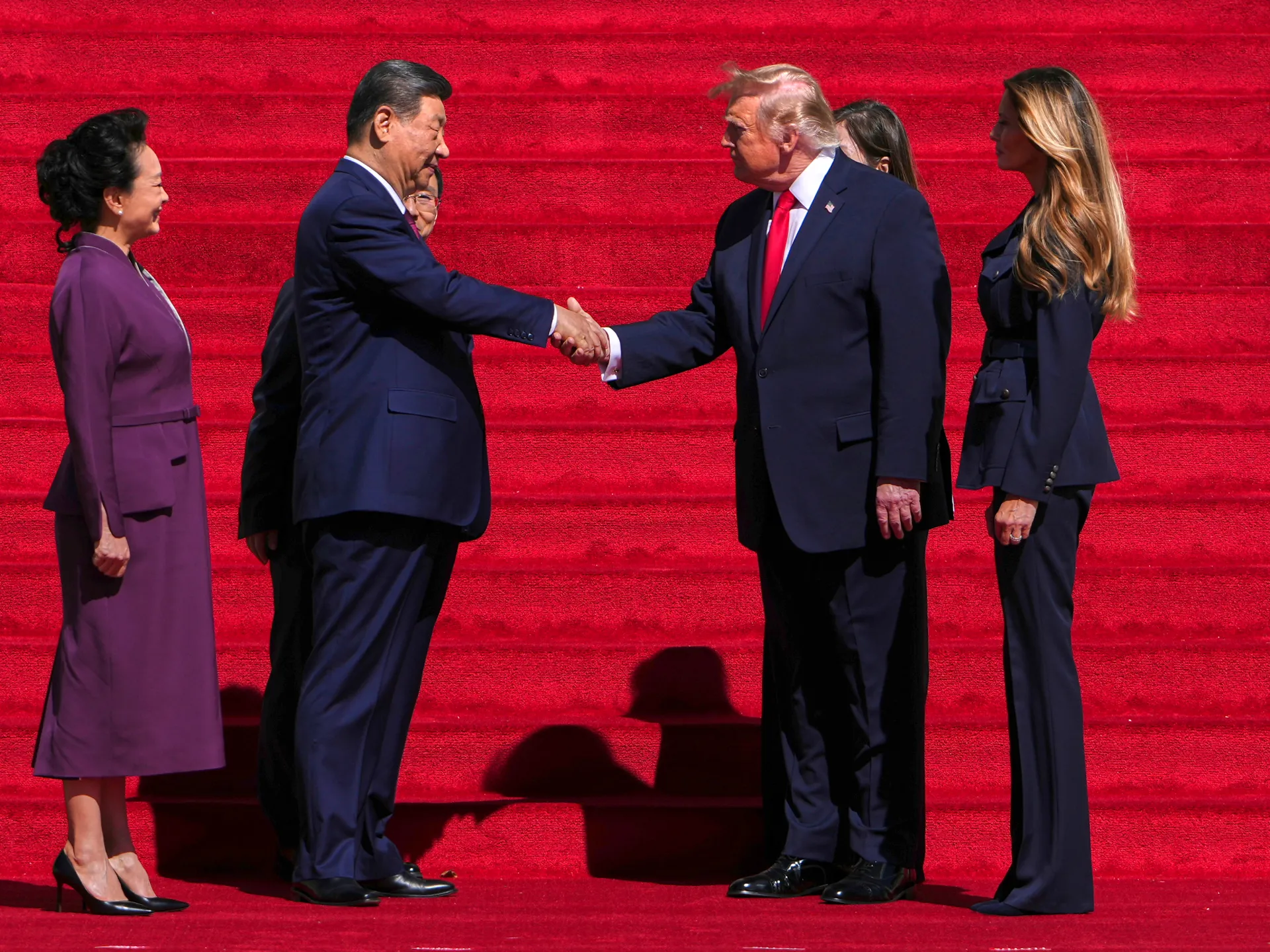
The United States and China have unveiled a list of goods recommended for reduced tariffs following last week’s summit between Presidents Donald Trump and Xi Jinping.
The release of the list on Sunday comes after Trump and Xi agreed to work towards lowering tariffs on $60bn worth of trade.
Recommended Stories
list of 4 itemsend of list
The agreement, which covers $30bn of each side’s imports, identifies 77 Chinese goods and more than 1,600 US products to be considered for more favourable tariff treatment.
Chinese goods on the list include microwave ovens, fish hooks, artificial flowers and weighing scales.
US exports identified for lower tariffs include poultry, dairy products, noodles, eggs, peanuts, canned tomatoes, pure-breed breeding horses, and silk.
US Trade Representative Jamieson Greer said the agreement would improve market access for about 30 percent of US exports to China and also benefit US consumers.
“The Trump Administration will continue to pursue fair, balanced, and reciprocal trade with China by ensuring compliance with commitments on agricultural and energy purchases, pursuing balanced trade in non-sensitive goods, and securing market access for American farmers, manufacturers, businesses, and workers,” Greer said in a statement.
China’s Ministry of Commerce, which confirmed the list on Monday, shortly after the White House announcement, said the sides would discuss “a reciprocal tariff reduction framework of $30 billion for $30 billion, aiming to reach a consensus”.
“This arrangement will help stabilize China-US trade, create better conditions for Chinese exports of relevant products to the US, meet domestic market demand, and strengthen trade cooperation in agricultural products, energy, manufactured goods, and consumer goods,” the ministry said in a statement.
While Trump and Xi’s summit was heavy on pomp and ceremony, their talks wrapped up on Friday with few concrete announcements on the myriad divisions between the superpower rivals, which span everything from trade to artificial intelligence and Taiwan.
Trump and Xi, who have held three face-to-face summits since last October, are expected to meet again at the Asia-Pacific Economic Cooperation (APEC) summit in Shenzhen, China, in November, and the Group of 20 gathering in Miami, Florida, in December.
Trade between the US and China, the world’s two largest economies, has declined substantially since Trump, a longtime critic of free trade policies, returned to the White House in January last year.
Two-way trade totalled $495bn in 2025, down 25 percent from the previous year, according to the US Trade Representative.
Deborah Elms, head of trade policy at the Hinrich Foundation in Singapore, said the latest announcement did not point to a major shift in US-China trade.
“Instead, both sides have largely listed goods that do not move the needle on overall trade flows,” Elms told Al Jazeera.
“They may reduce some prices in the US for consumers, but none is going to make a dramatic difference in inflation figures or result in meaningful sighs of relief by most US buyers,” Elms added.
“The same is broadly true with the Chinese list. Although there are many different agricultural products on the list, most are not actually exported to China or not exported in meaningful quantities.”
WHAT makes a city the best in the world? Well, there are lots of factors that go into it, according to Oxford Economics which has just named the top 100.
Looking at subjects like governance and quality of life, it has created the Global Cities Index 2026 and four UK cities have made the cut, with one coming in second place.
London has been revealed as the second best city in the worldCredit: Getty New York City came in first place according to Oxford EconomicsCredit: Getty
It might be a surprise to some, but London was named second best city in the world – only beaten by New York City.
Oxford Economics made their decision on the factors of economics, human capital, quality of life, environment and governance.
Sign up for the Travel newsletter
Thank you!
Talking about the city, Oxford Economics said: “London remains one of the clearest examples of a truly global city.
“Its influence extends across business, science and technology, education, and the arts, giving it a reach that few other cities can equal.”
It named its top strengths with its universities, large GDP size and low emissions.
It’s not the first time London has been named one of the world’s best cities – earlier this year it was named THE best city by Tripadvisor.
Almost as many as 80,000 people visit every day to see its historic landmarks like Big Ben, the Tower of London, St. Paul’s Cathedral and Tower Bridge.
Or its more modern ones like the London Eye, The Shard and the Sky Garden.
And if you want some ideas on what to do in the capital for all ages, Sun Travel has some recommendations for you from its attractions to rooftop bars and free things to do.
The next UK city in the top 100 is Edinburgh in Scotland which came 71st on the list.
Edinburgh came in 71st place – it has a huge castle and cobbled streetsCredit: Getty Images
The historic city has cobbled streets – one of which being the Royal Mile which is considered one of the most beautiful in the world.
Edinburgh also has around 385 pubs, plenty of cafes, independent shops and of course it’s hilltop castle.
Another activity that lots of visitors embark on during a trip to Edinburgh is the hike up to Arthur’s Seat.
The extinct volcano is the highest peak in Holyrood Park just east of the city and you can see across the whole city from above.
Coming in at number 90 on the list is the city of Manchester – it was also named one of the world’s up-and-coming cities.
The publication described the city as “booming” thanks to its “productivity growth”.
It was also praised for its “thriving cultural scene” thanks to its two football clubs, Manchester City and Manchester United – as well as Co Op Live and AO Arena which both hold live events.
For more on what to do in Manchester, one local has lots of recommendations like exploring Warehouse Project for seeing live bands or DJs and stopping by the bars on Canal Street.
Dublin, known for its lively nightlife, came in sixth positionCredit: GettyEuropean cities like Stockholm took up 44 positions in the top 100Credit: Getty
Just about making the list is the city of Cambridge which placed in 100th position.
The city in the East of England is most famous for its prestigious university which is often ranked as being one of the best in the world.
Popular activities include exploring the historic colleges, punting along the River Cam and exploring the shops and its many pubs.
One of which, The Eagle, is where Francis Crick and James Watson burst in to announce they discovered the DNA.
Other cities that deserve a mention are Dublin in Ireland which came in at number six.
It’s is largely known around the world for its lively nightlife, but it also has world-class museums, restaurants and historical sites.
Also in the top 10 were Paris and Zurich, as well as Tokyo in Japan and American cities, Seattle, San Francisco and San Jose.
Within the top 100, Europe represents almost half with 44 cities, a lot also belong in North America with its 34 cities making the list.
There are the top 100 cities according to Oxford Economics…
The hunt for the UK’s best fish and chip shop 2027 is on and there are 40 potential winners, as the shops near you make the shortlist and standout amongst thousands
There are four in one county alone(Image: Bloomberg Creative via Getty Images)
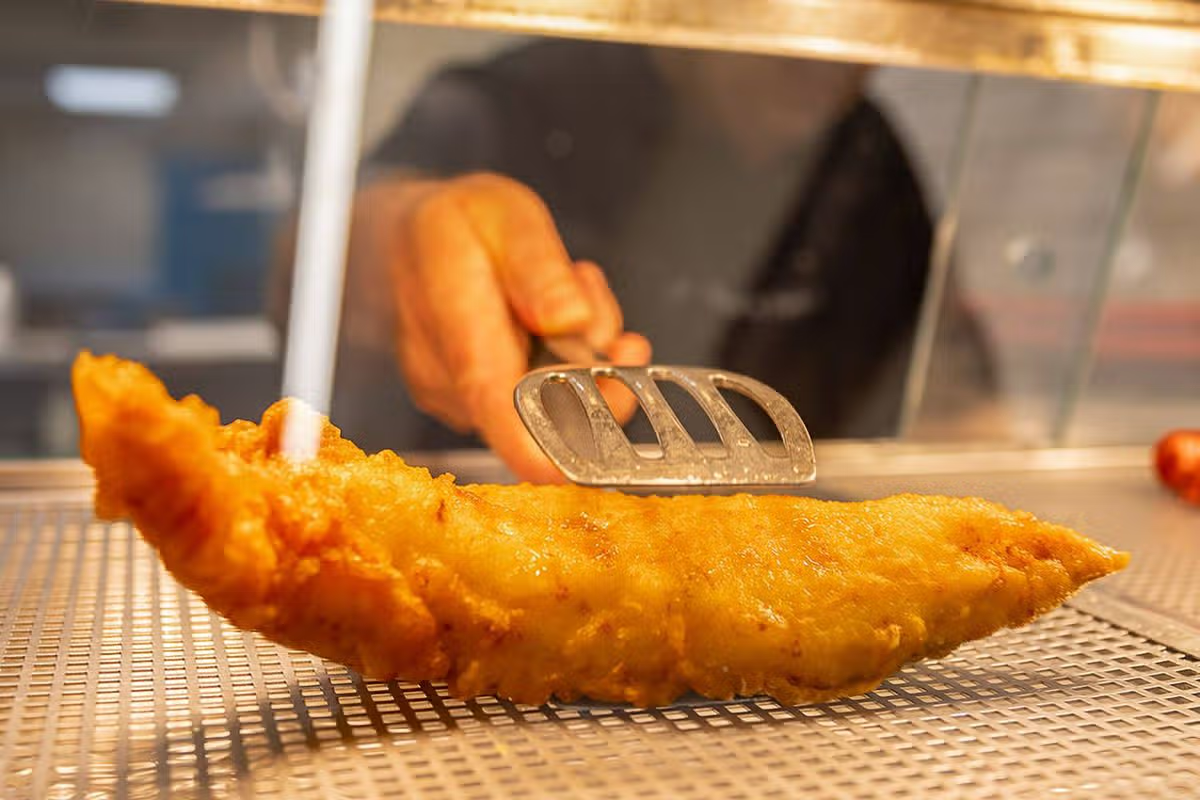
More than 40 chippies have been named on the National Fish and Chip Awards longlist, as they battle it out to be winners of the National Fish & Chip Awards for 2027.
There are contenders in almost every county, from the seaside to small villages and big cities; the UK is home to an array of tasty chippies.
This lineup of fish and chip shops has impressed the judges, scoring ‘outstanding’ across a number of categories, including food quality, customer service, industry expertise and commitment to sustainability.
Selected from entries across the UK, the businesses in the longlist have impressed judges with their products, service and ability to represent fish and chip-loving communities up and down the country.
In their 39th year of awards, they continue to recognise greatness in the food world, across 14 categories, which includes the highly contested Restaurant of the Year.
The current Takeaway of the Year titleholder, Aman Dhesi, co-owner of The Scrap Box in York, Yorkshire, shared what his win meant to him last year.
He said: “More than six months on from winning, we’re still seeing the impact of the award. It gave the business a huge boost, as did reaching the top 10 the year before, but probably the biggest thing has been the opportunities it’s opened up for us outside the shop, from media and travel to meeting people across the industry and getting involved in some really exciting projects.
“For those in the top 40, I’d say enjoy the process and make the most of it. The awards journey really makes you look closely at your own business – what you do well, what makes you different and where you can still improve.
“We learned a huge amount through the process before we ever won. And don’t try to second-guess what the judges want. Be proud of what makes your shop yours and tell that story.”
The next stage will narrow this number down to 20 in the semi-finals, before the top 10 is revealed for 2027.
The shortlist for the 40 best Fish and Chip takeaways in the UK:
Bristol
Bishopston Fish Bar
Jolly Fryer
Devon
Chippies Plaice, Newton Abbot
Taffs Fish and Chips, Torrington
Dorset
Somewhere Else Fishy, Sherborne
Essex
The Hook of Halstead
Greater Manchester
Taylors, Stockport
Hampshire
Berties, New Milton
Best Fry, Southampton
Mike’s Traditional Fish and Chips, Eastleigh
Mister Pink’s, Milford-on-Sea
Hertfordshire
The Corner Plaice, Rickmansworth
Lancashire
The Cottage, Blackpool
Lincolnshire
Catch 22, Tattershall
Linfords Fish and Chips, Market Deeping
Pips Chips, Cleethorpes
London
Chipping Wharf Fish & Chips, Bow
Fish! Kitchen, Southwark
Skipjacks, Harrow
Merseyside
The Good Catch (Freshfield), Liverpool
Norfolk
Grosvenor Fish Bar, Norwich
Nottinghamshire
Angell’s Fisheries, Newark
Oxfordshire
Harrison’s Fish & Chip Co., Oxford
Somerset
Knights Fish Restaurant, Glastonbury
Suffolk
Tulula’s Fish & Chips, Halesworth
Surrey
The Hake, Weybridge
Seafare Guildford
Yorkshire
The Fish Bank, Sherburn-in-Elmet
Northern Ireland
County Antrim
Browns Award Winning Fish and Chips, Belfast
Merchant Fish and Chips, Ballymena
County Down
The Frying Squad (Balloo), Bangor
McCann’s Fish & Chips, Newcastle
Scotland
Aberdeenshire
Garioch Fish Bar, Inverurie
Lows Traditional Fish & Chips (Westhill), Aberdeen
Ayrshire
Enzo’s Fish and Chips, Irvine
The Fish Works, Largs
Inverness-shire
Hilton Chip Shop, Inverness
Monster Fish & Chips Co., Fort Augustus
Wales
Powys
Hennighan’s Fish & Chips Bottom Shop, Machynlleth
Vale of Glamorgan
Farnhams Fish and Chips (Boverton), Llantwit Major