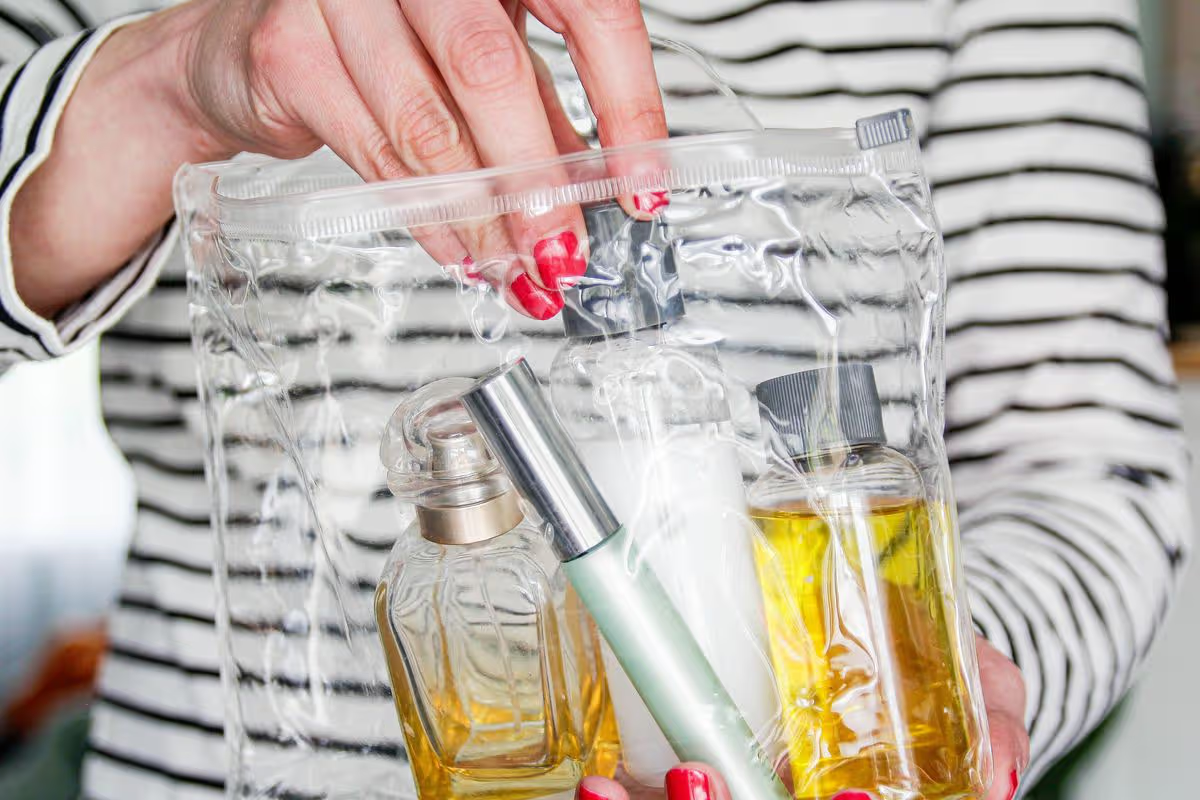
Many airports across the UK have made a major change when it comes to packing 100ml liquids in hand luggage, scrapping the rule altogether, while many still have strict rules in place

Many UK airports require liquids to be 100ml in hand luggage, while some have scrapped this rule(Image: Getty Images/Stock Image)
Several UK airports have ditched the 100ml rule at airport security, and it’s vital to know before heading on holiday.
UK airports are gearing up for one of the busiest travel periods as thousands of families jet off abroad during the summer holidays. While it’s an exciting time, holidaymakers should be well prepared before heading to the airport, particularly regarding airport security restrictions.
In a major change, several airports scrapped the 100ml liquid rule earlier this year, allowing passengers to carry up to two litres of liquids through security. The shift is down to new CT scanners that provide security staff with detailed 3D images of bags, allowing travelers to keep their two-liter liquids in their hand luggage when passing through airport security.
READ MORE: Beautiful overlooked European gem outside Schengen zone has £17 flights and £2 pintsREAD MORE: Experts warning over common items packed in hand luggage that can cause travel disruptions
The UK airports that have ditched the 100ml liquid rule so far include:
- Belfast International
- Belfast City
- Birmingham
- Bournemouth
- Bristol
- Edinburgh
- London Gatwick
- London Heathrow
However, it’s important to note that not every UK airport has made the switch, and many still require liquids to be 100ml or under. Despite this, many have relaxed the rules so travellers no longer need to put them in a clear plastic bag, and they can also be kept in their hand luggage when going through security.
While specific rules can vary, it’s best to check directly with the airport you’re flying from, especially in the run-up to the summer holidays. It’s also important to check any restrictions with the airport you’ll be returning home from, as countries outside the UK can have different rules, including for liquids in 100ml containers.
The UK airports that still have the 100ml liquids rule include:
- Aberdeen
- Bournemouth
- Cardiff
- East Midlands
- Glasgow International
- Glasgow Prestwick
- Inverness
- Isle of Man
- Leeds Bradford
- Liverpool
- London City
- London Stansted
- London Luton
- Manchester
- Newcastle
- Norwich
- Southampton
- Teesside
The Foreign Office states that liquids include the following:
- All drinks, including water
- Liquid or semi-liquid foods, for example, soup, jam, honey and syrups
- Cosmetics and toiletries, including creams, lotions, oils, perfumes, mascara and lip gloss
- Sprays, including shaving foam, hairspray and spray deodorants
- Pastes, including toothpaste
- Gels, including hair and shower gel
- Contact lens solution
- Any other solutions and items of similar consistency
For airports that still follow the 100ml rule, the government advice page noted that there are exemptions for baby milk or food, medicines, food for special dietary requirements or liquids purchased in duty-free.
In other news, TUI also warned holidaymakers about changes to airport security at some UK airports, where new restrictions are in place. In a travel alert to passengers, the holiday provider said: “While UK airports are installing new scanners to prepare for changes in security restrictions, at this time you should still follow current guidelines as not all airports have changed and destination airports still have these restrictions in place for your flight home.”
The airline went on to provide information on some UK airports that have implemented changes, including Aberdeen, Birmingham, Newcastle, Leeds Bradford, London Southend, and London City. TUI also advised customers to visit its airport security page on its website or the information page for the UK airport they’re departing from to find relevant details.
Do you have a travel story to share? Email webtravel@reachplc.com