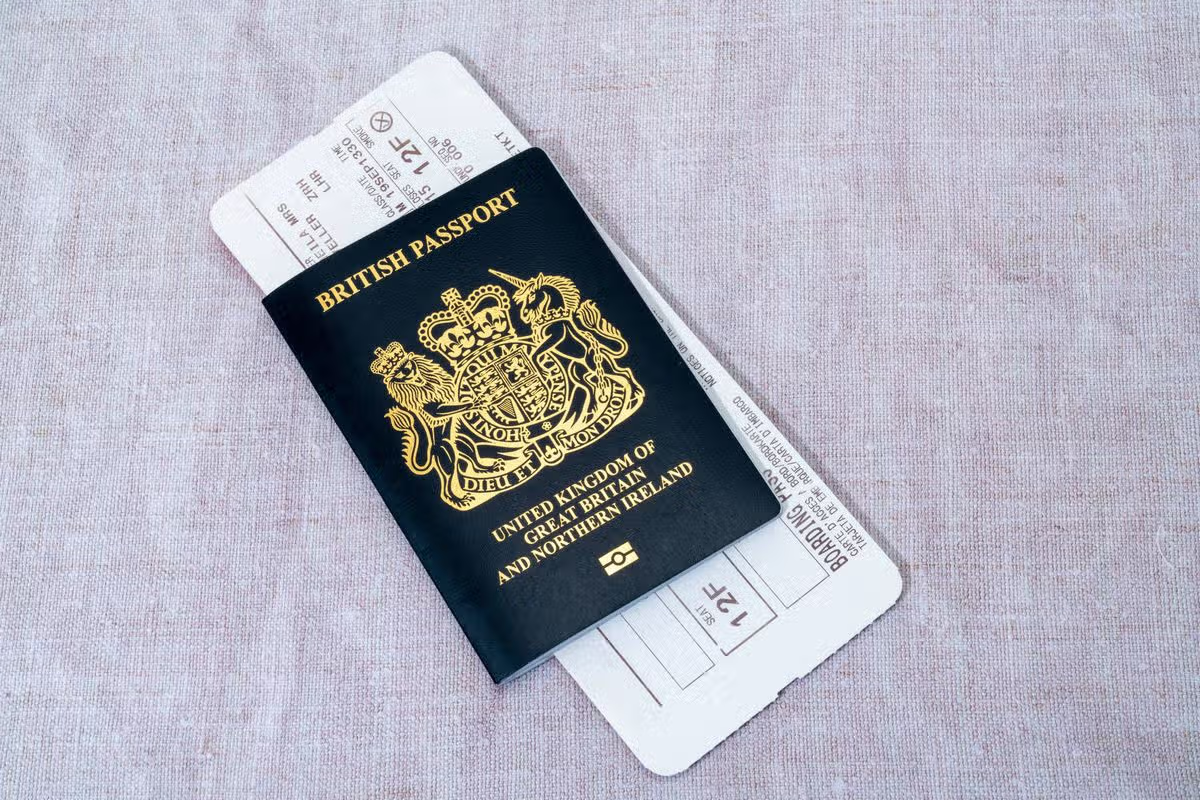
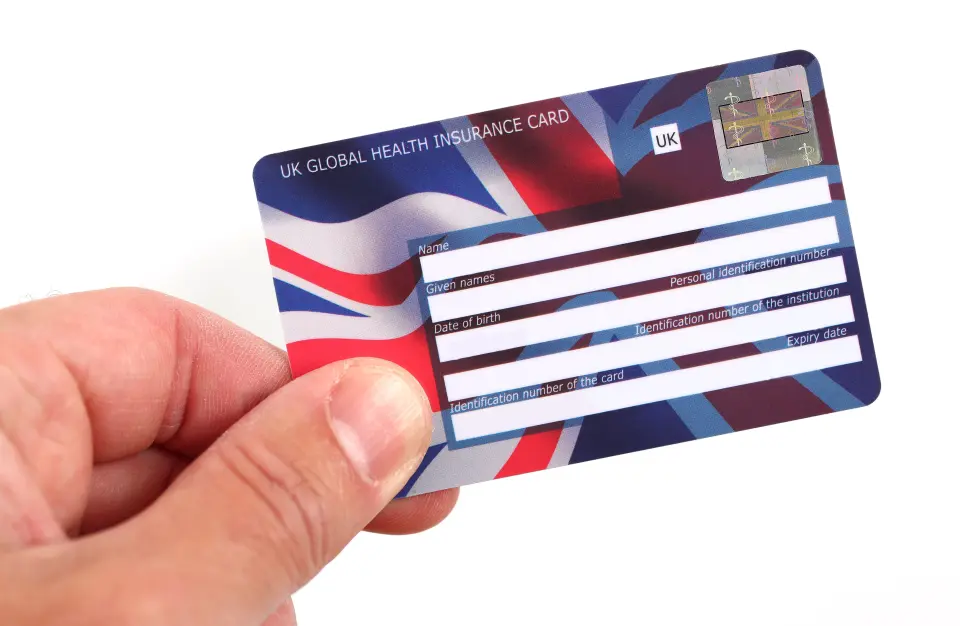
British tourists have been warned that beloved dogs, cats and ferrets could be turned away at the border as new post-Brexit rules make EU passports invalid – here’s what you need to know
A huge change to rules around bringing your pets to the EU comes into force tomorrow (Image: Getty Images)
New EU rules could see beloved pets turned away at the border from tomorrow – and there’ll be big changes to what you need to do before taking four-legged friends on holiday.
Anyone travelling into the European Union with pet dogs, cats and ferrets from England, Scotland or Wales can no longer use EU pet passports under post-Brexit arrangements which come in to force on Wednesday.
Until now, people taking their pets abroad – whether by plane, train, ferry or car – could use an EU Pet Passport, even after Brexit.
But EU Regulation 2016/429, known as the Animal Health Law, comes into force this week after a 10-year transition, and means these pet passports will no longer be valid.
Instead, there’s a different document you’ll need to get sorted before you go on holiday. Here’s what you need to know:
You now need an animal health certificate for every trip
The changes mean that anyone travelling from Great Britain to an EU country with a pet will now need to get an animal health certificate (AHC) before they set off.
Travellers will need to get a vet to issue an AHC within 10 days of their trip. A new certificate will be needed for each trip from Britain to the EU.
The AHC can be used for up to six months for onward travel within the EU and for reentering Britain, as long as rabies vaccinations are still valid.
The GOV.UK website, which says the rules also apply to assistance dogs, states: “If you live in England, Scotland or Wales, from 22 April you cannot use a pet passport (even if it was issued in the EU). If you use a pet passport, your pet may be refused entry into the EU.”
Holiday home owners will not be issued EU pet passports
Pet passports are now only to be issued to people whose main base is in the EU, and not to holiday home owners or seasonal visitors. The Department for Environment, Food and Rural Affairs said individual member states may have specific pet travel requirements and owners should always check the entry details before travelling. British-based travellers can still use EU pet passports for their return journey back home.
Five pet limit and other rules to remember
The switch to the AHC from the EU pet passport means:
Extra paperwork will be needed if the owner is not travelling with their pet.
Whoever is taking the animal abroad must have written permission from the owner.
Up to five days are allowed before the pet and owner must travel abroad.
Travellers are now also only allowed to have a maximum of five pets in a private vehicle.
There may be exceptions given for pets travelling to competitions, events or training.
Holidays with pets ‘still possible’
The Animal and Plant Health Agency (APHA) said “holidays with your pets are still possible” despite the new rules. An APHA spokesman said: “Anyone planning to travel should check guidance on Welcome to GOV.UK , and the entry rules for their destination.
“To avoid delays and ensure a smooth journey, pet owners residing in Great Britain should get an Animal Health Certificate if they are travelling from Great Britain to an EU country.”
Following a major change made by Greece, the Foreign, Commonwealth & Development Office (FCDO) has updated the country’s travel advice for British holidaymakers
There’s been a major update for Brits travelling to Greece(Image: Getty Images)
The Foreign Office has issued an update on travel to Greece for Brits, and it’s good news.
Since the European Union’s (EU) Entry/Exit System (EES) was fully rolled out earlier this month, there have been major travel disruptions. Holidaymakers have reported substantial queues and delays at airports across Europe, with some lasting up to four hours, while hundreds have missed flights as they try to pass through the new digital border system.
In a bid to ease travel chaos, Greece has chosen to waive the EU requirement for Brits to submit fingerprints and facial scans at airport border controls. In a statement from the Greek Embassy, they announced: “Update for British passport holders travelling to Greece.
“In the framework of the implementation of the Entry/Exit System, as of 10 April 2026, British passport holders are exempt from biometric registration at Greek border crossing points.” There was no suggestion of how long the exemption would remain in place, but soon after, the Foreign, Commonwealth & Development Office (FCDO) revised its travel guidance for Greece.
In an update on Monday, 20 April, the FCDO stated: “Greek authorities have indicated that they will not collect biometric data (fingerprints and photos) for UK travellers as part of EES. Follow the advice of authorities on the ground. If you are a resident in Greece, make sure to show your residence documentation at passport control to ensure you are not registered in EES.”
Greece opted to ditch the new biometric security measures amid concerns about the significant travel chaos they were causing at airports, severely impacting holidaymakers. The relaxed EU rules from Greece are now hoped to improve travel for Brits into the country, allowing for a smoother journey without gruelling wait times and unnecessary delays.
Noting the impact of the EES, Luke Petherbridge, director of public affairs at ABTA, said: “While for many the travel experience remains smooth, we’re disappointed and frustrated to see some passengers being caught up in delays due to EES.
“Abta has been warning destinations and the (European) Commission for some time about the need for proactive steps to be taken to avoid delays, including the full use of contingency measures to stand down biometric checks at busier times, and adequate staffing, especially at peak times.”
The EES was fully implemented across European airports on April 10, 2026, and requires all Brits travelling to the Schengen area to “create a digital record” and register their biometric details, such as fingerprints and a photograph. It’s needed for their first arrival at the airport border in the Schengen area, and after the initial registration, the EES remains valid for three years.
Countries in the Schengen area include: Austria, Belgium, Bulgaria, Croatia, Czechia, Denmark, Estonia, Finland, France, Germany, Greece, Hungary, Iceland, Italy, Latvia, Liechtenstein, Lithuania, Luxembourg, Malta, Netherlands, Norway, Poland, Portugal, Romania, Slovakia, Slovenia, Spain, Sweden, and Switzerland.
However, as it stands, Greece is the only country to relax the EU requirements for Brits. The EES system is not required for travel into the Republic of Ireland and Cyprus, as they are not within the Schengen area.
Anyone travelling with a pet needs to know the rule change
People travelling from the UK to Europe have been warned of a major passport change this week, making documents invalid from Wednesday, April 22. The post-Brexit change means that anyone travelling with a pet will need new documentation or face being sent home.
Until now, people taking their pets abroad – whether by plane, train, ferry or car – could use an EU Pet Passport. The EU Regulation 2016/429 – known as the Animal Health Law – comes into force this week after a 10-year transition.
That means anyone going to Europe with their pet now needs an Animal Health Certificate. The certificate requires a vet visit within 10 days of your trip, a new certificate each time and a £90 payment – per pet.
The Animal and Plant Health Agency (APHA) issued Briefing Note 14/26 on April 17, 2026. This statement marks a significant shift in pet travel rules, effectively ending the “loophole” where Great Britain (GB) residents used EU-issued pet passports to avoid the cost of Animal Health Certificates (AHCs).
A spokesman said: “An EU pet passport, issued to or held by a pet owner who is resident in GB, will no longer be a valid document for travelling with pets from GB to the EU. This applies to EU pet passports issued in an EU Member State or Northern Ireland, including those issued before 22 April 2026 . EU pet passports may only be issued to owners whose main residence is within the European Un ion.”
If your primary residence is in Great Britain, you cannot use an EU pet passport for travel from the UK to the EU, regardless of where or when that passport was issued (e.g., if you obtained it in France or Spain). UK residents must now obtain an Animal Health Certificate (AHC) for every single trip to the EU.
The briefing clarifies that EU pet passports issued in Northern Ireland are also invalid for travel if the owner is a resident of Great Britain.
APHA is updating the AHC forms to align with new EU regulations. While these new templates are being finalised, there is a transition period where older AHC templates will still be accepted for travel into the EU. There are currently no changes to the requirements for pets entering GB. You can still use a valid EU pet passport or AHC to return to the UK.
For dogs, the requirement for a vet-administered tapeworm treatment between 24 and 120 hours before arriving back in GB remains in place.
You should contact your vet immediately to arrange an AHC, as pet passports will no longer be accepted at the border for UK residents from that date.
Updated rules on the movement of dogs, cats and ferrets are included in a January 2026 EU regulation which is coming into force on April 22.
Airline and travel company has contacted all passengers with holidays booked to inform them of a change to when booking documents are sent out amid Middle East conflict concerns
Jet2 has changed when it sends out travel documents, it has told customers(Image: Getty Images)
All Jet2 passengers with holidays booked have been contacted by the operator regarding an important change. Thousands of travellers have received emails notifying them that their holiday documents will be arriving later than originally expected.
This has raised alarm bells among some customers who fear it could be a scam – particularly as Jet2 has recently been warning about numerous fake social media accounts being created in an attempt to defraud passengers.
One passenger wrote on X: “@jet2tweets Hi, I’ve just received this email apparently from Jet2 saying I will now get my holiday documents 14 days before my holiday departure instead of 28, is this true or is it still 28, I’ve a feeling this was a spam email though.”
Another passenger added: “I had the same email. Flying on 25 May with jet2,” A traveller added: “Ive just had the same email !”
The email says: “Just so you know, following a change to when we send out the documents for your holiday, you’ll now receive your documents 14 days before departure, rather than 28 days as stated on your original booking confirmation. You don’t need to contact us or take any action – you’ll recveive your documents 14 days before you travel. Have a lovely holiday!”
Responding on X, Jet2 confirmed it was a genuine message and explained: “Hi there, thanks for reaching out. Yes we can confirm that you will receive your documents 14 days before departure. Should you require any further assistance, then please feel free to send us a DM. “
The shift towards holidaymakers securing their travel documents closer to their departure dates comes amid growing uncertainty sparked by the Middle East conflict. Last week, Fatih Birol, executive director of the International Energy Agency (IEA), warned there could be flight cancellations “soon” if oil supplies remain restricted by the Iran war.
The head of the world’s energy watchdog also cautioned that Europe has only six weeks’ supply of jet fuel because of the Middle East conflict. Iran continues to have a stranglehold on tankers passing through the Strait of Hormuz and has fired at several over the weekend.
Worried holidaymakers have been flooding Jet2’s social media channels with their concerns. One wrote: “@jet2tweets Hi there – we are looking to go away for a week to Malaga in June and want to know how concerned we should be about the reporting of lack of airport fuel and what happens to our holiday should something like this happen and impact our holiday. Can you help…?|”
Another posted: “Are holidays going ahead as usual? We’ve booked an all inclusive 10 day to Crete in June. I’m worried about jet fuel prices.” While a further traveller asked: “You guys aren’t planning on last-minute flight cancellations due to potential jet fuel shortages, are you? Family holiday booked in May, FYI” Jet2 responded: “Hi all, flights are planned to go ahead as normal. If anything were to change regarding your booking, we would be sure to reach out to you directly to make you aware and discuss the options available to you. Thanks”
Meanwhile, Javier Gándara, easyJet’s CEO for Spain and Portugal, spoke at the reopening of the airline’s base in Palma, Mallorca, where he gave his assessment of the current fuel supply situation: “What the producers and airports are telling us is that there won’t be any supply problems for the next three or four weeks.
“Beyond that, it’s difficult to see. In Spain, we are in a comparatively better situation than neighbouring countries for two reasons. Firstly, because of all the crude oil that is imported and then refined here, only 11% comes from the Middle East, which is the percentage affected by the closure of the Strait of Hormuz; the remaining 89% comes from elsewhere.”
He went on to warn: “No one will be immune to potential supply problems. Ships that leave and pass through the Strait of Hormuz and come to Europe take an average of 45 days, and they have already been practically out of service for two months. It will take time to recover all of that. It’s difficult to know what will happen, so we’ll react as we go.”
The hit Channel 5 series sees two families from opposite ends of the wealth divide swap homes, budgets, and lives for a week.
They both experience a dramatic shift in perspective as they step into each other’s worlds but one family appeared to break a rule as they left the property halfway through the swap.
During Sunday’s (April 19) episode, millionaire hotel owners Gez and Rosy Chetal swapped their luxury life with the Bloor family.
In Norfolk, John and wife Ann, live with their three children in a three-bedroom rented terrace house. After basic household bills they have just £79 a week to spend on everything else from food and travel to fun.
Mum Ann works as a cook in a mental health care home, meanwhile husband John works long hours as a bus driver, but they both have a passion for cooking.
Despite both grafting hard, the couple struggle to make ends meet and have previously gone bankrupt for £36k, but they dream of running a music café of their own one day.
Experiencing how the wealthiest 1% live, they exchanged homes for a week with hotel owners Gez and Rosy Chetal, who lived in their luxurious £1.7m 11-bedroom bespoke hotel with their 19-year-old daughter Saanchi.
Given his demanding lifestyle as an entrepreneur, the couple wanted to use the swap as a way for them to spend some quality time together and have a break from their business.
They swapped their hotel— complete with a wine cellar, a large dining room and private chef for a week-long stay in the Bloor family’s house.
While Gez and Rosy were forced to manage on a weekly budget of £79, John, wife Ann and their children got a taste of luxury living with £1,800 to spend.
However, not long into the swap it was clear that the Bloor family struggled to adjust to their new environment living in a hotel as Ann admitted: “My kids are not comfortable.”
After a restless night, Ann was visibly moved as she told husband John: “The children are really uncomfortable. They can’t be in their pyjamas because it’s a hotel, they can’t just go and get a drink, they can’t just go and get a sandwich.” John jumped in and added: “It’s not a home is it?”
Turning to John, Ann explained: “It’s nothing about the hotel. If it was just me and you.. I’d absolutely love it but actually to me we can’t really stay in the hotel.”
The couple then made a big decision and decided to abandon the hotel and use the remaining budget to book a luxury Airbnb, that cost a whopping £1,200.
When the two families finally reunited at the end of their swap, Ann went on to say: “We loved the hotel, unfortunately the children didn’t. They felt very separated from us.” Gez added: “It’s just a big house really, with 11 rooms.”
Rich House, Poor House airs Sunday night from 9pm on Channel 5
British travellers planning trips abroad must check their passports at least three weeks before departure
Failing to check your passport ahead of time could result in an expensive fee(Image: Getty)
Brits heading abroad should carefully check their passports at least three weeks before they travel. Missing certain critical problems could land you with a £239 bill.
Travellers must make sure their passports are valid and in good condition before they set foot on a plane. Any problems could see you turned away at the gate.
To sort this out, your passport will need to be replaced straight away, and putting this off could prove costly as standard passport renewals can take up to three weeks.
Following a price rise earlier this month, a standard passport will set you back £102. However, if you’ve left a passport problem until just days before your trip, you’ll be forced to shell out £239.50 for the one-day express service.
GOV.UK warns: “If your passport is damaged you must replace it. You may not be able to travel with it.”
The HM Passport Office will consider a passport damaged if:
You cannot read any of your details
Any of the pages are torn, cut or missing
There are holes, cuts or tears in the cover
The cover is detaching
There are stains on the pages (for example, ink or water damage)
Regarding your passport’s expiry date, the requirements will differ depending on where you’re headed. Some countries insist on at least six months remaining on your passport upon arrival, while others only require three.
For a full breakdown of passport requirements by country, visit the Government website here.
Applying for a passport online
To apply online, head to the Government website here. Key requirements include a digital photograph, a valid payment method (credit or debit card), and your existing passport if you’re renewing.
Furthermore, applicants must supply proof of their identity and citizenship. The application fee for adults stands at £102, while children’s passports are priced at £66.50.
For anyone requiring assistance with the online application, local Post Office branches provide support services. Their staff are able to:
Take your digital photo
Help with completing the online application
Be mindful that this service carries an extra charge.
Postal applications
Paper passport applications are available from your local Post Office. Keep in mind that postal applications generally take longer to process than online ones.
They’re also more expensive than online applications, setting you back £115.50. You’ll be required to submit a completed application form alongside your supporting documents, two photographs, and the relevant fee.
Post Office staff can assist in making sure your form is properly completed – though you’ll need to supply your own photos. Payment can be made using cash, debit or credit cards.
Fast-track applications
If the standard three-week processing period is cutting it too close with your holiday plans, several quicker options are available for securing a passport. According to the Government website: “You can pay to get a passport urgently if you think the standard service will take too long.”
To take advantage of these fast-track services, you’ll need to secure an appointment at a passport office:
The same-day premium service carries a charge of £239.50 (or £253.50 for the 54-page frequent traveller passport)
The one-week express service costs £192 for an adult passport (or £206 for the 54-page frequent traveller passport), and £156.50 for a child’s passport (or £170.50 for the 54-page version)
For further information, visit the Government website here.
EasyJet’s general manager in Portugal has issued a warning over new government proposals the carrier says will artificially inflate prices
Robert Rowlands Deputy editor, money and lifestyle, content hub and Maria Ortega
10:29, 15 Apr 2026
(Image: f9photos via Getty Images)
easyJet is weighing up plans to cut back operations in Portugal, according to reports emerging from the country. The airline’s general manager there has issued the warning amid a dispute over government proposals which easyJet claims will drive up costs for passengers.
José Lopes, easyJet’s general manager in Portugal, announced on Monday that the carrier may cut back its domestic services following the scrapping of caps on something called the social mobility allowance for air travel. This caps maximum fares for some local passengers – but the changes are set to affect the airline more widely.
“Removing the upper limit will artificially inflate prices,” José Lopes said. He argued that the measure will deliver “zero benefits” for island residents while helping to deter tourists, who makeup the bulk of passengers on domestic routes.
The airline says it will not return to operate Azores routes due to the changes. It had already confirmed its departure from the region from March 29, 2026, blaming a 35 per cent increase in airport fees and what it describes as government inaction.
The easyJet representative was addressing journalists at a press conference in Funchal, held in partnership with the Regional Secretariat for Tourism, to outline the company’s operations and long-term pledges in the Madeira archipelago, SIC Noticias reports. Portuguese media outlets report that at Porto Santo airport, the two existing routes to Lisbon and Porto will be retained, albeit with a reduction to Lisbon owing to constraints at that airport, he indicated.
He warned that if the measure to alter the social mobility subsidy regime – which would remove the maximum limits for air travel for residents of Madeira and the Azores – is implemented, there will be implications for Easyjet’s operations. “I hope that an analysis will be carried out and a way will be found to be more rational and less emotional in dealing with the matter,” he said.
When asked about the possibility of abandoning the route to Madeira, the official ruled out this scenario. Yet reports say he highlighted the possibility of “a reduction in market capacity.”
The changes were given the green light on Friday in the Assembly of the Republic, but have yet to come into force. The amendments stem from two initiatives to revise the legislation put forward by the Socialist Party and Chega.
What is the social mobility subsidy?
The social mobility subsidy set a maximum fare of €79 for residents and €59 for students travelling between Madeira and the mainland (round trip), with an overall cap of €400. In the Azores, residents travelling to the mainland pay no more than €119, while students are capped at €89, with a recently introduced maximum ceiling of €600.
The Portugal Post reports that Portugal Parliament’s recent decision to abolish price caps has placed island connectivity under serious threat, with easyJet warning of capacity reductions to Madeira and confirming it will not operate Azores routes under the new framework.
Ryanair has also revealed plans to cease all operations in the Azores on March 29, 2026, citing cost pressures.
Natasha Cochrane De La Rosa, 26, was born in London but has been left stranded in Spain after new UK border rules for dual nationals meant she was denied boarding on a flight back home
Olivia Beeson, Emily Phillips and Ashlie Blakey
06:46, 14 Apr 2026Updated 06:51, 14 Apr 2026
Natasha was due to fly from Amsterdam to Luton(Image: Natasha Cochrane De La Rosa / SWNS)
A British-born woman has been left stranded in Spain after falling foul of new UK border regulations that resulted in her being refused re-entry to the country.
Natasha Cochrane De La Rosa was barred from boarding a return flight from Amsterdam to Luton after spending a short holiday there with friends.
On her scheduled day of departure on April 6, the-26-year-old successfully passed through check-in, security and passport control, only to be turned away at the gate, she claimed.
The Home Office introduced updated regulations on February 25 stating that dual nationals can no longer enter the UK solely using a foreign passport.
They must now produce either a British or Irish passport or hold a digital certificate of entitlement.
Natasha was born and brought up in Islington, North London, and has a British father and Spanish mother.
As her parents were unmarried at the time of her birth, her father was unable to automatically pass on his citizenship, something Natasha says has placed her in a ‘grey area’, reports the Manchester Evening News.
She says that in order to return home, she must either pay £589 for a digital certificate of entitlement or apply for a British passport.
To do so, she explained she must ‘prove’ her mother held free movement rights across the EU at the time of her birth – documentation she says she never received.
Natasha, a client success manager who now lives in Haringey, North London, said: “I was born in Islington, I have paid taxes, I have voted. I am a dual national I do have British nationality but the government are saying none of that I have lived for 26 years matters anymore.”
Natasha is currently staying in Spain with a family friend, having booked a flight from Amsterdam to Seville after being unable to return to London.
“Luckily I am privileged enough to have a haven essentially but if I didn’t have any ties to my country, didn’t speak the language or have anywhere to stay I would have been left homeless in the Netherlands”, she said.
“I feel the government have failed and they have a responsibility to dual nationals and the population of the UK that such dramatic and important law changes are effectively communicated.
“People are commenting on my social media posts saying they would be in the same position as me if they had not come across my story. While I do take responsibility for not having checked, why would I check something that for 26 years of my life I’ve never had to do.
“The system is poorly designed and offers no support or understanding for citizens like myself who do not hit the check box but are still a British citizen.”
Natasha originally departed from Luton Airport on April 2, spending several days in Amsterdam on a holiday with friends.
On her scheduled return on April 6, she claims she was able to check in, pass through security and passport control and reached the gate of her homeward flight before being refused boarding.
She added: “They [the airline] called immigration on the phone basically were saying these new laws had come in. I was showing my birth certificate, my national insurance, my P45, my dad’s birth certificate and was still denied boarding as I had not got the right documentation.”
As her parents were unmarried at the time of her birth in 1999, Natasha’s father was unable to automatically pass on his citizenship.
She now faces two options: applying for a passport, which she fears could be rejected — as she claims there is no documentation confirming her mother held free movement rights — or paying in excess of £500 for a digital certificate of entitlement.
She added: “There was not documentation, not to my mother or anyone with free movement rights in the EU given to them by the government. How do we prove that now?
“To prove it we’re having to find HMRC documents or find anything that proves she was here legally. It was 26 and a bit years ago so it’s been a nightmare finding the documents.”
Natasha also revealed that following Brexit in 2021, her mother applied for settlement papers, as did her younger sister who was born in Spain, both of which were approved.
However, she claims she was informed she ‘didn’t qualify’ as she was already a British citizen. She added that she is currently unable to apply for the digital certificate of entitlement, as she still lacks the necessary documents from her mother – and has been advised the process could take a minimum of three to six months, or potentially up to a year, to resolve.
A Home Office spokesperson said: “Since 25 February 2026, all dual British citizens need to present either a valid British passport or Certificate of Entitlement when travelling to the UK. To prove citizenship and enter the UK legally, individuals can apply for a British passport or Certificate of Entitlement from abroad.
“Public information advising dual nationals to carry the correct documentation has been available since October 2024 and a substantive communications campaign about the introduction of ETA has been running since 2023. This requirement applies to all British citizens regardless of other nationality and is the same approach taken by other countries, including the United States, Canada and Australia.”
A little-known airport rule could mean your phones or laptops are confiscated – and it applies in the UK affecting passengers with the likes of TUI, BA, Ryanair and easyjet
12:19, 13 Apr 2026Updated 12:20, 13 Apr 2026
Airport security check before flight. Passenger holding plastic bag with liquids above container with laptop and personal items.(Image: Getty Images/iStockphoto)
Brits should take heed of a little-known airport rule that could mean your phone or laptop gets confiscated before you’ve even boarded your flight.
The restriction is enforced at airport security, and has been known to catch out passengers flying on the likes of TUI, British Airways, Ryanair, or easyJet, and more, as the airlines themselves don’t enforce it.
Most of us take at least one electrical item in our luggage, be it a mobile phone, tablet, or laptop, and no doubt yours will hold your boarding pass and maybe a Netflix show or two to enjoy along the way. However, should you get to airport security and find your battery is at 0%, then you may have a problem. All electrical devices need to be powered up, as airport staff are allowed to ask you to turn these items on.
If a flat battery stops you from doing this, then you may be refused boarding, or may have to make the choice to leave your item behind. The UK government’s official website, which provides extensive travel guidance and updates, states: “Make sure your electronic devices are charged before you travel. If your device does not switch on when requested, you will not be allowed to take it onto the aircraft.”
Should you make the mistake of having an uncharged device in your hand luggage, the choices vary depending on the airport you’re travelling from and your airline. If you’ve not checked your bag yet, you can put it in there, and it’ll be put in the hold.
The advice from British Airways’ (BA) website is clear. “Please ensure that any items in your hand baggage are fully charged and switched on before you arrive at the airport. If your device is not charged, please place it in your checked baggage.”
They also advise: “If you are connecting, make sure that you do not deplete power in your devices during the first part of your journey as charging points at airports might be very limited and you may need an adapter.”
For London-Heathrow passengers, BA say those with flat batteries may need to rebook on a later flight to give them time to recharge, but that that “a fee might apply”. Alternatively passengers can leave goods at Bagport, the lost property office, and get a reference number for their item. Once at their destination, they can contact Bagport to arrange for the retrieval of their item.
Meanwhile TUI has warned passengers: “If you’re carrying any electronic devices in your hand luggage that are capable of holding a charge, you’ll need to make sure they’re fully charged when you go through airport security. This is part of new security measures that have been introduced by airports in the UK and abroad. We recommend you keep things like mobile phones switched on until you board the plane, as there might be more checks at the departure gate.”
It’s not just a flat battery that could prove an issue. Both easyJet and Jet2 have a list of prohibited items which include damaged batteries – so check your gadgets before you even set off for the airport. Jet2’s website is quite clear: “Damaged Personal Electronic Devices (PEDs) and/or spare/loose lithium batteries/cells (including power banks) are forbidden from carriage in all circumstances.”
Ryanair doesn’t provide any additional guidance other than keeping your phone charged. Under the FAQ ‘What happens if my smartphone or tablet dies before airport security?’, it states: “If you have already checked in online and your smartphone or tablet dies, you will receive a free of charge boarding pass at the airport.” However, it is not mentioned what your options would be if security refuses to let you through.
You can find out more about airport security on gov.uk.
Have a story you want to share? Email us at webtravel@reachplc.com
David Lee Roth popped out at Coachella on Friday to sing Van Halen’s classic “Jump” with Teddy Swims. After the show, we grabbed a few minutes with the 71-year-old rock star, who wore a beaded vest and tight silver-and-black trousers and sipped from a red plastic cup.
Ted, Teddy, Theodore — what do you call Teddy swims? I call him Teddy. Teddy Swims is one of the best names ever — everybody’s saying it. All around in the city here are visitors from Germany, Holland, Japan, China, and they all know that name. Something like Greenberg? Helfenbein? [Shrugs]
What if you’d been Dave Roth? My full name is David Lee Roth — it’s an anagram. When I was born, I had a traumatic birth — I was backwards, I had the cord around, I was hyperactive. My grandfather, who was a 70-hour-a-week physician — graduated medical school in 1920 — took a look at me two hours after I was born and told my mom, “He’s gonna be trouble.” And Mom’s way of saying “Go schtup yourself,” she added the middle name Lee. If you reverse the letters, it comes out the devil.
Share via
You ever been to Coachella before? This is my first time on this stage, and it’s the most forgiving audience. What a colorful, noisy bunch.
A forgiving audience? What does that mean? It means if you go to Kenny Chesney, you gotta have the hat — the girls have to have the cut-offs. There’s rules. If you go heavy metal, you gotta cut the sleeves off a black shirt — not blue.
And here it’s catch-as-catch-can? It’s inventive, creative, imaginative without rules — the way artwork perhaps used to be in the middle ’80s. In 1985, graphic art, sculptural art, automotive art — there were no rules. Today, you’re not getting on any gallery walls without a political bias. And today, here, I’m not sure what the bias is. I can wear something like this and it’s like, “Too bad you showed up in your day clothes.”
What is this outfit? This is Artemis moon mission. I’m vacuum-packed for your safety — kid-tested, mom-approved. She likes it because it’s good for ’em. I like it because it’s gonna taste so good.
“I got my back against the record machine,” from “Jump.” Could you explain to the kids what a record machine is? It’s a jukebox. And it’s a visual — like Broadway: [Sings] “When you’re a jet, you’re a jet / All the way from your first cigarette…” Now, I know Tony like I know me — the playground is neutral territory.
Wait, who’s Tony? “West Side Story.”
What’s a jukebox have to do with “West Side Story”? It suggests an image of a human being leaning against a jukebox saying, “I may not be the best thing in your mind today — but I’m the right tool for the job.”
Van Halen’s highest-charting single — what was it? Either “Panama” or “Jump.”
It was “Jump” — a No. 1 hit in 1984. Remember what was No. 2 behind it? Oh my God, “Boogie Oogie Oogie”?
“Karma Chameleon,” Culture Club. OK, that’s Boy George.
You ever meet Boy George? Yes, I did. Boy George would have fit into Coachella perfectly. Where is he? A Boy George comeback at Coachella? Stop lying.
What’s the best Van Halen song? It depends what verb you’re attaching.
You choose. Pairing, for example, the right alcoholic beverage with the right firearm is important. A light Pilsner goes with that new Czech machine pistol we saw in the last John Wick movie. And a Benelli shotgun for Guinness stout. Van Halen music is the same thing: What verb are you participating in? Are you dancing? How long? The whole night. Are we running? Sure. Who with? The devil.
What’s in your cup here? This is what made me what I am today — fat and unemployed.
If you’re planning to take a hot beverage on your next flight, make sure you know your airline’s policy around food and drink. Some airlines are pickier than others about what you can bring into the cabin
14:47, 09 Apr 2026Updated 16:59, 09 Apr 2026
This article contains affiliate links, we will receive a commission on any sales we generate from it. Learn more
A strong coffee is essential for those early morning flights(Image: Getty Images)
When you’re rushing to the airport for a budget airline flight at some ungodly hour, you’ll no doubt be dreaming of your first cup of coffee of the day. Once through security, many of us make a beeline for the nearest café to get us through to our destination.
However, when it comes to boarding your flight, not all airlines are happy for you to bring your venti cup onboard. While some airlines are fine with hot drinks as long as the lid is well-secured, others will make you bin your freshly-roasted drinks and you may end up waiting for the trolley to come round to get your caffeine fix.
It’s important to check the rules with your airline – otherwise you may end up wasting money on a coffee you then need to chuck before you get on your flight.
Here’s what some of the UK’s most popular airlines say about bringing hot drinks onboard in their policies.
EasyJet
If you’ve booked a flight with easyJet you can bring your own food and drink, although the airline does of course sell its own range onboard. When it comes to your morning cuppa or coffee, the easyJet website states: “You can bring hot drinks on board if you’ve bought them at the airport and they have a lid on.”
When you buy your takeaway drink, make sure you keep hold of the lid, or even better buy a reusable cup with a tight seal such as the Byron 2.0 SNAPSEAL™ Travel Mug and get it filled with your favourite drink at the airport before you board.
Jet2
Unfortunately for Jet2 passengers, the airline doesn’t allow you to bring a cup of coffee onboard, even if bought at the airport. Its website states: “No, you can’t bring hot food or hot drinks onboard our planes for safety reasons. However, we offer a great selection of meal deals and hot and cold sandwiches that can be pre-purchased in Manage My Booking.”
The Jet2 website also has a link to its online menu, which shows it sells a range of Costa coffees including cappuccinos, lattes, Americanos, and decaf options. Its menu also includes Yorkshire Tea and Cadbury’s hot chocolate.
Ryanair
While Ryanair does allow passengers to bring their own cold food and drink onboard, its general terms and conditions of carriage clearly state: “You must not take hot drinks on the plane, or drink your own alcohol when on the plane.”
Ryanair has an app that allows passengers to order food and drink before the trolley comes round and in-between drink service. You can therefore order a coffee or tea as soon as you’re in the air and the crew will deliver it when safe to do so. While its hot drink selection is quite limited at just coffee, tea, hot chocolate, or cappuccino, the airline does offer some meal deals that include a sandwich and panini, snack, and either hot or cold drink which can work out cheaper.
TUI
TUI don’t specify whether you can bring your cup of coffee onboard. Under an FAQ saying “Can I take my own food for the flight?” the airline has responded: “Yes. However, we can’t provide heating facilities on board – although for infants, we are able to warm bottles of milk in hot water.
“Therefore, we would advise low-risk food such as pre-made sandwiches and snacks that can be eaten cold.”
It’s likely to be at the discretion of flight attendants whether they let you bring your coffee cup onboard, so you may be better off waiting for the trolley. TUI’s inflight café menu for short-haul flights includes cappuccinos, Americanos, and decaf options for coffee, as well as teas including herbal tea, and Cadbury’s hot chocolate.
British Airways
British Airways (BA) also don’t explicitly ban hot drinks from being brought onboard. It simply states that food and drink needs to pass security checks and adhere to customs regulations, so again, it’s likely to be at the crew’s discretion.
BA offer the High Life Café aboard most short-haul routes meaning travellers get a better choice of hot drinks than most airlines. From a flat white to a pumpkin spice latte, you’ll find the kind of coffees you usually order in high street chains. It also offers a wide range of Birchall teas and hot chocolate.
Have a story you want to share? Email us at webtravel@reachplc.com
The UK is in talks about considering making the same decision
13:42, 08 Apr 2026Updated 15:16, 08 Apr 2026
Major decision made for millions across the country (Image: Getty)
Greece has announced that it will introduce a brand new rule next year that will impact millions of people. The change comes months after Australia implemented a similar decision in December 2025, and now Greece is urging the European Union to follow suit with its upcoming ‘ban‘.
Prime Minister Kyriakos Mitsotakis confirmed on Wednesday, April 8, 2026, that Greece will ban all children under 15 from accessing social media. The measure, which will come into force on January 1, 2027, is designed to protect children’s mental health and will apply irrespective of parental consent.
Kyriakos Mitsotakis cited “unambiguous” evidence that addictive screen time and social media algorithms are contributing to anxiety and sleep deprivation among children. Data from the Greek Safer Internet Centre in Athens shows that 75% of children currently using social media in Greece are of primary-school age.
It comes as the UK government has started a discussion about possibly banning under-16s, and Ireland and Denmark are considering doing the same. Last month, the House of Lords supported a proposal to ban under-16s from using social media platforms in the UK.
In a video posted on TikTok, Kyriakos Mitsotakis said: “We have decided to go ahead with a difficult but necessary measure: ban access to social media for children under 15 years old. Greece is among the first countries in the world to adopt such a measure.” The prime minister went on to say he would put pressure on the European Union to follow suit.
Content cannot be displayed without consent
The Greek government plans to enforce the ban through its existing ‘Kids Wallet’ application, which is already used to verify ages for alcohol and tobacco purchases. This application will be used to filter and block social media access at the device level.
Unlike approaches that rely on social media platforms to police themselves, Greece is pursuing a ‘source-based’ approach. Parents will be required to activate the Kids Wallet app on all of a child’s devices to block access at the system level. Greek officials hope this state-mandated device-level block will effectively counter circumvention methods, such as VPNs.
Greece joins other nations implementing strict age-based digital restrictions, including Australia, which enforces an under-16 ban, and Indonesia. Following the announcement, Kyriakos Mitsotakis wrote to European Commission President Ursula von der Leyen, calling for a common EU-wide “Digital Age of Majority” to be set at 15.
While both Greece and Australia share the goal of protecting children’s mental health, their enforcement methods differ significantly. Australia’s existing under-16 ban places the burden on platforms like TikTok, Instagram, and Facebook to find and remove underage accounts.
Since its launch in December 2025, Australia’s platform-based model has faced challenges. The eSafety Commissioner recently reported “significant concerns” about platforms that allow children to bypass checks or that provide insufficient reporting tools for parents.
Australia’s ban impacts ten major “high-risk” social networks but largely spares educational and messaging services like Google Classroom and WhatsApp. The Greek proposal is part of a broader framework that also restricts minors from online gambling, dating apps, and tobacco and alcohol sales.
Meanwhile, the UK government is actively considering an outright ban on social media for children under 16 through a high-profile national consultation and legislative debate. A three-month government consultation on “digital wellbeing” is currently open, seeking views on restrictions such as overnight curfews and “app caps,” and is scheduled to close May 26, 2026.
In the legislative arena, the House of Lords has twice defeated the government by adding an amendment to the Children’s Wellbeing and Schools Bill that would mandate a social media ban for under-16s. The House of Commons previously rejected this measure in March 2026, with the bill scheduled to return to the Commons on April 15, 2026.
The MSE team and Martin Lewis said to do this quickly
Sophie Buchan Money and Lifestyle Writer
04:29, 02 Apr 2026
Martin Lewis urges people to follow the ‘ASAB’ rule(Image: ITV)
If you’re planning a holiday this year, there’s one crucial item on your checklist that should be ticked off first before you begin planning where to go and what to wear.
The Money Saving Expert (MSE) News team and Martin Lewis have emphasised the importance of securing travel insurance as soon as possible after booking a holiday. Many people tend to leave it until the last minute, but as Martin Lewis recently explained on The Martin Lewis Money Show Live, without insurance, you may not be able to recoup your costs if something prevents you from travelling, potentially losing thousands.
According to MSE, during the show, Martin Lewis said: “Travel insurance is not just to cover you while you’re away. It’s also very important to cover you in case something happens before you go that stops you going.
“I have a rule: you should get your travel insurance ASAB – as soon as you book. ASAB.”
The financial expert added: “Right now, many people have already booked. If you don’t have your travel insurance and if your holiday’s booked, do it right now.
“The reason I do this is every year, someone asks me a question something like, ‘I’ve been diagnosed with cancer. We can’t go on the holiday. They’re saying we can’t have our money back. What do I do?’ And I’m impotent.
“Because the answer is, you get on your travel insurance. And they say, ‘Well, I haven’t got my travel insurance yet’. Do not get your travel insurance the day before you go. You get your travel insurance ASAB.”
Speaking to his co-host Jeanette Kwakye, who is also a former Olympic sprinter, she revealed that a viewer had contacted the programme regarding a difficult predicament they were facing.
Jeanette shared their message, reading: “I booked a holiday for Christmas last year, but I was then medically advised not to fly. The holiday was already paid for and I hadn’t taken out any travel insurance. I’m now being told I’ve lost all the money for the holiday. Is there anything that can be done?”
Martin said: “Please don’t be the person this summer who asks me that question. If you’re going to get travel insurance, ASAB.
“The answer [to whether something can be done] is no. I mean, look, very simply, just think about it for a second. If you bought a tennis racket and you broke your arm, you can’t say to them, I want a refund because my arm’s broken.
“The tennis racket still works. The flights still work, the hotel still works. It’s not them that’s got the problem. It’s you. That’s the logic. That’s what you have insurance for.”
Foreign Office and travel insurance
While you can take out travel insurance, it is worth noting that it could be invalidated, even if you take it out when you book. For example, if you are planning on heading to Dubai, the Foreign Office has said on its GOV.UK website: “Your travel insurance could be invalidated if you travel against advice from the Foreign, Commonwealth & Development Office (FCDO).”
At present, it states: “FCDO advises against all but essential travel to United Arab Emirates.”
For detailed information and advice on Foreign travel insurance, visit the GOV.UK website online here. It also advises: “You should buy your travel insurance as soon as possible after booking your trip. Read the small print and familiarise yourself with any exclusion clauses for the policy.”
Alongside insurance, it is recommended that you review FCDO travel advice and register for alerts for your destination. GOV.UK confirms: “If you travel to a destination where FCDO advises against all but essential travel or all travel, your insurance may be invalidated.”
Travellers are being caught out by new rules at certain UK airports, as people are reminded to check their airport’s regulations before flying to prevent upset and delays
People are being caught out by the new airport rules (stock image)(Image: Getty)
As of January, passengers flying from certain UK airports can now carry up to two litres of liquids in their hand luggage, replacing the long-standing 100ml limit, thanks to new CT scanners. In a statement, Heathrow Airport said: “Passengers travelling through all terminals at Heathrow no longer need to remove liquids or electronics from their hand luggage, or juggle plastic bags at security.
“The UK’s hub has become the largest airport in the world to fully roll out next-generation CT (computed tomography) security scanners – a move that promises faster queues, less stress and a smoother start to journeys for millions of travellers.”
UK airports that have ditched the 100ml rule
Belfast International
Belfast City
Birmingham
Bristol
Edinburgh
London Gatwick
London Heathrow
However, the change has not been rolled out across every airport – with many still sticking to the 100ml rule and requiring liquids to be removed and placed in clear plastic bags.
UK airports still enforcing the 100ml rule
Aberdeen
Bournemouth
Cardiff
East Midlands
Glasgow International
Glasgow Prestwick
Inverness
Isle of Man
Leeds Bradford
Liverpool
Luton
London City Airport
Manchester
Newcastle
Newquay
Norwich
Southampton
Southend
Stansted
Teesside
Exemptions still apply for essential medicines, baby food, and milk, as well as special dietary requirements.
Travellers are being urged to check their departure airport’s rules before flying – especially ahead of the busy Easter holidays – to avoid delays or having items confiscated at security.
Reacting to the change, one traveller flying from Gatwick Airport wrote on Reddit: “Makes the journey just that little bit less stressful. Leave everything in your bag – laptop too.”
Another added: “Edinburgh is the same, which is really handy.”
A third explained: “This is because a new generation of scanners is being rolled out that allows more liquids and means you don’t have to remove laptops – but only a few airports have them so far.”
However, not everyone is convinced.
One user said: “This change is useless until all major airports follow suit. It’s fine on the way out, but if your return airport still has the old rules, you end up throwing things away. It also causes confusion, especially when different London airports have different rules. It should be all or nothing.”
Another added: “I’ve been travelling with just carry-on for years now and wouldn’t go back. There’s something freeing about not carrying full-size toiletries when you only need a small amount.”
She has stopped taking painkillers but is still exhausted.
She is back home in Park City, Utah, but spends nearly all of her time in rehab.
She is 41 and has won four overall World Cup championships, with 84 World Cup wins and three Olympic medals, including gold in the downhill at the 2010 Vancouver Games.
“I don’t like to close the door on anything, because you just never know what’s going to happen,” said Vonn, who appears on the magazine’s cover in a long, black dress with a split that shows her left leg — bandages and all.
“I have no idea what my life will be like in two years or three years or four years. I could have two kids by then. I could have no kids and want to race again. I could live in Europe. I could be doing anything.”
She added: “It’s hard to tell with this injury. It’s so [messed] up.”
Vonn, who returned to racing in late 2024 after nearly six years away from the sport, had two victories and three other podium finishes in her five World Cup races during the most recent season. In December, Vonn announced she would be competing in her “5th and final Olympics!”
“I wanted to win the Olympics, and I wanted to win the downhill title, and I was on track to do both of those things,” Vonn told Vanity Fair.
On Jan. 30, Vonn suffered a complete rupture of the anterior cruciate ligament in her left knee, with meniscus and bone damage, when she crashed during a downhill race in Crans-Montana, Switzerland.
She decided to compete at the Olympics anyway and had a couple of successful training runs leading up to the Feb. 8 downhill competition.
“I was in the exact mental state that I wanted to be in,” Vonn said. “I was ready to go.”
Unfortunately, her race didn’t last long. Vonn lost control on the first jump, spun sideways in the air, slammed to the ground and needed to be airlifted from the course. Vonn and other skiing experts have said that the ruptured ACL likely had nothing to do with her crash at the Olympics.
Vonn suffered a complex tibia fracture and other major damage. It contributed to a condition called compartment syndrome, which involves excessive pressure building up inside a muscle and possibly can lead to permanent injury or amputation.
Five surgeries later, Vonn is on the road to recovery. She has posted several photos and videos on Instagram as she amps up her fitness routine again. In a March 15 post on X, Vonn wrote that she’s not ready to discuss her skiing future.
“My focus has been on recovering from my injury and getting back to normal life,” she wrote, adding, “I’ll let you know when I decide.”
Vonn did tell Vanity Fair that she’s not crazy about the idea of the catastrophe at the Winter Games being the public’s last impression of her as a skier.
“I don’t want people to hang on this crash and be remembered for that. What I did before the Olympics has never been done before. I was number one in the standings. No one remembers that I was winning.”
By Neal Allen and Anne Lamott Avery: 208 pages, $27
If you buy books linked on our site, The Times may earn a commission from Bookshop.org, whose fees support independent bookstores.
They’re so darn cute together, these two. Neal Allen, father of four, newspaper reporter turned corporate executive turned spiritual coach turned author of two spiritual guidebooks, stands a full head of hair taller than his dread-headed wife, who calls him her “current husband.” He calls her his “remarkable and beautiful partner” and himself “Mr. Anne Lamott.”
And no wonder. Author Anne Lamott has published 21 books, with worldwide sales in the millions. “Bird by Bird,” her 1994 writing handbook, which has sold more than 1 million copies and continues to sell approximately 40,000 copies each year, became a meme before there were memes. Thirty-two years later, the titular phrase has made appearances everywhere from “Ted Lasso” (Coach Beard: “I hate losing.” Coach Lasso: “Bird by bird, Coach.”) to a Gloria Steinem interview in Cosmopolitan (“Every writer, truth-seeker, parent, and activist I know is in love with one or more books by Anne Lamott”).
Ask a famous writer how they do what they do, and “Bird by Bird” will likely get honorable mention. Harlan Coben, whose 35 novels have sold roughly 90 million copies, calls “Bird by Bird” his “favorite writing manual.” “I use it like a coach’s halftime speech to get me fired up to write.”
In a 2007 interview, “Eat Pray Love” author Elizabeth Gilbert called herself Lamott’s “literary offspring.” Paula McLain, who wrote the 2011 blockbuster “The Paris Wife,” told me: “I return to ‘Bird by Bird’ again and again because Anne Lamott tells the truth about how hard this work is — and then somehow makes you laugh about it.”
I reached out to best-selling memoirist and novelist Dani Shapiro to ask if she had her own experience with the book. “A writer is always a beginner,” she said. “And there is no better companion than ‘Bird by Bird.’”
Lamott and Allen partnered to write “Good Writing.”
(Christie Hemm Klok / For The Times)
Lamott, 71, and Allen, 69, met in 2016 on the 50-plus dating site OurTime.com. Nine months later, they bought a woodsy Marin County home with room for Lamott’s son and grandson. Sam, when he was 1 year old, was the subject of his mom’s first bestseller, the 1993 memoir “Operating Instructions.” His son Jax was the subject, at age 1, of his grandmother’s 2012 memoir, “Some Assembly Required.”
“We were watching U.S. Open tennis one night and Neal said, ‘Can I ask you something?’” Lamott told me via email. “I barely looked away from the TV, and he asked me to marry him. I said, ‘Yes, if we can get a cat.’”
After a decade of marriage, Lamott and Allen have undertaken a professional collaboration whose outcome, like their union, is greater than the sum of its parts. “Good Writing: 36 Ways to Improve Your Sentences” is as sharply specific as “Bird by Bird” is wanderingly wonderful: as winning a companion piece as two winning companions could create. The table of contents is itself a mini-manual of writerly tips: “Use Strong Verbs.” “Sound Natural.” “Keep it Active.” “Stick with Said.” “Don’t Show Off.”
Lamott and Allen.
(Christie Hemm Klok / For The Times)
I spoke to the late-life lovebirds about their process of marital manuscript-making: the good, the not so good and the blackmailing.
Meredith Maran: How did writing “Bird by Bird” compare to co-authoring “Good Writing”?
Anne Lamott: “Bird by Bird” was literally everything I knew about writing, everything I had been teaching my students for years. It was definitely my book. “Good Writing” was definitely Neal’s book. I just foisted my attention on him and threatened to undermine the marriage if he did not let me contribute.
MM: Neal, what on earth convinced you that you could add something to one of the world’s most popular writing books —written by your wife, no less?
Neal Allen: Oh, I’m not adding anything to “Bird by Bird,” which is a complete classic. It’s everything you need to know about becoming a writer. “Good Writing” is about what comes next: a second draft. And while it’s not fair to call “Bird by Bird” a craft book — it’s much more — it’s fine to define “Good Writing” that way.
“Helping each other with our work is one of the richest aspects of our life as a married couple,” Lamott said.
(Christie Hemm Klok / For The Times)
MM: In producing this joint project, how did you two negotiate the differences between your writing styles and personalities?
AL: We didn’t need to negotiate. Neal somehow manages to be both elegant and welcoming, whereas I think I am more like the class den mother, with a plate of cupcakes, exhorting people not to give up, trying to convince them that they can only share their truth in their own voice, that their voice is plenty good, and that when they get stuck, as we all do, I know some tricks that will help them get back to work.
NA: I once asked AI to describe the difference between my writing and Annie’s. AI answered that I explain things to readers; Annie helps readers reach catharsis. I think that’s absolutely right.
MM: How did you come up with the book’s fab format, whereby each of you writes your own introduction, and then each chapter starts with Neal’s thoughts about one of the 36 rules and ends with Annie’s?
NA: Annie first asked if she could annotate what I had written. That scared the bejesus out of me. When she started writing her own essays in her own voice, I was quite relieved. One of the format’s surprising strengths is that Annie always gets the last word. I explain the rule; then she helps the reader find their way and resolve their issues with the rule. There’s a downside: I don’t get to respond when she tells the reader to ignore me.
“I’m not adding anything to ‘Bird by Bird,’” Allen said. “It’s everything you need to know about becoming a writer. ‘Good Writing’ is about what comes next: a second draft.”
(Christie Hemm Klok / For The Times)
MM: In your intro, Anne, you recall Neal telling you he was working on a writing book. “Well. Hmmmph,” you replied. “I had written a book on writing once …” How did professional jealousy, competitiveness, possessiveness, or, on the brighter side, tenderness, collaborative spirit and generosity play out as you wrote a writing book together?
AL: We have no competitiveness or jealousy when it comes to each other’s writing. We just want the other person to write the most beautiful work they can. We are each other’s first reader, and editor, and while of course I feel attacked if Neal suggests even the tiniest change to my deathless prose, I have come to understand that his suggested cuts and additions save me from myself. Helping each other with our work is one of the richest aspects of our life as a married couple.
NA: There’s no way around “Bird by Bird,” and I just have to deal with that. My worry was whether Annie really wanted to be associated with my little book. I’m envious of Annie’s brilliance, of course, but we speak the same writing language and we love it equally.
MM: What are each of you proudest of, “Good Writing”-wise?
AL: We just recorded the audio version, and I was surprised by how much practical help the book offers. Also, I love the tone, which is so conversational and sometimes, I hope, pretty funny.
NA: I had the opposite reaction to recording the audio version. I saw all the opportunities for readers to mock me. In the 18 months between writing a final draft and the book showing up in stores, we’ve both flipped from believing it reflects well on us to thinking it’s a disaster. Luckily, both of us haven’t ever thought it sucks at the same time.
MM: That is fortunate. Also, Neal, I’m not sure you answered my question.
NA: What am I proudest of? That the book exists. I carried around these rules for improving sentences for years. I think a lot of writers do a book because they notice it’s not out there, and why isn’t it? And then they shrug, ‘Well, I guess it’s up to me.’ That’s how I came into all three of my books.
AL: May I just add that I’m proud to introduce my seriously charming and breathtakingly wise husband to a wider audience.
Festival of Books
“Written by Hand: Lexicons, Storytelling, and Protecting Human Language in an Age of Artificial Everything” (featuring Anne Lamott and Neal Allen)
WASHINGTON — The Supreme Court agreed Monday to rule on whether the Trump administration may end the temporary protection that had been extended in the past to migrants who live and work in the United States.
At issue are legal protections for about 6,000 Syrians and up to 350,000 Haitians.
The court’s announcement signals the justices want to resolve this issue in a written opinion rather through emergency appeals.
Twice last year, the court’s conservatives set aside decisions from judges in San Francisco who said President Trump’s Homeland Security secretary had overstepped her authority.
But those decisions did not set clear precedents, and in recent weeks, judges in New York and Washington, D.C., blocked the administration’s plan to end the special protections for Haitians and Syrians.
Frustrated by what he labeled “indefensible” decisions, Trump’s Solicitor Gen. D. John Sauer advised the court to hear arguments and issue a written ruling on the issue.
The justices on Monday agreed to just that. Arguments will be heard in April, and a decision will be handed down by July.
Immigrant-rights advocates argued the repeal of the special protection would be cruel and unjust to migrants who have established lives and careers in this country.
In 1990, Congress authorized giving temporary shelter to non-citizens from countries experiencing armed conflict, natural disaster or “extraordinary and temporary conditions” that prevent them from returning there.
In 2012, the Homeland Security secretary extended this protection to Syrians in response to a “brutal crackdown” engineered by its then-President Bashar al-Assad.
Last year, citing Assad’s fall from power, Trump’s Secretary Kristi Noem proposed to cancel the temporary protection for Syrians. Lawyers for the Syrians questioned how this could be seen as an emergency requiring an immediate ruling.
They said about 6,100 Syrians who have lived here lawfully for years.
They are “highly sought-after doctors and medical professionals, reporters, students, teachers, business owners, caretakers, and others who have been repeatedly vetted and by definition have virtually no criminal history. The government apparently needs urgent authority to send them to a country in the middle of an active war,” the lawyers said.
In 2010, the Obama administration extended the protection to Haiti after an earthquake caused death and damage in Port-au-Prince, the capital.
Judges in New York and Washington blocked those repeals and said the high court had given “no explanation” for its decision upholding the repeal for Venezuelans.
Those judges said the Supreme Court’s earlier orders orders “involved a TPS designation of a different country, with different factual circumstances, and different grounds for resolution by the district court.”
Sauer pointed to a provision in the 1990 law that says judges have no authority to second-guess the government’s decision to end it.
“There is no judicial review of any determination of the [Secretary] with respect to the designation, or termination or extension of a designation, of a foreign state under this subsection,” the law says.
In the three weeks since Trump’s attorney filed his emergency appeal, there have been two significant changes since then.
WHITE SALMON, Wash. — Seth McBride’s life was forever changed on a snowy mountainside in British Columbia.
McBride was — and is — a thrill-seeker. Growing up in Juneau, Ala., with the untamed outdoors as his stomping ground, he loved to rock climb, mountain bike and, especially, strap on his skis and fly, soaring headlong off heart-pounding cliffs, crags and cornices.
A few months before his senior year in high school, McBride was at a terrain park at Whistler Blackcomb resort. He was 17. He launched a maneuver he’d completed many times before, a back flip off a steep jump. Only this time, he over-accelerated, over-rotated and came down on his neck. Right away he knew something was wrong.
“As soon as I landed,” McBride recalled more than 25 years later, “I lost all sensation in my legs and my lower back.”
The prognosis was grim; doctors told McBride he probably would never walk again, and he hasn’t.
But that’s scarcely slowed him down.
Views of the 47th president, from the ground up
Before they had kids, McBride and his wife biked 6,500 miles — McBride using a special, hand-cranked cycle — from Portland, Ore., to the southern tip of Argentina. He’s traveled the world as a wheelchair rugby player, winning gold, silver and bronze medals at Paralympic Games in Beijing, Rio de Janeiro and London.
McBride — adventurer, daredevil — appears unflappable. Until it comes to air travel.
It’s not the hassles and aggravation that most people put up with. Every trip requires McBride, 43, to undergo a special regimen, dehydrating himself so he won’t have to use the bathroom in flight. Every excursion includes the likelihood of being uncomfortably jostled or, worse, dropped as he’s being transferred to his seat. He can never be certain his wheelchair, his lifeline, won’t be damaged or missing once his plane lands.
“There are very few places or in my life that I feel less independent” than an airport, said McBride, who still plays competitive rugby at the club level. “None of the systems are set up for wheelchair users to be able to manage things on their own.”
Wheelchairs at Portland International Airport. The all-purpose equipment can’t serve the various needs of disabled travelers.
(Will Matsuda / For The Times)
For a time, as the Biden administration was winding down, it looked as though that was about to change somewhat. The federal government issued a set of regulations that would require airlines, among other things, to assume liability for damaged and delayed wheelchairs and improve training for staff working with passengers facing mobility issues.
But the Trump administration, which has made deregulation one of its highest imperatives, put those requirements on hold while a trade association and several major airlines sue to keep the changes from taking effect.
For McBride and others like him, it’s a disappointing setback that follows years of pressing Washington to make air transit just a bit more decent and humane.
“It sucks,” McBride said of the dignity-deflating status of a wheelchair traveler. “I know quite a few people who simply won’t fly anymore.”
Passengers forced to surrender their wheelchairs “must rely on airline staff and contractors to properly handle a wheelchair or scooter and return it in a timely manner in the condition it was received. Advocates have stressed … that, when an individual’s wheelchair or scooter is damaged by an airline, the individual’s mobility, health and freedom are impacted until the device can be returned, repaired or replaced.”
What’s more, “Advocates note that wheelchairs are often custom fitted to meet the needs and shapes of each user. Spending time in an ill-fitting chair can cause serious injury, such as pressure sores, and even death because of a subsequent infection.”
The Department of Transportation estimated that, in 2024, 1 of every 100 wheelchairs or scooters placed on a domestic flight was lost, damaged or delayed. Which may not seem like a terribly large number, unless you’re the person whose well-being, and even survival, depends on their wheelchair or scooter being at the ready and operational upon arrival.
Mia Ives-Rublee directs the Disability Justice Initiative at the Center for American Progress, a left-leaning think tank. She said airlines, which cater to luxury travelers and treat everyone else like sardines, have long put profit and expedience ahead of the needs of their disabled passengers.
“We’ve seen this tension continue to build as disabled people become more active and the world becomes more accessible. They want to travel, or have jobs that require travel,” said Ives-Rublee. While discrimination is plainly illegal, “Airlines aren’t doing enough to protect our devices,” which has the effect of making it “very difficult for disabled people to travel.”
Ives-Rublee has had nearly a half dozen wheelchairs broken by airlines in the last 20 years, which can be costly as well as life-threatening. A manually operated wheelchair can run as much as $2,000, Ives-Rublee said. A mechanized wheelchair can cost as much as a used car.
McBride mainly travels from Portland’s airport. “There are few places in my life” he feels less independent.
(Will Matsuda / For The Times)
(McBride said he’s suffered nicks and scrapes on his “everyday chair.” Worse, was the damage done to wheelchairs he uses in rugby competition, which “is obviously a big deal” when he’s traveling for a match.)
In their lawsuit opposing the rules change, airlines and their trade group said the Biden administration overstepped its authority and the new requirements were too burdensome. Strict liability for wheelchair damage also could expose air carriers to “unreasonable financial risk,” the suit claimed.
The wheelchair rules were supposed to take effect just before Biden left office. The Trump administration postponed them until March 2025, then pushed implementation to August 2025. Now, the Department of Transportation says it will issue a new rule this coming August, with a 60-day comment period to follow — meaning no change will come until at least 2027.
Ives-Rublee hasn’t much hope for relief.
“Given the nature of the administration right now, I doubt they’re putting much effort into protecting” the Biden-era regulations, she said
::
The last thing McBride wants is anyone feeling sorry for him. He’s no victim.
“It was something s— that happened to me,” he said of the accident that left him paralyzed. “But s— stuff happens to people all the time. What matters is how you move forward and what you can do with your life after that happens.”
McBride was seated at the kitchen table of his custom-built home, two miles above the Columbia River in rural Washington state. The house — one level, bright and airy, with concrete floors to smooth the path of his wheelchair — perches at the end of a steep dirt road. A forest in the backyard gives his children, ages 4 and 8, the same freedom to romp through nature he enjoyed growing up in Alaska. There’s also a climbing wall in his son’s bedroom.
Working remotely, McBride writes for New Mobility, a magazine for wheelchair users, and heads communications and marketing for the United Spinal Assn., a nonprofit advocacy group.
His politics run to the left side of the spectrum. (On a cold, drizzly morning, McBride wore a black Oregon Ducks hoodie, honoring his alma mater, the University of Oregon, and its home in liberal Eugene.) Yet while he’s no Trump fan, McBride doesn’t consider making life easier for wheelchair users to be a partisan issue. After all, he pointed out, it was a Republican president, George H. W. Bush, who signed into law the landmark Americans With Disabilities Act.
“We’ve made a lot of progress as a community working with Republicans, working with Democrats,” he said, as the sun made a brief appearance, illuminating the Douglas firs outside his door. “The basic issues of people being able to access the same services and the same experiences as everyone else shouldn’t be political. … It’s a safety thing.”
He’s not unalterably opposed to deregulation, per se.
“I think it’s a huge issue within systems when it’s overly complex for companies or people to do anything,” McBride said. “But lots of time regulations are there for a reason. It’s when private companies aren’t necessarily doing a good enough job protecting the safety or the rights of all people within a society.”
Given a chance to address Trump or the head of his Transportation Department, Sean Duffy, McBride would say this: Come, let’s take a plane ride.
“Go on a trip with my rugby team and see what it’s like when you have multiple wheelchair users on the same plane,” he said, “and how difficult it is and why we feel like regulations are needed so we can have a modicum of safety and dignity when we’re flying.”
The cost of accommodation might take away some from the airlines’ bottom line. But certain things can’t be priced in dollars and cents.
The Trump administration on Friday moved to roll back Biden-era limits on emissions of ethylene oxide, a cancer-causing chemical often used in the sterilization of medical devices.
The Environmental Protection Agency said repealing the rules, which fall under the National Emission Standards for Hazardous Air Pollutants, would “safeguard the supply of essential medical equipment” — saving approximately $630 million for companies over 20 years. California is home to about a dozen such facilities.
The government said the emissions are part and parcel of protecting people from “lethal or significantly debilitating infections that would result without properly sterilized medical equipment.”
“The Trump EPA is committed to ensuring life-saving medical devices remain available for the critical care of America’s children, elderly, and all patients without unnecessary exposure to communities,” EPA Administrator Lee Zeldin said in a statement.
An estimated 50% of sterile medical devices in the U.S. are treated with ethylene oxide, or EtO, particularly those that can’t be cleaned using steam or radiation. The colorless gas is also used to make chemicals found in products such as antifreeze, detergents, plastics and adhesives.
But EtO poses health risks. Short-term exposure by inhalation can cause headaches, dizziness, nausea, fatigue respiratory irritation and other adverse health effects, according to the federal Agency for Toxic Substances and Disease Registry.
Longer-term exposure increases the risk of cancers of the white blood cells, such as non-Hodgkin’s lymphoma, as well as breast cancer. A now-deleted page from the EPA’s website stated, “EtO is a human carcinogen. It causes cancer in humans.”
Friday’s proposal specifically targets updated rules for EtO emissions that were passed by the Biden administration in 2024 following pressure from environmental justice groups, particularly those in Louisiana’s heavily industrialized “Cancer Alley.” The change sought to reduce the amount of EtO released from commercial sterilizers by 90% and lessen the hazards for nearby communities.
The tighter rules were in part based on EPA’s own scientific study that found it to be 60 times more carcinogenic than previously thought, which the agency now says should be reassessed.
If finalized, the plan would give facilities the choice between installing continuous real-time monitoring systems for EtO emissions or complying with modified pollution control requirements at facilities that emit more than 10 tons a year, the EPA said.
The proposal follows other moves by the Trump administration to rescind regulations that it says are burdensome and costly for industries, such as those governing emissions from coal power plants. Last month, the EPA repealed the endangerment finding, which affirmed the dangers of greenhouse gas emissions and underpinned the agency’s ability to regulate those emissions from vehicles.
The action around ethylene oxide would affect about 90 commercial sterilization facilities owned and operated by approximately 50 companies. Three California companies applied for and received presidential exemptions for their EtO emissions in July.
The Sterigenics facility, center, in Vernon is pictured in 2022.
(Myung J. Chun / Los Angeles Times)
They are located in Ontario and Vernon and operated by the company Sterigenics, which provides industrial sterilization technology for medical devices and other commercial products.
In January, a coalition of environmental and community groups challenged the EtO exemptions in federal court. The lawsuit from the Southern Environmental Law Center and the Natural Resources Defense Council argues that technology exists for facilities to comply with the tighter Biden-era standards without raising costs, and many facilities are already using it.
“EPA’s 2024 rule was an important and overdue step to reduce toxic ethylene oxide pollution and protect communities,” said Irena Como, senior attorney at the Southern Environmental Law Center, in a statement Friday. “Repealing this rule that is proven to significantly lower pollution exposure and cancer risks will subject even more people who work, live, and send their children to schools located near these facilities to harm that is entirely preventable.”
Sterilization and chemical industry groups support the plan.
“The EPA rule concerning ethylene oxide use in commercial sterilizers threatens to severely restrict access to vital medical products nationwide,” the American Chemistry Council said in a statement. “We commend the EPA for their commitment to reevaluating these policies.”
The EPA will hold a 45-day comment period about the proposal after it is published in the federal register. A final decision is expected sometime this year.
Visiting this Spanish archipelago is like winning the lottery
A short ferry ride from Vigo (daily and overnight visitor numbers are capped) took us to the tiny archipelago of the Cíes Islands, a protected cluster of islands where seabirds rule and tiny beaches remain unspoilt. There are no cars on the island and only a few small restaurants dotted about. There is one campsite, with little else but the waves of the Atlantic to lull you to sleep. I felt as if I had won the lottery when we visited and knew this would be an experience not easily matched. Helen E
Ischia in Italy is best by bus
Ischia, in the Bay of Naples. Photograph: Alxpin/Getty Images
Italy has brilliant public transport. We found it so easy to use the ferries and buses during our visit to Ischia in the Bay of Naples. The simple circular routes on the island mean there is almost zero chance of getting lost. You can buy a day ticket for a few euros, hopping on and off at your leisure until quite late in the evening. Much more fun to experience the lovely island like the locals and cheaper than a taxi. Jane
Profile
Readers’ tips: send a tip for a chance to win a £200 voucher for a Coolstays break
Show
Guardian Travel readers’ tips
Every week we ask our readers for recommendations from their travels. A selection of tips will be featured online and may appear in print. To enter the latest competition visit the readers’ tips homepage
–
A serene corner of Elba
‘Heaven’ … Cavo on Elba, in Italy. Photograph: Image Professionals/Alamy
Tiny Cavo on the island of Elba is my idea of heaven. Some of the hydrofoils from Piombino on the mainland stop there; some continue round to the busier Portoferraio with its mega yachts and bustle. Cavo is much quieter, more serene, and the iron-rich landscape means that the sea glitters with tiny flecks of iron as you swim underwater. A few hotels, a beach, prawns the size of your head, a jazz festival in the summer: what’s not to like? Porto Azzurro is more glamorous, but the quiet of Cavo is what I want. Angharad
An overlooked Greek island
The Temple of Aphaea at Aegina, in Greece. Photograph: Panagiotis Karapanagiotis/Alamy
I recently revisited Aegina, off Athens, which was my childhood holiday spot for many years. It’s more than just “a small island near Piraeus”; it was once, very briefly, the capital of Greece and still has impressive ancient temples from a time when it stood strong among larger Greek city states. The town has changed, but it was great to see once again the port with its colourful mansions, market, and the mix of boats bobbing in the water. Returning felt like a trip down memory lane, and I’m grateful that Aegina remains charming and slightly off the usual tourist path. Michael Castelli-Coats
For a nostalgic escape, head to Rügen, Germany’s Baltic jewel and largest island. Famed for its white chalk cliffs, the island’s soul lies in its fine sands and unspoilt towns. In Binz and Sellin, ornate belle époque villas line the promenade, feeling wonderfully frozen in time. We took the Rasender Roland steam train from Putbus to Göhren, stopping at charming seaside resorts along the way. Whether soaking up the architecture or lounging in a wicker strandkorb (beach basket), Rügen is a masterclass in coastal serenity. We stayed at Hotel Am Meer & Spa (€165 B&B) and enjoyed its panoramic views. Daniela
The UK’s ultimate north
A puffin in Hermaness national nature reserve, on Unst, in the Shetland Islands. Photograph: FLPA/Alamy
Unst, the UK’s most northerly inhabited island, is reached via two small ferries through Shetland. The journey is part of the pleasure. Rolling, heather-covered hills greet you. Hermaness national nature reserve is a highlight, with boardwalks to dramatic cliffs and the UK’s northernmost point. May to August offers the best chance of good weather and puffins, though neither is guaranteed. Nor were the otters that we glimpsed. Richard Waters
Kayaking around Vis, Croatia
‘You can kayak round the island in a week’ … Stiniva Beach on Vis. Photograph: Mauritius Images/Alamy
The cliffs on the north side of the Croatian island of Vis rise straight up from the sea, a crumpled mass of limestone. You can kayak round the island in a week – if the weather gods are kind – but it’s the desolate north coast that makes the greatest impression. Eleonora’s falcons nest there and screech as you paddle past. At one point along the shore, a blowhole erupts in a burst of spray with each wave. Small bays with sandy beaches let you take a break from kayaking, but you won’t see another person until you reach Vis port, tired but deeply satisfied. Andrew Cassely
A timeless slice of village life in Sicily
‘Sicily slowed to a human pace’ … The hilltop Novara di Sicilia. Photograph: Danita Delimont/Alamy
Perched high in the Nebrodi mountains, Old Noar Villa in Novara di Sicilia offers a rare kind of island escape: Sicily slowed to a human pace. Fruit trees, grapevines and walnut trees surround the house, scented by mountain air and deep quiet. Ancient churches and a beautifully preserved 200-year-old theatre anchor village life, alongside the butcher, baker and biscotti maker, cafes and softly buzzing bars. The sea is never far – the almost Grecian Aeolian Islands are just a hop away. Neil Masey
Cycle to huge beaches off the Netherlands
‘One of the largest beaches in Europe’ … at Schiermonnikoog. Photograph: Westend61/Alamy
Schiermonnikoog is well off the beaten track in the north of the Netherlands. Only permanent residents are allowed to drive; everyone else cycles or walks. It has one of the largest beaches in Europe, where you can go seal spotting or birding. It’s brilliant for kids because there’s hardly any traffic – they can safely roam around by themselves. Sabine
Winning tip: We glimpsed our future on a Scottish island
Stags at Lochranza, on Arran. Photograph: John Rae/Alamy
Arran is stunning and diverse. We went just after finding out my partner was pregnant, so it holds a special place in our hearts. In Lochranza, we stepped off the bus and immediately saw a herd of deer and seals on the beach. We walked the rugged coast to Hutton’s Unconformity, where it was realised the Earth is millions not thousands of years old, and imagined our future. In the cosy community pub, a friendly barman shared his whisky knowledge. We returned for our first family holiday. We took a slower pace, pottering along the seafront and castle gardens in Brodick. Auchrannie spa pool was perfect for our baby’s first swim. We’ll go back again when he’s old enough to enjoy more of an adventure on Arran. Nic