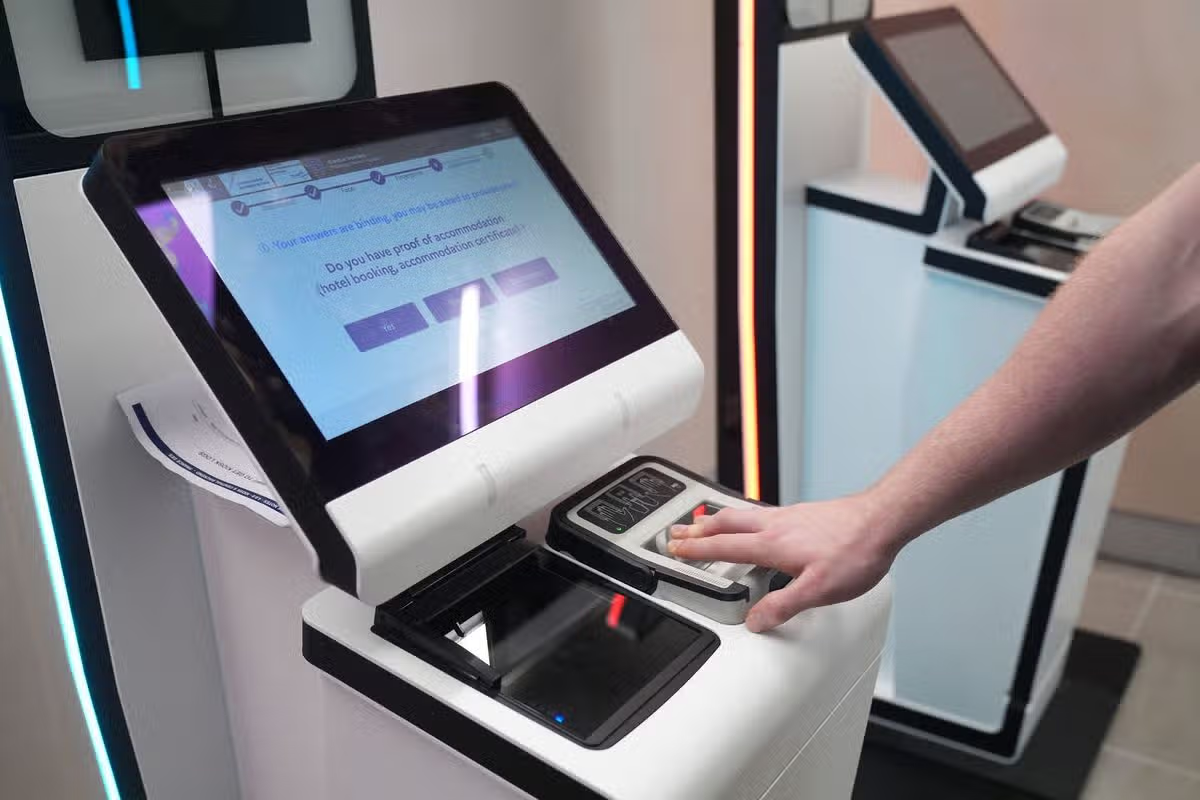
The EU’s Entry/Exit System (EES) has sparked massive airport queues across Europe – with people complaining that they’ve had to wait hours to enter countries after landing

EES kiosks have extended airport wait times across the EU(Image: PA)
Brits looking forward to a European getaway this summer have been issued a major travel warning by an airport boss after the EU implemented its new border system.
Officials implemented the new passport control system, named the Entry/Exit System (EES), on October 12 last year, requiring British citizens travelling to the Schengen area to register biometric details – including fingerprints and a photo – on arrival. The arrangements have caused massive pileup queues in airports across the area, and the system itself is reportedly plagued with bugs.
A boss at one of the busiest airports in the EU, located in one of the most visited cities on the continent, has warned that the system has nearly tripled the amount of time it is taking Brits to travel through passport control.
Ivan Bassato, the Chief Aviation Officer at Rome’s Fiumicino airport, told the BBC that large numbers of passengers are using the €12 million (£10.2 million) self-service “kiosks”. While recent updates to the system have “improved things significantly” with the e-gates, issues remain for UK nationals, who are now taking much longer to get through the border.
He said the average time has extended from seven to 20 minutes, and the process is still taking much longer than it would have before the EES rollout.
Mr Bassato said: “We are not at the point where you have the same quality of the process [as] before the EES.” The official added that the airport was “absolutely not okay with” waits lasting between one to two hours, urging: “I think that we need to fix urgently certain aspects of the system.”
The Foreign, Commonwealth and Development Office (FCDO) has previously warned Brits travelling into the Schengen area that they should be “prepared to wait” as the EES is implemented, especially if it is their first visit.
The Government’s portal advises: “On your first visit to the Schengen area, you may be asked to create a digital record at the port or airport on arrival. You may be asked to submit your fingerprints and have your photo taken at dedicated booths. You don’t need to provide any information before travelling to a Schengen area country.
“The checks may take slightly longer than previously, so be prepared to wait during busy times.” Brits travelling into Rome have encountered lengthening wait times lasting hours.
Speaking to the BBC, Carl, who had travelled to the Italian capital with his family, said he was bowled over by the amount of time it took to enter the country. He said: “It was two hours queuing, from getting off the plane to getting through with children. I knew it was going to be bad, but not as bad as that.”
One traveller entering from outside the EU said in a post on Reddit that, on entry to Fiumicino, they encountered a non-EU immigration line that wrapped through duty free.
They wrote: “Flight was at 11:15 today. Arrived at FCO at 8:45. Checking in and security was a breeze. Immigration line was extremely long for non-EU passports. Wrapped through duty free into the domestic terminal. The line finally moved enough that was I was on gate side of duty free at 9:30. Made it through immigration around 9:55.
“Worth noting that we had fast pass in security and priority check in for bags. Much more time needed if we didn’t.” The European Commission has insisted that disruption in EU airports is limited, and that member states would receive continued EES support.