



Thursday 15 October Independence Day in Guatemala
The territory of modern Guatemala was once the heart of the Maya civilization, which extended across Mesoamerica.
Most of the country was conquered by the Spanish Conquistador Pedro de Alvarado in the first half of the 16th century, becoming part of the viceroyalty of New Spain.
Guatemala was the original source for potatoes, corn, chili peppers, and avocados.
In the first decade of the nineteenth century, Spain had been weakened by its involvement in the Peninsular War in Europe and local juntas had been created as local Spanish had revolted against the rule of King Joseph, Napoleon’s brother who was installed as ruler of Spain by the French in 1808.
This taste for independent rule persisted after King Ferdinand came to the Spanish throne and on September 15th 1821, the Act of Independence of Central America was declared by the Province of Guatemala.
Following independence and despite opposition from El Salvador, the regions became part of the Mexican Empire, until they ceded to become the Federal Republic of Central America in 1823.

Power prices top $1,000 on PJM as DoE issues emergency order to prevent blackouts (XLU:NYSEARCA)

Gargolas/iStock via Getty Images
An unusual blast of warm weather across the U.S. Midwest and Mid-Atlantic has coincided with the middle of PJM Interconnection’s fall maintenance season, which prompted the Department of Energy to issue an emergency order for the October 13-16 period

California’s Prop 45 aims to speed construction projects. Opponents say data centers will benefit
When a county judge put the brakes on what would be the largest data center in California, ruling the whole project needed extensive environmental review, Kristian Salgado was relieved.
The community organizer lives in Imperial County, where the nearly one-million-square-foot facility was proposed. The rural county near the Mexico border struggles with bad air pollution and has one the state’s highest rates of asthma hospitalization for kids, according to the National Institute of Environmental Health Sciences. One of Salgado’s nephews lives right next to the site and struggles with the respiratory disease.
“It just seemed very unusual that a project of this scale, with that many backup generators could be permitted without requiring any further [analysis] of what that would mean for residents,” she said.
Now, Salgado and others who share her concern believe Proposition 45 on the November ballot could roll back their wins. The initiative changes the California Environmental Quality Act, or CEQA, a law intended to inform decision makers and the public about a project’s possible environmental impacts — and mitigate them to the extent possible.
Supporters say Prop 45 will speed up environmental review for essential housing, transportation, water, health, education and other projects, cutting costly delays and passing the savings on to consumers. Opponents say it not only weakens environmental protections for many developments, but will cover potentially polluting ones — including data centers. The Yes on 45 campaign forcefully rejects the data center claim, but independent legal experts are divided.
At the heart of the debate is the definition of one of the categories covered by Prop 45: “broadband internet access projects” or “mass-market retail service … that provides the capability to transmit data to, and receive data from, all or substantially all internet endpoints.”
Dan Dunmoyer, president and chief executive of the California Building Industry Assn., which supports the proposition, was adamant: “We specifically excluded data centers” when crafting the measure.
Yet the proposition expressly names certain excluded projects: nuclear energy, high-speed rail, jails and Delta conveyance facilities. Data centers aren’t among them.
Dunmoyer maintains that even if they’re not explicitly listed, data centers just don’t fit the measure’s definition.
In a Daily Journal op-ed, Rachelle Chong, a former Federal Communications Commission member, similarly argues that the definition refers to internet access bought from a provider like AT&T or Comcast. “A conventional data center ordinarily performs an entirely different function,” she wrote, arguing data centers aren’t in play.
But land use attorneys Matthew McKerley and Richard Frank, in another op-ed, say many modern data centers fit the bill because they house equipment used to transmit consumer data to and from the internet.
They also highlight conspicuous campaign finance contributions, including $250,000 from Prologis, which developed two data centers in San Jose.
Ethan Elkind, director of the climate program at UC Berkeley Law, said data centers will argue they fit the definition — and then it will be up to the courts to decide.
“Anyone telling you that it’s definitely not going to be data centers, they cannot read the future,” he said. “The way they’ve written the language, they can’t provide 100% assurance.”
Eric Biber, a UC Berkeley law school professor with expertise in environmental law, pointed to language in the measure requiring it to be interpreted broadly “to afford the fullest possible weight to the interest of, and the approval and realization of, essential projects.” In a blog post, he called it “a thumb on the scale” that could lead courts to conclude that projects should be covered when their eligibility is in doubt.
But Ryan Thomason and J. Scott Miller, partners at the law firm Mitchell Chadwick with CEQA expertise, think it’s likely courts would rule otherwise. In an article, they note that the definition used in the measure hews closely to another section of California law, which distinguishes providing internet services from offering content, services and applications online. “Courts generally interpret identical language in related statutes to have the same meaning,” they write.
Dunmoyer, of the California Building Industry Ass., stressed that the measure doesn’t overthrow local zoning rules.
Opponents are “making it sound like in your backyard will be a data center,” he said. “Well, that doesn’t happen at all by this initiative. That has to happen by a county board of supervisors voting to put a data center in your backyard. And if they decide to do that, this initiative does nothing to expedite that CEQA review.”
But what if local officials run afoul of their constituents? In the case of the Imperial Valley Data Center Campus, the roughly 75 acres of unincorporated land where it would go had already been zoned for data centers. As a result, county officials said they had the power to move forward with the facility for artificial intelligence computing infrastructure without city approval.
They granted the project an exemption from the state environmental review.
Then came the backlash. Residents spoke out at public meetings, rallied on the streets, circulated a petition and formed a community organization. The city of Imperial and the Sierra Club sued. In the wake of the outrage, the county walked back its decision, declaring a moratorium on data centers. (The developer sued the county over the ban, and the county recently rescinded it following a court order.)
If Prop 45 passes — and data centers are covered by it — Eric Biber, of UC Berkeley Law, told The Times that such a moratorium wouldn’t be possible. That’s because the measure prevents state and local officials from changing the rules for a project once its application is submitted, he said. So if a community didn’t have a moratorium in place and its zoning laws allow a data center, “They’re done,” said. Existing bans aren’t expected to be affected.
Attorneys for the No on Prop 45 campaign argue that it could have real-world impacts for the Imperial Valley facility, saying the developer could claim the new rules apply. For instance, the measure would prevent courts from overturning approvals of qualifying projects because of CEQA violations. Courts would only be able to halt the affected portion of the project while the issue is fixed.
Sebastian Rucci, principal developer of the Imperial Valley data center, said he will fight for his project to move forward and that there’s an environmentally sound way to do it. He said he’s willing to negotiate and mitigate where necessary — but will not go through the CEQA process. If push comes to shove, he said he’ll move the project elsewhere. California could “get in the game” or be left in the dust, he said.
Imperial Valley Computer Manufacturing, the company behind the project, says it will create at least 100 permanent jobs and generate $28.7 million in annual property tax revenue.
CEQA requirements “are not about the environment,” Rucci said. “They may be for some, but they’re not for many. For many, they are about killing things.”

Rams’ Alaric Jackson has suspension reduced to one game
Rams left tackle Alaric Jackson’s suspension for punching a Buffalo Bills player after a game has been reduced from two games to one, an NFL spokesman said Wednesday.
Jackson was suspended for striking Bills linebacker Bradley Chubb in the face after the Bills defeated the Rams, 37-34, in overtime on Monday night.
Jackson appealed the suspension.
“Hearing officer Derrick Brooks, jointly appointed by the NFL and the NFLPA, has reduced the two game suspension of Los Angeles Rams offensive lineman Alaric Jackson to one game,” Michael Signora, the NFL’s senior vice president of football and international communications said in a post to X.
Jackson must sit out Sunday’s game against the Arizona Cardinals but is eligible to return for an Oct. 25 game against the Las Vegas Raiders.
David Quessenberry is on track to start in place of Jackson, coach Sean McVay said Tuesday.
The Rams will also start the 21-day window for rookie Keagan Trost to return from injured reserve.

Mexican court closes case against official over 2023 detention centre fire | Migration News
Victims’ groups, however, have denounced the ruling as ‘selective’ justice that exonerates a former government head.
Published On 15 Oct 2026
A Mexican judge has closed the case against Francisco Garduno, former head of the country’s immigration agency, for crimes related to the 2023 fire at a Ciudad Juarez detention centre that killed 40 migrants and injured 30 others.
The incident was the deadliest event ever to occur at a Mexican immigration centre, and critics said it exposed the shortcomings and irregularities in the country’s detention system.
Recommended Stories
list of 3 itemsend of list
Garduno faced trial for the crimes of abuse of public office and dereliction of duty after footage from the fire showed guards had failed to respond to cries for help.
On Tuesday, Judge Victor Manlio Hernandez Calderon ruled that Garduno had fulfilled the court-mandated measures required to address the damage. But victims rejected that decision and announced they would appeal.
“Yesterday, corruption and the impunity of politicians protected by power won again,” the Foundation for Justice, one of the NGOs representing some of the victims, wrote on social media on Wednesday.
The victims have also compared the judge’s decision to close the criminal case to a de facto exoneration for Garduno.
In their view, the ruling “confirms that justice in Mexico is selective” and denies the victims “full reparations” and concrete guarantees that such an event will not be repeated.
Miguel Zenteno, one of the foundation’s lawyers, noted that the ruling is not yet final because it will be appealed and because another injunction is pending against the court-mandated reparations, which critics say failed to meet the standards for serious events.
On March 27, 2023, some 70 men were crammed into a locked dormitory with no ventilation and barely any water at the Ciudad Juarez immigration detention centre, on the border with El Paso, Texas.
As night fell, a small group set fire to some mattresses in protest, and within seconds, smoke engulfed the entire area.
Security cameras recorded the guards leaving the area despite cries for help. They made no attempt to open the gates of the dormitory. Only the women, held in another cell, were released. Most of the victims were Central Americans and Venezuelans.
Garduno, a former prison guard and current official at the Ministry of Education, led the National Migration Institute (INM) starting in 2019 and continued in the role until 2025 despite the fire.
The judge had previously ordered Garduno to compensate the families, provide them with free specialised medical care, issue a public apology, provide human rights training to migration personnel and guarantee that the events would not be repeated.
Zenteno acknowledged that the measures were implemented only partially because Garduno did not pay the damages as stipulated by the legal process.
Instead, Zenteno pointed out that the funds came from the INM, and the payments did not fully compensate the families. Furthermore, he added, the victims were not even informed how to access free medical services, and the apology “was a mere formality, not substantive”.
In addition to Garduno, prosecutors accused another former director of the institute of the same crimes.
Six immigration agents – including a military officer and a private security guard – and the two migrants accused of starting the fire are charged with homicide and assault. Most of the officials remain free pending trial.
ICE pushes back on report suggesting body cameras that automatically record | Civil Rights News
The immigration agency has rejected a report from a government watchdog, making suggestions for improved body camera policy.

Published On 14 Oct 2026
Immigration and Customs Enforcement (ICE), a United States agency that has taken a central role in President Donald Trump’s mass deportation campaign, has rejected a government report calling for its agents to wear body cameras that automatically activate.
On Wednesday, the Government Accountability Office, a nonpartisan agency that provides research to Congress, released a report recommending an update to ICE guidelines for camera usage.
Recommended Stories
list of 3 itemsend of list
It suggested that “automated camera activation” would be helpful in situations where “unexpected and unplanned incidents, unrelated to sensitive operations, result in use of force by or against personnel”.
“Given the important role of body-worn cameras in law enforcement activities, we maintain that additional controls are needed to help ensure that ICE personnel capture footage in accordance with policy,” the report said.
Automatic activation, it added, would address difficulties ICE agents face in manually turning on their cameras during enforcement operations.
But ICE has rejected the recommendation for automatic activation, which could be triggered by an agent pulling a gun or turning on a car siren. The agency cited privacy concerns.
But the Trump administration faces public pressure to improve transparency during its immigration raids.
Agents from ICE and other agencies such as Customs and Border Protection (CBP) have faced accusations of excessive force and civil liberties violations.
In January, two US citizens – Renee Good and Alex Pretti – were shot to death in separate shootings in Minneapolis, Minnesota, during immigration operations.
The New York Times estimated in July that immigration agents had opened fire on at least 25 people since the start of Trump’s second term. A CBS News review updated this week counts at least 30 shootings, with nine people killed and 13 others wounded.
ICE has often blamed such incidents on aggression against its agents, and it has argued that its officers have opened fire to defend themselves from danger.
But in several cases, that rationale has come under scrutiny.
Critics argued that video footage in Good’s fatal shooting disproved government statements alleging that she had weaponised her vehicle against agents. Her car, according to observers, appeared to be turning away from agents, not towards them.
In another case, ICE agent Christian Castro was accused of making false statements about a shooting that resulted in injury to Julio Cesar Sosa-Celis, a Venezuelan man living in Minneapolis.
Castro faces federal charges for allegedly lying about being attacked with a snow shovel and broom before the shooting, after video footage contradicted his account. Castro pleaded not guilty last month.
More recently, on October 8, immigration agents shot a man named Oscar Belgal in New York City while his five-year-old son was in the backseat of his car. ICE stated that Belgal appeared to be “going towards officers” in his car when they opened fire.
On Tuesday, a judge rejected the government’s effort to have Belgal deported.
Activists say better recording procedures for body camera footage could help clarify what happened in such incidents.
But the Trump administration has largely refused to implement reforms to ICE protocol.
Earlier this year, Democrats in Congress delayed funding for the Department of Homeland Security, which oversees ICE, on the basis that significant changes needed to be made to reduce incidents of excessive force.
The department said on Wednesday that automatically recording cameras could result in “the unauthorised recording of sensitive interactions with informants or victims”.
The agency added that all ICE offices had received body cameras as of August 5, but that training in their use was still ongoing and would be finished “soon”.

Grand Designs viewers ‘switch off’ minutes into show as they issue complaint
Grand Designs viewers were left disgruntled as Kevin McCloud returned to a build from 25 years ago.

Viewers issued the same complaint (Image: Channel 4)
Grand Designs viewers claimed to “turn off” the Channel 4 programme as they rushed to social media to share their complaints.
Kevin McCloud’s architectural programme has been airing a new series, which has so far seen a ‘pink cloud house’ in London built by an eccentric couple, and a Cornwall family home designed to overlook the sea. On Wednesday, 14 October, the Channel 4 show took viewers back in time 25 years, revisiting a build in Yorkshire.
It looked back on earlier Grand Designs clips, where Chris and Gill designed and built their dream home from a 19th-century Mill. Kevin shared at the start of the episode: “West Yorkshire has always been a place of innovation, manufacturing and mills.”
He spoke about the disrepair of one mill, before it was brought back to life by “gutsy pioneers”. Kevin continued: “25 years ago, Chris and Gill put that same spirit of innovation into the restoration of one of these forgotten buildings.
“They took an abandoned mill and turned it into a high-tech home, and they did it in proper Yorkshire style – no nonsense, with grit.” Gill and Chris had bought the derelict 19th-century mill in 1999, without seeing the site.
“What a dump,” Kevin had declared at the time. But the couple were determined to transform it, and had high ambitions for “a radical hybrid home”. Looking back on the build, Kevin went on: “Amazingly, it’s been a quarter of a century since I last saw Chris and Gill, that is a really long time! So long in fact, that you have to ask, have they changed? Is the building as radical as it looked then, and most importantly, how well has that building over 25 years looked after them?”
As Kevin shared their story from over two decades ago, and reflected on where Gill and Chris were now, viewers were disgruntled at the revisit, rather than a new project on their screens. A number of fans quickly took to social media to share their frustrations.
“Another pointless edition of #granddesigns,” one person fumed, as another said: “Always disappointing seeing ‘new’ @granddesigns and its the revisited version.” Someone else said: “There obviously hasn’t been many new ‘grand design’ projects in the country over the last few years as it’s a ‘revisited’ episode four shows into the new series.” Someone else replied by saying they’ve “turned it off”, as another added: “Was exactly my point too.”
Someone else wrote: “#granddesigns revisit, in other words, it’s a repeat.” However, other viewers were more excited about the revisit episode, with one sharing: “I can’t wait! This one was amazing at the time.” Someone else declared: “This was one of my favourite GD’s of all time.”
Ahead of the new series airing, Kevin spoke about the success of Grand Designs, and was asked about if the series has changed the way people build houses. He replied: “It is very chicken and egg, what came first?
“I think the great thing about television is that it can reflect society, and I think television is at its best when it is able to do that and hold a mirror up and say, this is us now. Channel 4 are very good at doing this, I think it is one of the most compelling things about the channel.
“Grand Designs has been going forever, and so the question is whether it holds a mirror up and I believe the answer is yes, it does so because we have no real formula. We find projects in the real world and we observe, that is it.
“Grand Designs strengths and its longevity are down to the fact it doesn’t really have a format other than that. It has a beginning and a conclusion, but what happens in the middle is not up to us, it is up to the people who are building. We, of course, go out of our way to find interesting and challenging projects that are more at the margins, that show us where we might be as a society in 5,10, 20 years time, not just where we are now. So, my short answer is possibly, but it is much more important for us to show examples of stuff which show the rest of society how we might be building and living in the future.”
Grand Designs airs Wednesdays at 9pm on Channel 4

Rep. Ilhan Omar’s phone seized and relatives subpoenaed in criminal probe, AP source says
WASHINGTON — Federal authorities investigating Minnesota Rep. Ilhan Omar seized the Democratic lawmaker’s phone and have issued more than a dozen grand jury subpoenas, including to some of her relatives, according to a person briefed on the probe.
The subpoenas were issued for a grand jury collecting evidence in Minnesota as federal authorities probe potential fraud in Omar’s immigration paperwork, said the person, who spoke on the condition of anonymity because they were not authorized to discuss an ongoing investigation. The investigation led to federal agents searching Omar’s Washington, D.C. home on Monday just weeks before the November midterms, in which Omar is seeking reelection.
The scope of the investigation into Omar is unclear, though Homeland Security Secretary Markwayne Mullin has suggested that authorities were examining potential crimes related to her family’s immigration paperwork.
On Tuesday, Washington D.C. U.S Attorney Jeanine Pirro said in a Fox News interview that “there are several investigations going on” related to Omar and that her office is also probing issues concerning the lawmaker’s financial disclosures.
“If there was a crime that was committed, it will be prosecuted,” Pirro said.
The search of Omar’s home so close to next month’s midterm contests that will determine control of the House and the Senate was swiftly condemned by Democrats, who accused the administration of targeting the Democrat for political purposes. Omar, in a statement on X, called the search an “attempt to target political enemies and weaponize federal law enforcement.”
“For 10 years, Trump has targeted me with baseless lies and smear campaigns. This is just the latest escalation in his campaign of political intimidation,” she said. “I will not be silenced.”
A phone message seeking comment was left Wednesday with a representative for Omar.
Though the Republican focus on Omar’s background dates back years, the search notably took place three weeks before the November midterms, in which Omar is seeking reelection. The Justice Department has historically sought to avoid public investigative actions involving a candidate within 60 days of a primary or general election.
Omar, who was first elected to the House in 2018, represents Minnesota’s 5th District, including Minneapolis. She is part of The Squad of progressive lawmakers who are a vibrant political force on the left wing of Congress but have also endured repeated attacks from President Trump, dating back to his first term. She was one of the first two Muslim-American women in the House and the first African refugee to be elected to Congress.
Richer writes for the Associated Press.

Champions League: Pundits react to Lisandro Martinez comments
Champions League Match of the Day pundits Nedum Onuoha, Stephen Warnock, and Rory Smith analyse Lisandro Martinez’s comments following Manchester United’s 2-0 loss to Atletico Madrid and the impact they’ll have on the club.
READ MORE: Man Utd defender Martinez issues scathing attack on board
Available to UK users only.
Denmark pushes back as Trump touts Greenland oil and mineral deals | Oil and Gas News
Recent US-Greenland-Denmark agreement excludes mining or drilling rights while reinforcing Greenland’s sovereignty.
Published On 14 Oct 2026
Denmark has demanded that US resource exploration in Greenland respect the island’s laws amid President Donald Trump’s claim that oil, gas and mineral extraction will soon begin there.
The Danish Foreign Ministry reaffirmed on Wednesday that last month’s agreement between Denmark, Greenland and the US did not alter the rules for extraction.
Recommended Stories
list of 3 itemsend of list
The agreement “does not grant investors from the US any preferential treatment” over investors from other NATO and EU countries when it comes to access to natural resources in Greenland, the ministry said.
In a post on Truth Social, US President Trump called the semi-autonomous Danish territory “our new and beautiful Greenland”.
“Massive Oil, Gas, and Mineral Exploration is getting ready to begin,” he wrote, without providing details.
What the deal covers
Trump, Danish Prime Minister Mette Frederiksen and Greenland’s Prime Minister Jens-Frederik Nielsen signed the 10-page agreement on the sidelines of the United Nations General Assembly in New York on September 22, ending months of tensions over Trump’s threats to control Greenland.
The deal allows the US to “modernise and expand” its activities at the Pituffik Space Base, a remote US military installation in northwest Greenland.
It also paved the way for two new military bases and Trump’s “Golden Dome” missile defence system, while reaffirming Danish sovereignty and Greenlanders’ right to self-determination.
It did not allocate any rights for mining or drilling.
Greenland’s ban
Greenland banned uranium mining and all future oil exploration in 2021.
Its government is reviewing whether a Texas firm, Greenland Energy, can use permits that predate the ban.
The company said in August it planned to drill for oil in 2027 at an untested basin on Greenland’s east coast, although it lacked its own permit.
Danish security policy adviser Jacob Kaarsbo said Trump’s comments could signal that his desire to control Greenland remains unchanged.
“It is extremely dangerous to view this agreement between the Trump administration and Denmark as something that has altered Trump’s intentions,” he said.
Mikkel Olesen, a senior researcher at the Danish Institute for International Studies, told Al Jazeera that details regarding mining and exploration rights remained unclear and that information coming mostly from the US side should be taken “with a grain of salt”.
Richard Weitz, a fellow at the NATO Defense College in Rome, said Trump “backed down and settled for less” than he sought, but still “got pretty much everything he wanted, except formal annexation”.

PSG beat Man City 4-2 in Champions League thriller | Football
Paris Saint-Germain score three first-half goals, but Erling Haaland brace nearly drags Manchester City back in UCL.
Published On 14 Oct 2026
Paris Saint-Germain further soured the mood at the Etihad Stadium as Manchester City’s first home game since the guilty verdict on widespread flouting of Premier League financial rules ended in a 4-2 Champions League defeat on Wednesday.
The European champions turned on the style to strike three times inside the opening 35 minutes through Desire Doue, Ousmane Dembele and Vitinha.
Recommended Stories
list of 4 itemsend of list
But City stormed back in the second half as Erling Haaland scored twice on either side of Maghnes Akliouche’s strike, which briefly restored PSG’s three-goal cushion.
The 10-time English champions face swingeing sanctions unless they can successfully appeal last month’s ruling by an independent commission, which found the club guilty on more than 100 charges of financial impropriety.
City shrugged off the uncertainty over their future to win 3-0 at Liverpool on Sunday and remain top of the Premier League, but PSG showed why they are the favourites to win this competition for a third consecutive season.
Former City manager Pep Guardiola returned to the Etihad for the first time since his departure in May, sitting behind the club’s embattled chairman Khaldoon Al Mubarak and CEO, Ferran Soriano, in a show of solidarity.
City made passing reference to the guilty verdict with a lengthy pre-match video detailing the club’s historic moments of celebration both before and after an Abu Dhabi-backed takeover in 2008 that transformed their fortunes.
Behind one end, supporters unfurled a giant banner reading: “I’m City till I die.”
Yet the fighting talk in the stands didn’t match the on-field action as City were blown away by a scintillating first 45 minutes from the visitors.
Luis Enrique’s decision to leave Khvicha Kvaratskhelia on the bench proved inspired, as it meant Doue started wide on the left.
Gianluigi Donnarumma had a point to prove after the Italian goalkeeper was let go by the PSG coach just months after helping deliver the club’s first Champions League title in 2025.
However, it turned out to be a night to forget for the giant Italian.
Donnarumma was caught out at his near post by Doue’s outside-the-box effort after a lightning counter-attack to open the scoring.
The move for the second goal two minutes later was even more impressive, as Doue and Dembele exchanged an elaborate one-two before the latter headed in at the far post.
Achraf Hakimi hit the post before Vitinha rattled in PSG’s third from the edge of the box.
Maresca responded with a triple substitution at half-time and managed to salvage some pride, even if the deficit proved too much to overturn.
Antoine Semenyo and Enzo Fernandez missed glaring chances to pull a goal back even before Haaland glanced home a header from Iliman Ndiaye’s cross.
Yet City were hit by a sucker punch when Donnarumma got a hand to Akliouche’s effort, but the ball looped high and spun back into the net.
Nuno Mendes made a brilliant clearance off his own line, and Haaland hit the bar before the Norwegian slotted home his second of the night.
Donnarumma saved a late Ferran Torres penalty, denying the French champions a fifth goal.
But in the battle between two state-backed projects that have reshaped European football, Qatar-owned PSG are the top dogs right now as City face a scandal that puts their trophy haul over the past 15 years in question.

Huge A-list star looks unrecognisable in wig with thrillseekers at funfair
A MAJOR A-list celebrity put on a disguise and turned up at Pacific Park to mingle with an unsuspecting crowd at the fairground.
The star is known for her long blonde tresses and huge personality – so would you still have known that it was her?
Sydney Sweeney dressed down in a white graphic t-shirt and denim skirt for the day out with her friend Jayde.
She kept her identity on the down-low by covering her hair up with a brunette wig that only just fell to her shoulders.
The star finished the look off with a pair of chic sunglasses and a white set of nails.
Sydney shared a series of snaps from the day out to her Instagram page after, showing her and Jayde having fun on a ferris wheel and in the arcades.


Penned in the post’s caption, Sydney said: “when ur bestie shows up and says “here put this wig on””.
Fans loved the photos and how Sydney was able to have so much fun without being noticed.
One user said in the post’s comments section: “Great idea!!! This is what best friends are for.”
A second shared: “A couple of small town sisters on their big California vacation.”
A third added: “I didn’t even recognise her.”
The post comes shortly after Sydney has been slammed for posing naked in adverts for sports prediction platform, Novig.
In Syd’s latest Novig video, she posed topless with a pair of American footballs pressed to her chest and said: “There are grown men making spreadsheets to bet on what colour underwear I’m wearing. I mean, I’m flattered.”
The star also posed naked with balls, bats and racquets and said: “Think you know sport? Prove it.”
Critics are said to include models Kendall Jenner — half sister of Kim Kardashian — and Hailey Bieber, the daughter of actor Stephen Baldwin and married to superstar singer Justin.

ICE rejects suggestion that its officers wear body cameras that automatically activate
WASHINGTON — Federal immigration officials need to ensure that body cameras worn by officers are uniformly activated when needed, a government report released Wednesday said, following a series of contentious shootings and aggressive arrests by ICE officers.
The agency rejected the recommendation, saying that using cameras that automatically activate when an officer pulls their weapon or activates a car siren could risk privacy concerns.
ICE has come under intense scrutiny after numerous incidents where officers have opened fire during enforcement operations and the agency has claimed they were under threat but officers weren’t wearing body cameras. Critics say the cameras could help hold officers accountable and promote transparency at a time when the agency is operating at a high tempo across the country and increasingly accused of excessive use of force. The report by the Government Accountability Office covers the period from February 2025 until September of this year. The report, conducted at the request of Democratic members of Congress, delves into policies governing the use of body-worn cameras by ICE and U.S. Customs and Border Protection and details improvements both agencies can make to improve their programs. But it did not go into any of the high-profile ICE-involved shootings that have focused attention on the agency’s body-worn camera usage, such as the shooting deaths of Renee Good in Minneapolis or Lorenzo Salgado Araujo in Houston.
A fatal shooting exposed gaps in ICE’s camera rollout
Former Homeland Security Secretary Kristi Noem announced in February that every Homeland Security officer on the ground in Minneapolis would be issued body-worn cameras. Noem, who was later fired by Trump, said officers across the country would receive them as funds became available.
The department later received $20 million from Congress to finish the ICE body-camera rollout plan. But then came a shooting in July of Salgado Araujo, when Immigration and Customs Enforcement officers shot and killed the Mexican man who lived in the U.S. for more than 35 years. Those officers were not wearing body cameras, raising questions about why the agency still hadn’t gotten the cameras out to officers in the field. Homeland Security said after Salgado Araujo’s death that body cameras had been deployed to more than half of ICE field offices and that the remainder would get them in the next 60 days. In the GAO report, DHS said all ICE offices had received the body-worn cameras as of Aug. 5 and that officers were being trained on their use.
In a statement Wednesday, DHS said that while they’d purchased devices for all ICE officers across the country, the required training was still ongoing and that they expected to be finished “soon.”
DHS rejects automatic recording, citing privacy concerns
The report recommended ICE take additional steps such as “automated camera activation” that it said would be particularly helpful in situations where “unexpected and unplanned incidents, unrelated to sensitive operations, result in use of force by or against personnel.” The report said this would improve transparency and public trust. But DHS disagreed, saying that cameras that automatically activate could result in “the unauthorized recording of sensitive interactions with informants or victims.” The agency said the body-worn cameras are required to be turned on at the beginning of pre-planned enforcement activities.
Confusion over camera rules kept one ICE office from using them
The report also said some of the officers they talked to at both ICE and CBP were confused as to when they should activate the cameras. For example, some officers told the GAO they didn’t know whether to activate the cameras during vehicle searches or when transporting detainees. The report noted that at one ICE office, staff was so uncertain about when they were supposed to use the cameras that they hadn’t begun using them even after they’d been trained.
The report also found that neither agency had updated the plans that oversee their body-worn camera programs even as their staff had grown significantly.
Santana writes for the Associated Press.

PSG on ‘different level’ – are they building greatest European dynasty?
Some find success sweet but fleeting, others spend years building to the pinnacle, and then there are those whose lasting glory evolves into a dynasty.
After tearing Manchester City apart in large spells of their 4-2 Champions League victory on Wednesday, Paris St-Germain look well on track to join the latter bracket.
The back-to-back European champions sliced through City with astonishing ease to take a 3-0 lead into half-time, and were still able to score another despite a spirited second-half fightback from the Premier League leaders.
After obliterating Inter Milan 5-0 in the 2025 final before squeezing past Arsenal on penalties in last season’s showpiece game, Luis Enrique’s side are aiming to win a third consecutive European crown.
They would be the fifth team to do so going back to 1956, and just the second in the Champions League era.
“This PSG team are on a different level,” Chris Sutton told BBC Radio 5 Live at half-time.
“They have just run all over Manchester City, who haven’t been able to string passes together. It’s been an absolute pummelling for Man City.”
To mark PSG’s latest display of attacking excellence, we’re looking at how the Parisians compare to those clubs who have enjoyed the most dominant eras in European competition.
Some will point out that football existed before the European Champion Clubs’ Cup began in 1955 – so apologies to Stan Cullis’ ‘world-champion’ Wolves outfit and the Mitropa Cup’s early Vienna heavyweights.
However, this top 10 debate is centred around winning European football’s grandest prize.
Paris St-Germain 2025-present
OK, straight in with the current champions, because this is a dynasty in the making.
Paris St-Germain are hoping to enter that bracket and the 4-2 win against Manchester City on Wednesday reminded the rest of Europe why you shouldn’t bet against them becoming continental champions for a third successive season.
PSG had a lacklustre start to the domestic season – they always do, don’t they? – but boast an uncanny ability to click into gear when it matters.
In Manchester, Luis Enrique’s side were at their unstoppable best. A ruthless blend of silky flicks and slick off-the-ball movement that saw a dazed City caught several frames behind.
“Unbelievable. PSG, what a team,” Sutton said.
“PSG’s press, I don’t think there’s another team that press with their intensity and ferocity.
“This [City] is one of the best teams in the Premier League getting an absolutely roasting. This is them [PSG] having a slow start to the season. Heaven help everyone.”
The Parisians have been France’s most dominant force since the arrival of Qatar Sports Investments 15 years ago, but it took a change of approach for the holy grail of continental success to arrive.
“It’s the end of the glitter,” professed president Nasser Al-Khelaifi after years of lavish spending, ushering out the “flashy, bling-bling” era.
Instead, Enrique arrived in 2023 intent on building a coherent team. There was still significant investment, but on younger players who could be moulded by his philosophy and discipline while given room to flourish.
The result was two scintillating Champions League triumphs.

Real Madrid come from 3-1 down to beat Roma on Champions League travels | Football
Published On 14 Oct 2026
Jose Mourinho enjoyed a Roma reunion to remember as Real Madrid completed an astonishing comeback by scoring three late goals to claim a 4-3 away win in the Champions League on Wednesday.
Marten de Roon gave the hosts a deserved opener before Kylian Mbappe struck back on his 100th Champions League appearance to level the scores at the break.
Recommended Stories
list of 4 itemsend of list
Two Donyell Malen strikes in the space of six minutes early in the second half seemed to take the game away from the 15-time European champions as Roma ran rampant.
But Real scored three goals in the space of seven minutes late on, all stemming from corners, to turn the game on its head as Carlos Espi, Endrick and ex-Roma defender Antonio Rudiger struck at a stunned Stadio Olimpico.
Mourinho was a popular figure, leading Roma to the UEFA Conference League title and an Europa League final during two-and-a-half years in charge.
The home crowd honoured the Portuguese with banners and chants in Roma’s first home Champions League match in more than seven years, and the hosts started strongly as Mario Hermoso forced Thibaut Courtois into a flying fingertip save.
Roma took a deserved lead when De Roon swept a shot past Courtois from 25 yards in the 20th minute, and almost doubled it when Malen’s powerful shot squirmed under Courtois before being plucked off the line.
However, one costly moment of switching off proved enough to send them back to square one within five minutes of the opener being scored.
Hermoso misjudged an interception to allow Mbappe a clear run at goal, and the French striker’s deflected shot flew into the roof of the net to level the scores with Real’s first meaningful chance of the game.
Mbappe marked his Champions League centurion status – he is the youngest player to reach the milestone, aged 27 – with his 72nd tournament goal, one that moved him into the all-time top five ahead of Real legend Raul Gonzalez.
The equaliser appeared to subdue Roma and steady Mourinho’s men, who twice threatened a second before the break as Marc Cucurella and Jude Bellingham came close.
Roma take game to Real Madrid
But Roma boss Gian Piero Gasperini insisted pre-match that Roma would not compromise on their full-throttle style regardless of opposition, and he was true to his word as they came out firing after the break.
Roma quickly retook the lead when half-time substitute Rodrigo Mora fed the ball to Malen, who finished brilliantly by taking the ball in his stride with his first touch and lifting it over Courtois with his second.
Things got even better for the Italians just six minutes later when Malen raced onto a through ball to power home his second, given following a VAR review after initially being flagged for offside.
Real looked for a response as Mbappe twice tested Pierluigi Gollini, before having his second goal of the night ruled out for offside.
But set-pieces proved to be the key to unlock the Roma defence, as Espi tucked home a close-range rebound from a header to pull one back before Endrick powered home a header from another corner just two minutes later.
The final blow was struck by Rudiger in the 90th minute, the defender getting in front of his marker to guide home a close-range finish and complete an extraordinary turnaround.
The result leaves Real Madrid with six points from their opening two league phase matches, while Roma are on one point.
Shakhtar Donetsk beat AEK Athens in London debut
Nomadic Ukrainian champions Shakhtar Donetsk celebrated moving into their new Champions League “home” at Stamford Bridge by storming back to beat AEK Athens 3-1.
Fans of the club turned up in the thousands to support the team, who emerged from the tunnel draped in blue-and-yellow national flags.
The Greek side took the lead in the 28th minute through Lovro Majer but Pedrinho levelled confidently from the penalty spot just six minutes later.
With about 10 minutes of normal time to go, Vinicius Tobias found the net from a tight angle and substitute Gleiker Mendoza made the game safe, smashing home after cutting in from the left.
The result leaves Shakhtar on four points after two games, following a draw against PSV Eindhoven in their opening match in the league phase of the Champions League.
Giant-killers Bodo sink Dortmund in Champions League
Fredrik Sjovold’s 52nd-minute strike secured a 1-0 victory for Bodo/Glimt over Borussia Dortmund, extending the Norwegian side’s remarkable home record against Europe’s elite.
Bodo were a cut above the 2024 Champions League runners-up and took the lead through Sjovold just after the break.
Dortmund improved in the final half hour but were unable to strike back, despite a late chance for Felix Nmecha.
Dortmund join Manchester City, Inter Milan and Sporting as recent big-name scalps on the artificial turf of Bodo’s Aspmyra stadium.
Aston Villa put six past Fenerbahce in record rout
Aston Villa recorded their biggest ever European victory as Nicolas Jackson inspired a 6-0 rout of Fenerbahce.
Unai Emery’s side won at Villa Park for the first time this season to maintain their 100 percent start in Europe’s elite club competition.
Swiss forward Johan Manzambi put Villa in front, and Jackson was on target twice before the interval.
Ross Barkley scored twice in the second half before Tammy Abraham’s late strike completed the rout.

UK threatens visa bans for Eritrea over migrant return policy
Home Secretary Shabana Mahmood has threatened to ban all Eritreans from entering the UK if the east African country’s government does not accept more returns of small boat migrants and foreign national offenders.
From Thursday, Eritrean diplomats will face restrictions on their movement outside London. Fast-track visas will also be stopped for VIPs.
Ministers have previously pressured other countries into accepting returns by threatening visa bans.
Eritreans were the most common nationality among small boats migrants in the 12 months to June – accounting for 18% of arrivals, external, according to figures from the House of Commons Library.
The Eritrean embassy in London has been contacted for comment.
“Eritrea has had every chance to accept the return of criminals and those with no right to be in the UK. Unlike other countries, it has refused,” said Mahmood.
She said she would not hesitate “to impose further measures on other countries refusing to co-operate”.
The UK government accused the Eritrean authorities of “abruptly” withdrawing co-operation earlier this year.
The restrictions mean diplomats are banned from travelling 60km outside London without permission.
The Home Office said this mirrored restrictions on British officials in Eritrea’s capital Asmara.
Earlier this year, the UK threatened bans against Angola, Namibia and the Democratic Republic of Congo (DRC).
Restrictions were announced against the DRC last year, but the Home Office said these have been lifted after co-operation on returns improved.
Angola and Namibia both agreed changes before restrictions were introduced.
When announcing changes to the UK’s asylum system in November, Mahmood said visa penalties would be applied to countries that failed to co-operate with returns policies.
Penalties included an “emergency brake” on visas for countries with high asylum claims until they take back citizens in the UK illegally.
According to Home Office data, more than 20,400 people have arrived in the UK by small boats so far since the beginning of this year, down 40% from the same period last year.
There were more than 40,600 returns and deportations from the UK from July 2025 to June this year – an 8% increase on the same period last year.
Of those who had been returned, less than 6,000 has been convicted of a criminal offence.

BBC sitcom Daddy Issues to air final series with Strictly and Celebrity Traitors stars
BBC sitcom Daddy Issues will come to an end after the third series has aired but not before a star-studded lineup of guest stars has joined the cast for its final outing

Daddy Issues will come to an end after the third and final series has aired(Image: BBC/Fudge Park Productions/James Stack)
Daddy Issues will come to an end after the third and final series has aired, the broadcaster has confirmed. The BBC Three sitcom stars Aimee Lou Wood as Gemma and David Morrissey as Malcolm, following a pregnant party girl who moves into a flat share with her recently-divorced father.
The first series aired in August 2024, and a follow-up series was broadcast in August the following years but now the third run of episodes, which is currently being filmed in Stockport, will be its last.
But the programme, which is Danielle Ward and co-written with David Reed has confirmed a string of guest stars for its final outing. Men Behaving Badly star Neil Morrissey will be amongst those joining the cast, taking on the role of as Malcolm’s new friend Ellis.
Ensure our latest headlines always appear at the top of your Google Search by making us a Preferred Source. Click here to activate or add us as your Preferred Source in your Google search settings.
Shobna Gulati, best known as Sunita Alahan in Coronation Street and Anita in dinnerladies, will play new neighbour Odette whilst former Peep Show star Sophie Winkleman will play campsite owner Mary.
Sarah Hadland, best known for her role as Stevie Sutton in Miranda and for her Strictly Come Dancing stint, will be back as Rita, joining fellow returning cast members David Fynn as Derek, Taj Atwal as Cherry and Celebrity Traitors star Sharon Rooney as Catherine.
The new run of six episodes will focus on Gemma’s newfound set of calamities as she tries to settle into her new promotion at the salon whilst daughter Sadie thrives at nursery. Chaos ensues when the flat she still shares with her dad floods, and a new romance leaves her stuck in a web of lies.
Over the last few years, actress Aimee, who the BAFTA Television Award for Best Female Comedy Performance after making her screen debut in Netflix hit Sex Education, has enjoyed global success with US comedy drama The White Lotus.
Through her role as Chelsea, she earned Emmy and Golden Globe nominations. Aimee has also hosted an episode of Saturday Night Live UK, starred as Sally Bowles in the West End production of Cabaret and is due to appear in a string of Hollywood films including The Beatles, Anxious People, and The Idiots.
Speaking about the series coming back, Aimee shared nothing but excitement as she expressed her joy at being part of the comedy series.
She said: “I’m so happy to be back with David and the brilliant Daddy Issues cast for one final time. Gemma and Malcolm are one of the funniest and sweetest comedy double acts on TV, and I’ve loved being a part of it.”
Meanwhile, David Morrissey added: “I love doing Daddy Issues so much, such a great cast and crew! So I’m delighted to be coming back to have more adventures with Gemma, Malcolm and the gang!”
* Follow Mirror Celebs and TV on TikTok , Snapchat , Instagram , Twitter , Facebook , YouTube and Threads
Supreme Court sides with Republicans in dispute over cost of campaign ads
WASHINGTON — The Supreme Court sided with Republicans Wednesday and gave political parties and their fundraising committees lower rates for broadcast campaign ads.
Over two dissents, the justices granted a fast-track appeal from the Trump administration and the National Republican Congressional Committee and upheld the use of the GOP-friendly rule in the midterm election.
In a brief order, the court said the issue should be left to the Federal Communications Commission.
The outcome has given Republican candidates an advertising edge in the final weeks of the campaign.
Federal law says a “legally qualified candidate” running for election is entitled to a “lower unit charge” for campaign ads in the 60 days prior to an election.
However, on March 30, the FCC, under Republican control, announced that broadcasters must extend the lower rates to political parties and their joint fundraising committees.
The FCC notice did not explain the basis for this change, and it refused to hold a commission hearing to debate the issue.
But the change was seen as benefiting Republicans.
Democratic candidates have raised more money from direct but limited contributions from individuals, while Republicans have raised far more through party committees that are funded by wealthy donors.
The non-partisan Campaign Legal Center said the FCC’s rule change was “contrary to the text and purpose of the federal statute and would effectively grant super PACs an advertising discount.”
Anna Gomez, the lone Democrat on the FCC, issued a statement objecting to the change.
“The American public should not have sweeping election-year rule changes forced on them in the dark, on the eve of the election, without a single opportunity for public input,” she said.
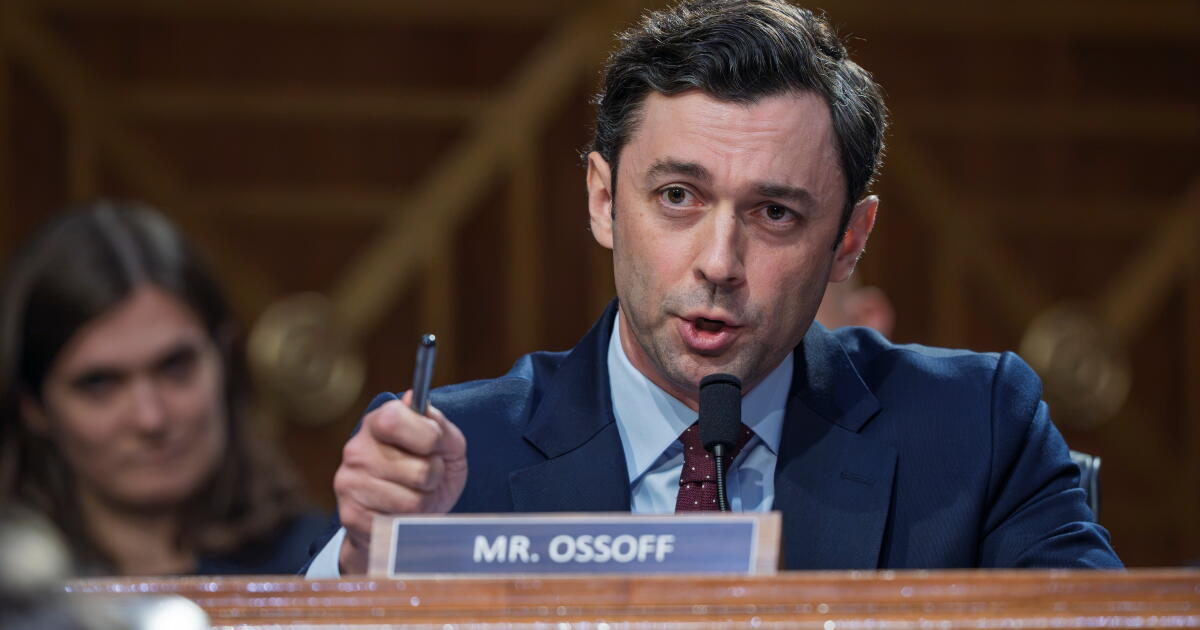
Democratic Senate candidates Sherrod Brown of Ohio, Jon Ossoff of Georgia and Roy Cooper from North Carolina objected to the FCC rule change in April and and asked for a review.
When no action was taken, they filed suit in federal court. They argued the FCC had no authority to change the law that gave only candidates, not fundraising committees, the benefit of the lower ad rates.
Since then, the two sides have gone back and forth in the courts, with both accusing the other of seeking a late change in the rules.
The U.S. 4th Circuit Court of Appeals in Virginia ruled for the Democrats in a pair of 2-1 decisions.
“Suffice to say that any ‘chaos’ is the FCC’s fault, not ours,” Judge Robert B. King, a Clinton appointee, said on Oct. 7. It “has endeavored to create from whole cloth a new rule entirely outside the purview of judicial review.”
But the Supreme Court stepped in twice to overturn the 4th Circuit and rule for the Republicans.
In a Sept. 4 order, the court said in an unsigned order the 4th Circuit intervened too soon. The law “makes clear that an aggrieved party must wait for the Commission to resolve its application for review by order before filing a petition for judicial review.”
Only Justice Ketanji Brown Jackson dissented.
In September, the FCC did nothing other than to ask for public comments on its March rule change.
Frustrated with the delay, the 4th Circuit issued a second order requiring the FCC to act by Oct. 9.
Last week, in response to an appeal from Solicitor Gen. D. John Sauer, Chief Justice John G. Roberts put the 4th Circuit order on hold.
On Wednesday, the full court said the 4th Circuit Court should have left the issue to the FCC.
“Our system of separation of powers does not allow the judiciary to meddle in the workings of a coordinate branch of the government in this manner,” the court said an unsigned opinion.
In dissent, Jackson and Justice Sonia Sotomayor voted to deny the administration’s appeal.

Two men charged in shooting of 49ers’ Keion White at Super Bowl party
Two men charged Wednesday in connection with the shooting of San Francisco 49ers defensive lineman Keion White at a Super Bowl party in the early hours of February 9 were among four arrested as a result of a sweeping investigation.
Alleged gunman Gregory Walker, 36, of Mountain House was arrested by the Los Angeles Police Department and charged with assault with a firearm. San Francisco District Attorney Brooke Jenkins said Walker is alleged to have personally discharged the weapon that wounded White. Walker is also charged with causing great bodily injury, possession of a firearm by a felon, possession of a concealed firearm by a felon, and possession of a loaded firearm by a felon.
Curtis Green, 35, of Irvine was charged with brandishing a firearm at the party held in the VIP area of the Dahlia Lounge in San Francisco’s Mission District. Green was booked in San Francisco on misdemeanor weapons charges. Charges for the other two suspects, Marquis Davis, 38, and Antoine Washington, 36, have not been announced because they are not in custody in San Francisco, police said.
Davis was arrested in Atlanta and police said they found 979 grams of cocaine, 820 grams of MDMA, 1,026 grams of methamphetamine and 3,842 grams of fentanyl at his home. Washington was arrested in Stockton and police said they found loaded gun and oxycodone pills.
The investigation was dubbed “Operation D-Line” by San Francisco police and involved more than 50 search warrants and the assistance of more than 250 law enforcement personnel nationwide, officials said Wednesday.
“This kind of violence is unacceptable in San Francisco, and we devoted significant resources to holding the perpetrators of this incident accountable,” San Francisco Police Chief Derrick Lew said in a statement.
White was struck in the ankle with a bullet at 4 a.m. According to reports, the shooting occurred after an argument between White, Atlanta rapper Lil Baby, and the rapper’s entourage, who attempted to enter White’s event, according to a police report.
“For those who know me, y’all know this won’t stope [sic] me from spreading peace and joy to the world,” White wrote on Instagram a day after the shooting. “Full steam ahead. I’m in great spirits and ready to make the most of this off-season.”
White, a second-round draft pick of the New England Patriots in 2023, has played in all five games this season for the unbeaten 49ers, registering three sacks and nine tackles. He had a rooting interest in Super Bowl LX because he was traded to the 49ers from the Patriots, who lost the game to the Seattle Seahawks at Levi’s Stadium in Santa Clara.
Lil Baby, a 2022 Grammy winner whose given name is Dominique Jones, performed the night of the game at The Grand nightclub San Francisco before heading to the Dahlia Lounge, where strippers entertained on the main floor. White’s private party was downstairs.
An unidentified witness from White’s group told police that when he went upstairs to ask for help breaking up the conflict, he heard two gunshots. He returned downstairs and found that White had been shot in the left leg. According to the police report, topless women were scooping up money from the floor when police entered the club.
“As I entered, I saw numerous scantily clad females picking up dollar bills that were strewn all over the floor,” the police report said. “Some of the females were topless and appeared to have been adult entertainers.”
White posted a photograph on his Instagram story showing him smiling from his hospital room. He wrote, “I’ve undergone successful surgery. Thank you to everyone who has reached out with their prayers and concerns on my behalf.”
The shooting was the second involving a 49ers player in San Francisco in the last two years. Rookie wide receiver Ricky Pearsall was shot in Union Square when a teenager allegedly attempted to rob him in 2004.
Mexico to force Meta, TikTok, and X to better protect minors on platform | Child Rights News
Mexico will require the digital platforms to protect minors from violent and sexual content.
Published On 14 Oct 2026
Mexican President Claudia Sheinbaum signed a presidential decree requiring digital platforms, including TikTok, Meta and X, to protect children from violent, sexual and other harmful content online.
The decree establishes that digital platforms must, by design, restrict exposure to content involving violence, harassment or sexual abuse, as well as immediately remove any risky material from the profiles of minors.
Recommended Stories
list of 4 itemsend of list
Sheinbaum said on Wednesday that the government would back legislation to penalise companies that fail to implement the decree.
“If no progress is made, it would become a law,” she told a news conference on Tuesday.
“The goal is for digital platforms to take on some of the responsibility and refrain from disseminating, promoting, or spreading content related to this type of information — including criminal acts or violent behaviour,” Sheinbaum had said earlier when she indicated she would introduce the decree.
The decree comes after an attack by two 18-year-olds on their former high school in the northern state of Coahuila in early October that killed one and wounded three others.
Digital platforms will have one month to comply with the decree, government adviser Luisa Maria Alcalde said.
Officials said they had already discussed the matter with representatives of social media outlets and streaming platforms such as Meta, Microsoft, Apple, TikTok, Google, X and Huawei.
![Instagram, TikTok, Snapchat, Kick, YouTube, Facebook, Twitch, Reddit, Threads and X applications are displayed on a mobile phone. [File: Hollie Adams/Reuters]](https://i0.wp.com/occasionaldigest.com/wp-content/uploads/2026/10/2026-07-06T180423Z_238814398_RC2QCIAB6I5D_RTRMADP_3_USA-COURT-TEXAS-APP-STORES-1784172342.jpg?w=640&ssl=1)
Last August, Meta, for example, agreed to pay an $18bn settlement in a major US federal case accusing it of endangering children, and was forced to introduce new safety features to platforms including Instagram and Facebook. The lawsuit alleged Meta had violated the Children’s Online Privacy Protection Act by collecting, retaining, and using personal data from children under 13 without proper parental consent.
Mexico’s move follows a broader global push to protect minors online, with governments in Europe and Australia tightening oversight of digital platforms and US states pursuing a range of child-safety measures.
Brazil has also moved to strengthen protections for children online. Such measures have raised questions over how to protect minors while safeguarding privacy and freedom of expression.

Woman rescued after being swept away by Istanbul flash flood | Newsfeed
A woman was rescued by passersby after being swept along by floodwaters in Istanbul’s Esenyurt district, as heavy rainfall caused widespread flooding across Turkiye’s largest city. Several neighbourhoods were affected, with roads submerged, vehicles stranded and homes and businesses inundated.
Published On 14 Oct 2026

Ella Langley ponders the dream at L.A.’s Greek Theatre
Halfway through her very sold-out concert Tuesday night at the Greek Theatre, Ella Langley pulled up a stool near the front of the stage and told us she wanted to “be kind of normal for a second, if that’s all right witcha.”
Life has been pretty un-normal lately for the 27-year-old country singer from small-town Alabama, whose smash “Choosin’ Texas” set a new record last month for the longest stay of all time atop Billboard’s Hot 100. The chart achievement only bolstered talk that Langley is due to clean up when Grammy Award nominations are announced next month — welcome chatter, no doubt, for a striver who grew up, as she said at the Greek, determined to get exactly where she’s gotten.
Yet Langley’s success has brought with it some darkness, including accusations from armchair experts on social media that “Choosin’ Texas” — a monster hit that people keep saying they’ve never heard — owes its impressive stats to an act of record-biz chicanery. More ominously, Langley called off a concert in Oklahoma last week due to what she called a “serious security threat.”
Then former Homeland Security Secretary Kristi Noem got involved in Langley’s business when she tried in a tweet to pit the singer against Kacey Musgraves after Musgraves hosted the Senate hopeful James Talarico at a show in Dallas. (Langley, who’s been circumspect about voicing her political opinions, appeared to un-tag herself from Noem’s post, which is objectively hilarious.)
So you could empathize with Langley — empathize more than with other country singers longing for the good ol’ days — as she straightened up on that stool to do “Somethin’ Simple,” a winsome ditty from this year’s double-platinum “Dandelion” LP. “While I’m living the dream,” she sang, “all I’m dreaming about is slowing down just a little.”
This acoustic section of Tuesday’s gig, the first of two at the Greek, was by far the best part of the night; Langley also brought out her two openers for a pair of stripped-down duets in “Dreams,” the deathless Fleetwood Mac classic, which she sang with Laci Kaye Booth, and “Strangers,” her soulful power ballad with Kameron Marlowe, who gladly disregarded that unspoken rule about not showing up the headliner who hired you.
Loose, chatty, surrounded by friends and bandmates, Langley here was just a musician playing music; I can’t say whether she attained the normalcy she said she was looking for, though I’d buy that this is more or less what she gets up to on the back porch she sings about missing in “Somethin’ Simple.”
The problem with the rest of the concert — the parts with the lights and the videos and the goofy stage business involving a guy with a keytar and a cigarette — was that it demanded a level of star power that Langley simply doesn’t possess (or anyway isn’t interested in deploying).
On record, she summons a coolly detached quality that plays intriguingly against arrangements lush with romantic pedal steel; there’s something hard to pin down about the emotion of tunes like “Be Her” and “Choosin’ Texas,” in which the narrator sounds almost alienated from her own heartbreak.
If somebody wants to make a case that Langley’s beautifully dead-eyed love songs represent the purest embodiment of Gen Z’s post-pandemic social dysfunction — well, I’m all ears. (Great look too: very Linda Ronstadt meets Stevie Nicks.)
But onstage the lack of affect just felt flat, not least when she’d dole out the kind of canned banter between songs that would make anyone resent the mechanics of stardom. The performance posed an interesting question: How much (or how little) charisma is required to support a branding infrastructure as robust as Langley’s? At the Greek there were ads for her jeans and her sunglasses and her energy drink, and there were more merch stands than I’ve ever seen at the venue. Every one of them was jammed.