






What María Corina Machado Might Bring With Her
Vente Venezuela members embraced Claudia Macero on Sunday night. Photo by Vente Joven.
Since the aftermath of the June earthquakes, the media had spread stories about Maria Corina Machado trying to come back to Venezuela and local officials in the US and neighboring countries frustrating her plans. The most recent case exploded in simultaneity with the triumphal trip of Delcy Rodriguez to the United Nations, that included a meeting and a picture with Donald Trump. Now we know, from journalists like Idania Chirinos and David Alandete, that Machado has tried seven times in total to come back. Vente Venezuela is using the public reaction to those news to organize rallies in many cities and made a big party of the return of Claudia Macero, Machado’s communications chief, who was one of Vente’s refugees in the Argentinean Embassy. They are clearly turning the apparent join effort of Delcy and Trump to keep Machado out into an Odyssey when Machado is the hero looking for the friends to complete the voyage while the Neptune of Mar-a-Lago and the Suitors of Miraflores block the beaches of Ithaca.
Once Machado finally overcomes those obstacles, as she would eventually do, she would have to leave her story behind and focus on the stories of the population. She needs to face the alliance dilemma, use her popularity and manage the expectations trap.
Machado needs to build alliances. Her Vente Venezuela party is disciplined and attractive to many activists and voters, but they can’t do this alone. The problem is that Machado is reluctant to forge alliances with other politicians, and her followers don’t want to see her with them.
Her dilemma here is that she needs to widen her influence by building a broader platform without alienating her followers.
She has a known history of trouble dealing with politicians from other parties. Machado is a product of what Venezuelans got used to call “civil society” in the 1990s: neighbors and parents associations, business chambers, groups organized mostly in the middle class to protect and improve conditions for specific realms like suburbs, private schools and businesses, and to organize and fund charity NGOs or networks like Dividendo Voluntario para la Comunidad. All of them tended to have a common drive for initiative, besides ethics: we need to do what politicians aren’t doing. Súmate, the platform for electoral rights where Machado emerged before the recall referendum against Chávez, was a civil society organization and was key to collecting the millions of signatures that opposition parties were not collecting, not only because of Súmate’s organizational skills but because people trusted them more than the parties. Machado later became a lawmaker but as an independent, and created her own party instead of joining another.
Her dilemma here is that she needs to widen her influence by building a pressure platform with other parties, including the people currently sitting at the small opposition fraction in the National Assembly and the dialogue experiment behind Dinorah Figuera, but at the same time she needs to do so without alienating her followers, who can turn hope into frustration if they start to see her as another regular politician who will betray them.
The voice of the people
Machado has something anyone else in Venezuela has: real, solid popularity. Besides Edmundo Gonzalez Urrutia —whose prestige among voters is pretty much an extension of Machado’s—, María Corina holds a 50% approval rate that has endured the three years passed since the opposition primaries she famously won with more than 90% of the vote, the two years after the fraudulent 2024 vote and the ten months with Delcy.
Machado’s political career rocketed in 2023 and 2024 when she connected with the collective trauma of families broken by mass migration and embodied the nation’s grief, especially in countryside villages ravaged by economic collapse and population loss.
The people’s expectation is that a new election will turn María Corina into president and remove chavismo from power, creating the space for the country’s reconstruction.
In 2026, she has the opportunity to achieve that political miracle again, with the domestic following she already has and the global fame the Nobel Prize gave her, to make everyone hear the voice of the nation that is being ignored by the interim chavista regime and the Trump administration. The voice of those people who saw Maduro and Cilia removed but the rest of the dictatorship staying, who waited in vain for the authorities to help save lives and recover bodies after the earthquakes, and who see American officials and CEOs signing deals without any improvement in the ordinary citizen’s daily struggle to survive.
Machado is echoing the people’s call for an election. The citizens seem to have taken as a fait accompli that the 2024 elections were stolen, but they took that event as proof that, if elections are repeated, Maria Corina will win. So elections now! is spreading as the common claim that encapsulates the urgency to have a legitimate government elected by the people instead of Delcy’s. The expectation is that a new election will turn María Corina into president and remove chavismo from power, creating the space for the country’s reconstruction. Because while chavismo is still there, there is no hope that things will improve. On that, people are quite convinced.
The challenge of patience management
Machado needs to keep hopes alive, no doubt. Many people are looking at her as the only source of hope available. However, she also needs to sustain that hope with achievements. It won’t suffice to keep telling people that freedom is inevitable and unstoppable. People know it isn’t.
She needs, with Vente and their allies, to build up expectations toward a horizon of possibilities; this is why Machado will focus on pressuring for an election date, which they are suggesting should be July 24, 2027, Simón Bolívar’s birthday.
Machado knows, on the other hand, that she can’t afford to make the same mistake that Juan Guaidó and many other opposition leaders of the past made: promising that paradise is around the corner. Actually, she has been walking that tightrope for a while. Finding the equilibrium between giving hope and adjusting the people’s expectations into a moderate frame will be very hard, especially in an unprecedented context when it is impossible to predict how the next year will be.
An enormous pressure on a person who holds no office and is not even a candidate yet.

Glasgow v Ulster: Irish province without trio of backs for United Rugby Championship game
Ulster will be without backs Michael Lowry, Aitzol Arenzana-King and Robert Baloucoune for Saturday’s United Rugby Championship game against Glasgow at Scotstoun (17:30 BST).
Full-back Lowry and wing Baloucoune suffered concussions in the Irish province’s 34-29 defeat by Edinburgh in their opening URC game of the 2026-27 campaign.
Winger Arenzana-King picked up a knee injury during the game in Belfast, from which Ulster emerged with two bonus points.
All three players started last weekend’s fixture, with Lowry captaining the side and scoring the first of Ulster’s four tries in a match which Richie Murphy’s side’s comeback fall short after they bounced back from a 34-5 deficit.
Glasgow began their season with an impressive 26-20 victory on the road at Munster.
Indian firm building $15bn Trump-announced steel mill has deep Russia ties | Russia-Ukraine war News
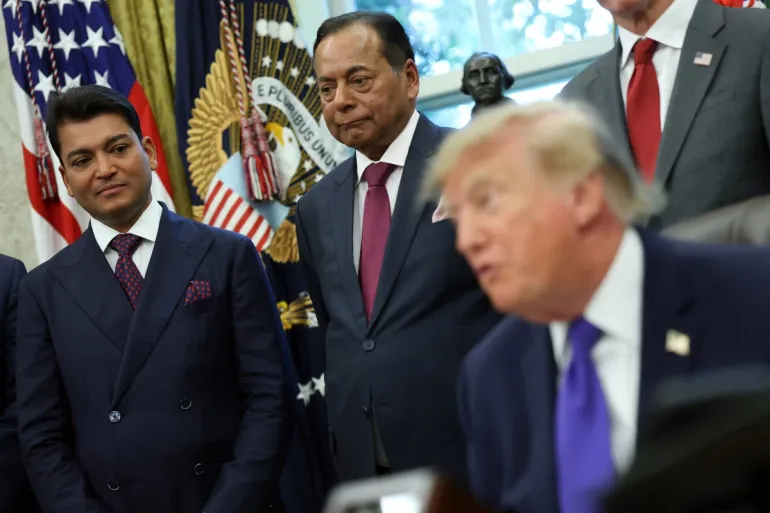
As US President Donald Trump announced a $15bn steel megaplant while seated at his Oval Office desk on Monday, he had a lineup of mostly US politicians standing behind him – from cabinet members to elected representatives from Iowa, where the mill is to be built. There was one exception: an Indian man with a receding hairline and a lilac pocket handkerchief, standing behind the US president’s right shoulder.
Ravi Ruia is a cofounder of the Essar Group, which owns Mesabi Metallics, the Minnesota-based firm that’s building the steel mill, which is expected to be the United States’s largest once it is complete. A decade earlier, in October 2016, his brother Shashi was in the photo frame with a different president during the signing of another major deal: Russian leader Vladimir Putin.
Steel and metallics aren’t Essar’s only association with minerals and natural resources. The conglomerate had been involved for years with oil, before it sold one of India’s largest private oil refineries to a Russian-led consortium in 2016 for nearly $13bn. Essar Oil was rebranded as Nayara Energy.
Today, Nayara Energy is half-owned by Russian gas major Rosneft, which is under heavy US and European sanctions over Moscow’s war on Ukraine. Nayara has also emerged as a supplier of petroleum products to Russia at a time when the country is facing a fuel crisis following multiple Ukrainian attacks on its oil and gas depots.
And as part of a 99-year deal, Nayara is continuing to use Essar’s branding in India, where the company runs thousands of petrol stations. Nayara is under European Union sanctions.
The White House is touting the Iowa steel project, unveiled just before the US midterm elections, as a major economic win for Americans, promising hundreds of jobs and billions of dollars in revenue. And there is no evidence that the steel project is in violation of any Russia-specific US sanctions.
But Trump’s announcement of a mega project with an Indian firm closely tied to Russian investments under Western sanctions underscores how the US has struggled to isolate Moscow economically despite an unprecedented economic pressure campaign.
And the timing of the steel mill announcement raises questions, because it comes days after Trump signed a law that empowers him to punish countries that buy Russian oil with up to 100 percent tariffs. India is Russia’s second-largest oil buyer. But the legacy Indian conglomerate that best epitomises the country’s links to Russian energy is now also behind the US’s biggest steel factory.

What’s the steel factory project about?
The new project would integrate its iron ore mining operations in Minnesota’s Mesabi Iron Range with the upcoming steel complex in Iowa.
The White House and the company’s announcements said that the Iowa steel plant is expected to create at least 1,750 permanent jobs – “while continuing to work with suppliers and businesses throughout Iowa and the Midwest” – and support up to 6,000 construction jobs.
Washington also noted that the mill will produce 7.5 million tonnes of steel per year in its first phase, expected to rise to 10 million tonnes. First steel production is expected in 2030.
The first phase of the project is expected to generate $95bn in total economic impact during construction and its first 10 years of operation, according to the White House.
Trump’s commerce secretary, Howard Lutnick, told the reporters that “these are your 232 tariffs, the steel tariffs at work.” He added: “Without those tariffs, this mine and steel plant doesn’t get built.”
Trump chipped in, too. “Soon after my inauguration, I imposed powerful 50 percent tariffs on all foreign steel, and now our steel industry is roaring back to life,” Trump said. “Everyone’s building their plant here because they don’t want to pay tariffs.”
But the steel project is also evidence of how countries and companies have skirted US economic pressure – and how it gives them leverage to continue to do so.

What are Essar’s ties to Russia?
Essar Oil, the group’s energy arm, began refining crude in 2008 at its refinery in Vadinar on the coast of the western Indian state of Gujarat.
But by 2016, the company was in deep debt, listed as a defaulter by the Reserve Bank of India, the country’s central bank, and desperately looking for a buyer who would take over its oil operations. The timing was opportune. President Putin in Russia was at the time trying to get Rosneft, his country’s energy giant, to offload some stakes in exchange for foreign capital.
Indian Prime Minister Narendra Modi played matchmaker, helping stitch together a series of deals between 2014 and 2016 that helped Rosneft and Essar. First, Indian public sector oil majors bought stakes in Rosneft, giving it the cash it needed. Rosneft, in turn, joined hands with other investors to buy the Vadinar refinery, freeing Essar from its debts.
Essar Oil became Nayara Energy – a company in which Rosneft owns a 49 percent stake, and United Capital Partners, a Russian asset management company, owns another 49 percent. The buyers paid Essar $12.9bn for the deal. As part of the agreement, Nayara got to use Essar’s branding – including on thousands of petrol stations across India – for 99 years.

Is Nayara under Western sanctions?
Yes. The European Union imposed sanctions on Nayara in July last year as part of the broader 18th package of sanctions against Russian oil.
The sanctions banned the import of petroleum products processed using Russian crude oil and restricted the refinery’s access to EU shipping insurance, as well as financial and other services.
Nayara’s Vadinar refinery in western India has been processing only Russian oil since other suppliers backed out following the sanctions. Since then, Nayara has relied on international traders to import crude and export refined fuels.
In July this year, Nayara Energy sold petroleum to Russia as Ukrainian attacks targeted oil refineries across the country, triggering a fuel crisis.
In recent months, Ukrainian forces have targeted Russian oil facilities, setting them ablaze and causing long lines for fuel across the country, including in the capital, Moscow. The fuel crisis, unprecedented for Russia, a country that is one of the world’s biggest energy producers, has led to rationing in many regions.
These Russian links have brought Nayara Energy under wider scrutiny, prompting companies, including SAP, to suspend services to the refiner, citing sanctions and obligations under EU law.
Nayara challenged the move in the Delhi High Court, which ordered SAP India to restore its services earlier this month.
Are Essar or the steel plant violating any sanctions?
While Nayara is under EU sanctions, Essar does not face any US or EU sanctions.
In October 2016, after Essar struck its deal with Rosneft and United Capital Partners to sell the Vadinar refinery, the US – at the time under the Barack Obama administration – said that the agreement was not in violation of any sanctions.
“I don’t think we see any violation of any US-EU sanctions stemming from this deal,” State Department spokesperson Mark Toner said at the time. Essar also said that the deal was compliant with US sanctions.
There is no evidence of any sanctions breach in Essar’s investment in Mesabi, or in the planned investment to set up the steel factory in Iowa.
But Essar’s relations with Russia have nevertheless attracted scrutiny, including in the United Kingdom, where the Ruia brothers have long had major investments.
At the time of the sale of the Vadinar refinery to Russian buyers, the Russian bank VTB also gave Essar a $3.9bn loan for debt reconstruction.
The bank was hit by major US and EU sanctions in February 2022, right after Russia’s full-fledged invasion of Ukraine. Essar, reporting published in April 2026 by The Guardian and investigative journalism platform SourceMaterial, showed, moved the VTB loan to Mauritius, a tax haven, allegedly to avoid the sanctions. Essar owns the Stanlow oil refinery in the UK.
![US President Donald Trump waves as he walks to board Marine One as he departs from the South Lawn of the White House in Washington, DC, on September 26, 2026 [AFP]](https://i0.wp.com/occasionaldigest.com/wp-content/uploads/2026/09/1790693783_407_afp_6ab7d4f7ee67-1790432503.jpg?w=640&ssl=1)
Why is the timing of the steel plant announcement significant?
Trump’s Republican Party is heading for crucial midterm congressional elections in November, while his approval rating has been plumbing all-time lows in the face of voter concerns about inflation, the cost of living, and the war on Iran.
In his second term, Trump has made tariffs and a revival of US manufacturing a cornerstone of his economic vision, claiming that higher barriers to imports will drive investment back to the US.
Moreover, Washington introduced legislation that would allow the president to impose tariffs of up to 100 percent on imports from countries that continue economic engagement with Russia or Iran, aiming to put pressure on countries that continue buying Russian energy.
New Delhi is particularly exposed since it became one of the largest buyers of discounted Russian crude after the invasion of Ukraine in 2022. Trump imposed an additional 25 percent tariff on Indian imports in 2025 over the issue, before removing it in February 2026 after India committed to stop buying Russian crude.
Russia has remained India’s largest source of crude, although purchases have declined as the threat of US penalties has grown. The news agency Reuters reported that India imported approximately 2.1 million barrels per day of Russian crude in August.
There is also a recent parallel to underscore the incentives for investment in Trump’s US. In May this year, Washington moved to dismiss the criminal fraud and bribery charges against Indian billionaire Gautam Adani, while his lawyers had told the Justice Department that Adani was prepared to invest $10bn in the United States. A federal judge subsequently dismissed the criminal case in August.
Four-star hotel chain closes TWO locations in UK
A BELOVED UK hotel chain has closed two of its sites ahead of a Premier Inn takeover.
One of the hotels has been in operation since 2009 and was highly praised by guests for its great service, low prices and comfy beds.


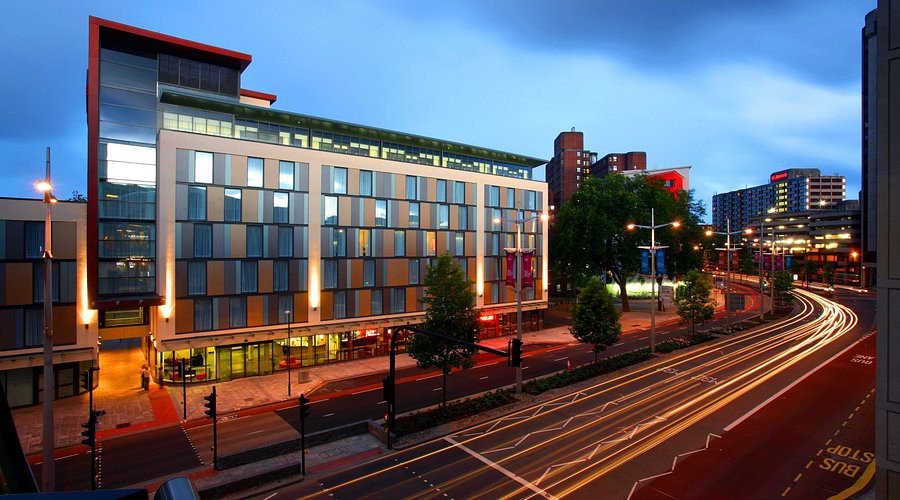
Now, Future Inn in Bristol‘s iconic Cabot Circus has shut down for good, having been bought by hotel giant, Premier Inn.
Future Inn’s Plymouth branch has also closed its doors, after operating for 20 years.
The four-star sites were acquired by hospitality operators, Whitbread, and will re-open under the Premier Inn name.
While it’s unknown when the transformations will be completed, the purchases come after Whitbread announced a new business strategy to invest in the Premier Inn brand.
The company has shut down hundreds of Brewers Fayre, Beefeater, Table Table and Bar + Block locations in recent months in order to invest in Premier Inn hotels.
The closure of Bristol’s Future Inn was confirmed after guests who had reservations for after September 28 had their bookings cancelled.
Sharing a statement after the official closure, a Future Inn spokesperson said: “After 17 wonderful years, we’re saying goodbye to Future Inn Bristol.
“To every guest who stayed with us, celebrated with us, shared special moments with us and made memories here – thank you.
“And to the incredible team members, past and present, who brought the hotel to life every day – thank you for your hard work, loyalty and dedication.”
The statement also confirmed the fate of the Plymouth branch, while it said that the Cardiff site will remain open.
The Bristol Future Inn hotel boasted 149 bedrooms as well as its Chophouse restaurant and bar.
The branch also had multiple conference and event spaces plus a jazz music venue.
Having hosted guests for almost two decades, Future Inn became a popular tourist go-to with countless positive reviews.
Reviewing the hotel earlier this year, one guest said: “Excellent stay from start to finish.
“The hotel is modern, clean and very comfortable, with spacious rooms that had everything needed for a relaxing family stay.
“Beds were comfortable, the room was well maintained, and it felt fresh and welcoming throughout,” the customer added.
Another described their stay as a “lovely experience”, while one more wrote: “I had a wonderful stay at this hotel. The room was very spacious, and the bed was large and extremely comfortable.”
Travel ‘not safe’ warning for anyone going to Italy and Vatican City this week
British holidaymakers heading to one of Europe’s most popular destinations have been issued a warning

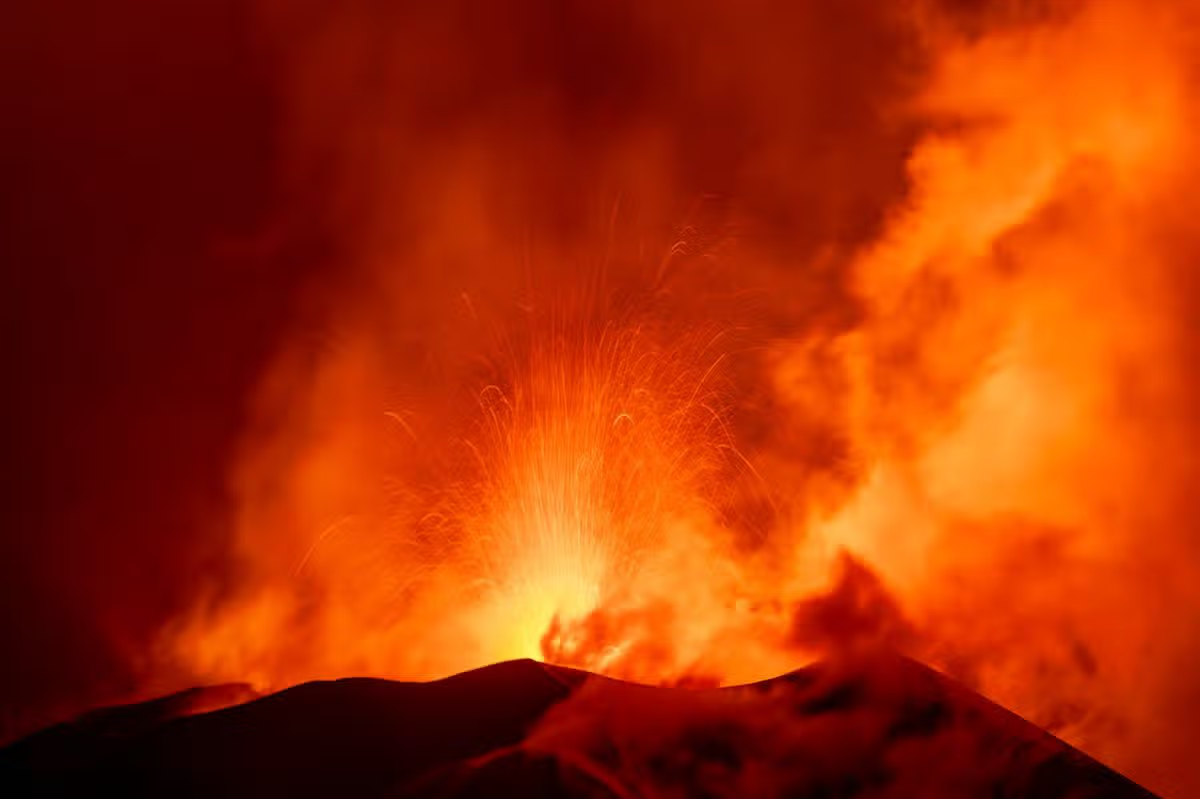
It concerns a volcanic eruption(Image: Getty Images)
Anyone travelling to Italy or the Vatican City this week have been told to check the latest official advice, after an update highlighted a developing issue that could affect some journeys. The Foreign, Commonwealth and Development Office (FCDO) updated its Italy travel advice on Monday, September 28.
The update relates to Mount Etna, the active volcano on Sicily’s eastern coast which is one of the world’s most active volcanoes. According to UNESCO, Etna’s eruptive history stretches back around 500,000 years, with at least 2,700 years of its activity documented by humans.
It is also one of Sicily’s best-known natural landmarks and was added to the UNESCO World Heritage List in 2013 because of its geological importance. UNESCO describes Etna as the highest mountain on a Mediterranean island and says its continuing activity has made it an important site for scientific research.
The latest FCDO advice says Italian authorities have increased the alert level because of volcanic activity at Mount Etna. Travellers are advised to follow instructions from local authorities if an eruption occurs.
It could have consequences for people travelling by air, with the FCDO stating that arrivals and departures at Catania Airport may be cancelled, delayed or rerouted to Palermo or Comiso if volcanic activity affects the airport. Holidaymakers heading to or from Catania have been advised to check with their airline or travel provider and the airport itself.
The FCDO does not advise against travel to Italy as a whole, but its general guidance states that “no travel can be guaranteed safe” and tells travellers to read the full advice before travelling. It also recommends appropriate travel insurance covering an itinerary, planned activities and emergency expenses.
There are also wider safety points for visitors to Italy, with the FCDO warning that demonstrations can occur with little or no warning in cities and advising people to avoid protests, political gatherings and marches. The government also says petty crime, including bag-snatching and pickpocketing, is more common in city centres and at major tourist attractions.
Wildfires remain another risk during Italy’s extended summer months, with the FCDO describing them as dangerous and unpredictable and advising visitors to check local alerts and weather forecasts. The same guidance says people should follow local authorities’ instructions and take care when travelling through woodland areas.
Anyone travelling should therefore check the FCDO advice shortly before departure because circumstances can change. The government’s travel guidance also recommends having appropriate insurance and following instructions from local authorities while abroad.
Mystery Shoulder-Fired Surface-To-Air Missile Appears In Russian Service
An unusual shoulder-fired air defense missile seen in Russian use may be of Chinese or Iranian origin, raising questions about the movement of foreign weapons through the increasingly interconnected military supply networks linking Moscow, Beijing, and Tehran.
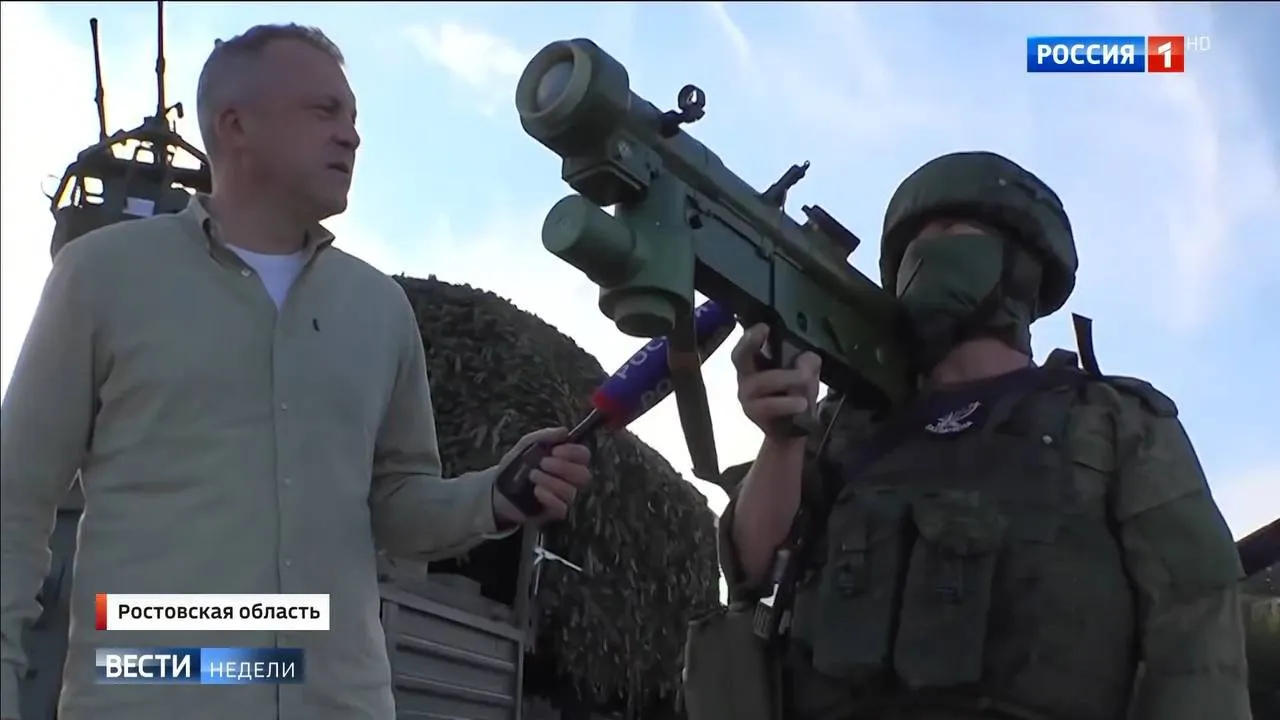
The man-portable air defense system (MANPADS) appeared in Russian television footage showing a mobile air defense group operating in the Rostov region, which borders Ukraine. The weapon was shown during an exercise said to have involved one of the elements of Russia’s 51st Air Defense Division. The footage was subsequently highlighted by the X account TheDeadDistrict.
The system does not closely resemble any of the Russian-made MANPADS families otherwise used by the country’s armed forces. Russian personnel seen with the weapon reportedly referred to it as “Iva,” although that designation by itself does not establish the weapon’s origin or model. The word Iva is Russian for willow (a type of tree), of which one particular species is named Verba — also the name of the Russian-made 9K333 MANPADS. This weapon looks very different to the example shown, but the connection is unlikely to be a coincidence.

A visual analysis of the newly observed launcher reveals comparisons with both the Iranian Misagh-3 and Chinese QW-series systems, particularly the QW-18/QW-18A and QW-19. In particular, a closer examination of the imagery highlights an additional box-like component toward the front of the launcher. That feature appears more consistent with photographs of Chinese QW-series systems rather than the Misagh.

There is also a scarcity of publicly available imagery of later Iranian variants to completely exclude an Iranian system. At the same time, the Misagh series itself is understood to be derived, or at least heavily influenced by Chinese designs.

Another possibility is that the weapon is a Russian-produced version or derivative of a Chinese or Iranian design, rather than an imported system.
The possibility of foreign-made or foreign-designed equipment appearing in Russian service has to be viewed against the much broader transformation of Moscow’s military relationships since the full-scale invasion of Ukraine in February 2022.
Russia’s relationship with China has deepened substantially since the invasion, with Beijing becoming a critical source of machinery, electronics, and other components that Russia’s defense industry can no longer obtain as readily from Western suppliers. Moscow and Beijing had already declared a “no limits” partnership shortly before the invasion, and their military relationship has subsequently included exercises and expanding military-technical cooperation. U.S. officials have accused China of supplying Russia with components used in weapons production, including microelectronics. Beijing has rejected accusations that it is providing lethal military assistance to Russia.

Iran has also become an important military partner. Russia has used Iranian-designed Shahed-series attack drones extensively in Ukraine and has worked with Tehran on local production and adaptation of those systems. Moscow and Tehran formalized their relationship further with a comprehensive strategic partnership treaty in January 2025, which includes provisions for military-technical cooperation and joint exercises.
In return, Russia has supplied Iran with military technology and has cooperated with Tehran on sensitive weapons programs.
The possible Chinese connection takes on additional significance in light of a major reported procurement deal between China and Iran.
In July, Reuters reported that Iran was expected to receive the first shipment of a deal covering 300 to 400 Chinese-made MANPADS, with a reported value of $60 million to $70 million. The weapons identified by sources included the Chinese QW-12 and FN-16 systems.
The reported contract was signed with a Hong Kong-based company that sources described as an intermediary between the Iranian side and the Chinese supplier. Reuters said the initial deliveries were planned from Urumqi in western China, with the weapons then transiting through Pakistan before reaching Iran. Pakistan’s military publicly denied any involvement in such transfers, while China’s Foreign Ministry called the report “groundless.”
Reuters also reported that delivery schedules and quantities could still change.
More significantly for the Russian sighting, a European security source told Reuters that authorities were aware of several contracts under discussion involving the potential sale of QW-12, QW-18, and QW-19 MANPADS to Iran. A Middle Eastern security source separately claimed that Iran had been seeking QW-18 systems.
There is currently no evidence tying the launcher seen in Russian hands to the Iranian procurement from China.
At the same time, the possibility of an Iranian connection should not be ruled out, especially since Chinese-designed MANPADS have a documented history of appearing outside conventional state inventories.
Earlier TWZ reporting, drawing on research by the Small Arms Survey monitoring group, examined the illicit proliferation of Chinese-designed MANPADS and identified dozens of cases involving armed groups in multiple countries. That research included QW-series weapons and documented cases in which investigators linked Chinese-designed MANPADS to Iranian supply networks.

One particularly notable case involved the Jihan, a vessel intercepted in 2013 carrying weapons that investigators identified as including QW-18-pattern MANPADS. UN investigators, the U.S. government, and Conflict Armament Research assessed Iran as the likely source of those weapons.
It is also worth noting that Chinese MANPADS have already appeared on the Ukrainian side of the war. In late 2025 and 2026, Ukrainian units were photographed with Chinese-made FN-6 and FN-16 systems, including an FN-6 associated with an air defense team reportedly engaging a Russian cruise missile. Exactly how the weapons reached Ukraine remains unclear, with possible third-party transfers or diverted shipments among the possible explanations.
Incidents like these demonstrate that Chinese MANPADS can move through indirect supply networks, including networks associated with Tehran.
Regardless of how it arrived in Russia, the appearance of a foreign or foreign-derived MANPADS there is notable.
Mobile fire groups have become an increasingly visible component of Russia’s layered air defense effort, particularly as the war in Ukraine has placed enormous emphasis on countering low-altitude drones and other threats, including deep inside Russia.
MANPADS are well suited to this mission because they can be dispersed among small teams, rapidly repositioned, and deployed without the larger radar and vehicle infrastructure associated with conventional surface-to-air missile batteries. In particular, they can be deployed around military installations and other sensitive infrastructure.
A foreign system appearing in a Russian mobile fire group might be an imported weapon, an Iranian-produced derivative, a Chinese system acquired for evaluation, a captured weapon, or even a previously unidentified Russian configuration.
Another possibility is that the MANPADS is North Korean in origin. Russia’s military relationship with Pyongyang has expanded significantly, including the provision of increasingly advanced military equipment and technology. There is no known North Korean MANPADS matching the configuration seen here, however, and the possibility remains speculative. North Korean weapons have also frequently incorporated or closely followed Chinese designs, meaning a Chinese-looking configuration would not necessarily rule out a North Korean origin.
Russia has dramatically expanded defense production since 2022, but its industry remains under heavy wartime demand and sanctions-related constraints. Western restrictions have complicated access to advanced electronics, machine tools and other components, while Russia has increasingly relied on domestic substitutes and foreign suppliers.

At the same time, Russia must replenish weapons consumed in Ukraine, meaning foreign supplies could supplement domestic production, fill specific gaps, or allow scarce industrial capacity to be directed elsewhere.
For Russia, even a limited number of additional shoulder-fired systems could therefore have practical value as Ukrainian long-range strike capabilities continue to expand.
For now, the exact model and provenance of the MANPADS in question remain unconfirmed, but the apparent Chinese or Iranian design characteristics are highly noteworthy. Further appearances of the system could provide the clues needed to determine what it is, where it came from, and whether this represents an isolated example or a more significant acquisition effort.
Contact the author: thomas@thewarzone.com

Brooks Nader pushes breasts together in zebra-print bikini as she shows off dreamy Portofino getaway

BAYWATCH beauty Brooks Nader has once again showed off her figure in a zebra-print bikini as she posed for snaps in Portofino.
The 29-year-old model shared photos from her stay at the swanky Splendido hotel, posing for a cleavage baring snap.
Brooks gave her 1.8 million Instagram followers a glimpse of her Italian getaway, including the picturesque surroundings and a tempting-looking coffee.
In one photo, she pushed together her cleavage underneath her sexy zeba-print bikini.
Another hotshot showed Brooks pulling down her bikini bottom and putting her flat stomach on full display.
The shots were snapped at Splendido – a former monastery perched on a hillside overlooking Portofino harbour.
The luxury hotel boasts a pool, terraced gardens and the glamorous La Terrazza restaurant, with rooms previously advertised from more than $2,000 a night.
Brooks was recently in Italy for Milan Fashion Week, where she attended Dolce & Gabbana’s show and after-party.
She turned heads on her way to the show in a sheer dress that revealed her black bra and underwear.
Inside, she rubbed shoulders with A-listers including Jennifer Lopez who was also a guest of the iconic fashion house.
Most read in Entertainment
Brooks was linked to Rocketman actor Taron Egerton earlier this year, although she said in June that she was single.
She stars alongside her sisters in the reality show Love Thy Nader and is set to play a lifeguard in the Baywatch reboot, due to air next year.
As well as her incredible figure, Brooks has also become known for her daring red carpet looks that leave little to the imagination.
A disappearing California beach and the fight over driving on the sand
For Dylan Feierabend, there are few things more life-affirming than fishing for redtail surfperch and smelt at Centerville Beach in rural Humboldt County.
His favorite spot, where the Eel River meets the Pacific Ocean, is a few miles from the main road — too far to walk with fishing poles and an ice chest in tow. He instead gets there by driving a side-by-side, a small off-road vehicle, right onto the sand.
He might not be able to do so much longer.
If the California Coastal Commission has its way, vehicular access will soon be nixed at Centerville Beach County Park outside Ferndale — one of just a handful of beaches along the state’s 840-mile coastline where driving is allowed.
This month, the Coastal Commission approved a request from Humboldt County for a coastal development permit to rebuild a 0.17-mile segment of a storm-battered road adjacent to the fast-eroding beach — but only if the county stops people from driving on the sand.
Coastal Commission staff, in a 78-page report, said motorized vehicles threaten both sensitive vegetation and critical habitat for the federally threatened western snowy plover, a small, white-bellied shorebird.
“California’s dune habitats are particularly rare and important, so where driving could damage these sensitive areas, the Coastal Act requires that we protect them,” commission spokesman Joshua Smith said in a statement to The Times.
However, he said, the agency does not “have a one-size-fits-all policy on driving on the beach.”
But Humboldt County residents and officials decry the move as just the latest example of overregulation and government overreach in liberal California — and of the disconnect between its rural and urban places.
“What you see in Southern California isn’t what we see up here,” resident Joey Sancho told the Coastal Commission during its meeting in Eureka this month. “The beaches aren’t overly populated. They’re not being torn up by ATVs and so forth. But yet, [it’s] just one more thing just to take away from us up here in the North Coast.”

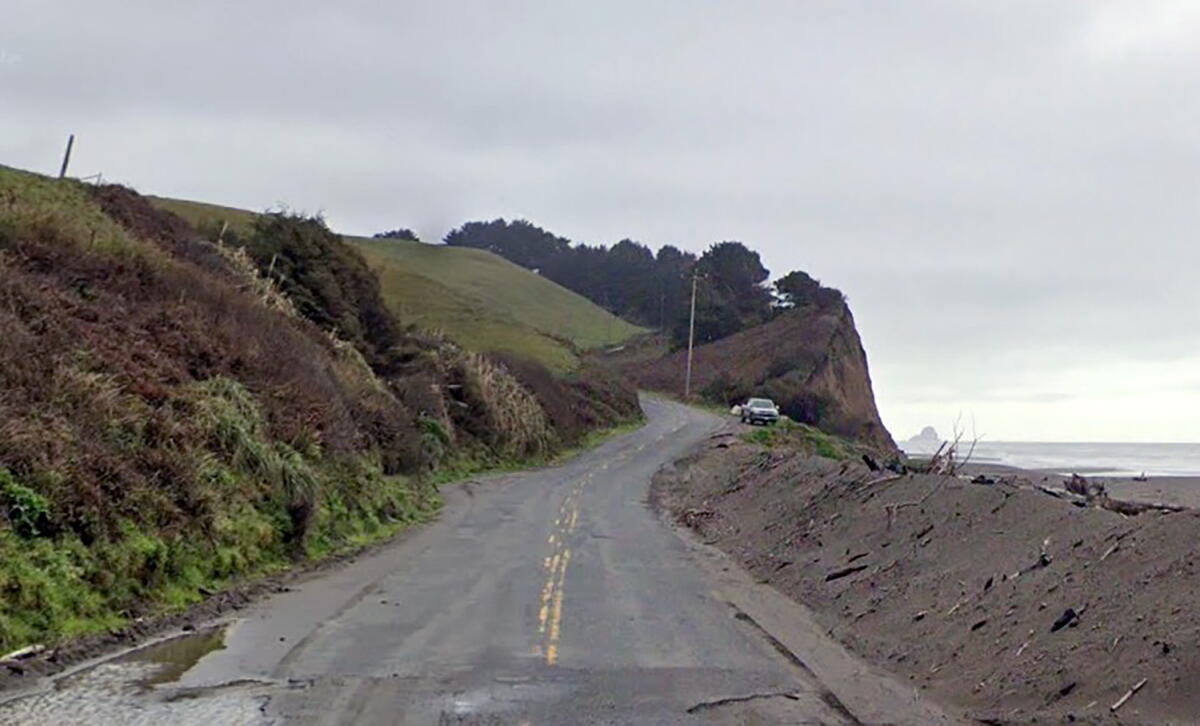
Humboldt County wants to make improvements to Centerville Road.
(Google street view)
Feierabend, a 36-year-old loan officer, told The Times: “It’s about slowly choking out the individuals that utilize the beach and gaining control under the ruse, or the guise, of conservation.”
The discord in Humboldt County comes as the Trump administration is taking aim at what it calls “environmental extremism” in California, with federal officials trying — largely over state objections — to open the treasured coastline to more offshore oil drilling, expanded rocket launches and floating nuclear reactors.
Amid this wider debate, beach driving has emerged as an unexpected flashpoint.
Last month, Republican gubernatorial candidate Steve Hilton called coastal commissioners “idiots” for their years-long effort to end off-road driving at Oceano Dunes State Vehicular Recreation Area, the only state park that allows recreational driving on the beach.

Cars, bikes and pedestrians share the sand at Oceano Dunes State Vehicular Recreation Area near Pismo Beach in February 2021.
(Myung J. Chun / Los Angeles Times)
Oceano Dunes, near Pismo Beach in San Luis Obispo County, temporarily closed to off-roaders this spring amid long-running legal battles between recreation advocates and environmentalists who say all-terrain vehicles are tearing through western snowy plover habitat and sending clouds of unhealthy dust into nearby neighborhoods.
“Surprise, the Coastal Commission are trying to shut it down because they’re joyless bureaucrats who don’t want anyone to have fun,” Hilton said in a social media video as he leaned on a bright yellow dune buggy on the sand. “And it’s not just about fun. This is a real economic engine for this community.”
If elected, he said, he would create a state “Office of Fun and Freedom.” Its first task? Protecting off-roading at Oceano Dunes.
The campaign for Xavier Becerra, the Democratic gubernatorial candidate, did not return requests for comment.
In Humboldt County, residents have stressed that rural Centerville Beach is nothing like Oceano Dunes, where thousands of pickup trucks, ATVs and dirt bikes may carve through the sand on a given day.
Centerville Beach’s nearest town, Ferndale, the childhood home of celebrity chef Guy Fieri, has a population of just 1,500. Residents say the beach typically sees a handful of four-wheelers and side-by-sides — with most heading out to fish, not joy-riding.
“Centerville is not a beach anyone can just drive on — you’ve got to know what you’re doing,” said Shawn Griggs, a painter who surfs there most mornings. “It’s a very volatile beach with coarse sand. It’s steep right off the shore; the sand bars are transient.”

A view of Centerville Beach, near where Humboldt County is looking to repair a stretch of Centerville Road.
(Beau Sanders / For The Times)
Griggs, 57, described himself as “an environmentalist at heart” who appreciates efforts to protect threatened species. But he doubts vehicles are doing much harm at Centerville.
“With the amount of sand that is pushed off that beach every year and moved around, it’s hard for me to imagine that beach would be a super stable beach for the snowy plover,” he said.
The Coastal Commission staff report says the area is “moderately suitable for plovers,” but that “heavy human use” has degraded the habitat.
In Humboldt County, driving is allowed on a handful of county-maintained beaches, as well as portions of the Samoa Dunes Recreation Area, which is managed by the federal Bureau of Land Management.
Feierabend, who grew up next to Centerville Beach, said vehicles are not destroying the beach — the ocean is.
“No one’s going too fast,” he told the Coastal Commission. “No one’s driving through dunes. In fact, there are no dunes.”
Centerville Beach, home to some of the state’s fastest-eroding cliffs, has been shrinking for decades. The rising and warming sea has accelerated that process in recent years, and powerful El Niño-charged storms this fall and winter could wreak further havoc on the coastline.
A beach parking lot that once accommodated up to 100 vehicles has already washed away. And Centerville Road — a narrow county thoroughfare that provides access to the beach, a few rural homes and the federally managed Lost Coast Headlands — is so regularly slammed by powerful storm waves that it is often covered with sand and made impassable.
The road is what initially brought Centerville Beach to the Coastal Commission’s attention.
The Humboldt County Department of Public Works applied for a required coastal development permit to repair a short stretch of storm-damaged roadway, a project for which it had already secured federal and state funding.
The county has proposed elevating the road 10 feet and adding a new parking area. It also is looking to build a revetment — a sloping layer of rocks on the sand meant to protect the road from waves, at least for a few decades.
Humboldt County initially pushed to move the roadway farther inland, but faced resistance from private landowners.
According to the Coastal Commission staff report, beach erosion puts Centerville Road at “severe risk of being destroyed” within the next five years.
Given the urgency of the needed repairs, the decision to tie the development permit to beach driving felt like “a backroom deal stuck into the project,” Humboldt County Planning Commissioner Iver Skavdal said at the Coastal Commission meeting.
The commission is “holding the project, the residents and the county hostage,” said Skavdal, noting that seven generations of his family had enjoyed the beach.
Though the commission approved the permit on the condition beach driving will be stopped, it added an amendment after locals pushed back — giving Humboldt County an opportunity to write a plan to allow restricted driving, provided it would not harm sensitive habitats. That plan would have to come back to the commission for approval.
The Humboldt County Board of Supervisors still must decide whether to accept the stipulations of the coastal development permit before any construction begins.
The potential loss of driving on Centerville Beach — a unique attraction in California’s sparsely populated, economically depressed northwest corner — struck a chord with residents, about two dozen of whom sat through several hours of a Coastal Commission meeting on a Wednesday morning to speak about it.
“Families here don’t have a lot to do,” Sue Long, former mayor of the nearby city of Fortuna, told the commission. “There’s not a lot of the kind of entertainment you guys have, with waterslides and Disneyland and all of those things. … We count on nature.”
Mike Astry, who runs a small off-road recovery business pulling out vehicles stuck in sand or mud throughout the region, told the commission most people towed off Centerville Beach are out-of-town tourists who traveled just to drive on the beach.
Stopping vehicular access is “a big deal to a lot of people,” Astry, 49, said in an interview. “People driving from out of town that want to come drive on that beach are not going to come to our town and spend money on hotels and food.”
Astry, who also is an automotive maintenance supervisor for Humboldt County, started the towing business with his souped-up Jeep during the COVID-19 pandemic, when people flocked to outdoor spaces during lockdowns. Now, he typically gets one or two calls a week.
At Centerville Beach, he said, “I’ve had some pretty gnarly tows,” including some “little old ladies who thought, ‘Oh, I thought my Prius could go here,’ and it can’t.”
A few years ago, he yanked a Tesla out of the ocean. Powerful waves ripped off its bumper. The driver was from the Bay Area.
“People are just sick of California, their mandates, and this is just one more thing to add to it,” he said of the coastal commission decision. “It’s just a power trip. We pay our frickin taxes.”
Jennifer Savage — California policy associate director for the Surfrider Foundation, a coastal protection nonprofit — was one of the few speakers at the Coastal Commission meeting who focused on a different aspect of the county’s Centerville Beach proposal: the rock revetment next to the old, crumbling road.
Revetments and sea walls, which generally are not allowed for developments built after the Coastal Act took effect in 1977, “make a beach erode significantly faster,” she told The Times.
Erosion has been a known problem for a long time, she said, and “the failure to prepare doesn’t justify sacrificing the public beach.”

Why Salisbury FC are ‘bigger than many Premier League teams’ in Kuwait
As with every home game, the Salisbury FC players and coaching staff went to embrace the fans in the Andrews Terrace at The Mac Stadium after Saturday’s 2-0 win against Folkestone Invicta.
Alongside the normal applause and cheers, they were greeted with a chant that isn’t a regular from the songbook.
“Kuwait away ole, ole,” sang fans of the National League South outfit.
The players clapped back with an extra buzz – within 24 hours they would be travelling to the Middle East.
“Straight away we all said, ‘yeah, we’re all in,” explains Salisbury player Luke Russe.
“It’s a unique opportunity and as players, we are so thankful to everybody involved in making this trip happen. I’ve been involved in this level for a long time now and I’ve never had an experience like it.”
The five-day trip involves the club facing one of Kuwait’s most successful teams on Wednesday, Al Qadsia, who have won more than 50 trophies, before returning on Thursday to play Saturday’s FA Cup third qualifying round against Dulwich Hamlet.
It comes as part of the club’s continued link with Kuwait through their owner Ali Alhamad, who purchased the club in 2025.
The club hopes the trip will offer significant commercial growth and, for the players, an opportunity to experience football in a new environment and culture.
The Mohammad Al-Hamad Stadium holds 22,000 spectators, more than five times that of Salisbury’s The Mac.
“We’d love to win the game,” says Russe. “But at the same time I think it’s more about the experience and about the club as a whole, going over there, living that way of life and experiencing the game.
“We’ve got a very young group, so for them to experience that and kind of experience cultures and differences is great.
“It’ll be a fantastic opportunity for us players, for the staff, and I think it’ll bring the whole club even closer to what we are now.”
Estonia says Russia ordered August arson attack on defence company | News
Tallinn accuses Moscow of responsibility for fire at Estonian company Milrem Robotics, a supplier of unmanned ground vehicles to Ukraine.
Published On 29 Sep 2026
Estonian Foreign Minister Margus Tsahkna has accused Russia of “sabotage” following an August arson attack on a defence company, Milrem Robotics, a claim the Kremlin rejected.
“We can conclude with certainty that the arson attack … in Tallinn was an act of sabotage ordered by the special services of the Russian Federation,” Tsahkna wrote on X on Tuesday.
Recommended Stories
list of 4 itemsend of list
He added that the perpetrators of the attack had been apprehended and “no longer pose a threat”, and that Estonia had summoned the Russian ambassador.
“This act of sabotage is part of Russia’s broader campaign across Europe, aimed at intimidating us and weakening our support for Ukraine,” he wrote.
Kremlin spokesman Dmitry Peskov rejected the allegation.
“Such statements are baseless, ill-considered, have absolutely no relation to reality, and lack any form of reasoning. Consequently, we cannot and will not take such statements seriously,” he told reporters.
Estonia, a European Union and NATO member state along the alliance’s eastern flank, has accused Moscow of several hybrid provocations since the beginning of Russia’s full-scale invasion of Ukraine in 2022.
Along with its neighbours Latvia and Lithuania, it has ramped up its investment in defence in the years since and remains a staunch ally of Kyiv.
Support from allies
NATO chief Mark Rutte, speaking to journalists after Estonia’s accusation, said that “Russia continues its reckless campaign of hostile actions against NATO allies. It is trying to weaken our resolve and stop our support for Ukraine”.
“But Russia is failing. It is failing on the battlefield in Ukraine, and it is failing to undermine our unity and support for Ukraine,” he added.
The attack was condemned by several of Estonia’s allies, who also reaffirmed their support for Ukraine.
French President Emmanuel Macron said on X that Paris was in full solidarity with Estonia, adding: “The proliferation of these hostile acts reflects a dangerous headlong rush by Russia – one that will only lead it into a dead end.”
“Russia’s fingerprints are all over” the attack, Lithuanian Foreign Minister Kestutis Budrys wrote on X, adding that Moscow’s “hostile activities do not stop at Ukraine’s borders”.
Latvian President Edgars Rinkevics added that “more support for Ukraine … will be needed and must be provided”.
Swedish Prime Minister Ulf Kristersson called Estonia’s attribution of the attack “extremely serious”, and said the pattern of the attacks was “directed against Europe as a whole”.

World’s most beautiful train stations revealed from ‘desert dunes’ to doughnut shaped entrances

TRAIN stations are no longer just a place to get from A to B, but are now attractions in their own right.
And a new awards has named some of the most beautiful ones in the world.
The World’s Most Beautiful Stations were revealed by Prix Versailles, a prestigious architecture and design award,
Prix Versailles Secretary General Jérôme Gouadain said they “give us proof that 21st-century passenger stations can be the bridges to a more desirable future”.
While none in the UK made the list, there were three in Europe.
One was Colosseo – Fori Imperiali Station in Rome which only opened last year on the city’s metro line.
It was praised for turning “travel into an archaeological adventure” as well as its “unexpected view of the Colosseum“.
Another Italian train station on the list was Monte Sant’Angelo Station in Naples.
Said to be inspired by city’s Mount Vesuvius, Dante’s Inferno and volcanic terrain, the dark orange doughnut-like structure above ground was called a “sculpture that the public can enter”.
The final European entry was Lyon Part-Dieu Station in France.
Despite having opened in 1983, it recently underwent a huge update last year.
According to Prix Versailles: “This regional, national and international train station, one of Europe’s top stations in terms of the number of connecting passengers transiting through it, has doubled in size thanks to the architectural teams at AREP and L’AUC, with additional access points and pass-throughs to boot.”

Outside of Europe, Melbourne‘s Town Hall Station also made the top seven list.
Also a new railway station having opened last year, it was praised for both its “eight imposing columns like trees whose branches hold up the canopy above” as well as its “cathedral-like feel”.
Over in the US, LAX/Metro Transit Center was the only American station to be named one of the world’ most beautiful and one of the most futuristic designs on the list,
Saudi Arabia had two stations in Riyadh to have made the list.
There’s National Museum Station, inspired by the Arabian Tuwaiq Mountain and a gateway to the National Museum.
And there was also Western Station, Riyadh which only opened in May this year and was “inspired by desert dunes”.
Here are last year’s most beautiful train stations.
And earlier this summer, these were museums named the most beautiful in the world according to Prix Versailles.
Prix Versailles World’s Most Beautiul Train Stations 2026
- Town Hall Station, Melbourne, Australia
- Lyon Part-Dieu Station, Lyon, France
- Colosseo – Fori Imperiali Station, Rome, Italy
- Monte Sant’Angelo Station, Naples, Italy
- National Museum Station, Riyadh, Saudi Arabia
- Western Station, Riyadh, Saudi Arabia
- LAX/Metro Transit Center, Los Angeles, United States
Iranians stock up on food and medicine as fears of new US fighting grow | US-Israel war on Iran News
Tehran, Iran – Iranians are stocking up on food and medicines as fears grow that the country will face dire shortages as the United States tightens an embargo on the country.
The Iranian government had managed to keep household staples flowing during the early months of the war. But a US naval blockade and pivot to draconian sanctions have led to fears that imports will be limited.
Recommended Stories
list of 3 itemsend of list
More recently, the US announced a ban on Iranian airlines worldwide and is pressing other countries to cut trade ties with Iran in a bid to isolate the country.
Addressing the United Nations General Assembly last week, Iranian President Masoud Pezeshkian condemned Washington for its blockade on his country, saying it will prevent food and medicine from reaching the Iranian people.
On Saturday, US President Donald Trump rejected Iran’s offer for a seven-day truce that would see it reopen the Strait of Hormuz in exchange for economic relief and other conditions.
As the war enters its eighth month and hopes for a diplomatic solution dim, Al Jazeera looks at how some Iranians are faring under a US embargo.
Consumers
Tehran’s stores remain stocked, but shoppers are keeping an eye on shop shelves. Their anxiety has deepened since a flurry of social media posts urging people to ensure they have several days of food before a possible new round of fighting with the US.
At one shopping centre, Ali, 51, was loading a trolley packed with rice, flour, pasta, pulses, cooking oil and canned food.
He is stocking up because he is convinced that Iran’s adversary is seeking to “starve” the people to push them to turn on their government.
“This is not a war in the traditional sense. It targets the people to put pressure on the authorities,” he said.
With flights to some nearby countries suspended, imports of certain medicines and mobile phone headsets are hard to find. The prices of those still available in shops have been pushed up.
Haj Pasandideh, a 71-year-old grocer, said he believed warehouses were well-stocked with basic goods at the moment. But the problem lies in the daily price increases due to Iran’s weakening rial, prompting him to bulk-buy goods before the expected hikes.
He sometimes caps cooking oil at one bottle per sale to ensure as many customers can purchase the goods as possible.
Exporters crushed
Farmers are also on edge due to the embargo, unable to ship out their produce and forced to sell to local markets.
The war has worsened the economic situation, even after years of sanctions that have pushed the country from being a regional exporter of agricultural and food products to being one of the region’s main importers.
Mehran, an apple grower, told Al Jazeera that due to the difficulties of exporting, he had sold only a third of this year’s harvest, all of it inside Iran.
Some neighbouring countries have halted trade with Iran in recent months, he said, while trucks now spend days at crossings they once cleared in a day, causing fruit to spoil before it reaches buyers.
“The blockade has not only closed the sea and air but also the land routes but in an undeclared manner,” he said.
Pharmaceutical shortages
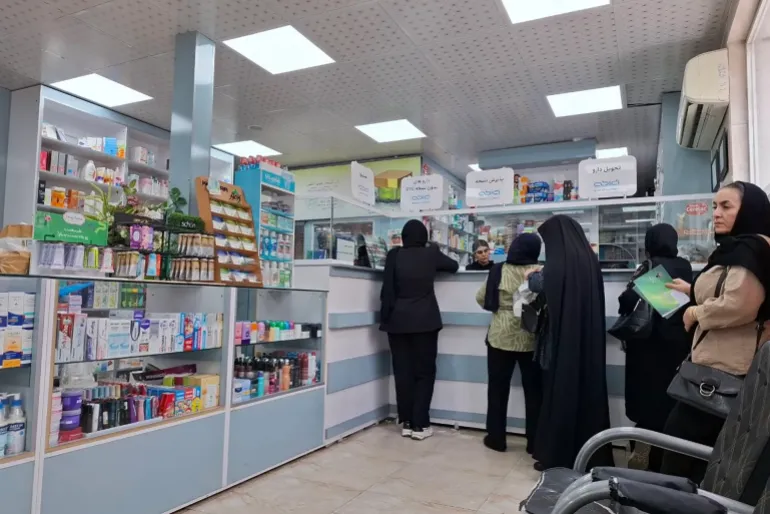
The war has also deepened an already-dire shortage of medications. Some pharmacies Al Jazeera visited in southern Tehran had run out of infant formula and dozens of other types of medications.
Although officials have assured Iranians that substitute products were available, pharmacy staff expressed concern about the increasing number of customers searching for infant formula in vain.
“Imported medicines are disappearing fast, and lately people have been coming in to buy certain items before they need them for fear they will run out in future,” Mahsa, a 23-year-old pharmacy assistant, told Al Jazeera.
She said the health authorities had introduced “smart systems” to track the quantity and type of medication each person buys.
![Women queue at a pharmacy in Tehran [Al Jazeera]](https://i0.wp.com/www.aljazeera.com/wp-content/uploads/2026/09/1arann-1790588624-1790672728.jpeg?w=640&ssl=1)
Breaking the blockade
The prospect of a prolonged siege and deteriorating economic conditions have driven some Iranians to call for a military solution.
On Tehran’s main thoroughfare, several people told Al Jazeera that another round of fighting with the US was unavoidable. Some urged the government to break the blockade by force before it is tightened further.
Mohsen, a 23-year-old economics student, believes Washington’s goal is to strangle the Iranian economy and the cost will ultimately be felt by Iranian citizens.
Iran possesses many strong cards that it must use to break the air and sea blockade before they develop into a land blockade that would completely choke Tehran, he said.
Alireza Taghavinia, an Iranian international relations expert, told Al Jazeera that the gap between Washington and Tehran was too wide to be bridged. “The siege imposed by force will only be lifted by force,” he said.
In a worst-case scenario, falling living standards could bring protesters onto the streets, he added.
“The enemy is counting on stirring up chaos inside Iran because it believes no military strike will achieve its objectives without internal unrest,” he said.
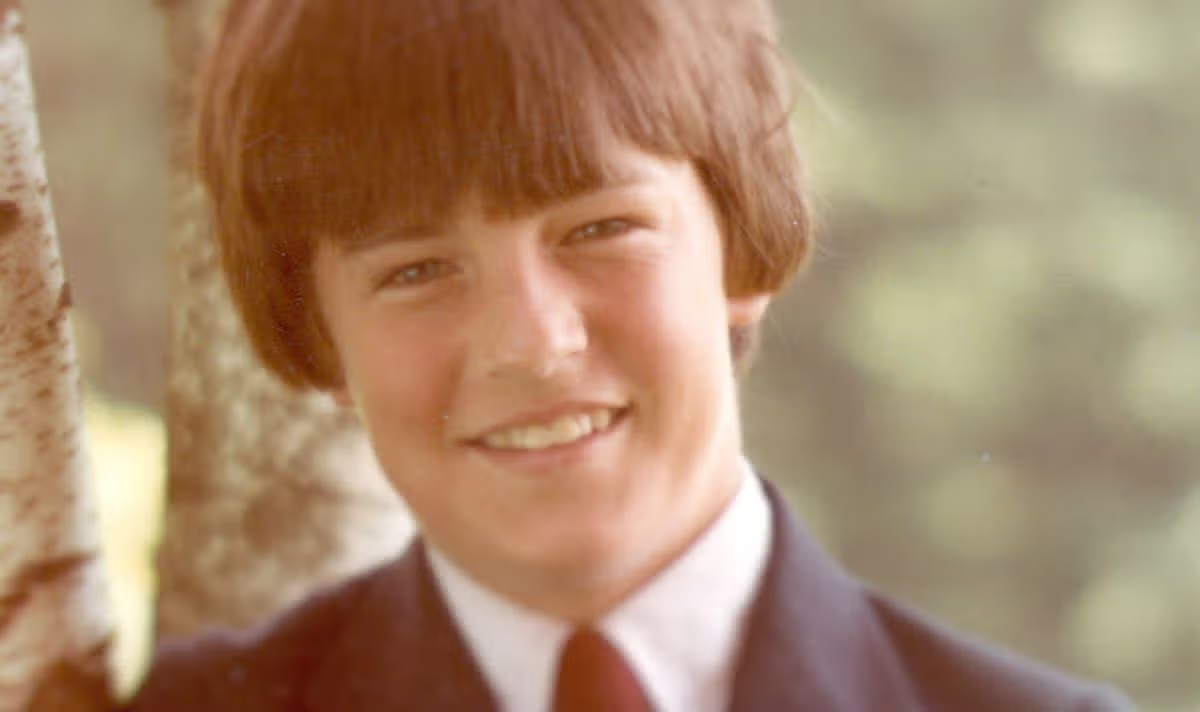
‘Unflinching’ Matthew Perry doc honouring late Friends star unveiled by Netflix
Friends star Matthew Perry will be the subject of a moving new documentary series about his life and struggles with addiction
The One About Matthew Perry teased in trailer from Netflix
Netflix has unveiled a trailer for its documentary series about Matthew Perry.
The One About Matthew Perry will focus on the late Friends star’s life, career and struggles with addiction. In the trailer, Perry’s close friends and family members open up about the 17 Again and The Whole Nine Yards star.
The trailer prominently features Perry’s sister, Mia Perry Bowick, who shares details about the huge sums of money her sibling had spent trying to beat addiction. The footage also includes some of Perry’s most iconic on-screen moments from Friends.
In a particularly poignant moment, one person reveals how Perry “saved my life” through his own advocacy to help fellow addicts. There is also touching archival footage of Perry discussing his demons in his own words.
A logline for the upcoming series reads: “Told through intimate testimonies from close family and friends, this documentary event reveals the real Matthew Perry—generous, funny, vulnerable, larger than life—and the battles he fought to become the man behind the icon. A raw record of a life lived in full, and the honesty that became his greatest legacy.”
The One About Matthew Perry is the first in-depth documentary about the actor since his death. The series will shed light on the different facets of his life from the comedy genius to the man struggling with addiction and also a campaigner to help others get sober.
A Netflix description goes on to state: “Tender and unflinching, the series doesn’t separate Matthew’s humor from his pain, or his fame from his addiction. It sits with both, the way the people who loved him had to. Millions around the world are touched by addiction – their own, or someone they love – and this series speaks directly to them.”
The streaming platform is releasing the three-part factual series The One About Matthew Perry on October 27. The programme will be coming out a day before the third anniversary of the star’s death.
Perry tragically died on October 28, 2023 at the age of 54. He was found unresponsive in a hot tub at his Los Angeles home. His cause of death was the acute effects of ketamine, according to the Los Angeles County Department of Medical Examiner.
Get Netflix free with Sky
This article contains affiliate links, we will receive a commission on any sales we generate from it. Learn more
Sky is giving away a free Netflix subscription with its new Sky Stream TV bundles, including the £15 Essential TV bundle. This lets members watch live and on-demand TV content without a satellite dish or aerial and includes hit shows like Stranger Things and The Last of Us.
His death sent the world into mourning with his Friends co-stars paying tribute to Perry. Prior to his death, Perry had released his 2022 autobiography – Friends, Lovers, and the Big Terrible Thing: A Memoir.
Reflecting on the decision to open up about her brother’s death, Mia Perry Bowick said: “It’s taken time for me to feel ready to share these memories and what it was like to love Matthew through all the complexity of his life—to see him as a whole person, not just as Chandler, and not just as someone who struggled with addiction. As his sister, he shaped who I am today, the person I strive to be, and the work to which I’ve devoted my life.
“Matthew had a beautiful heart and a generous spirit, and even in his darkest moments, he could still make you laugh and feel loved. I hope this series gives everyone who loved him, whether personally or from afar, a deeper appreciation for who he truly was, and the legacy he leaves behind.”
The One About Matthew Perry will be released on Netflix on October 27

The European country set to be even bigger next year with new TUI hotels, Jet2 flights and cheap £219pp all-inclusives
IF you want to be ahead of the curve, there’s a country three hours from the UK with beautiful coastal resorts, high summer temperatures and cheap beer.
Not only that, but there are more flights from the UK and with new hotels opening – so it’s set to be the must-visit destination of summer 2027.
Bulgaria has it all from vibrant cities like Sofia to coastal resorts like Sunny Beach, Golden Sands and Albena.
In the summer, Bulgaria has highs of 30C – and in June, return flights to Sofia as little as £62.

It’s affordable too, according to Wise, as beer in Bulgaria can be as little as 90p with an inexpensive meal at a restaurant costing around £6.
TUI has a number of hotels in Bulgaria already, but is expanding in time for next summer.


One of those is the TUI BLUE Arabella in Golden Sands near Varna, which is currently undergoing renovation and is set to reopen in summer 2027.
When open, guests will be able to paddle in its four swimming pools, one main pool, a children’s pool, one for relaxation and the indoor one too.
There will be on-site restaurants and bars, wellness area with a sauna, gym and tennis court.
On-site are 290 rooms which will range from suites to double and family rooms with sea views and balconies.
Guests will also have access to the waterpark at nearby GRIFID Bolero hotel.
Another is in the SUNEO collection which is budget-friendly stays with 3- and 4-star beach getaways.
Called the TUI SUNEO Compass 4*, the pretty hotel is set within peaceful gardens and is also set to open next summer.
Already existing hotels include the TUI SUNEO Serenity Bay in Tsarevo and TUI SUNEO Perla in Sunny Beach.
An all-inclusive stay at TUI SUNEO Perla in May starts from £591.33pp – or £84.47pppn.
This includes a stay for seven-nights in a Deluxe Double Room with a balcony or terrace and return flights – it also has an outdoor swimming pool and restaurant.
Another of the existing TUI hotels includes the TUI BLUE Nevis in Sunny Beach which offers all-inclusive family holidays.
It has a huge swimming complex with swimming pools, splash zone and waterslides as well as kids’ clubs and a buffet restaurant.
There are plenty of flights from the UK too – TUI has flights to two destinations in Bulgaria, Sofia and Bourgas from 21 UK and Ireland airports.
TUI Group CEO Sebastian Ebel said: “Bulgaria has enormous potential as a tourism destination. The country combines attractive beach holidays on the Black Sea with culture, nature, hospitality and very good value for money.”
Jet2 also flies regularly to Bulgaria with flights from 11 UK airports to Bourgas.
These include London Stansted, Edinburgh, Liverpool, Leeds Bradford, Bristol, Newcastle, London Gatwick, Birmingham, East Midlands, Glasgow, and Manchester.
From Bourgas, it’s easy to get to Sunny Beach, Nessebar, and St Vlas.
Adding to its popularity for next year, Bulgaria will be the host country for the Eurovision Song Contest after winning this year.
It will take place on May 11, 13, and 15 at the Arena Burgas – and in time for the event, Jet2 will add new flights from the UK to Bourgas.
Otherwise want a mega cheap holiday? Loveholidays has four-night all-inclusives from £219pp.
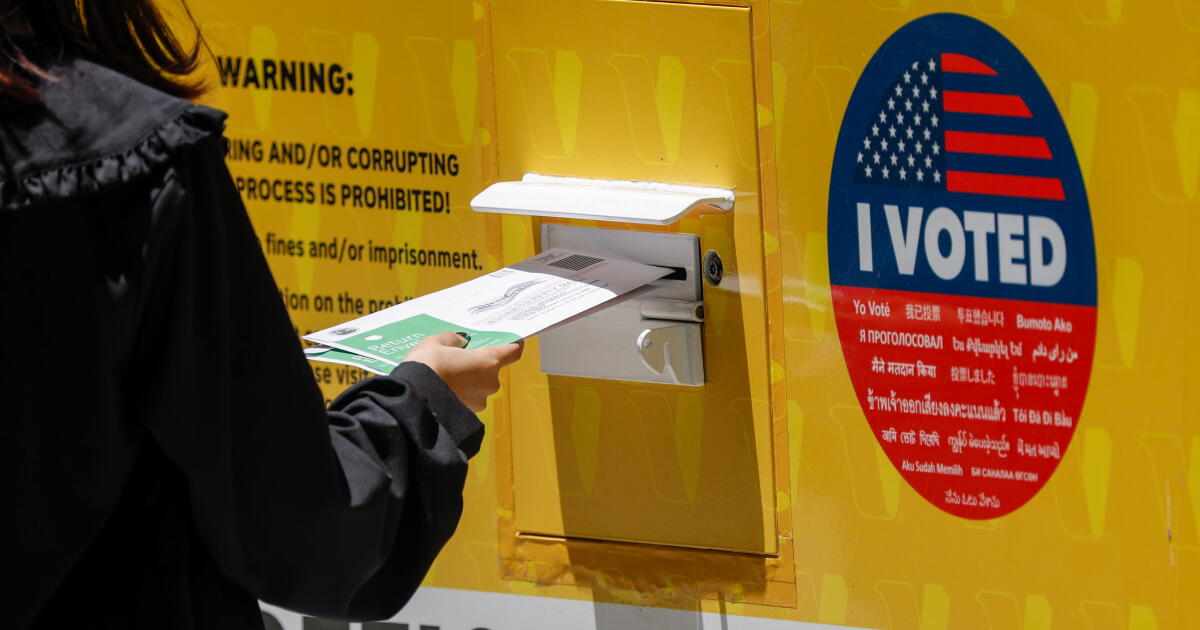
Subpoena records offer clues about federal probe of L.A. County voters
Federal investigators have sent Los Angeles County elections officials at least five grand jury subpoenas for individual voter records as part of a criminal investigation into illegal voting, according to partially redacted records reviewed by The Times.
The subpoenas — released in response to a public records request — appear related to a nationwide effort by the Trump administration to identify noncitizens who have illegally cast ballots in U.S. elections.
The subpoenas were issued in the U.S. District Court for the Central District of California. They were sent to L.A. County Registrar-Recorder/County Clerk Dean Logan’s office at the request of prosecutors in the office of First Assistant U.S. Atty. Bill Essayli.
“The enclosed subpoena has been issued in connection with an official criminal investigation being conducted by the Department of Homeland Security, Homeland Security Investigations,” Assistant. U.S. Atty. Michael Wheat — based out of the district’s Orange County office — wrote in a letter accompanying a Sept. 10 subpoena.
Wheat wrote that a custodian of records from Logan’s office must either appear before the grand jury to present the records or deliver the materials to a special agent from Homeland Security Investigations.
Four of the subpoenas — one issued on July 13 and three on Sept. 10 — request “any and all original and non-redacted voter records” from Jan. 1, 2020, to the present for a list of individual voters stretching across two pages. The lists were redacted by Los Angeles County officials, and it is unclear how many individuals each list contained.
Each of those subpoenas notes that records to be produced include information on individual voters, such as their “registration file” and “addresses listed, history and method of voting, [and] any and all attestation regarding citizenship status.”
A fifth subpoena, issued July 31, appears to request similar information for a single voter, and notes that the voter’s “ballot content or vote selections” should not be included.
Ciaran McEvoy, a spokesman for Essayli’s office, declined to comment on the investigations Monday.
The Times first reported the existence of the subpoenas, but not details from the records themselves, last week, after Logan confirmed that his office was complying with the federal inquiry despite having concerns that investigators may be using incorrect or outdated information to produce their lists of voters to investigate.
“We’re responding appropriately as directed through a subpoena, but that doesn’t afford the dialogue for us to get the background on what they’re looking for and how they came up with the names that they did,” Logan said. “There’s really no information being provided to us on that.”
President Trump has alleged for years that illegal voting by noncitizens is widespread, though experts say the problem — which they acknowledge occurs — is exceedingly rare. Homeland Security officials have been leading a campaign in recent months to identify such fraud nationwide, and the subpoenas received by L.A. County appear to match others received by elections officials elsewhere in the country.
Essayli — a Trump loyalist who has not been confirmed to lead the Los Angeles prosecutor’s office by the U.S. Senate and whose de facto leadership has been contested in court — has been vocal about his office’s pursuit of voter fraud, including by noncitizens.
His office has announced two voter fraud cases in recent weeks, including one involving the arrest of 30-year-old Honduran national on two felony charges of falsely claiming U.S. citizenship and fraudulently registering to vote. That man, Darwin Jonathan Rivera-Flores, has pleaded not guilty and is out on bond pending trial.
Rivera-Flores and his attorney declined to comment.
The Justice Department also recently announced it had charged 16 noncitizens in six other states with illegal voting and other election-related crimes.
Homeland Security Secretary Markwayne Mullin publicly claimed in July — without providing evidence — that there may be more than 190,000 such voters on California rolls, a claim California officials dismissed as baseless.
Three of the five subpoenas received by Logan’s office ask that the voter information be shared with Al Rossi, the acting assistant head of Homeland Security Investigations in Los Angeles.
Reached by phone, Rossi referred questions to an agency spokesperson, who did not respond to a request for comment.
Wheat had asked that the subpoenas be kept secret, so as not to impede an open investigation. Logan’s office released the records in accordance with California public records law, but redacted the names of voters on the grounds that doing so “protects those individuals from undue attention, harassment, intimidation, or possible harm” and “protects the integrity” of the investigation.
The U.S. Supreme Court on Friday upheld Trump’s expanded use of government data to search for noncitizens who are registered to vote. A lower court order had blocked use of the data over concerns — shared by the Supreme Court’s liberal wing — that the data are error-prone.
Voting rights experts have expressed concern that misuse of the data could lead to legitimate voters being purged from rolls.
States across the country, including California, have successfully fought off lawsuits from the Trump administration demanding the states’ complete voter rolls.
It is unclear why a subpoena for a single voter’s information would come between subpoenas for information on longer lists of voters. But it lines up with the case against Rivera-Flores.
In an affidavit filed with a criminal complaint against Rivera-Flores, Special Agent Christopher Kuzma — the same agent listed on the July 31 subpoena requesting a single voter’s information — said he received a series of texts he believed were from Rivera-Flores, who had previously been issued a misdemeanor citation on suspicion of disrupting immigration law enforcement operations at the federal building in Camarillo.
One text sent in April 2026 stated, “Your not the good guy I can’t wait until the mid terms you dont have qualified immunity then we can start and indict all you guys one bye one.”
Kuzma said in his affidavit that he took the message to mean Rivera-Flores “has both an interest in the voting process and an intent to participate in the election process.”
According to the affidavit, Kuzma said he conducted several record checks through public databases, including on the California secretary of state’s website, which “disclosed an online voter registration record” for a “Darwin Rivera” at Rivera-Flores’ address.
In July 2026, Kuzma said in the affidavit, he reviewed records from California Secretary of State Shirley Weber’s office for “Darwin J Rivera,” which showed the applicant had checked a box stating he was a U.S. citizen.
Kuzma’s affidavit said in August 2026 he received certified voter registration records from Los Angeles County.
The spokesman for the U.S. attorney’s office did not respond to a question about whether Kuzma’s July 31 subpoena was specific to Rivera-Flores, but the office has previously said Wheat is prosecuting the case.
When Rivera-Flores’ arrest was announced, Essayli said it was “the first of many to come.”
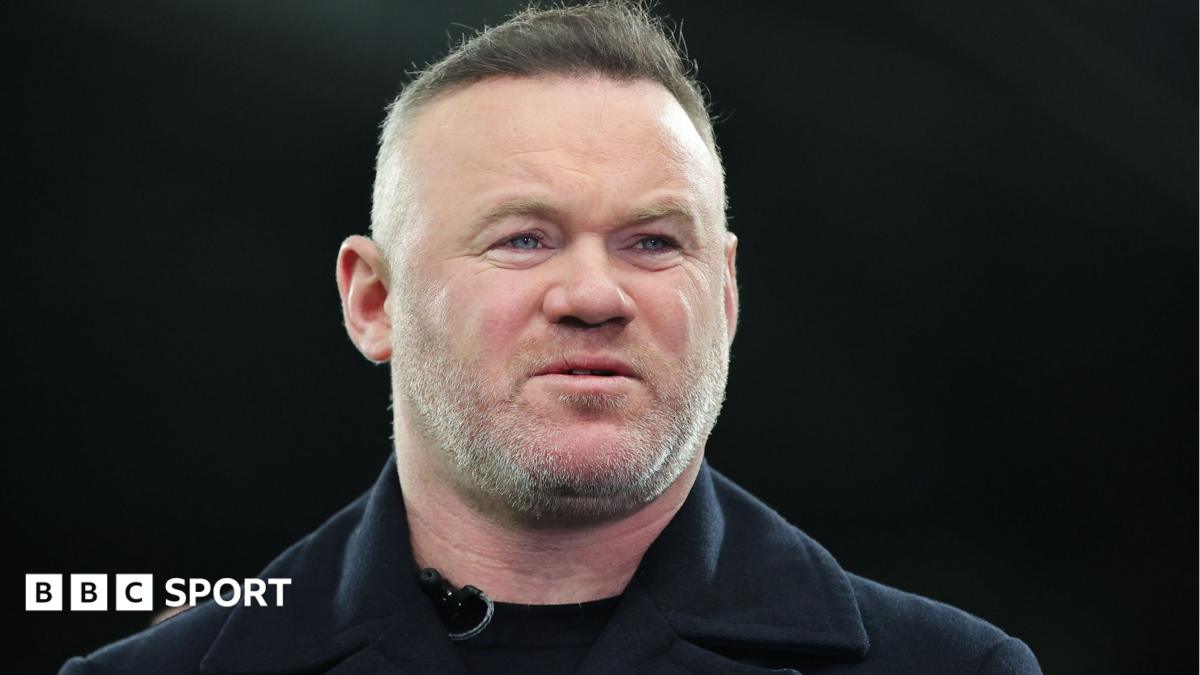
Manchester United do not deserve Manchester City titles – Wayne Rooney
Rooney’s former United team-mates Rio Ferdinand and David de Gea both posted on social media after news of the guilty verdict emerged on Friday, suggesting they should be awarded retrospective title wins.
And former Stoke City boss Tony Pulis said he felt “cheated” after his side were beaten by the Blues in the 2011 FA Cup final.
“When I’ve heard of ex-team-mates and people saying, ‘we’ve won another medal’, I’m happy with the five I’ve won,” said Rooney.
“I wouldn’t want this one just sat there… 15 years later or whatever it was you get a medal because City cheated. I wouldn’t feel comfortable.
“The question is, would I want to receive that medal for finishing second? No.
“Some players might. I just wouldn’t feel comfortable for accepting a Premier League medal for finishing second.”
While Rooney is against titles being taken away from City, he does believe they should be relegated.
“I do think we’re going to see City getting relegated,” said the 40-year-old. “However that happens I don’t know but I think we’re going to see them get relegated.”
Rooney added: “I’d put them in the lowest league they can go in and then put restrictions on them in terms of how much money they can spend for the next three or four seasons.
“If you’re just putting them in the Championship, and I get that’s a massive punishment, they’re going to come back up. Where, I feel if they have got restrictions… League Two, whatever… that could be very difficult for them.
“For instance, if they got a 20-point deduction for the next three years then players won’t want to stay there. If it’s Championship for a season, you could talk players round.
“I’d go as big as I can really.”

Turkiye arrests president, six members of football refereeing body in probe | Football
Arrests were made over interference with refereeing procedures, among other accusations, Turkish justice minister says.
Published On 29 Sep 2026
The head of Turkiye’s football refereeing body and six other people have been arrested over accusations of interference in refereeing procedures, Justice Minister Akin Gurlek said.
“Claims regarding interference in the formation of referee classifications, assignments, scoring and appointment processes, as well as rule examinations, have been investigated,” Gurlek wrote in a social media post on Tuesday.
Ferhat Gundogdu, the president of the refereeing body, and his deputy were among those arrested.
Gurlek said searches had been carried out at the suspects’ “residences, workplaces and offices”.
“We will steadfastly continue the fight for clean football so that claims undermining trust in Turkish football are clarified, those responsible are held accountable before the law, and football is remembered for the effort, struggle, and sportsmanship on the field,” Gurlek added.
A year ago, the Turkish Football Federation (TFF) suspended 149 referees on charges of involvement in an illegal betting scandal.
The TFF investigation found that 371 out of the country’s 571 referees officiating in the professional leagues had betting accounts and 152 of them actively placed bets.
Some 29 people were arrested in the sprawling scandal, including 14 footballers, one of whom was Fenerbahce’s international midfielder Mert Hakan Yandas.
Authorities suspended more than 1,000 players, including 25 from the first division.
However, Gurlek did not draw any link between last year’s betting scandal and the current investigation.
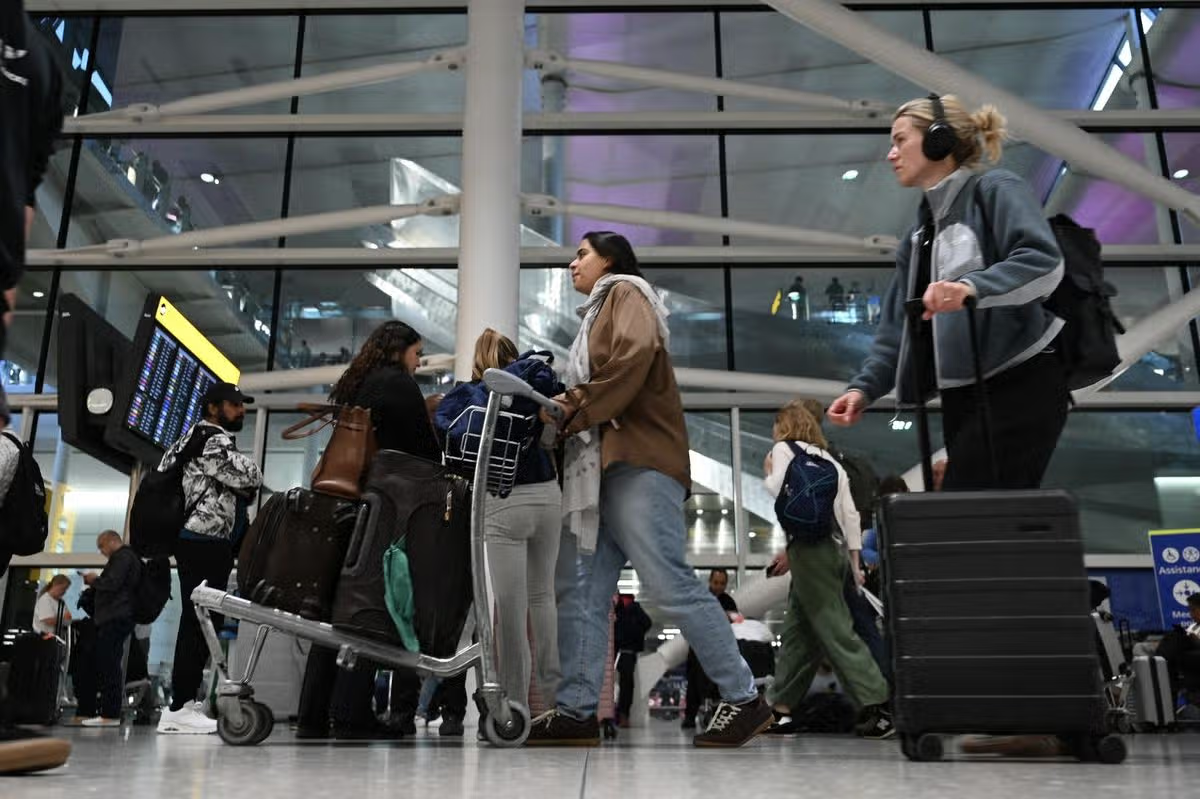
Man ‘absolutely floored’ after seeing food and drink prices on Greek airport’s ‘secret menu’
The TikToker posted a side by side comparison of prices at a Greek airport, and many holidaymakers, despite visiting the country several times, didn’t know there was a ‘secret menu’ available

Food and drink can be expensive at the airport(Image: Rasid Necati Aslim/Anadolu via Getty Images)
Holidays are an expensive business, especially if you plan to grab a coffee and a toastie at the airport. Even a bottle of water can set you back £2-3, which is a kick in the teeth when you’re delayed and stuck in a hot terminal.
So, when one TikToker posted the prices at a busy Greek airport, it inspired a flood of comments, but not for the reason you might think. The Greek holiday fan, who posts under the username @zantegeezer with videos about the party island, went to an outlet at the airport that sold the usual pre-departure fare, and one thing surprised his followers.
He started his video saying: “I always post this every time I come to the airport. There is a regulated menu. Basically it means Greek government enforce these very good value for money options.”
Do you have a travel story to share? Email webtravel@reachplc.com
He goes on to show the regulated menu, which includes inexpensive prices for coffee, tea, toasties, and water, all the basic airport staples. He then holds up the café menu, saying:
“That’s a normal menu. You see the price difference there? I mean, look at the proper espresso you get off the regular menu”. The cafés usual menu shows a single espresso costs €4.80, just over £4, but travellers who order it via the regulated menu can get it for €1.80, a more reasonable cost of around £1.53.
A filter coffee is listed as €4.70 on the normal menu, yet if customers were to order off the regulated menu they’d spend just €1.60, around £1.36. And the bargains don’t stop there. Bottled water, in 0.5 or 0.75 litre bottles can be bought for €0.60 or €0.90, around £0.51 and £0.77 respectively.
Hungry travellers can enjoy a toast with ham and cheese for €1.80, and if you’re dying for a cuppa before you get on the plane, a hot tea costs €1.60 on the regulated menu, or €4.00, about £3.43, if you order from the normal menu.
The TikToker finished by saying: “Just so you know, any airport in Greece you can get cheap stuff by law. Sort it out.” Regulated menus are also available in other locations across Greece in spots such as ports and ferries and places with a captive audience such as certain tourist sites.
However, there is a slight catch. The regulated prices only apply to basics such as water, coffee, and simple snacks like toasties, and only have to be offered on a takeaway basis, so the establishment isn’t under any obligation to let you use its tables. You’ll also generally be offered Greek brands, so don’t expect Volvic or San Pellegrino for the low price.
The video received many positive comments from people sick of rip-off airport prices. Over the summer, a number of airport prices came under scrutiny by fed-up travellers, from food costs to the hike in airport drop-off fees across major hubs.
Many shared their experiences with finding these cheaper deals. One said: “Santorini Airport only had €6.50 Evian water on display but they had the cheap Greek stuff when I asked.”, while another was unaware of these ‘secret menus’: “I didn’t know! Paid €4 for a bottle of water and € 7.90 for a sandwich at Zante airport!”
And there were plenty of calls for other countries to follow suit. “I need to call my representatives for the local and European Parliament. this has to be a European wide directive.”, said one. While another poster commented, “This is one of the best things about Greek airports. needs to be made Europe-wide”
Have a story you want to share? Email us at webtravel@reachplc.com
Do I need a passport to travel to Ireland via ferry from the UK?
FERRY travel from the United Kingdom to the Republic of Ireland and vice-versa has long been a popular route for many passengers.
While travelling by ferry may not be the primary option for many passengers, routes still operate on a regular basis.

So, do you still need a passport to travel between the UK and the Republic of Ireland by ferry?
Read on below for the latest rules on travel regulations when it comes to using ferry crossings.
Do I need a passport to travel to Ireland via ferry from the UK?
Prior to Monday, 28 September, passengers were able to use routes including Dublin to Holyhead and Rosslare to Pembroke without needing to bring their passport.
However, that has now changed, and you must bring your passport, after identification rules were altered by ferry operators.


Previously, anyone travelling on the above routes could use alternative forms of identification, such as driving licences and national identity cards.
Popular operators Irish Ferries and Stena Line have notified customers of the changes following their introduction.
For Irish Ferries routes, the necessity of travelling with a passport applies to its Dublin to Holyhead and Rosslare to Pembroke routes, in both directions.
Meanwhile, Stena Line has stated that all passengers travelling on routes from Dublin, Holyhead, Fishguard or Rosslare would be required to present a valid passport when checking in.
Almost 1.5 million people use the Holyhead to Dublin route each year, meaning it sees around 210,000 lorries and 383,000 cars pass through its port annually.
With more than 210,000 lorries and around 383,000 cars using it every year, Holyhead is the second busiest passenger ferry port to Dover.
Both operators will also accept passport cards, while Irish Ferries has added that anyone travelling who is not a British or Irish citizen and is visiting the UK for up to six months may require an Electronic Travel Authorisation (ETA).

North Wales Police search for mother after body of baby found in Bangor
The body of a newborn baby has been found along a shoreline in north Wales.
North Wales Police have appealed for the mother who maybe “extremely vulnerable” to come forward.
A member of the public found the remains on the Menai Strait shoreline near Siliwen Road on Sunday shortly before 17:00 BST.
During a press conference, Director of Midwifery and Women’s Services for Betsi Cadwaladr health board Fiona Giraud has appealed directly to the mother to come forward.
“I want you to know that our immediate concern is for your health, safety and wellbeing. We recognise that you may be feeling frightened, overwhelmed or unsure about what to do next,” she said.
Giraud said they “have real concerns for the health of the mother”.
“We recognise that she is likely to be extremely vulnerable. She may be fearful of seeking the support she needs through fear of identifying herself.
Speaking directly to the mother, she added: “You may feel you have nowhere to turn, or that you cannot speak to anyone about what has happened. Please do not feel that you have to face this alone.
“We don’t yet know all the circumstances surrounding your baby’s death but what is important right now is that we find you, make sure you are safe, and ensure you receive any medical attention and support you may need.
“I am asking you personally, to please get in touch with us. You can speak to a healthcare professional, approach a police officer or attend a police station.
“If you are watching or listening to this appeal, please know that we want to hear from you. Please take the first step and contact us. There are people to help you.”
This breaking news story is being updated and more details will be published shortly. Please refresh the page for the fullest version.
You can receive Breaking News on a smartphone or tablet via the BBC News App. You can also follow @BBCBreaking on X, external to get the latest alerts.
22 Kids and Counting viewers issue same complaint as star hits ‘breaking point’
The Radford family are back in action once again in another series of their popular Channel 5 show.

Noel Radford discovered his daughter Millie had torn up a photograph of herself and her husband Harvey(Image: CHANNEL 5)
Channel 5 viewers have been left less than impressed.
A brand new series of 22 Kids and Counting began earlier this month as Noel and Sue Radford let cameras back into their home to document their busy lives. During a recent episode of the show, Channel 5 viewers saw one of their eldest daughters, Millie, have relationship issues with her husband, Harvey.
One month on from their year anniversary, people saw Noel walk into their home to find Harvey’s belongings in a bag and a photograph of them torn up on the floor. A clip from the episode was shared on Channel 5’s Instagram, which showed Millie kicking Harvey out.
As Millie explained, she had told Harvey they were ‘through’, her husband told the cameras he had gone back to his mum’s house as she told him to leave their home.
Elsewhere in the snippet, it showed mum Sue trying to help the pair reconcile as she called in an expert in family dynamics.
The clip on Instagram was captioned: “Millie kicks Harvey out after reaching breaking point. But when Sue brings in an expert and some home truths hit hard, will Harley finally change his ways?” However, it wasn’t long before people commented on the snippet of the episode, with many issuing the same complaint.
One person said: “This whole show is more and more staged.” As another added: “Never watched something so scripted and set up. Absolutely ridiculous. What are the chances Noel was with the camera crew and the photo was placed in the middle of the floor in the most obvious ripped up pile?”
Someone else wrote: “So staged now. I liked watching it a few years ago.” While a fourth added: “Love this programme, but it’s getting more like a soap opera these days. Can tell things are set up for the cameras… saying they are moving house. Which never happened. Millie’s door was left open, and a ripped photo was on the floor. So fake.”
Although one person defended the programme, adding: “It may be more scripted and edited, but the storylines aren’t fake if that’s what you’re suggesting. Not sure why a programme affects you so much.”
As another shared: “I love this. Well done to the Radfords for actually supporting even though he’s not their kid, what a beautiful support system Millie and he have, and what a beautiful thing to do for your grandkids! Just amazing parenting and support, thank you!!”
During the episode, it showed the pair make amends as Millie and Harvey have recently welcomed their fourth baby into the world. She shared the news on social media this week, telling viewers they had a little boy called Cooper-Jax
22 Kids and Counting is available to watch on Sundays on Channel 5 at 8pm

Revolut’s CEO Says US Banks Are ‘Out of Step’ With Global Consumers | Global Finance Magazine Revolut US Bank Expansion: CEO Cetin Duransoy Interview

Revolut US CEO Cetin Duransoy reveals plans to target globally minded and “underbanked” Americans as it builds toward becoming a primary bank.
After receiving conditional approval from the U.S. Office of the Comptroller of the Currency for a national bank charter, Revolut Technologies Inc. appears ready to launch a full-scale challenge to traditional banks and fintechs in the United States.
After relatively quick growth in France, Spain, and Italy, Revolut aims to bring its superapp model to the U.S., where it doesn’t exist in quite the same form.
Revolut’s U.S. CEO, Cetin Duransoy, who has held senior roles at Raisin, Fundbox, Visa, and Capital One, spoke with Global Finance about Revolut’s plans for the American market.
Global Finance: In the US, banks, fintechs, brokerages, travel products and payment apps are mostly separate. Does that surprise you? Do you see a genuine hole in the U.S. market for a company that combines all those relationships in one place?
Duransoy: It’s not surprising, given how complex these products are and how crowded and fragmented the U.S. market is. Layer on the regulatory process, and combining all these product suites—banking, brokerage, FX, crypto, travel, and more—into a single company or app becomes genuinely difficult and, for most companies, not worth the effort.
We believe you need a genuinely differentiated product to succeed in this market, and we have identified an opportunity here. By bringing all these products into one platform, we can remove the friction customers typically experience when cobbling together services from multiple providers.
GF: People often say, “The U.S. banking market is different.” Different how, exactly? And how might those differences affect Revolut?
Duransoy: The US’s fragmented, charter-based regulation can be more cumbersome than the EU’s passporting model, and U.S. customers tend to rely more on credit than their European counterparts. But the U.S. provides certain advantages, including the U.S. card network and interchange system, which subsidize rewards; FDIC insurance; and consumer-protection laws, which create a trust threshold.
Our broad product offering, 80-million-user global network, and strong global brand allow U.S. to cater to the distinct challenges of the U.S. market and understand the challenges of U.S. distribution costs. By obtaining a national bank charter, we will be on par with traditional banks, with direct Fedwire/ACH access and lending capability.
GF: When Revolut enters the U.S. market more aggressively, should Americans expect something close to the European Revolut experience—or will the U.S. product necessarily look much more like a traditional American bank competing on deposits, credit cards and lending?
Duransoy: We are always focused on product-market fit for our customers, and the U.S. will be no different. We’ve publicly shared that we will bring the best of what Revolut offers and provide the products U.S. customers want most, including checking accounts, credit cards, installment loans, FX, and stablecoins. We’ll continue innovating to deliver a distinct, more productive experience for U.S. customers.
GF: One of the things that makes Revolut unusual in Europe is that it sits at the intersection of finance, travel and lifestyle. Is that model central to how you think about the US, or is America more of a banking opportunity?
Duransoy: Yes. Combining our lifestyle products with the financial services that have made Revolut so popular remains central to our thinking. And they’re a key differentiator in many of our markets. We expect these offerings to help make us a top-of-wallet card and strengthen customer retention.
GF: Why should someone with Chase, Amex, Venmo, Robinhood, and a good travel card move meaningful parts of their financial life to Revolut? What can you offer that those companies, individually or collectively, do not?
Duransoy: We recognize that inertia is a strong force when it comes to financial services and that a customer’s bank holds critical parts of their financial life, such as their mortgage or direct deposit.
What we offer is the ability to consolidate multiple products and services into a single interface and remove the friction our customers find frustrating with other services. Revolut’s broad-based platform allows customers to seamlessly access multi-currency spending without foreign transaction fees, instant global P2P, a combined debit/credit product, budgeting, digital assets, and investing, all without transferring funds between platforms or managing multiple accounts. That’s especially valuable for people who travel internationally, have cross-border family ties, or are underserved by traditional credit underwriting.
GF: Which types of lending will Revolut prioritize in the US?
Duransoy: We intend to initially prioritize unsecured and secured credit cards and installment loans.
GF: What does Revolut understand about the consumer relationship that you think many American banks and fintechs still lack?
Duransoy: We treat our global app as the product. We iterate quickly, aim for gamified engagement, and offer frequent feature releases, in contrast to most U.S. bank apps, which have slower release cycles.
We also build for financial lives that span borders and currencies, rather than assuming a single-currency, single-country customer. American banks were largely built for a domestic customer, and that assumption is increasingly out of step with a more mobile, globally connected population.
GF: Do you think Revolut is underestimated in the US? If so, why? Among those who are aware, what do people in the U.S. most commonly misunderstand about Revolut right now?
Duransoy: “Underestimated” is probably right now, largely because our independent U.S. bank doesn’t exist yet. So we’re still seen as a “European neobank” by most Americans. That undersells what we’ll be once we have a full national charter, FDIC insurance, and our full lending capabilities live.
The most common misunderstanding among those who do know the brand is that we’re simply a fintech or a travel debit card, rather than a company with an 80-million-user global base—including 1.4M in the US—and banking licenses now spanning the UK, France, Australia, Mexico, and more.
GF: Are you coming to the U.S. to compete for a small slice of the market, or do you ultimately believe Revolut can change what Americans expect from a bank?
Duransoy: In the US, our near-term goal is to compete for market share. No new entrant can reshape what an entire country expects from a bank on day one. That takes years of trust-building, especially post-charter, when FDIC insurance and regulatory scrutiny are new territory for us.
What we’re looking to do is win the demographics best suited to us, namely the internationally minded, underbanked-by-incumbents, and digitally native users.
GF: On the corporate side, what are Revolut’s corporate banking plans?
Duransoy: Revolut Business exists—and is a core focus for us—in the U.S. We expect this to continue and are excited to launch merchant acquiring within the first years of becoming a bank.
GF: If we revisit this in three years, what would need to be true for you to say that Revolut has successfully become a major U.S. bank?
Duransoy: Within three years, we expect to be a fully operating bank with real momentum. We won’t share specific customer or product numbers today, but we’re building for scale and a sizable U.S. customer base that treats us as their primary bank, not a secondary account. That’s the bar we’re setting for ourselves.