


Air ambulance missing on flight from Bermuda to Boston | News
The US coastguard says it has dispatched air and surface crews to search for the plane near Nantucket.

Published On 3 Oct 2026
An air ambulance has gone missing while carrying six people on a flight from Bermuda to Boston.
The US Federal Aviation Administration told the coastguard early on Saturday that it had lost contact with the plane, a Gulfstream jet, a coastguard spokesperson told the Reuters news agency by email.
Recommended Stories
list of 3 itemsend of list
The coastguard said it dispatched air and surface crews to search for the plane near Nantucket, an island community south of mainland Massachusetts.
The National Transportation Safety Board said it was gathering information about the situation on Saturday morning but had no further update to share.
The Canadian-registered air ambulance jet had four crew members and two passengers on board when it departed Bermuda’s LF Wade International airport overnight for the flight to Massachusetts, according to a statement from the Bermuda airport’s operator, Skyport.
Canada’s Minister of Transport Steven MacKinnon said in a social media post that four Canadians were on the plane.
“We are closely monitoring the situation and are working with the relevant authorities as search and rescue efforts continue,” MacKinnon wrote.
The aircraft, registered to Latitude Air Ambulance, departed Bermuda at 12:41am local time (03:41 GMT), according to data from flight tracking website FlightAware.
The plane was flying at 24,000 feet (7,300 metres) for much of the flight before descending 13,000ft (3,960 metres) in about two minutes shortly before flight controllers lost contact, data showed.
Last communication
Air traffic control audio posted by LiveATC.net offered a glimpse of the flight’s final communications before it went missing.
“Roger, you said you’re coming in blind. Is that what you said?” a controller can be heard asking the pilot.
The pilot’s transmission could not be heard in the recording. The controller later confirmed the pilot was declaring an emergency just before losing contact with the plane.
The Bermuda government is in contact with US authorities and families of the passengers, Bermuda Premier David Burt wrote in a statement posted on Instagram.
“We are praying that all six people will be found safe,” he wrote.
Latitude Air Ambulance is based in Ontario, Canada, and provides medical evacuation services. The company did not immediately respond to a request for comment.

North Macedonia 0-2 Scotland: Two going on four, five or six on good night for new era
Ben Gannon-Doak turned North Macedonia inside out and upside down. He is woefully short of minutes for his club, Bournemouth, and lacks sharpness and ruthlessness as a consequence. His delivery has always lacked accuracy.
His raw materials, though, are exhilarating. His pace, his involvement, his number of touches, his chances.
He never left North Macedonia alone. They survived only because he blasted over with one of his chances, shot tamely with another, lost composure with a third one. Having tormented North Macedonia, he allowed them off the hook, but he was a one-man thrill-fest.
He’s 20, that can’t be forgotten. He’s going to be around for a lot of years and will play a heap of big games, but with his club he’s got some decisions to make.
Two minutes against Liverpool, 19 against Sociedad, eight against Brentford, one minute against Newcastle and Man City. The only game he has started this season was a League Cup tie against Lincoln.
Bournemouth is a tough team to get into, but he needs more time on the grass, more opportunity to develop. Maybe a loan move in January would make sense for him, if his club allows him to go. A big ‘if’.
That’s a situation Gannon-Doak needs to resolve for himself – and for Scotland.
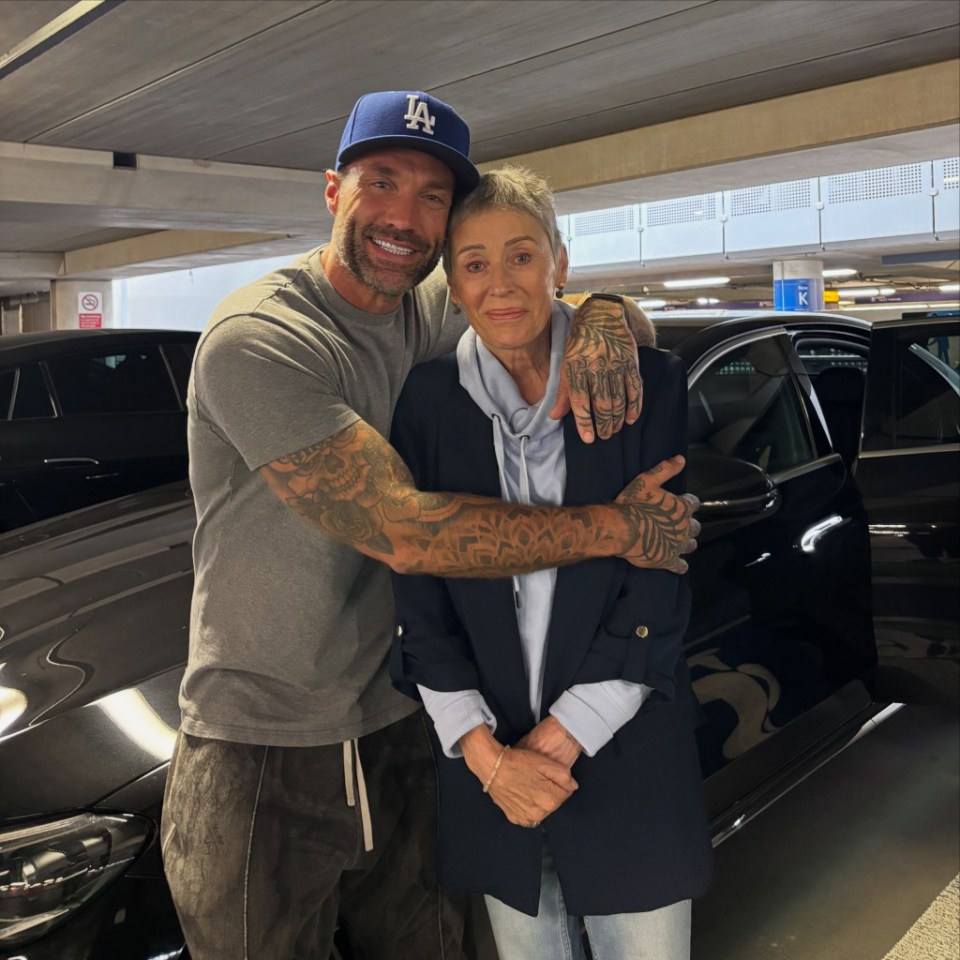
Calum Best shares sweet tribute to ‘fighter’ mum Angie as she returns to UK after treatment amid cancer battle
CALUM Best shared a sweet tribute to his ‘fighter’ mum Angie as she returned to the UK after treatment amid her colon cancer battle.
Angie, 74, announced that she was diagnosed with the disease in January and in July was told that she was cancer free.


Over the past year she has kept fans up to date while undergoing traditional medicine, chemotherapy and immunotherapy, as well as an alternative mistletoe therapy in Switzerland.
Now Angie is back in the UK with her son.
Calum shared a snap of their pair cuddled up together in the airport car park, as well as one of her approaching him in arrivals.
He captioned the post: “Right then, she’s back on UK soil, let’s get you healed, fed healthy and fighting fit!
“From me to you mother, I’m so proud of what a strong fighter you are, this last year has been hell and u have managed it with such grace, a year or treatments.


“Surgerys and all the rest are not easy and you have powered through it so well and we will continue to.
“What I also want to say is a huge thank you to everyone so far on this journey, so many people asking and involved both in person and through social media, thank you for caring about Angie.”
Many rushed the comments section to share the love.
One said: “Oh wow.. so pleased to see this, right where you belong.. no place like home!”
Another wrote: “Such a beautiful Mother and Son relationship. Rest up now Angie, you’re incredible.”
A third chimed in: “Sending you both love and hugs.”
A fourth commented: “How incredible to go through such a journey and looks so beautiful and be an inspiration to us all!!!!!”
“Wonderful news ,you mum is definitely a true fighter 💪❤️wishing her well,” a fifth added.
Last month Angie revealed that she’s back in hospital after suffering a ‘setback’ following battle with cancer.
Taking to her page earlier today, Angie said: “Update my homies. I find myself back in the hospital.
“I have an infection. They think it’s bacterial. Bt I have to stay here a few days for results and to make it better.
“See you on the other side.”
After major surgery to remove a tumour from her colon in July, Angie revealed that she was cancer free.
Angie and footballer ex George Best are Calum’s parents.
Calum is a reality star who has been on Celebrity Love Island, Celebrity Big Brother and Celebrity SAS.

Philosophically, Bush Gets Inspiration From an Unlikely Guru
AUSTIN — A little more than a year ago, on a muggy July day packed with political symbolism, Texas Gov. George W. Bush delivered his first major policy address as a presidential candidate at an Indiana church.
As the national press hung on every word, Bush sketched his vision of a kinder, gentler brand of conservatism, one in which the government would turn to religious groups for help serving the poor. The word “compassion” popped up 15 times in 20 minutes.
Watching from afar, proud as a parent at a high school graduation, was Marvin Olasky, the inspiration for Bush’s philosophy of compassionate conservatism and one of the most unlikely gurus ever to attract the attention of a potential world leader.
Olasky–ex-Communist, ex-atheist, born-again Christian–has become a savior of sorts among Republicans, who see in his theories a way to create small government with a big heart.
Former House Speaker Newt Gingrich first raised his national profile in 1995, suggesting that Olasky’s vision was a model for the future of the GOP.
Now, Olasky’s idea that religion can play a role in providing government social services has found special resonance with Bush, a fellow Texan and fervent Christian who wrote the foreword to Olasky’s most recent book, a paean to faith-based charities published last month.
Olasky believes the current wall between church and state must be broken down to let religions use tax money to help the poor. An alcoholic needing treatment could take a government voucher to an evangelical abstinence program, for instance. Or a taxpayer could donate money to help fund a Buddhist self-help center.
As Olasky’s influence has grown, the University of Texas journalism professor has become the political equivalent of a double-wide trailer in tornado country, attracting roaring controversy.
In recent months, civil rights groups have attacked his views on religion as a menace to the church-state wall. Feminists are outraged by comments they say show that Olasky believes women are secondary as leaders. And some Jewish groups were angered by a recent article in which Olasky attacked a group of conservative newspaper columnists, all of whom turned out to be Jewish.
Even some other conservatives have joined the chorus, saying Olasky’s work lacks intellectual rigor and stokes negative stereotypes of Christian conservatives.
“We are concerned that someone of this stripe has the ear of a presidential candidate who self-admittedly is not an intellectual,” said Ira Foreman, head of the National Jewish Democratic Council.
Anti-Semitism Issue Is Raised
Some of the attacks, especially those that hint at possible anti-Semitism, have angered Olasky, 50, who was raised Jewish and has praised the work of Hebrew charities in his books. Others he brushes off as misreadings that ignore his life’s work, which include more than 13 scholarly books and hundreds of articles.
But he’s not backing down from his philosophy, which he said in a recent interview would even let groups like Scientologists and Wiccans use taxpayer funds to deliver services to the poor, so long as the programs were voluntary and proven effective.
“My tendency is to be inclusive. That can include Wiccans and Scientologists. If people are going to get mad at me, then so be it,” Olasky said.
Olasky is almost amused by the fierceness of the attacks against him. After years of portrayals in the media as an obscure academic with an oddball story, he now appears as a powerful Svengali bending Bush to a radical agenda.
Olasky scoffs at the notion, downplaying his role as “a very occasional, very informal, very unofficial” advisor who hasn’t had contact with Bush this year.
Bush officials echo that assessment, continuing a recent pattern of distancing Bush from the controversies that have dogged Olasky.
“He’s an outside, informal advisor,” said Dan Bartlett, a Bush spokesman. Bartlett noted that Bush had contact with Olasky only twice, though both times proved significant.
One came in 1996, when Olasky helped lead a task force to figure out how Bush could implement faith-based programs in Texas. The second was in 1999, when he worked on another Bush task force to do the same thing, but on a national level as part of his run for the presidency.
Olasky’s journey to prominence has been a long, strange circumnavigation between ideological poles, from Marxist to church elder.
Born in Massachusetts, Olasky grew up in a Jewish home, attending Hebrew school and celebrating his bar mitzvah at 13.
But a year later, the intellectually precocious youth told his parents he was actually an atheist. By the time he entered Yale, Olasky was running toward the left at full tilt. He protested the Vietnam War. He staged a five-day hunger strike. By 1972, he signed up to become a card carrying member of the Communist Party USA.
Then one night, while reading a passage from Lenin, Olasky asked himself the sort of question that keeps college students up at night: What if Lenin is wrong? What if there is a God?
Olasky decided God deserved a second look and began a slow process that culminated with his conversion to Christianity in 1976. He and his wife began attending a conservative Christian church they picked out of the phone book and never looked back.
Gingrich Helps Put Olasky in Spotlight
In 1983, Olasky arrived at the University of Texas, where he taught journalism.
In 1992, he published “The Tragedy of American Compassion,” the product of research into turn-of-the-century nongovernmental charities and their effectiveness. After a few thousand sold, the book seemed destined for the dollar bin at Books-a-Million.
But then, a rising Republican powerhouse from Georgia–Gingrich–discovered Olasky’s work. In his first speech in 1995 as speaker of the House, Gingrich hailed Olasky in the same breath as Alexis de Tocqueville as models for the future of the GOP.
Olasky, suddenly, was a GOP darling: in demand on the morning talk shows, running a think tank with Arianna Huffington, and advising the 1994 Texas Republican gubernatorial candidate–Bush.
But the spotlight didn’t really begin to burn until the pitched primary season between Bush and Arizona Sen. John McCain.
In February, Olasky wrote an article accusing a group of conservative writers of being uncomfortable with Bush’s open embrace of religion. He implied they were “proselytes in the religion of Zeus”–a reference to a Tom Wolfe book.
As it turned out, all three writers were Jewish–which Olasky said he didn’t know at the time. Some Jewish organizations jumped on the seeming slight as an attack by a Christian conservative on Jews; others said they found no offense.
Olasky, himself a journalist who edits the Christian newsweekly World, smelled politics: “At least some of the people who are very partisanly motivated were trying to find ways of hurting Gov. Bush,” Olasky said.
Recently, Olasky’s writing has drawn scrutiny from women’s groups, in particular a passage from a 1998 religious newsletter interview in which he talked about the biblical tale of Deborah and Barak.
In the story, Barak says he will not go into war unless accompanied by Deborah, who was serving as a leader of Israel at the time.
“God does not forbid women to be leaders in society, generally speaking, but when that occurs it’s usually because of the abdication of men,” Olasky said. “As in the situation of Deborah and Barak, there’s a certain shame attached to it. I would vote for a woman for the presidency, in some situations, but again, there’s a certain shame attached. Why don’t you have a man who’s able to step forward?”
Women’s Groups Abhor Remarks
Olasky said the quote has been taken out of context and that he has no problem with a woman as president of the country or a corporation, though his own church forbids women to serve as elders.
That’s still not good enough for many women’s groups, who find Olasky’s statements offensive, no matter what the context.
“I hope he keeps talking and talking,” said Loretta Kane, a NOW vice president. “I hope he gets lot of media coverage saying he’s one of George W. Bush’s advisors.”

Tarik Skubal’s dominant Game 1 outing stakes Dodgers to NLDS lead
Though the Dodgers would eventually break open the game via the long ball, and despite the Atlanta Braves being forced to throw a bullpen game coming out of a taxing wild-card round, Game 1 of the NLDS began as a pitching duel.
Braves left-hander Dylan Dodd held the Dodgers to just two hits through three scoreless innings. But Dodgers left-handed starter Tarik Skubal was even more impressive, despite the heat. He set the Dodgers up for a 5-3 victory to take control of the series.
“A really good starting rotation obviously is really helpful, but it is very impactful for quality of life,” president of baseball operations Andrew Friedman said before the game. “We have gone through years where our starting rotation hasn’t been as good. In ’24 that wasn’t a strength of our roster. We won the World Series. The quality of life is way more difficult than being able to pencil in a Skubal, a [Blake] Snell, a [Yoshinobu Yamamoto], and a [Tyler Galsnow.]”
The temperature at first pitch was 100 degrees, and still climbing, making it the second-hottest recorded first-pitch temperature in postseason history, behind only Game 1 of the 2017 World Series between the Dodgers and Astros (103), according to Elias Sports Bureau.
The announced attendance was over 50,000, but far fewer fans were in their seats in the dangerous temperatures.
Skubal’s command wasn’t at its sharpest in the first inning, with his changeup consistently missing high. But he adjusted before the second and went on to limit the Braves to one run through six innings.
The difference was clear when contrasting Braves leadoff hitter Drake Baldwin’s first and second at-bats against Skubal.
Skubal fell behind with his first pitch of the game, a fastball below the zone. He worked back, with another fastball for a strike and a foul-tipped changeup low and away. But then, in a two-strike count, Skubal missed his spot, giving Baldwin a thigh-high changeup that he could drive.
That sharp single through the middle of the infield was one of just two hits he gave up Saturday. And after it, he retired 15 straight batters.
By the time Skubal faced Baldwin again, with two outs in the third, his whole arsenal was dialed in. Four of the last five outs he’d recorded were strikeouts, with a different putaway pitch for each: slider, sinker, curveball, changeup.
This time, Skubal was the aggressor, getting to a 0-2 count with a slider and sinker inside. Then Baldwin avoided chasing a pair of sliders to even the count. Skubal came back inside with a fastball that Baldwin fouled off.
So, to end the at-bat, Skubal went to his signature changeup, which he’d regained feel for the previous inning. It dove out of the bottom of the strikezone, and Baldwin swung through it, ending the inning on a strikeout.
Skubal strutted off the mound, hit the palm of his glove twice, and slapped hands with catcher Will Smith.
Skubal didn’t allow another baserunner until the sixth inning, when Sean Murphy launched a top-rail sinker for a solo homer.

Dodger pitcher Tarik Skubal is congradulated by Will Smith after making quick work of the Braves in the second ining.
(Gina Ferazzi / Los Angeles Times)
The Dodgers’ lead, however, remained intact. Two innings earlier Dodgers left fielder Teoscar Hernández broke up the scoreless tie with a two-run homer.
Hernández knows how to fire up a crowd in a big postseason moment. And he seized his chance when he got a cutter down the middle from Braves reliever Victor Mederos. Hernández tossed his bat back toward the home dugout, and it sliced through the air end-over-end.
With the Dodgers’ lead cut to one run, Skubal labored through the rest of the sixth inning, issuing a pair of walks, his first of the game. Smith and pitching coach Mark Prior came out for separate mound visits. But manager Dave Roberts stayed in his seat and trusted his Game 1 starter to face Braves cleanup hitter Matt Olson for a third time.
Skubal escaped the inning by getting Olson to chase an outside fastball and fly out to left field.
In the bottom half of the inning, the Dodgers’ bats came alive. Right fielder Kyle Tucker, in his first postseason game as a Dodger, hit a two-run home run. And Max Muncy joined in with a solo homer of his own.
Dodgers relievers Brock Stewart and Alex Vesia each retired the side in order, in the seventh and eighth innings, respectively. Lefty Tanner Scott, whom Roberts plans to use in a fireman role, surrendered a two-run homer to Ozzie Albies in the ninth. But right-hander Evan Phillips came in to record the final out.

Funeral held at Gaza church for mother and daughter killed in Gaza strike | Israel-Palestine conflict
Funeral prayers were held at Gaza City’s Saint Porphyrius Greek Orthodox Church for a Palestinian mother and daughter who were among five killed in an overnight Israeli airstrike on an apartment.
Published On 3 Oct 2026

From its colourful capital to forests, feasts and lush lakes, Latvia serves up one special summer escape
PADDLING kayaks through the serene 8,000-year-old bog, we’re about to enter the “second maze”, according to our guide Elina.
Locals call it this because the small islands of shrubs, moss and reeds we’re navigating are constantly shifting above the mineral-rich water, making the route through ever-changing.
If you want a moment to really pause, Latvia’s the place.
Over half of the country, which is a quarter of the UK’s size, is covered in forest, and with a population of fewer than 2 million, it’s not hard to find a stunning spot all to yourself – even in the height of summer.
We return to the shore to find Elina’s mother-in-law cooking up a feast on a portable stove.
Slices of ham and bread are served alongside a huge flask of coffee, helpings of traditional grey pea and bacon broth, and piles of fresh pancakes, both savoury potato and apple, which are demolished by my kids Poppy, seven, and Raffy, five.


It’s a brunch made from simple ingredients, but it is utterly delicious, especially when devoured in the vivid green landscape of Kemeri National Park.
Kayaking tours cost from £21.50 per person (Boardsyou.lv).
Ravishing Riga
The starting point for our trip is the cobbled streets and colourful art nouveau buildings of Latvia’s capital.
Riga sits little more than half an hour from the white sandy beaches of the Baltic coast (with a sea warmer than Cornwall’s come summer, FYI) and an abundance of nature, like those ancient bogs.
We arrive during celebrations for the city’s 825th anniversary and to streets alive with brass bands and artistic performances.
Even at its busiest, though, Riga still feels gloriously uncrowded, despite striking architecture and sculptures at every turn – the black felines perched on the turrets of Cat House and the Bremmen Town Musicians Statue of four animals balancing upon each other (said to bring luck if you rub their noses) our favourites.
Hotel Grand Poet By Semarah, with its flamboyant interiors, lies opposite pretty Bastejkalna Park, just a short stroll from the beautifully kept Old Town.
Its spa – where kids are welcome throughout the day – is home to a swimming pool, whirlpool, steam room and two saunas, and we even spot TV chef Prue Leith at the breakfast buffet one morning.
Family rooms cost from £280 B&B (Grandpoet.semarahhotels.com).
Lots to lake
One of Riga’s most popular weekend spots, Mežaparks, is set on alluring Lake Kišezers, where pedalos, rowing boats and SUPs are for hire, and swimming from its sandy shore is a breeze.
Cabo, with its hammocks and swinging seats, is an idyllic spot for sipping a rhubarb spritz, £7.70, while the kids splash about, and we hire a four-seater pedal kart to whizz around the forest trails, £17 per hour (Cabo.lv).
It would be easy to while away a whole day shoreside, but with Riga Zoo also here, we soon find ourselves giggling at the swaggering chief gelada (similar to a baboon), then wide-eyed at the glow-in-the-dark scorpions in the tropical house.
A family ticket costs £35 (Rigazoo.lv).
Another morning well spent is at Marupe Wake Park – its inflatable water obstacle course is one of Europe’s largest, with slides, swings, zip wires and climbing challenges.
As we hop across a giant panda and unicorn, the kids’ confidence grows with each leap, before we all revive ourselves in the sauna overlooking the lake, chuckling about our most spectacular splash landings.
Sessions cost from £16 per person (Udensatrakcijuparks.lv).
Later, among vibrant Mediterranean-inspired wall murals, we find a meal worthy of any great city.
We’re at Italissimo, where the little ones tuck into proper lasagne, £4, and pasta in butter broth with parmesan, £3, glugging down home-made berry lemonades, £3.70, while I dig into sublime truffled burrata with parma ham and wine-poached pear, £13.50, and tiger prawn ravioli with asparagus and a creamy bisque sauce, £14.50.
Cocktails, such as the Malfy Sour – a limoncello and citrus gin blend, £9 – are also excellent.
We soon clock children disappearing downstairs and discover a pastel playroom with a giant ball pit and interactive games screen, much to the kids’ glee (Facebook.com/restaurant.italissimo).
Going medieval
Restaurant Rozengrals, meanwhile, is a celebration of Riga’s medieval roots.
One lunchtime, we descend the steep steps and follow torch-lit tunnels to an underground dining hall for a huge platter of oven-baked duck with cherry-onion jam on a bed of pulses, £25, and pastry parcels stuffed with spinach and cheese, £7.20.
Sea buckthorn with honey, £4, is quickly declared a hit by all and we finish off by sharing Countess Amelia’s Caprice – tiny iced cakes encased in filo pastry, made from another 15th-century recipe, £6 (Rozengrals.lv).
Nearby, we discover GunsnLasers, an entertainment arcade tucked away in Galerija Centrs shopping centre, where e-karting proves to be a blast for kids and we all tear around the interactive Pixels Room, trying to avoid stepping on the ever-moving red squares of a giant light-up grid.
Donning VR headsets for family challenges is also a lot of fun for everyone.
Three activities cost £24 per person (Gunsnlasers.lv).
Tree-rific times
Still, we’re here to explore Latvia’s stunning landscapes, and an hour’s drive from Riga is Gauja National Park, the home of Turaida Castle – a reconstructed medieval fortress in lush grounds dotted with sculptures.
The kids love spotting ancient weapons and climbing the main tower with its views of the Gauja river.
Later, after venison stew with figs, £17.50, at quaint Kungu Riga (Kungurija.lv), we check out adventure park Tarzans.
Here, alongside the thrills of high-rope obstacle courses, tubing and bungee trampolining, there are activities such as a downhill hamster wheel, giant catapult and a toboggan track that hurtles us through the trees.
Packages cost £26 per child, £30 per adult (Tarzans.lv).
It all makes for a cracking afternoon – just as Latvia makes for a cracking summer adventure.

William Serafino: ‘Caracas and Washington Are Co-Governing Venezuela’
William Serafino. (Venezuelanalysis)
William Serafino is a political scientist with a master’s degree in history. His research and analysis have focused on geopolitics. In this interview, he discusses Venezuela’s current relationship with the United States, including a major oil deal and what Donald Trump and Delcy Rodríguez seek to gain from it.
In New York, Venezuelan Acting President Delcy Rodríguez thanked Trump for his support and described their bilateral meeting as “historic.” Nearly nine months after the January 3 US bombing and kidnapping of President Maduro, how would you describe the current relationship between Caracas and Washington? Which elements are short-term Trump gimmicks, and which ones will structurally define the relationship in the future?
It is difficult to find a precise definition. Many speak of a protectorate-like condition; some even go so far as to describe it as a relationship of colonial or neocolonial subjugation. Others, however, define it as a process of political, economic, and energy normalization in which the Venezuelan acting government makes tactical concessions, but without formally compromising national sovereignty. I believe the devil is in the details, not in one-size-fits-all approaches. At the level of inter-state relations, what I observe is a strategic attachment of Venezuela to the US sphere of influence and an energy realignment that operates with significant geopolitical restrictions in what concerns relations with Russia, China, and Iran.
At the governmental level, an asymmetrical alliance (favorable to Trump) has been forged in the wake of the military defeat on January 3, from which Caracas and Washington derive immediate and existential gains: Trump cherishes the sole geopolitical achievement of his second term, and Rodríguez gains relief and fresh revenue to govern after more than a decade of suffocating sanctions, within a framework defined by US interests. This reality can hardly be classified as a protectorate, in which a foreign power takes control of diplomacy, defense, and other strategic elements of the subordinate state. Could one speak of a sui generis, or “soft,” protectorate? Perhaps, but that would be an acknowledgment that the concept is not entirely effective in explaining the situation.
The same is true of the thesis of a “retreat with full sovereignty,” which is difficult to sustain when the US is clearly shaping the portrayal of the new national political dynamic and controlling the country’s oil revenues. That is why I have ventured –at the risk of being wrong –to speak of “joint governance” or “co-government,” in which Washington and Caracas divide areas of responsibility and share the political costs of each move so that the alliance endures and each party can, albeit unequally, reap its corresponding share of the benefits.
Trump, despite his constant demeaning tone, needs the Rodríguez administration to be strong enough to lead the country in order to get what he wants; only under such conditions can he extract the oil. And she, too, needs Trump to remain in power so that the oil agreement and other commitments can move forward in the medium term. This is the only way to stay in power and hope to gain legitimacy through performance. I believe that, described in this way, we are talking neither of classic colonialism nor of uncompromised sovereignty, but of something more unique that requires developing other analytical categories.

In your articles, you have pointed out that the US-Venezuela oil deal must be analyzed beyond the announced figures. What do you consider to be the true political and geopolitical scope of this agreement, and what benefits do the various actors seek to extract from it?
I see it more as a political arrangement than a formal agreement. Its function is not legal or institutional, but political. The announcement gave Trump narrative ammunition to promise that gas prices will drop, a necessity driven by his debacle in Iran. By not having signed anything, he avoids going through Congress, sends a message to his core electorate that he is guaranteeing the country’s energy security, and reassures energy corporations to go ahead and invest in Venezuela because the relationship with Caracas is solid and unshakable. Rodríguez, on the other hand, benefits from the fact that the agreement shuts the door on María Corina Machado in Washington’s power circles and thereby helps reestablish her domestic legitimacy, promising a secure path to economic and social recovery underpinned by US investment.
I would go as far as saying that the agreement is Rodríguez’s trump card in a potential presidential campaign, where she will be able to present herself as the only political actor capable of boosting the economy, as opposed to potential rivals who lack influence in the White House and do not have a reliable plan to pull the country out of the spiral of inflation and economic frustration in which it finds itself after years of sanctions.
Both sides stand to gain politically, and the agreement appears to be designed to avoid institutional resistance: neither is forced to face the hassle of legislative approval nor the criticism from political opponents. Since there are no specific clauses, they can more easily divert attention and focus their message on the eventual economic benefits. This level of coordination is a sign of partnership, not of one-sided imposition. If that were the case, Trump could force Rodríguez to sign a bilateral treaty in the National Assembly, and that is not what we are seeing.
You have paid special attention to the role of the Pentagon and the involvement of its Office of Strategic Capital in the structure of the agreement. Why is it so significant that the US defense establishment is a formal actor in a Venezuelan oil deal?
It seems to me that the Pentagon’s involvement serves as a coercive cover—an insurance policy backed by force—to ensure, in the medium and long term, US commercial and financial advantages in the exploitation of the oil fields included in the agreement. Let us imagine that the current government, or another one in the future, wants to modify the arrangement and secure better terms. At that point, it would not be dealing with a conventional transnational corporation, but with one controlled by the Department of War. It doesn’t take much thought to realize that negotiating under such conditions would scare anyone off: the language of business would be replaced by the language of weapons, and after January 3, no one would want to venture into this murky territory.
Furthermore, I believe that the Pentagon’s involvement sends a message to companies to invest and feel secure in the knowledge that the Department of War guarantees their investments and capital commitments in the Venezuelan energy sector. For the US, Venezuela’s oil reserves are not being treated as an economic asset, but rather as a matter of “national security.” As we well know, when that term is used, any coercive tool is fair game against a country’s sovereignty.

You have argued that the relationship between Caracas and Washington is taking on the characteristics of a negotiation marked by a profound power asymmetry. And many official spokespeople or analysts ask, “But what alternative do we have?” whenever criticism is raised about the path the government has chosen. What real ability does Venezuela have today to negotiate different terms or reject certain demands from the United States?
Right now, those capabilities are very limited, because, as I said, it’s not just a matter of US impositions, but also of calculating how to obtain tangible benefits from an asymmetrical relationship. But politics also takes place outside institutional spaces, and I believe there is much to be done there. What I’m about to say won’t, I don’t think, resolve the dilemma you’ve raised, but it could be a path toward regaining political vitality and initiative: strengthening social consensus on national sovereignty, refusing to concede the battle for historical memory regarding a century-long history of US plunder, and fostering a broad discussion on the vision for the nation’s future. These steps could help break the inertia somewhat and prepare the country for more favorable political conditions in the near future. In contrast, suggesting specific policies or positions to the current government would be irresponsible, because I’m not the one who has to deal with a Trump and his violent ego.
My message is directed at all of us who do not hold such high-stakes positions and can contribute, from our own small spheres of influence or through our individual activism, to rebuilding a patriotic consciousness that must adapt to a new reality. How many open forums are being promoted to discuss the educational model, the economic model, and the model of income distribution? Which bodies are evaluating the trajectory of the bilateral relationship with the US in order to better address it? Are these discussions conceptually limited? Perhaps these debates will not change the current situation of Trump’s disproportionate influence, but they would give us autonomy in our vision and in shaping the future. If Venezuela does not have its own vision on major national issues, there is a risk that they will end up being imposed from Washington. That would be committing the perfect crime, and I believe we must avoid it: with national unity, transcending political divisions.
In your articles and social media posts, you have criticized political elites who, historically, have lacked “imagination” beyond offering lucrative deals to the US. How did Chávez manage to break that mold? How could Venezuela return to a more sovereign path?
To be fair, Chávez broke the mold but the political and geopolitical conditions were ripe for it. The weakness of the national elites, discredited by a society weary of inequality and injustice, coincided with the US being drunk on power at the end of the Cold War. In its plans to establish itself as a unipolar superpower, Latin America did not figure as the central battleground. The inattention of an empire more concerned with reshaping West Asia, forcing China into the “rules-based order,” and eliminating the last strongholds of the socialist bloc (Tito’s Yugoslavia) in turn allowed Chávez to implement his agenda without facing a full-scale war, although he did face numerous coup attempts.
The present conditions are different. There is a hemispheric imperial retreat underpinned by a militarized reinterpretation of the Monroe Doctrine, which drastically raises the cost of sovereignty-oriented proposals. Still, I believe that what is most commendable about Chávez, and which can be of use in this new context, is his ability to clearly identify favorable conditions and act upon them.
I believe that anyone who considers themselves a political figure must build upon these principles to take on the new challenges of the present, developing and defending a dignified vision of the nation’s future. I believe that, rather than waiting for another Chávez to emerge, we should instead study his thought in depth and draw on the best of it to renew political practices, always interpreting the situation for what it is: changing, volatile, and full of opportunities. Chávez is a great political school, but it has been reduced to a crude tool for private interests of all kinds.

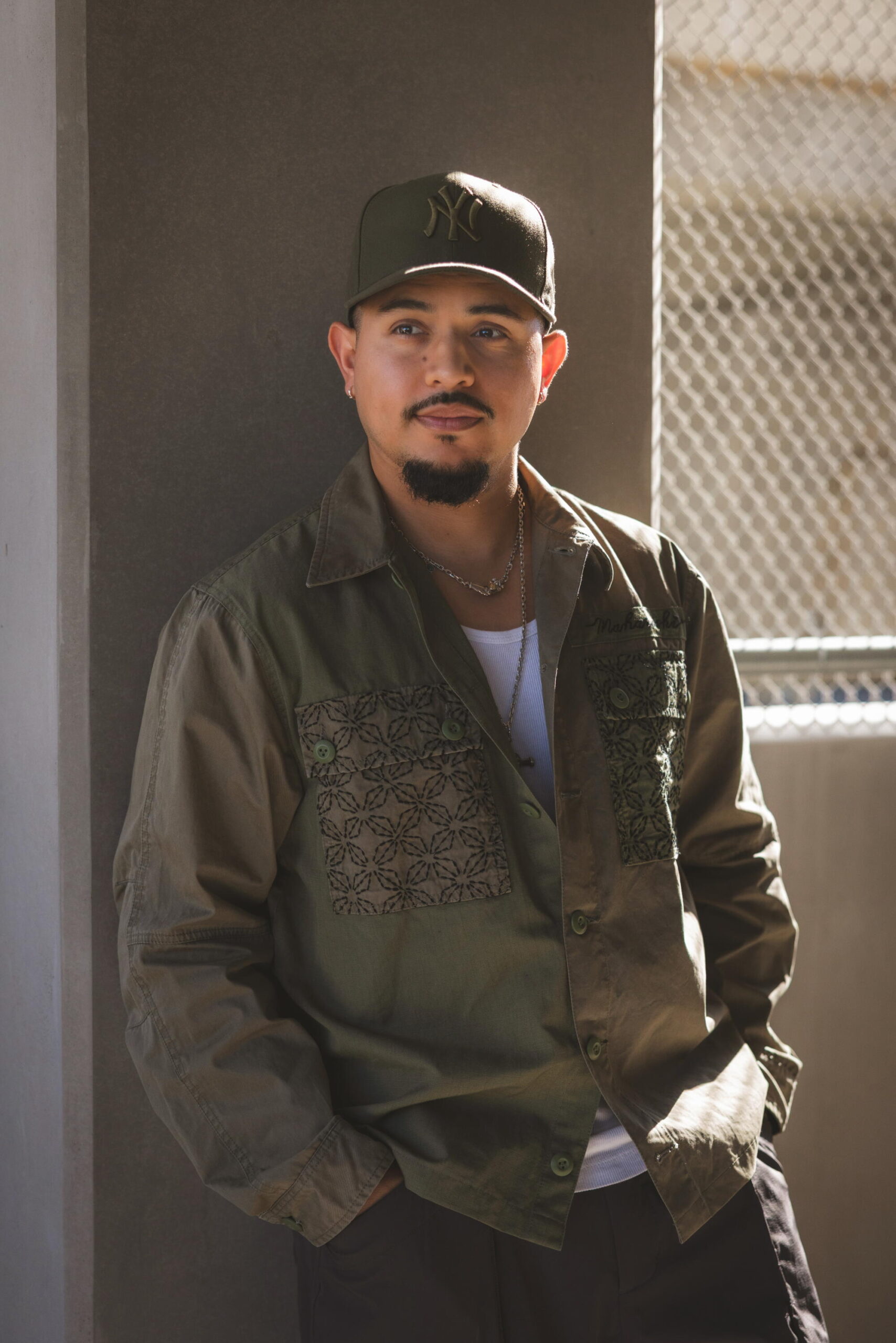
Soulection celebrates 15 years with upcoming L.A. show
In 2011, Joe Kay debuted Soulection as a college radio show at Cal State Long Beach, spinning rare B-sides, progressive beats, inventive flips of classic records and soulful underground tracks.
Fifteen years later, the niche local broadcast on K-Beach Radio has ballooned into a cultural movement that extends far behind his alma mater’s campus. Beyond its flagship on Apple Music with nearly 750 episodes (Grammy-winning producer Swizz Beatz was a recent guest DJ), Soulection is also an independent record label, live event and clothing brand. Operating under the banner “the Sound of Tomorrow,” the collective championed artists like Kaytranada, Brent Faiyaz, Bryson Tiller and Snoh Aalegra before they were household names.
Still, Kay remains hungry for more. “There’s so much more to do,” says Kay, who released his first project “If Not Now, Then When?” last year.
“We’re at this breaking point of not just being underground,” he adds. “It’s like we’ve been D-1. We’ve been to the playoffs. Now we’re like how do we get to the championship and not just show up to the championship, how do we win?”
On Saturday, Kay and his tight-knit crew are celebrating Soulection’s 15th anniversary with a festival at Reframe Studios Outdoors in Atwater Village. The lineup includes DJ sets from Kay, Grammy-winning producer and artist Kaytranada, Sango, Esta, DJ Miss Milan (who DJs for Doechii), Ayanna Heaven and surprise guests. (Kay doesn’t even know who all will show up.)
Ahead of the hallmark event, Kay spoke about how he continues to find emerging talent when everyone’s an artist or DJ these days, building long-term staying power, his new dance music concept and why he’s nowhere near done pushing the limits of what Soulection can do.

Joe Kay and his team are celebrating 15 years of Soulection on Saturday at Reframe Studios Outdoors in Atwater Village.
(Jason Armond / Los Angeles Times)
This weekend, you are celebrating the 15th anniversary of Soulection with several guests, including Kaytranda, who has been connected to the brand for years but has yet to be on an official Soulection lineup until now. What does this homecoming mean for you?
It’s special. Just having Kaytranada, it’s been long overdue but right on time, and to me that’s all that matters. About four years ago, we did a private party in L.A. in between Coachella, and it was him, Peggy Gou and myself, and it was a really cool party. So we played together, but in terms of a public, front-facing event, this is the first time he’s been on one of our lineups. What I appreciate about him is his work ethic. That man just doesn’t love to DJ, but this man works so hard. I work really hard, and then I see him and it makes me just want to go harder. This man is constantly on tour and he just finds a way to keep putting out music that people care about so much. I think that alignment between him, Esta and Sango is special. Even having Miss Milan, it’s one thing to be a DJ for someone like Doechii, but to also see what she does independently, I really admire that. There’s not a lot of women in the space who are moving like that and are recognized. She’s a boss on stage. Then, Ayanna Heaven is from New York, but she’s Jamaican and we’re lucky to have her.
What else can we expect at the show?
We’ll have a sunset set of Soulection and Friends, so special guests will pop out to do a couple songs. We’re not even sure who’s going to be popping out completely, but we have a handful of names and there’s some good people who I feel like have been part of the Soulection sound and Soulection radio. In London, people were like :We wanted a party. There were a lot of performances.” So now we’re giving people the party and we’re trying to move, but there will be a portion where everyone does a couple of songs. I love how we listen to feedback from one event and we make adjustments. I think that’s part of why we’re still around.
Soulection was pivotal in giving early platforms to artists like Brent Faiyaz, Bryson Tiller and Anderson .Paak before they became global superstars. What is your internal filter for spotting rising talent and has this changed over the years?
It’s a loaded question because talent and gifted people are everywhere. I find those people everyday. But in terms of who has the “it factor,” that one takes more layers. It’s not about “Does this person have to have that ‘factor’ for me to give them an opportunity or to be excited about them?” It’s more so an internal feeling. Nowadays, content is important so it’s the music and it’s mainly how they message themselves. How are they communicating their work, their vision and is it resonating with me? Then I scan their socials. I have no problem following anyone. I’m not one of those guys like “I have to have my following ratio at a certain amount and I’m too cool to follow you.” If I’m interested, I’m interested. I think today it takes a lot more to stand out. It’s a saturated [market], but I feel if you can break off and stand out now, it says a lot more than ever because everyone’s an artist and a DJ. Whereas 10 to 30-plus years ago, it was so much more of a rarity. It was a lot harder to be an artist so now that’s what makes it a bit more complicated.
It’s been over a year since you released your debut project “If Not Now, Then When?” You’ve talked about overcoming impostor syndrome to make it. What did you learn about yourself throughout the process?
It went by really quick. I’m really glad we dropped that project. It taught me a lot. When people ask, “So what do you do? Or can I find you on Apple or Spotify?” It’s nice to have something to direct people to outside of the radio show, there’s a body of work. I get emails every week of how many people are still discovering the music even though it might be old to us. Working on this project taught me a lot about accountability. I realized putting out a project as a label head and allowing artists to share their vision versus how I would do things are two different worlds even under Soulection. I’m so used to being on the executive or A&R side and letting people cook like “We’re here to help market it, but this is your work.” I honestly was proud of it because in my opinion “This is how I think you should do a rollout” and it was nice to show proof of concept. Also, working with all these great artists. I’m still in awe when I think about D-Mile being on two records. Bruno Mars is on tour right now, selling out SoFi Stadium. He’s doing like 8-10 times what we’re doing and D-Mile is a big part of his sound. To know we had him be a part of my project was a blessing and says a lot about the work that has been done.

Last year, you talked about potentially releasing an album this year. Are you still planning to do that?
It truly is extremely difficult to get a project done when you’re on tour and that’s why it didn’t get done. I did about 30 cities and when you’re going city to city, country to country, there’s really no time. When you’re putting together these projects, I feel like you have to literally be stationary for weeks at a time when you wake up and that’s all you think about. It’s very difficult when you’re stopping and going and nowadays. There’s a lot of chasing with the artists. Even if they are down, artists have their own projects, their own rollouts, their own tours. We’ve also been working on this 15-year celebration for the last year and a half, so I would say the album is the next focus.
You’ve been cooking up a new concept called Tempo. Can you tell us about that?
I’m very passionate about Tempo. If I could launch it today, I would. I’ve been using that word so much because I keep trying to tell people we’re trying to make people dance. If the women move and are having a good time, everyone’s moving. That’s why we love dancehall, Afrobeats, amapiano and now as we’ve seen in the last years, Afro House, and these other genres. It’s essentially dance music. I’m also very close to South Africa, specifically Cape Town and Johannesburg. That’s a place I’ve been going since 2015 and I’ve built a really good connection with people out there. As these new subgenres started to come out in like 2018, I’ve been very passionate and researching that music. A couple years ago, I was there and I curated these shows with some really great local artists and producers. I’m just very passionate about trying to push those artists to a higher scale. Imagine Brent [Faiyaz], Leon [Thomas], SiR or Snoh Aalegra or Kwn, hearing their vocals on an Afro House record or just the right tune that has that tempo. Now all of a sudden, you have Shimza, Keinemusik or Francis Mercier playing the records in front of 30,000 to 50,000 people. I feel like we have those relationships with the artists. They need to be told like, “This is who you need to work with. Trust me.” Then bringing them together and not feeling like we have to make it pop or saturate the music or make the drums lighter and more radio-friendly. I think we do it in an organic Soulection style. To me, that’s really the goal of Tempo. It’s not just an event, but it’s also like a sub label of Soulection that focuses on electronic music, a lot of Afro electronic music but not just that — just house music in general. There’s no boxes or boundaries to it. If it moves you, we’re going to put it out.

Joe Kay will be DJing alongside Kaytranda, Sango, Esta, DJ Miss Milan and Ayanna Heaven at the Soulection anniversary show on Saturday.
(Jason Armond / Los Angeles Times)
Looking back on the last 15 years, what are you most proud of what you’ve built with Soulection?
There’s a couple things. One, it’s nice to have my team who have been with us for over a decade. It’s a testament to what we’ve built, that people still want to be here. It makes me feel good that I have a loyal group of people who are my friends, who I’m grateful to call my family and who go up to bat for me and the team everyday. It’s not easy. Now that we’re older, I feel like, we choose to be here. Secondly, to think about all the artists and collectives that have been motivated by Soulection and have gone on to create their own businesses or have gone on to sign to agencies or get a manager. To know they were listening to Soulection at one point, that’s all it was meant to be — to inspire. It’s not about being on Soulection, it’s more of how do you take this motivation and create your own. It’s nice to be a part of that, but also they did the work.
That’s cool because it makes me think of how you were heavily inspired by labels like Stones Throw. You wanted to intern for them, but ended up creating your own thing and now Soulection is a blueprint for others.
I’m still inspired by Stones Throw. They literally just hit 30 years, so they’re literally two times what we’re doing. That had me thinking like, “Damn, what are we at year 30?” To see them still doing it, it’s very admirable. To be [a blueprint] is still great, but I don’t feel complacent. We just feel like there’s so much more to do. You asked, “How do I stay excited to show up to work everyday amongst all the craziness” and I think it’s my curiosity. I’m just grateful to provide for my family and for so many others for just doing something that I love everyday. Being about music, arts and highlighting people, that’s a blessing. I think we can take that for granted, but I don’t and I really do wake up everyday like, “How are we going to change someone’s life?” That’s the best part about it.

Provocative, sexually suggestive ad by Hilton campaign condemned by political allies on the right
A provocative, sexually suggestive ad by GOP gubernatorial candidate Steve Hilton is drawing heat from his fellow Republicans while drawing millions of viewers online.
Two young women sit on a bed, with an LGBTQ+ flag in the background, with one urging the other to try a new experience.
“I can’t believe I’m doing this,” one woman says, and the other replies. “Don’t be nervous. It’s not that bad … Just try it. Look, give me your hand. Close your eyes, and I’ll do all the work.”
She leads the hesitant woman’s hand to mark her ballot for Hilton rather than Democrat Xavier Becerra, the front-runner in the race, and says, “Now lick it,” referring to the mail ballot envelope.
Fellow Republicans as well as several Democrats denounced Hilton over the messaging.
Two members of Hilton’s GOP “Golden Ticket” on the Nov. 3 ballot lashed out about the ad’s content.
“I emphatically denounce the use of young women as a political tool,” Michael Gates, the Republican candidate for attorney general who has frequently appeared alongside Hilton at campaign events, wrote on X. “California families deserve better, and as AG, I will fight every day to protect our girls, young women, and parental rights.”
Sonja Shaw, who is running to be the next state superintendent of schools, castigated Hilton, the state Republican party and its chairwoman for promoting the ad, which had been viewed by nearly 5 million people as of Saturday afternoon.
“Shame on you … for reposting and cheering this creepy, weird, disturbing garbage,” Shaw wrote on X. “This is a clear example of exactly why good people are walking away from the Republican Party. As a mother and someone who has fought to protect the innocence of children, this crosses a line. We have lost our way. Embarrassing.”
Rep. Robert Garcia (D-Long Beach), an openly gay member of Congress, and state Democratic Party chairman Rusty Hicks also condemned the ad.
“This is a bizarre and desperate ad from a person who has attacked the LGBTQ+ community and stands with Donald Trump,” Garcia said. “Hilton is losing and more interested in AI slop than actually talking about issues Californians care about.”
Hilton acknowledged the ad has provoked strong reactions, but it underscored the foundation of his campaign — that many Californians may be put off by his party affiliation but want change given the state’s myriad problems, such as growing unaffordability, that have taken place under a Democratic lock of every statewide office and the state Legislature.
“We’re just saying, you know, just try it,” he said in an interview. “It’s a provocative and humorous way of making a point, right? Which often the best communication does.”
He also said the ad does not conflict with his beliefs about restrictions on gender-affirming care and on youth sports because those would only apply to people who are not adults.
A spokesman for Becerra, who led Hilton 58% to 33% in a recent UC Berkeley/Los Angeles Times poll, was gleeful about the rift the ad was creating among Republicans.
“MAGA is melting down over Steve Hilton’s creepy ad because they’re finally seeing him for the sellout he really is, willing to abandon his own twisted values to get ahead,” said Jonathan Underland.
However, some conservatives who were dismayed by the message stood by Hilton’s side.
Pastor Jack Hibbs of Calvary Chapel Chino Hills, a Christian nationalist, called the ad “grotesque” and said it promoted lesbianism among young women, on a Facebook Live post Saturday. However, he said he still supports Hilton over Becerra. He did not respond to requests for comment.
Hilton is scheduled to speak on Monday to a chapter of the Log Cabin Republicans, an LGBTQ group, at a brewery in Palm Desert. The organization did not respond to requests for comment.
Former California GOP chairwoman Jessica Millan Patterson said that while the ad wasn’t for her, she understood the campaign’s desire to expand its reach to different voters.
“Does the ad speak to me? No. He’s not going after my vote. He already has my vote. He’s trying to think of new and creative ways to make people who wouldn’t normally feel like voting for a Republican feel safe to do so,” she said. “He’s going out of his comfort zone and going for people that wouldn’t normally feel comfortable voting for him.”
Californian Fred Karger, who made history in 2012 as the first openly gay person to run for president, had mixed views about the ad, calling it shrewd yet hypocritical. And he questioned its effectiveness.
“The audience that he’s targeting there — the hipster, young hipster, lesbian audience — probably has a 1% chance of voting for him,” Karger said. “So it’s kind of a long shot. But it is a clever ad.”

Highlights – Grand Final – Warrington Wolves 10-23 Wakefield Trinity
Two years on from relegation, Wakefield Trinity beat Warrington Wolves 23-10 at Old Trafford to win the Grand Final and become champions of England for the first time since 1968, long before the Super League era.
MATCH REPORT: Warrington Wolves 10-23 Wakefield Trinity
Available to UK users only.

Israeli settlers attack Palestinian farmers during olive harvest | Occupied West Bank
Israeli settlers and soldiers have attacked and blocked Palestinian farmers from harvesting olives as the season begins. More than 80,000 Palestinian families rely on the olive harvest as a source of income.
Published On 3 Oct 2026
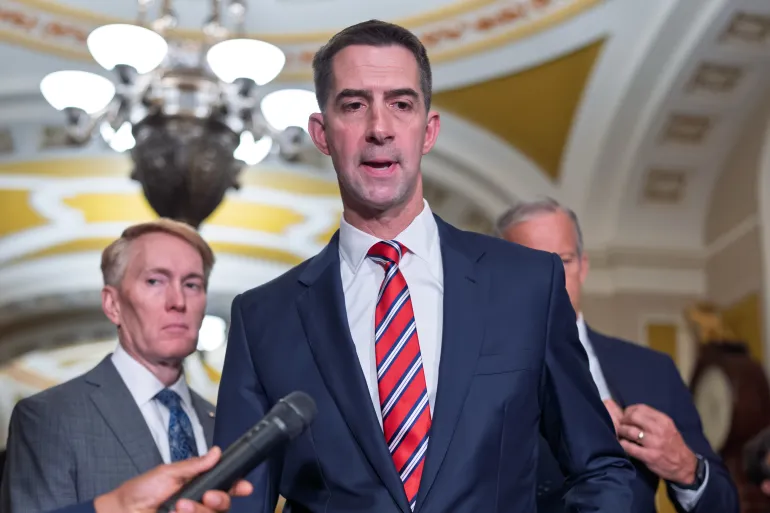
Trump ramps up pressure on US Republicans to end US clock switching | Donald Trump News
United States President Donald Trump has increased the pressure on US Senate Republicans to make Daylight Saving Time permanent, singling out one of the body’s members for stalling legislation to end the twice-a-year changing of clocks.
In a social media post on Saturday, Trump blasted US Senator Tom Cotton for “holding up” the Sunshine Protection Act, which Trump has personally opted to call the “No More Changing of Clocks Act”.
Recommended Stories
list of 3 itemsend of list
“For some reason, Tom is stopping the Bill and, in the Senate, it’s very easy to do, it only takes one!” Trump wrote on his Truth Social account about the Arkansas Republican. “It should pass overwhelmingly, in a Bipartisan fashion”.
“Nobody wants to spend their precious time running all over the place, turning Clocks back twice a year and, having sunshine in the afternoon is better than early in the morning!” he added.
Trump went even further, publishing what he claimed was Cotton’s phone number as he implored Arkansas residents to pressure him. The move echoed a moment during the 2016 Republican presidential primaries, when then-candidate Trump gave out US Senator Lindsey Graham’s number after the former rival criticised him.

Al Jazeera called the number listed in Trump’s post, but an automated message stated the voicemail box was full. Cotton’s spokesperson and the White House did not respond to requests for comment.
The president has routinely pushed Senate Republicans to pass legislation mandating year-round daylight saving, which would end Americans’ decades-long practice of changing their clocks twice a year to increase daylight hours. On Friday, Trump urged the US Senate to approve the bill, which passed the US House in July by a 308-117 vote.
Cotton has previously opposed the bill, arguing in a US Senate floor speech last year that farmers, construction workers, commuters and children heading to school would begin their days in the dark during the winter.
Trump disputed that argument in a separate post on Saturday, saying the bill “would be a very nice and easy WIN for the Republican Party”.
“If Tom Cotton were putting Arkansas first, he would give them an extra hour of daylight and, more importantly, they wouldn’t have to run all over their houses, farms, workplaces, and everywhere else, twice a year, having to change their Clocks, and often forgetting to do so”, Trump wrote.
Trump, an avid golfer, also highlighted what he considered to be another selling point of the bill: the North American Professional Golfers’ Association (PGA) tour.
“The PGA TOUR, as an example, needs more Daylight in the afternoon in order to finish their Tournaments”, he wrote in a post, which included a letter from PGA Tour CEO Brian Rolapp supporting the bill. “Likewise, regular Golfers, Tennis Players, Hunters and, perhaps more importantly, Farmers who want more Daylight to play or work.”
The US president, who spent part of Saturday at his golf club in Sterling, Virginia, indicated in a subsequent post that he had received personal feedback on the proposal: “I don’t know about anyone else, but a table full of very distinguished people just told me that they HATE, immediately after a mandatory time change, going home at night – and it’s DARK. It’s depressing!”
In 1974, the US Congress briefly adopted year-round daylight saving time in response to the country’s energy crisis. But Congress repealed the law less than a year later over safety concerns as children commuted to school before sunrise.
US senators left Washington this week and have no set plans to return until after the November 3 midterm elections.
Some members, such as Senator John Kennedy, weren’t optimistic that Senate Republican Leader John Thune would bring the bill up for a vote before polling day.
“It’s dead as disco,” the Louisiana Republican told Reuters this week of Trump’s push to make daylight saving time permanent. “My sense is it would have trouble passing … I don’t think the leader is going to bring it up.”

Why Gemma Collins could be ready to rival Holly Willoughby after success of Sky documentary
GEMMA Collins could be on years to come and could take inspiration from Holly Willoughby.
That’s the opinion of our showbiz expert, who has reported on Gemma since she first broke through on Towie in 2011.
From a car saleswoman to a media millionaire, Gemma, 45, has become a cultural icon and has now diversified with a documentary on her fertility and relationships struggles for Sky.
But speaking on Showbiz Fix Uncut, our weekly showbiz podcast, our Showbiz Features Editor Fay Leyfield thinks The GC has a lot more to give.
Fay said: “Gemma is very selective about her work and she’s made some really savvy choices and not just put her name to anything.
“She is not going anywhere and will on TV for years to come.
Read More on Gemma Collins


“Do you know what would be really good for Gemma is her own YouTube style chat show like Holly Willoughby.
“You know, like, those magazine style shows, she does a bit of cooking. She loves cooking as we’ve seen in her programme.
“Fashion, she’s always loved fashion.
“Hair and makeup, celebrity pals. She’s got loads of them. Like Fat Tony in the documentary, that’s been lovely to see that friendship.
“Her future maybe won’t be traditional telly, but I don’t think she’s going anywhere.”
We discuss Gemma’s amazing career on this week’s show, which you can find on The Sun’s video hub Showbiz Fix: Uncut | The Sun or The Sun Showbiz YouTube.

California Proposition 42 election voter guide: Tax ban on retirement, personal savings
p]:text-cms-story-body-color-text”>
Proposition 42 would prohibit new taxes on “retirement holdings, individually-owned assets, and other forms of personal savings” that take effect after Jan. 1, 2026. That includes financial assets, investment accounts, intellectual property, personal belongings and other assets used for retirement or financial planning.
It also would bar retroactive taxes on past earnings unless the state is using revenue from the tax to respond to emergencies such as a fire or a flood.
Proposition 42 could nullify Proposition 40, the proposed billionaire tax, because the two measures conflict with one another. If voters approve both, the one with the most “yes” votes generally would become law, according to the Legislative Analyst’s Office.
Proposition 42 could reduce state tax revenue but it’s unclear by how much, according to the office’s analysis. Currently, the state does tax certain personal property such as vehicles. It doesn’t tax people for owning financial assets like stocks and investment accounts but does tax income from them.
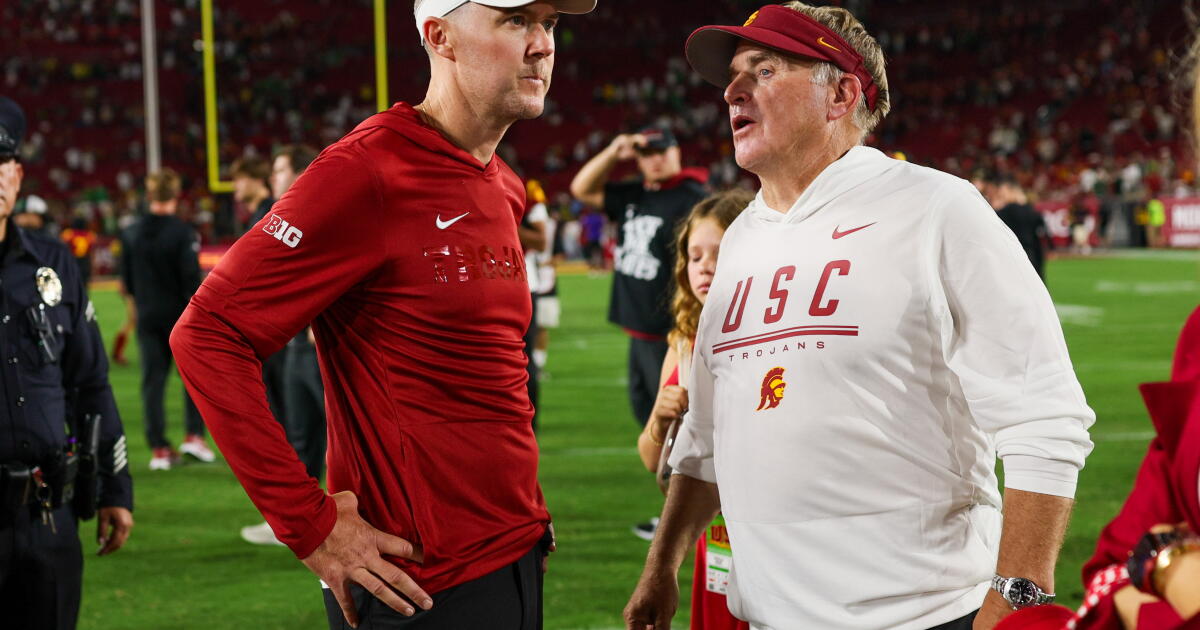
Letters to Sports: USC's defense, sportsmanship called into question
Readers of the Los Angeles Times Sports section give their thoughts on USC’s loss to Oregon, and the horrific late hit, the Dodgers playoff chances and more.
Source link

Fernandes denies Portugal rift, hails Ronaldo after walk out | Football
Bruno Fernandes says he has spoken to Cristiano Ronaldo and denies a rift within Portugal’s squad after the 41-year-old abruptly left the team’s training camp in Copenhagen. Ronaldo departed after tensions with coach Jorge Jesus became public, saying he would explain his reasons “in due course”.
Published On 3 Oct 2026

Remains of Bulgaria’s Czar Samuel return ‘home’ after 1,000 years | History News
The emperor is a symbol of Bulgarian national identity whose repatriation stoked tensions with Greece.
Published On 3 Oct 2026
More than 1,000 years after his death, the remains of medieval ruler Czar Samuel have arrived in Bulgaria.
A symbol of Bulgarian national identity, Samuel was a warrior emperor who battled the Byzantine Empire to expand his kingdom before suffering defeat and dying soon after in 1014. His supposed remains were discovered in a Greek border area in the 1960s.
Recommended Stories
list of 4 itemsend of list
The coffin and remains were flown on Saturday to the Bulgarian capital, Sofia, on board a military aircraft that was surrounded by air force fighter jets.
Thousands of people poured into a public square to honour the czar’s arrival, which capped years of fraught negotiations between Bulgaria and Greece until an accord was reached this week.
Bulgarian politicians across the spectrum paid tribute to the medieval ruler, listening to the national anthem and a 21-gun salute.
“Today, we Europeans are learning to read history with a desire to belong not only to our homeland, but also to the culture that unites us across the entire European continent,” Bulgarian Prime Minister Rumen Radev said.
“That is why Europe must not reopen old wounds but must work for peace as the supreme good,” Radev continued, referring to the centuries-old rivalry between neighbouring Greece and Bulgaria.
Crowds cheered as fighter jets performed a flypast.
Martin Nestorov, a 42-year-old software engineer, told the AFP news agency he attended the ceremony “to welcome Czar Samuel back to Bulgaria, where he belongs”.
“I am here because I am Bulgarian, and a Bulgarian is returning to his homeland,” added Tsanka Zlatkova, 65, a retired art historian.
A procession brought the remains to be laid in the Church of Saint Sofia, a sixth-century basilica that is the capital’s namesake and where church officials say Samuel was baptised.

Competing claims
The handover of Samuel’s remains is part of a broader accord between the Greek and Bulgarian culture ministers.
In exchange, Greece is slated to receive 48 objects that Bulgarian troops pillaged from churches and monasteries in Greece during World War I.
Speaking before the handover, Greek Prime Minister Kyriakos Mitsotakis said he hoped the ceremony would boost Greece’s campaign to repatriate the Parthenon Marbles, a collection of 2,500-year-old marble sculptures taken from the Acropolis in Athens and later displayed in the British Museum.
“The global community is essentially re-evaluating its longstanding stance on protecting cultural heritage,” Mitsotakis said, adding that historical heirlooms “cannot be treated as the spoils of war”.
Bulgaria is not the only country to have claims on Samuel. A huge statue of the czar stands in the North Macedonian capital of Skopje, with Macedonians claiming him as “their” ruler.
In 2022, a bilateral commission recommended presenting Samuel as the head of a state that “most contemporary historiographers consider to be the Bulgarian Empire”, based in what is currently North Macedonia.

Popular TikTok couple welcome first child and reveal tot’s sweet name
A FAMOUS TikTok couple has officially welcomed their first child and revealed the babe’s sweet name.
Rosie Daniels and her partner Harry Wilde, who boast over five million followers on the app, recently quit the UK to move to Australia before having the tot.
The couple have taken to Instagram to announce the birth of their baby boy in a heartwarming post.
Alongside several pics of Rosie and Harry at the hospital bed with their bundle of joy, the first time parents gushed over how their ‘entire world’ has been changed.
Rosie penned: “There truly are no words for the feeling and love we have for you.
“Our sweet boy, you have changed our entire world and given us a kind of purpose we never knew existed. We love you more than words could ever say.”
READ MORE ON TIKTOK STARS


The couple also revealed the name of their newborn son as Beau Blu Wilde, adding he had been born on September 29.
The family were met with a flood of comments and well wishes from fans on their social media.
It’s been a year full of joy for the content creators, who tied the knot earlier this year, following seven years of dating.
Sweet clips posted by the couple show them exchanging their vows in a stunning outdoor ceremony and sealing them with a kiss.
“Mr & Mrs Wilde,” they wrote alongside the video.
The pair have been candid about their life achievements, including their move from the UK to Australia.
They made the move due to Rosie’s skin condition psoriasis with the immune-mediated disease causing red, flaky, crusty patches of skin.
The internet personality revealed that it was the British weather that prompted her to relocate, finding that the cold damp conditions seemed to worsen her skin with the Aussie sunshine providing relief.
Rosie didn’t want her condition to set her back, so she launched a career on social media – and now has millions of fans across Instagram, TikTok and YouTube.
She publicly documents her condition in a bid to normalise it – and is proud to say that she doesn’t receive much backlash from trolls.
Speaking previously about her lifestyle, she said: “My skin condition never has and never will affect our love life in the slightest, it has only made us both stronger.
“Sharing my journey online is so special to me. I live by the quote ‘be real, not perfect’ and my mission is to show others that it’s important to love and embrace the way you look.”

California Proposition 43 election voter guide: Setting a 2/3 bar to raise money
p]:text-cms-story-body-color-text”>
California Professional Firefighters, the California Federation of Teachers, the Nurse Alliance of SEIU California and the California School Employees Assn. all oppose the measure. They argue that it will make it harder to pass tax hikes to pay for police and fire departments, fix and repair local roads, staff local schools or backfill federal healthcare cuts.
They also argue that Proposition 43 skirts the California Supreme Court’s opinion on the threshold.
Gubnatorial candidate Xavier Becerra opposes Proposition 43. In a statement, he called corporations “special interests” that want the proposition to pass in order to block new taxes.
“Prop. 43 would hand special interests the power to block the resources our communities count on most: fire protection, safe roads, good schools,” Becerrra said.
Assemblymember Buffy Wicks (D-Oakland), who authored the legislation that became Proposition 43 — ACA 22 — opposes the measure and has urged Californians to vote against it. She said the only reason she crafted the bill was because it was a necessary bargaining chip to torpedo another ballot measure backed by the Jarvis taxpayers group that would have devastated revenues for local governments and retroactively rescinded some local tax increases.

Rams eager to exorcise demons from special teams disaster vs. Eagles
PHILADELPHIA — Safety Kam Curl did not see it happen initially because he was on the Rams sideline teasing the Philadelphia Eagles about what he thought was his team’s certain victory.
Punter and holder Ethan Evans had a close-up view of the first part, but could not stop the second.
Quarterback Matthew Stafford, an 18th-year pro, said he had never witnessed a game-ending play like it.
Those were just a few of the memories from Rams players when asked about last season’s game against the Philadelphia Eagles at Lincoln Financial Field.
Minutes after the Eagles blocked a late field-goal attempt, the Rams lined up for another one on the final play. Jordan Davis of the Eagles leaped and blocked the kick, scooped the ball and returned it 61 yards for a touchdown that sent the Rams to a 33-26 defeat.
“All I heard was ‘boom, boom,’” Curl said of the kick and subsequent block, “and then I looked and it was all bad from there.”

Philadelphia Eagles defensive tackle Jordan Davis prepares to pick up a loose ball after blocked field-goal attempt against the Rams on Sept. 21, 2025.
(Chris Szagola / Associated Press)
The not-so-Super Rams return to the scene of that fiasco on Sunday.
And they arrive with several special teams units that remain a concern for a star-studded team that opened the season as the overwhelming favorite to win Super Bowl LXI at SoFi Stadium.
Not that the Rams have looked the part.
They lost their opener against the San Francisco 49ers in Australia, rebounded with a victory over the New York Giants, and last Sunday blew a 16-0 halftime lead in a 30-26 loss to the Denver Broncos in Denver.
Now they play an Eagles team coming off a 27-7 defeat by the Chicago Bears.
Late last season, coach Sean McVay fired special teams coordinator Chase Blackburn, and Ben Kotwica served as interim coordinator for the final two games. During the offseason, McVay hired Bubba Ventrone, who had coordinated special teams for the Indianapolis Colts and Cleveland Browns.
They also signed veteran long-snapper Joe Cardona and linebacker Grant Stuard, a special teams veteran.
The Rams’ field-goal unit is seemingly in a better place than it was last season.
Kicker Harrison Mevis replaced Joshua Karty several games after the debacle against the Eagles. He made 18 of 19 field-goal attempts in nine regular-season games and the playoffs, and has made four of five attempts this season, including two against the Broncos.
The Rams have improved in “that particular phase,” McVay said, “but you have to do it again” against a formidable Eagles field-goal block unit.
“That certainly is not anything we’re taking for granted,” McVay said.
On the same day the Rams lost to the Eagles last season, Ventrone was coaching for the Browns, who blocked a field-goal attempt by the Green Bay Packers with less than 30 seconds left, and then won the game with a field goal.
“It comes down to execution and playing with good fundamentals in those areas,” Ventrone said. “If we can do that, then we’ll be in a better spot.”
While the field-goal unit has mostly thrived, Evans has struggled with consistency, specifically directional placement of his kicks. On Friday, the Rams waived punt returner Xavier Smith, who fumbled in last season’s NFC championship game and made several decision-making errors against the Broncos. Alex Bachman will return punts against the Eagles, McVay said.
The kickoff coverage unit gave up a long return against the 49ers but appears to have improved.
The Rams will need solid performances from the offense, defense and special teams if they hope to defeat the Eagles for only the second time in eight games under McVay.
The Rams would be going for the second consecutive victory over the Eagles had they not blown a 19-point third-quarter lead and had two kicks blocked last season.
The Rams trailed 27-26 when they lined up for a 44-yard attempt with three seconds left.
“You knew it was going to be the last play no matter what,” Rams defensive coordinator Chris Shula said. “You weren’t going to [overtime]. I think I put my headset down.
“You put everything away and you’re like, ‘All right, here we go. This kick is going to decide my mood for this next week.’”
Evans recalled that after Davis blocked Karty’s kick, the ball went over Evans’ head. He attempted to dive on the ball, but he was hit in the back.
“By the time I got up and looked,” Evans said, “[Davis] was already in the end zone.”
The Rams aim to avoid a repeat.
Curl said the formula for success was simple. And it applied for offense, defense and special teams.
“Just finish,” he said.

Is the CJP changing India’s political landscape? | Protests News
Youth-led movement demands resignation of chief election commissioner.
India’s Cockroach Janta Party (CJP) is calling for another senior official to resign.
In July, protests by the youth-led movement saw the education minister quit. Now it wants the chief of the election commission to step aside.
Critics say he is overseeing an unfair review of the electoral roll. The revisions have led to the removal of tens of millions of eligible voters.
The commission says reform is long overdue – and necessary to weed out duplicate entries.
Protesters say it. is an assault on democracy and designed to benefit the governing BJP.
So, will the Cockroach movement be successful again?
Presenter: Sami Zeidan
Guests:
Rajat Sethi – Political commentator who focuses on contemporary India
Nikita Sud – Professor of the politics of development at the University of Oxford
Sravasti Dasgupta – Senior political correspondent at The Wire
Published On 3 Oct 2026