


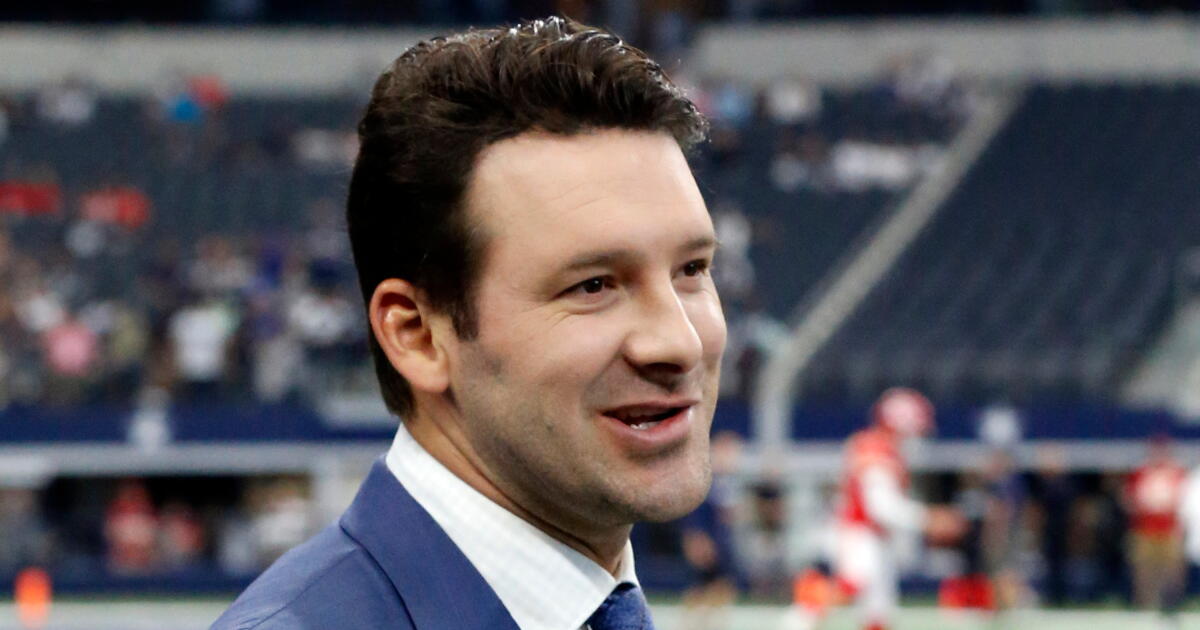
Tony Romo and CBS Sports have ‘mutually agreed to part ways’
Tony Romo and CBS Sports have “mutually agreed to part ways” two months after he was placed on indefinite leave following his July arrest on suspicion of operating while intoxicated (OWI), the network announced Friday morning.
“We thank Tony for his contributions over the past nine years and wish him the best moving forward,” CBS Sports said in a statement.
J.J. Watt, who has been filling in for Romo as the color commentator on CBS Sports’ lead NFL broadcast team, will continue in the role for the remainder of the season. Romo, a former four-time Pro Bowl quarterback for the Dallas Cowboys, has been booth partners with play-by-play announcer Jim Nantz since 2017.
“I’m proud of what I accomplished at CBS Sports over the last nine years,” Romo said in a statement released soon after CBS announced the move. “I approached my role as a game analyst the way I’ve approached everything in my life — with a desire to win and be the best that I can be.
“I’m going to use this time to take a break,” he added, “something I’ve never done before, and focus on my health and my family before moving on to my next opportunity.”
On Sept. 1, Romo entered a a no-contest plea to the OWI charge from his July 23 arrest in Wisconsin. A Milwaukee County judge found Romo guilty of the charge and took away his driving privileges for six months. Romo also was ordered to pay $834, and have an ignition interlock device installed on his vehicles for a minimum of one year.
Citations against Romo for having an open container of an alcoholic beverage in a moving vehicle and unsafe passing were dismissed.
Afterward, Romo said in a statement that multiple back injuries from his playing career led to “a dependence on pain medication, and my efforts to get off those medications led to an over-reliance on alcohol.”
“None of this is an excuse,” he wrote. “These are my failures, and I take responsibility for them.”
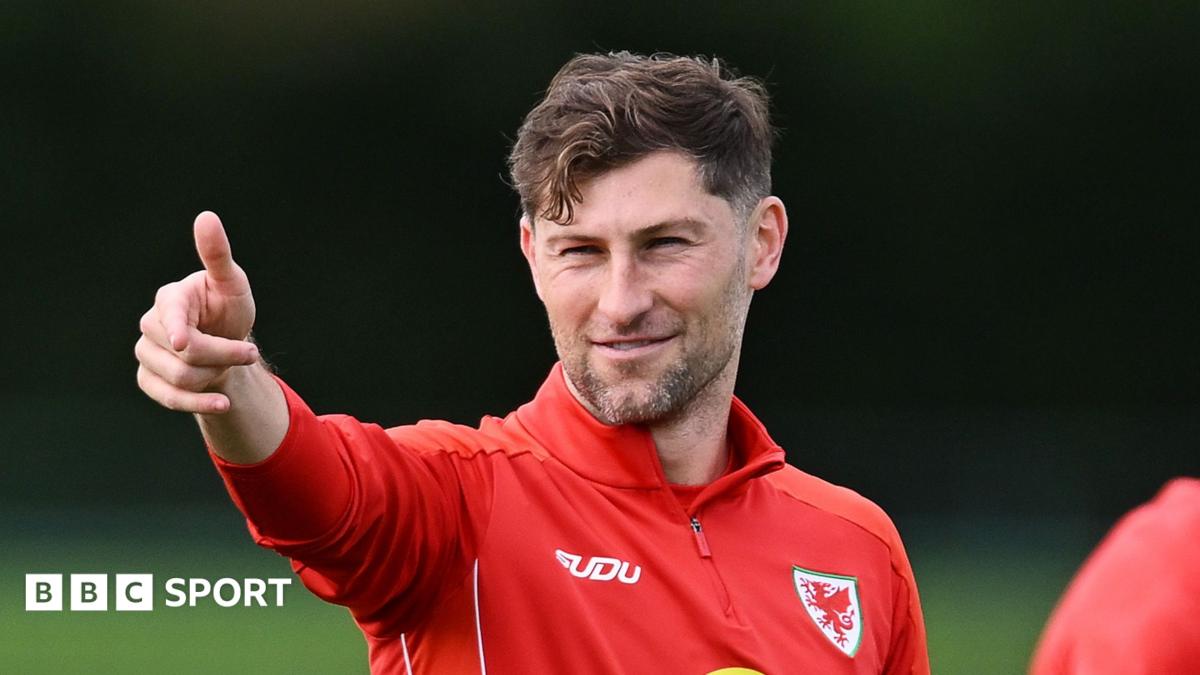
Wales v Denmark: Craig Bellamy’s side aim to thrive in Nations League A
Wales will again be without the likes of Karl Darlow, Joe Rodon, Dylan Lawlor, David Brooks and Harry Wilson due to injury as they look to maintain the momentum gained thanks to the Norway triumph.
Bellamy says he has no choice but to make changes to the side which began on Thursday as Wales seek to make amends for last Sunday’s defeat in Denmark.
Having emerged with some credit despite losing their Nations League opener against Portugal 10 days ago, Wales were well beaten on a demoralising evening in Copenhagen.
Davies hopes the Cardiff City Stadium factor will be key as Wales chase victory against a Danish side who, in 21st, are 17 places above them in the Fifa rankings.
“It does make a big difference going away. We didn’t get a grip on the game [in Denmark] whereas when we played Norway in Cardiff, it’s our home, our fans, our atmosphere,” he said.
“It felt like a different game and we had much more control… you just know you have to try to make your home advantage count.”
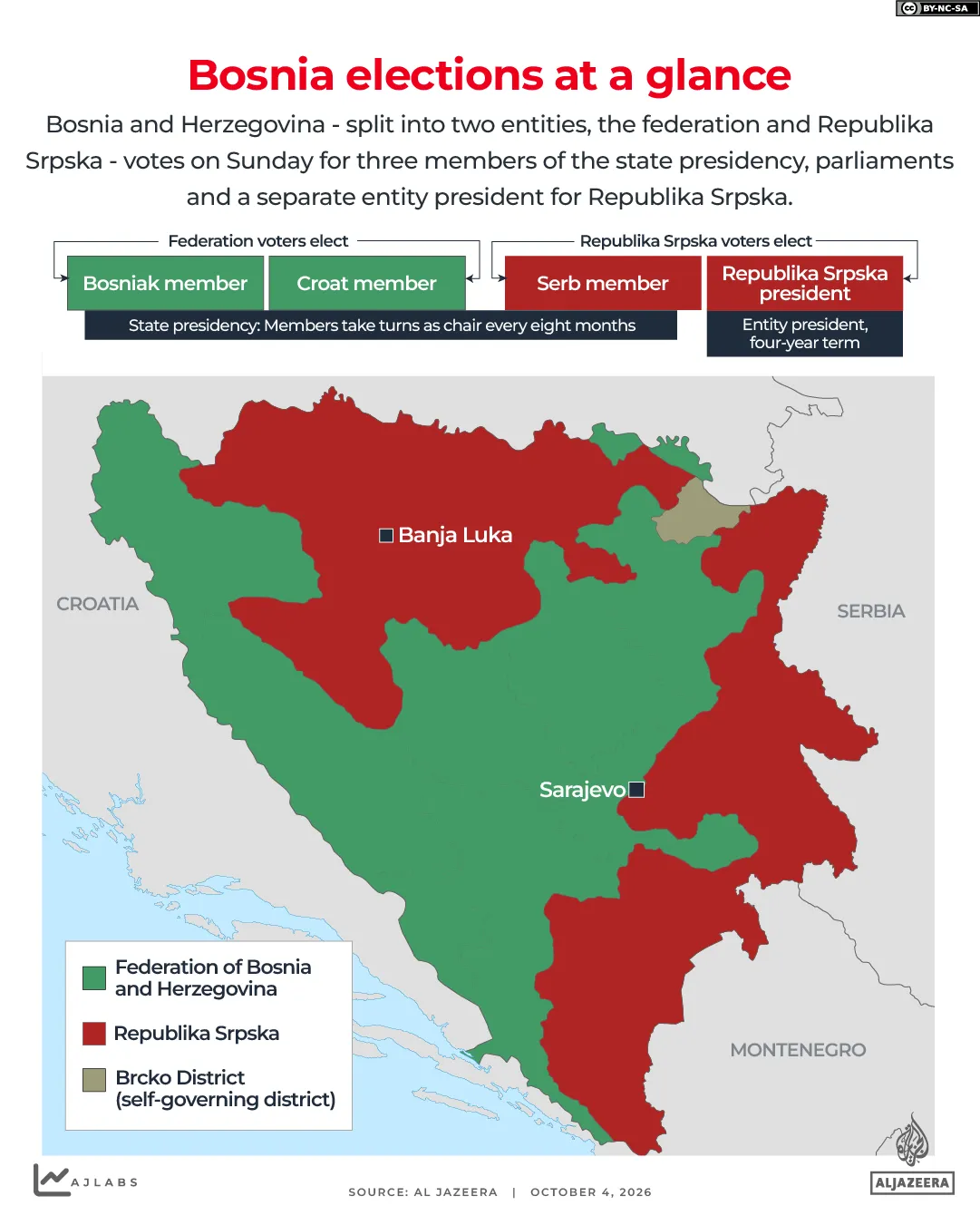
Bosnia general election 2026 explained in maps and charts | Elections News
Bosnians are heading to the polls to choose the next government at all three of the state, entity and canton levels. It may seem complicated, but for a country divided into two entities – the Federation of Bosnia and Herzegovina and Republika Srpska, along with Brcko District – this is nothing new.
When do Bosnia’s elections take place?
The general elections are scheduled for Sunday, October 4. More than 3.4 million people are eligible to vote.

What’s different about this election?
This year, new election technology will be used. Voters will be identified using biometric devices, while ballot papers will be scanned rather than simply placed in ballot boxes.
The use of scanners, however, does not mean voting will be fully electronic. Votes will still be cast and recorded on paper, but verification and counting should be faster and more transparent, while voter identification should be more accurate.
Who is running for the Presidency?
Candidates for the Bosniak representative include current Presidency member Denis Becirovic of the Social Democratic Party (SDP), Bakir Izetbegovic of the Party of Democratic Action (SDA), Semir Efendic of the Party for Bosnia and Herzegovina (Stranka za BiH), and Fahrudin Radoncic of the Union for a Better Future of BiH (SBB).
Izetbegovic, the president of the centre-right SDA, the biggest Bosniak party in the country, is running for his third term after being defeated by Becirovic in 2022.
Three candidates will run for the Croat seat in the Presidency: Darijana Filipovic of the Croatian Democratic Union of Bosnia and Herzegovina (HDZ BiH), Slaven Kovacevic of the Democratic Front (DF), and Zdenko Lucic, a candidate supported by a coalition of five Croat parties.
The current Serb member of the Presidency, Zeljka Cvijanovic from the right-wing Alliance of Independent Social Democrats (SNSD), is running for a second term. During her term on the country’s top state body, which began in November 2022, just a few months after Russia’s war in Ukraine started, she maintained close and continuous cooperation with Russia and its president, Vladimir Putin.
SNSD is led by Milorad Dodik, the former president of Republika Srpska, best known for his separatist moves and for challenging the Constitution of Bosnia and Herzegovina and the decisions of former High Representative Christian Schmidt.
Cvijanovic will face Marinko Bozovic of the Serb Democratic Party (SDS) and Nebojsa Vukanovic of the List for Justice and Order.

Who else is on the ballot?
Voters will be choosing representatives for 14 governments, as well as members of the country’s three-member Presidency.
Each entity has its own president, assembly, prime minister and ministers. The Federation of Bosnia and Herzegovina is further divided into 10 cantons, each with its own government.
For all this to happen, the Central Election Commission (CIK), the main body responsible for overseeing the voting process, earlier said that 75 political parties and four independent candidates were registered and eligible to participate.
How are Presidency members chosen?
When registered voters go to the polls, they do not elect one president, but choose one of three members of the country’s collective head of state. They are the representatives of the three constituent peoples – Bosniaks, Croats and Serbs.
The Bosniak and Croat members are elected from the Federation of Bosnia and Herzegovina, while the Serb member is elected from Republika Srpska.
This is because the majority of Bosniaks and Croats live in the Federation, while most Serbs live in Republika Srpska.
The election of the Croat member has weighed on Bosniak-Croat relations for years and has often been used as a reason for political blockades.
Parties gathered around the centre-right Croatian Democratic Union of Bosnia and Herzegovina (HDZ BiH) are demanding changes to the Election Law, saying they want to prevent Bosniak voters from influencing the election of the Croat member of the Presidency.
But that would also require changes to the Constitution, which allows all citizens in the Federation to choose whether they want to vote for the Bosniak or the Croat member.

What about citizens who live outside their constituent group’s voting area?
A Serb living in the Federation, or a Bosniak or Croat living in Republika Srpska, who wants to run would not be able to do so, nor can they vote for those they consider to be their own representatives.
That is one of the many paradoxes of Bosnia and Herzegovina’s electoral system.
How is the state-level government chosen?
Citizens elect representatives to the Parliamentary Assembly, which consists of two houses.
Forty-two representatives will be elected to the House of Representatives.
Two-thirds are directly elected from the Federation of Bosnia and Herzegovina, and one-third from Republika Srpska.
A quorum consists of a majority of all members elected to the House of Representatives.
The second chamber – the House of Peoples – has 15 delegates and is elected indirectly through the institutions. It consists of Bosniaks, Croats and Serbs – five from each group.
What happens with the entities?
The election of entity-level authorities works somewhat differently.
In Republika Srpska, citizens directly elect the National Assembly, as well as the entity president and vice presidents.
They do not directly elect the government – it is confirmed by the National Assembly.
In the Federation of Bosnia and Herzegovina, citizens directly elect the House of Representatives of the Federation Parliament and the cantonal assemblies.
Those cantonal assemblies then elect delegates to the Federation’s House of Peoples.
The president of the Federation, the entity government and the cantonal governments are formed after the elections, through parliamentary majorities and political agreements.
Why is it a challenge to form the government?
It is difficult not only because the electoral system is complex, but also because of the lack of agreement among representatives of the three different ethnic communities.
Frequent blockades and obstruction make decision-making difficult at all levels, even though many politicians invoke the politics of compromise.
Elections in Bosnia and Herzegovina, therefore, are not only about who wins, but about whether a system designed to represent everyone can serve its citizens.
Why are the elections important?
New election technologies might reduce potential fraud, but much more will be needed for the country’s path towards the European Union.
The outcome of the election could unblock, or further slow down, the adoption of key laws needed for the country’s progress towards EU membership.
The EU granted Bosnia and Herzegovina candidate status in December 2022 and opened accession negotiations in 2024.
However, the country’s progress has since been assessed as very limited and slowed by political blockades.
These elections will also be a test for the ruling coalition, which promised to focus on social and economic issues amid the rising cost of living.
When are the results?
The first preliminary results are traditionally published by CIK late on election night, on October 4, and are updated every few hours.
In the days after the elections, CIK gradually enters votes from the remaining polling stations, mobile voting teams, as well as ballots received by mail and from diplomatic and consular missions.
The official results will be known no later than November 20.

Saudi-backed Yemeni army says 700 Houthis killed in 24 hours | Conflict News
Yemen’s Saudi-backed government forces claim to have killed hundreds of Houthi fighters as they attempt to retake swathes of lost territory. The Houthis said they targeted an Aramco facility in Riyadh, although Saudi authorities have not confirmed the strike.
Published On 4 Oct 2026

Debbie McGee reveals precious final days with TV star husband Paul Daniels
EXCLUSIVE: The star opens up in new book A Magical Life, saying: ‘Even though I was losing him, I just kept telling myself – I still do – how lucky I was.’

Paul Daniels and Debbie McGee in 2015, a year before he died(Image: Ken McKay/ITV/REX/Shutterstock)
Debbie McGee had been in bed for barely half an hour when the nurse woke her to say her wonderful, magical husband was nearing the end. After almost four decades together, there was nowhere else Debbie wanted to be than with Paul Daniels.
She says: “I got up and went to him, laying alongside him on the hospital bed, just cuddling him. Paul always used to tell people that I was the best thing that happened to him. I wanted him to know that he was the best thing that ever happened to me.”
Ten years after Paul’s death at 77, Debbie, 67, has laid bare the agony and the profound tenderness of his final weeks in her new autobiography, titled A Magical Life.
She says: “Even though I was losing him, I just kept telling myself – I still do – how lucky I was.”
To see more of the stories you love from The Mirror and to find them easily in Google then make us your preferred source. Free and easy-to-do, just click on the link here to find more from The Mirror at the top of your feed.
The pair had met during a summer season in Great Yarmouth in 1979, the year The Paul Daniels Magic Show began its 15-year run on BBC1.
They married in 1988 and, although they had no children together, she became stepmother to his three sons, Paul Jr, Martin and Gary.
Their professional partnership continued long after his television heyday, with the couple still touring together in 2015. By the autumn, however, Debbie had begun to notice Paul seemed unusually tired, not least when he struggled to learn his lines for a pantomime.
Soon he began missing parties, leaving her to go alone, and when she returned he was often in bed. Even wrapping the Christmas presents, something they usually enjoyed together, no longer interested him.
Debbie writes: “Paul would usually have six projects on the go at any one time. He would get up in the morning and be straight on his laptop. He couldn’t sit still.
“But now he didn’t seem interested in anything. He would just sit in front of the TV until he fell asleep.
“When he was up and about, his balance seemed to have gone. He kept falling over.” Blood tests led to a suspicion of pernicious anaemia and a course of injections was prescribed.
But Paul continued to weaken, and Debbie rang the surgery desperate for answers. She told the doctor: “I can’t describe what’s happening but this isn’t my husband.”
Eventually, Paul was referred to a neurologist. However on the morning of the appointment he was sick after breakfast, and so Debbie called an ambulance. A CT scan later revealed a glioblastoma that had spread across much of the left side of his brain and was extending towards the right.
The consultant asked Paul: “Do you want me to tell you what’s wrong?” He replied: “No. Tell Deb.” Paul waited in the hospital corridor while Debbie stayed to hear the results, expecting an explanation of how doctors would treat him.
But though radiotherapy was discussed, the consultant could not promise it would improve his condition. Paul’s severe claustrophobia also made the prospect of wearing a treatment mask daunting.
Debbie says: “In desperation, I asked, ‘Is there any treatment he could have in America?
“‘If this was your spouse, what would you be doing?’” The consultant promised to discuss the case with oncologists, but told Debbie quite frankly: “In all honesty, if this were my spouse, I would be taking them home and making them as comfortable as possible.”
In the end Debbie was told Paul might have two months, and went home to prepare for his return.
When she came back to the hospital, she found him in his Crombie coat and favourite trilby, dancing with a nurse. Debbie recalls: “In that moment it was hard to believe there was anything wrong with him at all.
“He seemed like himself again. The man I loved. My Paul.”
After they announced his diagnosis publicly, around 800 emails and letters arrived in a single day. His sons and grandchildren visited.
With Paul prone to falling because of the tumour, Debbie’s sister Donna also moved in to help watch over him, finally allowing Debbie to get some much-needed sleep. Debbie says: “Paul didn’t ever want to know what was wrong with him.
“I think he knew that he was dying but he couldn’t discuss it. I didn’t try to press him. There was no benefit to distressing him.”
Days were spent watching Only Fools and Horses and taking short walks when the weather allowed. Paul had a Magnum ice cream every afternoon. Debbie remembers: “It was a very loving, peaceful month. I couldn’t deny what was happening, but I really forced myself to stay in the moment and not look forward and not look back.
“I would wake up, put my make-up on and smile, although it was sort of fake. Each new day I told myself, he’s still alive today so we’ll make the best of it.”
One film they watched together during those weeks has become impossible for her to watch again.
She explains: “I only cried in front of Paul once and I only saw him cry once in front of me. It was when we were watching one of the films in the Best Exotic Marigold Hotel series.
“At the end of it, there’s a wedding. The young couple at the centre of the film get married. I turned to Paul to see that he had tears streaming down his face.
“I can’t watch that movie any more.” As his condition deteriorated, nurses began sitting with Paul overnight. On March 14, Debbie’s mother visited for her birthday and went to say goodbye.
“Paul couldn’t speak very well by then but he sang ‘Happy Birthday’ to Mum in a whisper,” Debbie says.
That was the last day Debbie remembers her husband being conscious. Afterwards, she just sat with him and talked, though she found it difficult to say much without crying.
Debbie adds: “Paul and I had a fairy tale life. Through the good times and the bad, we had faced every challenge together. We really were a team.
“I hope he knew that I was with him, loving him until the very end.”
A Magical Life by Debbie McGee is out on October 8 (Mirror Books).

High school flag football: Friday and Saturday scores
FRIDAY’S RESULTS
City Section
Panorama 14, Granada Hills Kennedy 13
San Fernando Arroyo 18, Sun Valley Poly 0
Van Nuys 25, Sylmar 0
Verdugo Hills 35, Monroe 6
Southern Section
Brentwood 26, Culver City 6
Harvard-Westlake 41, Flintridge Sacred Heart 0
Los Alamitos 28, Marina 0
Murrieta Mesa 20, Murrieta Valley 6
SATURDAY’S RESULTS
Southern Section
Ayala d. Sherman Oaks Notre Dame, forfeit
Bishop Amat 40, Oxnard Pacifica 19
Cajon d. Shadow Hills, forfeit
Cajon 12, Ayala 6
California Military Institute 24, St. Lucy’s 20
Camarillo 14, Bishop Amat 12
Camarillo 32, Channel Islands 21
Chaparral 26, Temecula Valley 0
Culver City 12, Cathedral City 0
Culver City d. Temple City, forfeit
Esperanza 18, Culver City 7
Esperanza 33, Cathedral City 0
Hart 13, Ayala 12
Hart d. Sherman Oaks Notre Dame, forfeit
Mission Viejo 21, Cerritos Valley Christian 7
Newbury Park 21, Del Sol 0
Newbury Park 50, Fillmore 13
Newbury Park 14, Hueneme 13
Oxnard 21, Cajon 6
Oxnard 27, Hart 0
Oxnard d. Shadow Hills, forfeit
Palos Verdes 20, Bellflower 0
Santa Barbara 26, Channel Islands 25
Segerstrom 21, Cerritos Valley Christian 7
St. Paul 46, Ramona Convent 6
Valencia 7, Oxnard Pacifica 7
Ventura 14, Santa Barbara 6
Ventura 19, Camarillo 13
Vista Murrieta 19, Great Oak 13
Westlake 53, Valencia 7
Westlake 51, Bishop Amat 26
Westlake 45, Ventura 26
Intersectional
El Camino Real 21, Buena 19
Hueneme 32, El Camino Real 26
Sage Hill 34, Venice 6
Wilmington Banning 12, Cypress 0
Trump defiant about midterm chances as he rallies for Republicans in Ohio | US Midterm Elections 2026 News
Trump tells a rally in Ohio that he believes there will be a “big surprise” in the upcoming elections.

Published On 4 Oct 2026
US President Donald Trump has continued rallying for Republican candidates while visiting Ohio, proposing a defiant outlook on his party’s chances in the November 3 midterm elections.
Trump told a rally in Vandalia, Ohio, that he believes there will be a “big surprise” in the upcoming elections, claiming his Democratic opponents do not know what is happening.
Recommended Stories
list of 3 itemsend of list
Polls have suggested that Democrats could gain ground in the midterms, but the US president said Republicans would do better than critics expect.
“Just get out and vote,” Trump said as he rallied for US Senator Jon Husted, gubernatorial candidate Vivek Ramaswamy and other Republicans.
“If you do that, we’re going to win, and we’re going to win big,” he said.
Ohio’s Senate race
Multiple incumbent Republican senators across the country face tough political headwinds, with Trump’s popularity falling in recent months as higher petrol prices and those for other staples persist amid the US-Israel war on Iran.
Husted, a Republican in a competitive Ohio race against Democrat Sherrod Brown, hopes the president can motivate supporters who might otherwise skip midterm elections.
Trump garnered more than 55 percent of the Ohio vote in the 2024 presidential election, but economic concerns since then have sunk his approval ratings.
Ohio petrol prices increased 35 percent over the past year to $4.16 per gallon (3.8 litres) on average, according to the American Automobile Association (AAA), which compiles data on automobile travel. Trump’s trade policy with Canada has also led to retaliatory Canadian tariffs that affect about $3bn worth of Ohio exports, based on 2025 figures, Canadian broadcaster CBC reported.
Talking to reporters shortly before addressing Saturday’s rally, Husted said the US has to win the Iran war “on our terms” and, in the interim, he is “showing people that I’m fighting for lower prices”.
Hot political issue
Trump extensively promoted his administration’s action on data centres, mainly those built for AI, during the rally, saying he was seeking to ensure they “benefit local communities” and praising Husted for an unsuccessful attempt to push forward legislation on the issue.
“Look, there’s so much money to be made for Ohio. You can’t just turn them off. They’ll go to China,” he said, repeating his defence of data centres.
Data centres have become a hot political issue, drawing bipartisan opposition in races across the country, with voters concerned about their impact on electricity prices, farmland and water supplies.
The issue became especially acute in Ohio, where Husted has been repeatedly attacked for his role in attracting data centres to the Midwestern state as lieutenant governor.
The Republican-controlled Senate tried to advance legislation this past week sponsored by Husted that would ask utility regulators to effectively charge large power users more, as consumers struggle with high energy costs. But it was blocked by nearly all Democrats.
“Senator Jon Husted gave billions in tax breaks to Big Tech to make sure they would build their data centres in Ohio,” Brown wrote on X on Friday, ahead of Trump’s visit. “Now, he’s making Ohioans foot the bill.”
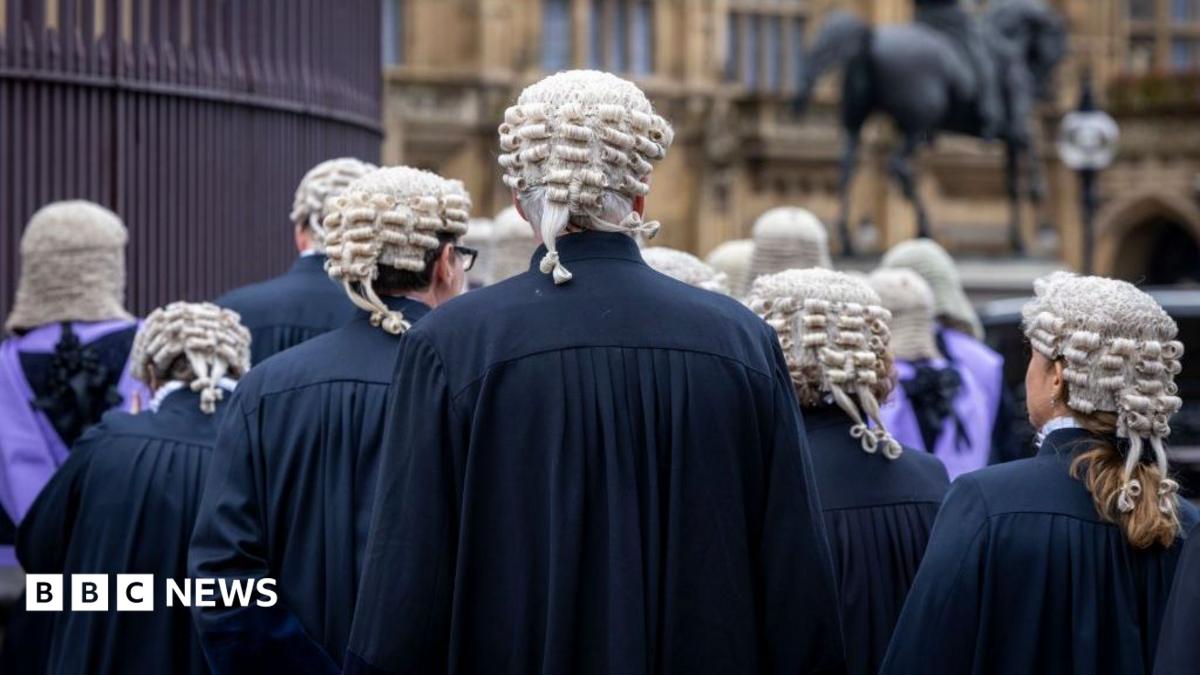
Burnham scraps controversial plans to curb jury trials
Prime Minister Andy Burnham has scrapped controversial plans to curb some jury trials.
Sir Keir Starmer’s government had introduced proposals to allow judges to make the sole decision on cases that would lead to a sentence of less than three years.
The Ministry of Justice (MoJ) said only complex fraud and financial offences would be judge-alone – and it proposes that thousands of medium-level crimes should stay with volunteer magistrates, who sit without a jury.
Justice Secretary Alex Norris said he had changed course came after hearing the “strength of feeling”. Criminal lawyers have welcomed the decision and the Conservatives say it is a “major victory” for those who fought to defend trial by jury.
Former Justice Secretary David Lammy first announced the plans in December following a recommendation in a major review of the court system in England and Wales.
The series of radical reforms, including scaling back jury trials, were presented as the best way of turning around record backlogs which, in turn, were exacerbating the prison population crisis.
The backlog – which has led to record delays for defendants and victims – currently stands at nearly 81,000 cases – having rocketed largely thanks to cuts before the pandemic and court closures during the national lockdowns. Official projections have estimated it could reach 100,000 before the next general election and, in a worst case scenario, climb to double that number by 2035.
There are, however, indications the backlog is now stabilising after the government committed unlimited funding to pay for more judges to sit in courts that were otherwise being unused.
Under the original plans, Lammy had wanted to reserve jury trials for the most serious “indictable” offences – meaning cases that are always sent to Crown Court, including murder and rape.
Less serious offences, where the sentence would be no more than three years, would be decided without a jury in the Crown Court by a judge alone. Even less serious offences would stay in magistrates’ courts, abolishing defendants’ right to ask for a trial by jury when they feel that is their best chance of beig cleared.
The proposals triggered an outcry across many parts of the criminal justice world, with many opponents saying that eroding the 800-year-old right to trial by jury would not solve the backlogs.
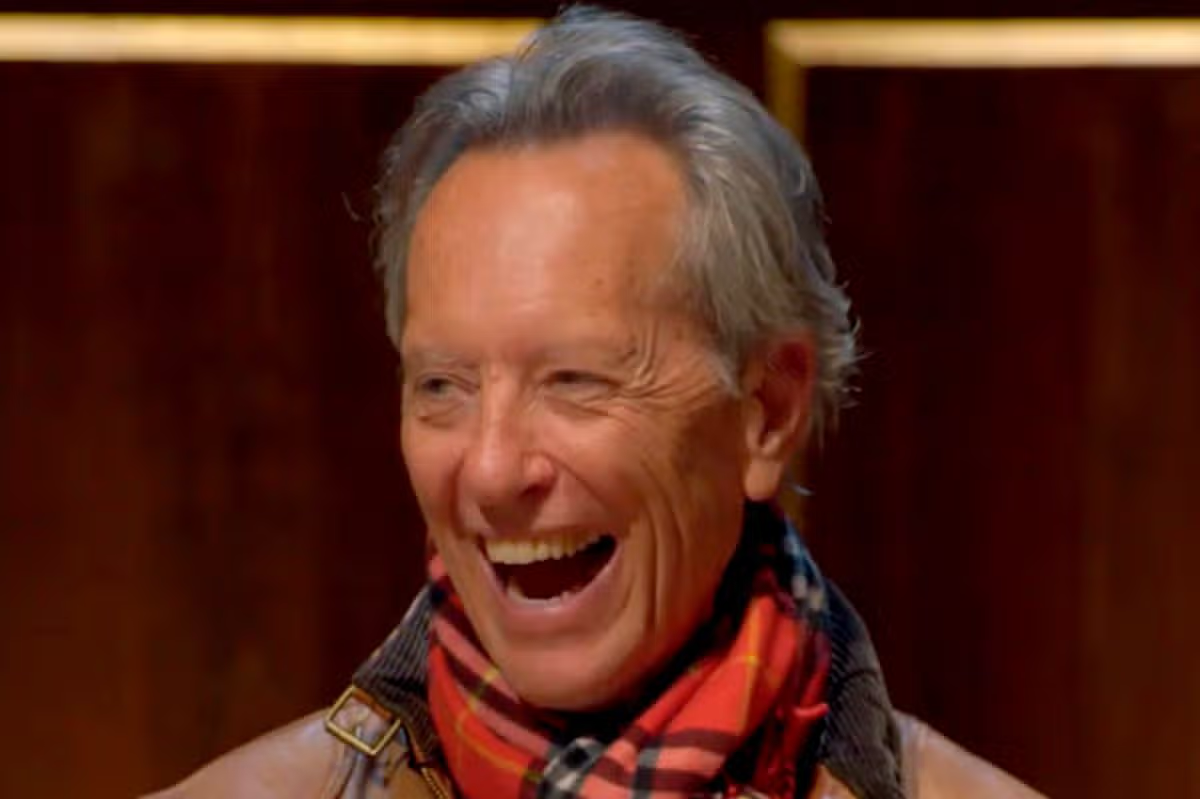
Celebrity Traitors star Richard E Grant ‘admitted he just went mad’ in unseen moment
The Celebrity Traitors got under way in dramatic fashion this week and traitor Richard E Grant admitted he ‘just went mad’ with one of his decisions.

Richard E Grant has spoke about his Traitors experience
Celebrity Traitors star Amol Rajan has said Richard E Grant told him that he “just went mad” when he decided to remove him from the game.
Writing in his newsletter Amol said he asked Richard why he chose to eliminate him and the actor replied: “To protect myself. And that’s a compliment!”
Amol replied: “But if you really wanted protection, you should have recruited me. That would have been a compliment!” He says Richard told him: “Ah yes, that makes sense. But I think I just went mad.”
Traitor Richard gave away the game almost immediately in the show’s second series when the actor admitted he was a traitor, despite the aim of the game being to hide the fact.
To see more of the Traitors stories you love from The Mirror and to find them easily in Google then make us your preferred source. Free and easy-to-do, just click on the link here to find more from The Mirror at the top of your feed.
Richard was picked by Claudia Winkleman to be one of two contestants picked to be a traitor – a player who attempts to “murder” others on the show while pretending to be an ordinary participant.
But rather than go under the radar, Richard announced his role as a traitor. And he has now admitted to Amol Rajan that he doesn’t know what came over him.
Richard and fellow traitor, Love Island host Maya Jama, chose to murder the former BBC presenter in episode two.
Amol explained: “He said: “I was so thrilled to be chosen as a traitor that, in my unguarded excitement, I said, ‘Of course I’m a traitor.’ I clearly need to diffuse all the heat that’s coming in my direction.”
Richard added: ““Well, the game had actually started, I was so relieved that it started because I had been so blatant about saying I came into this thing and it’s called Traitors, because I wanted to be a traitor.
“So when I walked into the bar, somebody said, ‘so you’re a faithful or a traitor?’, and I said, ‘I’m a traitor’, of course.”
While Amol admitted he would have liked to have been recruited to be a traitor, that accolade fell to comedian James Acaster.
The decision left Amol being murdered from the game and speaking on The Celebrity Traitors: Uncloaked on Friday, he said: “It’s hard not to watch it and think I, obviously, with 20/20 hindsight, I played the wrong game. That was a crazy, crazy once-in-a-lifetime [opportunity].”
He went on: “I think I would have been quite a good traitor because I’d actually known what it was like to be a faithful.”
And in advice to Richard he said maybe the star should have tried to stay off the radar a bit more rather than confess so blatantly. Amol said: “I think the one tactic that you should try to abide by is to keep a little bit, you know, fly under the radar a little bit for the first few days. Just shut up for the first few shows.”
After the second episode left fans wondering what was to come in a tense cliffhanger, viewers have to wait until Thursday to find out. Celebrity Traitors isn’t on again until Thursday (October 8, at 8pm), with the show once again doing a Thursday-Friday double.
The Celebrity Traitors airs on Thursdays and Fridays on BBC1 at 8pm.
Like this story? For more of the latest showbiz news and gossip, follow Mirror Celebs on TikTok, Snapchat, Instagram, Twitter, Facebook, YouTube and Threads.
Nearly 1,400 laid off at Ohio truck factory days before Trump rally
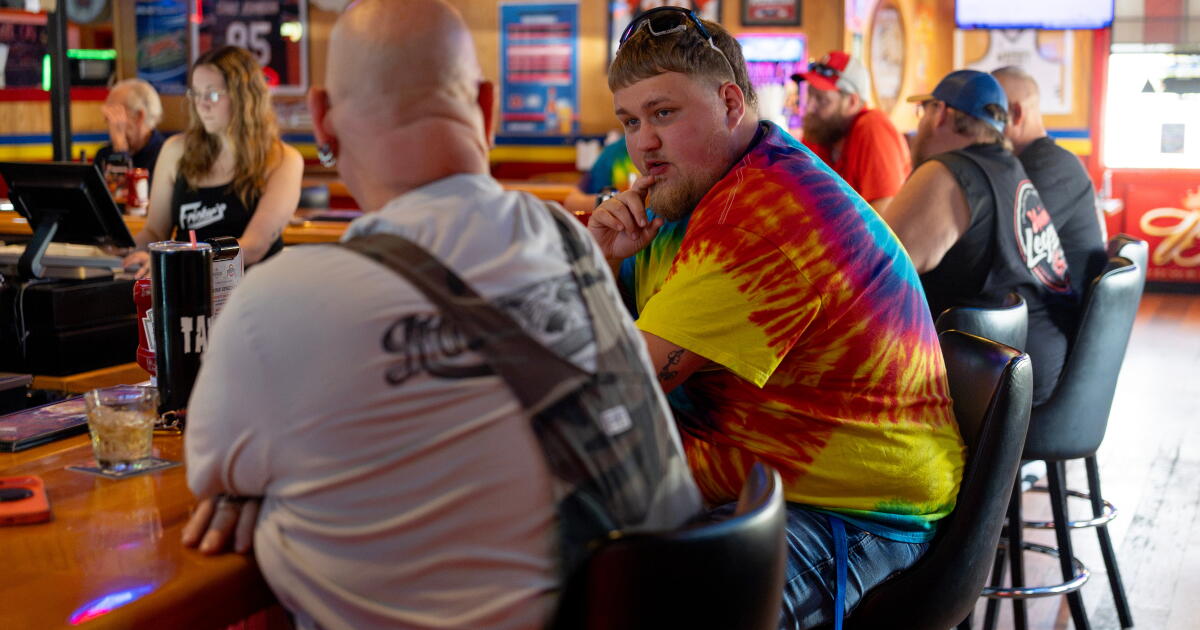
WASHINGTON — Sipping tea from beer mugs with his co-workers, Kyle Bos listed the ways his life is changing.
Bos has two daughters, with a third due in January. At the grocery store, five items cost as much as a full cart once did. And on Wednesday, Bos and nearly 1,400 other people were laid off from their jobs as the Navistar truck factory in southwestern Ohio shut down.
The layoffs — occurring three days before President Trump’s rally Saturday at a nearby high school — were large enough to essentially erase an entire year of job growth in the greater Dayton area. And they are one reason why Bos, 30, plans to spend the final weeks before the November election canvassing votes for Democrats.
Asked how many times he voted for Trump, Bos held up three tattooed fingers. But he said he’s done with the president.
“Something has to change politically in this country,” said Bos, a member of the United Auto Workers who identifies as a centrist.
A Trump campaign stop
This election is a test for the working-class coalition that lifted Trump into the White House again and gave majorities to Republicans in the House and Senate. The outcome will be decided in places like Dayton, which once sprouted factories but shed about half of its 90,000 factory jobs since 1990 after the North American Free Trade Agreement and trade with China made it cheaper to buy auto parts from abroad.
Trump’s blunt talk and status as a celebrity businessman initially helped him in and around Dayton, where some said politics as usual had failed them. But voters this year are disgruntled about inflation and the war in Iran.
An Ohio race could help determine control of the Senate. Republican Sen. Jon Husted is facing a challenge from Democratic former Sen. Sherrod Brown, who is trying to harness that disenchantment as he attempts a comeback two years after losing his seat.
Americans increasingly blame Trump for the high cost of living, with just 17% approving of his handling of the issue, according to a new AP-NORC poll. Trump didn’t talk about grocery prices or gas prices or layoffs at his Saturday night rally in Vandalia, part of what he says will be a 32-day marathon of rallies to try to convince the public that the economy is better than they think.
“The fake news media, they refuse to talk about our record-setting numbers. So tonight, if you don’t mind, I’m going to do it myself,” he said at the rally.
Trump largely has scoffed at concerns about affordability, but is promising to give people $5,000 checks if Republicans win the House and Senate next month— something Bos said he found offensive.
“It feels like a bribe, a slap in the face, and, like, that we’re all ignorant,” Bos said.
Factory work moved abroad
As steady paychecks vanished in the 1990s, drug addiction and crime increased. Things seemed to hit bottom after the 2008 financial crisis, prompting Phil Plummer, who was then Montgomery County sheriff, to enter politics.
“My jail was 40% drug addicts, 50% mental health patients, 10% criminals,” said Plummer, the Montgomery County GOP chairman who has been a Republican state representative since 2019. “We got it upside down — that’s what drove me to the statehouse.”
Plummer is now on the ballot for the Ohio state Senate and thinks Trump is what keeps the GOP’s coalition of businesses and working-class families together.
In recent years, the local economy has improved as the Wright-Patterson Air Force Base steadily added government workers. The base has drawn new aerospace companies to the area such as Joby Aviation, Electra and the Sierra Nevada Corp.
“In economic development, it takes time, and you have got to give it a little bit of time to bake, and then once it does, then you’re going to have something special,” said Jeff Hoagland, chief of the Dayton Development Coalition.
Demand at plant fell
Trump pointed to the $850-million investment by aircraft maker Electra — along with a new project in Ohio from Stellantis and a Friday announcement from Bayer for a $2.2-billion drug plant near Columbus — as evidence that his policies were creating jobs.
But at the Navistar plant, Trump’s broad tariffs never boosted demand, and the plant’s former owner, International Motors, chose to offload the facility.
Trump’s major legislative achievement, the One Big Beautiful Bill Act, contributed little to people’s take-home pay, even as it temporarily stripped taxes from tips and overtime.
“We weren’t getting a lot of overtime because of the economy,” said Marianne Donnelly, who drove a forklift at the factory. “There just wasn’t any to be had, very little to be had.”
Laid-off workers like Donnelly say they expect to be rehired in six to 12 months by Roshel, a Canadian manufacturer of armored vehicles, which is buying the plant. Roshel said in a statement that it’s “working with everyone involved not only to protect the current workforce, but to more than double it over the coming years through a phased process.”
Laid-off workers looking for hope
On the Monday before the layoffs, Morgan Hughes and JoJo Burkhard were knocking on doors in Kettering, a Dayton suburb. They were trying to convince union members and retirees to vote for Democrats.
The Navistar job had helped Hughes, 35, buy a house at age 21 and work alongside her father. Burkhard said inflation had made it easier to swing voters to their side.
“It isn’t a hard pitch at all,” she said. “And even if they don’t want to stay Democratic long term, they’ll at least give the candidates a chance this election, which could be a turning point for us.”
After a morning of talking to voters, the pair settled down at a Chinese restaurant for some pot stickers, and the weight of the week hit them.
Burkhard cracked open a fortune cookie and tears began to well up. The layoffs meant no work for her, her boyfriend and her mother — and the words in small print almost seemed prophetic.
Her fortune read: “You’ll find your inner strength to overcome challenges.”
Boak writes for the Associated Press. AP writer Seung Min Kim in Vandalia contributed to this report.
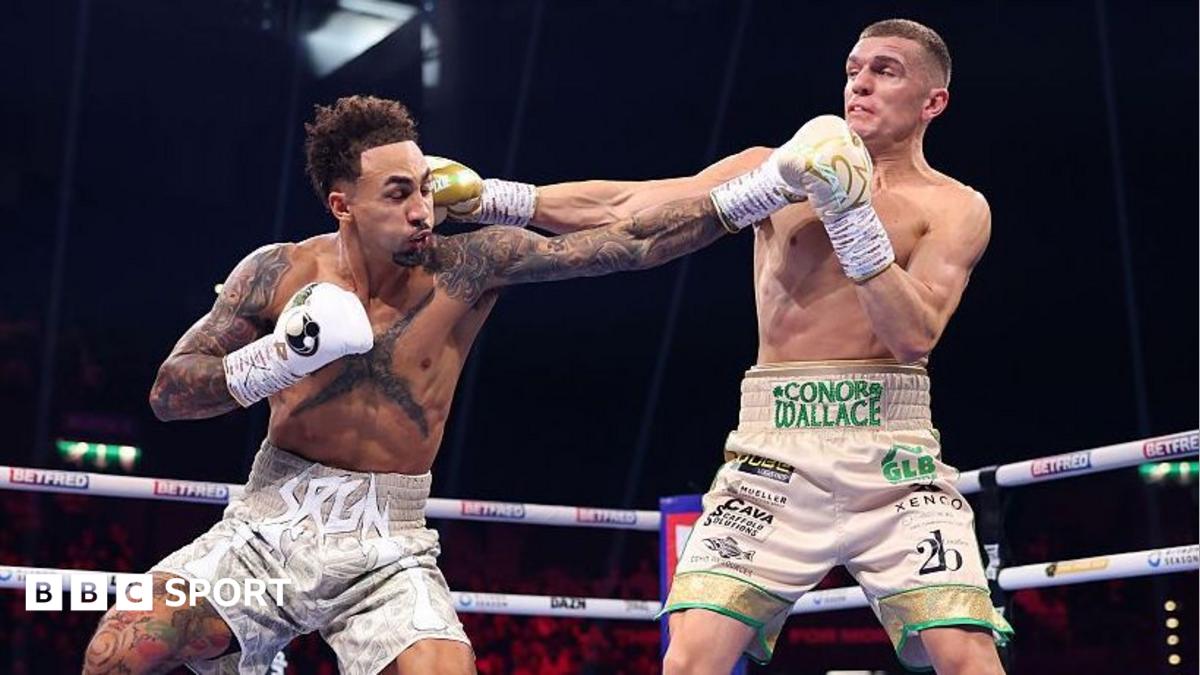
Whittaker survives late scare to hold on for points win over Wallace
Whittaker made an extravagant entrance, accompanied by a live string ensemble playing WWE star The Undertaker’s theme before switching to “Icon” by Karen.
Despite being from nearby West Bromwich, Whittaker was greeted by as many jeers as cheers from the roughly 5,000 fans inside the arena.
The fight came alive in the third when Whittaker briefly staggered Wallace with a shot that skimmed his forehead.
Wallace’s travelling support made themselves heard, only to be drowned out by an airhorn smuggled into the arena as Whittaker found his rhythm
Among those in attendance were former UFC champion Leon Edwards and American Cassondra Gainey, who travelled nearly 4,000 miles from North Carolina after Whittaker’s social-media videos helped lift her spirits during cancer treatment.
Wallace offered a warning of what was to come when he landed a heavy left in the sixth.
“Stay focused. Just because you’re comfortable, don’t get lazy,” trainer Andy Lee told Whittaker, who regained control before an almost disastrous 10th round.
Wallace hurt him with a thudding southpaw left before Whittaker walked on to a huge shot and looked in serious trouble.
Whittaker briefly got some respite when Wallace was warned for punching on the break, but he continued pushing forward as a major upset suddenly felt possible.
Whittaker hit the canvas three times in the final round, none ruled knockdowns, as Wallace threw everything at a visibly tiring opponent.
By the end, Whittaker had done enough to win – but not without giving Wallace and his support reason to wonder what might have happened with a little more time.
“I only have myself to blame,” he said. “I feel like I’ve got the best support in the world. This felt like my home show tonight even though it’s in Birmingham.”
Promoter Eddie Hearn welcomed the possibility of a rematch: “We know Ben is in the position to fight the winner of Bivol-Smith but it’s likely that won’t be until next summer, so he needs to fight in the interim.”
Cornell president vows transparency amid outrage over fraternity rape case | Education News
Michael Kotlikoff expresses deep sorrow over the case, calling it one of the most challenging periods for Cornell.
Published On 4 Oct 2026
Cornell University’s president, Michael Kotlikoff, has called the alleged 2024 gang rape of a student at a fraternity house “deeply disturbing”, pledging greater transparency amid mounting outrage over how the school handled the case.
“My heart aches when I think of what she experienced,” Kotlikoff said in an eight-minute video message to the Cornell community on Saturday.
Recommended Stories
list of 3 itemsend of list
He characterised the past week as one of the most difficult in the university’s history and said it would weigh on the university for years to come. “It raises heartbreaking and troubling issues about sexual assault, dehumanisation and aspects of party culture, alcohol and drug use,” he said.
The woman, identified in court documents as Jane Doe, alleges she was sexually assaulted by multiple members of the Chi Phi fraternity in 2024 and has sued the university and seven former students.
Scrutiny over Cornell’s handling of the case intensified after New York Governor Kathy Hochul said newly released information had undermined her confidence in the local prosecutor, who initially declined to bring charges.
Hochul subsequently appointed state Attorney General Letitia James as special prosecutor to take over the criminal investigation, saying she would “not allow anyone to sweep this case under the rug”.

The case has also renewed scrutiny of the “voluntary intoxication loophole” in New York law that makes it difficult to prosecute sexual assaults involving victims who voluntarily consumed alcohol or drugs, even if they later became too intoxicated to consent.
Tompkins County District Attorney Matthew Van Houten had cited the legal provision in defending his original decision not to pursue charges. Hochul has pledged to push for changes to it.
At a student assembly hearing on Thursday, several speakers called for Kotlikoff’s resignation.
In Saturday’s video, Kotlikoff reaffirmed his support for an independent review of the university’s handling of the case and said Cornell’s Board of Trustees would announce details next week. He also called for a “serious look at the role of fraternities and sororities in campus life”.
James’s appointment has placed the case under a prosecutor whose office has repeatedly clashed with President Donald Trump. She has separately described the case as “an active criminal investigation”.

Ethiopian government troops seize Tigray’s capital Mekelle | Conflict
Ethiopia’s government forces say they’ve seized Mekelle from Tigray fighters after a week of intense battles. The fighting has reignited fears of a full-scale war that could draw in neighbouring countries.
Published On 4 Oct 2026

Jake Quickenden shows off kitchen in new home after splitting from wife Sophie and moving out
JAKE Quickenden has showed off the kitchen in his new home after splitting from wife Sophie and moving out.
Back in May, The Sun revealed the former X Factor and I’m a Celebrity star had split from his wife after four years of marriage.
Last month, it was revealed Jake, 38, had moved out of the marital home and now he has shown his followers a glimpse of his new property.
Standing in the kitchen near a set of double patio doors leading out into the garden, Jake said he wanted to “have a bit of colour.”
He added: “I didn’t want to go boring grey.”
To highlight his point, he showed off green, leather high stools that he had at one end of the kitchen around a table and in front of a large statement clock and funky gold lighting.
Read More on Jake Quickenden


At the other end of the kitchen are white units with a gold Quooker tap over the sink which he was impressed with.
He said: “So yeah, this is the kitchen, I hope you like it, I love it.”
In the caption he added: “Kitchen reveal…. I forgot to mention some bits so any info you want just ask in comments.. seriously @quookeruk is a game changer and @babyeleganceire high chair is so cool.
“But yeah been here a week and I feel like I’ve really made it nice for me and the boys…. It’s been stressful and I’ve had ups and downs, esp falling down the stairs and putting a hole in the wall this morning, but this is home now.
“Thanks for being cool everyone have a nice weekend.“
When Jake first shared a post about his new home, he admitted fearing his two sons with Sophie – Leo, five and Kit, one – wouldn’t feel like it’s home when they come to stay.
He added: “I’m not good on my own, never have been but maybe that’s part of the journey to get comfortable alone for a while!
“It’s a strange feeling of excitement and anxiety, looking forward to making it my own but terrified to not be with the boys everyday.”

Trump announces $90 payments for seniors on Medicare
President Trump is promising more payments to voters just ahead of the Nov. 3 midterm elections — this time, to more than 20 million seniors, who each would get $90 to help pay for Medicare premiums.
The announcement, made late Friday night by Trump on social media, comes after he said last month about 1 million people would get rebate checks of $500 for Affordable Care Act premiums. It also comes after his One Big Beautiful Bill Act last year slashed funding for Medicare, disqualifying thousands from eligibility and raising fees for the rest, and for the ACA, raising premiums for millions by eliminating tax credits.
Trump has also promised on the campaign trail to send every American adult $5,000 if Republicans retain control of the House and Senate in the midterm elections.
His latest promise — which, like the others, would require approval from Congress — would probably cost more than $1 trillion, adding to the ballooning deficit and worsening inflation.
Polls show Americans increasingly blame Trump for the high cost of gasoline and groceries, with just 17% approving of his handling of inflation. Rising healthcare costs are also a key component of the affordability struggles many face across the country.
The president has sought to shrug off concerns about affordability, claiming the economy is booming.
The White House said the $90 payments for seniors would come from the Medicare Improvement Fund, established by Congress in 2008 as flexible funding to improve program operations and payments to healthcare providers.
As proposed, Medicare Part B enrollees would receive a one-time payment in October, either through direct deposit or by check, the White House said. Total monthly costs for the program — which covers costs like doctor’s visits, ambulance services and lab tests — start around $200 and vary with income.
To be eligible, seniors must be living in the U.S. and not be already receiving premium assistance from Medicaid or paying adjusted monthly premiums based on income, according to the Centers for Medicare and Medicaid Services. Seniors enrolled in Medicare Advantage, a private plan alternative to traditional Medicare coverage, would not be eligible for the payment. More than half of eligible Medicare beneficiaries have Medicare Advantage, according to healthcare research nonprofit KFF.
Previous administrations have not used the Medicare Improvement Fund in this way, although Congress has periodically taken out money from the fund to pay for other priorities, said Larry Levitt, KFF’s executive vice president for health policy. For example, $20.74 billion was used for the creation of the Affordable Care Act in 2010.
“The Medicare Improvement Fund language is quite broad and gives substantial discretion to the administration,” Levitt said.
Goldin writes for the Associated Press.
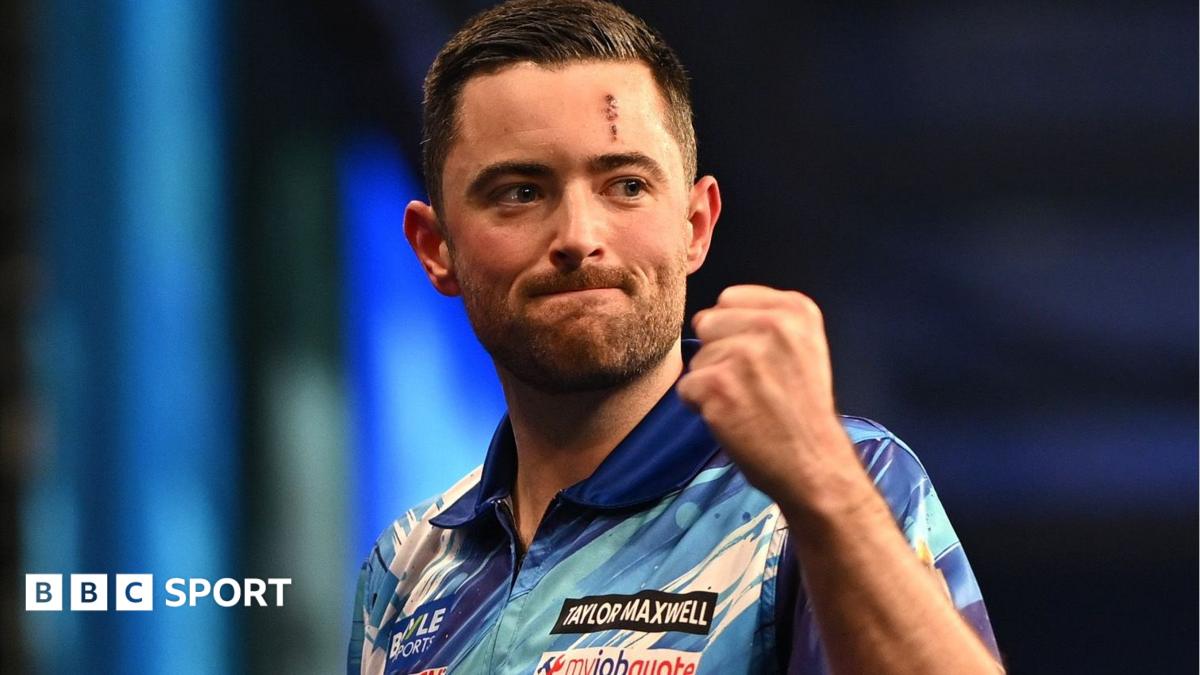
World Grand Prix: Luke Humphries beats James Wade to secure final showdown with Gerwyn Price
World number two Luke Humphries secured his place in the World Grand Prix final with a 5-3 victory over James Wade.
Humphries averaged 96.92 and threw 10 180s as he reached the final for the fourth successive time.
The 31-year-old Englishman will face Welshman Gerwyn Price on Sunday evening in Leicester after he beat Nathan Aspinall in the other semi-final.
“I’ve got to do it again because there’s so many major finals I’ve let slip. Gezzy [Price] is playing well but if I play like that again, it’s going to be a cracking game and I hope it is,” Humphries told Sky Sports.
“To make four Grand Prix finals on the trot is super special. It’s history for myself and I’m proud of that but unless I pick that trophy up, unfortunately that history doesn’t mean anything.”
Humphries, who won this title in 2023 but has lost in the past two finals, took the opening set of the semi-final but Wade produced a brilliant 141 checkout en route to drawing level.
The pair exchanged the next two sets before Humphries took control of the contest to move 4-2 ahead.
Wade refused to go quietly and pulled one back to keep the match alive but Humphries held his nerve in the eighth set to seal victory on double top.
In the other semi-final, Price beat a spirited Aspinall 5-2.
The Welshman took a three-set lead as Aspinall struggled to reproduce the form that had seen him average 105.15 in his quarter-final win over Ryan Joyce.
Aspinall briefly rallied and produced a superb 132 checkout – the highest of the match – to get a set on the board.
The 35-year-old then threatened to turn the match around when he reduced the deficit to one set at 3-2.
However, Price regained his composure and closed out the next two sets without reply to secure his place in the final.
Price said he was “frustrated” by Aspinall’s antics during the match as he interacted with a partisan crowd at the Mattioli Arena.
“I’m glad to come through the game. Nathan was complaining about the crowd, but they were on his side,” Price said.
“He’s performing a little bit on stage. I’m great friends with Nathan, but take it on the chin sometimes when you’re losing.”

Zimbabweans struggle to rebuild after fleeing xenophobia in South Africa | News
Mutare, Zimbabwe – Samantha Chimbuya had built a life in South Africa after leaving Zimbabwe in 2019 in search of better opportunities.
She found work, could afford food and believed her two children had access to better education. She also had access to healthcare.
Then, she no longer felt safe.
As June 30 approached, a deadline set by anti-immigrant activists for undocumented migrants to leave South Africa, the 30-year-old packed her belongings and returned to Zimbabwe.
“It was not safe any more. They were raiding our homes, warning us to leave. It was scary,” Chimbuya told Al Jazeera.
Chimbuya was living in KwaZulu-Natal when anti-immigrant protests intensified. March and March, one of the groups behind the June 30 deadline, accused undocumented migrants of taking jobs and putting pressure on public services.
The deadline was not imposed by the South African government, which said June 30 would be a normal day and warned against intimidation and violence. But thousands of migrants left amid fears of unrest.
Some governments organised transport for citizens returning home. Chimbuya paid for her own journey to Hurungwe, in northern Zimbabwe.
By July 28, 116,670 Zimbabweans had returned from South Africa, according to Information Minister Zhemu Soda. Of those, 36,940 were assisted by the government, while 79,730 returned independently. A further 38,057 had registered for employment, Soda said.
Hard times in Zimbabwe
For Chimbuya, coming home meant confronting many of the economic difficulties that had pushed her to leave in the first place.
She has struggled to find work and now relies on family and friends for help. Her husband remains in South Africa, where she says he is also struggling.
She had hoped to receive a grant to start a small business but said she had not received one.
Reverend Useni Sibanda, executive director of the Zimbabwe Christian Alliance, said many returnees had spent years abroad and were coming home without jobs or adequate support.
Some had not invested in homes or property in Zimbabwe while they were away, he said, leaving them with little to fall back on.
“They are coming back to a country where there are no jobs and where the social support systems may not be enough to accommodate them,” Sibanda said.
The government says it is trying to help.
Local government Minister Daniel Garwe said authorities were screening and profiling returnees to identify their skills and needs. Reintegration centres were being established, while the Ministry of Primary and Secondary Schools was considering recruiting qualified teachers among those who had returned.
Garwe also said companies were being encouraged to employ skilled returnees and that vocational training and support for people wanting to start businesses were being considered.
For some, however, the skills they acquired in South Africa have offered a more immediate route to earning a living.
Rebuilding from scratch
Sidney Bunya, from Zvimba, northeast of Harare, left Zimbabwe in March 2020 because of economic hardship.
He moved first to Johannesburg, where he took various jobs, before settling in Port Elizabeth. There, a cousin introduced him to professional carpenters.
Bunya honed his skills and eventually secured large projects, specialising in roof trusses.
But in 2026, groups demanding permits began raiding his workplace. Bunya had only his passport, and employers became reluctant to hire him because of the harassment.
He bought carpentry tools, shipped them to Zimbabwe and left South Africa before the June 30 deadline.
Using his savings, he started a business at home. It now supports his family and employs five people.
“It was difficult to set up the business. But I am getting more jobs now,” Bunya said.
Motsi said churches had also partnered with local businesses to provide training in welding, carpentry and computer science.
Calls for longer-term support
Churches have been helping returnees with shelter, food and transport, but Ray Motsi, president of the Theological College of Zimbabwe, said the needs were overwhelming.
He criticised the government for not doing enough to support people returning after years abroad.
“We need a deliberate programme to reintegrate these people,” Motsi said, arguing that returnees needed more than transport home.
Rashweat Mukundu, a human rights activist in Harare, said the government should provide longer-term assistance, including small grants, agricultural inputs and machinery, to help people establish livelihoods.
The challenge, he said, was not simply getting Zimbabweans across the border but helping them remain economically secure once they arrived.
“I plan to open a grocery store, but funding is a challenge.”
Brazil’s Lula and Bolsonaro close campaigns ahead of critical election | Elections News
Latest polls suggest Lula’s lead over Bolsonaro is narrowing, with neither candidate likely to win outright on Sunday.
Published On 4 Oct 2026
Brazilian President Luiz Inacio Lula da Silva and right-wing Senator Flavio Bolsonaro have wrapped up their election campaigns, each voicing confidence in victory ahead of Sunday’s tightly contested first-round presidential vote.
Lula, 80, closed his re-election bid on Saturday with a march through Sao Paulo, Brazil’s economic powerhouse, drawing what his campaign called a record crowd for a closing rally.
Recommended Stories
list of 3 itemsend of list
“Tomorrow, we’re going to win the elections in the first round,” he told supporters, describing Sunday’s vote as a choice between “democracy and barbarism” and promising to “defeat the far right”.
He has also framed the election as a test of Brazil’s sovereignty, warning against “meddling” by Washington.
Bolsonaro led a motorcycle caravan through towns in Sao Paulo state, echoing the campaign style of his father, before rallying later in Rio de Janeiro. “I am convinced that everything is in place for us to win this election in the first round,” he said.
The 45-year-old is the son of former President Jair Bolsonaro, a close ally of US President Donald Trump. The former leader, 71, is serving a 27-year prison sentence for attempting to overturn his 2022 election loss to Lula.
The younger Bolsonaro was photographed at his rally holding a portrait of his father.
Trump has not formally endorsed Bolsonaro but has said he is watching the election “very closely”, a level of US interest that has become a flashpoint in the campaign.
Lula’s supporters have seized on it as evidence Washington is trying to meddle in the elections, while some Bolsonaro supporters, frustrated by the cost of living, say they would welcome US pressure if it helped force change at home.
Polls released on Saturday suggested Lula was still ahead but his lead was narrowing, with neither candidate likely to win outright on Sunday. Such a result would send the race to a run-off on October 25 between the two frontrunners, a contest polls suggest would also be close.
It is a far tighter race than Lula’s last victory in 2022, when he beat the elder Bolsonaro by less than two percentage points.
Meanwhile, the Bolsonaro campaign has faced scrutiny over a film-funding scandal. Flavio Bolsonaro is under investigation over financing for Dark Horse, a biopic about his father, bankrolled by a jailed banker tied to one of Brazil’s biggest financial scandals.
Brazil’s Supreme Court authorised federal police in April to investigate whether Flavio Bolsonaro made defamatory statements about Lula.
Bolsonaro has pledged to seek his father’s release from prison if elected, and has echoed his father’s unsubstantiated claims questioning the reliability of Brazil’s electronic voting system, which analysts say could be laying the groundwork to contest the result if he loses.
Beyond the presidency, Brazil’s nearly 160 million registered voters will also choose lawmakers, governors and senators on Sunday.
Right-wing candidates have gained ground in Latin America in recent months.
‘Chronovisor’ review: A researcher makes a wild discovery
p]:text-cms-story-body-color-text”>
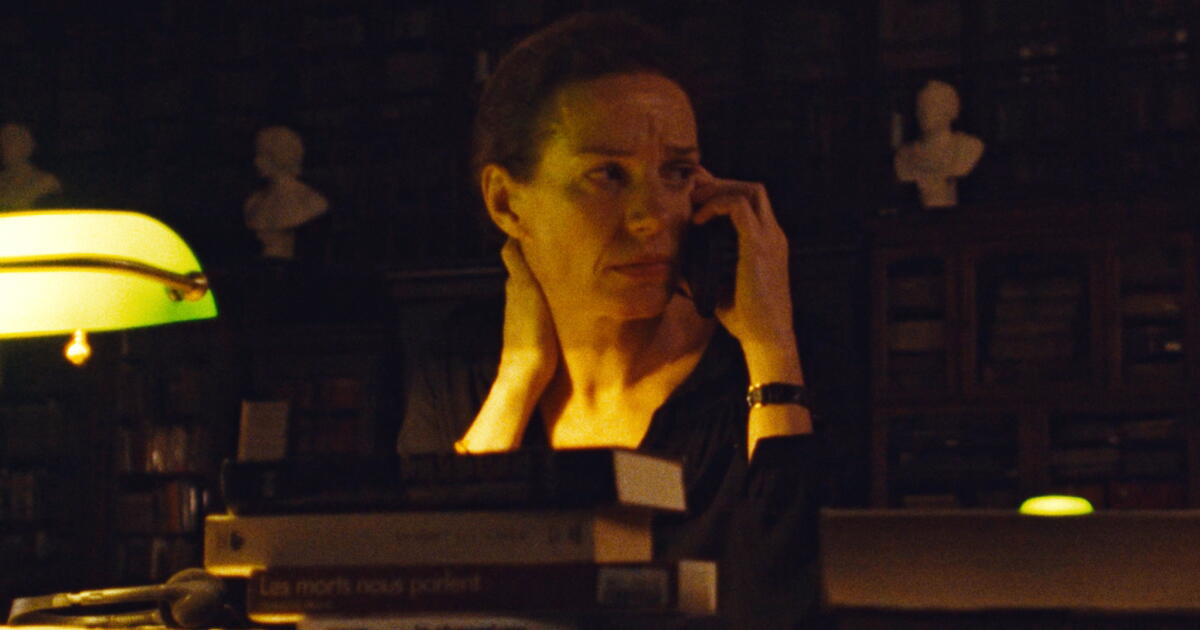
A researcher falls down a rabbit hole of academia in “Chronovisor,” a singular indie that sneaks up on you. Filmmakers Jack Auen and Kevin Walker — who operate under the name Cosmic Salon — make movies in the belief that intellectual pursuits can be both exciting and cinematic. “Chronovisor,” a pleasurably hand-crafted curio, firmly asserts that the sensorial possibilities of film can seem infinite.
That said, the movie opens deceptively: Béatrice (Anne-Laure Sellier), a professor of philosophy at Columbia in New York, is clearly boring her two unseen colleagues over drinks with a monologue about her theories of memory and brain function. Alone afterward, however, with the camera following her as if she were a secret agent and the orchestral swell of Gustav Holst’s “The Planets” lending Hitchcockian tension, the real story begins to unfold in large, ornate libraries.
What draws Béatrice’s attention is a fantastical claim made by a Benedictine monk in an Italian magazine article from the 1970s. He insists he discovered an instrument with the power to pull images and sound from the whole of human history, presenting them on a television screen. With this time-shaping device called the Chronovisor, Father Pellegrino Ernetti professed to have seen footage of the crucified Christ and even enjoyed a lost play staged by an ancient Roman dramatist. At the end of a slow zoom shot, we see the article’s title in Italian until it’s translated for us in English: “A Machine Has Been Invented That Photographs the Past.”
With that, “Chronovisor” and its obsessed protagonist enter a trancelike, analog-heavy state in which obscure texts in myriad languages tease a concealed parascientific history of potentially great importance. In other words, get ready to read a lot and yet, surprisingly, to enjoy the immersion, as one might the hushed thrill of a surveillance sequence. As Béatrice’s amateur detective work pulls her in deeper, the strands begin to suggest a conspiracy, one marked by mysterious disappearances and the clandestine sway of the Vatican.
The question of what’s real and not isn’t only Béatrice’s to unpack — you may wonder yourself whether Auen and Walker have fabricated their esoteric source materials and invented the strange saga of Ernetti. They haven’t. Not entirely, that is, which is part of the woozy enjoyment. Enhanced by cinematographer Leo Zhang’s atmospheric 16mm grain and a natural onscreen performance from first-time actor Sellier (a real-life French scholar in behavioral science), “Chronovisor” hums with deep appreciation for research and evidence. We get both a tantalizing armchair mystery steeped in occult-ish authenticity, but also a sly commentary on our own relationship to the pursuit of curiosity.
If your own interpretation of Béatrice’s quest leads to the realization that this supposedly long-lost technology may already be with us, so be it. The filmmakers surely won’t disabuse you of that notion. They save their most disorienting trick for last: a reality-bending sequence that could qualify as video art. Whether it proves anything is, of course, up for grabs, but it surely helps “Chronovisor” remain wonderfully unclassifiable.
‘Chronovisor’
In English, French, Italian and German, with subtitles
Not rated
Running time: 1 hour, 40 minutes
Playing: Opens Friday, Oct. 2 at Laemmle Glendale

Middle East crude exports recover to near pre-war levels but oil products still lag, analysts say

quantic69
Middle East crude oil exports have rebounded to 17.5M bbl/day on a 10-day average, or 98% of pre-war levels, despite continued risks to shipping, J.P. Morgan analysts said this week, supported by restored flows through Saudi Arabia’s East-West pipeline and
‘Flying too close to the sun.’ Fans endure heat at Dodger Stadium
It was so hot at Dodger Stadium on Saturday…
How hot was it?
It was so hot a team that averaged nearly 50,000 fans for often meaningless regular-season games beat the Atlanta Braves 5-3 in its first postseason game before thousands of empty seats — some of which were literally too hot to sit in.
It was so hot the Dodgers set up pallets of bottled water near the gates and anyone brave enough to enter the stadium was given a plastic 16-ounce Dasini bottle. Gatorade also set up a cooling tent under the right-field pavilion.
It was so hot Nicolas Gonzalez, a fan sitting in the shade of the reserved level, saw a stadium attendant, overcome by heat, stretchered before the game even started. She wasn’t the only one. By the later innings, other fans on the reserved level were reportedly seeking medical attention on the concourse.
The Dodgers declined comment.
So how hot was it?
The game started 45 minutes after the National Weather Service issued an extreme heat warning, cautioning against “extremely dangerous heat conditions” as the temperature reached 100 degrees at first pitch. By the third inning, the temperature reading atop the left-field scoreboard peaked at 103 degrees, matching the highest first-pitch temperature at 64-year-old Dodger Stadium.
“I’ve been coming to games my whole life and this is easily the hottest game I’ve ever been to,” said Gonzalez, 38, of Culver City. “Having a game in these conditions feels like we’re flying too close to the sun, both literally and figuratively.”

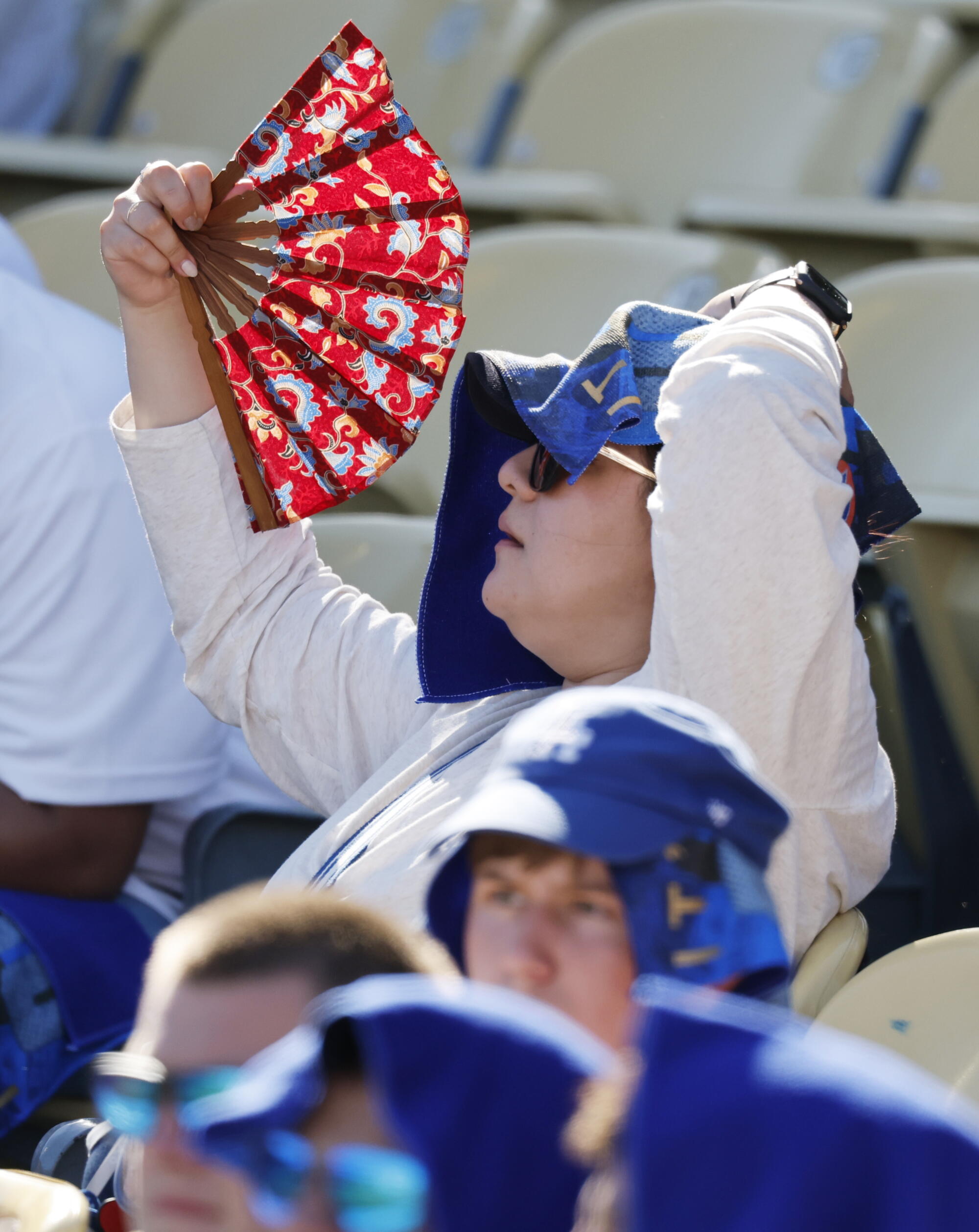
A fan tries to stay cool during Game 1 of the NLDS between the Dodgers and Atlanta Braves at Dodger Stadium on Saturday.
(Gina Ferazzi / Los Angeles Times)
Around him, fans tried to cool themselves by waving makeshift fans. It didn’t work.
But the weather didn’t just effect the way the game was watched. It effected the way it was played, too. The cloudless skies made every pop-up an adventure and the warm, dense air reduced drag, allowing batted balls to travel further. As a result, the teams combined for five homers, accounting for all eight runs.
“That’s probably one of the hottest games that we’ve ever had here. And so shout out to the Dodger fans; they were amazing,” said Max Muncy, who hit of those five homers.
“My feet were hot. Really hot.”
The Dodgers wound up with an early afternoon game in the middle of a historic heat wave because MLB and the TV networks — in this case Fox and TBS — set conditional start times for the four Division Series games before the teams and matchups were known. When the San Diego Padres eliminated the Chicago Cubs in the wild-card round, Saturday’s early NL game went to the Dodgers.
Left-hander Tarik Skubal, who gave up just a run on two hits in six innings to get the win in his Dodger postseason debut, said he didn’t really notice the heat until he came out of the game.
“I walked back into the dugout, and I asked — I forget who, I think it was [Blake] Snell — I was like, ‘has it been this hot all game?’ It’s amazing what your brain can do in certain circumstances and moments,” he said.
“I actually didn’t think it was horrible when I was pitching.”
But then Skubal pitched in much hotter conditions as a kid growing up in northern Arizona.
“I played a Little League game in 127 [degrees]. Lake Havasu,” he said. “[Saturday’s] up there with as hot a baseball game that you can play in.
“Every team’s playing in it, right? They’re playing in the same conditions we are. It shouldn’t really impact how you are mentally or how it’s going to impact how you pitch. Just go out there and play baseball and try to drink water. That’s really it.”
At least Skubal got to drink his water in the relative cool of the dugout between innings. Umpire Roberto Ortiz, wearing 10 pounds of protective gear and a black-and-gray uniform, got no such relief. He had to stand behind the plate for 2 hours 44 minutes and all 290 pitches, one of which smoked him in the seventh inning.
That’s why his five fellow umpires made a point of patting him on the back or shoulder before jogging to their positions for the first pitch.
“He stayed tough,” Dodger catcher Will Smith said of Ortiz. “I’m sure he’ll rehydrate and be ready for tomorrow.”
Speaking of tomorrow, the Dodgers, Braves and the umpires will all get some relief for Game 2. At first pitch Sunday afternoon the Weather Channel is forecasting a temperature of just 97 degrees.
“The dark silver lining,” Gonzalez, the heat-weary fan said in a nod to global warming, “is this might be the coolest October of the rest of our lives.”

Serbian populist leader Vucic launches campaign for prime minister | Elections News
Former Serbian President Aleksandar Vucic is seeking to extend his hold on power through a parliamentary vote.
Published On 4 Oct 2026
Former Serbian President Aleksandar Vucic has launched his campaign for prime minister ahead of a pivotal election on October 25.
Thousands of supporters of the populist politician packed the largest indoor arena in Belgrade on Saturday, as Vucic pledged a “comprehensive” victory in the upcoming parliamentary vote.
Recommended Stories
list of 3 itemsend of list
The snap election, which polls suggest could be tight between Vucic’s party and a group of candidates fielded by a student-led protest movement, was called before Vucic resigned as president on September 27, cutting short his second term by more than seven months.
Dozens of buses from across Serbia clogged streets around Belgrade Arena on Saturday, as supporters arrived at the rally in the capital carrying Serbian flags and banners bearing Vucic’s picture.
The event, televised by dozens of channels across Serbia, capped a week of Vucic touring towns and villages in an apparent bid to shore up his popularity, which has been shaken after almost two years of sustained antigovernment protests.
Vucic, on the Serbian Progressive Party (SNS) ballot, has dominated Serbian politics as president or prime minister since 2014. Barred from seeking a third presidential term, he is now seeking to extend his hold on power through the parliamentary vote.
If the SNS wins a majority of seats, the parliament is expected to elect Vucic as prime minister.
Youth movement
The youth-backed movement that led the protests has demanded accountability for the November 1, 2024, train station canopy collapse that killed 16 people in the northern city of Novi Sad.
The movement’s quest for justice over the tragedy and against corruption has grown into a nationwide political force whose electoral arm, the Student List, will attempt to oust Vucic’s government.
The Student List includes university professors, teachers, experts and others from across the political spectrum. Vucic accused those behind the movement of seeking to “bring Serbia to a halt” and claimed, without providing evidence, that it is backed by unspecified foreign agents.
On Saturday, Vucic told his supporters: “Absent an intervention of some [foreign intelligence] service, we will defeat them. And they know that.”
