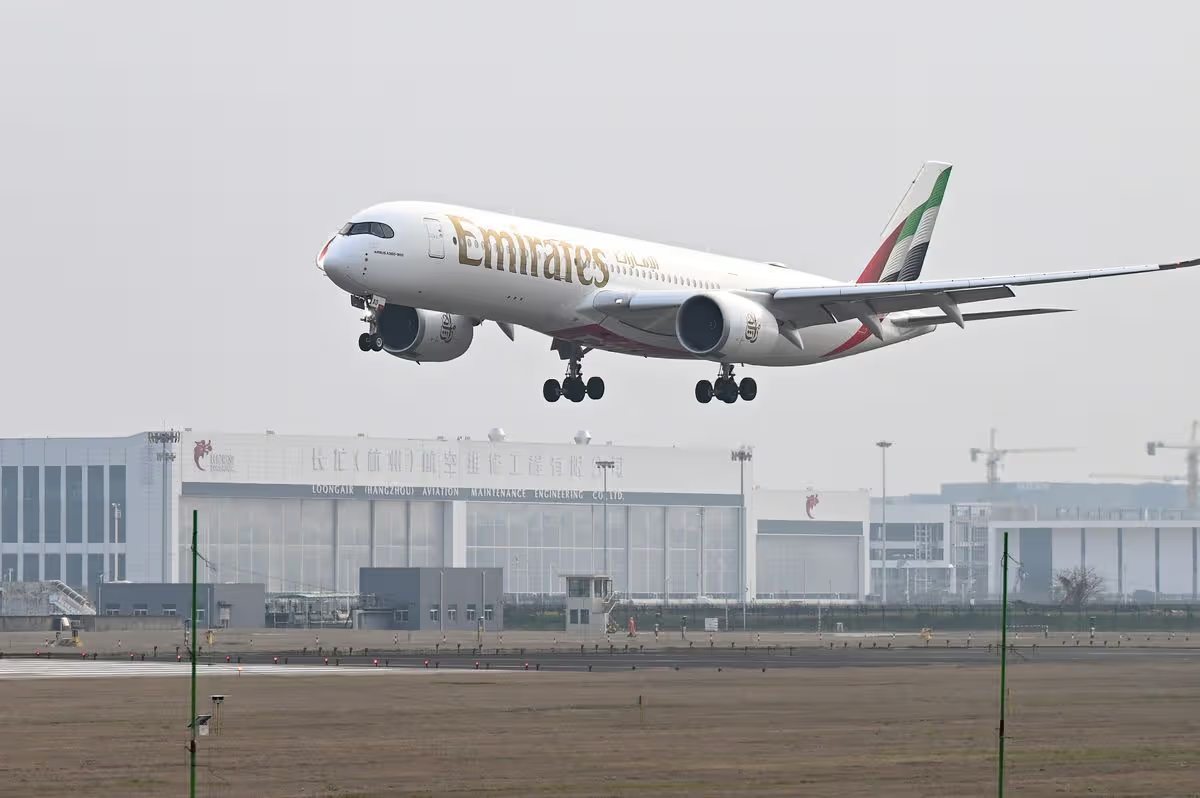
The Foreign Office has lifted its no-go travel warning after Iran and the US signed a deal

Simon Calder says airlines will be desperate for people to ‘take summer holidays’ after the easing of travel advice
A travel expert has provided an update on journeys to and from the Gulf region following the US and Iran reaching an agreement to cease hostilities between the two nations. Speaking outside the Foreign, Commonwealth & Development Office (FCDO), Simon Calder confirmed that travel insurance was ‘once again valid’ after both the Iranian and American presidents put pen to paper on a deal to end the conflict.
This prompted the FCDO to lift its advice against travelling to several Gulf States. Nevertheless, it cautioned that the ‘situation remains unpredictable’ amid ongoing regional tensions.
Mr Calder stated that those wishing to visit the region could now do so ‘with some confidence’. He said: “I’m at the Foreign Office which has just changed its advice for travellers going to the Gulf region, in particular Dubai, which last year was visited by 1.4 million British travellers.
“As from now, the no-go warning which prevailed for the whole of the UAE, including Dubai and Abu Dhabi, as well as to the countries of Qatar, Bahrain and Kuwait, has been lifted. The Foreign Office still warns that you need to be ready for trouble to resume at any time, but it means that travel insurance is once again valid and anybody planning a trip to the UAE or Qatar or elsewhere in the region can do so with some confidence.
“The immediate effect, I think, is going to be a big marketing campaign by the giant airlines: Emirates of Dubai, Etihad of Abu Dhabi, and Qatar Airways based in Doha. They will be wanting to get people to both connect through their hubs, but also to take summer holidays. Be warned, it is extremely hot with average daily highs around 40°C.”
Not only do millions of holidaymakers head to the Gulf states, but countless others use them as a stopover for journeys to Asia and Australia. That meant the tourism industry took a particularly severe blow when the US and Israel launched strikes on Iran in late February.
The FCDO decision means tourists can now return without putting their travel insurance at risk. But that doesn’t mean flights will restart straight away.
Virgin Atlantic halted flights until winter 2027 after the conflict began, and a spokesperson confirmed on Thursday that this ‘remains the case’.
British Airways announced earlier in June that it wouldn’t restart flights to the UAE until October 2026. Emirates has maintained flights to and from the region throughout the hostilities.
Mr Calder continued: “The immediate effect, I think, is going to be a big marketing campaign by the giant airlines: Emirates of Dubai, Etihad of Abu Dhabi, and Qatar Airways based in Doha. They will be wanting to get people to both connect through their hubs, but also to take summer holidays. Be warned, it is extremely hot with average daily highs around 40°C.”
“But it means that anybody who’s planning to travel perhaps to Asia or to Australia now will be able to travel with confidence through one of the Gulf hubs. In addition, I imagine that airfares will fall because the Asian carriers will not be able to command such a premium.
“Stand by for some really good holiday offers, but I personally won’t be seeing you on the beach in Dubai until about November.”