It means passengers will need to arrive earlier at the airportCredit: Alamy
Ryanair CMO, Dara Brady, said: “From Tue, 10 Nov, bag drop services at all Ryanair airports will close 60 minutes before scheduled departure, instead of the current 40 minutes.
“This small change will give the 20% of Ryanair passengers who check in a bag, more time to clear airport security and passport control queues and get to their departure gate before boarding begins, particularly during busy travel periods when airport queues can be longer.
“We remind passengers using airport bag drop services to arrive at the airport in good time and ensure they have checked in and dropped their bags before check-in and bag drop closes 60 minutes before departure.
“The remaining 80% of passengers who check in online and do not check in a bag are unaffected by this change.”
BBC Breakfast returned on Monday with Jon Kay and Sally Nugent and there was a sad update following Storm Boelo
Jennie Buzaglo Showbiz & TV Reporter and Karen Price Assistant Editor of Screen Time
09:14, 26 Oct 2026Updated 09:14, 26 Oct 2026
BBC Breakfast issued a report on fatalities following Storm Boelo(Image: BBC)
BBC Breakfast host Jon Kay revealed two people have died as a result of Storm Boelo.
The presenter returned to our TV screens on Monday, October 26 alongside Sally Nugent when he shared that both men were fatally struck by falling trees while the storm persists in delivering dangerous conditions across the UK.
He said: “A man in his 20s was pronounced dead in North London after the car he was driving was hit by a falling tree, and hours earlier, a 60-year-old man died in Dumfries in Galloway.”
Chief Inspector Guy Ellwood, from the North West Command Unit, said: “This is a deeply tragic incident and our thoughts are with the loved ones of the young man who lost his life.”
Jon disclosed that Storm Boelo has plunged 90,000 households into darkness. Providing additional information, Thomas Magill described how Storm Boelo was “sweeping people off their feet” in Blackpool, reports the Express. He continued: “Emergency services worked tirelessly as it battled the North West, toppling trees and flooding parts of Cumbria.”
Thomas explained that a pub in Bouth, a Lake District village, has transformed into a community centre, providing meals and refuge to vulnerable residents cut off from electricity. These locals found themselves without power and hot water, prompting them to seek assistance at the pub.
Thomas went on: “As the storm moved in across the Irish sea, coastal areas off the Isle of Man were battled by high tides and strong winds. In Scotland, it was a similar story.”
Ensure our latest TV stories always appear at the top of your Google Search by making us a Preferred Source. Click here to activate or add us as Preferred Source in your Google search settings
Footage captured the high street in Largs entirely submerged, with properties and shops left devastated. “Everything is absolutely swimming in sea water, sludge, leaves, debris, just mashed up confectionery. It’s awful,” a local said.
Travel has been severely disrupted across the region, with ScotRail urging passengers to check before setting off on their journeys. Thomas added: “Storm Boelo was also felt as far south as Kent, where emergency services worked continuously to clear blocked roads and secure areas. Today, thousands of homes still remain without power.”
Lawrence Slade, chief executive of the Emergency Networks Association, said: “The difficult thing is, we can’t actually get people out there to replace poles and wires until the worst effects of the storm have gone through.
“The clear message is that the teams will be working as hard as they possibly can to get people back on power soon as they possibly can in the safest possible way.”
Thomas remarked: “The worst of the storms may be over, but it’s unclear when power will return to the thousands of homes affected, and how long the clean up will take.”
From judicial reform to conscription and the Palestinians, here’s where candidates stand on the key issues dominating the campaign.
For an election often billed as the most consequential in Israel’s history, many issues that outsiders might expect to divide the candidates are, in fact, points of consensus among the frontrunners.
None of the leading contenders in Tuesday’s election has questioned the case for unleashing a genocide on Gaza in response to the Hamas-led attack of October 7, 2023, or the wars that have followed, including the one on Iran. Nor have most candidates for the premiership offered a clear path towards implementing a two-state solution to the Israel-Palestine conflict that was envisaged in the 1990s, or towards an equitable settlement with the Palestinians whose territory Israel occupies.
Recommended Stories
list of 4 itemsend of list
Instead, the points of division centre almost exclusively on Israel’s internal politics and how voters see the future character of their country. The choice is between the hard-right government of incumbent Prime Minister Benjamin Netanyahu, unconstrained by the judicial oversight he has railed against, and the future outlined by the disparate coalition of his opponents, which promises a broadly similar policy agenda but within the confines of the law and without the more extreme elements of the current governing coalition.
So, what have the leading candidates said about the main issues?
(Al Jazeera)
The two-state solution
Despite having committed to working towards a two-state solution in the 1990s’ Oslo Accords, with many of their allies adjusting their policies towards Israel to reflect that commitment, few of the contenders in Tuesday’s election appear ready to honour it. Instead, their government stands widely accused of abetting the settler pogroms now raging across the West Bank, while supporting continued construction in the occupied territory in defiance of international law. This includes the E1 settlement plan, which ministers openly boast will bury the two-state solution.
Here’s what some of the contenders have said:
Likud party leader, Prime Minister Benjamin Netanyahu: “We are going to fulfill our promise that there will be no Palestinian state; this place belongs to us.”
Yashar party Gadi Eisenkot: “My position on the Palestinian issue has remained consistent: The principle of two states for two peoples is a mistake.”
Religious Zionist party leader, Finance Minister Bezalel Smotrich: The next government should “destroy the idea of an Arab terror state; finally, formally and practically cancel the cursed Oslo Accords and get on the path of sovereignty, while encouraging migration both from Gaza and from Judea and Samaria [occupied West Bank]. There is no other long-term solution.”
The Democrats leader Yair Golan: “We need to understand that Israeli society is still in trauma from October 7. To make the galactic leap from the current situation to a two-state solution is impossible. It’s not enough to return to old formulas, we need to adjust our plans, our ideas, our perceptions. My concept is about civil separation and security responsibility.”
Haredi draft
The conscription of Israel’s growing ultra-Orthodox, or Haredi, population into the army is an issue largely unique to Israel, and one whose prominence has grown as the human and economic costs of the wars in which many refuse to take part have mounted.
Netanyahu has continued to rely on the two main Haredi parties, Shas and United Torah Judaism (UTJ), for support in the Knesset. They have in turn insisted that he pass legislation overturning the Supreme Court ruling of June 25, 2024 and offering ultra-Orthodox youth a legislative shield against conscription.
Ultra-Orthodox Jewish men during the ‘Million Man’ protest in Jerusalem against Israeli military conscription, October 30, 2025. [Ammar Awad/Reuters]
Here is what leaders have said:
Netanyahu after the arrest this month of about 40 Haredim – plural for Haredi – for avoiding the draft: “We must preserve the world of Torah because it preserved us. These arrests are a deliberate attempt to harm the process of drafting Haredim without coercion.”
Shas leader Aryeh Deri: “There will be no government in Israel with Shas’s support or participation unless the status of yeshiva [seminary] students is regulated.”
Eisenkot: “That is what the upcoming election is about: Netanyahu’s draft-dodging government, or a government of conscription led by me.”
Yisrael Beiteinu party leader Avigdor Liberman: “Netanyahu is issuing an impassioned call against the arrest of draft evaders, once again proving that he is a hostage to the draft evaders – without them, he has no government.”
Judicial overhaul
Days after taking office in 2022, Netanyahu’s government unveiled a plan to curb the powers of Israel’s courts, which triggered months of mass protests in 2023 before the war on Gaza paused the fight.
The coalition has passed measures reshaping how judges are appointed, while in July a law stripped Attorney General Gali Baharav-Miara of many of her powers, allowing the government to reject her legal advice and choose its own lawyers in court. Both are due to take effect after the election and most of the opposition has promised to reverse them.
Protesting in Tel Aviv against the government’s judicial overhaul [File: Ilan Rosenberg/Reuters]
The government has also boycotted Chief Justice Isaac Amit. Critics call it a deliberate assault on democracy by a prime minister embroiled in a long-running corruption trial of his own, while Justice Minister Yariv Levin says the election is a historic chance to finish the job.
Here are some of the contenders’ statements:
Netanyahu: “Democracy is the rule of the people. It’s ‘we the people,’ not ‘we the judges … In Israel, [judicial reform] was completely derailed, and we have to bring it back. We don’t have to crush the judiciary, but we have to make sure it doesn’t crush the legislative branch, the Knesset or the executive branch of government.”
Together alliance co-leader, former Prime Minister Naftali Bennett: “I want to be clear. We will cancel all the legal revolution laws immediately upon the convening of the Knesset.”
October 7 inquiry
While the killing of more than 74,000 people in Gaza has been entirely absent during the campaign of the two main alliances, questions over political accountability for security failures ahead of and during the Hamas-led attack in 2023 have dominated this election cycle.
Inquiries into failings by the security services ahead of and during the Hamas-led attack led to the resignation of Chief of Staff Herzi Halevi, announced in January 2025. They also fed a long, drawn-out and bitter fight with the prime minister that ended with the departure of Shin Bet head Ronen Bar in June last year.
However, despite recent news reports suggesting that Netanyahu was warned by both the UAE and Egypt ahead of the attack, and longstanding criticism of his policy of keeping Hamas in power in Gaza as a bulwark against the Palestinian Authority, no similar inquiry into his own alleged failings before October 7 has happened.
Here are some of the leaders’ statements:
Eisenkot: “Netanyahu was warned and did not act. A State Commission of Inquiry that we will establish will investigate the disaster. The heads of the systems took responsibility and resigned long ago. We will not allow the master of evaders to escape the truth.”
Netanyahu: The prime minister told the Knesset that his government “wants to establish a commission of inquiry with as broad public support as possible” and not one dismissed by what he claimed is “at least half the country”. The proposed government-led inquiry never reached its final reading and has been deferred to the next session.
It’s true, this is far from panic stations. In 2016, England were the defending world champions when they lost to France and beaten finalists Canada. Since then, they’ve been imperious, winning a second World Cup, reaching the final in 2017 and 2022, and lifting nine of the past 10 Six Nations titles.
This is only their third defeat in 74 matches, so perspective is required.
But England’s performances throughout the WXV Global Series highlighted areas for improvement.
They have lacked their usual clinical edge in attack. In Ottawa, Sarah Bern was held up over the line and England conceded a turnover less than five metres out as they failed to make their dominance pay before the break.
Tellingly, they opted to kick a penalty early in the second half to close the deficit – perhaps a lesson learned from last month’s 26-26 draw in Exeter, where they turned down a shot at goal to snatch the win in the dying moments.
In defence, they have conceded 18 tries across their past five matches in the WXV, compared to eight in six at the World Cup. They have trailed at the break three times, something they hadn’t experienced since 2020.
Last week, ill-discipline repeatedly gifted Canada field position before a late handling error, which put a clearing kick under pressure, opened the door for the hosts’ winning try.
On Friday night, Gabrielle Senft picked off a bouncing ball from a missed pass to set up Canada’s second try. Minutes later, England were lucky not to concede a similar try when a pass bisected Jess Breach and Jones, who pounced on the ball just before Lizzie Gibson got to it.
“We were riding the waves, building phases, scrum, set piece, we were very strong. Sometimes it’s the bounce of the ball or it doesn’t swing your way. We couldn’t execute when we got in their 22, that’s a big one to reflect on for sure,” said Jones.
Iran’s Islamic Revolutionary Guard Corps (IRGC) says renewed attacks by the United States could prompt Tehran to invade neighbouring countries and hit bases used in US military operations as part of its new “offensive” strategy.
The warning on Wednesday came amid escalating attacks on shipping in the Strait of Hormuz, a global energy chokepoint, and uncertainty over diplomatic efforts to end the nearly eight-month war.
Recommended Stories
list of 3 itemsend of list
“Our defence doctrine was previously defensive; we used to say that if a country attacks us, we will respond. Now we say that if a country attacks us, we will both respond and launch an offensive,” IRGC spokesman Hossein Mohebi said.
Washington ordered some diplomatic personnel to leave Saudi Arabia amid attacks from Yemen’s Houthis while US President Donald Trump has signalled that a decision on the conflict could come soon.
According to media reports, the US and Israel are planning potential attacks on Iran in the coming weeks.
As negotiations seem stalled and both sides exchange threats, could the region be heading towards another military escalation?
What is Iran’s new doctrine?
The IRGC on Wednesday announced a shift towards an “offensive and asymmetrical” defence doctrine, threatening to invade countries that launch attacks against it.
Mohebi said Tehran would no longer limit its military operations to retaliatory strikes.
Mohebi stressed that Iran’s missile stockpile has increased 1.5 times since the 12-day war between Iran and Israel in June 2025. He did not provide specific figures.
“The quality of the missiles has improved significantly, and their range, destructive power and accuracy in hitting targets have increased,” the spokesman said.
Moreover, Mohebi said Iranian forces were in the “stage of preparing to unveil the ‘father of all bombs’. This is something new for the enemy.”
Meanwhile, attacks in the Strait of Hormuz continued unabated.
The IRGC’s navy said on Thursday that four vessels it accused of being involved in illegal oil transfers were struck and caught fire in the northern Gulf. Three other vessels hit mines west of the strait, it added.
Before the war, one-fifth of the world’s oil and natural gas supplies passed through the Strait of Hormuz. While shipments through the strait are still below those levels, oil shipments from the region returned to pre-war levels last month as exporters found alternative ways to ship out their oil and gas, including using pipelines.
However, a flurry of recent attacks in the key waterway and the fighting between Yemen’s Houthis and its Saudi-backed, internationally recognised government, which has resulted in Houthi attacks on Saudi Arabia, have once again sent oil prices surging. Brent crude climbed above $110 a barrel on Thursday amid fears of further disruptions to regional energy supplies.
Why the shift?
Iran’s shift towards an offensive military doctrine reflects Tehran’s determination to make future US-Israeli attacks significantly more costly, according to analysts.
Negar Mortazavi, senior fellow at the Centre for International Policy, told Al Jazeera that Tehran was drawing lessons from the wars of 2025 and 2026 after its previous strategy of retaliation failed to prevent repeated attacks.
“Tehran now wants to establish a new equation: Any future attack on Iran will come at a much higher cost for the aggressors,” she told Al Jazeera.
Unable to match conventional US military capabilities, Iran is increasingly relying on asymmetric warfare, including missiles, drones and its leverage over the Strait of Hormuz, Mortazavi explained.
She said Tehran was pursuing a broader strategy aimed at imposing military, economic and political costs on Washington, including potentially influencing the November 3 US midterm elections.
(Al Jazeera)
“Iran wants to teach Washington a lesson: Attacking Iran comes with a high price, one that can even cost elections,” Mortazavi said, referring to US surveys that are predicting electoral losses for Trump’s Republican Party.
She added that Iranian officials were closely monitoring the elections, believing the economic fallout from the war could damage the Republican Party’s prospects of retaining control of Congress.
“The long-term objective is to establish deterrence so that future American administrations think twice before daring to attack Iran again,” she said.
Political analyst Rami Khouri said the doctrine was also intended to ensure that the consequences of attacks extend to the US, Israel and regional countries supporting their military operations.
“That’s one part of the strategy, that the suffering and the damage have to be equal and reciprocal,” Khouri, nonresident senior fellow at the Arab Center, told Al Jazeera.
Khouri argued that Tehran was also seeking to challenge what it views as longstanding Western domination of the region.
“The Iranians are actually working to try to end the colonial period,” he said.
He added that Iran’s strategy could extend the economic consequences of conflict far beyond the Middle East, affecting energy supplies, transportation, insurance costs and shipments of essential goods.
“The pain is going to go way beyond just the Middle East and Israel and the US and will hurt people in other parts of the world,” Khouri said.
What has the US said about resuming the war?
Trump has offered conflicting signals about Washington’s next steps.
On Wednesday, he said the US was no longer negotiating with Tehran and suggested developments were imminent. “We are going to have something one way or the other that’ll happen fairly soon,” he told reporters.
He also said Washington could end the war immediately but wanted a lasting outcome. “It’ll end very soon. We could leave now, but we want to make sure it lasts for a long time,” Trump said at a campaign rally in South Carolina.
Trump previously pledged not to attack Iran before the November 3 elections.
US Secretary of State Marco Rubio said this week that reaching a peace agreement is extremely difficult and insisted that Iran must stop targeting commercial shipping in the Strait of Hormuz.
Rubio has maintained that Washington will reject any agreement allowing Iran to develop nuclear weapons, which require highly enriched uranium. “The United States will not support any deal that creates a pathway for Iran to ever have a nuclear weapon,” he said on Wednesday.
Tehran insisted its right to enrichment is guaranteed under the Non-Proliferation Treaty.
Iran has offered a seven-day plan to restore shipping through the Strait of Hormuz in exchange for Washington ending its blockade of Iranian ports, easing sanctions and unfreezing Iranian assets.
Meanwhile, the US Department of State on Wednesday ordered nonemergency personnel and their families to leave Saudi Arabia after recent Houthi attacks.
The US embassy in Riyadh has warned of further attacks while American officials told the Reuters news agency that family members could be withdrawn from other Gulf missions.
State Department spokesman Tommy Piggott said departure orders for mission personnel across the Gulf have not been ordered, saying the current orders were for “employees and their family members in Saudi Arabia only”.
Israeli Prime Minister Benjamin Netanyahu reiterated on Sunday his pledge to topple Iran’s government, saying it was key to preventing it from rebuilding its nuclear programme and the “axis of resistance”, further raising prospects of an escalation.
Netanyahu made the comments as Israel’s longest-serving prime minister is locked in a tough battle to remain in power in Tuesday’s elections.
Is war imminent?
Analysts warned that renewed US-Israeli attacks on Iran are increasingly possible with both sides preparing for another confrontation despite the continued possibility of diplomacy.
“Another round of war seems to be approaching,” Mortazavi said.
“Both sides appear to be preparing for renewed confrontation while escalating tensions in the Strait of Hormuz increase the risk of a wider conflict,” she said.
Mortazavi added that the elections in the next two weeks in the US and Israel could influence the timing of military action but warned that the current trajectory appeared to favour escalation over negotiations.
Mohsen Rezaei, secretary of Iran’s Supreme National Security Council, on Wednesday said, “Everyone must know that any action against Iran comes at a cost.”
“If diplomacy can create this understanding, we prefer diplomacy, but if the war continues, Iran has the necessary means to sustain its response,” Rezaei said, according to the IRNA news agency.
Echoing Mortazavi, Khouri warned that another confrontation could be approaching although he said US threats might still be part of a negotiating strategy.
“I think imminent conflict is on the cards, but I don’t know if war is the right word to use,” Khouri told Al Jazeera.
He said renewed strikes could target Iran’s critical infrastructure, including electricity networks, transportation systems, bridges and essential services.
“We’re probably going to get some severe attacks on a few targets that will try to make life in Iran very difficult,” he said.
However, Khouri cautioned that Iran’s ability to withstand another major military offensive while inflicting comparable damage on its adversaries remained uncertain.
“It’s not clear if Iran has the ability to withstand major new assaults against it,” he said, while stressing that Tehran was unlikely to surrender to military pressure.
The Foreign Office has issued a travel warning for France amid the country’s worst civil unrest in years, with partial curfews now imposed in cities including Paris, Nice and Lyon after rioters clashed with police, torched cars and looted thousands of businesses.
Students clash with the police at the Republic Place,(Image: Veronique de Viguerie, Getty Images)
The Foreign Office has warned British travellers heading to France that local curfews could be introduced at short notice following some of the country’s worst civil unrest in years.
Rioters clashed with police, set cars alight and stormed public buildings, while a historic city hall was engulfed in flames. Around 2,400 people were detained over the weekend, and authorities said thousands of businesses had been damaged or looted.
The violence overshadowed peaceful demonstrations over rising living costs and poor school conditions, during which hundreds of thousands of people marched without incident.
By Monday evening, several French cities had introduced partial curfews after Prime Minister Sébastien Lecornu gave some local mayors the power to impose restrictions.
In advice issued last night, the Foreign Office told British travellers: “In response to recent events, the French government has announced that local curfews may be introduced at short notice. To find out if you are in an affected area, check local media. Follow the instructions of local authorities.”
Have you had your travel disrupted by the protests? Email webtravel@reachplc.com
The reported restrictions were:
Paris: Movement in parts of the capital was banned from 11pm local time on Monday until 6am on Tuesday.
Nice: A curfew for young people ran from 9pm to 6am local time (8pm to 5am BST) each night until next Sunday.
Lyon: A curfew ran from 9pm local time on Monday until 6am on Tuesday (8pm to 5am BST).
Coulaines: Young people were banned from being out after 11pm local time (10pm BST).
Lille, Douai, Wattignies and Denain: Partial curfews were reported from 8pm to 6am local time (7pm to 5am BST).
President Emmanuel Macron condemned “unrestrained violence” by “insurrectionist elements from radical far-left groups, joined by numerous criminals.” Further demonstrations could follow, with high school and university student organisations calling for protests on Thursday and Saturday.
The National High School Student Coordination group urged young people to “take to the streets” and backed continued blockades and demonstrations.
Activists seeking to revive the 2018 yellow vest movement against perceived social injustices also announced nationwide protests for Saturday under the slogan “Macron must go.”
Sebastian Roché, a research professor at the Sciences Po Grenoble political institute who specialises in policing, said the damage was comparable to the yellow vest protests at their height.
“In terms of destruction and damage, it is probably close to the first two weekends of December 2018,” Roché said.
The yellow vest movement began in opposition to fuel tax rises and led to repeated demonstrations against Macron’s government. Some descended into violence, with cars burned, shops ransacked and the Arc de Triomphe vandalised during clashes in Paris.
France also experienced days of nationwide disorder in June 2023 after police killed a 17-year-old outside Paris. Rioters looted shops and set public buildings alight, with thousands detained and hundreds injured.
In 2005, three weeks of rioting prompted the government to declare a state of emergency.
Roché, who has spent more than 30 years studying policing and violence, said injuries caused by police weapons distinguished the latest unrest from previous episodes.
“We have a toll that has not been seen in the past 40 years,” he said.
He said six people, including minors, had lost hands or eyes during three weeks of protests. Officers have faced intense scrutiny over their use of grenades and other riot-control weapons during recent demonstrations.
Authorities have repeatedly blamed some of the violence on groups of “far-left radicals,” followed by criminals exploiting the unrest to loot. Lecornu described “disorder organized in an unprecedented way.”
But Roché questioned whether the far-left fringe was large or well coordinated enough to be solely responsible for violence on this scale.
He said French intelligence services estimated the movement at around 3,000 people across various factions, which lacked formal structures.
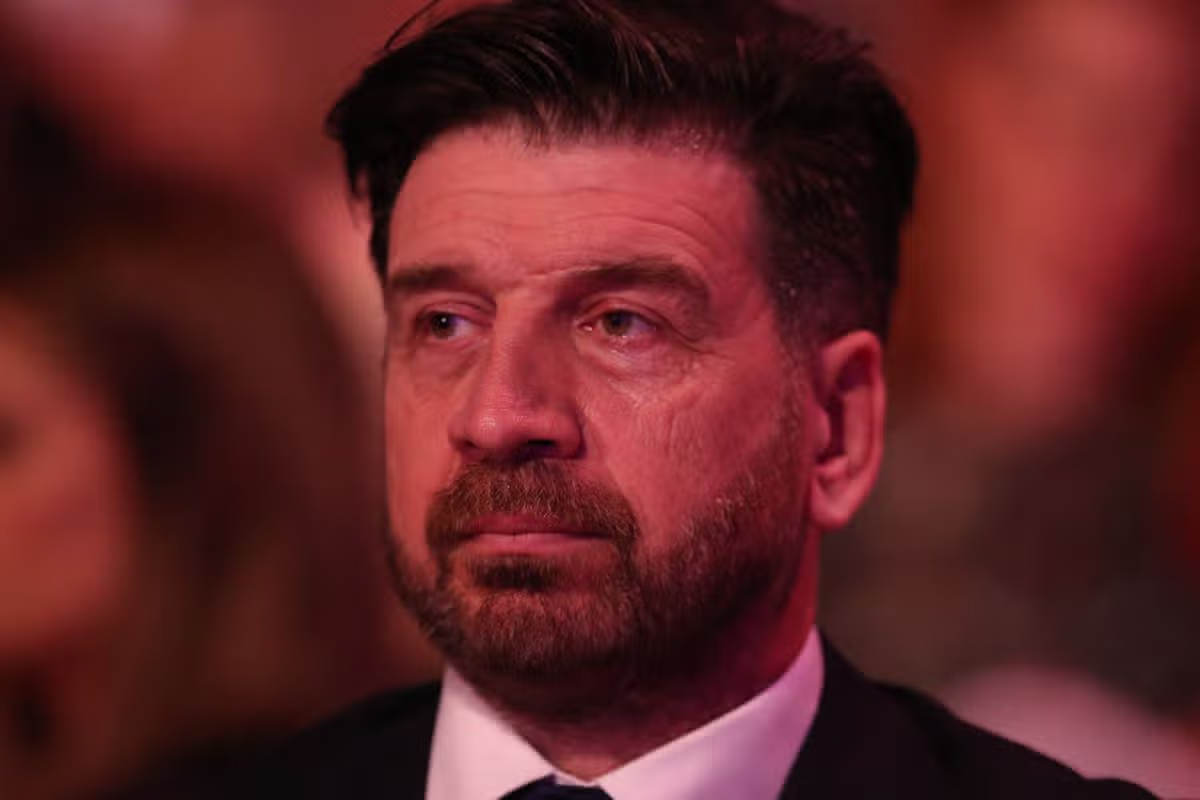
Nick Knowles has spoken out after the news that DIY SOS was being rested by the BBC and whilst he is “disappointed,” he can understand the reasons behind the decision
15:46, 19 Oct 2026Updated 15:46, 19 Oct 2026
Nick Knowles has admitted he is “disappointed” that DIY SOS has been rested by the BBC(Image: Daily Mirror)
After 27 years, the BBC has admitted cost-cutting methods are behind the decision to bench the show for the foreseeable, and now former Strictly Come Dancing star Nick has spoken out on the matter.
He wrote on Instagram: “You may have already seen the news that DIY SOS is being put on ‘pause’. Of course, I’m disappointed not to be filming the show next year or again in the same format we know and love.
“But I do understand there’s no endless pot of money at the BBC and sometimes they have to make difficult decisions. Thank you for all the messages and comments over the weekend. It’s so clear you share my sentiment and deep love for this show.
To see more of the stories you love from The Mirror and to find them easily in Google then make us your preferred source. Free and easy-to-do, just clickon the link hereto find more from The Mirror at the top of your feed.
“For 26 years it’s been an honour and a privilege to be part of DIY SOS and I’ve loved nothing more than making it. What I always come back to is that it’s the people who are the beating heart of SOS. “
Nick used the rest of his lengthy post to reflect on the help that the programme has brought to thousands during its time on air, and thanked everyone who has been invoved.
“Over the years we’ve had thousands of tradespeople, suppliers and volunteers, all people trying to make their own living, who have shown up time and time again for the families who need it most. Kind, hardworking people and real working-class heroes coming together to build a better community. It really is the best of Britain and we need to see more of it on telly.
“I’ve always put my head above the parapet for tradespeople and this industry I love and I’ll keep doing that. But for now, I want to say thank you to every family for sharing their story with us over the last 26 years.
“To the volunteers, production team, purple shirts, commissioners and everyone watching at home, we couldn’t have done this without you. And to everyone who hasn’t seen the series yet, give it a watch. I promise your heart will be warmed.”
Despite initial reports that the programme had been cancelled entirely, the BBC were keen to stress that this is not the case.
A BBC Spokesperson said: “In light of the BBC’s savings challenges we have taken the decision to rest DIY SOS in 2027 and commission a new spin off show instead from producers South Shore. DIY SOS Rebuilt My Life (w/t) will revisit successes from the show’s past and expand the brand on the BBC in a more cost-effective way next year.”
The comments come after sources claimed the show was to be cancelled all together. A source told The Sun : “We were told it was being paused, but when we asked whether it would come back in 2028 or 2029 they couldn’t give us an answer.”
They went on: “It’s a disgusting outrage that a BBC show, which genuinely helps some of the neediest people in our country, is being shut down because it’s basically seen as ‘too expensive’.
“DIY SOS is one of the few shows on television that genuinely represents working-class people. Thousands of tradesmen and women offer their time, and often the materials, for free to people in need, even when they’re struggling to make ends meet themselves.”
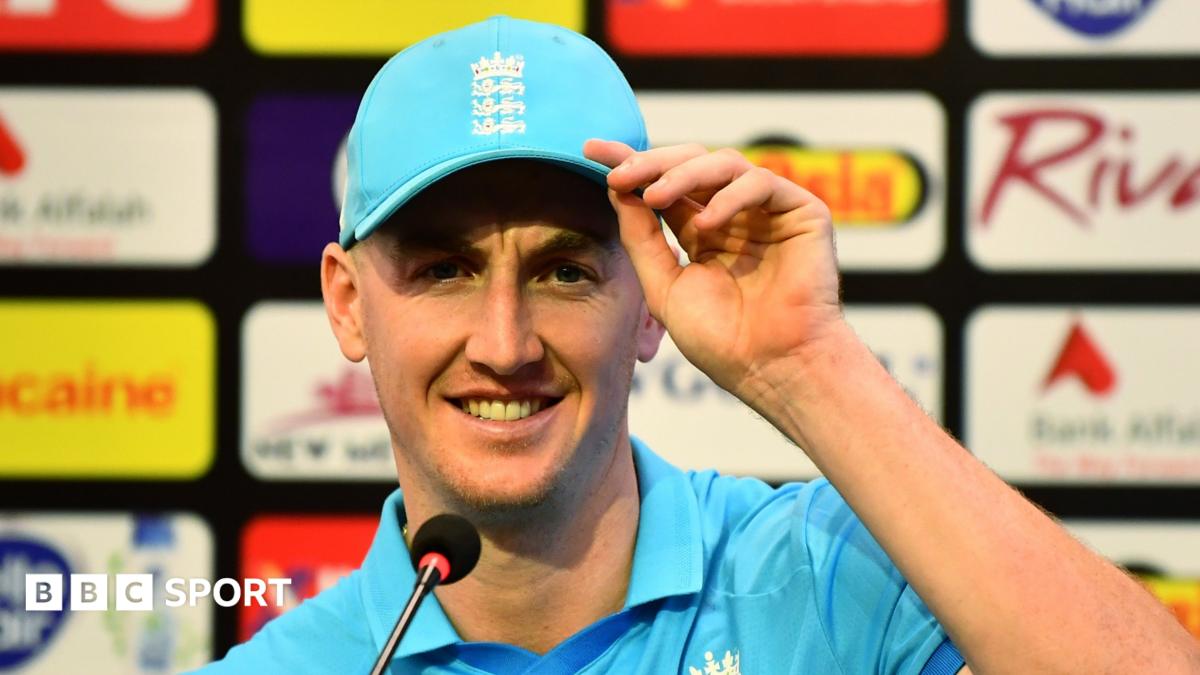
Brook remains one of England’s most fascinating cricketers.
Despite being white-ball skipper and serving as Test vice-captain, he was overlooked for the red-ball job when Ben Stokes retired, with Joe Root preferred.
He averages a formidable 53.08 in Tests – the highest for England in almost 60 years – with 10 centuries, but often draws criticism for his aggressive, some say reckless, batting.
While he has failed to convert any of his seven fifties into centuries since the Ashes, he still averages 41.57 and has scored hundreds as captain in T20s and one-day internationals in that time.
“I enjoy the extra responsibility,” he said. “I like the extra little bit of added pressure.
“I’m not going to go out there and score runs every time I bat but I want to be the man that is in that match-winning situation who can get us over the line.
“I know there have been a few innings where I haven’t managed to do that but hopefully I’ve turned that corner and I can really be the man England fans and the team rely on.”
The debate around Brook was perhaps best summed up by Stokes telling the Yorkshireman he is talented enough to average 65 or 70.
“Personally I’m not that bothered about the stats, I’ve always said I think there should be a match-winning column in your stats – that’s not there,” Brook said.
“I write stuff down and I try and judge myself on whether I’ve had a match-winning performance or match-winning impact in that specific game and I try and tally it up at the end of the year and see how well I’ve done.”
The biggest tech battles many people face are things like frequent two-factor authentication, a time suck that makes you want to hurl a device across the room, and sigh-inducing texts to parents letting them know that the video of a cat cooking eggs they 100% believe is real is actually AI slop.
But in “Cupertino,” the legal minds at the center of the show are taking on more consequential tech disputes in the courtroom.
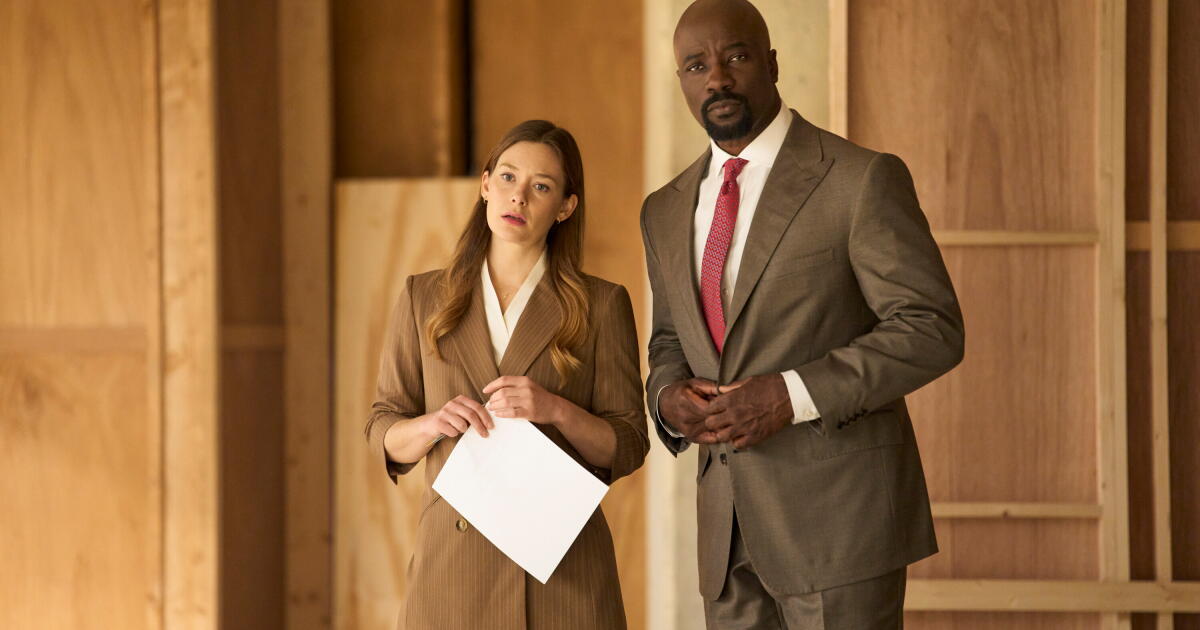
The series joins a wave of recent films and TV shows exploring and confronting the rapidly evolving tech sector. Created by Robert and Michelle King, veterans of the legal drama genre with shows like “The Good Wife” and its spinoff “The Good Fight,” the Silicon Valley-set courtroom drama is interested in David vs. Goliath tension. It follows Michael Price (Mike Colter), an attorney fired by his tech startup employer S-Talk, as he teams up with fellow ousted lawyer Olivia Siffre (Rachel Keller) to launch their own ad-hoc law firm to take on cases — including their own — for everyday people against tech giants.
“There are big companies that have a lot of money, deep pockets — they could suffocate you, they can bog you down in litigation to the point where you can’t financially match them,” Colter said. “They’re planning on people just rolling over because they don’t want to deal with it. That’s where Michael and Olivia come in. We get the justice for people who otherwise won’t see any. I’m just excited and intrigued by the stories they [the Kings] want to tell here.”
The Kings’ exploration of tech’s litigation underbelly arrives at at a critical moment. High-stakes conflicts over artificial intelligence, data privacy, workplace culture, antitrust laws and other issues are dominating the news and defining our modern era. “The headlines, the way that it lines up is crazy,” Keller said. “It’s really important some of the cases they’re bringing to the show — real things that are happening to real people.”
But the show’s origins are grounded in personal history — Robert grew up in San José; his father worked on mainframes for IBM and the now-defunct Control Data Corp. before personal computers took over — and a desire to bring a fresh backdrop to the Kings’ signature legal drama style.
“When you go back and visit family, you started to see how Silicon Valley — we just call it the Bay Area — was changing,” Robert said. “Not only in the make of cars that everyone was buying, but in these massive offices that were taking over suburban streets; homes were just being plowed under and house values were going up. There was good and bad. It started with that — how much it was changing the world.”
They were also inspired to explore a new legal angle: “It felt like other shows weren’t really looking at the way tech was impacting the law,” he said.
“We were less interested in looking at the tech titans than the Davids of this world — the people that were fighting them,” Michelle added. But she stresses the show is not anti-tech or meant to be a soapbox, even while showing the power everyday people can and do wield: “It wasn’t created to be vegetables. It’s created to be crème brûlée — it’s meant to be funny, or tasty. If it isn’t delicious to people, I really feel as though we’ve wasted our time.”
Fans of “The Good Wife” or “The Good Fight” are familiar with how the Kings turned emerging tech issues — particularly ones involving Google, Amazon or Facebook — into narrative catalysts for cases. It was often through the lens of a fictional tech giant known as ChumHum, a Google-like search engine created by a guy named Neil Gross (John Benjamin Hickey), that got embroiled in a variety of cases, including ones about secrecy and search result modifications. “Cupertino” blends real and fictitious companies.
The second episode of the CBS drama aired Thursday. We spoke with the Kings to unpack some of the cases they chose to kick off the season.
In the race to become L.A.’s next mayor, the city’s top cop — LAPD Chief Jim McDonnell — has become a lightning rod for debate.
The two candidates — incumbent Karen Bass and City Councilmember Nithya Raman — have staked out differing positions about how the Los Angeles Police Department has performed under McDonnell.
Raman has vowed to replace McDonnell, saying he has not “met the moment” given the department’s response to federal immigration raids. Bass has publicly backed the chief she hired two years ago, saying the LAPD could be thrown into disarray if McDonnell is removed before the 2028 Olympic Games.
Raman’s potential ouster of McDonnell and desire to push reforms on the LAPD has pitted her against the Los Angeles Police Protective League, the powerful union for rank-and-file officers that campaigned against Bass during her first election but is now backing her. The union has poured millions of dollars into attack ads against Raman, who has said she declined contributions from the organization in the past.
In an op-ed published in the Protective League’s monthly magazine earlier this year, union president Richard Mendoza called the Democratic Socialists of America, which has endorsed Raman, an “imminent threat to our members.”
Last week, Raman faced criticism for an Instagram video in which she appeared to slam McDonnell and the mayor, saying at one point “only you can stop fascist liars.” She later denied that she was referring to Bass or McDonnell, saying her remarks were improperly edited — and that she had the video pulled.
The Raman campaign did not respond to numerous requests for an interview about her vision for the LAPD.
Raman, a Harvard-educated urban planner, has sought to burnish her credentials as a political outsider by publicly calling for a change in LAPD leadership — but she hasn’t given a clear timeline on when she would replace McDonnell.
LAPD Chief Jim McDonnell greets Mayor Karen Bass during a ceremony at police headquarters in downtown Los Angeles on May 27.
(Christina House / Los Angeles Times)
Last week, Raman told ABC7 she expected to replace McDonnell in 2030, after he has finished his first five-year term. Hours later, she pulled back a bit, issuing a statement saying she expects to replace him prior to the end of his term, which concludes in late 2029.
“Chief McDonnell is Mayor Bass’s police chief,” her statement said. “I have made it clear that I would seek a chief who can keep Angelenos safe and restore trust with our immigrant communities.”
Her comments at a mayoral debate this week threw further uncertainty about who will run the LAPD if she gets the top job.
Raman sidestepped a question about whether she would replace McDonnell before the Olympics.
“I believe he’s lost the trust of Angelenos, especially in light of the ICE raids,” she said, adding that she wasn’t sure that she could make a “unilateral decision” to fire McDonnell outright. Bass pounced on the comment, saying that the fact that Raman didn’t know the mayor has that authority to get rid of a police chief shows she is unfit for the office.
The LAPD didn’t immediately respond to a request Thursday for an interview with McDonnell.
Asked about Raman’s remarks during his regular appearance on Fox 11 Los Angeles on Wednesday, McDonnell said he found it “problematic” to hear criticism of the LAPD’s response to civil unrest from someone “who wasn’t there.”
He defended the department’s protest response, saying his officers acted appropriately when confronted by unruly demonstrators hurling bottles, bricks, Molotov cocktails and commercial-grade fireworks. Fifty-two officers suffered injuries, ranging from concussions to hearing loss, he said. Such “riotous situations” necessitated the use of tear gas against crowds, he said, something the department hadn’t done in decades.
“It was getting to a point where it could become a deadly force situation, which we were trying to avoid at all costs,” he said. “I don’t think it could’ve been done differently that could’ve had a better outcome.”
City Councilmember Nithya Raman speaks during a debate with incumbent Mayor Karen Bass on Oct. 13.
(Eric Thayer / Los Angeles Times)
Conventional wisdom holds that new mayors will eventually select their own chief, a decision that is considered as important as any in defining a city leader’s legacy. Some have waited longer than others to do it. Bass, for instance, oversaw the reappointment of McDonnell’s predecessor, Michel Moore, shortly after her election and stood by him for a year before Moore’s abrupt resignation in early 2024.
Mayors in other big cities have faced similar dilemmas.
In New York City, Mayor Zohran Mamdani, a democratic socialist whom Raman is sometimes compared to, recently announced that he intends to retain NYPD Commissioner Jessica Tisch, in a move that was decried by his progressive base. Mamdani told local media that he believed that Tisch was right for the job, based on a proven track record of rooting out corruption and had overseen a crime drop as commissioner, which is the equivalent of a police chief in L.A.
Bass selected McDonnell to lead the LAPD in November 2024 after a lengthy nationwide search.
His appointment was viewed with surprise in local political circles, where some questioned why a progressive mayor like Bass, with a background in community organizing, would hitch her fortunes to a law-and-order chief. Others argued that McDonnell was an appealing choice: An LAPD veteran who offered experience and respect after serving as the chief in Long Beach and later as L.A. County sheriff.
After numerous scandals under Moore, McDonnell was seen as offering stability while the city prepared for the massive security challenges of the World Cup and Olympic Games. In McDonnell, his supporters say, the mayor has an honest and principled leader who has managed to steady a department beset by low morale, dwindling staffing levels and aging facilities. Violent crime has fallen to historic lows under his watch, as it has it many other U.S. cities.
McDonnell, however, has faced withering scrutiny over a dramatic rise in police shootings last year and for the department’s use of hard foam projectiles, tear gas, horse-mounted officers and other tactics against protesters. Within the LAPD, some have also criticized McDonnell for taking a detached approach to running the department and ceding control to underlings, such as Assistant Chief Dominic Choi.
During Tuesday’s debate, Raman suggested that under McDonnell the LAPD has drifted back to being a more opaque, closed-off agency that no longer publishes basic information such as neighborhood-level crime statistics.
In a recent interview with The Times, Bass signaled her frustration with the slow pace of change within the LAPD.
Without singling out McDonnell by name, Bass said she was concerned about the lack of progress on revamping LAPD’s much-maligned disciplinary system, which the chief oversees and which — depending on who you ask — either punishes officers too harshly or fails to hold them accountable.
Bass said that when she toured police station houses after being elected, the number one complaint she heard was about the perception that lower-ranking officers are punished more severely than command staff.
“They feel that command gets away with a lot of things that the rank and file does not,” she said. “So I feel like the reform of the disciplinary system has not gone fast enough, and I am concerned about that.”
Bass has also vowed to make a priority of addressing police shootings of civilians, particularly those involving people experiencing mental health crises. Last month, she signed an executive directive calling for an outside review of the LAPD’s policies and training, which she referred to as “woefully inadequate.”
Los Angeles Police Chief Jim McDonnell speaks at a news conference at the Hall of Justice on Aug. 6.
(Arwen Clemans / Los Angeles Times)
If McDonnell has any doubts about his future, he hasn’t hinted at them during recent public appearances, often talking about the department’s role in the Olympics.
Bass told The Times that a push to replace McDonnell right before the 2028 Olympic Games would leave the LAPD with a leadership vacuum just as its leaders are supposed to be focused on security plans for that event. The last time city leaders recruited a new chief, the search process was nationwide, lasting more than 10 months, she said.
“I think that [Raman] is naive on what it means to do that,” Bass said. “I think she’s naive, and not understanding the instability to the department when leadership is in flux. And so if it took her the same amount of time, that means we’d have a new police chief about seven to eight months before one of the most high-profile security events in U.S. history.”
LAPD Chief Jim McDonnell with his wife Kathy, right, is introduced as the 59th chief of the Los Angeles Police Department with Dr. Erroll Southers, then the president of the Los Angeles Police Commission, left, and Mayor Karen Bass on Nov. 14, 2024.
(Brian van der Brug / Los Angeles Times)
In some ways, Raman and Bass are not as far apart on public safety as they previously were. Both candidates have been critical of the license plate reader company Flock Safety, advocated for investing in alternatives to policing and have recently indicated that they are committed to keeping the LAPD from shrinking any further. And since launching her mayoral bid, Raman’s campaign has publicly distanced itself from the “defund the police” movement that Bass has consistently rebuffed.
Where the two candidates diverge most sharply was over a package of police raises negotiated by Bass in 2023 that Raman said has deepened the city’s financial problems. Sold as a way to boost recruitment, the pay increases are among the reasons the police union has endorsed Bass’ reelection. The next mayor will be asked to negotiate a new police contract, which is set to expire next year.
Matt Klink, an L.A.-based Republican political consultant, said that law enforcement groups, such as the Protective League, were skeptical of Bass when she first took office but now back her because she has “shown through her first term in office that she has consistently supported the police.” He said that Raman, on the other hand, has played to the far left by villainizing McDonnell and downplaying concerns about safety.
“Mayor Bass has a stronger record of supporting the police,” he said. “She backed our contracts and our budgets — she has generally supported public safety.”
UCLA professor David Turner said despite his wariness of Bass’ centrist drift, he and other progressives are equally skeptical of Raman, who, has repeatedly voted to increase the LAPD budget without any meaningful efforts to rein in police misconduct.
“That money was proposed by Mayor Bass and voted and approved by Councilmember Nithya Raman,” said Turner, who runs Million Dollar Hoods, which seeks to map the impact of mass incarceration. Still, he said, he hopes that Raman’s tough talk about McDonnell will translate into more accountability for the LAPD.
“What I’m looking for and what L.A. progressives are looking for is a certain level of boldness and a willingness not to capitulate to the [Protective League] and their whims,” he said.
Times staff writers David Zahniser and James Queally contributed to this report.
An unusual blast of warm weather across the U.S. Midwest and Mid-Atlantic has coincided with the middle of PJM Interconnection’s fall maintenance season, which prompted the Department of Energy to issue an emergency order for the October 13-16 period
BBC sitcom Daddy Issues will come to an end after the third series has aired but not before a star-studded lineup of guest stars has joined the cast for its final outing
22:21, 14 Oct 2026Updated 22:58, 14 Oct 2026
Daddy Issues will come to an end after the third and final series has aired(Image: BBC/Fudge Park Productions/James Stack)
Daddy Issues will come to an end after the third and final series has aired, the broadcaster has confirmed. The BBC Three sitcom stars Aimee Lou Wood as Gemma and David Morrissey as Malcolm, following a pregnant party girl who moves into a flat share with her recently-divorced father.
But the programme, which is Danielle Ward and co-written with David Reed has confirmed a string of guest stars for its final outing. Men Behaving Badly star Neil Morrissey will be amongst those joining the cast, taking on the role of as Malcolm’s new friend Ellis.
Ensure our latest headlines always appear at the top of your Google Search by making us a Preferred Source. Click here to activate or add us as your Preferred Source in your Google search settings.
Shobna Gulati, best known as Sunita Alahan in Coronation Street and Anita in dinnerladies, will play new neighbour Odette whilst former Peep Show star Sophie Winkleman will play campsite owner Mary.
Sarah Hadland, best known for her role as Stevie Sutton in Miranda and for her Strictly Come Dancing stint, will be back as Rita, joining fellow returning cast members David Fynn as Derek, Taj Atwal as Cherry and Celebrity Traitors star Sharon Rooney as Catherine.
The new run of six episodes will focus on Gemma’s newfound set of calamities as she tries to settle into her new promotion at the salon whilst daughter Sadie thrives at nursery. Chaos ensues when the flat she still shares with her dad floods, and a new romance leaves her stuck in a web of lies.
Over the last few years, actress Aimee, who the BAFTA Television Award for Best Female Comedy Performance after making her screen debut in Netflix hit Sex Education, has enjoyed global success with US comedy drama The White Lotus.
Through her role as Chelsea, she earned Emmy and Golden Globe nominations. Aimee has also hosted an episode of Saturday Night Live UK, starred as Sally Bowles in the West End production of Cabaret and is due to appear in a string of Hollywood films including The Beatles, Anxious People, and The Idiots.
Speaking about the series coming back, Aimee shared nothing but excitement as she expressed her joy at being part of the comedy series.
She said: “I’m so happy to be back with David and the brilliant Daddy Issues cast for one final time. Gemma and Malcolm are one of the funniest and sweetest comedy double acts on TV, and I’ve loved being a part of it.”
Meanwhile, David Morrissey added: “I love doing Daddy Issues so much, such a great cast and crew! So I’m delighted to be coming back to have more adventures with Gemma, Malcolm and the gang!”
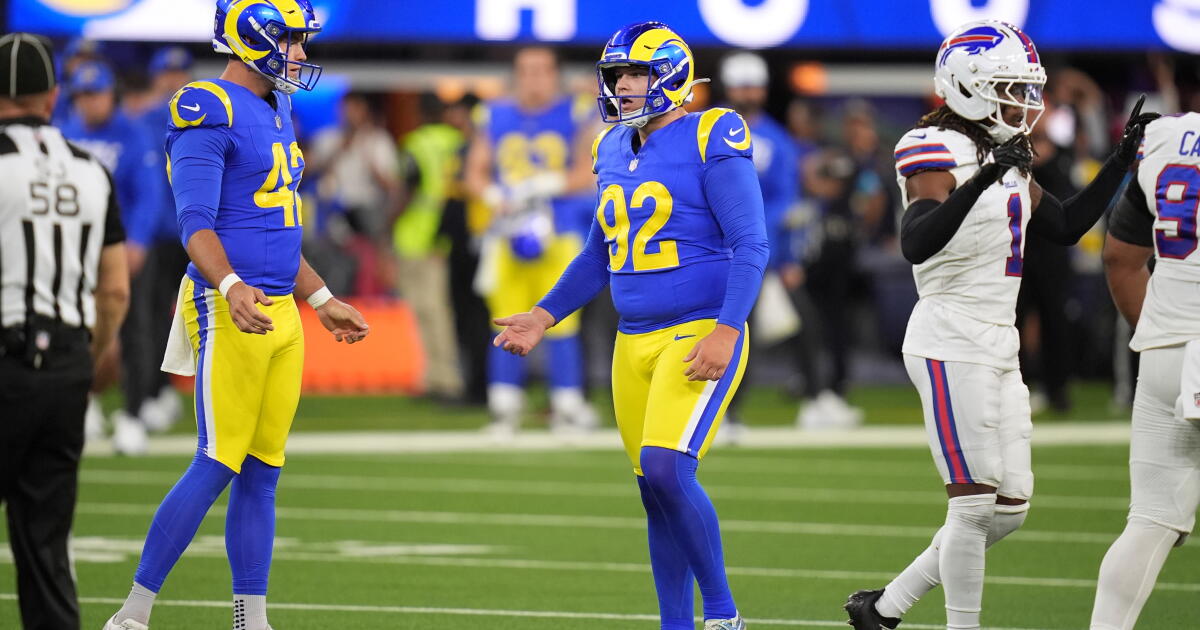
Less than 24 hours after kicking-game issues led to the Buffalo Bills defeating the Rams in overtime, the team released kicker Harrison Mevis, a team official said Tuesday.
Mevis missed a 50-yard field-goal attempt in the first half, and a had potential 48-yard game-winning field-goal attempt blocked in overtime. The Bills went on to win 37-34 in overtime, dropping the Rams’ record to 2-3.
“Not even close to good enough,” coach Sean McVay said of the field-goal and extra-point units after the defeat. “It cost us the game tonight.”
The Rams are signing kicker Blake Grupe from the New York Jets practice squad, according to ESPN.
Mevis’ release is the latest move in a Rams’ special teams saga that dates to last season.
In 2025, the Rams lost to the Philadelphia Eagles after two kicks by Joshua Karty were blocked, including one on the final play of the game that resulted in an Eagles touchdown. After Karty continued to struggle, the Rams released him and signed Mevis, who made 18 of 19 field-goal attempts in nine regular-season games and the playoffs.
McVay fired special teams coordinator Chase Blackburn with a few games left in the season, and hired Bubba Ventrone during the offseason.
But this season, Mevis made only five of nine attempts.
In 2025, Grupe made 18 of 26 field-goal attempts for the New Orleans Saints and all 11 of his attempts for the Indianapolis Colts.
The amount of time children in England spend on screens at school could be harming their “physical and developmental health”, a group of more than 150 clinicians has warned.
GPs, paediatricians and other specialists said in an open letter to Education Secretary Lucy Powell and Health Secretary Yvette Cooper that tablets and laptops are being used without a full understanding of their long-term health impacts, including on eye health.
The clinicians said they are prescribing glasses, hearing aids and speech therapy to children “for a problem that is unintentionally being made worse in our schools”.
The government said it was consulting on screen time guidance for children aged five to 18 but that technology could be a powerful learning tool if used properly.
The group of clinicians said nearly one million children are using screens in most lessons, despite studies suggesting a rise in short-sightedness.
They pointed to an analysis of 276 studies covering 5.4 million participants around the world.
That analysis, they claimed, found a rise in short-sightedness among children and adolescents from around 24% in 1990 to almost 36% by 2023, warning the condition is associated with an increased risk of a range of eye health problems.
Many children now spend longer on screens in the classroom than is recommended in a 24-hour period, the letter said, adding: “As a country, we need to wake up to this now, and start rolling back screen use in schools before the damage compounds further.”
One of its signatories was, Dr Becky Foljambe NHS GP and founder of Health Professionals for Safer Screens. She told BBC Radio 4’s Today programme parents had not been given the chance to “opt out” of the “excessive” use of screens in schools, which risks children “just not thriving” in education.
She said an “explosion” in short-sightedness “cannot be put down to genetics alone”.
Foljambe said it was a “lazy argument” to advocate for screen use to prepare children for a digital work, adding: “They also need their sleep, their eyesight, they need rest, they need ability to critically think and appraise.”
“We are conscious that some of this evidence is still surfacing but the direction of travel is consistent across multiple, independent, and in some cases very large, bodies of research,” the letter continued.
It also warned that children with special educational needs are “disproportionately” directed to screen-based learning.
A Department for Education spokesperson said the government was developing new screen-time guidance for children aged five to 18, and will consult on the safety of artificial intelligence and educational technology in schools.
They said: “Used well, technology can be a powerful tool to support learners who need it and free up teachers to deliver the excellent education every child deserves.”
It comes after a ban on smartphones in schools in England came into force in June, making individual schools and trusts legally responsible for being phone-free throughout the day.
At the Republican Party’s midterm convention, President Trump said he would make his crusade against transgender rights a major campaign issue ahead of the Nov. 3 election — calling the message that “men should not be playing in women’s sports” one of his party’s “great sound bites of all time.”
During a recent campaign trip, Gov. Gavin Newsom, a longtime LGBTQ+ advocate and likely Democratic contender for president in 2028, stood by his remark last year that allowing transgender athletes to compete in girls’ sports is “deeply unfair,” saying, “I haven’t been able to figure out how to make it fair from my perspective.”
For the second election cycle in a row, the rights of transgender people have taken center stage politically, despite their accounting for only about 1% of the U.S. population and many voters identifying other issues as far more important — splitting Republicans and Democrats, but also Democrats among themselves and putting the party on the defensive.
Transgender athlete AB Hernandez, third from right, sits with other athletes at the CIF State Track Championship finals in Clovis on May 30, 2026.
(Tomas Ovalle / For The Times)
The politics are part of a much broader, international battle playing out in education, sports and the law, from local California classrooms and high school sports to the Olympic stage and the U.S. Supreme Court. Polling for years has shown most Americans oppose discrimination against transgender people, but also that a majority — including a substantial portion of Democrats — oppose transgender athletes participating in girls’ sports and children receiving gender-affirming care such as surgery or puberty blockers.
Republicans are pushing a well-funded message that transgender rights should be dismantled across the board, in healthcare, education, sports, the military and public spaces such as restrooms. Conservative mega-donors such as Elon Musk have spent millions amplifying that message in competitive races from Alaska to Ohio to Texas.
And to some degree, those tactics have worked. While many Democrats have ardently defended transgender rights, particularly in California, others in the party have sided with Republicans or softened their support.
Democratic Senate candidate James Talarico appears with Jeffrey Epstein abuse survivors in Dallas on Sept. 10.
(Anja Schlein / Dallas Morning News )
James Talarico, the Democratic U.S. Senate candidate in Texas, backpedaled from past votes by saying young transgender athletes shouldn’t be allowed to play “if it risks safety or fairness,” while others including Rob Sand, a candidate for Iowa governor, and Rep. Marcy Kaptur (D-Ohio) have said they shouldn’t play.
Such messaging has dismayed transgender people and their families, as well as LGBTQ+ rights groups who have been trying to refine Democratic messaging on trans issues since Vice President Kamala Harris — another longtime LGBTQ+ advocate from California — responded to Trump’s anti-trans attacks in 2024 with a message some considered muddled.
Imara Jones, a transgender journalist and founder of TransLash Media, a platform built to spotlight trans people’s own experiences, said the party’s conflicting messaging “underscores the degree to which the Republicans have actually successfully weaponized trans issues.”
“You’re seeing a really sharp political calculus among Democrats,” Jones said, with those “in tight races, where they need to have Republican votes,” bending one way, and others who “want to make a statement about principle” and defending LGBTQ+ rights moving in the other.
Many Democrats in California say they believe the issue is a moral one and that Democrats only hurt themselves by ceding ground on human rights.
A volunteer for Toni Atkins, the former president pro tempore of the California State Senate, is silhouetted holding a Pride flag at the Harvey Milk Coachella Valley Diversity Breakfast, at the Palm Springs Convention Center in Palm Springs Thursday, May 8, 2025.
(Allen J. Schaben / Los Angeles Times)
“The solution is not to be ambiguous, but to be firm that we support basic human rights and the basic humanity of trans people,” said state Sen. Scott Wiener (D-San Francisco), a leader on pro-LGBTQ+ legislation running to replace retiring Rep. Nancy Pelosi (D-San Francisco). “Then go on to talk about the big issues facing our country, like this illegal war, like the fact that Congress has done nothing to regulate AI, like the explosive cost of energy and child care and housing.”
A national conversation
Trump has signed executive orders to bar transgender athletes from competing in girls’ sports, prohibit federal funding for gender-affirming care for youth, oust transgender service members from the military and deny recognition of transgender and nonbinary identities on critical documents such as passports.
The Justice Department has sued California and other states over their trans-inclusive sports policies, and successfully threatened large hospitals into ending gender-affirming care programs. The Centers for Medicare and Medicaid Services barred federal Medicaid spending on gender-affirming medication or surgeries for minors.
Martin Makary, commissioner of the Food and Drug Administration, speaks at Health and Human Services headquarters in Washington on Dec. 18, 2025.
(Stefani Reynolds / Bloomberg)
Trump campaigned on such policies, and he and other Republicans clearly see them as helpful in the midterms. In his convention speech, Trump said he’s been surprised more Democrats haven’t abandoned transgender rights given polling showing a majority of Americans oppose transgender athletes in girls’ sports.
“They say it’s an 80/20 issue,” Trump said, in an apparent reference to a January 2025 New York Times/Ipsos poll that found 79% of respondents believed transgender athletes should not be allowed to compete in women’s sports. More recent polls have shown a smaller majority opposed.
Demonstrators at a Rainbow Families Action march in Emeryville, Calif., on Dec. 8, 2025.
(Jessica Christian / San Francisco Chronicle )
Arne Johnson, a Bay Area father of a transgender child who helps run the advocacy group Rainbow Families Action, said being targeted by Republicans is scary, but watching Democrats “find ways to be more flexible about the rights of human beings” has been profoundly disappointing.
But he said he’s also been encouraged by some more recent polling showing Americans moving back toward the middle on transgender rights, which he believes is in part due to people being deluged with anti-trans ads getting frustrated that the political conversation isn’t focused on issues they care more about, like affordability and healthcare.
Ramiro Sarmiento, a spokesperson for the Human Rights Campaign, which has tracked at least $50 million in anti-trans political ads this cycle, agreed, saying, “MAGA wants to talk about trans kids because they’re losing the conversation voters actually care about.”
Conservative groups reject that framing. Many deny tht transgender people exist, while others say they are working to protect cisgender children or defend religious beliefs. They have also scoffed at Democrats who have changed their positions in the lead-up to the election, with the conservative American Principles Project accusing Talarico of only pretending to shift away from his “gender radicalism” on sports in order to win votes.
Allison Schuster, a White House spokesperson, said the Biden administration “spent four years pushing a radical agenda” of gender-affirming care for children, while Trump “pledged to restore common sense” and has since “delivered by consistently taking strong action to protect children from these dangerous, life-altering medical practices.”
The fight in California
In California, transgender athletes competing in youth sports has been raised as an issue in the governor’s race, where Republican hopeful Steve Hilton has rallied against their inclusion, and featured prominently in the races for the next state attorney general and the next state superintendent of public schools.
Transgender athlete AB Hernandez competes for Jurupa Valley High School at the 2025 CIF state track and field championships.
(Tomas Ovalle / For The Times)
Several Democrats running for Congress in the state have been criticized for their records on transgender rights, including San Diego City Councilmember Marni von Wilpert, who is seeking the redistricted congressional seat of departing Rep. Darrell Issa (R-Bonsall), as well as Reps. Adam Gray (D-Merced) and Derek Tran (D-Orange).
Christian Martinez, a National Republican Congressional Committee spokesperson, has accused Von Wilpert of having a “perverted agenda [that] pushes hormone treatments on kids,” and Gray of being “for they/them, not for Californians.”
Marni von Wilpert, a Democratic candidate for California’s 48th Congressional District, canvasses in a neighborhood Friday, May 29, 2026, in San Marcos, Calif.
(Gregory Bull / Associated Press)
California Atty. Gen. Rob Bonta’s office is fighting on multiple fronts to protect gender-affirming care and successfully rebuffed a Justice Department lawsuit over the state’s transgender sports policies. But pressure is coming not only from the Trump administration.
The California Interscholastic Federation, which oversees high school athletics, also revised its rules to ensure that transgender athletes in individual sports do not displace cisgender ones from rankings or medal podiums. And after local California teachers sued, the U.S. Supreme Court in March ruled against a controversial California student privacy law that precluded teachers from revealing a child’s interest in presenting in gender nonconforming ways in school to their parents if the child requested confidentiality, finding that the policy infringed on parents’ rights and the free exercise of religion.
Meanwhile, state lawmakers just passed at least a dozen measures aimed at bolstering LGBTQ+ rights, including by restoring an LGBTQ+ youth suicide and crisis hotline; helping discharged LGBTQ+ service members find housing and jobs; requiring California gender-affirming healthcare providers who are subpoenaed to inform Bonta’s office if they intend to respond; improving access to HIV prevention care and enhancing LGBTQ+ data privacy.
Newsom signed all those measures into law — his office said California “will not stand” for Trump’s “all-out assault on the LGBTQ community” — but vetoed a bill that would have barred future governors from allowing the extradition of abortion or gender-affirming care providers in California to states where such care is illegal, citing concerns about reduced executive discretion.
The 2026-27 state budget appropriated $66 million for gender-affirming care, including up to $30 million for underinsured patients in the Uncompensated Care Program, $26 million to assist organizations that provide such care and $10 million to cover care for poor children who lost it under the new Medicaid rules. Wiener called the latter a “short-term solution” that will protect kids while the state figures out a more permanent billing pathway under Medi-Cal.
A.W., a Bay Area mother of a transgender teenager who requested anonymity because she fears being targeted by the Trump administration, said her child’s gender-affirming care — a lifeline for him in recent years — was disrupted by the Medicaid rule change, and the state’s temporary fix was too little, too late.
A.W. said families like hers “shouldn’t have to make medical decisions based on politicians in Washington,” particularly for care so critical to her son and other kids. “If he had not had access to gender-affirming care, I don’t know where we would be,” she said. “It scares me to think about it.”
Times staff writer Dakota Smith contributed to this report.
Oh, Strictly. Home of the both the most bizarre and glorious dances known to man. Over the years we’ve seen some incredible routines – ones that brought a tear to the eye, ones that made us double over with laughter, and ones that made our jaws drop.
Many have been watched again and again online. Here are six that broke the internet:
Faye Tozer and Giovanni Pernice’s Charleston
This charleston, choreographed the The Lonely Goatherd, is amongst the most iconic, inventive, and technically brilliant performances the programme has ever witnessed. Bruno hailed it a “theatrical masterpiece” and urged them to “take it to Broadway”. Darcey Bussell emphasised how remarkable it was that a specific movement had been crafted for every single beat of the music.
(Image: BBC)
Lewis Cope and Katya Jones’ Couple’s Choice
Lewis and Katya’s Couple’s Choice to a jazz version of Radiohead’s Creep during Series 23 proved to be one of the defining, standout moments of that series. The performance moved many viewers and judges to tears, with commentators and former professionals hailing it as one of the most unforgettable Couple’s Choice routines in Strictly history.
(Image: BBC)
Danny Mac and Oti Mabuse’s Samba
Who can forget the first samba to earn a 40 on Strictly? Oti crafted professional-level choreography, and Danny delivered fluid hip isolations and relentless energy that matched her step-for-step.
(Image: BBC/Guy Levy)
Rose Ayling-Ellis and Giovanni Pernice’s Couple’s Choice
Their Couple’s Choice routine is widely regarded as one of the most powerful, moving, and culturally significant moments in British television history. Performed in Week 8 to “Symphony” by Clean Bandit ft. Zara Larsson, the contemporary routine was dedicated to the Deaf community.
At the midpoint of the routine, as the music swelled to its peak, the sound cut out entirely, leaving a silence lasting roughly 20 seconds while Rose and Giovanni continued dancing in perfect unison.
(Image: BBC)
Bill Bailey and Oti Mabuse’s Couple’s Choice
Bill, a 55-year-old actor and comedian initially regarded as the “novelty” or wildcard contestant of the series, astonished everyone with his remarkable sense of rhythm, musicality, and dedication. The performance immediately went viral on social media and established Bill as a genuine contender for the series title.
(Image: BBC)
Aston Merrygold and Janette Manrar’s Salsa
The choreography showcased numerous breathtaking overhead lifts and spins, capitalising fully on Janette’s mastery of Latin theatrical work. Their salsa proved hugely popular with audiences and achieved an impressive score, though it later became a focal point of debate within the series, as only three weeks later, Aston and Janette were knocked out.
MIS-TEEQ’S Sabrina Washington has made a huge U-turn as she AXES her own solo tour and issues a grovelling apology to fans after sparking mass confusion.
Sabrina Washington has U-turned on her solo tourCredit: GettySabrina is part of hit band Mis-teeqCredit: PA
Just days after Mis-teeq’s sold-out 25th anniversary reunion concert in London, Sabrina declared that there would be no further Mis-Teeq dates or new music – which left fans completely baffled.
But now she has sensationally backtracked on all of that.
Sign up for the Showbiz newsletter
Thank you!
In a statement shared on social media, Sabrina said: “I have been paying close attention to what people have been saying, reading the comments and trying to understand what you genuinely want to see from me.
“And one thing has come through very clearly: there is a strong desire to see the three of us perform Mis-Teeq’s greatest hits together again.”
Sabrina, Su-Elise Nash and Alesha Dixon performed in London last month for a reunion gigCredit: ShutterstockSabrina’s solo announcement left fans shockedCredit: Shutterstock
She went on: “Ultimately, I don’t want to push ahead with a solo tour when I know there is such a strong feeling among fans about seeing Mis-Teeq together again.
“So, with a heavy heart, I have decided that the right thing for me is to cancel the tour.”
Sabrina added: “This is not a decision I have taken lightly. But for me, the fans have to come first.”
She noted that although she is cancelling the tour, she is not putting her own music to one side.
“I have been working on new solo material,” she revealed in the statement.
She then addressed her comments about going solo and Mis-teeq having no new plans in the pipeline.
“I now understand that my plans may not have been fully communicated to Alesha and Su-Elise before the announcement.
“Looking back, I could have shared more detail with management and spoken to the girls directly beforehand, and for that I am sorry.”
Sabrina added: “I have never closed the door on Mis-Teeq. I said on GMB, and I want to say again: I would never say no to another Mis-Teeq show.
“If the right opportunity came along and the three of us all wanted to do it, I would absolutely be open to that.”
Fans were quick to brand her “courageous” and “brave” for speaking out, though some were annoyed as they had already booked tickets to her now-axed solo tour.
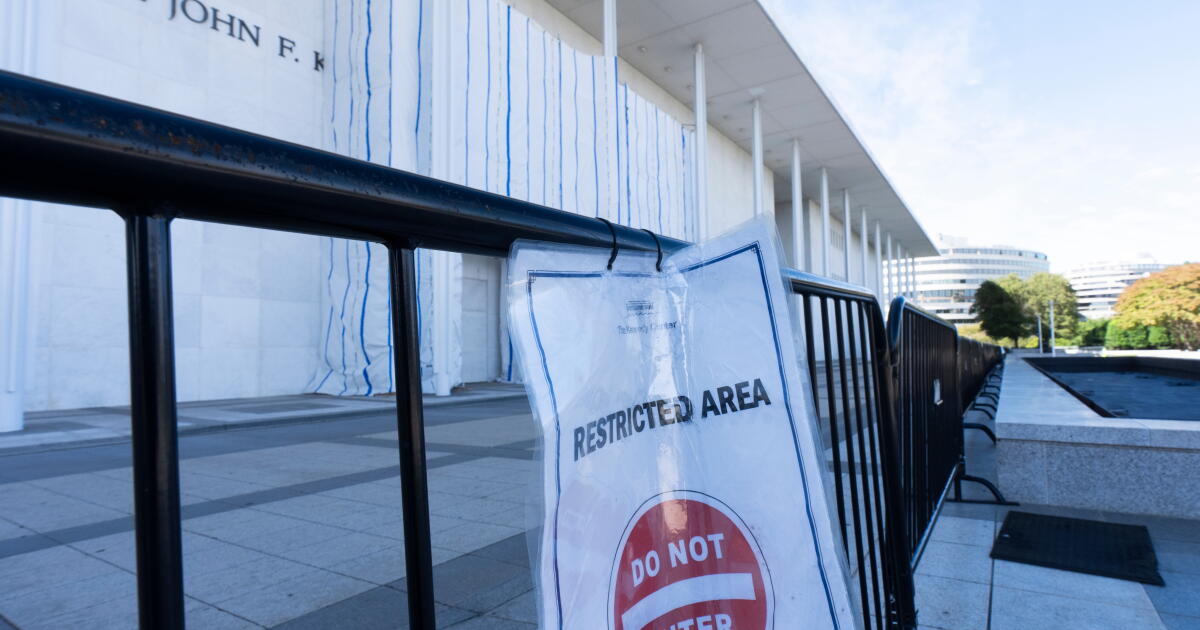
Kennedy Center officials were long aware of serious structural issues that they cited as new problems after the abrupt decision to close the performing arts venue this month, a group of former employees allege in a letter to Congress.
The center’s executive director and chief operating officer, Matt Floca, did not treat the roofing issues as priorities and in April halted a funded plan to address them, according to the letter Thursday signed by David Seide, a lawyer representing the anonymous whistleblowers.
Floca denied their allegations, saying recent investigations of the leaks exposed new hazards at the building.
In a September court declaration, Floca noted there were “acute risks to public safety” when the aging building temporarily closed its doors after an inspection of a deteriorating roof terrace canopy and a partial ceiling collapse. The former employees, however, claim those “acute” issues were known previously by Floca, who joined the Kennedy Center as vice president of facilities in 2024.
“More than one year ago, Mr. Floca had requested and received the needed funds to remediate the New Problems he references,” Seide wrote, citing President Trump’s tax cut and spending bill that he signed in the summer of 2025. “Yet six months ago – with the funds in hand – he stopped the remediation process from moving forward.” In the legislation, Congress earmarked $257 million for the Kennedy Center.
The letter, first reported by The New York Times, is the latest in a series of tensions over an iconic Potomac River waterfront building that has become a focus of the Republican president in his remaking of the nation’s capital in his second term. Trump has installed his own leadership to the center’s governing board and had his name placed on the building before a judge ruled the new lettering was illegally added and ordered it removed.
The Trump-aligned board voted earlier this month to close the center indefinitely for repairs hours after U.S. District Judge Christopher Cooper blocked its plans to return Trump’s name to the building.
Cooper has told the center that it must give 30 days’ notice before making any major physical changes to the building, including demolishing it, as Trump has threatened. The Kennedy Center leadership also must file a status report no later than Friday on the temporary closure and emergency repairs.
Asked for a response to the whistleblowers’ claims, a Kennedy Center spokesperson sent a written statement from Floca, who said the safety of patrons, artists and staff is his priority.
“The Kennedy Center has known for years that the roof overhang leaked,” he wrote. “What we did not know until this summer was how far the damage had spread inside it.”
Floca added that rather than halting design plans in April as the whistleblowers alleged, he had reassigned the work to a more comprehensive plan because the contractor’s quote for the initial plans were nearly three times the expected cost.
“That was a change in the approach to procuring and delivering the work, not a determination that the work was unnecessary,” Floca wrote.
Rhode Island Sen. Sheldon Whitehouse, the top Democrat on the Senate Committee on Environment and Public Works, wrote Floca on Thursday after receiving the whistleblower letter. Whitehouse said the documents showed Kennedy Center leadership had “hoarded” congressionally appropriated funding for repairs “while blaming previous leadership for the state of repairs.”
“My initial investigation into misconduct at the Center focused on cronyism and corruption, with documents demonstrating considerable excessive and self-serving spending under President Trump’s chairmanship,” Whitehouse said. “The documents that I attach today seem to reveal deeper financial mismanagement.”
A spokesperson for the committee’s Republican majority did not immediately reply to a request for comment Saturday.







![Ultra-Orthodox Jewish men gather on and below the Chords Bridge during the "Million Man" protest against Israeli military conscription [Ammar Awad/Reuters]](https://i0.wp.com/www.aljazeera.com/wp-content/uploads/2025/10/2025-10-30T152925Z_1381634771_RC2EMHA0QTYR_RTRMADP_3_ISRAEL-PALESTINIANS-CONSCRIPTION-PROTEST-1761838434.jpg?w=640&ssl=1)